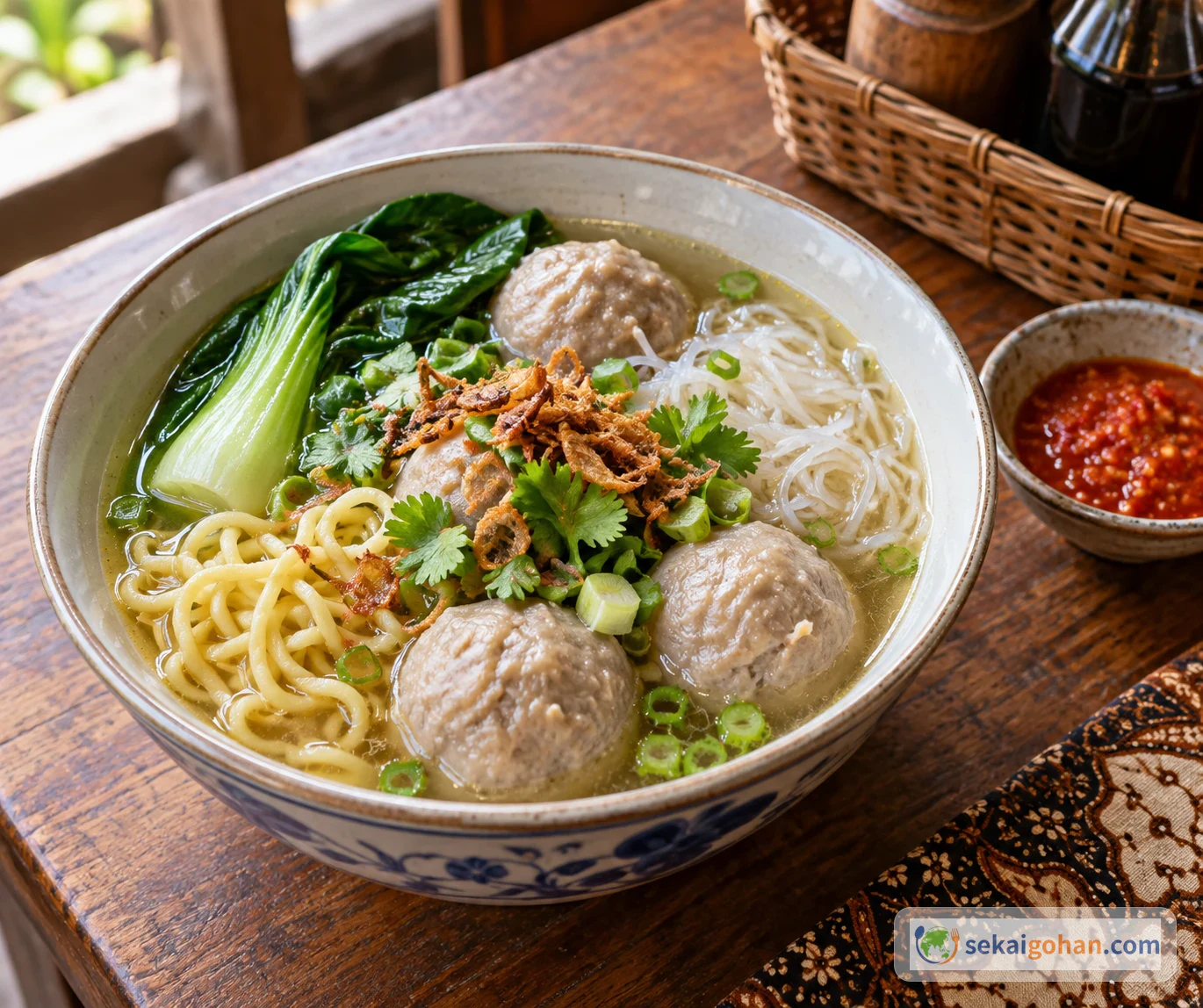
Chicken simmering is a familiar smell in plenty of kitchens. Add turmeric, crushed lemongrass, and makrut lime leaves, though, and the steam changes at once: the warmth of ginger, a green scent of citrus, and something earthy and yellow underneath. That is soto ayam, Indonesia's golden chicken soup. Ayam means chicken, and soto means a soup with ingredients in it. It comes to the table with white rice, glass noodles, boiled egg, bean sprouts, fried shallots, sambal, and lime.

Soto Ayam Across Indonesia

Soto ayam changes from place to place. Around Java, the versions from Surabaya, Lamongan, Kudus, and Jakarta each look a little different. Lamongan's soto is known for its yellow soup and koya, a powdered topping that contains garlic. At home, start with a clear yellow chicken soup, then use koya and the accompaniments to push it toward the style you like.
| Region / name | Notable features | How to approach it elsewhere |
|---|---|---|
| Soto Ayam Lamongan | Yellow chicken soup, koya, glass noodles, egg | Make a simple koya from fried shallots and garlic powder |
| Soto Kudus | A small bowl, rice in the bowl, plenty of chicken | Put a little rice in the bowl instead of serving it separately |
| Soto Betawi | Beef and offal, whitish with milk or coconut | A separate dish; keep it apart from this one |
| Soto Ambengan | Rich chicken savor, strong use of koya | Leave a little chicken skin and make the aromatic oil with care |
Each aromatic has its own job. Turmeric brings color, ginger warmth, garlic and shallots sweetness, and lemongrass and makrut lime leaf give the aroma its outline. Keep those roles in mind and you get an Indonesian flavor even with few ingredients. A spoonful of curry powder is a tempting shortcut, but once it takes over, the soup tastes like curry, not soto ayam.
On the table, soto ayam sits well beside a fragrant rice like nasi uduk, and it lightens a meal built around a sweet-and-salty grilled dish such as sate ayam.
Ingredients (serves 4)

Serves 4, with four soup bowls that make a main dish. The amount assumes serving with white rice. Bone-in chicken thighs are ideal, but boneless thighs work too. Bone-in gives a richer broth, while boneless is easier to shred after cooking.
| Ingredient | Amount | Substitutes & notes |
|---|---|---|
| Bone-in chicken thighs | 1.75 lb (800 g) | 1.5 lb (650 g) boneless thighs also work |
| Water | 1.5 quarts (1.4 L) | Top up with hot water for what reduces along the way |
| Lemongrass | 2 stalks | Bruise the base. 2 tsp if dried |
| Makrut lime leaves | 4 | If unavailable, 1 thin strip of lime zest |
| Bay leaf | 1 | Stands in for salam leaf |
| Salt | 1 1/2 tsp | Adjust at the end in 1/4 tsp steps |
| Unrefined cane sugar | 1 tsp | Rounds off the edges. White sugar also works |
Bumbu, the yellow aromatic paste
| Ingredient | Amount | Substitutes & notes |
|---|---|---|
| Onion or red onion | 4 oz (120 g) | Stands in for the shallots used in Indonesia |
| Garlic | 4 cloves | 2 tsp if from a tube |
| Ginger | 20 g | Scrape the skin and slice thinly |
| Fresh turmeric | 15 g | 1 tsp turmeric powder works |
| Candlenuts | 3 | Substitute 20 g cashews |
| White pepper | 1/3 tsp | A little black pepper if not available |
| Ground coriander | 1 tsp | If none, don't omit; make up with 1/3 tsp cumin |
| Vegetable oil | 2 tbsp | For frying the aromatic paste |
Ingredients for the bowls and the finish
| Ingredient | Amount | Substitutes & notes |
|---|---|---|
| Dried glass noodles | 2.75 oz (80 g) | 3.5 oz (100 g) rice vermicelli also works. Rehydrate in warm water |
| Bean sprouts | 7 oz (200 g) | Pour boiling water over and drain |
| Boiled eggs | 2 | Cut 1 in half |
| Tomato | 1, about 5.5 oz (150 g) | Cut into 8 wedges |
| Green onion or celery leaves | 20 g | Cut into thin rounds. For the aromatic finish |
| Fried shallots | 4 tbsp | Stands in for bawang goreng |
| Lime | 1 | 1/2 lemon if using lemon |
| Sambal | 4 tsp | About 1 tsp per person, on a separate dish |
| White rice | 4 bowls' worth | A little in the bowl or on a separate dish |
This dish contains chicken, eggs, and nuts, and some seasonings contain soy or wheat. If you substitute cashews for candlenuts, be careful with nut allergies. Check the labels on store-bought sambal and fried shallots too.
Choosing Ingredients and Substitutes for Soto Ayam

What matters most
Turmeric, lemongrass, makrut lime leaves, candlenuts, salam leaves, sambal, koya: outside Indonesia, the list of unfamiliar names is the hardest part. The first time, hold on to four things: the yellow of the turmeric, the aroma of lemongrass, a clear chicken broth, and citrus squeezed in at the end. Without turmeric, the color and aroma fade. Without lemongrass, the soup drifts toward an ordinary chicken-and-ginger broth.
Shopping
Ordinary chicken and eggs you can buy anywhere. For sambal, fried shallots, and kecap manis, try an import grocer or online; lemongrass and makrut lime leaves are sometimes sold frozen or dried. Store-bought fried shallots are worth having on a busy day, since they set the final aroma and texture of the bowl in one go.
Sambal lets everyone add heat to their own bowl instead of the whole pot. A sambal substitute made ahead also works for nasi goreng and mie goreng.
You can pound the aromatic paste in a mortar, but working onion, garlic, ginger, and turmeric fine every time is real effort. A small food processor makes it easy, and if you keep cooking Indonesian food, it earns its place again with the peanut sauce of gado-gado.
Substitutes
Salam leaves, candlenuts, and makrut lime leaves are hard to find at many ordinary supermarkets. These swaps keep the flavor on track.

| Ingredient you hesitate over | Closer to Indonesia | Realistic option elsewhere | Direction to avoid |
|---|---|---|---|
| Turmeric | Fresh kunyit | 1 tsp powder | Putting in curry powder by the tablespoon |
| Shallots | Bawang merah | Onion, red onion | Using only long green onion |
| Candlenuts | Kemiri | 20 g cashews | Adding lots of sesame paste to cloud it white |
| Makrut lime leaves | Daun jeruk | 1 thin strip of lime zest | Adding lots of lemon juice to the pot |
| Salam leaf | Daun salam | 1 bay leaf | Using several bay leaves and making it Western |
| Koya | Powder of garlic and prawn crackers | Fried shallots with a little garlic powder | Substituting grated cheese |
Homemade koya
Koya is the powdered topping often served with Lamongan-style soto, and some versions grind prawn crackers and garlic together. At home, lightly crush 2 tbsp fried shallots, 1/4 tsp garlic powder, and a little white pepper in a mortar. Leave a few grains whole; they give more texture than a fine powder.
Method: Don't Scorch the Aromatic Paste, and Aim for a Clear Yellow
With soto ayam, flavor is decided less by simmering time than by the time spent frying the aromatic paste. If you put the paste into the soup still raw, the sharpness of the onion remains. If you scorch it, the clear yellow soup turns bitter. Wake up the aroma over medium heat, and draw out the savor of the chicken over low heat.
Cook the chicken until it is white at the center and clear juices run. If you have a thermometer, cook it to 167°F (75°C) at the center. Bone-in meat stays cold near the bone, so check the thickest part.
Fixing Soto Ayam: Cloudy Soup, Weak Aroma, Curry Taste

| Symptom | Cause | Fix |
|---|---|---|
| Cloudy soup | Boiled hard, didn't skim | Lower to low heat and skim the foam and fat from the surface |
| Onion sharpness remains | Bumbu was under-fried | Make an aromatic oil with 3 extra minutes of frying over medium heat and return it to the soup |
| Curry taste | Too much curry powder | Next time use turmeric alone and only a little coriander |
| Weak aroma | Lemongrass wasn't bruised | Split the base with the back of a knife and release the aroma before simmering |
| Watery ingredients | Bean sprouts or noodles weren't drained enough | Leave in a sieve for 3 minutes and press lightly just before putting them in the bowl |
| Too spicy | Sambal was mixed into the pot | Keep it out of the pot; adjust in the bowl from 1 tsp |
A soup that is yellow but vague usually needs sourness and aroma before more salt. A small squeeze of lime lightens the chicken fat and tightens the earthiness of the turmeric.
If the flavor is thin, resist boiling it down over high heat, which brings out the bitterness of the aromatics. Return the chicken instead and simmer an extra 5 minutes over low heat.
Serving and Storing Soto Ayam

At the table
At eateries in Indonesia, kecap manis is sometimes set out with chili and lime. It never goes into the pot, but a small drizzle in the bowl rounds out the yellow soup. It also suits sate ayam and nasi uduk, so a bottle is worth keeping around.
If you want something rich alongside, the vegetables of gado-gado or the fragrant rice of nasi uduk keep the meal lighter than a coconut stew like rendang.
Storage and reheating
Store the soup, chicken, glass noodles, bean sprouts, and finishing ingredients separately. Mixed together, the noodles soak up the soup and the water from the bean sprouts blurs the flavor. The soup and chicken keep 3 days in the refrigerator and about 1 month in the freezer; eat refrigerated noodles and bean sprouts by the next day. Extra soup frozen in portions makes a good base for rice noodles or rice porridge.
To reheat, warm the soup in a small pot over medium heat, and once it simmers in 3–4 minutes, return the chicken. Warm the noodles separately with hot water, put them in the bowl, then add the soup. In a microwave, heat one serving of soup at 600 W for 2 minutes, stir once, and add 30 seconds. Leave the egg and fried shallots unheated and add them at the end. The next day, try it as soto rice, with white rice at the bottom of the bowl.
FAQ

Q1. Can I make it with curry powder?
You can, but limit it to 1/2 tsp. Curry powder contains cumin, fenugreek, cinnamon, and more, so a lot of it turns the pot into curry soup. You get closer with 1 tsp turmeric alone, letting ginger, garlic, and lemongrass fill in the aroma.
Q2. I don't have bone-in chicken. Can I use chicken breast?
Yes. With 1.25 lb (600 g) chicken breast, shorten the simmering to about 20 minutes over low heat. Take it out when it is white at the center, rest it 2 minutes in the residual heat, and then shred; longer simmering dries the fibers. If the soup lacks savor, simmer 2 chicken wings along with it.
Q3. Can I use rice noodles instead of glass noodles?
Rice noodles go well too. For thin pho-style rice noodles, rehydrate 3.5 oz (100 g) dried, put them in the bowl, and pour hot soup over them. They soak up soup quickly, so rehydrate them just before eating and store any extra in a separate container.
Q4. Can children eat it without sambal?
Yes. Keep the soup mild and serve sambal on a separate dish, so adults can dissolve 1 tsp at a time at the edge of the bowl. Even without heat, lime, fried shallots, and white pepper keep the flavor clear.
Q5. I can't get makrut lime leaves.
Thinly shave one strip of lime zest and add it, using only the green part; the white pith makes it bitter. Lemon zest also works, but its aroma leans Western, so use less. A squeeze of lime juice at the end lets you fine-tune the aroma.