
Cilung: Indonesian Tapioca and Egg Rolled on a Skewer (Aci Digulung)

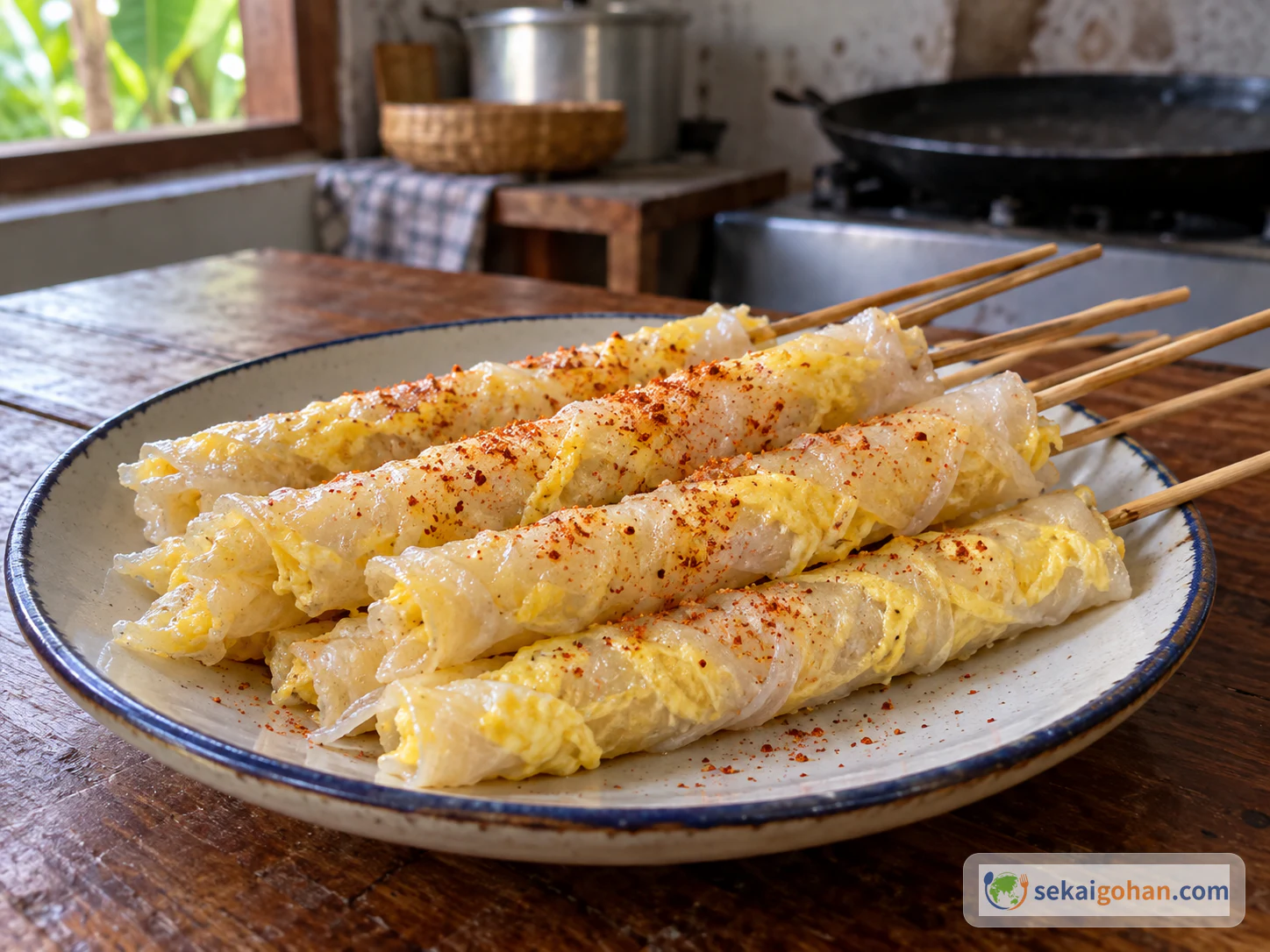
A plate of Cilung: thin tapioca batter and egg rolled onto skewers and dusted with chili powder
Cuisine
Indonesian

How to make Cilung (aci digulung), an Indonesian snack of thin tapioca batter layered over a spoonful of beaten egg in a pan and rolled onto a bamboo skewer. Based on one home recipe posted from Garut, West Java, with the batter ratio, the separate egg, the order in the pan, when to roll, and a chili-powder-only finish. Amounts the recipe never gives are marked as unstated.

Cooking flow

Cooking steps

STEP11 / 9

Mix the batter without the egg

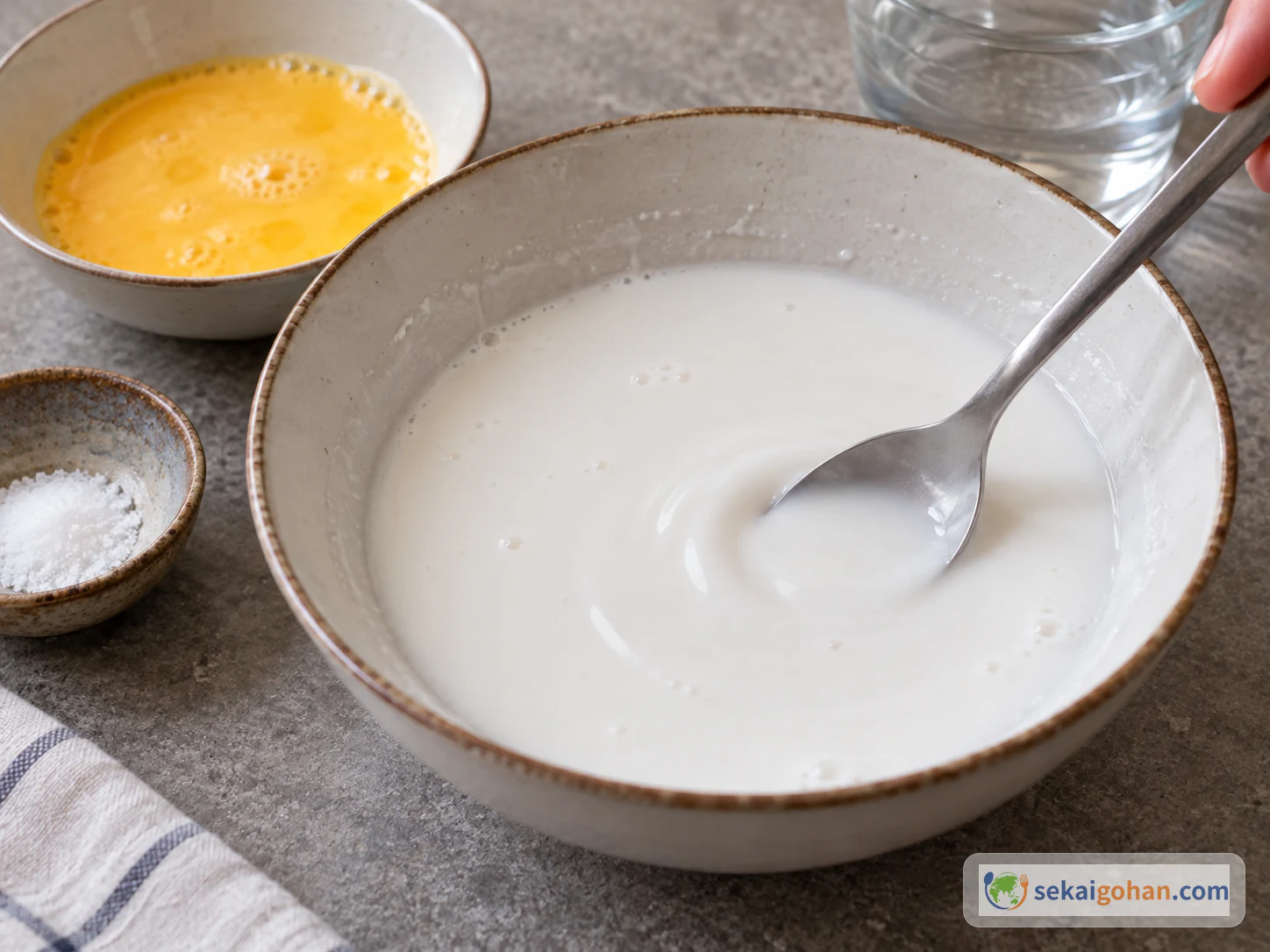
Tapioca flour, water and salt being mixed without egg
The batter is only tapioca flour, water and salt; the egg stays in its own bowl

In a bowl, stir together 3.5 oz (100 g) tapioca flour, 1 cup (250 ml) water and salt to taste until smooth. The batter should be thin, milky white and pourable. Leave out the optional seasoning powder, and do not add the egg.

STEP22 / 9

Beat the egg separately

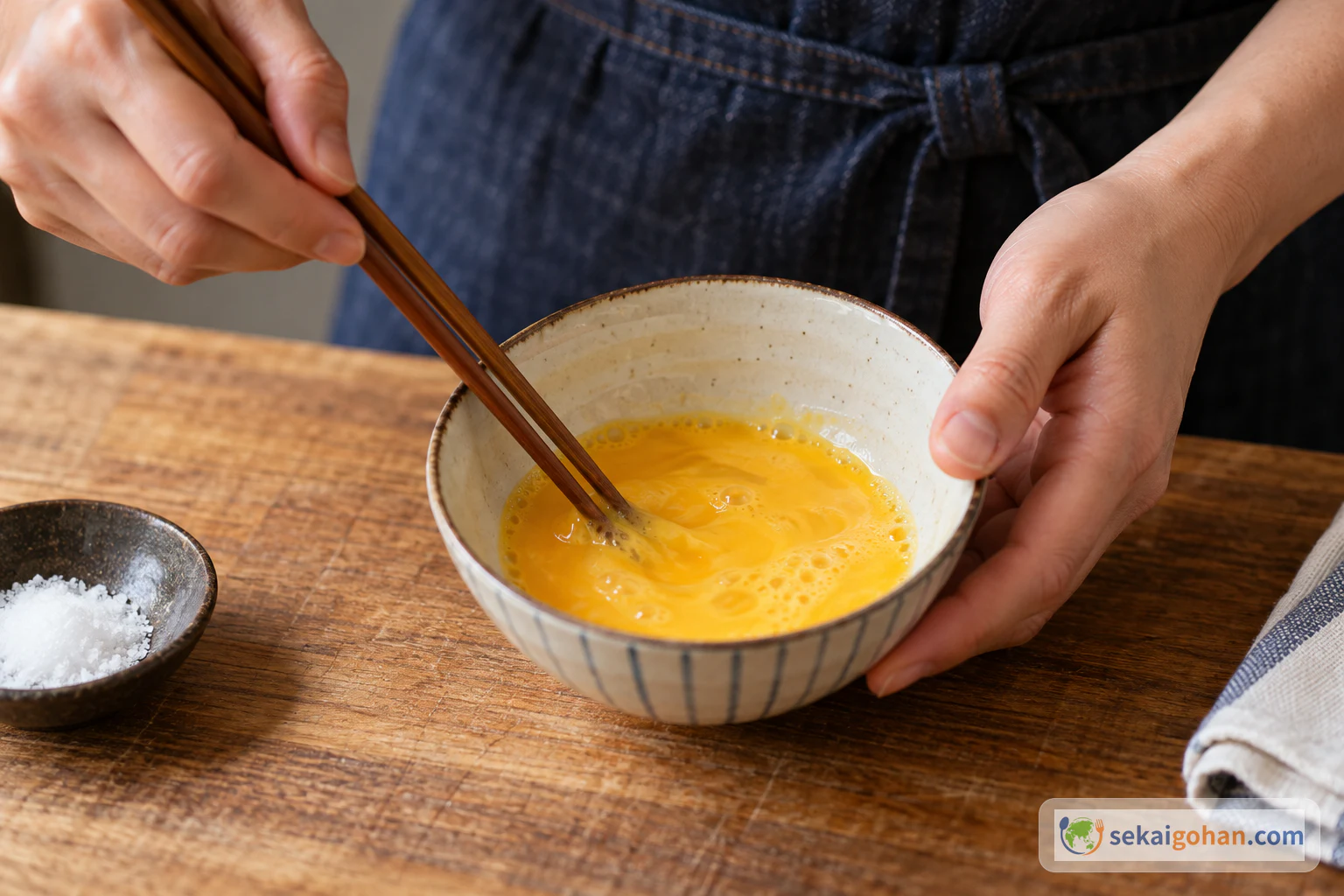
One egg being beaten with a little salt in a bowl separate from the batter
One egg is beaten with a little salt and kept separate from the batter

In a second bowl, beat 1 egg with a little salt. Do not add water to the egg, and keep it apart from the batter. Steps 1 and 2 can be done in either order. The only requirement is that the egg and the batter stay separate.

STEP33 / 9

Heat and grease the nonstick pan

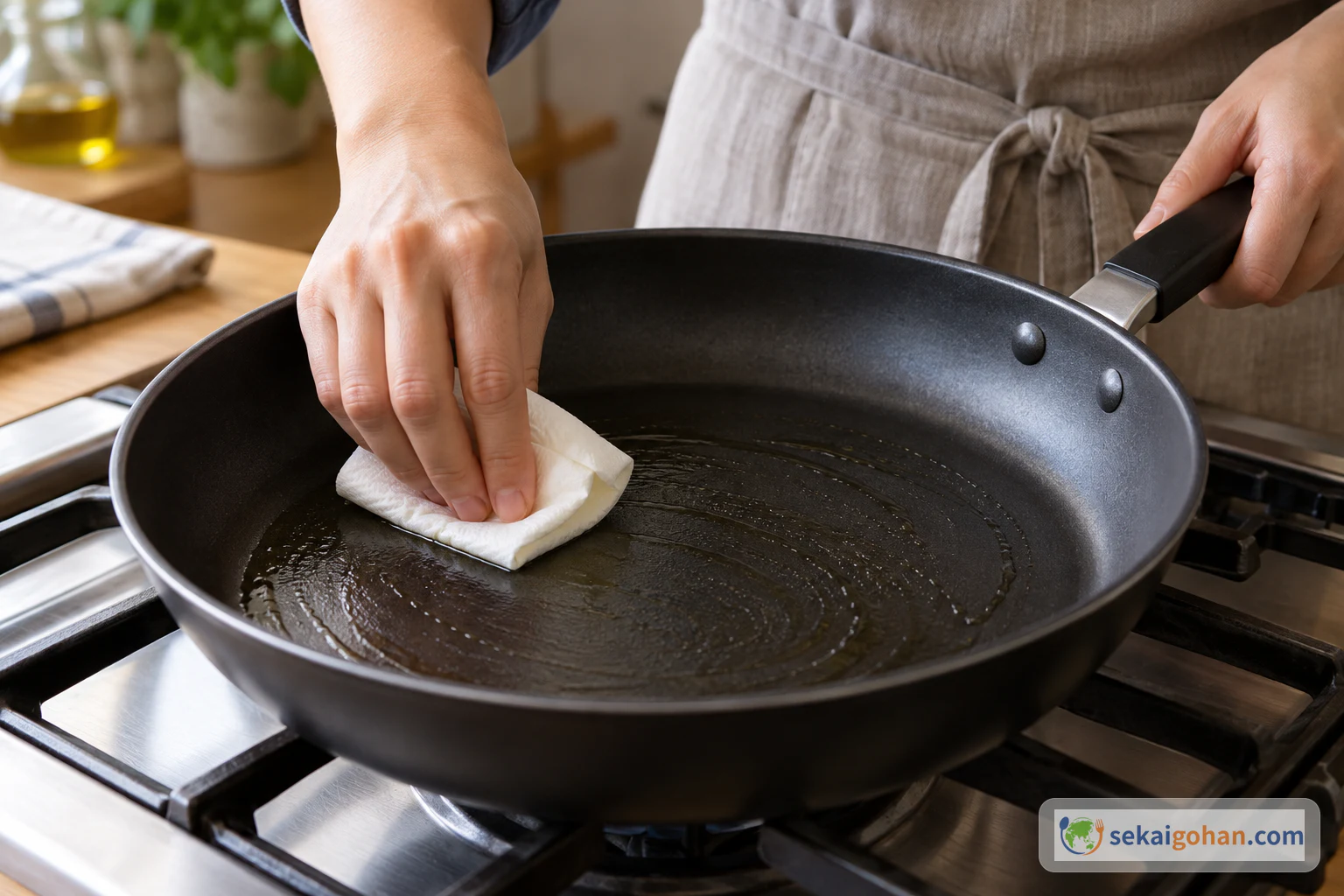
Oil being wiped thinly over a nonstick pan
The oil is only for greasing the pan; no type or amount is specified

Heat the nonstick pan and wipe a thin film of oil over its surface.

STEP44 / 9

Pour 1 sdm of beaten egg into the pan

1 sdm of beaten egg being poured into the pan
A single spoonful of beaten egg goes into the pan before any batter

Spoon 1 sdm (tablespoon) of the beaten egg into the greased pan. This is the egg portion for one pan, not a whole egg.

STEP55 / 9

Add one ladle of batter

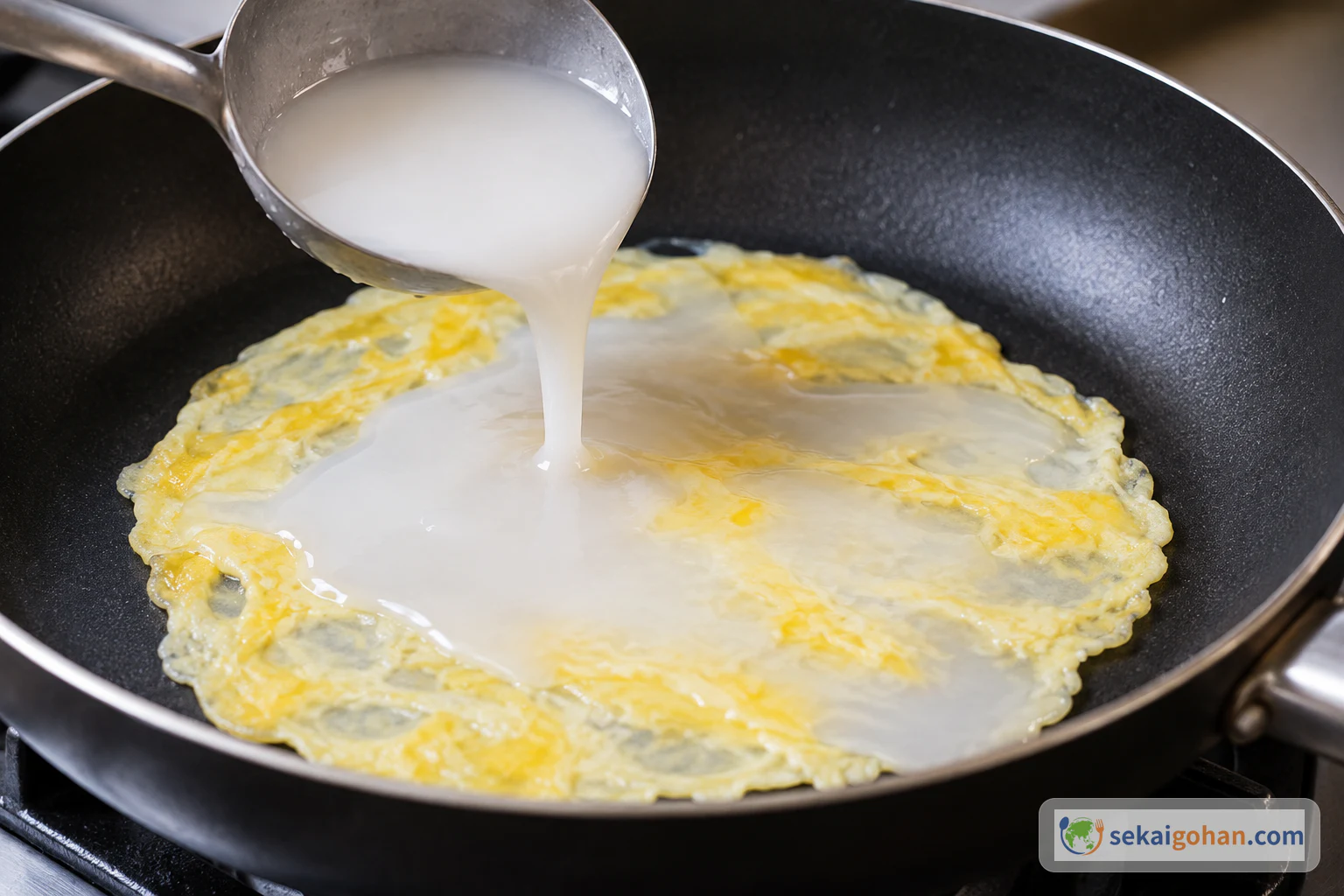
One ladle of white tapioca batter poured into the pan after the egg
One ladle of batter goes over the spoonful of egg

Right after the egg, pour one ladle of the tapioca batter into the pan over it.

STEP66 / 9

Tilt the pan to spread the batter

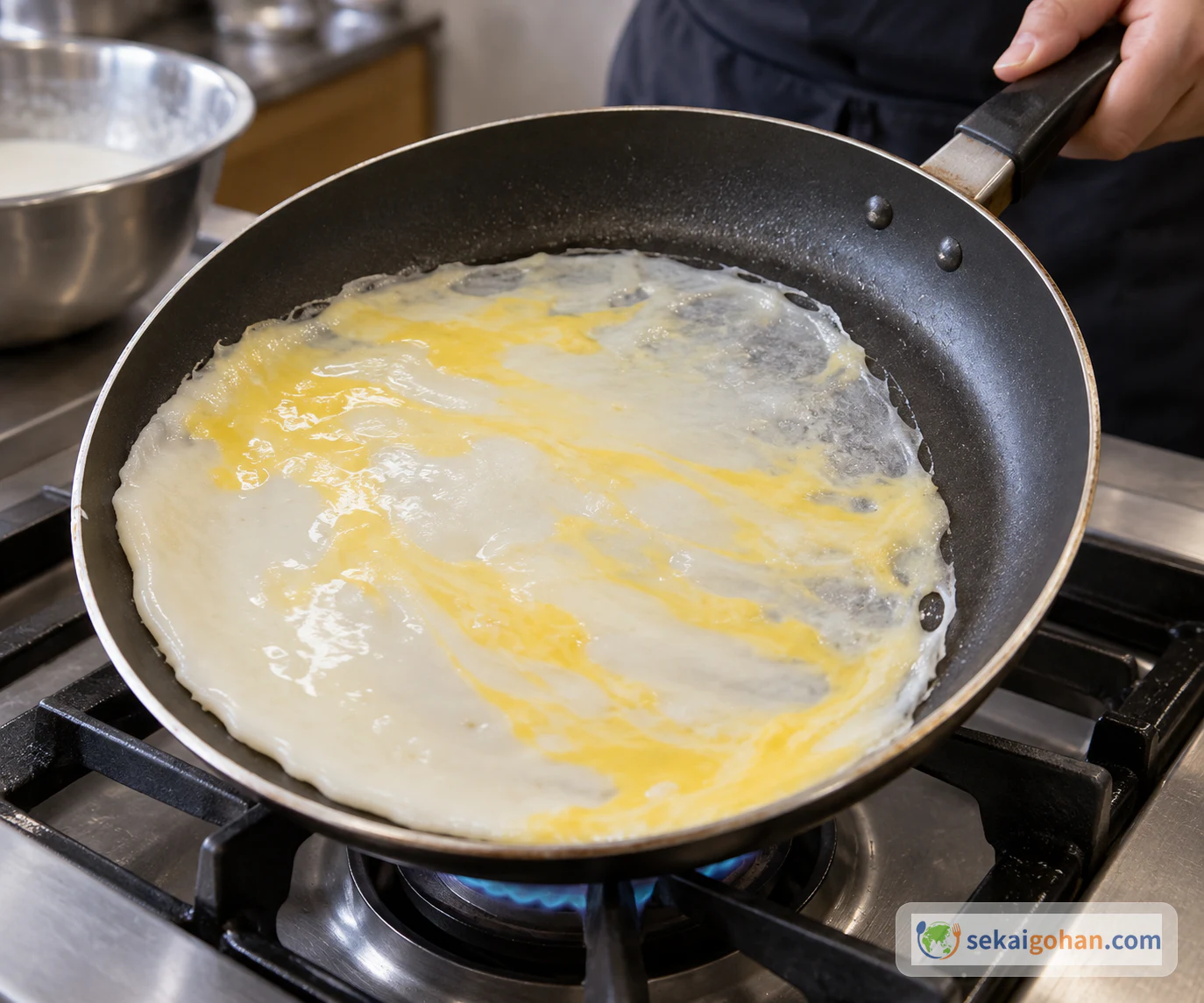
The pan tilted to spread the tapioca batter thinly over the egg
Tilting the pan spreads the batter into a thin sheet over the egg

Tilt the pan so the batter spreads out thin over the egg.

STEP77 / 9

Cook until set with dry edges

STEP 7

Leave the sheet in the pan until it is cooked through, set, and its edges have dried.

STEP88 / 9

Roll the sheet onto a skewer and lift it out

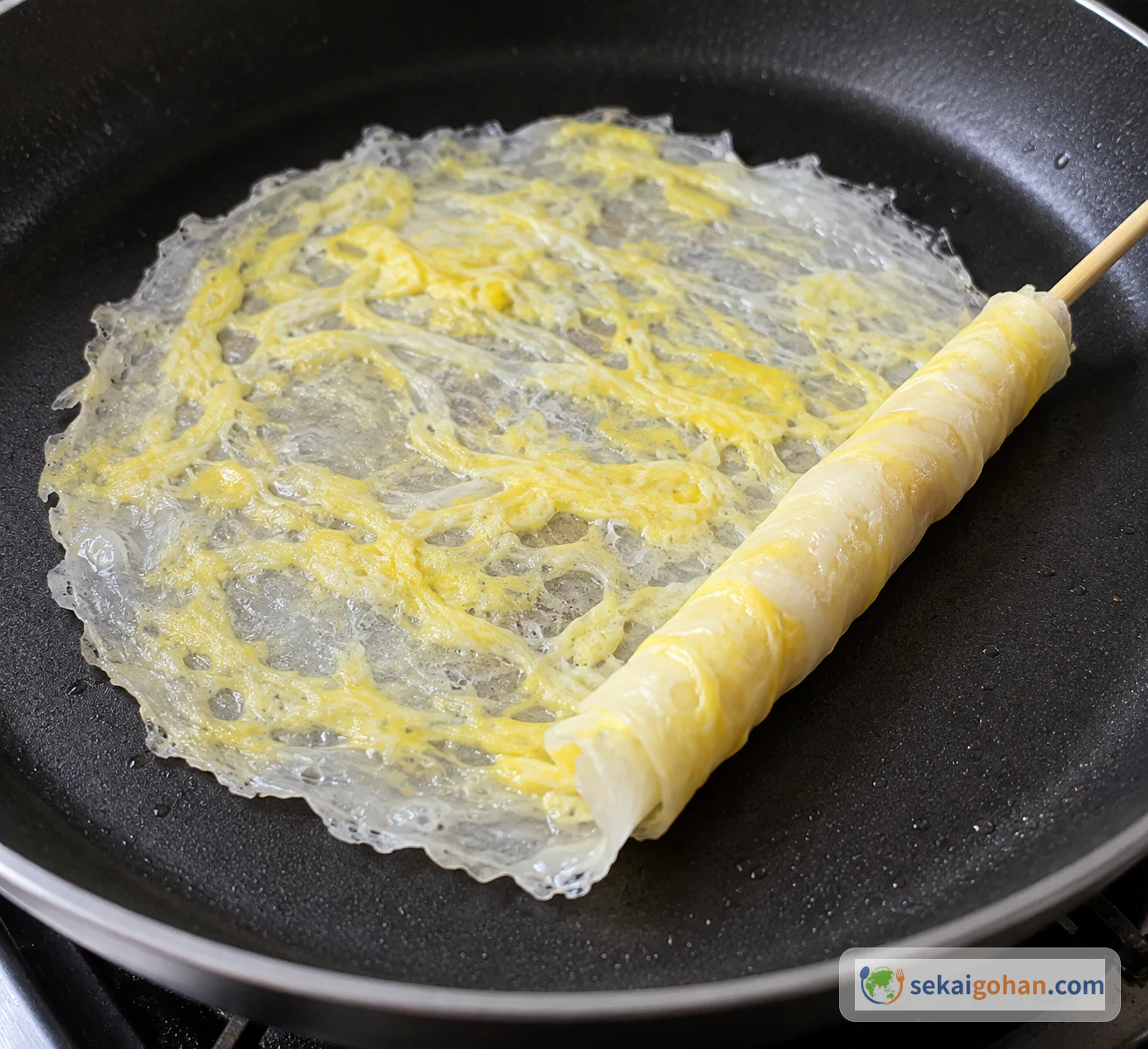
A set tapioca-and-egg sheet with dry edges being rolled onto a skewer
Once the sheet has set and its edges are dry, it is rolled onto a bamboo skewer

Place a bamboo satay skewer at one edge of the set sheet, roll the sheet around it, and lift the roll out of the pan.

STEP99 / 9

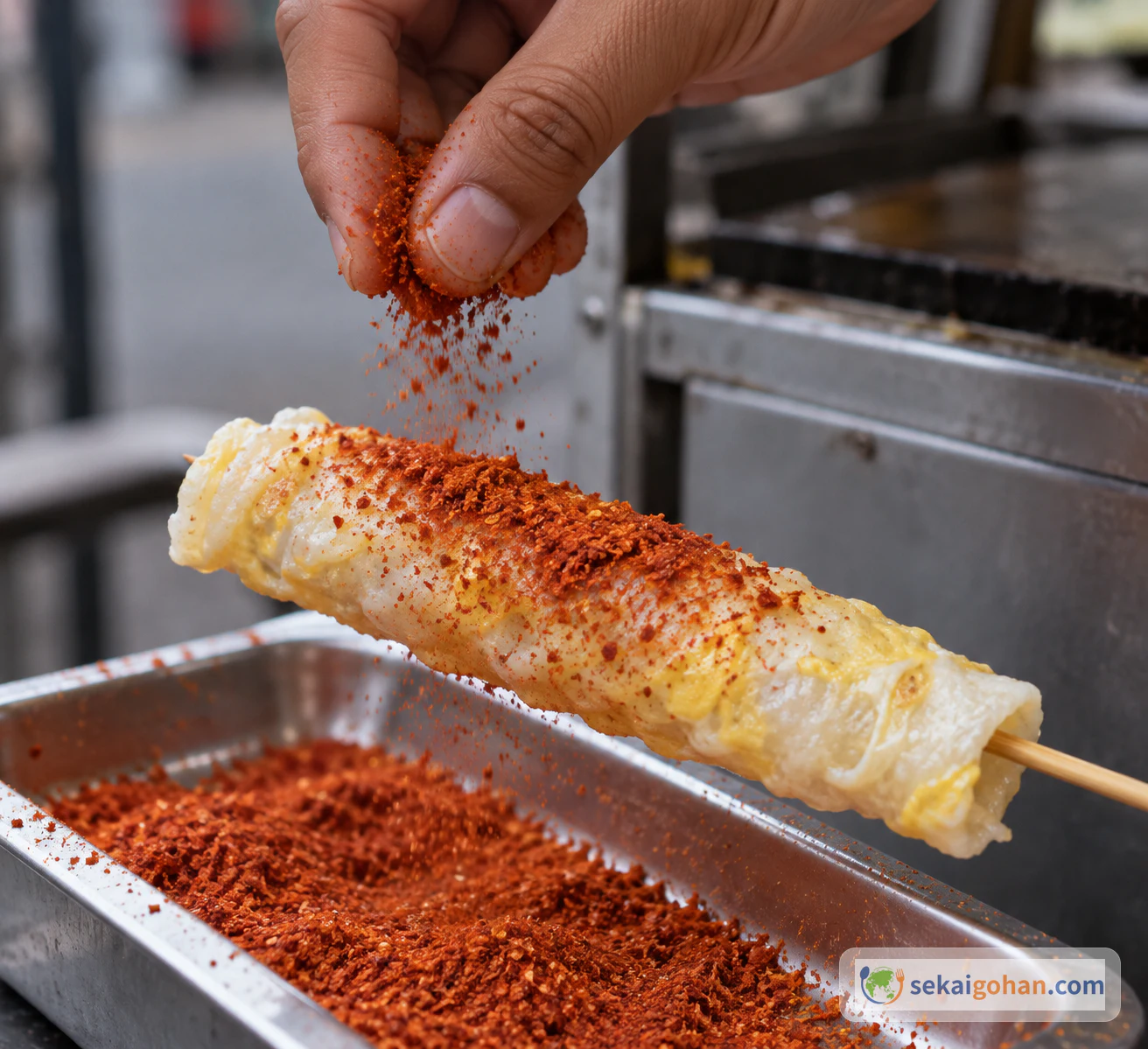
Finish with chili powder only

Chili powder being sprinkled over a rolled Cilung
This version is finished with chili powder alone, without a mixed coating

Sprinkle chili powder over the rolled Cilung to taste, with no mixed coating, and serve.

0 / 0
Ingredients

Ingredients

1 / 3

Batter

Ingredient Amount Role
Tapioca flour (tepung tapioka) 3.5 oz (100 g) The starch for the thin sheet. Kanji or sagu are listed as alternatives; this recipe uses tapioca
Water (air) 1 cup (250 ml) All of it goes into the batter
Salt (garam) To taste (secukupnya) Seasons the batter
2 / 3

Egg

Ingredient Amount Role
Egg (telur) 1 Beaten separately and added to the pan before the batter. Not mixed into the batter
Salt (garam) A little (sedikit) Beaten into the egg
3 / 3

Pan and finish

Ingredient Amount Role
Oil (minyak) As needed Only for greasing the nonstick pan
Chili powder (bubuk cabe) To taste (secukupnya) Sprinkled over the rolled Cilung to finish. No amount is given
0 / 0

Pour a spoonful of beaten egg into a greased nonstick pan, then a ladle of pale, milky tapioca batter over it, and tilt the pan so the batter runs thin across the egg. When the sheet has set and its edges look dry, you roll it up around a bamboo satay skewer and lift it out. That's Cilung, a West Javanese snack of starch batter and egg. It comes out soft and a little chewy, with a dusting of chili powder on top.

What Cilung Is

The name tells you what the dish is. Cilung is short for aci digulung: aci is the starch that makes the batter, and digulung means "rolled." The batter is nothing more than flour and water with salt. The egg is beaten on its own and goes into the pan first, so the finished roll shows a pale tapioca layer with fine yellow threads of egg running through it.

That layering is what sets Cilung apart from a crepe or an omelet. The sheet isn't made from wheat batter, and it isn't a thick layer of egg either. It's a thin starch sheet resting on a small amount of egg, cooked in a greased pan and rolled while it's still flexible.

Cilung Among West Java's Market Snacks

Cilung belongs to West Java's jajanan pasar, or market snacks, alongside its starchy cousins Cilor, Cilok and Cireng. One description from the region has it cooked in hot oil before being rolled onto a small bamboo skewer, so the greased-pan method here is one of several ways people make it.

You may also see Cilung called Papeda Gulung. Don't confuse it with papeda, the sago porridge eaten with fish soup in eastern Indonesia, which is a different dish. For more of the country's cooking, see Indonesian dishes.

Ingredients: Batter and Egg Kept Apart
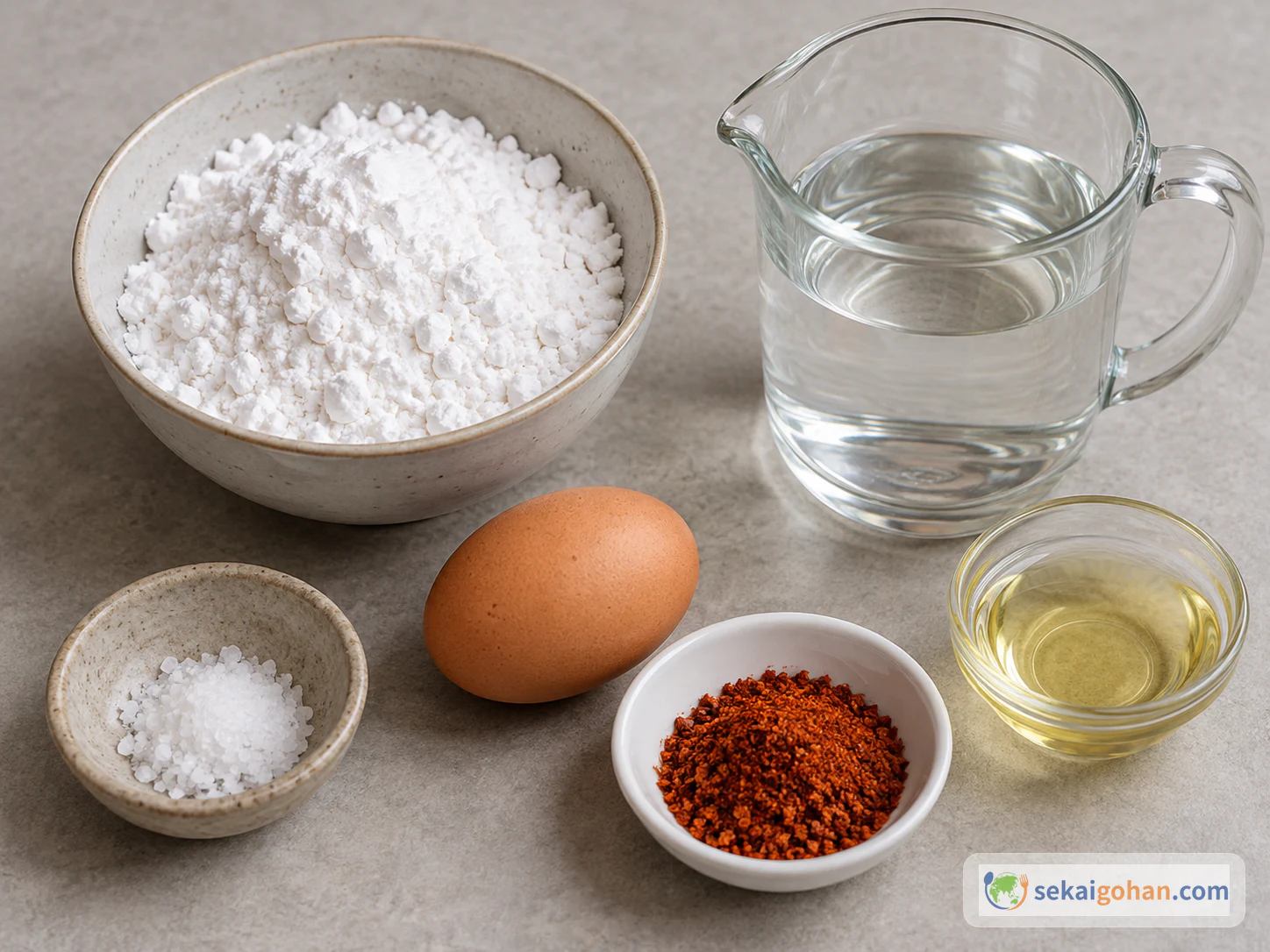
Tapioca flour, water, an egg, salt and chili powder for finishing, laid out separately for Cilung
The batter ingredients, the egg and the finishing chili powder are prepared separately

The batter is mixed from the flour, the water and salt. The egg is beaten separately with its own small amount of salt. All 1 cup (250 ml) of water goes into the batter, and none of it goes into the egg.

Equipment

  • A nonstick frying pan (teflon pan)
  • Bamboo satay skewers (tusuk sate)
  • A ladle (sendok sayur)
  • A tablespoon (sdm) for portioning the beaten egg
  • Two bowls: one for the batter, one for the egg
  • A spoon for stirring the batter, and something to beat the egg with

Choosing the Starch for Cilung

The ingredient list gives three options at 3.5 oz (100 g): tepung kanji/sagu/tapioka. Tapioca is the one used here. You'll usually find it sold simply as "tapioca flour" or "tapioca starch."

The flour, the water and the single egg are measured. Everything else is up to you: salt to taste in the batter and a little in the egg, just enough oil to grease the pan, and chili powder to taste.

Method: Egg First, Then Batter, Then the Skewer

One pan at a time

Each pan uses 1 sdm of the beaten egg and one ladle of batter. The single egg is for the whole batch, not one egg per roll.

Getting Cilung Right in the Pan

Most problems with Cilung come from mixing up the order or rolling too soon. If you're unsure, go by these cues:

If you are unsure about… What to do
When to roll Wait until the sheet is cooked and set and its edges have dried. Look for both signs
How much egg goes in each pan Use 1 sdm of the beaten egg, not a whole egg
Whether to stir the egg into the batter Don't. Beat the egg separately and add it to the pan first
Whether water goes in the egg It doesn't. All 1 cup (250 ml) of water is for the batter

Serving and Variations

The simplest way to serve Cilung is the one used here: straight off the skewer with a sprinkle of chili powder. Plenty of cooks go further. They might stir a seasoning powder (penyedap rasa) into the batter, or roll the finished Cilung in a mix of dry-toasted breadcrumbs, fried shallots, Bon Cabe and atom seasoning. Flavor powders such as balado or cheese are common too, and so is sauce or mayonnaise on the side.

Recipes sold under the name Papeda Gulung (Cilung) use a different formula: 3.5 oz (100 g) tapioca flour with ¾ cup (200 ml) water, two eggs beaten with some of that water, scallion, measured salt, stock powder and pepper. That version makes 12 skewers. Use one formula or the other, because the amounts don't mix.

Frequently Asked Questions

Is the egg mixed into the batter?

No. Beat the egg separately with a little salt. In the pan, 1 sdm of it goes in first, followed by a ladle of batter.

Can I use a different starch?

Yes: kanji, sagu or tapioca flour all work at 3.5 oz (100 g). Tapioca is the one used here.

Is Cilung the same as papeda?

No. Cilung is sometimes called Papeda Gulung, but papeda, eastern Indonesia's sago porridge served with fish soup, is a different dish.

Sources

  • Wawa Wiati (@wawawiati1911), "Cilung (aci digulung)," Cookpad Indonesia, 2020. The recipe this article follows: the cook's Garut, Jawa Barat profile and their note about making the snack for their children; the dish name; 250 ml water, 100 g of kanji/sagu/tapioca flour, salt to taste, an optional seasoning powder, and one egg beaten with a little salt; the method of greasing the pan, adding 1 sdm of egg and then a ladle of batter, tilting, cooking until set with dry edges, and rolling onto a skewer; and the chili-powder-only way of serving without a mixed coating. https://cookpad.com/id/resep/12766460
  • ResepKoki, "Papeda Gulung (Cilung) Mudah dan Enak," recipe credit IG @tsaniwismono, page editor Atsarina Luthfiyyah. Used only for comparison, as a separate recipe with a different formula and order of steps. https://resepkoki.id/resep/resep-papeda-gulung/
  • Ahmad Maulana Ghufar and Suhandano, "Leksikon Jajanan Pasar Jawa Barat: Kajian Etnosemantik," Jurnal Kabastra, Vol. 2, No. 1 (June 2022), pp. 11–25 (PDF hosted by GARUDA/Kemdikbud). A qualitative ethnosemantic study of West Java market-snack names, including its descriptions of Cilung, Cilor, Cilok and Cireng. Used for vocabulary context, not as a recipe or a history of the dish. https://download.garuda.kemdikbud.go.id/article.php?article=3357526&title=Leksikon+Jajanan+Pasar+Jawa+Barat+Kajian+Etnosemantik&val=29448