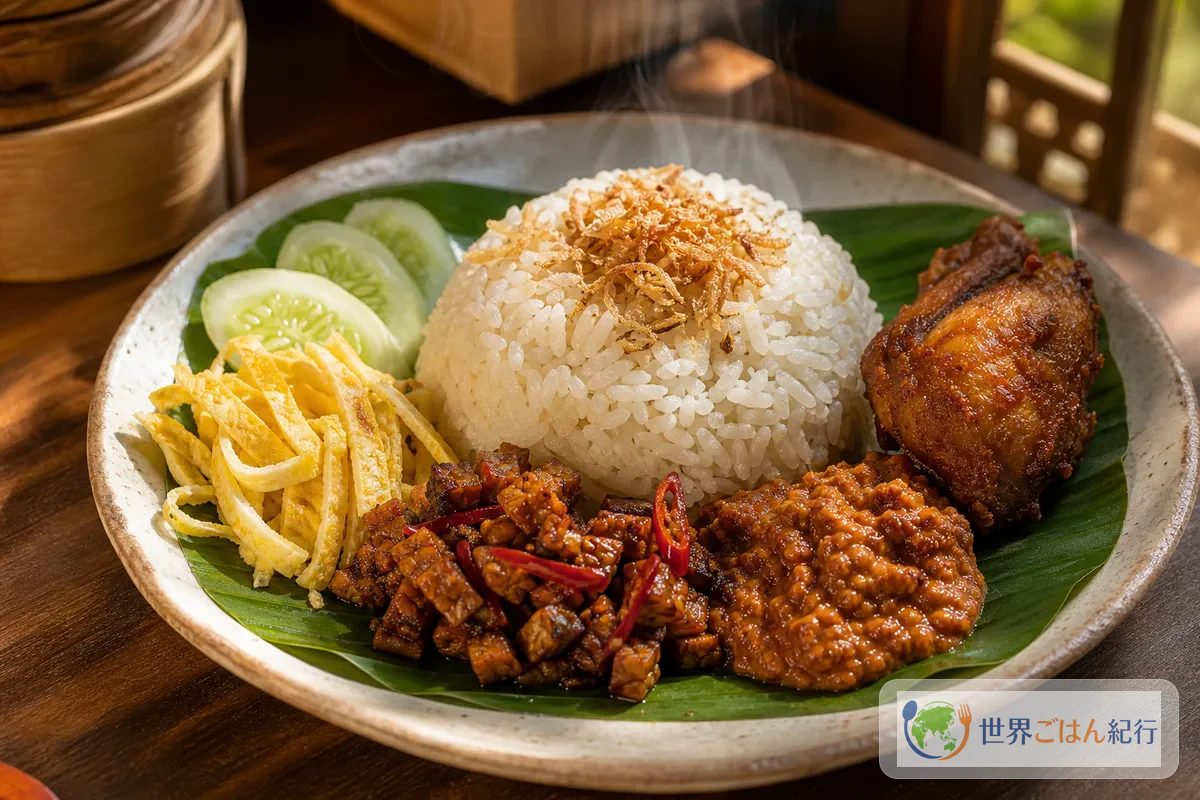
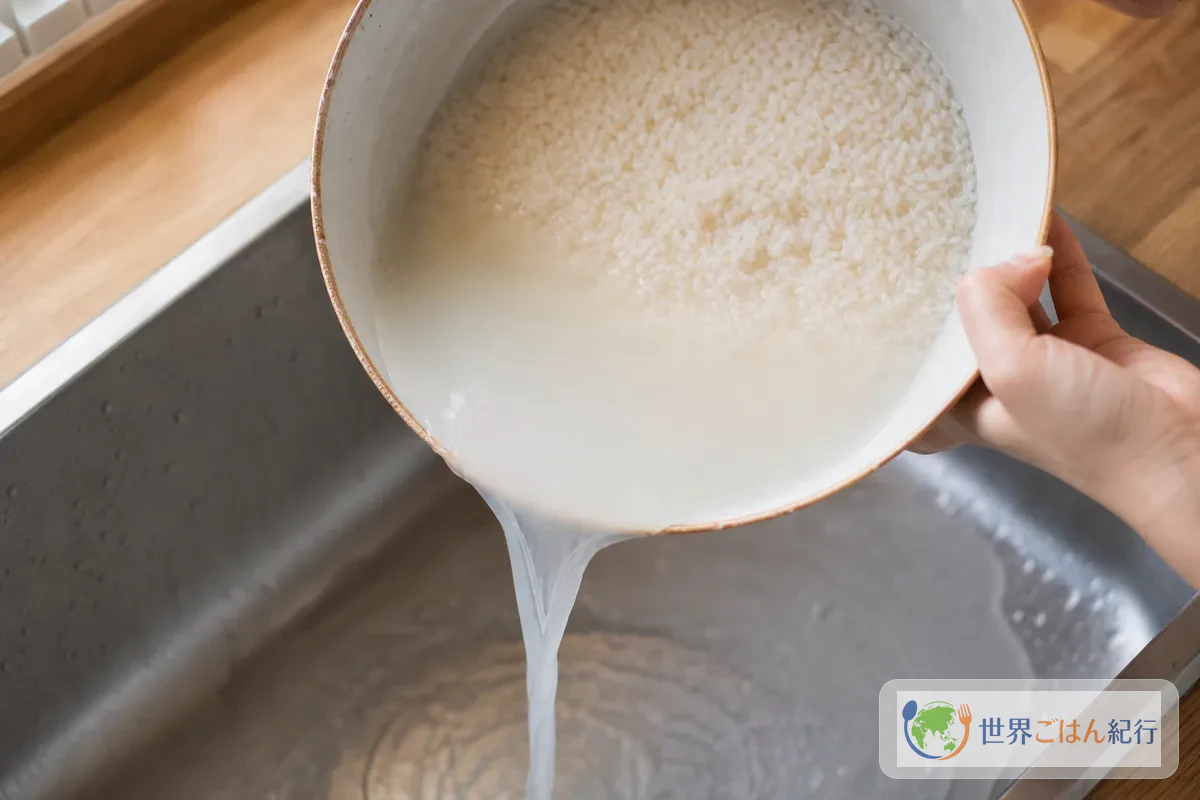
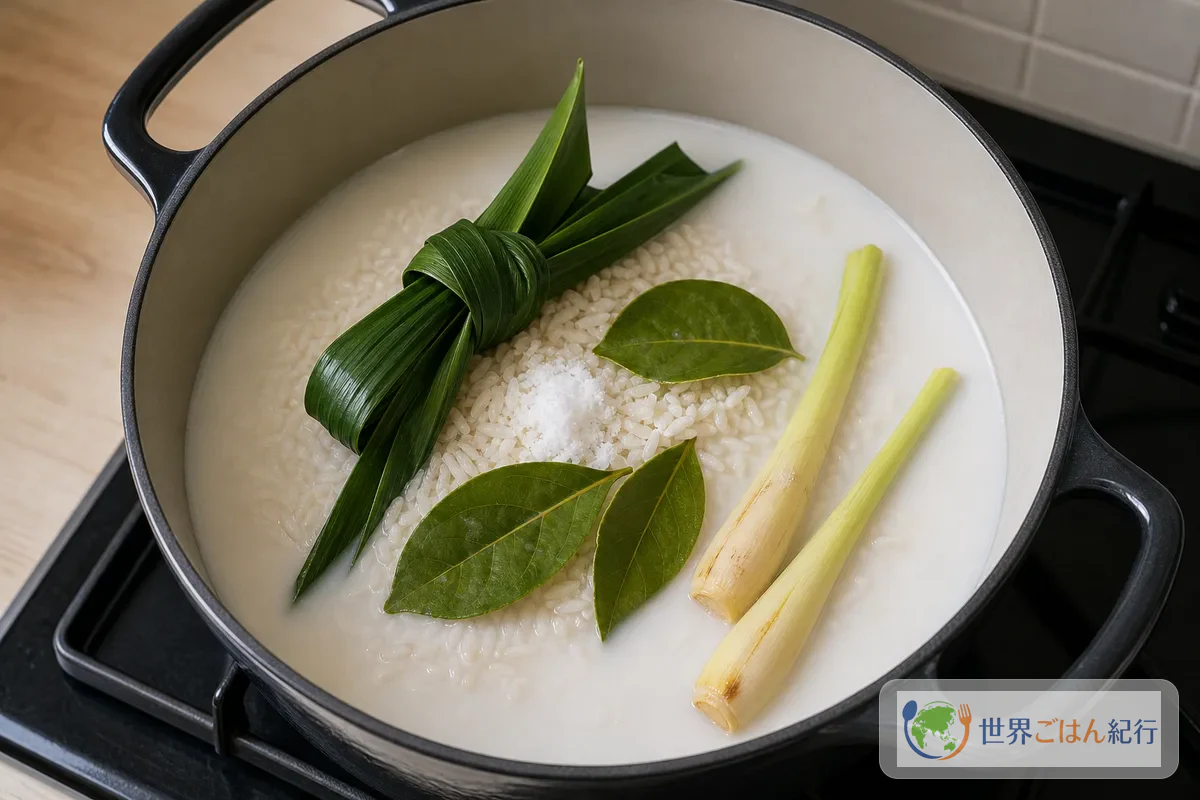
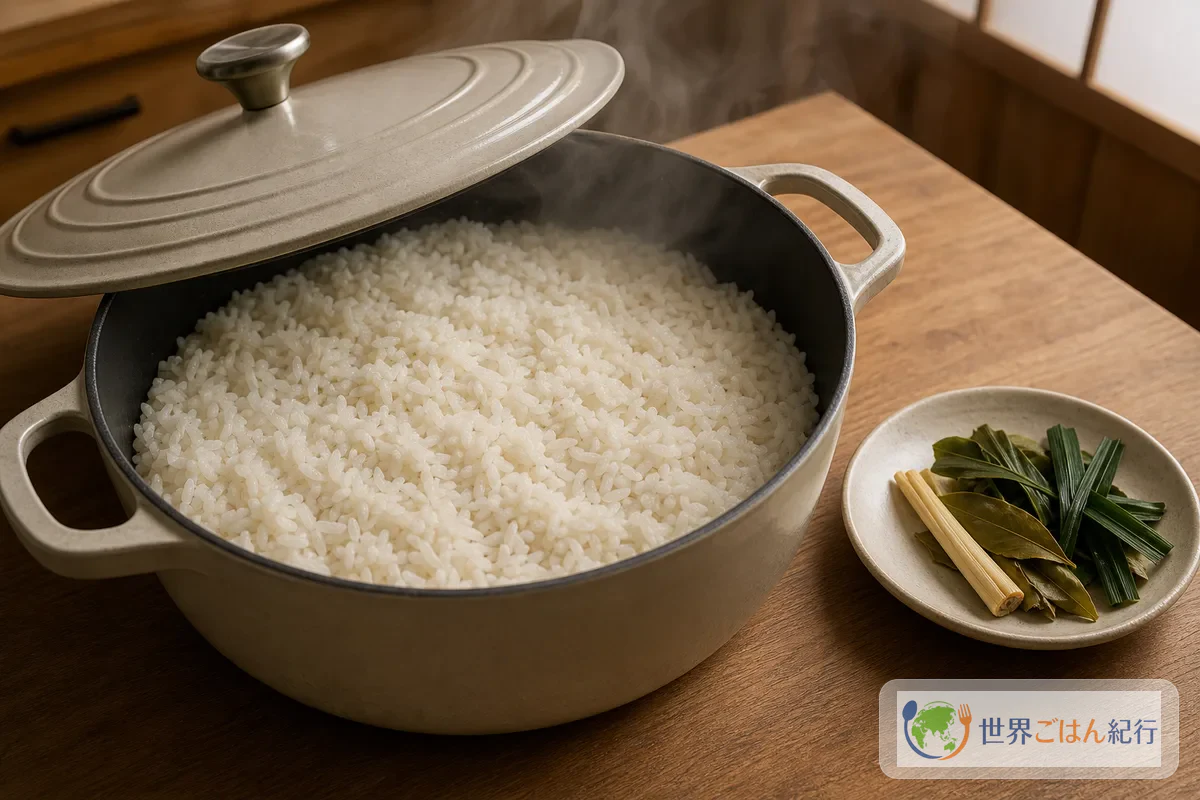
Some mornings, rinsing rice and filling the cooker to the usual mark, plain white rice feels a little lacking. Add coconut milk, crushed lemongrass and a pandan leaf, and that same rice becomes something you eat for its fragrance. This is nasi uduk, the coconut rice of Jakarta's Betawi kitchens. The rice is cooked with coconut milk, salt, lemongrass, pandan and salam leaf, so the aroma and a gentle saltiness go right into every grain. Nasi means rice, and uduk carries a sense of mixing or making rich.
Nasi uduk as a Betawi breakfast
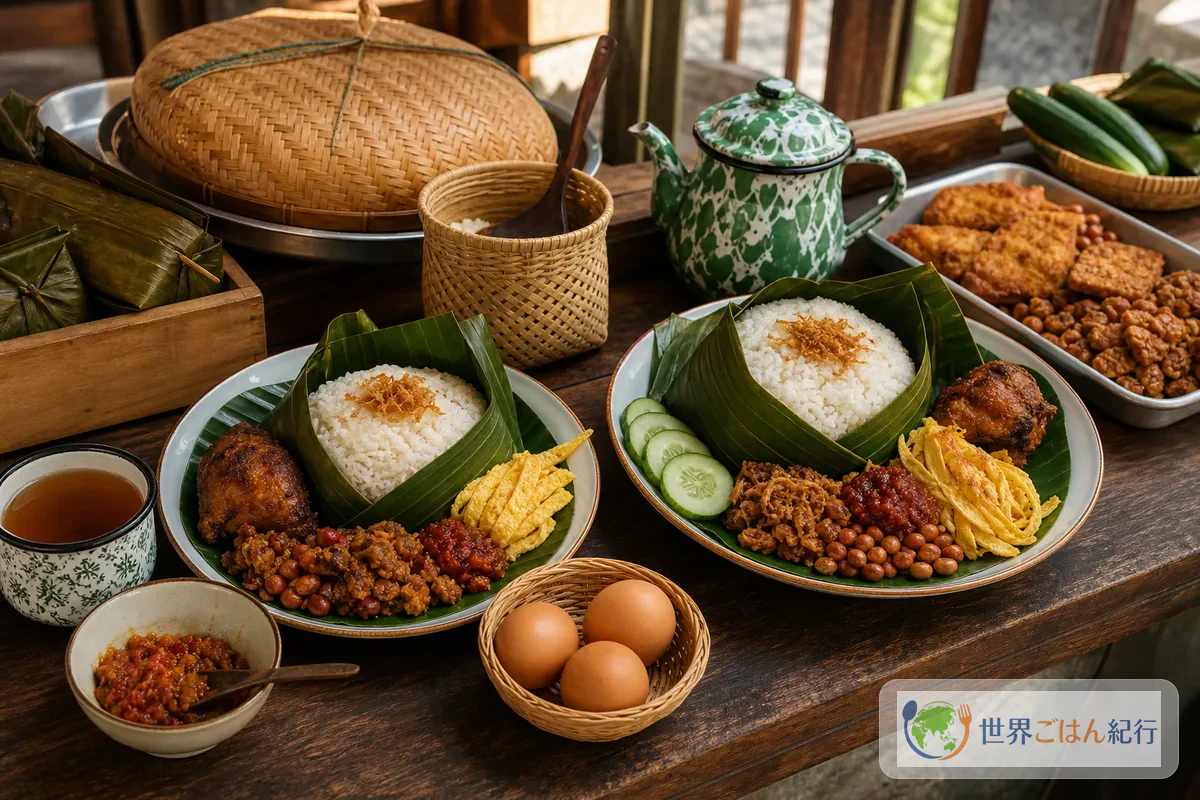
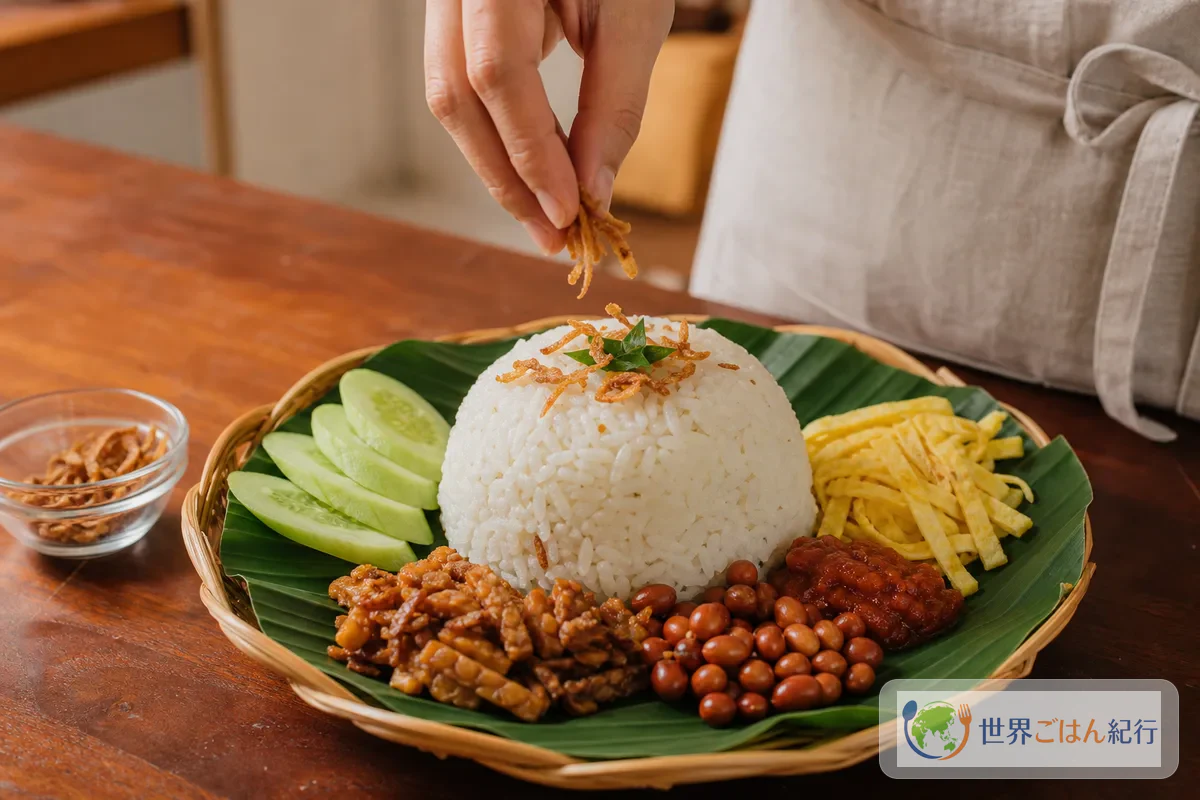
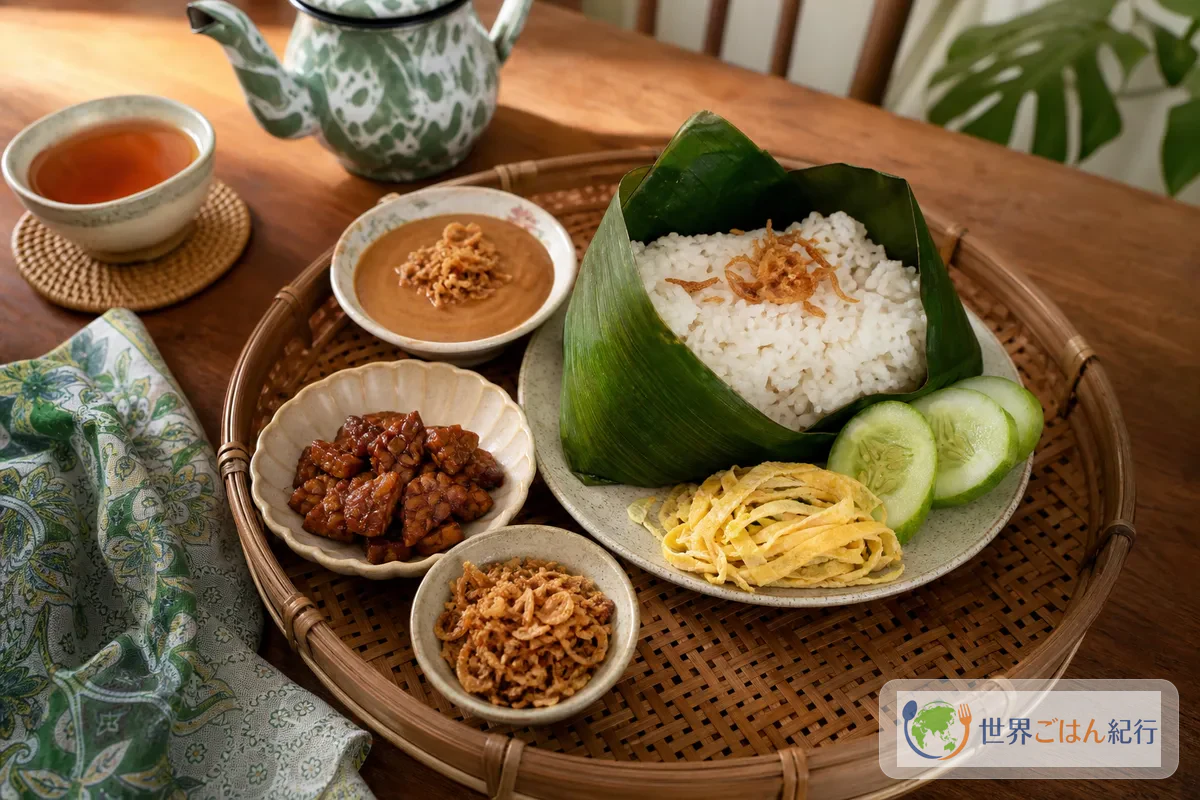
In Jakarta you see nasi uduk from early morning in the alleys and markets. It's loved as breakfast or a street-stall plate, a little more luxurious than plain white rice. Some stalls wrap the rice in banana leaf and add fried tempeh, egg, rice vermicelli, sambal and fried onions. At home, on easier days, it's just cucumber and egg. Either way, the rice itself has to carry aroma and salt.
Betawi cuisine grew out of the indigenous culture around Jakarta, layered with Malay, Chinese, Arab, Dutch and other influences, and nasi uduk shows that mixing clearly. Cooking rice with coconut is common across Southeast Asia. Lifting it with fried onions and sambal is the Indonesian touch, and with egg, tempeh, chicken and cucumber alongside, it becomes a one-plate breakfast or lunch.
Nasi uduk, nasi lemak and nasi goreng
The closest relative is Malaysia's nasi lemak, also cooked in coconut. Nasi lemak classically comes with sambal, ikan bilis, peanuts and a boiled egg, and it's best known as a wrapped rice. Jakarta's nasi uduk is more of a mixed plate, with fried tempeh, omelet, rice vermicelli and chicken. At home, it's easier not to fix the form as firmly: make the fragrant rice the star and keep the accompaniments small.
| What to compare | Nasi uduk | Nasi lemak |
|---|---|---|
| Main area | Jakarta, Betawi region | Around Malaysia and Singapore |
| Aroma of the rice | Coconut, lemongrass, pandan, salam | Coconut, pandan |
| Accompaniments | Egg, tempeh, chicken, rice vermicelli, sambal, fried onions | Sambal, ikan bilis, peanuts, egg, cucumber |
| Priority at home | Adjusting the liquid for the rice, and the herbs | Building the sambal and accompaniments |
Within Indonesia, nasi goreng stir-fries cold rice over high heat. Nasi uduk is its opposite, rice cooked plump with aroma and fat. Put the two side by side and the Indonesian table starts to look a little more three-dimensional.
Ingredients (serves 4)
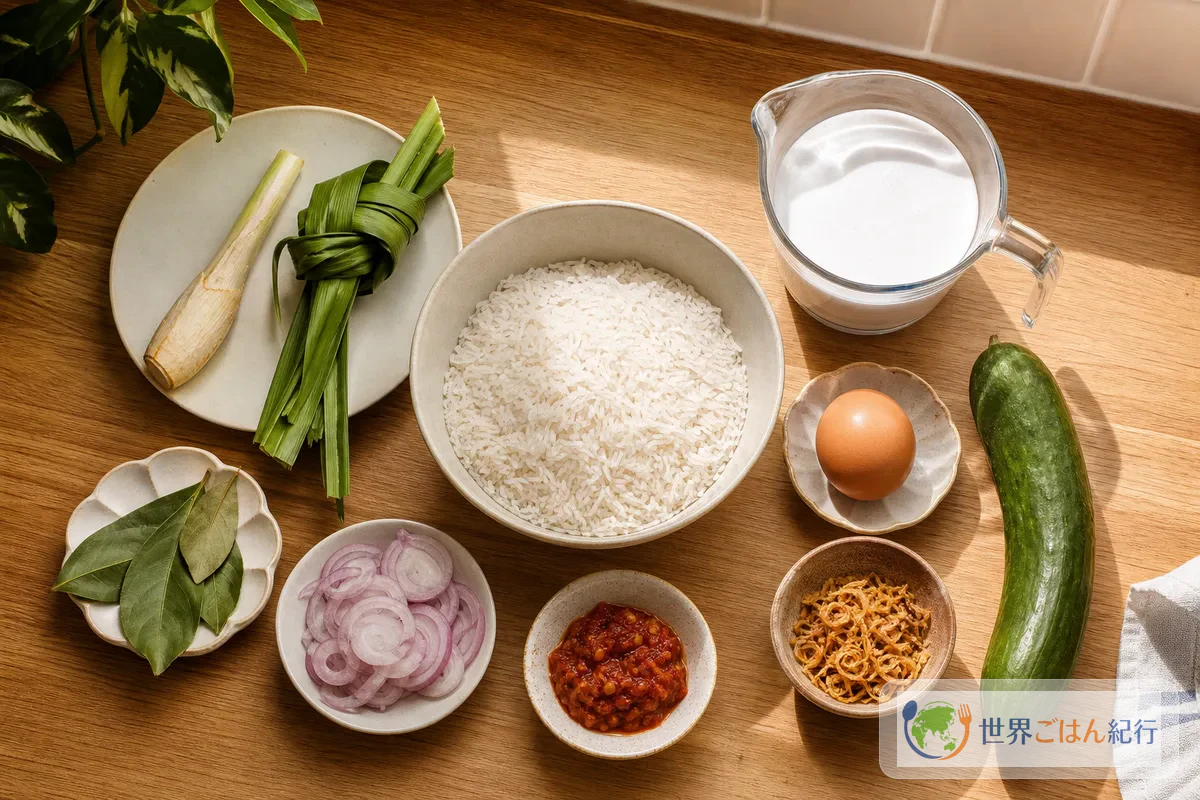
Allergens to watch: rice, coconut, soy-containing seasonings, egg and peanuts. Some store-bought fried onions and sambal are made in facilities that handle wheat, shrimp, seafood and nuts. If anyone has an allergy, check the label on each product.
Nasi uduk is tighter in flavor with sambal, but the rice itself isn't spicy. At a table where someone is sensitive to heat, don't mix sambal into the big platter; let each person add 1/2 tsp at a time.
Choosing ingredients for nasi uduk
Rice, coconut and herbs
The core of nasi uduk is rice cooked in coconut. If the rice is fragrant, it works as a dish even without tempeh or chicken; if it turns sticky, lavish accompaniments won't save it. When you're shopping, think in this order: rice and coconut first, then lemongrass, then pandan if you have room. Lemongrass and coconut milk alone lift it well beyond plain coconut rice, but with thin coconut, even pandan won't give you that round nasi uduk aroma.
| Where you hesitate | Closer to local | Realistic home solution | Direction to avoid |
|---|---|---|---|
| Rice | Jasmine rice or Indonesian long-grain rice | Jasmine rice. With short-grain rice, reduce the water | Cooking short-grain rice with the normal amount of water |
| Coconut | Rich coconut milk | Canned coconut milk for cooking, mixed well | Coconut water, thin beverages |
| Pandan | Frozen pandan leaf | If you have none, omit it and keep the lemongrass | Substituting vanilla essence |
| Salam leaf | daun salam | One bay leaf to supply only the direction of the aroma | Using many bay leaves and moving toward Western flavors |
| Accompaniments | Tempeh, egg, sambal, fried onions | Thick fried tofu, thin omelet, cucumber, store-bought sambal | Mixing everything into the rice |
Short-grain rice turns out a little chewy, more like a different rice dish, and that's fine. Too much coconut milk pushes it toward porridge, though, so for a first try don't go past 1 cup (250 ml) of milk. On days you want lightness, use jasmine rice; on days you want to use what's in the pantry, use short-grain with less water.
Sambal, kecap manis and fried onions
Beyond the rice, the ingredients worth buying are the ones that bring the local feel. Kecap manis doesn't go into the rice, but glazing the tempeh with it pulls the whole table toward Indonesia, and it also goes into sate ayam and mie goreng. Sambal can be homemade, but on a busy day a store-bought one on a separate plate lets everyone set their own heat.
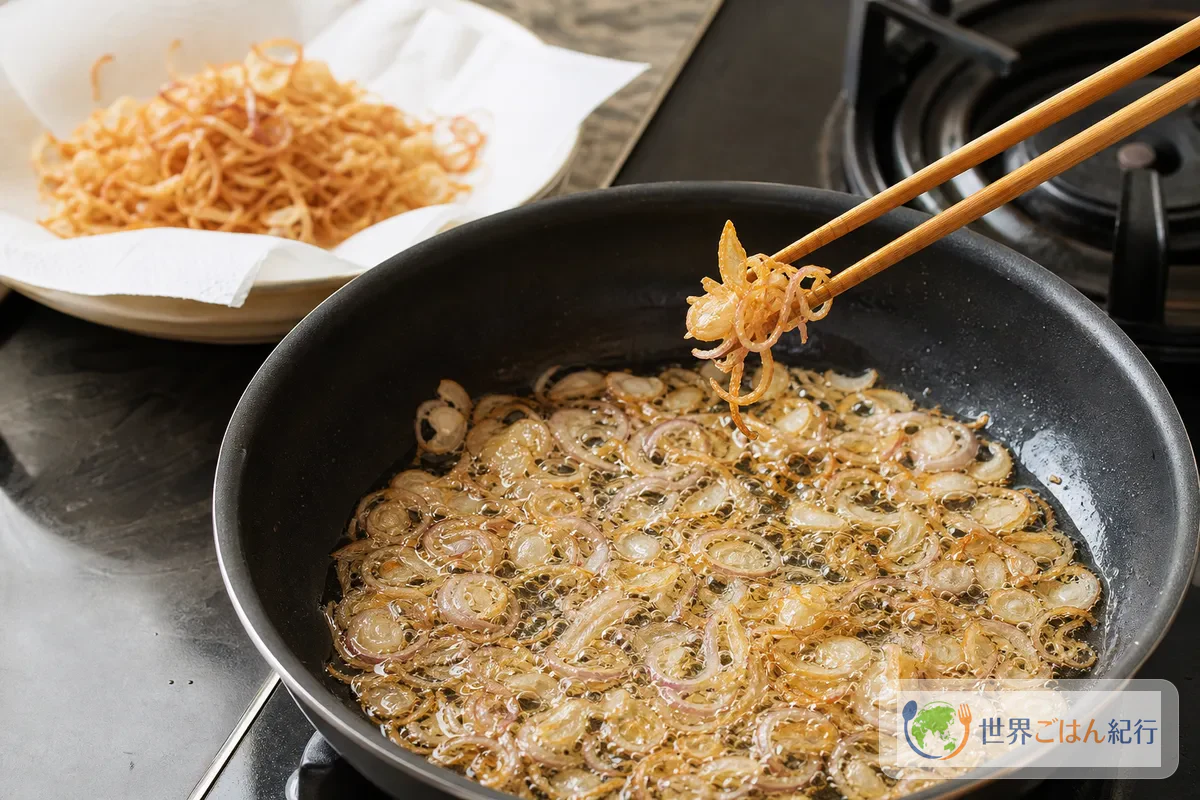
Store-bought fried onions make a breakfast nasi uduk much easier and the result steadier. They're useful well beyond this dish, too, in Egyptian koshari and Lebanese mujaddara.
Method: cook the rice with aroma and shape the outline with the accompaniments
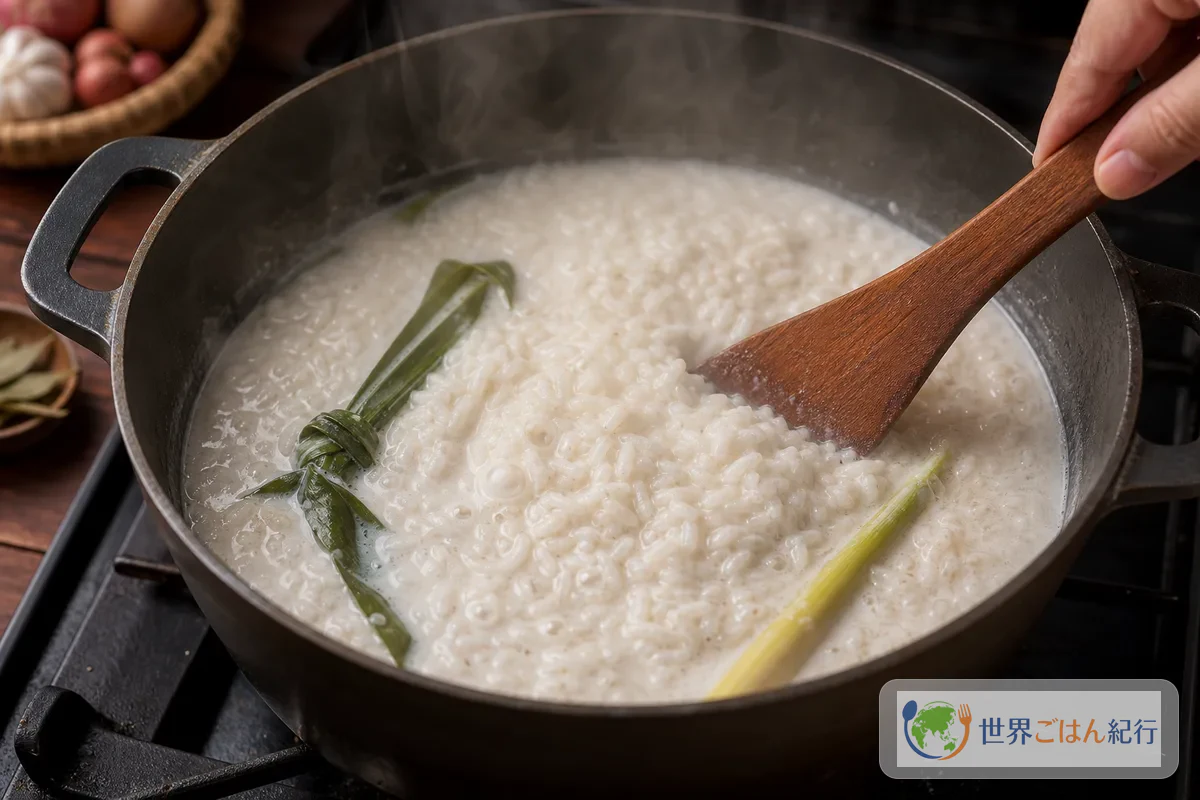
Making it in a pot lets you adjust while watching how the liquid decreases. For a first try, a pot is better than a rice cooker for learning the weight of coconut milk. Use a heavy pot, and don't rush once the heat is down to low. It's a dish where you wait until the aroma rises.
Put in 2 cups rice, 200 ml coconut milk, 260 ml water, 2/3 tsp salt and the herbs, and cook normally. After cooking, steam 10 minutes and turn from the bottom in big strokes. For short-grain rice, reduce the water to 230 ml, and if the rice comes out soft, reduce it by another 2 tbsp next time.
Why nasi uduk fails
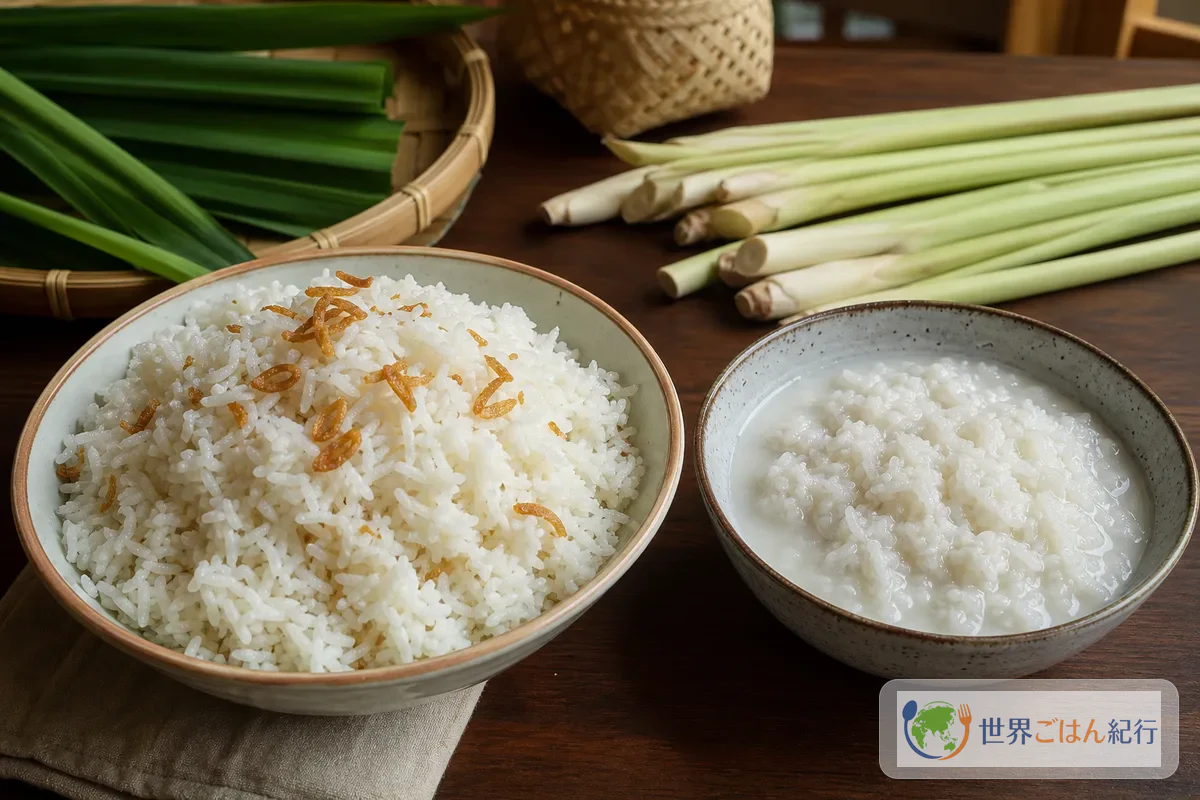
The hard part isn't gathering unusual ingredients; it's the liquid. Coconut milk is heavier than water, and its fat coats the rice and changes how fast the grains absorb water. Cook it with your white-rice habits and the bottom turns sticky or the grains split. Start with slightly less liquid than feels normal, and if it's short after steaming, make it up with a spray bottle or a little hot water.
| Symptom | Cause | Fix |
|---|---|---|
| Sticky bottom | Too much liquid, not enough steaming | Take off the lid, 2 minutes on low heat, turn off the heat and steam 5 minutes |
| Grains split | Stirred hard, heat too high | After it boils, keep to low heat. Only turn over the bottom |
| Weak aroma | Used coconut beverage, too few herbs | Switch to canned coconut milk for cooking. Bruise the lemongrass before using |
| Greasy | Coconut milk too rich | Next time ¾ cup (200 ml) milk and 1¼ cups (310 ml) water |
| Scorched bottom | Pot too thin, "low heat" too strong | Switch to a heavy pot and drop to the lowest heat once it boils |
If the aroma feels weak, bruise the lemongrass more thoroughly next time rather than adding more pandan. With herbs, their state matters more than their quantity: lemongrass dropped in whole gives little aroma and just sits in the pot like a stick.
Storing, reheating and serving nasi uduk
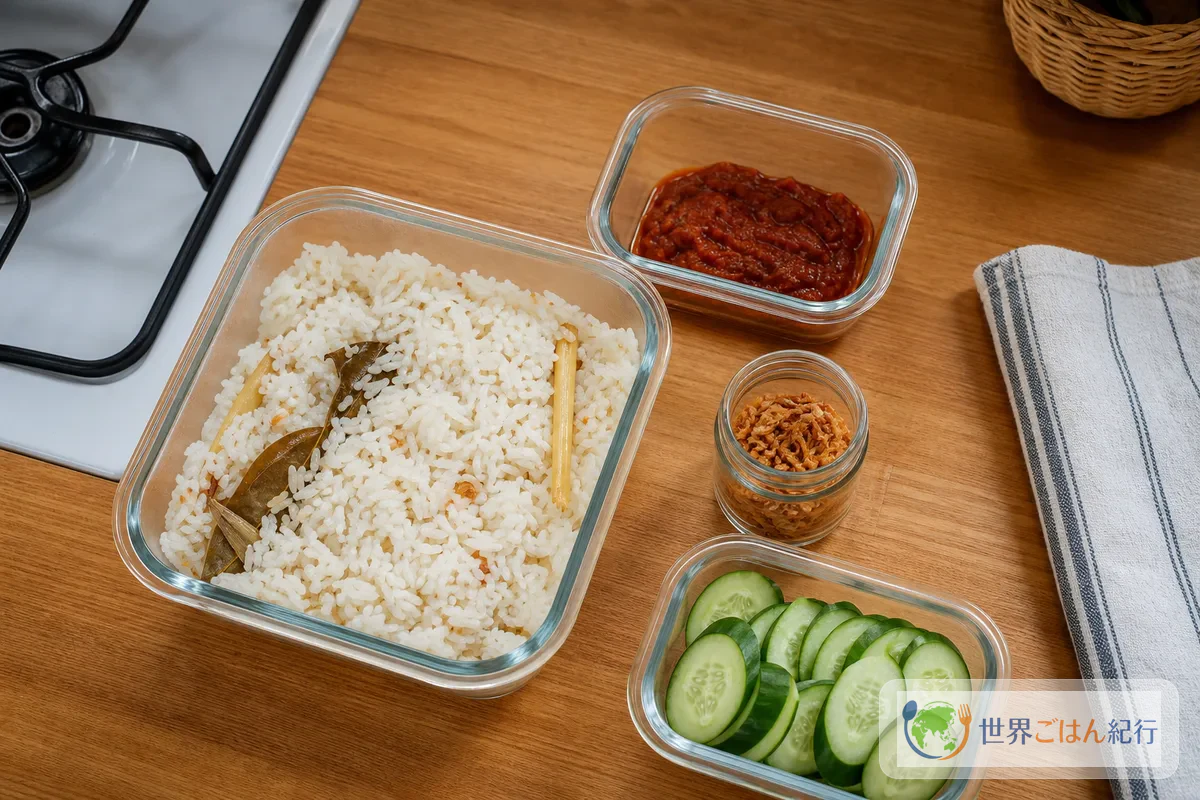
Once the rice has cooled slightly, spread it in a shallow container, refrigerate, and eat it within 2 days. Keep the sambal, cucumber and fried onions in separate containers; fried onions stored on the rice absorb moisture and lose their aroma.
To reheat, put one portion on a heatproof plate, sprinkle on 2 tsp water, cover loosely with plastic wrap and microwave at 600 W for 1 minute 20 seconds, adding 10 seconds at a time if it's still hard. In a skillet, warm 1 tsp oil over low heat, add the rice and cover for 30 seconds, then uncover for 1 minute. Tossing it over high heat like fried rice drives off the aroma, so just warm it through.
On day two, a little heat from sambal substitute takes away the fridge smell. With chicken soup it becomes a breakfast in the spirit of soto ayam. And once you're at home with coconut aroma, try rendang: the same coconut, but reduced in a stew rather than cooked into rice.
FAQ
Can I make it without pandan leaf?
Yes. Pandan adds a sweet green aroma, but the center of nasi uduk is coconut milk and saltiness. Bruised lemongrass plus one salam leaf or bay leaf makes a good home version.
How much water should I use with short-grain rice?
For 2 cups of rice, start with 250 ml coconut milk and 230 ml water. Short-grain rice turns sticky easily, so if you cook it in a pot, set the low-heat time to 12 minutes and check it after steaming. If it's soft, reduce the water by 2 tbsp next time.
I can't find tempeh.
Cut thick fried tofu 1 cm (1/2 inch) wide, pan-fry both sides in 2 tsp oil and coat with 1 tbsp kecap manis, 1 tsp soy sauce and 1 tsp lemon juice. It lacks tempeh's beany aroma, but it plays the same role: something sweet-savory to eat with the rice.
Isn't it heavy to make everything in the morning?
The rice is best cooked that day, but the accompaniments can be prepared the night before. Cook the egg and cut it in strips, refrigerate the cucumber whole, and keep the fried onions in an airtight container. In the morning, cook the rice and warm only the tempeh or fried tofu, and it's on the table in under an hour.
Is it good as nasi goreng?
You can stir-fry leftover nasi uduk, but the coconut fat makes it scorch easily, and it turns into something different from nasi goreng. If you fry it, keep it to 2 minutes over medium-low heat with just 1 tsp kecap manis. Go easy on the sweetness and finish with sambal and lime.