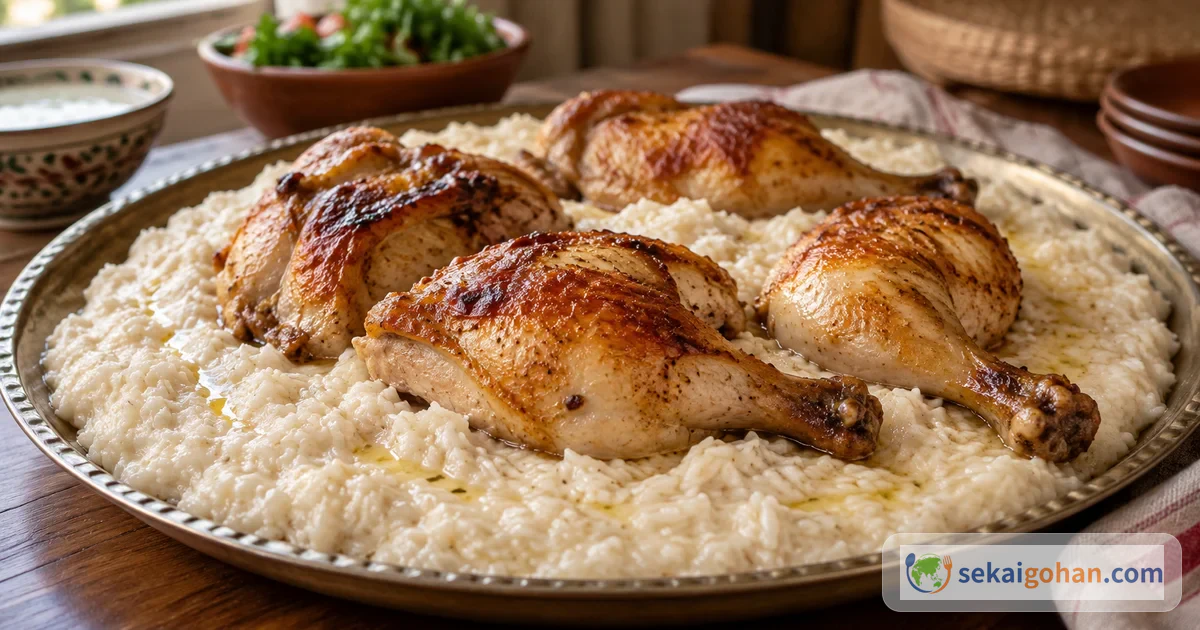
Evening in a Lebanese kitchen smells of cumin and onions frying slowly in oil, and it drifts out the windows. Children come running in with shining eyes and ask, "Is it mujaddara today?" Families have been asking that for generations. Mujaddara (مجدرة / Mujaddara) is lentils and rice (or bulgur) cooked together and piled high with crisp fried onions. It takes only five ingredients: lentils, rice, onions, oil and spices. It looks plain, but it has a deep savoriness that goes quiet around the table.
About Mujaddara
Mujaddara is eaten across the Levant and the lands around it, and it is completely plant-based. It ranks among the region's signature dishes alongside meat dishes such as kebab and mansaf. For a wider view of the region's cooking, see the introduction to Middle Eastern cuisine.
Food of the poor
For a long time, people in the Middle East called mujaddara "food of the poor." Households that couldn't afford meat got their protein from cheap lentils and rice. Today vegans and vegetarians all over the world love it.
The pairing works because legumes and grains complement each other's amino acids. Lentils are rich in lysine but low in methionine, and rice is rich in methionine but low in lysine, so each covers the other's gap. This "protein complementation" turns up in traditional foods around the world: rice and miso soup in Japan, tortillas and beans in Mexico, chapati and dal in India. People found these pairings through experience, long before anyone studied nutrition.
| Nutrient | Per serving (about 12.5 oz (350 g)) |
|---|---|
| Energy | 420 kcal |
| Protein | 16 g |
| Fiber | 11 g |

Lebanese and Syrian mujaddara
Each country makes mujaddara its own way, and the biggest difference is the grain. Lebanese mujaddara uses basmati rice and is finished as a pilaf with separate grains. The onions are crisp, and you can smell cumin all through it. Yogurt and fattoush (a salad with fried pita) are the classic sides.
In Syria, bulgur (cracked wheat) often takes the place of rice, which gives a more rustic texture. Bulgur needs less time in the pot with the lentils, so the Syrian version is a popular quick weeknight dish.
Ingredients (serves 4)
The flavor of mujaddara is decided by the cumin. Ground cumin from the supermarket spice aisle is enough, but dry-toasting whole cumin seeds and crushing them yourself gives a more fragrant result.
Choosing Lentils and Rice for Mujaddara
You can find lentils in supermarkets, natural food stores, Middle Eastern and Indian grocers, and online.
Brown lentils are ideal for mujaddara. They hold their shape and keep a firm, hearty texture. Red lentils have their skins removed and turn to mush in 5 minutes. Green lentils are too firm and take a long time to cook.

Many supermarkets sell basmati rice, and so do Indian, Middle Eastern and halal grocers. If you can't find it, Japanese rice can stand in: reduce the water to 1½ cups (350 ml) and soak the rice for 30 minutes.
To make it the Syrian way, replace the rice with the same amount of bulgur (coarse, #3) and shorten the cooking time to 15 minutes.
Getting the Fried Onions Right
The fried onions are what make the dish mujaddara, so they're worth the 20 minutes. When onions fry slowly over medium heat, two reactions happen at once:
- The Maillard reaction (150–180 degrees): amino acids and sugars react to form hundreds of compounds with a deep savory flavor and a toasty aroma
- Caramelization (above 160 degrees): heat breaks down the fructose and sucrose in the onions, giving a candy-like sweetness and some bitter complexity
Together they turn a raw onion's sharpness into something sweet, toasty, and slightly bitter.
Serving and Storing Mujaddara
Sides for mujaddara
| Side | Description |
|---|---|
| Yogurt (laban) | Strained yogurt is best. Mix in a little lemon juice and salt |
| Fattoush | A Lebanese salad with fried pita. Pomegranate vinegar dressing |
| Hummus (recipe, in Japanese) | Chickpea paste. Spread on bread and alternate bites with the mujaddara |
| Tabbouleh | A bulgur salad full of parsley. Its freshness is a good match |
| Falafel (recipe, in Japanese) | Chickpea fritters. Together with mujaddara they make a vegetarian menu |
If you make hummus too, see how to store hummus.

Menu ideas
Weeknight dinner (vegetarian): mujaddara, yogurt sauce, tomato and cucumber salad, and lemon.
Weekend brunch (Middle Eastern plate): mujaddara, hummus, tabbouleh, pita bread and olives.
For guests, four courses make a full Middle Eastern meal:
| Course | Menu |
|---|---|
| Starter | Hummus + falafel + baba ghanoush |
| Main | Mujaddara + shawarma (spiced grilled chicken) |
| Side | Tabbouleh + pickles |
| Dessert | Baklava + mint tea |

Three ways with leftovers
Mujaddara tastes even better the next day, once the flavors have settled. Whatever you make with the leftovers, finish it with crisp fried onions so it still tastes like mujaddara.
Mujaddara salad. Cool the mujaddara to room temperature, drizzle with 2 tbsp lemon juice and 2 tbsp olive oil, and mix in chopped parsley and diced tomato and cucumber. It keeps for 3 days in the refrigerator, so it makes a good summer make-ahead or lunch-box dish. Serve it next to tabbouleh for a colorful salad plate.
Mujaddara wrap. Roll the mujaddara in lavash (thin flatbread) or a tortilla with yogurt sauce and pickles, and lunch is ready in 5 minutes. Add thin slices of meat, shawarma style, for a heartier meal.
Gratin-style mujaddara. Spread the mujaddara in a baking dish, pour over 7 oz (200 g) yogurt mixed with 1 egg, and scatter cheese on top. Bake at 200 degrees for 15 minutes, until the surface bubbles. It's a warm dish for the cold months.
Storage and reheating
Mujaddara is great for making ahead. Cook a batch on Sunday and you have lunch for 3–4 weekdays.
Always keep the mujaddara and the fried onions in separate containers. Stored together, the onions go limp in the steam and lose their crunch.
- Refrigerator: 4–5 days in an airtight container. Sprinkle on 1 tbsp water and reheat in a 600 W microwave for 2 minutes so it doesn't dry out.
- Freezer: wrap single portions in plastic wrap and freeze them in a zip bag for 1 month. Thaw overnight in the refrigerator, or use the microwave's defrost setting if you're in a hurry.
- Fried onions: they keep 2–3 days at room temperature in an airtight container and stay crisp, or 1 month frozen in a zip bag. To bring back the crunch, warm them in a toaster oven for 2 minutes, or fry a fresh batch. Extra onions are good on salads, curry, soup and pasta.
FAQ
For more Middle Eastern cooking, also see kofte.
Q1. Do I need to soak the lentils?
No. Brown lentils have thin skins and cook in about 15 minutes straight from the bag. If you soak them, they take on too much water and fall apart.
Q2. Can I make it with only lentils and no rice?
Yes. Increase the lentils to 14 oz (400 g) and cook them with 2 cups (500 ml) water for a rice-free "lentil mujaddara." It's a good choice if you're cutting back on carbohydrates. Making it with bulgur (cracked wheat) instead adds even more fiber.
Q3. Can I eat it if I do not like spicy food?
Yes. Mujaddara has no heat at all. The only spices are cumin and cinnamon, which bring warm aromas and no chile, so everyone from children to older adults can enjoy it. Another mild Middle Eastern dish is shakshuka.
Q4. Is it vegan?
Yes, fully. The basic recipe has no butter, meat, eggs or dairy. Swap the yogurt on the side for soy yogurt and the whole meal is vegan.
Q5. The next-day mujaddara is dry and crumbly. What can I do?
Sprinkle on 2–3 tbsp water before reheating. Lentils and rice dry out in the refrigerator, and a little water plus a turn in the microwave makes them plump again. You can also warm it up in a pan with a little olive oil.