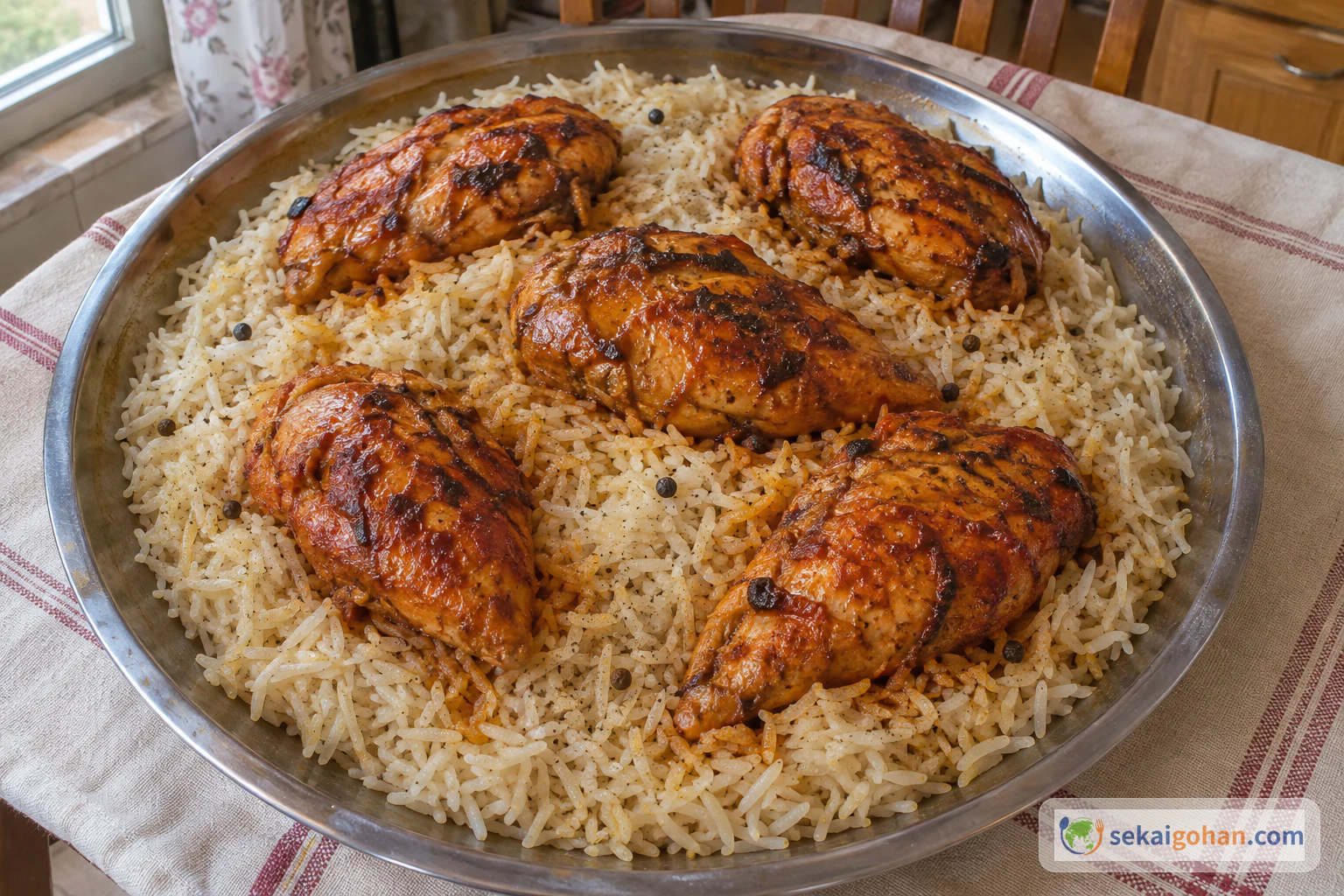
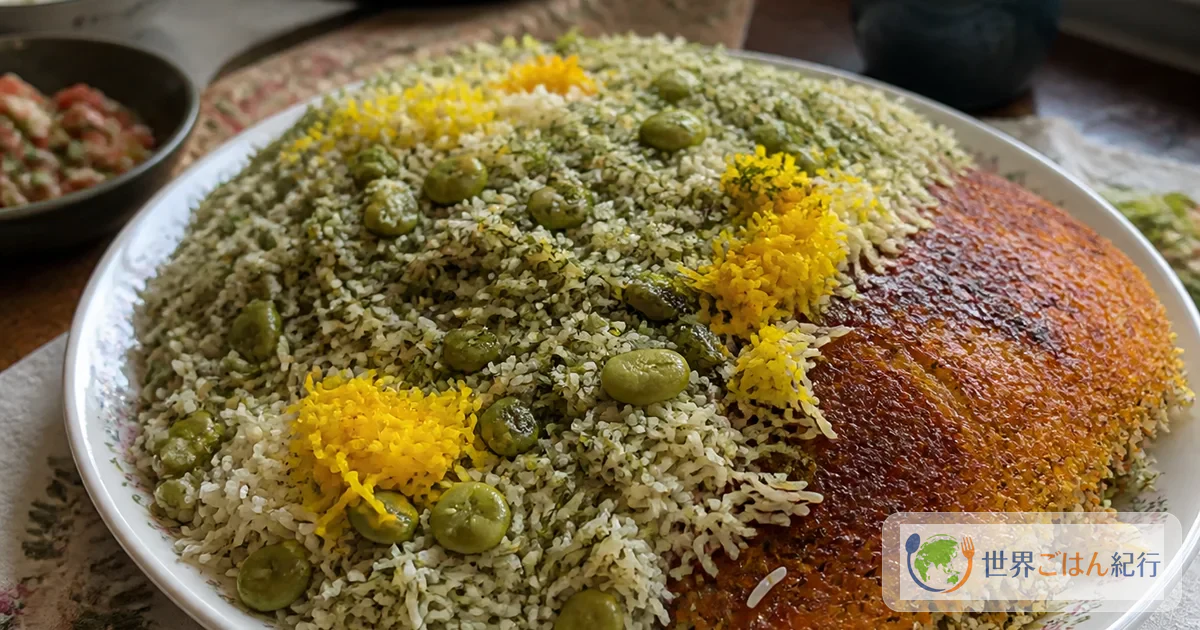
On a Friday evening in Amman, the sour tang of yogurt and the rich smell of lamb drift together through the lanes of residential neighborhoods. Someone nearby is cooking mansaf (منسف / Mansaf). The name means "a large platter" in Arabic, and that is how it arrives: lamb simmered for hours in a sauce of jameed, a fermented dried yogurt, piled on saffron rice and scattered with roasted almonds and pine nuts. The sauce is sour and savory, the meat falls off the bone, and the nuts add crunch. Mansaf is still little known outside the Middle East, but just as kebab and hummus have spread widely, it can bring a fresh surprise to a home table.
Mansaf in Jordan: Bedouin Origins and Table Customs
Mansaf goes back to the Bedouin, the nomads who moved across the Jordanian desert. In that dry country, sheep and goats were the most important livestock. A sheep that gives both meat and milk is a "walking pantry," and jameed, made by fermenting and drying the milk, was a vital preserved food.

Jameed, the preserved yogurt of the desert
Jameed is made by fermenting sheep's or goat's milk, adding salt, wringing the moisture out through cloth, and drying it completely in the sun. It turns hard as stone and keeps at room temperature for years. When it's needed, it is rehydrated with water and made into a sauce.
For the Bedouin, jameed was a kind of "desert cheese," supplying precious protein and calcium on long journeys. Its sourness and savory depth are the heart of mansaf's flavor, much as fermentation gives miso and soy sauce their depth in Japan.
Eating mansaf with the right hand
The most distinctive point of mansaf etiquette is that you eat with your right hand only. Traditionally, people stand in a ring around a large round platter, with no chairs, and each person takes the rice and lamb from their own side. In Arab culture the left hand is considered unclean and is not used for eating, and mansaf adds a few finer rules of its own:
- Gather the rice in your right hand and form it into a ball with your fingertips
- Pull the lamb off the bone and bring it to your mouth together with the rice
- Use your thumb to push the food into your mouth (this is the mark of a skilled eater)
- Do not let your palm touch the platter (eat with your fingertips only)
A dish for weddings, funerals and reconciliation
Weddings, funerals, reconciliations, the welcoming of state guests: in every one of these settings, mansaf sits at the center. In Jordan's tribal society it is indispensable when a dispute has to be settled. In a reconciliation ceremony called "sulha," the two opposing parties share a meal around the same platter of mansaf, and that seals the peace. It's no surprise that a household takes pride in the skill of whoever makes its mansaf.
Mansaf was inscribed on UNESCO's Representative List of the Intangible Cultural Heritage of Humanity in 2022, on Jordan's nomination. The listing covers not only the preparation of the dish but also the shared meal around it.
Mansaf and its relatives
Dishes that combine yogurt, meat and rice are found across the Middle East and Central Asia.
| Dish | Country/region | What it shares | What differs |
|---|---|---|---|
| Fattoush | Lebanon, Syria | Bread and yogurt | A cold salad. No meat |
| Kishk | Lebanon | A soup based on a fermented dairy product | Bulgur (cracked wheat) is fermented |
| Moussaka | Greece | Lamb and a yogurt-type sauce | Uses béchamel. Baked in the oven |
| Manti | Central Asia | Topped with yogurt | Steamed meat dumplings |
| Kabsa | Saudi Arabia | Spiced rice and meat | No yogurt. Tomato-based |
| Biryani | India | Spiced rice and meat | Yogurt marinade, but not a stew |
Dairy, meat and grain form the basic trio of Middle Eastern cooking, as the introduction to Middle Eastern cuisine explains, and mansaf is one of its most refined expressions.
Ingredients (serves 4)

Choosing Ingredients for Mansaf
Jameed and its substitute
Jameed is hard to find outside the Middle East, but Middle Eastern and halal food shops and online specialty stores sometimes carry it. Soak it in water overnight to rehydrate it, then blend it smooth before using it as the base of the sauce. The taste of real jameed is worth experiencing once.
The closest substitute is 1 lb (500 g) plain yogurt with 1 tbsp lemon juice and 1/2 tsp salt added, to recreate jameed's strong sourness and saltiness. For a more authentic result, mix 10.5 oz (300 g) Greek yogurt with 7 oz (200 g) ordinary yogurt to approach the richness of jameed. A plain yogurt substitute is plenty delicious.
Lamb
Bone-in shoulder is most reliably found at a butcher or specialty shop, and halal markets often carry bone-in shoulder and leg. Frozen lamb cuts can also be ordered online. If you can't get bone-in meat, cut a boneless lamb shoulder block into 1.5-inch (3–4 cm) cubes; it needs 30 minutes less simmering than bone-in.
Spices and basmati
Whole cardamom, saffron, allspice and pine nuts are sold at spice shops, Middle Eastern or Indian grocers, and online. You'll find basmati rice at Indian and halal grocers too.
Method
STEP 1. Parboil and simmer the lamb (2 hours 30 minutes)
STEP 2. Prepare the yogurt sauce and return the lamb (20–30 minutes)
This yogurt sauce decides the success of mansaf. Not letting it separate is everything.
The golden rule is low heat from start to finish when heating the yogurt sauce. The moment you use high heat, the yogurt's protein coagulates and the sauce separates, ruining both the look and the texture. Remember: "slower than you think is just right." If it does separate, you can partly rescue it: warm 7 oz (200 g) fresh yogurt mixed with 1 egg in a separate pot, strain the separated sauce, and combine the two.
STEP 3. Prepare the rice and toppings (30 minutes)
STEP 4. Plate (10 minutes)
For mansaf, plating is part of the dish and never a step to skip. The beauty of the plating shows the depth of the host's hospitality.
-
Lay the bread: Spread the thin flatbread over a large round platter (ideally 15.5 inches (40 cm) or more in diameter). The bread soaks up the sauce and is superb eaten last.
-
Mound the rice: Heap the saffron rice in a dome on top of the bread.
-
Arrange the lamb: Place the lamb on the rice. Bone-in pieces look best leaned upright with the bones facing up.
These three layers (bread, rice, lamb) are the foundation of mansaf. The sauce and toppings finish it.
-
Pour on the sauce: Pour plenty of the warm yogurt sauce over the lamb and rice. Warm it over low heat without letting it separate, and when the color has changed to cream and it has thickened, pour it generously enough that it runs over the edge of the platter.
-
Add the toppings: Scatter the roasted almonds and pine nuts over everything and finish with chopped parsley.

Mansaf Cooking Tips and Fixes
Taming the gamey smell of lamb
If the gamey smell of lamb bothers you, deal with it in two stages: parboil the meat for 5 minutes, then use a little extra cardamom and bay leaf in the main simmer.
A white, smooth sauce
The ideal mansaf sauce is white as snow and smooth as silk. Too much turmeric turns it yellow, so start from 1/4 tsp and adjust while watching the color. The right thickness runs off the back of a spoon but leaves a thin film. A sauce as runny as the dressing for tabbouleh is too thin; one as heavy as hummus is too thick.
Pine nuts are delicate and can burn in 30 seconds. Keep them moving in the skillet over low heat, and take them off the instant they turn pale brown. They keep coloring from residual heat, so stop when you think "maybe it's still too early." They're expensive, so burning them hurts doubly.
Serving, Storing and Varying Mansaf
Serving mansaf
Arrange bread, rice, lamb, sauce and nuts on a large platter and gather around it with family and friends. Add kofte and tabbouleh as starters and you have a full Middle Eastern course. For an everyday Jordanian dish that comes together quickly, try the tomato dish galayet bandora. And if you'd like to explore further, see the introduction to Georgian cuisine and the introduction to Ethiopian cuisine.
Nutrition
Mansaf is a high-protein, nutrient-dense dish.
| Nutrient | Per serving (1 of 4) | What it does |
|---|---|---|
| Protein | about 1.5 oz (42 g) | From both lamb and yogurt. Maintains and repairs muscle |
| Fat | about 1.25 oz (32 g) | From lamb fat and butter |
| Carbohydrate | about 2.25 oz (65 g) | From basmati rice and bread |
| Calcium | plentiful | From the yogurt. For healthy bones and teeth |
| Iron | plentiful | Lamb is rich in heme iron even among red meats |
| Vitamin B12 | plentiful | Abundant in lamb. For nerve function and red blood cell production |
| Zinc | plentiful | Abundant in lamb. For immune function and the sense of taste |
| Probiotics | present | Lactic acid bacteria in the yogurt |
Mansaf is high in calories, and in Jordanian tradition it is a dish for celebrations, not for every day. At home, a smaller amount of rice with a side salad makes a well-balanced meal.
Making ahead and storage
Mansaf is a stew that is even better the next day, like feijoada. If you finish simmering the lamb the day before, the savoriness permeates the meat overnight. Combine the refrigerated lamb and broth with the yogurt sauce the next day, and the cooking on the day shrinks to 1 hour.
| Method | How long | Points |
|---|---|---|
| Room temperature | the same day (within 4 hours) | Bacteria multiply easily in yogurt sauce at room temperature. Refrigerate early |
| Refrigerator | 3 days | Store the lamb with its broth and the sauce in a separate container. Reheat over low heat only |
| Freezer | 2 weeks | The lamb and broth can be frozen. Yogurt sauce separates when frozen, so make it fresh on the day |
Rice keeps for 2 weeks in the freezer, too. Re-roast the nut toppings just before eating to bring back their fragrance. Bread freezes well and warms up fine in the microwave, so it's handy to buy extra.
Chicken mansaf
Swap the lamb for 1.75 lb (800 g) bone-in chicken thighs. Chicken has less gamey smell, needs no parboiling, and simmers in just 1 hour. In Jordan this home version is called "mansaf jaj" (chicken mansaf) and is a common choice when lamb is expensive. The flavor is lighter, but it goes superbly with the yogurt sauce.
Short-grain rice version
If you can't get basmati, ordinary white short-grain rice works. Cook it as usual in a rice cooker, adding saffron (or 1/4 tsp turmeric) and 1 tbsp butter before cooking. The sticky rice with yogurt sauce is different from the original but has its own appeal; a rich sauce with short-grain rice is a proven pairing, as in nasi lemak.
Vegetarian version
Use chickpeas (two 14 oz (400 g) cans, drained) and thick fried tofu (2 blocks, cut into bite-size pieces) instead of lamb. Simmer the chickpeas with the spices for 30 minutes, then combine with the yogurt sauce. Chickpeas, the base of falafel, are very much at home in Middle Eastern cooking. Without meat the dish lacks some savoriness, so add 1 bouillon cube.
Pressure cooker version
A pressure cooker cuts the 1.5–2 hour lamb step down to 30–40 minutes. Put the parboiled lamb and spices in the cooker and pressure-cook for 30 minutes, let the pressure release naturally, then combine with the yogurt sauce. The sauce still needs its usual low heat, but the whole process fits within about 1 and a half hours.
Leftover mansaf sandwich
The best use for next-day mansaf is a sandwich: tuck the lamb and rice into naan or pita, pour on yogurt sauce, and add lettuce and tomato slices for lunch. Like kebab, it pairs superbly with bread.
FAQ
Q1. I don't like lamb. Can I use another meat?
Yes. Bone-in chicken thighs are the usual substitute, and "mansaf jaj" is common in Jordan too. Beef tends to turn tough, so it isn't suitable. Goat is closer to lamb in flavor, but even harder to find.
Q2. My yogurt sauce separated. How can I rescue it?
Strain the sauce, remove the solids, and keep only the liquid. In another bowl, mix 7 oz (200 g) yogurt, 1 egg and 1 tbsp cornstarch, and rewarm over low heat while adding the strained liquid little by little. A complete repair is difficult, but you can recover about 70 to 80 percent of the smoothness.
Q3. Can I get close to the authentic taste without jameed?
Add three things to plain yogurt: 1 tbsp lemon juice (for sourness), 1/2 tsp salt (jameed is salty), and 3.5 oz (100 g) Greek yogurt (for richness).
Q4. Can I make it ahead?
The simmered lamb keeps for 3 days in the refrigerator. The yogurt sauce is best made on the day, but it keeps in the refrigerator until the next day. When reheating, always use low heat; high heat makes the sauce separate. Ideally, prepare the rice and toppings on the day.
Q5. What drink goes with mansaf?
In Jordan, a yogurt drink called ayran is the standard. Just blend 7 oz (200 g) plain yogurt, ¾ cup (200 ml) water and a pinch of salt; served cold, it refreshingly balances the fat and spices. For alcohol, Lebanese "arak" (an anise-flavored spirit) is the traditional pairing, and a light, dry Japanese sake is a surprisingly good match.