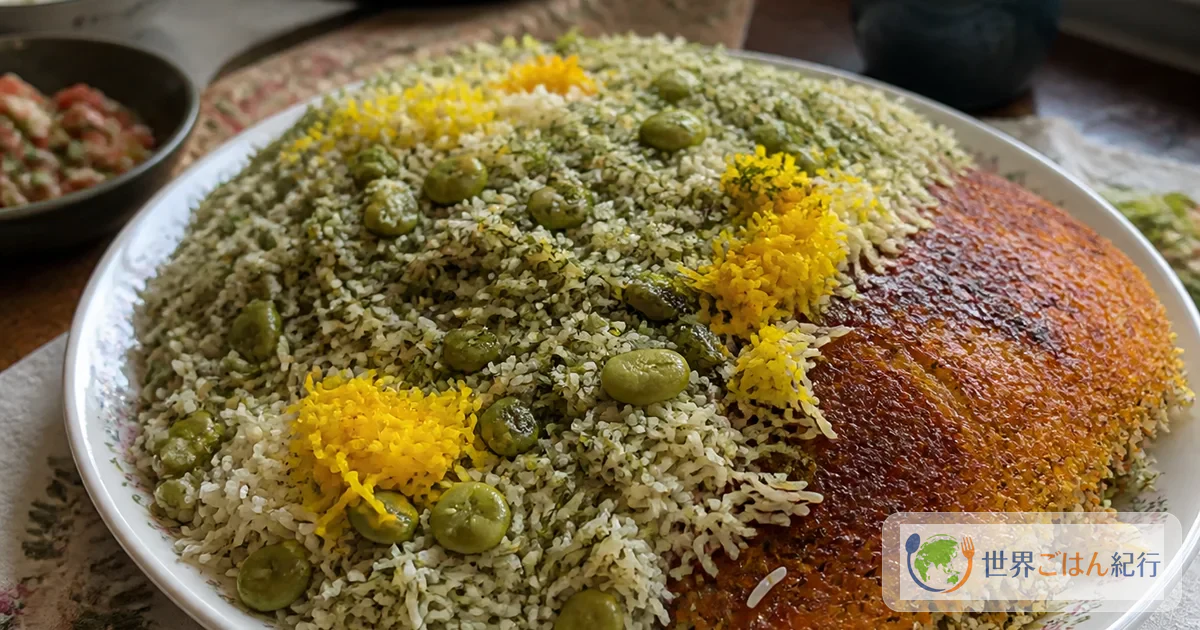
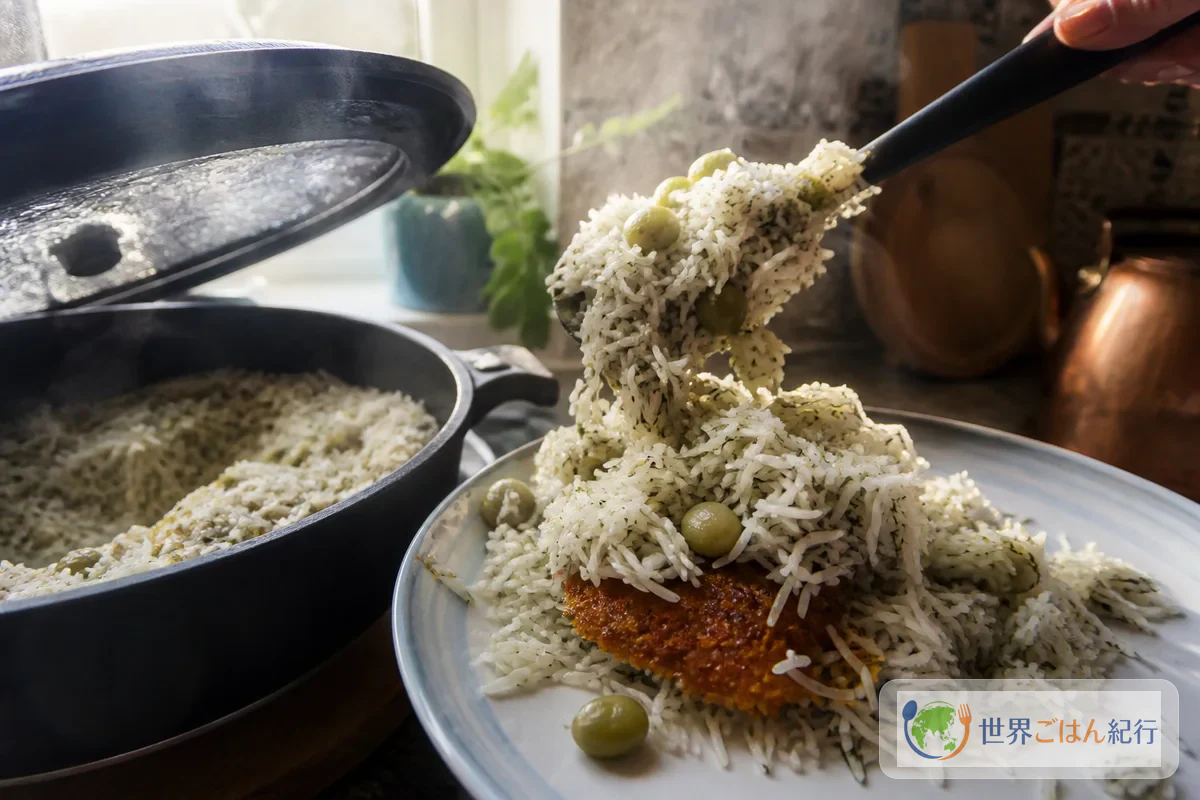
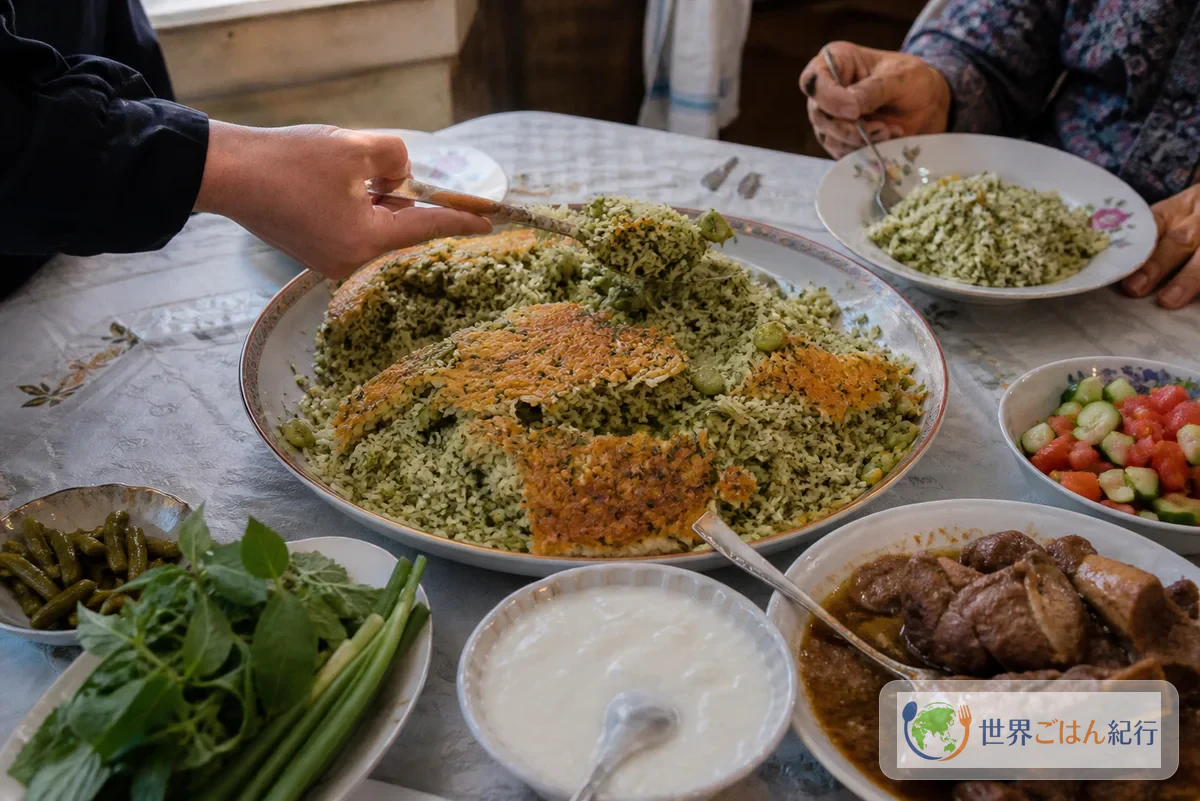
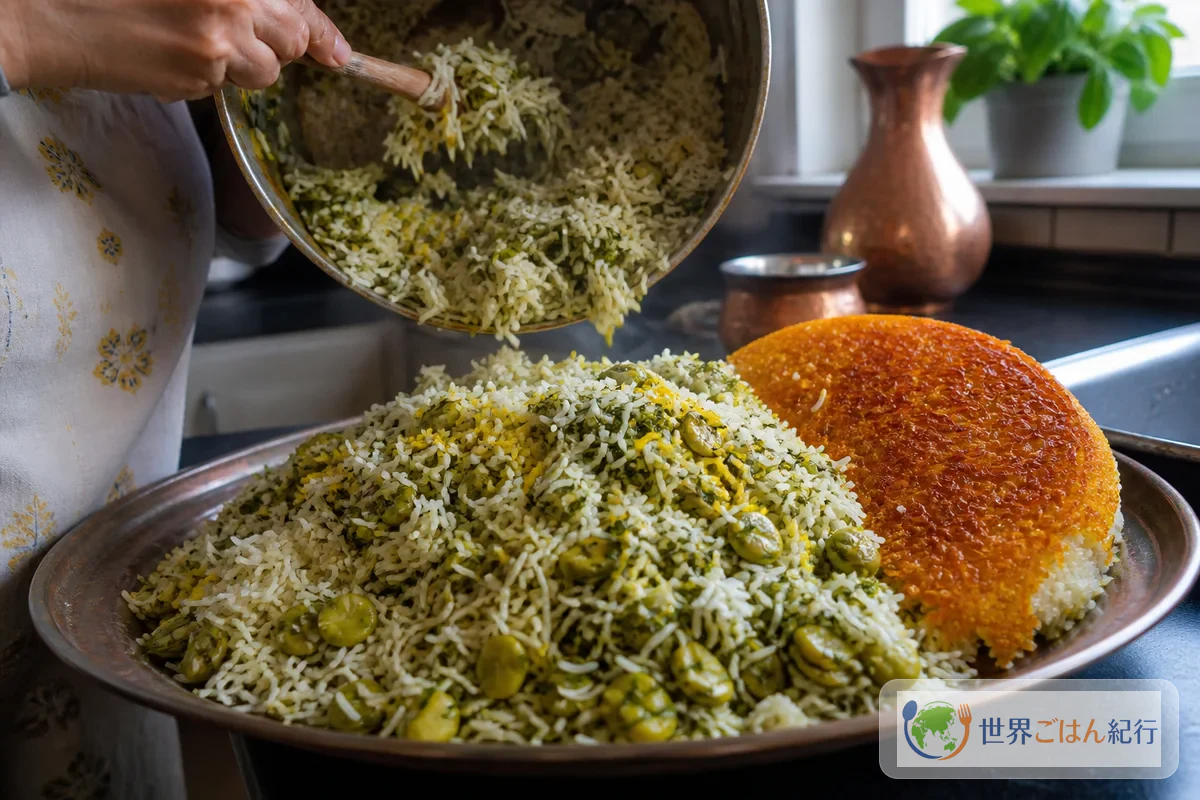
The moment you lift the lid, thin steam rises from the white mound of rice, and the scent of green fava beans and dill reaches you first. At the bottom, rice that has soaked up oil has set into a pale golden crust; push the spatula in and the grains above feel light while the sheet below answers with a crackle. Baghali polo is an Iranian polow, long-grain rice layered with fava beans and dill and then steamed. One plate gives you three things at once: rice mixed through with the green filling, plain white steamed rice, and the savory crust from the bottom of the pot.
Serves 4, made in a heavy pot about 8.5 inches (22 cm) across. Judge the finish by the white core left in the center of the parboiled rice, the amount of steam and the color of the tahdig, not by time alone.
Baghali polo on the Iranian table
In Persian, bāqlī means fava beans and polow means a rice dish finished by layering a filling or spices with rice. You will also see it spelled baghali or baqali. Iranian rice dishes fall into two broad families: chelow, relatively plain white rice served with meats and stews, and polow, where meat, vegetables, beans or fruit are layered into the rice.
The method is different from Japanese takikomi gohan, where rice and ingredients cook together in the same water from the start. Here the rice is parboiled in plenty of salted water, drained, then layered with the filling and steamed with fat. That keeps each grain distinct, lets the dill hold its leafy aroma and the fava beans their green, and forms the crisp layer at the bottom of the pot called tahdig.
Rice was a staple in Iran by the Sasanian period, and from the Safavid period on, chelow and polow became clearly distinct. Today's plate didn't come from a single royal court or a single cook. Parboiling and steaming settled into home kitchens as cookbooks and regional eating habits overlapped.
Baghali polo shows up as an everyday home dish that makes the most of spring fava beans and dill, and as a festive plate with lamb shank or chicken. At family gatherings and feasts, the meat is usually stewed separately and arranged around the mound of rice. In Gilan, on the northern Caspian coast, rice is the center of daily meals, eaten with sour stews, fish and greens; the local bāqāla qātoq (fava beans, herbs and egg) is a different dish, but it shows the northern fondness for fava beans and green fillings. In the dry highlands, bread and wheat dishes hold a larger place.
If you want to go further with the crust or the meat that often accompanies it, see how to make tahdig and how to make chelow kabab. For a sour stew to serve alongside, try how to make ghormeh sabzi.
Ingredients (serves 4)
A rice-centered formula. It does not include a meat stew, so that you can first check the aroma of fava beans and dill, the shape of the rice grains and the texture of the tahdig.
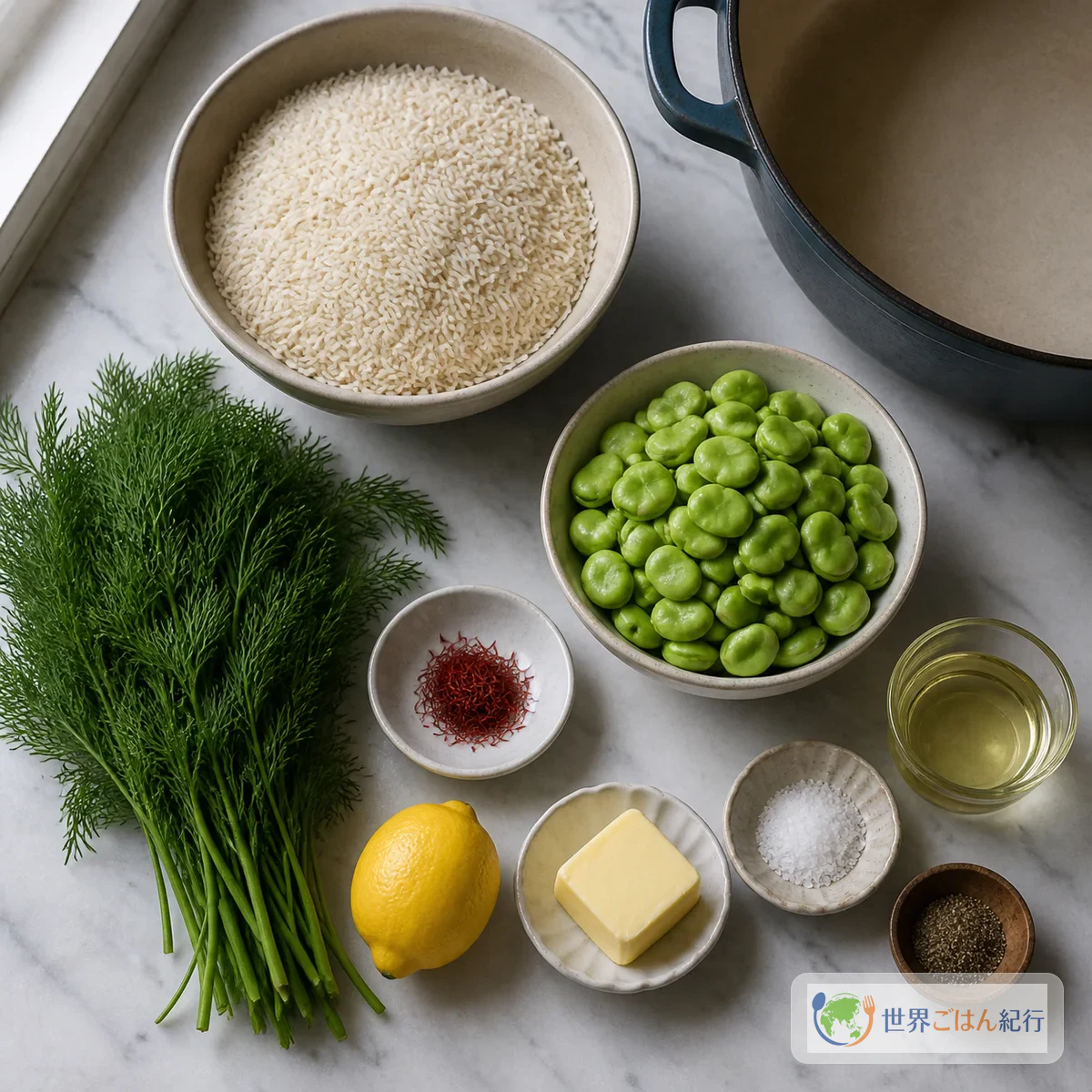
Rice and filling
Soaking and parboiling
Equipment and cautions
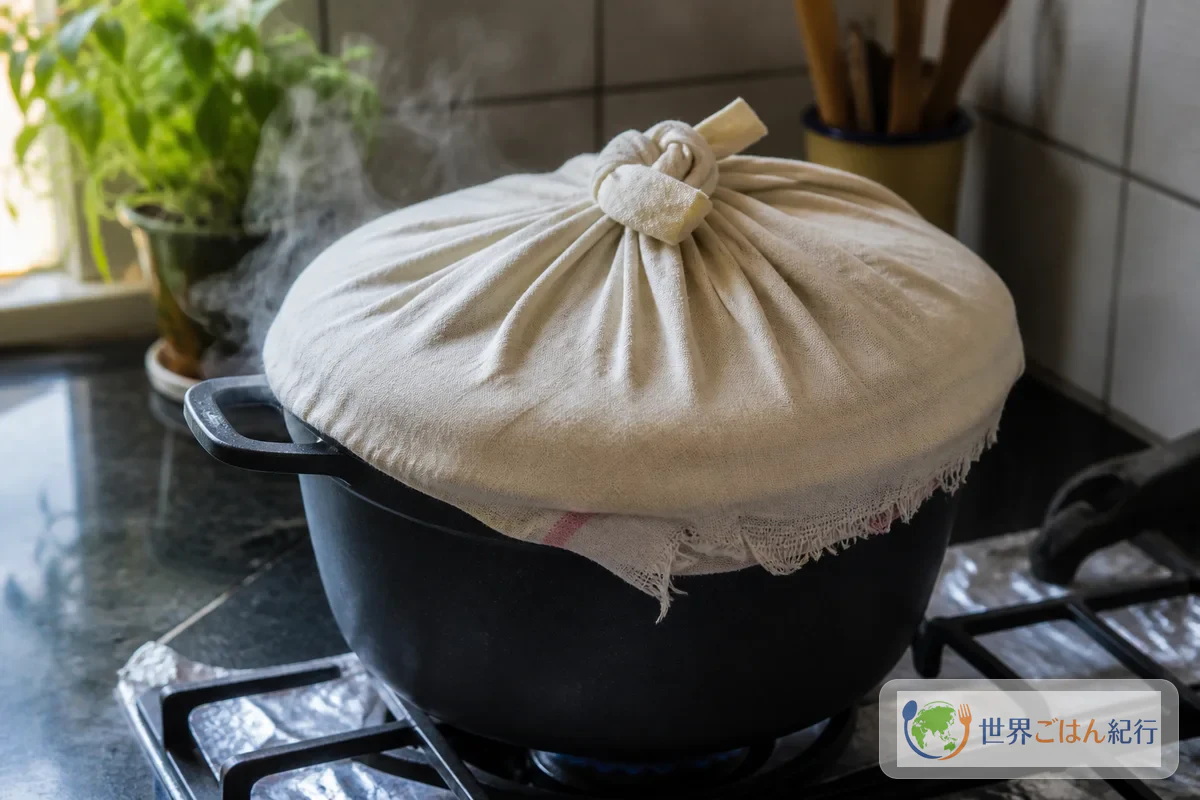
Prepare a heavy pot about 8.5 inches (22 cm) across, a lid with few gaps, a fine-mesh colander, a clean thick kitchen towel and cooking chopsticks. Choose a pot with an even-thickness bottom, so that when you lower the heat, one spot is less likely to scorch first. Wrap the towel around the inside of the lid, at a length so the ends do not hang over the flame or the vent. Check the packaging labels for fava beans, butter and any yogurt you serve alongside, and prepare a different dish for anyone with an allergy to legumes or dairy. Wipe fresh dill thoroughly dry after washing and chop the leaves coarsely. Chopped too fine, it clumps in one place in the steam.
Butter contains dairy. To avoid it, use the substitution in the ingredient table. If you serve yogurt, a meat stew or a ready-made soup, check each label for dairy, wheat and other allergens. Secure the towel to the lid handle so it never touches the flame.
To try this dish once, make a small batch with rice you already have. Buy basmati when you want grains that stay distinct.
Decide on tools for crushing saffron by how you will use them
If you grind saffron and whole spices often, a mortar with a well-fitting pestle steadies your hand. For this dish alone, a small dish and the back of a spoon will do, so you can skip buying one unless you will store and use it often. When buying, check that it is granite and that the pestle is included.
Choosing ingredients for baghali polo
Look for frozen peeled fava beans, fresh dill, lemon and butter at a larger supermarket, and check what's in season. Fresh fava beans shrink a lot once you remove both the pod and the skin, so for 9 oz (250 g) of peeled beans, frozen is the easier route. After thawing, wipe off the water and keep the cooking short so the green stays bright.
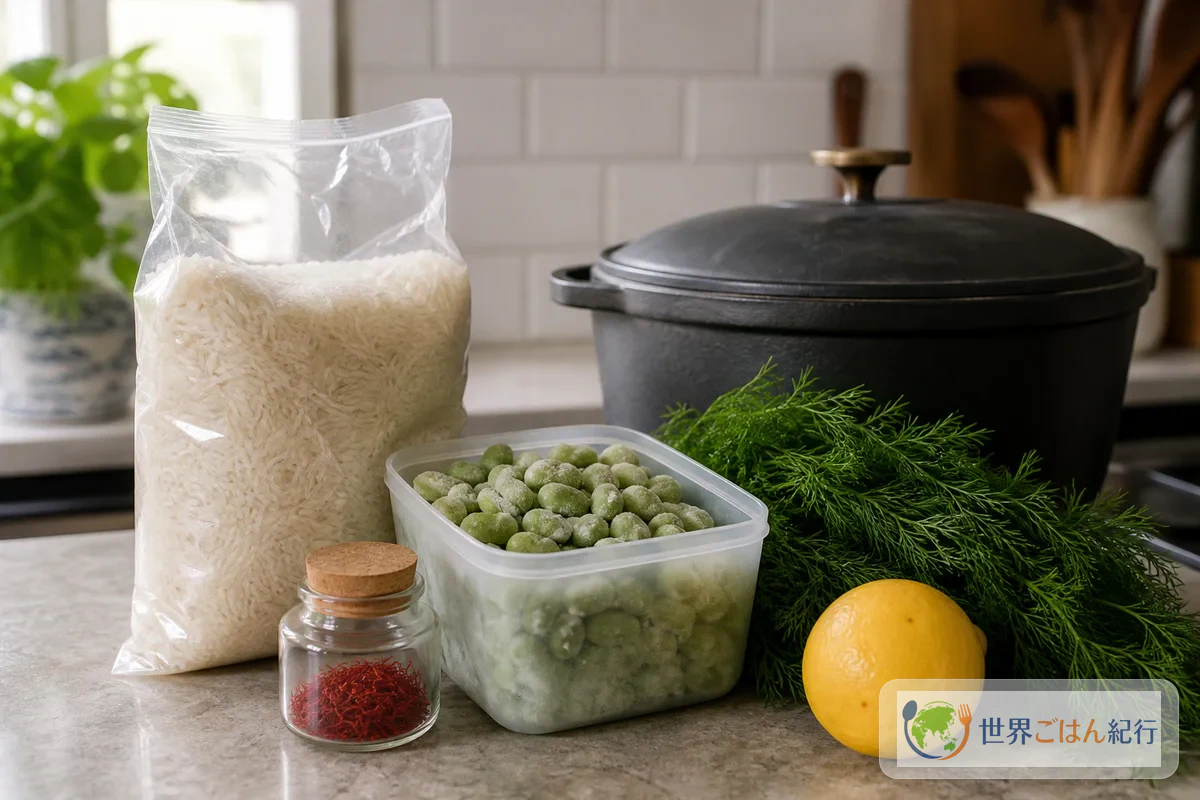
Dill carries the aroma of this dish. Fresh dill gives a green scent that rises as you lift the rice to your mouth; dried is more concentrated and a little earthy. If you can only find dried, start with 1 oz (30 g) rather than matching the fresh amount.
For loose grains, choose long-grain rice. Basmati keeps its length and aroma through parboiling and steaming, so it isn't buried by the beans and dill. Short-grain rice turns sticky, the layers run together, and the crust breaks when you turn out the pot. If you're only making it once and won't use up a 2.25 lb (1 kg) bag, try a small batch with whatever rice you have before buying. When you do buy, from a rice specialist or online, check that it's long-grain and look at the package size so you can measure out the 12.5 oz (360 g) without waste.
Saffron is used sparingly. Bloom the threads in a little hot water and only part of the white rice turns a reddish gold, which keeps the green of the dill easy to see. For color alone, a little turmeric works, though the aroma is different. If you buy saffron, make sure it's threads and that the package holds 1 g; if you don't need its aroma this time, you can leave it out.
Method: keep the green of the beans and the grains of rice
Keeping the order of parboil, drain, layer and steam decides the result. Measure the ingredients, chop the dill and make the saffron liquid first. That way you open the pot fewer times, and your hands don't stop mid-recipe.
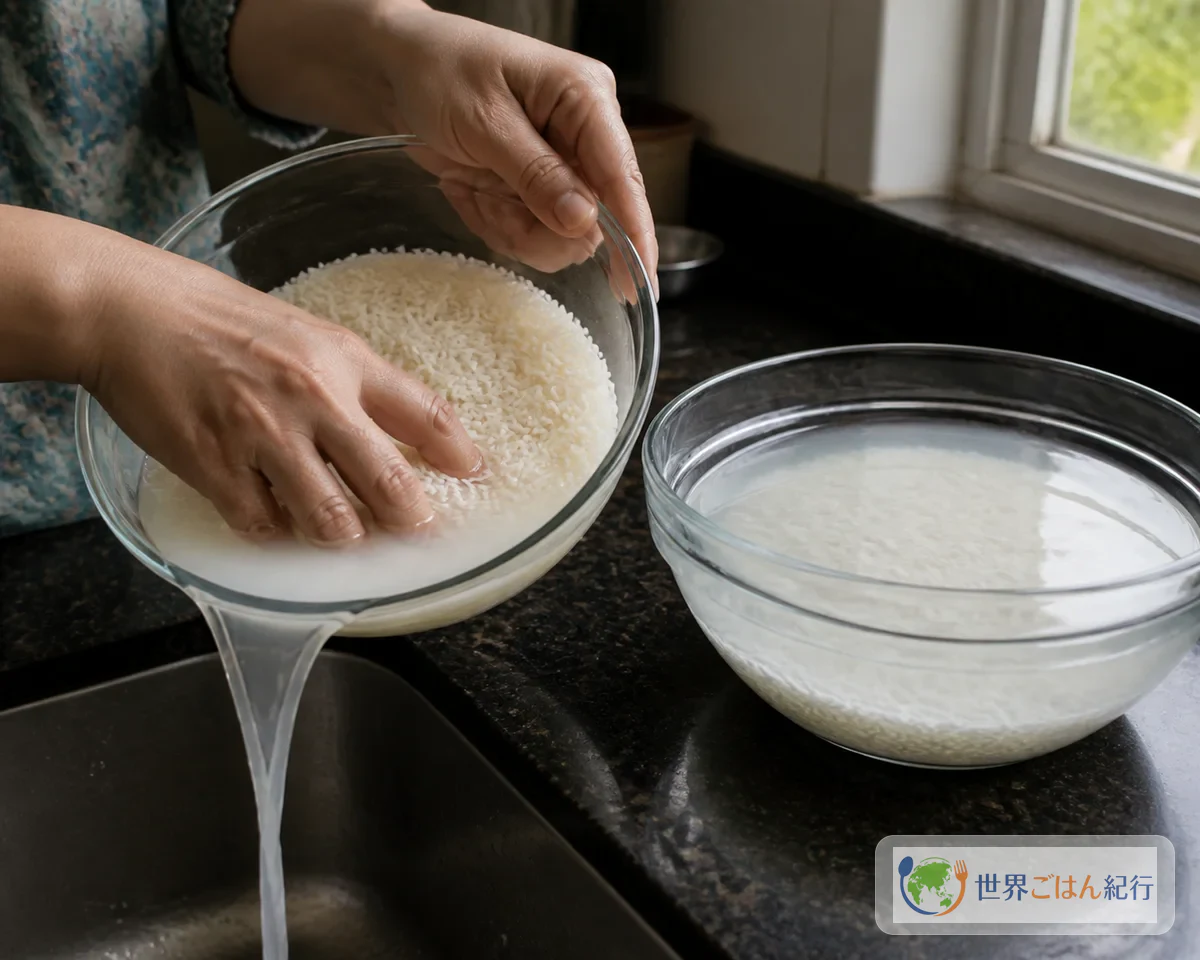
STEP 1: Wash and soak the rice (40 min)
STEP 2: Prepare the fava beans (5 min)
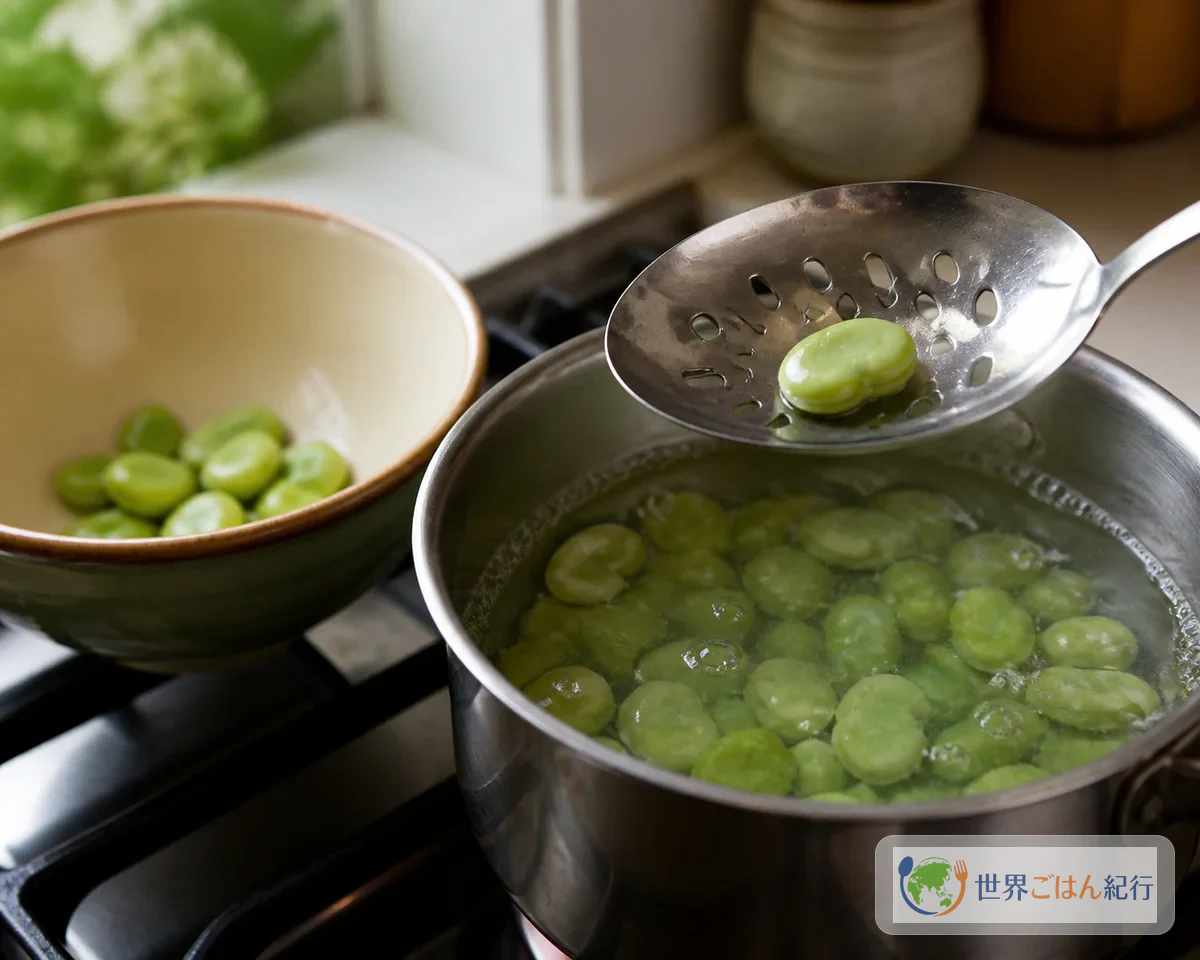
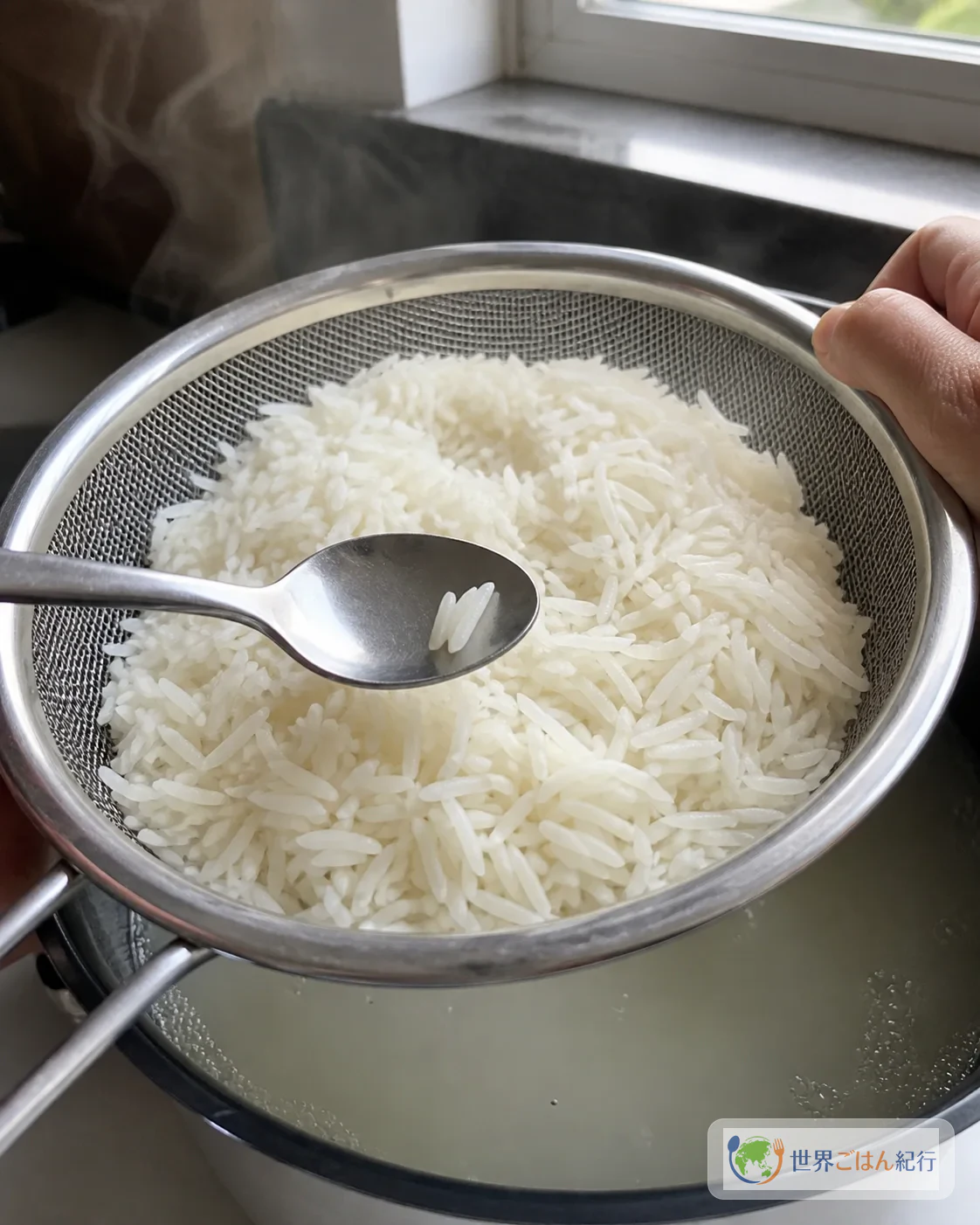
STEP 3: Parboil the rice and drain (8 min)
STEP 4: Bloom the saffron (10 min)
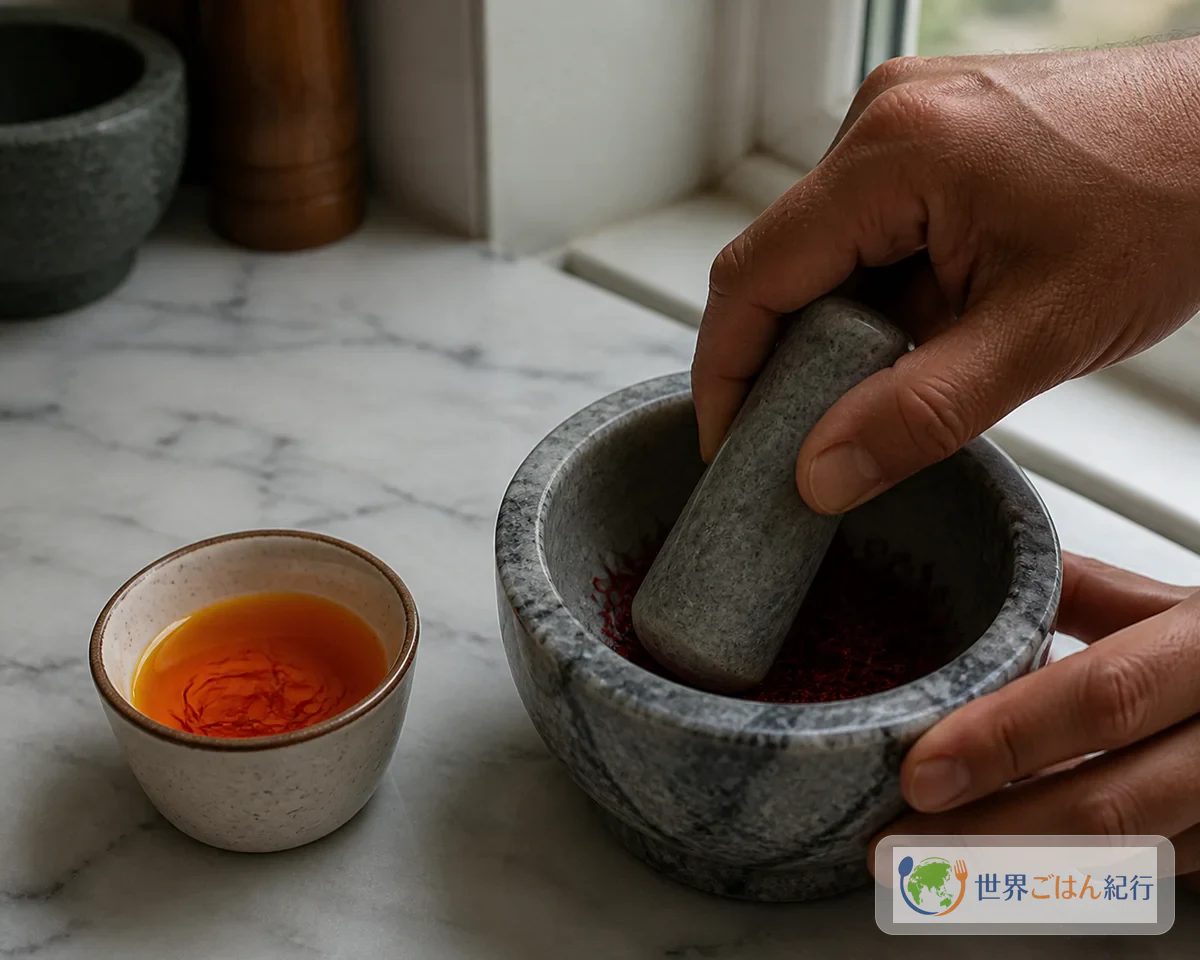
If you grind saffron and whole spices often, buy a mortar. For one batch, press the threads lightly with a small dish and the back of a spoon before adding hot water. A dedicated tool is not required. When buying, check that it is granite and that the pestle is included.
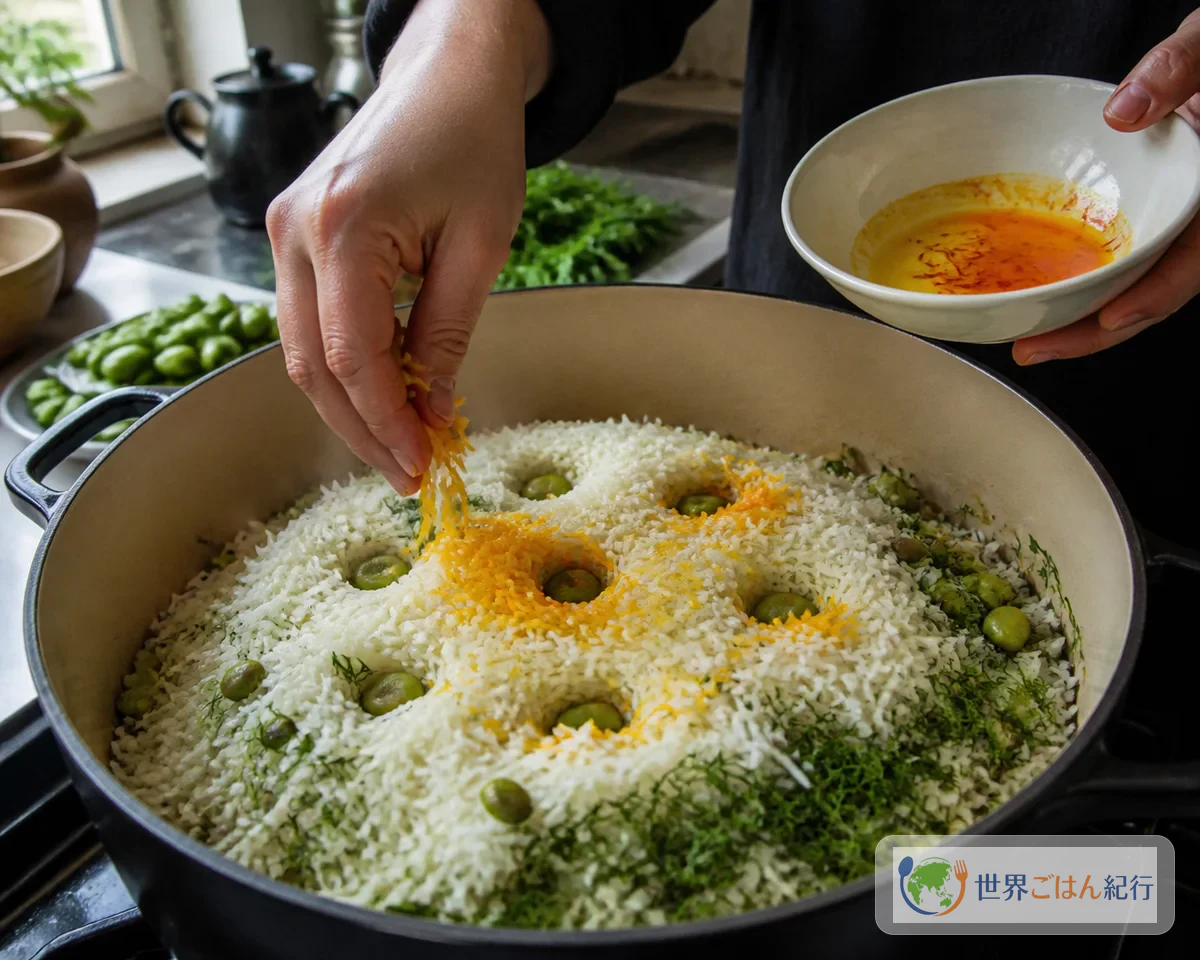
STEP 5: Layer the filling and rice in the pot (10 min)
STEP 6: Cover with a towel and steam over low heat (50 min)
STEP 7: Rest and serve (10 min)
How to recover from a failure
If the center of the rice is still hard, pour 2 tbsp (30 ml) of hot water around the edge of the pot, put the towel-wrapped lid back and add 10–15 minutes over low heat. Trying to mix the rice to spread the water throughout will crush the grains on top and the layers won't come back, so supply only steam.
If the rice turns sticky and forms one mass, you drained it late. Once it clumps, it is hard to return to separate grains. Instead, spread the top rice thin, add a little butter and eat it like fried rice. Next time, drain when a thin white core remains in the center, and rinse briefly with cold water to remove the surface starch.
If a strong scorched smell comes from the bottom early, take the pot off the heat and, without scraping the bottom, move only the rice on top to another pot. If the tahdig is a deep golden brown it can be eaten as savoriness, but don't keep the black, bitter parts. Next time switch to a heavier pot or shorten the medium heat before lowering it.
If the fava beans fell apart, the first blanch was too long or the layers were mixed too much. Set aside a few beans that kept their shape for the top, and treat the broken ones as the green filling scattered through the rice, and the flavor is still put to use. If the dill turned black, wipe the water off after washing and cook it by steam only, without boiling it in water.
Building it at the table, and five ways to expand it
Serving a little sour yogurt, herbs, a cucumber and tomato salad or pickles lets you switch in the mouth between the fat and the sweetness of the rice. When serving meat, do not put raw meat in the rice pot; cook lamb shank or chicken fully in a separate pot and set it beside the plate.
- Serve with lamb shank: to bring it closer to a festive table, combine tender stewed lamb on a separate plate.
- Serve with chicken: grill chicken thighs with salt and lemon, in an amount that doesn't hide the dill aroma.
- Make a potato tahdig: lay thin slices on the bottom of the pot without overlapping and layer the rice on top. It gives a fluffy savoriness different from a rice bottom.
- Make it with dried dill: in seasons without fresh dill, use 1 oz (30 g) and reduce by 10 g at a time while checking the aroma.
- Serve without meat: raise the fava beans to 10.5 oz (300 g) and add yogurt and herbs for a lunch centered on rice and beans.
Serving baghali polo
This version is a rice dish without meat, but it's at home next to lamb or chicken. A stew such as fesenjan on a separate plate also works well.
Put already cooked lamb or chicken on a separate plate. Never mix raw meat into the rice pot.
Storage and frequently asked questions
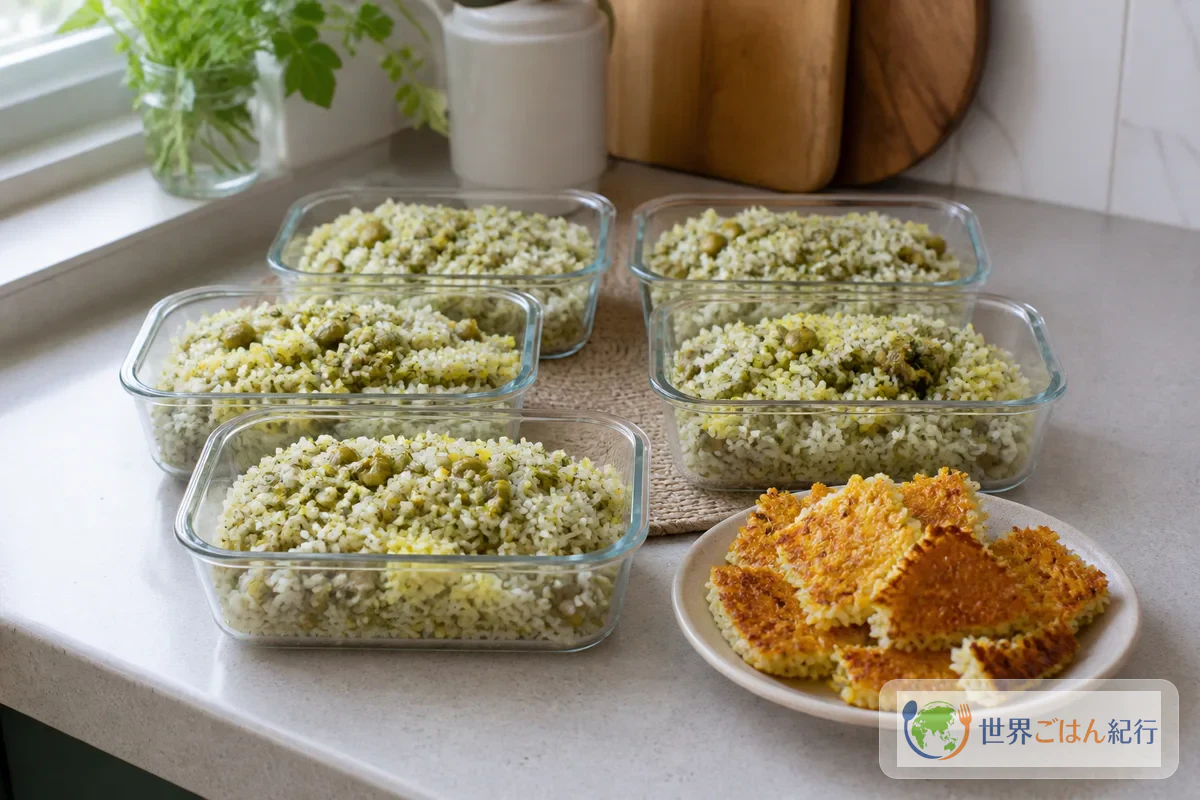
Don't let cooked rice cool in the pot. Spread leftovers in shallow containers, one serving each, and refrigerate within 2 hours; eat within 3–4 days. Reheat until steaming so the center reaches 165°F (74°C). Tahdig loses its crispness in the fridge, so store it separately and refresh it in a dry skillet over low heat just before eating. The rice can be frozen in sealed single servings and used soon, but frozen tahdig rarely crisps up again.
Can I make it with short-grain rice?
You can, but the same amount of water will make it sticky. Soak 10.5 oz (300 g) of washed short-grain rice for only 15 minutes, boil it in salted water for 3–4 minutes, check a grain, and drain when a white core remains in the center. Because it breaks more easily than long-grain, layer the filling without mixing, skip turning the pot over, and serve the top rice and the tahdig on separate plates.
How are fresh and frozen peeled fava beans different?
With fresh beans you pod them and then slip off the skins, and you get to enjoy the aroma while you work. Frozen peeled beans are easy to measure and need only a 1–2 minute blanch, so there's less to go wrong the first time. Either way, stop when the center of the bean is a little soft and it still holds its shape when pressed with a finger.
What if I don't have fresh dill?
Use 1 oz (30 g) of dried dill as a guide, and begin with 20 g if the product is strongly aromatic. Scatter it evenly through the three layers rather than clumping it in one place. Parsley alone gives a green aroma, but it takes the dish away from the dill that makes it baghali polo.
Can I substitute turmeric for saffron?
About 0.5 g of turmeric gives color. It can't match saffron's dry, floral aroma or the look of bloomed threads. For an everyday lunch, turmeric is fine; for a festive plate where aroma matters, buy a small amount of saffron.
What if I want to avoid butter or yogurt?
Replace the butter with 1 tbsp (15 ml) of vegetable oil. If you serve yogurt, use soy yogurt after checking the label. For packaged frozen fava beans, saffron and vegetable oil, also check the allergen labeling, including notes about the production line.