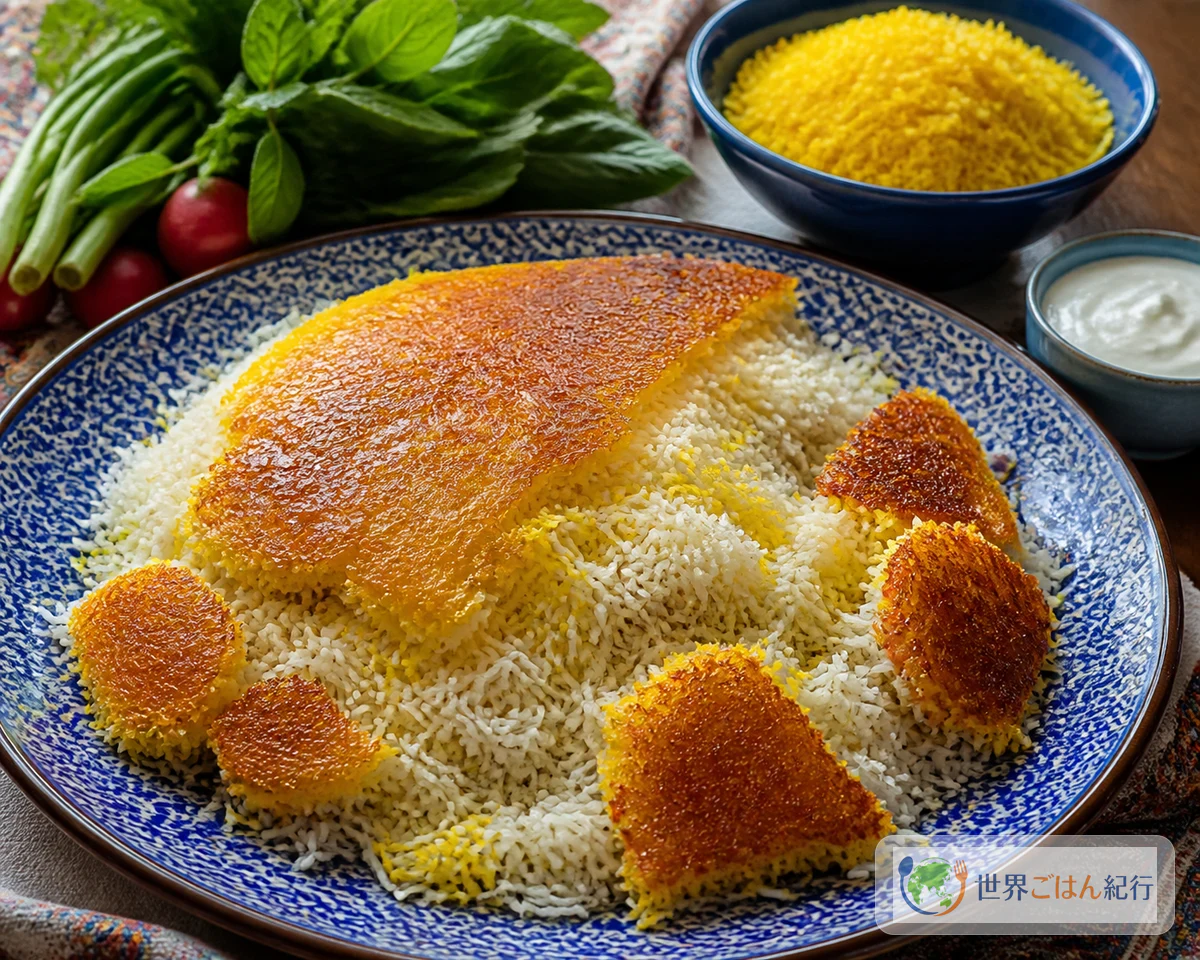
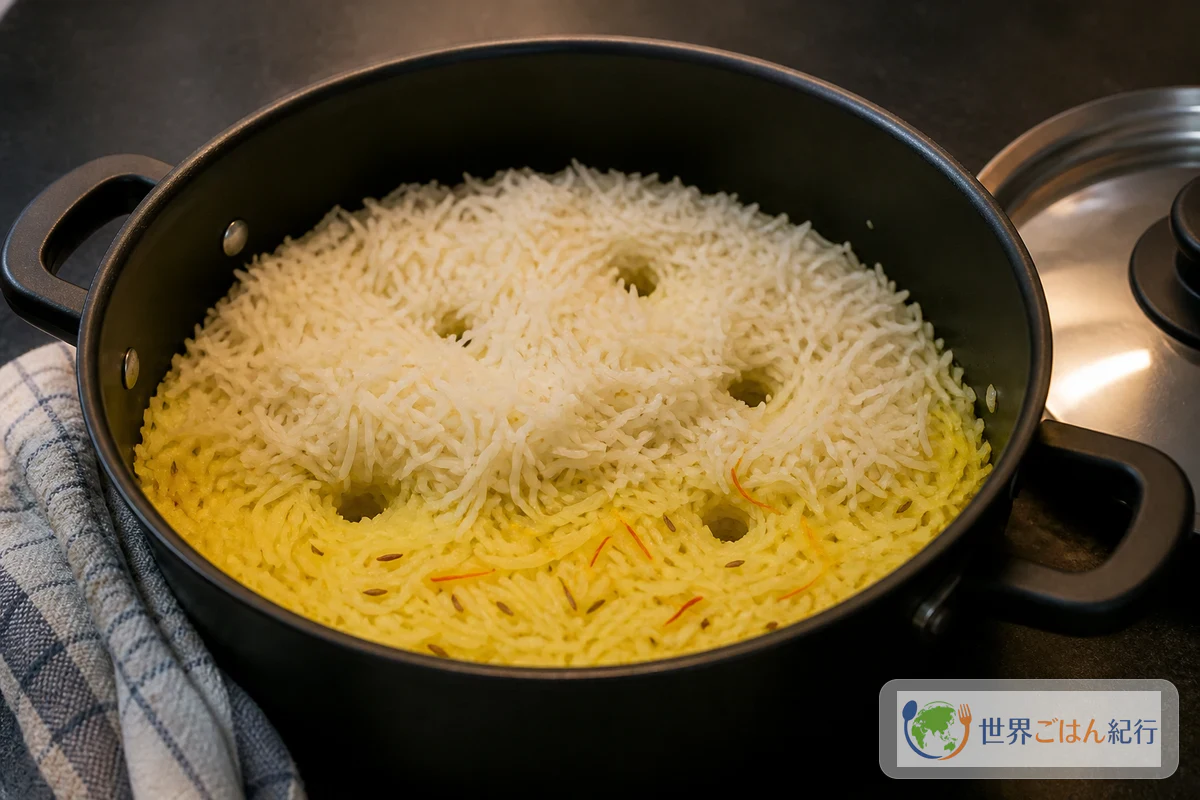
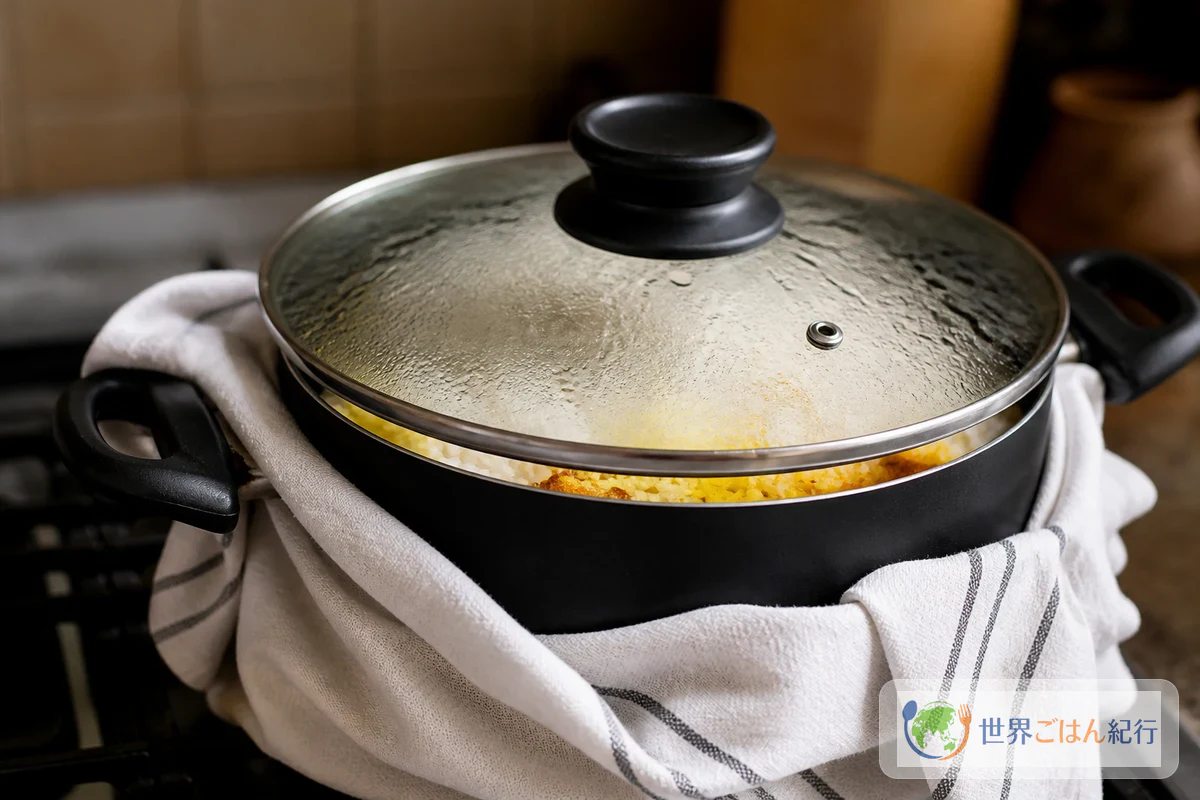
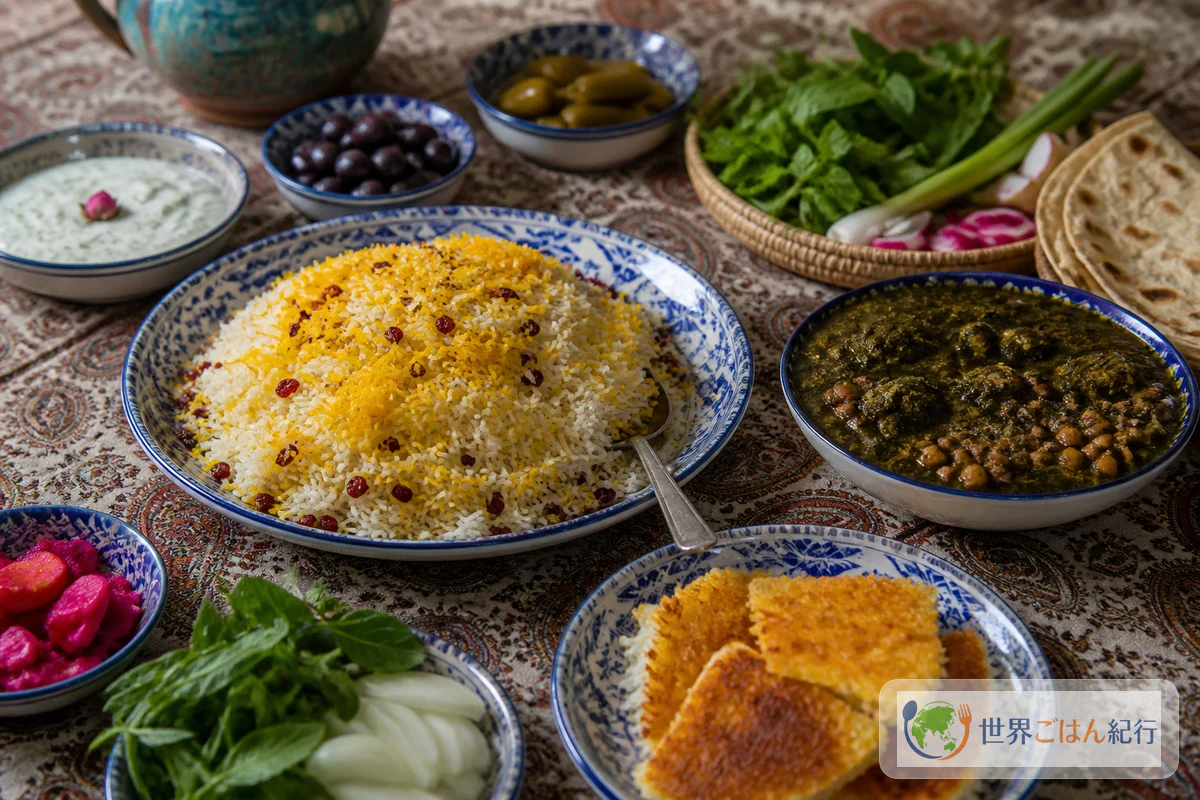
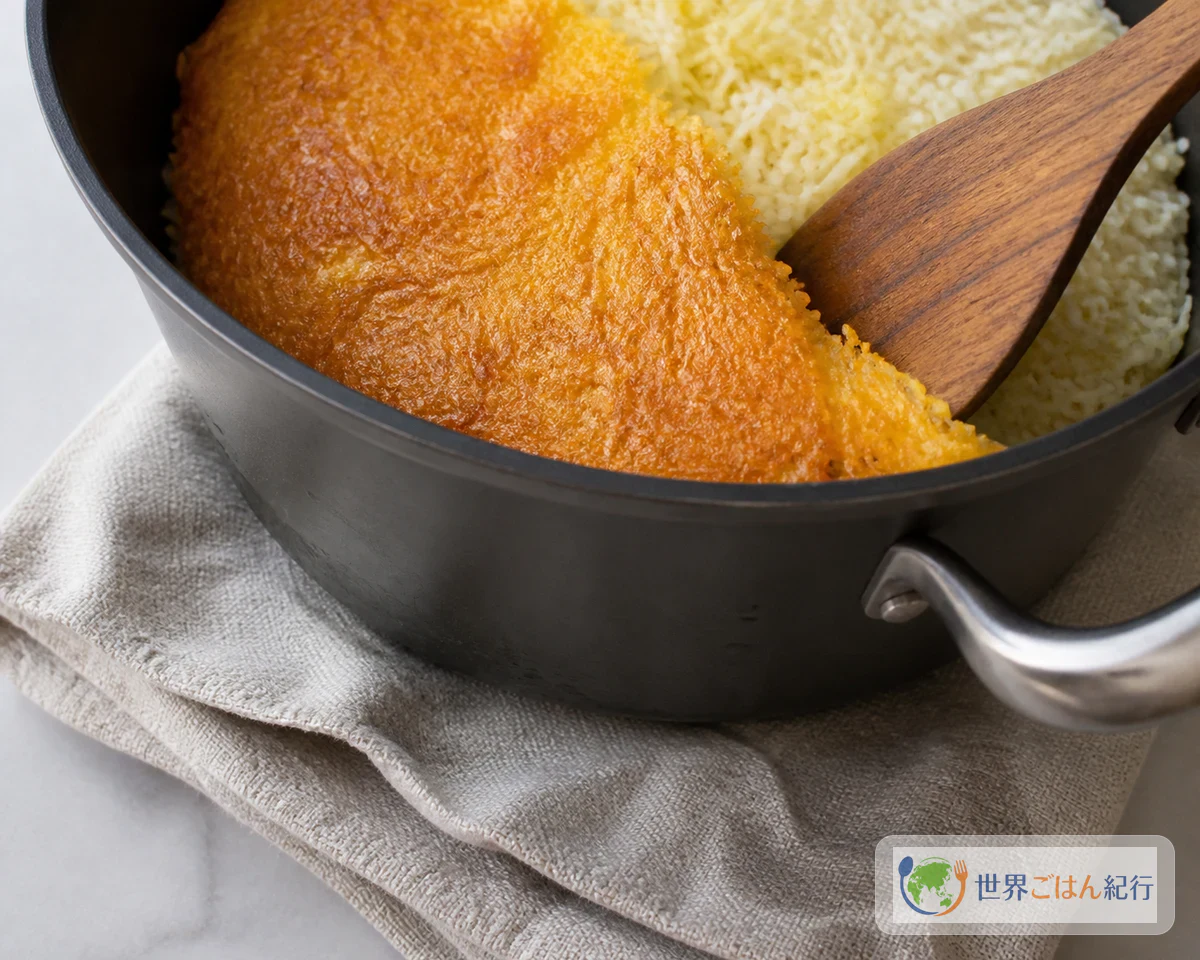
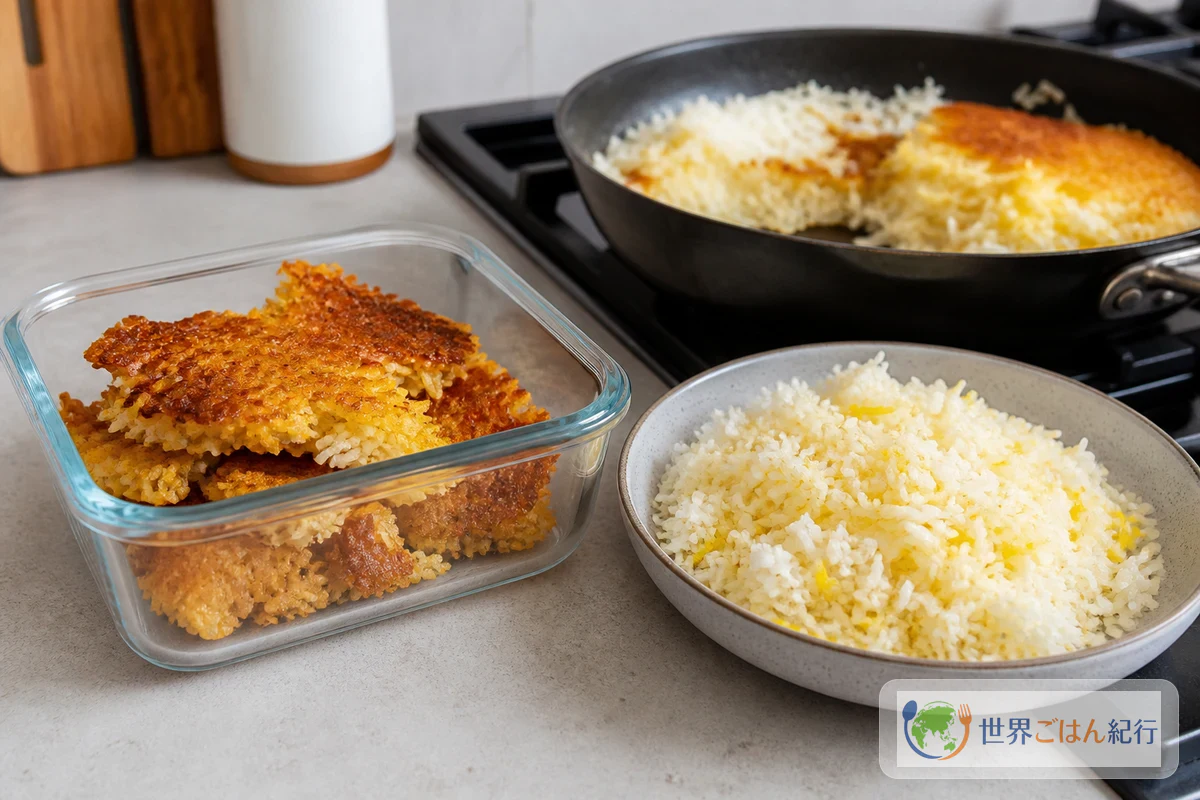
Lift the lid and the mound of rice loosens in the steam. Underneath sits a golden sheet you almost want to tip the whole pot to see, and when you slide a spatula under it the surface is hard, with a slightly hollow crack running through the inside. This is tahdig, the crisp layer that forms under an Iranian rice dish. In Persian the word means "bottom of the pot," and unlike an accidental scorch, you prepare the rice so that the bottom is meant to be eaten. It's toasty and crunchy on the outside, and the rice inside soaks up the aroma of whatever stew you spoon over it.
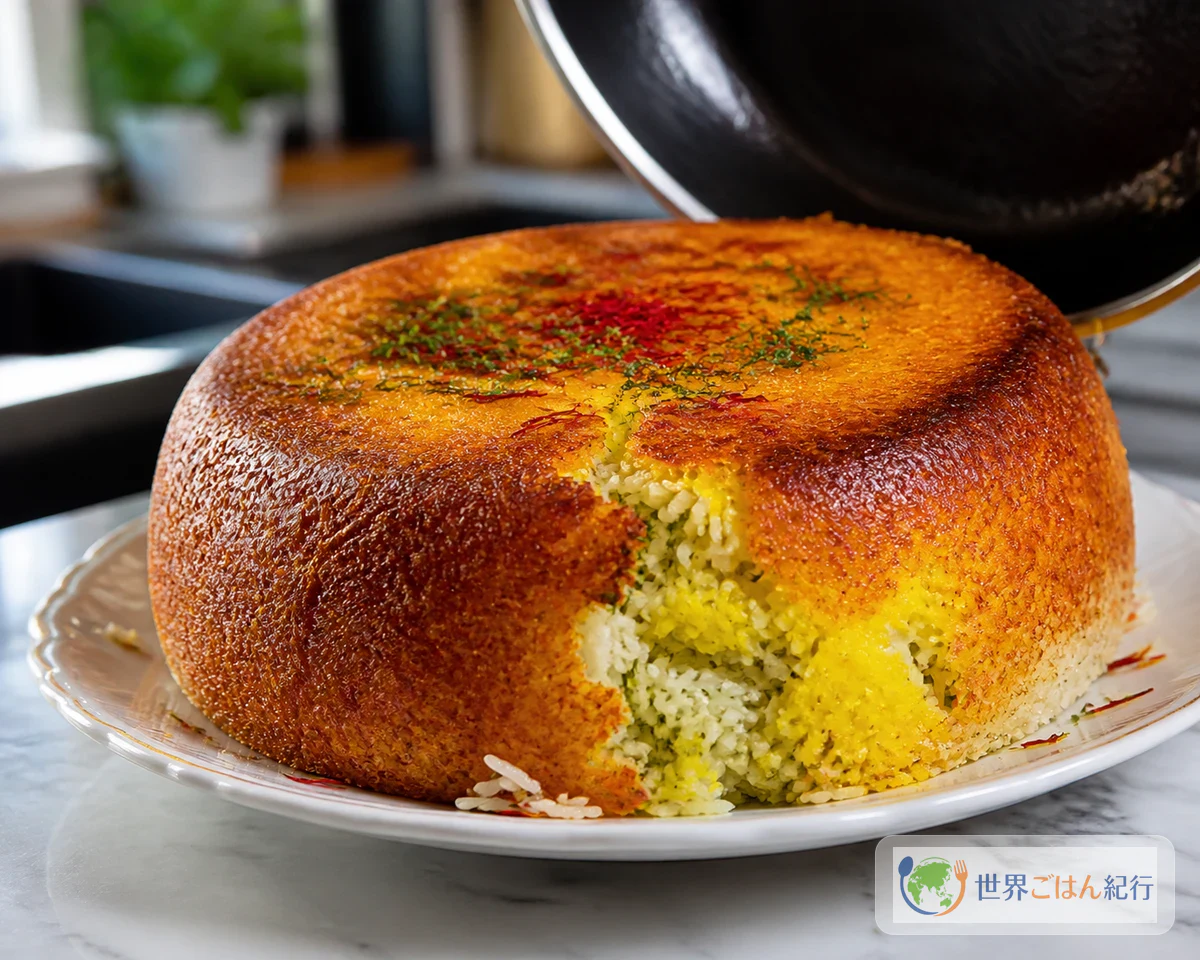
This makes basmati rice for 4 servings in a nonstick pot about 8 inches (20 cm) across. Plan on 30 minutes of soaking, 5–7 minutes of parboiling, and 30–35 minutes of steaming. Judge when to turn off the heat by the doneness of the rice, the sound from the bottom of the pot, and the color of the crust.
Tahdig and the Iranian chelow table
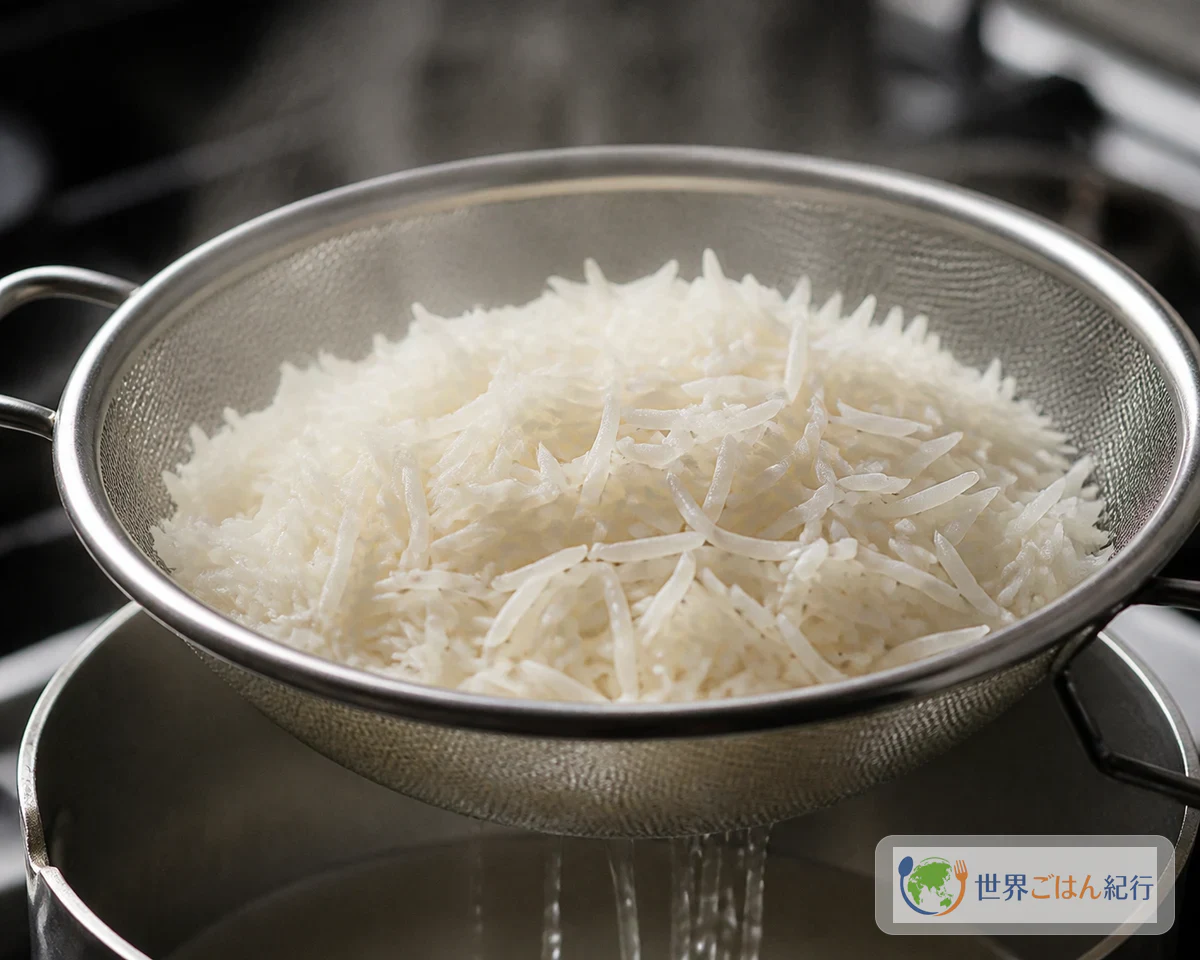
For Iranian chelow, rice is parboiled in plenty of water and then steamed in a pot. The top stays white and fluffy, while oil and heat dry only the bottom into a crust. Chelow is plain steamed rice served alongside meat or stews. Polo (also written pilaf) layers meat, vegetables, fruit, or beans with the rice. Both rely on separating parboiling from steaming so each grain stays intact.
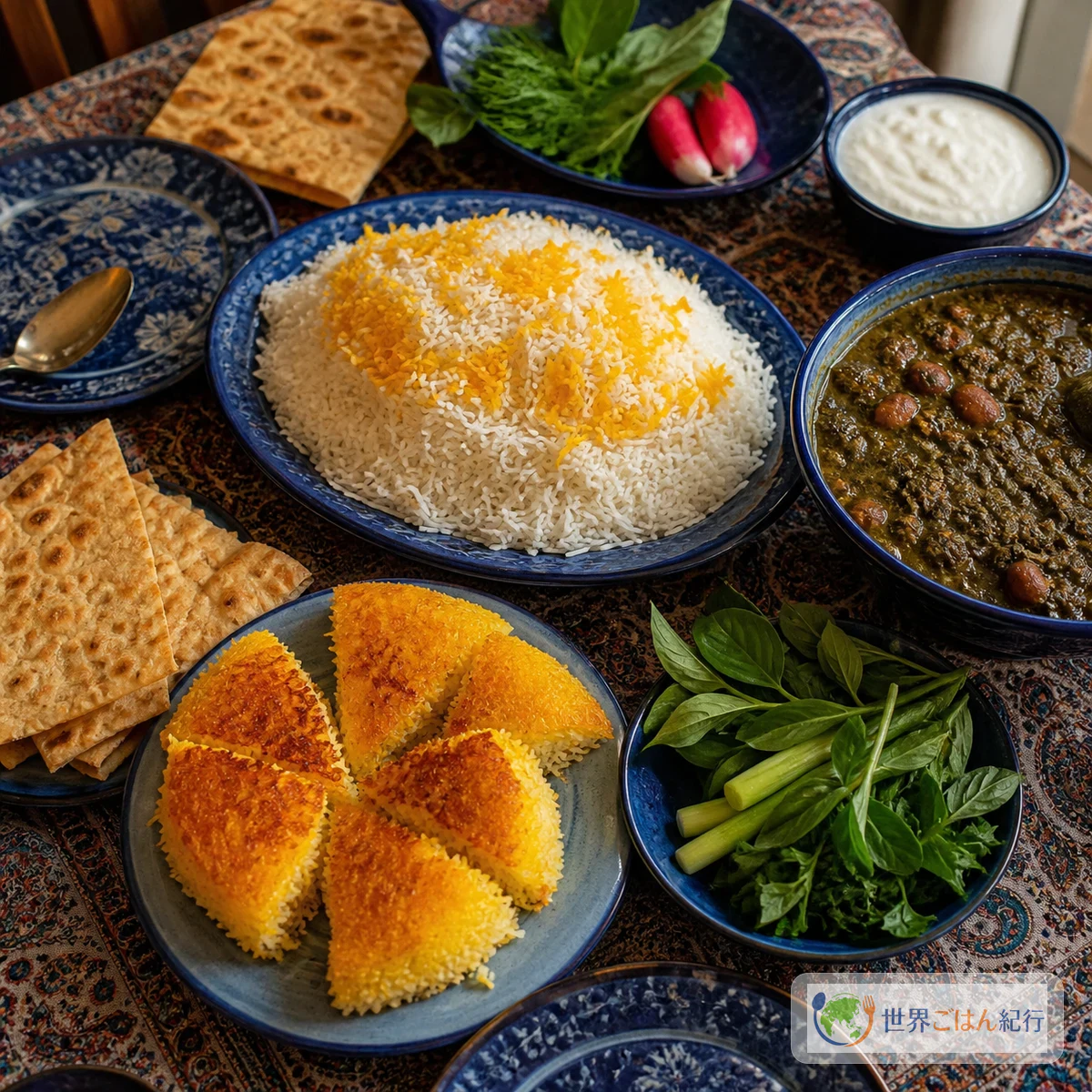
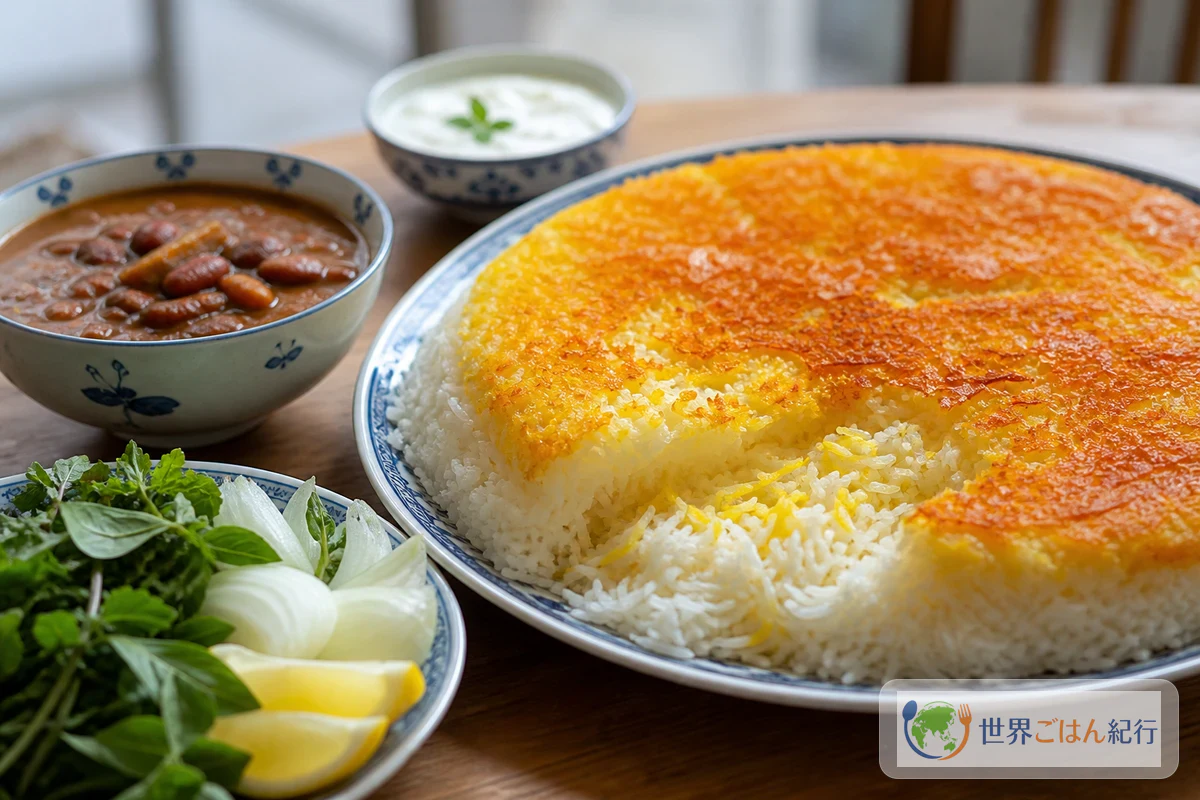
Tahdig forms on the bottom of either, and at the table it gets real attention. The crust is broken into large pieces and set on a separate plate or arranged around the mound of rice. When a meat or bean stew goes over it, the hard surface catches the sauce and the rice inside takes on its aroma. Everyone shares the crust, and the crispiest pieces go to guests or children first.
Rice is the center of daily meals on the Caspian coast in Gilan, known as rice country, where it is paired with sour stews, vegetable dishes, and fish. In the drier interior and on the plateau, bread and wheat are strong traditions too. Stories tie tahdig's origin to a particular dynasty or a single cook, but they are later folklore.
Tahchin, in which yogurt and egg are mixed into the rice and set, is a separate dish built on tahdig. It is baked with a filling such as chicken, so its ingredients and texture differ from simple chelow. On a day when you want elaborate layers, see how to make tahchin.
For a first attempt, make plain white chelow with a little saffron rather than a polo with ingredients mixed in. That way you can watch the doneness of the rice, the sound from the bottom of the pot, and the color change one at a time.
Ingredients (serves 4)
Choose rice with long, slender grains and a fragrance that holds up after parboiling. You do not need expensive equipment at the start, but the lid and the condition of the pot bottom directly affect the result.
The yogurt is there to bind the bottom layer of rice thinly and make it crisp. It is not meant to add sourness, so choose plain unsweetened yogurt rather than sweetened or flavored. If you skip dairy, mix oil and saffron liquid into 1 cup of rice and spread it thinly for the crust. The crust will brown and hold together differently.
Equipment
You need a nonstick pot about 8 inches (20 cm) across, a tight-fitting lid, a fine-mesh strainer, and a clean, thick kitchen towel. The towel is wrapped around the lid, so keep it short enough that no corner can hang down toward the flame. A mortar is handy for grinding saffron, but the back of a spoon and a small dish will do.
This recipe uses yogurt and butter. If you avoid dairy, use the substitutes in the ingredient table. The variation that lays flatbread on the bottom of the pot contains wheat. Secure the towel at the lid handle and keep it away from the stove flame and vent.
Choosing ingredients for tahdig
Oil, yogurt, potatoes, and unsalted butter come from any ordinary supermarket. Basmati rice and saffron need more thought, so choose your first bag with care.
Basmati rice
Other long-grain rice will substitute, but this method assumes basmati grains that lengthen when parboiled and loosen as they steam. For a first attempt, buy a 2.25 lb (1 kg) bag and check the label for the origin, the net weight, and that the ingredient is basmati rice. A 11 lb (5 kg) bag only makes sense if you cook pilaf or biryani several times a month; otherwise it just eats storage space. If ordinary rice will do, go straight to the substitutes in the ingredient table.
Saffron, and cooking without it
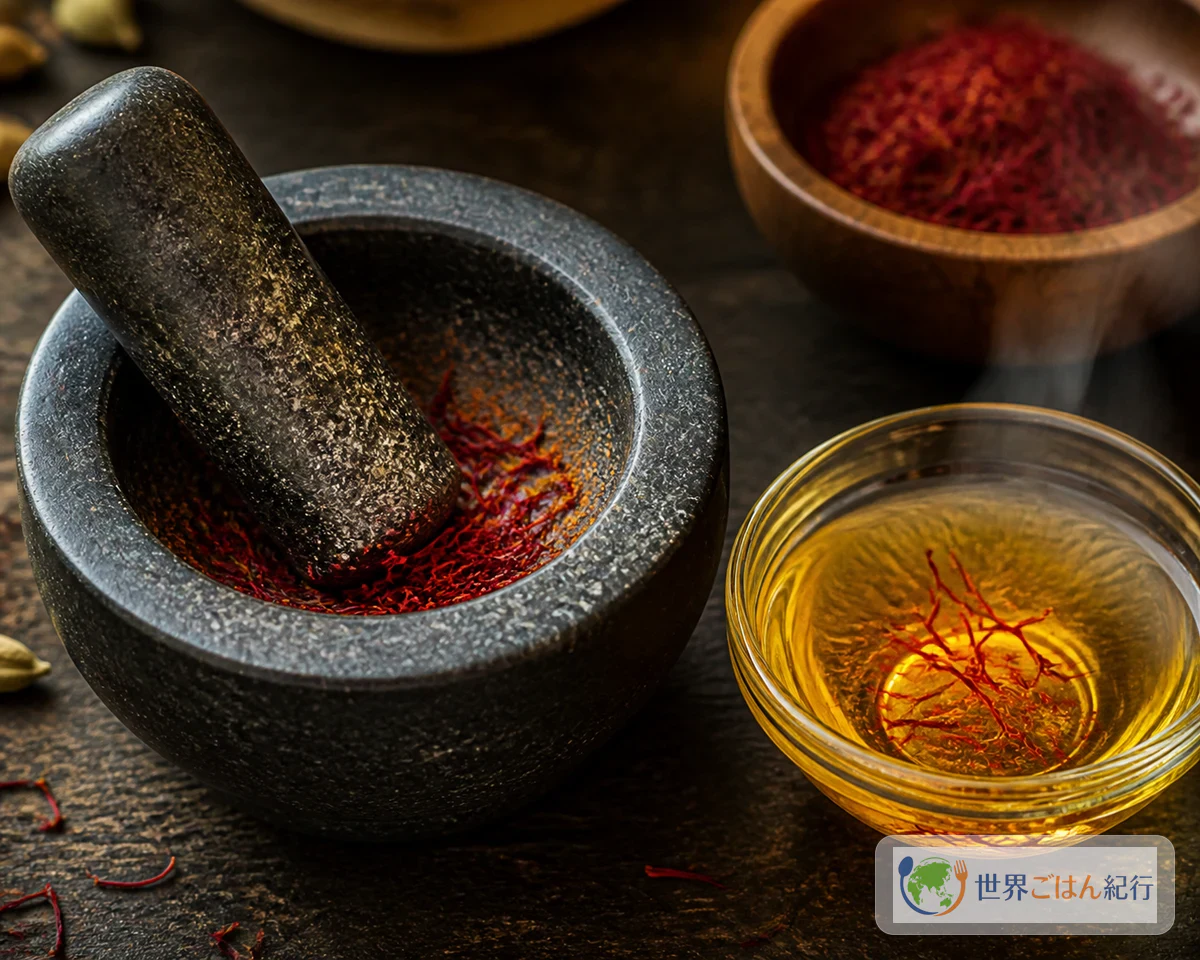
Choose red threads (the dried stigmas) rather than pale yellow powder, and check the package for net weight and form. You use so little that a small packet of around 1 g lasts several batches. Saffron adds aroma and color, but chelow works fine without it: leave it out of the yogurt rice and enjoy the contrast between white rice and crust. Turmeric gives yellow but an earthier aroma, nothing like saffron, so use only a pinch if you use it at all.
A mortar lets you loosen saffron a little at a time and crush cardamom or cumin, but a small dish and a spoon will do for this recipe. It's worth the shelf space only if you plan to keep cooking Persian or Indian food. If you do buy one, check that it is natural stone, whether a pestle is included, and the size of the bowl.
Using short-grain rice
You can try the idea of tahdig with 10.5 oz (300 g) of short-grain (Japanese-style) rice. The grains are short and hold water, though, so basmati timings will make it sticky. After washing, shorten the soak to 10 minutes and begin checking a grain at 4 to 5 minutes of parboiling. Drain when the outside is soft and the center only slightly firm, then rinse the surface with cold water.
Use 5.5 oz (150 g) of yogurt rice for the bottom layer, less than with basmati. Short-grain rice breaks easily, so don't press the top rice when you mound it; just poke the steam holes. Start with 25 to 30 minutes of steaming, and if it is still hard, add 2 tbsp of boiling water and give it 5 more minutes. What you get is less a chelow with separate grains and more a rice dish with a toasty layer on the bottom.
Method: loosen with water, set with steam
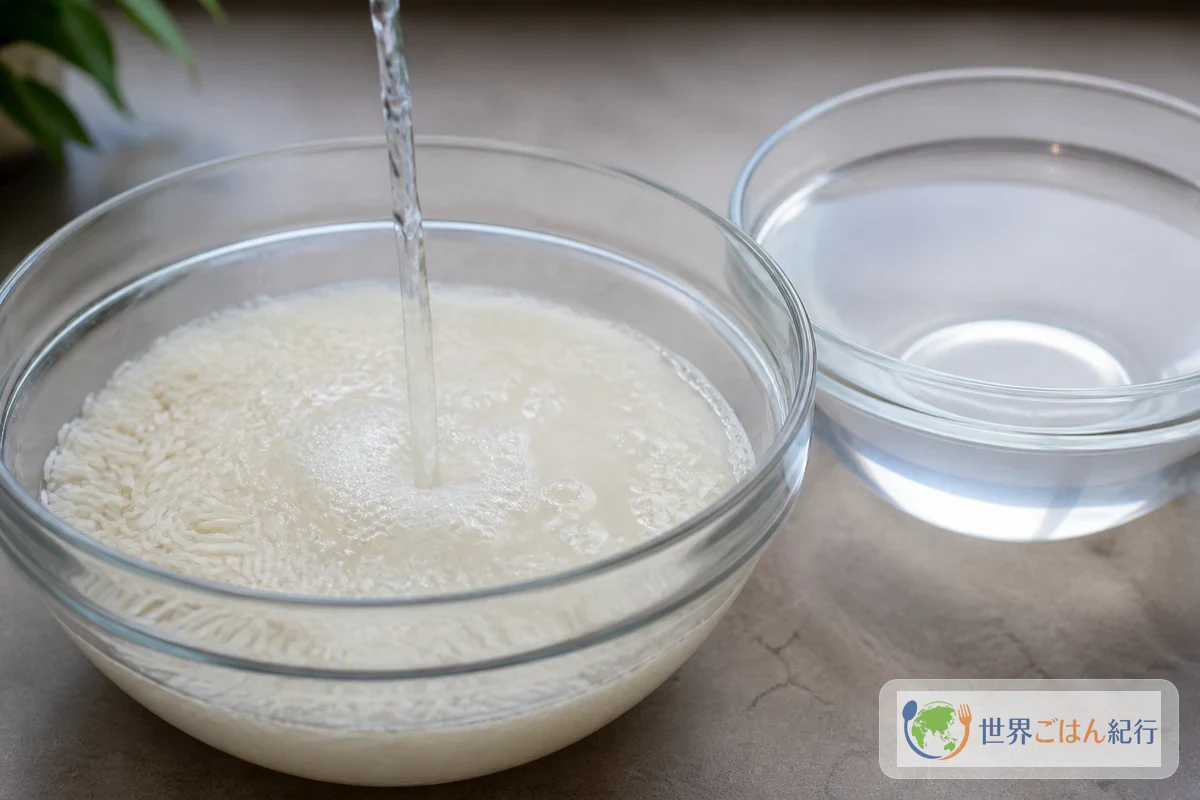
STEP 1: Rinse the rice and soak briefly (40 min)
STEP 2: Bloom the saffron (10 min)
STEP 3: Parboil the rice to al dente (8 min)
STEP 4: Build the bottom layer and mound the rice (10 min)
STEP 5: Steam, cool, then flip the pot (40 min)
Common tahdig failures and fixes
Tahdig steams the rice on top while drying only the bottom of the pot. What matters is not a darker brown but keeping the steam in and drawing the moisture out of the bottom alone. Too much heat turns only the surface black; too little leaves the rice white and still full of steam.
The pot
A nonstick pot releases the crust in one piece and suits a first attempt. A heavy stainless steel pot works too, but its bottom heats unevenly, so turn it slightly partway through for even browning. With an iron pot, season it well with oil and keep from pressing the rice hard against the bottom.
Heat in the first minutes
Listen for a sizzle within the first 6 to 8 minutes. Without it, the oil and the layer of rice aren't getting enough heat yet, and it's fine to delay the drop to low by about 5 minutes. If you see smoke or smell something bitter, lower the heat at once and move the pot to another burner.
Releasing the crust
Even if the crust sticks, leave the metal spatula aside. Cool the bottom on a damp towel and loosen only the edge, and a slight gap opens between the pot and the oil. If it still breaks, crumble the crust over the rice; you keep the aroma and the crunch.
| Symptom | Likely cause | Fix on the spot |
|---|---|---|
| Rice is white and there is no sound from the bottom | The first heat was too low or the oil was cold | Replace the lid and add 5 minutes on medium, then go to low. Do not add water |
| The bottom is black and bitter | The heat is too high or the pot is thin | Turn off the heat at once and move the top rice to another plate. Do not mix in the black layer |
| The rice is sticky | Parboiled too long or not washed enough | Take off the lid and let steam escape on low for 1 to 2 minutes only. Lift it 30 seconds earlier next time |
| The center of the rice is hard | Parboiled too briefly or steam leaked | Drizzle 2 tbsp of boiling water around the pot wall and steam on low for 10 minutes with the towel-wrapped lid |
| The crust will not release | The bottom has not cooled or rice remains at the edge | Hold a damp towel against the bottom and run a wooden spatula around the edge before flipping |
Serving, variations, and storing tahdig
Serving
Serve tahdig with meat dishes like chelow kabab, a bean-and-herb stew, or grilled vegetables. Yogurt, herbs, and thinly sliced onion on a separate plate balance the richness of the crust. Rather than blending everything into one flavor, combine rice, crust, stew, and something sour in each bite; that's closer to how a chelow table is eaten.
Potato, flatbread, and leaf tahdig
At home, people often put another ingredient on the bottom of the pot and let it crisp while the rice steams. Change that layer and the dishes you serve alongside change too.
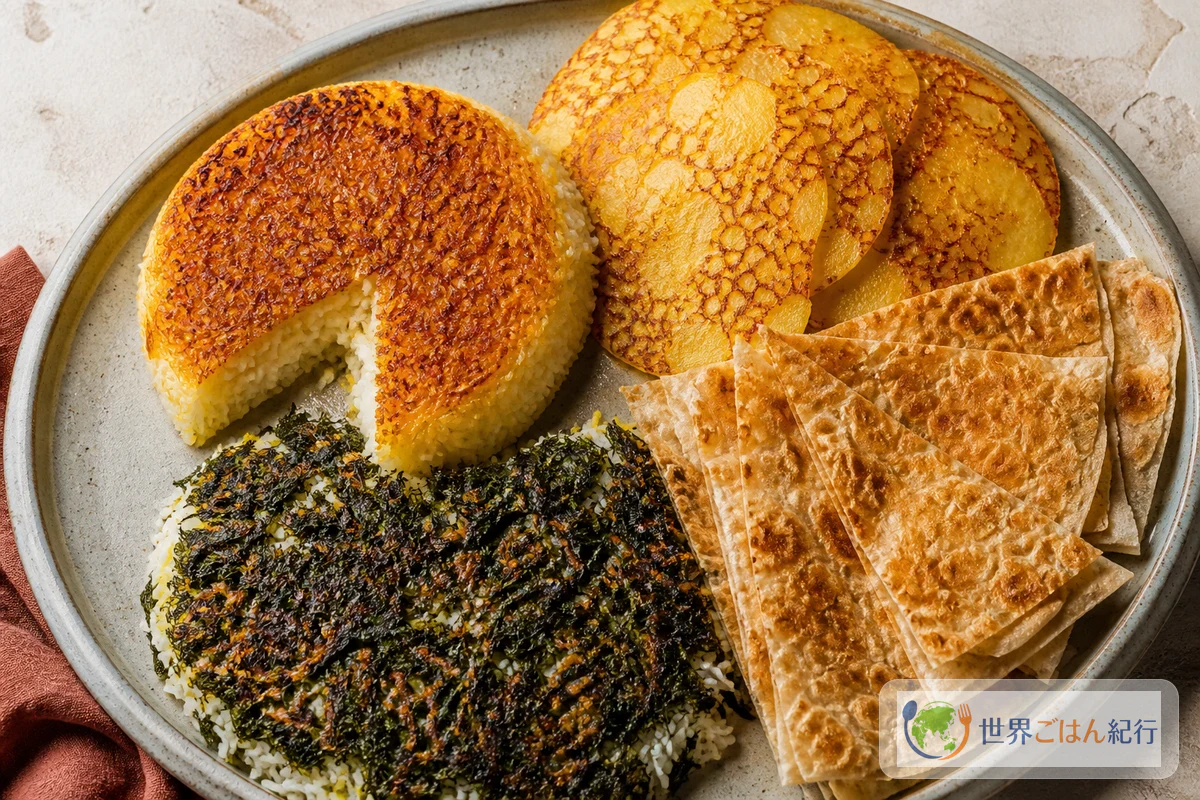
For potato tahdig, cut 1 potato into 0.25 inch (5 mm) slices, lay them without gaps over the oiled pot bottom, and mound the rice on top. It is thicker than a rice crust and stays fluffy inside, so it takes up sour tomato stews and bean dishes well. Thinner slices fall apart and thicker ones stay hard in the center, so stick to 0.25 inch (5 mm) at first.
Thin bread such as lavash absorbs the oil and turns into a crust that breaks easily. Its toasty wheat aroma comes forward ahead of the rice, so cover only half the pot if you want the rice to be the star. Skip it if someone has a wheat allergy.
Briefly blanched lettuce or cabbage leaves brown at the edges in the oil, giving a lighter toastiness than browning the rice directly. Raw, watery leaves steam the crust soft, so blanch them and press them dry with a towel first.
Storing and reheating
Don't leave leftover rice in the pot at room temperature; move it to a shallow container and let the heat dissipate. Refrigerate, eat it by the next day, and reheat it in a microwave until thoroughly hot all the way through. Keep the crust separate and you can revive both sides in a little warm oil in a skillet over low heat. If you freeze, wrap only the rice in single portions, and accept that the crust loses its texture more easily.
Frequently asked questions
Is tahdig the same as Japanese okoge?
They share a toasty flavor, but they're made differently. Japanese okoge can form naturally during or at the end of cooking, whereas tahdig combines oil, parboiled rice, and steaming time to build a layer at the bottom of the pot. The aim is a bottom that dries as the rice above steams, not a scorched one.
Can I get a crust without yogurt?
Yes. Spread oil over the bottom of the pot and lay part of the parboiled rice thinly on it for a rice-only tahdig. It holds together less well than yogurt tahdig and breaks easily when flipped, so at first break it up and plate it rather than forcing it out in one sheet.
Can I cook meat with it?
Mixing meat or vegetables into the rice moves it toward polo, and the moisture from the meat changes how the bottom browns. For a first attempt, make the stew separately and get to know the crust. Layer in the filling next time, once you've learned the cooking judgments.