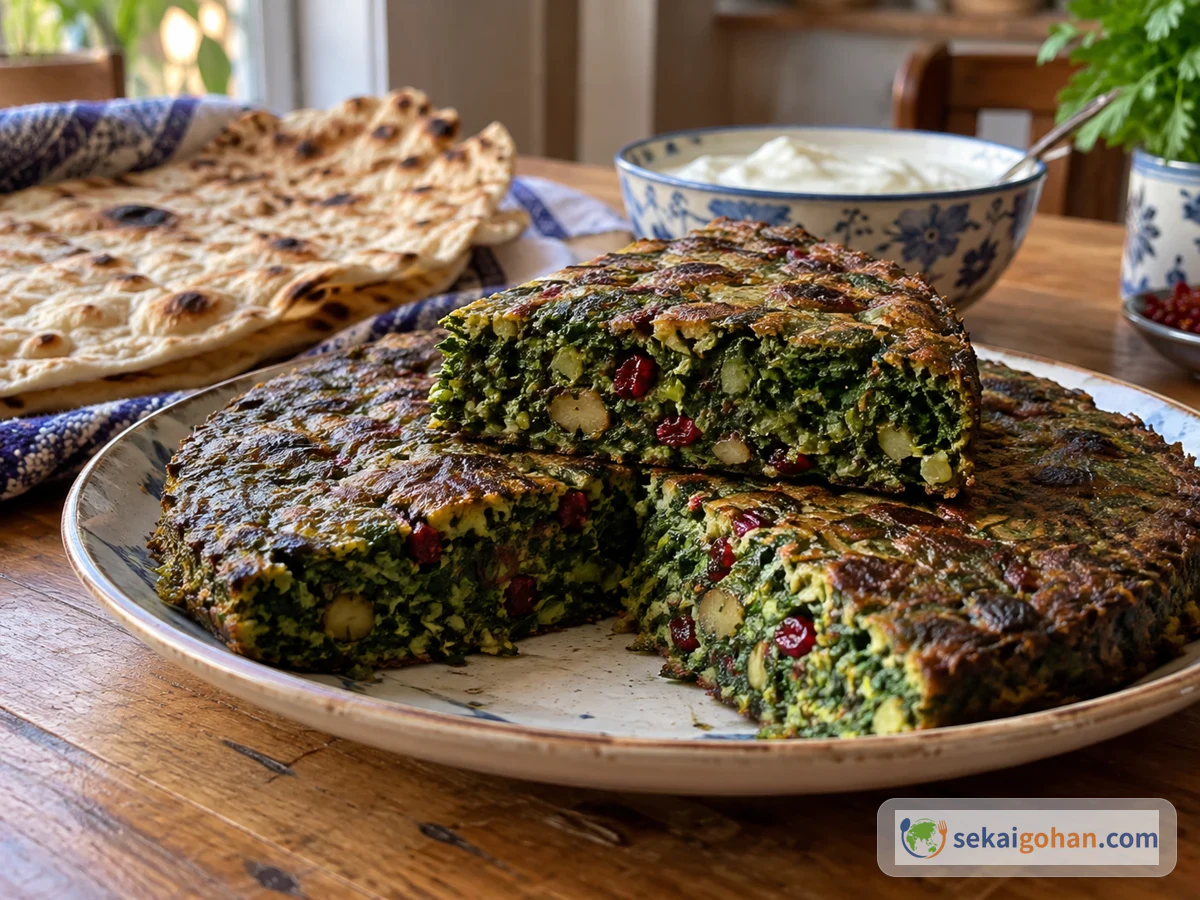
Cut it open and the inside is deep green, not egg yellow. The scent of chopped parsley and chives rises, and here and there a red barberry glints. In Iranian homes, kuku sabzi (کوکو سبزی) means a great deal of herb bound with just a little egg and baked, closer to a block of herbs than an omelet. It's an essential dish on the Nowruz table, the spring new year.
Kuku sabzi and Nowruz
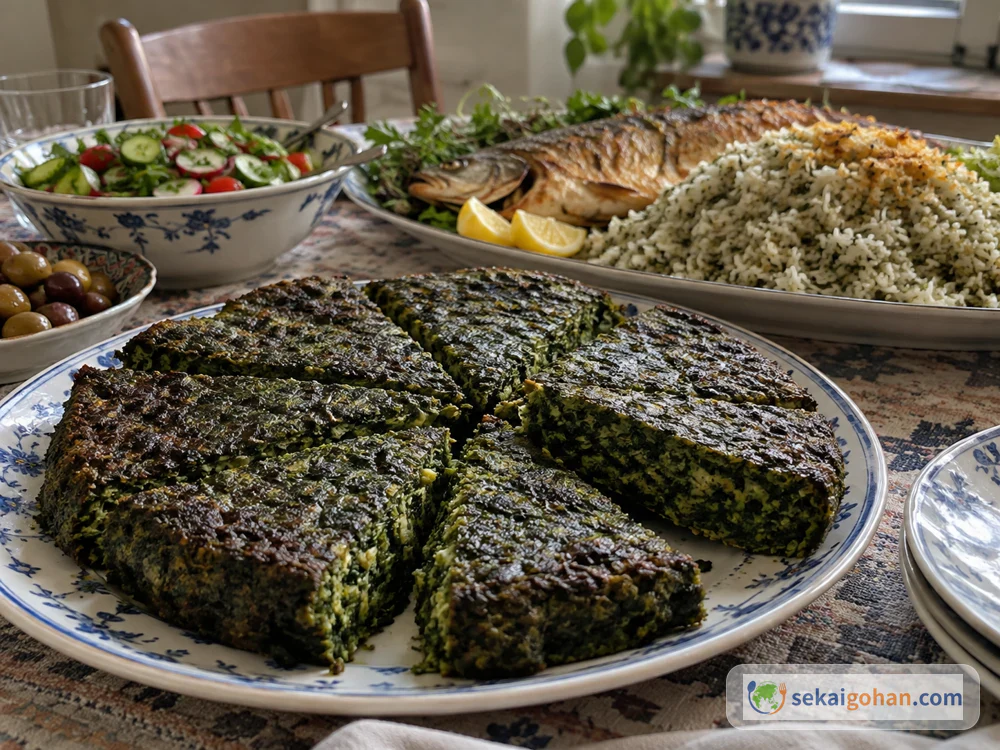
Nowruz, the Iranian new year, begins around the spring equinox. Its Persian name means "new day," and it celebrates the arrival of spring and the start of the year together. It's also celebrated in Afghanistan, Azerbaijan, the countries of Central Asia, Turkey, and elsewhere.
On the first night of the new year, most Iranian households eat rice mixed with finely chopped herbs, fried fish, and kuku sabzi. "Kuku," the egg dish, stands for fertility and abundance, and "sabzi" (herbs) for renewal, so together they make a symbol of new beginnings. The green that sprouts after winter becomes the first thing eaten in the new year.
"Kuku" names a whole family of Persian dishes in which a filling is bound with egg and baked: potato kuku, eggplant kuku, green bean kuku, and many more. In kuku sabzi the egg only holds things together, and the herbs are the real subject. That ratio is what sets it apart from a Western omelet or frittata.
The thirteenth day after Nowruz is called Sizdah Bedar, when families head out to parks and the countryside and spend the day outdoors. The name means "getting rid of the thirteen," carrying the sense of driving off bad luck. Kuku sabzi, which is good cold and easy to carry, is also made to bring along on this picnic.
Herbs and home variations
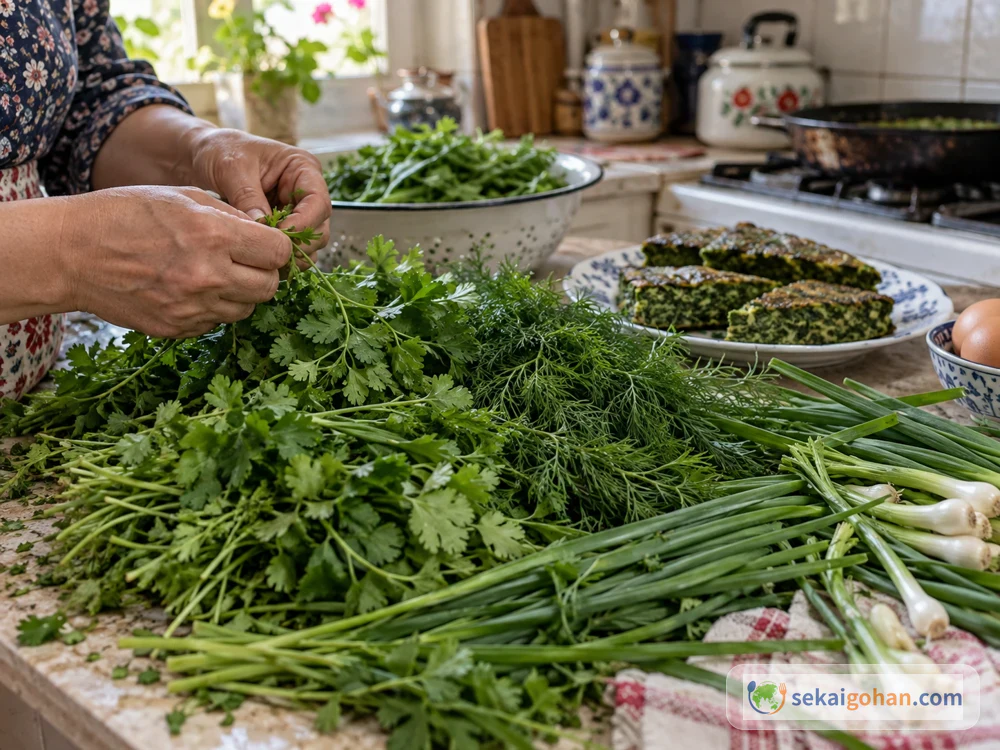
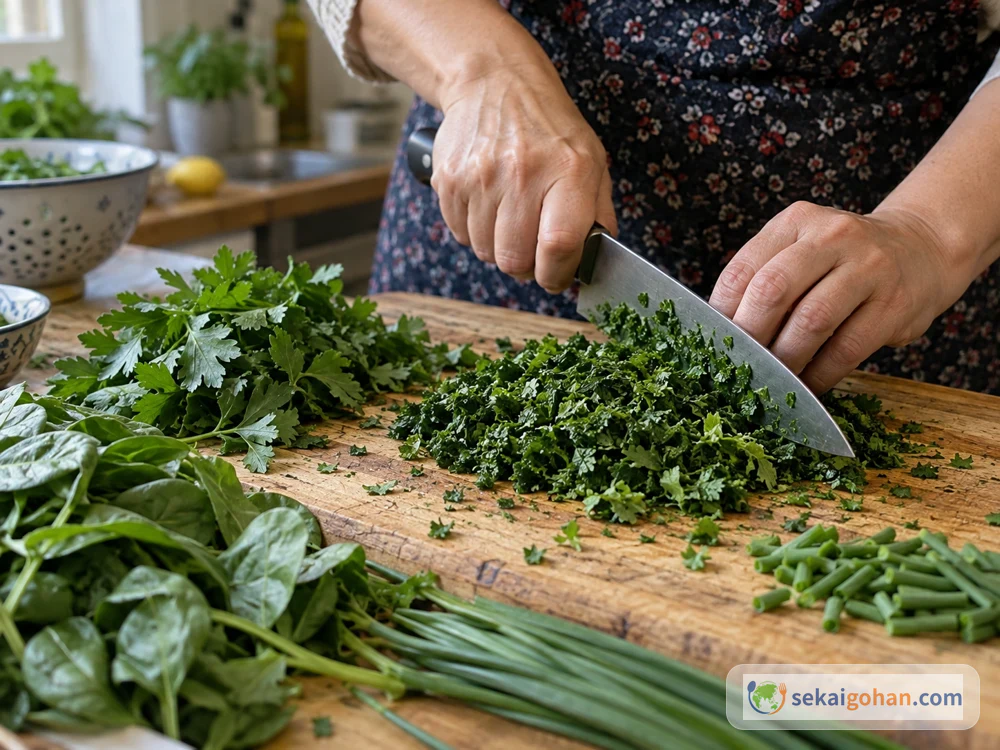
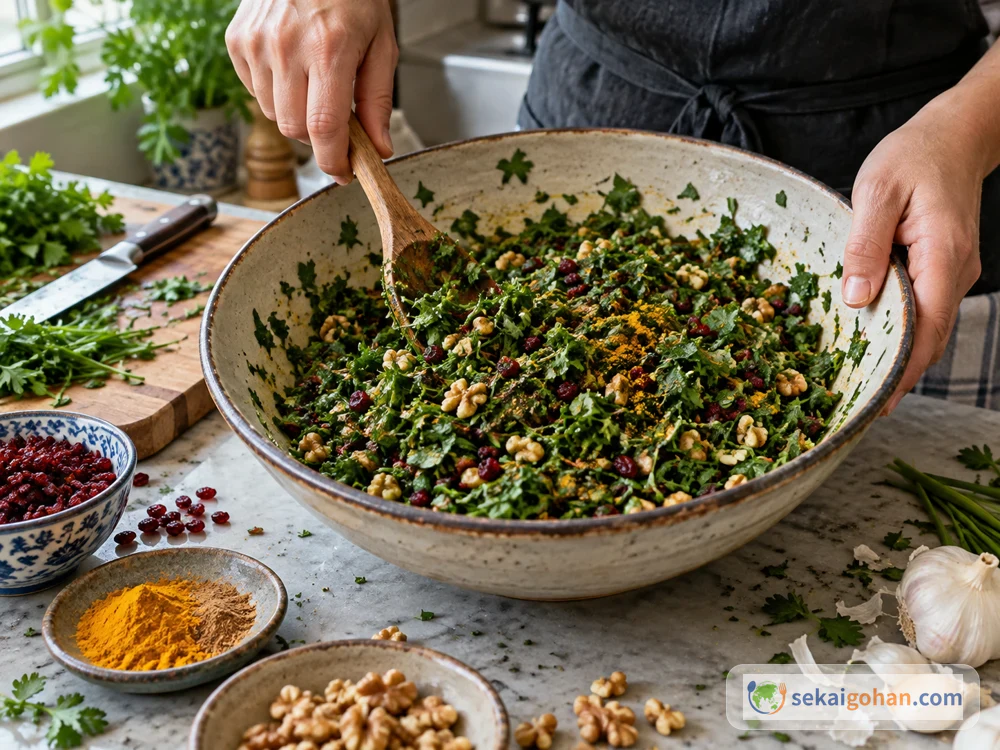
As Nowruz approaches, Iranian kitchens fill with the work of washing and chopping herbs: parsley, cilantro, dill, scallions, chives, and young garlic leaves. Each cook decides which of these six go in and how much of each. Some households add lettuce or basil, and some scatter red barberries or crushed walnuts on top.
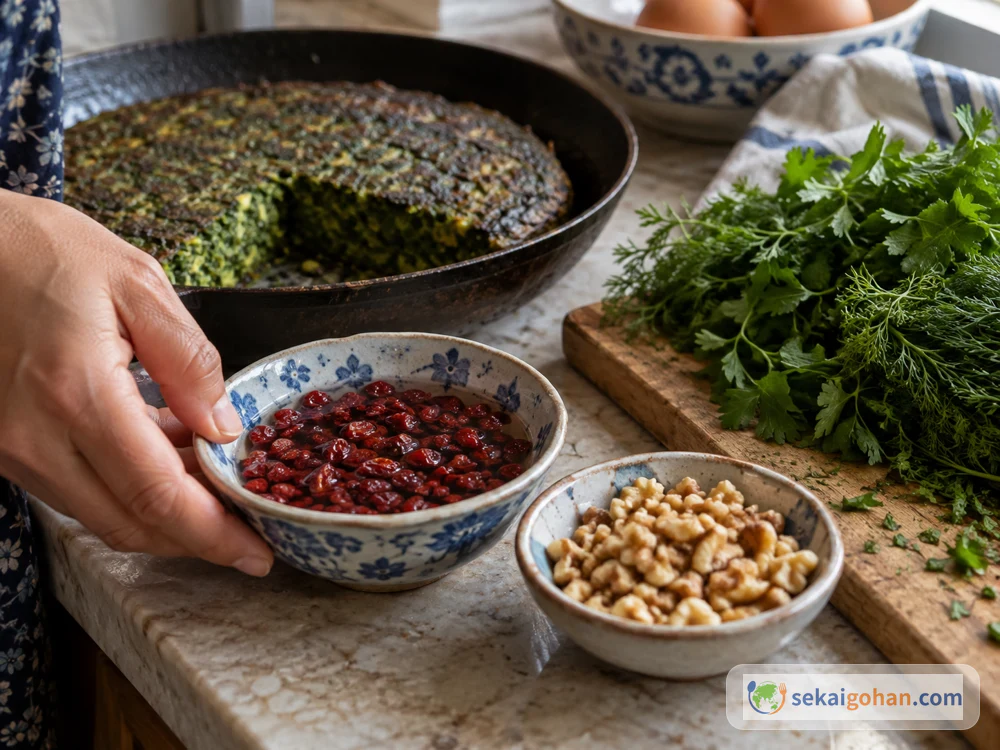
Barberries, called "zereshk" in Persian, are small dried red fruits, sharply tart more than sweet, and they bring an accent to the all-green batter. Walnuts add toastiness and something to chew. Kuku sabzi stands fine without either, but with them every bite is a little different.
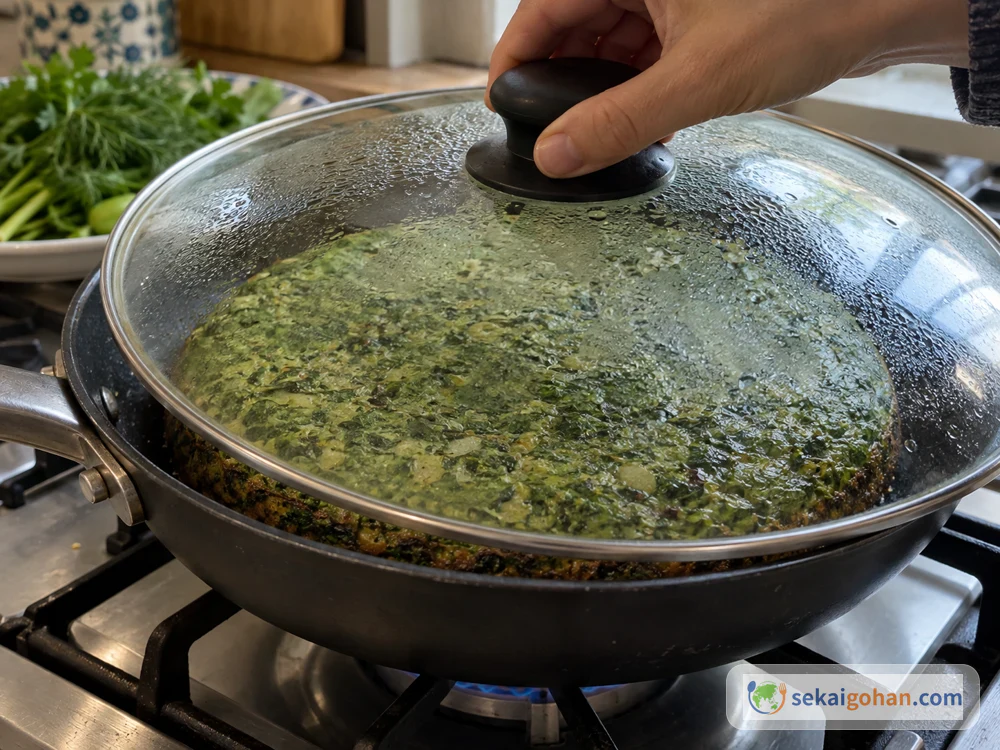
Cooking methods vary too. Some cooks cover the pan and cook over low heat, flipping partway; others slide it into the oven to cook gently. Either way, the keys are keeping the heat low and using plenty of oil so it doesn't scorch, or finishing it in the oven.
Ingredients (a 10-inch (25 cm) skillet, serves 6)
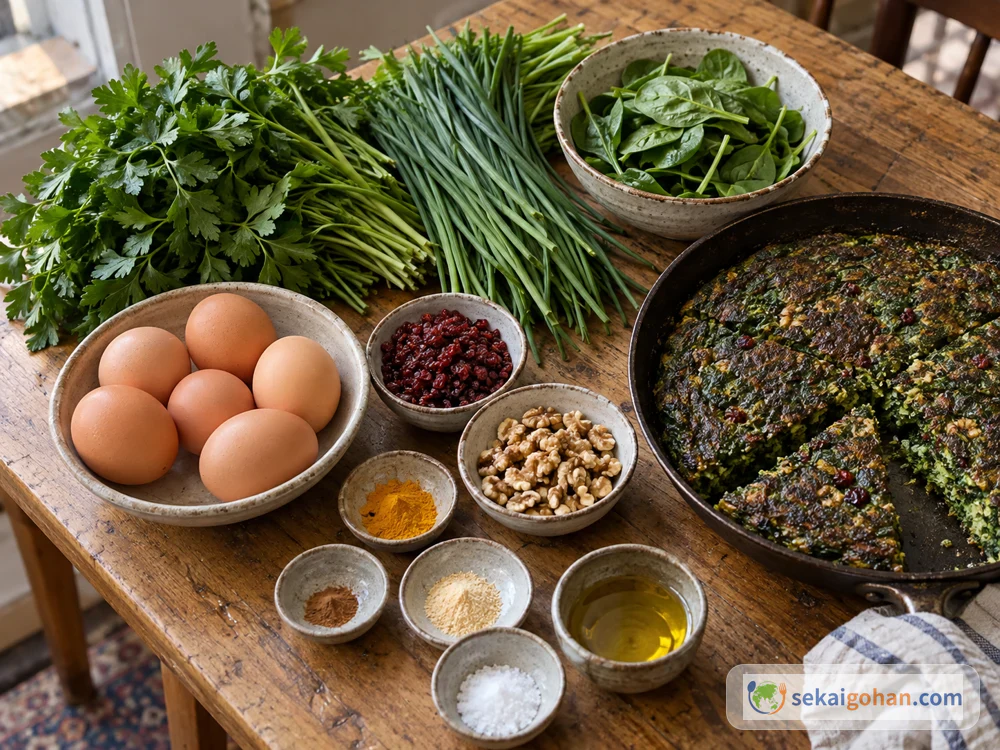
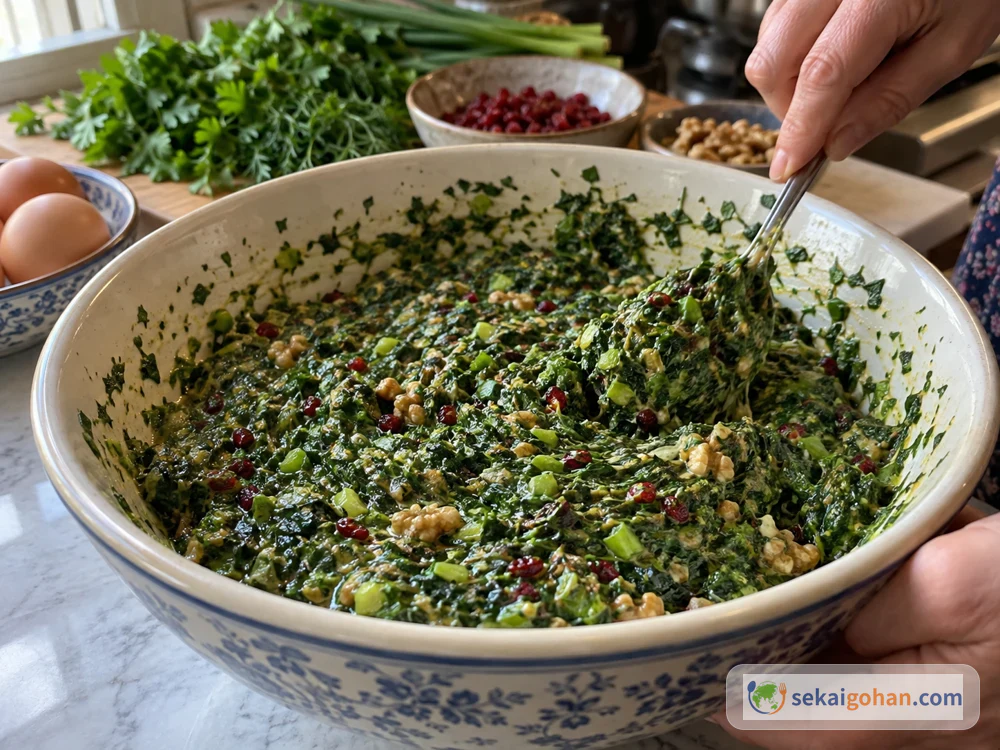
The herbs total about 9.5 oz (275 g) for 6 eggs: a bowl heaped with green that the egg barely coats. More egg gives a yellow result closer to an ordinary omelet. Keeping the herb-to-egg ratio is the surest way to keep the look and aroma that make this dish what it is.
After washing the herbs, dry them thoroughly with a salad spinner or paper towels before chopping. The batter won't turn watery, and it holds together better when baked.
Choosing herbs for kuku sabzi
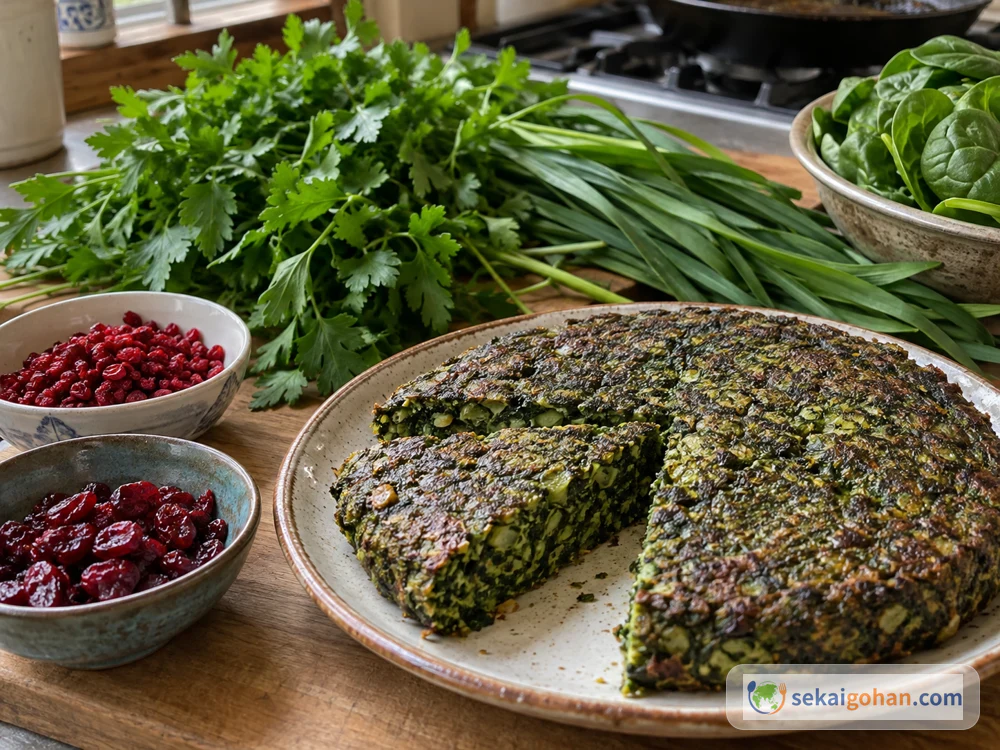
This Sizdah Bedar version uses just three greens, parsley, spinach, and garlic chives, which makes it easier to shop for than most blends. Garlic chives are the flat, grassy chives sold in Asian groceries as Chinese chives; look in the produce aisle of an Asian market. Flat-leaf (Italian) parsley has a softer aroma than the curly kind and rarely turns bitter even in large amounts. Curly parsley works if that's what you have, as long as you strip off the tough stems and use only the leaves.
Scallions can stand in for garlic chives. If you find dill or cilantro, swap them in for part of the parsley to come closer to the varied blends of Iranian homes. Whatever you use, don't reduce the total amount of herb; that's what keeps the green deep.
Barberries are hard to find in ordinary supermarkets, so try a Middle Eastern grocer or shop online. Without them, a small amount of finely chopped dried cranberries gives a similar red fleck and sour note; they're sweeter, so go easy. Turmeric and cinnamon are in any supermarket spice aisle.
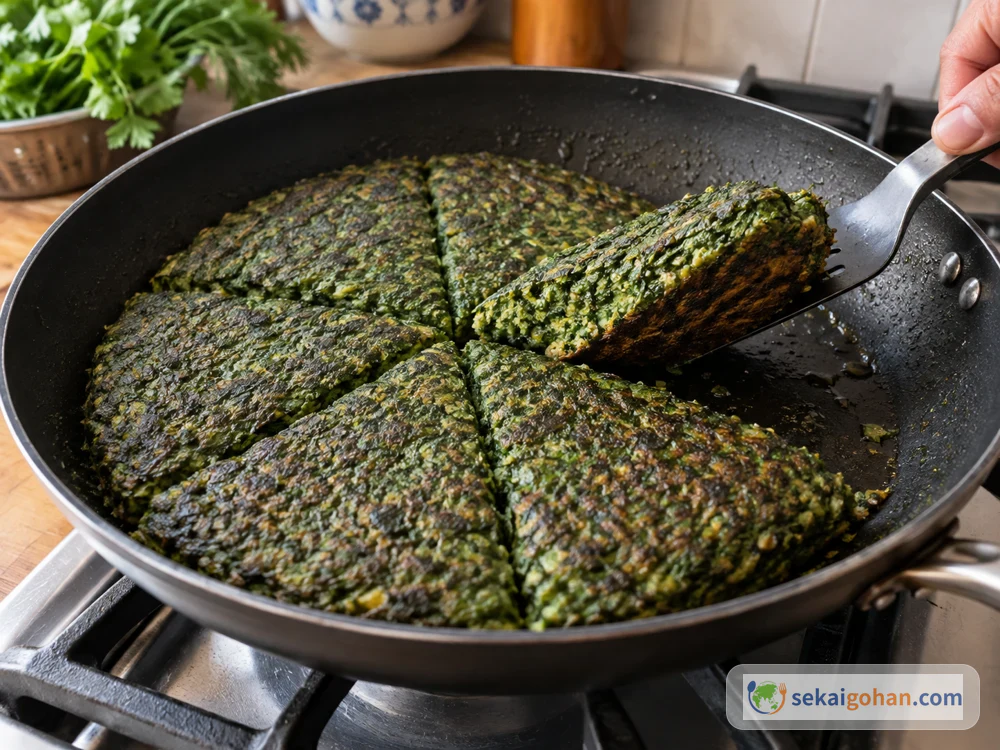
Flipping the whole thing in one piece is hard, so the trick in this recipe is to cut first and flip the wedges one at a time. Even broken pieces, pushed together on the plate, hardly show.
If you smell the bottom scorching while cooking, lower the heat further and add about 1 tsp oil along the edge of the pan. If many drops of water collect inside the lid, wipe it before putting it back so the surface doesn't turn sticky.
Cook the eggs all the way through. Open a cut slightly and check that no runny raw egg remains. If you add walnuts, check beforehand whether anyone eating has a nut allergy.
Serving and storing kuku sabzi
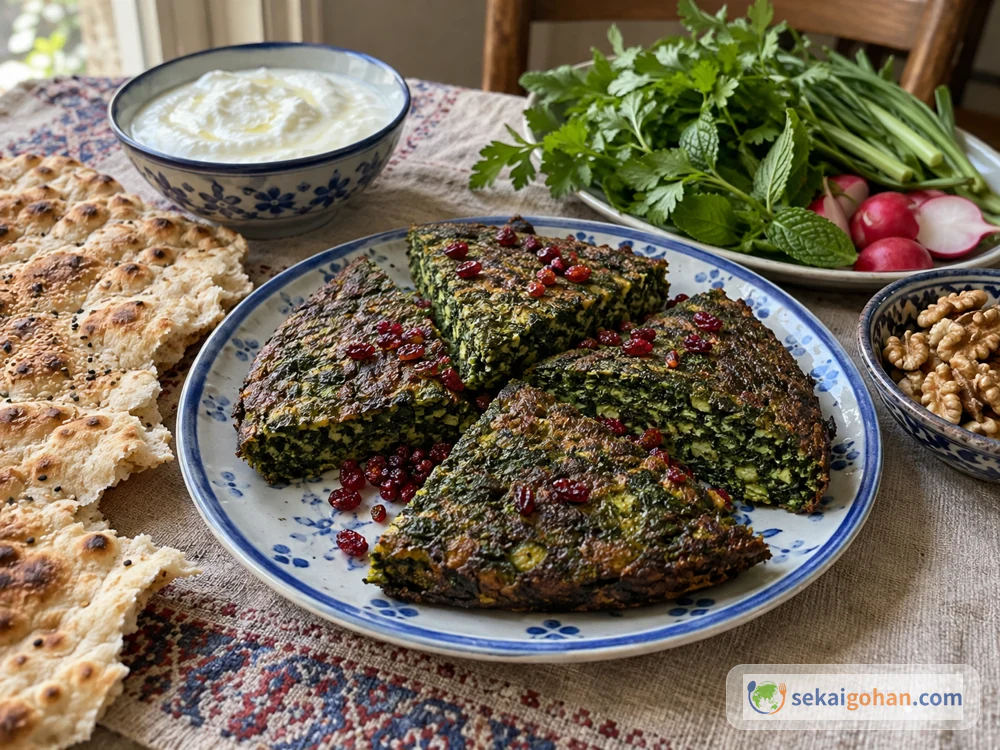
Turn the finished kuku sabzi out by inverting a large plate over the skillet, or lift out the wedges one at a time, and serve them green side up. It's lovely fresh and warm, and cold has its own appeal as the herb aroma settles. Flatbread is the classic partner, though pita, naan, or tortillas work too.
Tear off some bread, lay a piece of kuku sabzi on it, and tuck in plain yogurt, fresh herbs, and walnuts for a bite that tastes like an Iranian home table. Or do as Sizdah Bedar picnickers do and sandwich it cold in bread; it makes a good packed lunch.
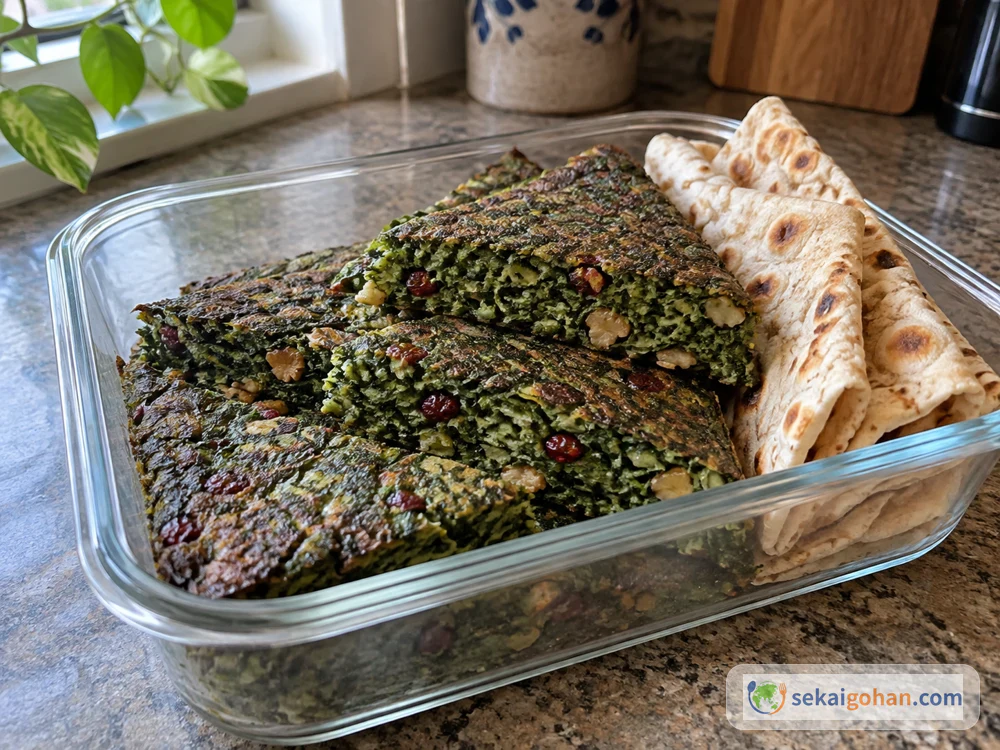
Once it has cooled slightly, wrap the wedges individually in plastic wrap, refrigerate, and eat them soon. They're good cold in bread or lightly rewarmed on both sides in a skillet.
For more herbs in the lead, try ghormeh sabzi, a stew of herbs, beans, and lamb, and add tahdig, the crisp bottom of the rice, for a full Persian table. For another egg dish to compare, there's Turkey's menemen, eggs cooked with tomato.
FAQ
Can I add more eggs?
You can, but the result turns yellow like an ordinary omelet and the herb aroma thins. To keep it kuku sabzi, stay at about 9.5 oz (275 g) herbs for 6 eggs.
The batter sticks to the pan.
Usually there's too little oil or the heat is too high. Spread the 2 tbsp oil across the whole pan before adding the batter, and keep the heat low while it cooks. A nonstick pan makes it much easier to handle.
Can I bake it in the oven?
Some Iranian households do. Oil a baking dish, pour in the batter, and bake until the surface sets and the edges color. Timing depends on the size and depth of the dish, so insert a skewer and check that no raw egg clings to it.
What if I want it spicy?
Iranian kuku sabzi is a mild dish. If you want heat, set out pickled green chiles or chili flakes at the table, which keeps the original flavor intact.