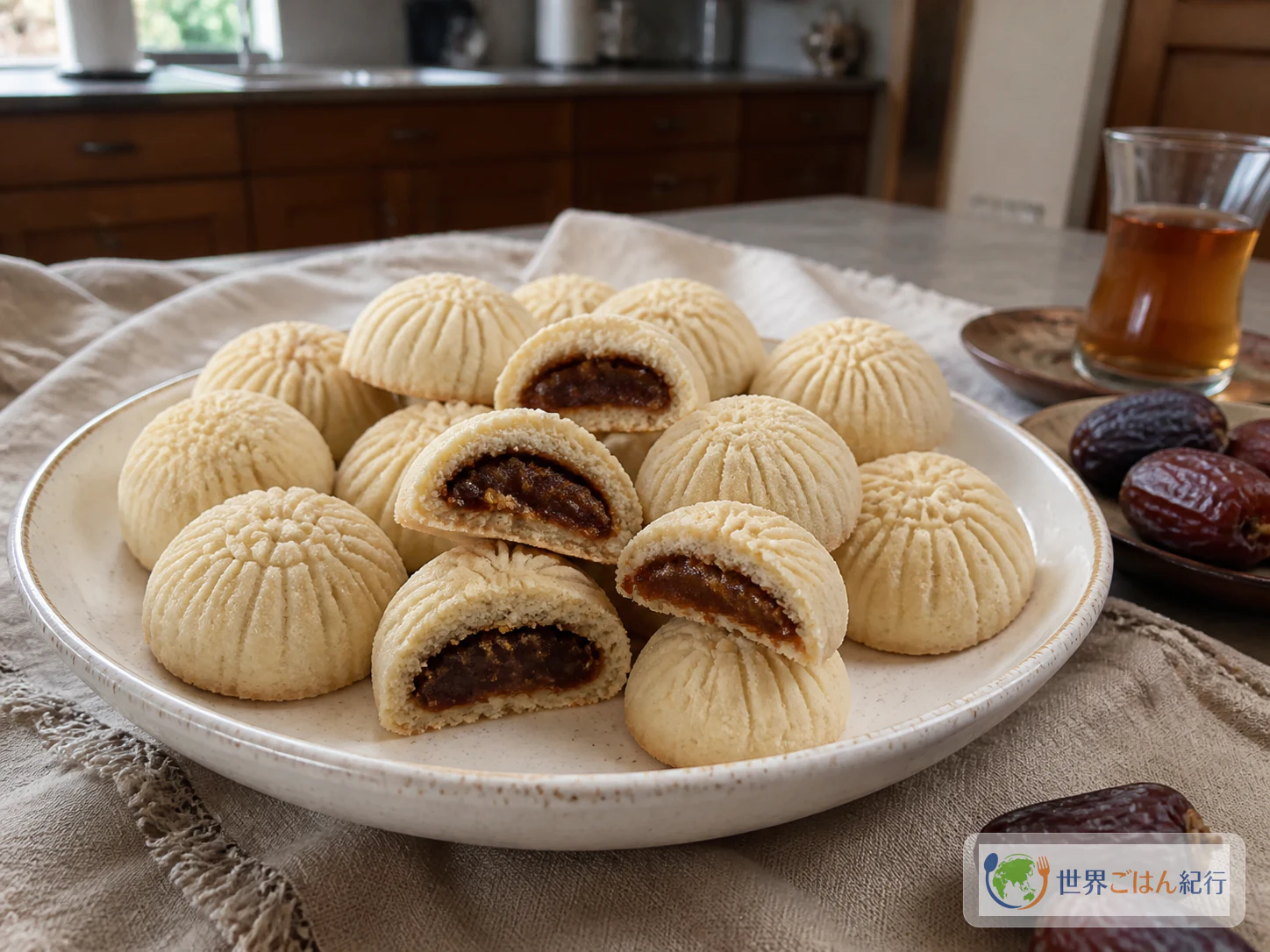
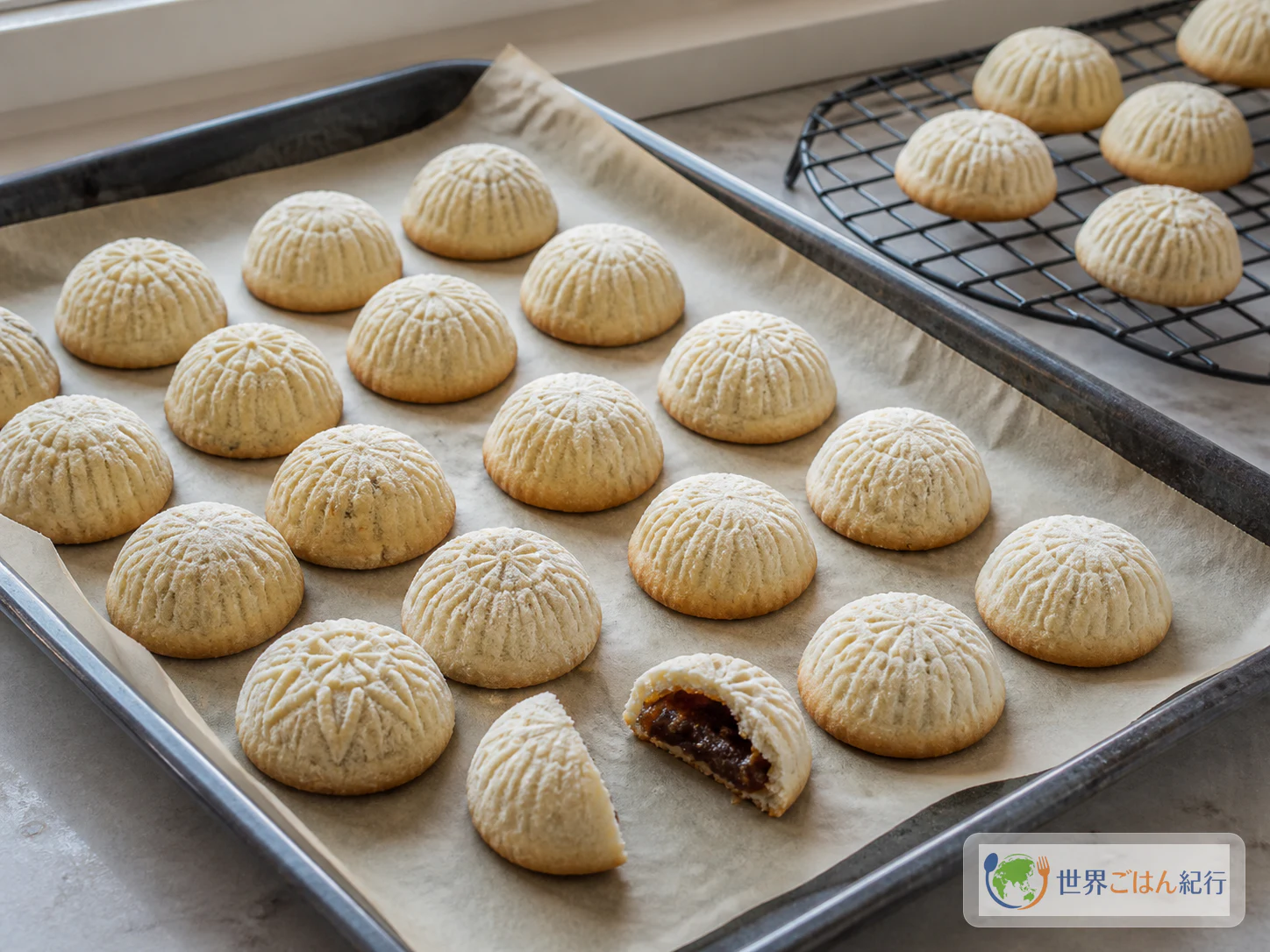
Break open a baked maamoul and the semolina shell goes first, a toasty crumble, before the deep sweetness of the dates comes through. The top stays nearly white and only the bottom takes on a thin color. The round shape, with the grooves left by a wooden mold, is what people remember, but the real pleasure is the sweet filling inside a shell that isn't too thick. Maamoul (also ma'amoul and mahmoul) is made in Lebanon and across the Levant, and this version uses easy-to-find fine semolina.
Maamoul at Lebanese feasts
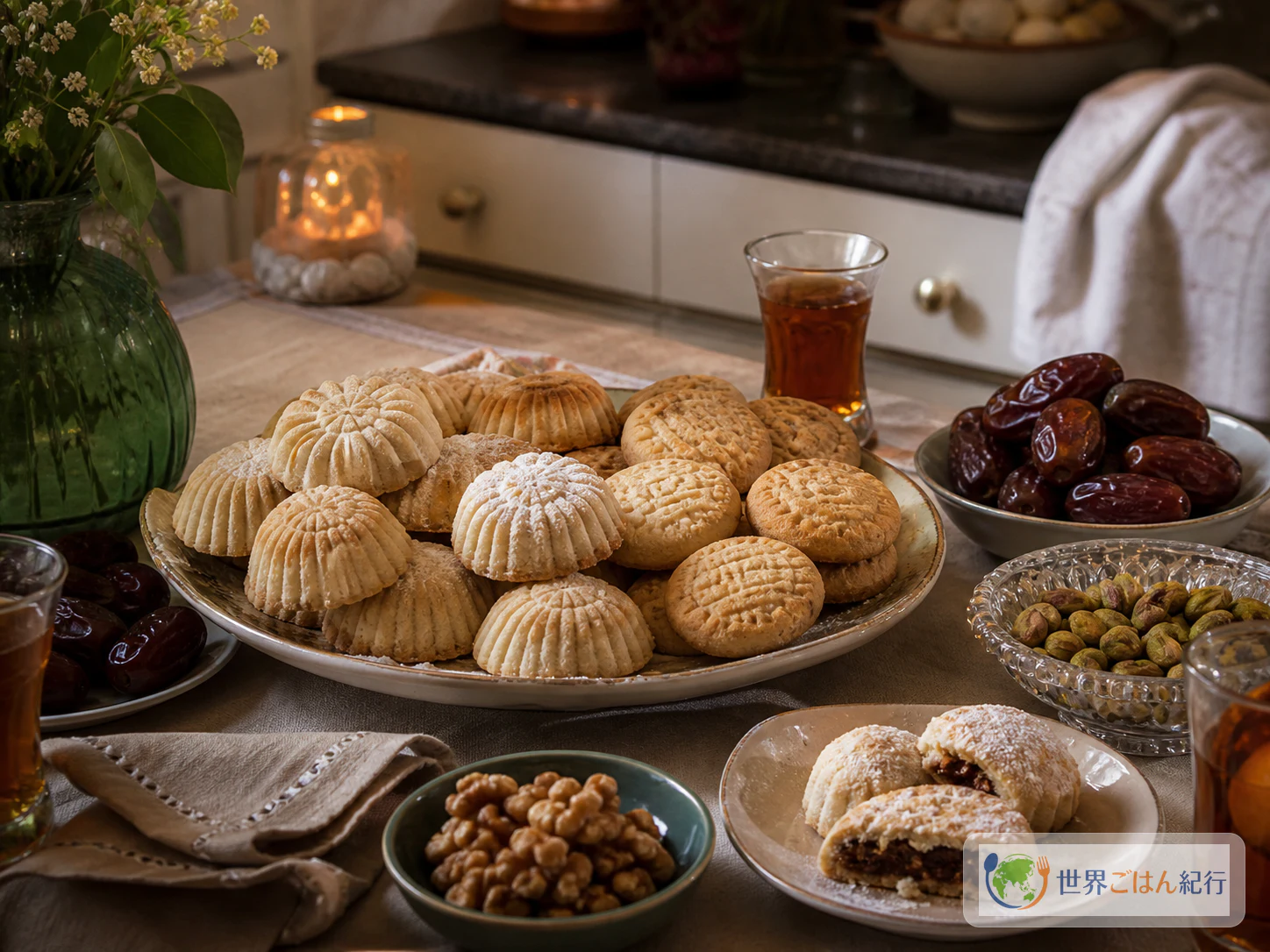
In Lebanon, maamoul is made for special days such as Christian Easter and Muslim Eid al-Fitr. It's offered to visiting relatives and friends, or shared within the family from the batch that was baked. Think of it as a sweet taken from a large platter when people gather, rather than an individually wrapped treat.
That's why it's made in large amounts at home. People learn it from a mother or aunt, and relatives gather to share a big batch. The dough rests for 4 hours, so many cooks make it the day before and bake the next day. The rest gives a holiday kitchen room to work side by side: one person rolls the filling, another wraps the dough, another unmolds.
Dates, walnuts and pistachios are the three main fillings, and the combinations differ by shop and household. Dates are the sweet, sticky standard. Walnuts are toasty and keep a grainy texture, and the green of pistachios gives the plate an accent. Each filling gets its own pattern, so when several shapes sit on the same plate, they tell you what's inside.
Ingredient names overlap across the Levant, and no single country owns a fixed recipe. The basic shell is semolina, all-purpose flour, butter and orange blossom water. Some versions add rose water, mahlab, ghee and nut fillings.
Ingredients (makes 24)
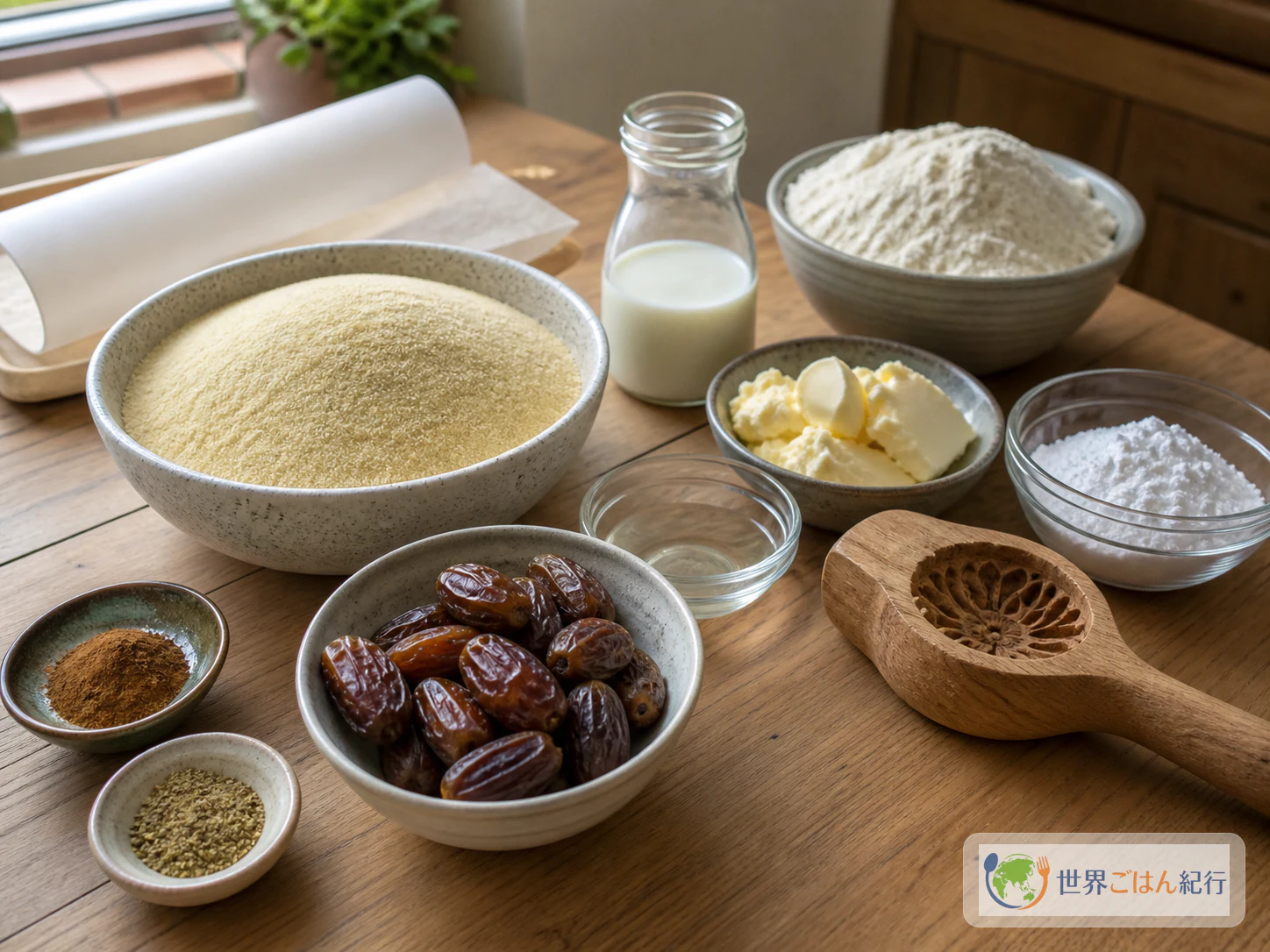
Fine semolina gives a crumbly, grainy mouthfeel unlike a cookie made only from wheat flour. Do not substitute a coarse grain: it makes the dough hard to hold together and the surface rough, so check the grind when you buy.
Buy flower water, or use the aromas you have
Food-grade orange blossom water is the one purchase worth making for this pastry. You divide it between dough and filling instead of using a few drops, so it leaves a sweet white-flower fragrance that citrus peel alone cannot reproduce. Buy it if you plan to make Middle Eastern sweets several times. Check that the label says food-grade. Do not use cosmetic or fragrance grades for cooking. A 1-cup (240 ml) bottle is easy to find, and it does not have to be Lebanese-made. If you are trying it just once or dislike the flower aroma, skip it and mix a small amount of thinly grated lemon zest into the dough instead. The aroma is different, but you are less likely to have leftovers.
Use cinnamon in a small amount to tighten the brown-sugar-like sweetness of the dates. Old powder has lost its aroma and loses to the flower water, so buy a small container that you can finish. If you are making it just this once, the powder you already have is enough. You do not need to grate a stick.
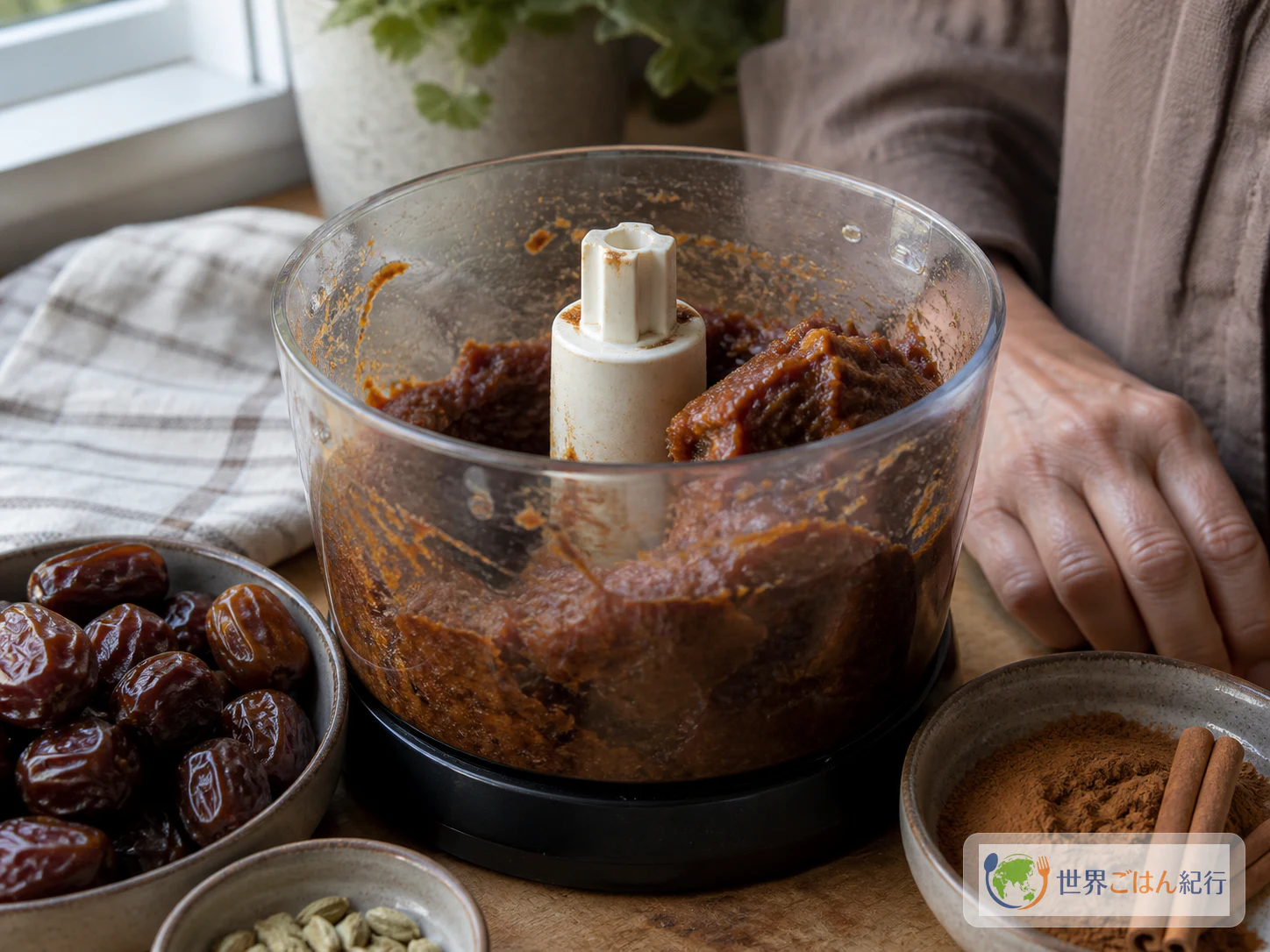
You do not need a food processor if you use ready-made paste or make only a small amount of filling. Chop the dates finely with a knife and press them in a mortar. Get a processor only if you want a smooth paste to reuse for walnut and pistachio fillings.
How to make it: wrap the date filling in the rested dough
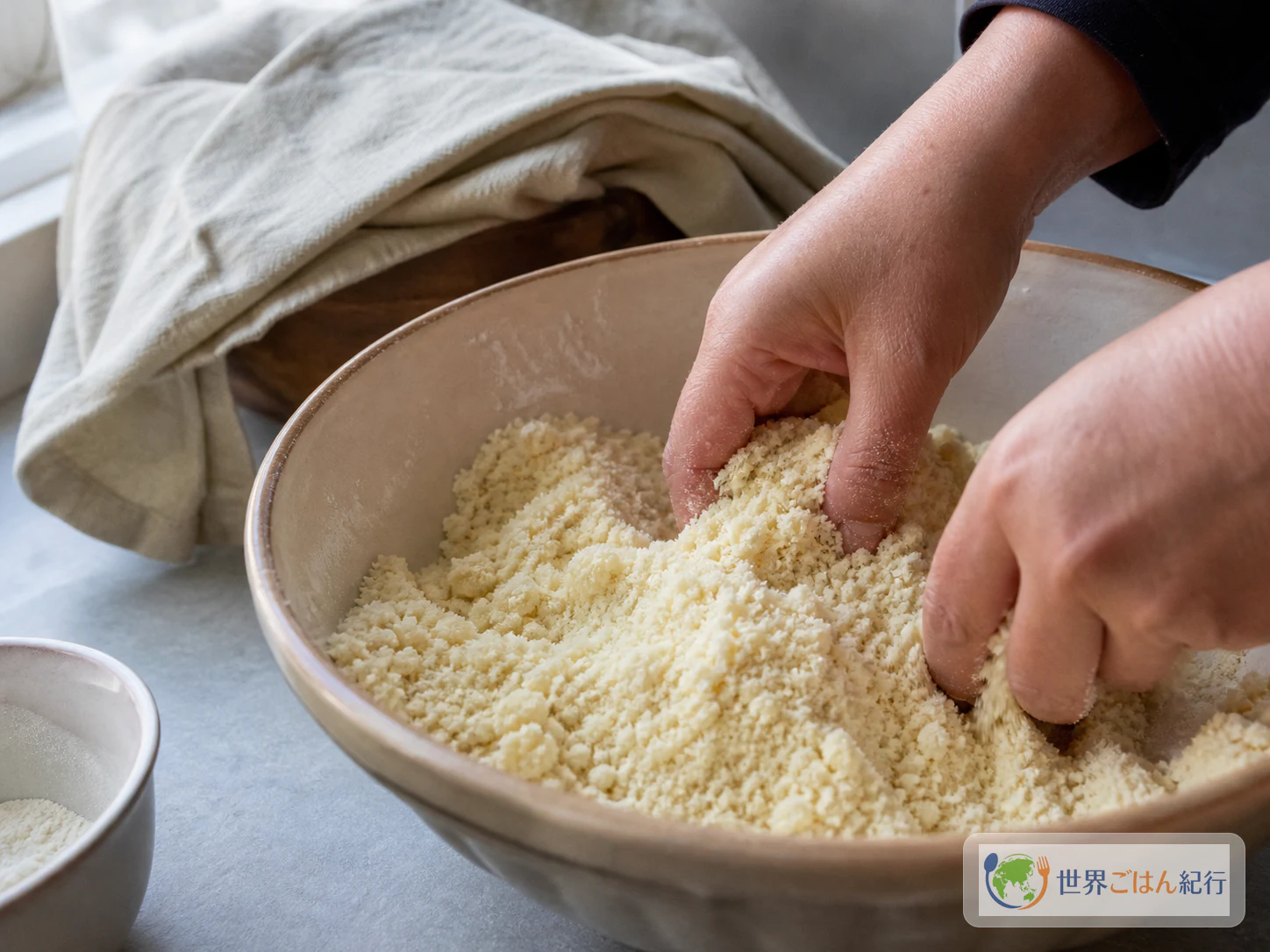
This dough can rest anywhere from 30 minutes to 7 hours. The wait has two parts: the butter working into the semolina, and the dough settling before baking. Here we use 4 hours, which you can manage without preparing the day before. On a hot day, move the dough to the refrigerator for the last 2 hours and bring it back 20 minutes before shaping.
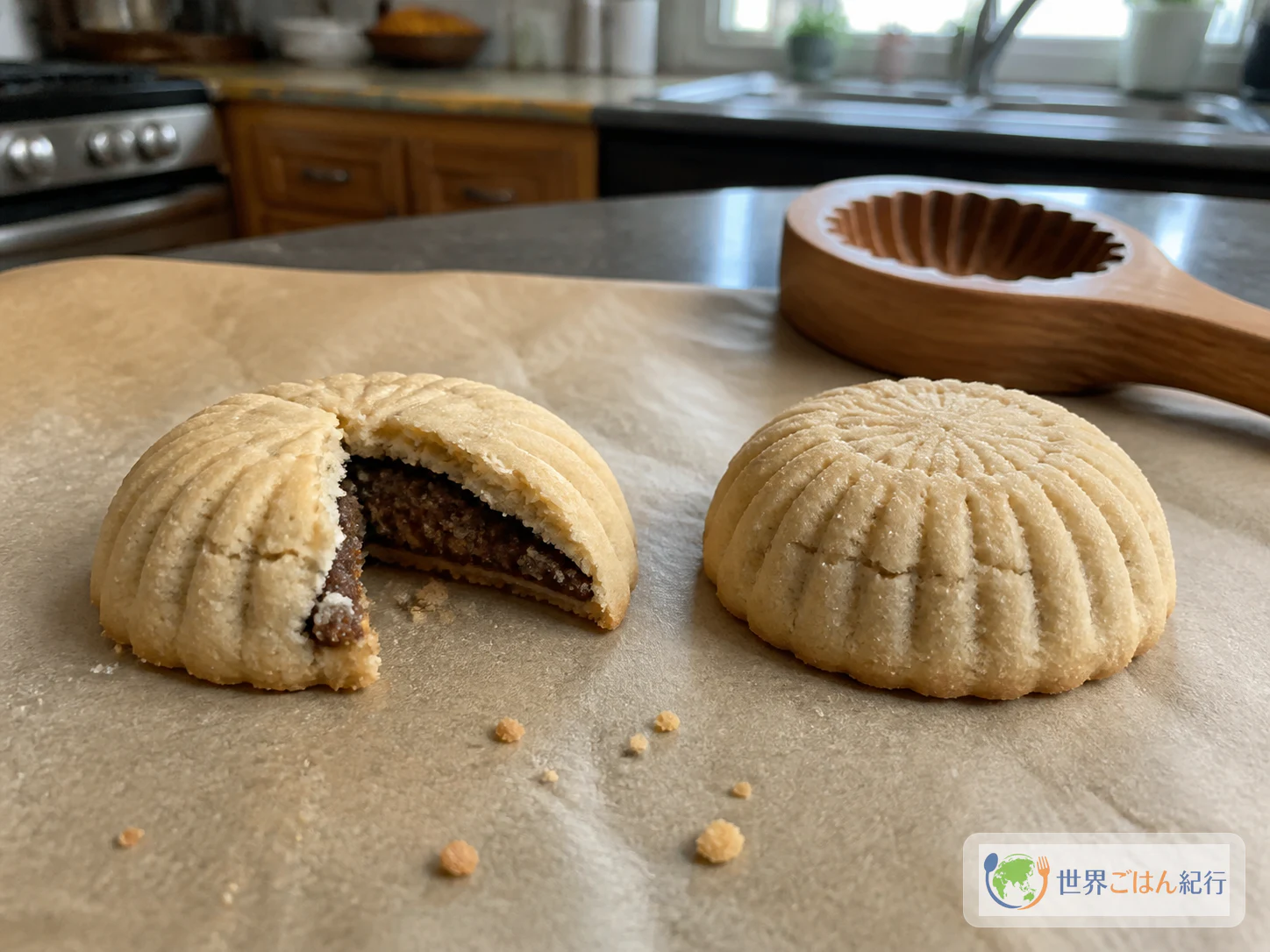
Fixes for cracking, browning and leaking filling
| What happened | Possible cause | Fix for the next piece |
|---|---|---|
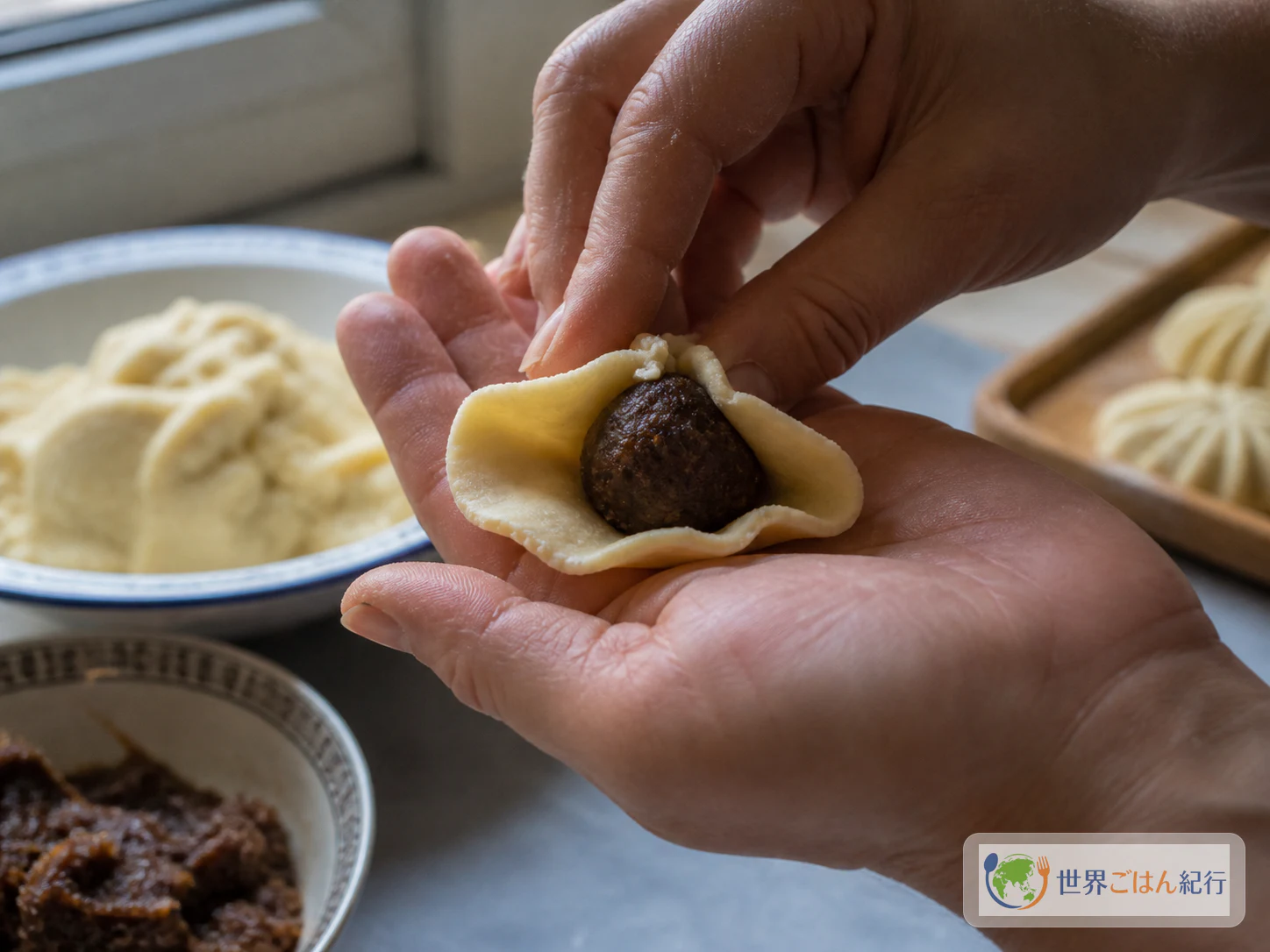
| Shell cracks while wrapping | Dough dried out, or the center is too thin | Cover the dough you are working with a cloth and keep the center of the disk at least 0.125 inch (3 mm) thick. Patch cracks with a little dough |
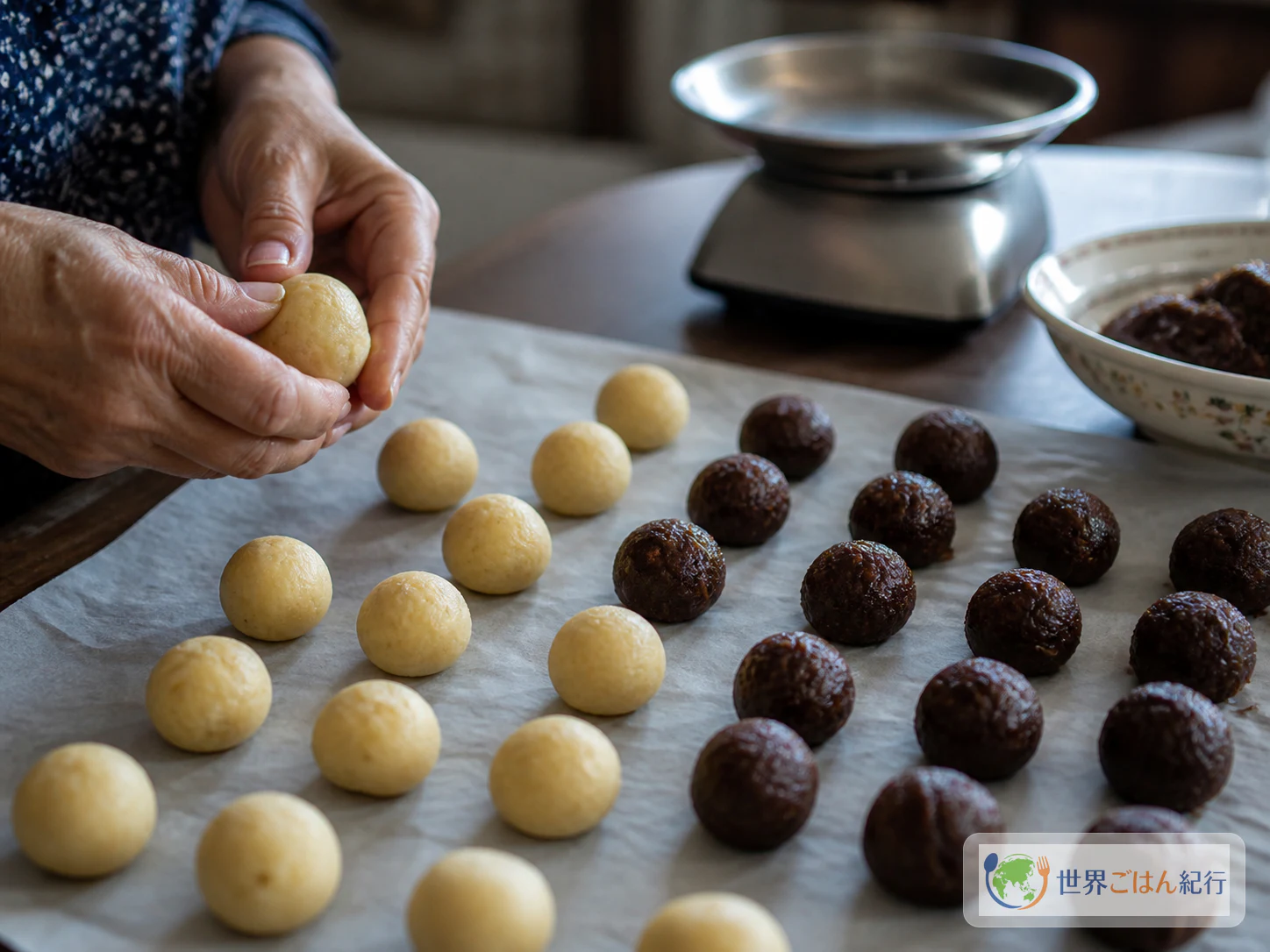
| Filling comes out at the seam | Filling too large, or pressed flat before gathering the edge | Use 10 g filling, and close by turning the edge of the shell rather than pushing the filling to the center |
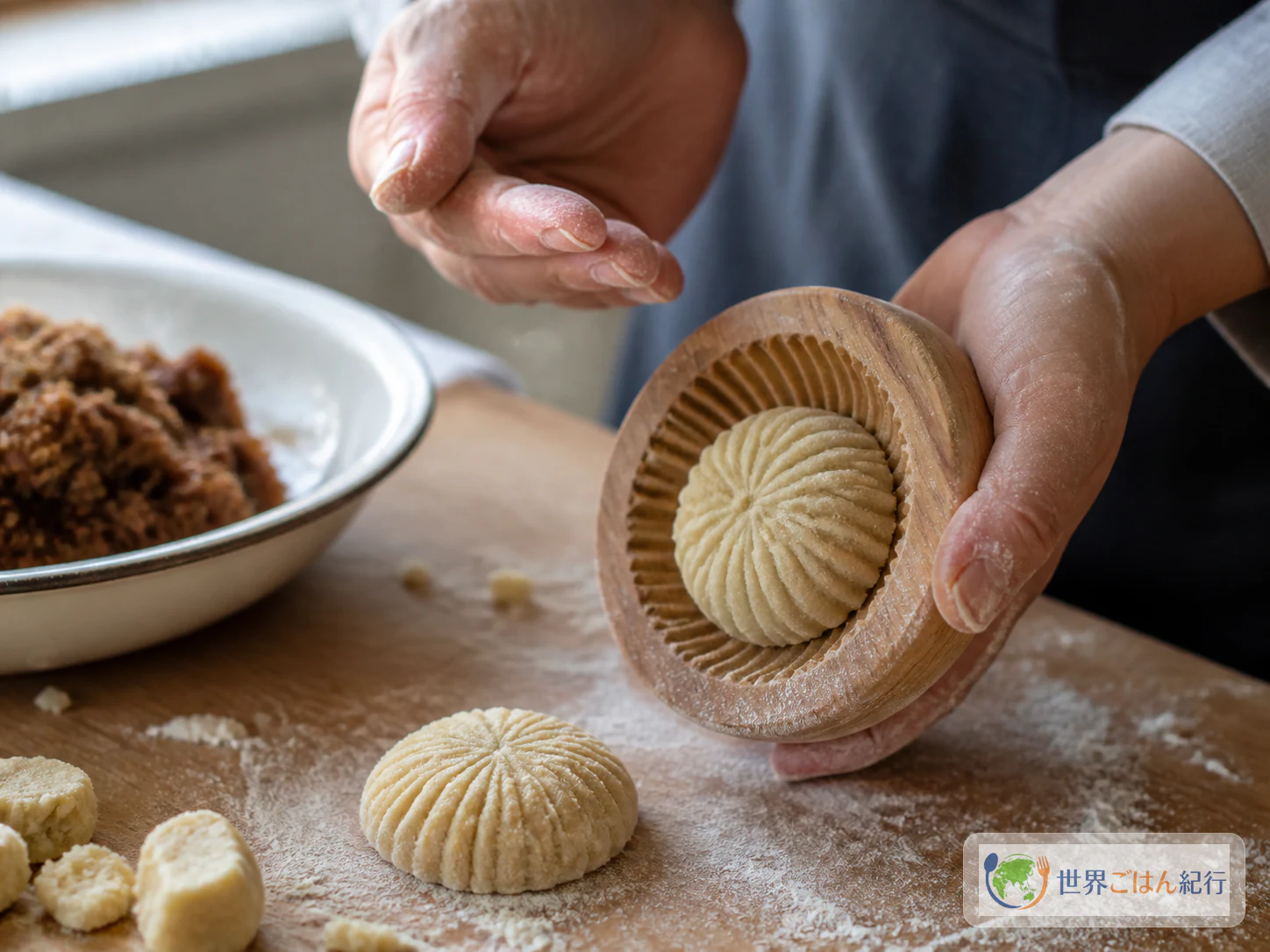
| The mold pattern disappears | Dough too soft, moisture left in the mold | Wipe the wooden mold dry and chill the ball for 10 minutes before shaping. Use less flour |
| The surface turns brown | Top heat of the oven is strong, or the temperature is high | Lower the baking sheet one rack and start the next bake at 170–175 degrees. Wait for the bottom to color before taking them out |
| The shell is hard after baking | The butter was not worked into the flour, or overworked | Next time add the liquid at the sandy stage and stop as soon as the flour is gone. Avoid rebaking freshly baked ones for long |
| The date filling runs | Water added all at once, or wrapped while hot | Cool it and mix in a small amount of chopped dates. Next time add the water 1 tsp at a time |
Maamoul fillings, serving and storage
Other fillings
At Lebanese tables, dates, walnuts and pistachios are made together and told apart by pattern or shape. Making all 24 in three kinds the first time tends to slow you down during shaping, so start with dates, which hold together well and are good practice for wrapping. Next time, change the filling in groups of 6.
| Variation | Guide out of 24 | Ingredients and shaping decisions |
|---|---|---|
| Walnut filling | 6–8 | Coarsely chop 2 oz (60 g) walnuts, 20 g confectioners' sugar and 0.5 g cinnamon, and bind with 1 tsp milk. Keep the grains |
| Pistachio filling | 6–8 | Mix 2 oz (60 g) pistachios, 20 g confectioners' sugar and 1 tsp orange blossom water. Skip the sugar dusting if you want the green to show |
| Dates and walnuts | 6–8 | Mix 20 g chopped walnuts into the date filling. Gives more bite than a smooth filling |
| Version with less flower water | All | Replace the orange blossom water with milk and add a little lemon zest. Suits children or anyone who dislikes the flower aroma |
| Festive assortment | 8 each | Give each filling its own pattern so they can be told apart on the plate. Keep baking temperature and time the same |
For nut fillings, keep the nuts coarse rather than grinding them to a paste. Walnuts release oil easily, and processed too fine they soften and leak out of the shell. A few grains left in the pistachio filling set it apart from the smooth dates in the mouth.
Serving and storage
After baking, let the maamoul sit on the baking sheet for 5 minutes, then cool completely on a rack before sealing. Store the date-only version in an airtight container in a low-humidity room and finish within 2–3 days. For longer storage, wrap each one and freeze, and bring only what you'll eat back to room temperature.
Refrigeration firms the shell, so serve them at room temperature with tea or coffee. Sugar-dusted ones lead with the aroma of the surface, while date-only ones bring a depth like brown sugar from the filling. Try putting date and pistachio maamoul on the same plate; with the crumbly shell as your benchmark, the effect of the flower water is easy to judge too.
Frequently asked questions
I don't have a wooden maamoul mold. Can I still make it?
Yes. The mold only evens out the pattern and thickness; it doesn't decide the taste. Flatten the wrapped ball slightly and make a pattern with the back of a fork or a bamboo skewer. Going without a mold actually makes it easier to fix leaks, and the first time, it's easier to see how the work goes.
Can rose water substitute for orange blossom water?
Yes, and you can also use the two together. If you use rose water alone, cut the 1.5 tbsp (20 ml) in the dough to 2 tsp (10 ml) and replace the rest with milk. With a strongly scented product, add 1 tsp at a time and adjust.
Can I replace the semolina with all-purpose flour only?
It bakes, but the crumbly, grainy feel of maamoul gets weaker. If you can't find fine semolina, look for fine durum flour, or try reducing the semolina from 10.5 oz (300 g) to 7 oz (200 g) and using 8 oz (220 g) all-purpose flour. The water absorption changes, so start with only 2.5 tbsp (40 ml) of milk and add more after seeing how it holds together.
Can people with nut allergies eat it?
The date filling alone needs no walnuts or pistachios, so make the date-only version. If the same food processor or bowl was used for a nut filling, washing alone isn't enough: check the gaps around the blade and the gasket. If someone also reacts to other ingredients such as wheat, dairy or dates, check the labels, and if it still can't be eaten safely, skip it rather than force a substitute.
Can I rest the dough overnight?
Yes. Seal and refrigerate it, and bring it back to room temperature 20–30 minutes before shaping. Cold, the edges crack easily; too warm, the butter seeps out and the pattern disappears.
Sources
Date on which the cultural background, ingredients and steps in the text were checked: 13 August 2026 (JST). The amounts and substitutes have been reorganized for this article after checking the differences between several sources.
- iHeritage, "Maamoul" (festivals, gifts, family preparation, basic ingredients; accessed and checked 2026-08-13)
- L'Orient Today, "For the love of maamoul: From gold coins to Nutella" (Lebanese Easter and Eid, kinds of filling, the context of making it as a family, explanation about storage; accessed and checked 2026-08-13)
- Al Wadi Al Akhdar, "Easter Traditions In Lebanon" (semolina dough, flower water, dates, walnuts and pistachios, use of patterns; accessed and checked 2026-08-13)
- Al Wadi Al Akhdar, "Maamoul With Dates" (date filling, working butter into flour, resting time, an example of baking at 200 degrees; accessed and checked 2026-08-13)
- Marché Adonis, "Maamoul - Recipe" (fine semolina, filling variations, a 1-hour rest, baking at 180 degrees until the surface stays white; accessed and checked 2026-08-13)
- King Arthur Baking, "Mahmoul Recipe" (a filling with dates, cinnamon, cardamom and flower water and the food processor step, the idea of making it without a mold; accessed and checked 2026-08-13)
- The Great British Bake Off, "Paul Hollywood's Ma'amoul recipe" (semolina dough, resting, pressing in a mold, checking for a pale color; accessed and checked 2026-08-13)