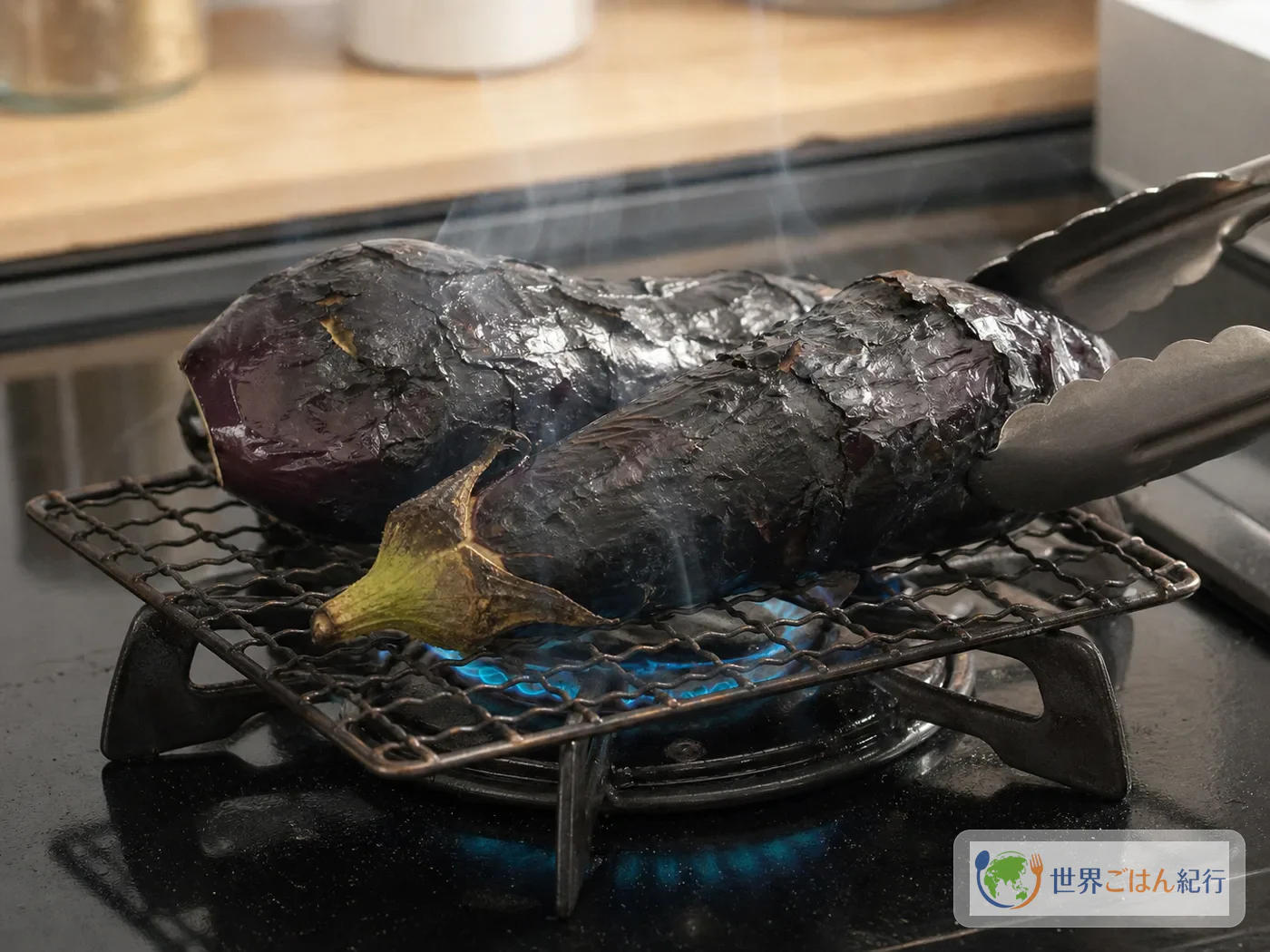
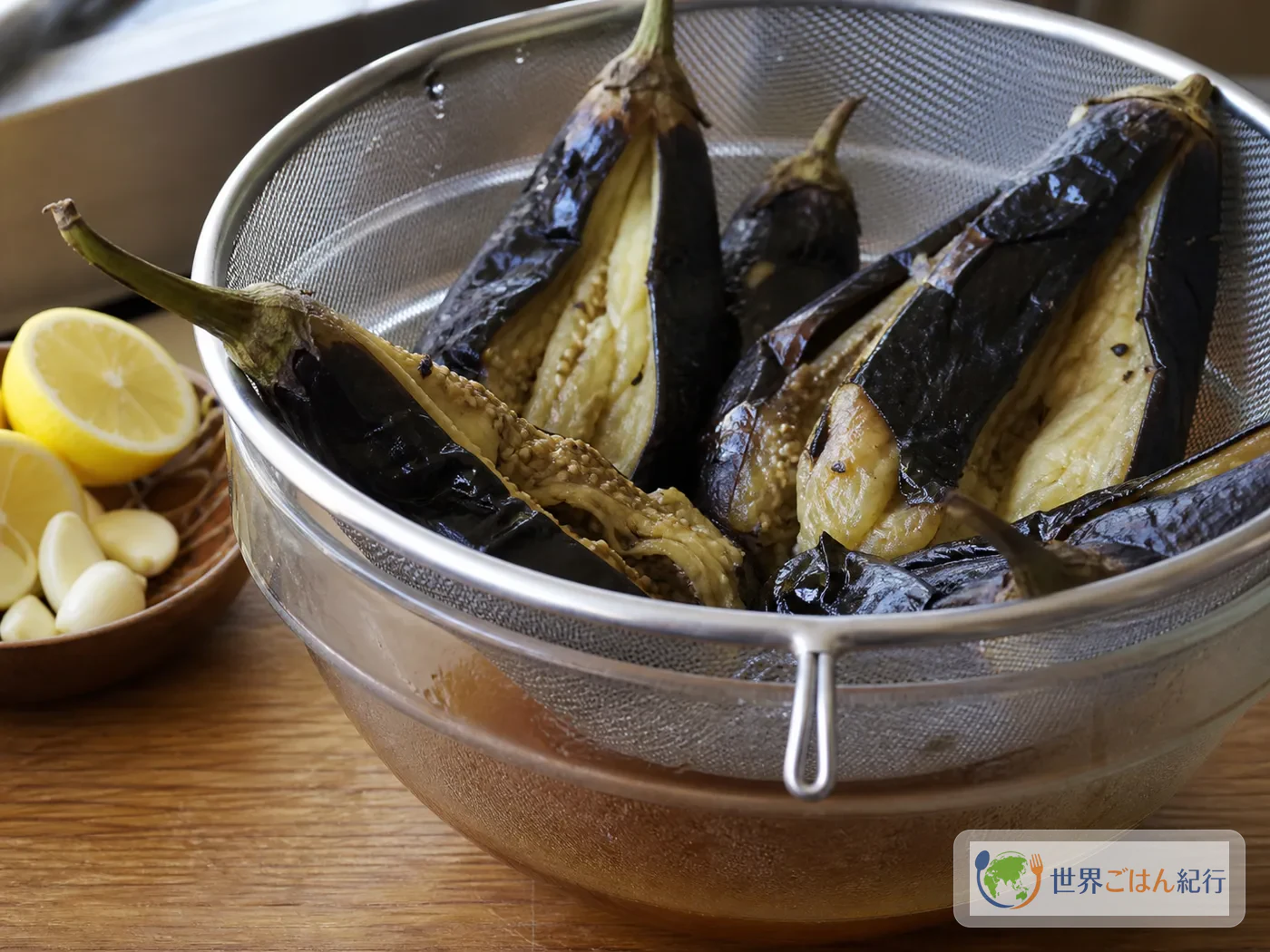
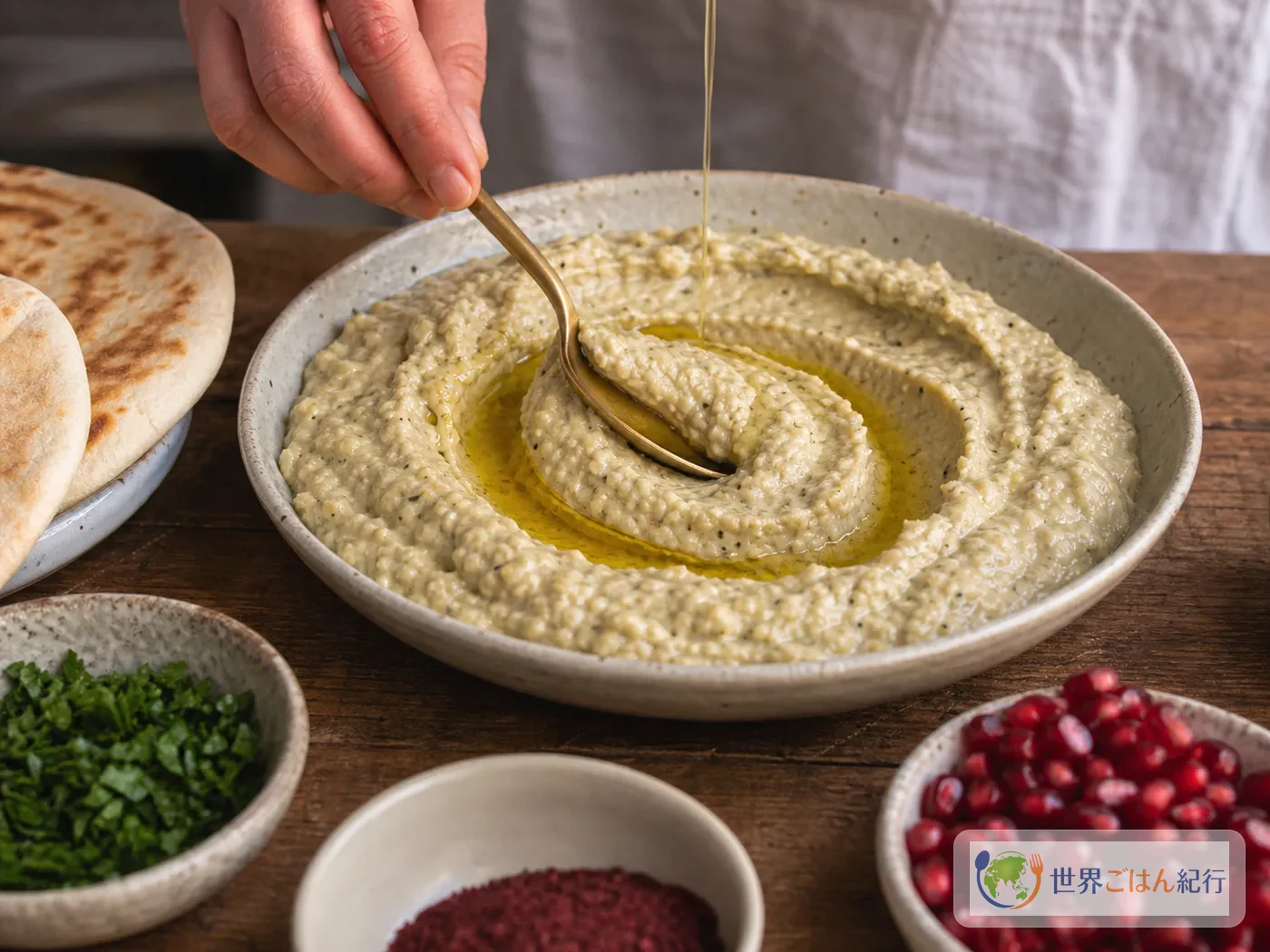
Pull a blackened eggplant from the flame and press it with tongs, and the flesh gives way under the puffed, charred skin. Split it open while it's still hot and a sweet, smoky scent rises with the steam; for a few minutes your kitchen smells a little like a street stall. Baba ghanoush is how that eggplant ends up on a Lebanese table: mashed and dressed with tahini, lemon, garlic and olive oil, it's a smoky, nutty mezze you scoop up with bread. Whatever you do at this stage, don't rinse the eggplant under water. That washes away the best part.
Baba ghanoush in Levantine and Lebanese cooking
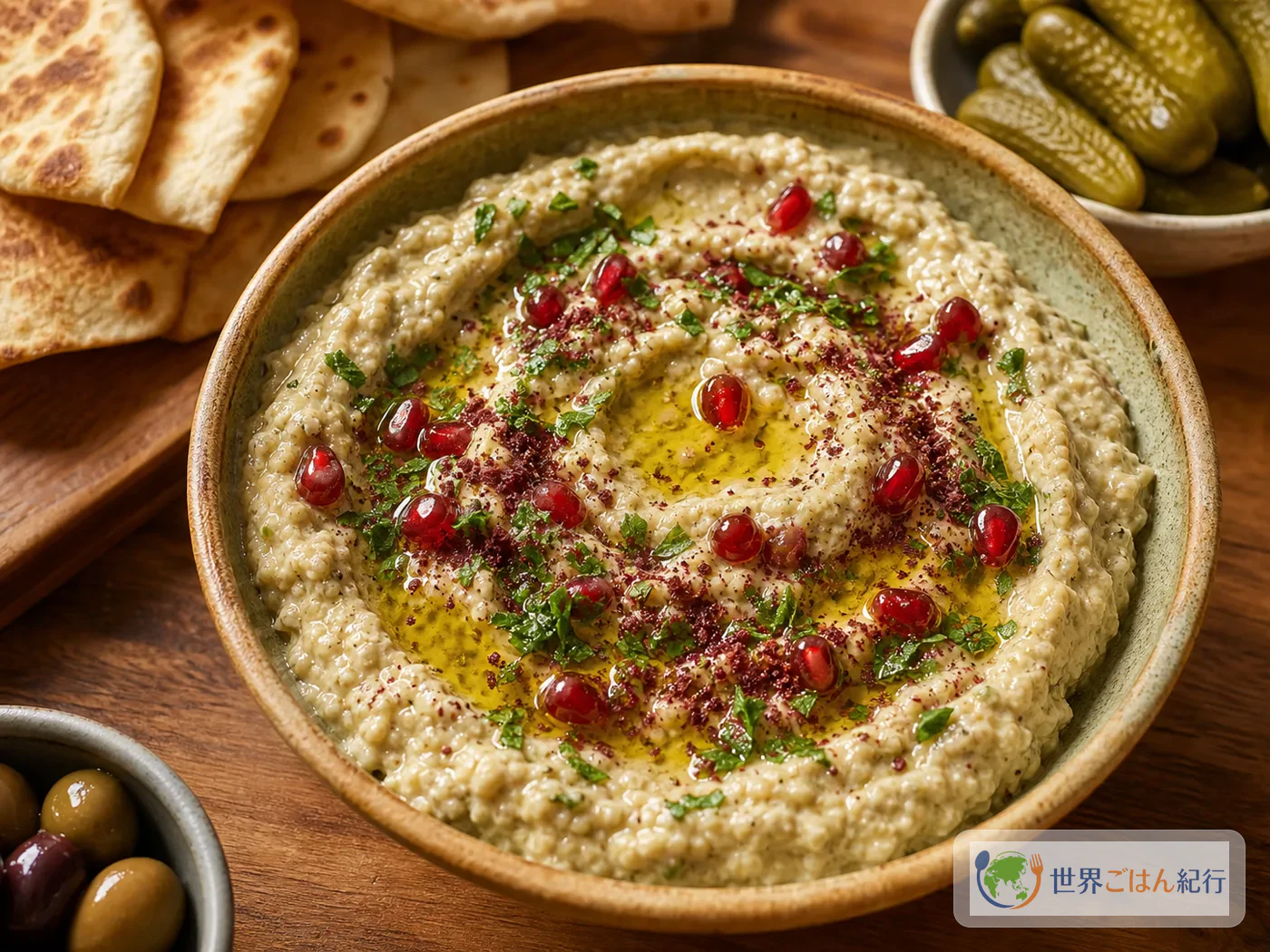
Baba ghanoush is a roasted-eggplant starter eaten across the Arabic-speaking world, and in English you'll see it spelled baba ganoush, baba ghanouj, baba ghanoush and more. In the Levant, the tahini version is often called mutabbal, while the name baba ghanoush also covers a chopped dish with pomegranate and vegetables. Most people who look for baba ghanoush want the first one: a roasted-eggplant dip with tahini.
On a Lebanese table it sits alongside hummus, tabbouleh and falafel as part of a starter plate eaten with bread.
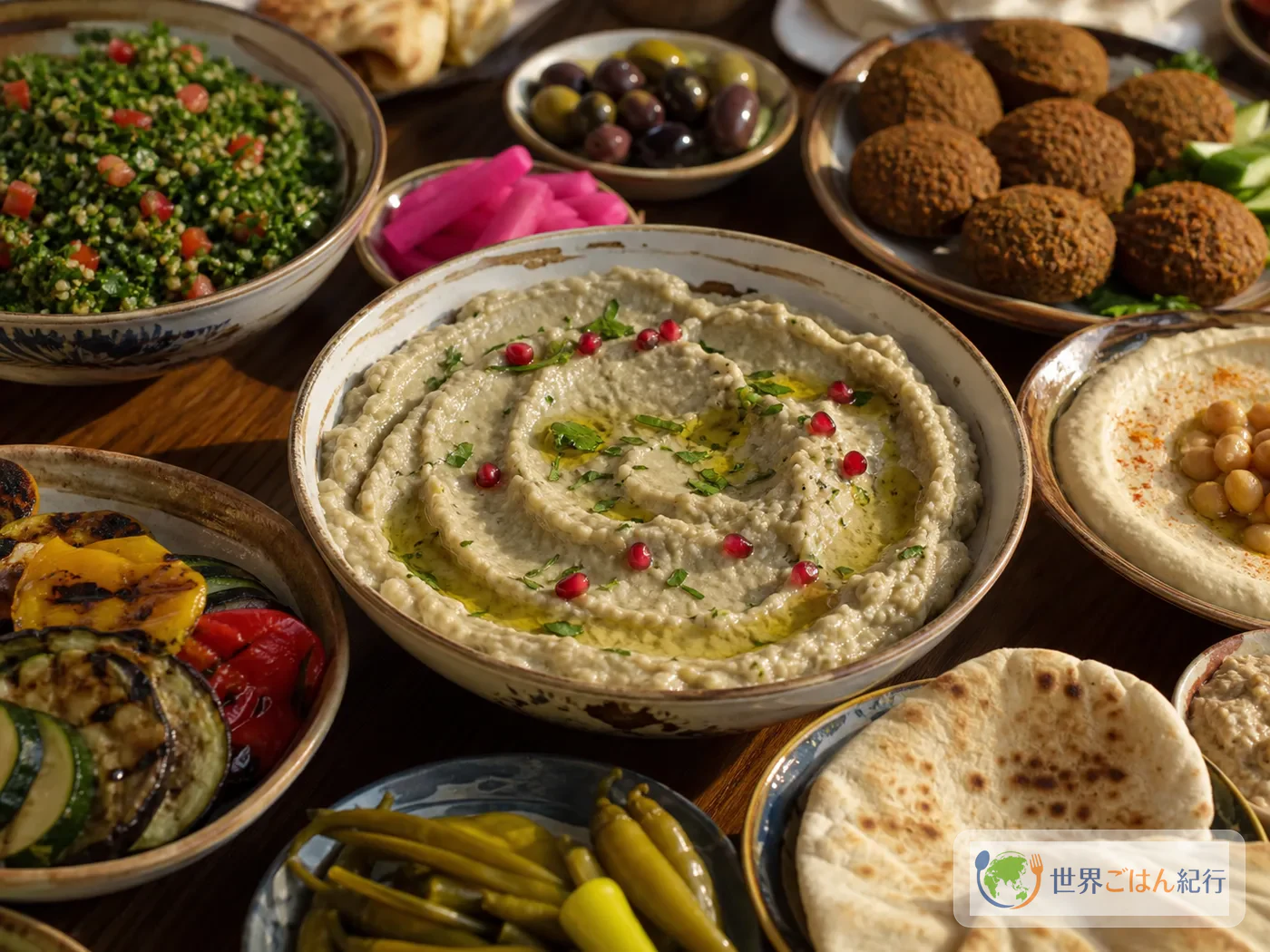
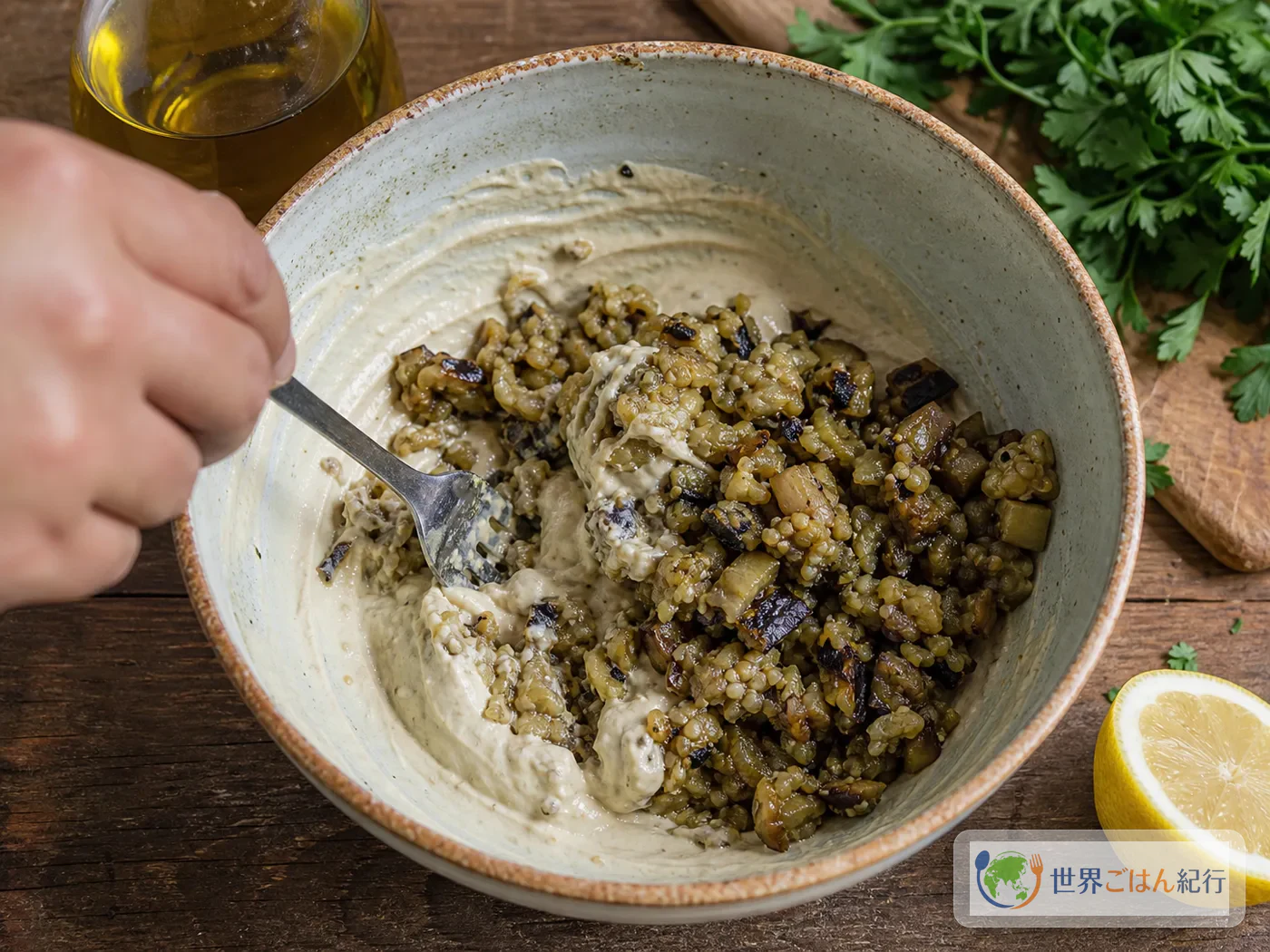
The flavor comes from two things: the smoke of the roasted eggplant and the sesame richness of the tahini. Add more tahini and the dip moves toward the heaviness of hummus; add too little and the eggplant's moisture takes over. A plate like the ones served locally isn't a white, perfectly smooth cream. The eggplant fibers show a little, black flecks of charred skin turn up here and there, and lemon keeps each mouthful light. That coarseness is what makes you go back with the pita again and again.
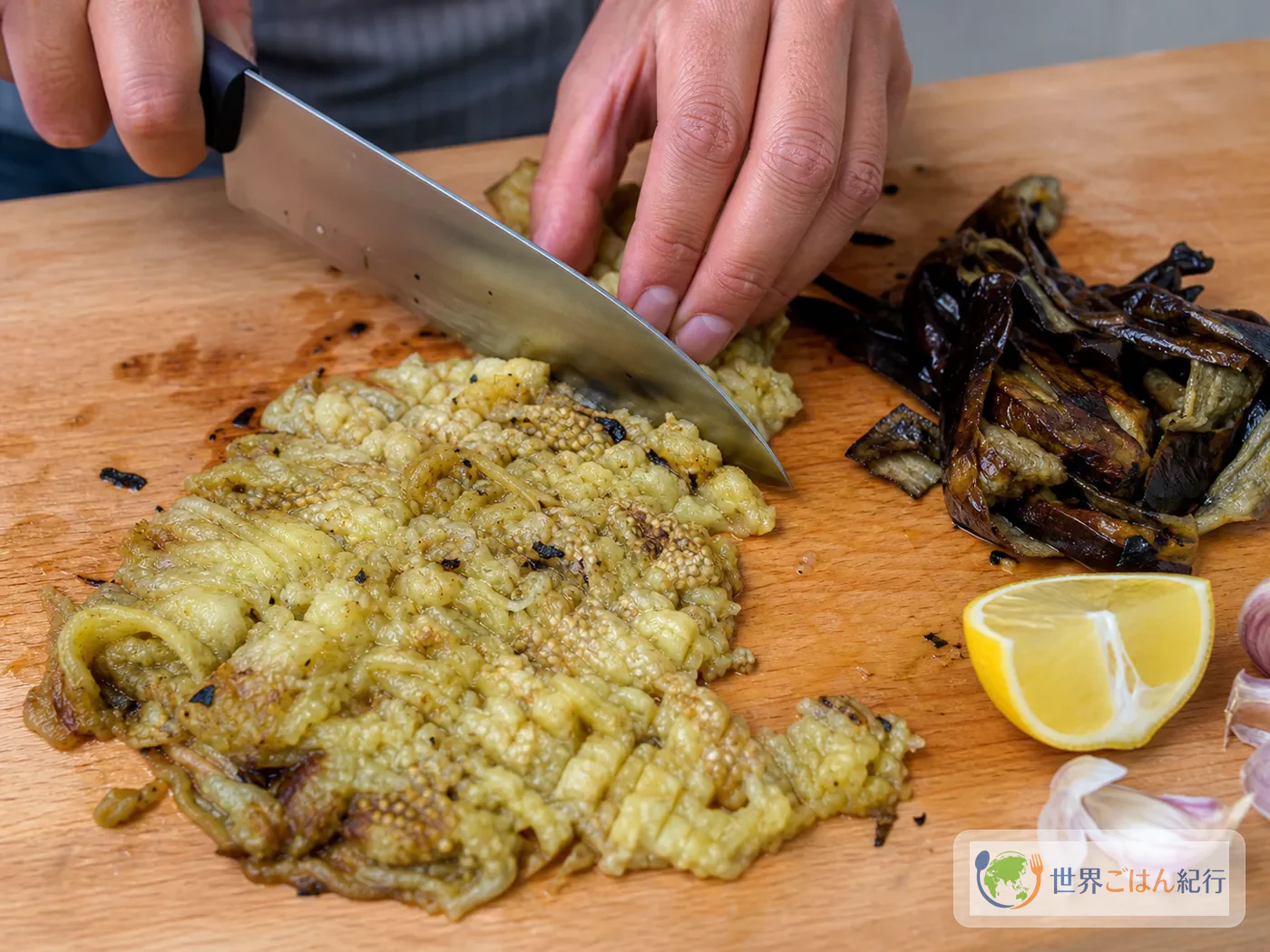
For a home cook, how you roast the eggplant matters more than the tahini. Use a direct gas flame if you have one, a very hot broiler if you don't, or a hot oven, and char the skin. Instead of a food processor, this recipe uses a knife and a fork, so the roasted eggplant still shows in small pieces.
This dish uses tahini, which is made from sesame. If you serve it with pita, note that wheat is also an allergen. Pomegranate, sumac and parsley are only for finishing, so the basic flavor holds without them.
Ingredients and shopping
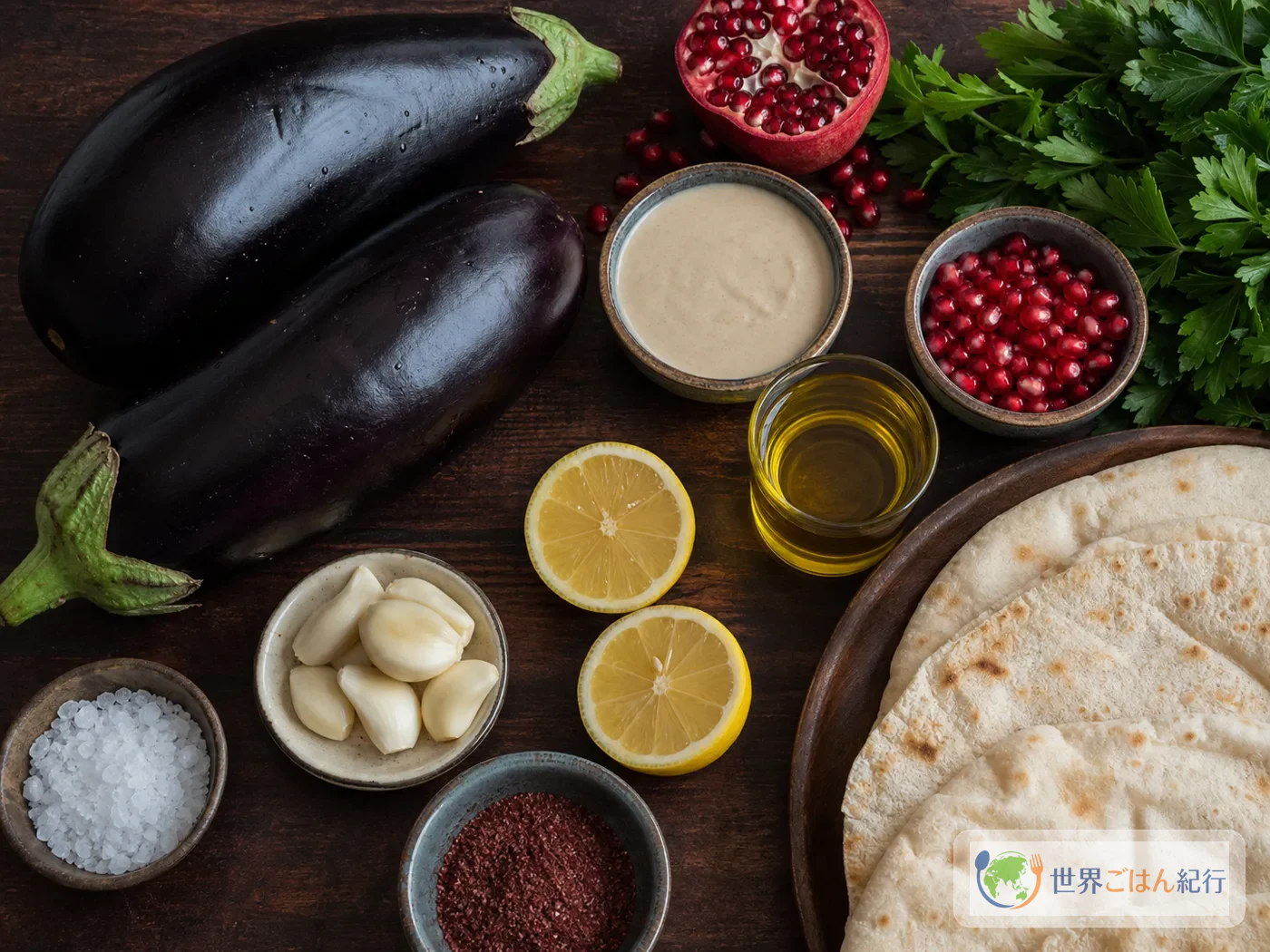
Three ordinary long eggplants are easier to handle than large globe eggplants. The skin is thin and collapses quickly over direct flame or under a broiler. If you use thick globe eggplants, roast 5 to 8 minutes longer so the center does not stay cold.
What you may substitute, and what you should not
| Ingredient in question | Substitute | Verdict |
|---|---|---|
| Tahini | Sesame paste + water | Acceptable. Sesame paste is thicker, so loosen it with a little water |
| Sumac | Salted red shiso powder, a little | Similar color and sourness, but it is salty. Start with 1/4 tsp |
| Pomegranate | None | Can be left out. It adds sweet-tart notes and looks |
| Open flame | Broiler on high, oven at 450°F (230°C) | Acceptable. The microwave alone gives little aroma |
| Charred skin | Do not skip | The smell of the black skin is the core of the dish. Do not rinse it with water |
The two ingredients worth looking for are tahini and sumac. Tahini also goes into hummus, the tahini sauce for shawarma, and as a side for falafel. Sumac adds a lemon-like sourness in powder form, so it is useful on grilled meat, salads and marinated onions too. Middle Eastern or Asian grocers and online shops usually carry both.
If you want a smoother, restaurant-style dip, an immersion blender is an option. For the first batch, though, making it with a knife and fork helps you learn how the moisture and fibers of the roasted eggplant behave. A blender makes sense for people who will often make hummus or tahini sauce.
Common baba ghanoush problems and fixes
Baba ghanoush usually goes wrong in one of three ways: too much water, bitterness or too much garlic. With so few ingredients, any one imbalance shows right away in the flavor.
| What you taste | What to add | Amount |
|---|---|---|
| Flat flavor | Salt, lemon juice | A pinch of salt, 1 tsp lemon juice |
| Heavy, too much sesame | Lemon juice, chopped parsley | 1 tsp lemon juice, 2 tsp parsley |
| Too sour | Tahini, olive oil | 2 tsp tahini, 1 tsp oil |
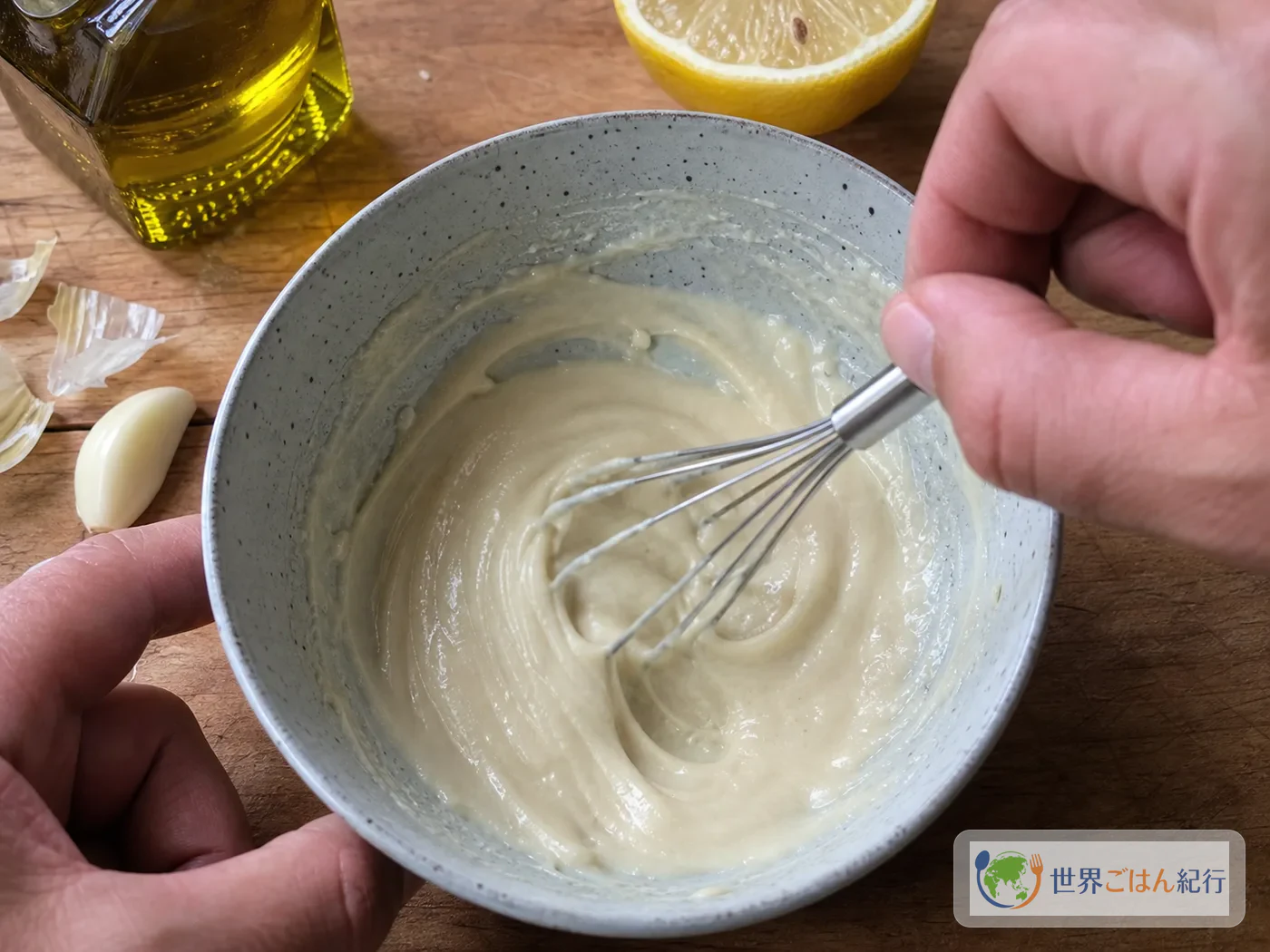
| Too loose | Tahini mixed separately | 2 tsp to 1 tbsp tahini |
Correct in teaspoon-sized amounts rather than all at once. Tahini can clump if you add it straight to the dip, so first work it in a small dish with a little lemon juice or water.
Watery
Either the eggplant wasn't drained enough after roasting, or the tahini was loosened with too much water. Before mixing, leave the eggplant in the colander for 10 minutes so the liquid drips away. If the finished dip is still loose, stir 2 tsp tahini with a little lemon in a separate bowl and add it; that pulls it together without making the flavor too strong.
Bitter
Bitterness comes from too much charred skin or from old tahini. Small black flecks add aroma, but large sheets of skin turn bitter. Tahini separates, so stir it all the way to the bottom of the jar before using, and if it tastes strongly bitter or smells oxidized, throw it out.
Garlic is too sharp
Raw garlic comes through strongly even in small amounts, and beyond one small clove it tends to overpower the roasted eggplant. If the dip turns sharp, rest it in the refrigerator for 30 minutes, then add 1 tsp lemon juice and 1 tsp olive oil just before eating. When you're eating with children, halve the garlic and let the adults add sumac on their own plates.
Storage, serving and FAQ
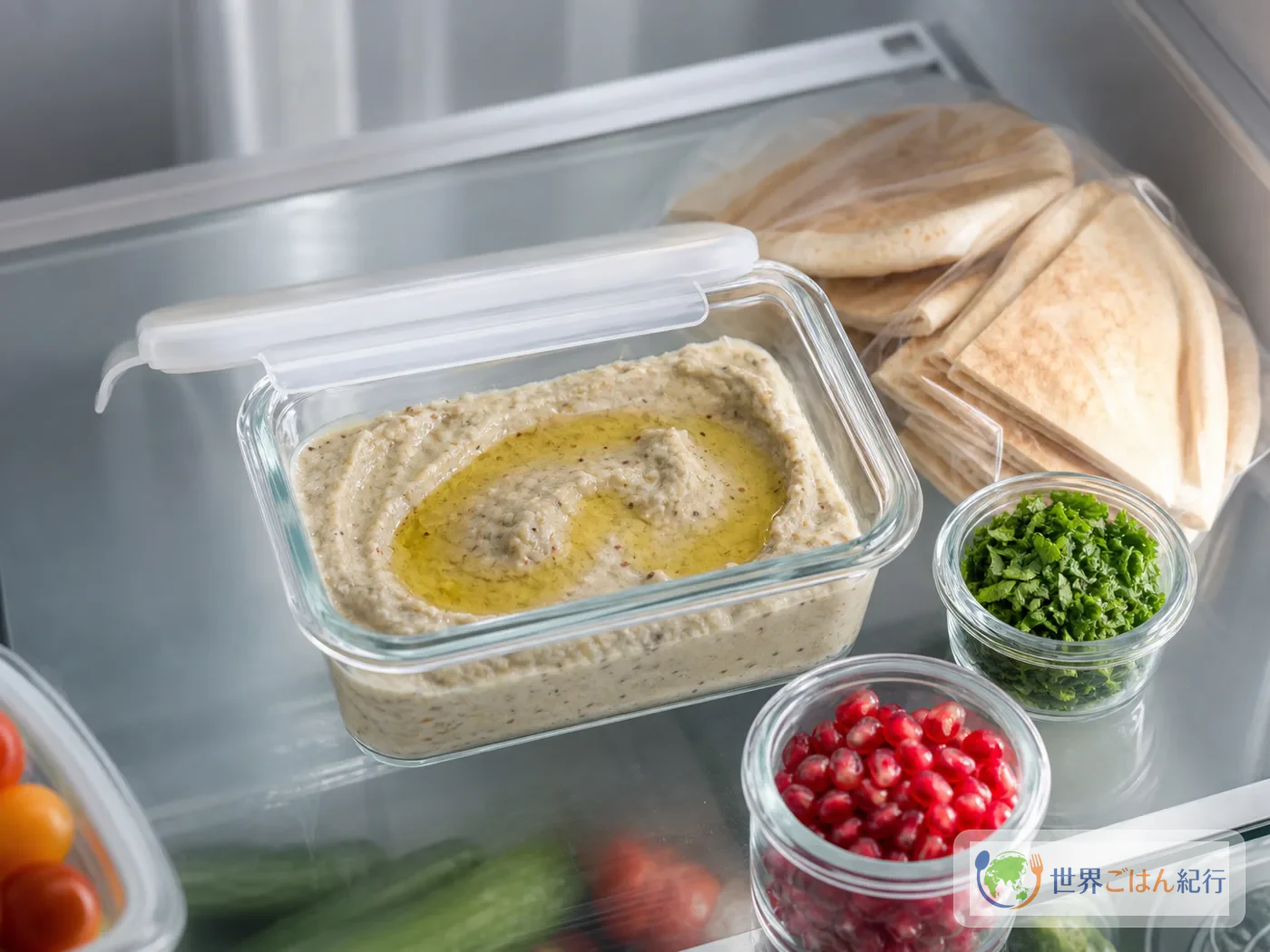
To store baba ghanoush, put it in a shallow container, spread about 1 tsp olive oil thinly over the surface, and cover. Pomegranate and parsley release water, so scatter them on just before eating rather than mixing them in beforehand.
| State | Storage method | Keeps | Before eating |
|---|---|---|---|
| Finished dip | Refrigerate in a shallow container | 2 days | Bring to room temperature for 10 minutes and add a little lemon |
| Roasted eggplant only | Peel, drain and refrigerate | 1 day | Discard the liquid before mixing with tahini |
| Freezing | Not recommended | - | Thawing releases water and the aroma fades |
What should I serve with it?
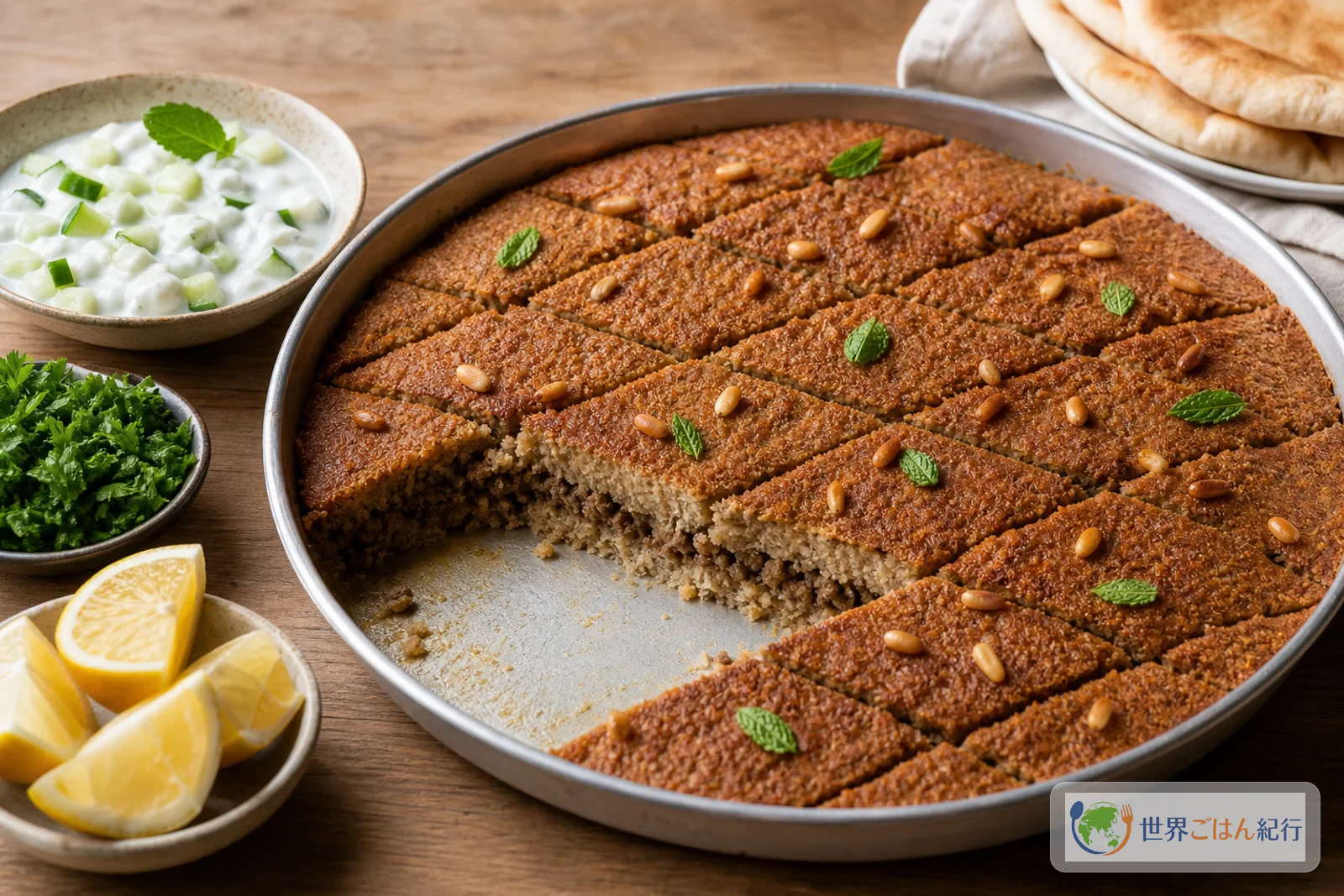
Pita, hummus, tabbouleh and falafel give you a table that feels like a Lebanese mezze spread. For a meat dish, kibbeh bil sanieh or shawarma goes well. On an ordinary weeknight, set it beside grilled fish or chicken and eat it a little at a time, like a sauce.
Can I make it in the microwave alone?
The microwave will soften the eggplant, but the smoky aroma that defines baba ghanoush hardly develops. If you have to use one, pierce the eggplants and cook them at 600 W for 5 to 6 minutes, then put them under a hot toaster or broiler to char the skin. It won't match a true open flame, but it gets you closer.
Can I smooth it in a food processor?
Yes, but run it too long and the eggplant fibers disappear, leaving you with a white tahini sauce. Add the tahini sauce and eggplant and pulse in bursts of 3 to 5 seconds, stopping while pieces remain. Pour the olive oil over the plate at the end instead of running it through the machine; that keeps bitterness down.
Is there a version without tahini?
Yes. Lighter versions combine roasted eggplant with lemon, olive oil, pomegranate and vegetables. If you leave the tahini out, cut the salt slightly and add 1 tbsp more olive oil so the flavor doesn't thin out.