
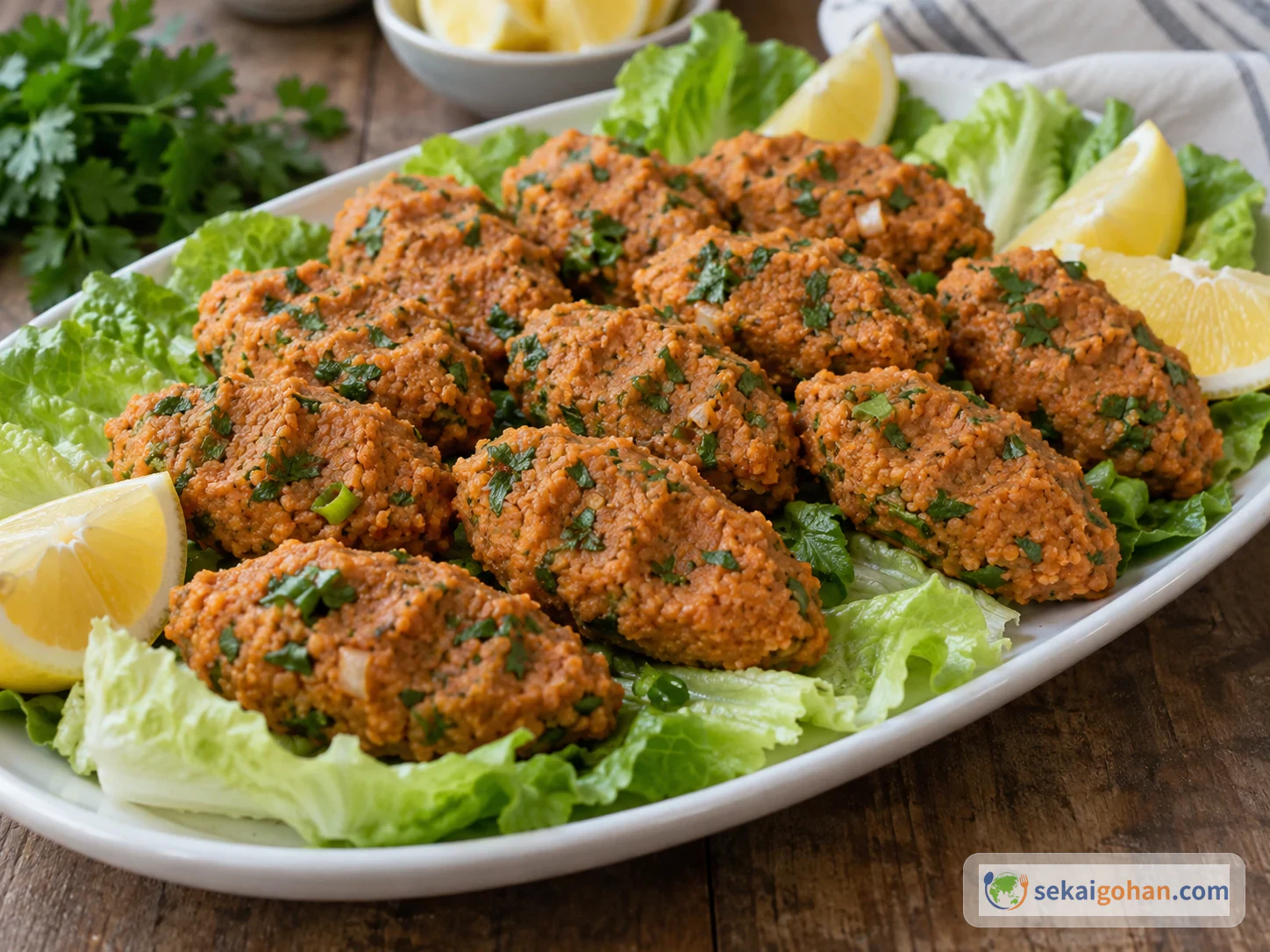
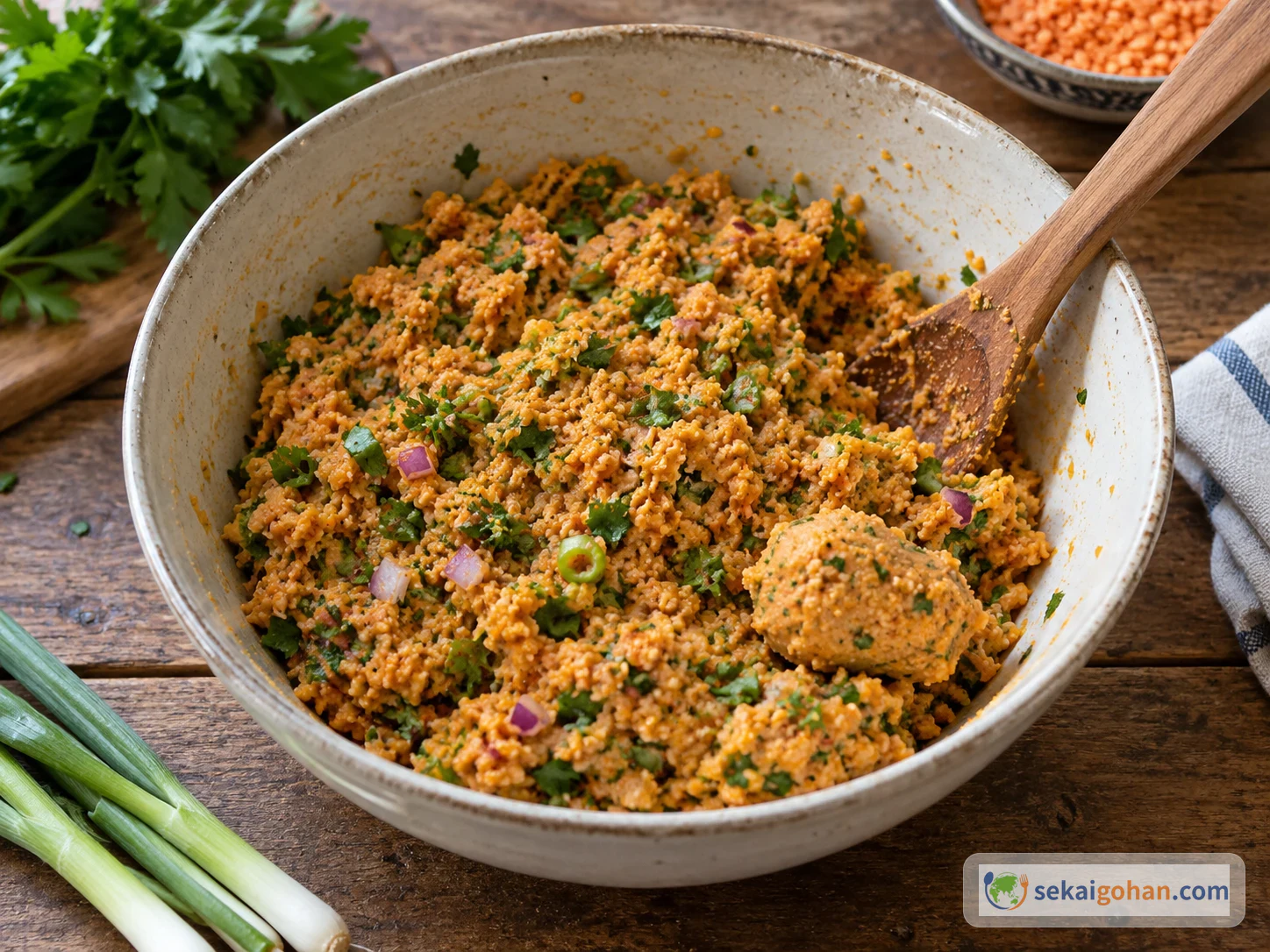
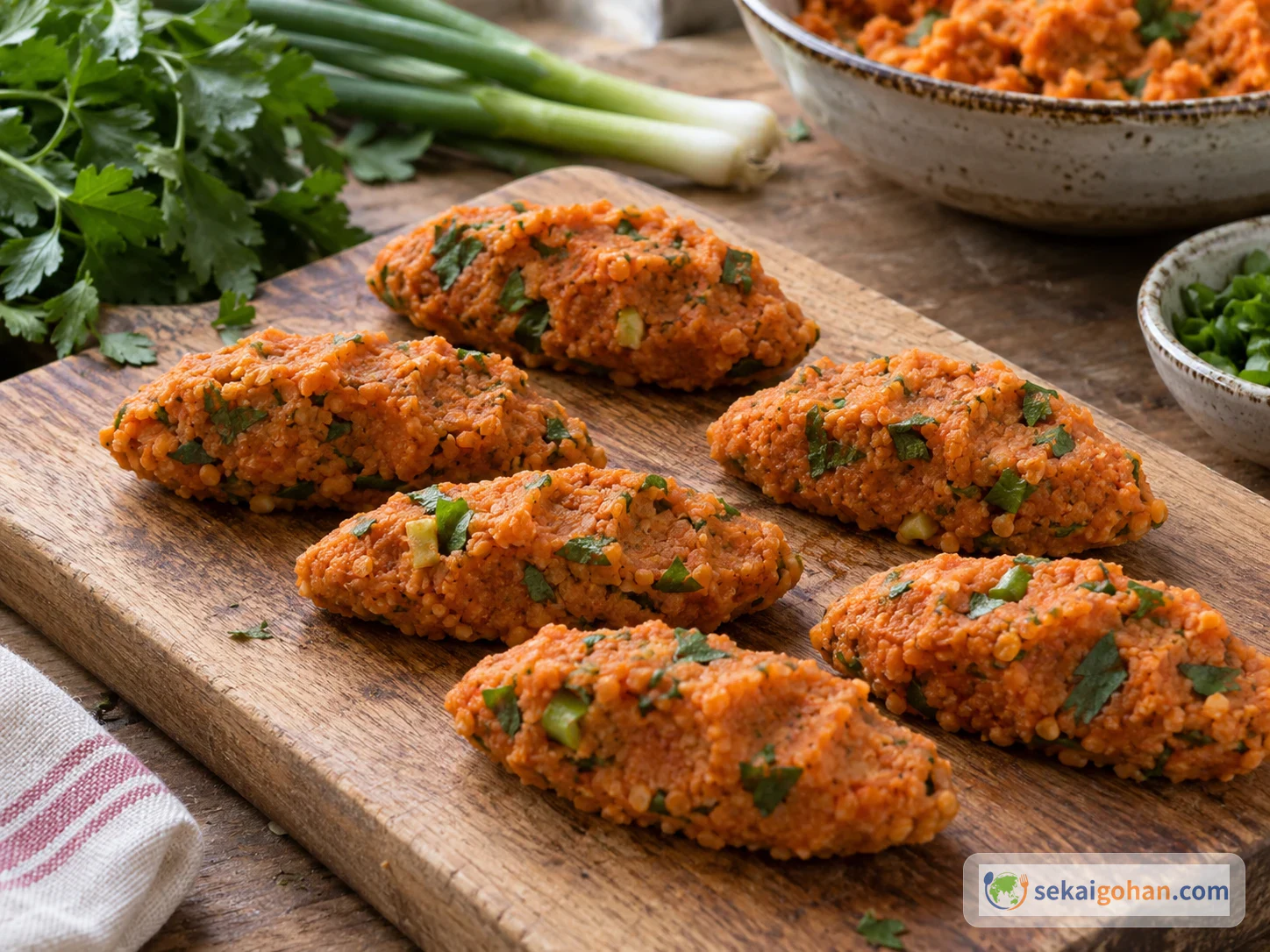
At an afternoon tea in a Turkish home, beside the sweet pastries, you'll often find a plate lined with lettuce and piled with slim orange-red köfte, each one pressed with shallow finger dents. Squeeze lemon over one just before eating, wrap it in a lettuce leaf and take it in a single bite. This is mercimek köftesi, a köfte without meat, shaped in the palm from a soft mixture of skinless red lentils and fine bulgur flecked with green parsley and scallion. Sautéed onion brings it together, and once shaped it isn't cooked again. It holds its shape, then comes apart softly in the mouth, with none of the crust of fried food or the bounce of a meatball.
Mercimek Köftesi at the Turkish Tea Table
This is a home dish for tea gatherings, buffet dinners and lunch tables. Something salty beside the tea is essential, and when sweets alone tire the palate, a savory bite to go with tea slips in neatly. It also sits comfortably among the small dishes called meze, or next to salads and savory pastries.
Recipes like this travel from home to home. When one family lived in Elazığ, the mother learned it from a neighbor, and it was served when the women gathered in the afternoon. That's how a recipe passed from home to home moves: from neighbor to kitchen, and from that kitchen to the next.
The dish comes from the southeast but is made all over the country, and its origin can't be pinned to one city. Some cooks use mint, with tarragon as a substitute; others add red pepper paste and cumin. These differences in herbs and heat belong to households and their recipes, not to any one city.
Many people hear köfte and think of meatballs, but the name also covers meatless dishes like this one, which takes its shape from cooked red lentils and bulgur. It's a relative of kısır, the salad where bulgur is the star, but here the broken-down lentils bind the grains into a mixture you can shape. It also differs from çiğ köfte, which looks similar.
Ingredients (serves 4)
For four as an appetizer, make about 24 to 28 slim köfte; the count depends on size. This is the basic, non-spicy version, made with tomato paste instead of red pepper paste. Allow about 75 minutes, including cooking, soaking, cooling and shaping. There is no baking after shaping. When shopping, choose fine bulgur above all.
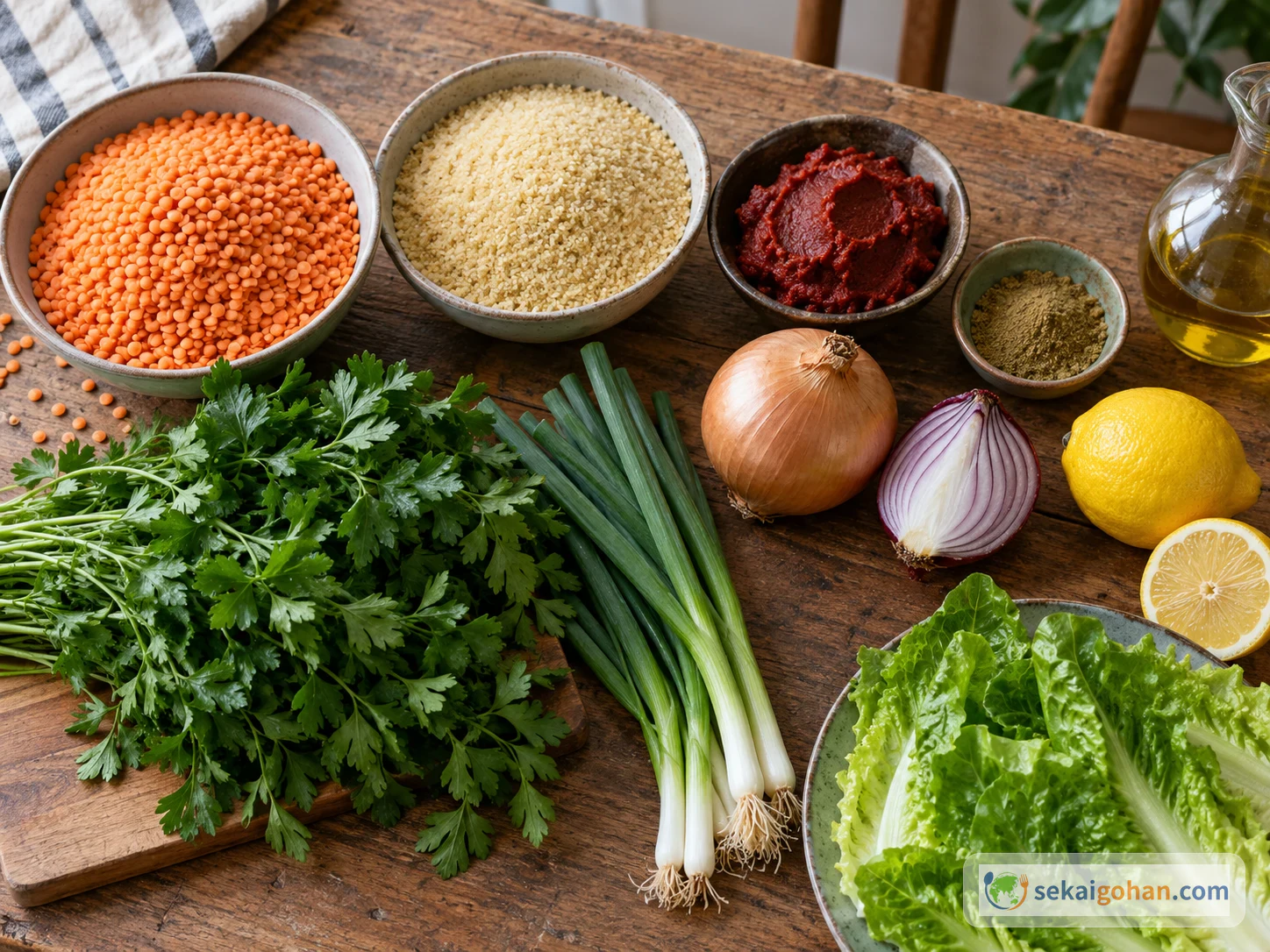
Start with skinless red lentils and fine bulgur. Check the lentil type and the grain fineness at an international grocery or online. Bulgur is cooked wheat that has been dried and cracked. It is not the same as granular pasta or raw cracked wheat. Coarse or pilaf-grade bulgur will not soften evenly from residual heat alone, so avoid swapping it in at the same quantity. Also check that the bag says skinless red lentils.
Choose concentrated tomato paste. Adding the same amount of tomato sauce, juice or ketchup changes the moisture, sugar and salt. If you use red pepper paste, combine 25 g with 1.75 oz (50 g) tomato paste. Check whether it is hot or mild, and read the salt content on the label. The basic formula uses 2.75 oz (75 g) tomato paste. Tomato paste does not give the aroma that only red pepper gives.
Choosing Ingredients and Substitutes for Mercimek Köftesi
Texture depends on two choices: the fineness of the bulgur and whether the red lentils are skinless. The whole dish relies on letting the moisture of the lentils rehydrate the grains, so do not skip the grain fineness. Brown lentils leave whole grains behind, so don't swap them in at the same quantity.
Other swaps are more forgiving. Tomato paste can stand in for red pepper paste, though the aroma and heat of the chile will be weaker. Flat-leaf and curly parsley are interchangeable; chop finely and remove the hard, thick stems. Leek in place of scallion changes both the sharpness and the fibers.
Leftover red lentils make a good red lentil soup, mercimek çorbası, where they're enjoyed smooth. Leftover fine bulgur goes into bulgur salad, kısır, where the grains keep their texture. Each is a different pleasure from this köfte, where lentils are broken down to bind the grains.
Bulgur is wheat, so this formula is not gluten-free. Do not serve it to anyone who must avoid it, such as people with a wheat allergy. Having no meat, egg or dairy is a different matter from being allergen-free. Check the ingredient labels of the paste and spices as well. Other grains change the formula and the texture. When serving someone with an allergy, confirm the ingredients with that person, and watch for cross-contact through utensils.
Method
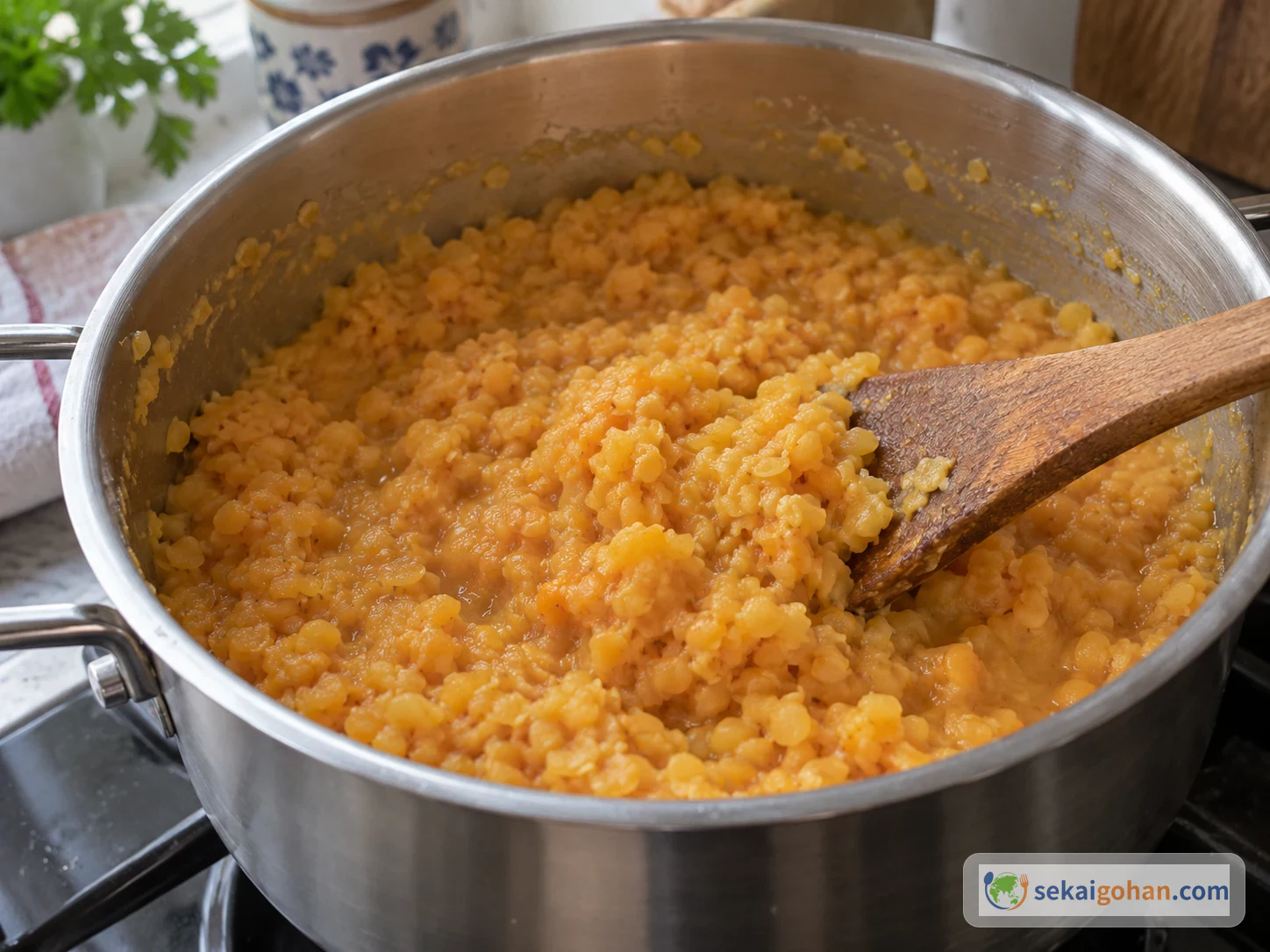
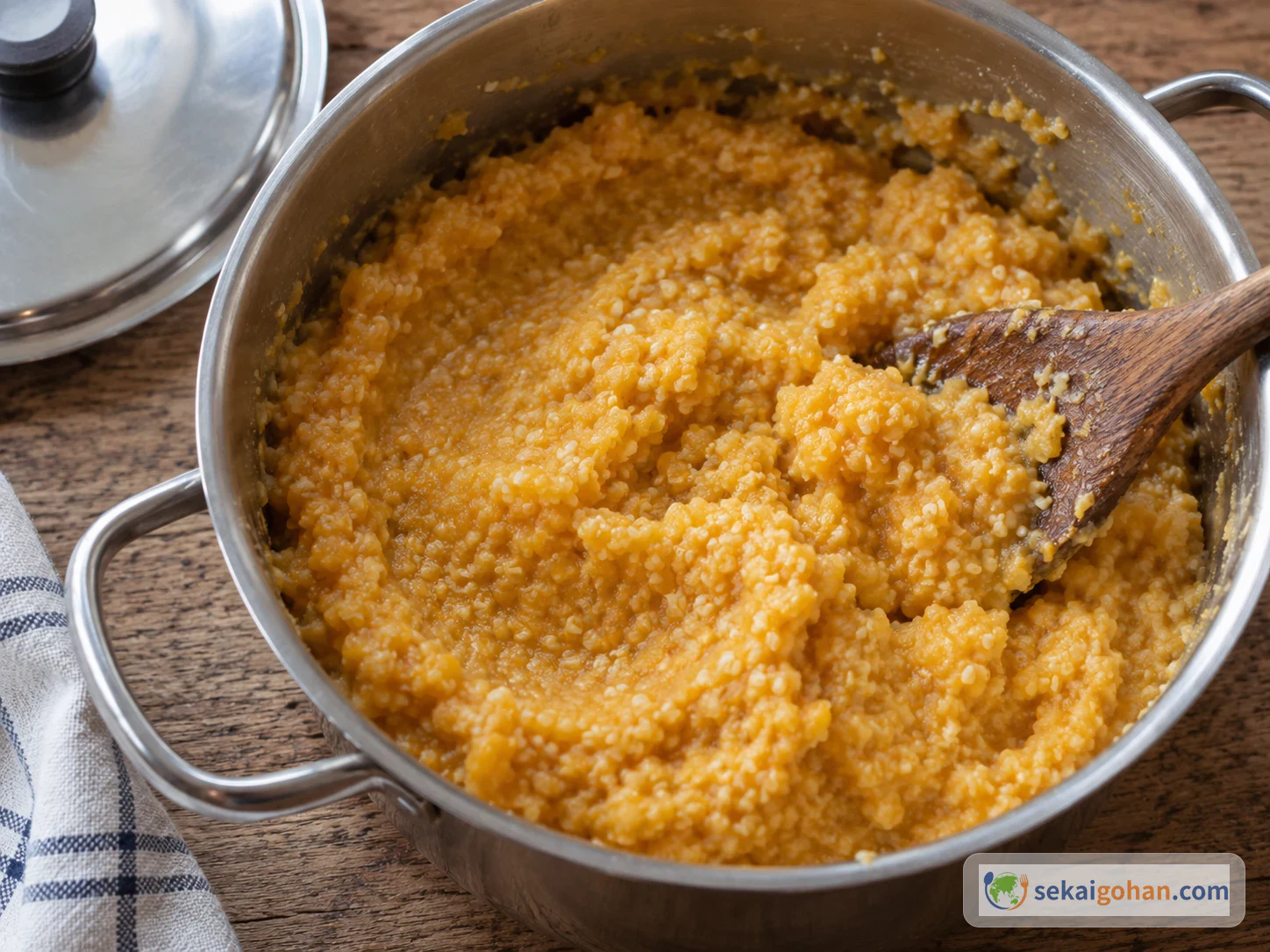
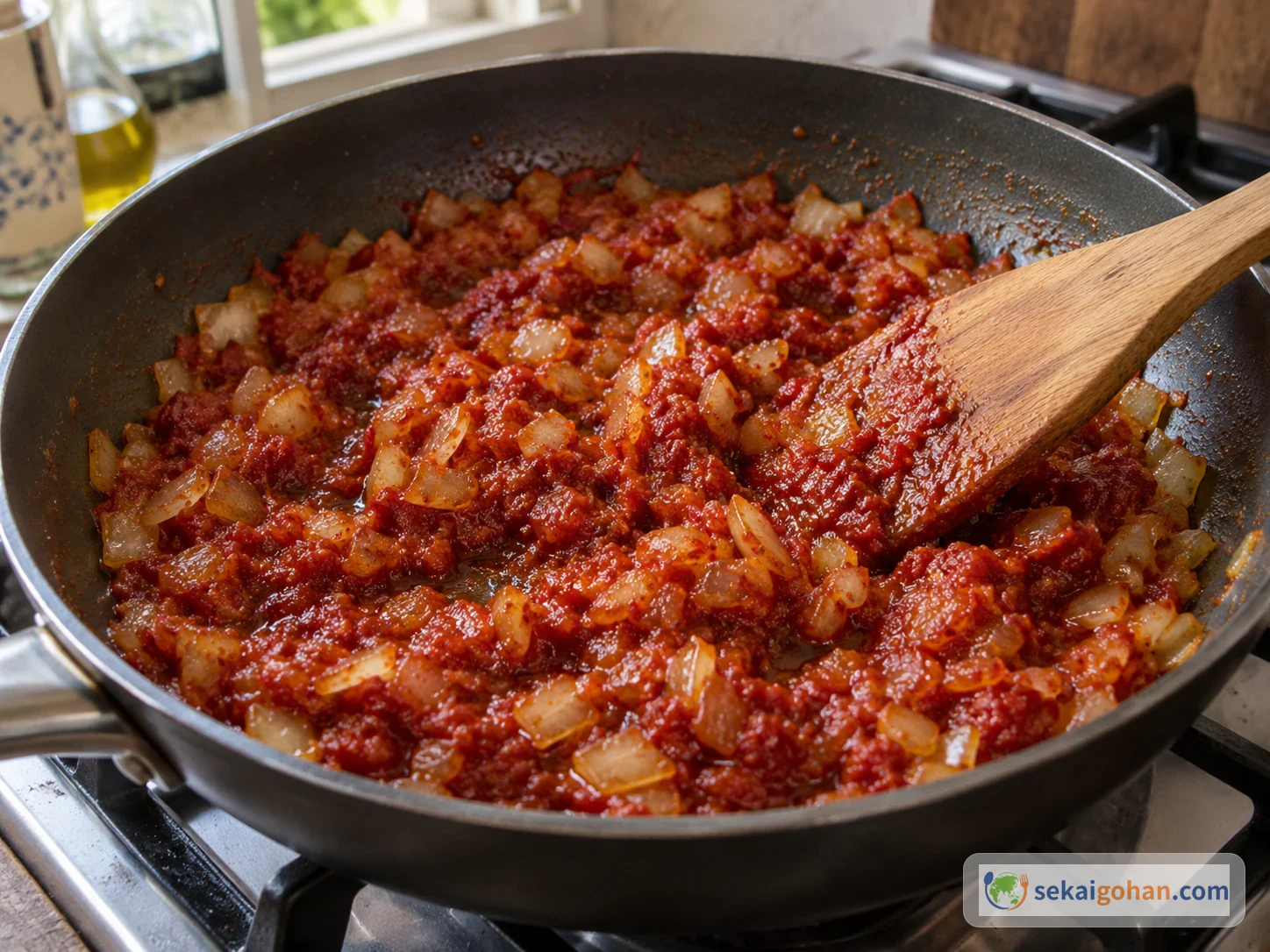
Do the heat work first: cooking the lentils, rehydrating the bulgur and sautéing the onion. While the lentils cook, sauté the onion; the times overlap. The parsley, scallion and raw red onion go in after the mixture has cooled. Add the leaves after it has cooled.
Bulgur absorbs moisture, but if the lentils are still soupy, the mixture is hard to firm up enough to shape. Check the moisture in the pot once the lentils have broken down. Don't reduce the mixture after adding the leaves; their texture and color change. Don't judge doneness by the clock alone. Check whether the lentils have a core and how much moisture remains.
The target is a state that keeps a finger mark, can be lifted, and comes apart softly in the mouth. Crumbling right after shaping and being soft when eaten are separate matters. Do not add flour or egg in search of the bounce of a hard meatball. Avoid adding so much oil that the fingers turn greasy; when correcting dryness, add 1 teaspoon at a time.
Fixing Mercimek Köftesi That Crumbles, Is Hard or Is Too Hot
When the mixture crumbles, check the causes in order: too much cooking liquid in the lentils, not enough soaking time for the bulgur, or herbs with water still on them. If the mixture is warm, let it soak and cool briefly first, but don't firm it up by leaving it out at room temperature. If it still won't hold after cooling, spoon it onto lettuce instead of forcing it into balls; the taste is the same. Do not hurry by adding dry grains.
| Problem | What to check | How to fix |
|---|---|---|
| Mixture is watery and crumbles | Lentil liquid, soaking, water on the leaves | First check soaking and cooling. Do not add a lot of raw bulgur |
| Surface is dry and cracks | Are the grains soft, is the oil even | If the grains have no core, mix in olive oil 1 tsp at a time, up to 2 tsp |
| Grains are hard | Is it fine bulgur, is soaking finished | Check the grain size and the bag's rehydration instructions. Do not shape with hard grains left |
| Taste is strong and salty | Salted paste and added salt | Oil or lemon will not reduce salt. Next time use less, and this time serve with mild accompaniments in small amounts |
| Too hot | Is the paste hot | Choose the mild paste or the tomato formula. Lemon does not remove heat |
If the bottom of the lentil pot has scorched, leave the black bits behind rather than mixing them through, and don't try to hide a strongly scorched mixture with spices. Next time, take 1¾ cups (400 ml) of water as the starting point and look at how fast your pot evaporates and how high the heat is. Find the cause before changing the formula much.
Salt in paste varies by product, so begin with 2 g salt and add the remaining 1 g after tasting. Decide the salt at the last taste.
Serving Mercimek Köftesi, with Variations
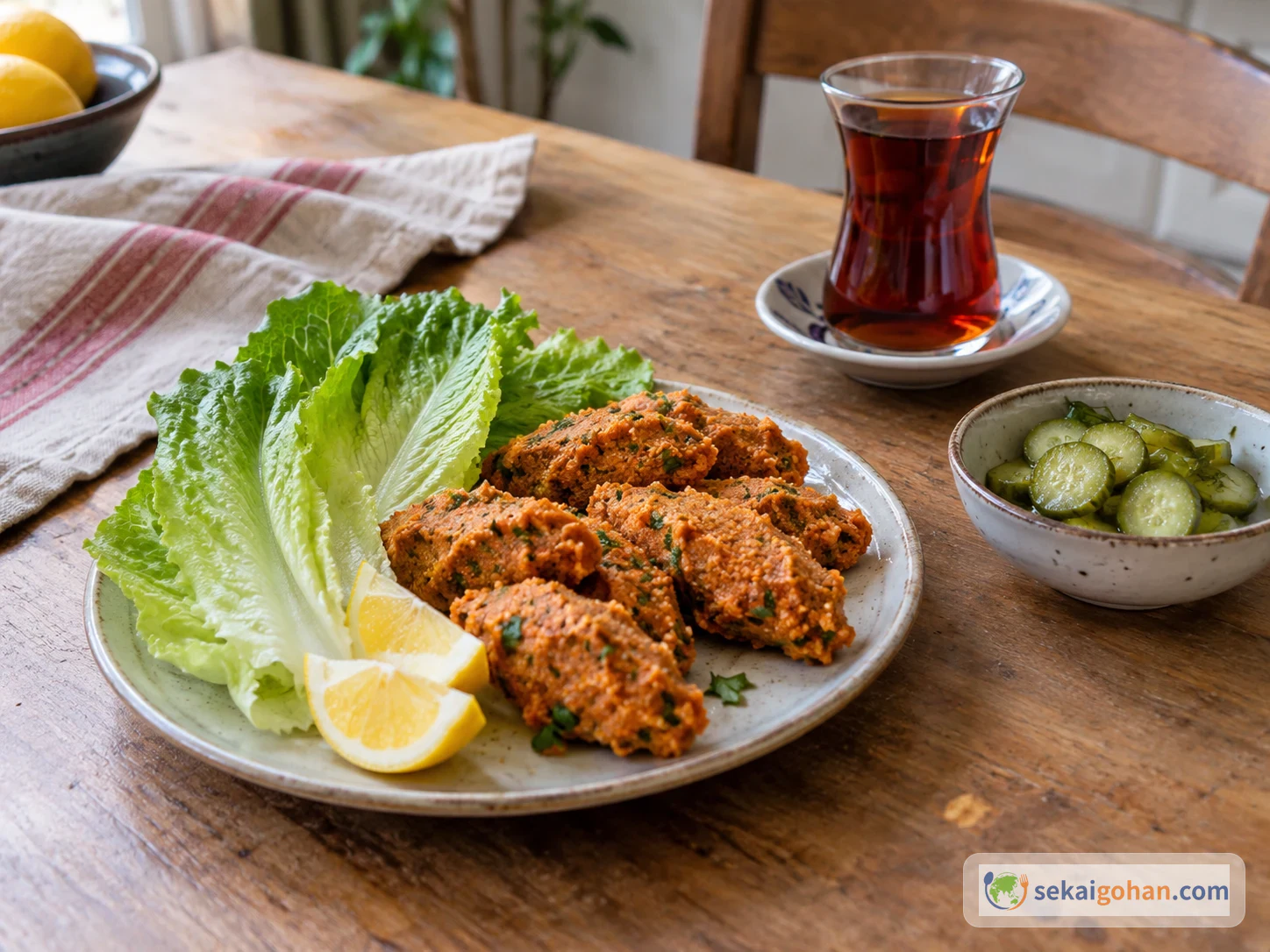
The crunch of lettuce and the acidity of lemon layer onto the soft lentil mixture, which is held together with oil and paste and eaten wrapped in a leaf. Squeeze the lemon just before eating so the leaf stays crisp. Serve it beside pickles, salads and other small dishes; it isn't spooned over rice or served as a fried side.
Five Ways to Vary It at the Table
- Basic lettuce and lemon.
- Replace the 2.75 oz (75 g) tomato paste with 1.75 oz (50 g) and 25 g of mild red pepper paste to move the aroma closer.
- Cut the salt for a salted paste and serve pickles on a separate plate.
- Keep the scallion and parsley and add a little fresh mint.
- Only for people who like heat, add a little red chile at the table.
Heat belongs on each person's plate. Mint and chile change the flavor, so leave the amounts in the basic ingredient table as they are and add them per plate.
Shape each piece into a slim oval. When you close your fingers, wave-like dents remain. They do not all need to be the same size. When plating, aim for an easy mouthful.
Nutrition
One of four equal portions is about 330 kcal, 14 g protein, 11 g fat and 1.75 oz (49 g) carbohydrate. These figures are estimated from the main ingredients (red lentils, bulgur, olive oil, onion and tomato paste) and are for one of four equal portions. They don't include herbs, spices, accompaniments or the extra oil for adjusting.
Storage and FAQ
Mercimek köftesi is eaten at room temperature or cold, but it shouldn't sit out for long. Put out only what you'll serve and keep the rest in the refrigerator at 39°F (4°C) or below. Perishable cooked food should not stay outside the refrigerator for more than 2 hours, or 1 hour if the room is above 90°F (32°C). Store leftovers in a shallow container in the refrigerator, divided into portions and refrigerated promptly rather than left to cool in the pot.
This dish is not cooked after shaping, so hand hygiene directly affects its safety. Before shaping, wash your hands with soap and water for at least 20 seconds, and use clean utensils and a clean work surface. Wash parsley, scallion and lettuce under running water and dry them. Do not use soap to wash vegetables. Do not use a cutting board or plate that touched raw meat without washing it.
Can I make it the day before?
Yes. Refrigerate it and finish it by the next day, keeping the lettuce and lemon separate until plating. If you store the mixture before shaping, use a shallow container for that too. Food that has been left out at room temperature for a long time can't be judged safe by smell or appearance, and refrigerating it afterward does not make it safe again.
Can I freeze it?
Make only as much as you can finish by the next day in the refrigerator. Do not freeze the finished plate with the lettuce.
Is it the same dish without bulgur?
No. Fine bulgur absorbs excess moisture and holds the mixture together, and without it you won't get the same firmness. Cooked quinoa appears in other formulas, but don't swap it for the 2.75 oz (80 g) of bulgur at the same quantity. This is an appetizer that contains wheat, so don't serve it as is to anyone who must avoid wheat.
Do you cook it after shaping?
Not in the basic method. The red lentils are already cooked, and the fine bulgur softens in their heat and moisture before shaping. Versions with a toasty, browned surface are a different dish from this soft appetizer.


