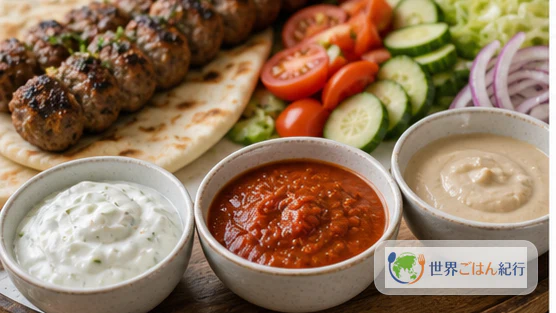
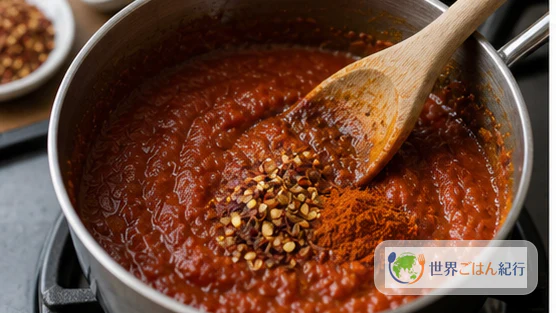
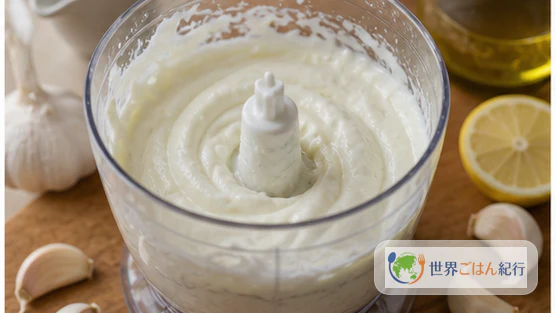
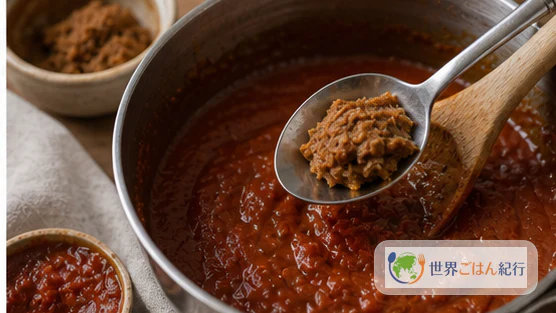
Grill the meat, warm the pita, and finish with a spoonful of sauce. That last spoonful decides a lot: white yogurt cools down fat and heat, while red tomato brings acidity and a little sweetness to charred meat. Add punchy garlic toum or nutty, rich tahini, and the very same skewer becomes a different plate. Here are five sauces to cover those jobs: yogurt garlic, tahini yogurt, tomato chili, toum and miso tomato. The first time, pick one white and one red, and add tahini or toum on your next shopping trip. It's easier to taste the differences that way.
Kebab Sauce in Turkey and the Levant
There is no single "kebab sauce" shared by every country. Grilled meats like the Adana and shish kebabs in our kebab recipe, or thinly sliced meat like shawarma, are big on salt, fat and char. A sauce answers them with some mix of acidity, coolness, heat and the depth of garlic.
Turkish plated dishes are built on yogurt, tomato and butter, and Levantine meat dishes are built on garlic and tahini. The ingredients overlap, but the sauces play different roles. The white-and-red pairing you see at kebab shops in Japan and Europe is several of these traditions adapted to the way a shop serves its food. So rather than pinning one formula to a regional dish name, pick the sauce to suit the fat in the meat and the way you'll eat it.
Turkish kebabs and their sauces by region
Adana kebab is a spicy minced-meat skewer, and Urfa kebab is a milder one. With a meat that leads with heat, serve yogurt garlic as a cool side and hold back on chili in the sauce so the meat's aroma comes through. With milder skewers or chicken, the acidity of tomato chili gives the plate definition.
İskender kebab from Bursa was first made by İskender Efendi in the Kayhan district in 1867. Thinly sliced meat goes over pide bread cut into small pieces and is finished with yogurt, tomato sauce and butter. At home, layer bread, meat, tomato and yogurt on the plate in turn rather than mixing the sauce into the meat, so each flavor keeps its role.
Döner is meat shaved thinly from a rotating spit. Shops that wrap it in pita or flatbread need small amounts of white and red sauces that don't run, a different balance from the tomato sauce and butter of plated dishes. The tahini yogurt and tomato chili here are home versions of that, with moisture and heat dialed back.
Levantine toum and tahini
Toum is an emulsified sauce of garlic, oil, lemon and salt served in Lebanon with grilled meats such as shawarma. It uses neither yogurt nor egg, so although it looks similar, it's a different thing from yogurt garlic sauce. Adding the oil little by little and adjusting with ice water or lemon gives it richness and a light tang.
Tahini is a sesame paste also used in bean dishes such as hummus and falafel. Combined with yogurt, it picks up a lactic tang and turns lighter than tahini alone. To keep the sesame aroma, go easy on the lemon; thin it with more water for falafel, and keep it a little thicker for spreading on bread.
Traditional and home-style
Names like Adana kebab and İskender kebab are tied to regional ingredients and methods. Miso tomato, by contrast, is a home-style twist made to go with Japanese rice, not a traditional sauce. Layer miso's savory depth over tomato's acidity and add sumac or chili at the end, and you can still taste the aromas of the original ingredients while dividing up the family's plates.
Ingredients (serves 4)
The amounts assume 2–3 sauces served in small portions alongside meat and bread for 4. Making all five leaves you with extra sauce, so the first time choose one white and one red sauce and cut back on the rest. Even when halving the recipe, don't add all of the toum oil at once; add it gradually while you watch the emulsion.
The base sauces in this recipe contain dairy (yogurt) and sesame (tahini, sesame paste). To avoid dairy, use unsweetened soy yogurt; to avoid sesame, make only the yogurt garlic sauce and skip the tahini sauces.
Once you have tahini, cumin and sumac on hand, they also go into köfte, lahmacun and mujaddara. Rather than buying them just for a sauce, decide based on whether you plan to use them with beans, meat or roasted vegetables.
Sprinkled over red onion or meat, sumac has a dry tang that's different from lemon juice. Cumin perfumes the meat before grilling and tahini gives the sauce body, so there's no need to buy all three at once. If you want to try Turkish-style tang first, start with sumac; if you'll also make hummus or falafel, prioritize tahini.
Tahini is the shortcut when you want a white sauce one notch richer. It's often sold in large multi-jar packs, which suit anyone who'll go on to make hummus and falafel. If you're only trying kebab sauce once, unsweetened white sesame paste will do.
Choosing Ingredients and Substitutes for Kebab Sauce
Kebab-shop-style recipes in English often pair a white sauce of yogurt, garlic, lemon and mint with tahini, and Turkish-style red sauces sometimes use tomato, chili, sumac and pomegranate molasses. You don't have to buy everything imported. What matters is acidity that cuts the fat of the meat, aroma that stands up to the char, and a thickness that won't run off bread or rice.
With that in mind, swap freely: a little lemon zest for sumac, white sesame paste for tahini, parsley for mint. Two swaps change the flavor, though. Toum isn't the same as a yogurt sauce, and sweetened sesame paste isn't tahini, so let people at the table know what you substituted. Greek yogurt makes a sauce that spreads easily on bread; regular yogurt makes one you pour beside the skewers.
For a dairy-free table, make the yogurt garlic with unsweetened soy yogurt. Tahini isn't dairy, but it contains sesame, so if you need to avoid both dairy and sesame, choose only the tomato chili. Miso also contains soy, so check the label.
The imported pantry items don't end with a single dish. The same tahini, lemon and herbs carry over to hummus, tabbouleh and falafel.
If you make toum or tahini sauce several times a month, a dedicated small blender is worth having. To try it just once, mashing garlic to a paste with a knife and using it in the yogurt sauce costs less and leaves fewer dishes. You can also pound the garlic with salt in a mortar and work in the oil little by little, but emulsifying that way takes patience.
Instructions
Start with the sauces you can make before the meat goes on. The white sauces improve as they rest and the garlic mellows; the red sauce thickens with a little simmering so it won't run out of the bread. Toum is the one whose result depends on how you add the oil, so save it for last.
The yogurt sauces mellow after 10 minutes of resting, and the tomato sauces thicken as they cool. Rather than mixing in a hurry once the meat is cooked, make the sauces first and keep them in the fridge; it's easier to adjust flavor and thickness at the table.
To store in the fridge, transfer to clean airtight containers and chill as soon as the sauces have cooled slightly. Don't leave anything that needs refrigeration at room temperature for more than 2 hours, and keep the fridge at 4°C (40°F) or below. Homemade sauces without preservatives keep for up to 2 days for the yogurt sauces, up to 3 days for tomato chili and miso tomato, and up to 4 days for toum, the garlic and oil emulsion. Whatever the count, don't eat anything that sat out on the table for a long time or that smells off, fizzes or changes color.
Kebab Sauce Mistakes and Fixes
The most common mistake is making the meat, the bread and the sauce all strongly seasoned. If the meat is salted and the pita is salty too, let the sauce handle acidity or coolness. Don't finalize the seasoning by tasting the sauce on its own; put a little on the edge of the grilled meat and decide from there, and you won't oversalt.
Keeping the white sauce cool
Yogurt garlic and tahini yogurt are there to absorb the fat of the meat and the heat of the chili. Too much salt, and instead of cooling, they leave you thirsty. Start with 1/4 tsp salt per 5.5 oz (150 g) yogurt, then add only what's missing once you taste it with the meat.
Using the red sauce sparingly
Tomato chili is easier to eat as a line along the edge of a wrap than smeared all over the meat. If someone at the table doesn't like heat, serve it on the side; red onion sprinkled with sumac adds tang without more chili. On a thin flatbread like lahmacun, a few small dots won't overpower the toasty crust.
Taming raw garlic
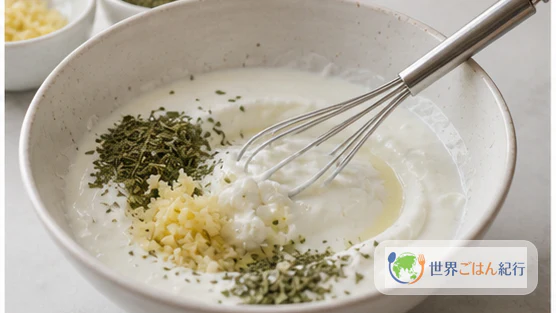
Garlic chopped and stirred straight into yogurt can be too sharp. Crush it into a paste with the salt, then mix it into the yogurt and let it sit for 10 minutes, and it blends into the whole sauce. If you want a raw garlic kick, add a little more at the table.
Loosening stiff tahini
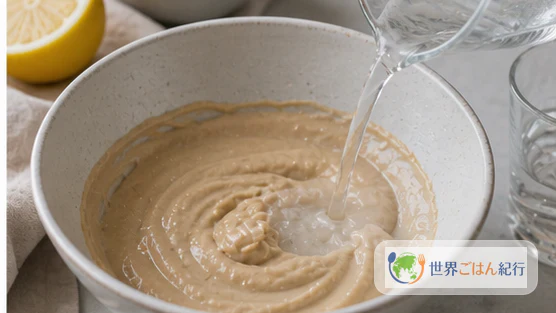
Tahini sometimes stiffens the instant lemon goes in, and that's normal. Add water 1 tsp at a time and stir, and the tight paste turns white and smooth again. If it gets too thin, add another 1 tsp tahini; for drizzling over pita, stop while it's a little loose. If you'll also use it for hummus, go easy on the salt from the start.
Holding back on toum
Toum is so aromatic that spooning it on as generously as yogurt sauce hides the char of the meat.
Start with 1 tsp for shawarma, or about 2 tsp on the edge of the plate for kebab skewers, and add more later if needed.
When you make real toum, add the first oil a few drops at a time, with small amounts of ice water or lemon along the way; that's what keeps it from splitting. Without a blender, mixing a little mayonnaise into the yogurt garlic brings the texture closer, but keep in mind it becomes a different sauce made with egg.
Serving, Storing and Variations for Kebab Sauce
Matching the sauce to the plate
Whether the skewers go on a plate, get rolled in pita or sit on rice changes how thick and how tangy the sauce needs to be.
If you only prep one sauce before the meat goes on the grill, yogurt garlic is the easiest. For a kebab rice bowl, go with miso tomato; for pita or wraps, pair tahini yogurt with tomato chili so the bread doesn't get soggy. Try toum starting with 1 tsp.
| How you serve it | Sauces that fit | Why |
|---|---|---|
| Adana or shish kebab on a plate | Yogurt garlic, tomato chili | Acidity and coolness handle the fat and char |
| Döner-style pita sandwich | Tahini yogurt, a little toum | Spreads on bread without running, and the garlic aroma lingers |
| Kebab rice bowl | Miso tomato, a little yogurt garlic | Adds savory depth that suits short-grain rice; yogurt cleans up the finish |
| Falafel or roasted vegetables | Tahini yogurt | Layers sesame richness over the toastiness of beans and vegetables |
The sauces get more use on a table with more than grilled meat. Add bean dips, fresh herbs and a tangy salad, as in our guide to Middle Eastern cuisine.
Using leftovers the next day
Plan the next day's use from the start, and you won't have to finish everything on kebab night. The white goes with vegetables or fish, tahini with beans, and the red with rice or bread. Yogurt garlic is good with grilled fish and potatoes, and the red sauces work in naan pizza and meat-and-vegetable stir-fries. Toum's strong garlic easily transfers to other food, so it's better made in small batches.
Glass containers that don't absorb odors work well for storage. Pick a small one that fits the amount of sauce; it limits contact with air better than a little sauce in a big container.
Kebab rice bowl
Top warm rice with grilled meat, shredded cabbage, tomato and red onion, and spoon over the miso tomato sauce. Just 1–2 tsp of a yogurt sauce cuts the richness of the fat. With short-grain rice, a little miso in the tomato keeps the flavor more focused than lots of tahini.
Falafel sandwich
Tahini yogurt goes beautifully with falafel, layering sesame richness and lemon tang over the toastiness of fried chickpeas. For a vegan version, skip the yogurt and thin the tahini with just lemon, water and salt. If you've added a lot of water, adjust the salt just before spooning it over.
Köfte with a dip
Köfte are close to meatballs, so serving the white sauce on the side keeps their browned crust intact. If you pack them for lunch, bring the sauces, tomato chili included, only when you can keep them cold; the yogurt sauces in particular shouldn't sit at room temperature.
Roasted vegetables
Roast eggplant, zucchini, bell peppers and squash and top with yogurt garlic. With watery vegetables, brown them well before adding the sauce so it doesn't get diluted on the plate. Add tabbouleh and you have a side for a meat-free day.
A milder version for kids
Leave the chili flakes and cayenne out of the tomato chili and make it with paprika and tomato paste, sweetened with a little ketchup. Adults can add chili, sumac and black pepper just before eating, so everyone eats from the same pot. For kids, going easy on raw garlic as well as heat helps too.
FAQ
Q1. How long does kebab sauce keep?
Keep the yogurt sauces in the fridge for up to 2 days, tomato chili and miso tomato for up to 3 days, and toum for up to 4 days. Write the date on the container and serve with a clean spoon. Throw away anything that sat out on the table for a long time or that smells off, fizzes or changes color, even within these limits. Don't leave foods that need refrigeration at room temperature for more than 2 hours, and keep the fridge at 4°C (40°F) or below.
Q2. Can I use sesame paste instead of tahini?
Yes. Mix 2.5 tbsp white sesame paste with 1 tbsp water, then thin with lemon juice and yogurt. Choose an unsweetened paste made mainly of sesame and salt. East Asian sesame paste can taste stronger than tahini, so thin it gradually while checking the acidity.
Q3. Can I fix toum that has split?
Blend 1 fresh garlic clove with 1 tsp lemon juice, then add the split sauce 1 tsp at a time to bring it back together. If it won't come back, make a yogurt garlic sauce for the table instead.
Summary: Start with One White and One Red
The first time, start with a white sauce of 150 g yogurt with garlic and lemon, and a red sauce of tomato and chili simmered for 7 minutes. Simply giving one sauce the job of cooling the fat and the other the job of adding acidity to bread or rice cuts down on oversalted, overpowering sauces.
Add tahini if you'll also make hummus or falafel, and toum if you want to try garlicky shawarma. Sumac works just sprinkled over red onion or meat, so it's an easy spice to find uses for once you buy it. If you're only making this once, on the other hand, you can get by with white sesame paste and the knife you already have, without buying special ingredients or tools.
The day after grilling meat with our kebab recipe, use leftover white sauce on roasted vegetables and the red on rice. Rather than assuming Turkish plated dishes, Levantine garlic sauce and a home-style miso tomato all follow the same formula, use each according to the role of its ingredients, and you'll find many more ways to enjoy kebabs.