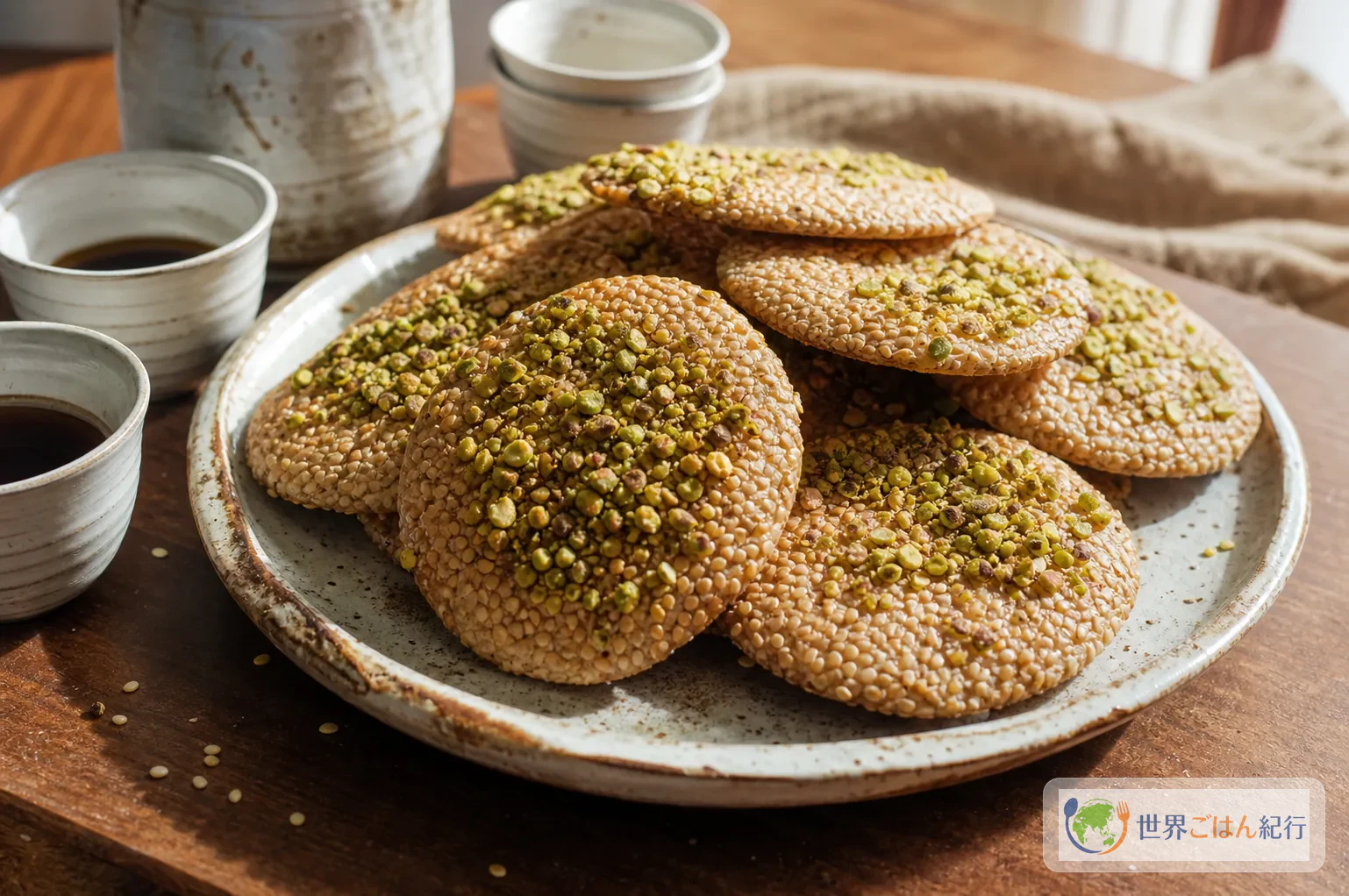
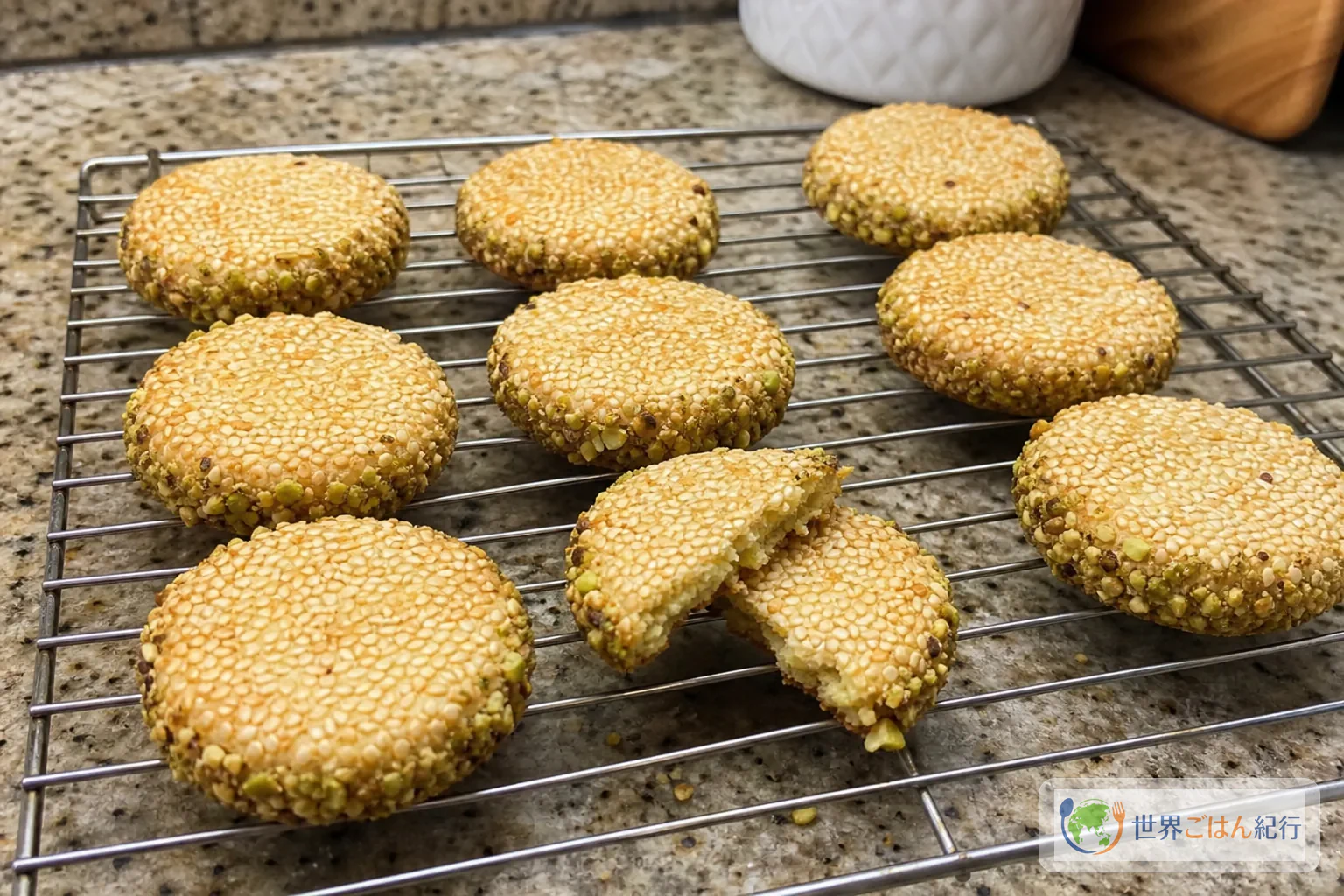
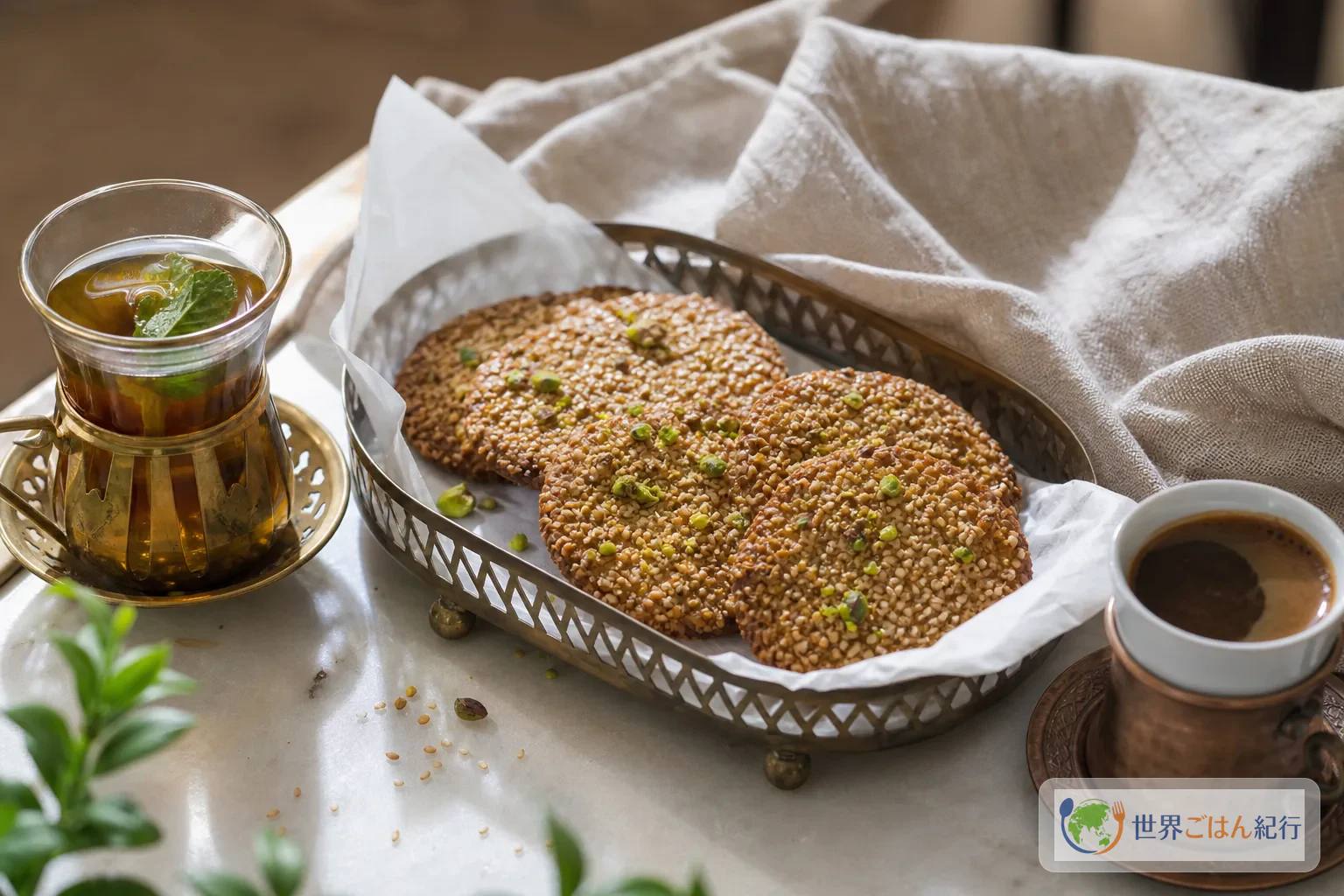
Open the oven and the first thing to rise is not butter but the smell of toasting sesame. A little later come the oil of the pistachios and the floral scent of orange blossom water. Barazek are thin Syrian cookies, with white sesame pressed into one side and pistachios into the other, and a good one snaps cleanly and leaves sesame lingering in your mouth. At home it comes down to three things: a dough that rolls thin without cracking, a syrup that holds the sesame in place, and a bake gentle enough not to scorch the pistachios.
In Arabic it is written برازق. In English you'll see barazek, barazeq, barazik and other spellings. It is known as a sweet of Syria, especially Damascus and Aleppo.
Barazek in Syria and the Middle East
Barazek are lighter than most Middle Eastern syrup pastries. Before baking, a thin syrup coats the sesame and gives only the surface a light gloss; the cookie itself is never soaked. The dough is just lightly sweet, so white sesame carries the toasty flavor, and the pistachios bring a green aroma when you bite in.
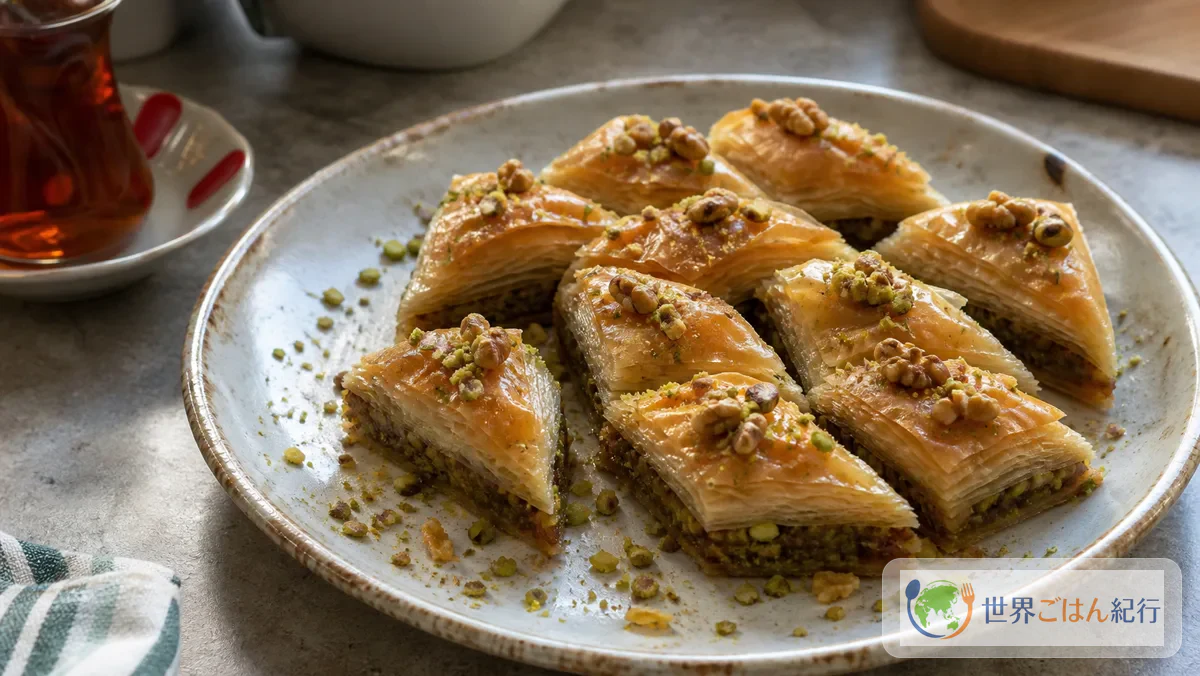
The Levantine knafeh is a hot sweet of cheese and syrup, and the Turkish baklava layers thin pastry and nuts. Barazek belong in a box of baked sweets, eaten a little at a time. Two cookies beside a glass of strong black tea suit them better than a large slice after a meal.
Ingredients (makes about 24)
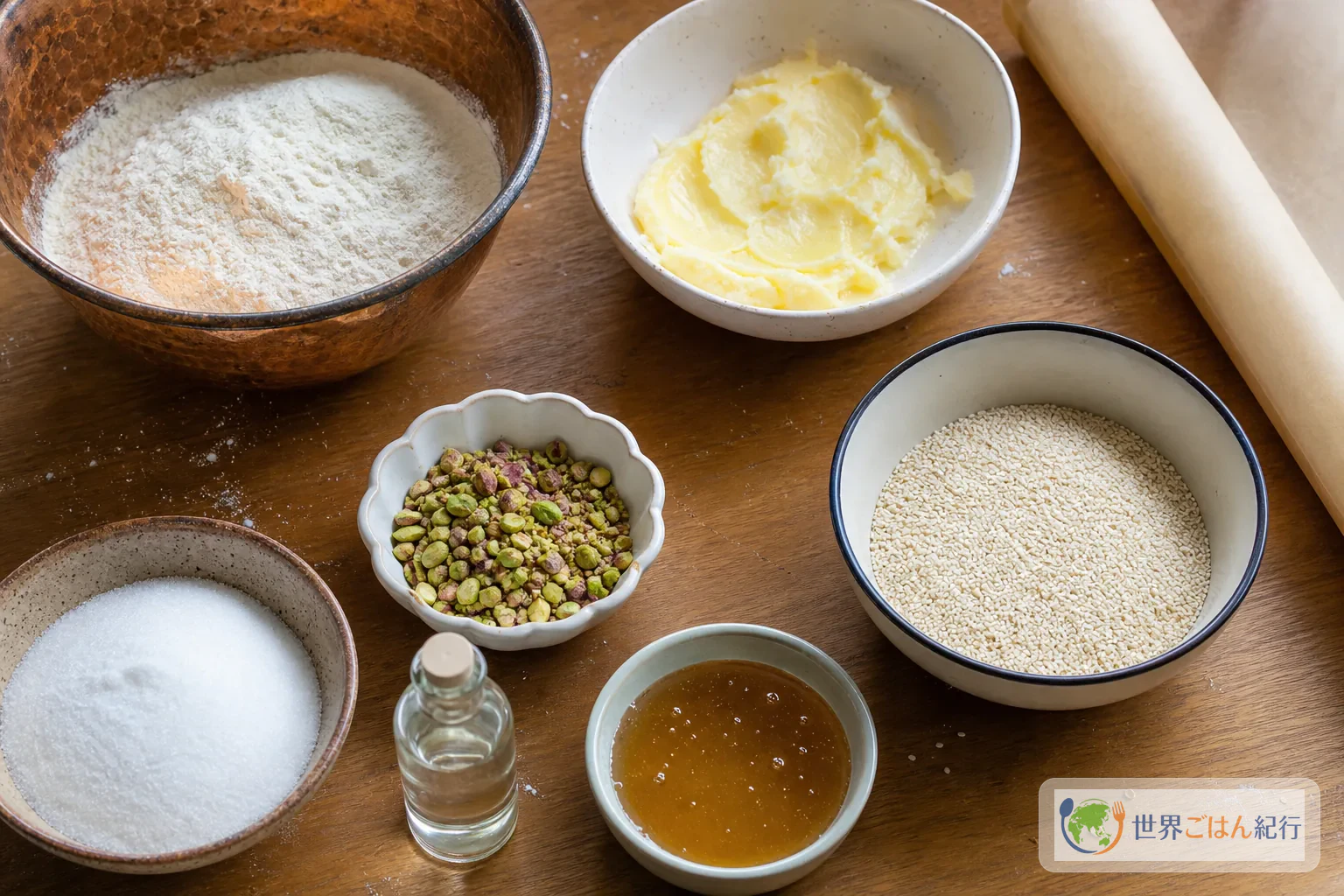
This recipe uses wheat, dairy, sesame and nuts. Even if you leave out the pistachios, some products are made on equipment that also handles nuts. If you have a sesame allergy, choose a different sweet rather than substituting another ingredient.
Ingredients and tools that give pause when shopping
Most of the ingredients are easy to find. Cake flour, milk and butter are fine from a supermarket. Three items deserve a closer look: a large amount of white sesame, a little orange blossom water for its floral note, and unsalted pistachios chopped evenly and coarsely.
Barazek uses more than 3.5 oz (100 g) of white sesame at a time. Rather than opening many small bags, keeping a large bag for baking lets you cover the surface without skimping.
Orange blossom water is only half a teaspoon, but it changes the outline of the aroma. It also goes into knafeh, basbousa and baklava, so if you keep making Middle Eastern sweets, one bottle is easier to use up.
Pistachios can be chopped with a knife, but pieces that are too large float off the dough, and pieces too fine let the oil seep. If you make Middle Eastern sweets often, a small food processor earns its place for evening out the size of the nut pieces.
Choosing ingredients for barazek
| Key element | How to approach it | Acceptable substitution |
|---|---|---|
| Aroma of mahlab | Add just 1/4 tsp | If you can't get it, leave it out and lean on the orange blossom |
| Plenty of white sesame | Use the full 4 oz (120 g) without skimping | Black sesame is strong and makes it a different sweet |
| Green of pistachio | Chop 2.5 oz (70 g) unsalted pistachios coarsely | If expensive, replace half with unsalted almonds |
| Thin, snapping dough | Use butter and oil together, add cornstarch | With butter alone it tends to harden when cool |
| Sesame adhesion | Use a thin honey water | More syrup makes the surface sticky |
Mahlab is a spice made from the kernel inside cherry stones, used in the Middle East and around the Mediterranean. It has an aroma close to almond and cherry, but barazek are good without it. The sesame, the pistachios and the thinness matter far more, so don't go hunting.
Choose white sesame that is only lightly toasted. Sesame roasted too dark turns bitter in the oven, so pass on any bag whose aroma hits you hard when you open it. Using less sesame gives a tidier look but a weaker aroma, so be generous here. Leftovers are easy to use up in the sesame sauce for momo or as a finish for hummus.
Instructions: bake thin at 350°F (170°C) and don't let the sesame fall off
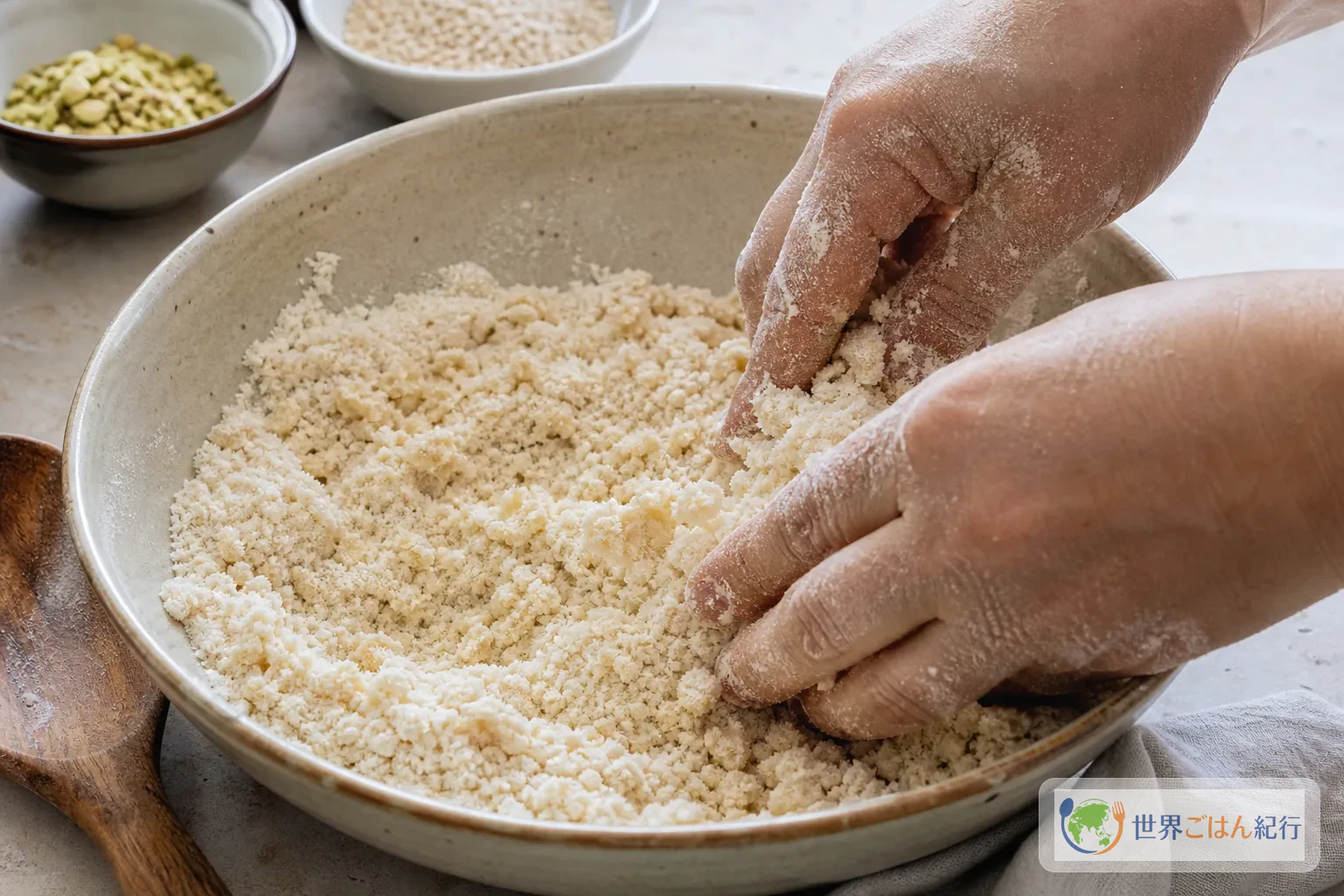
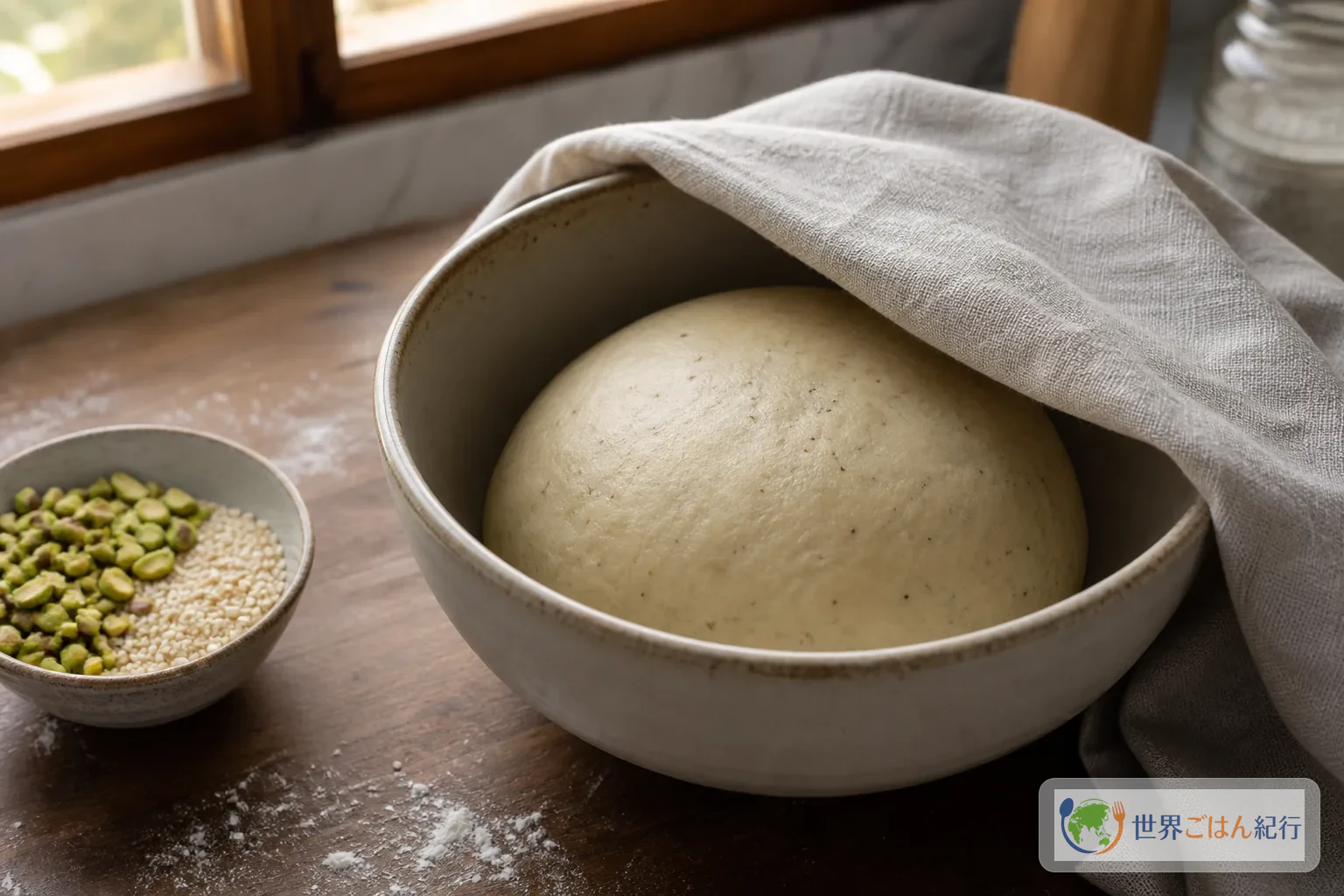
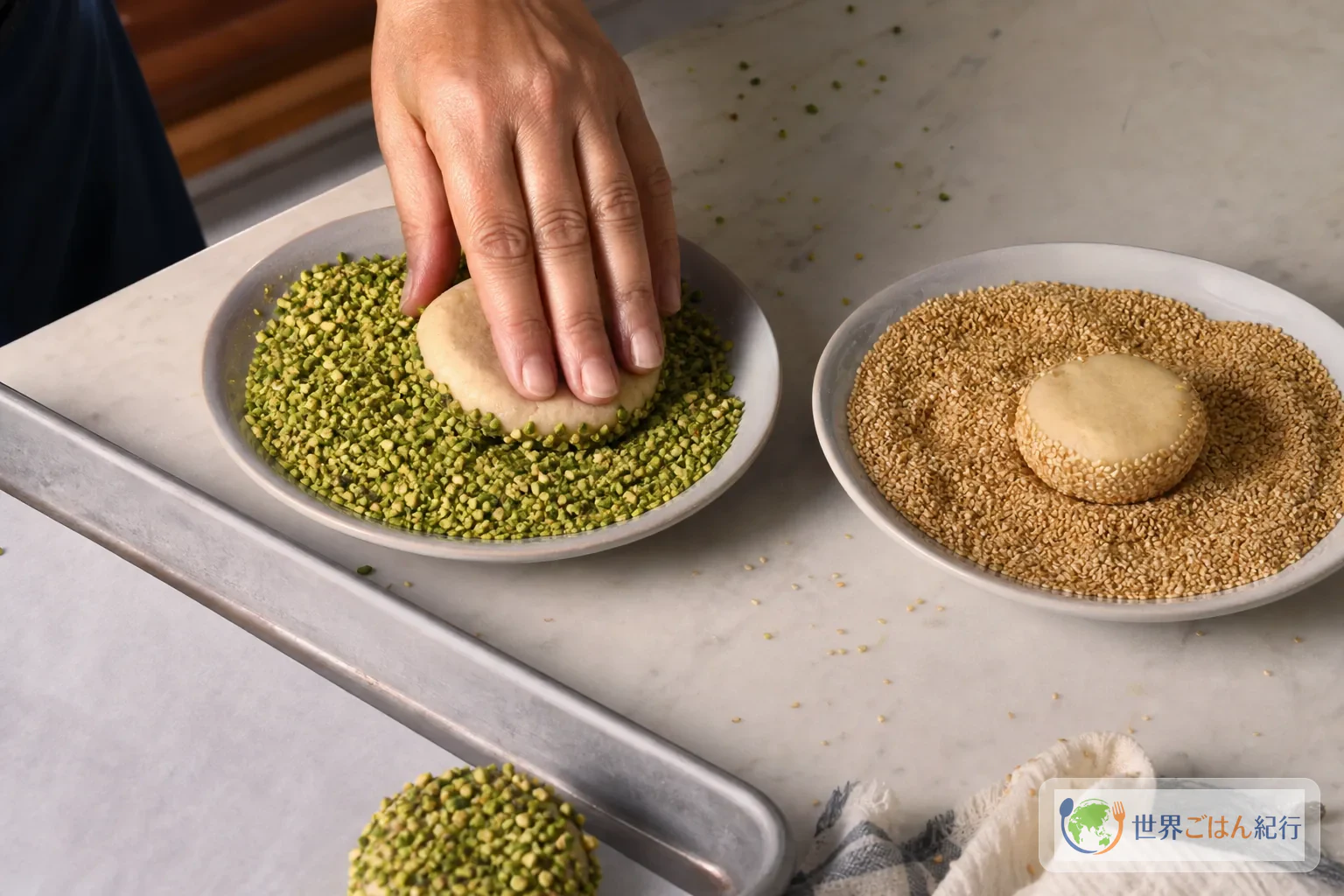
Barazek looks almost finished before it goes in the oven. Use plenty of sesame, press the pistachios into one side, and keep the thickness even, and the bake will be steady. Rest the dough, then roll it thin. Kneading it hard works against you.
Barazek troubleshooting
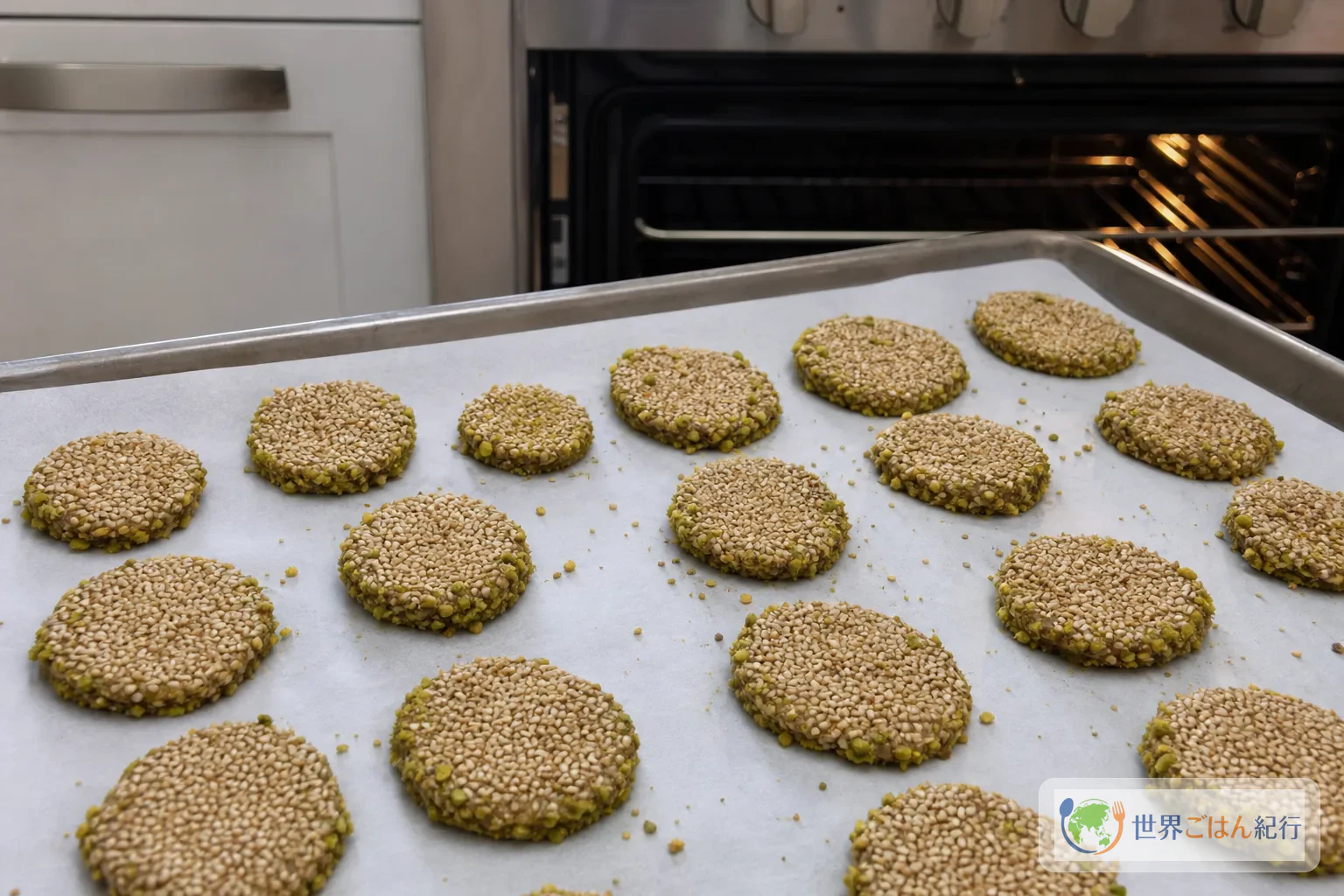
Thickness is the easiest thing to fix, and the one that matters most. Syrian pastry shop barazek are thinner than most home versions, but pushing that far makes the dough crack in humid weather or in a weak oven. Aim for about 0.25 inch (5 mm) on your first batch, then try 0.125 inch (4 mm) once you're used to it. Even thickness counts for more than a large diameter: at about 5 mm, 170°C (340°F) dries the cookies through to the center before the sesame turns bitter, while a thicker cookie bakes up like ordinary shortbread.
If the sesame falls off, check how you press before adding more syrup. Too much syrup leaves the baked surface damp, almost like candy; too little and the seeds won't stick. After placing the dough on the sesame, press from above with your fingers together for 1 second. That alone changes the surface a great deal.
Pistachios are the first thing to scorch, especially at 180°C (355°F) or higher. Chop them coarsely, too, since finely ground pistachios release their oil and the green turns cloudy.
| Problem | Main cause | Fix |
|---|---|---|
| Sesame falls off | Too little syrup, weak pressing, not dried before baking | Touch lightly to the syrup, press the sesame side for 1 second and leave 5 minutes on the baking sheet |
| Center is soft | Thickness is 7 mm or more, baking time too short | Even out to about 5 mm and add 2 minutes at 170°C (340°F) |
| Pistachios scorch | Temperature is high, sheet on upper rack | Bake on the middle rack at 170°C and take out 1 minute early if color comes quickly |
| Dough cracks and can't be shaped | Under-rested, too little milk, too much flour | Rest 20 minutes, and if it crumbles when squeezed in the hand, add 1 tsp milk |
| Texture is heavy | Over-kneaded, too thick, not enough cornstarch | Stop at rubbing in, and keep to 5 cm across and 5 mm thick |
| Surface is sticky | Too much syrup, put in a container before cooling | Use thin syrup and cool on a rack for 20 minutes before storing |
How to eat, storage and FAQ
Barazek taste better the day after baking. On the first day the toasted sesame dominates; by the next, the pistachio and floral notes have come together with it. Serve them with strong black tea, unsweetened coffee or Arabic coffee with cardamom.
| State | Storage method | When eating |
|---|---|---|
| Same day | Fully cool, then an airtight container | As is. Pair with a warm drink |
| Within 3 days | Room temperature with a desiccant | On humid days, keep the container open only briefly |
| 1 week | Airtight in the refrigerator | Take out to room temperature 10 minutes before eating |
| 3 weeks | Freeze with paper between each | Bring to room temperature for 15 minutes, then warm 2 minutes in a 150°C (300°F) toaster oven |
Can I make it without pistachios?
You can, but you'll lose the green aroma that makes them barazek. To replace them, coarsely chop the same 2.5 oz (70 g) of unsalted almonds. Skip walnuts for your first batch; they are oily and tend to darken the surface in the oven.
Is orange blossom water essential?
No, but a little gives the cookies the aroma of a Middle Eastern sweet. If you leave it out, add 1/2 tsp more milk so the dough holds together. Don't swap in vanilla extract, which pushes the flavor toward a Western pastry.
Can I use black sesame?
It bakes fine, but its aroma is strong and the cookie looks like a different sweet. Stay with white sesame to keep close to Syrian pastry. If you want a little contrast, mix in just 1 tbsp of black sesame rather than using it all the way; that keeps bitterness in check.
Can I make the dough the day before?
Yes. Shape it into a disk, wrap it in plastic and refrigerate overnight. Take it out 30 minutes before use and start shaping once it dents slowly when pressed. Rolled thin while cold, the edges crack easily.
What should I serve it with in a menu?
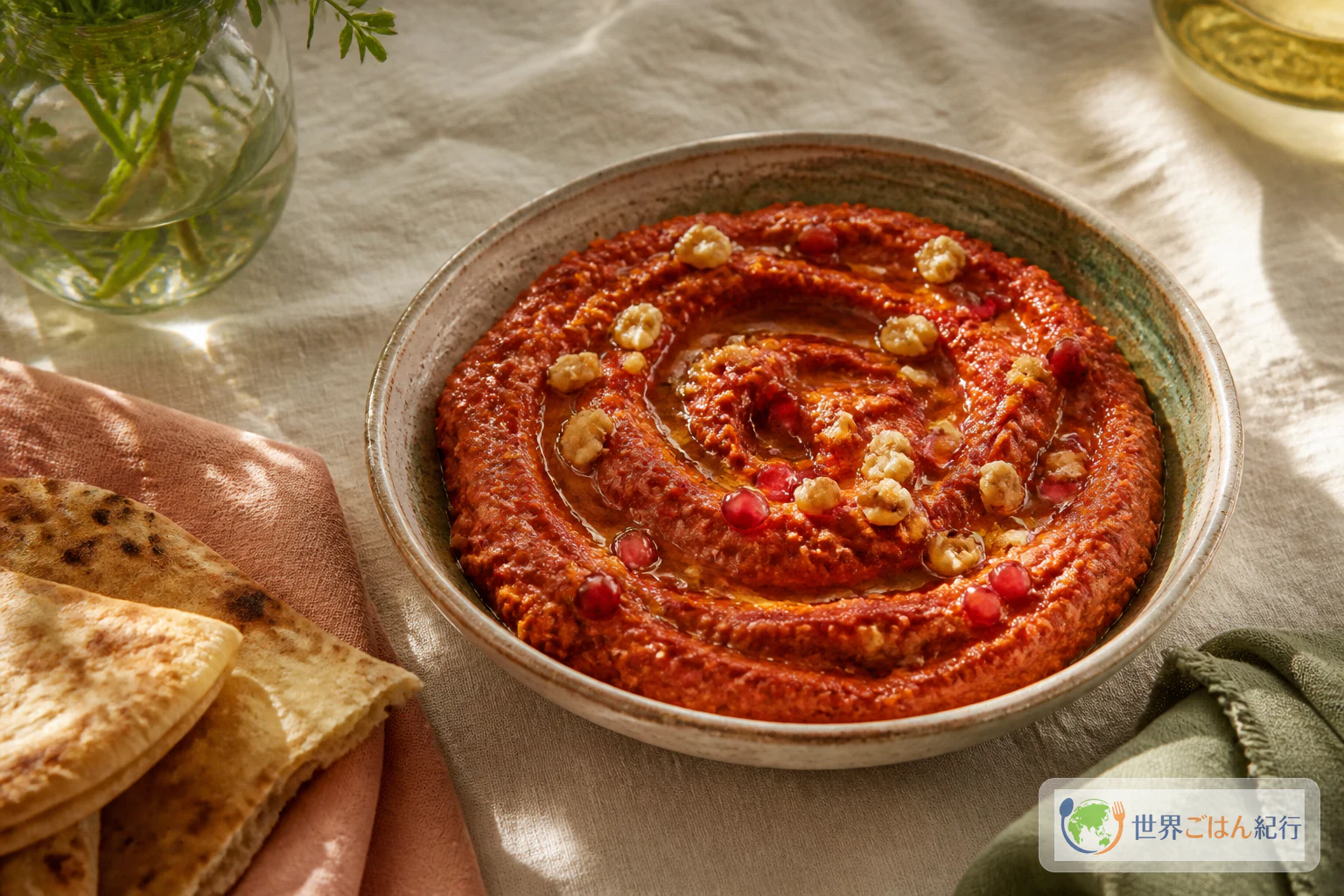
Barazek make a light finish after salty, sour Levantine dishes. Set out starters such as falafel, tabbouleh and baba ghanoush, then end with two cookies each. For a run of Middle Eastern desserts, it's fun to compare textures with Egypt's basbousa.
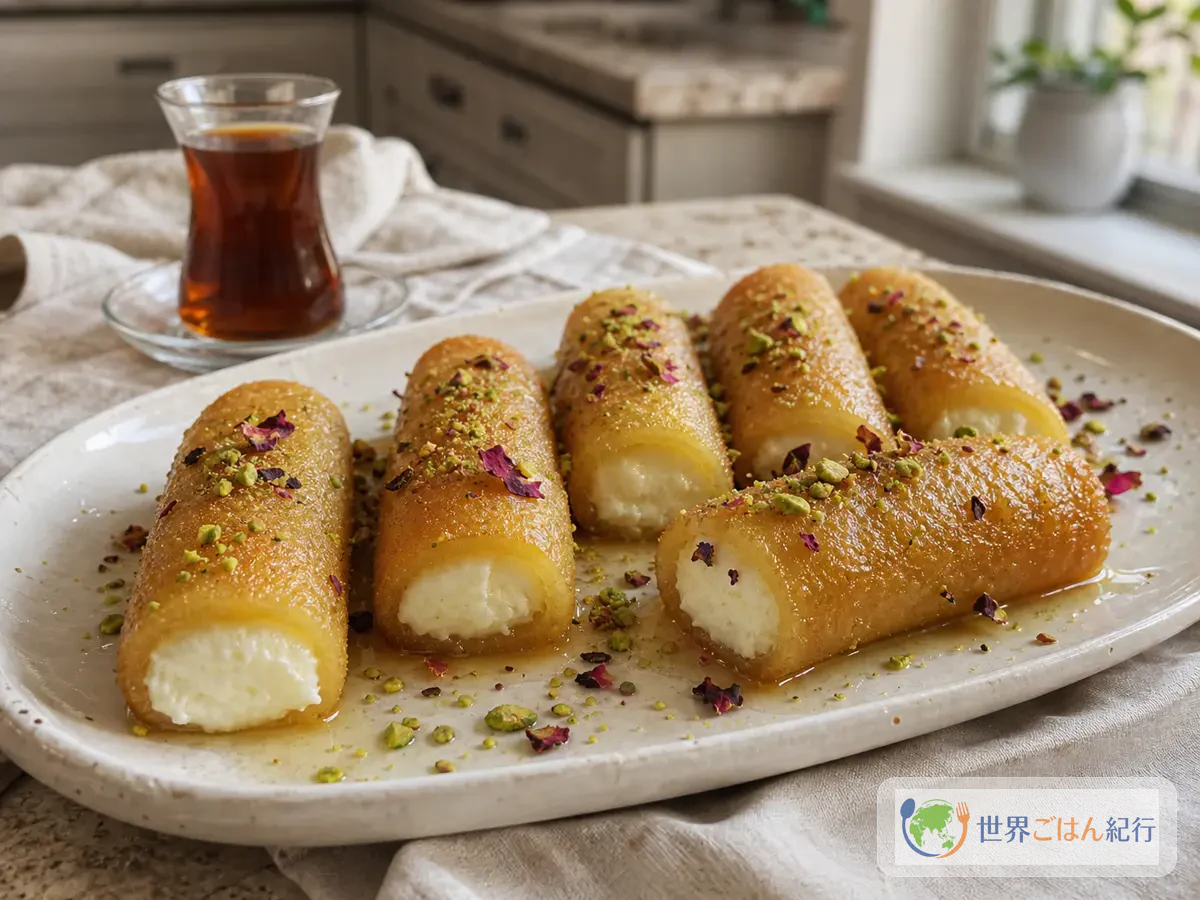
For another Syrian sweet, try halawet el jibn, a cold dessert of semolina and cheese stretched thin and rolled around cream. With its scent of flower water and milk, it goes in quite a different direction from the toasty sesame and pistachio here.