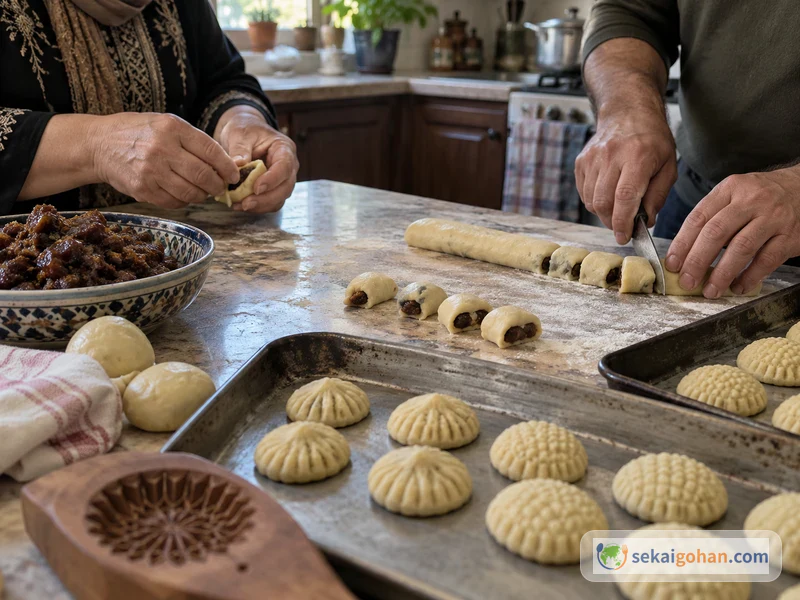
On a night near the end of Ramadan, baking sheets cover the whole kitchen table. A mother rolls out the dough while her daughters shape date paste into long strips, then roll and cut, roll and cut. When the sweet smell of cardamom and butter drifts from the oven, the house fills with the feeling that Eid is coming. Kleicha is the date-filled cookie Iraqi families bake for their celebrations, a soft, buttery dough wrapped around sticky, spiced dates.
Kleicha, Iraq's Eid cookie
Two sisters who run an Iraqi sweets shop in London call kleicha Iraq's national cookie, and it's easy to see why. Religious holiday or not, Iraqis don't celebrate a special day without it. Growing up, the sisters baked kleicha at home as Ramadan drew to a close, and they made the same amount every year, no matter how many guests were coming.
The cookie belongs to a long line of Iraqi date sweets. Its history is said to reach back to ancient Babylon, and today it is the sweet of Eid al-Fitr, the festival that ends Ramadan. No records trace how the ancient sweet became the kleicha of today, so the Babylonian origin is best taken as a story Iraqi families have handed down.
A family from Baghdad has baked kleicha in Abu Dhabi since the 1970s and given it as gifts for Ramadan and Eid. The amount they give grew year by year, reaching as much as 500 kilograms in some years. They have also baked and handed out this sweet on days remembering family members who have died.
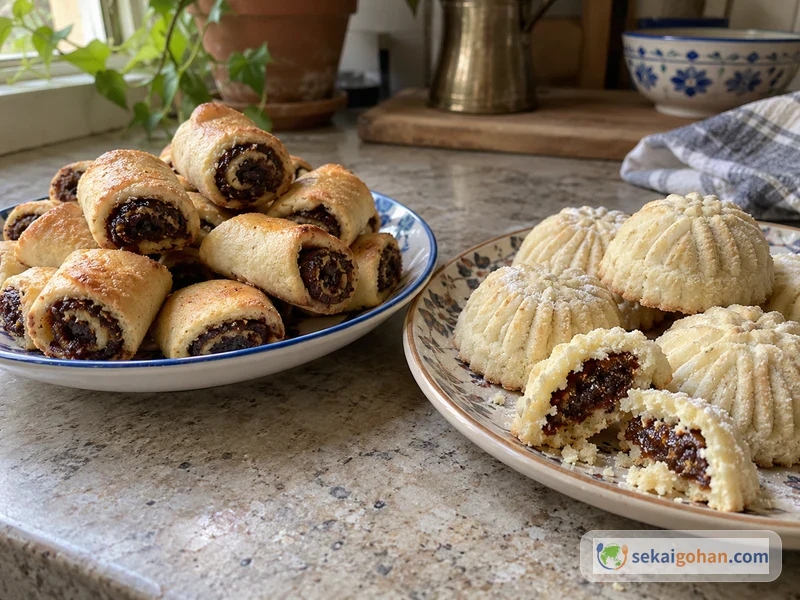
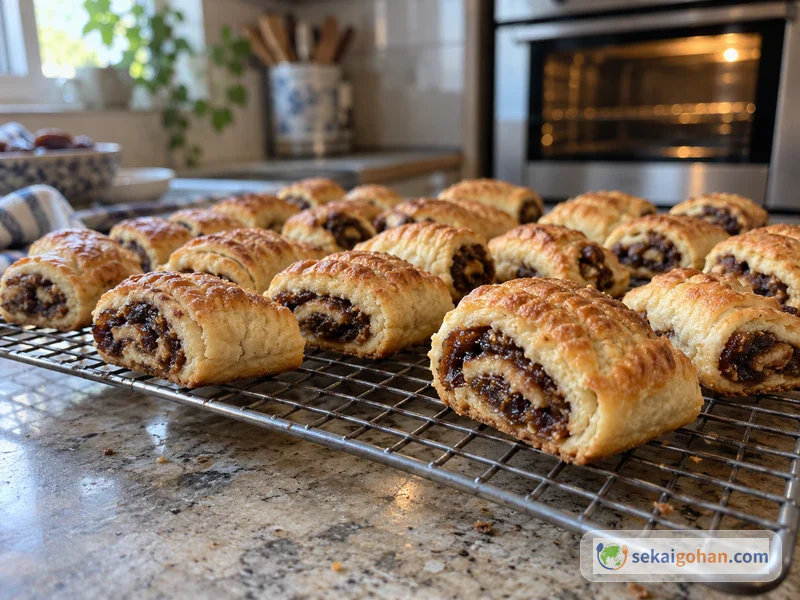
Many people picture Lebanese or Syrian maamoul when they think of Middle Eastern baked sweets stuffed with dates, and the biggest difference between the two is the dough. Kleicha dough uses no semolina. Made with flour and yeast, it bakes up light and fluffy and gently wraps the sticky sweetness of the dates.
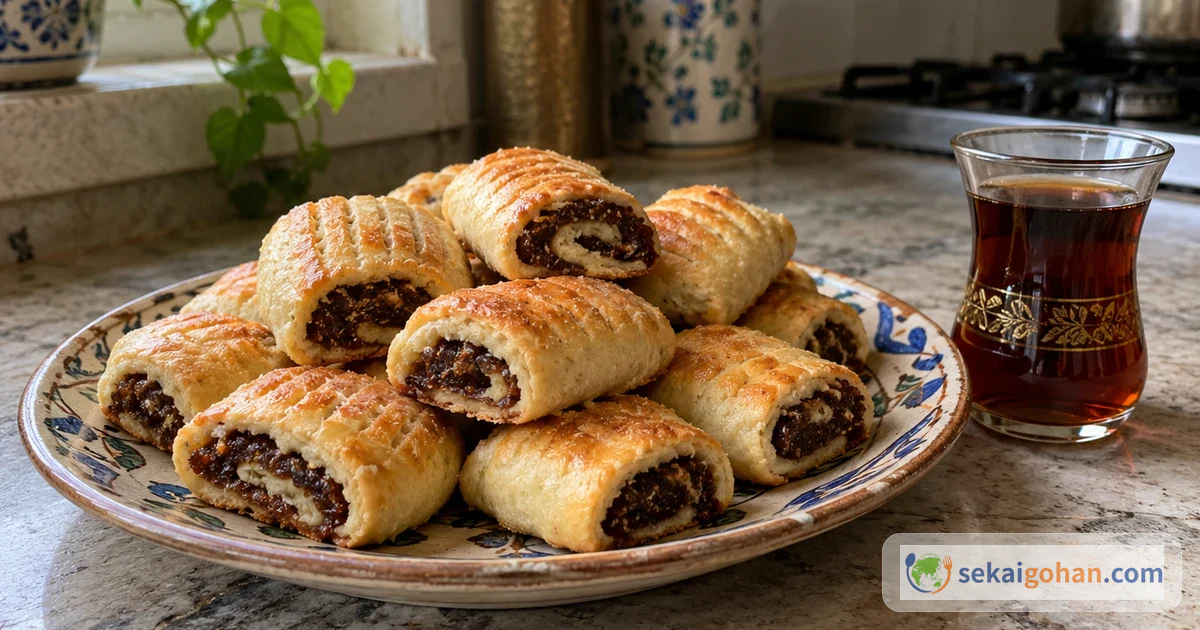
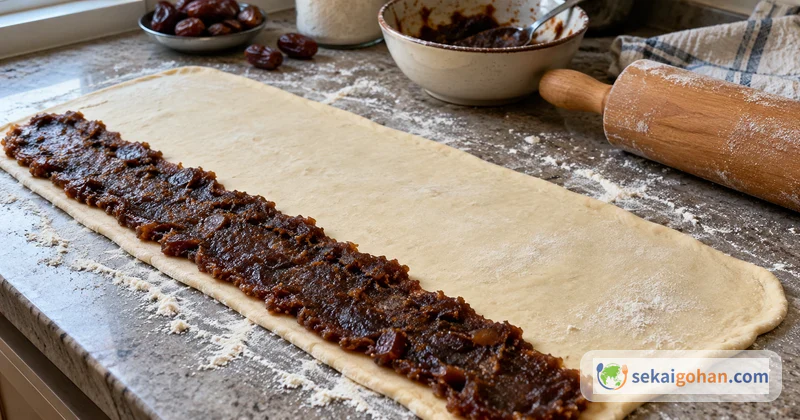
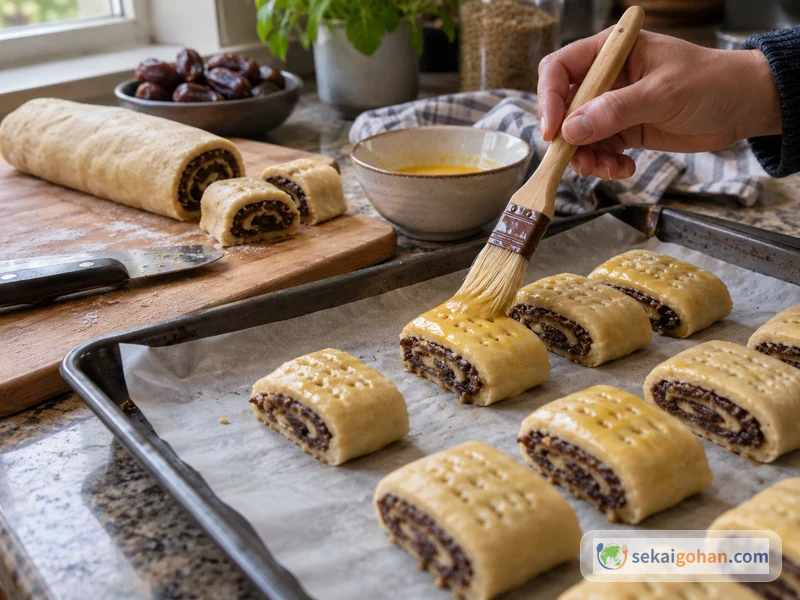
Each household has its own habits when it comes to shape. Cooks who hold to tradition press the dough into carved wooden molds to make patterns. Just as common is rolling the dough out, rolling the dates up inside it and slicing it, which leaves a spiral of dates in each cut face. It needs no mold at all, so it's the easiest version for a home kitchen.
Ingredients (makes about 40)
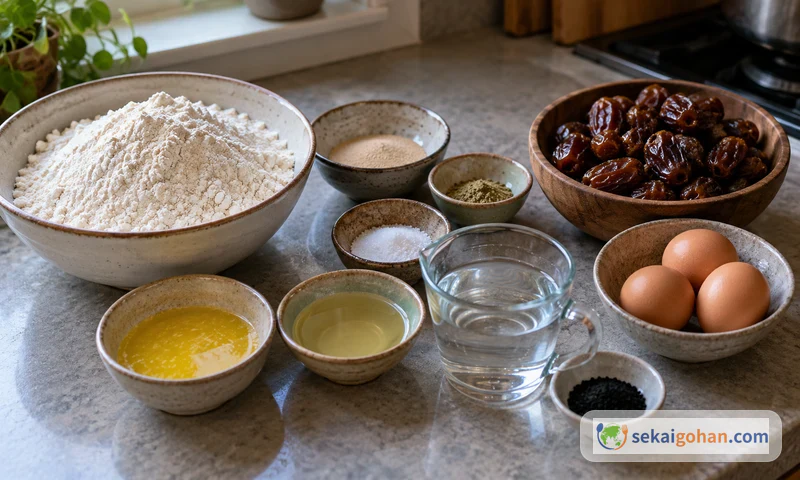
Amounts are in ml and g so they are easy to weigh. Depending on how large you cut them, you get about 30 to 50.
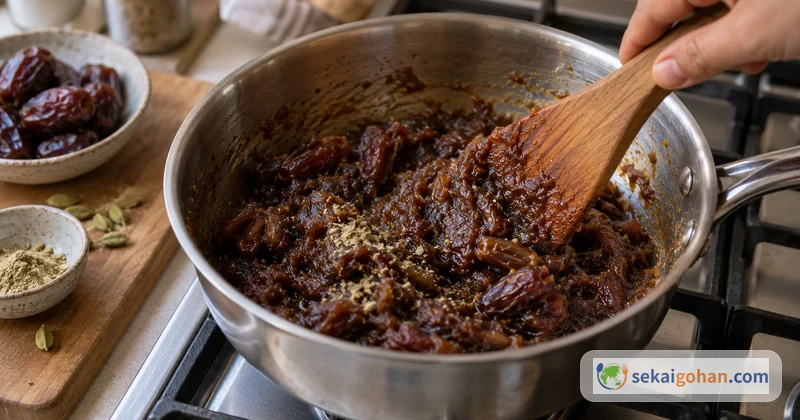
Cardamom goes into both the dough and the dates, making it the pillar of the aroma of kleicha. If you have only whole pods, take the black seeds out of the pods, grind them in a mortar and use them as a powder. For the dates, choose soft ones that dent when pressed with a finger rather than dry, hard ones, and the work of making paste drops sharply. Nigella seeds add aroma, and the black grains on the surface also tighten the look.
Dates differ considerably in sweetness and moisture by variety. If the paste is too stiff to spread, add oil 1 tsp at a time and bring it to a softness you can stretch by hand.
How to make kleicha
Bake in the oven at 375°F (190°C). Starting the preheat before you begin rolling out the dough, and lining the baking sheets with parchment paper, lets you bake right after shaping.
Kleicha contains wheat, egg and dairy (butter). If you make walnut or pistachio fillings, also watch for tree nut allergies. Also, warm date paste is high in sugar, and when it sticks to your hands the heat lingers. Work through the parchment paper when rolling, and handle it by hand only once it is cool enough to touch.
If you cook the dates long, the moisture goes and they turn hard, and after baking the filling is dry. Just soften the dates, don't cook them. As soon as they can be crushed with a finger, take them off the heat.
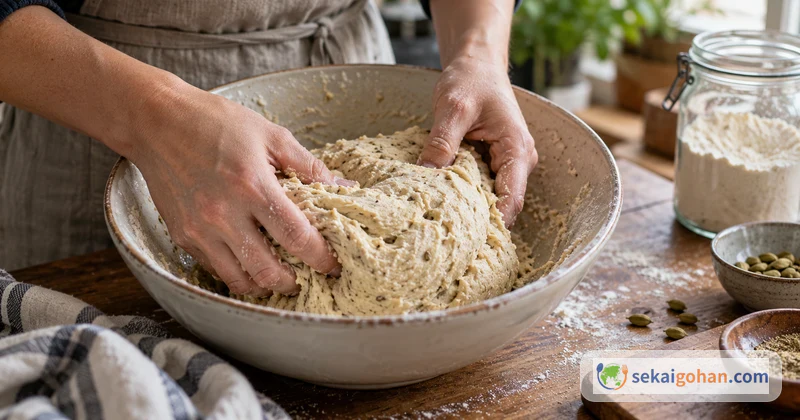
If gaps form when you roll the dough, the dates and dough separate while baking. Press the first turn of the roll firmly with your fingers and roll while pushing out the air, and the spiral in the cut face comes out cleanly.
Kleicha fillings, serving and storage
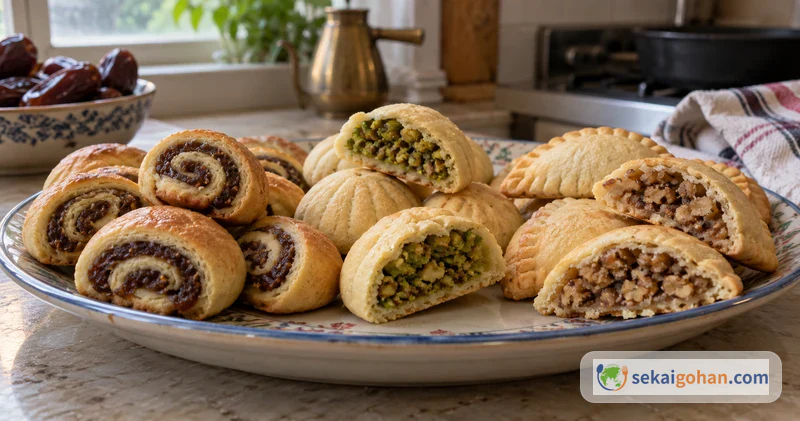
Dates aren't the only filling. Walnuts with sugar and cardamom, coconut with sugar, and pistachios with rose water are all traditional, and it's normal for one house to bake several kinds at once. For the nut fillings, crush the walnuts or pistachios finely and season them with sugar and rose water. Pistachio goes inside a small ball of dough for a round cookie, and walnut gets folded into a half-moon, its edges pressed shut with a fork or your fingers. Letting the shape tell you the filling is a fun touch when you bake a mix.
There's also an unsweet kleicha with cheese and sesame: mozzarella and cheddar are mixed into the dough, which is cut out with a cutter, sprinkled with sesame and baked at 375°F (190°C) for 12–15 minutes. Set the sweet and savory ones side by side at teatime and your hand will reach out before you know it.
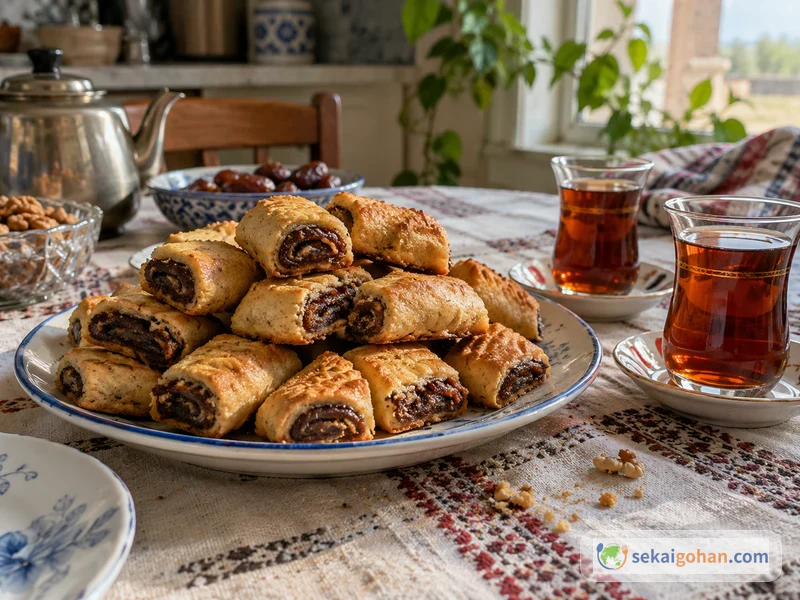
Traditionally, kleicha comes with hot tea or Arabic coffee, and the cardamom suits both. Whether you're welcoming Eid visitors or just having an ordinary afternoon cup, piled high on a large platter it brings the feel of an Iraqi family's living room.
Bake it alongside Lebanese maamoul, which also wraps dates in dough, and you'll taste the difference between crumbly semolina and fluffy yeast dough. For more of the Iraqi table, try masgouf, fish from the Tigris split open and grilled, and the flat kubba Mosul of Mosul.
Frequently asked questions
How long does it keep?
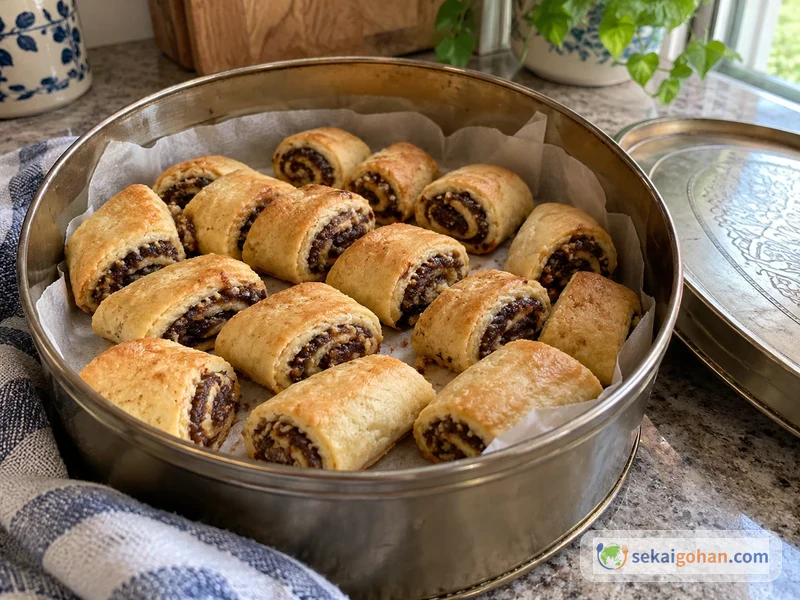
Kleicha keeps about a week in an airtight container. In humid weather or a warm room, eat it sooner.
Can I freeze it?
Yes, baked kleicha freezes well. Thaw it at room temperature, or warm it in an oven or toaster oven.
Can I use store-bought date paste?
Yes. For less work, mix 1/2 tsp cardamom into store-bought date paste, shape it into a long thin log and roll it up in the dough.
Can I make it without a wooden mold?
Yes. The rolled-and-sliced spiral needs no mold. If you do use one, press a ball of dough wrapped around dates into it and tap it out lightly.