Masgouf: Iraq's Charcoal-Grilled Tigris Fish with Tamarind

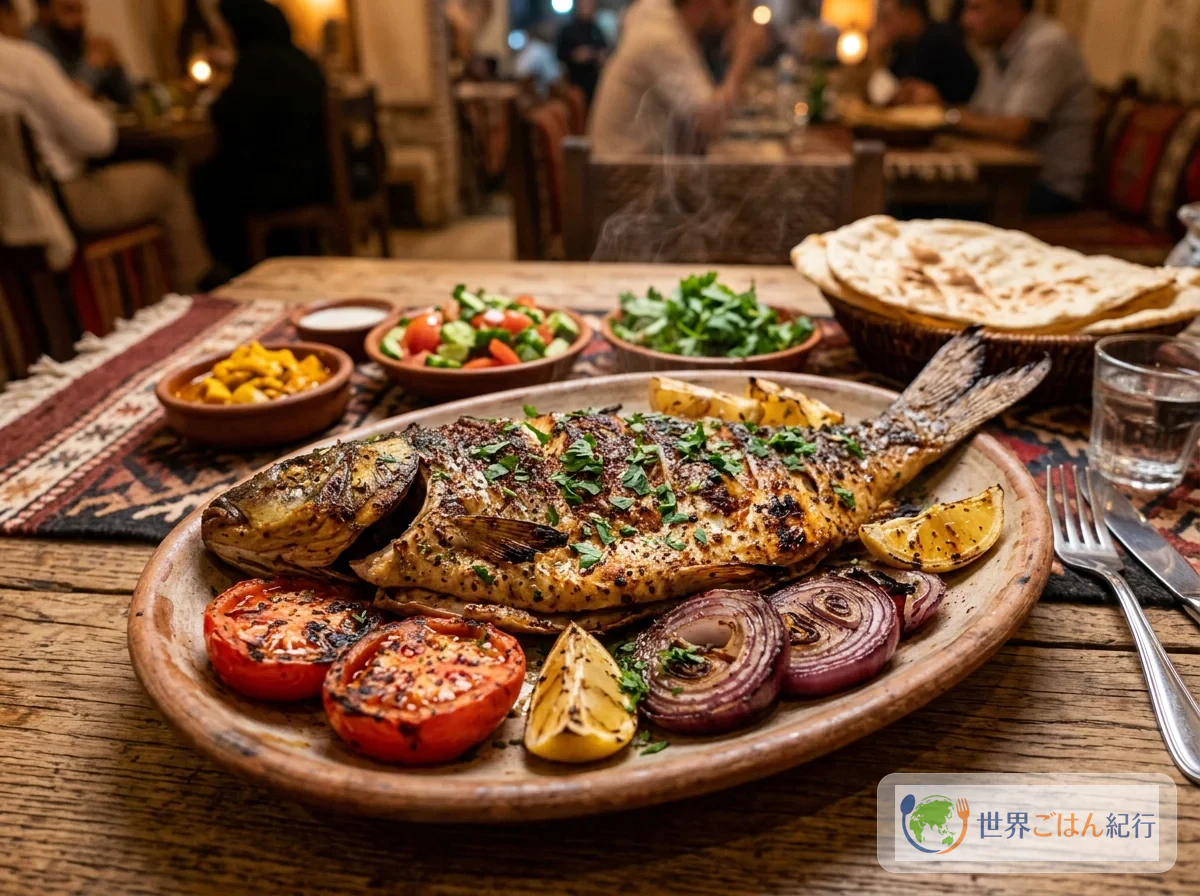
Iraqi masgouf, a large fish split open and stood beside charcoal to grill in the traditional style
Prep
20 min
Cook
45 min
Total
1 hr 5 min
Serves
4 servings
Level
Intermediate
Cuisine
Iraqi

A full guide to masgouf, Iraq's national dish: a large freshwater fish, traditionally carp, split open and grilled beside charcoal in the Baghdad style. Covers the tamarind and spice paste, tamarind sauce, grilling tips, home substitutes with a broiler or oven, and variations.

Cooking flow

Cooking steps

STEP11 / 7

Open the fish

10 min

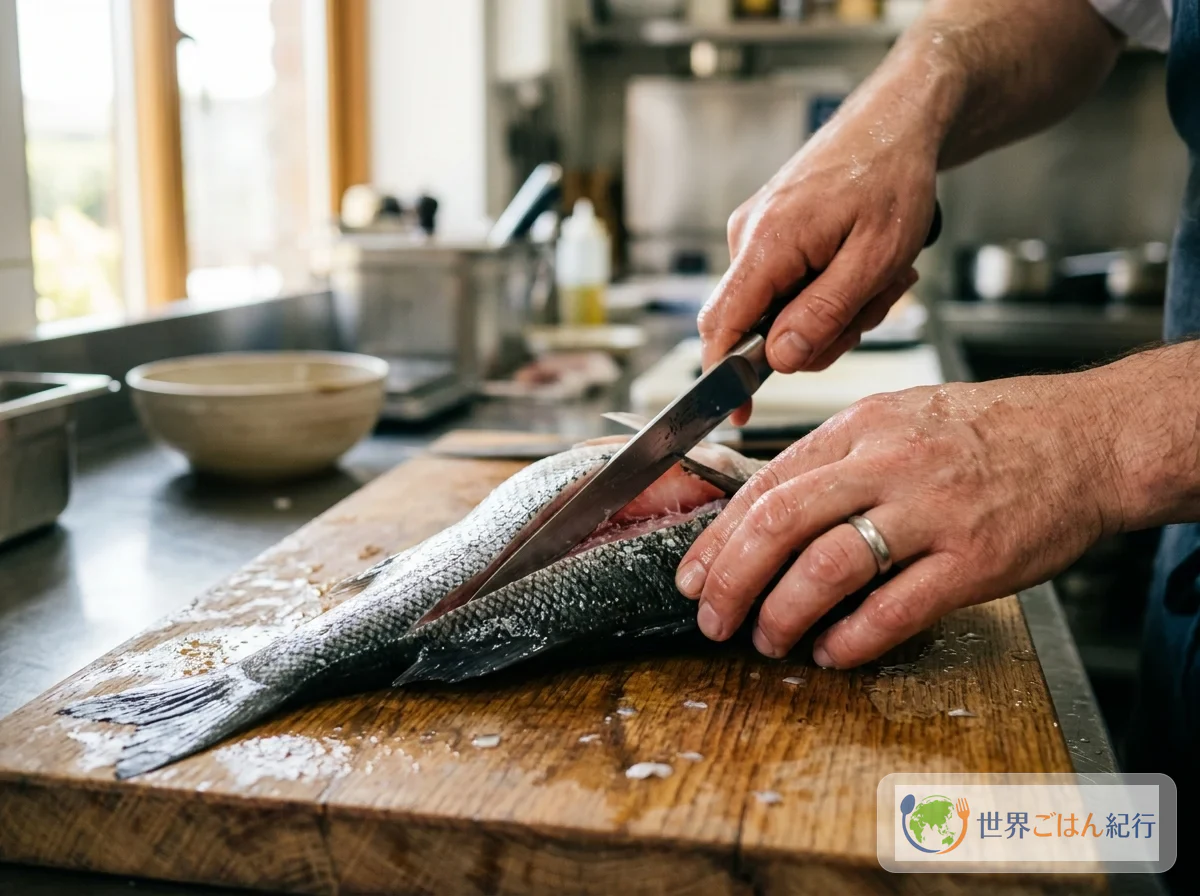
Splitting a sea bream along the back
Open the bream from the back. Leave one layer of belly skin and open it like a book. The basic technique of masgouf

The key to masgouf is splitting along the back. Scale the bream and remove the innards. Cut in from the back and open it like a book, leaving about 0.5 inches (1 cm) of belly skin attached. Wash the opened fish in water and wipe it thoroughly dry with paper towels.

The point is not to cut through the belly skin. It matters that the fish lies flat when opened, so that heat reaches it evenly when it is stood before charcoal (or set on a rack).

STEP22 / 7

Spread on the spice paste

5 min

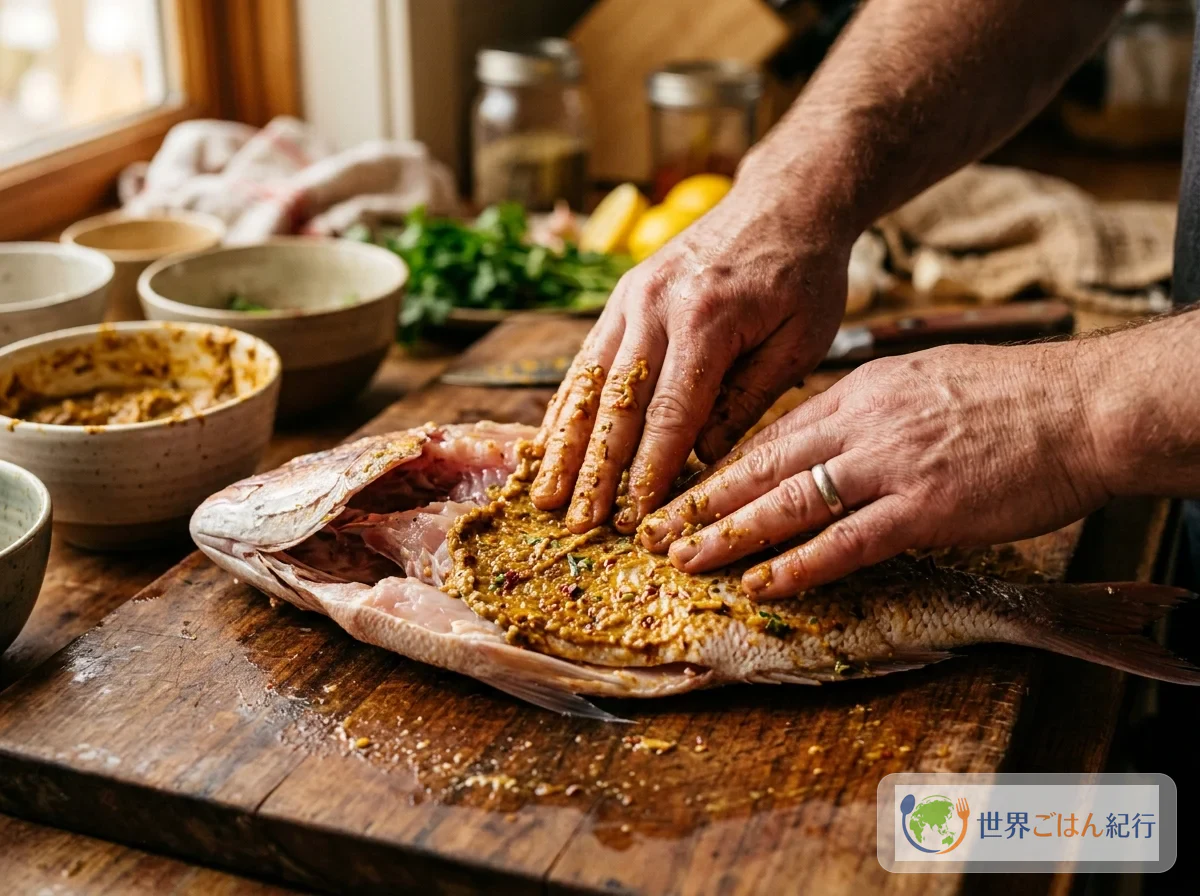
Spreading the spice paste over the flesh of the fish
Spread a generous layer of tamarind and spice paste over the flesh side. The bright yellow-brown paste covers the white flesh

In a bowl, mix 3 tbsp tamarind paste, 3 tbsp olive oil, 2 tsp curry powder, 4 cloves of grated garlic, 1 tbsp salt and 1 tsp black pepper into a paste.

Spread the paste evenly over the flesh side (the inside) of the opened fish. Do not apply it to the skin side. The acid of the tamarind takes away the fishy smell, and the spices amplify the savor. Leave it for at least 15 minutes to let the flavor soak in.

The role of tamarind's acid

Tamarind is an essential ingredient in Iraqi cooking. The sweet-sour quality of tamarind lightly caramelizes when the fish later goes over a medium grill, giving it browning and a distinctive glaze. The idea is akin to vinegar-curing fish.

STEP33 / 7

Prepare the charcoal

20 min

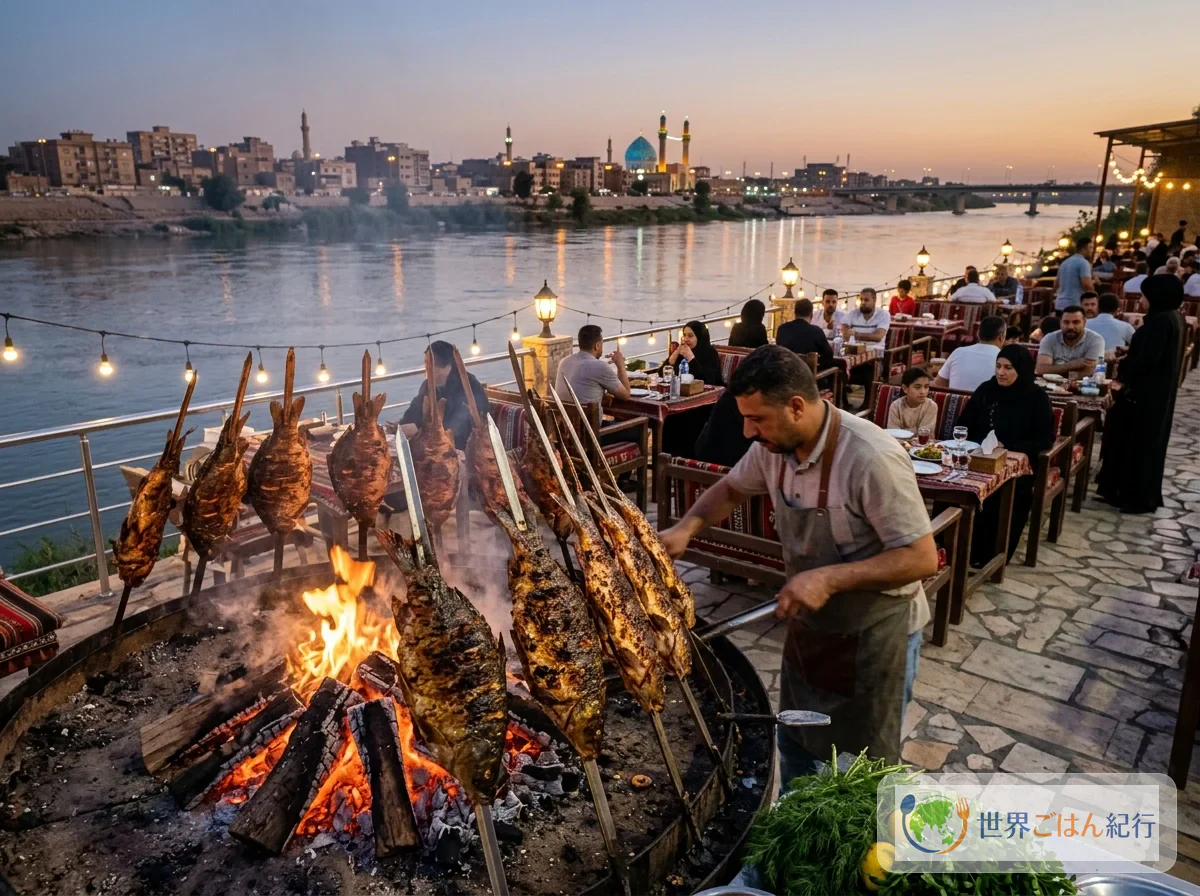
The masgouf restaurant strip on Abu Nuwas Street in Baghdad
A traditional masgouf grill where fish stand beside charcoal. At home a broiler or oven substitutes

Traditional masgouf uses the distinctive method of grilling stood beside the charcoal. At home, substitute one of the following.

  • Broiler (fish grill): Most recommended. Grill skin side first over medium heat
  • Oven: Preheat to 425°F (220°C). Line a baking sheet with parchment paper
  • Barbecue grill: The most authentic if possible

If using charcoal, wait about 20 minutes until the flames settle and the surface of the coals turns whitish, and a hand held 4 inches (10 cm) above feels hot in 3 seconds. The aim is to grill slowly on the steady heat of embers, not the flames of an open fire.

The traditional way of grilling

At masgouf restaurants in Baghdad, the opened fish is fixed on wooden stakes and stood beside a blazing charcoal fire. Placing it beside the fire rather than directly above means slow cooking by radiant heat instead of the fierce heat of direct flame. That is the key point.

STEP44 / 7

Grill the fish

30–35 min

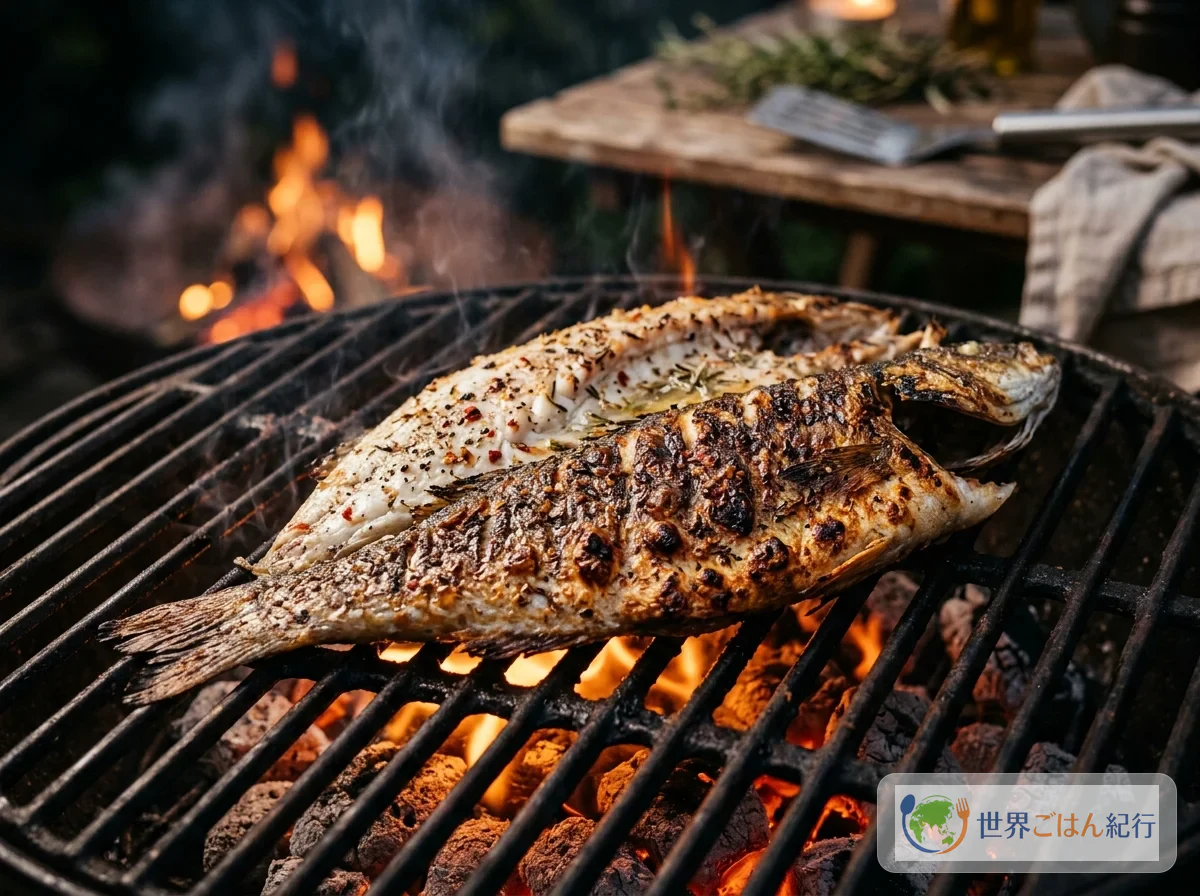
The fish grilling on the grill with crisp skin
Grilling masgouf. Cook slowly until the skin side is crisp and golden. The tamarind glaze gives a beautiful shine

Put the fish skin side down on the grill or on a baking sheet in the oven.

  • Broiler: grill the skin side over medium heat for 15 minutes, flip and grill the flesh side for 10 minutes
  • Oven: skin side down at 425°F (220°C) for 20 minutes, flip and 10 minutes at 400°F (200°C)

Partway through, brushing more of the remaining spice paste onto the flesh side gives a deeper flavor.

It is done when the skin is crisp and golden and the flesh is cooked through, white and flaking. Insert a bamboo skewer into the thickest part, and clear juices running out is the signal that it is cooked.

STEP55 / 7

Make the tamarind sauce

5 min

The tamarind sauce ingredients before reducing in a small pot
Preparing to reduce tamarind, sugar and water in a small pot. Five minutes on low, and turn off the heat when lightly thickened

In a small pot, put 2 tbsp tamarind paste, 1 tbsp sugar, ½ cup (100 ml) water and a pinch of salt and reduce over low heat for 5 minutes. Turn off the heat when it has a light thickness and a line left by a wooden spoon drawn along the bottom lasts for a moment.

This sauce is the Iraqi "dressing" spooned over the grilled fish. Its sweet-sour quality blends beautifully with the fat of the fish, and scooping it up with flatbread is best.

STEP66 / 7

Grill the accompaniments

10 min

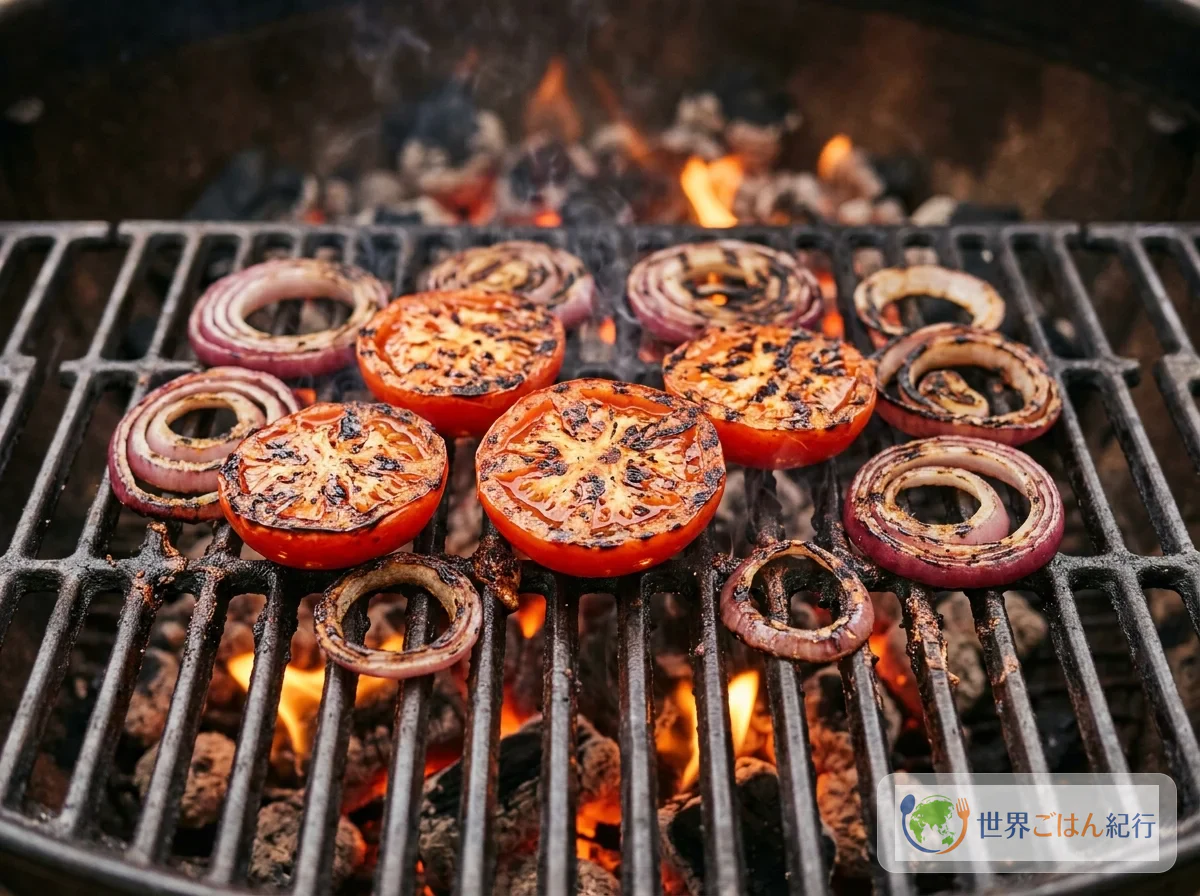
Grilled tomatoes and grilled onions
Grill the tomatoes and onions together with the fish. The sweetness of grilled tomatoes brings out the flavor of masgouf

While the fish grills, halve the tomatoes, cut the onions into 0.5 inches (1 cm) thick rings and grill them. Tomatoes skin side down for 5 minutes, onions 3 minutes on each side. They are ready when the cut faces have color and the tomato skin is slightly wrinkled.

STEP77 / 7

Plate

5 min

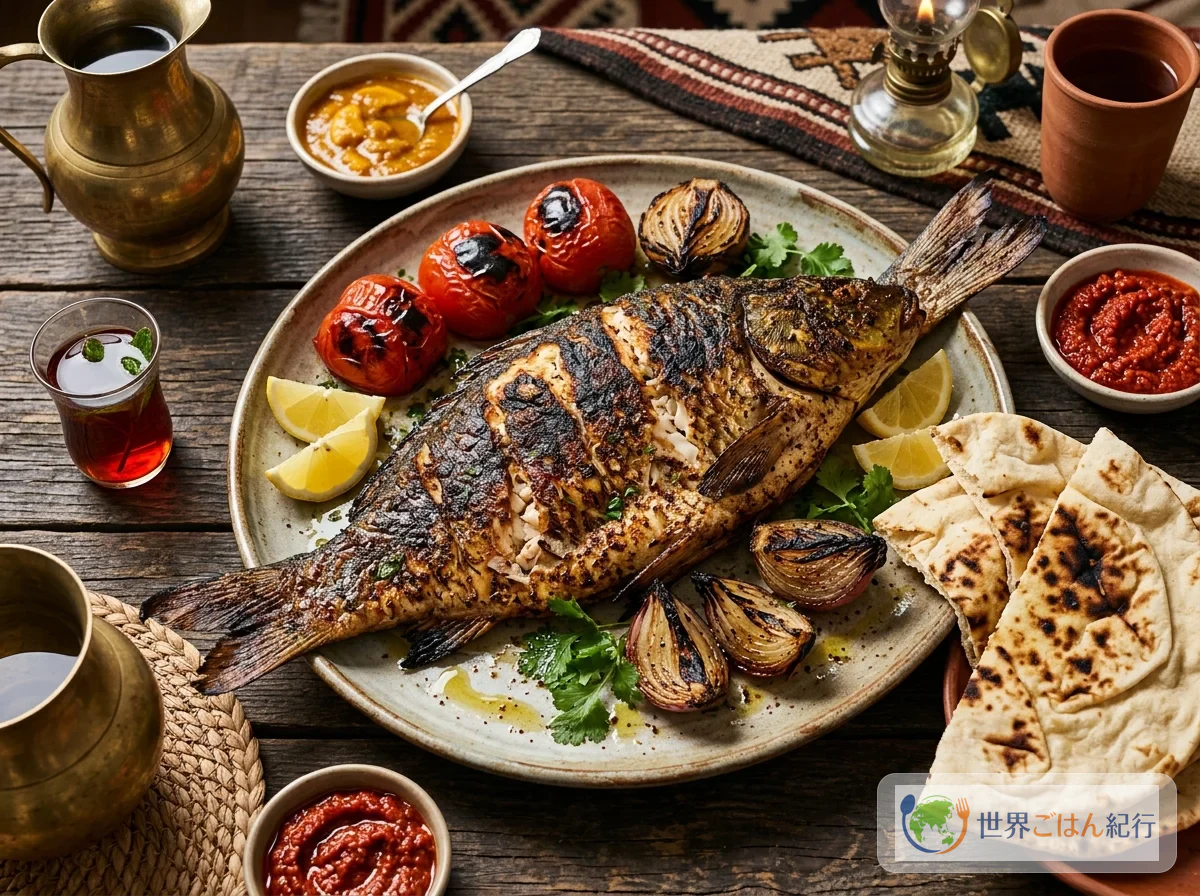
Beautifully plated masgouf: the opened grilled fish and accompaniments
Finished masgouf. Crisp skin and juicy flesh. Baghdad style with grilled tomato, lemon and flatbread

Put the masgouf open on a large platter and arrange the charred tomatoes, grilled onions and lemon wedges around it. Spoon the tamarind sauce over the top or serve it in a small dish. Warm the flatbread in a skillet over low heat for 30 seconds on each side, and when it is soft, serve it alongside.

The Baghdad way of eating is to flake the fish with flatbread, scoop it up and wrap it with grilled tomato and sauce before bringing it to the mouth. Eating by hand is the best way.

0 / 0
Ingredients

Ingredients

1 / 3

The fish

Ingredient Amount Substitutes & notes
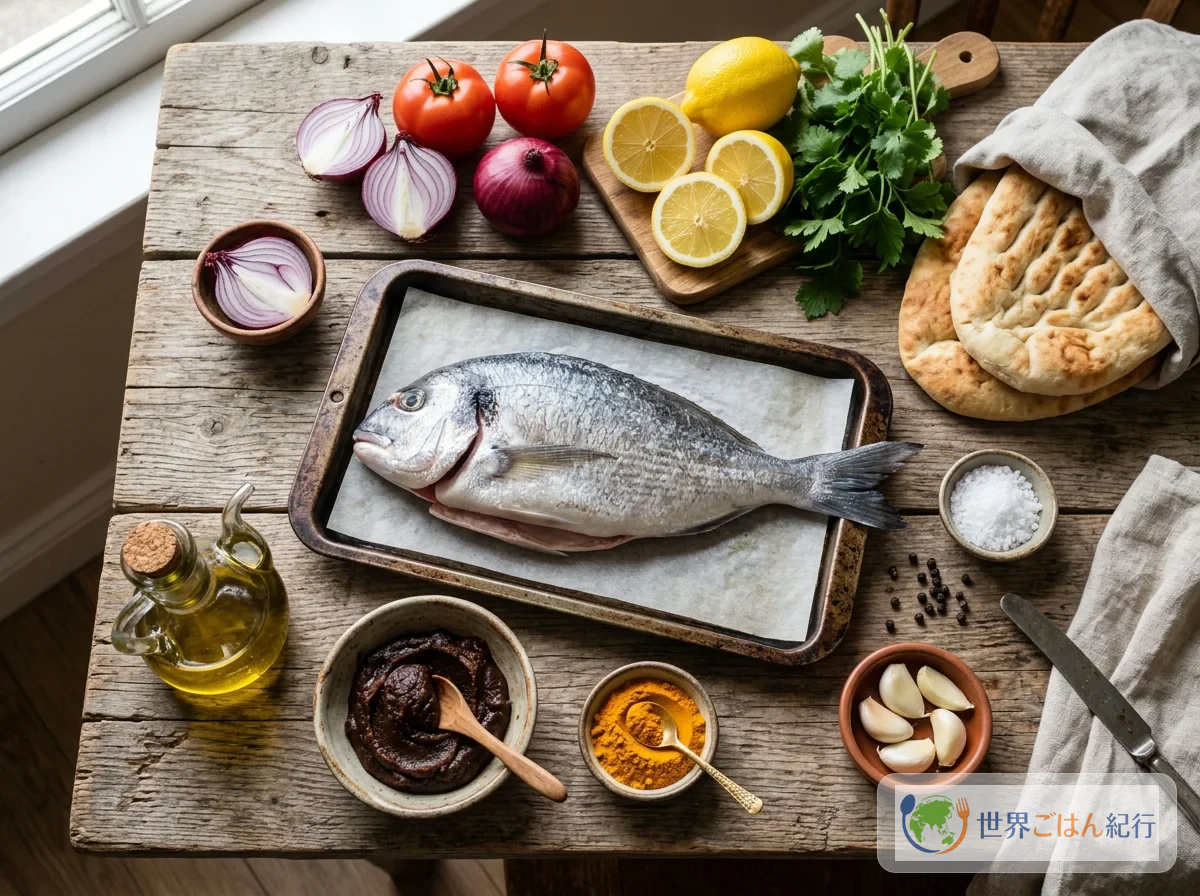
Sea bream (whole, large) 1 fish (2.25–3.25 lb / 1–1.5 kg) Sea bass, carp or red sea bream also work. A mild white fish is ideal
Tamarind paste 3 tbsp —
Olive oil 3 tbsp —
Curry powder 2 tsp 1 tsp turmeric + 1 tsp cumin also works
Garlic 4 cloves (grated) —
Salt 1 tbsp Rock salt recommended
Black pepper 1 tsp —
Choosing the fish

Traditional Iraqi masgouf uses carp (shabout) or bunni from the Tigris, but these are hard to find in many places. Sea bream is the closest substitute, with firm flesh and excellent flavor when grilled; sea bass is a good choice too. What matters is a whole fish of 2.25 lb (1 kg) or more. A small fish does not have enough skin area, and the contrast of "crackling skin and juicy white flesh" that marks masgouf does not appear.

2 / 3

Tamarind sauce

Ingredient Amount Substitutes & notes
Tamarind paste 2 tbsp —
Sugar 1 tbsp —
Water ½ cup (100 ml) —
Salt 1/4 tsp —
3 / 3

Accompaniments

Ingredient Amount Substitutes & notes
Tomatoes 3 (halved) —
Onions 2 (sliced into rings) —
Lemons 2 (cut into wedges) —
Flatbread 4 pieces Pita can substitute
Iraqi pickles (torshi) as needed Any pickle you like can substitute
0 / 0

On the banks of the Tigris, as dusk settles over Baghdad, large fish stand split open before the fires lining the riverside restaurants of Abu Nuwas Street. In the red glow of the charcoal, their skins slowly turn crisp. This is masgouf (Masgouf / Masgoof), Iraq's national dish: a big freshwater fish split along the back, seasoned with tamarind and spices, and grilled standing beside the coals. The first bite gives you toasty, crackling skin and juicy, savory flesh underneath, with a sweet-sour tamarind sauce and charred tomatoes to sharpen it all. Iraqi cooking is still less familiar abroad than Turkish kebab or Lebanese hummus, and this is a fine place to start.

About masgouf

Masgouf stands apart among the grilled fish of Middle Eastern cuisine. The fish, traditionally carp from the Tigris or Euphrates, is opened, set on stakes and stood before the charcoal so it cooks slowly in the radiant heat. Masgouf is the Baghdad dialect name; in standard Arabic it is also called samak mashwi (grilled fish).

The technique belongs to the Middle Eastern family of dishes cooked against a vertical heat source, like Lebanese shawarma, but the use of fish is what makes it distinctive. The method itself has a history of at least 5,000 years. Iraq is the land of Mesopotamia, the "cradle of civilization," and in this country between two great rivers, fish has been an important source of protein for just as long.

Dusk in Baghdad over the Tigris
Dusk in Baghdad seen across the Tigris. The fish of this river are the origin of masgouf. A food culture of five thousand years flows here

Choosing tamarind for masgouf

Tamarind paste comes in two forms: "blocks (with seeds)" and "jarred paste (seedless)." For masgouf, jarred paste is easier to use. If you buy a block, soften it in lukewarm water, strain out the seeds and fibers, then work it into a paste. Tamarind turns up in Armenian harissa and in Iranian cooking too, but it rarely plays the leading role it does in Iraq.


Getting masgouf right

Crisp skin depends on a dry fish. Wipe all the moisture from the surface with paper towels before grilling; any water left behind turns to steam and the skin goes soggy. Better still, set the opened fish on a tray and let it dry in the refrigerator for about 30 minutes.

Adjust the grilling time to the size of the fish. A 2.25 lb (1 kg) bream needs 25–30 minutes in total, a 3.25 lb (1.5 kg) one 30–35 minutes. The surest test is a thermometer in the thickest part, reading 145°F (63°C) or higher. Undercooked fish carries a risk of food poisoning, so cook it through, especially if you use freshwater fish such as carp.


Serving and variations

Iraqis squeeze plenty of lemon over masgouf. The acid cuts the richness of the grilled fish and brings out the sweetness of the flesh, but squeeze it just before eating: added before grilling, it firms the flesh too much and dries it out.

Salmon masgouf

Use a 1.25 lb (600 g) salmon side. Salmon is fatty, and the acid of the tamarind paste cuts through that fat nicely. Grill the skin side crisp and spoon on the tamarind sauce; it's the easiest masgouf to make at home.

Mackerel masgouf

Use 2 mackerel split along the back. Mackerel's richness and tamarind's sourness are a superb match. The flesh is soft, so a broiler works best.

Yogurt marinade version

Instead of tamarind, marinate the fish in 3.5 oz (100 g) yogurt + 1 tsp turmeric + 1 tsp cumin. Yogurt and spices, as in Iranian tahchin, make the fish tender.

Pomegranate sauce version

Spoon 3 tbsp pomegranate molasses over the fish in place of the tamarind sauce. Its sweet-sour depth is lovely against the white flesh of bream.

Outdoor barbecue version

Fix the opened fish on metal skewers and stand it beside the charcoal of a barbecue grill. This comes closest to the traditional method, and the radiant heat and smoke give the fish a wonderful aroma. Allow a little longer, 40–50 minutes.

More dishes from the region

Masgouf sits in the oldest line of Middle Eastern grilled dishes, and its neighbors are worth cooking too.


Frequently asked questions

Besides bream, what fish do you recommend for masgouf?

White fish such as sea bass, flounder and amberjack are good choices. Salmon also makes a tasty version; because it is fatty, a little extra tamarind balances it. Freshwater fish are the original choice in Iraq, but saltwater fish work well.

I cannot find tamarind paste. Is there a substitute?

Mixing 2 tbsp pickled plum paste (umeboshi) + 1 tbsp honey + 1 tbsp vinegar gives a sweet-sour flavor close to tamarind. 3 tbsp lemon juice + 1 tbsp sugar works as a bare-minimum substitute, though without tamarind's depth. Jarred tamarind paste is sold at Asian and Middle Eastern grocery stores and online, so use the real thing if you can.

What if I have no flatbread?

Naan or pita is the best substitute, and a thin tortilla also works. White rice isn't traditional, but grilled fish and rice go together well.


Nutrition (one serving of 4)

Nutrient Amount
Energy 380 kcal
Protein 1.5 oz (42 g)
Fat 16 g
Carbohydrate 18 g
Fiber 3 g
Sodium 620 mg
Omega-3 fatty acids 1.2 g
Vitamin D 8.5 μg

Sources