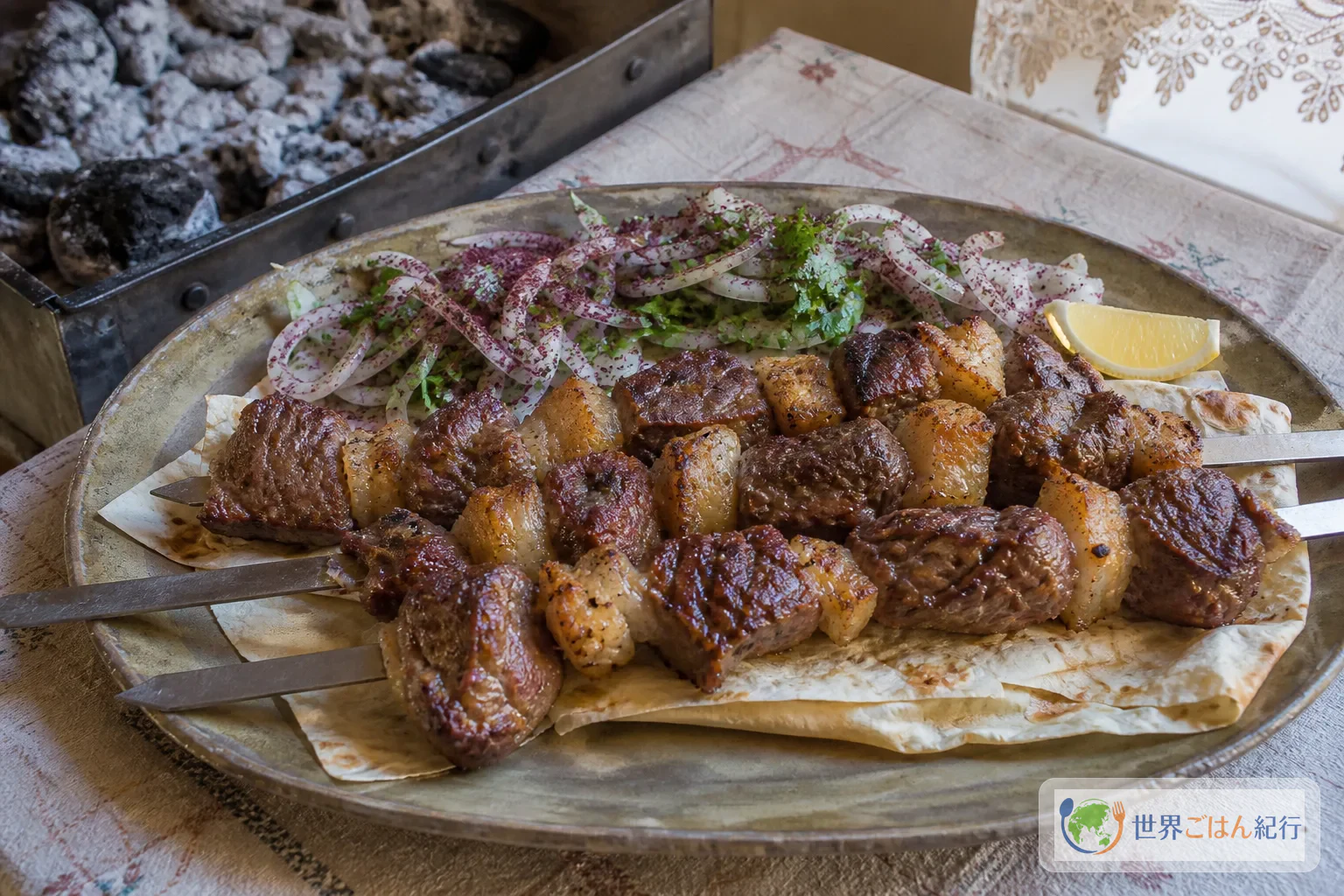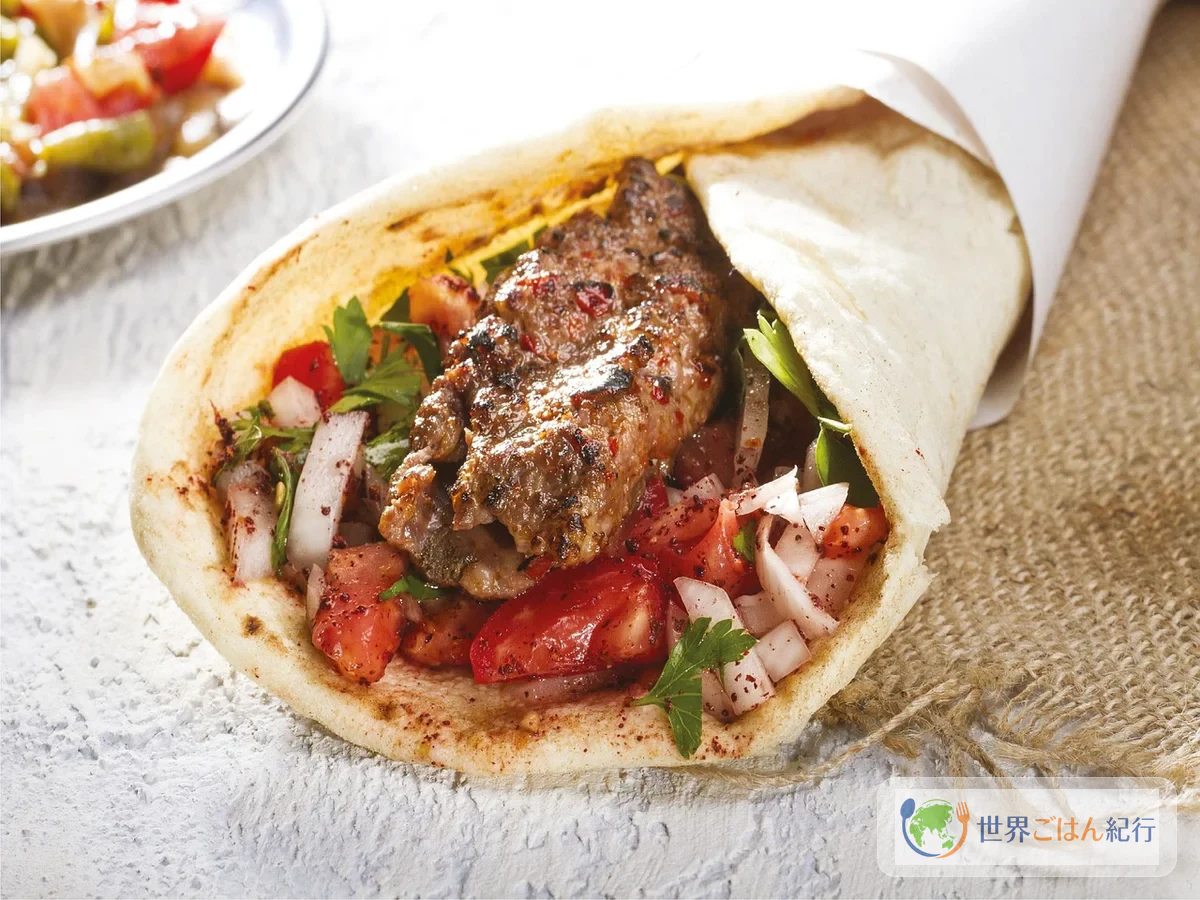
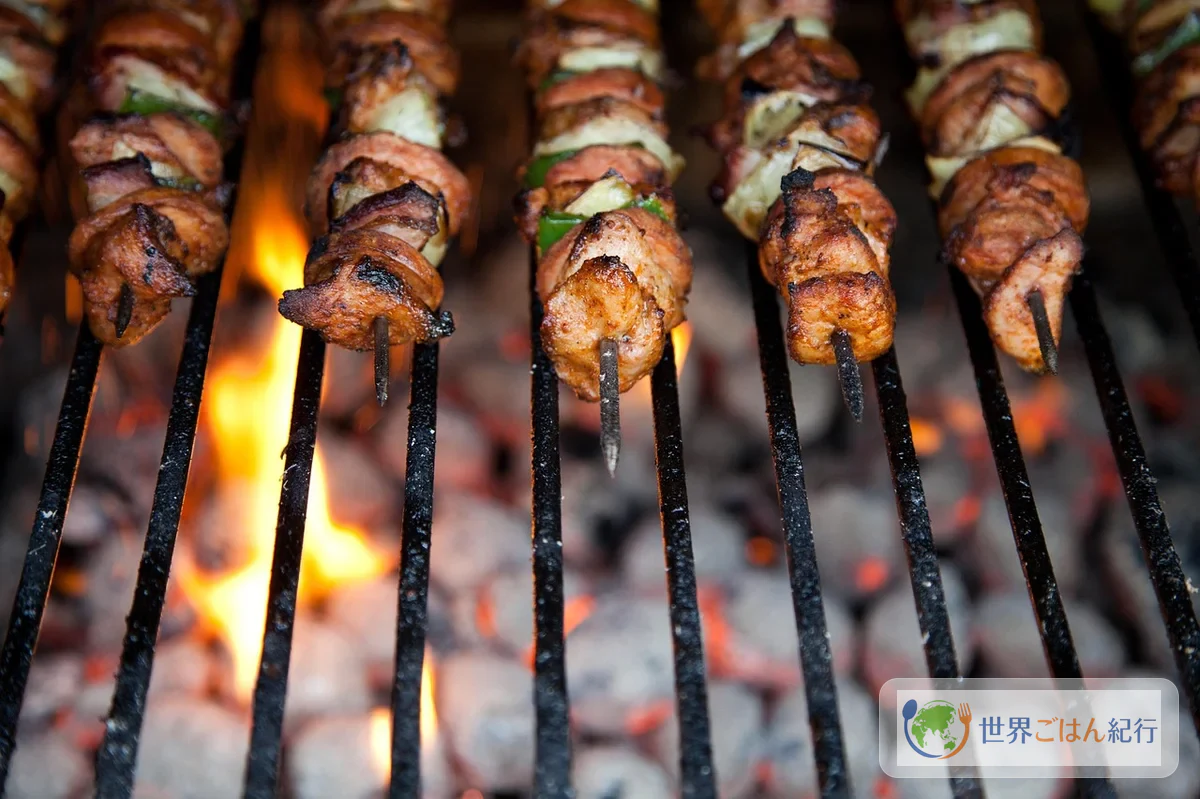
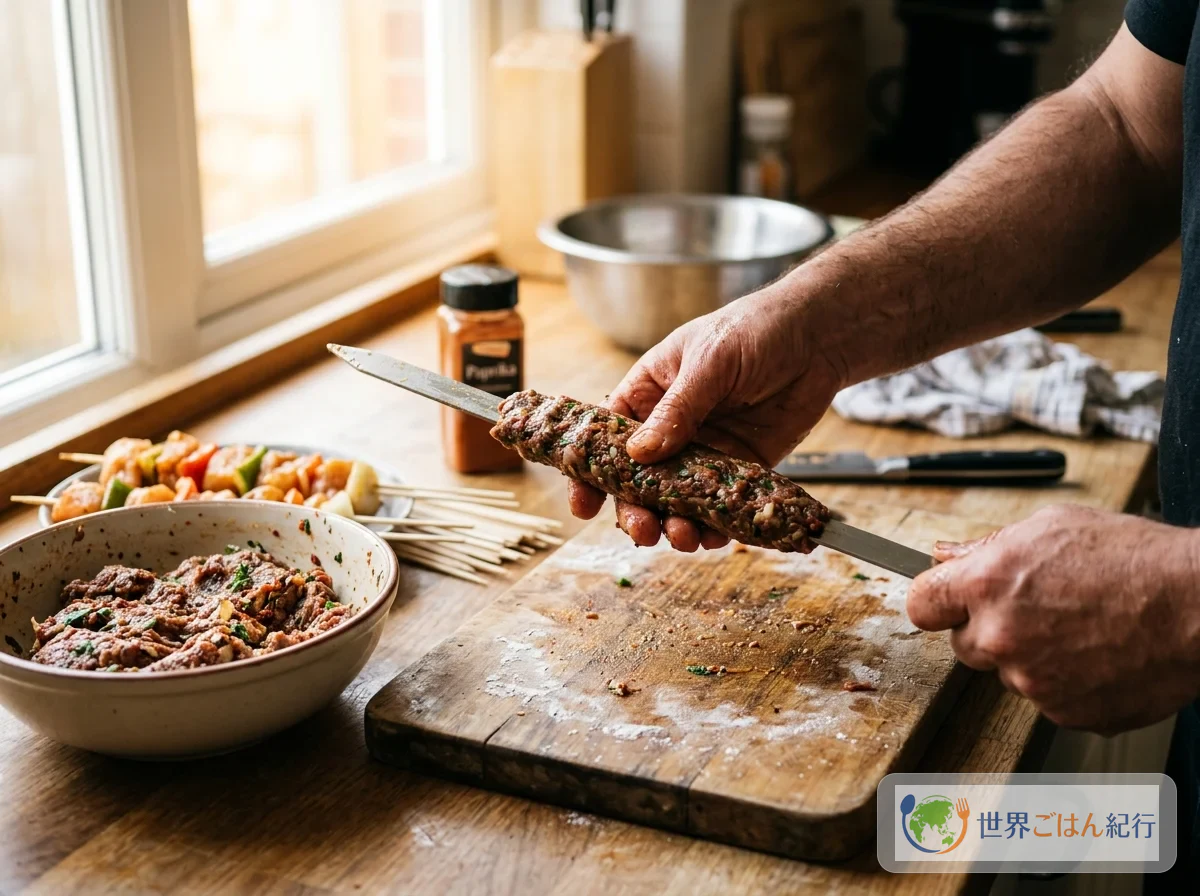
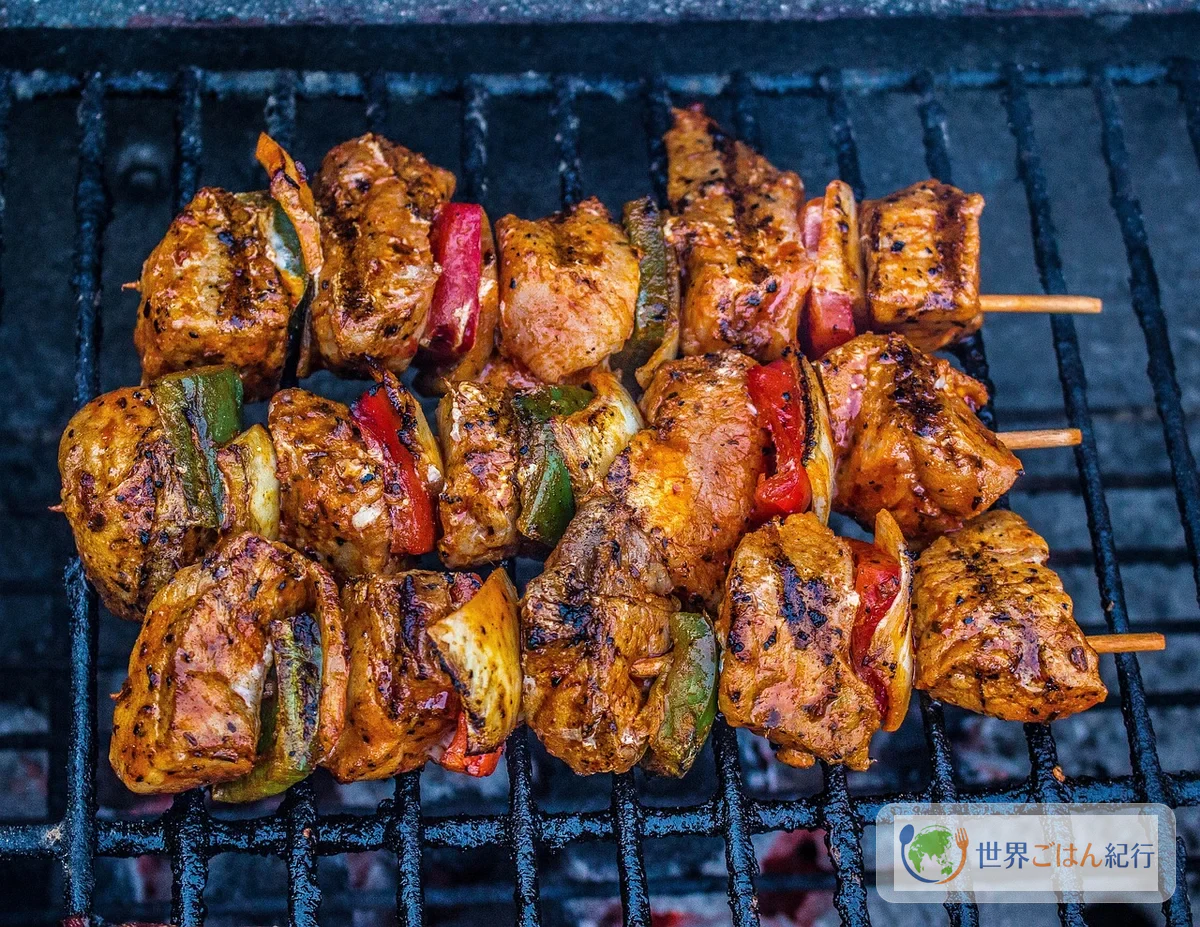
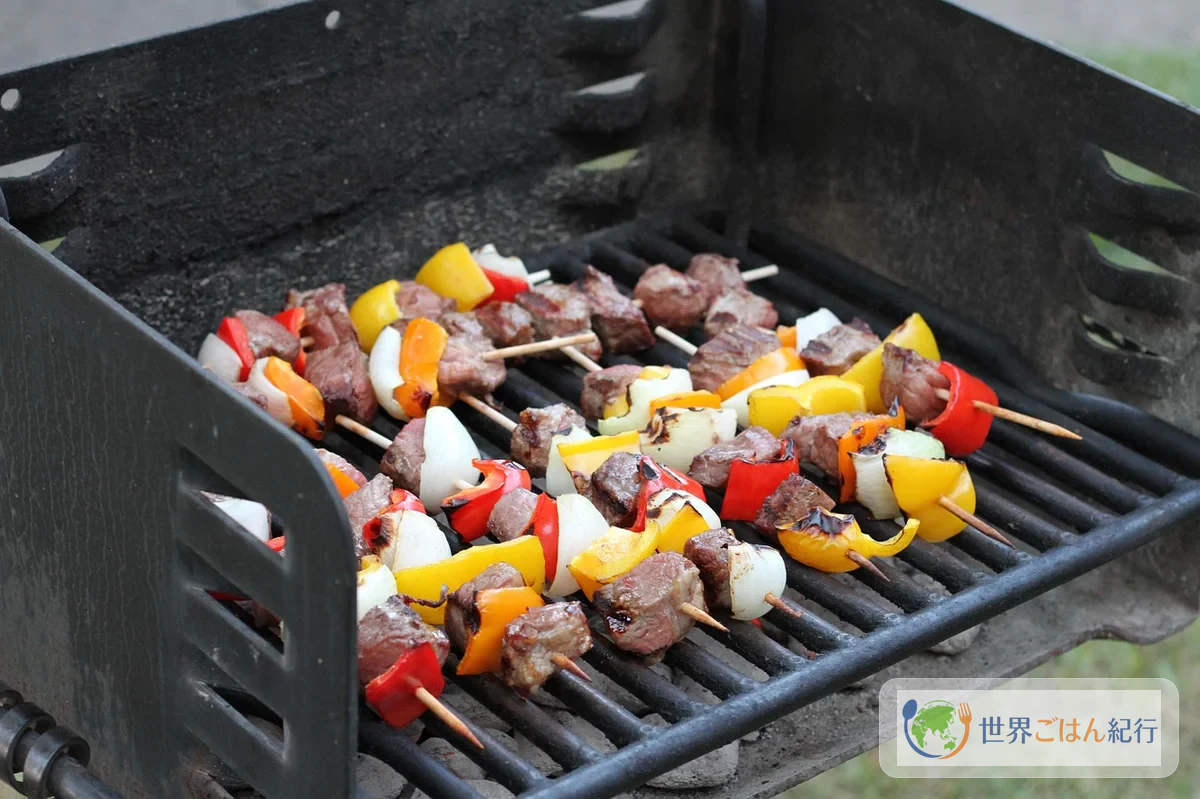
In front of a charcoal grill sending up the scent of spices, a cook quietly turns the skewers. This is the kebapçı, the kebab specialist. Turkey has more than 90 kinds of kebab, and each region has its own methods and its own pride. This article covers two of them for the home kitchen. Adana kebab (Adana Kebap) is ground lamb kneaded with red pepper and spices, pressed onto wide skewers and grilled over charcoal. Shish kebab (Şiş Kebap) is grilled chunks of marinated meat. You can make both with ingredients from a regular supermarket.
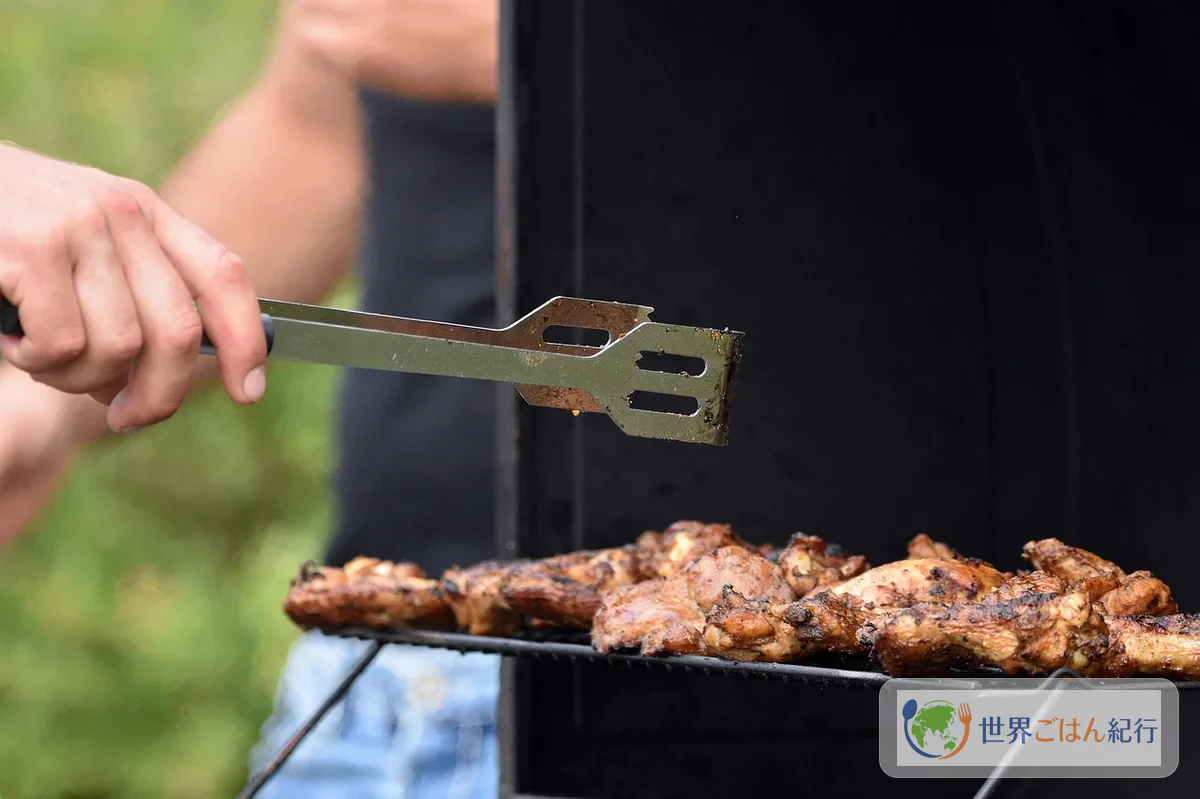
Turkish kebabs and their history
Six signature Turkish kebabs
Here are six of the best known among those 90-plus kinds. Adana kebab and shish kebab are the easiest to make at home.
| Kebab | Region | Characteristics |
|---|---|---|
| Adana kebab (Adana Kebap) | Adana (south) | Ground lamb plus red pepper. Heat is everything |
| Urfa kebab (Urfa Kebap) | Şanlıurfa | Same shape as Adana but not spicy. More cumin |
| Shish kebab (Şiş Kebap) | Nationwide | The classic: bite-size pieces of meat skewered and grilled |
| Döner kebab (Döner Kebap) | Nationwide | A vertical rotisserie; thin slices tucked into bread |
| İskender kebab (İskender Kebap) | Bursa | Döner meat plus tomato sauce, sizzling butter and yogurt |
| Beyti kebab (Beyti Kebap) | Istanbul | A ground-meat skewer rolled in lavash and sliced into rounds |
The geographical indication was applied for in 2004. Only meat that meets the standard can be served as "Adana kebab." Registered restaurants receive a certificate and a logo, and training courses also teach the traditional method of chopping the meat with a large knife called a zırh. It's a system similar to protected regional names such as Kobe beef.
Adana vs. Urfa
Adana in the south and Şanlıurfa in the southeast are often set against each other as "the spicy camp vs. the milder camp." They aren't even neighbors on the map, since provinces such as Gaziantep lie between them. Still, the two cities come up together whenever kebab does. Adana kebab is prized for its red-pepper heat, and Urfa kebab is the same ground-meat skewer with the heat toned down. The Turkish press has returned to the question of which one is the real thing again and again.
From the nomad's skewer to the döner
The oldest written record of the word "kebab" is in the Turkish manuscript Kyssa-İ Yusuf from 1377. The dish itself is older. It began with Eurasian nomads who speared meat on skewers or tree branches and roasted it over campfires as they traveled. "Şiş" means "skewer" in Turkish.
Today most people hear "kebab" and picture a big vertical spit of rotating meat: the döner kebab. Döner means "turning," and it was invented in the 19th-century Ottoman Empire. The kebab sandwich became modern fast food in the 1970s, carried by Turkish workers who had moved to West Berlin. Döner meat tucked into bread with vegetables and sauce caught on widely. It's now a street-corner snack Germany can't do without.
Other places adapted it in their own way. It became shawarma in the Arab world, gyros in Greece and al pastor (tacos al pastor) in Mexico, all from meat on a single skewer.
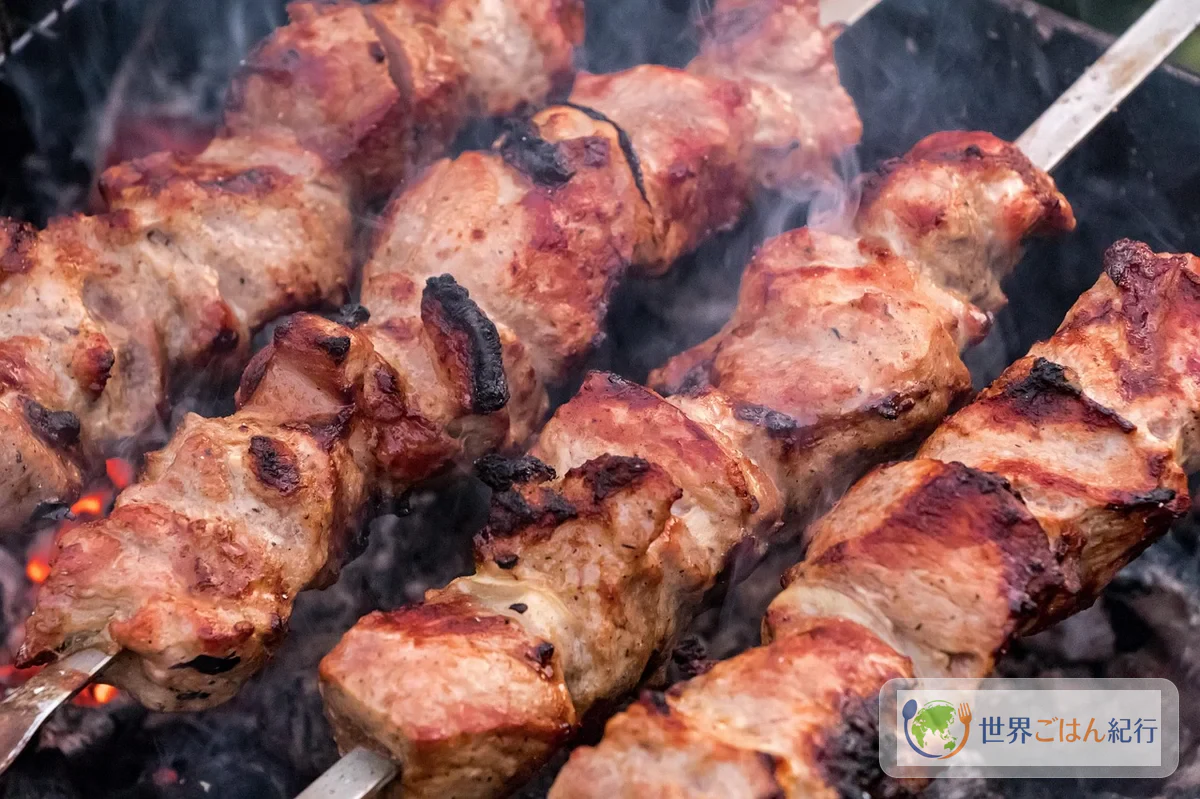
Adana kebab recipe (serves 4)
Ingredients
Method
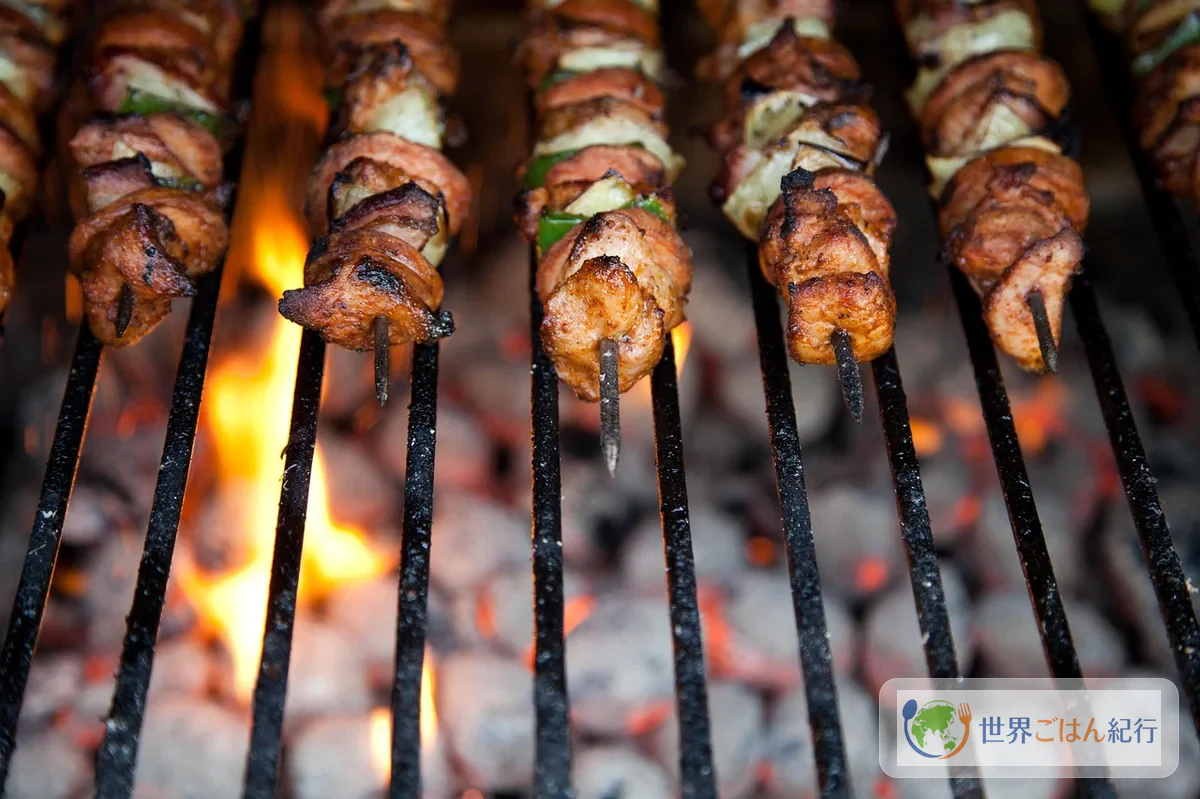
How to make sumac onions (to serve)
Just mix thinly sliced onion with sumac (or yukari), lemon juice and parsley. Let it sit for about 10 minutes and the onion turns sweeter. This simple side is a perfect match for the saltiness and spice of the kebabs.
Sumac is a red spice made from a Middle Eastern berry, with a lemony tartness. You may find it at Middle Eastern grocers or online, but yukari (Japanese red shiso furikake) is a remarkably close substitute in both color and tartness.
Shish kebab recipe (serves 4)
Ingredients
Enzymes (proteases) in onion break down the meat's protein and make it remarkably tender. But if the solid onion goes on the skewer too, its raw sharpness remains, so for shish kebab the traditional rule is to squeeze out only the juice for the marinade.
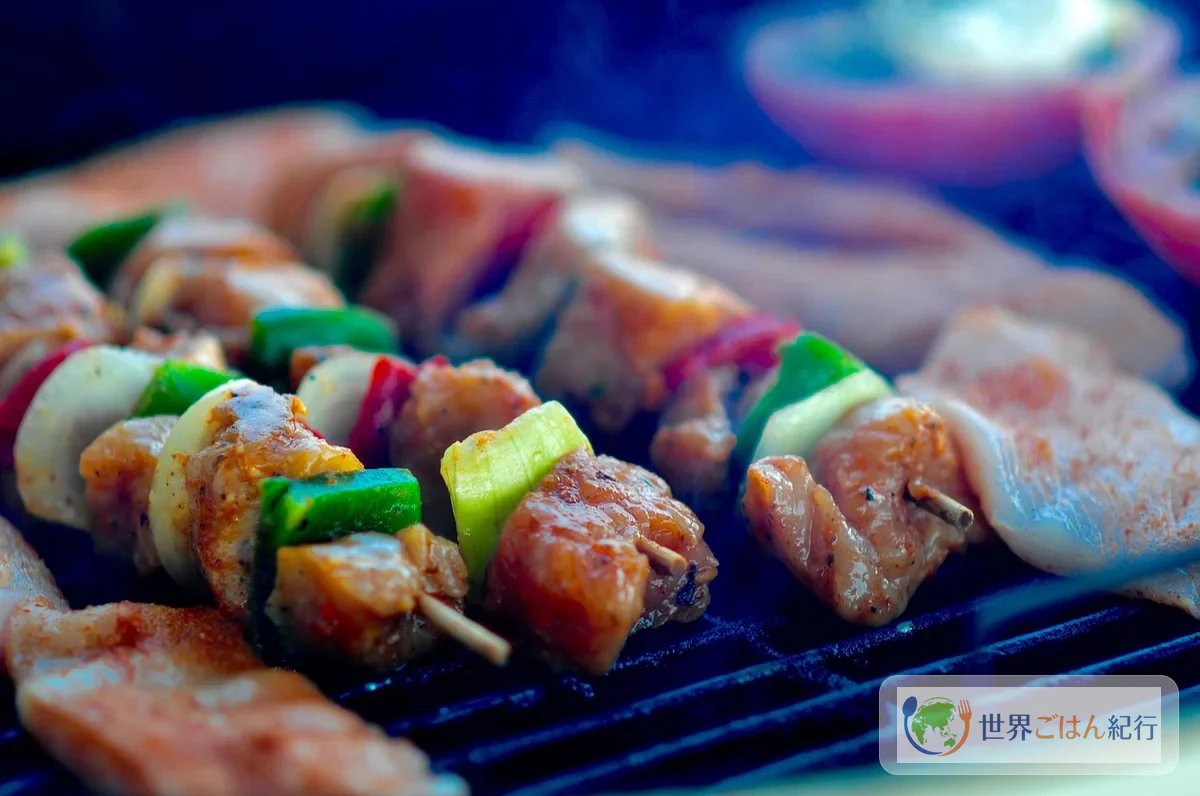
Shish kebab method
- Mix all the marinade ingredients, coat the cubed meat, and marinate in the refrigerator for at least 3 hours, ideally overnight.
- Thread the meat onto skewers and the vegetables onto separate skewers (meat and vegetables cook at different rates).
- Grill in a preheated grill pan or under the broiler for 8–12 minutes, turning often.
- They're done when the internal temperature reaches 71°C (160°F).
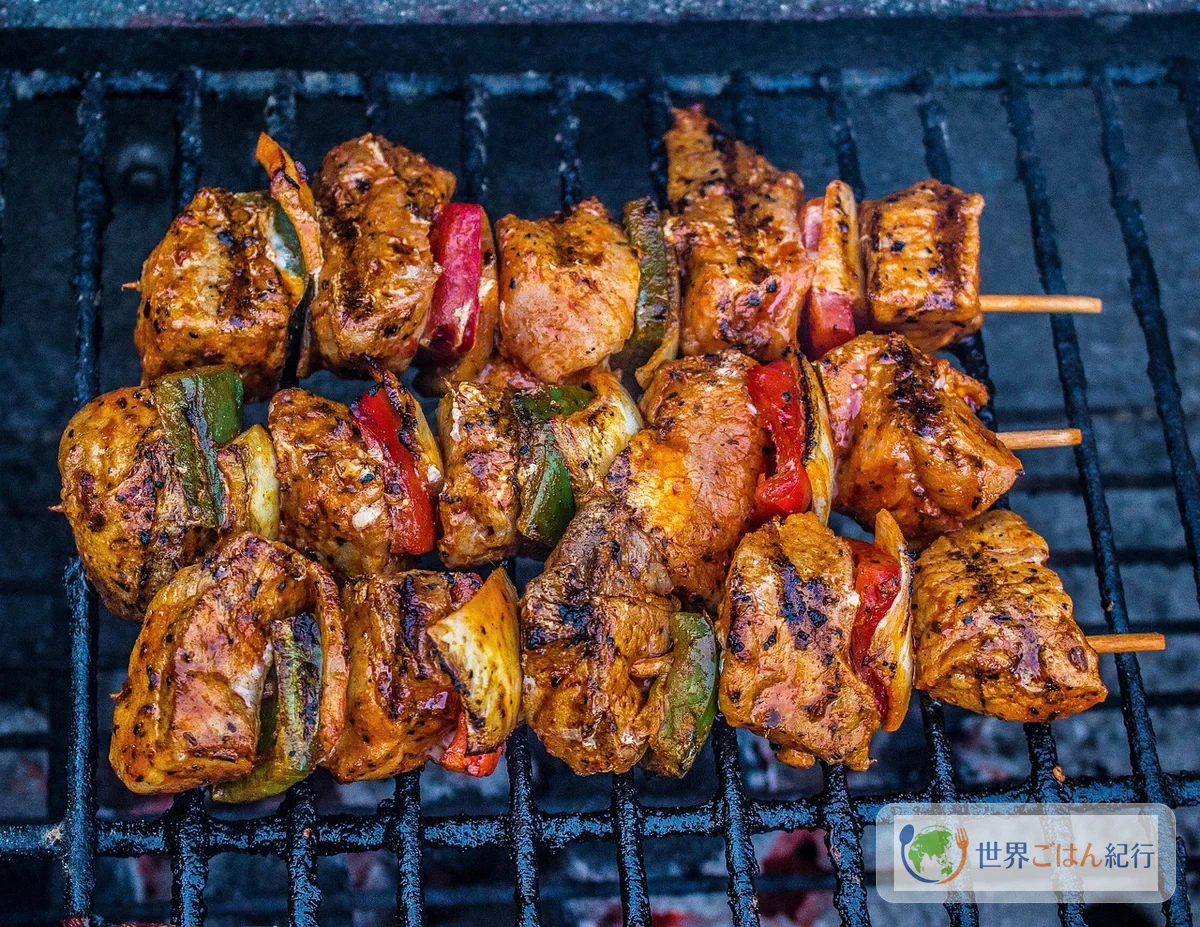
Choosing meat and spices for Adana kebab
Fat matters more than anything else. Traditional Adana kebab includes sheep's tail fat, and that fat melts slowly over the charcoal and makes the meat juicy. At home, choose ground meat with at least 20% fat. If the meat is too lean, it turns dry, and the shaped meat also falls apart and drops off the skewer as it grills.
If you'd rather not use lamb, fatty ground beef or a 70% beef / 30% pork mix works well. Beef is also easier to enjoy if lamb's aroma puts you off. Smoked paprika is in the spice aisle of many supermarkets. Gochugaru (Korean chili flakes) is easy to find at Korean or Asian grocers, and you can get sumac and Urfa biber at Middle Eastern, Turkish or halal grocers, or online.
Adana kebab troubleshooting
Squeeze the vegetables thoroughly
Moisture from the bell pepper makes the meat soggy, and soggy meat won't cling to the skewer. Wrap the chopped vegetables in paper towels and squeeze until they're about half their volume.
Knead until sticky
Aim for "tacky and sticky." Kneading draws out the meat's protein (myosin), which acts as a natural glue that holds the meat to the skewer and keeps it from crumbling. Knead by hand for at least 5 minutes, ideally 10.
Chill before shaping
Chill the kneaded meat for 30 minutes in the refrigerator (or 20 minutes in the freezer) before you shape it onto the skewers. This firms up the fat and holds the shape. If you have time, chill the shaped kebabs for another 10 minutes or so, and they'll be even less likely to fall apart.
Preheat the grill pan
For charcoal-like char on a home stove, preheat a ridged cast-iron grill pan over high heat for at least 5 minutes. A loud sizzle when the meat goes on means the pan is hot enough. Then turn the heat down to medium and turn the kebabs often so they cook through. Low, slow heat steams the meat instead of searing it.
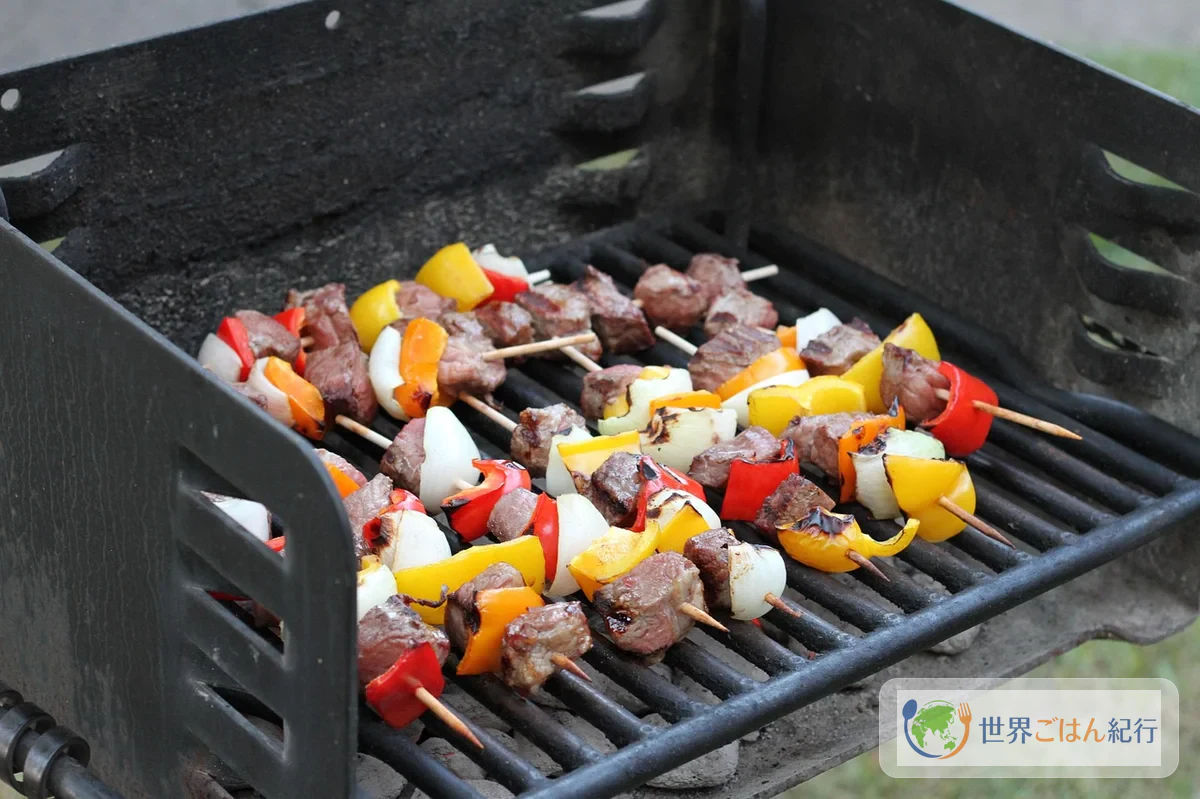
Kebab variations and serving
Milder "Urfa-style" Adana kebab
Leave out the gochugaru and add 1 tsp cumin and 0.5 tsp coriander instead. It's a good option for kids who don't like spicy food.
Vegan "vegetable kebab"
Instead of ground meat, coarsely chop 7 oz (200 g) cooked chickpeas + 3.5 oz (100 g) walnuts + 1.75 oz (50 g) rolled oats in a food processor and season with the same spices. It falls apart more easily than meat, so firm it up in the freezer for 30 minutes after shaping.
All-beef Adana
Use fatty ground beef only and go a little lighter on the spices. Extra smoked paprika adds depth and brings out the beef's sweetness.
Chicken shish kebab
Marinate skin-on chicken thighs in the shish kebab marinade for two hours. Chicken cooks faster than lamb (6–8 minutes), so watch that it doesn't overcook. A lemon and yogurt sauce goes especially well.
Kebab rice bowl
Slice grilled Adana kebab, lay it over steamed white rice, and top with tomato sauce (a store-bought pomodoro works) and yogurt. It's a riff on İskender kebab, made with rice instead of bread.
For more of the region's cooking, try falafel, the fried chickpea fritters, or hummus, a chickpea dip, or browse The world of Middle Eastern cuisine.
Serve kebabs with tabbouleh (Lebanese parsley salad) or shakshuka to round out a Middle Eastern table. See also an overview of Middle Eastern cuisine.
Frequently asked questions
Q. Can I make it without skewers?
A. Yes. Shape the meat mixture into oval patties and cook them in a skillet for a "kebab burger." Tuck them into pita or naan with sumac onions and yogurt, and the flavor is nearly the same.
Q. Can I make it ahead?
A. Yes. Wrap each shaped, uncooked kebab in plastic wrap and freeze. Thaw overnight in the refrigerator and grill as usual. Grilled kebabs keep in the refrigerator for 3–4 days.
Q. Can I cook them under the broiler?
A. Yes. If the skewers don't fit, cook the meat as flat patties. The heat from above is strong, so turn them after 3–4 minutes. It won't match charcoal, but the direct flame gives a toastiness that is surprisingly good.
Q. Any allergy notes?
A. As served here, Adana kebab includes wheat (lavash, pita) and dairy (yogurt sauce). If you eat gluten-free, wrap it in lettuce or other vegetables instead of naan. If you have a dairy allergy, it's still delicious without the yogurt sauce.