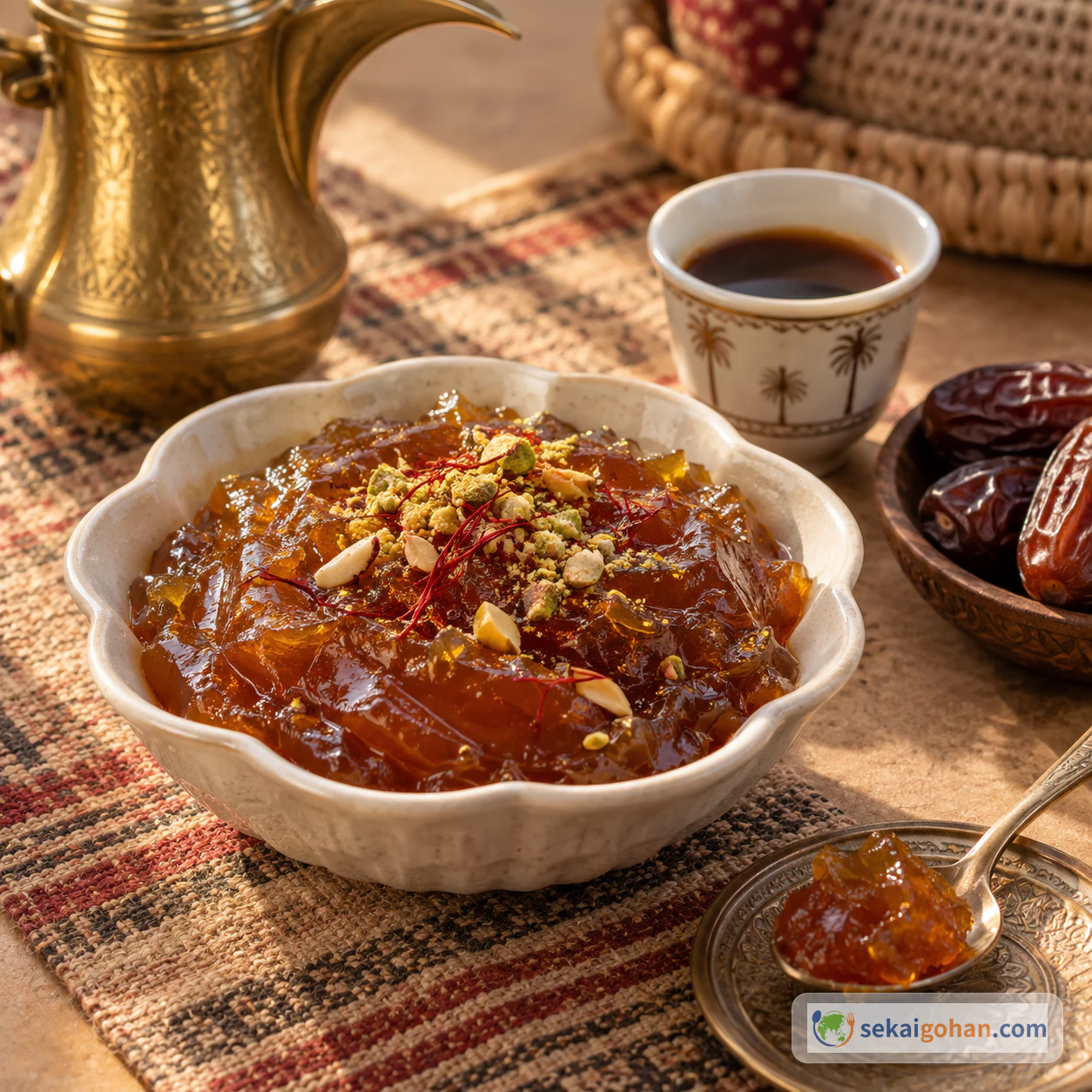
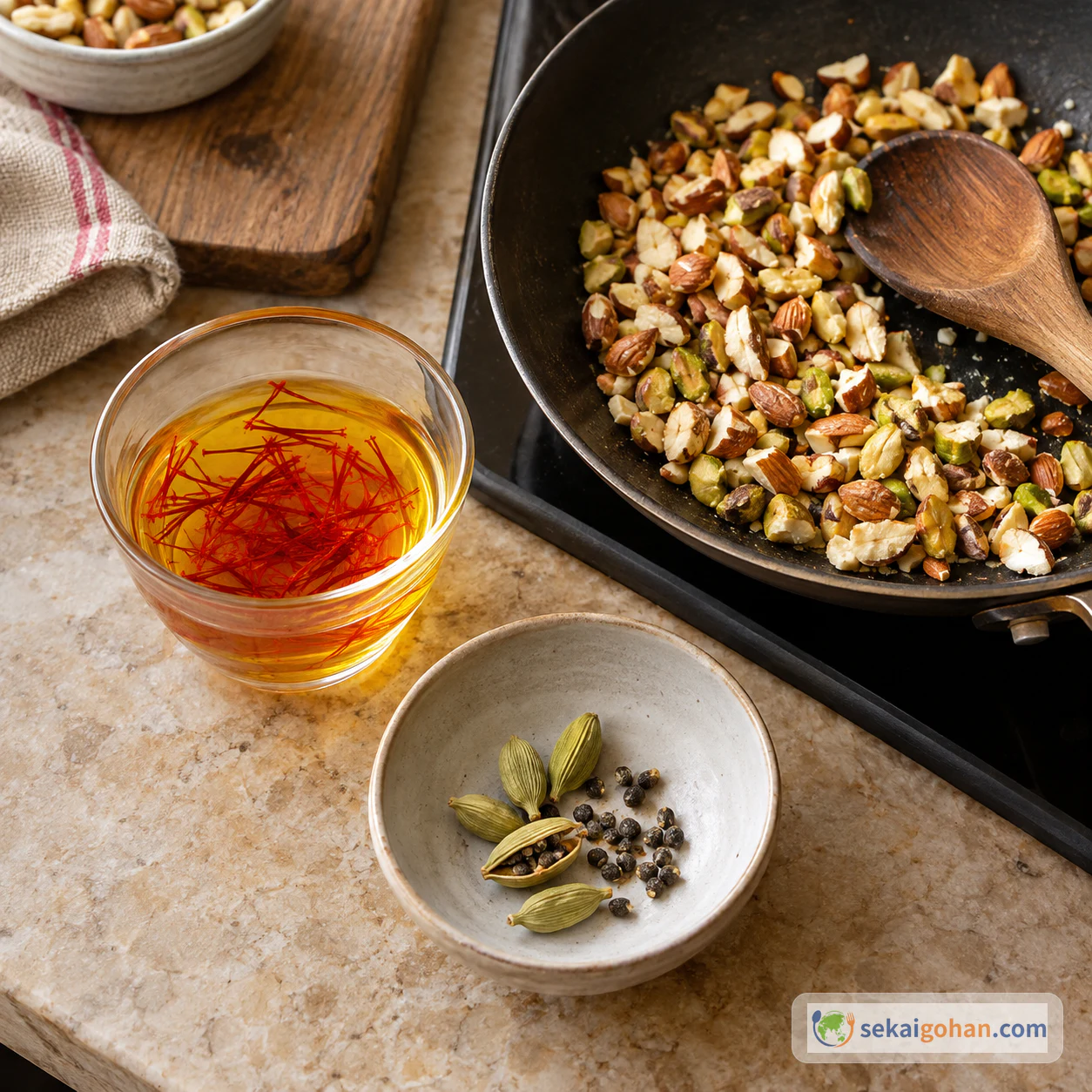
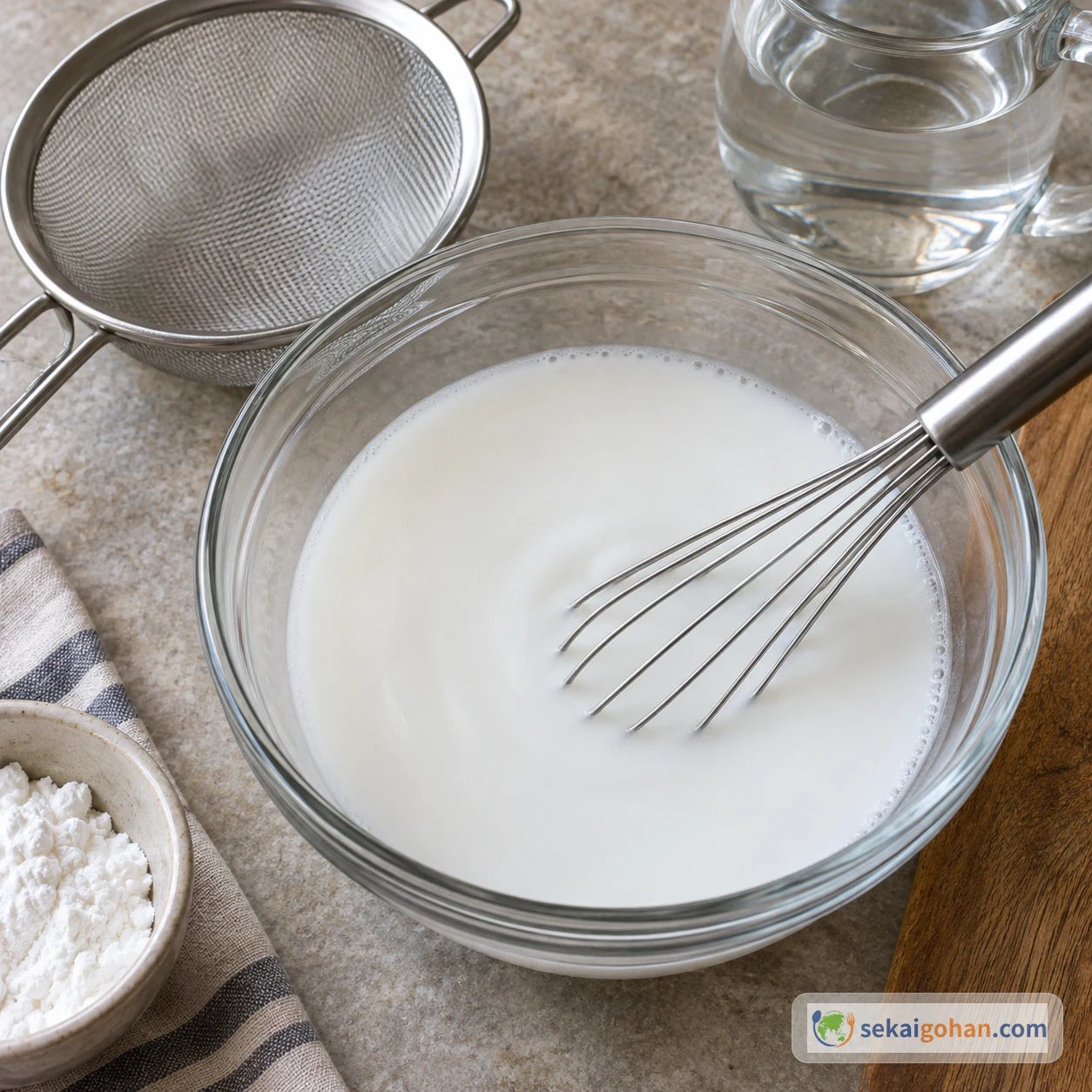
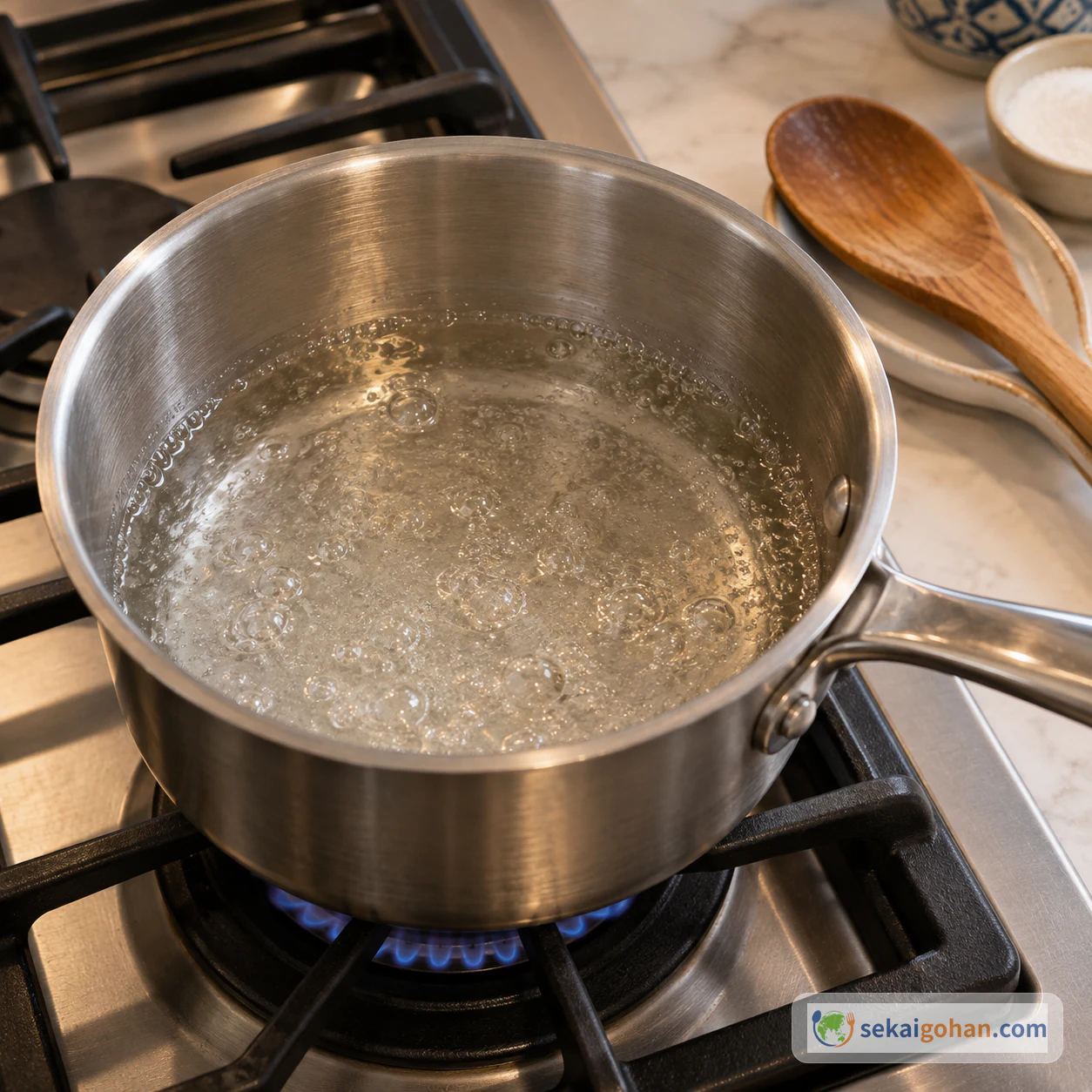
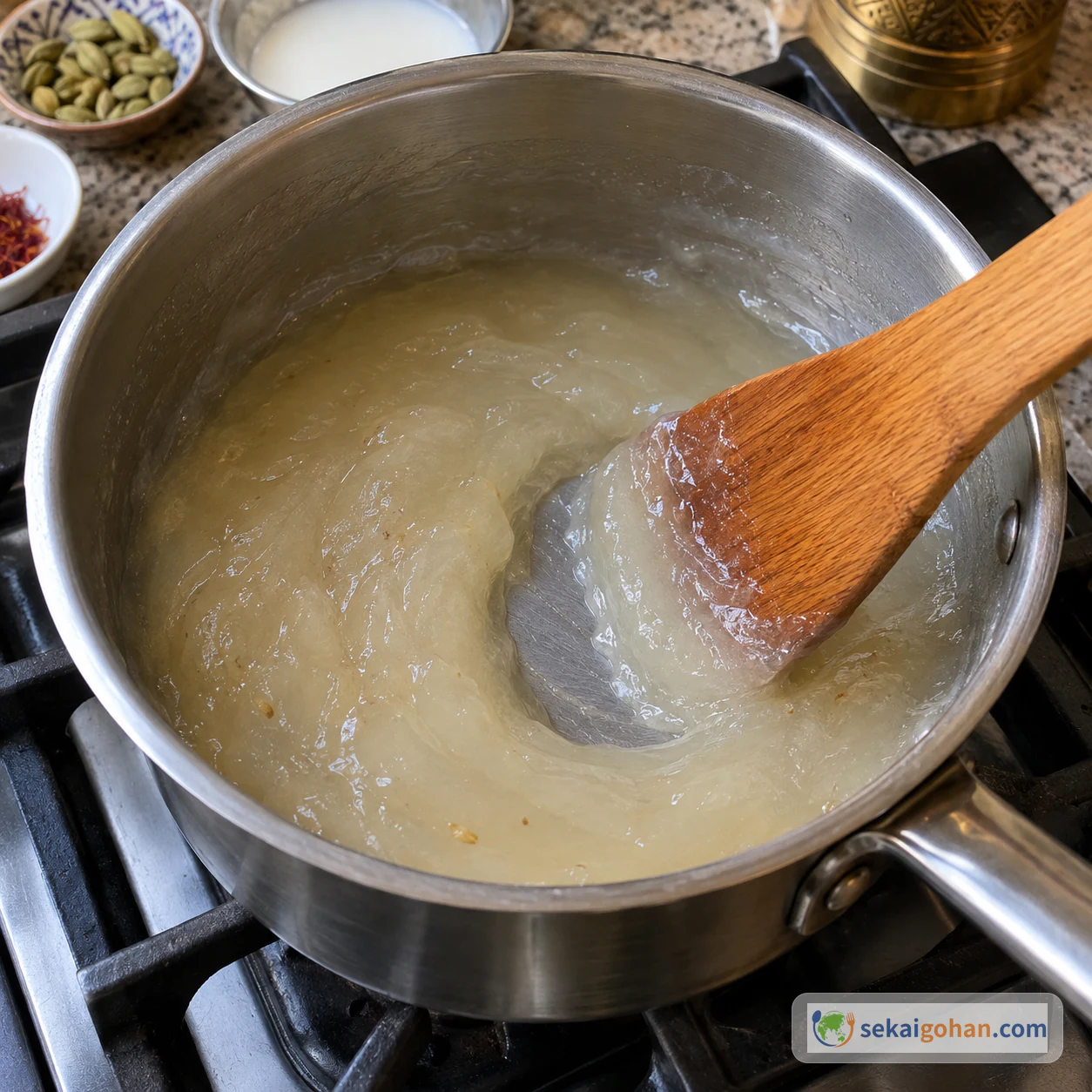
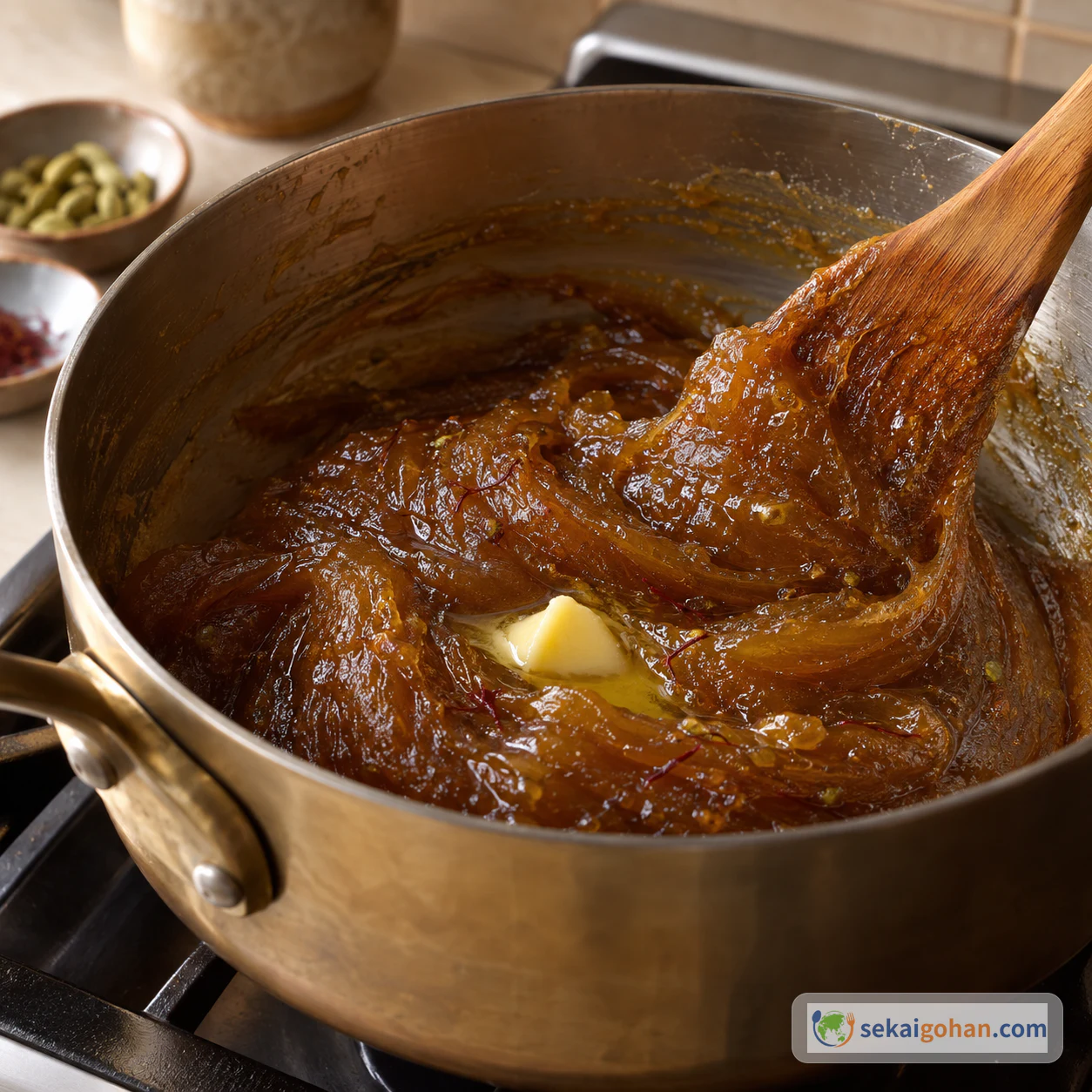
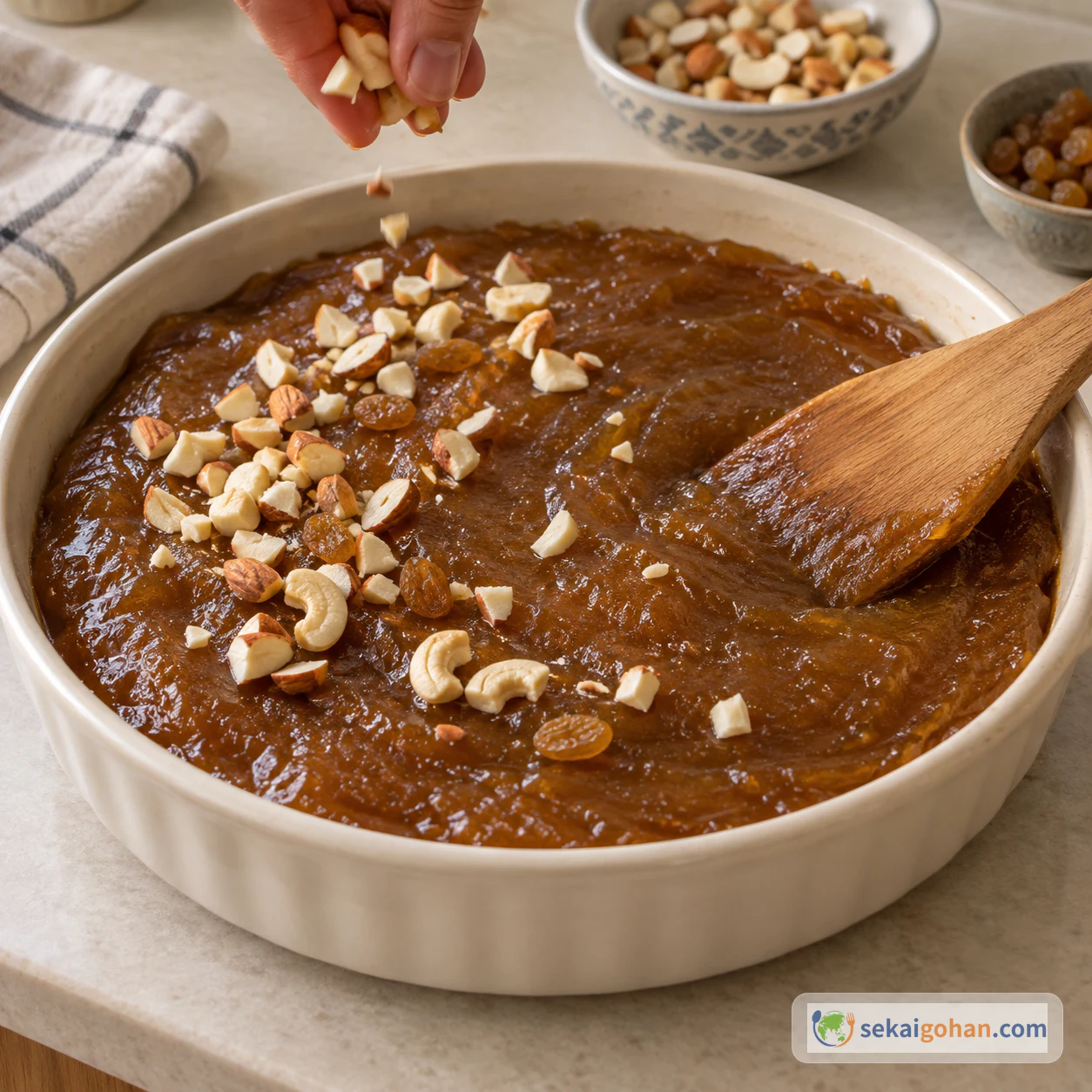
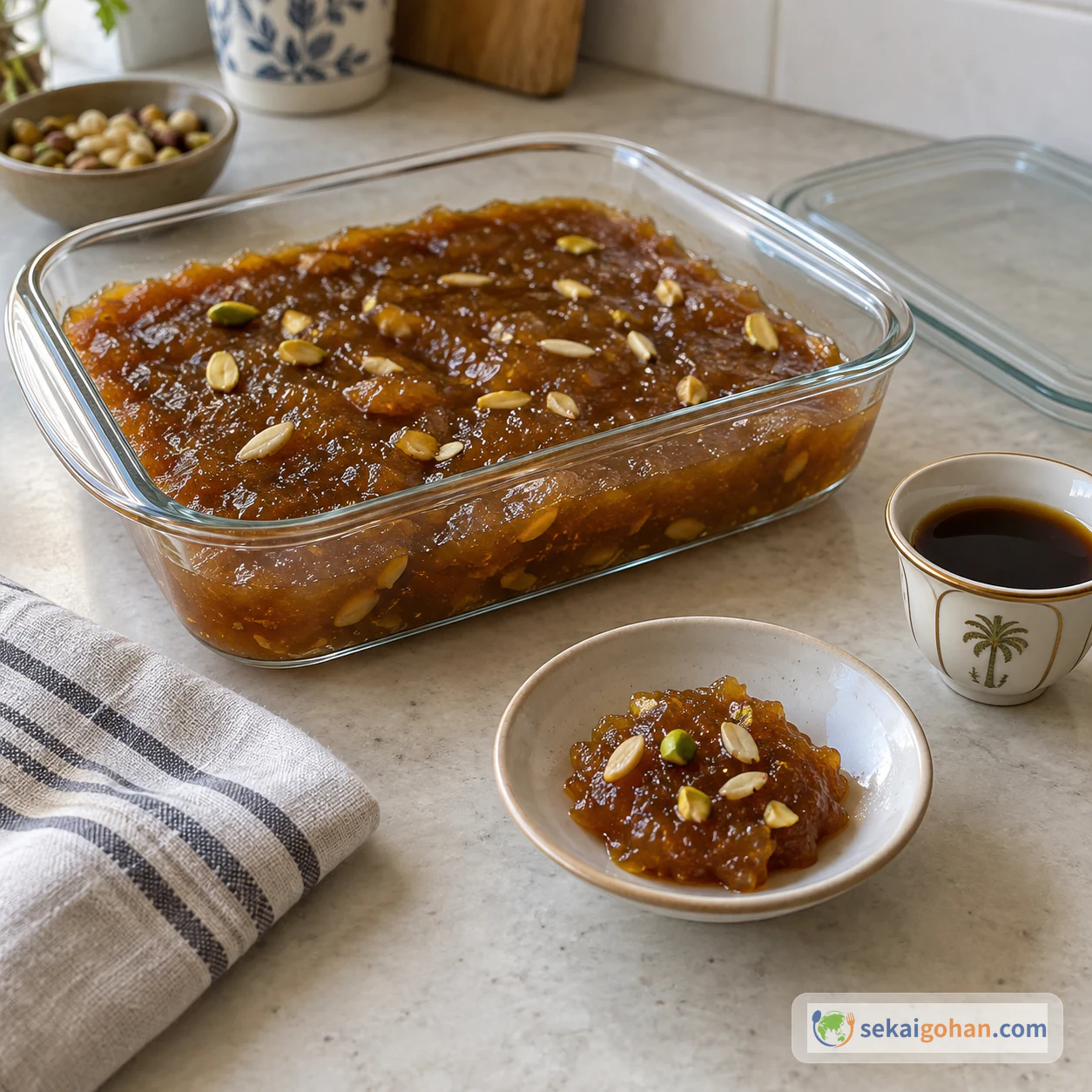
Omani halwa gains its gloss slowly in the pot. Just after the starch goes into the sugar water it turns white and cloudy, but keep the wooden spoon moving and a reddish-brown sheen rises from the bottom. Rose water brings a floral scent, saffron a dry, grassy one, and cardamom a cool sweetness, and a spoonful springs softly when you scoop it. This version of Oman's festive sweet is built on sugar, cornstarch, rose water, saffron, cardamom and ghee. Hot from the pot it is soft; once cooled, it turns springy enough to scoop with a spoon.
Omani halwa at the table and across regions
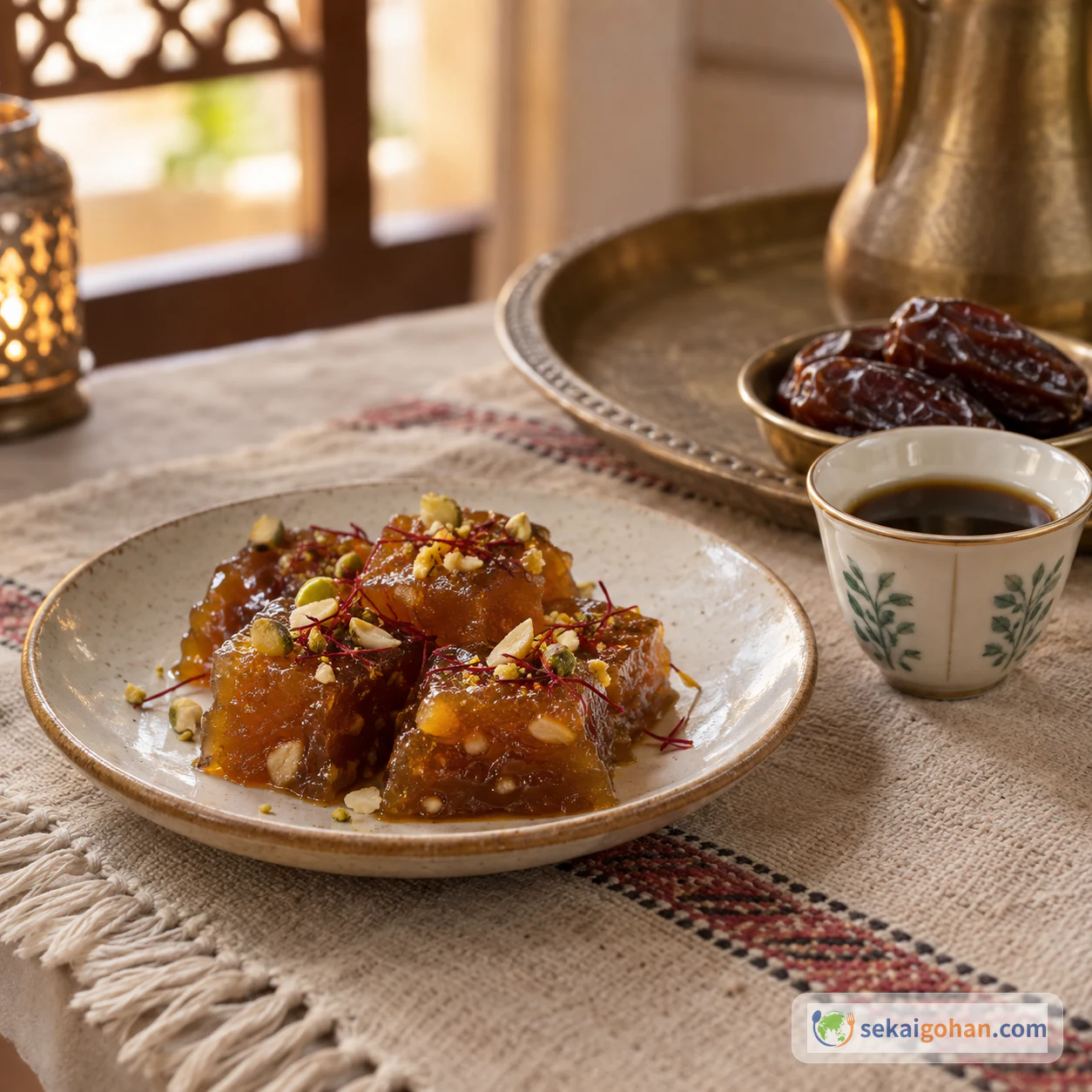
In Oman, halwa belongs to hospitality more than to dessert. Guests receive kahwa (spiced coffee) poured into a small finjan and taste halwa between sips, with the sweetness of dates alongside. It is less the star of a meal than a sweet that keeps the conversation going.
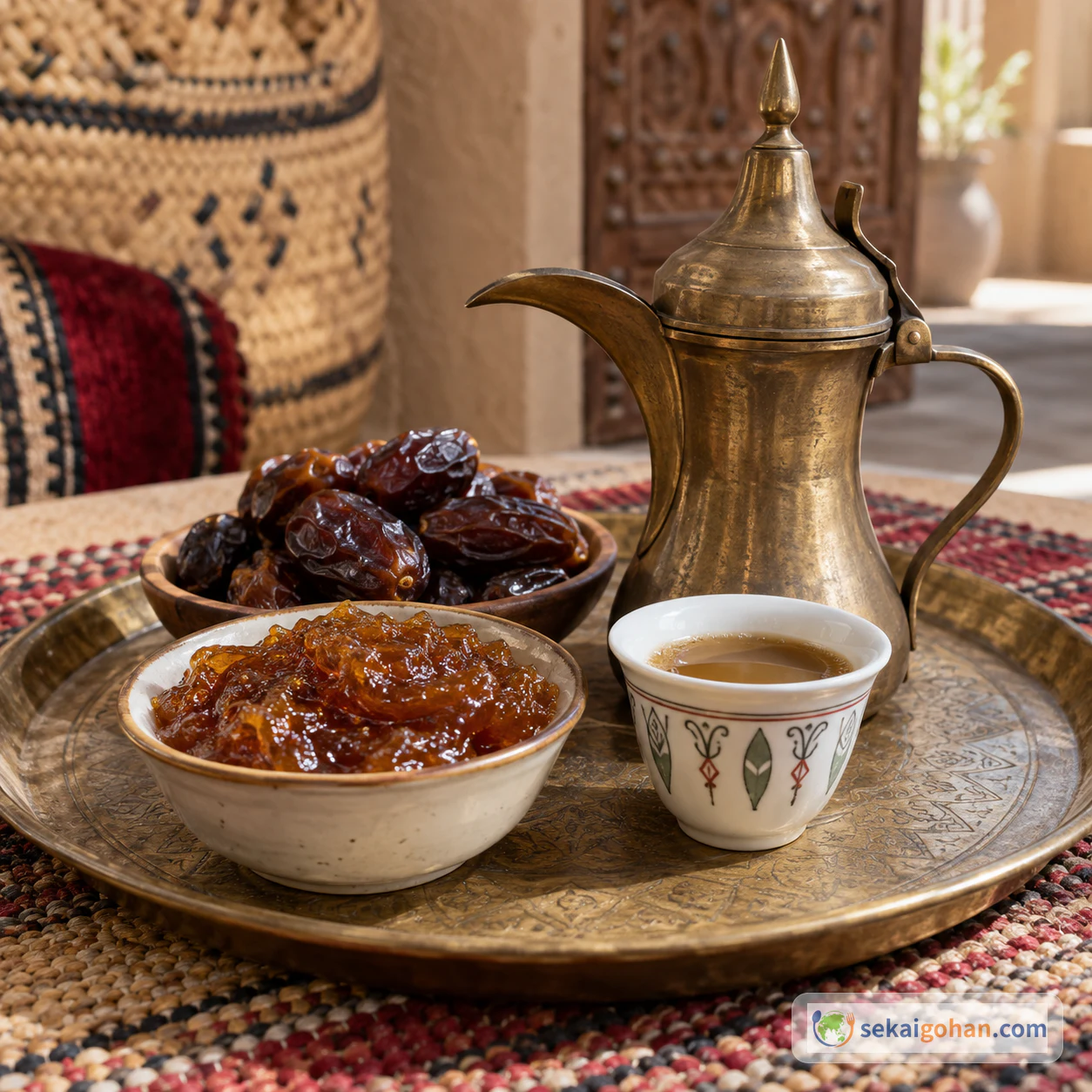
Halwa is also a festive food. It is served at festivals with dates and kahwa, and given at weddings, Ramadan and Eid, and makers in Al Batinah cook it in big pots. Much of its meaning comes from the time spent around that pot, the order in which the aromas are brought up, and the way the finished sweet is shared with guests.
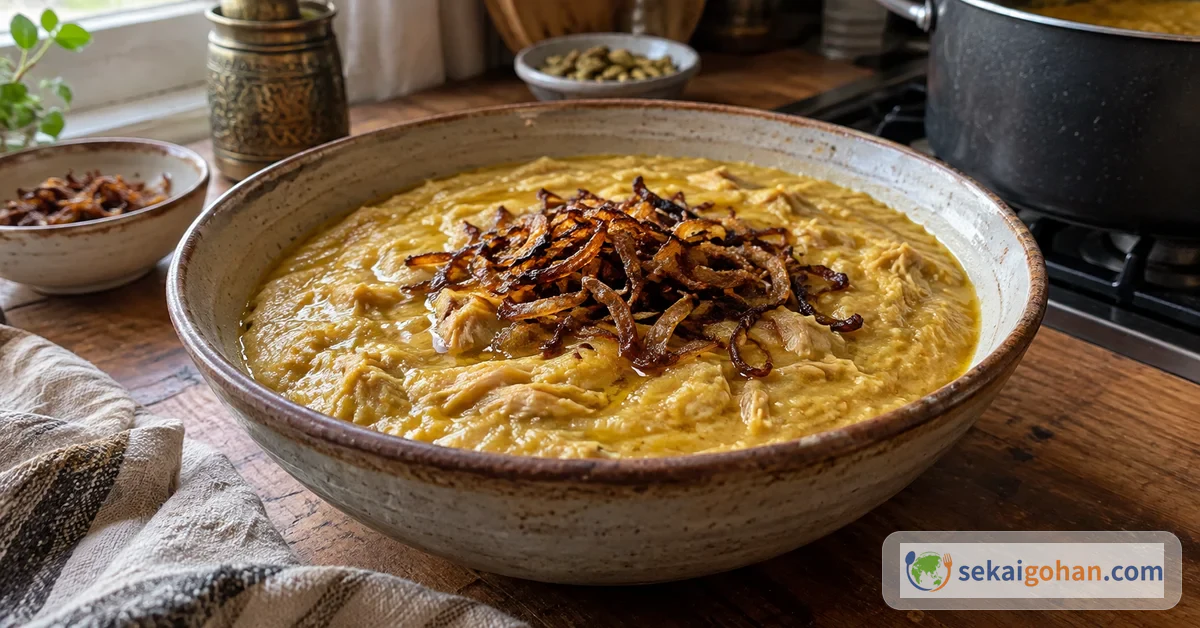
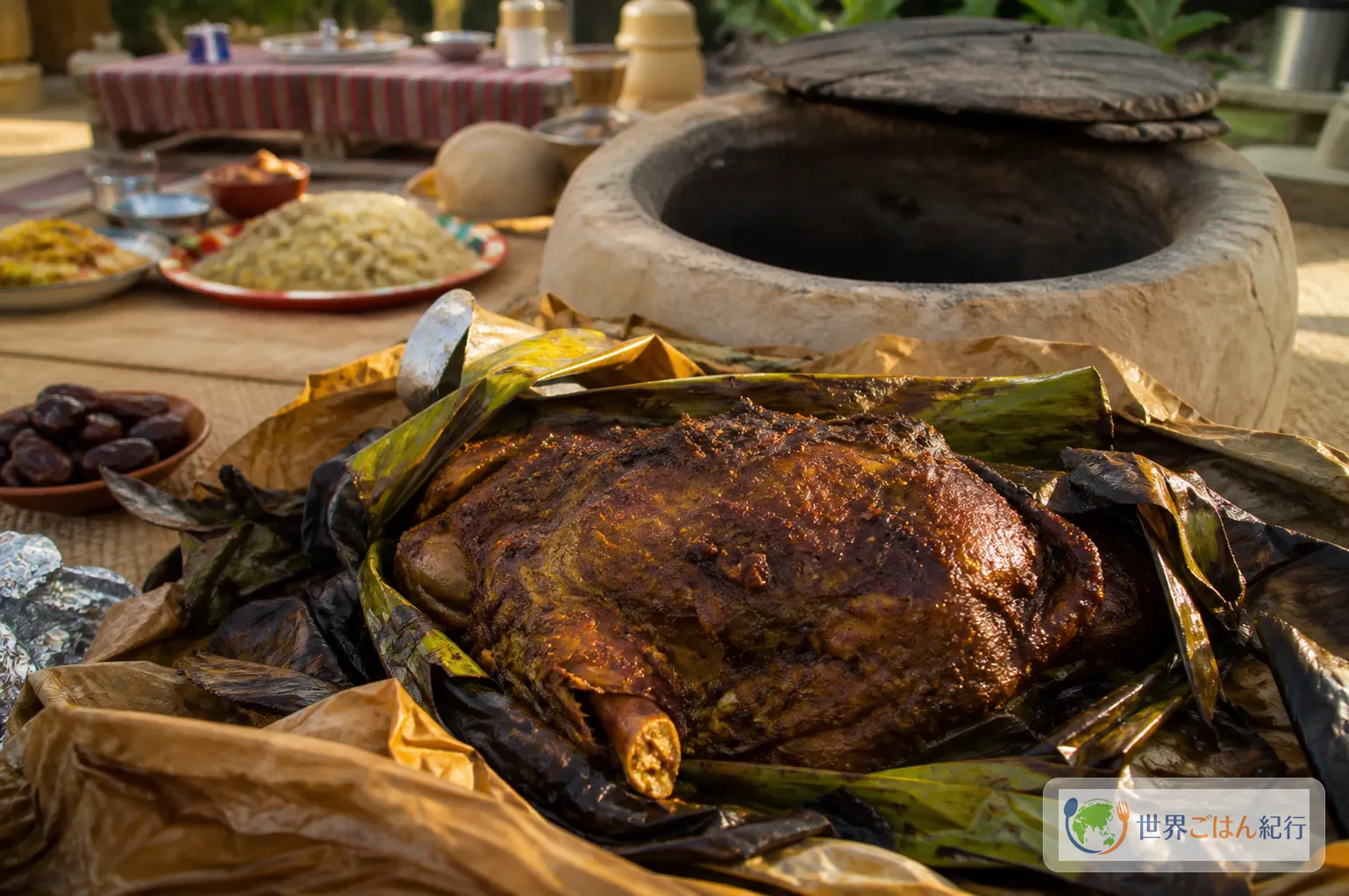
At a festive table, a shared platter of meat like shuwa and a sweet portioned into small dishes move at different paces. Savory dishes come first, and then kahwa and sweets loosen the conversation. That order helps explain why halwa's strong sweetness rarely feels heavy.
Nizwa's reddish-brown halwa and its variations
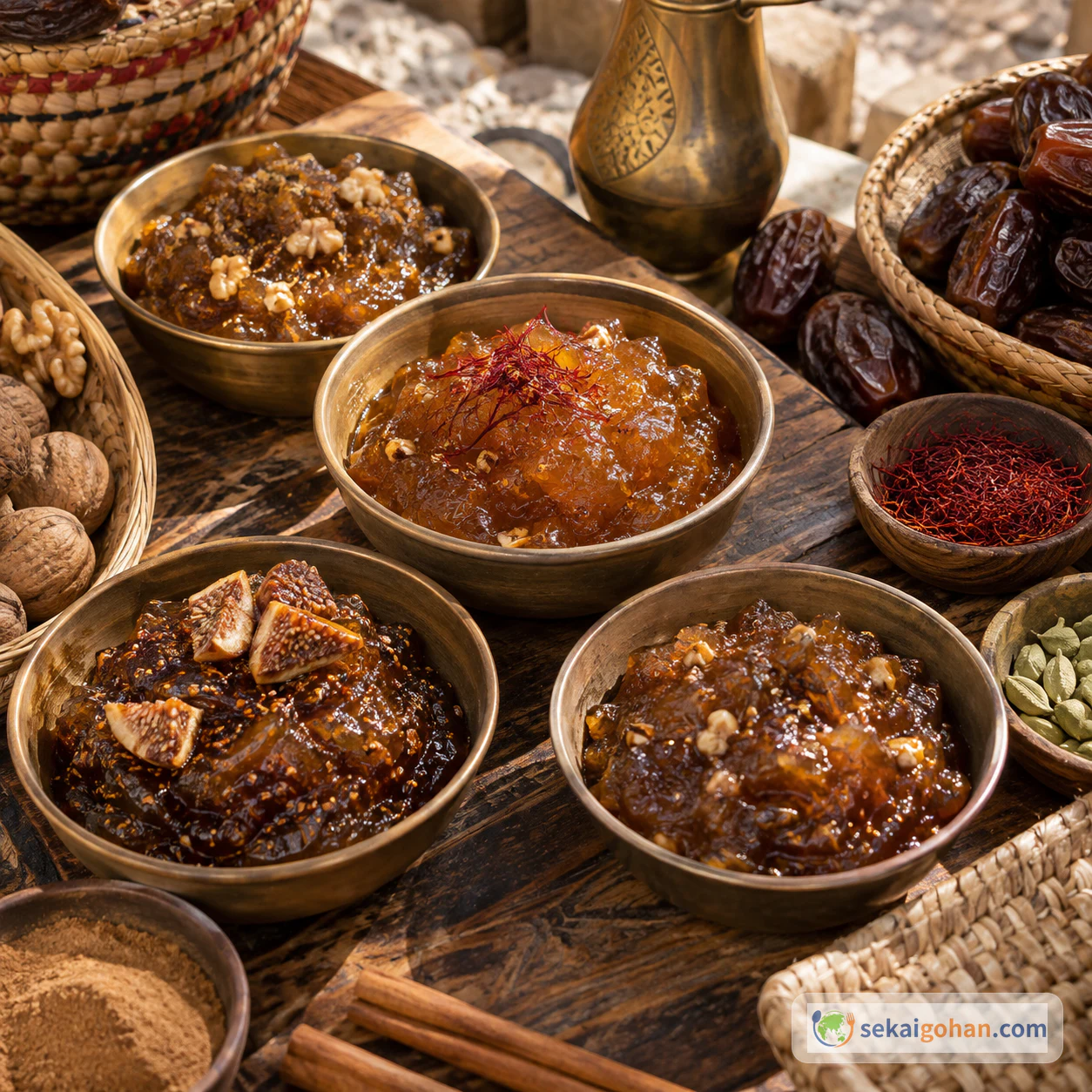
At the souq in Nizwa, halwa is reddish-brown and jelly-like, with a strong rose water aroma and the texture of nuts. Variations include saffron, honey, walnuts and figs, so the aroma and ingredients shift with the household and the maker, rather than splitting neatly by area. More saffron brings color and a dry aroma forward. Honey or date syrup adds a depth like brown sugar, and extra walnuts or cashews give the soft body places to chew.
Ingredients (serves 6)
Makes six servings in small dishes. The finished weight is about 750–850 g: serve 70–90 g per person after a meal, or around 3.5 oz (100 g) if the sweet is the star. Because it is rich with sugar and ghee, eat a small amount with kahwa so the aroma comes through.
These amounts make six servings that are easy to handle in a small home pot and easy to read on a first batch.
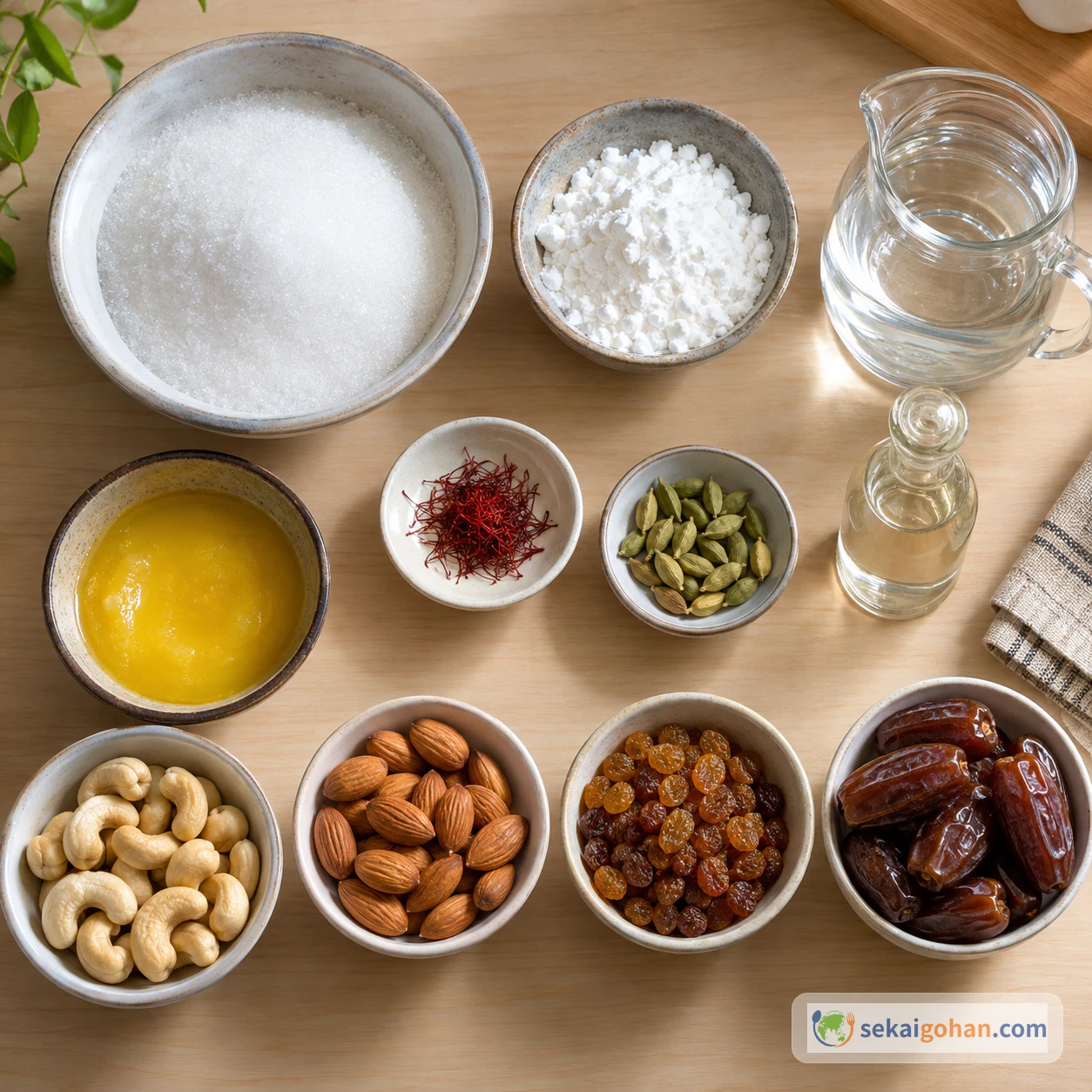
The nuts give this sweet its savoriness and bite, but do not serve it to people with nut allergies. Rather than mixing all the nuts in from the start, keep the nut and nut-free portions apart so you can serve each safely from the same pot. Ghee is milk-derived: if you need to avoid dairy, check the label, and if you switch to another oil, expect the aroma to change.
Even at about 0.1 g, saffron leaves a dry floral and grassy note in the reddish-brown sweet. Buy food-grade saffron, threads or powder, and check the package size and origin on the label. If you already have good saffron, use it. Do not substitute turmeric just for color; it pushes the aroma of this sweet in another direction.
Choosing aromatics and a pot for Omani halwa
Whole cardamom is the better choice because its aroma stays in the sweet dough. Ground cardamom works, but powder that has been open a while tends to taste flatter than seeds from freshly split pods. If you buy pods, check the label to make sure they are whole.
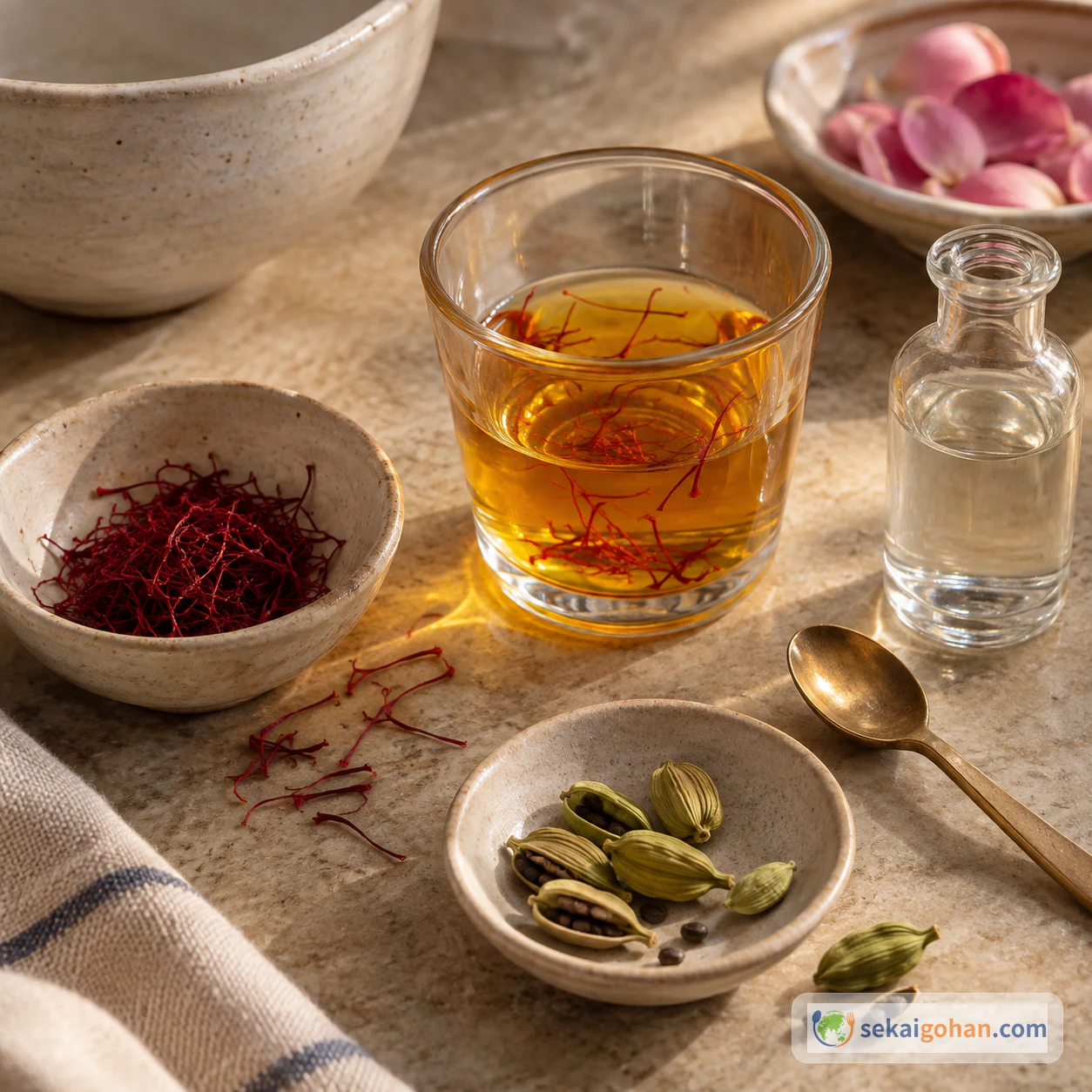
With rose water, stronger is not better; avoid anything that smells like perfume. Food-grade rose water leaves a floral scent after the halwa cools and lifts the sweetness a little. For a first batch, put 2.5 tbsp (40 ml) in the pot and add 1.5 tbsp (20 ml) after turning off the heat. If you are sensitive to aroma, start with 2 tbsp (30 ml) and taste once it has cooled.
A heavy pot matters more than a traditional one. For six servings, a thick-bottomed saucepan about 7 inches (18 cm) across works well, with room inside to move the wooden spoon. In a thin pot, the starch sticks to the bottom and the outside sets while the inside stays watery.
You can split cardamom pods with the side of a knife, but a heavy mortar makes it easier to crush a small amount of seeds and bring out their aroma. For a single batch, a bag and a rolling pin will do.
Method: in a small pot, knead until the gloss appears
Boiled-down sugar syrup is hotter than it looks and sticky, so if it gets on skin it is hard to remove. Do not set the pot low, use a long wooden spoon, and keep children and pets away from the counter. Always taste only after it has cooled slightly, and do not put a finger in even to check the pot bottom.
Fixing Omani halwa that won't set or lacks gloss
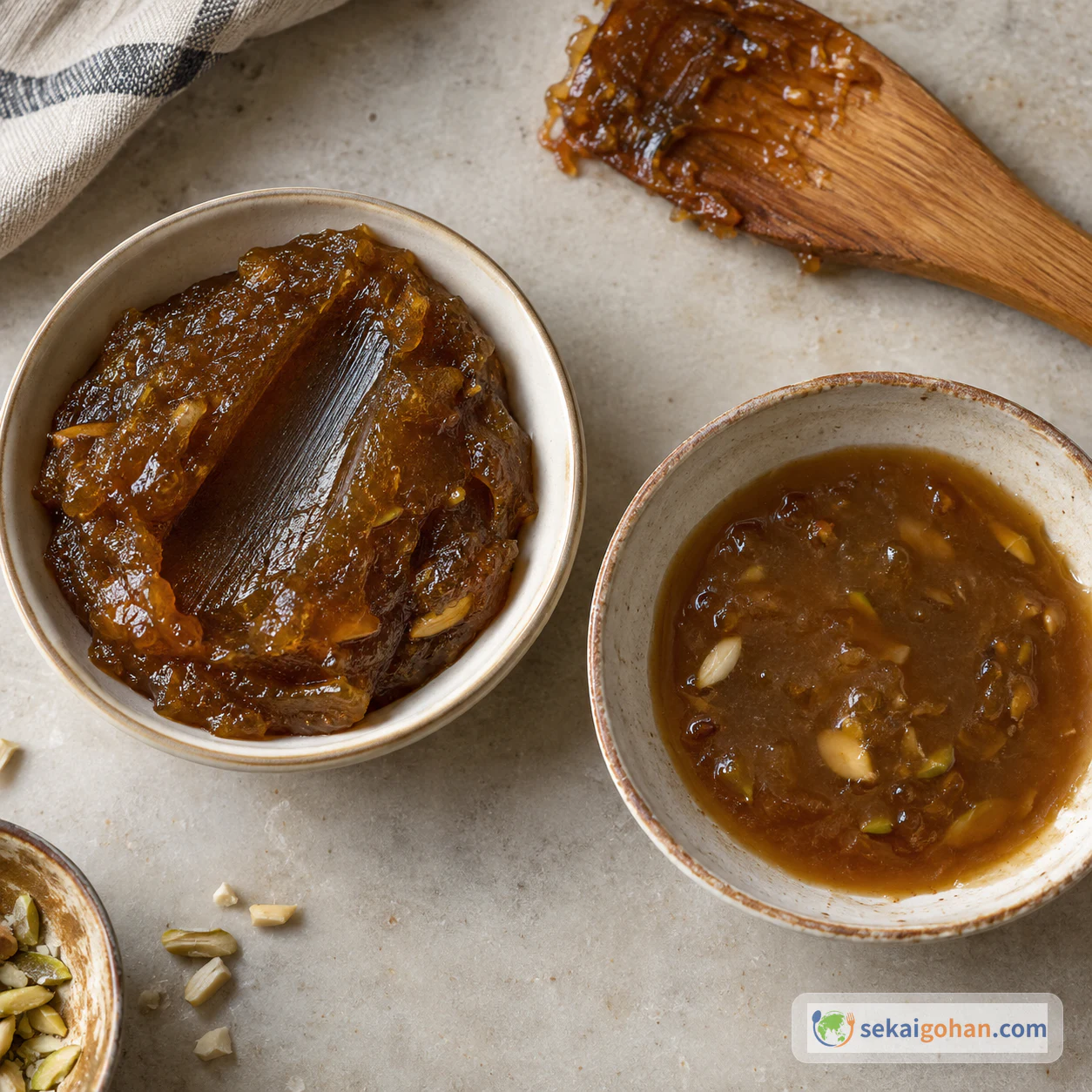
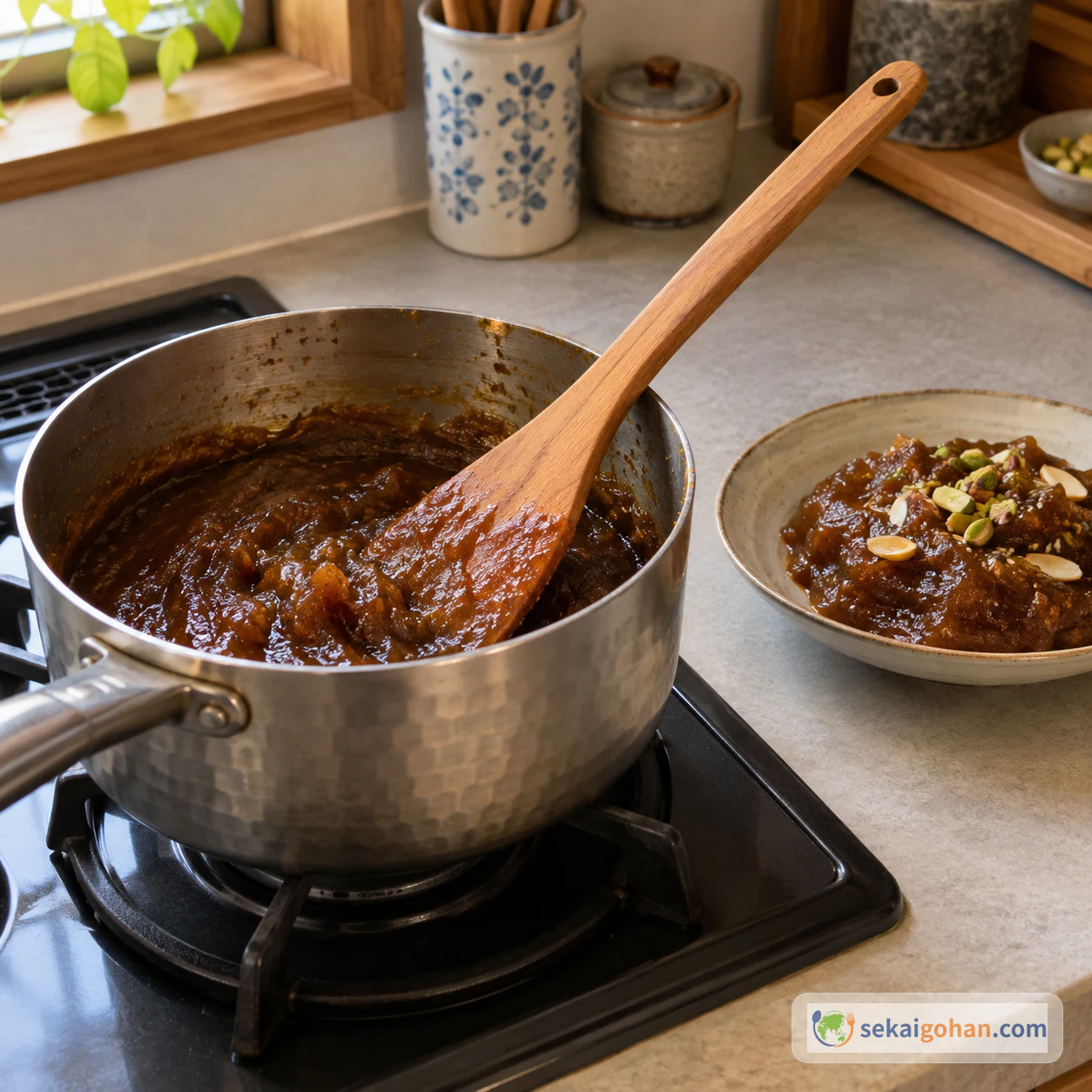
With halwa, watch how the moisture and fat are moving in the pot rather than the color. The sign you're after is a wooden spoon that leaves a trail on the pot bottom, which slowly closes on the next pass. If you are unsure partway, don't try to recover by raising the heat; take back just one step according to the cause. High heat from the start thickens the sugar before the floral scent has escaped, leaving only the bitter greenness of the cardamom.
Stop the sugar water when clear bubbles cover the whole surface, without letting it take on color. Stir the starch liquid from the bottom just before it goes into the pot, to bring back the white sediment. Add the next ghee only after the previous amount has been absorbed into the dough and the pools of oil have disappeared.
Watery, and the spoon leaves no trail
The starch is still holding water. Knead 5 minutes at a time over low heat and wait until the spoon leaves a trail for an instant. If it keeps flowing, dissolve 10 g cornstarch in 2 tbsp (30 ml) cold water in a separate bowl and add it in a thin stream with the heat lowered. Knead at least 8 minutes afterward, and turn off the heat when the smell of raw flour is gone; dry powder sprinkled in directly leaves white grains.
Sticking to the bottom and not leaving the sides
The heat is too high or the pot is too thin. Take it off the heat at once and move only the still-soft upper layer to another heavy pot, leaving the bottom unscraped, since the scorched part spreads bitterness through everything. Add 1 tbsp water over low heat to loosen it and keep the spoon against the bottom.
Ghee floating on the surface
Too much went in at once, or the dough cooled and absorption couldn't keep up. Take it off the heat for 1 minute, return it to low heat and knead in broad strokes. Wait until the pools of oil are gone before adding more ghee, and if they never go away, spoon the excess off the surface. The mouthfeel becomes lighter, but the aroma stays.
Bitter, with a medicinal smell
Saffron or cardamom that has scorched tastes bitter. If only the nuts burned, remove them; if the bottom scorched, move the upper layer to another pot and taste. When bitterness has spread through the whole dough, sugar or rose water won't hide it, so lower the heat one notch in the next batch.
Serving and variations of Omani halwa
Served with kahwa and dates, halwa feels like an Omani welcome, and on its own you can savor the fragrance from a small dish. Once you've made the basic saffron version, the variations below show some of the range of regions and makers, scaled to six servings for a home pot.
| Variation | What to change | Taste and where to use |
|---|---|---|
| Basic saffron | As in the ingredient table | Floral and grassy; pairs easily with kahwa and dates |
| Ginger halwa | Add 1 tbsp (15 ml) ginger juice | Warming, with a short sting behind the sweetness |
| The deep sweetness of date syrup | Reduce sugar by 1.75 oz (50 g) and add ¼ cup (60 ml) date syrup at the same stage as the aroma ingredients | Deeper color; watch for scorching sooner |
| Walnut texture | 1 oz (30 g) walnuts instead of 20 g almonds | Toast over low heat to avoid bitterness |
| Sweet-sour figs | Replace the 20 g raisins with 1 oz (30 g) dried figs | Chop to 0.25 inch (5 mm) and mix in at the end |
| The round aroma of honey | Reduce sugar by 1.5 oz (40 g) and mix in 1.75 oz (50 g) honey after turning off the heat | Mix in at the end to avoid scorching |
With honey or date syrup, keep the initial sugar water less concentrated, since the added sugar scorches easily; check the finish as soon as a line shows on the pot bottom. To compare, put each variation in its own small container and see which suits the kahwa best.
For a contrast in texture, try sheki halva from Azerbaijan, where the layers and the way the nuts are shown differ despite the shared name. For a milk-based comparison, set doodhpak beside it. It also uses saffron and cardamom, and shows the difference between halwa that springs with starch and a sweet of reduced milk.
Questions on storage, aroma and allergies
Can halwa be refrigerated?
Yes. Cool it slightly, put it in a clean airtight container, and eat it within 2–3 days. Chilling firms the ghee and dulls the aroma, so leave the portion you'll eat at room temperature for 20–30 minutes. Microwaving tends to separate the oil, so scoop small portions with a spoon and let them come back on their own.
What if I have no rose water?
The same amount of water won't greatly change how it sets, but the floral aroma that defines halwa weakens. Food-grade orange blossom water makes a different, citrus-leaning sweet, so start with a small amount. Never use cosmetic rose water in food.
What if I cannot eat nuts?
Leave out the cashews and almonds and keep the raisins for a smooth halwa. Shared cutting boards and knives make contamination hard to avoid, so for someone with an allergy, check utensils and labels separately. Ghee is milk-derived; if you need to avoid dairy, check the label, and expect the taste to change if you switch to another oil.
Is it the same if I switch to semolina?
No. Some halwa is made with semolina, which gives a grainier result with weaker thickening, while this method dissolves cornstarch in cold water for a clear gloss. Make it as written the first time, then try semolina in a small batch.
Can I reduce the sugar if it is too sweet?
Cutting it sharply changes how the halwa sets as well as its sweetness. Use the standard quantity for the first batch and balance each bite with kahwa, unsweetened drinks and dates. Next time, reduce by 20–30 g at a time and check firmness and aroma once it has cooled.