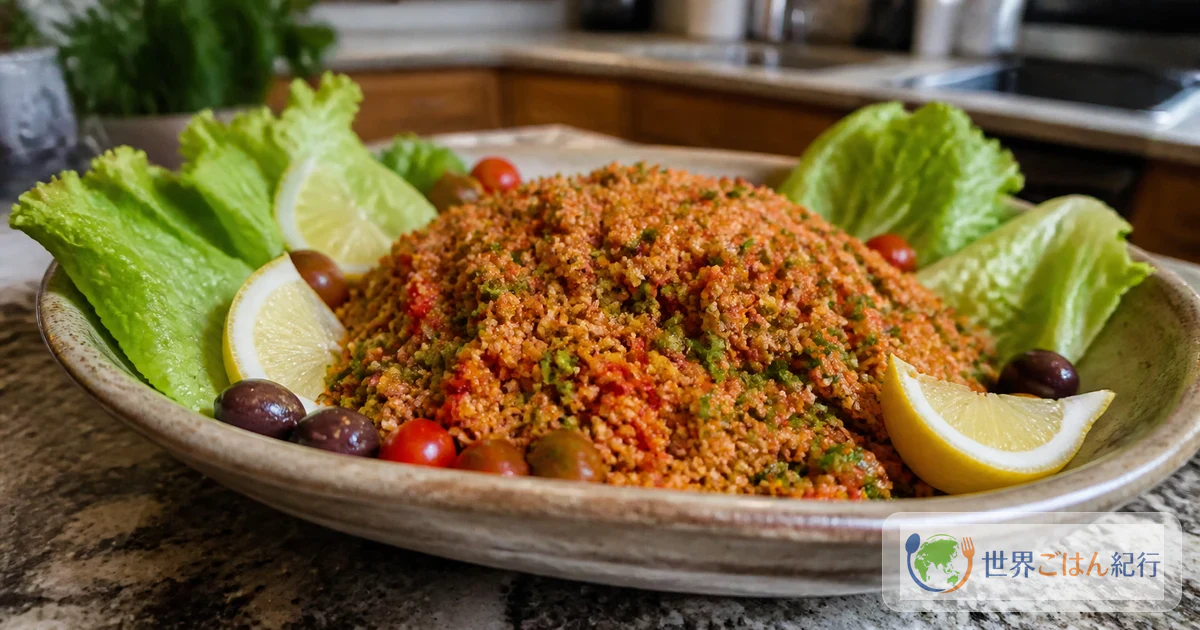
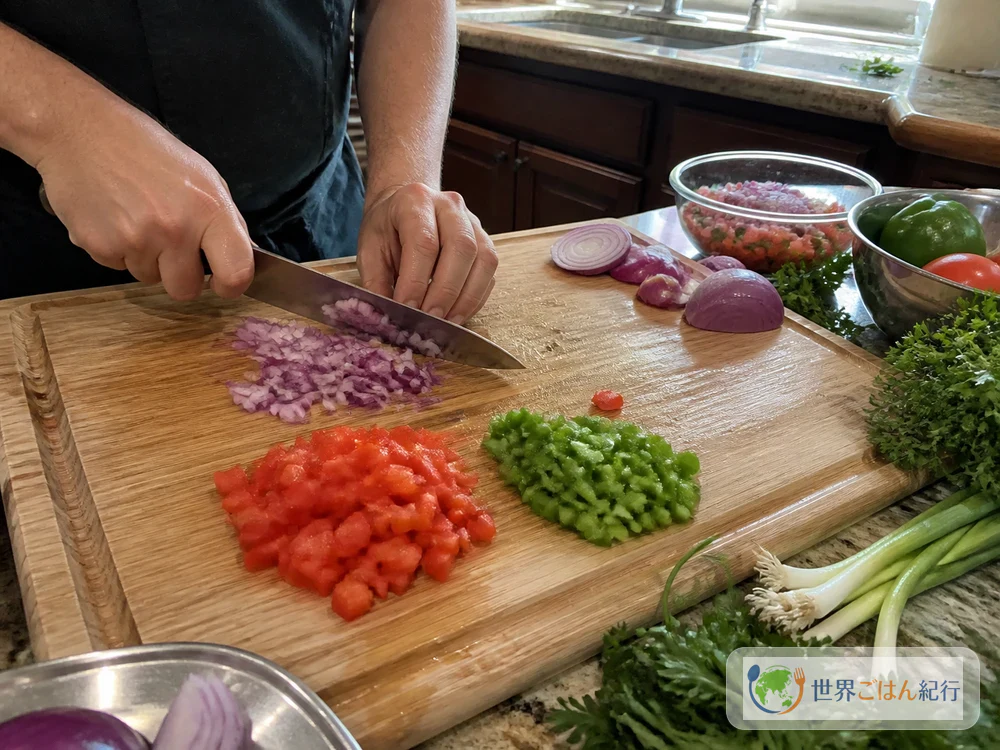
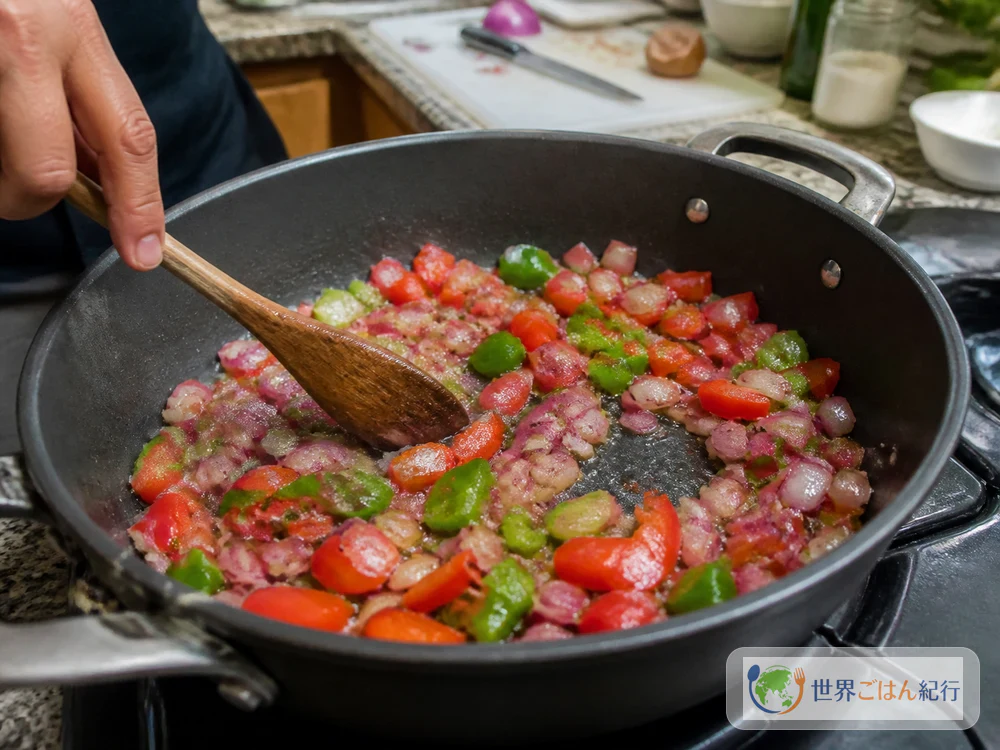
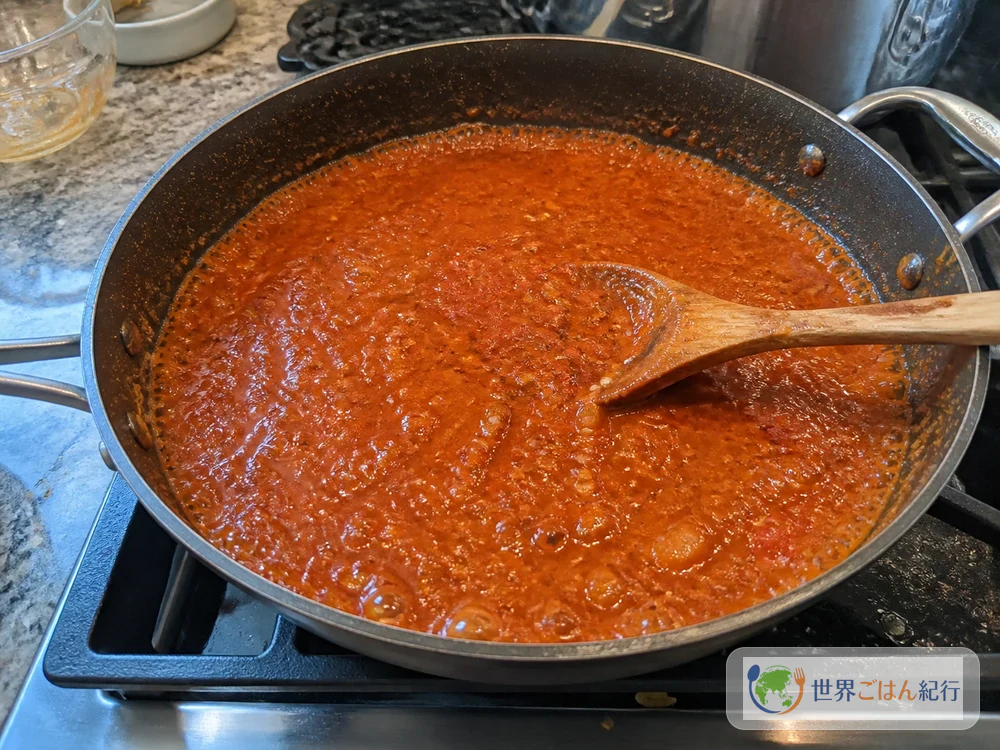
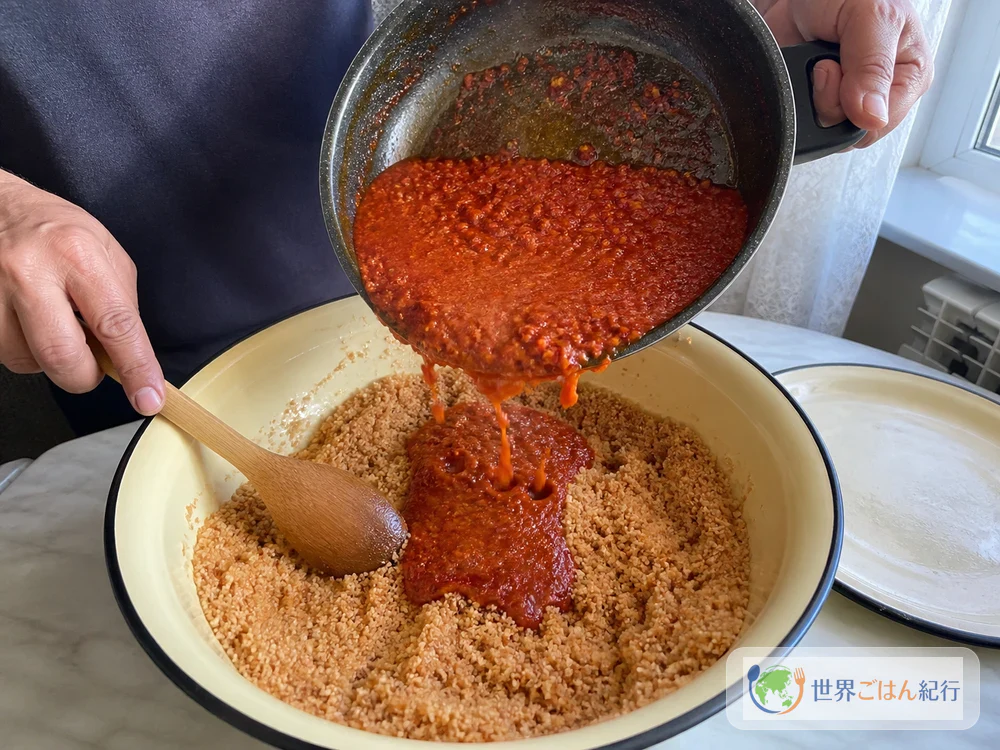
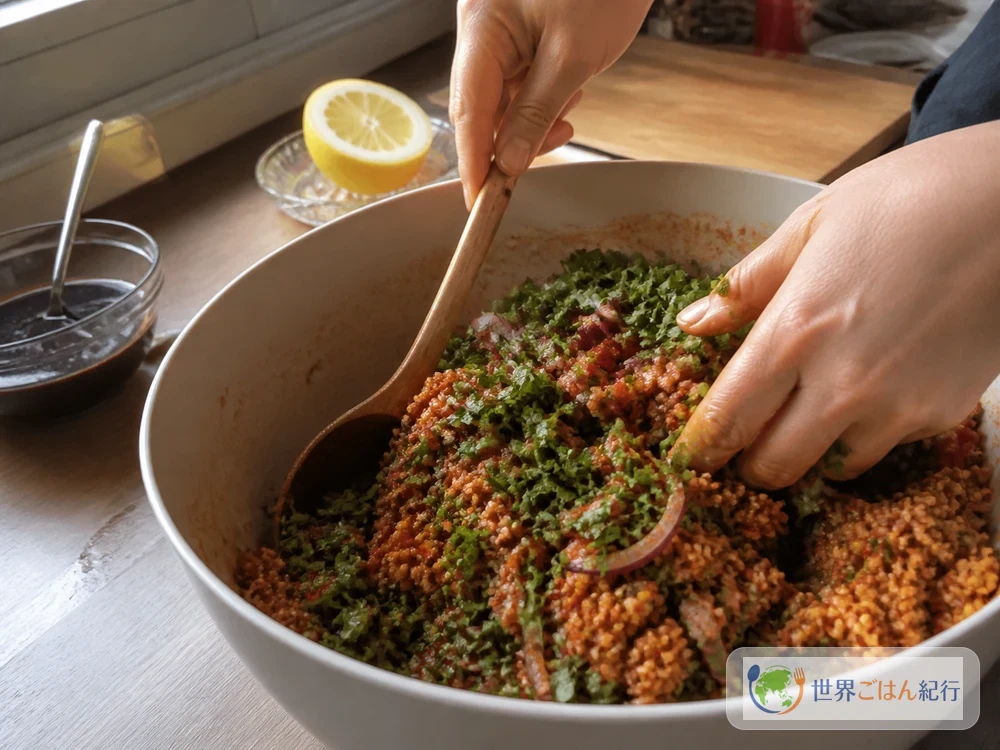
Fine bulgur, simmered tomato and fresh herbs: once you sauté onion and red pepper, then pour in hot water with tomato paste stirred through, the pot turns red-orange. The bulgur soaks up that sauce, and once it has cooled you fold in herbs and lemon. The tomato's umami gets into every grain, while the parsley and scallions keep their green fragrance to the end. This is eetch, an Armenian bulgur salad served warm or chilled as a meze.
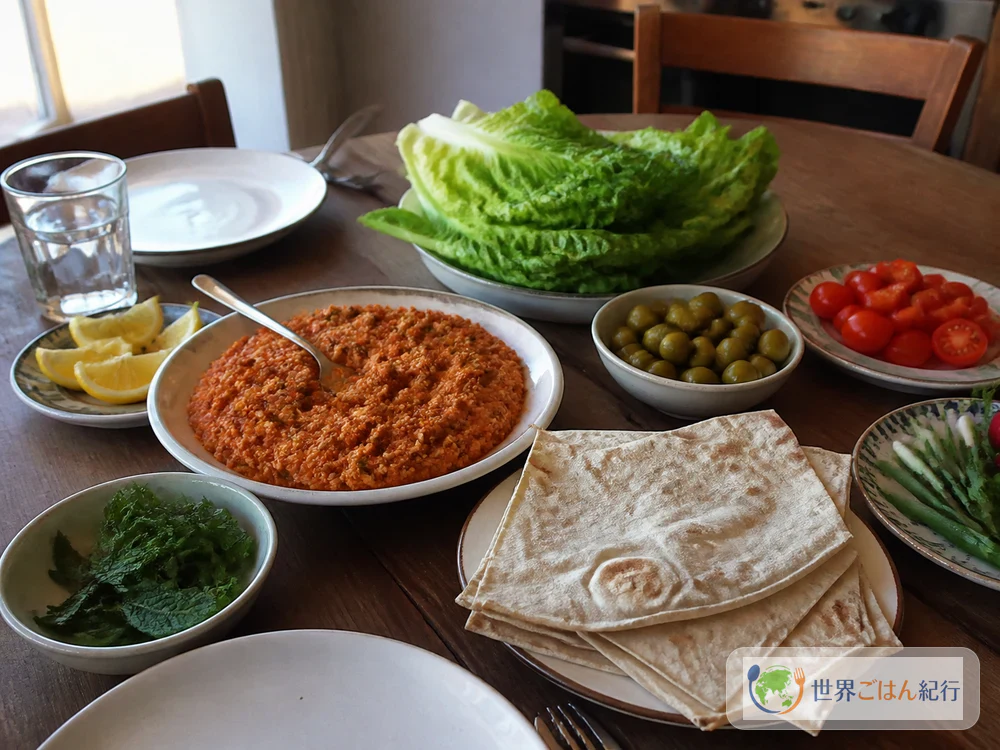
Eetch on the Armenian Table
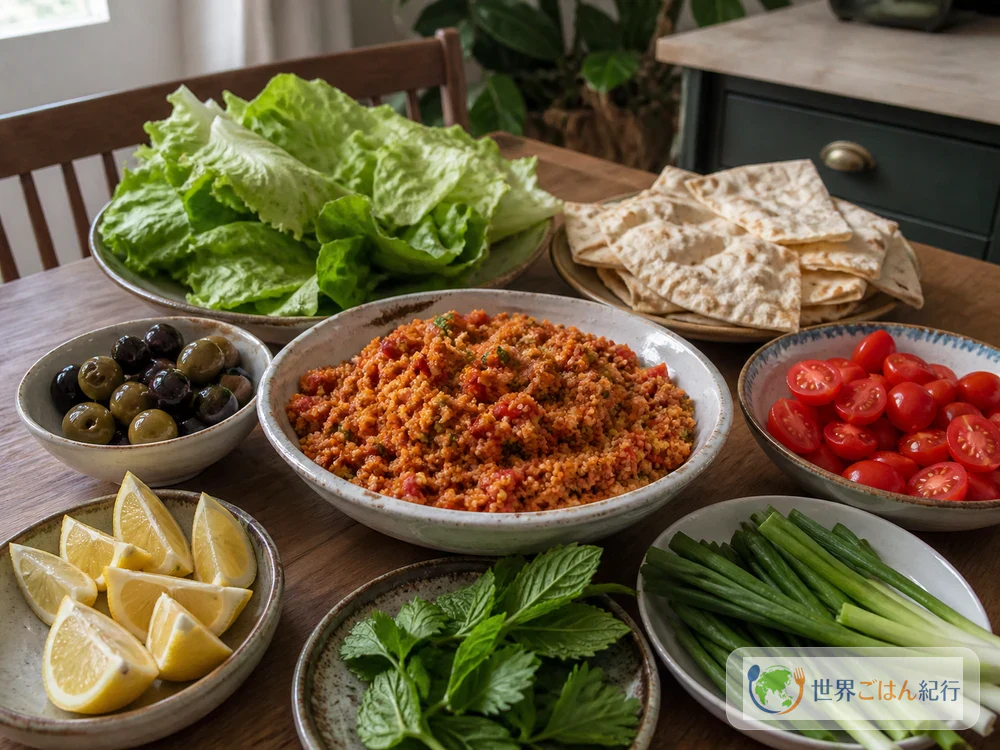
The name is spelled Eetch, Eech, Itch or Metch, depending on how English-speaking households heard it, and the dish is also called Armenian tabbouleh or red tabouli. Eetch has been made in Armenia and wherever Armenians settled, as a meze or a light meal. In the diaspora, including Palestinian Armenian households, it is served warm or cold. It is often meat-free.
The bulgur makes it look like Lebanese tabbouleh, but the two plates are built differently. Tabbouleh is mostly finely chopped parsley and mint with a little grain. In eetch, the bulgur soaks in tomato sauce until it is dense enough to scoop with a spoon. If you use tabbouleh proportions, you end up with a different plate.
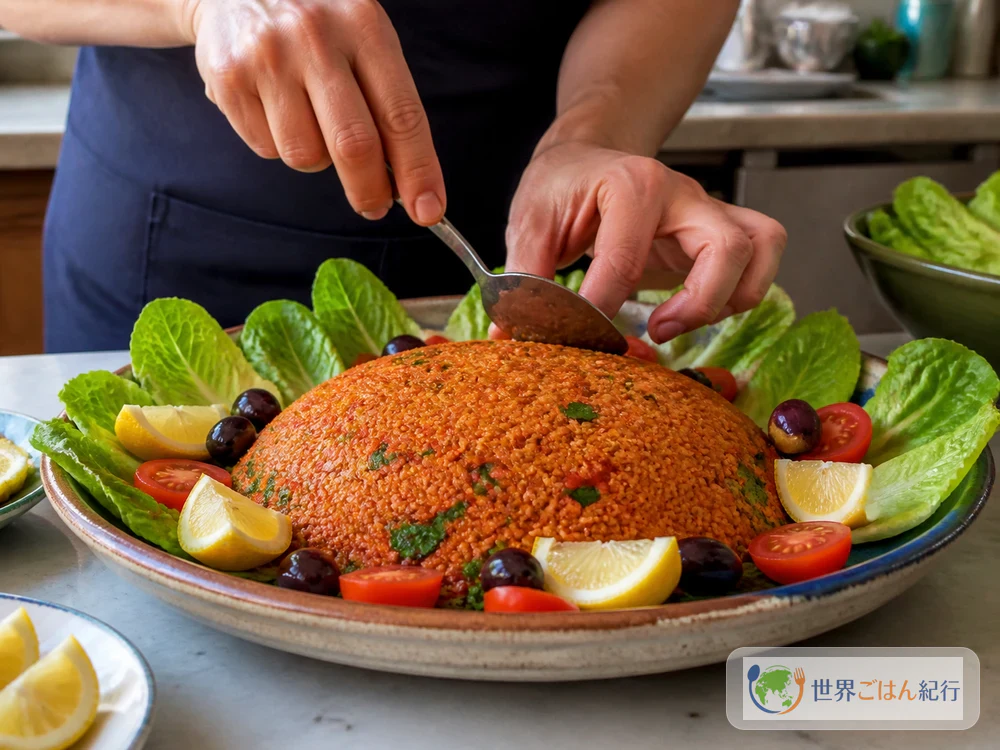
Some cooks add more red pepper, others use a different amount of herbs, and some serve it with bread or lettuce. These differences come from local ingredients and the dish's role at the table, so they are all the same dish. There is also a coarse version, where the grains soften in a mixture of tomato paste and water. A common way to serve it is mounded round with lettuce, cherry tomatoes and olives. Diners spoon a little onto a leaf at a time and eat it by hand.
Ingredients: fine bulgur softened in a red sauce
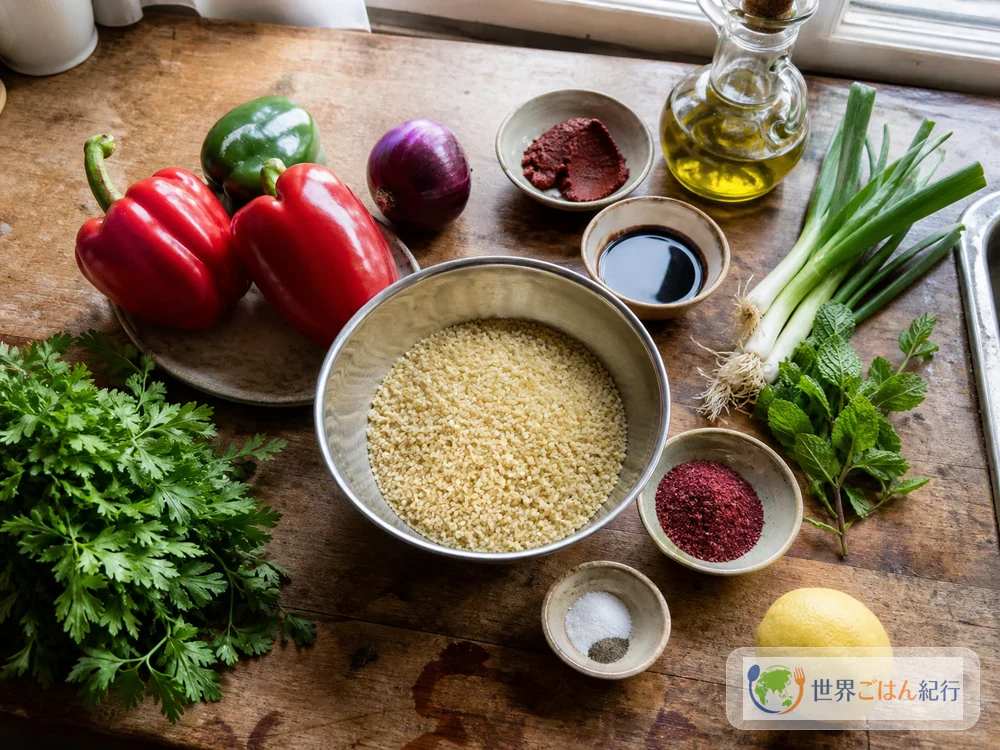
This amount serves 6 as a side dish, or makes a light lunch wrapped in lettuce. The texture comes from the ratio of liquid the bulgur absorbs to the raw vegetables added afterward, more than from fillings.
Check that the bulgur is "fine"
If the bag says only "bulgur" or "cracked wheat," pinch a few grains and look. If they are finer than rice grains and close to couscous, the liquid here will soften them easily; if you can see grains of about 3 to 5 mm, they lean coarse.
Look for bulgur with the grain size stated on the package, not ordinary wheat flour. If you can't find a fine grade, use the coarse-grind variation below and adjust the liquid.
Pomegranate molasses and sumac play different roles in acidity
Pomegranate molasses is a concentrated seasoning made by cooking down the fruit. It adds a dark, rounded tartness, unlike the sharp acidity of lemon. Sumac is a dry, red acidity whose fragrance lingers after you chew. Use both for depth. For a first batch, start with 1 tbsp pomegranate molasses and 1 tsp sumac, and add the rest after it cools.
Sumac gives a dry tartness and a red aroma that lemon juice alone does not. For a first batch, you can skip it and use lemon alone, then compare the aroma the next time.
Bulgur is wheat. If you have a wheat allergy or need to avoid gluten, don't make this with bulgur. Use quinoa or rice for a different tomato salad. Some red pepper pastes and seasonings also contain wheat or soy, so check the ingredient label when buying.
Choosing Bulgur and Pomegranate Molasses for Eetch
The number of ingredients is not the hard part. The hard part is matching the bulgur's grind to the liquid. Fine bulgur softens in hot sauce in about 20 minutes. Medium and coarse bulgur absorb at different speeds and leave a different bite. So check the grain size on the bag before you measure the water, or you will get either mush or a hard core. The ingredients table is written for fine bulgur, and the tips below cover coarse.
Pomegranate molasses rarely gets used up on eetch alone. Choose the bottle size based on whether you will also spend it by the teaspoon on braised chicken, grilled eggplant and yogurt sauces. If all you have is sweet pomegranate syrup, leave out the sugar and set the sour edge with lemon juice and sumac.
Method: soften the grains in hot tomato sauce
Don't sauté all the vegetables. Make the hot sauce with half, and mix the rest in raw. That keeps a small bite inside the soft bulgur.
Getting the Texture and Acidity Right
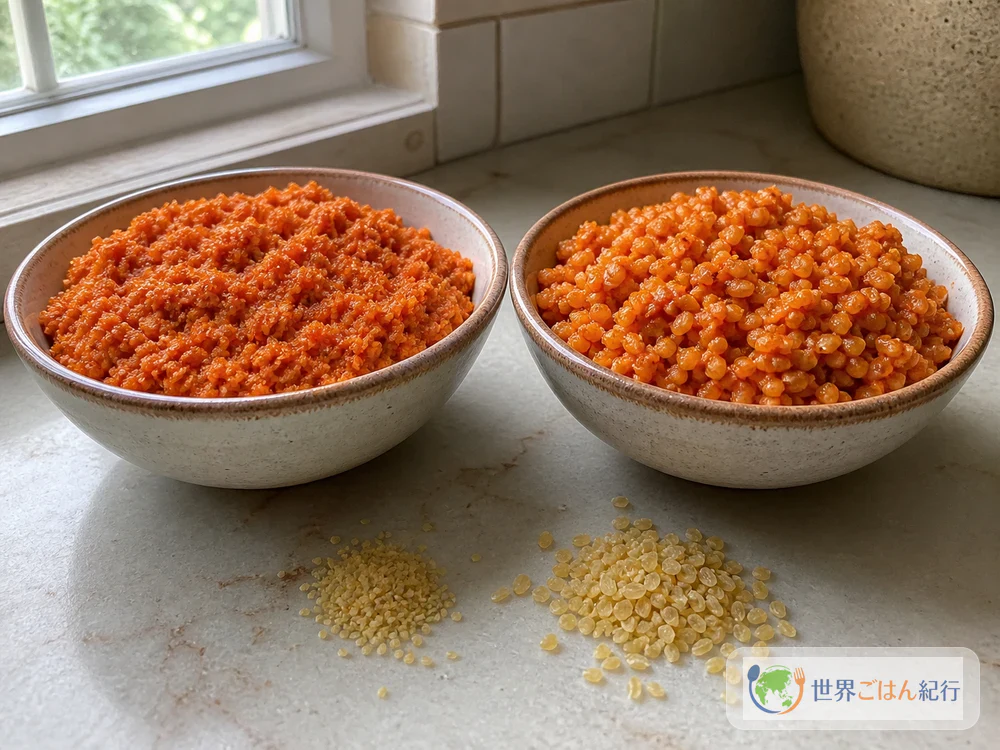
The texture of eetch depends less on the sautéing than on when you stop softening the bulgur. For a cold meze, the grains should have absorbed the hot sauce and still hold together on the spoon after the herbs go in.
If you use coarse bulgur, raise the boiling water to 1¾ cups (400 ml) and cover for 30 minutes. If it is still hard, add boiling water 1 tbsp at a time and wait 5 minutes. Stop while a small bite remains at the center, before the grains fall apart. The coarse version has a stronger bite, so it works better as a warm side than as a cold salad.
Acid added to the hot sauce tastes much stronger once the eetch cools. Mix in 2 tbsp lemon juice and 1 tbsp pomegranate molasses first. Rest it in the refrigerator for 15 minutes, then add the rest to taste.
The grains look heavy right after mixing, but the moisture settles over the 20 to 30 minutes it takes to cool. If liquid still pools on the plate after cooling, add fine bulgur 1 tbsp at a time and wait 10 minutes. A lot of bulgur at once dilutes the salt and acidity, so add a little at a time and check.
Sautéing all the onion and pepper brings out sweetness, but the cold meze turns monotonous. Instead, sauté half for the sauce and stir the other half in raw at the end. That way you get both the depth of the sauce and the crispness of fresh vegetables. If the raw pieces taste harsh, cut them in 0.25 inch (5 mm) dice. Small dice release less liquid than salting and squeezing would.
Serving Eetch: Lettuce Wraps, Warm Plates and Variations
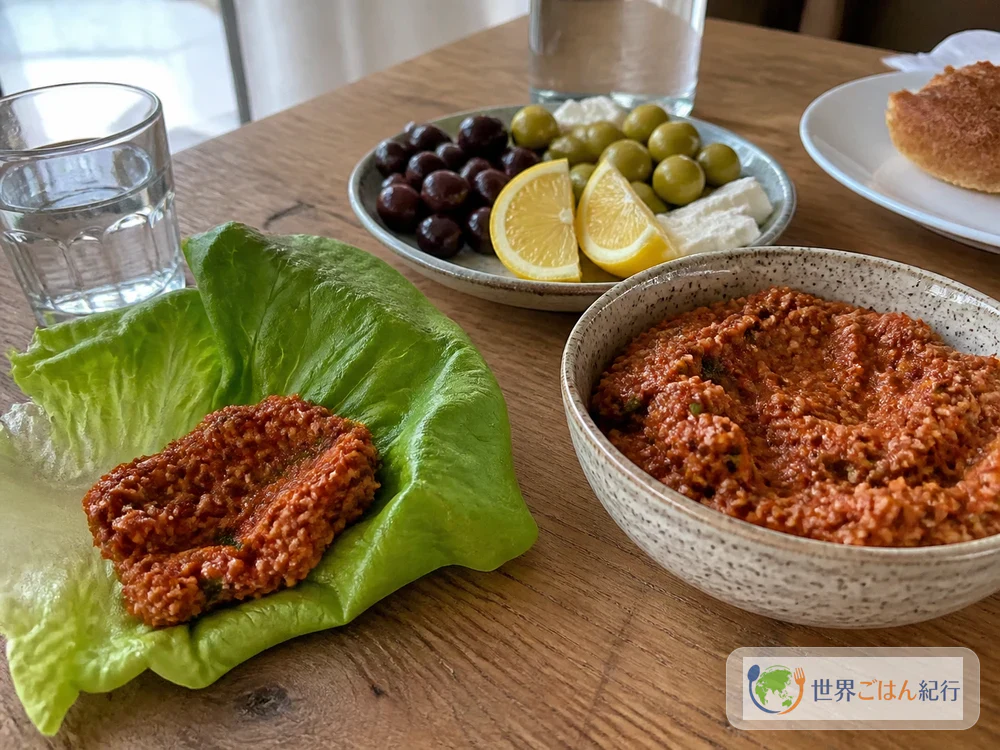
Lettuce-wrapped meze
Separate the romaine leaves one at a time and put about 2 tbsp eetch in the center of each. Fold the leaf in half and eat it without a spoon. Wet eetch tears the leaves, so don't serve it straight from the refrigerator. Turn it once from the bottom before plating.
Serving it as a warm side
Before chilling, spoon the eetch onto small plates while the pot is still warm, at about 40–50°C. It should be steaming a little but not piping hot. The herbs are less green than in the cold meze, but the sweetness of tomato and pepper comes forward. Chilled, the acidity rounds out instead. If you plan to serve the same pot both ways, set aside the portion for lettuce wraps first.
Warm eetch goes well with grilled chicken or fish. Add chicken or lamb and it becomes a feast plate. It also sits well beside a festive dish like Armenian ghapama, or a charcoal dish like karsi khorovats.
Variations
For a brighter summer taste, reduce the pomegranate molasses to 1 tbsp and keep the lemon juice at 3 tbsp. When tomatoes are sweet, chop 3.5 oz (100 g) cherry tomatoes and scatter them on just before eating. Mixing them in would make the red grains watery.
To turn a light side into lunch, add 4 oz (120 g) boiled kidney beans or 5.5 oz (150 g) chickpeas after cooling. You can also crumble 2 oz (60 g) feta on top. If you add salty cheese, reduce the salt in the table to 4 g.
For more texture, mix a coarse paste of red pepper and garlic into the sauce instead of blending them smooth. Small pockets of aroma stay between the grains. A knife is enough for a single batch. If you make eetch often, a mortar lets you crush small amounts and keep them coarse.
Storage and FAQ: grains and acidity settle once chilled
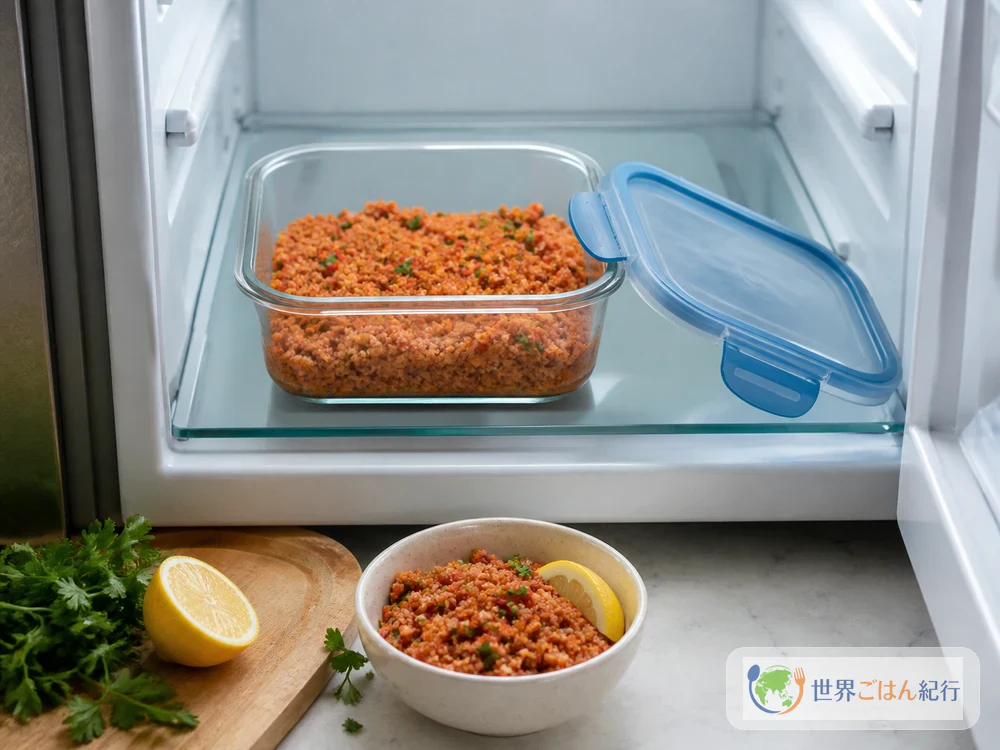
Cool eetch for 15 minutes at room temperature and don't leave it out longer. Then spread it in a container about 1 inch (3 cm) deep and refrigerate. A shallow container cools to the center more easily than a thick bowl. By the next day the acidity and grain have settled. It contains raw vegetables, so eat it within 2 days. Keep the lettuce in a separate container, pat it dry, and add it just before eating. Freezing breaks down the bulgur and raw vegetables, so make a half batch instead.
Q1. What can I substitute for pomegranate molasses?
In place of 2 tbsp pomegranate molasses, mix 1 tbsp lemon juice, 1 tsp tomato paste and 1/2 tsp sugar. The acidity and color come close, but you lose some of the fruitiness and dark sweetness. If you plan to make eetch several times, try a lemon-only batch first, then decide whether to buy a bottle.
Q2. What if I can't eat wheat?
You can replace the bulgur with quinoa or rice. Absorption and texture change, though, so think of the result as a red grain salad rather than eetch. If you need it to be gluten-free, check the ingredients and manufacturing lines of the seasonings. Don't reuse a cutting board or bowl that has touched wheat.
Q3. What if it's too sour or watery?
If it is too sour, mix 1 tbsp boiling water with 1 tsp olive oil, check the saltiness, and add it little by little. Sugar alone blurs the tomato flavor, so also check whether it needs salt or oil. If it is watery, rest it in the refrigerator for 15 minutes and judge again. If liquid still pools at the bottom, add fine bulgur 1 tbsp at a time.