When the pumpkin comes out of the oven, it smells like a baked sweet potato, with butter, honey, dried apricots, raisins and cardamom layered over it. Cut in, and the rice slowly tumbles out. Ghapama (ղափամա) is an Armenian festive dish in which a round pumpkin becomes the cooking vessel, steam-baking the rice, dried fruit and nuts packed inside. Expect sweet pumpkin, buttery rice with grains that stay distinct, tart fruit and the crunch of nuts.
About ghapama
Ghapama is a stuffed pumpkin often made at Christmas, and at home it is eaten from New Year through the Armenian Christmas season. The pumpkin is filled with rice, dried fruit, nuts, butter, honey and cinnamon, baked, then opened along the ribs like a flower. Half-cooked rice is mixed with the fruit and packed in loosely, so it can finish in the pumpkin's steam.
A sweet pumpkin vessel, rice with grains that stay distinct, the tartness of dried fruit, the crunch of nuts, and the aroma of honey and butter. This home version adds a small amount of saffron to lift the aroma of the rice.
Ghapama in a home kitchen
The hard parts at home are choosing the pumpkin and managing the rice's moisture. Traditional recipes call for a round pumpkin of 2 to 3 kg, but in a home oven that is too big for the heat to reach the center, so use a small one of 1.4 to 1.8 kg. Par-cook the rice first and stuff the pumpkin while the grains still have a core; they finish cooking inside.
Try to cook the rice completely in the pumpkin and the sugar from the fruit and the butter pool at the bottom, leaving the rice heavy. So cook the rice about 70% in a pot, drive off the moisture from the filling in a skillet, and let the pumpkin supply only aroma and steam.
| What to watch | Traditional | Home version |
|---|---|---|
| Pumpkin | A round yellow pumpkin of 2 to 3 kg | A small pumpkin of 1.4 to 1.8 kg. Avoid ones with a very hard rind |
| Rice | Long-grain rice, half-cooked, then stuffed | Basmati boiled for 7 minutes, leaving a white core in the center |
| Fruit | Raisins, dried apricots, prunes, cherries and so on | Dried apricots, raisins and prunes, to balance tartness and sweetness |
| Fat and sweetener | Ghee or butter, honey | Unsalted butter and honey. Do not reduce the filling; it scorches easily |
| Baking | Around 325 to 375°F, until the pumpkin is tender | Steam-bake at 180°C until a skewer slides in without resistance and the skin wrinkles slightly |
Ingredients (serves 4)
One small pumpkin serves 4. This is not a dish to heap on a plate like rice; you scoop pumpkin flesh and sweet rice together, so beside a meat dish it can stretch to 6.

This recipe uses dairy, tree nuts and honey. Do not give honey-containing dishes to children under 1 year old. If anyone has a nut allergy, leaving out the nuts isn't enough. Check dried fruit labels for nuts processed in the same facility. The pumpkin is large and slippery, so when cutting the lid, set it on a dry board and advance the knife a little at a time rather than forcing it through.
Choosing ingredients for ghapama
Pumpkin, butter, honey and dried fruit are easy to find at an ordinary supermarket. Three things are worth seeking out at a specialty or Middle Eastern grocery, or online: basmati rice, which keeps the grains light; saffron, which changes the aroma in tiny amounts; and whole cardamom, which is less likely to taste powdery.

Basmati keeps the grains of rice light inside the pumpkin. You can make this with short-grain rice, but it turns sticky as it cools and drifts toward a sweet mixed rice. Leftover basmati also goes into Kabuli palaw and amich.
Saffron earns its place because honey and butter alone smell plainly sweet; a small amount gives the rice a festive look. Steep it in hot water and let it scent the rice rather than darken it, since adding more to deepen the color makes it taste medicinal. 0.08 g is enough.
Cardamom can be used ground, but splitting whole pods releases a green fragrance that keeps the dried fruit's sweetness from feeling heavy. Leftover whole pods are handy in milk-simmered sweets such as doodhpak and in Middle Eastern rice dishes.
Method: steam-bake par-cooked rice in the pumpkin
Ghapama is a dish where you don't cook the rice through. Let the pumpkin shell absorb the last of the moisture. If you pack the filling in tight, the rice has no room to swell, so stop at about four-fifths full. Judge doneness by whether a skewer slips easily into the flesh, not by the color of the surface.
Common ghapama mistakes and fixes
With ghapama, moisture management changes the result more than seasoning does. A bigger pumpkin looks grander, but its baking time is hard to predict in a home oven. For a first try, a small pumpkin and a less-than-full filling are more reliable.

| Problem | Cause | Fix |
|---|---|---|
| Rice is sticky | Boiled too long, or the same amount of short-grain rice was used | Stop basmati at 7 minutes and short-grain at 6 |
| Liquid pools at the bottom | Fruit over-soaked, or moisture not driven off from the filling | Stir 4 minutes over low heat in the skillet until no liquid remains on the bottom |
| Pumpkin cracks | Lid cut too large, or walls too thin | Cut the lid 10 to 12 cm across and leave at least 0.5 inches (1.5 cm) of flesh in the walls |
| Surface scorches | Baked long without foil | Keep foil on for the first 45 minutes and check color only in the last stretch |
| Flesh is hard | Pumpkin too big or baking too short | Add 10 minutes at 350°F (180°C) and check the thick part with a skewer |
If it tastes too sweet, next time cut the honey to 25 g and raise the orange zest to 4 g. If the aroma is flat, split whole cardamom and crush the seeds instead of adding ground cardamom; the result is lighter. More cinnamon pushes it toward dessert, so go easy on days when you want to eat it as a rice dish.
Serving and storing ghapama
Serving and pairings
Ghapama is most fun set in the middle of a big platter and cut open at the table. Serve the softened pumpkin flesh along with the rice, rather than scooping out the filling and leaving the skin behind.

Because this is a sweet rice dish, what you want beside it is salt and acidity. A sauce of 4 oz (120 g) strained yogurt mixed with 1 g salt, 2 tsp (10 ml) lemon juice and 5 g chopped parsley cuts the heaviness of the butter and honey. Thin lavash or pita topped with a little rice and pumpkin works well too.
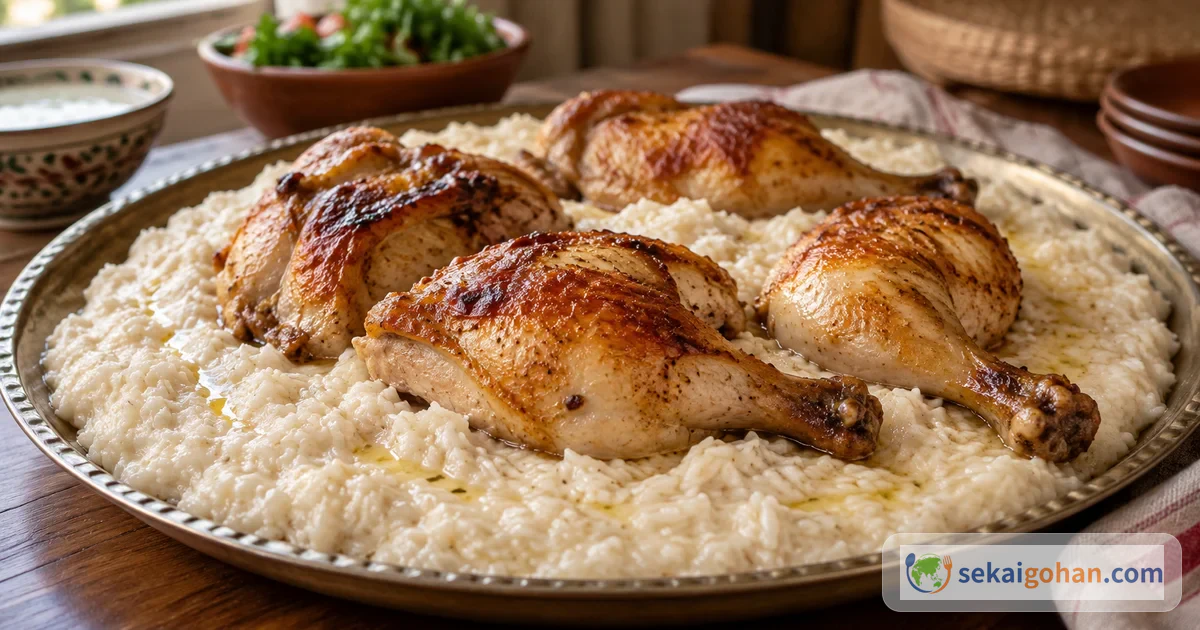
On an Armenian menu, serve small portions beside harissa, which quietly combines chicken and wheat, for a contrast of salty and sweet. Amich makes an interesting comparison: it stuffs rice and dried fruit into a whole chicken instead of a pumpkin. For more rice-dish aromas along the same lines, try Azerbaijan's shah plov.
| Pairing | Role | Easy substitutes |
|---|---|---|
| Yogurt sauce | Cuts the sweetness | Strained yogurt, lemon, salt |
| Lavash | Wraps rice and flesh | Pita, thin tortilla |
| Herbs | Lighten the butter | Parsley, dill, mint |
| Salty meat dish | Moves the sweet rice toward a main course | Roast chicken, a salty stew |
Storage and reheating
Ghapama is best fresh, but if four people can't finish it, store the pumpkin and the filling separately so they are easier to handle the next day. Refrigerated whole, the center cools slowly and the rice absorbs too much moisture.

| Storage | Guideline | Reheating |
|---|---|---|
| Refrigerator | 2 days | Move to a baking dish, sprinkle with 1 tbsp (15 ml) water and heat at 350°F (180°C) for 10 minutes |
| Freezer | Filling only, 3 weeks | Thaw in the refrigerator for half a day, then 5 minutes in a skillet over low heat |
| Lunch box | Not recommended | Rice and fruit hold a lot of moisture, so avoid carrying it at room temperature |
Cold, the butter firms up and the aroma of the rice closes in, so heat a portion in a 600 W microwave for 90 seconds and eat it once it steams again. If it tastes too sweet the next day, drop 1 tsp (5 ml) lemon juice on the surface after reheating.
FAQ
Can I make it with other kinds of pumpkin?
Yes, and in a home oven a small pumpkin is easier to handle. Fluffy, starchy varieties are low in moisture, so put water in the baking dish and steam-bake. A very hard rind holds up better when cut open but lengthens the baking time.
How do I change it if I use short-grain rice?
Reduce the rice to 5.5 oz (160 g) and stop the parboil at 6 minutes. Short-grain rice turns sticky easily, so skip rinsing after boiling and let it drain thoroughly in a colander for 3 minutes. When cooking the filling, keep the heat low and just coat the grains in butter, taking care not to crush them with the wooden spoon.
Is it fine without saffron?
Yes. Saffron is an aromatic aid; the backbone of the dish is pumpkin, rice, dried fruit, nuts and honey. Turmeric brings an earthy smell, so it is a poor choice just for adding yellow. If you leave out saffron, bring out the cardamom and orange zest a little more.
Is there a version with meat?
Yes. Some versions add meat, and others add more pumpkin to the filling. Meat changes how you judge doneness and storage, so for a first try, learn the moisture of the pumpkin and rice without it; it is less likely to fail.