Lahmajoun on Flour Tortillas: Thin Beef and Tomato Topping (Msashot)

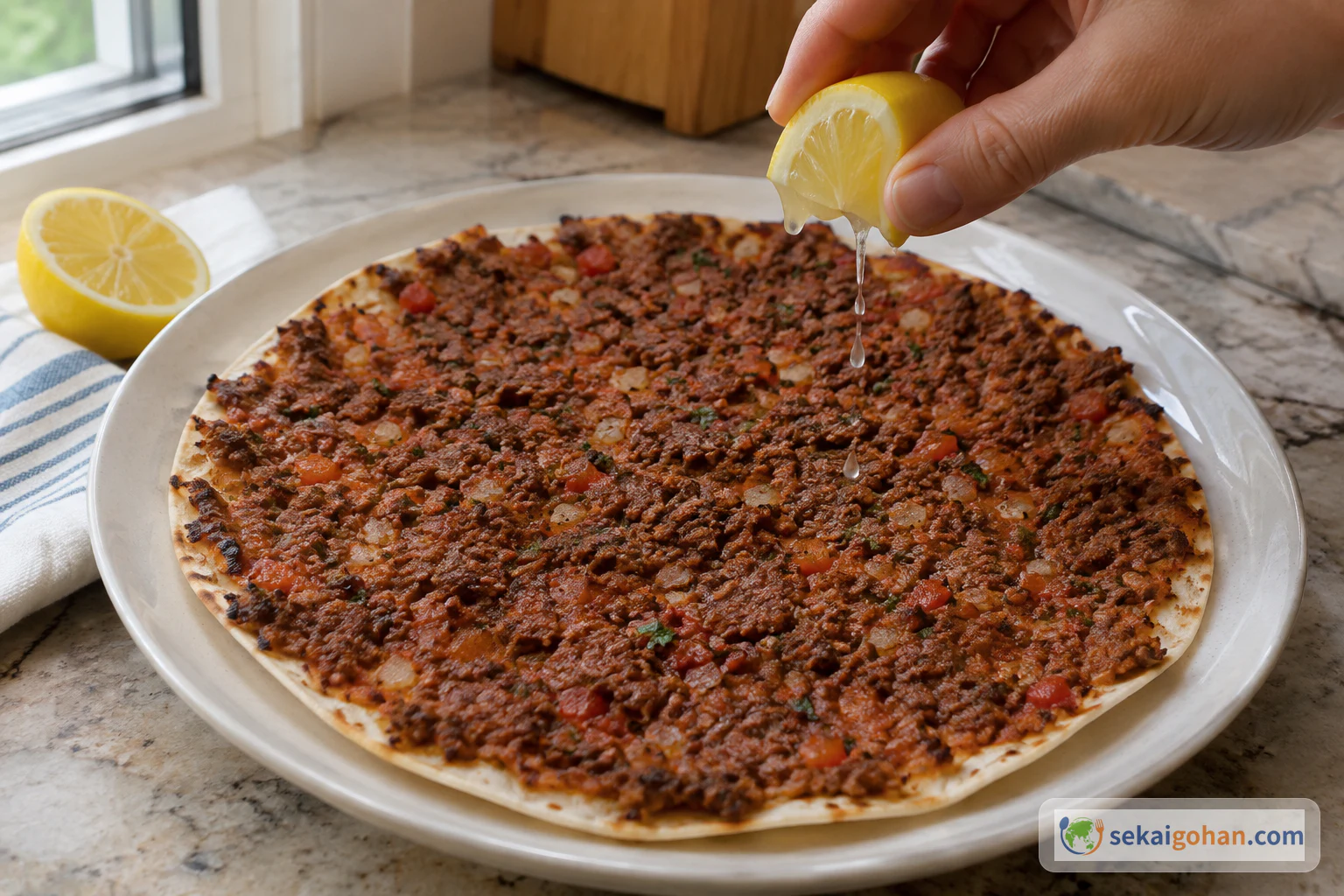
A flour-tortilla lahmajoun with a thin browned beef and tomato topping as fresh lemon is squeezed over it
Level
Intermediate
Cuisine
Armenian

A store-bought flour tortilla version of lahmajoun, based on a family recipe by Lauren of Bon Appeteach. Covers every ingredient and step, why color and baking time can't confirm doneness, and how to check a thin beef layer with a fine-tipped thermometer, with the limits of that method stated plainly.

Cooking flow

Cooking steps

STEP11 / 12

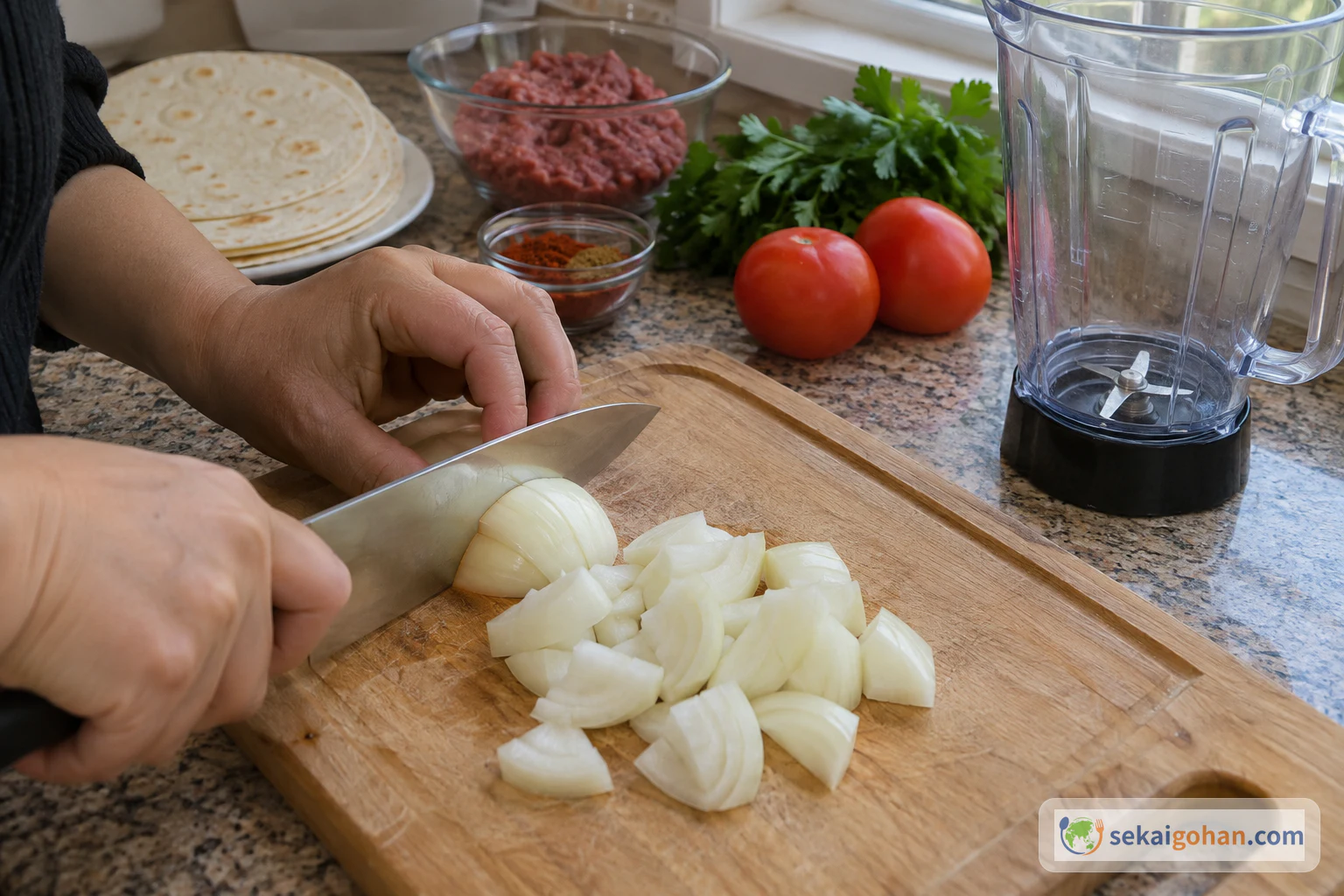
Prep the onion, garlic and parsley

Peeled onion being cut coarsely on a board, with a blender jar nearby
Coarse pieces are enough for the blender

Peel the onion on a clean board kept for vegetables and lemon, and cut it into coarse pieces. The blender will do the rest. Peel the 3 garlic cloves and leave them whole. Rinse the parsley under clean running water, gently pat it dry with a clean towel, then measure 1/2 cup.

STEP22 / 12

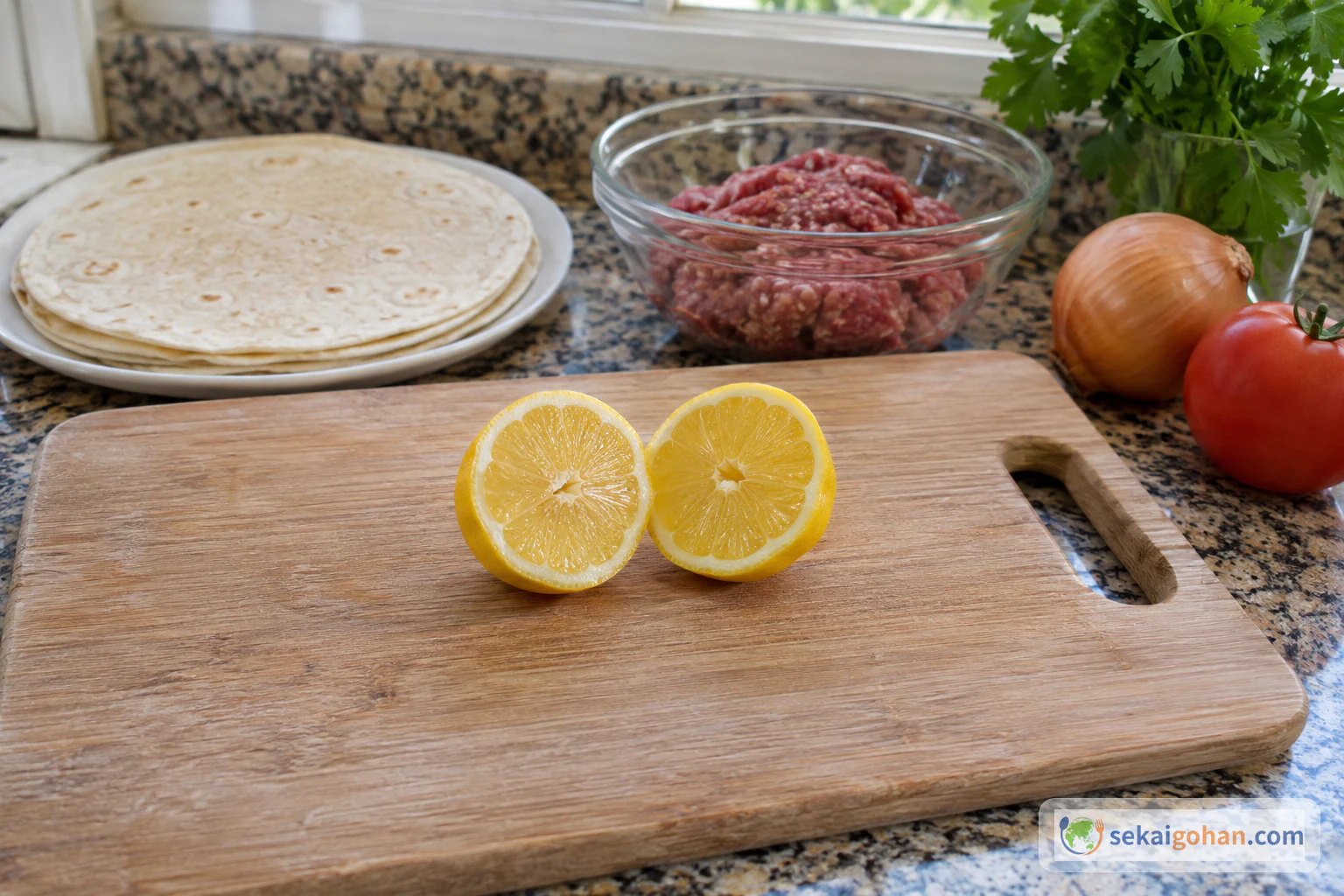
Wash and cut the lemon

A washed lemon being cut on a cutting board
Cut the lemon before the beef work starts

Wash the lemon peel well under running water, then dry it with a clean towel. Its juice goes on after baking and won't be heated. Cut the lemon on the clean vegetable board for squeezing, then set it aside for the finish.

STEP33 / 12

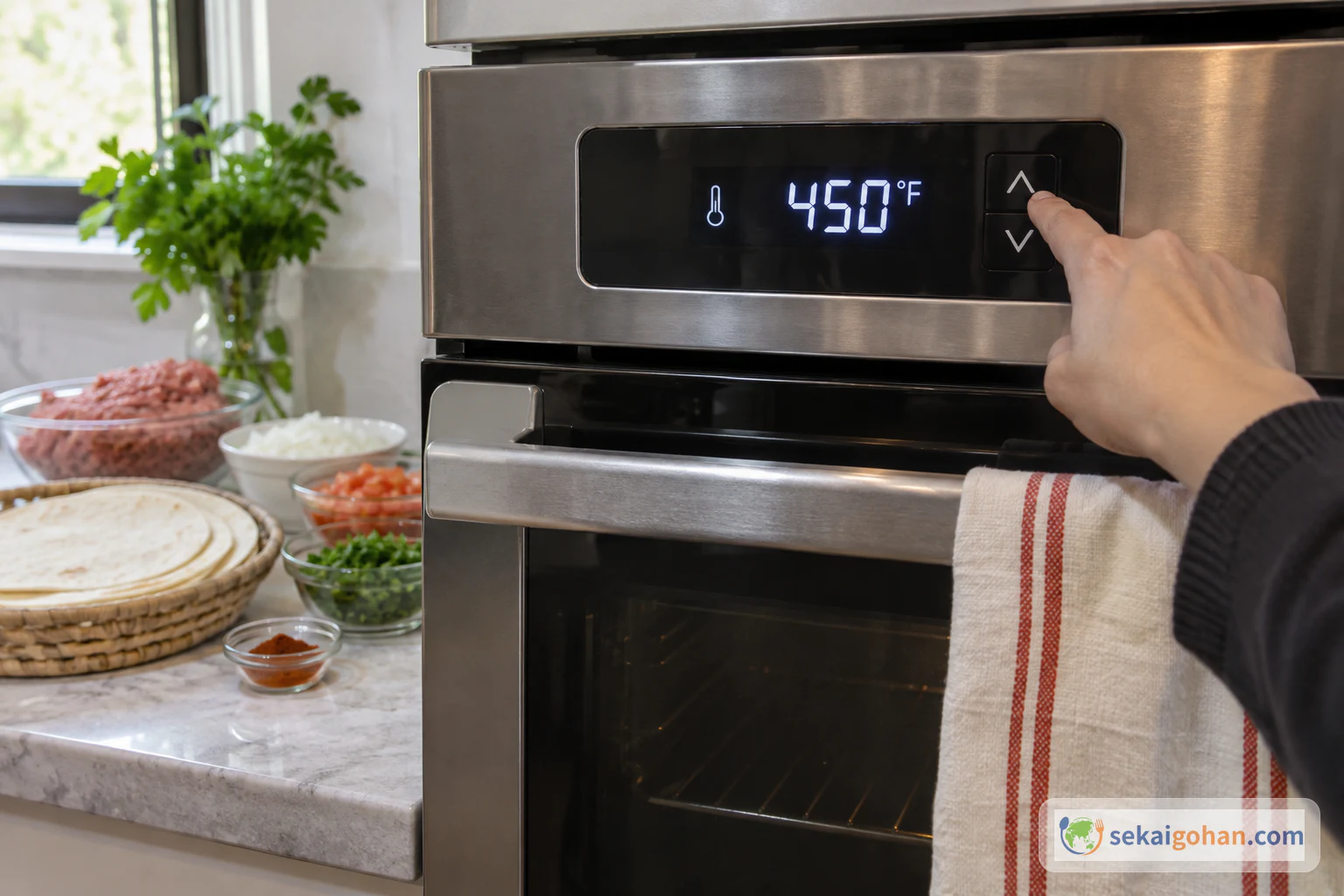
Preheat the oven and check the thermometer

A hand setting a home oven control to 450°F
Set the oven to 450°F before any food goes in

Set the oven to 450°F (about 232°C). While it heats, put the thermometer probe in ice water and confirm that it reads near 0°C. If it doesn't, don't rely on its readings.

STEP44 / 12

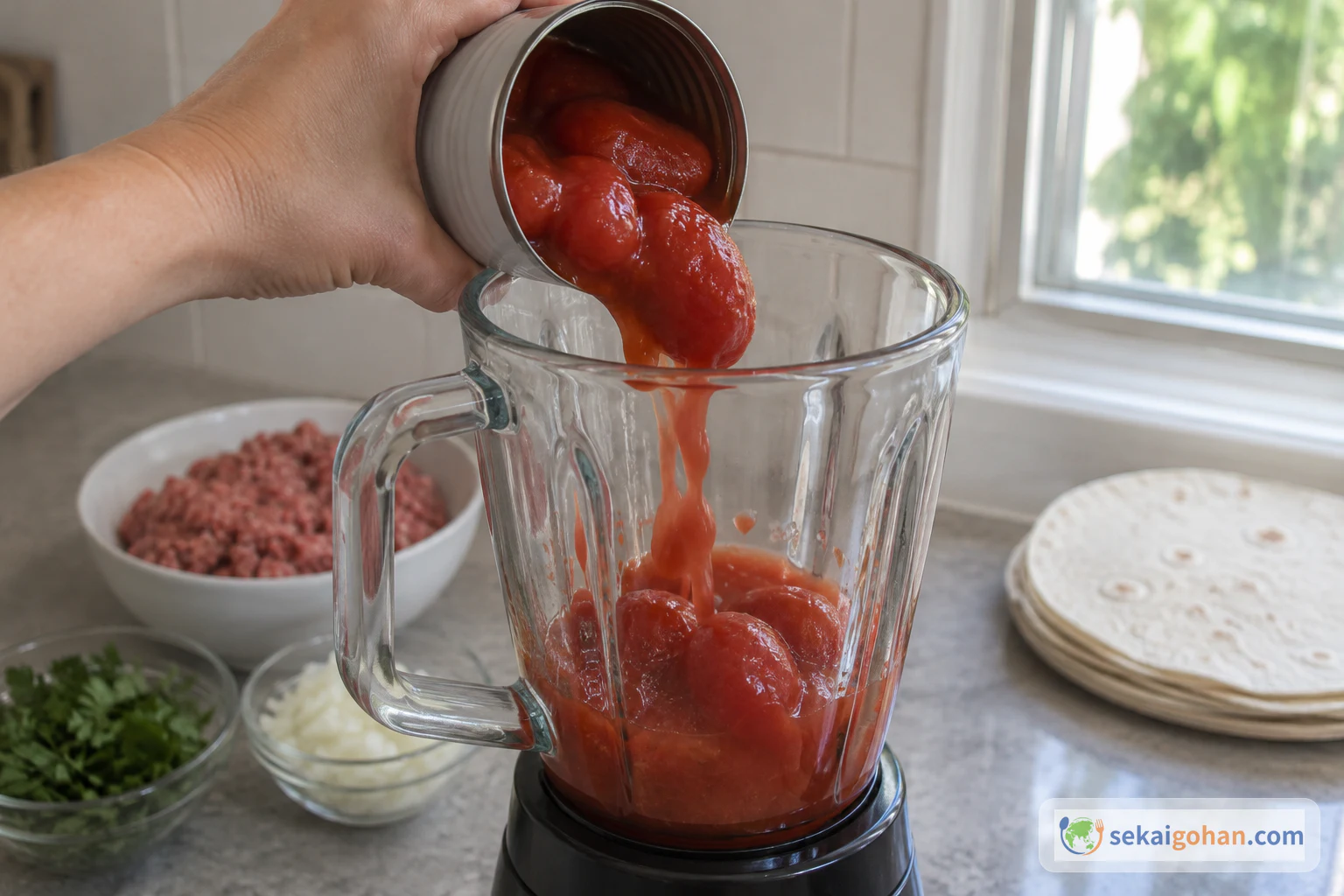
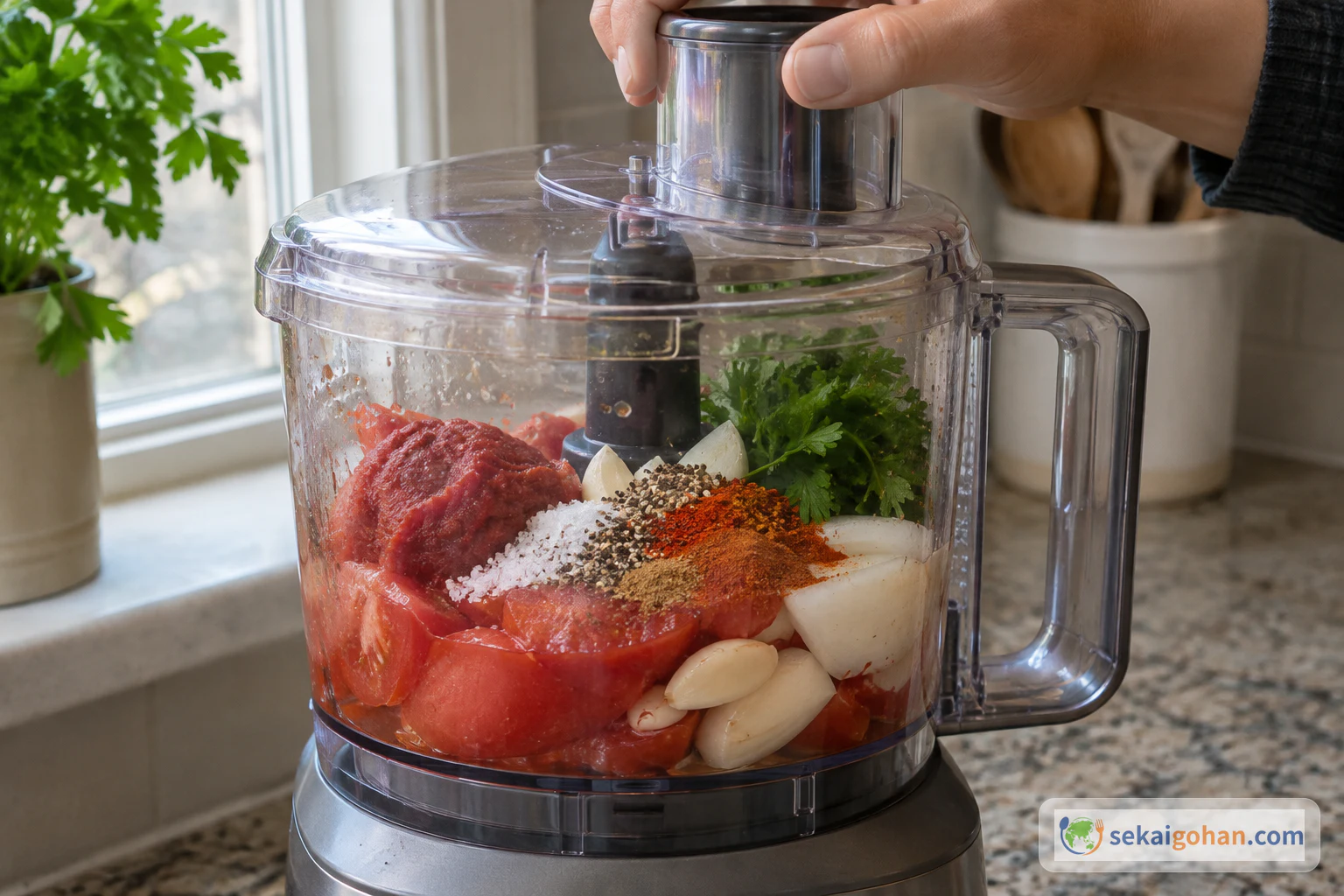
Load the blender

Whole canned tomatoes and their juice going into an empty blender
The tomatoes go in undrained

Open the can of whole tomatoes. Don't drain it; tip the tomatoes and all their juice into the blender. Add 3 tbsp tomato paste, the coarsely cut onion, the 3 peeled garlic cloves and the 1/2 cup washed and dried parsley. Finish with the seasonings: 1 tsp salt, 1/2 tsp black pepper, 1 tsp sweet paprika, 1 tsp Aleppo pepper, 1/4 tsp cayenne pepper as well as the Aleppo pepper, and 1/2 tsp cumin.

STEP55 / 12

Blend the sauce

A covered blender pulsing tomatoes, onion, garlic, parsley and seasonings together
Pulse the vegetables and seasonings without the beef

Put the lid on firmly. The beef stays out of the blender. Pulse until everything has blended into a sauce. Pour the sauce into a separate large bowl, keeping all the liquid.

STEP66 / 12

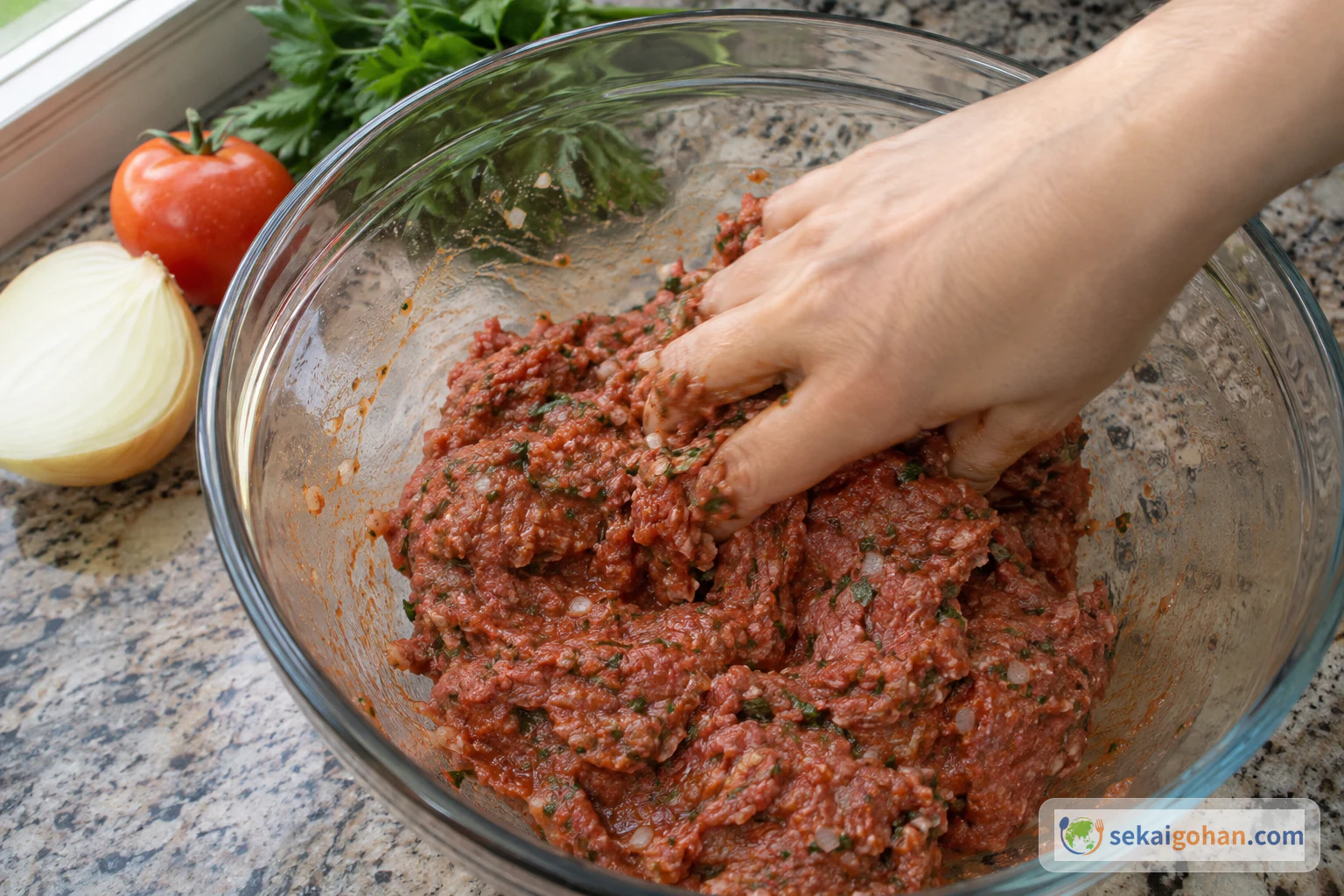
Mix the beef into the sauce

A hand mixing raw beef and sauce into a thin paste in a bowl
Mix until the beef and sauce form a thin, even paste

Wash your hands, then add 1 lb lean ground beef to the bowl of sauce. Mix the beef and sauce by hand until they form an even, thin paste. Wash your hands well afterward.

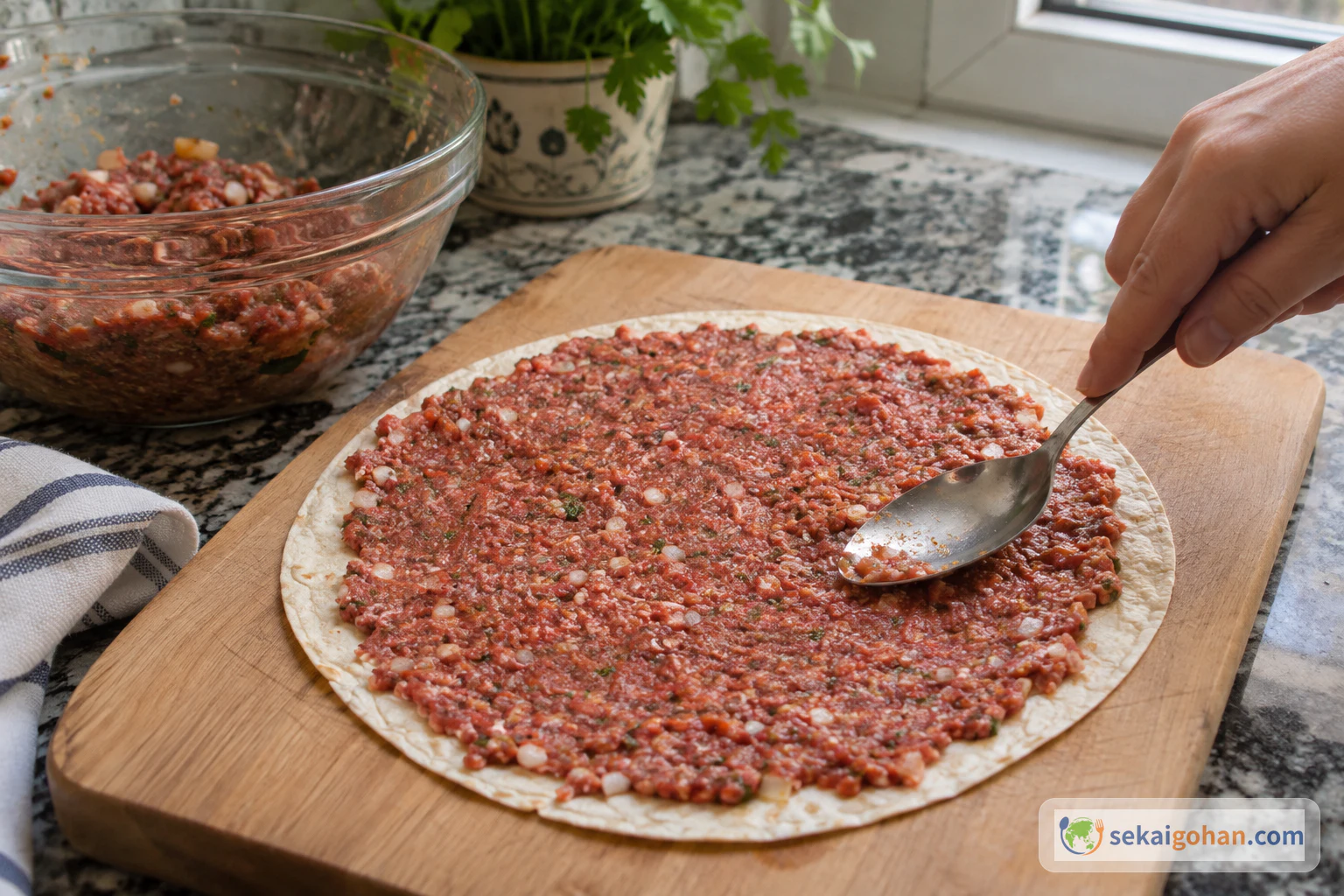
STEP77 / 12

Fill the tortillas

Raw meat mixture spread thinly over a tortilla with a narrow bare edge
Spread thinly and leave a small border

If liquid has separated, stir the mixture again just before portioning. Don't drain it or add liquid. Don't leave the raw mixture standing at room temperature. Lay one flour tortilla flat on a clean work surface and spoon about 1/4 cup of the mixture onto it; on a small tortilla, use less rather than overfilling it. Spread the mixture thinly, leaving a small bare border, until the tortilla is evenly covered.

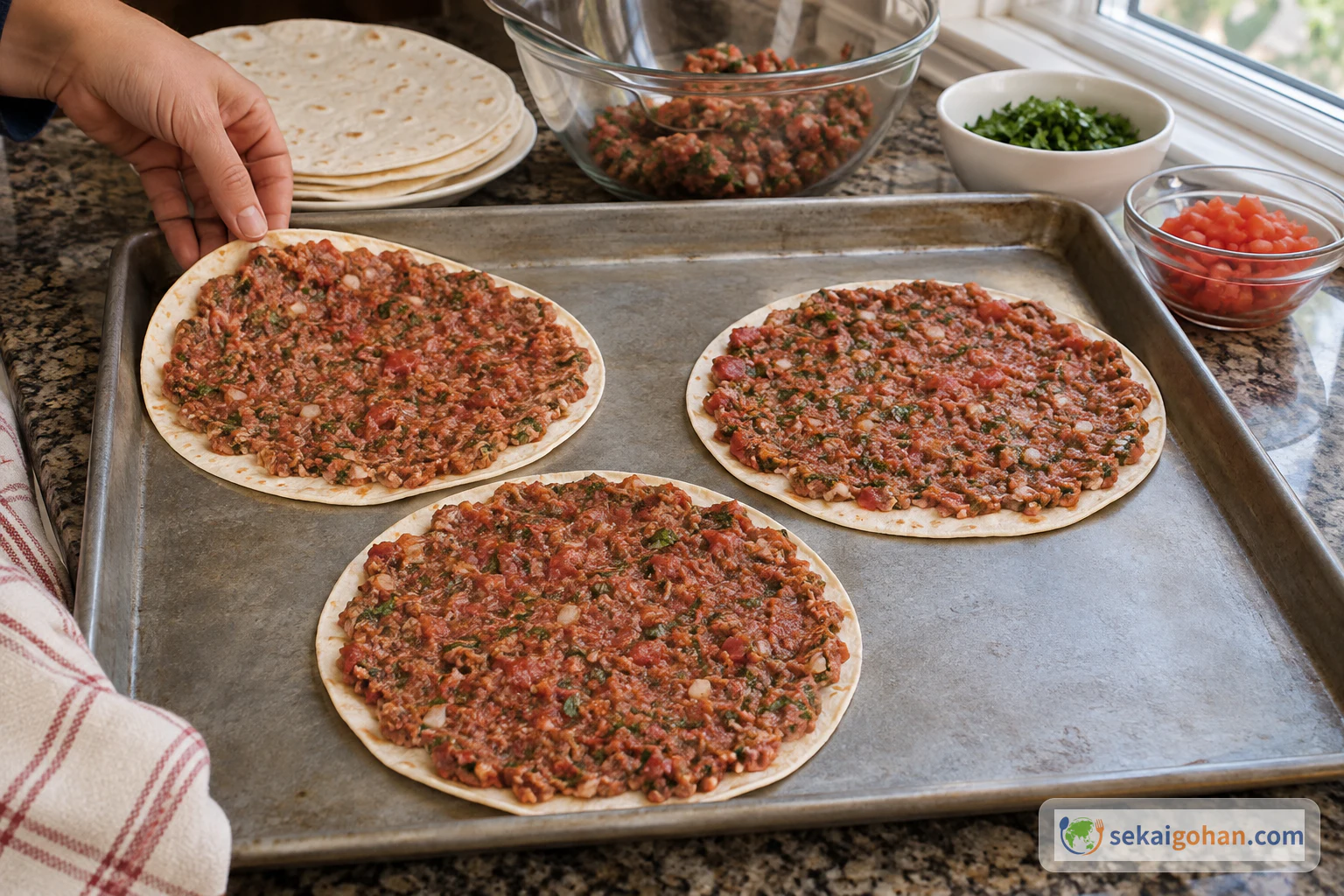
STEP88 / 12

Arrange the tortillas on a baking sheet

Three topped raw tortillas sitting meat side up and apart on a baking sheet
Meat side up, with no overlap

Place the topped tortillas meat side up on a baking sheet without overlapping, about 3 to a sheet. Fill the rest of the sheet the same way. Then wash your hands and the tools that touched raw meat.

STEP99 / 12

Bake the first sheet

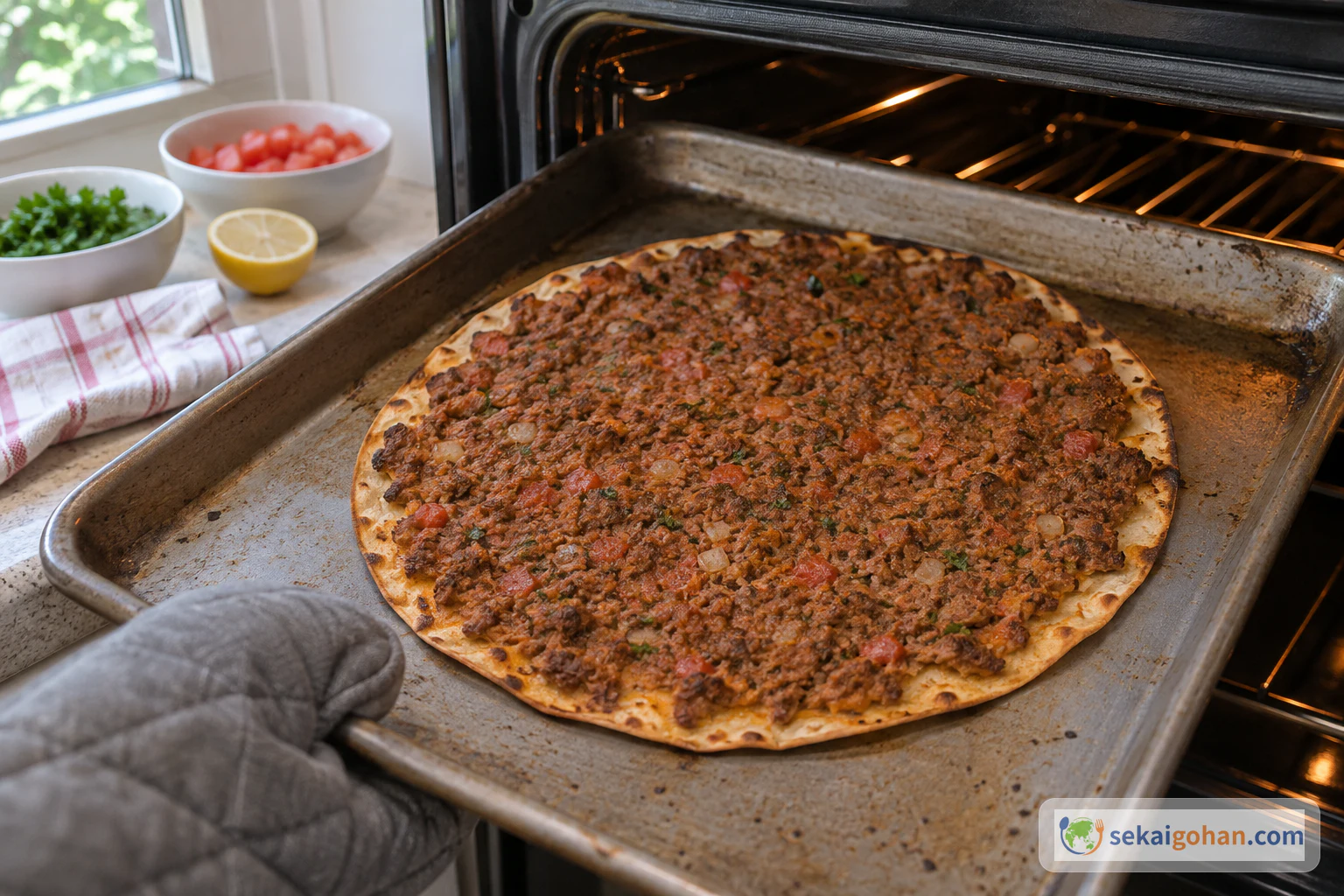
A flour tortilla on a tray at the oven with a browned, set topping and browned edges
Browning is a baking cue, not proof of doneness

Slide the sheet into the preheated oven, baking one sheet at a time. Bake for 8–10 minutes, and take the first reading at 8 minutes. The topping should look set and browned rather than wet, and the tortilla edges should brown. Color doesn't confirm doneness, so at 8 minutes take the sheet out with oven mitts and measure the temperature right away.

STEP1010 / 12

Check the temperature of the meat

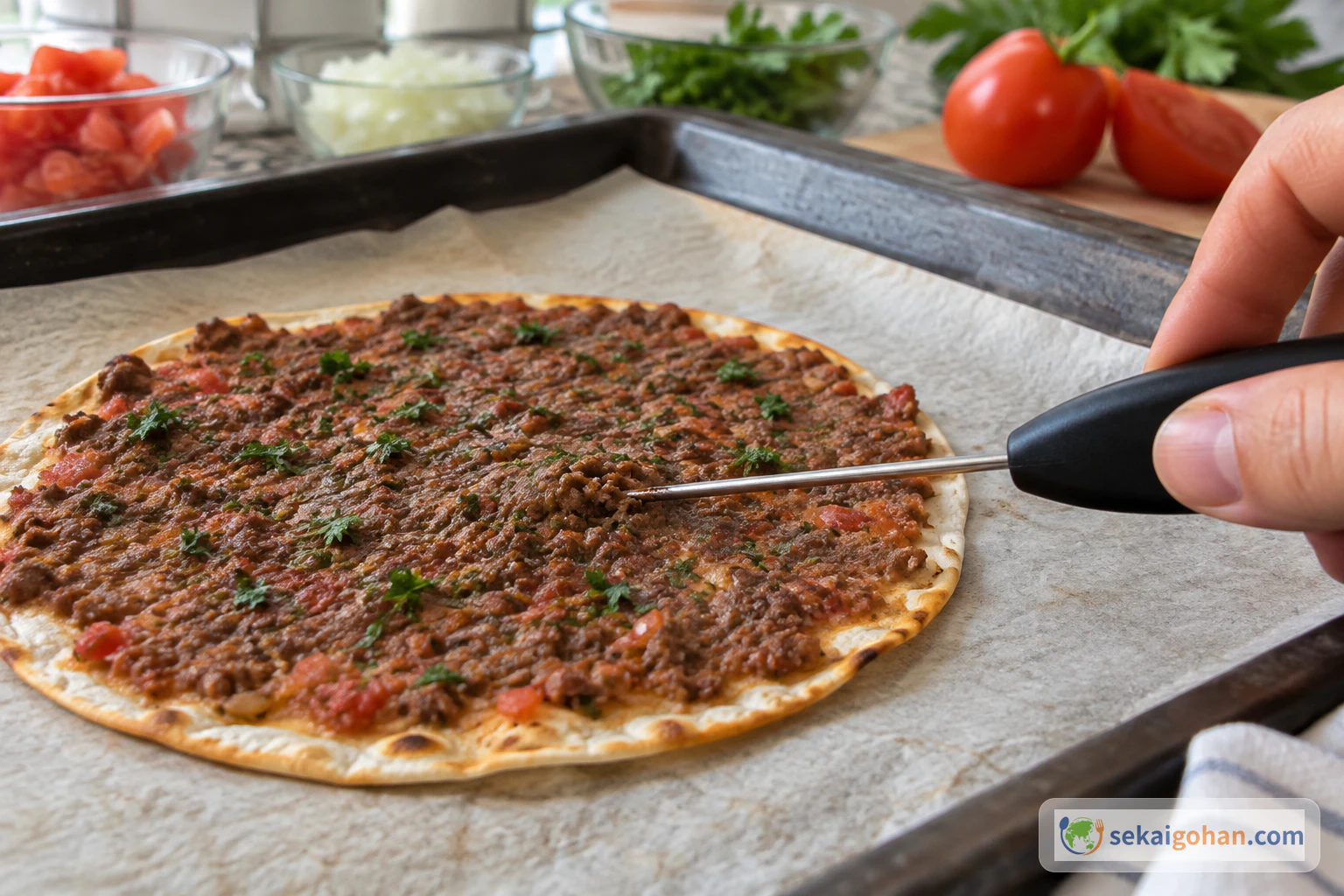
A fine probe inserted horizontally into the thickest part of a thin cooked beef topping
Insert from the side and keep the tip inside the meat

Use a fine-tipped digital probe thermometer. Insert it from the side, almost horizontally, into the thickest part of the meat. Keep the tip inside the meat, not touching the tortilla, sheet or any paper. Insert it as far as your thermometer's manual directs; for thermocouple types, go 1/4 inch (about 6 mm) or deeper.

Wait for the display to settle before reading it. Measure several spots on each piece, measure every piece, and go by the lowest number.

  • Any spot below 167°F (75°C): Return the sheet to the oven, keep baking, and measure again.
  • Every spot at 167°F (75°C) or higher: Return the sheet to the oven for at least 1 more minute, then take it out.
  • Tip won't stay inside the meat: The number doesn't show the temperature of the meat, so don't count that piece as confirmed. On the next tortillas, leave enough thickness at the thickest part to hold the tip.
  • No fine-tipped probe thermometer: You can't confirm this dish is cooked through. Color, time, appearance and photos can't stand in for a reading.

Wash the probe before reusing it if it touched raw meat.

STEP1111 / 12

Rest the lahmajoun and bake the remaining sheets

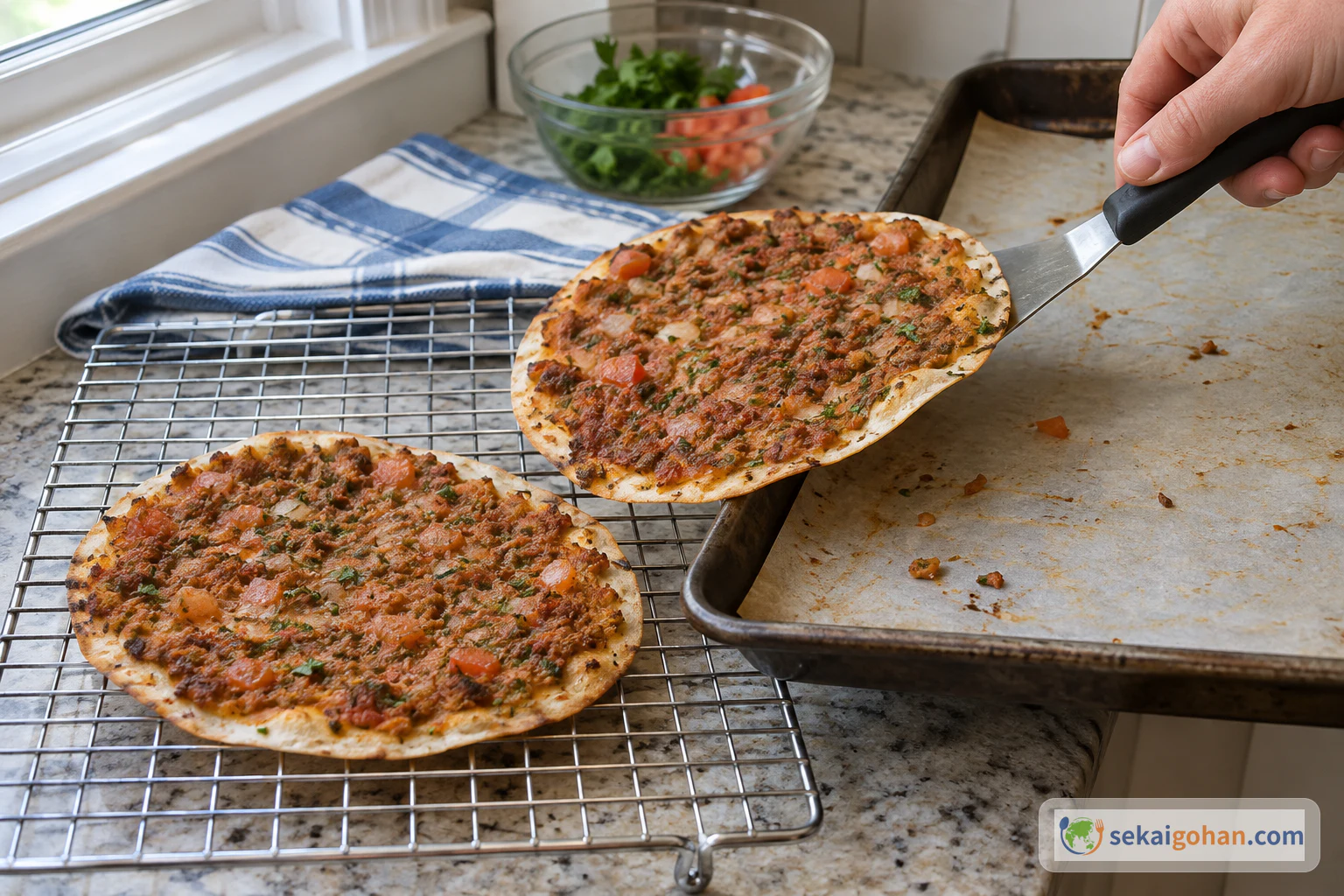
A spatula moving a baked lahmajoun from the tray to a wire rack
From the sheet to the rack

Once the extra baking is done, leave the lahmajoun on the sheet for a short moment. Use a spatula to move the pieces to a wire rack. For the next sheet, repeat from stirring the mixture again, measuring every piece again.

STEP1212 / 12

Finish with lemon and serve

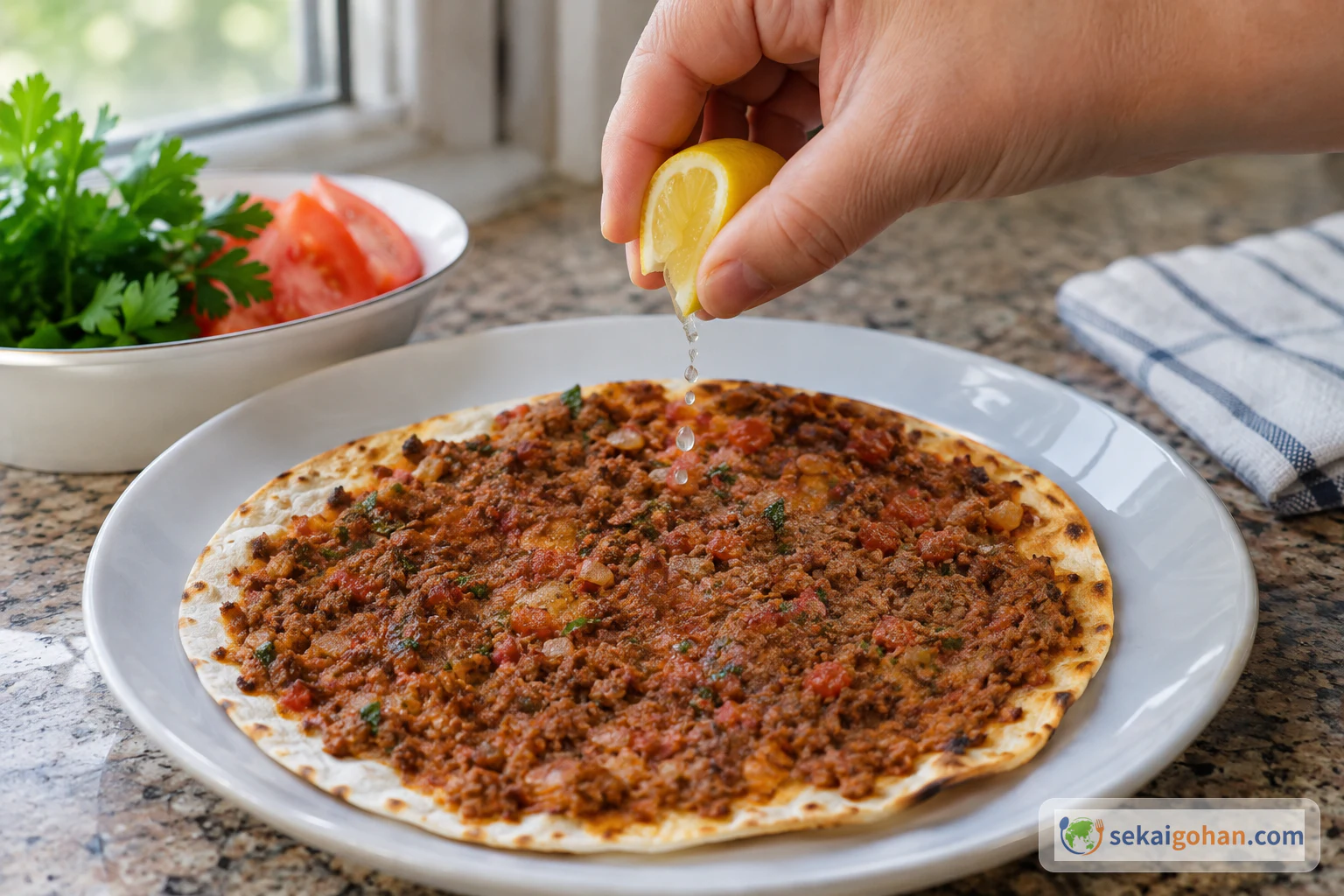
Fresh lemon juice being squeezed over a cooked tortilla lahmajoun
Add the lemon only after baking

Squeeze fresh lemon juice over the cooked lahmajoun to taste. Serve the lahmajoun fresh and warm.

0 / 0
Ingredients

Ingredients

1 / 1

Ingredients

Ingredient Amount Role
Lean ground beef 1 lb The topping; mixed in by hand after blending
Whole canned tomatoes, with their juice 14.5 oz Body and moisture of the sauce
Tomato paste 3 tbsp Concentrated tomato flavor
Onion 1 Sweetness; peeled and coarsely cut
Garlic 3 cloves Aroma; peeled
Parsley 1/2 cup Fresh herb flavor, blended into the sauce
Salt 1 tsp Seasoning
Black pepper 1/2 tsp Seasoning
Sweet paprika 1 tsp Color and mild pepper flavor
Aleppo pepper 1 tsp Chile flavor
Cayenne pepper 1/4 tsp Heat, in addition to the Aleppo pepper
Cumin 1/2 tsp Earthy aroma
Flour tortillas, ready-made 18 The base
Fresh lemon juice to taste Finish, squeezed over after baking
0 / 0

Lahmajoun comes out of the oven in minutes: a thin layer of beef and tomato baked hot onto flatbread, finished with a squeeze of lemon. In Armenian cities, baked msashot, or lahmajoun, is sold as street food. The yeast-dough version is soft enough to fold, with crisp edges, and you eat it by hand. This home version keeps the bright, spiced topping and uses ready-made flour tortillas as the base. Raw beef, tomato and spices are blended into a thin paste, spread over the tortillas and baked at 450°F (about 232°C).

Lahmajoun and Msashot in Armenia

Armenia's official tourism site lists baked msashot (lahmajoun) among the country's present-day urban street foods. Similar dishes go by the Turkish name lahmacun, which is built differently, on its own dough.

At home, the base can be a thin lavash-style flatbread, homemade or store-bought. Good store-bought lavash or flour tortillas both work as shortcuts, and tortillas make the recipe quicker. This version uses flour tortillas.

Ingredients: Beef, Tomato and Spices on Flour Tortillas
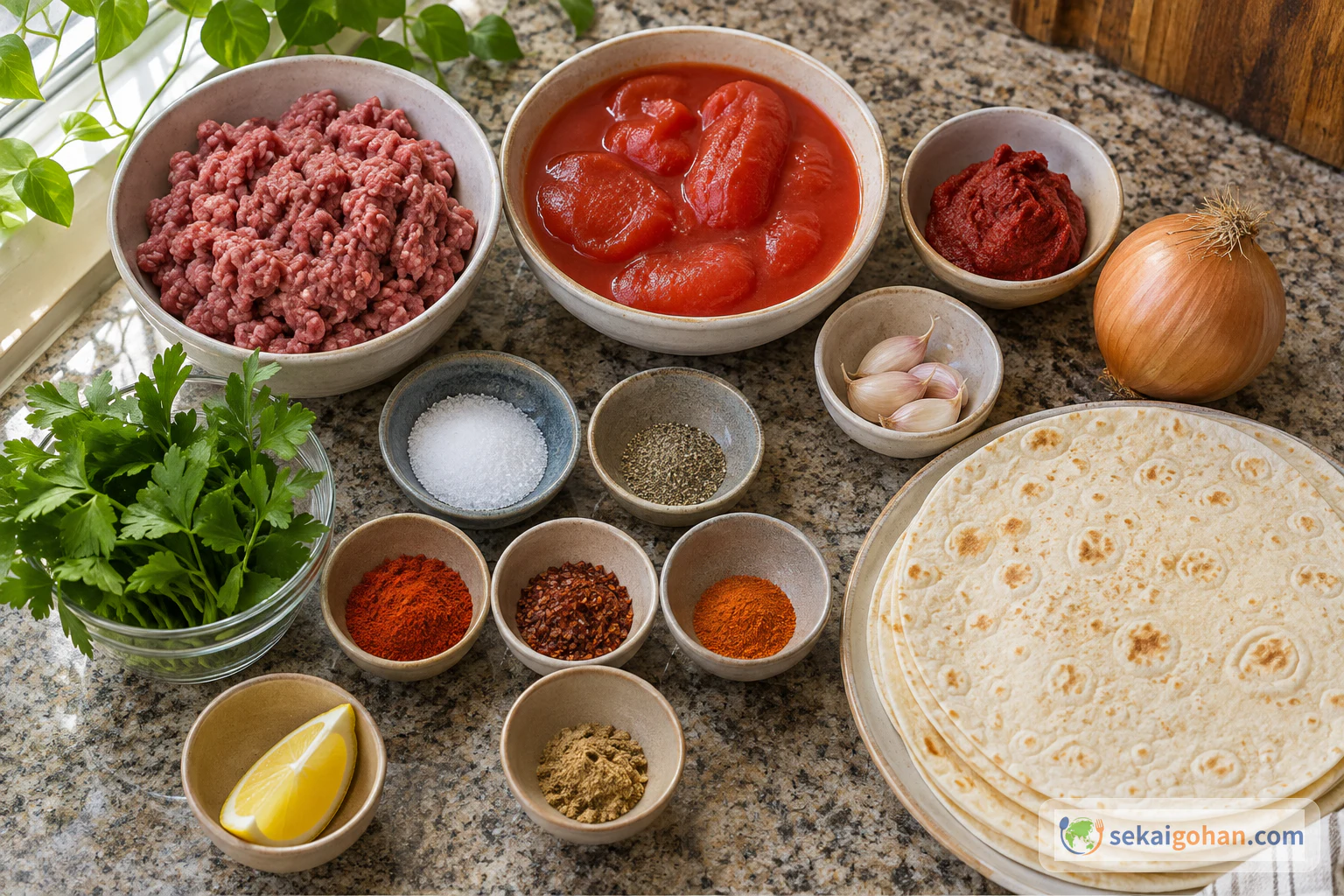
Lahmajoun ingredients in separate bowls and containers on a counter: raw ground beef, canned whole tomatoes in juice, tomato paste, onion, garlic, parsley, salt, spices, flour tortillas and lemon
Everything that goes into the topping, the tortillas and the lemon for finishing

Equipment

  • Blender with a lid
  • Large bowl
  • Knife and clean cutting board for vegetables and lemon
  • Separate tools for raw beef
  • Can opener
  • Measuring spoons and a 1/4-cup measure
  • Clean towel
  • Spoon for portioning and spreading
  • Baking sheets
  • Oven mitts
  • Spatula
  • Wire rack
  • Fine-tipped digital probe thermometer, such as a thermocouple type, with a probe about 1.5 mm across or less
  • Glass of ice water for checking the thermometer

Choosing Tortillas, Chiles and a Thermometer for Lahmajoun

Tortillas: Choose good-quality ready-made flour tortillas. The recipe makes about 18, with about 1/4 cup of filling each, but tortilla sizes vary, so the filling amount is no guide to the size you need. On a small tortilla, use less and spread it thinly rather than heaping it on.

Tomatoes: Keep the juice from the canned tomatoes; it goes into the filling.

Chiles: The recipe uses both Aleppo pepper and cayenne. Red pepper flakes are sometimes named as an alternative, but swapping either chile, or changing the amount, changes the heat and flavor of the topping.

What stays out: This version uses no oil, yeast, dough flour, egg, cheese or green pepper.

Thermometer: You need a fine-tipped digital probe, such as a thermocouple type, to check the thin layer of meat. These can be expensive and hard to find in stores, so sort this out well before you plan to cook, and check the manual for how far your model must be inserted.

Method: From Blender to Hot Oven

The prep comes first, so the vegetables and lemon are finished before raw beef comes out. Keep the raw beef's tools away from the board you use for the vegetables and lemon.

Fixing Lahmajoun Problems: Thin Layers, Loose Filling and Low Readings

Browning is no proof that the beef is done, because ground beef can turn brown before pathogens are destroyed. Tests on the thicker Turkish lahmacun show why the reading matters. Measured with K-type thermocouples, an air-fried lahmacun peaked at 155°F (68.4°C) at 3 minutes and pathogens survived, even though tasters found it acceptable. At 5 and 8 minutes it was above 167°F (75°C), and the pathogens tested were below the detection limit; baking at 475°F (240°C) for 4 minutes did the same. That dough, appliance and topping all differ from this recipe, so measure your own.

Doneness: check with a thermometer

Hold the center of the food at 75°C for at least 1 minute. Without a fine-tipped probe thermometer, you can't confirm this dish is cooked through. Don't rely on 450°F for 8–10 minutes alone.

Problem Likely reason What to do
Liquid pools in the bowl The mixture has been standing Stir it again before portioning. Don't drain it or add liquid
The filling crowds a small tortilla Too much filling for the size Use less, spread thinly and keep the small border
Filling is uneven across tortillas Tortilla size varies Keep each layer thin rather than loading tortillas to use up the filling
The meat looks brown, but a reading is below 167°F (75°C) Color doesn't show the temperature Return the sheet to the oven and measure again, even if 10 minutes have passed
The probe tip won't stay inside the meat The layer is too thin for that probe Don't count that piece as confirmed. Leave more thickness at the thickest part of the next tortillas
Readings vary across one piece The layer is uneven Go by the lowest number
The thermometer doesn't read near 32°F (0°C) in ice water Its readings are not accurate Don't rely on it for this check

Serving Lahmajoun and Other Versions

Lahmajoun is best served fresh, straight from the oven, with fresh lemon juice squeezed over to taste. Wash the lemon peel well first, and keep the lemon and its cutting board away from the tools you used for raw beef.

Readers report regional differences in how the dish is made. The best-known alternative is a yeast-dough pie, made with oil, bell peppers and drained tomatoes and baked at 425°F on the lower and then the upper rack. It has its own ingredient list and method.

Frequently Asked Questions

Is 450°F for 8–10 minutes enough to cook the beef safely?

The time and browning cues are only a guide, and a tortilla in a home oven can vary a lot. Take a reading at the center, then bake at least 1 more minute.

Which thermometer do I need, and how far do I insert it?

Use a fine-tipped digital probe, such as a thermocouple type, about 0 inches (1.5 mm) across or less. A probe that thin measures thin foods accurately, while bimetal (dial) thermometers have a long sensing area and suit thicker foods.

Follow your thermometer's manual for depth. For thermocouples, insert 1/4 inch or deeper. One older Thermapen model specifies 1/8 inch (3 mm), and the K-745 probe has a 1/4-inch depth gauge built in.

What if I don't have that kind of thermometer?

Then you can't confirm that the dish is cooked through. Baking longer or judging by color is no substitute for a reading.

Why 75°C when other guides say 71°C or 160°F?

This recipe uses one standard throughout: 75°C at the center for at least 1 minute. Other guidelines for ground beef use 71°C (160°F), but stick with the 75°C and 1-minute check given in the steps.

Should I drain the canned tomatoes?

No, keep the juice. Liquid may separate as the mixture stands; stir it back in before you portion the filling.

Sources