Shah Plov: Azerbaijan's Crowned Saffron Pilaf in a Golden Crust

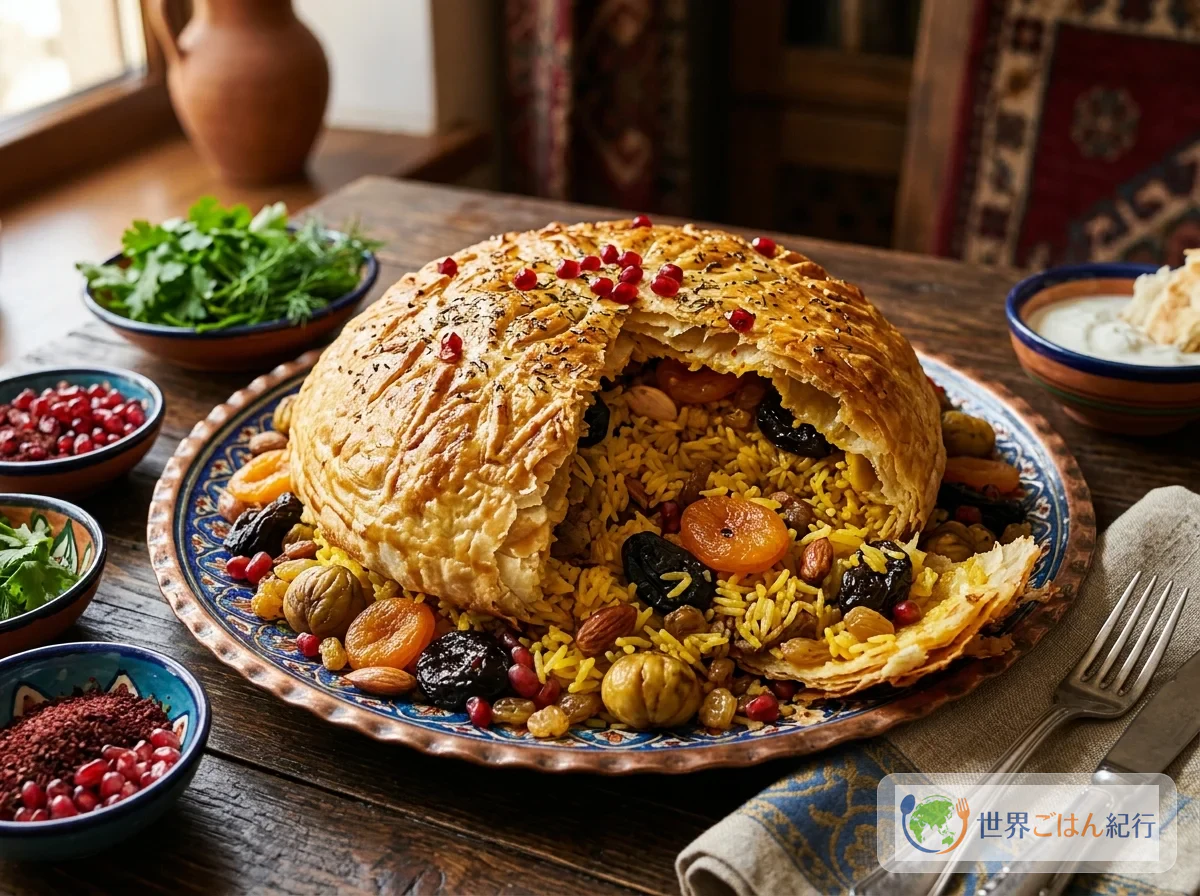
Azerbaijani shah plov: a saffron-gold pastry crust filled with pilaf studded with jewel-like dried fruit
Prep
50 min
Cook
1 hr 30 min
Total
2 hr 20 min
Serves
6 servings
Level
Advanced
Cuisine
Azerbaijani

Shah plov is Azerbaijan's festive saffron pilaf baked in a thin dough crust with dried fruit and chestnuts. See the dough, parboiling, layering and the flip.

Cooking flow

Cooking steps

STEP11 / 8

Soak the basmati rice

30 min

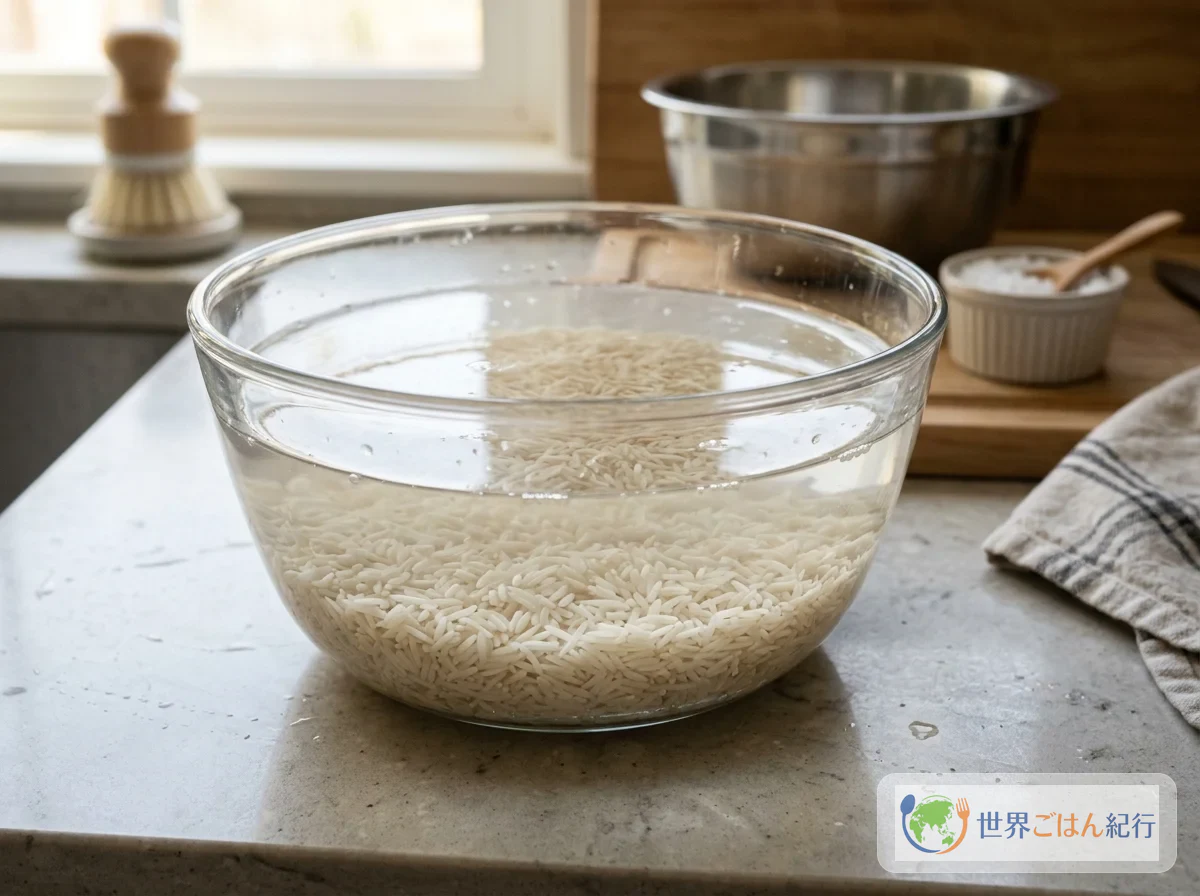
Basmati rice soaking in a bowl of water
Soaking the basmati. Thirty minutes in salted water lets the grains absorb water evenly so they cook up fluffy

Put 1 lb (500 g) basmati rice in a bowl and wash it in plenty of water 3–4 times. When the water runs clear, soak the rice for 30 minutes in water with 1 tbsp salt added. Soaking lets every grain absorb water evenly so no hard core is left after cooking.

Meanwhile, steep 1/2 tsp saffron in 3 tbsp just-boiled water to make saffron water, and soak the dried fruit in lukewarm water for 10 minutes to soften it.

STEP22 / 8

Make the qazmaq dough

20 min

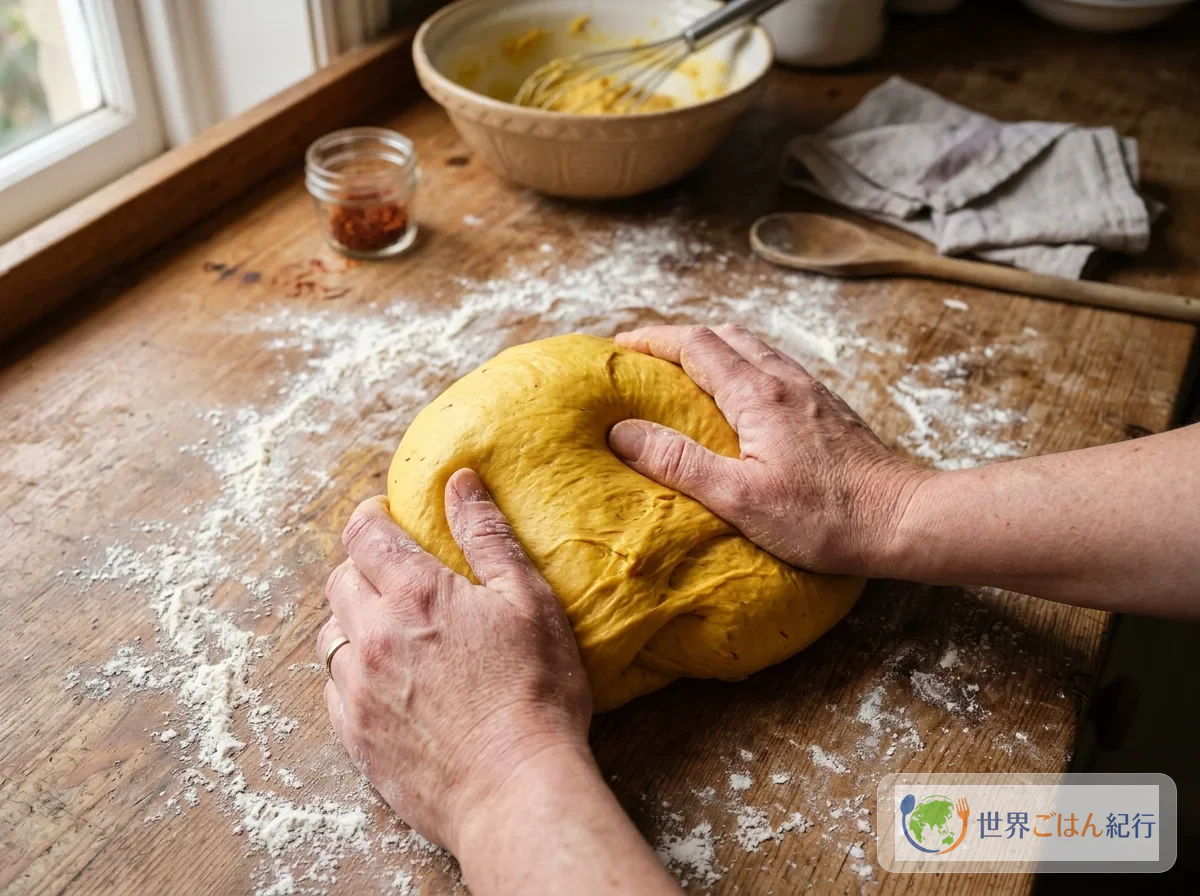
Kneading golden dough by hand
Making the qazmaq. Knead the saffron-gold dough well, then rest it once it turns springy so it is easier to handle

Put 7 oz (200 g) flour and 1/4 tsp salt in a bowl and make a well in the center. Add 1 egg, 1 oz (30 g) melted butter, 1 tbsp saffron water, and ¼ cup (60 ml) water, and knead by hand into a smooth dough. Knead for about 5 minutes until springy, then wrap in plastic wrap and let rest for 15 minutes.

The saffron tints the dough a pale gold, and that is the color it will bake to, so be careful: too much saffron water makes it too dark, too little leaves it pale.

How firm should the dough be?

Aim for slightly firmer than an earlobe. Dough that is too soft tears in the pot and the pilaf leaks out; dough that is too firm won't bake crisp and turns rubbery. Flours absorb water differently, so treat ¼ cup (60 ml) water as a guide and add it a little at a time.

STEP33 / 8

Parboil the rice

7 min

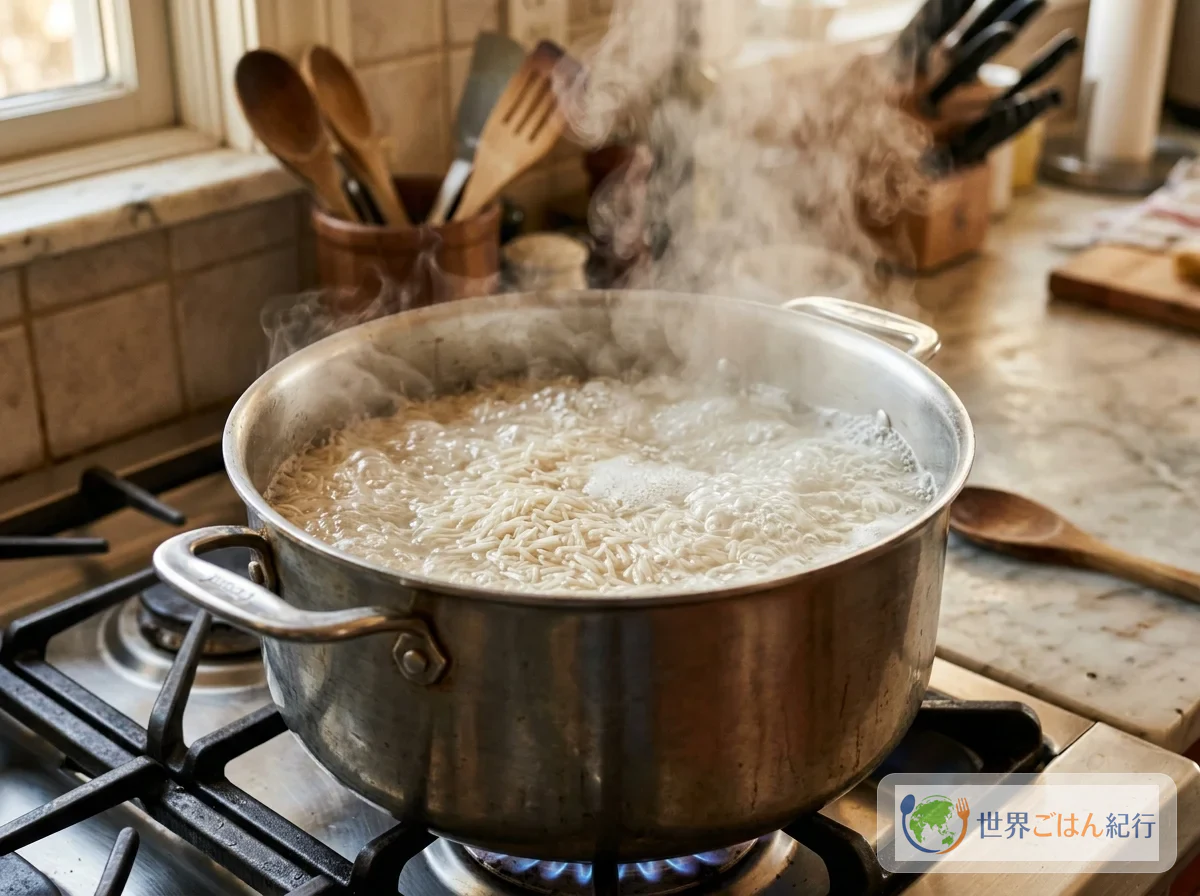
Basmati rice boiling in a pot
Parboiling the basmati. Seven minutes cooks it about 70 percent; leaving a slight core is the basis of Azerbaijani-style pilaf

Bring a large pot of water to a boil and add 1 tbsp salt. Drain the soaked basmati, add it to the boiling water, and boil for 7 minutes. You are not cooking it through, only about 70 percent of the way.

Bite a grain: it is perfect when the outside is tender and a tiny hard core remains in the center. Drain in a colander and let the excess water drip off.

Don't overcook it

Past 8 minutes the rice gets too soft and turns mushy during the steaming that follows. Use a timer and drain it at exactly 7 minutes. Like pasta cooked al dente, the key is not to cook it through at this stage.

STEP44 / 8

Sauté the dried fruit in butter

5 min

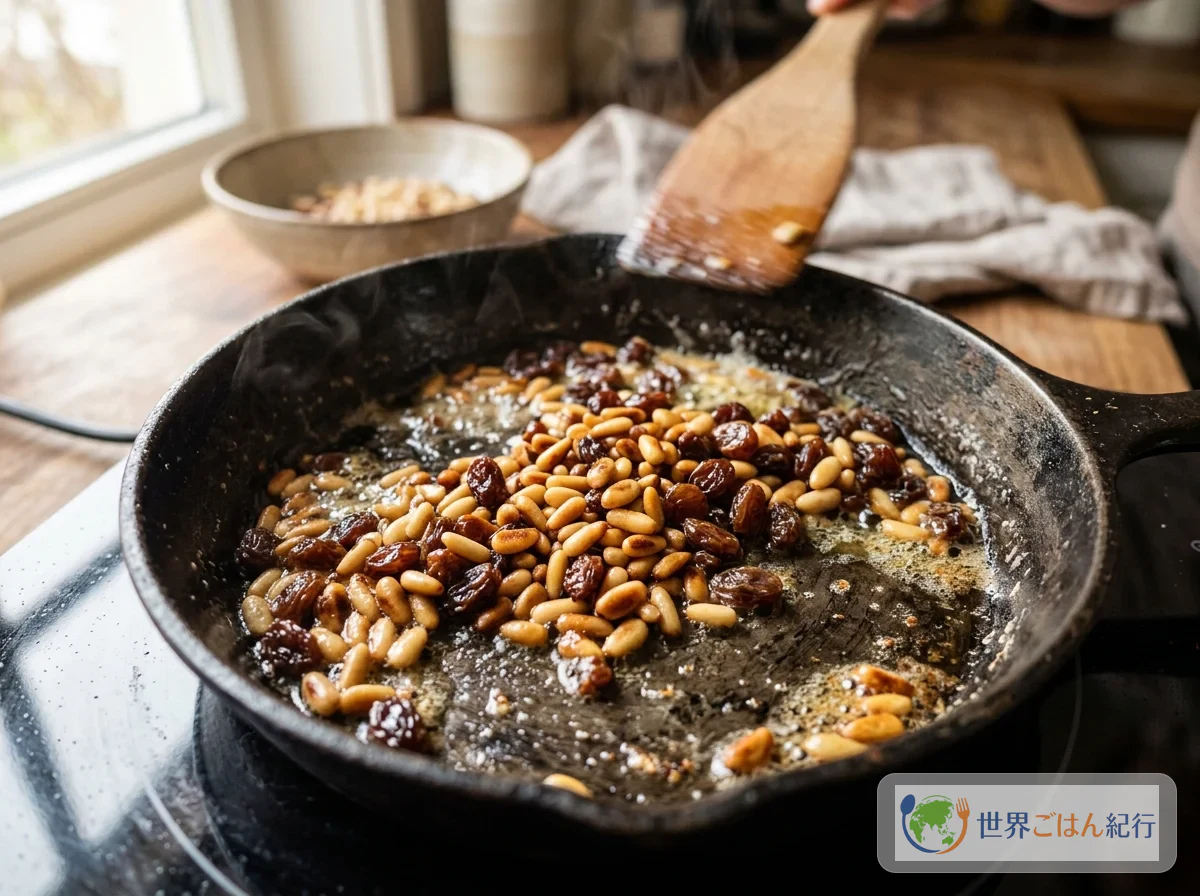
Dried fruit sautéing in butter in a skillet
Dried fruit sautéed in butter: apricots, prunes, raisins, cranberries, and chestnuts, glossy with butter and colorful as jewels

Melt 1 oz (30 g) butter in a skillet over medium heat. Add the drained halved apricots and prunes, the raisins, and the cranberries, and sauté for 3 minutes. When the fruit plumps up and the butter is bubbling and glossy, add the chestnuts, sauté for 1 minute more, and turn off the heat.

Sautéing the dried fruit in butter marries the fruit's sweetness with the richness of the butter, and makes it stand out against the saffron rice.

STEP55 / 8

Line the pot with the qazmaq

10 min

Lining a pot with pastry dough
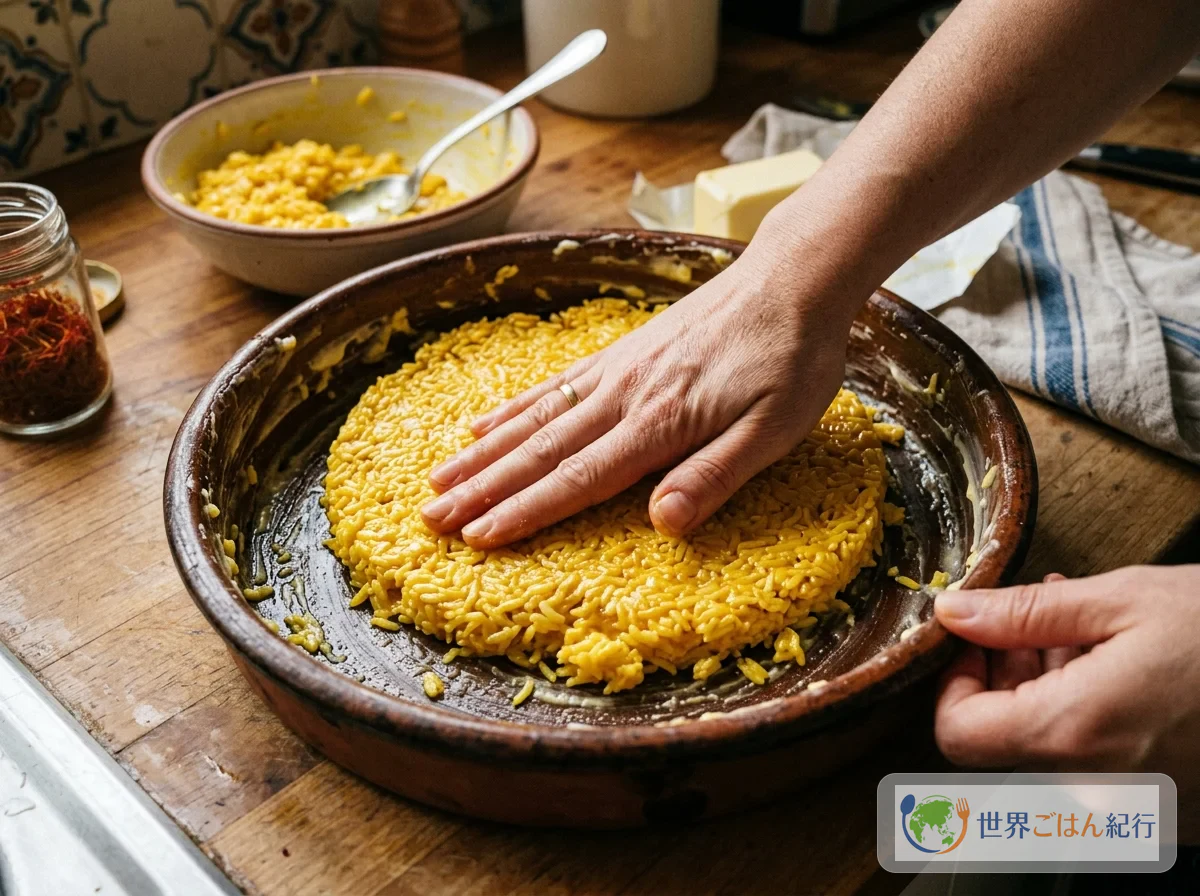
Lining the pot with qazmaq. Press the thin saffron dough against the well-buttered pot; the overhang becomes the lid

On a floured surface, roll the rested dough into a 0.125 inch (3 mm) thick round, about 4 inches (10 cm) wider than the mouth of your pot. Generously butter the bottom and sides of the pot (a heavy pot 9 1/2–10 inches (24–26 cm) across is ideal) with 20 g butter.

Lay the dough into the pot. Press it against the bottom, run it up the sides, and leave about 2 inches (5 cm) hanging over the rim. This overhang is folded over at the end to form a lid.

STEP66 / 8

Layer the pilaf and fruit

5 min

Rice and dried fruit layered in the pot
The layers, from the bottom: dough, rice, dried fruit, rice, saffron water, and butter. Finish by closing it with the dough

Spread half of the parboiled rice evenly in the lined pot. Scatter all of the dried fruit over it evenly, then cover the fruit with the remaining half of the rice.

Drizzle the rest of the saffron water (about 2 tbsp) over the surface of the rice, then pour 1 oz (30 g) melted butter over everything so it reaches all the rice.

Fold the overhanging qazmaq inward to enclose the rice completely. Check that the rice stays fluffy rather than packed down and that the folded dough has no tears. If the overhang is too short, roll out leftover dough thinly and lay it on top as a lid.

STEP77 / 8

Bake-steam on the stove

60–70 min

Pot covered with a towel-wrapped lid, cooking on the stove
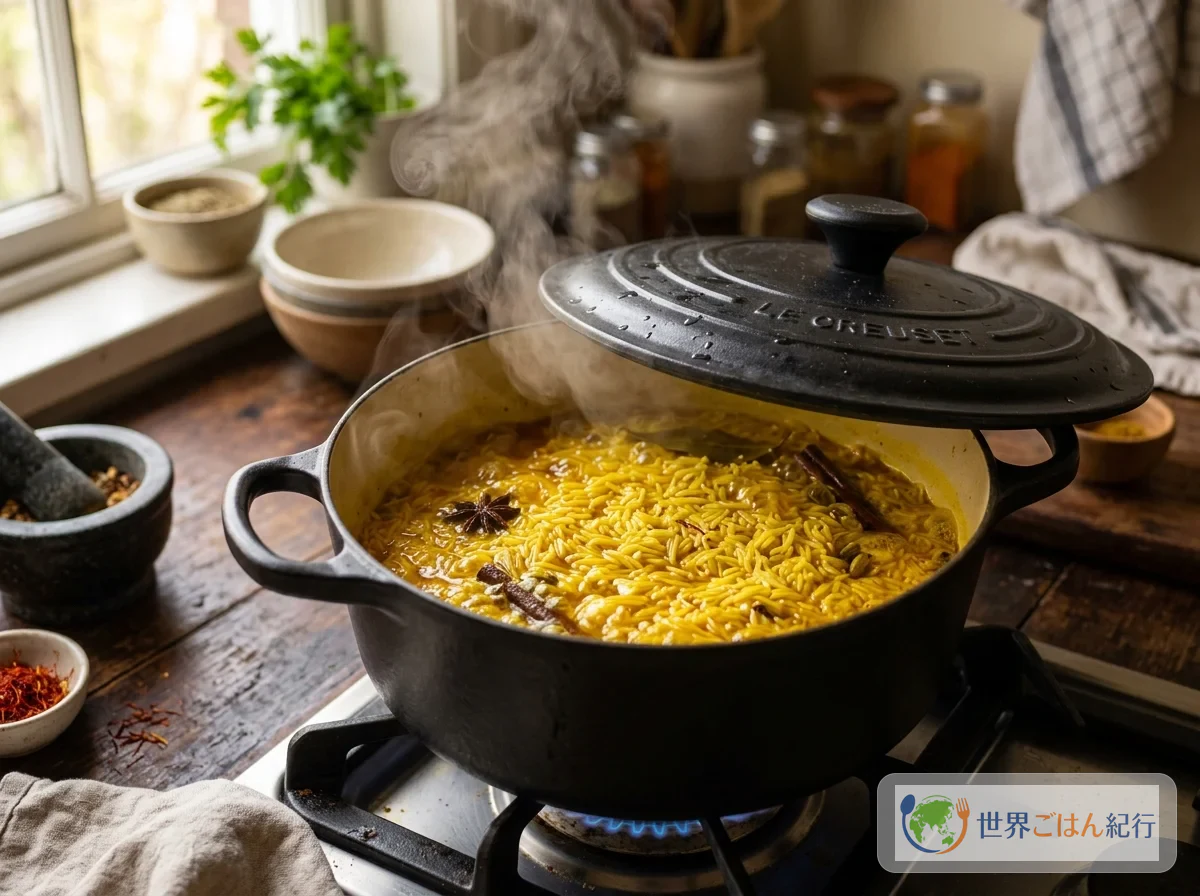
Steaming. Wrapping the lid in a towel is a standard Azerbaijani technique: it absorbs condensation and keeps the pastry crisp

Wrap the pot lid in a clean kitchen towel before putting it on. The towel absorbs the drops that form under the lid so the qazmaq doesn't go soggy.

Cook over medium heat for the first 10 minutes to brown the qazmaq on the bottom slowly. Then lower the heat to low and cook for 50–60 minutes. A light sizzle from the bottom of the pot and a toasty smell mean the qazmaq is browning just right.

The towel trick

Wrapping the lid in a cloth is a traditional technique shared by Azerbaijani and Iranian pilaf cooking. If steam condenses on the lid and drips onto the pilaf, the top layer of rice turns mushy and the qazmaq gets soggy. The towel soaks up those drops, so the pot lets steam circulate without dripping water. The same method is used for Iranian tahchin (see tahchin, in Japanese).

STEP88 / 8

Flip it and serve

STEP 8

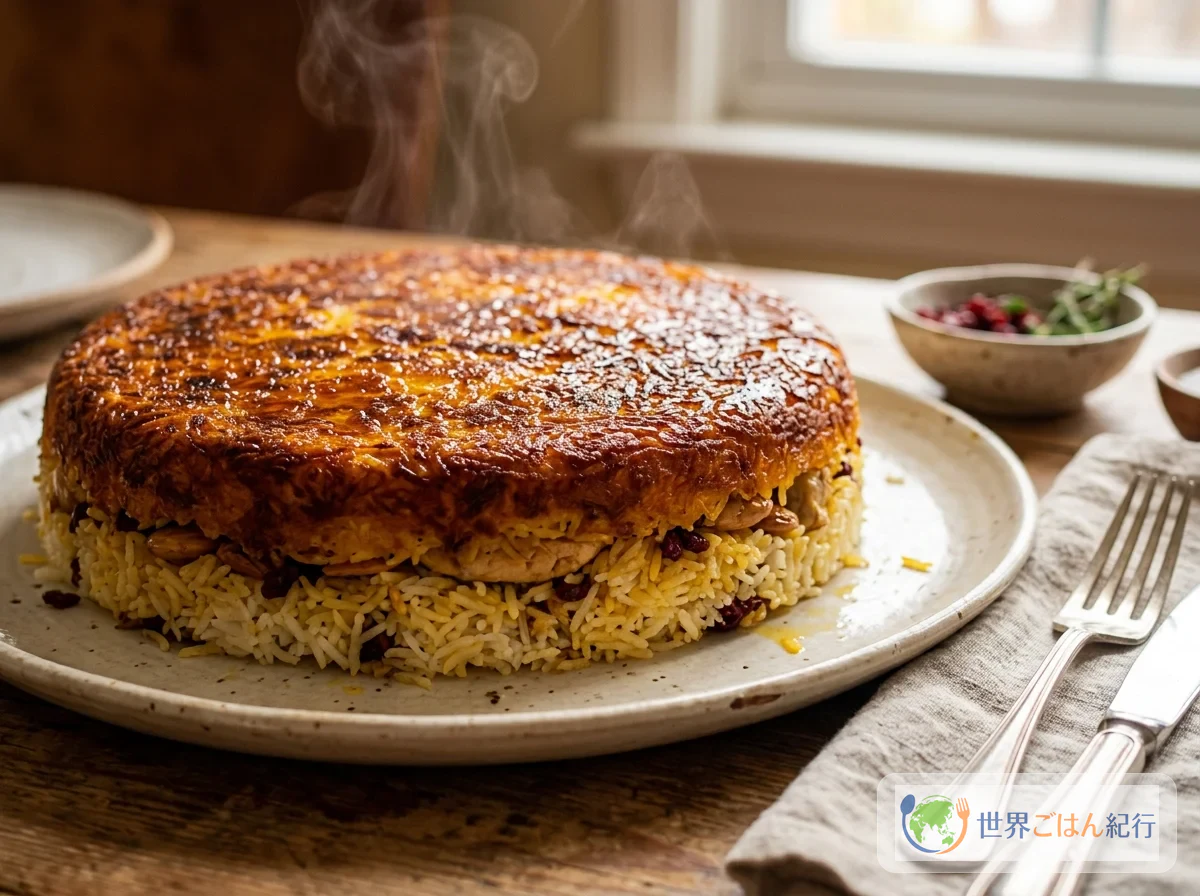
Turn off the heat and let it rest for 5 minutes. Now comes the big moment: set a large platter over the pot and flip it over in one go. Lift the pot slowly, and a golden dome of qazmaq appears, releasing the scent of saffron.

At the table, break open the top of the qazmaq with a knife or spoon, show off the pilaf and fruit inside, then serve. Crisp qazmaq, fluffy saffron rice, and sweet-tart dried fruit come together in every bite.

0 / 0
Ingredients

Ingredients

1 / 3

Saffron rice

Ingredient Amount Substitutes & notes
Basmati rice 500 g Jasmine rice works (slightly stickier). About 2 1/2 US cups
Saffron 1/2 tsp (about 0.5 g) Steep in 3 tbsp boiling water
Salt 2 tbsp 1 for soaking, 1 for parboiling
Unsalted butter 110 g Total of 30 g for the dough, 30 g for frying the fruit, 20 g for greasing the pot and 30 g for finishing the layers (about 7 1/2 tbsp)
The saffron makes or breaks the dish

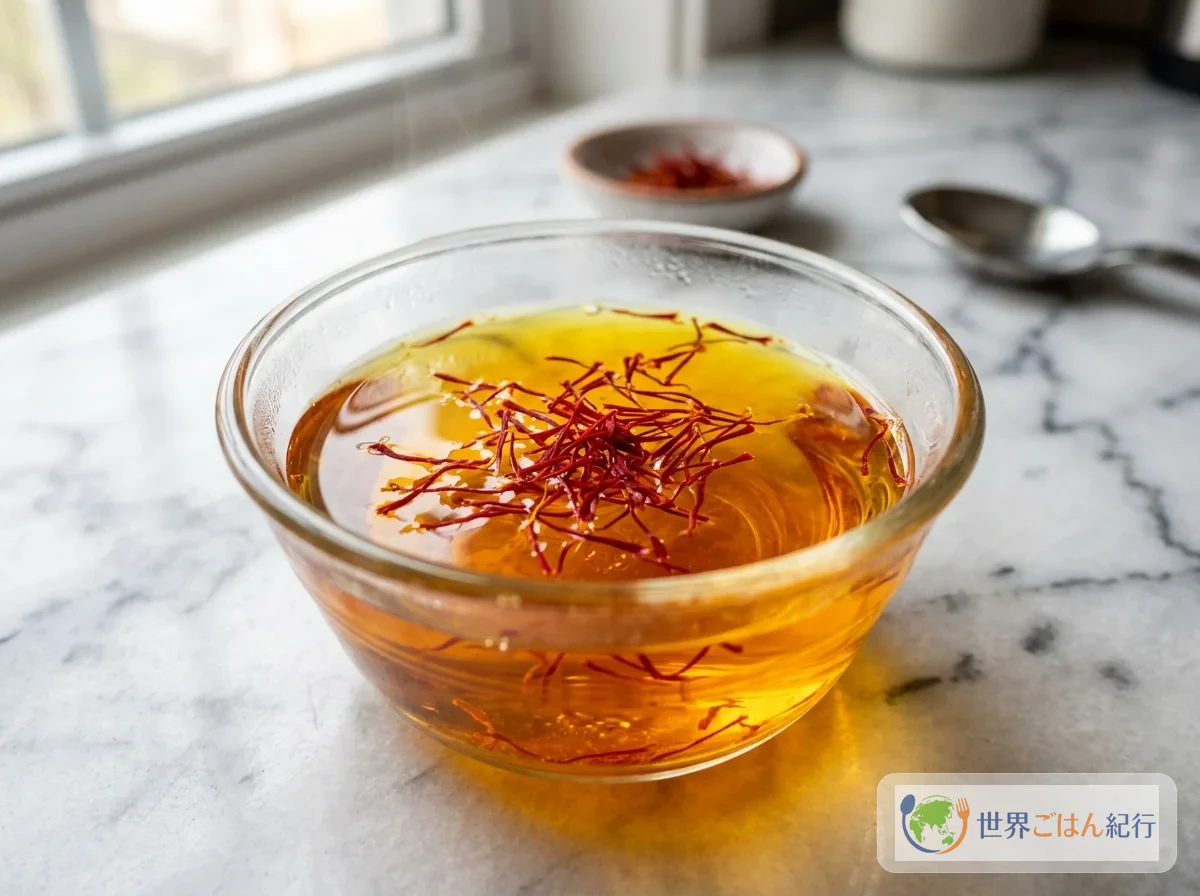
Saffron's aroma is the core of shah plov. Cheap saffron is sometimes bulked out with coloring: it tints the rice but barely smells of anything. Choose Spanish La Mancha or Iranian saffron, and make the saffron water by steeping it in 3 tbsp boiling water 30 minutes before you use it. Good saffron is expensive, but 0.5 g is enough for six servings.

Saffron threads steeping in hot water, the liquid turning gold
Making saffron water. After 30 minutes in hot water it turns a deep gold; that color and aroma are the lifeblood of shah plov
2 / 3

Qazmaq (pastry dough)

Ingredient Amount Substitutes & notes
Cake flour (or all-purpose flour) 200 g About 1 2/3 US cups
Egg 1 —
Butter, melted 30 g About 2 tbsp
Salt 1/4 tsp —
Saffron water 1 tbsp Taken from the saffron water above
Water 60 ml About 1/4 cup. Adjust to the feel of the dough
What is qazmaq?

Qazmaq is one of the key ideas in Azerbaijani pilaf cooking. It is the crisp crust that forms on the bottom of the pot; in an everyday plov it is made from a thin layer of bread dough or sliced potatoes. Shah plov takes the idea further and uses the dough as a "vessel" that wraps the whole pilaf. For many cooks, the qazmaq is the best part of the plov.

3 / 3

Dried fruit and chestnuts

Ingredient Amount Notes
Dried apricots 2.75 oz (80 g) Halved
Prunes (pitted) 2 oz (60 g) Halved
Raisins 2 oz (60 g) Golden raisins (sultanas) recommended
Dried cranberries 1.5 oz (40 g) Optional
Chestnuts (roasted, peeled) 2.75 oz (80 g) Ready-to-eat roasted or candied chestnuts are fine
Butter (for sautéing) 1 oz (30 g) About 2 tbsp
Allergy notes

This dish contains wheat flour (the dough), egg, dairy (butter), and chestnuts. Leave out the chestnuts if you need to avoid nuts. For a gluten-free version, skip the qazmaq and cook it as a regular Azerbaijani-style plov.

0 / 0

Crack the golden crust of a shah plov and a jeweled pilaf spills out: saffron-scented rice, amber dried apricots, deep red cranberries, and glossy prunes. Turned out of the pot, the dish arrives at the table as a crisp, golden dome of pastry, and breaking it open is the moment everyone waits for at Azerbaijani weddings and holidays. Shah plov (Şah plov) is Azerbaijan's proudest festive dish, a pilaf baked inside a thin saffron-tinted dough until the crust turns crisp. You'll find a fair number of English recipes for it, many from cooks of the Azerbaijani diaspora, yet it is still far less familiar than its neighbors, such as Georgian khinkali or Uzbek plov.

Shah plov and Azerbaijan's pilaf tradition

Azerbaijan sits at the eastern end of the Caucasus Mountains, on the shore of the Caspian Sea, and for centuries it was a key stop on the Silk Road. Şah means king and plov means pilaf, so the name translates to "the king's pilaf," a dish fit for a royal banquet and handed down over generations. To make it, the inside of the pot is lined with a thin saffron-tinted dough (qazmaq), then filled with layers of pilaf and dried fruit and baked-steamed until the crust is crisp.

A country of more than 200 plovs

Azerbaijan has more than 200 kinds of plov, each named for its fillings or cooking method. Geography explains much of that variety: from the warm Caspian lowlands to the high Caucasus, many climate zones coexist in a small country, and each region developed its own ingredients and plov traditions. Persian, Ottoman, and Russian influences layered on top of that.

In 2016, Azerbaijan was listed on UNESCO's intangible cultural heritage list together with Iran, Kazakhstan, Kyrgyzstan, and Turkey for the culture of making and sharing flatbread (lavash and others). The pilafs listed that year were Uzbekistan's "Palov culture and tradition" and Tajikistan's "Oshi palav." Some families use lavash as the crust for shah plov, which ties the dish back to that flatbread culture.

From tahdig to qazmaq

Qazmaq has its origins in the crust that forms on the bottom of a pilaf pot. In Iran this crust is called tahdig, meaning "bottom of the pot," and it is prized as the best part of the pilaf; the two are often discussed side by side as rice dishes of the same Persian culinary sphere. Azerbaijani cooks took the idea further, deliberately lining the bottom of the pot with bread dough or lavash (thin flatbread) to create a crisp layer, and eventually wrapping the entire pot in dough, as in shah plov.

Silk Road fruit and festive tables

The dried fruit reflects Azerbaijan's place on the old trade routes. Dried apricots, prunes, raisins, and chestnuts keep well, and goods like these traveled through dry country along the Silk Road, so it makes sense that they end up sharing one pot here.

The most important holiday is Novruz, the Persian New Year, celebrated at the spring equinox (March 20–21). The Azerbaijani Novruz table holds sprouted wheat (samani) and pastries such as shekerbura and pakhlava, and plov is often cooked for the occasion (the "haft-sin," seven items whose Persian names begin with S, belongs to Iranian Novruz). At weddings and other celebrations, a dough-wrapped shah plov lifts the mood the moment it is cut open. Today some restaurants in Baku serve it as a signature dish, and for many travelers it is their first taste of Azerbaijani food.


Choosing saffron and dough for shah plov

Saffron carries the flavor of this dish, so if your budget allows, buy good threads from a Middle Eastern or Iranian grocer. In a pinch, 1 tsp turmeric plus a pinch of saffron powder makes up the color, though not the aroma. Saffron powder alone, at 1/4 tsp, is cheaper than threads and still gives some aroma along with the color. As with other saffron-built dishes such as Bahraini machboos, it pays not to skimp.

If you're short on time for the dough, layer 3–4 spring roll wrappers with melted butter brushed between the sheets. You lose the thickness and chew of handmade qazmaq, but the crispness comes through well. Store-bought phyllo, used in Greek and Turkish cooking, gets you almost the delicacy of handmade dough: layer 4–5 sheets with melted butter and it bakes up flaky and layered, close to the texture of Turkish baklava.

Shah plov turned out onto a platter, its golden dome revealed
Finished shah plov. Turned out of the pot, it reveals a golden dome; opening it at the table is a symbol of an Azerbaijani celebration

Shah plov tips and fixes

Keep the qazmaq intact

Shah plov succeeds or fails on an unbroken qazmaq. If the dough tears while you line the pot, rice and butter leak through the gaps and scorch. Roll the dough to an even 0.125 inch (3 mm), butter the pot generously so it doesn't stick, and take your time with the rolling, adding more flour if it starts to tear.

During the long steaming, a light, intermittent sizzle from the bottom is a good sign that the qazmaq is browning. A loud, hard sizzle means the heat is too high, and a toasty smell is fine while a burnt one is not. If you smell burning, turn the heat down to the lowest setting immediately; slipping a sheet of aluminum foil between the pot and the burner grate also spreads the heat. Any burnt patch of qazmaq can be cut off with a knife after flipping, and the rest is perfectly fine to eat. Next time, keep to medium heat for the first 10 minutes only and low heat after that.

Turning the shah plov onto the platter is the step that makes first-timers nervous. The trick is to do it in one decisive move: hold the pot firmly, press the platter tight against it, and flip briskly. Go slowly and the rice and fruit shift.


Serving shah plov, variations, and nutrition

Lamb or chicken

In a traditional variation, 10.5 oz (300 g) lamb shoulder is cut into bite-size pieces, sautéed with spices, and added to the layers of pilaf, seasoned with 1 tsp cumin, 1/2 tsp coriander, and black pepper. The full festive version is made this way, and the lamb's robust flavor plays beautifully against the sweet fruit. For something milder, season 10.5 oz (300 g) boneless chicken thigh with salt, pepper, and turmeric, brown both sides in a skillet, and tuck it between the rice and the dried fruit.

Your own dried-fruit mix

Every Azerbaijani household has its own fruit mix, and these combinations are traditional too:

  • Persian style: dried cherries + barberries (zereshk) + almonds
  • Caspian coast style: dried figs + dates + pistachios
  • Autumn harvest style: dried persimmons + walnuts + dried apples

Dried persimmons with walnuts are a particularly good pairing if you can find them.

Nutrition (per serving, 1/6 of the recipe)

This is a celebration plate, built mainly on carbohydrates from rice and dried fruit and fat from butter. It's fairly low in protein, so serving it with a lamb or chicken dish, or with yogurt, makes for a more balanced table. The dried fruit is high in sugar but also provides minerals such as potassium.

Nutrient Amount
Calories 580 kcal
Protein 14 g
Fat 22 g
Carbohydrates 3 oz (82 g)
Dietary fiber 4 g
Sodium 420 mg

FAQ

Q1. The qazmaq stuck to the pot. How do I get it out?

Set the bottom of the pot on a damp towel for 10 seconds. The sudden temperature change loosens the butter and helps the dough release. If it still won't budge, warm the pot over very low heat for 5 seconds and try again. Next time, butter the pot more generously than you think you need.

Q2. I can't find basmati rice. Can I use short-grain rice?

Short-grain (japonica) rice, such as Japanese rice, works, but because it is much stickier you'll get something closer to a soft, seasoned rice than a fluffy, separate-grained pilaf. Long-grain jasmine rice comes much closer to basmati. Whatever rice you use, keep the 7-minute parboil that leaves a small core.

Q3. How do I store leftover shah plov?

Store the qazmaq and the pilaf separately. Keep the pilaf in an airtight container in the refrigerator for 3 days, or freeze it for 1 month. Once the qazmaq absorbs moisture it won't get its crunch back, so ideally finish it the same day. To reheat, microwave the pilaf and crisp the qazmaq in a toaster oven for 2 minutes to bring back some of its crunch.


  • Khinkali (in Japanese) — Georgia's hand-pleated soup dumplings, from the same Caucasus craft tradition
  • Piti (in Japanese) — An Azerbaijani soup baked in clay pots, a festive dish alongside shah plov
  • Lagman — Kyrgyzstan's hand-pulled noodles, from the eastern end of Silk Road food culture
  • Qurutob (in Japanese) — Tajikistan's national dish, a taste of simple Central Asian cooking
  • Machboos — Bahrain's spiced rice, a Middle Eastern pilaf that shares saffron
  • An introduction to Georgian cuisine
  • Fërgesë

Sources

Recipes and technique

Culture and history

  • National Geographic. "What is plov? Meet the rice dish at the heart of Nowruz celebrations." https://www.nationalgeographic.com/travel/article/everything-you-need-to-know-about-plov — the many kinds of Azerbaijani plov, shah plov, and plov at Novruz (checked 22 October 2026)
  • UNESCO Intangible Cultural Heritage. "Flatbread making and sharing culture: Lavash, Katyrma, Jupka, Yufka" (2016). https://ich.unesco.org/en/RL/01181 — the flatbread culture inscribed jointly by five countries including Azerbaijan (checked 22 October 2026)
  • UNESCO Intangible Cultural Heritage. "Palov culture and tradition" (Uzbekistan, 2016). https://ich.unesco.org/en/RL/01166 — Uzbekistan's palov, inscribed in 2016 (checked 22 October 2026)
  • Marton, Renee. Rice: A Global History. Reaktion Books, 2014. — a history of rice dishes around the world
  • Zubaida, S. & Tapper, R. (eds.). A Taste of Thyme: Culinary Cultures of the Middle East. I.B. Tauris. — a foundational study of Middle Eastern and Caucasian food cultures