Machanka Recipe: Belarusian Pork and Sausage in Sour Cream Gravy

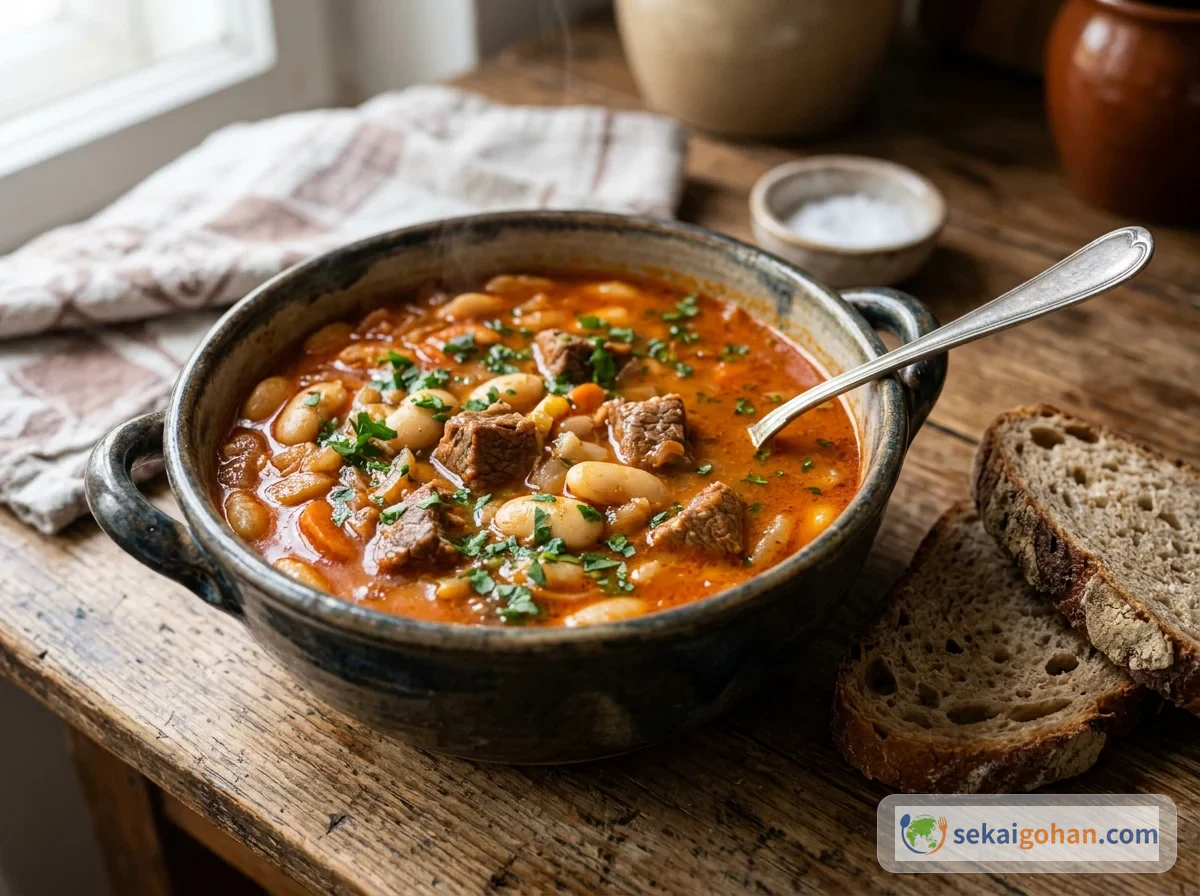
Belarusian machanka: pork and sausage in sour cream gravy served in an earthenware dish, with draniki potato pancakes alongside
Prep
20 min
Cook
50 min
Total
1 hr 10 min
Serves
4 servings
Level
Intermediate
Cuisine
Belarusian

A step-by-step recipe, with photos, for machanka (Мачанка), the traditional Belarusian dish of pork and sausage simmered in a sour cream gravy and eaten with chewy potato pancakes called draniki. A winter home dish rooted in the Slavic countryside, built on English-language sources.

Cooking flow

Cooking steps

STEP11 / 6

Brown the pork (10 min)

10 min

Pork spare ribs being browned in a pot
Brown all sides of the spare ribs. The brown from the Maillard reaction gives the gravy deep richness

Pat the surface of the pork spare ribs and shoulder dry with paper towels and sprinkle with salt and black pepper. Melt the butter in a large pot (or Dutch oven) and brown all sides of the pork over high heat. Cutting the spare ribs apart one by one along the bones and cutting the shoulder into 3–4 cm cubes helps the meat cook evenly.

When browned, take it out for now. The browning from this "Maillard reaction" gives the gravy of machanka its deep flavor. Browning all sides properly without hurrying greatly affects the flavor of the finished dish.

STEP22 / 6

Fry the sausage and onion (8 min)

8 min

Smoked sausage browned in a pot with onion being fried to a golden color beside it
After browning the sausage, fry the onion until golden. Dissolving the fond on the bottom of the pot is the key to flavor

In the pot the meat came out of, put the sausage cut diagonally 0.5 inches (1 cm) thick and brown both sides for 3 minutes. When browned, take it out and set it aside with the meat.

Add a little more butter to the same pot and fry the thinly sliced onion over medium heat for 5 minutes, until golden. Add the garlic and fry 1 minute until fragrant. Keep in mind that you are scraping up (deglazing) the browned bits (fond) left on the bottom of the pot with the moisture of the onion. This fond is the source of the depth of machanka's flavor.

STEP33 / 6

Make the gravy (5 min)

5 min

Flour and water mixed in a pot to make the gravy
Sprinkle flour over the onion and add broth a little at a time to make the gravy. Whisk carefully to avoid lumps

Sprinkle 2 tbsp flour over the onion and fry for 1 minute, stirring well. When the floury smell is gone, add the water (or broth) a little at a time, whisking well so no lumps form.

Once it is all added, put in the bay leaves and allspice berries and heat over medium for 2–3 minutes until thickened. The base gravy is now done.

Guide to the thickness of the gravy

The ideal is a gravy where a line drawn with your finger on the back of a wooden spoon stays and does not close up. If it is too thin, the water that comes out of the meat will loosen it further and it won't have the body needed for "dipping." If it is too thick, it turns into a paste once the sour cream is added.

STEP44 / 6

Return the meat and simmer with sour cream (30 min)

30 min

Sour cream added in the pot, with pork and sausage simmering in a cream-colored gravy
The moment the sour cream goes in. The white cream melts into the brown gravy and turns the characteristic cream color of machanka. Never boil

Return the browned pork and sausage to the gravy. Stir so the meat is covered in gravy, cover, and simmer on low heat for 25 minutes.

After 25 minutes, lift the lid, add ¾ cup (200 ml) sour cream and stir well. Never boil it after adding the sour cream. Boiling makes the sour cream separate and the gravy gritty. Heat on low for 5 minutes, just until everything is warm, and it is done.

Adjust with salt and black pepper, and remove the bay leaves and allspice berries.

A trick to prevent the sour cream from separating

Before adding the sour cream, put ¾ cup (200 ml) of it in a bowl and mix in 1 ladle of gravy from the pot (tempering). Bringing the temperatures closer in this way before returning it to the pot greatly lowers the risk of separation. The same technique is used when adding sour cream to Hungarian goulash.

STEP55 / 6

Cook the draniki (potato pancakes) (15 min)

15 min

Draniki (potato pancakes) browning in a frying pan
Cooking the draniki. Spread the grated potato thin and cook both sides to a crisp golden brown. A staple of the Belarusian table

Peel the potatoes and grate them finely. As soon as they are grated, squeeze out the moisture thoroughly with paper towels or a cloth. Squeezing out the water is the most important point deciding how crisp the draniki will be.

To the squeezed potato add the grated onion, beaten egg, flour and salt and mix well. The batter should fall from a spoon in a mound, with no water pooling at the bottom of the bowl and the potato held together by the egg. Heat plenty of oil in a frying pan over medium-high heat. Drop in the batter a ladleful at a time, flatten to about 8–10 cm across and 0.25 inch (7 mm) thick, and cook 3 minutes per side, until the edges are a deep golden and crisp and the center springs back lightly when pressed.

Let the cooked draniki drain lightly on paper towels. One batch makes about 8.

STEP66 / 6

Plate (5 min)

5 min

Machanka and draniki served in a deep dish, with parsley scattered
The finished machanka. Pork and sausage sink in cream-colored gravy beside crisp draniki. The green of the parsley adds color

Ladle plenty of machanka stew into a deep earthenware dish and place 2–3 draniki beside it. It is ready to eat when the gravy is hot and the trace of a wooden spoon closes slowly.

Finish with chopped parsley (or chopped dill).

The authentic way to eat it is to tear a dranik and dip it in the machanka gravy. As the name suggests, "dipping" (machatsi) is the essence of this dish. The moment the crisp surface of the dranik soaks up the gravy and its chewy inside, the savor of the pork and the tang of the sour cream become one is the best part of machanka.

At a Belarusian table, dark rye bread and vodka (or samahon, homemade distilled spirit) are always served alongside. Pickles (pickled cucumbers) are a classic accompaniment too.

0 / 0
Ingredients

Ingredients

1 / 2

Machanka (the stew)

Ingredient Amount Substitutes & notes
Pork spare ribs 14 oz (400 g) Bone-in is best. Pork belly also works
Pork shoulder 7 oz (200 g), cut into 1-inch cubes (2 cm) Pork scraps can substitute
Sausage (coarse-ground) 7 oz (200 g) Smoked sausage recommended. Polish kielbasa is the closest
Onions 2 (thinly sliced) —
Garlic 3 cloves (minced) —
Sour cream ¾ cup (200 ml) At least 20% fat
All-purpose flour 2 tbsp To thicken the gravy
Water or chicken broth 1¼ cups (300 ml) Broth gives more depth
Bay leaves 2 —
Salt 1 tsp Adjust to taste
Black pepper 1/2 tsp —
Allspice (whole berries) 3 An essential spice in Belarusian cooking
Butter 1 tbsp For frying the onion
2 / 2

Draniki (potato pancakes, the side)

Ingredient Amount Substitutes & notes
Potatoes 1.25 lb (600 g), a starchy variety Choose a starchy, floury type
Onion 1/2 (grated) —
Egg 1 Binder
All-purpose flour 2 tbsp —
Salt 1/2 tsp —
Neutral oil 4 tbsp For frying
0 / 0

Picture a snowed-in farmhouse in rural Belarus, minus 20 degrees outside and the family gathered around the stove. On it, homemade sausage from the autumn and scraps of pork are simmering slowly in a sour cream gravy, and everyone tears off a piece of potato pancake and dips it straight in. That is machanka (Мачанка / Machanka), a rich, tangy winter stew from the Belarusian countryside. The name comes from the verb "machatsi" (мачаць), "to dip," and dipping is the whole point.

An image of a winter scene in the Belarusian countryside and a traditional kitchen
The Belarusian countryside. Inside a snow-covered wooden house, the aroma of machanka rises from a big pot on the stove. A winter food scene handed down through generations

About Machanka

Pork trimmings (spare ribs, belly, cheek and the like) and homemade sausage are simmered in a sour cream-based gravy, and chewy potato pancakes called draniki (драники) or blinchiki (thin crêpes) are dipped in it as you eat. It's eaten all across Belarus as a winter staple, and similar dishes turn up in western Ukraine and eastern Poland.

A Dish That Wastes Nothing

Machanka grew out of the countryside habit of using up every scrap left after a pig was slaughtered: trimmings, meat on the bone, offal and sausage. It's best understood as a dish of not wasting anything, rooted in an ethic of eating a pig down to the last piece. That thrifty use of trimmings runs through food cultures across Eastern Europe.

Sour Cream and the Slavic Kitchen

Sour cream (smetana / сметана) is one of the foundations of Slavic cooking. Beyond machanka gravy, it tops Ukrainian borscht, goes with pelmeni, and is served alongside Moldovan mamaliga. In the Belarusian countryside, the original machanka used cream that had soured naturally from milk left standing ("kislae malako" / кіслае малако).

Draniki and the Belarusian Winter Table

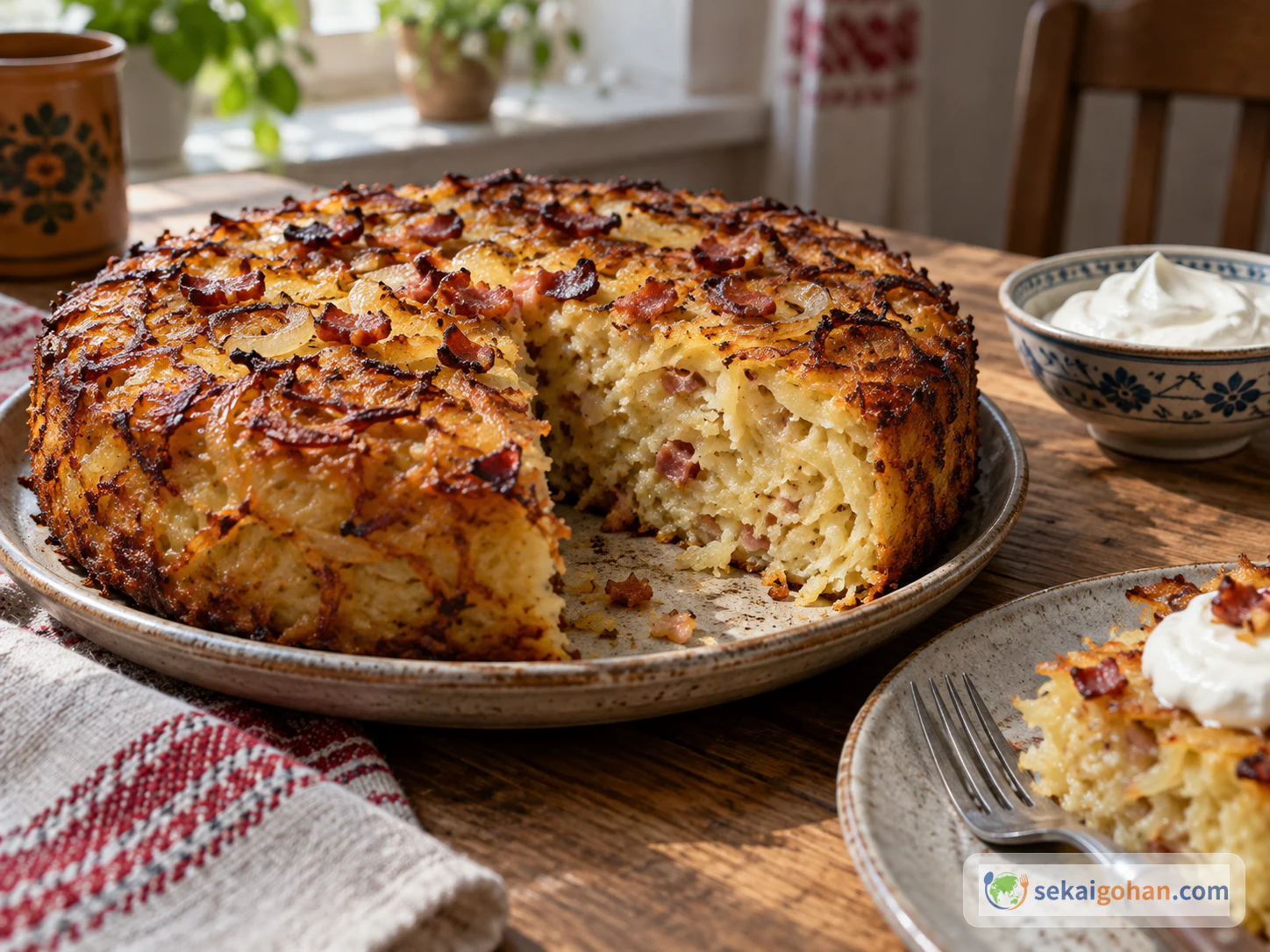
Draniki (драники), the partner of machanka, are Belarus's unofficial national dish, and potatoes sit at the center of Belarusian food culture. Together, machanka and draniki are the standard of the "Belarusian winter table."

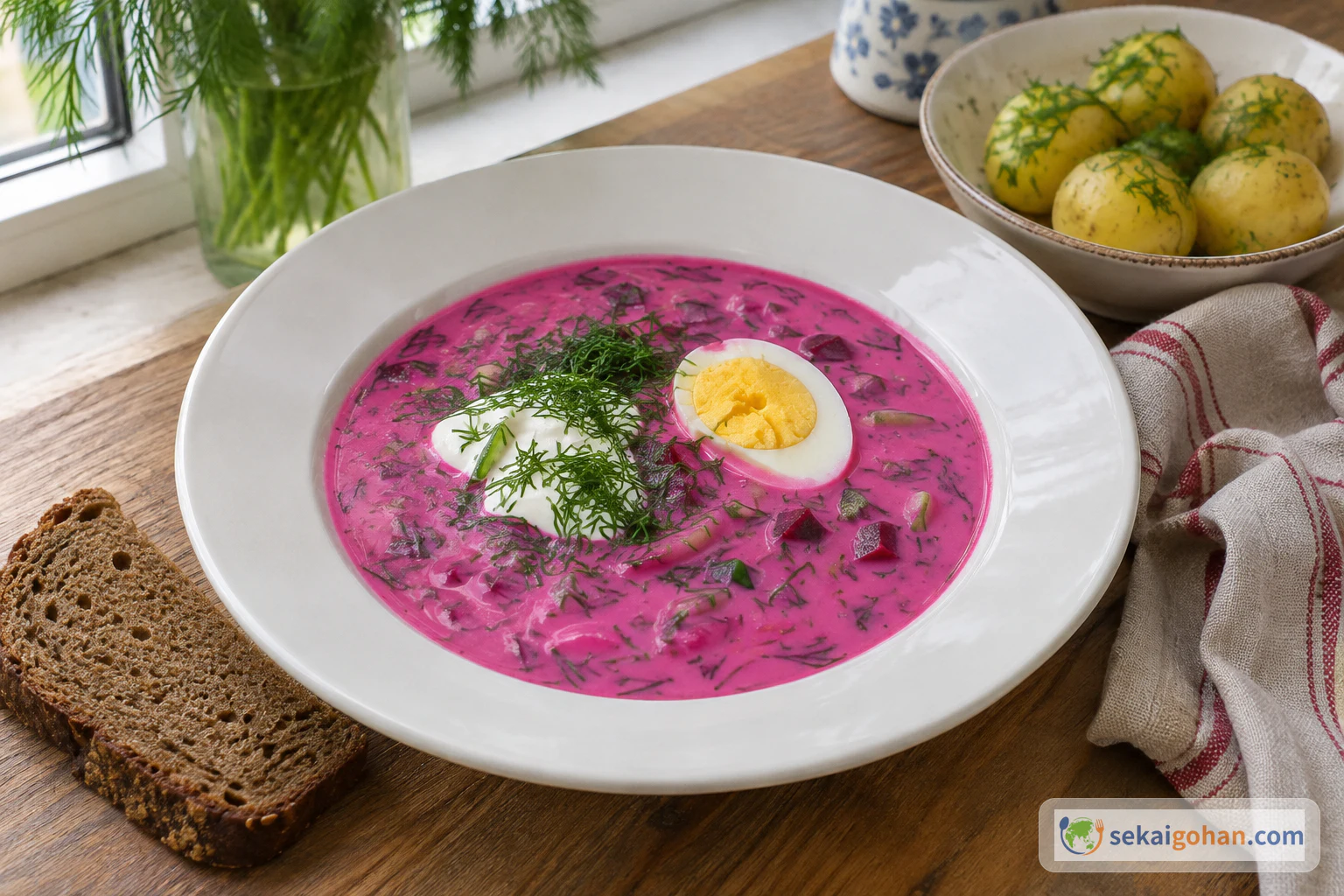
Belarus has historically been under the influence of Poland, Lithuania and Russia, and food has played an important role in shaping its own cultural identity. Machanka, draniki, salo (lard), mushroom soup and kholodnik (cold beet soup) have come to symbolize Belarusian food traditions.


Ingredients (serves 4)

Allergens

This dish contains wheat (the gravy thickener and the draniki binder), dairy (sour cream and butter) and egg (the draniki binder). Read the sausage label for meats other than pork and for spices you need to avoid, and check every ingredient label if you have an allergy.

Choosing the sausage

Authentic Belarusian machanka uses "damashnyaya kaubasa" (домашняя каўбаса / homemade sausage). The closest widely available choice is Polish kielbasa. If you can't find kielbasa, substitute coarse-ground German-style smoked sausage (thick and coarse, not a thin snappy-skinned type). Thin breakfast sausages are too slender and mild in flavor for machanka.


Choosing Pork and Sour Cream for Machanka

In the countryside, machanka goes in with whatever the pig left behind: spare ribs, cheek (jowl), neck, the ends of the belly, even ear cartilage. From an ordinary shop, the best combination is pork spare ribs, whose bones release gelatin that gives the gravy body, and a block of pork belly, whose sweet fat suits the sour cream.

The gravy's flavor depends heavily on the fat in the sour cream. Choose a full-fat sour cream of 20% or more. Low-fat sour cream (10% or less) separates easily and lacks richness, so leave it on the shelf. If you can't find sour cream at all, see the substitutes in the FAQ below.

If you have potatoes and sour cream left over, the Eastern European Jewish knish is easy to make from the same shopping.


Fixing Soggy Draniki

Squeezing the water out of the draniki is everything

The biggest reason draniki come out soggy is moisture left in the grated potato. After grating, don't skip wrapping it in a cloth or cheesecloth and squeezing with all your strength. Let the squeezed-out liquid settle, pour off the clear liquid on top, and put the starch from the bottom back into the batter. It acts as a binder and makes the pancakes even crisper. It's the same trick used for the dough of Polish pierogi.


Serving and Variations

Machanka needs something to dip. Draniki are the classic, and in the Polesie region it's blinchiki, but dark rye bread, boiled potatoes or mashed potatoes all work. It's a hearty winter dish, high in protein and fat, that served as a source of calories for keeping warm through the Belarusian cold.

Close-up of machanka, with pork spare ribs half sunk in cream-colored gravy
Close-up of the gravy. The smooth white of the sour cream against the brown of the pork. A little butter fat glints on the surface

Blinchiki Version (Polesie-Style)

In Polesie, in southern Belarus, buckwheat blinchiki (thin crêpes) replace the draniki. A batter of 3.5 oz (100 g) buckwheat flour and 1.75 oz (50 g) all-purpose flour mixed with ¾ cup (200 ml) milk and 1 egg is cooked thin in a frying pan, then wrapped around the machanka. The toasty buckwheat goes superbly with the sour cream gravy.

Polesie-style machanka wrapped in buckwheat blinchiki
Polesie style. Machanka wrapped in buckwheat blinchiki (thin crêpes). The toasty buckwheat goes with the gravy

Mushroom, Chicken and Beer Versions

For an autumn forest version, soak 1 oz (30 g) dried porcini in water for 30 minutes and add them to the stew. The mushrooms blend into the pork gravy and add a deep, earthy flavor. For something lighter, use 14 oz (400 g) bone-in chicken thighs in place of the pork, reduce the sour cream to ½ cup (150 ml) and shorten the simmering time to 20 minutes.

A more modern take replaces half the water or broth in the gravy with dark Belarusian beer (or a dark lager). The faint bitterness and malty sweetness make a surprisingly good match with the sour cream, much as beer does for the beef in Belgian carbonnade.

Nutrition (per serving, of 4)

Nutrient Amount
Energy 620 kcal
Protein 1.25 oz (38 g)
Fat 1.5 oz (42 g)
Carbohydrate 22 g
Fiber 2 g
Sodium 780 mg
Vitamin B1 0.8 mg
Zinc 4.5 mg

More Dishes From the Region


Frequently Asked Questions

Is there anything I can use instead of sour cream?

Crème fraîche is the closest substitute. It's high in fat and doesn't separate easily when heated, so it can even be easier to use than sour cream. Plain unsweetened yogurt also works, but its lower fat makes it separate easily and its sourness is somewhat stronger, so always temper it as described in the method and never boil it. Homemade sour cream, made by adding lemon juice to heavy cream and letting it ferment overnight, also gives a good result.

Can I eat machanka without the draniki?

A Belarusian would tell you "that's only half of machanka," but it's still delicious with dark rye bread, boiled potatoes or mashed potatoes. Just make sure there's something on the table to dip.

Does it taste better after resting overnight?

Yes. Like Greek fasolada, machanka is best the next day, once the sour cream gravy has soaked into the meat and the spices have mellowed. Reheat it slowly over low heat without letting it boil, so the sour cream doesn't separate. Draniki turn soggy when reheated, so cook them fresh just before eating.