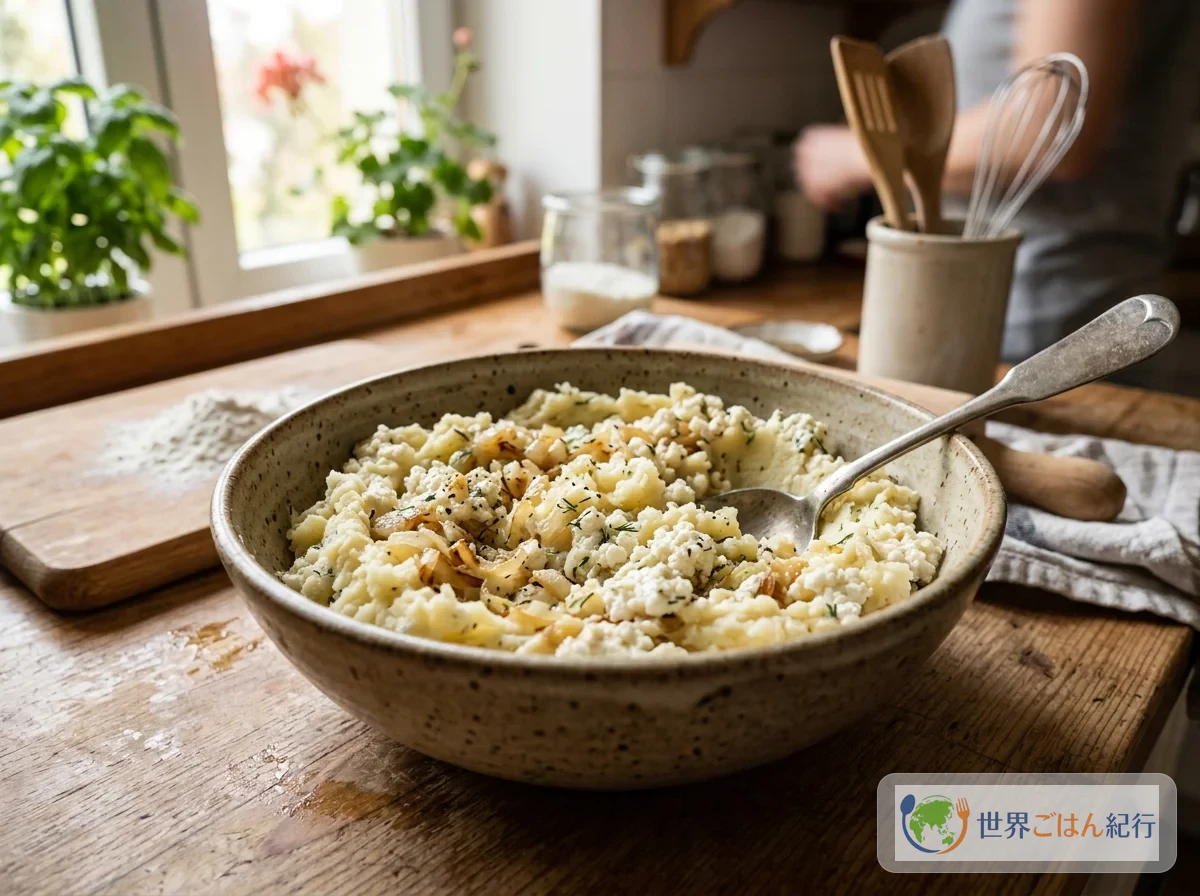
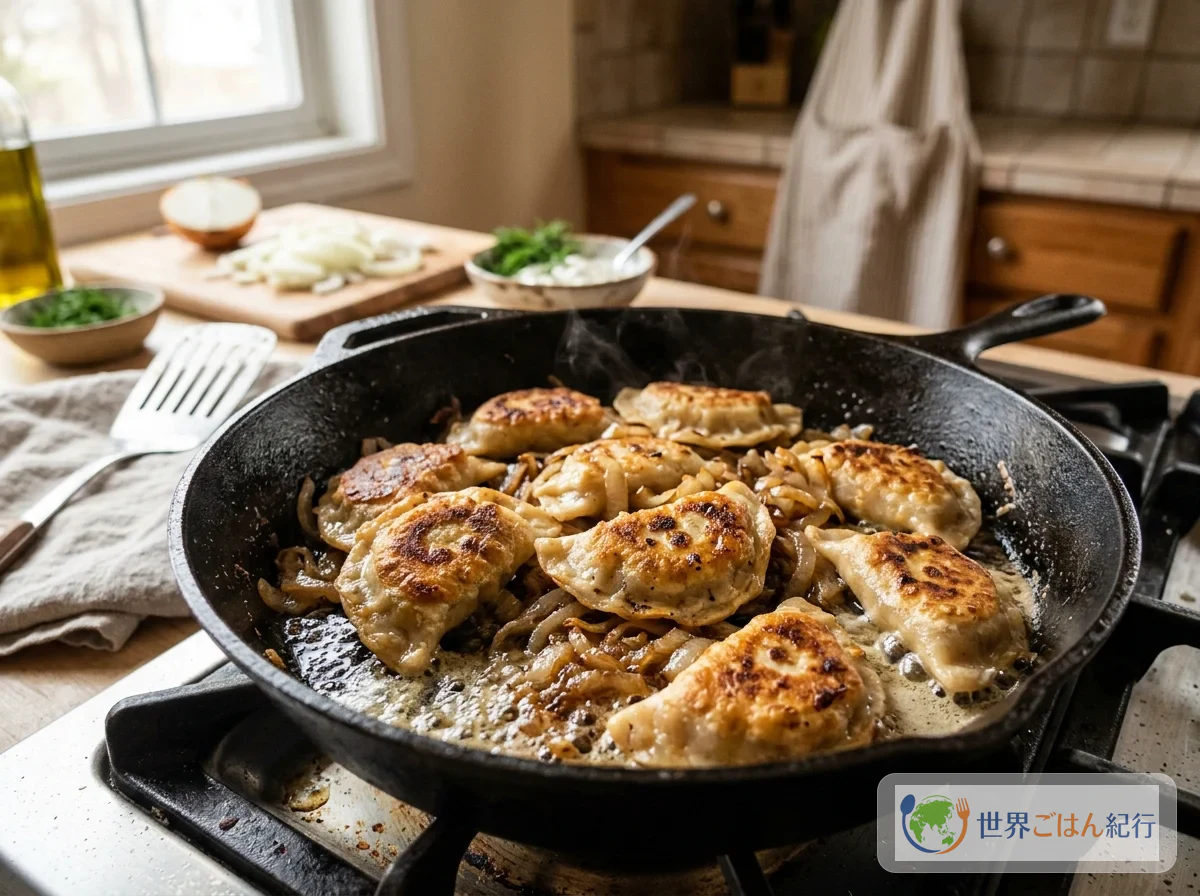
Pushed up by the steam in the pot, the half-moon wrappers puff, and when they float, the scent of butter and fried onion joins in. Unlike gyoza, pierogi aren't seared one at a time: you fold a batch, boil it, and let the aroma build on the plate as you eat. Pierogi ruskie, the classic from Poland, are filled with potato, cottage cheese and fried onion. The result is soft, tangy and buttery, the kind of dumpling that ends up at both everyday lunches and family gatherings.
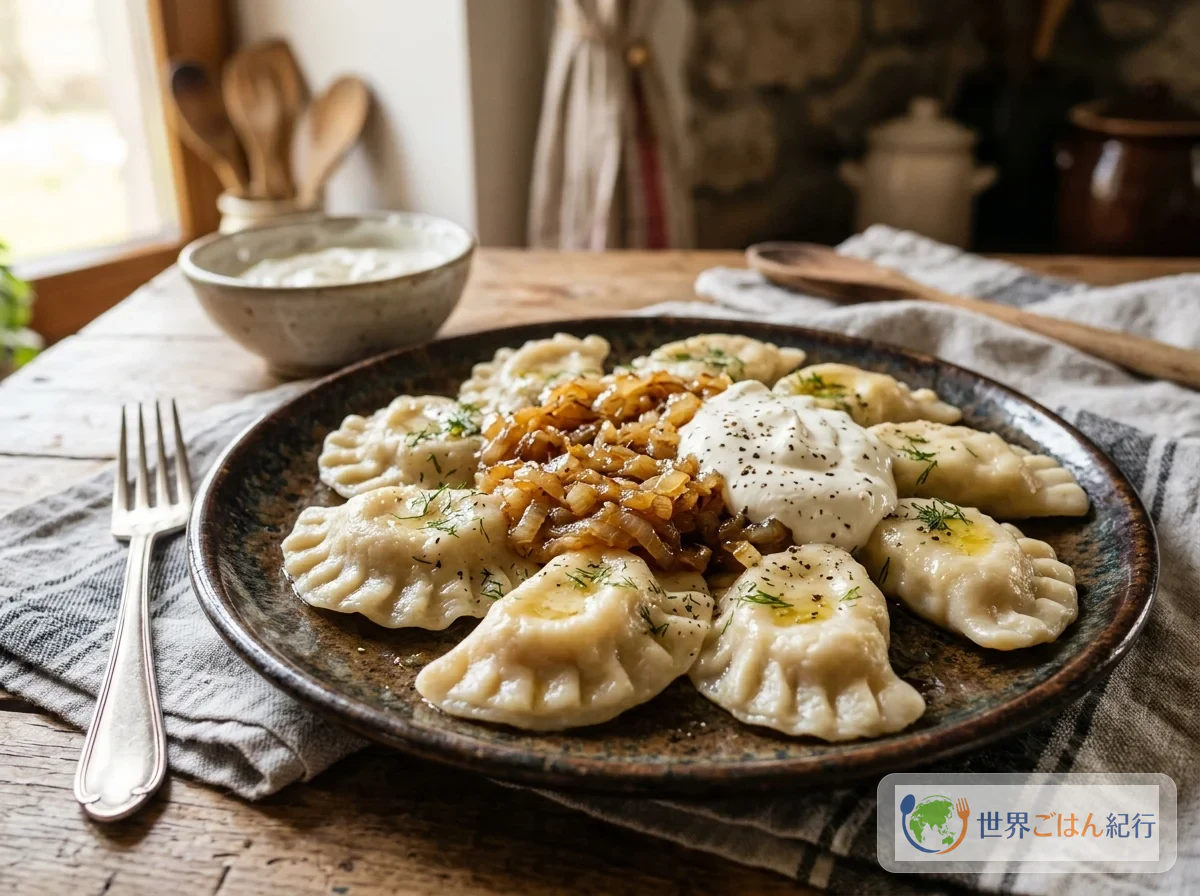
Pierogi Ruskie in Polish Food Culture
In Polish, pierogi is a plural; the singular is pieróg. At home, potato and white cheese (ruskie), meat, cabbage and mushrooms, and fruit are all made as versions of the same "filled dish."
Where the name ruskie comes from
"Ruskie" doesn't mean Russian. The name comes from Ruthenia, a historical region covering what is now eastern Poland through Ukraine. It also took time to settle: after World War II, border changes and population movements carried the dishes and names of the eastern borderlands across Poland, and they became today's standard.
Pierogi through history
Older Polish records don't always feature potatoes. A cookbook printed in Kraków in 1682 lists fillings of veal kidney, fat and herbs, and sweet fillings of roses and elderberries. It also describes frying and baking, not only boiling. The ruskie we make now is one form of pierogi, whose fillings have shifted with place and time.

Pierogi at the Polish table
The method is handed down from mothers and grandmothers, and pierogi are especially tied to Christmas Eve. In the custom of laying out twelve meatless dishes, some regions choose pierogi with sauerkraut and dried mushrooms. Potato and cheese ruskie, on the other hand, works as an everyday lunch or as the plate for a day when the family gathers.
Regional fillings and related dumplings
Regional differences show up in the filling. Around Lublin, buckwheat groats, cheese and mint go together, and in Podkarpackie a traditional version uses lentils. In autumn and winter the filling is sauerkraut and forest mushrooms; in summer, berries and other fruit, so preserved foods and the seasonal harvest both end up in the wrapper.
Compared with other filled dishes of Eastern Europe, such as khinkali and manti, pierogi are less about sealing in meat juices and more about boiling filling and dough together and bringing them to the table with butter and onion. To see how the region's red soups relate to small filled dumplings, read this alongside how borscht is eaten.
Ingredients (serves 4, about 30 pieces)
This is a proportion for folding about 30 at once. For the potatoes, use a floury, low-moisture variety, boiled with the skin on. Letting the steam out of the potatoes before adding the moisture of the cheese keeps the filling from running even when the dough is thin.
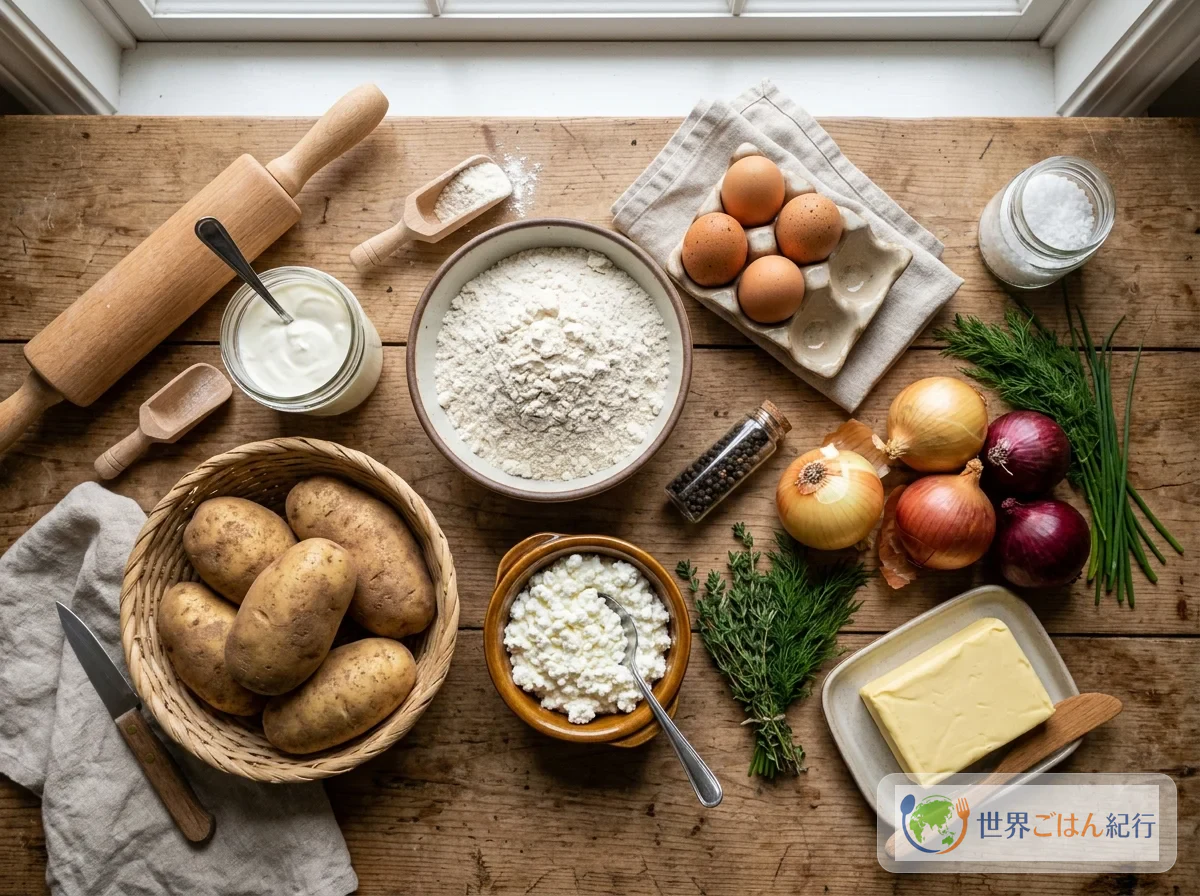
Twaróg is the tangy white cheese used for ruskie in Poland. If you can't find it, mix strained cottage cheese with Greek yogurt. For curd-type cottage cheese, drain it in a sieve for 10 minutes and don't add too much yogurt. Pizza cheese and shredded cheese melt and stretch, so they give a different texture from the crumbly filling here.
If you cannot find twaróg at all, a smooth strained cottage cheese is the most reliable stand-in. For a single batch you use only 4 oz (120 g), so draining cottage cheese you already have at home wastes less.
Nutrition information (per serving, approximate)
| Item | Per serving |
|---|---|
| Energy | about 480 kcal |
| Protein | about 14 g |
| Fat | about 18 g |
| Carbohydrate | about 2.25 oz (64 g) |
| Fiber | about 3 g |
| Salt equivalent | about 1.6 g |
These figures are for ruskie made as in the ingredient tables, served with butter and sour cream. Adding meat raises protein and fat, and a sauerkraut and mushroom filling lowers fat a little. Because it uses cheese, egg, wheat and dairy, check the allergen labels.
Choosing the Cheese and Tools for Pierogi Ruskie
The local cheese is twaróg, a tangy fresh cheese. Without it, strained cottage cheese (or the curd type, drained and mashed) with a little Greek yogurt mixed in gives an easy, crumbly filling and lets you adjust the tang and moisture. Ricotta tends to bring sweetness and smoothness, so taste and add salt and white pepper. Whatever cheese you use, cool the filling before filling the dough, and the seams are less likely to split.
A regular skillet, pot and rolling pin are all you need. For one batch, a fork or a wooden spoon mashes the potatoes fine. If you make 30 or more, make them often, or want a filling that is even while still leaving some grains, a potato masher helps you mash hot potatoes quickly and reach the bottom of the bowl. Check the material and dimensions before buying, and skip it if you have nowhere to store it.
Method: thin dough, cold filling, quiet water
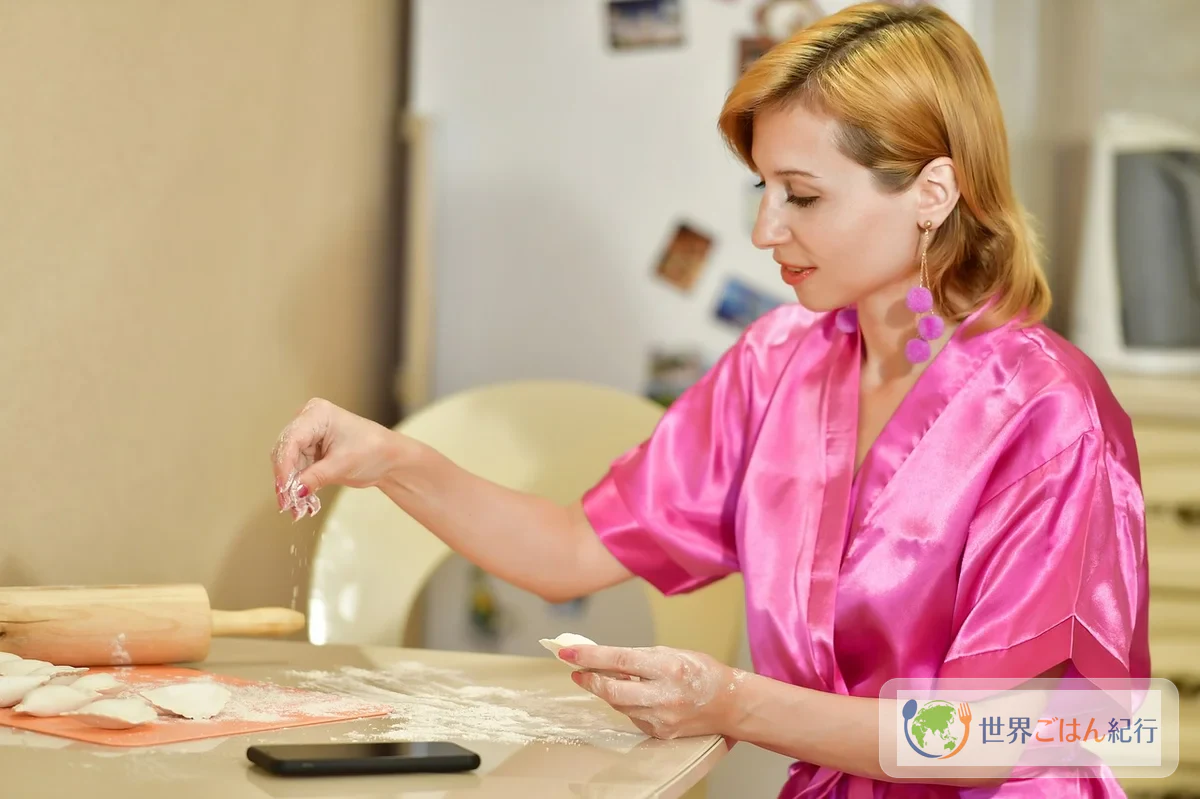
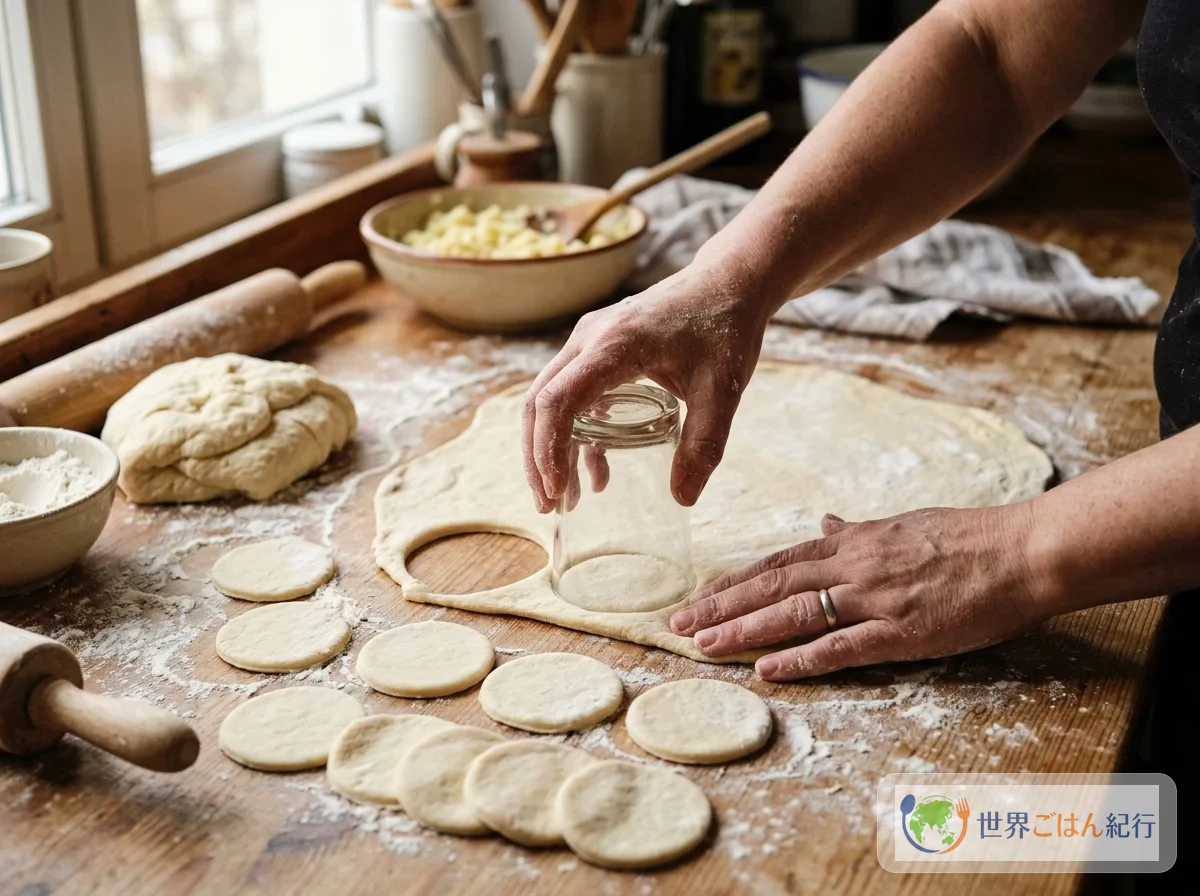
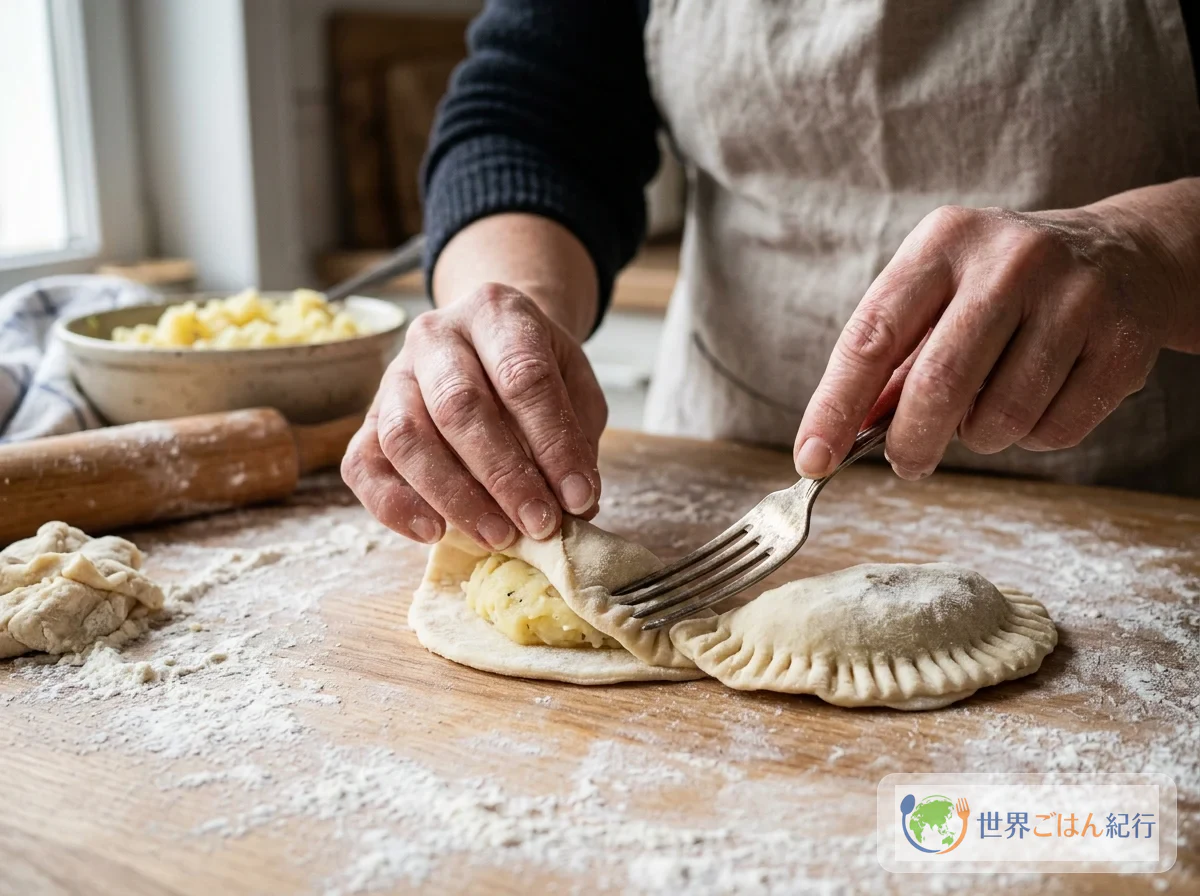
If you make the filling while the dough rests, you shorten the time at the stove. Folded pierogi crack at the seams when they dry, so cover with a cloth both after cutting the rounds and after folding.
Fixing Common Pierogi Problems
| What happened | What to check on the spot | Next move |
|---|---|---|
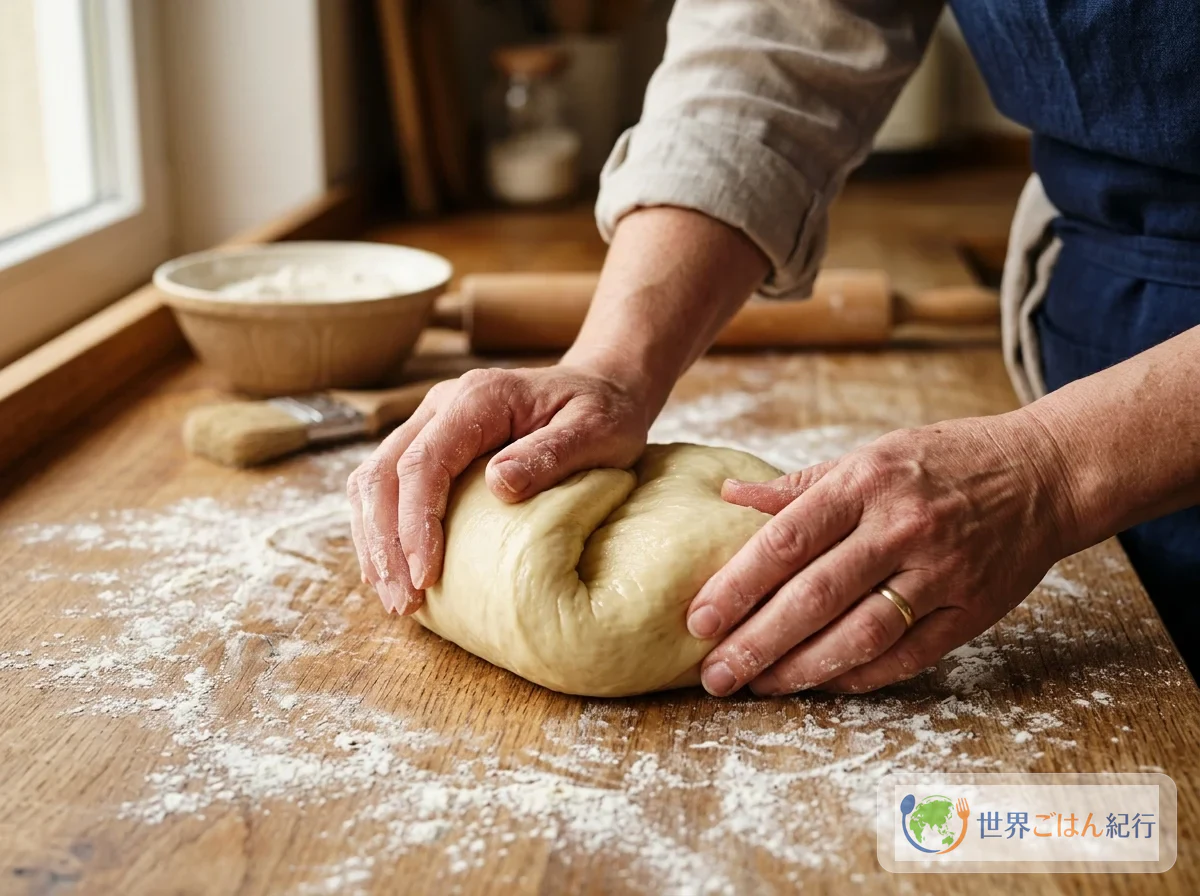
| The dough shrinks and will not roll | Right after kneading, or too much dusting flour | Stop kneading, shape into a ball and rest 5–10 minutes. Don't keep adding flour |
| They split when boiled | Filling or juice on the seams, or the water too strong | Wipe the edge and close the rest, and boil a few at a time at medium-low heat |
| The filling is watery | Steam from the potatoes or the cheese's moisture remains | Return the filling to the skillet, drive off moisture over low heat and cool completely |
| The flavor is blurry | The filling was not tasted before folding | Taste the filling alone and add salt and white pepper a little at a time |
| Only the wrapper is heavy | Thicker than 0.125 inch (3 mm), or boiled a long time after floating | Roll the next wrappers to 2–3 mm and keep to the time after floating |
| The wrapper dried and will not close | The cut wrappers or folded ones were exposed | Cover with a cloth, and dampen only the dry edge very lightly with a wet fingertip |
If the filling is cool but the seam still opens, flour is often left on the edge of the wrapper. Brush the edge clean, press with your fingers, and set the pieróg down seam side up for a moment. Avoid spraying water after folding; it makes the wrapper sticky and more likely to tear.
Other Pierogi Fillings
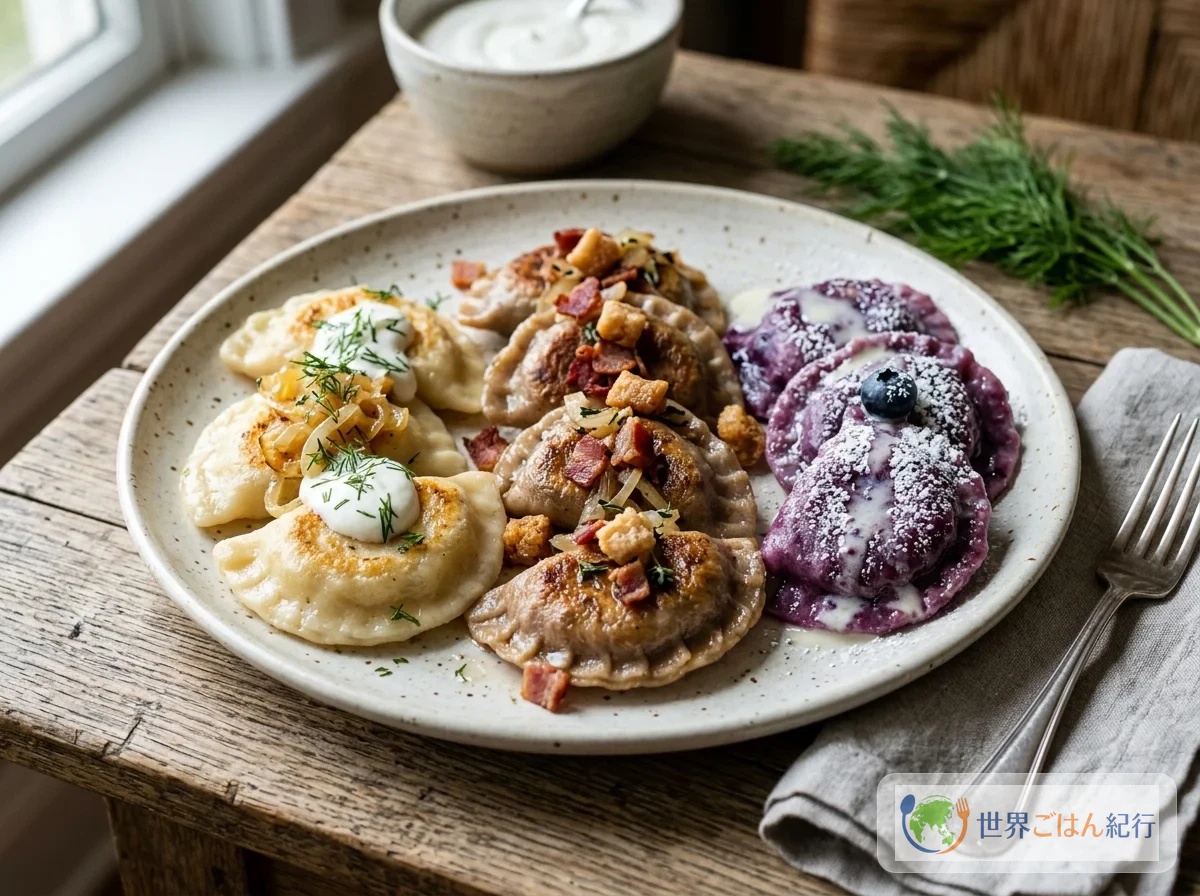
With ruskie as the base, you can follow region and season by changing the filling, and its moisture is the thing to watch. Traditional fillings wrap what could be preserved or harvested in that place.
Sauerkraut and forest mushrooms
Put 5.5 oz (150 g) sauerkraut with the liquid squeezed out, 15 g dried mushrooms rehydrated and finely chopped, and 1/2 onion in 10 g butter over medium heat. After about 5 minutes, drop to low heat and fry another 5–8 minutes until no liquid remains on the bottom of the pan. Cool before folding. This is the combination that appears on the meatless Polish Christmas Eve table.
Meat and kielbasa
Fry 7 oz (200 g) mixed ground meat, 1/2 onion, 1 clove garlic, 1/2 tsp marjoram, 1/3 tsp salt and a little pepper, cook it through to the center and let it cool. Finely chopped boiled or roast meat works too. For a smoky aroma, finely cut about 5.5 oz (150 g) kielbasa, fry it with the onion and cool it.
Fruit
Cut blueberries or strawberries small and coat them with a little sugar. Place the fruit in the center of the wrapper and don't overfill, since juice on the edge opens the seams. Boil for about 1–2 minutes after they float and serve with sour cream or sugar. In summer, a sweet filling can also be a main.
Storing and Reheating Pierogi
| State | How to store | Guide | How to use |
|---|---|---|---|
| Folded, raw | Refrigerate on a floured tray | Same day | Boil before moisture moves from the filling into the wrapper |
| Folded, raw | Freeze one by one, then bag | Use soon | Boil from frozen; check the state about 2–3 minutes after they float |
| After boiling | Cool slightly, seal and refrigerate | Until the next day | Pan-fry in butter to heat through to the center |
| After boiling | Freeze without letting them touch | Soon | Texture changes, so suited to a pan-fried finish |
Raw pierogi keep only a day in the fridge because moisture from the filling softens the wrapper and weakens the seam. To freeze, lay them with space between on a floured tray and bag them once the surface has hardened; bagged from the start, they stick together and you can't take out just the number you need.
Boil frozen pierogi without thawing, a few at a time, so you don't crowd the pot. The water temperature drops, so bring it back to a gentle simmer, and once they float, lift them out when the thick part of the wrapper turns translucent. For refrigerated boiled pierogi, melt butter in a skillet and turn them every 2–3 minutes over medium heat until the surface is toasty. The microwave alone tends to harden the wrapper.
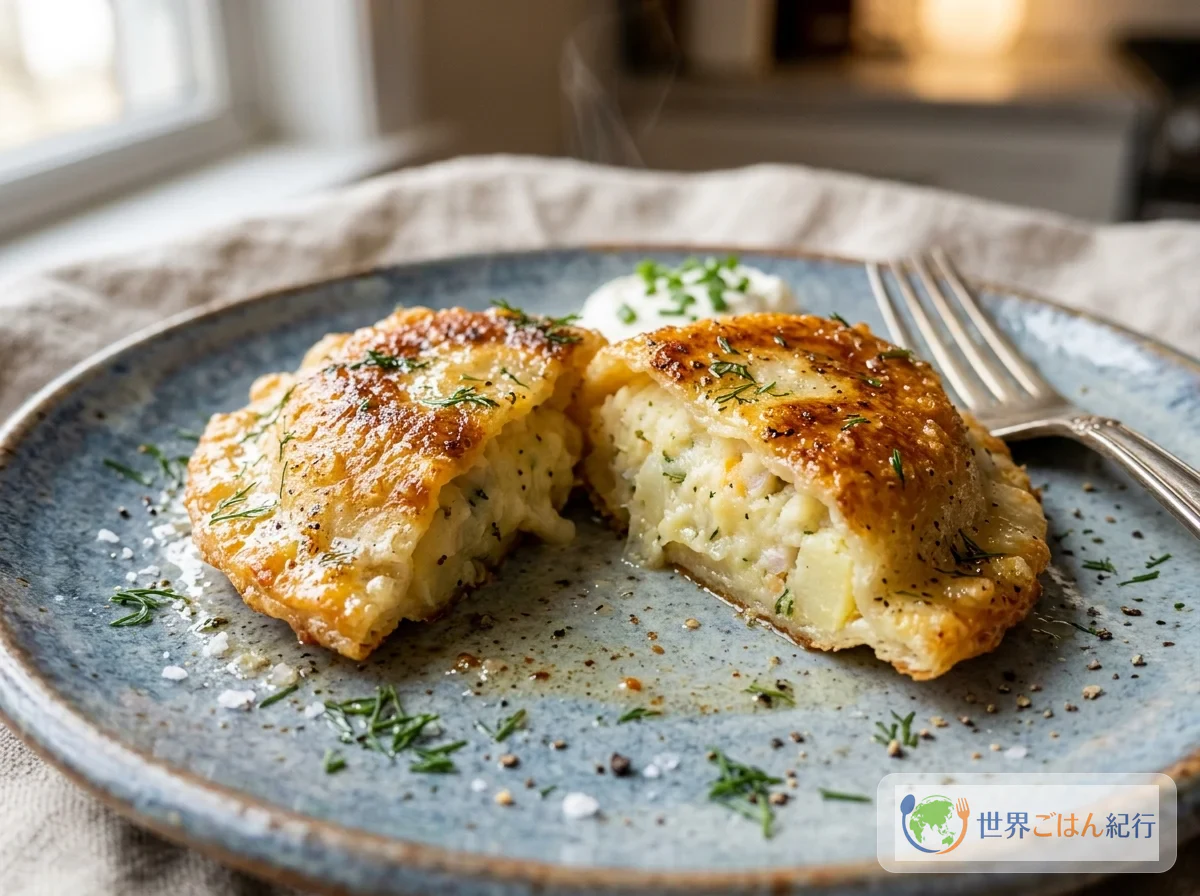
On a day you make many, freezing them raw keeps the boiled texture better. Separate them one by one before they go in the freezer, write the day on the bag, and use them up soon.
FAQ
Is there a way to make the dough without egg?
Yes. Flour, hot water, salt and oil alone can be folded. Without egg the dough firms up a little, so add about 1 tbsp hot water, don't over-knead, and rest 30 minutes. The texture differs from the egg version, so keep the wrappers from getting too thin.
What can I do with leftover filling?
Spoon it onto baked potatoes or bread; that keeps the flavor of ruskie better than thinning it with milk or cream into a soup. Refrigerate it and heat it before the next day. If you run short of wrappers, resist using up the filling by overfilling the rest.
Do I thaw frozen pierogi before boiling?
No. If the surface gets wet, the wrapper turns sticky and the seam opens easily. Put them still frozen into boiling water a few at a time, and boil 2–3 minutes after they float, watching the wrapper.