Break open a freshly baked bun and the sweet smell of milk reaches you before the steam does. The soft dough is golden at the rim and white in the middle, where a slightly grainy cheese filling has settled into a well. Vatrushka (Ватрушка / vatrushka) is a sweet bun loved in Russia and across Eastern Europe: a round of yeast dough with fresh cheese baked into its center. It looks like a small cheesecake tart, but it eats much more like bread.
About vatrushka
The dough is lighter than brioche, and the filling is less sweet than a Japanese cheesecake. Think of vatrushka as breakfast, a snack on the way home from school, or a sweet bread set beside a glass of strong black tea. Once you see it that way, it's easier to understand how to make it well.
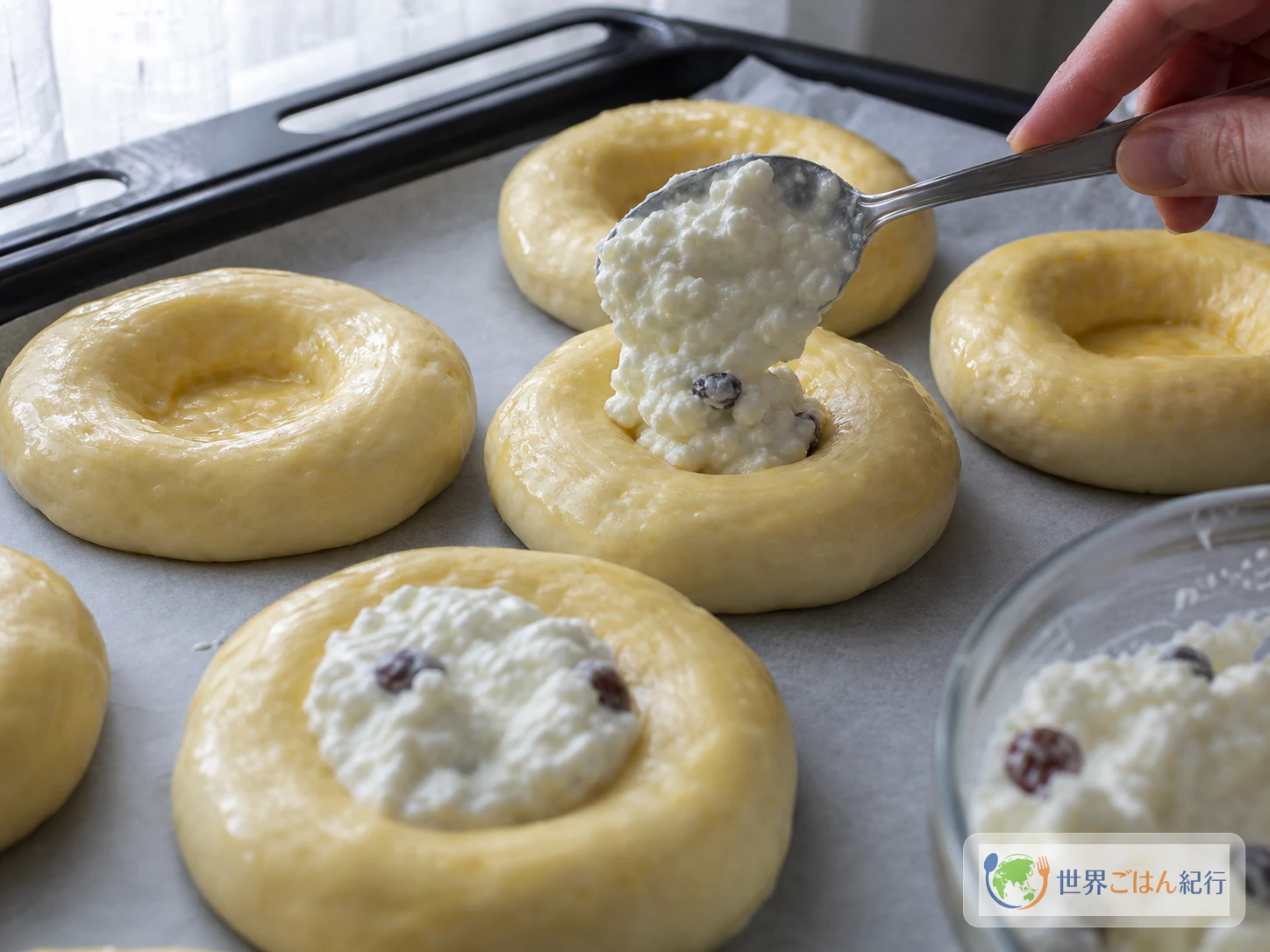
In Russia the filling is made with a fresh cheese called tvorog. Tvorog is hard to find outside the region, so this version uses drained cottage cheese with a little Greek yogurt, which comes surprisingly close. Aim for a soft rim of yeast dough, a deep well in the center, a white filling that keeps some grain, and a milky aroma that hasn't been baked away.
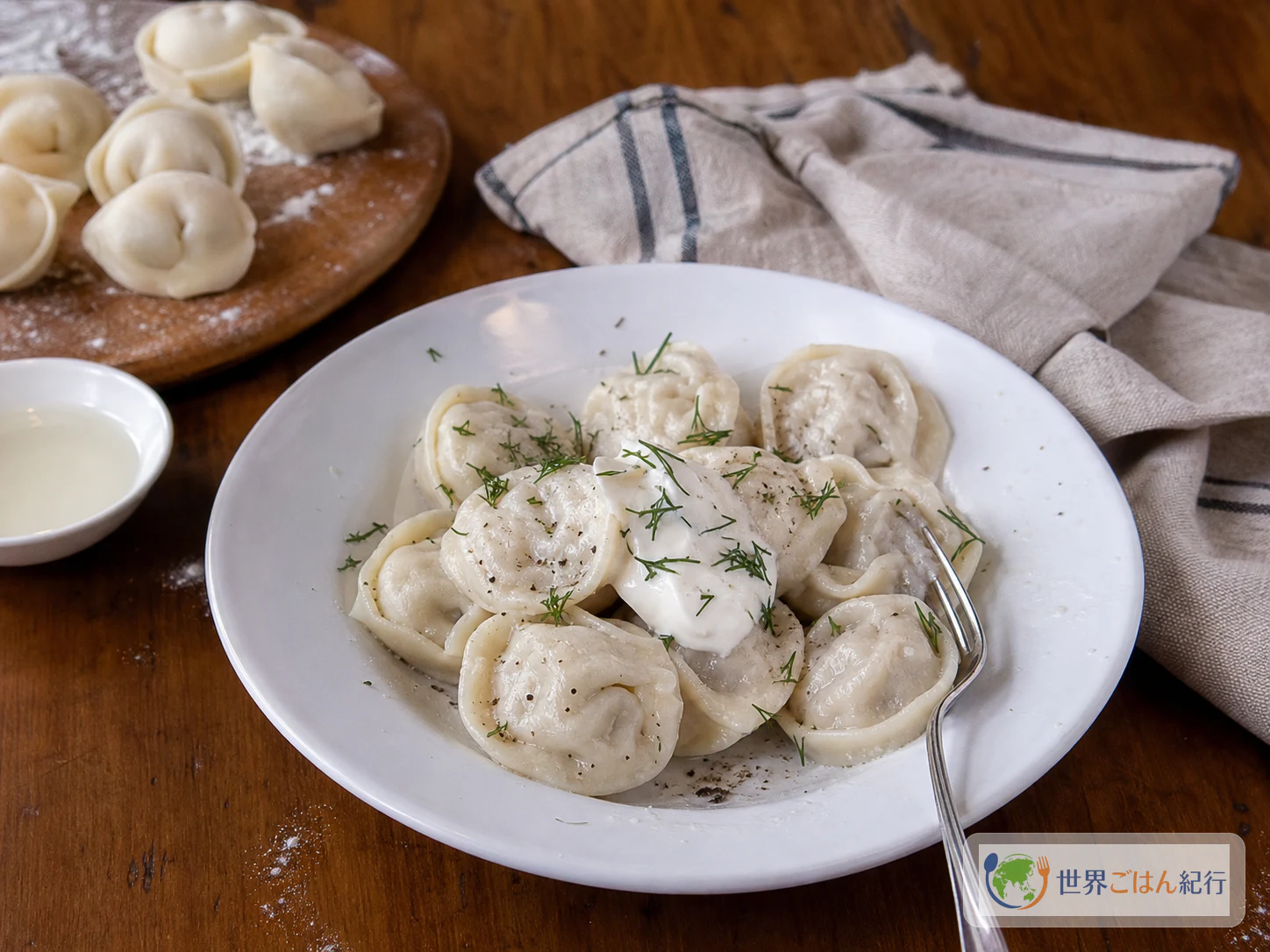
Pelmeni and kurnik are the flour dishes of a Russian meal, and vatrushka belongs to tea time. Next to a cold summer dish like okroshka, it shows the lighter side of Russian cooking.
In Russian it is written Ватрушка, plural ватрушки. In English it is often written vatrushka, plural vatrushki.
What makes a good vatrushka
On paper, vatrushka is an ordinary sweet bun. Three things make it good: the moisture of the cheese, the depth of the well, and taking it out of the oven early. If the well is shallow, the filling runs while baking. If you press too deep, the bottom gets thin and tears.
| What to keep | Local character | How to settle it at home |
|---|---|---|
| Tvorog-like grain | A slightly rough feel on the tongue from fresh cheese | Drain cottage cheese and do not strain it too fine |
| Soft yeast dough | A sweet bread dough, but not as heavy as cake | Knead with milk and egg, and keep the butter modest |
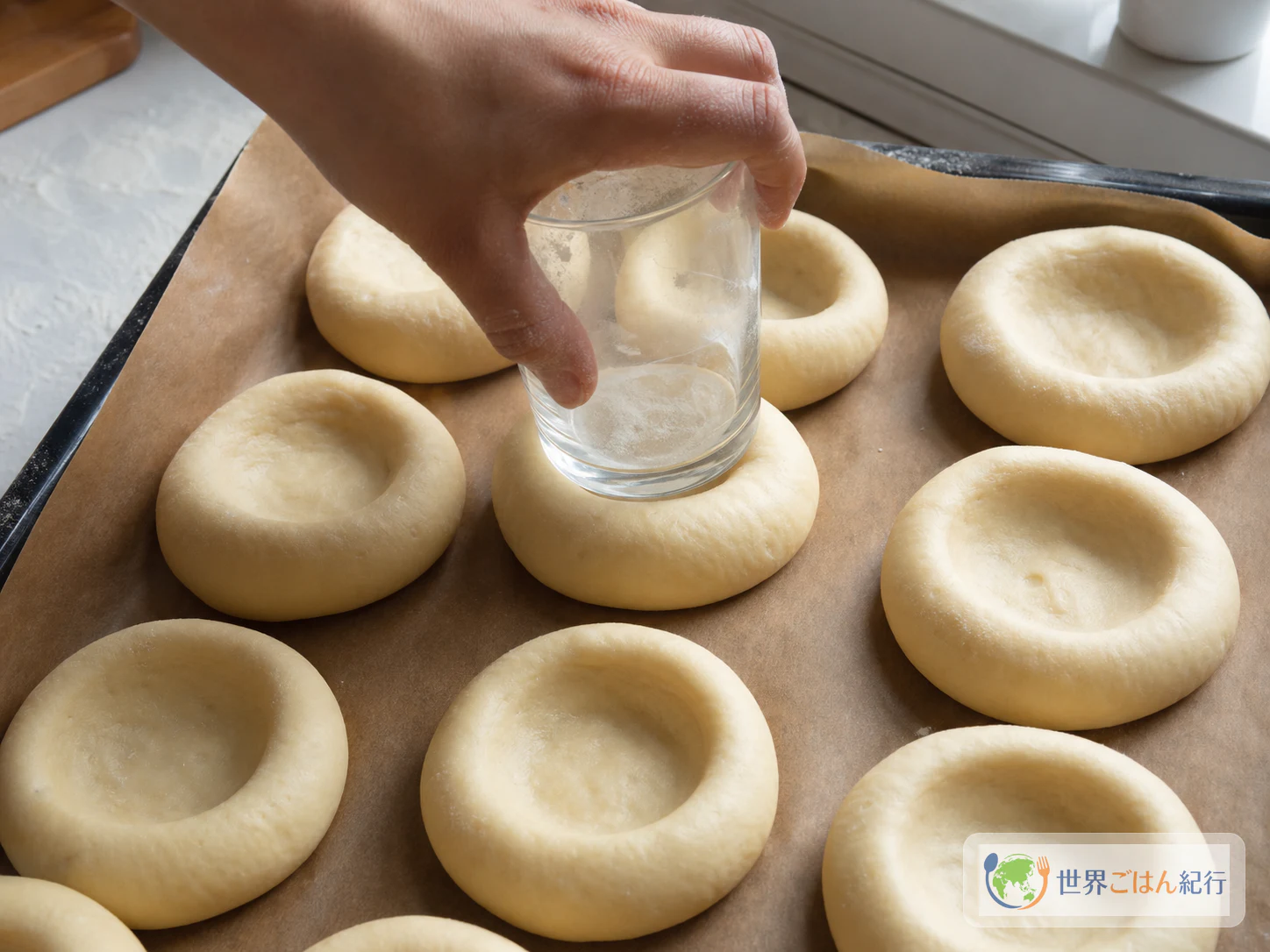
| Deep well | The white filling stays in the center | Press again with the bottom of a glass after the second rise |
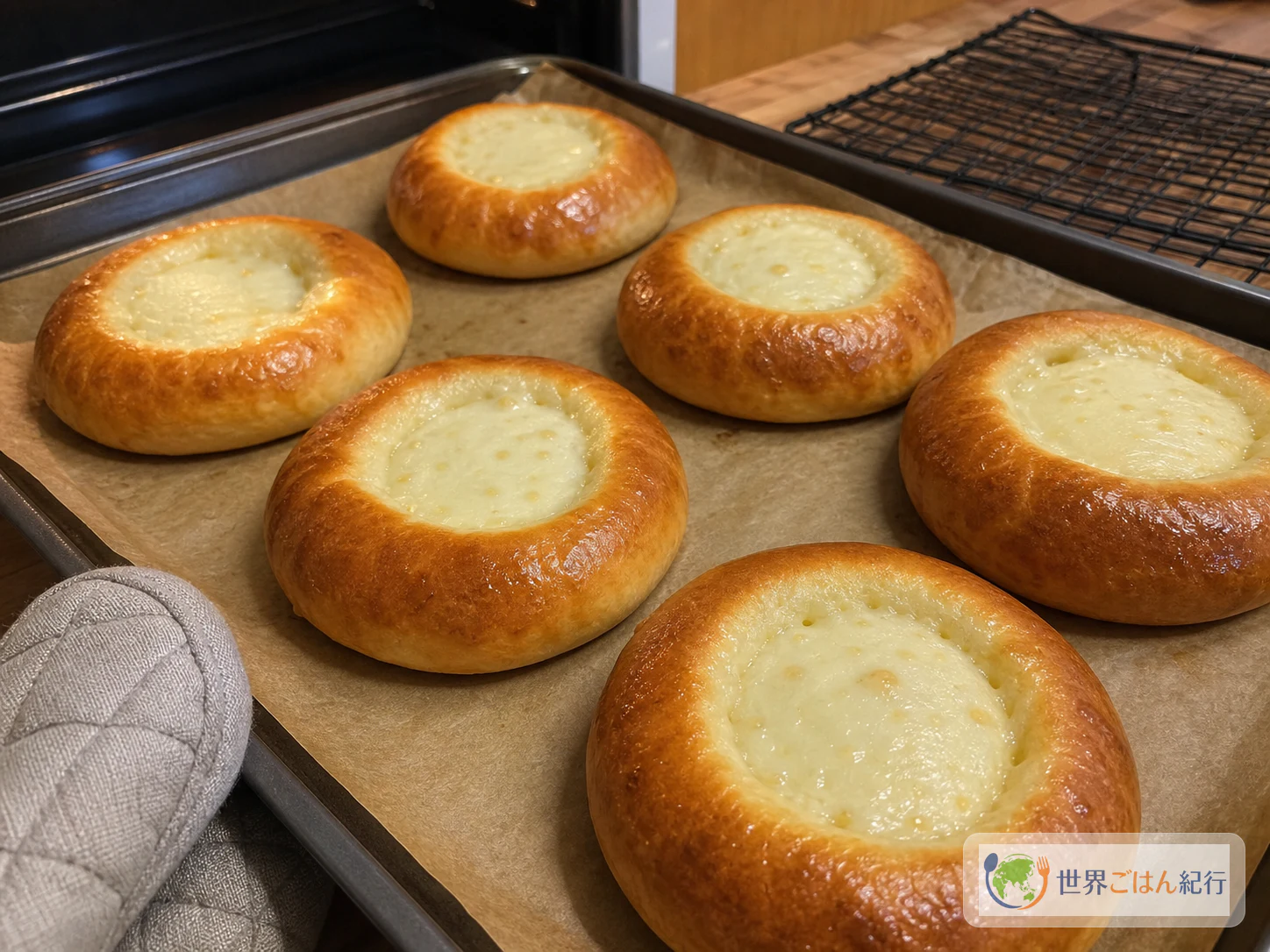
| Browning | Golden rim, pale cheese | Bake briefly at 190°C (375°F) without drying out the milk in the center |
| How to eat | A sweet bread for tea and breakfast | Let it cool a little so the aroma settles |
Ingredients (makes 8)
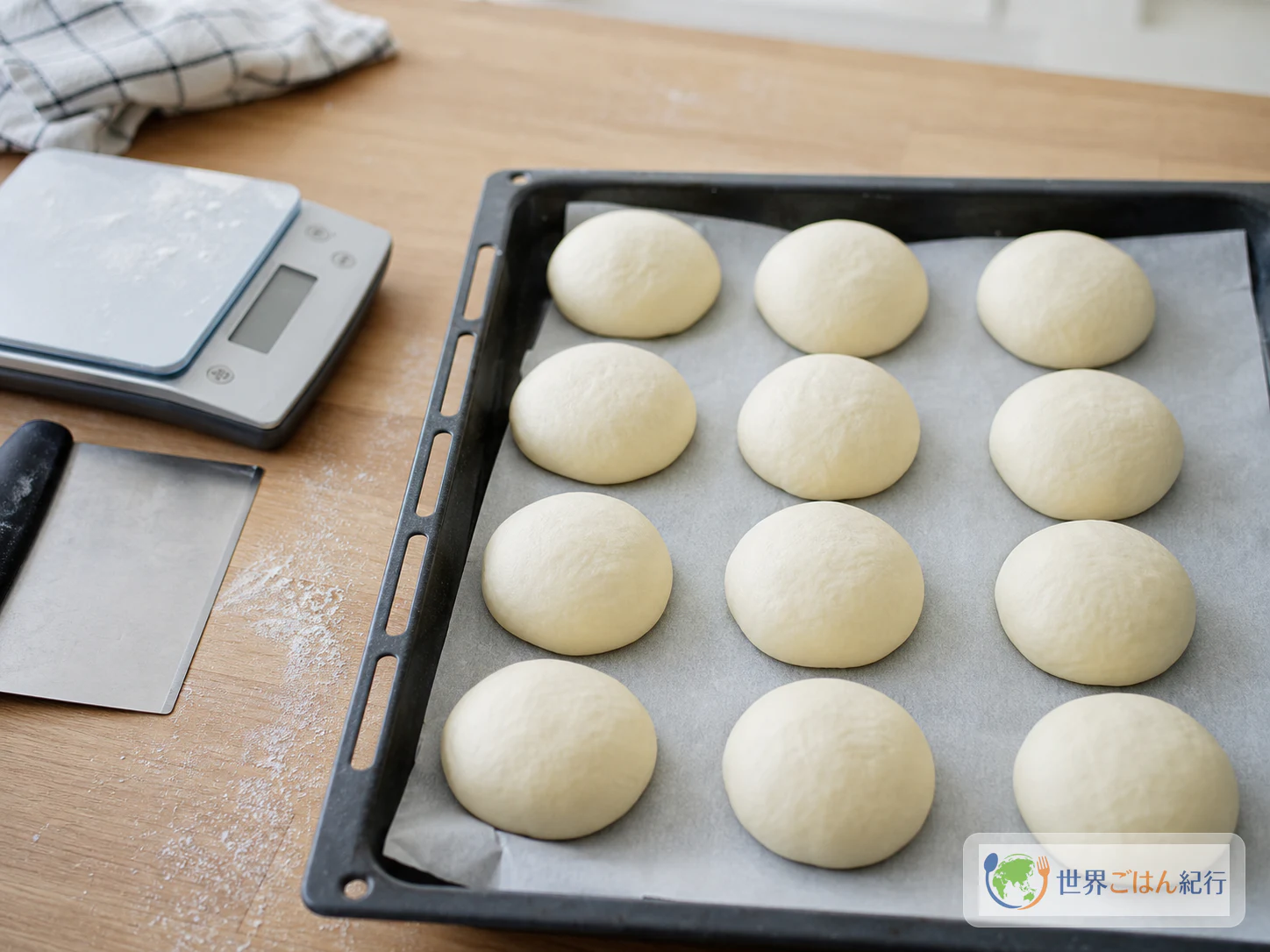
This amount makes 8 vatrushki about 3.5 inches (9 cm) across. Rather than making them large, dividing into 8 bakes them more reliably to the center in a home oven. Raisins can go in or not, but a small amount rounds off the tartness of the cheese.
This recipe uses wheat, egg and dairy. Because cottage cheese and yogurt differ in saltiness and moisture by product, taste the filling right after mixing and put moisture before sweetness when adjusting. Because it contains dairy after baking, avoid leaving it at room temperature in hot weather, and refrigerate what you will not eat the same day.
Choosing the cheese and tools for vatrushka
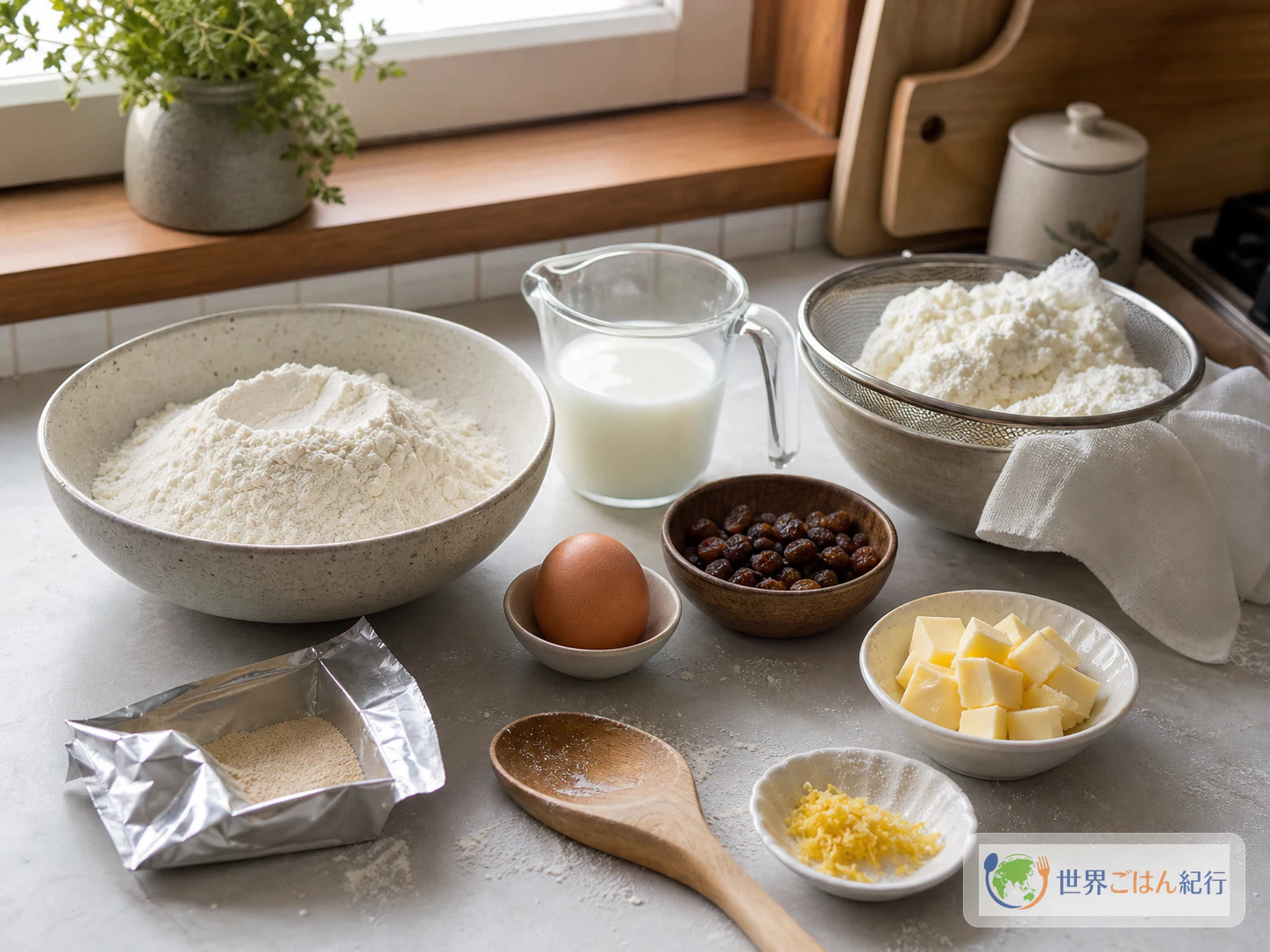
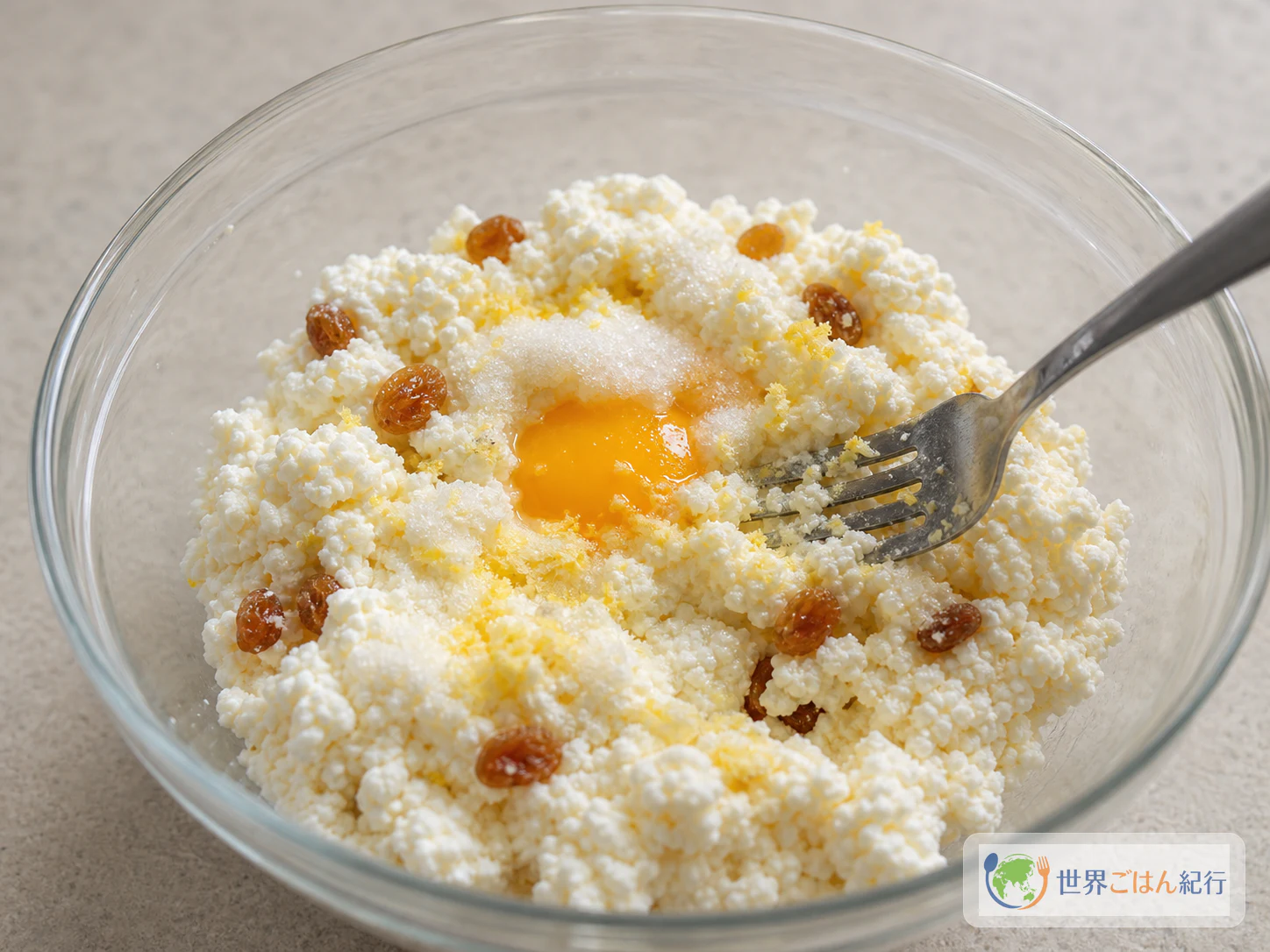
Milk, eggs, butter and cottage cheese from the nearest supermarket are fine. The cheese is the ingredient to watch, because its moisture varies a lot from brand to brand. Line a colander with paper towels and drain the cheese for 15 minutes before using it, and the filling is less likely to run. If the curds are large, mash them lightly with a fork. Leave a little grain in the cheese, since a fully creamy filling drifts toward a Japanese-style sweet bun.
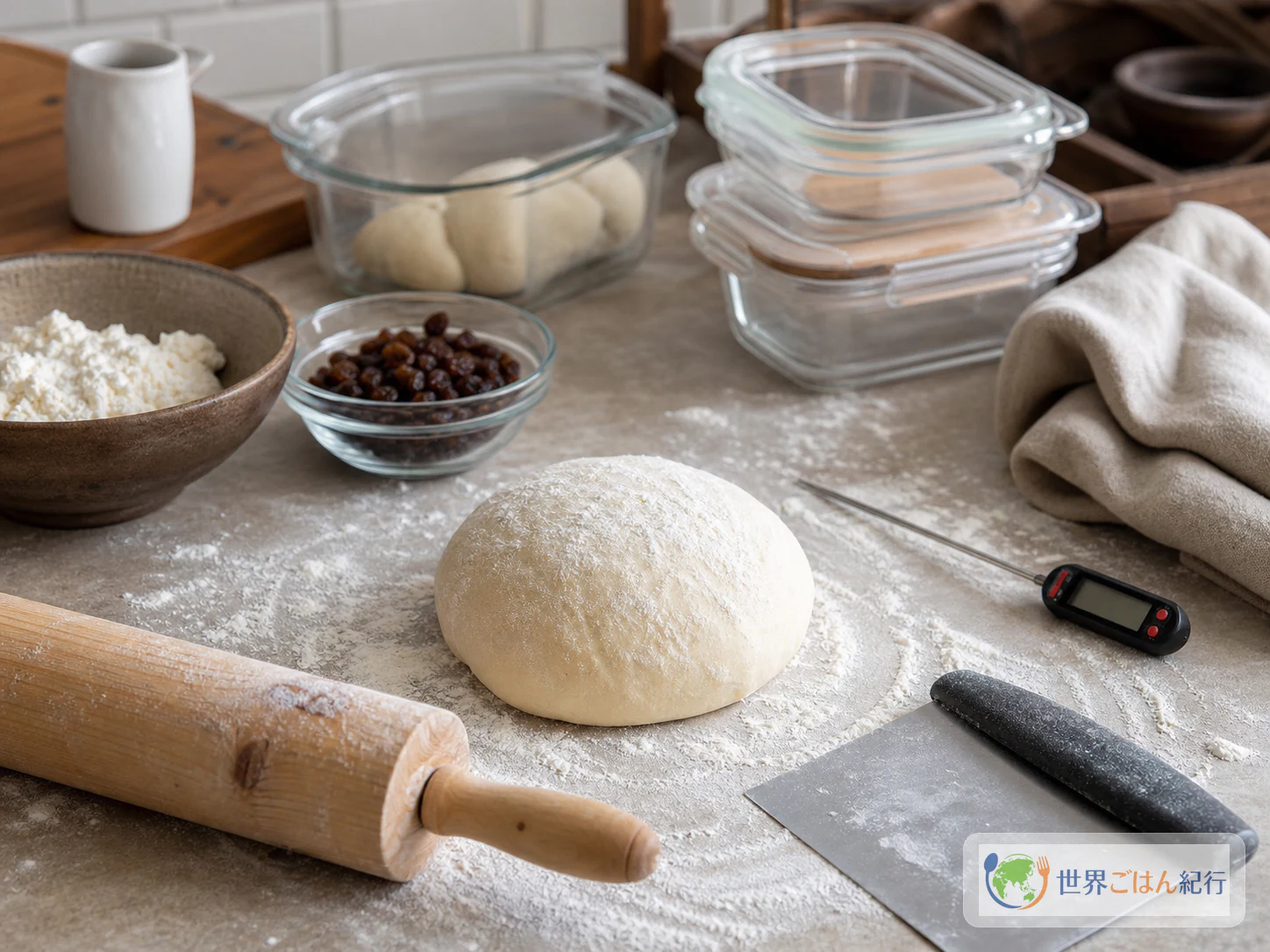
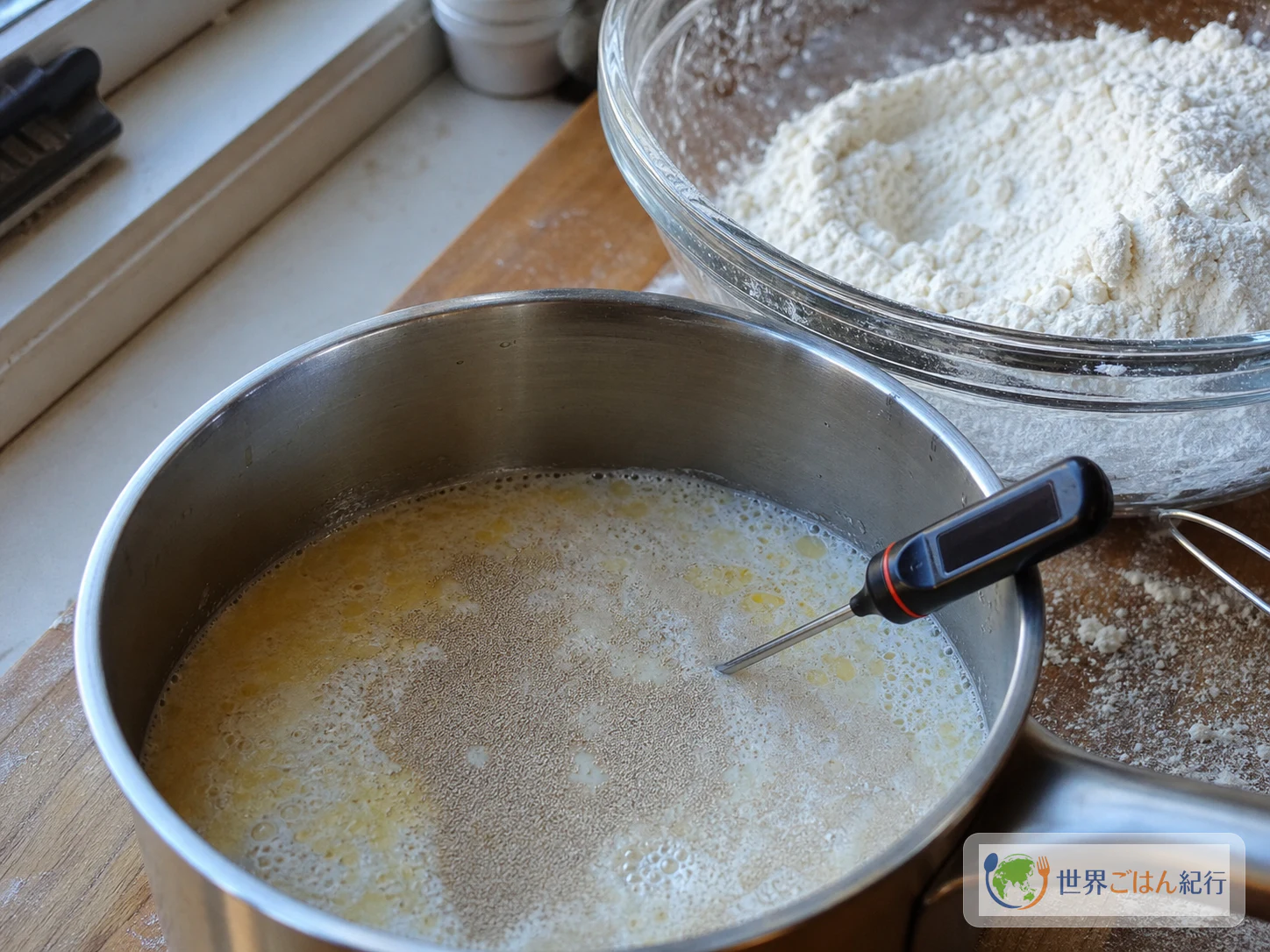
The tools worth having are the ones that keep the work from going wrong. A thermometer helps you get the proofing temperature right. Milk that is too hot weakens the yeast, and milk that is too cool slows the rise. In a winter kitchen, even a small difference within 35°C to 100°F (38°C) shows up directly in the proofing time.
A small food processor is handy for large-curd cottage cheese. Run it in 1-second bursts and stop while some grain remains, which gets you closer to the texture of tvorog. Make it too smooth and it leans toward cheesecake.
You can shape the dough by hand, but a rolling pin keeps the bottom an even thickness, and that controls how the filling sinks. You'll use the same rolling pin for pelmeni and pierogi.
Method: let the yeast dough rise, and bake a white well
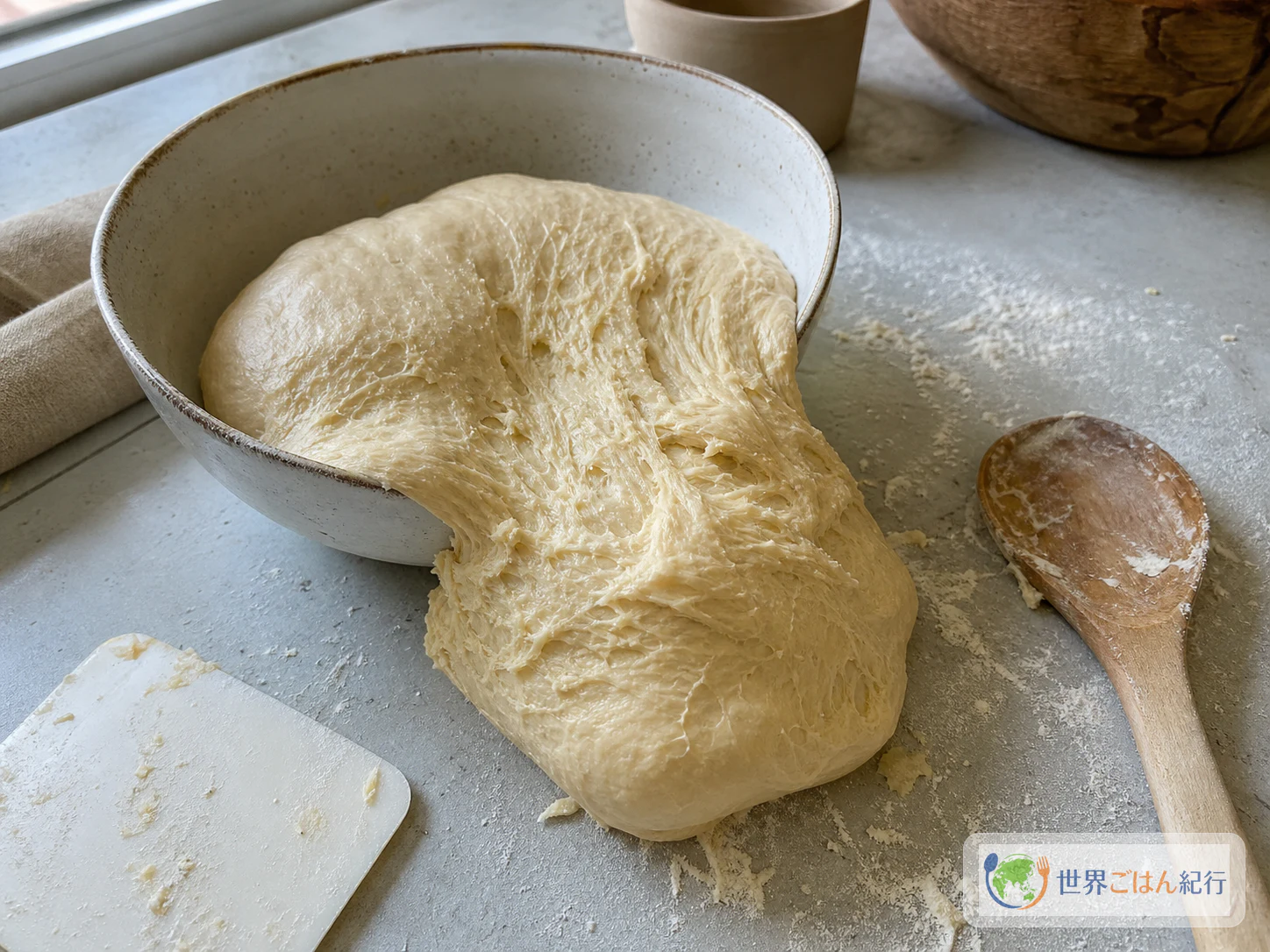
With vatrushka, managing the waiting time matters more than the number of steps. Proof the dough without making it too warm, press the well again after the second rise, and do not overbake once the filling is in. If you look at the state at each step, the center is less likely to run even on a first try.
Common vatrushka problems and fixes
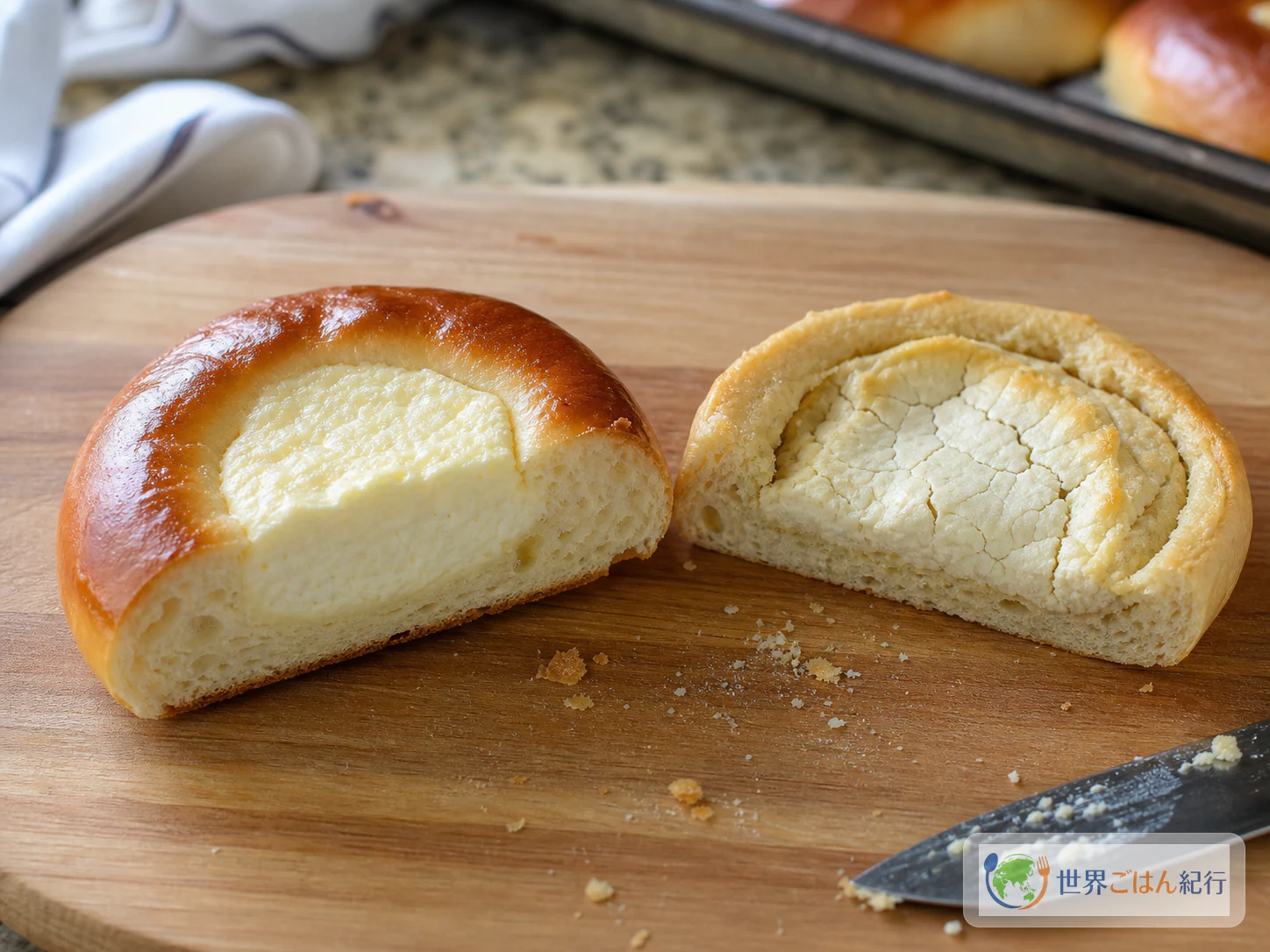
Once a vatrushka is baked, a problem with the filling is hard to fix. The proofing of the dough, the depth of the well and the moisture of the cheese all depend on one another, and most problems can be corrected before the buns go into the oven.
| State | Cause | How to fix |
|---|---|---|
| Center runs | Filling is loose, well is shallow | Drain the cheese more and add 1 tsp cake flour. Press again just before baking |
| Rim is hard | Milk too hot so underproofed, or overbaked | Milk at 35 to 38°C. Check from 18 minutes at 375°F (190°C) |
| Bottom thin and tears | Pressed too hard with the glass | Keep the rim and leave at least 0.25 inch (5 mm) at the bottom. Press lightly the second time |
| Cheese cracks | Baked long at high heat, too little moisture | Stop once colored, and add a little yogurt to the filling |
| Flavor is blurry | The saltiness and tang of the cheese are weak | Build the outline with a pinch of salt, lemon zest and yogurt |
| Dry the next day | Dried out at room temperature | Seal soon after cooling and warm lightly before eating |
The most common mistake is adding too much moisture while trying to make the cheese smooth. A wet filling runs in the oven and soaks into the bottom of the bread. Cottage cheese can be wetter than tvorog, so drain it longer at first, and aim for a filling that falls slowly from the spoon.
How to eat, store and FAQ
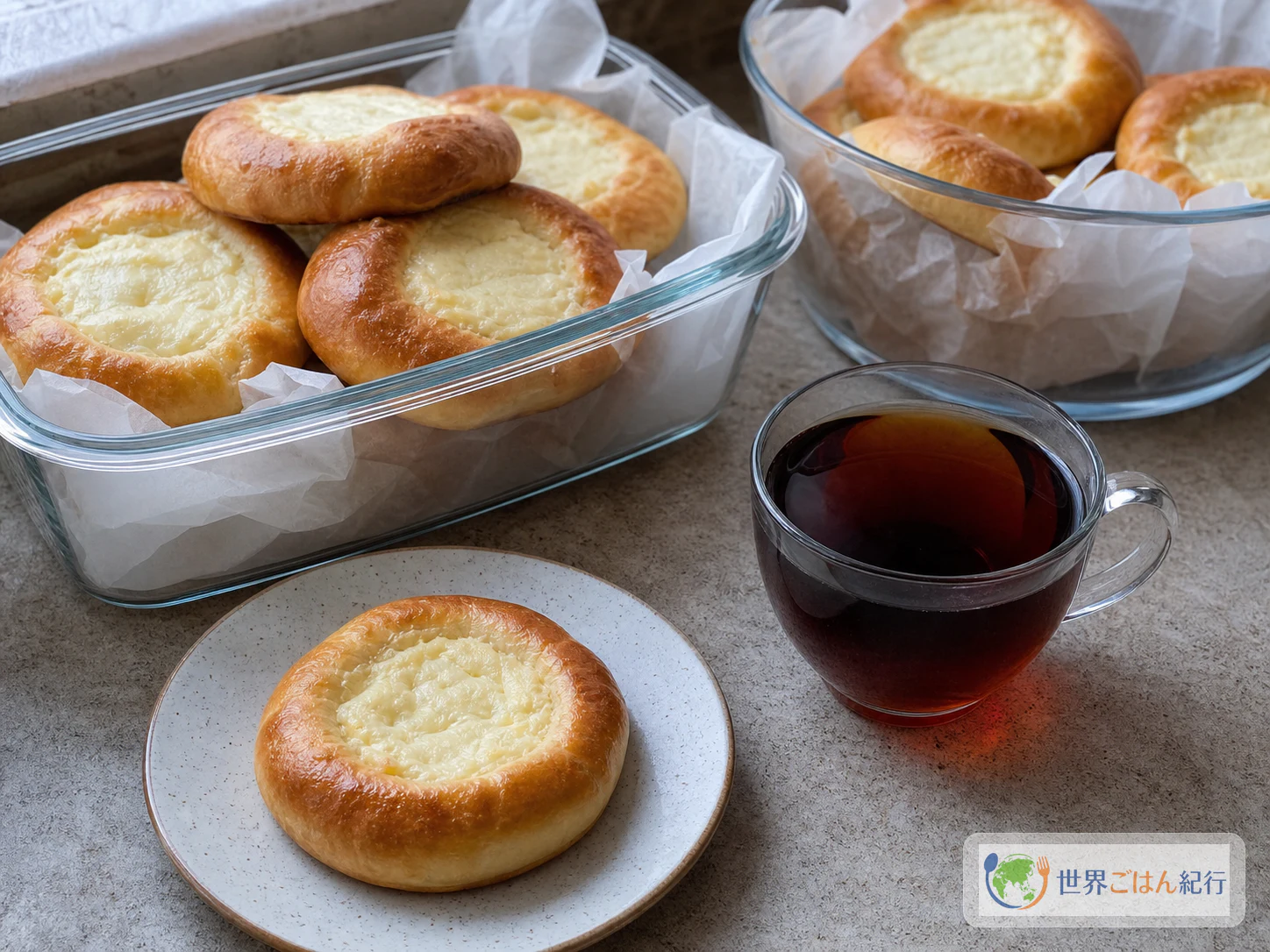
Let the buns cool for 10 to 15 minutes before eating, so the cheese aroma comes through. Strong black tea, milk tea and black coffee all suit them. At breakfast, a little unsweetened soup or some fruit on the side keeps the meal from feeling heavy.
Once the buns have cooled completely, put any you'll eat the same day in an airtight container. In cool weather they can stay at room temperature for half a day at most. After that, refrigerate them for up to 2 days. To serve, warm them for 4 minutes at low heat in a toaster oven or a 160°C (320°F) oven, then leave them for 2 minutes in the residual heat. A microwave alone tends to make the rim damp, so give them only 10 to 15 seconds and then crisp the surface in the toaster oven.
To freeze, wrap each bun in plastic wrap and put them in a storage bag for up to 2 weeks. Thaw for half a day in the refrigerator or 30 minutes at room temperature, then warm for 6 minutes in a 325°F (160°C) oven. The filling is slow to regain its moisture, so don't overbake any buns you plan to freeze.
I can't get tvorog. Can I make it with cream cheese?
You can, but it eats quite differently. Cream cheese alone makes a rich, smooth filling that is closer to a Japanese cheese bread than to Russian vatrushka. If you use it, 7 oz (200 g) cottage cheese, 2.75 oz (80 g) cream cheese and 20 g yogurt give a good balance of grain and richness.
Are raisins required?
No. If you leave them out, add a little more lemon zest so the cheese doesn't taste flat. Dried cranberries bring tartness but move away from the plain Russian flavor. The first time you make it, either use raisins or leave them out entirely.
Can I make the dough in a bread machine?
Yes. Use the dough cycle and let the machine handle everything through the first rise, butter included. If the dough is too warm when you take it out, turn it onto the counter and let it rest for 5 minutes before dividing. Warm dough makes the well spring back, and the filling spreads sideways.
Can I make it the day before?
The easiest way is to refrigerate the dough after the first rise. Gently press the gas out of the risen dough, put it in an airtight container and leave it in the refrigerator overnight. The next day, leave it at room temperature for 20 minutes, then divide, round and make the wells. A filling mixed the day before tends to release water, so drain the cheese ahead of time and mix the filling on the day you bake.
What do I pair it with to make it feel more Russian?
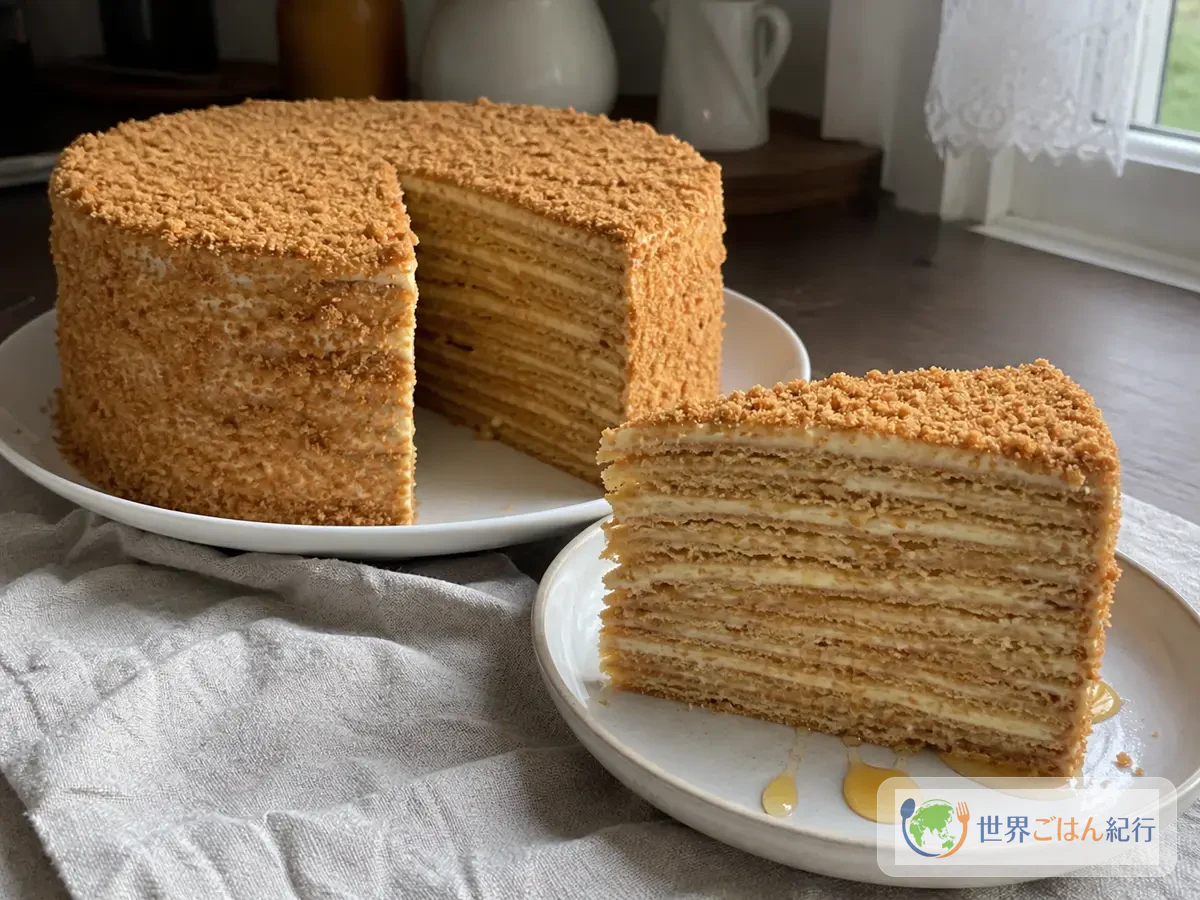
If you serve vatrushka as a sweet bread after a meal, a tangy okroshka or a light salad makes a lighter main course than flour dishes like pelmeni and kurnik. For a weekend lunch, vatrushka with tea and fruit is plenty. For a layered dessert next, try medovik, made with thin honey dough that rests overnight.