
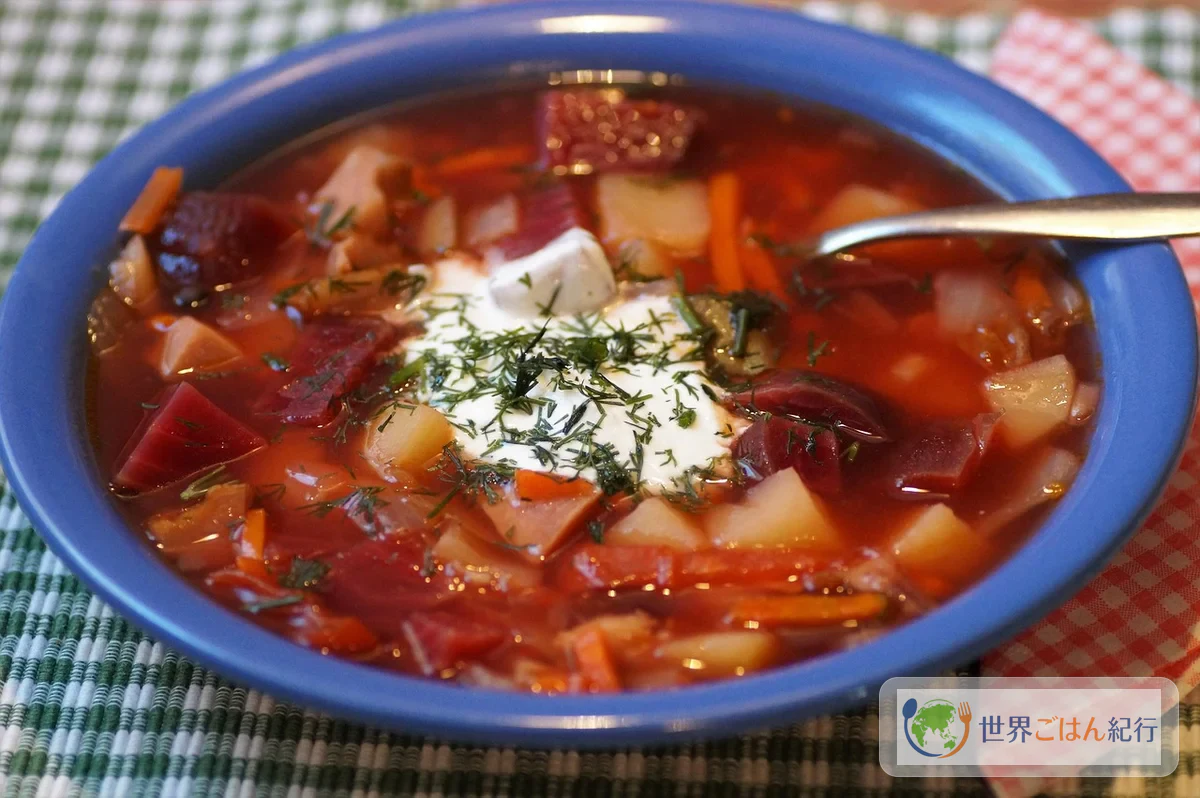
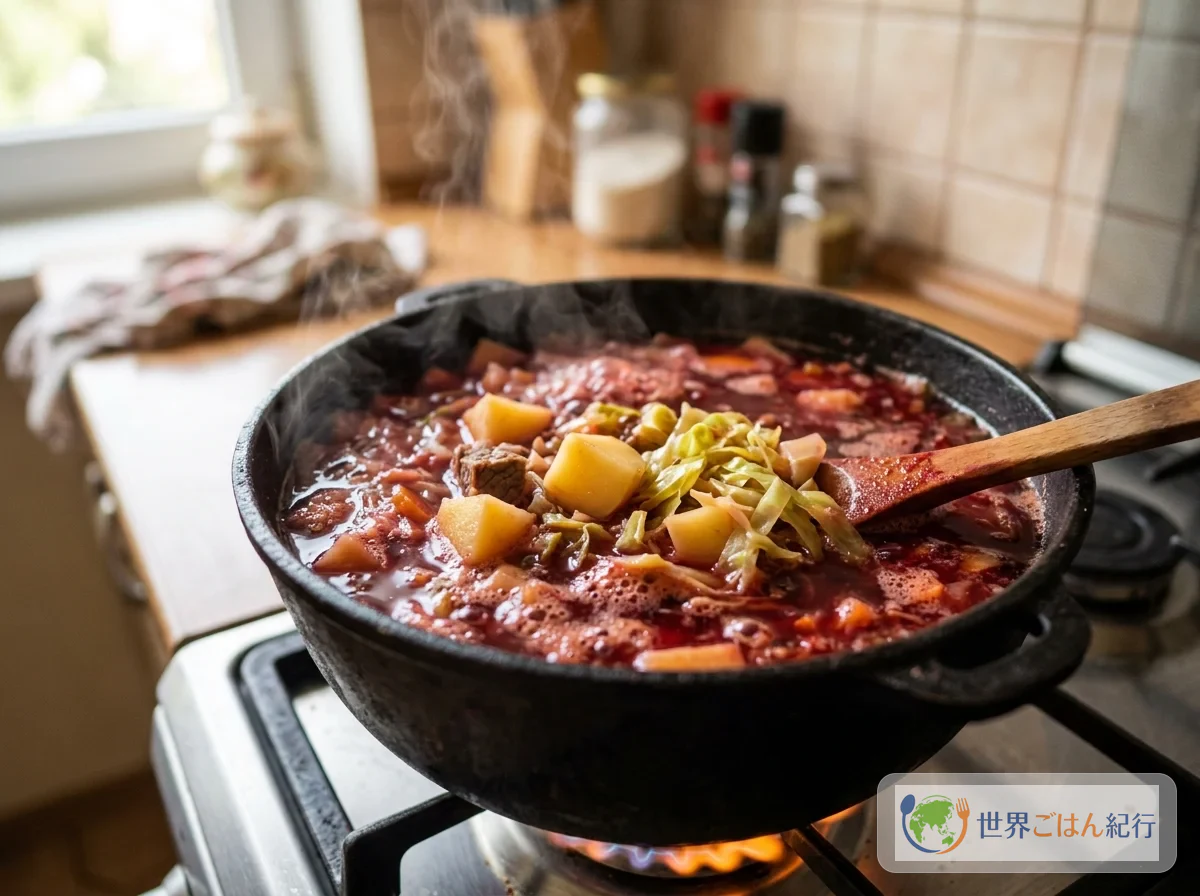
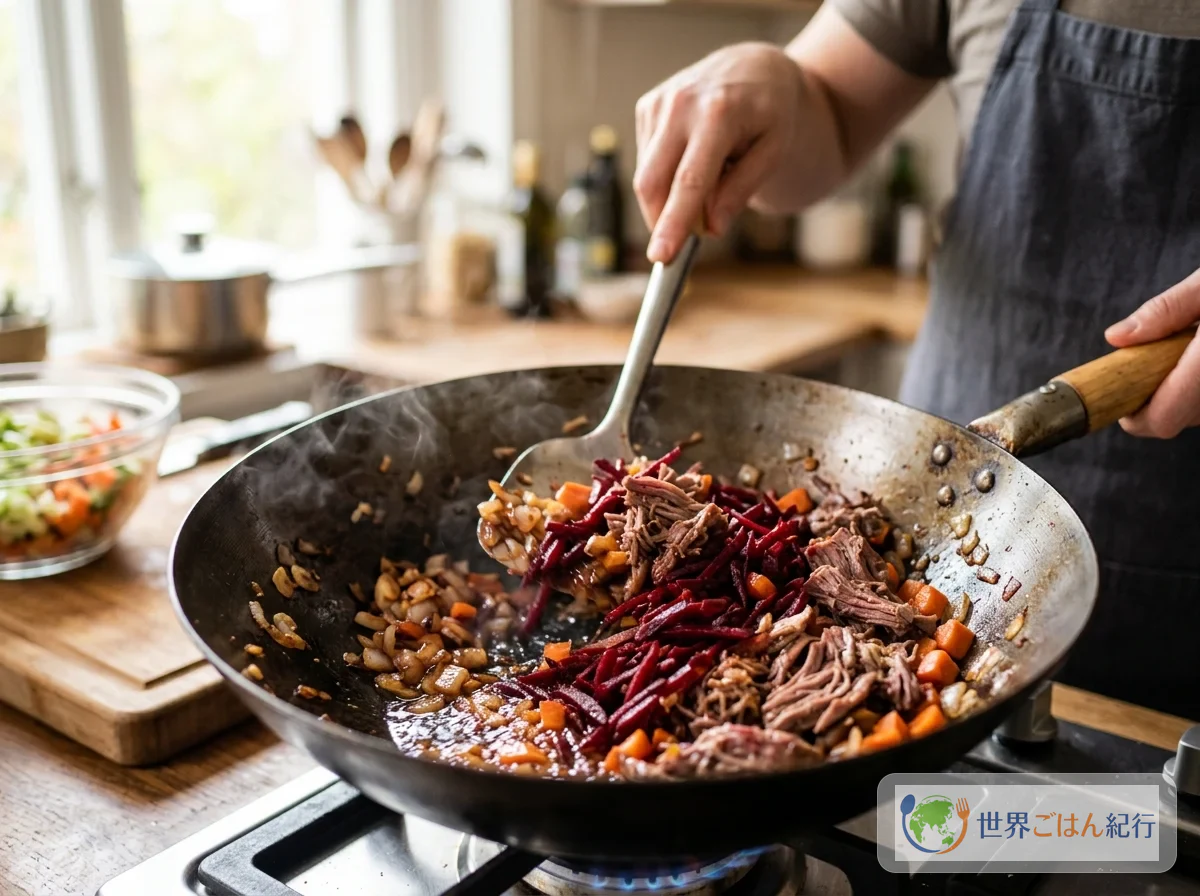
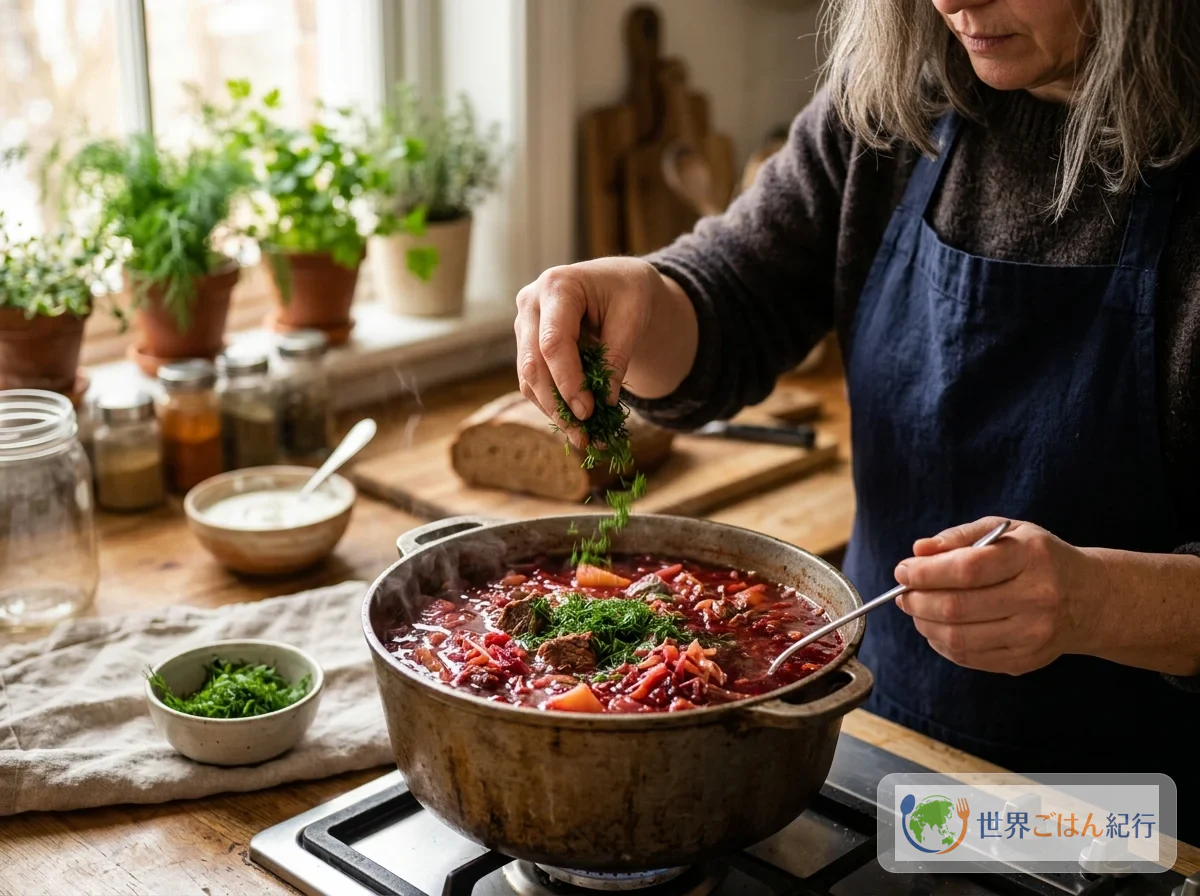
Lift the lid a little and the earthy scent of beets rises with the steam of the beef, followed by sweet cabbage, sour tomato and the green aroma of dill. Ladle it into a bowl, drop a spoonful of sour cream on top, and a white swirl unfurls across the deep crimson surface. Borscht (борщ) is Ukraine's great beet soup, sweet and sour with the umami of meat. The color and sweetness depend on when the beets go in. Make a beef stock first, simmer the potatoes and cabbage in it, and bring the sautéed beets back near the end. Follow that order and a home pot gets the balance right.
Borscht in Ukrainian homes
Borscht belongs to homes and regions, not to any one restaurant. Every pot differs: the type of meat, how the sourness is added, whether there are beans or mushrooms, even the bread on the side. So instead of looking for the one essential ingredient, look at how the stock, the sourness and the herbs are layered around the sweet, earthy aroma of beets.
In 2022, the "Culture of Ukrainian borscht cooking" was added to the List of Intangible Cultural Heritage in Need of Urgent Safeguarding. The listing covers no single recipe and no claim to the dish. It covers the practice itself: homes, communities and cooks choosing ingredients, gathering around the pot and handing the method down to the next generation, at a time when war is disrupting people's lives. Details are on the inscription page.
Borscht turns up in homes, canteens and restaurants in every region, at everyday meals and at celebrations. Far from Ukraine, it makes more sense to cook your own household's pot than to copy one particular plate. This beef version is also one of them.
Regional versions of borscht
Regional difference is part of how the dish works. The base is a meat, poultry or mild fish stock with beets or beet kvass, potatoes and cabbage. Cooks then add what grows locally, such as mushrooms, fish or sweet peppers. The sourness varies too: tomato, fermented milk, sour cream, vinegar, lemon and more.
How the flavor is built
This recipe builds its flavor in three layers:
- Stock: beef short rib or beef shank, simmered over low heat, makes a base that holds the vegetables.
- Sweetness and color: beets, onion, carrot and tomato paste are sautéed, which adds a toasty note.
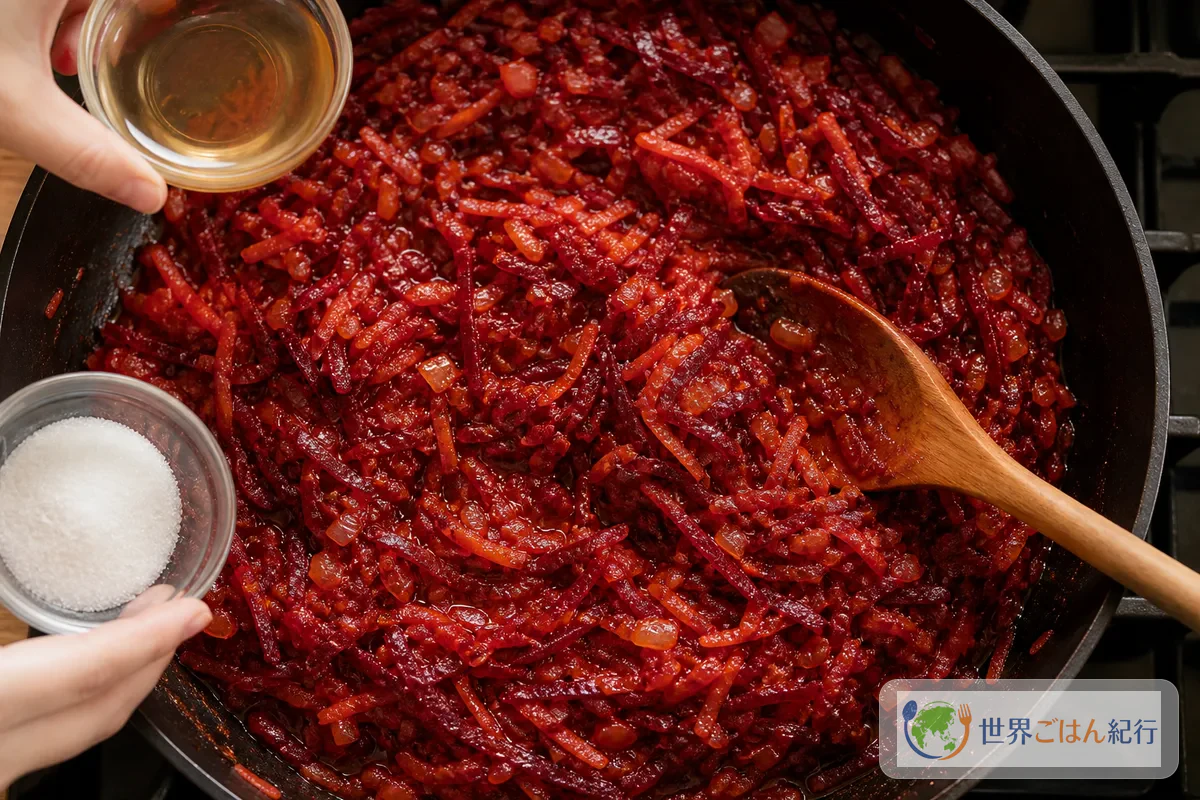
- Sourness and aroma: vinegar goes into the pan with the beets, and dill and sour cream finish the bowl.
Ingredients (serves 6)
If you choose boiled beets, there is less preparation and the way the color comes out is easier to read. If the label says "pickled," sourness and sugar are already in it, so do not put in the full amount of vinegar and sugar from the start. First taste a little of the liquid and adjust only if the sourness is short.
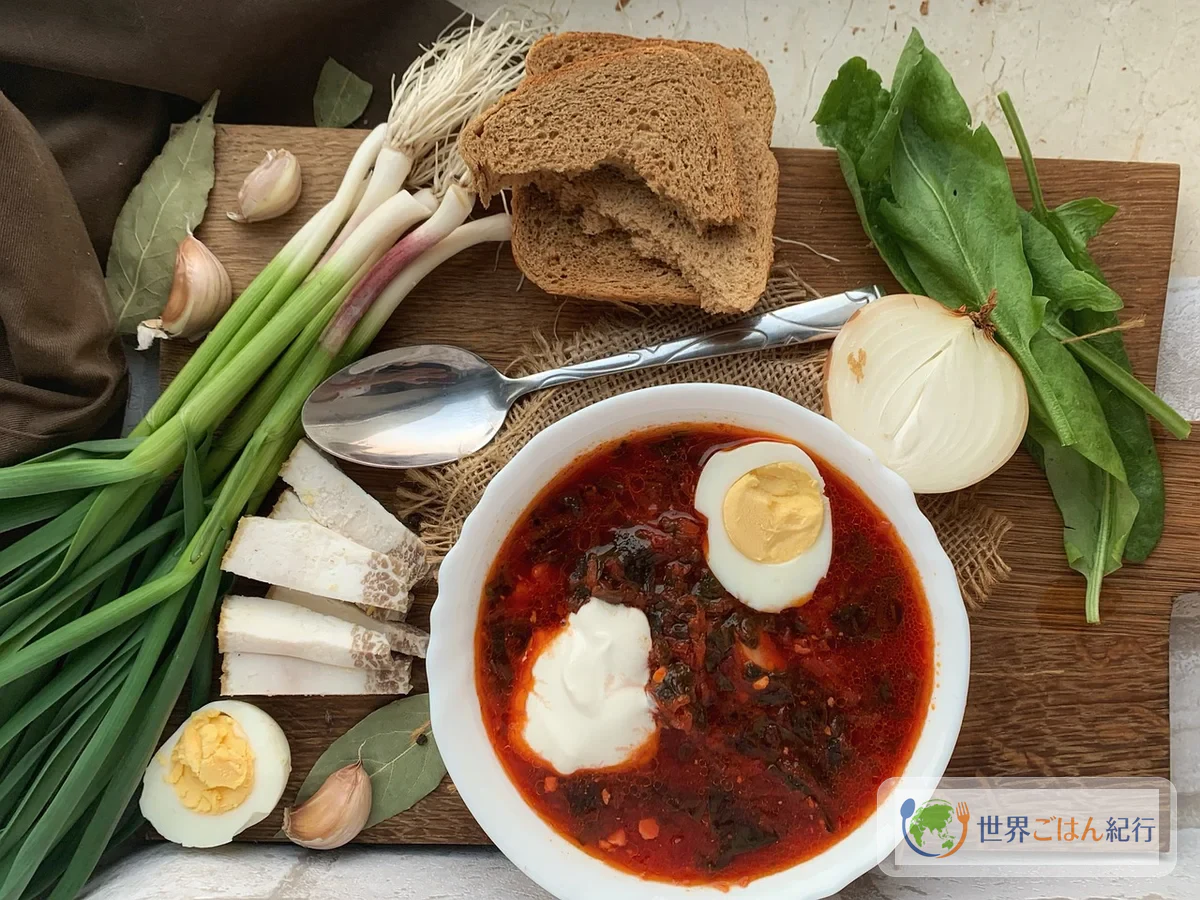
The soup itself uses no wheat, but the bread served alongside may contain wheat or rye. Because it uses sour cream or heavy cream, also check the dairy. Processed beets and seasonings differ in ingredients by product, so check the label if needed.
Choosing beets, herbs and a pot for borscht
Canned, fresh or pickled beets
- Boiled, canned or jarred: the base for this recipe. Keep the liquid and cut the beets into matchsticks. Use the liquid for the final adjustment of sourness and color.
- Fresh beets: roast unpeeled at 350°F (180°C) for 40–60 minutes, and let them cool once a skewer goes through. Peel and cut into matchsticks. Size changes the timing, so go by tenderness rather than the clock.
- Pickled beets: the liquid is already sour and sweet. Hold back the vinegar and sugar, add the beets and their liquid, then adjust a little at a time.
Fresh beets leave red juice on cutting boards and cloth. Lay down a disposable sheet or use a board you don't mind staining, and wear gloves if you have them. If that sounds like a chore, boiled beets are a perfectly smart choice.
White distilled vinegar or rice vinegar works fine. Red wine vinegar gives the sourness a fruity roundness and is worth buying if you'll use it in dressings and braises too. For this one pot, use the vinegar you have.
Dill and other substitutes
Fresh dill does more than anything else to shape the aroma, but you can make the soup without it. Dried dill, 2 tsp added right before you turn off the heat, still lifts the heaviness of meat and beets. Buy it if you'll use it again in fish soup, potato dishes or cucumber salad, and check the label for whether it is freeze-dried, the package size and the ingredients. Otherwise a little parsley scattered at the end fills in the green note, though it lacks dill's sweet, cool aroma.
Celery can be left out. Ordinary bread is fine in place of dark bread.
The pot
An ordinary heavy lidded pot handles the beef simmering. An enameled cast-iron pot holds low heat easily and can go straight to the table. It is heavy and expensive, though, so it is worth buying only if you make soups and braises often and will use a pot of around 8.5 inches (22 cm) regularly. If you already have a heavy pot and just want to try this once, skip it.
Common borscht failures and fixes
Most borscht problems come down to the beets. Their main pigments, betalains, react to pH, heat and oxygen. Betanin is fairly stable in mild acidity (around pH 4–5), but it breaks down and browns the longer it is heated. Vinegar alone won't save the color. Sauté the beets briefly with the acid, and return them to the soup at the end. For the science, see this review.
Briefly sauté the beets with vinegar, then return them to the soup at the end. Boiling hard for a long time after the beets go in dulls the red color.
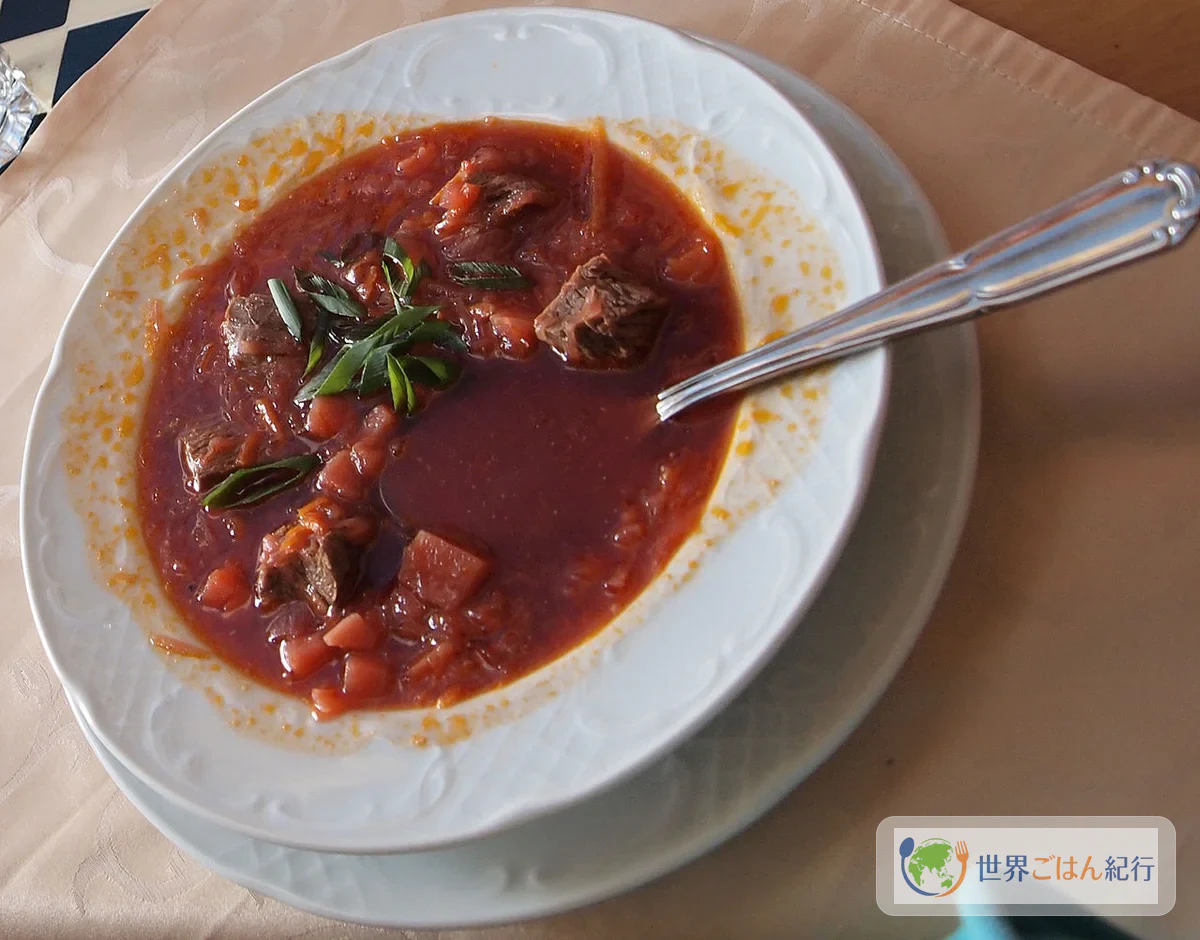
The color is brownish
The beets went in too early, or the soup boiled hard near the end. Next time, sauté the beets and bring them back for the last 8–10 minutes. To rescue this pot, briefly warm a small amount of beets with 1 tsp vinegar and stir it in after turning off the heat. That adds sourness, so recheck the salt and sugar, a very little at a time.
The flavor is thin
Usually more than 2 quarts (2 L) of stock is left, or the salt is short. Before you add more seasoning, take off the lid and let water cook off over low heat for 5–10 minutes, then add salt a pinch at a time. If the meat flavor is weak, cut the beef in larger pieces next time and keep the heat low after skimming.
Too sour
This happens when all the liquid from pickled beets goes in. Add hot stock or water a little at a time, plus a pinch of sugar to round it out. Sour cream in the bowl adds even more sourness, so start with a little.
An earthy smell remains
The beets were cut too large, the sautéing was too short, or the canned liquid has a strong smell. With boiled beets, keep only 1–2 tbsp of the liquid, cut them into matchsticks and coat them well with the onion and tomato paste. Fresh beets do best roasted, which brings out their sweetness.
The cabbage is too soft
It simmered too long. Potatoes go in first; cabbage goes in later so it keeps some bite. If you'll reheat part of the pot the next day, slightly firm cabbage on the first day is just right.
Serving, variations and storing borscht
Serving

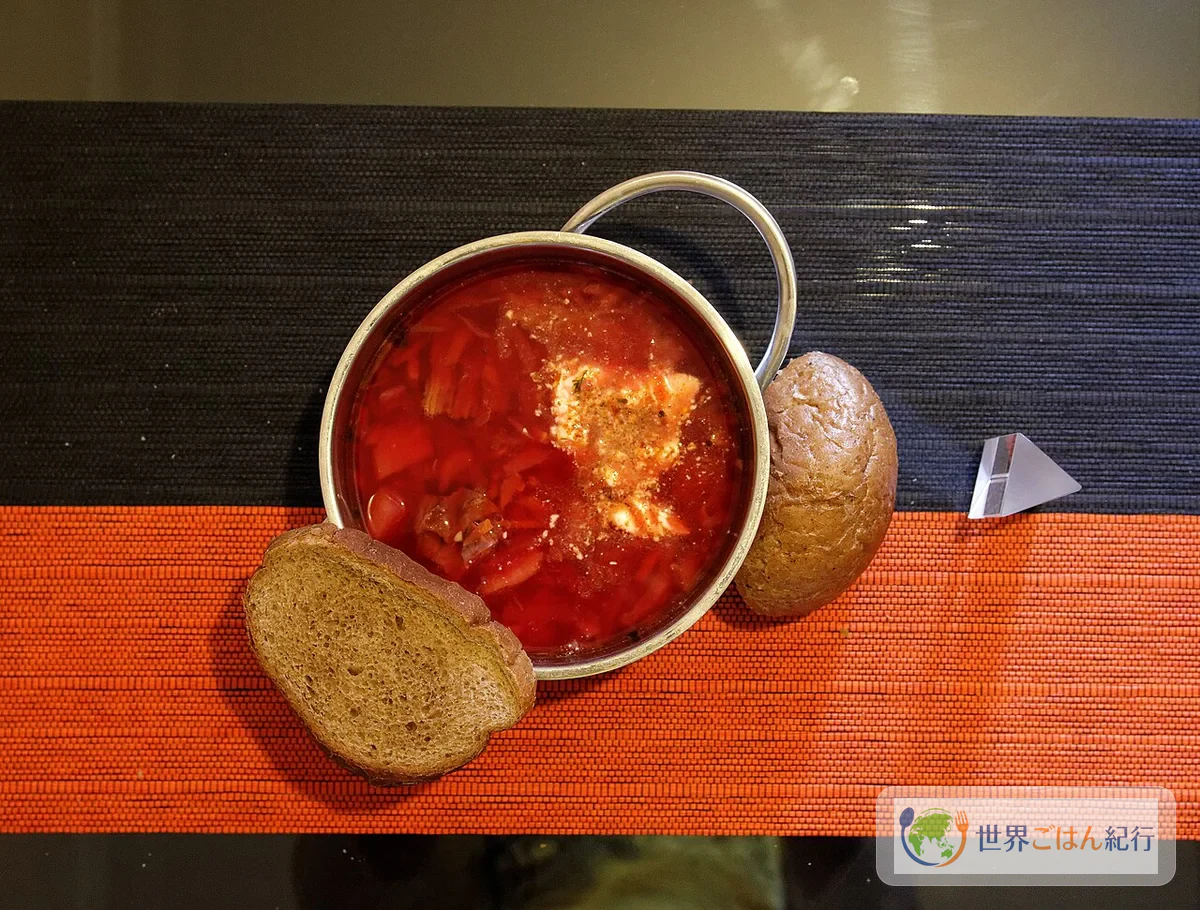
Pour the hot borscht into deep bowls and top each with 1–2 tbsp sour cream. Don't stir it in right away. Eat it while the red and white are still marbled and the sourness shifts from bite to bite. If you're using unsweetened yogurt and heavy cream instead, add that in the bowl too, never in the pot.

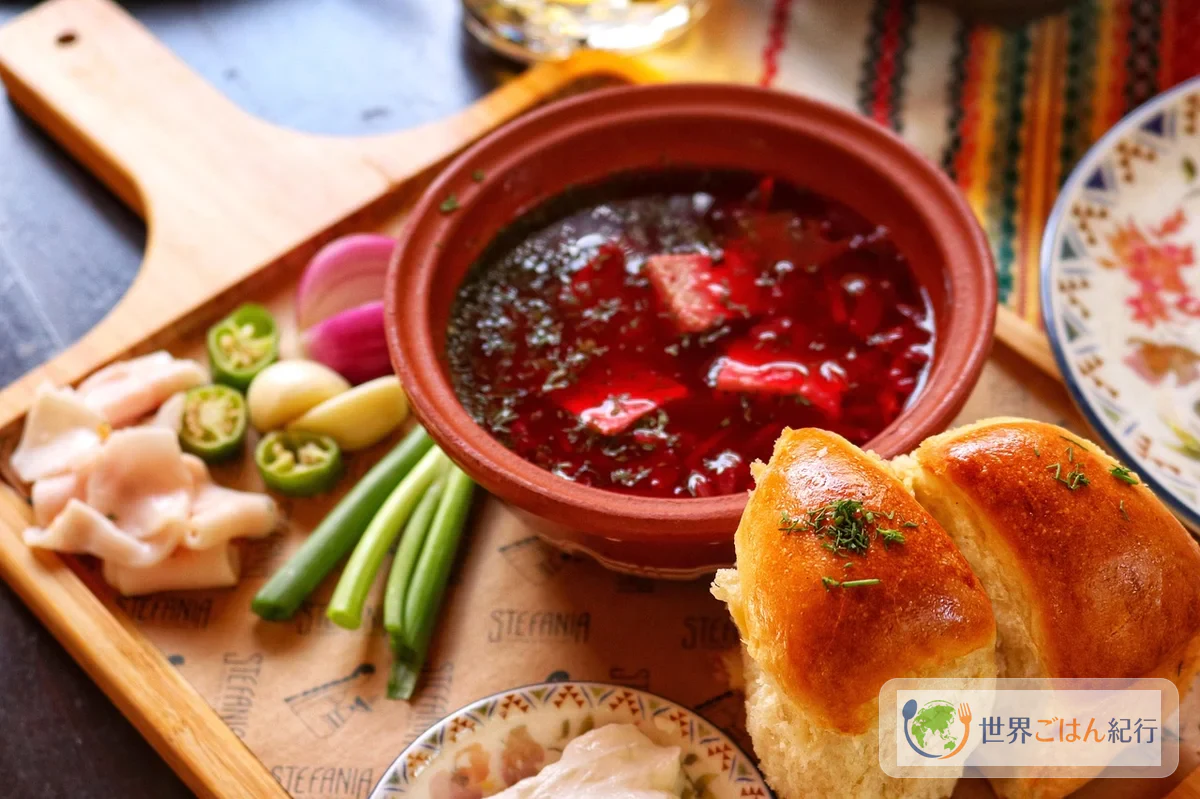
Borscht comes in a deep plate with bread, bread rubbed with garlic, and herbs such as dill and parsley. Some households set out garlic, onion and salo (salt-cured pork fat) as well. Sour rye or ordinary bread works if you have no dark bread, and dipping it in the soup soaks up the sweetness of the beets.
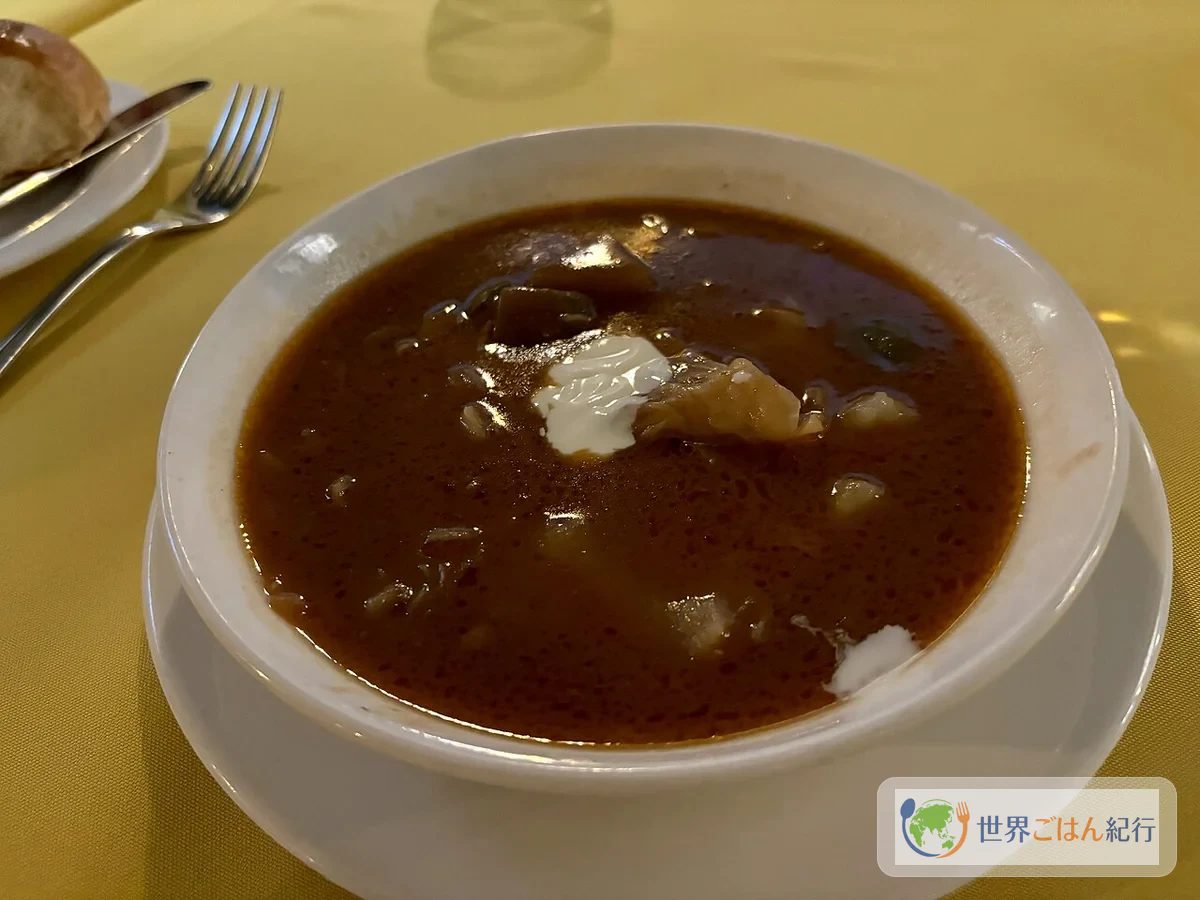
For another Eastern European table where meat and sourness meet, try Belarusian machanka. Bulgaria's mish-mash is a lighter home dish of eggs and vegetables, very different from a red braise. For a cold soup, compare Russia's okroshka.
Variations
Keep each ingredient's role when you swap, and the flavor holds together.
- The beef version is a rich soup built on the umami of meat. With cabbage and potatoes, as here, it makes a full meal.
- A meatless version gets its body from mushrooms and white beans. If you switch to a stock of kombu and dried shiitake, treat it as your own plant-based take rather than a Ukrainian home dish.
- Green borscht is a different soup, made with sorrel, leafy greens and eggs. Made with spinach and lemon, it's best enjoyed as a "green sour soup."
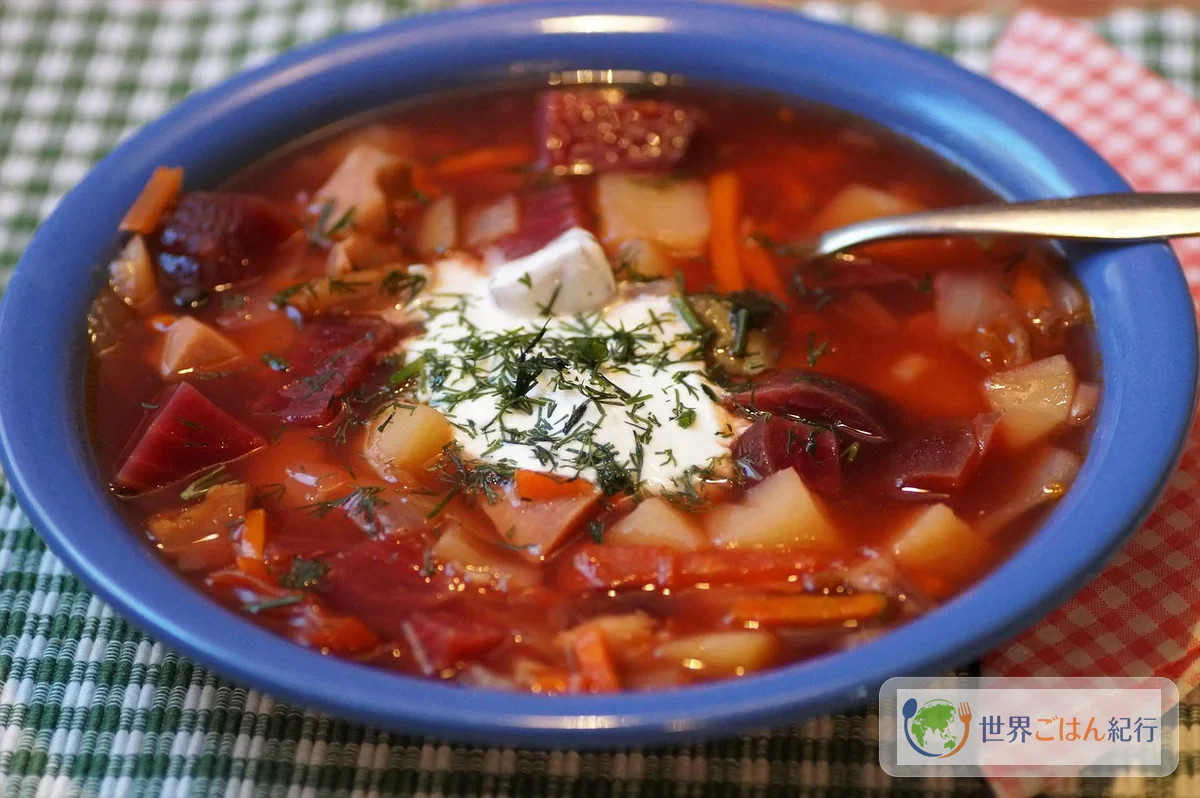
A soup made red with tomato alone is not the same as borscht. If you can't find beets, make a good tomato soup, and save borscht for the day you do.
Storing and reheating
Don't leave leftovers in the pot at room temperature. Divide them into shallow containers and cool them quickly. Refrigerate for 3–4 days, or freeze for 3–4 months. Reheat to 74°C (165°F), and if you're unsure how the soup was stored, don't eat it, even within those days. See the leftovers safety guide.
To keep the color, warm one serving at a time in a separate pot instead of reboiling the whole batch. For safety heat it thoroughly to the center, and put the sour cream and fresh dill in the bowl. Potatoes turn crumbly when frozen, so use fewer in the portion you'll freeze, or boil them separately on the day you eat it and add them then.
FAQ
Can I simmer the beef in a pressure cooker?
Yes, for the stock step. Follow the manual, including the natural pressure release, and cook until the meat shreds. Once the beets are in, switch to an ordinary pot over low heat and don't pressurize.
I have no sour cream.
Mix 3 tbsp unsweetened yogurt with 1 tbsp heavy cream and spoon it into the bowl. Yogurt alone works too, but it's sharper, so start with 1 tsp. Always add it after serving, because it separates in a pot that is still cooking.