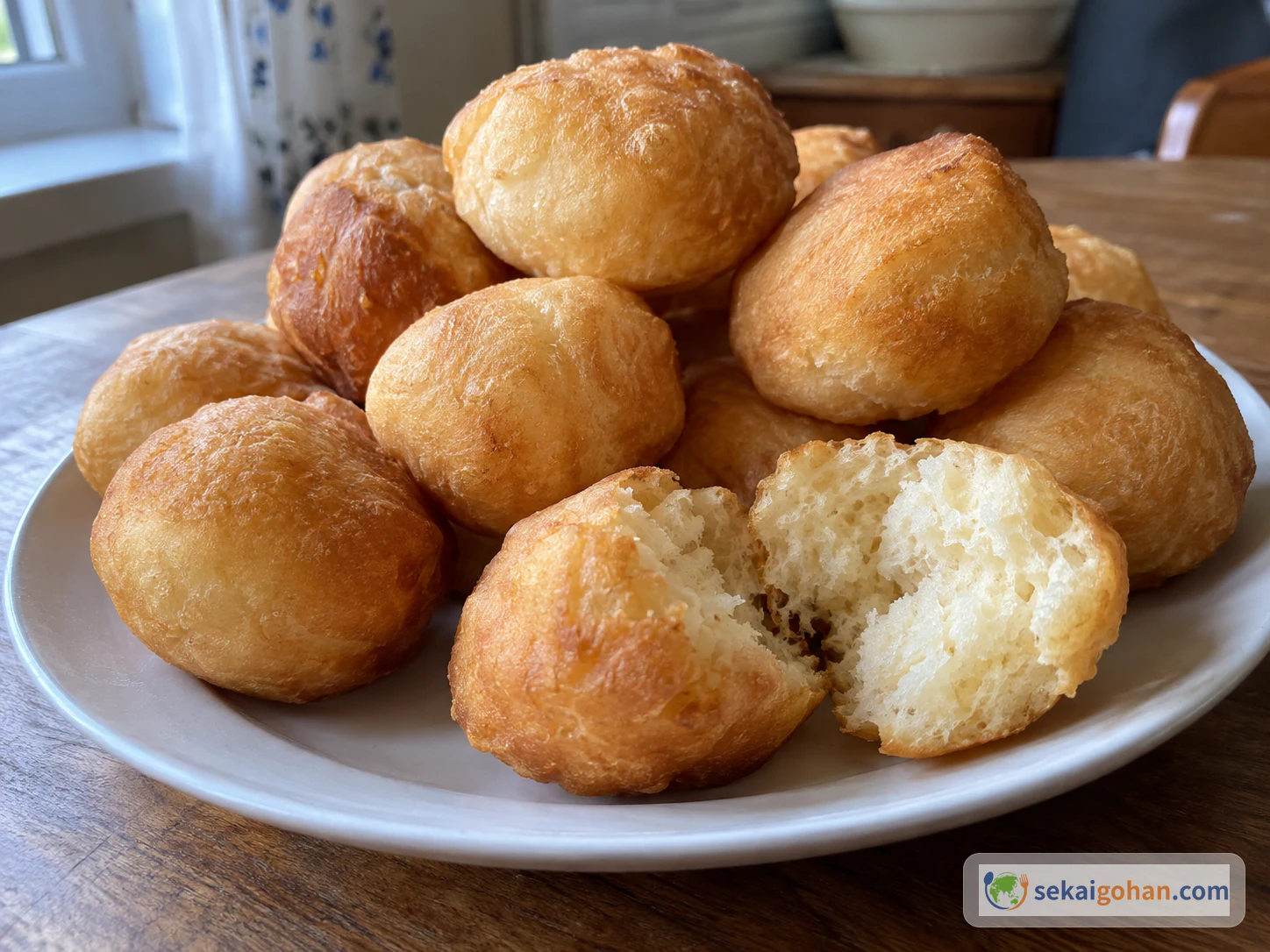
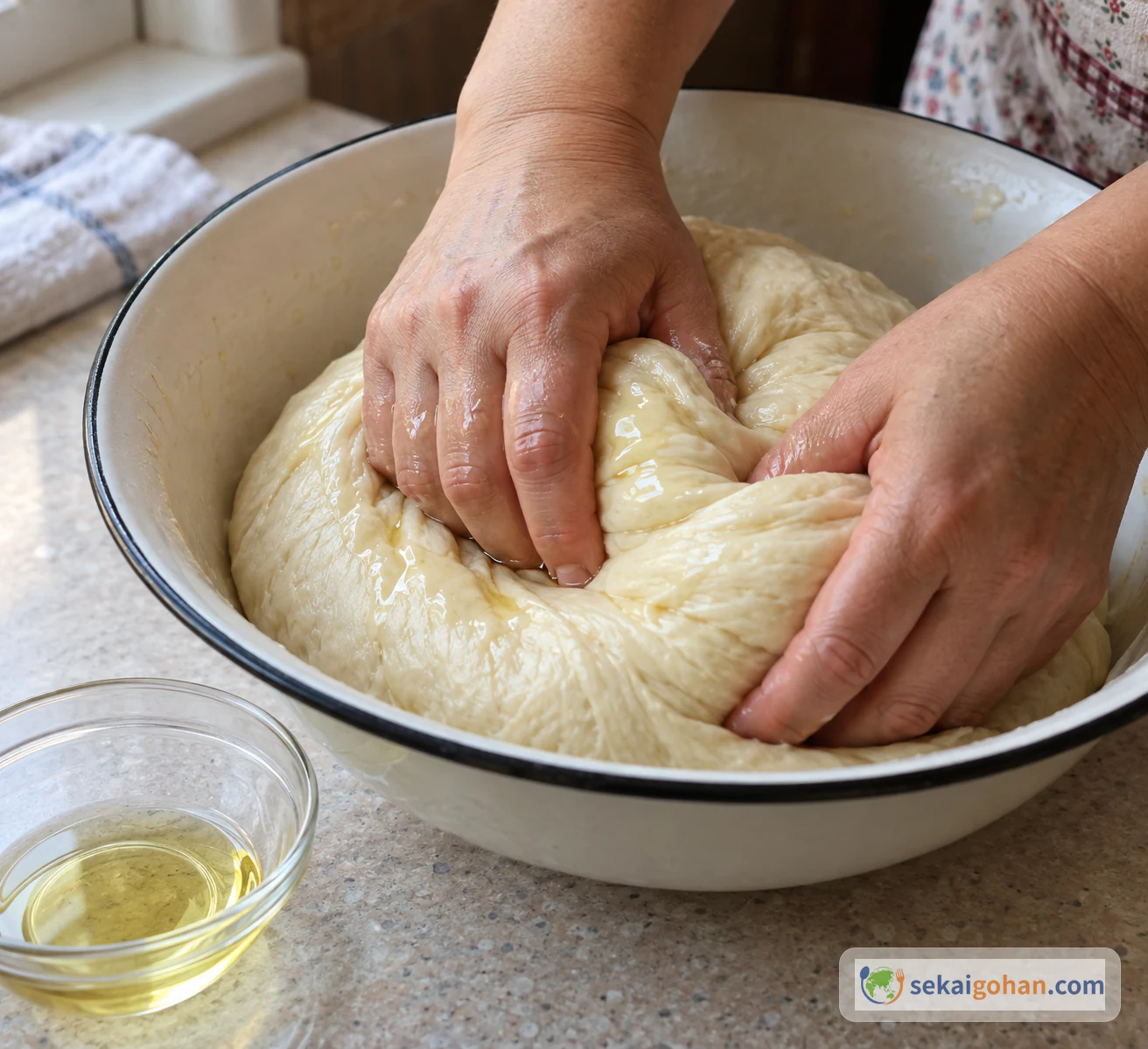
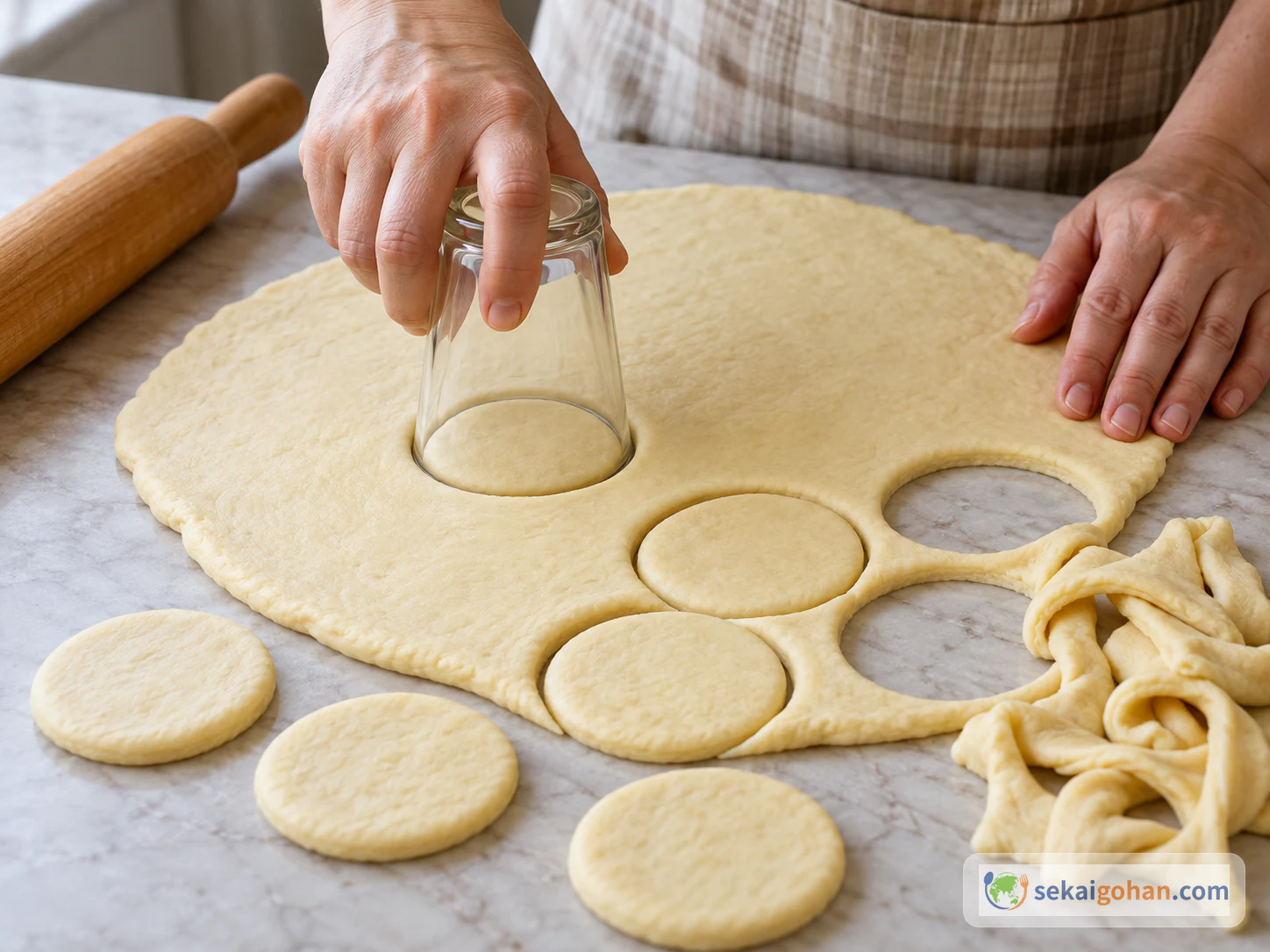
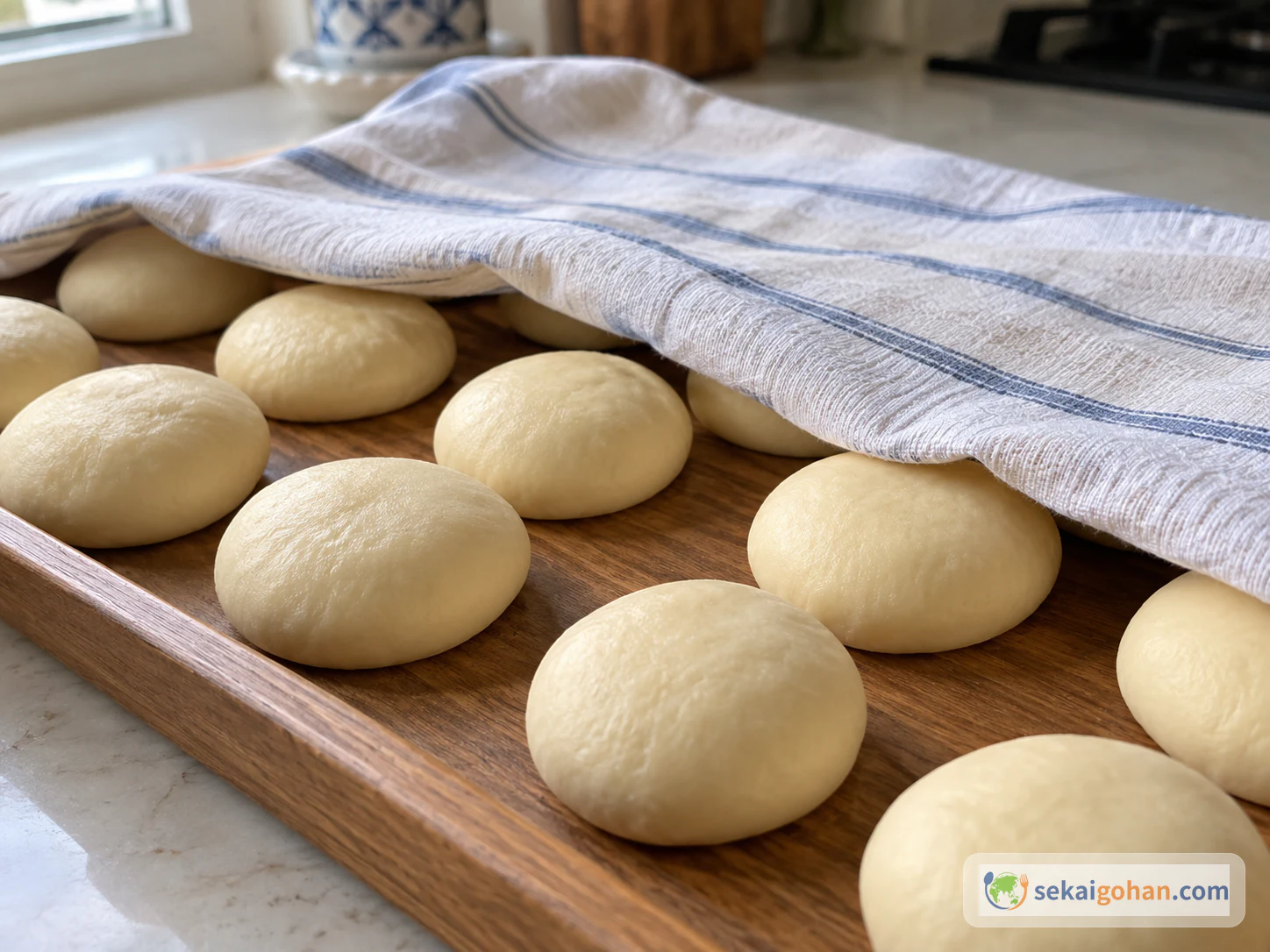
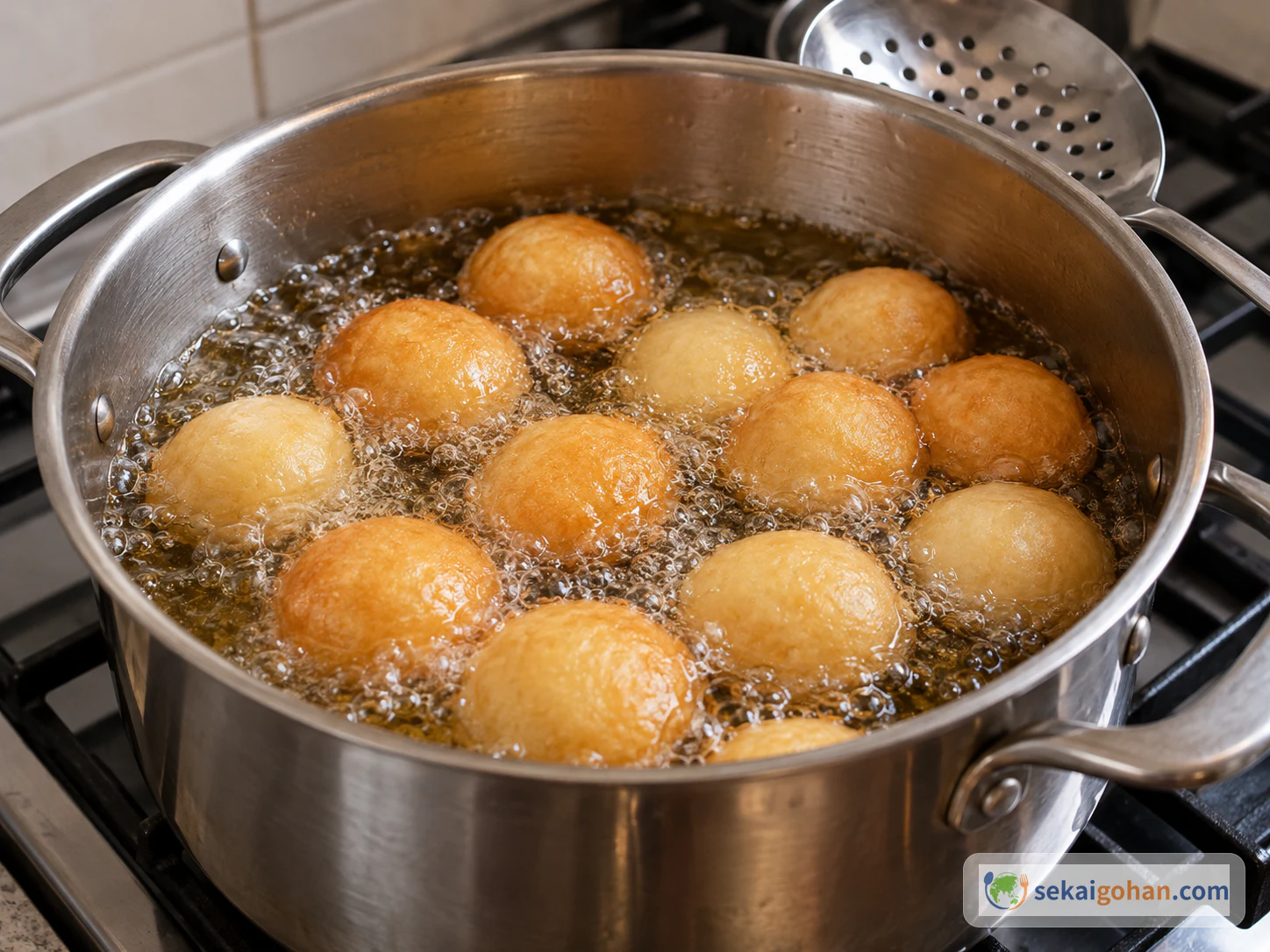
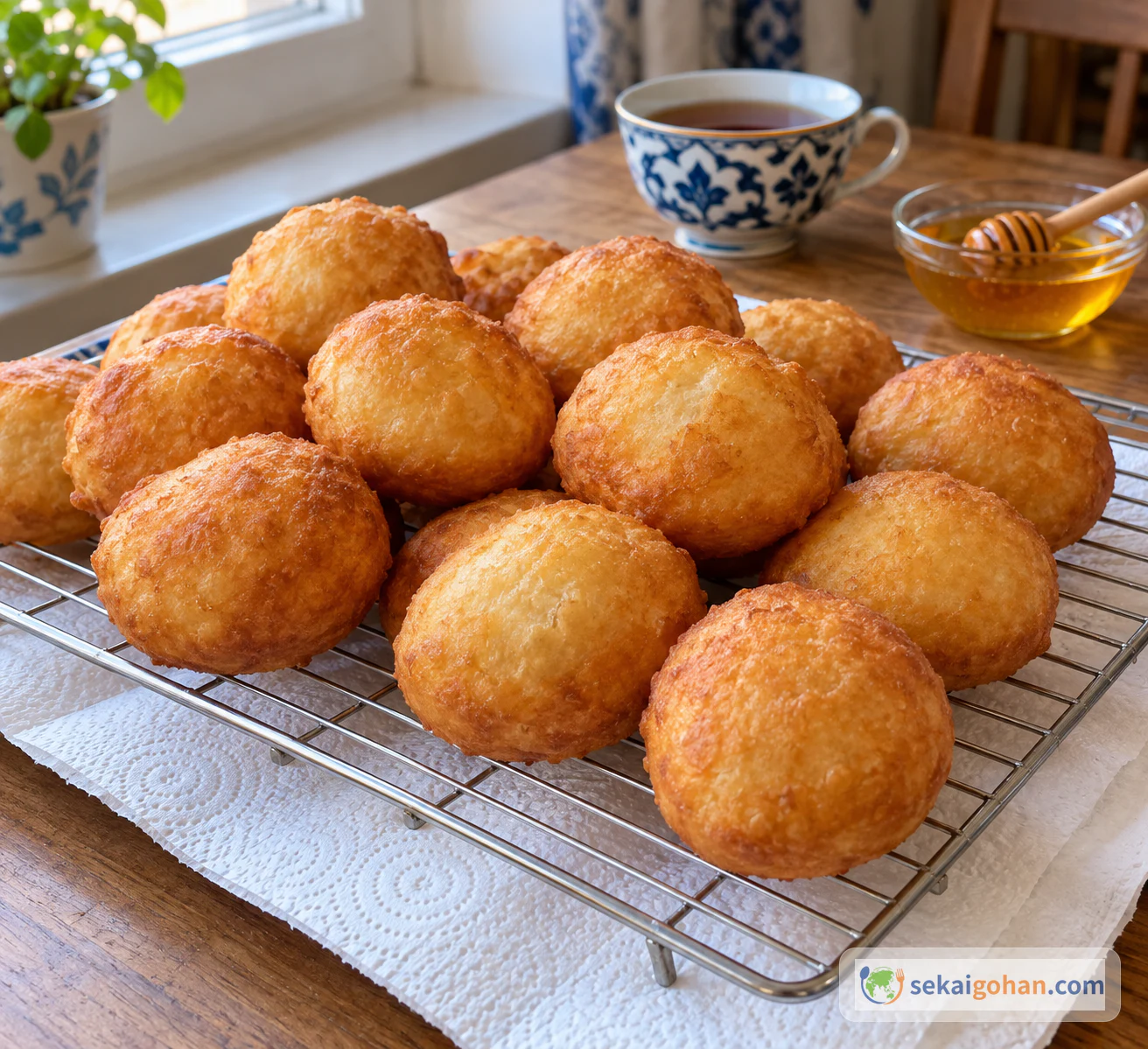
A round of risen dough slides into a deep pot of oil, and the quiet kitchen fills with the sound of small bubbles. The pale disc lifts, swells and starts to take on color, and once it's golden on both sides it comes out to drain while the next few go in. This is bauyrsak, a Kazakh fried dough eaten with tea or alongside meat dishes. The version here is a soft milk dough raised with yeast and only lightly sweetened, so it eats more like bread than pastry.
Bauyrsak on the Kazakh Table
Bauyrsak is written бауырсақ in Kazakh and Baursak or Bauyrsak in English (plural Baursaki). It turns up on festive tables and at everyday tea alike, and it's one of the first foods set out for guests. Expect to see it with honey, sour cream or meat dishes, beside dried fruit, nuts and kurt.
There is no single bauyrsak. The dough may be made with water or milk, with yeast or without, and cut into rounds or small squares. Here it's a milk-and-yeast dough cut into circles. For more dishes from the same table, see the Kazakhstan page.
No frying temperature, time per side or cutter size is given here, so judge each batch by its color.
Ingredients: One Milk and Yeast Dough, Cut into Rounds
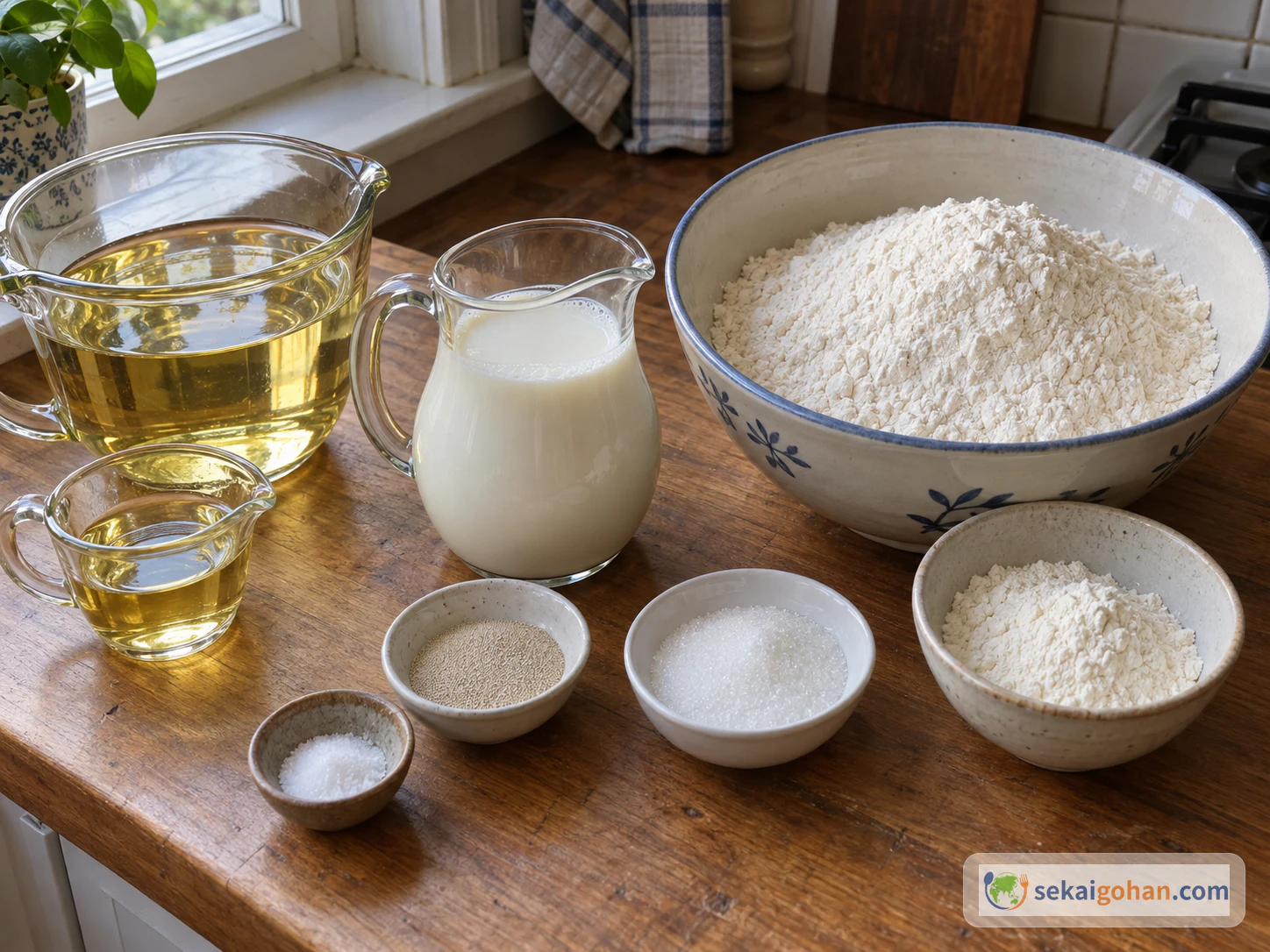
Everything here is an ordinary pantry item. The flour and the oil are each used in two places, so it helps to divide them before you begin.
Equipment
- A large bowl
- A clean cloth or towel for covering
- A rolling pin
- A drinking glass or a round cutter
- A kazan or a deep, heavy pot
- A slotted spoon
- Paper towels, or a rack set over paper towels
A kazan is the deep pot traditionally used for frying bauyrsak. At home, any deep, heavy pot you already own will do the same job.
Choosing Flour, Milk and Oil for Bauyrsak
Flour. Use plain white wheat flour, the everyday flour for general baking. Bread flour and cake flour absorb liquid differently and would throw off the formula.
Milk. Ordinary unsweetened milk is what you want. Bauyrsak can be made with water, but that's a different formula rather than a swap.
Oil. Sunflower oil goes into the dough and into the frying pot. Measure the 1.75 oz (50 g) for the dough into its own container, apart from the 1 lb (500 g) for frying, so none of the frying oil ends up in the dough by mistake.
What stays out of the dough. There's no egg, butter, water, honey or sour cream here. Honey, sour cream and tea belong at the table.
This dough contains wheat and milk. It uses no egg. Check the labels of the flour, yeast and oil you actually buy for allergen and shared-facility statements.
Method: Starter, Two Rises, Rounds, Then Batches of Frying
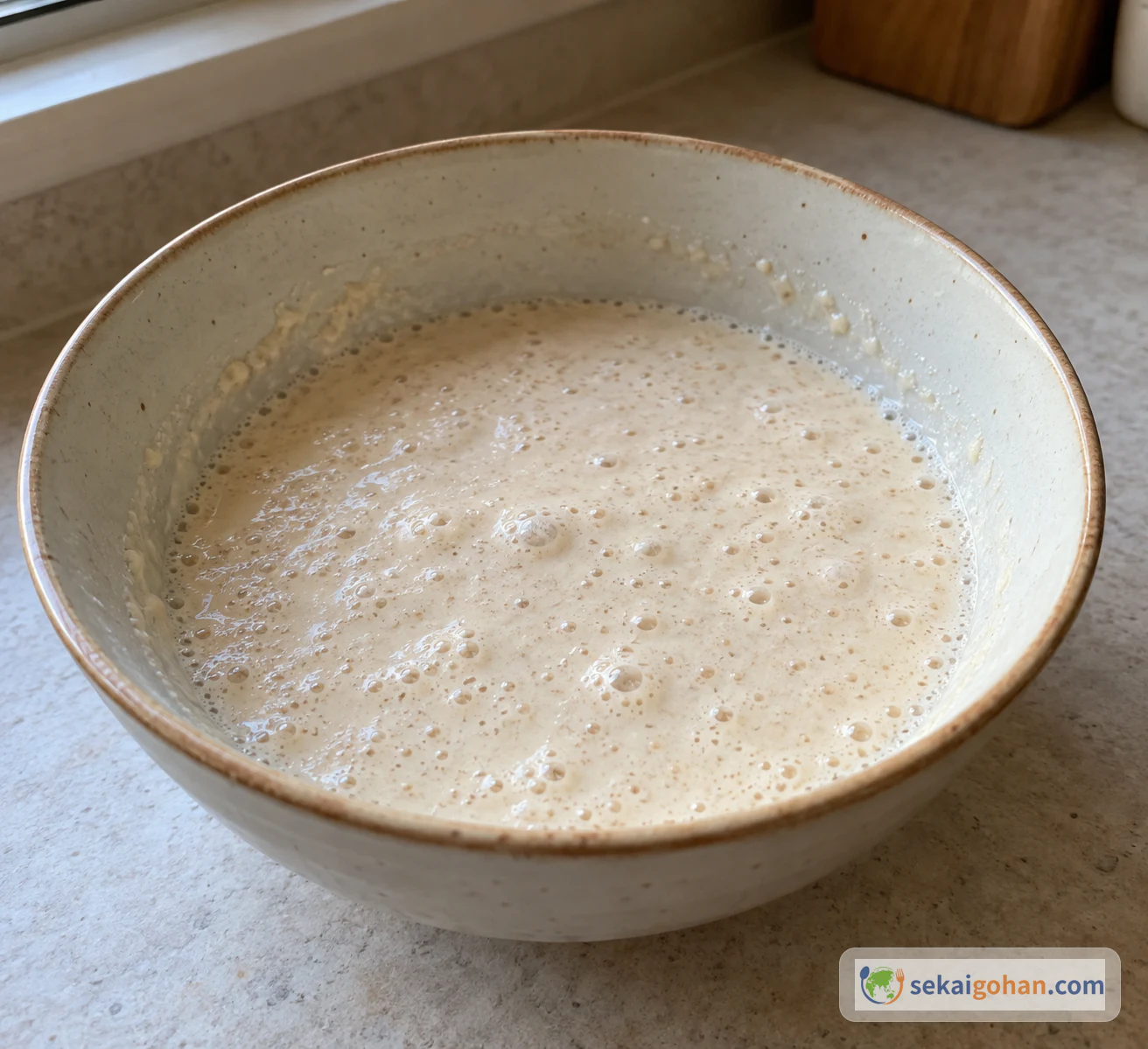
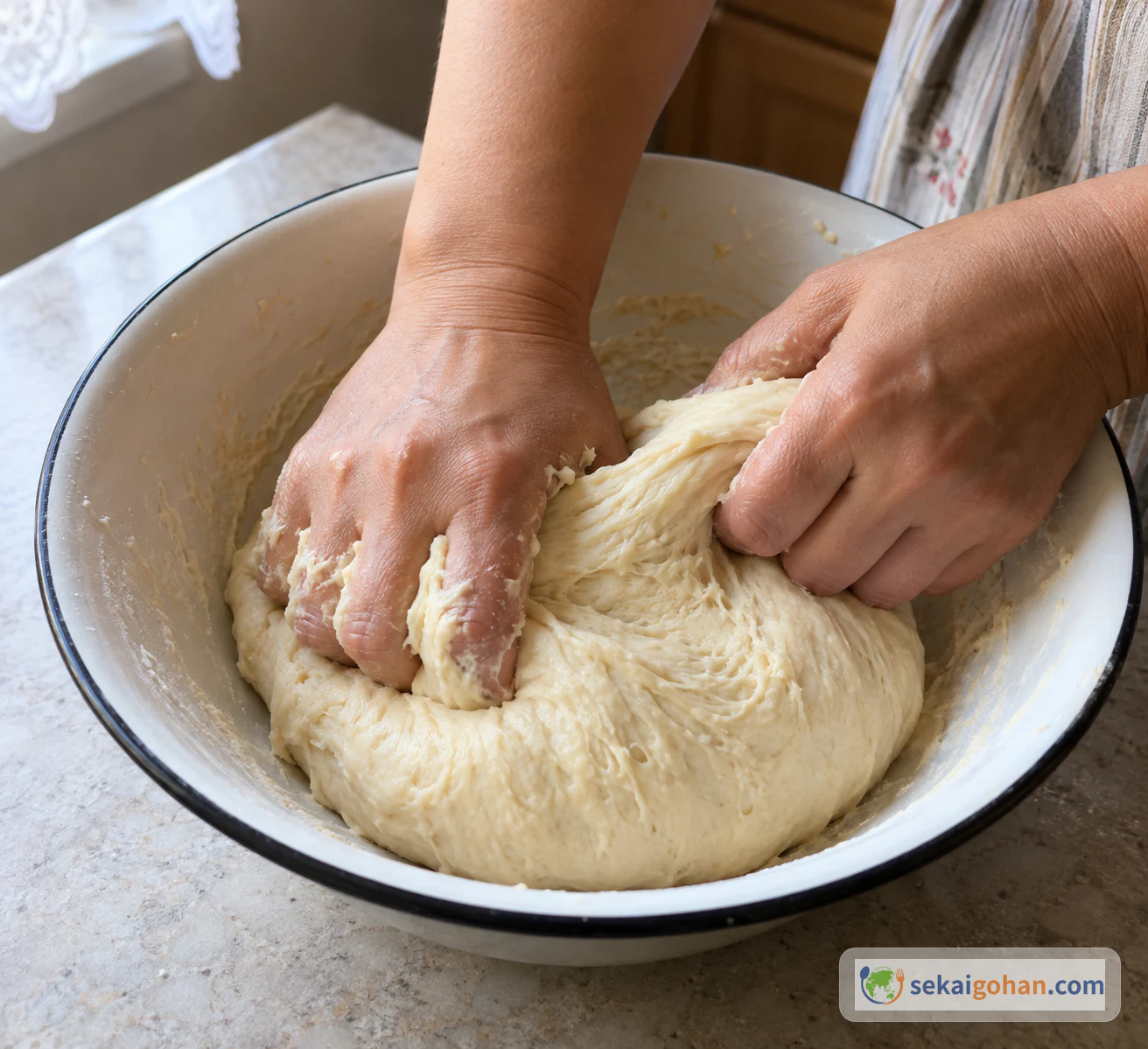
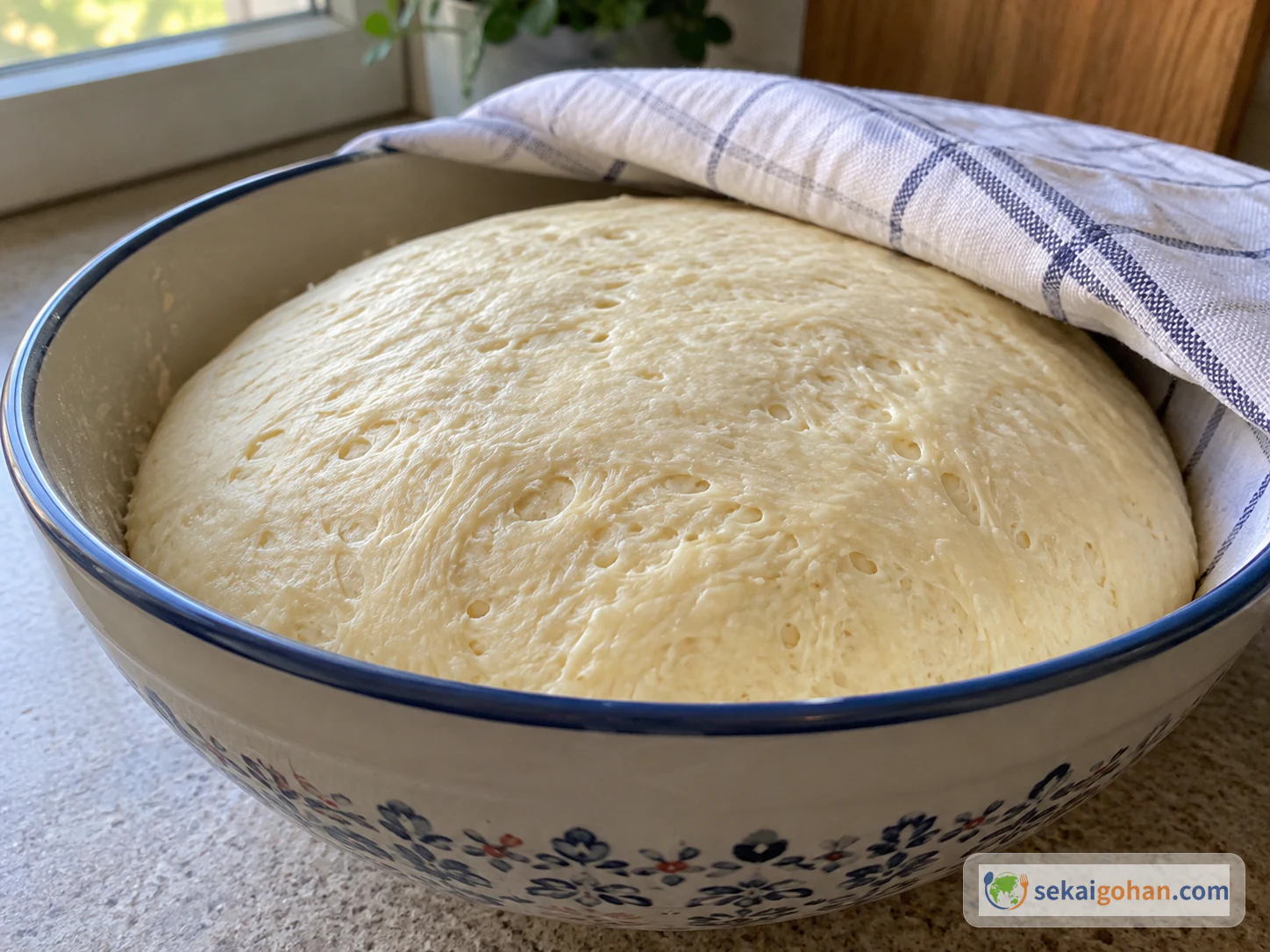
Let the starter turn foamy, give the dough both of its rises in a warm, covered spot, and fry only a few pieces at a time. Use the color of each piece to judge when it's done, not a timer.
Common Bauyrsak Problems and Fixes
Most problems trace back to one of five stages: a foamy starter, a soft dough, two covered rises, rested rounds and an uncrowded pot.
| What you see | What to check | What to do |
|---|---|---|
| The starter isn't foamy | Whether it has been covered in a warm place for about 15 minutes | Wait until the surface is foamy before adding the rest of the flour |
| The pot is crowded | How many rounds went in at once | Fry fewer at a time so the oil temperature doesn't drop |
| The pieces are still pale | Whether both sides have colored | Turn them and keep frying until both sides are golden |
| The pieces look oily on the plate | Whether they had time to drain | Leave them on paper towels a little longer before serving |
| The 1.75 oz (50 g) dough oil ended up in the frying pot | Whether the oil was divided before starting | Measure the two portions into separate containers next time |
Serving Bauyrsak and Other Forms
Serve bauyrsak with tea, honey, sour cream or meat dishes, whichever you like. Some changes to the shape are small; changes to the dough make a different recipe.
| Variation | What changes | How to approach it |
|---|---|---|
| Rounds | Cut with a glass or round cutter | The form used here |
| Small squares | Shape only; the dough is cut with a knife instead of a cutter | A regional custom, and simply another way to cut the same dough |
| Water dough | Water instead of milk | A different formula |
| Unleavened dough | No yeast | A separate style; rising, texture and resting all change |
Frequently Asked Questions
Is it always round?
No. It's also cut into small squares, which only changes the shape.
What oil temperature and frying time should I use?
There's no set temperature or time. Heat the oil well and fry the rounds in uncrowded batches so the temperature doesn't drop, until they're golden on both sides.
How many pieces does one batch make?
The recipe lists 27 servings, but the count depends on your cutter. Count your pieces as you cut them.