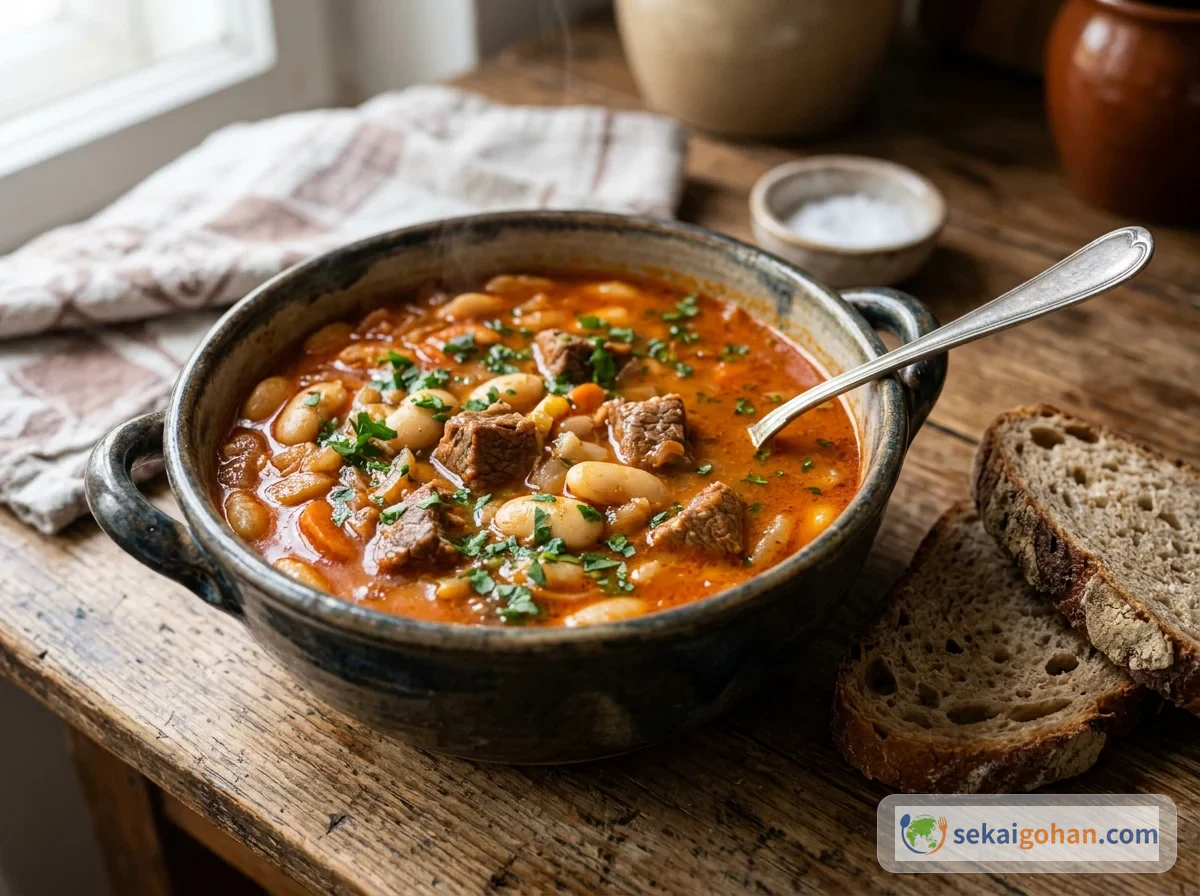
Chopping the cabbage, honestly, it all looks plain: a jar of sharp-smelling sauerkraut, some sliced sausage, and the nagging doubt that this could ever become a feast. Then the bacon fat melts in the bottom of the pot, the onions and mushrooms take color, the sour cabbage and meat go back in over low heat, and the air in the kitchen changes. Bigos is what Poland calls "hunter's stew": sauerkraut, cabbage, meat, sausage, and mushrooms simmered for a long time. Its flavor is very much Eastern European, built on the sourness of lactic-fermented cabbage, the aroma of smoked meat, the forest quality of dried mushrooms, and the sweetness of prunes or apple, all of which round out even more the next day.

Bigos in Poland: Hunts, History, and Home Kitchens
Today bigos is a one-pot stew of sauerkraut and meat, made in winter and for special occasions. Think of the filling of a sour stuffed cabbage roll, a pot-au-feu, and the comfort of a make-ahead pot of soup, all in one pot. If you are new to Polish food, pierogi may be easier to picture, but bigos is the dish to know for a Polish winter home table.
It is written "bigos" in Polish. In English it is often described as Polish hunter's stew, but in homes today it is not limited to game; it is made with whatever meat the house has, such as pork, beef, bacon, ham, and sausage.
From the hunt to Pan Tadeusz

The "hunter's" name has real roots. Polish nobles took bigos along on hunts and journeys, warming a sealed pot and eating when the lid began to rattle loudly. Plenty of meat, portable even cold, better every time it was reheated: it made sense as food for a cold forest.
The bigos of old was also a much broader dish than today's. In 17th-century cookbooks, dishes like "bigosek" chop meat or fish and finish it with sourness, and some contain no cabbage at all; the sourness came from lemon, lime, vinegar, or unripe fruit. From the 18th century on, sauerkraut, more familiar and longer-keeping, became the main source of sourness, and bigos settled into the stew of cabbage and meat we know now, tied to household preserved food.
In Poland's national epic Pan Tadeusz, the aroma and taste of bigos are portrayed as something words cannot fully capture. In Polish literature it stands for the land, the forest and appetite, and a pot people gather around.
One dish, many versions
Modern recipes vary quite a lot. A typical list includes sauerkraut, ordinary cabbage, carrot, onion, mushrooms, prunes, tomato paste, smoked sausage, meat, bacon, marjoram, caraway, allspice, bay leaf, juniper berries, and red wine, and every cook balances them in their own way. What matters is less piling in several kinds of meat than layering sourness, smoky aroma, mushroom broth, and small touches of sweetness. Hold on to a few things: keep some of the sourness, brown the meat, simmer long over low heat, and if possible eat it the next day.
Bigos is most often called Polish, but it also belongs to the food culture of Lithuania, Belarus, and Ukraine, which all have meat-and-cabbage stews of their own. For a Polish lean, make sauerkraut and kielbasa the stars; for a Lithuanian or Belarusian table, add potatoes, black bread, and sour cream to catch the stew. Seen this way, bigos is less a matter of borders than the old wisdom of turning preserved cabbage and meat into a winter pot. Ukraine's borscht, Belarus's machanka, and Hungary's goulash show the same idea of preserved food and stews in cold regions.
Ingredients (serves 4)

This recipe uses sausage that may contain pork and beef, apple, and red wine. Some sausages and bacon contain milk, egg, wheat, and soy, so check the labels. Heating red wine does not always remove all its alcohol. For children and anyone avoiding alcohol, it is safer to make it with water or bouillon.
What Is Worth Buying for This Dish
Bigos has many kinds of ingredients, but the ones worth buying narrow down. First, the sausage that brings smoky aroma; second, the allspice that is the core of the aroma; and last, a heavy pot that resists scorching. Sauerkraut and kielbasa are best found at a Polish or Eastern European grocery or an import food store.
Choosing Ingredients and Substitutes for Bigos
A bigos shopping list full of dried porcini, juniper berries, kielbasa, venison, and smoked plums can make you flinch. Break it down by role, though, and jarred sauerkraut, ordinary cabbage, pork shoulder, bacon, coarse-ground smoked sausage, and dried shiitake get you there.
| Pillar of flavor | What's often used in Poland | What's easy to use elsewhere | How to think about substitution |
|---|---|---|---|
| Sourness | Sauerkraut | Jarred sauerkraut + ordinary cabbage | All sauerkraut is too sour; make half fresh cabbage |
| Smoky aroma | Kielbasa, bacon, ham | Coarse-ground smoked sausage, thick-cut bacon | Sausage alone is light in aroma; add bacon |
| Forest aroma | Dried porcini, wild mushrooms | Dried shiitake, brown mushrooms | Use the soaking liquid too |
| Sweetness | Prunes, apple, honey | Pitted prunes, apple, a little honey | Add only when the sourness is strong |
| Spices | Marjoram, juniper, allspice | Marjoram, bay leaf, allspice, caraway | Juniper is optional |
Sauerkraut decides the character of bigos, so buy it if at all possible. Look in the jar aisle of supermarkets, import food stores, and delis.
If you rinse the sauerkraut too much because "it's sour," the bigos character disappears. Conversely, adding all the liquid from the jar can be too sour for a dinner. At first, rinse only half the sauerkraut lightly and use the rest as is; the balance between sourness and ease of eating is easier to strike.
If you can't find kielbasa, a thick German-style smoked sausage is enough. Thin frankfurters tend to vanish in the stew, so pick a sausage thick enough that its cross-section is clearly visible when sliced, brown the cut faces before adding, and add a little more bacon to make up the smoke.
| Authentic-leaning ingredient | Realistic substitute | Why substitution is fine | Watch out for overdoing it |
|---|---|---|---|
| Kielbasa | Thick coarse-ground smoked sausage | Supplies smoky aroma and fat | Thin frankfurters alone are light in aroma |
| Dried porcini | Dried shiitake | Gives dried-mushroom umami and a soaking liquid | Too much shiitake drifts toward an Asian taste |
| Juniper berries | Omit, or a little allspice | Tames the gamey smell of meat | Too much tastes medicinal |
| Venison and game | Pork shoulder, beef shank, a little chicken thigh | Builds umami from several meats | Chicken alone is light |
| Smoked plums | Pitted prunes | Add sweetness and color | Do not make it too sweet |
| Rye bread | Country loaf, whole-wheat bread | Tangy bread suits the stew | Sweet sandwich bread doesn't go well |
Bigos Troubleshooting: Too Sour, Too Thin, Scorched
When it is too sour
Usually all the sauerkraut went in as is, or the simmering time was short and the sourness is still sharp. Next time, rinse half the sauerkraut lightly; for now, add the same amount of ordinary cabbage to dilute it, or a little prune, apple, or honey.
Go easy on the honey, or it starts tasting like a sweet ketchup stew instead of bigos. For four servings, start with 1 tsp. Honey rounds the flavor more than sugar, but you can do without.
When it is thin and tastes like "cabbage stew"
There are three main causes: the meat and sausage weren't browned, there isn't enough smoky aroma from bacon and the like, or the dried mushroom soaking liquid was left out. More spices won't fix it. Bigos deepens only when savory meat, smoke, mushroom, and sourness layer together.
The fastest fix: fry 1.75 oz (50 g) bacon crisp in another skillet, return it with its fat to the pot, and simmer 10 minutes. It keeps the dish on course better than bouillon cubes would.
When it scorches
There is too little liquid or the heat is too strong. Sugar and acidity gather at the bottom of bigos, and once it scorches, bitterness spreads through the whole pot. Keep the lid slightly ajar, hold a low heat, and stir from the bottom every 20 minutes. Heavy pots such as Staub or Le Creuset suit it well because the heat at the bottom doesn't spike.
If a black scorched layer forms on the bottom, do not scrape and mix it in. Move only the top portion to another pot and discard the scorched part. Bitterness from scorching stands out in a sour stew, and stirring it in makes it hard to correct.
Serving Bigos

Bread or boiled potatoes
Eaten alone, bigos can taste strongly sour and salty, so in Poland too it usually comes with a starchy base such as bread, potatoes, or kasha. Country loaf, rye bread, boiled potatoes, and mashed potatoes are all easy matches. For a Polish table, make bigos the star, with a small portion of pierogi and black bread or boiled potatoes beside it.

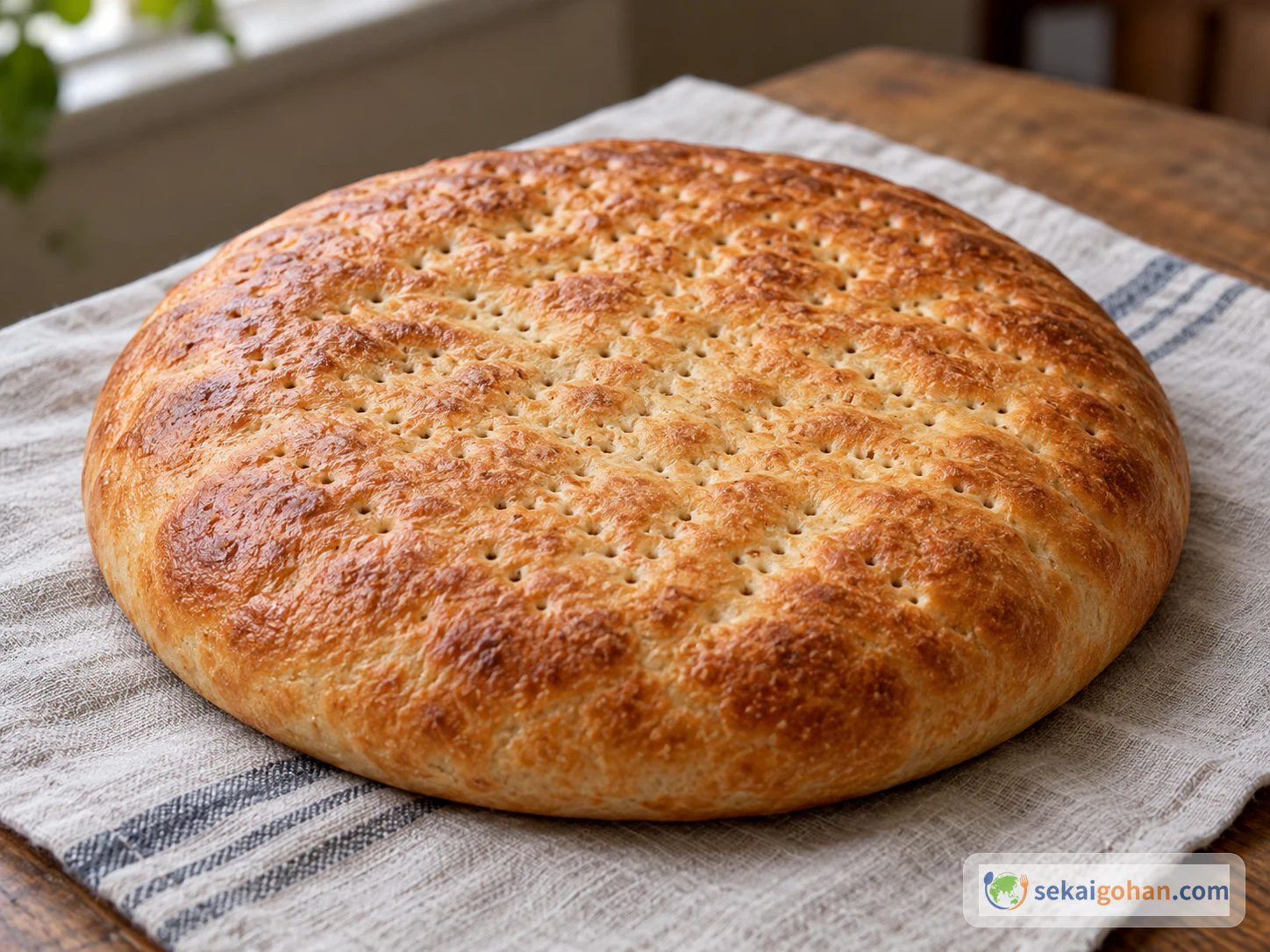
For a Polish flour-based side, cebularz, baked with onions and poppy seeds on top, goes well too; the sweet onion bread catches the sourness. Rice works, but the sweetness of white rice sometimes clashes with the sour stew. Barley rice with plenty of black pepper and a little butter blends better.
With pierogi

Pierogi are the best partner for catching the sourness of bigos, and a potato-and-cheese filling matches its smoky aroma well. On a day you don't have the energy to make them, pan-fry store-bought dumplings lightly in butter and add sour cream.
For an Eastern European menu, skip the small borscht on the side and put a less sour potato dish or bread next to the bigos instead. A sour soup on top of a sour stew makes the table a little busy.
A next-day hot sandwich
Leftover bigos, with some of the moisture cooked off, makes a hot sandwich tucked into bread with cheese. It strays from Polish cooking, but sauerkraut, meat, and cheese together are close to a Reuben sandwich, and quite good. If the sourness is strong, a thin spread of butter pulls it together better than mustard.
Storing and Making Bigos Ahead

Bigos is a better-the-next-day dish. It keeps improving over several days and tastes even better after freezing, as the meat, sourness, mushrooms, and smoke blend.
Cool it carefully, though. Never leave the pot outside or on a windowsill to cool, even in cold countries; at the room temperature of many kitchens, that is dangerous. Divide it into shallow storage containers instead so it cools quickly.
| Storage method | Tip |
|---|---|
| Refrigerator | Divide into shallow containers and warm only what you will eat |
| Freezer | Portion in single servings. Do not refreeze after thawing |
| Reheating | 10–15 min over low heat. Add 1–2 tbsp water and stir from the bottom so it does not scorch |
| Lunch box | Not recommended. Strong smell and sourness, and reheating control is hard |
Frozen bigos can turn a little watery after thawing. Remove the lid, simmer 5 minutes to reduce it, and add black pepper; if the sourness stands out, stir in 1 tsp butter to take off the edge.
This stew contains meat and sausage. Avoid leaving it at room temperature; refrigerate once it has cooled slightly. When reheating, heat until it is thoroughly hot all the way through, and take out only what you will eat so you don't repeatedly chill and heat it.
Bigos Variations

More meat, the hunter's way
Adding 7 oz (200 g) beef shank to the pork shoulder makes a heartier bigos; extend the simmering time to about 2 hours 30 minutes. If you can get venison, a little brings it closer to hunter's style, but it is strongly gamey, so don't add much at first.
Meatless mushroom bigos
Poland also has meatless bigos tied to fasting and religious observances. Increase the mushrooms to 10.5 oz (300 g) and dried shiitake to 20 g, and add 1 tsp smoked paprika and 2 tbsp olive oil. It won't taste the same, but with sourness and mushroom broth it holds up as a meatless sauerkraut stew.
Less tomato, more old-fashioned
Modern recipes often use tomato paste, and here it is kept to 2 tbsp for a familiar tomato-red color. With less, the stew turns browner and the meat and cabbage come forward. For the old-fashioned direction, reduce to 1 tbsp and strengthen the red wine and mushroom soaking liquid.
Less sweet, for adults
Halve the prunes and apple and add a little more black pepper and marjoram for a grown-up bigos that suits beer, red wine, or eating on bread. If children are eating, the prunes and apple help round out the sourness.
FAQ

Q1. If I don't have sauerkraut, can I use ordinary cabbage and vinegar?
You can, but the bigos character will be weaker. As an emergency substitute, rub 1 tsp salt into 1.75 lb (800 g) cabbage, let it stand 10 minutes, squeeze lightly, and use it with 2 tbsp white wine vinegar. The lactic-ferment aroma won't appear, so build the layers of flavor with dried shiitake, bacon, and sausage.
Q2. Is red wine essential?
No, though it links the aroma of the meat to the sourness. To avoid alcohol, use the dried shiitake soaking liquid and water, and add more black pepper at the end. If using cooking sake, keep it to about 3.5 tbsp (50 ml) and add water; too much gives it the sweetness of Japanese cooking.
Q3. On which day does bigos taste best?
The day after you make it is the easiest to eat: the sourness, smoke, and meat fat have blended and the color has deepened. It is good after that too, but treat refrigerated storage of up to 3 days as the guide at home. To enjoy it longer, freeze everything except what you will eat on day two.
Q4. Can I make it in a pressure cooker or rice cooker?
In a pressure cooker, brown the meat, combine the ingredients, and use natural release. Moisture doesn't cook off, so take the lid off at the end and simmer 10 minutes. A rice cooker tends to hold on to the smell of sourness and fat and makes the browning step hard, so I don't recommend it; a heavy pot and slow simmering give a truer bigos.