Ingredients and steps on one page. Print it, or choose “Save as PDF” in the print dialog.
Sekai Gohan
Bigos Recipe: Poland's Hunter's Stew of Sauerkraut, Cabbage, and Smoked Meats
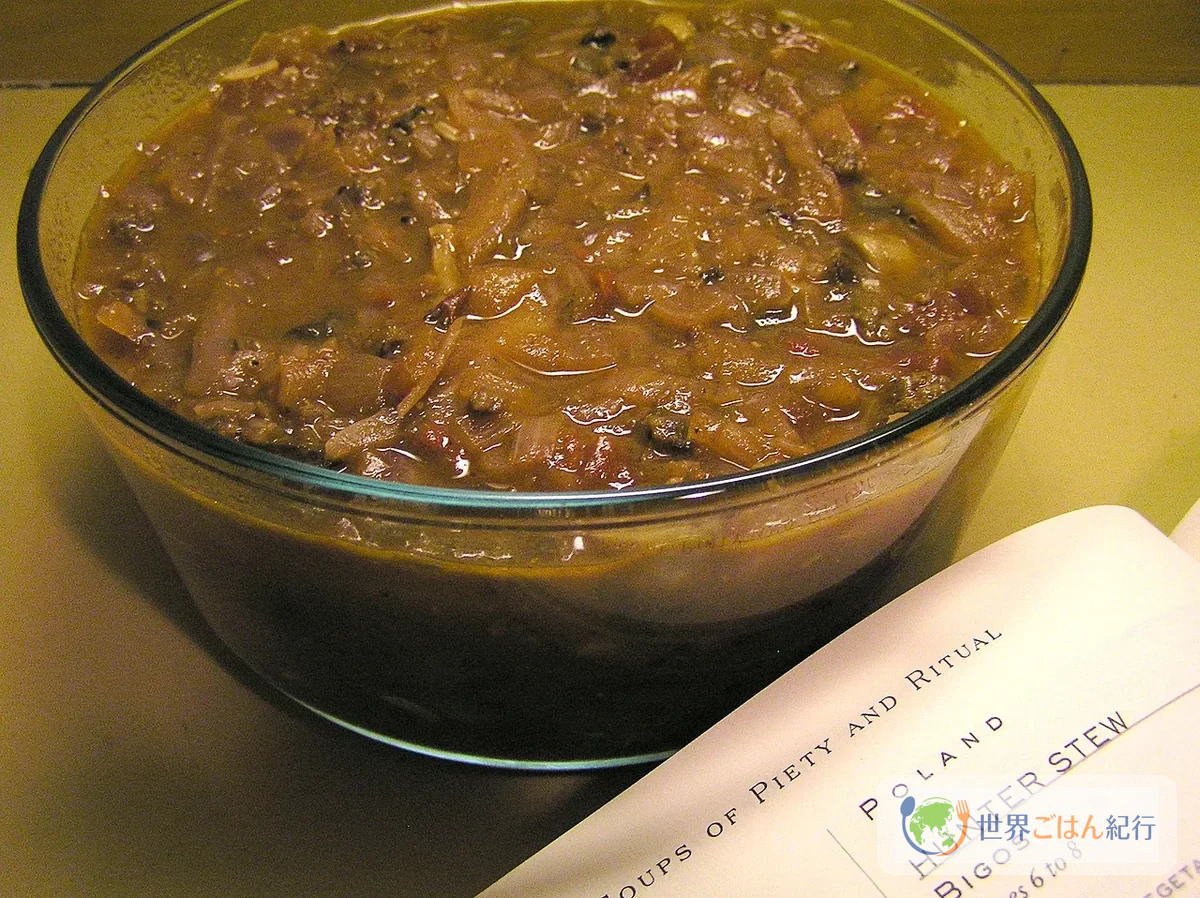
Ingredients
Main ingredients
| Ingredient | Amount | Substitutes & notes |
|---|---|---|
| Sauerkraut | 14 oz (400g) | Jarred or bagged. Rinse only half lightly |
| Cabbage | 14 oz (400g) | Coarsely chopped. Spring cabbage breaks down easily, so cut larger |
| Pork shoulder or pork belly slab | 10.5 oz (300g) | 1 inches (2.5 cm) cubes. If using stew-cut pork scraps, shorten the stewing time |
| Coarse-ground smoked sausage | 9 oz (250g) | Kielbasa is ideal. A thick sausage is recommended |
| Thick-cut bacon | 3.5 oz (100g) | The base of smoky aroma and fat. Thin slices also work |
| Onion | 1 (7 oz / 200 g) | Thinly sliced |
| Carrot | 1 (4 oz / 120 g) | Julienned or cut into quarter-rounds |
| Brown mushrooms | 5.5 oz (150g) | Shimeji or maitake also work |
| Dried shiitake | 10g | Stand-in for dried porcini. Use the soaking liquid too |
| Pitted prunes | 6 (about 2 oz / 60 g) | Dried plums. Add sweetness and color |
| Apple | 1/2 | Grated. To round out the flavor when the sourness is strong |
Seasonings and spices
| Ingredient | Amount | Substitutes & notes |
|---|---|---|
| Tomato paste | 2 tbsp | 3.5 oz (100 g) canned tomatoes also works; if so, reduce the liquid |
| Red wine | ½ cup (150 ml) | 3.5 tbsp (50 ml) cooking sake plus ½ cup (100 ml) water also works. Omit if avoiding alcohol |
| Dried shiitake soaking liquid | 1 cups (250 ml) | Add water or chicken bouillon if it is not enough |
| Bay leaves | 2 | Can be made without, but the aroma turns flat |
| Allspice (whole) | 3 berries | 1/4 tsp if ground |
| Caraway seeds | 1/2 tsp | Cumin changes the aroma. Omit if you don't have it |
| Marjoram (dried) | 1 tsp | A little oregano can stand in |
| Black pepper | 1/2 tsp | Coarsely ground |
| Salt | 1/2 tsp or more | Adjust at the end, seeing the saltiness of the sauerkraut and bacon |
| Honey | 1–2 tsp | Only if the sourness is strong |
Steps
1Rehydrate the dried shiitake and adjust the sourness of the sauerkraut (20 min)
20 min
Soak 10 g dried shiitake in 1¼ cups (300 ml) lukewarm water for about 20 minutes. Do not throw away the soaking liquid; strain it through a tea strainer or paper towel and use it. Drain 14 oz (400 g) sauerkraut, rinse only half lightly with water, and squeeze. Use the other half as is.
This is where the design of the sourness is decided. Jarred sauerkraut differs quite a lot in saltiness and sourness by maker. Rinsing it all leaves it lacking; leaving it all makes it too sour. Rinsing just half is a landing point that is hard to fail at in a home kitchen.
2Brown the meat, bacon, and sausage (15 min)
15 min
Cut 10.5 oz (300 g) pork shoulder into 1 inches (2.5 cm) cubes and season lightly with salt and pepper. Warm a heavy pot over medium heat, add 3.5 oz (100 g) bacon, and render the fat. When the bacon takes color, remove it and sear the surface of the pork in the same pot. When all sides are browned, remove it. Next cut 9 oz (250 g) sausage into 0.5 inches (1.5 cm) slices and brown the cut faces.
Even in a stew, do not skip this browning. Bigos is not a dish that pushes through with tomato and spices; it is a dish where the sauerkraut absorbs the toasty flavor at the bottom of the pot. Aim for a brown fond, not burning.
3Sauté the onion, mushrooms, and cabbage (15 min)
15 min
Cook 1 onion in the fat left in the pot. When it turns translucent, add the carrot, brown mushrooms, and rehydrated shiitake, and cook until the mushrooms' moisture has gone. Press 2 tbsp tomato paste against the bottom of the pot and cook 1 minute to bring out its aroma.
Add 14 oz (400 g) cabbage and cook until fat coats everything. Cabbage looks like a lot, but it reduces a great deal when stewed. Adding too much water here makes it a soup rather than a stew. Only when the bottom threatens to scorch, add a little red wine and scrape.
4Return the sauerkraut, meat, and spices and start simmering (10 min)
10 min
Return the sauerkraut, seared pork, bacon, and sausage to the pot. Add ½ cup (150 ml) red wine, 1 cups (250 ml) dried shiitake soaking liquid, 2 bay leaves, 3 allspice berries, 1/2 tsp caraway, 1 tsp marjoram, and black pepper and mix everything. It is enough when the meat and cabbage are evenly distributed and, lifted with a wooden spatula, a little liquid drips off. The liquid should come to about half the height of the ingredients, not cover them.
When it boils, immediately lower to low heat, set the lid slightly ajar, and simmer 90 minutes. Stir from the bottom thoroughly every 20 minutes. Bigos scorches easily. With acidity and sugar, bitterness appears when it touches the bottom.
5Add the prunes and apple to round out the sourness (20 min)
20 min
After 90 minutes of simmering, add 6 prunes chopped into roughly 0.25 inch (5 mm) pieces and 1/2 grated apple. Simmer another 20 minutes, and when the prunes have blended into the liquid and the cabbage has a light-brown gloss, taste. If the sourness is sharp, add 1 tsp honey. Salt comes last. Because the sauerkraut, bacon, and sausage carry salt, adding a lot of salt from the beginning cannot be undone.
Prunes and apple are added not to make a "sweet dish" but to round out the sourness of lactic fermentation. Modern bigos also adjusts sourness, sweetness, and umami with smoked plums, honey, wine, and so on. Prunes and apple are the easiest adjusters to find in most kitchens.
6Rest and reheat (ideally overnight)
ideally overnight
When you turn off the heat, let it cool slightly, move it to a clean storage container, and rest it in the refrigerator overnight. The next day, return it to a pot and reheat over low heat for 15–20 minutes. If there is too little liquid, add 2–3 tbsp water. Finish with a little freshly ground black pepper and serve with bread, boiled potatoes, and pierogi.
Overnight in the refrigerator, the cabbage and meat soften and the color deepens. Do not leave it outside to cool, even in cold places such as Poland or North America. At warm room temperature and humidity it is dangerous. Always cool it quickly and store it in the refrigerator.