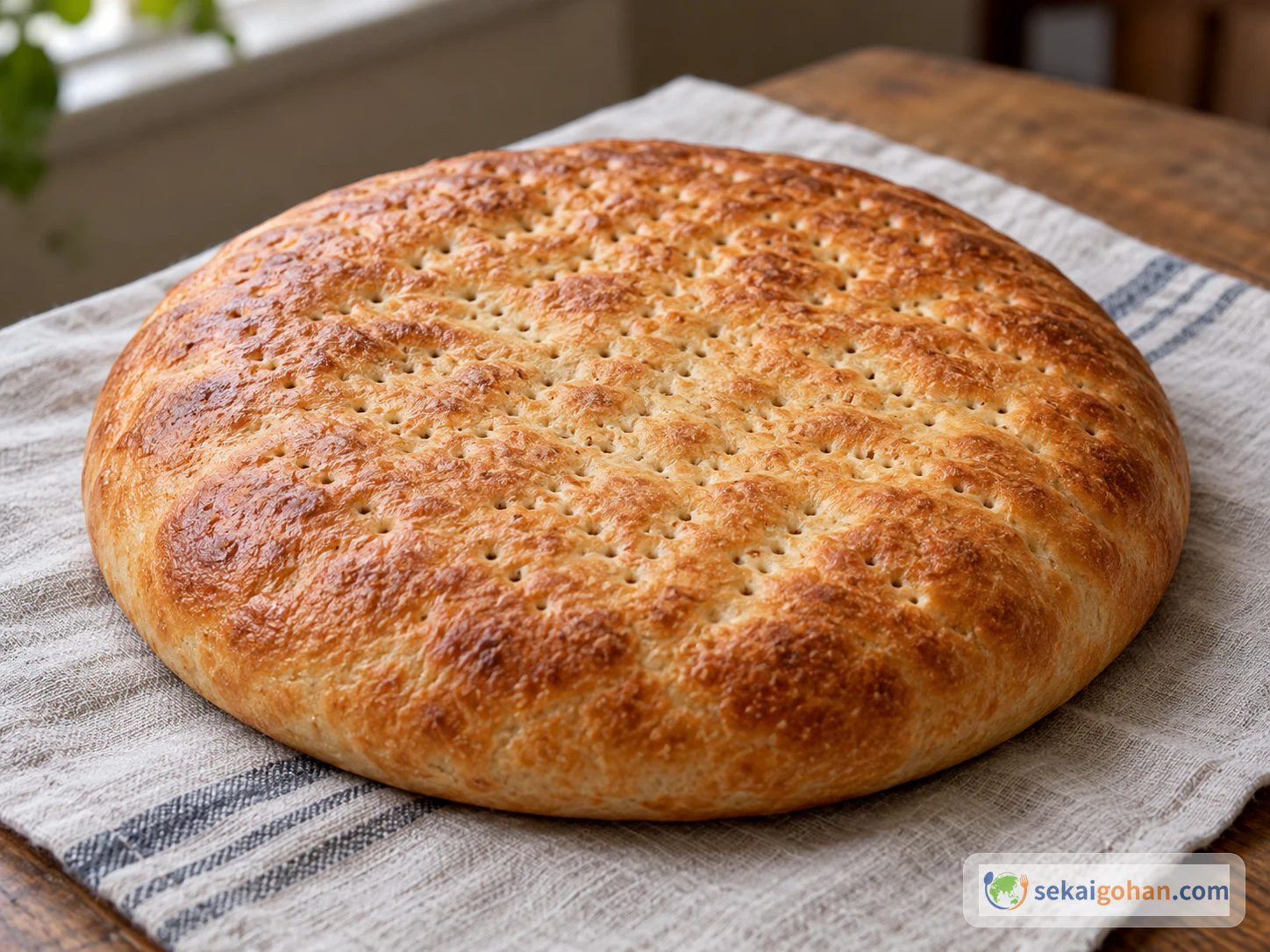
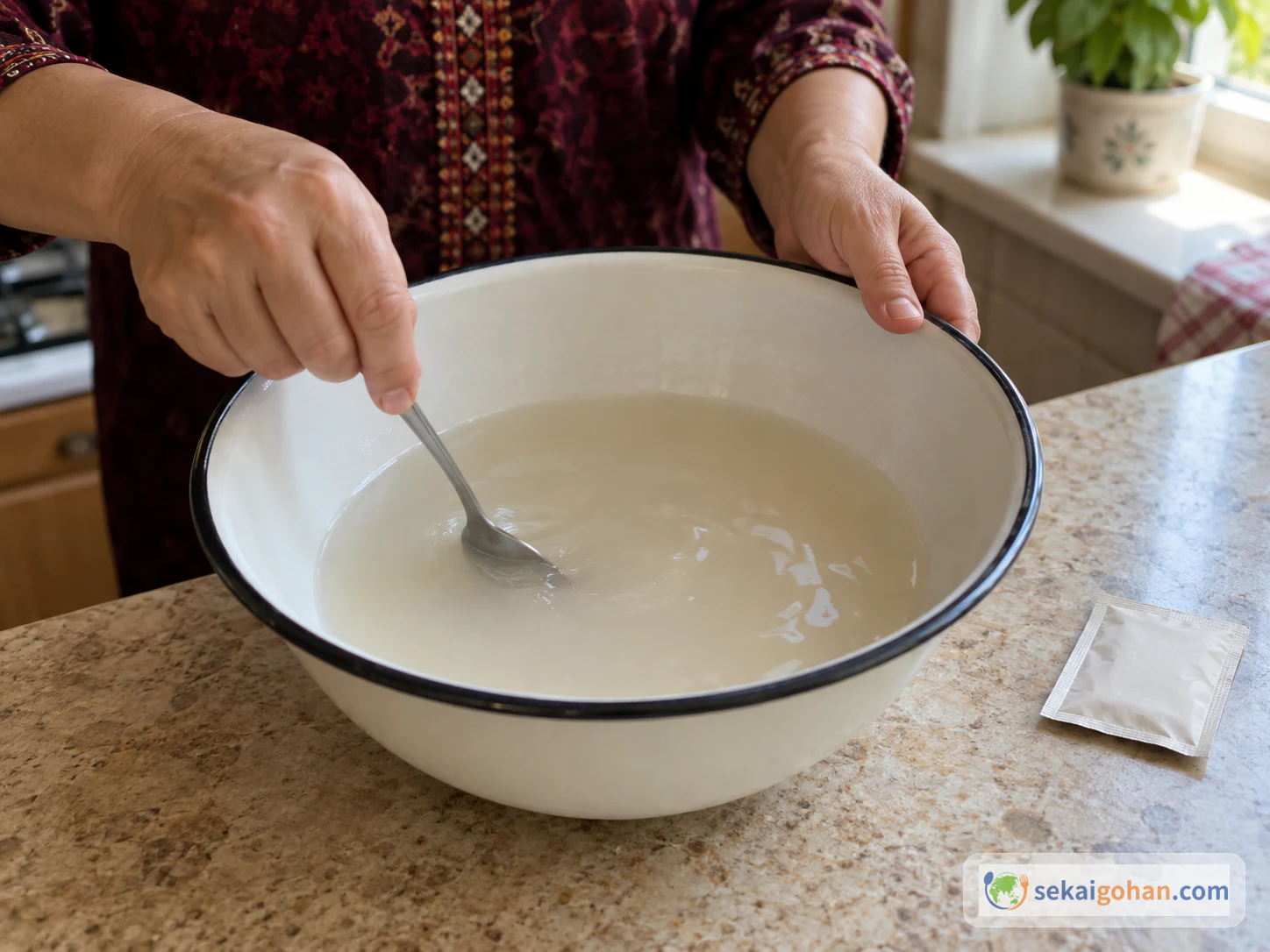
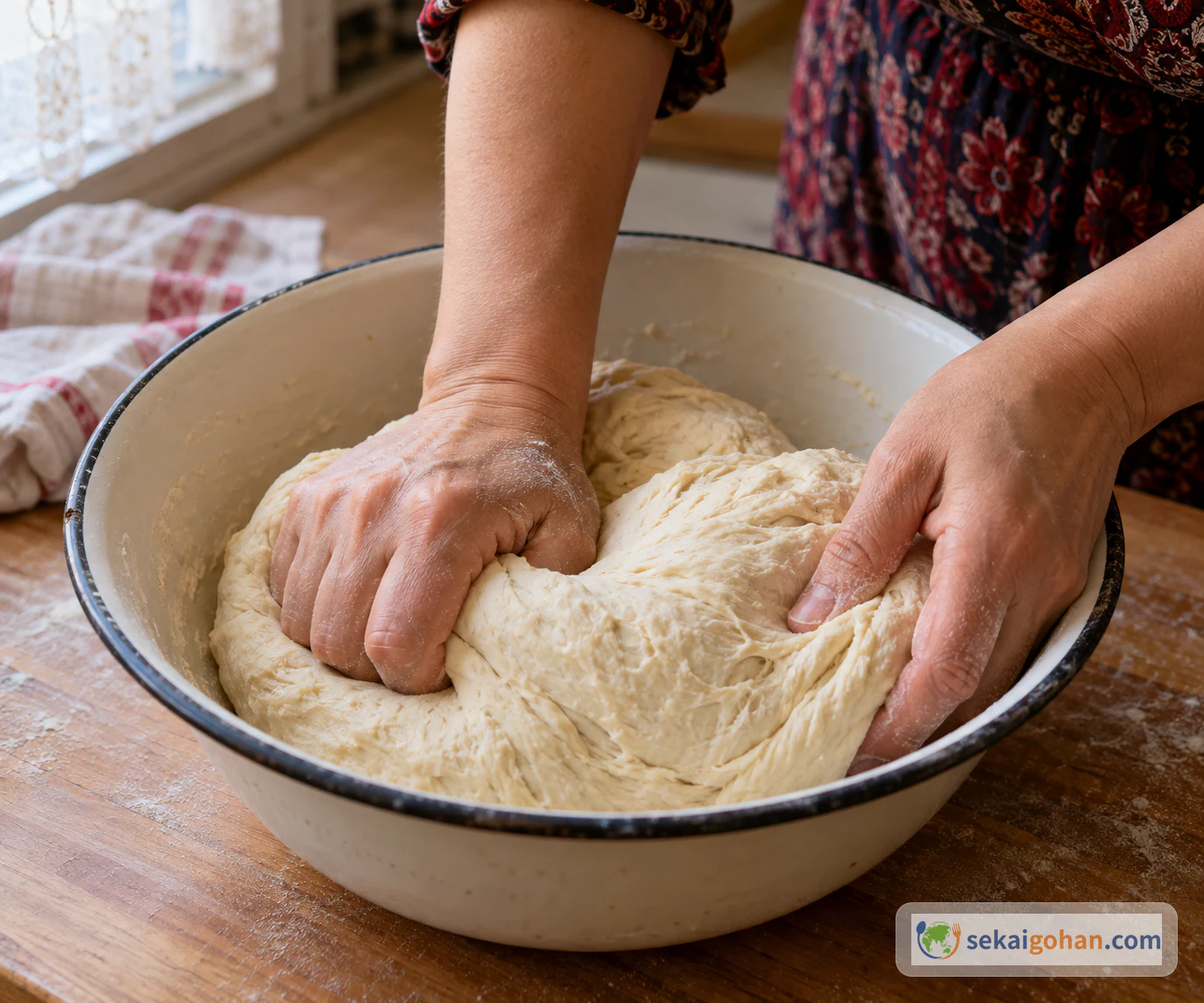
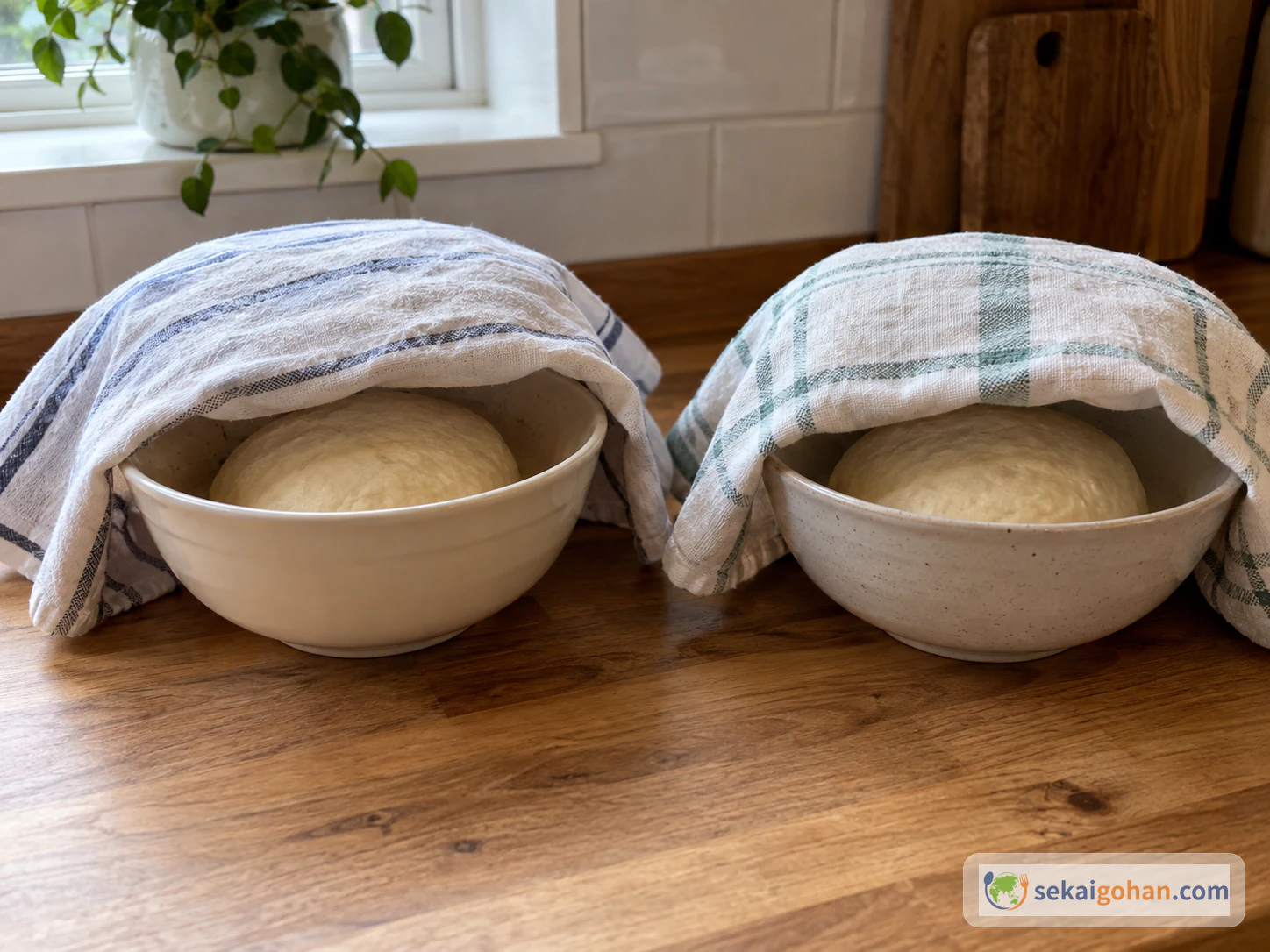
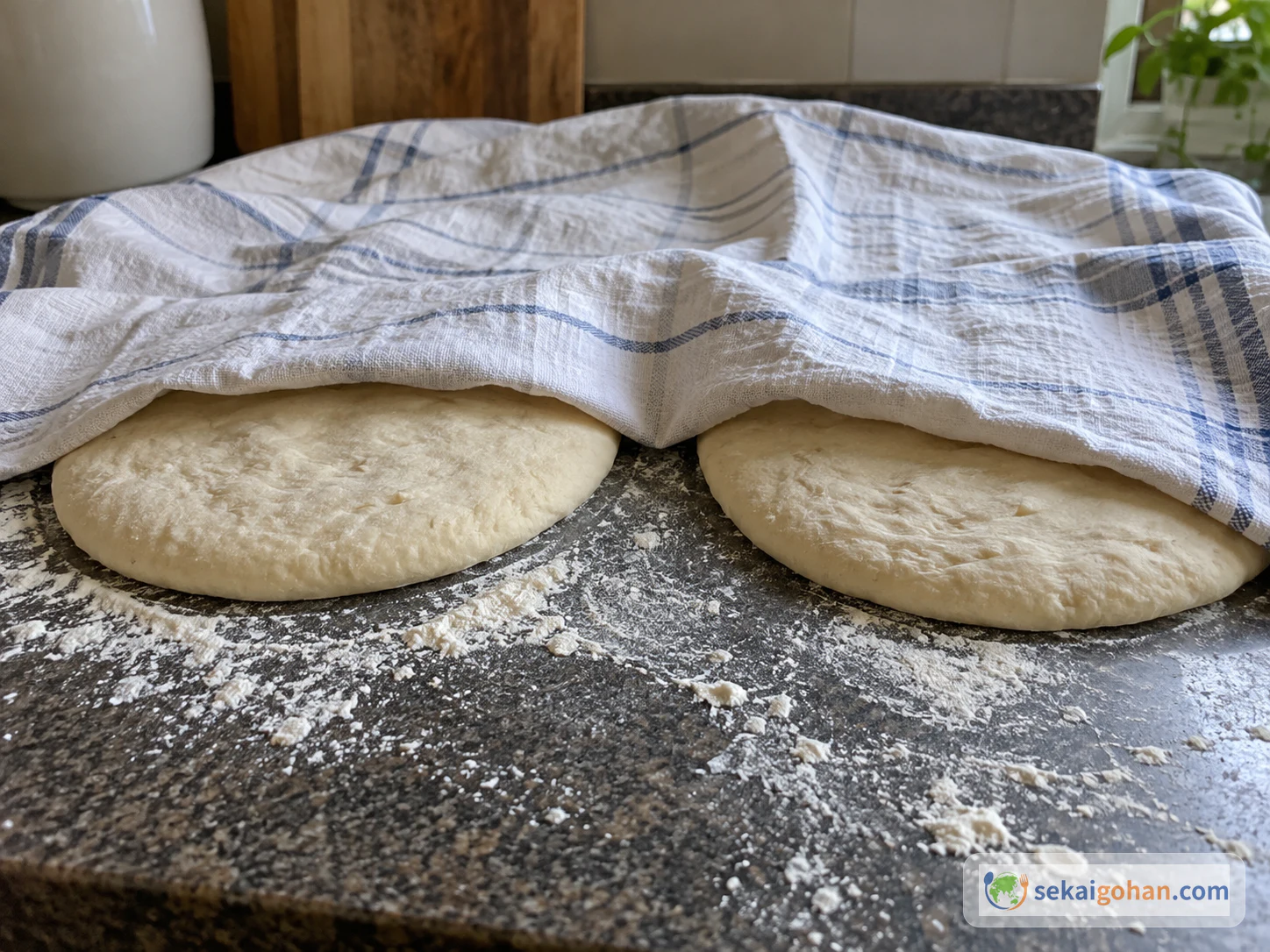
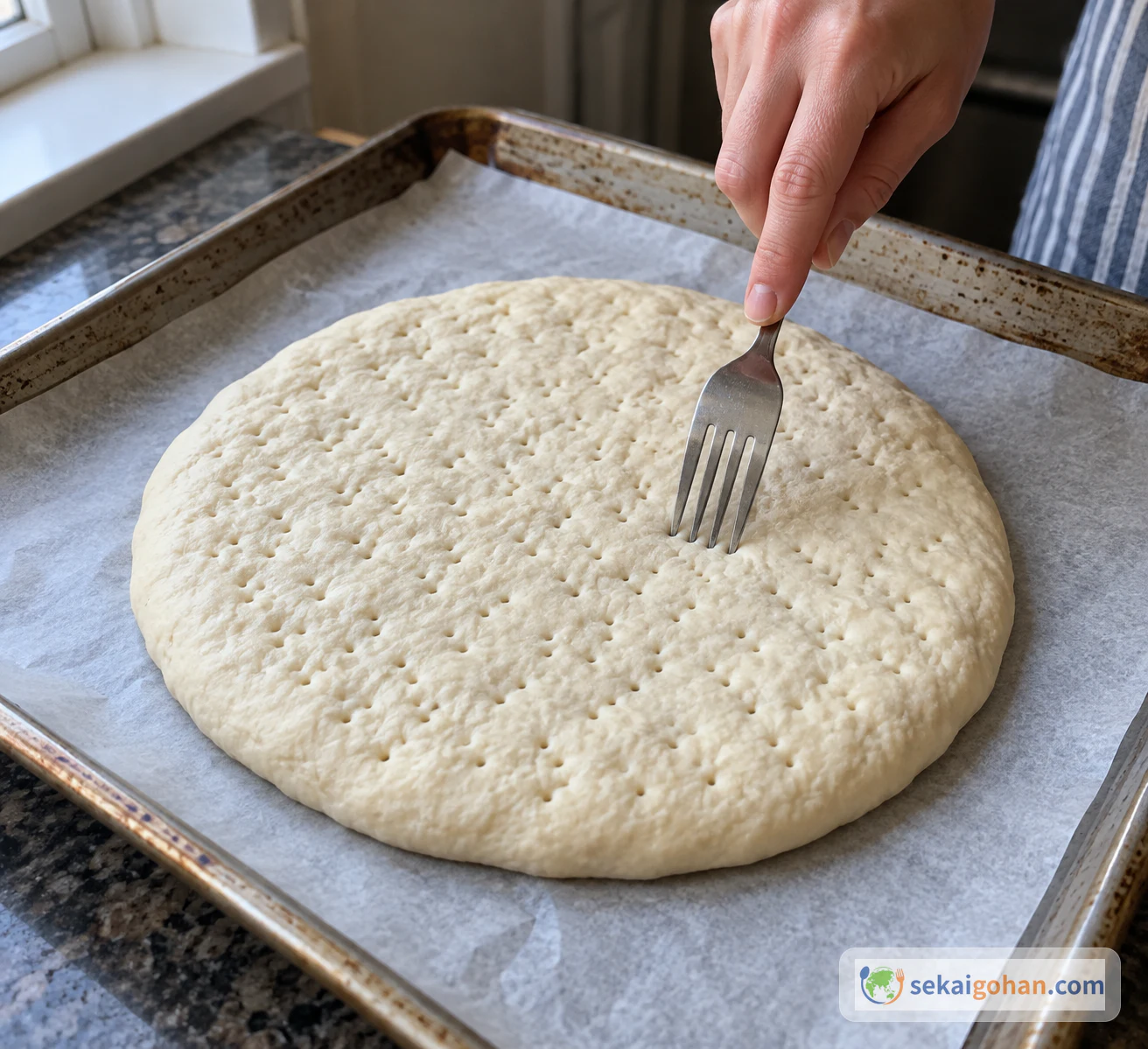
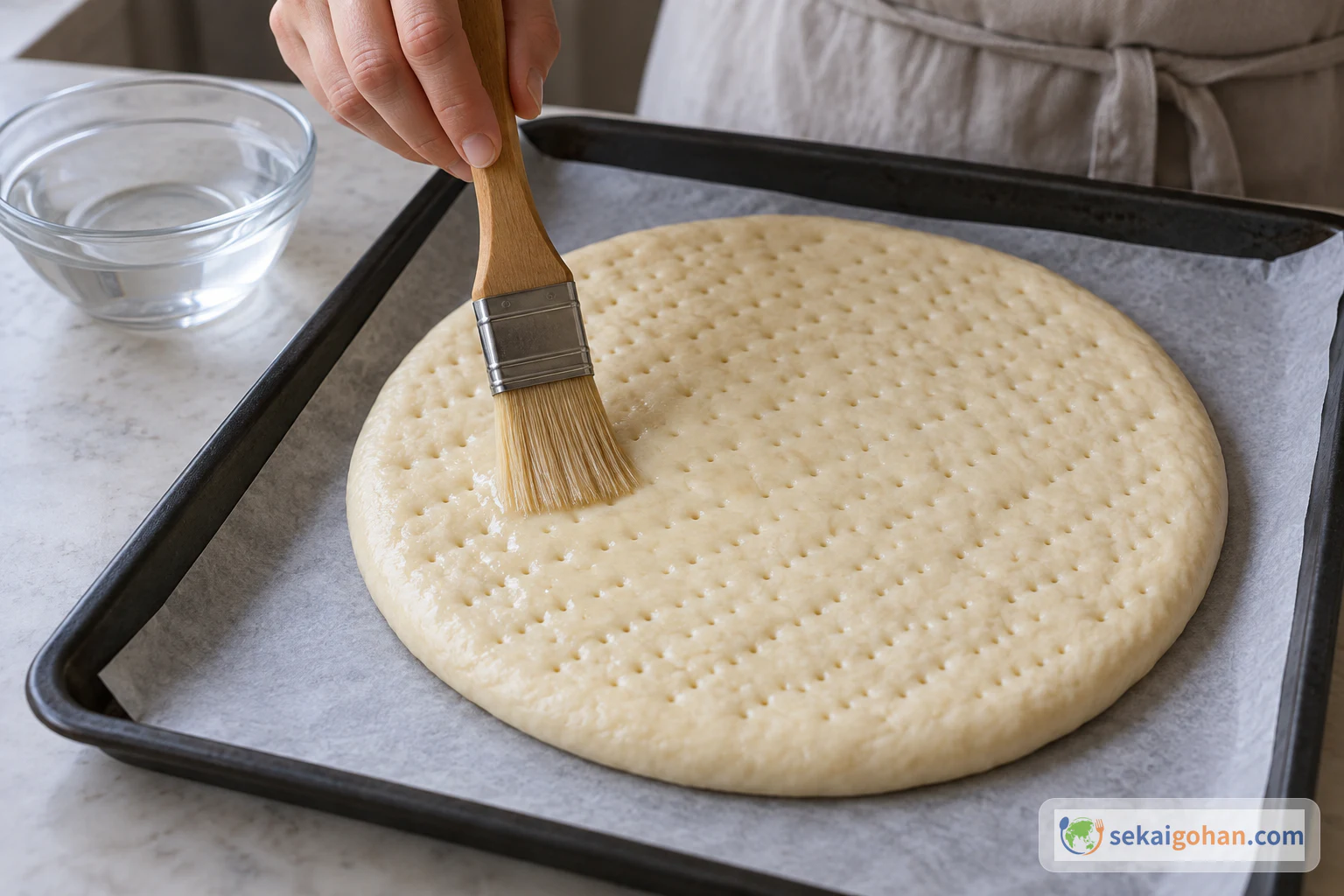
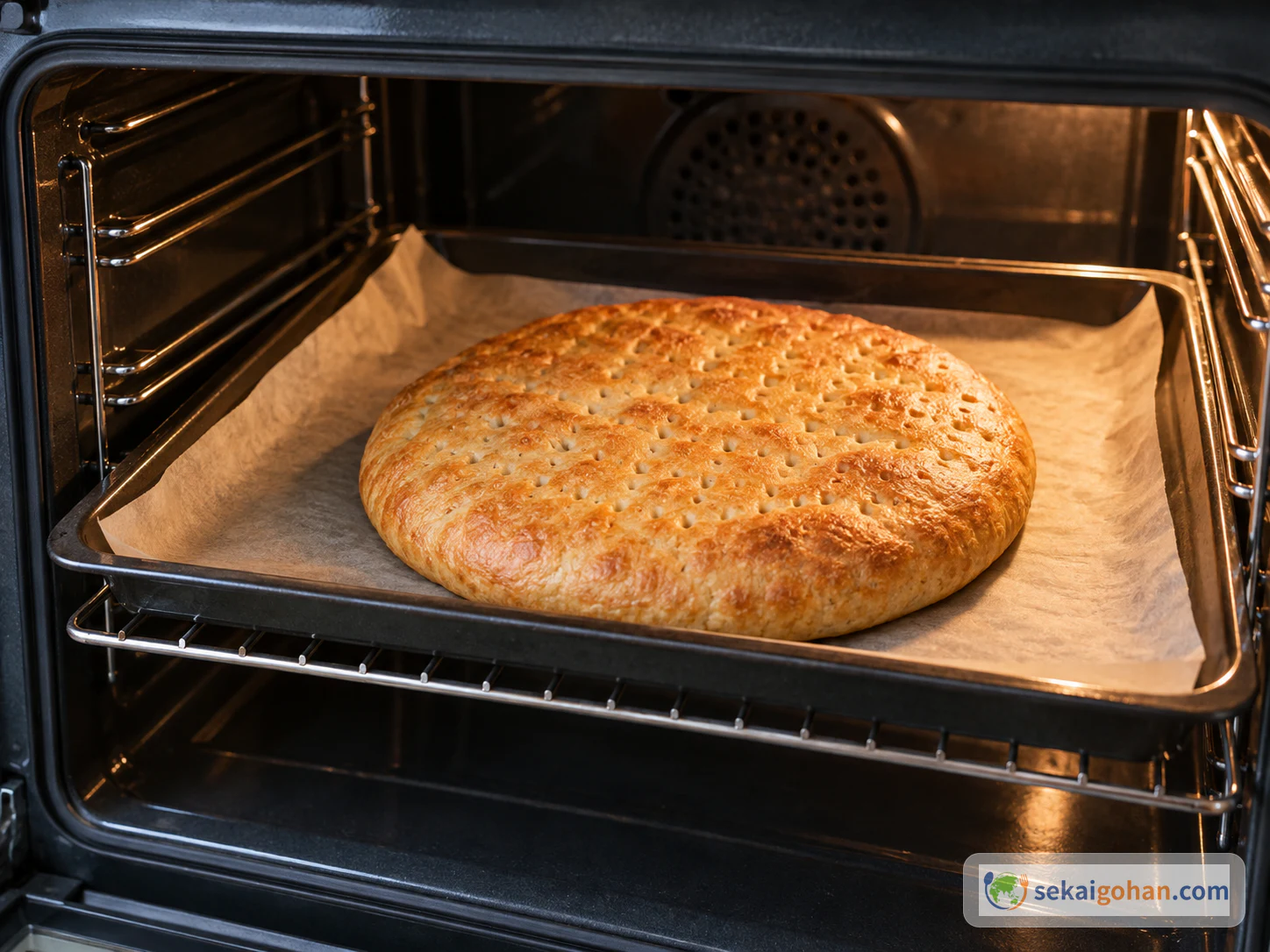
Two balls of dough are pressed out by hand on a lightly floured counter until each one is a wide disc. A fork goes over the whole surface, a brush of plain water follows, and the tray slides onto the middle rack of a very hot oven. That's chorek, the everyday round bread of Turkmenistan. It takes just four ingredients, flour, salt, yeast and warm water, with no sugar, oil, egg, milk or seed topping, and it bakes up into a plain, golden loaf.
Chorek, Turkmenistan's Round Wheat Bread
Chorek is the spelling used here. In Turkmen the word is çörek, which simply means bread. Breads with similar names, such as sweet Turkish buns and the sweet braided breads of Armenian-speaking communities, are different things. This is the plain round wheat bread of Turkmenistan, and at the table it is broken by hand rather than cut with a knife.
Chorek is traditionally baked in a tamdyr, a clay oven. The flat raw dough is slapped onto the hot inner wall of the prepared oven and comes out after a short bake. This version is made for a home oven, baked on a tray lined with baking paper.
Turkmen flour products are made from both fermented and unleavened dough. Dograma, a separate dish that combines bread with lamb and onion, has its own special bread, petir. That bread is different from this chorek.
Ingredients (Makes 2 Breads)
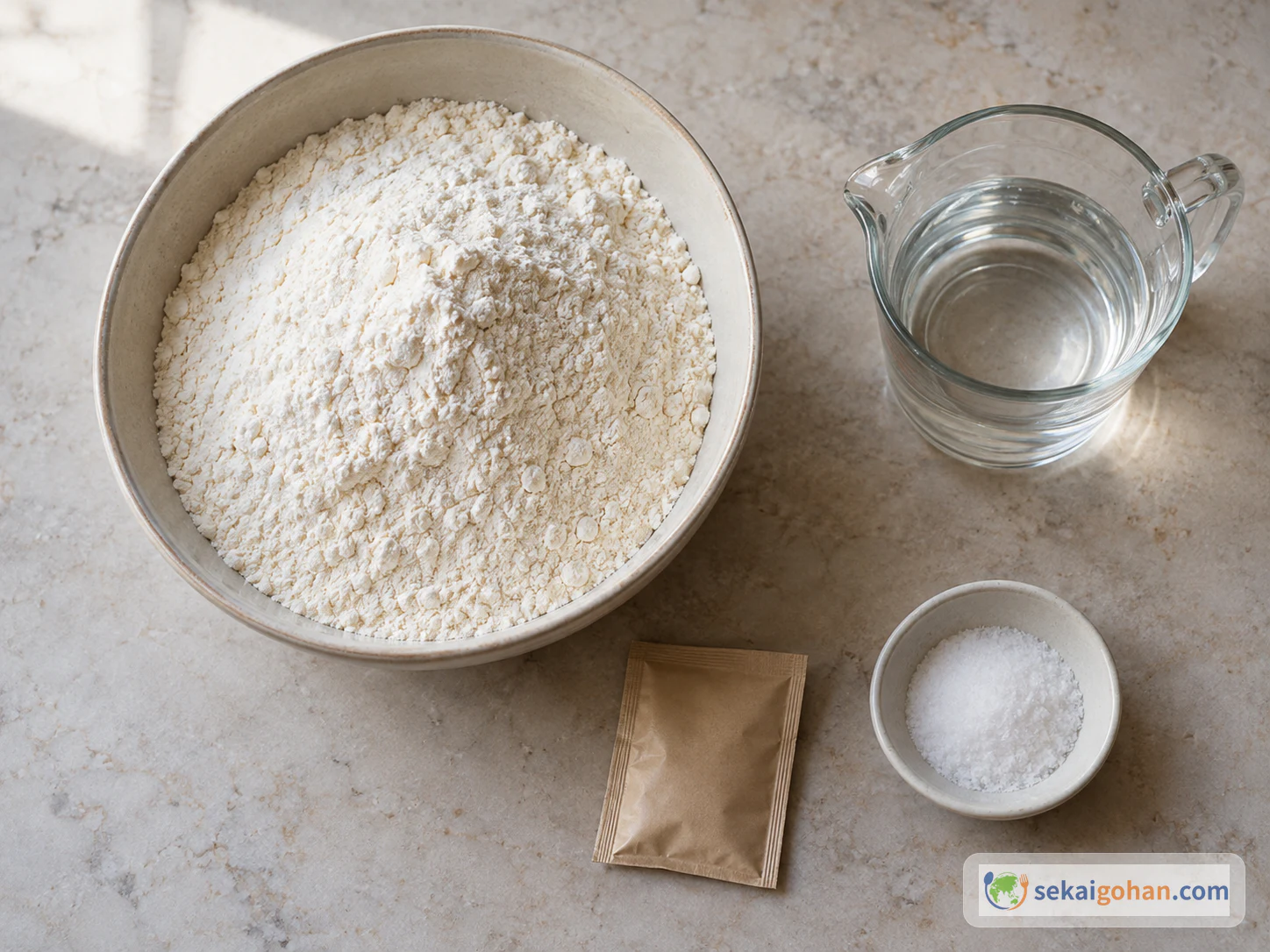
This makes 2 round breads, not 2 servings.
Chorek is made with wheat flour and contains gluten.
Equipment
- A large bowl
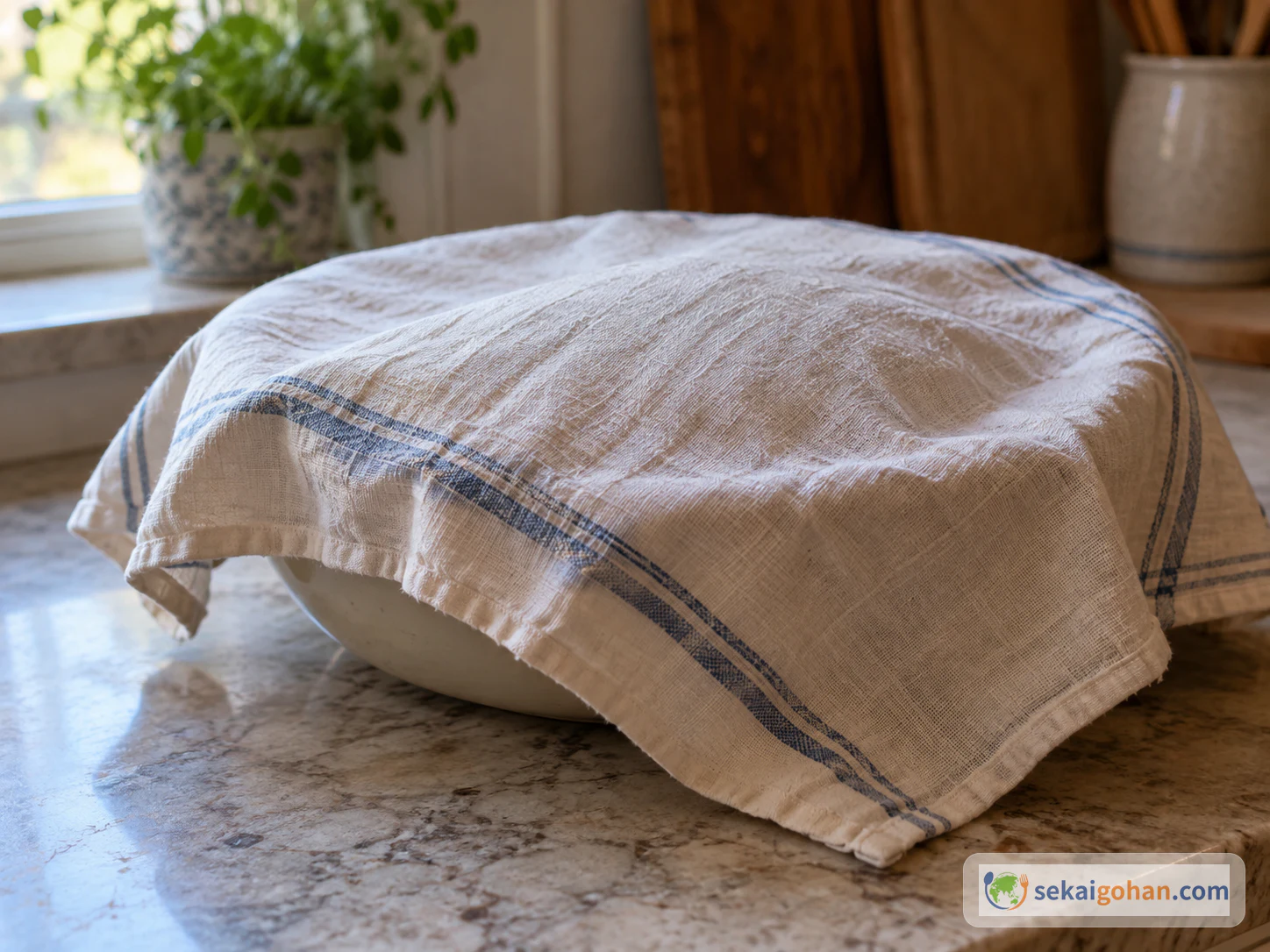
- Clean tea towels (enough to cover the bowl, then each dough ball separately, then the shaped breads)
- A lightly floured work surface
- A baking tray lined with baking paper
- A fork
- A brush for the water
- An oven that reaches 250°C (482°F)
Choosing Flour, Yeast and Water for Chorek
Use wheat flour and keep the ratio as written; the bread depends on its short list. The recipe calls for 20 g yeast without naming a type, so use it as given. Measure the salt by the spoon, and use water that is simply warm.
Method: Two Rises Judged by Eye, Then a Hot Oven
Only two steps have a clock time: the 20-minute rest after shaping, and a bake of about 15 minutes or until golden brown. You judge both rises by how the dough looks. The 15 minutes is the bake alone, not the total time for the bread.
Reading the Dough at Each Stage
Only the rest after shaping and the bake are timed, so success comes from watching the dough itself.
| What you see | What it means | What to do |
|---|---|---|
| The covered dough hasn't started to rise yet | The first rise isn't finished | Keep it covered in a warm spot until it begins to rise. There is no set time |
| The divided balls haven't risen yet | They aren't ready to shape | Leave each one covered until it has risen, then shape |
| You aren't sure how large to press the rounds | The target is a size, not a weight | Press by hand to about 1 inches (2 cm) thick and about 12 inches (30 cm) across |
| The bread isn't golden at 15 minutes | It isn't done yet | Keep baking until golden brown |
| You're tempted to add up the timings | Only the rest and the bake are timed | Treat the 15-minute bake as the bake alone, not the whole recipe |
Serving Chorek and Finishing the Surface
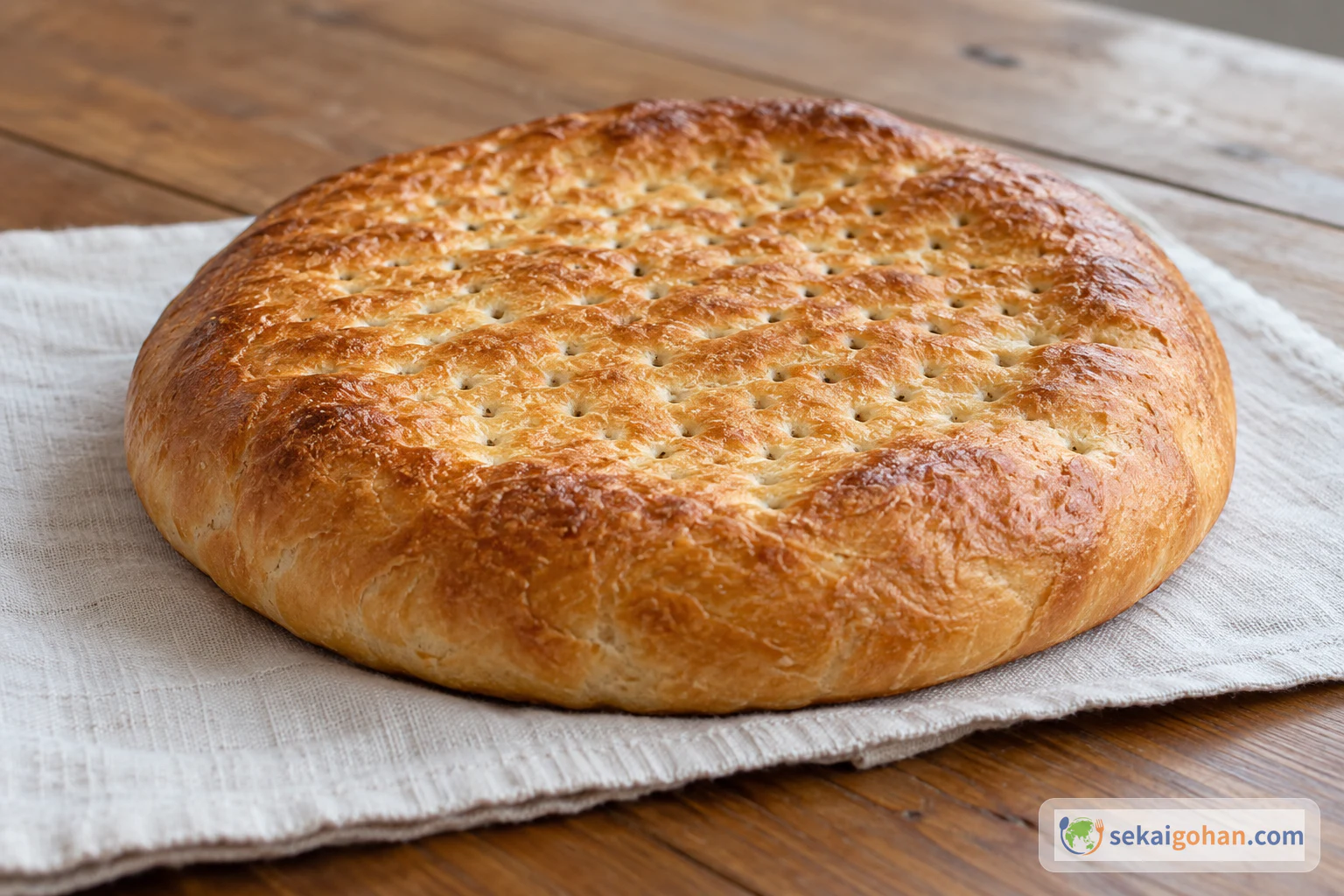
Out of the oven, each chorek is a wide, golden round with the fork holes still visible across the top. It goes alongside meals, torn by hand and passed around.
For a different finish, press a deep crosshatch into the surface with a plastic cutting board instead of pricking it with a fork. Pick one finish or the other.
Frequently Asked Questions
Which yeast should I use? Fresh, active dry or instant?
The recipe calls for 20 g yeast, with no type or form named, so use it as written. The bread for dograma uses a teaspoon of dry yeast, but that is a different bread; keep the 20 g here.
Is this a tamdyr (clay-oven) recipe?
No. In a tamdyr the dough bakes against the hot inner wall of the clay oven. This recipe is written for a home oven, with the bread on a lined tray on the middle rack.
Is chorek the same as the bread used for dograma?
No. Dograma uses a special bread called petir, which has its own formula. Keep the two breads separate.