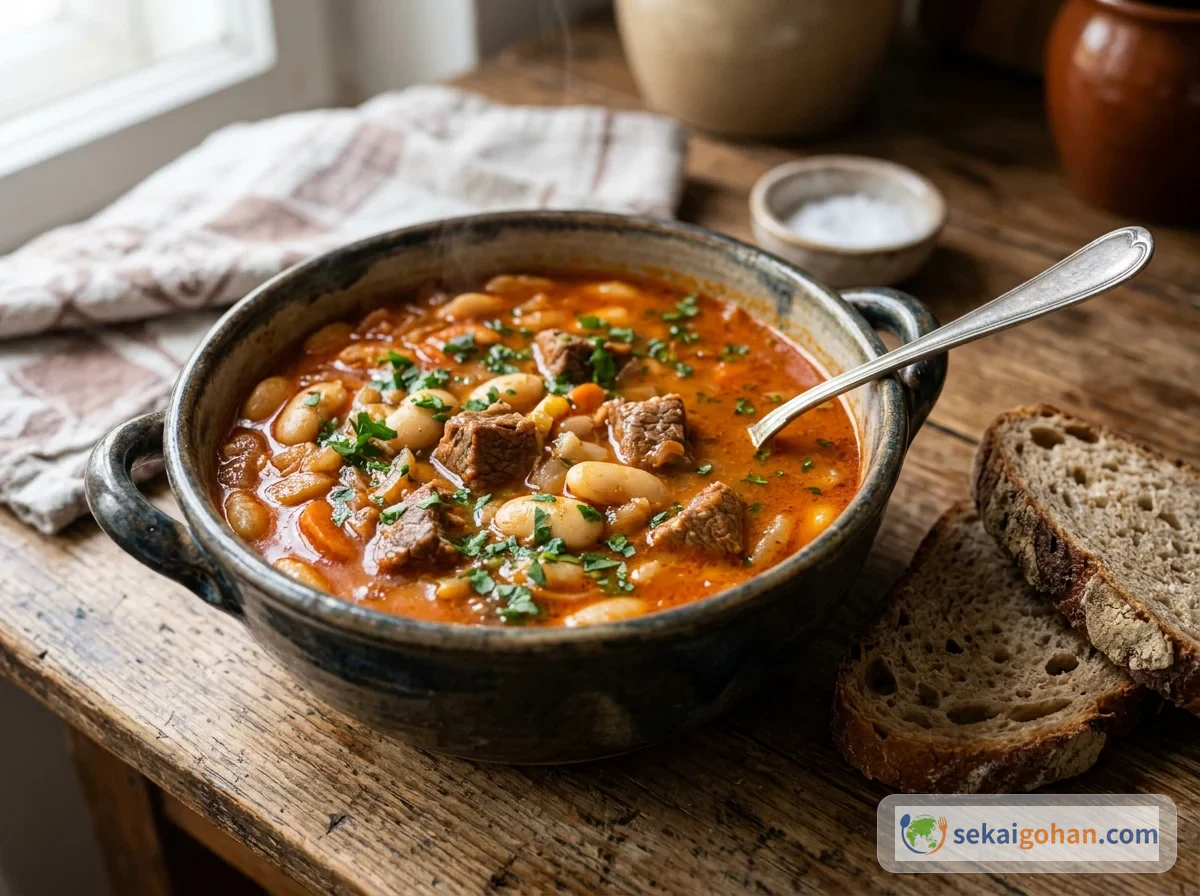
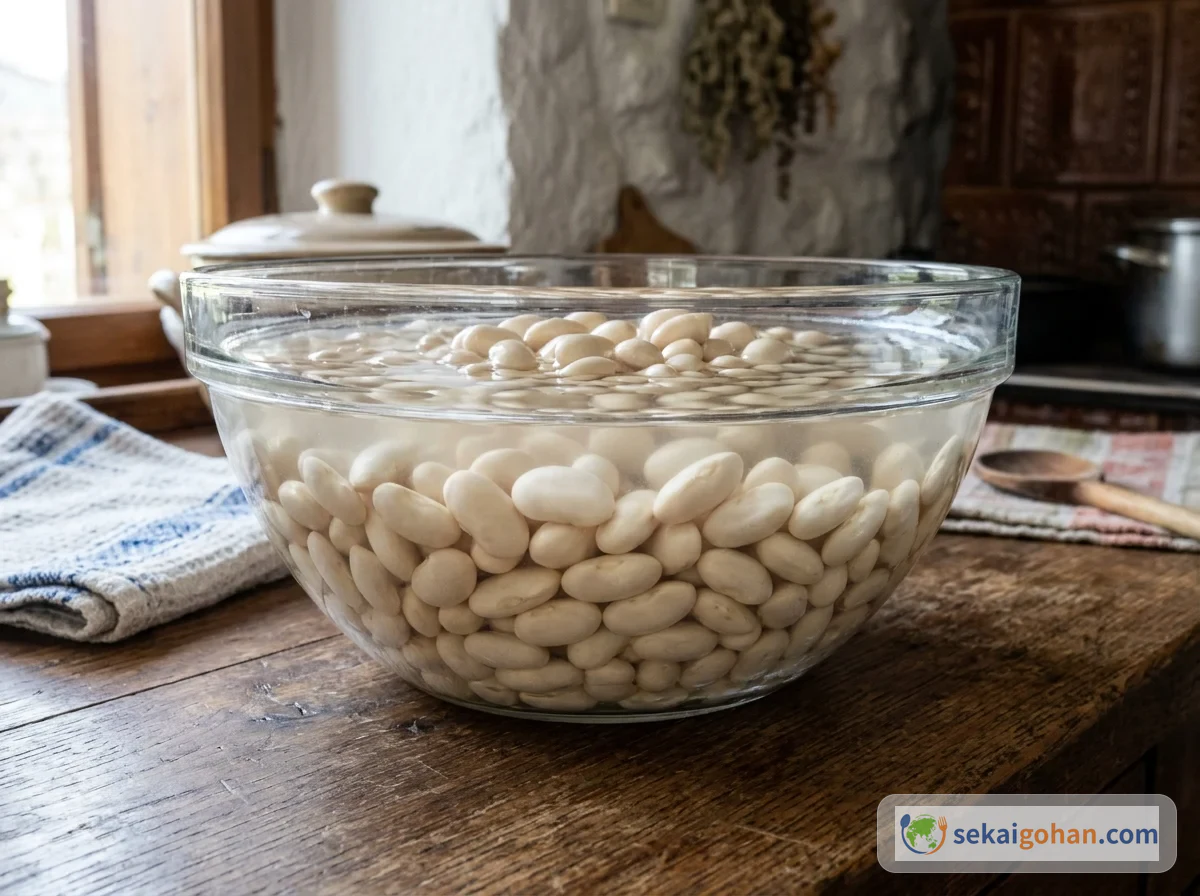
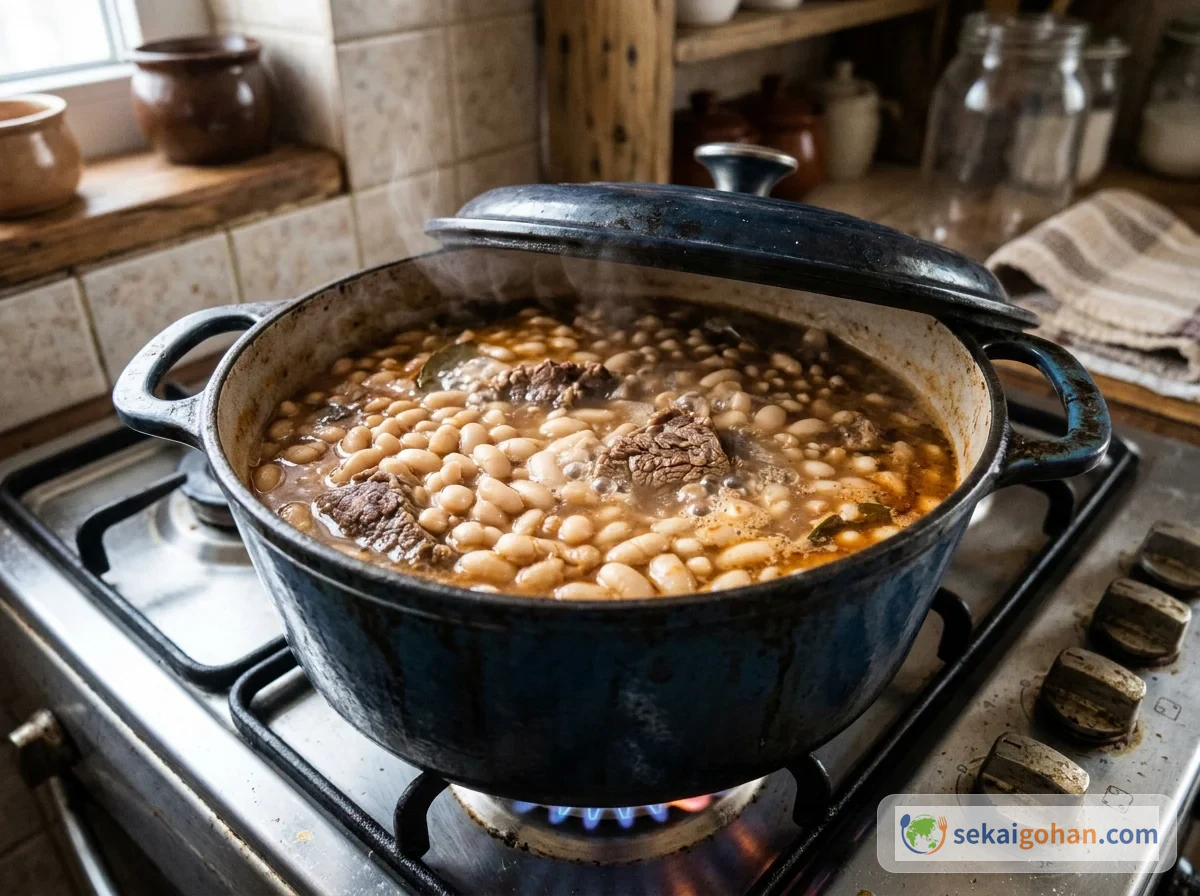
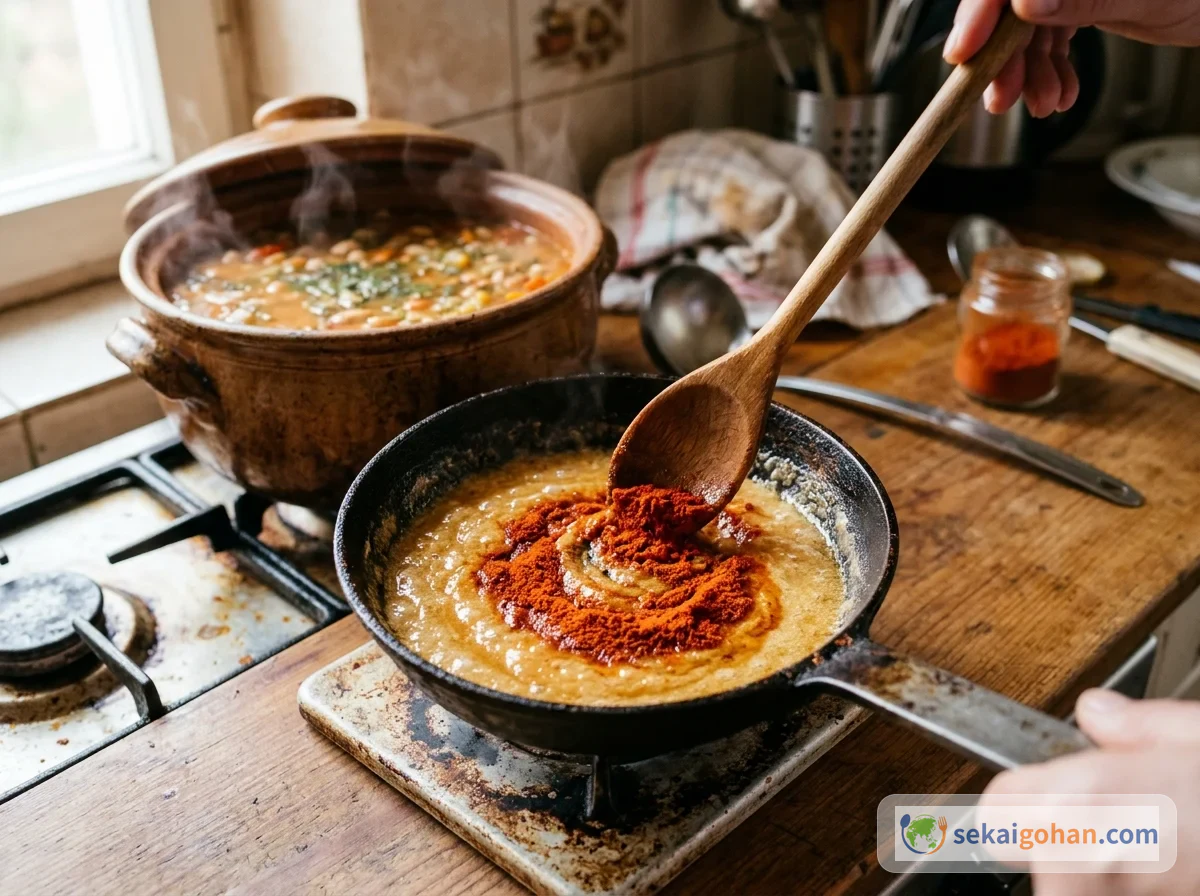
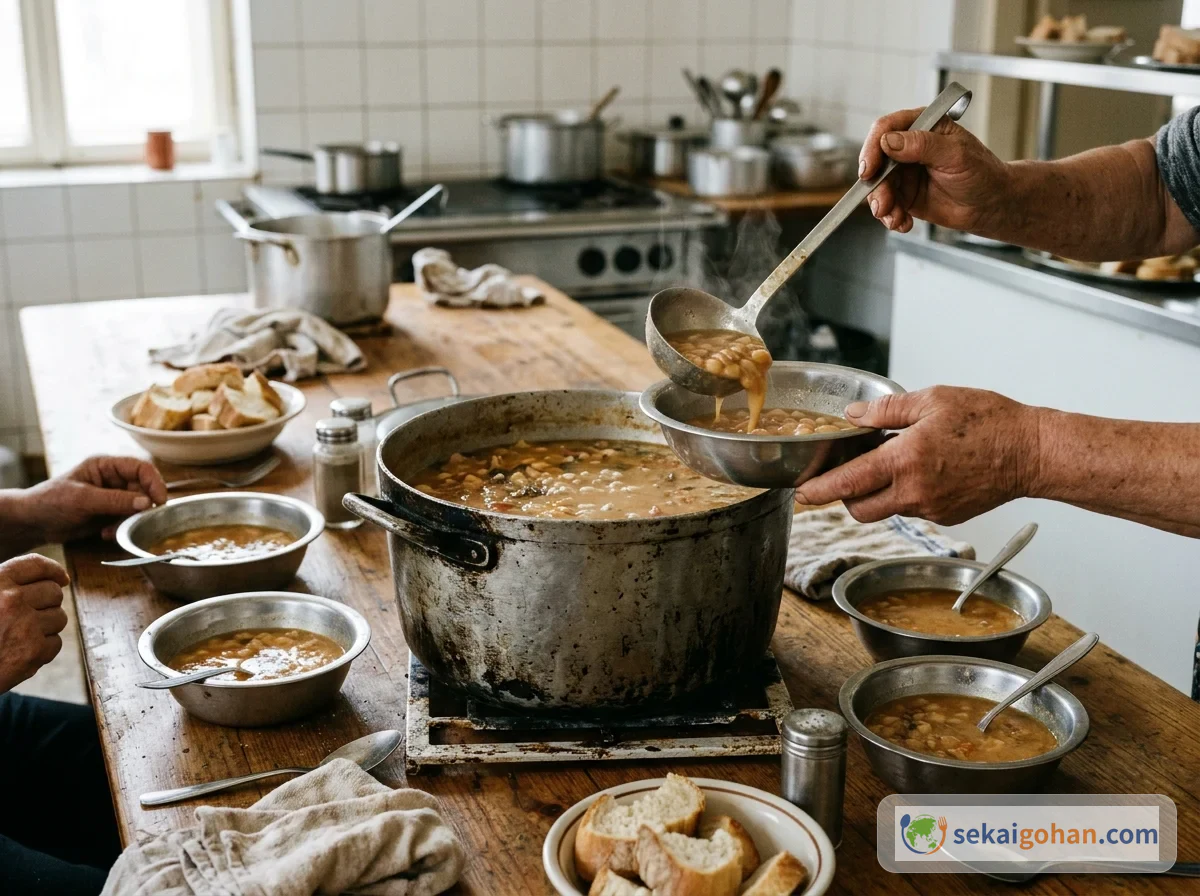
At midday in Belgrade, reddish steam rises from a big pot in a canteen. Inside is white bean soup: thick broth tinted with paprika, with bits of meat peeking out between the beans. You tear off a piece of crusty bread, dunk it, and bite into a raw onion between spoonfuls. Nothing is more familiar to Serbians than pasulj, a name that simply means "beans," which says a lot about how deeply it is rooted in the everyday table. The method is humble, dried beans soaked overnight and simmered with meat and aromatics, but the finish is a roux of flour fried in oil, called zaprška, that turns the broth thick and velvety.
Pasulj, Serbia's Everyday Bean Soup
Pasulj is white beans simmered into a thick soup with sausage, bacon, or ham, plus onion and carrot, seasoned with paprika, bay leaf, and garlic. It is eaten not only in Serbia but across the Balkans. A 2024 list of the "100 Best Bean Dishes in the World" included three Serbian dishes: pasulj at number 6, brothy pasulj (čorbast pasulj) at number 29, and the baked bean dish prebranac at around number 40.
Brothy pasulj was a staple of the former Yugoslav army. It could be made in huge quantities in one pot, and it filled soldiers' stomachs with cheap, nourishing beans, which suited the army canteen perfectly. Under the name soldier's pasulj (vojnički pasulj), recipes for the canteen method still appear in Serbian media today.
The best-known way to cook pasulj is with smoked meat or spare ribs: the smoke adds aroma and the bones add richness. Soldier's pasulj uses beef instead, which is unusual for this dish. The smoky note is restrained, and the flavors of beans and beef come through directly.
Ingredients (serves 4)
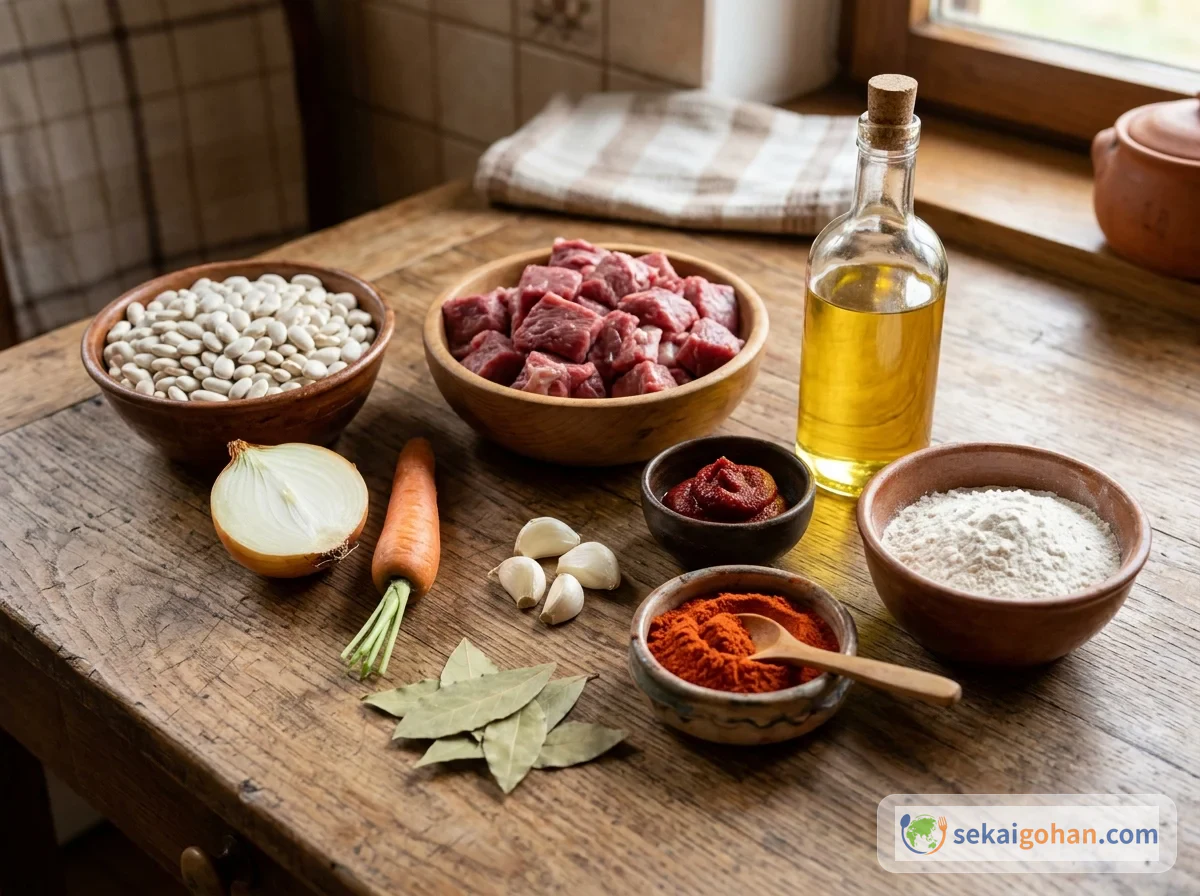
This is a home-sized version of "soldier's pasulj", with the ingredients tripled.
| Ingredient | Amount | Substitutes & notes |
|---|---|---|
| White beans (dried) | 12.5 oz (360g) | Great northern, navy, or cannellini. Any variety will do |
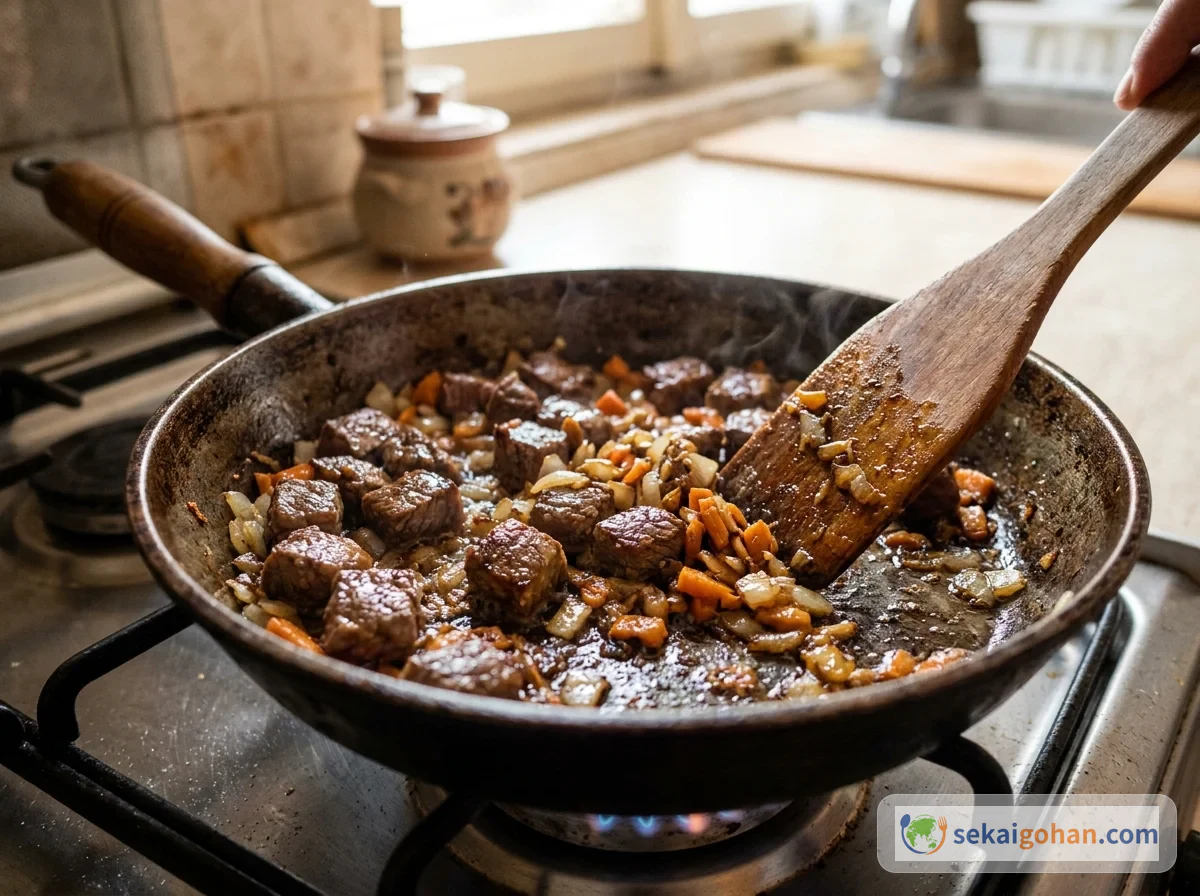
| Beef (cubed) | 10.5 oz (300g) | Chuck or shank. Trim bones and fat and cut into 1 inches (2 cm) cubes |
| Onion | 2.75 oz (75g) (1/2 medium) | Finely chopped. Half is browned with the meat, the rest goes in the roux |
| Carrot | 1 oz (30g) (1/4 small) | Finely chopped |
| Vegetable oil | 4 tbsp (about 2 oz (60 g)) | Lard also works. Half is used to brown the meat, the rest for the roux |
| Bay leaves | 2–3 |
Roux (zaprška) and finish
| Ingredient | Amount | Substitutes & notes |
|---|---|---|
| All-purpose flour | just under 3 tbsp (about 24 g) | Plain (all-purpose) flour |
| Paprika powder | 1/2 tsp | Not hot |
| Garlic | 3 cloves | Finely chopped |
| Tomato paste | 3 tbsp | Dissolve in 3.5 tbsp (50 ml) lukewarm water |
| Salt | 1 tsp or more | Adjust to taste |
| Black pepper | a little | |
| Parsley (dried or fresh) | a little | For finishing |
In Serbia no particular bean variety is specified, so any dried white bean sold in your market works. Paprika powder and bay leaf are available in the spice aisle of most supermarkets. Paprika sets the color and aroma of the soup, so add it while making the roux to bring out its fragrance.
Choosing the Meat for Pasulj
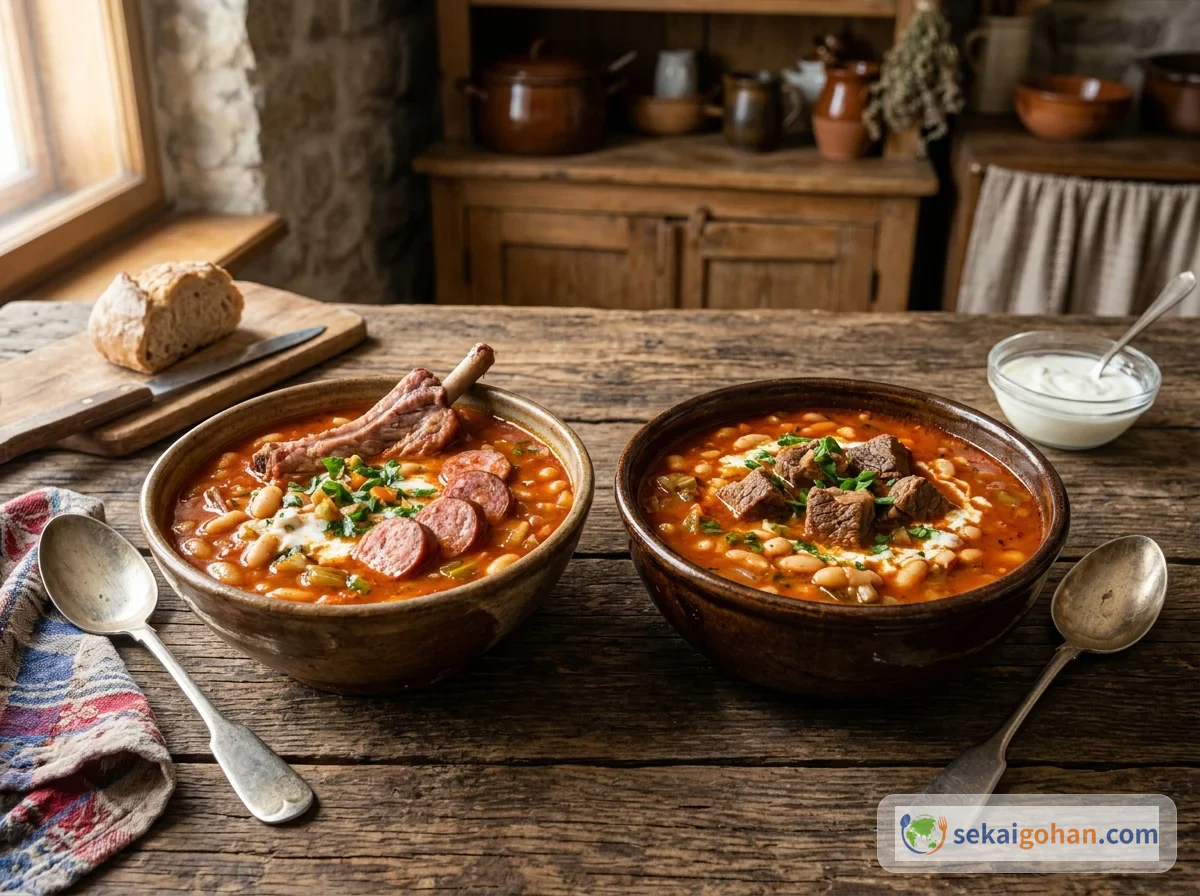
If you want the classic version, use smoked bacon, pork spare ribs, or sausage; brothy pasulj gets its smoky aroma the same way. Put the smoked meat in the pot from the start with the beans and simmer them together until the beans are soft. The smoke flavor transferring to all the broth is the greatest treat of this pasulj.
How to Make Pasulj
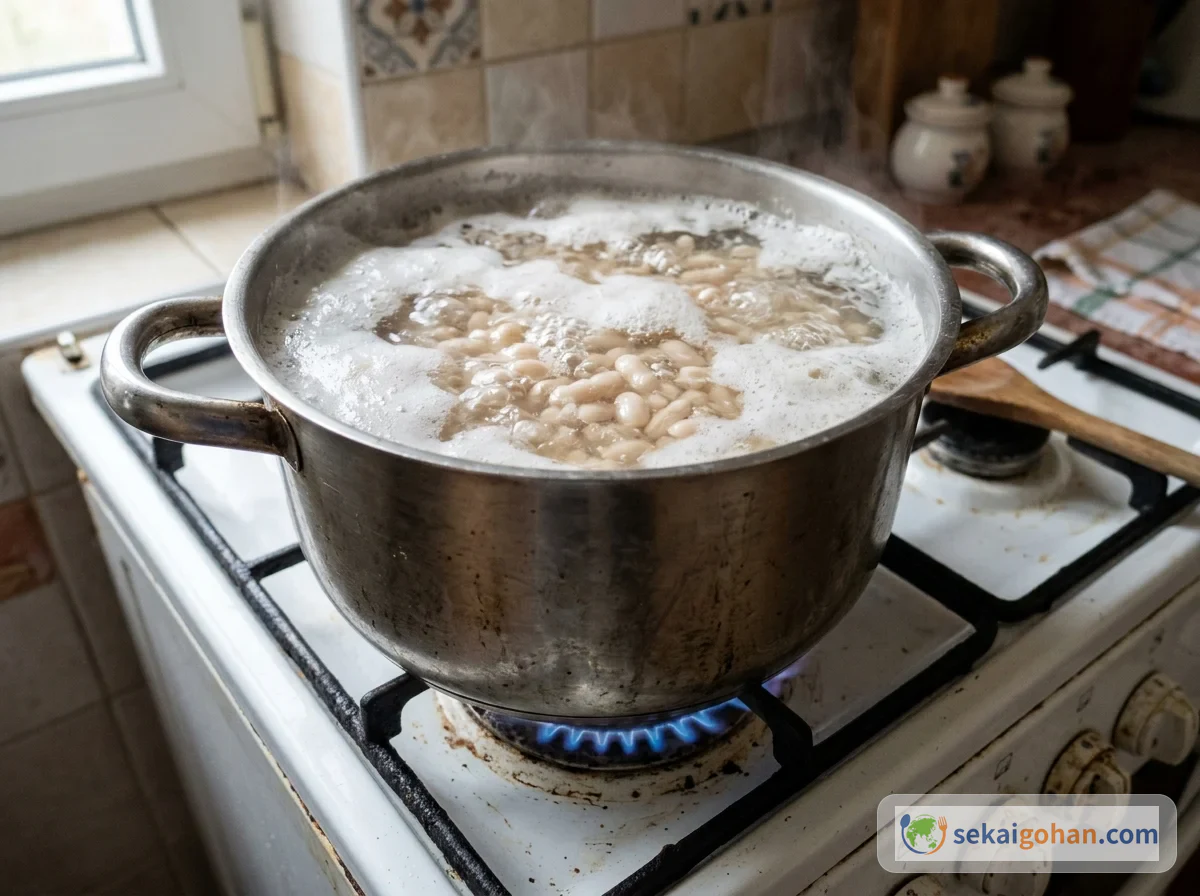
The beans soak overnight (about 12 hours), then simmer for around 2 hours in total. Softening time depends on the variety and age of the beans.
Eating white beans and other kidney beans raw or undercooked can cause food poisoning with nausea, vomiting, and diarrhea. The cause is a protein called lectin. Soak the beans in plenty of water, then boil them at a full boil until soft. Do not eat beans that have only been roasted or briefly boiled.
Paprika powder scorches and turns bitter instantly in hot oil. Stir it in after taking the roux off the heat for a vivid color and fragrant result.
Pasulj Problems and Fixes
Two rules keep the beans whole in a thick broth: Do not stir the beans while they cook, and add the roux at the end. Stirring breaks the beans, and the roux goes in only once they are fully tender.
If the beans will not soften, they are probably old; older beans can stay hard even after long cooking. Add lukewarm water as needed and extend the cooking time in 30-minute steps. Hold off on the roux until a bean crushes lightly when pressed with a finger.
If the roux clumps, dilute it first in a small bowl, adding a little of the pot's broth gradually, and then return it to the pot. Clumps that have already formed can be broken up by whisking in the pot.
Serving and Storing Pasulj
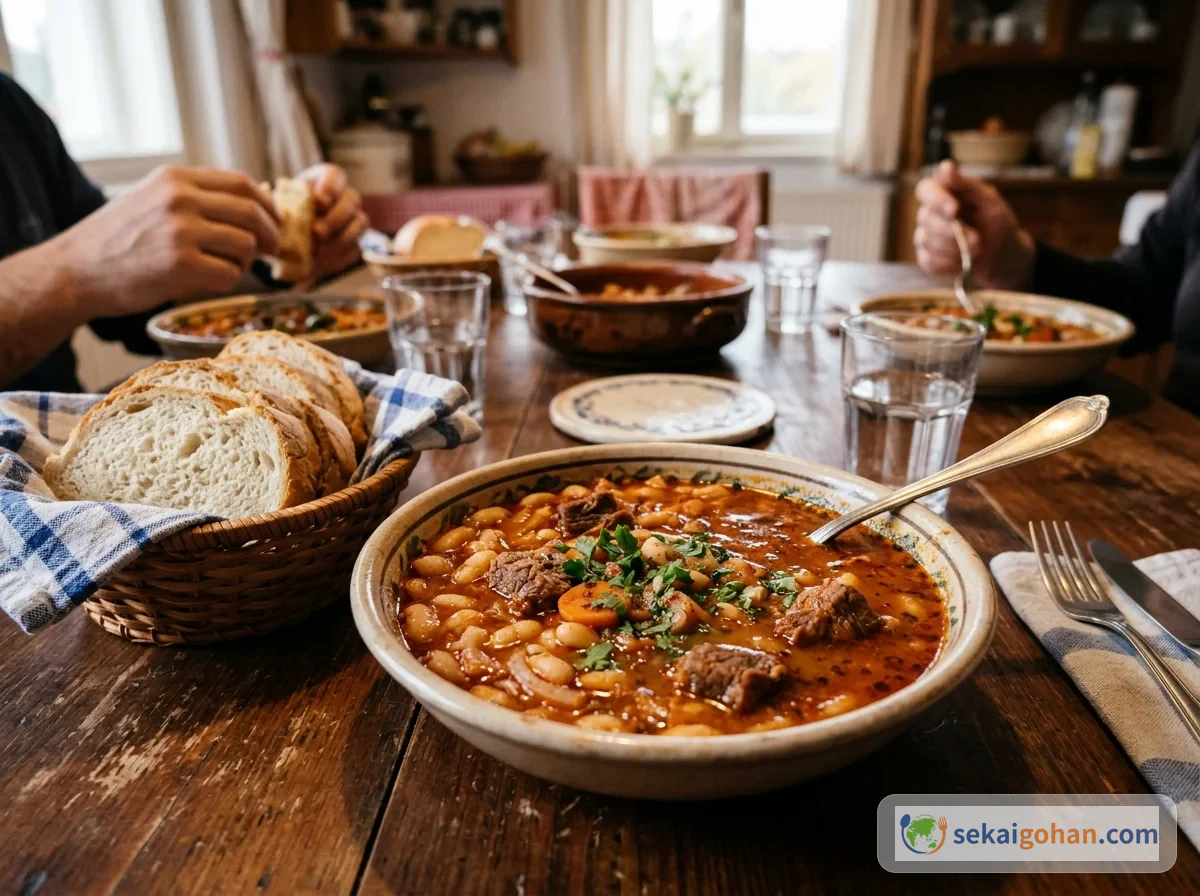
Ladle it generously into deep bowls and serve with crusty bread. Tear the bread, dunk it, and let it soak up the thick broth. Cut a raw onion into wedges and set them at the edge of the plate; biting into one between spoonfuls clears the heaviness of the beans and roux.
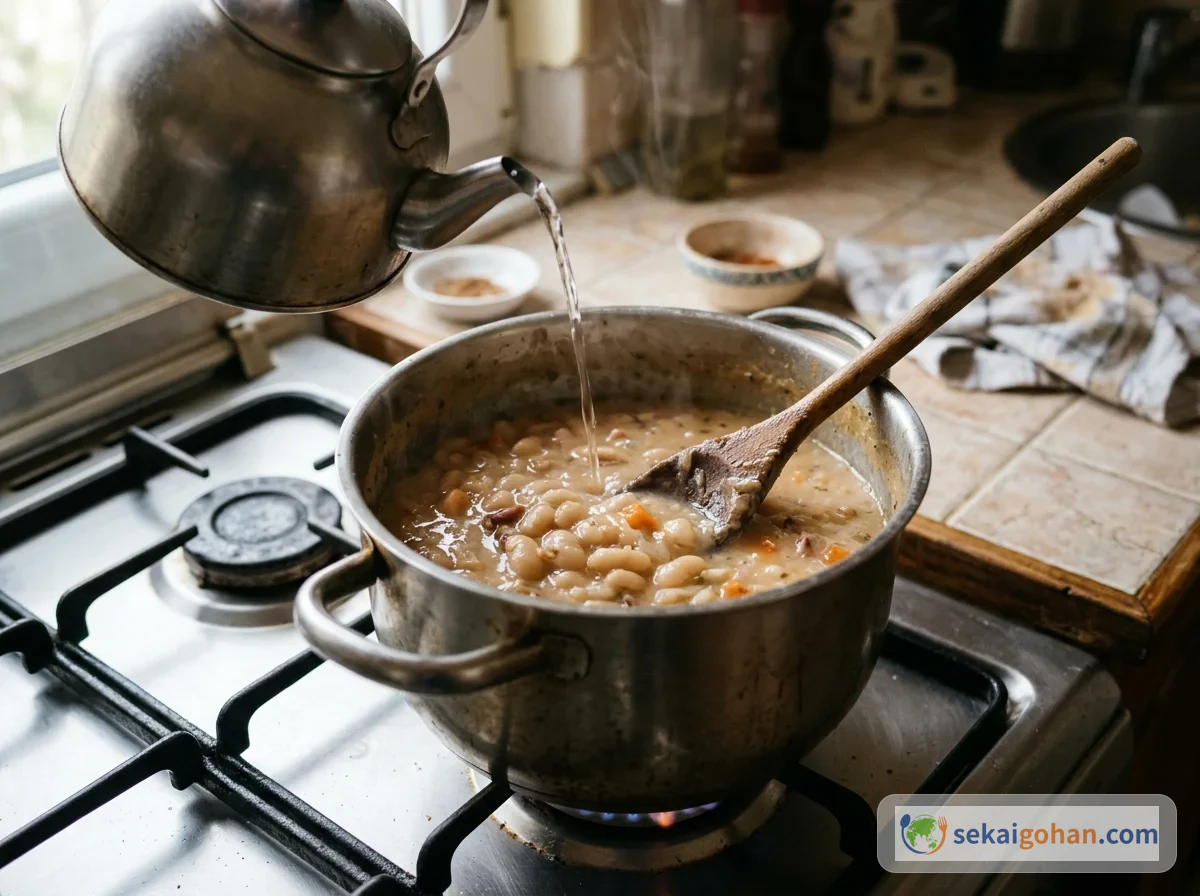
At home, pasulj is often made in a big pot and eaten over several meals. Cool it and refrigerate. As it sits, the beans soak up more broth and thicken, so when reheating, loosen it with a little hot water and bring everything to a full boil, stirring from the bottom.
For a comparison, try another Serbian dish, mućkalica, a braise of pork and paprika that shows different ways of using paprika.
FAQ
Can I make it with canned white beans?
Yes. Canned beans are already cooked, so skip the parboiling and simmer them with the browned meat for 30–40 minutes to make the beef tender, then add the roux. They break easily, so leave them alone until the roux goes in.
How can I make it spicy?
Replace some of the paprika added to the roux with hot paprika powder, or add a little coarsely ground chile at the end.