In Belgrade, the Serbian capital on the Danube, you usually smell ćevapčići before you see them. Charcoal smoke drifts off the street grills and pulls you in. Ćevapčići (Ćevapčići / Ćevapi) are small sausages made from ground beef and lamb (or pork), seasoned with spices, shaped into fingers without casing and grilled over charcoal. Each is a little cylinder about 5 to 8 cm long and 1 inch (2 cm) thick. A serving is about 10 of them tucked into a flatbread called lepinja, with chopped raw onion and kajmak, the fermented cream cheese of the Balkans.
Ćevapčići and Balkan grill culture
From kebab to ćevap
Ćevapčići date back to Ottoman rule. The Ottoman Empire held the Balkan Peninsula from the 14th to the 19th century and brought the kebab culture of Anatolia (present-day Turkey) with it. The Persian word "kebab" passed through Turkish to become "ćevap," and a suffix meaning "small" turned it into "ćevapčići." That makes the dish a close relative of Turkish köfte.
The Balkans didn't simply copy kebab, though. Each country took it its own way. In Turkey it grew into şiş (skewered) and döner (rotating spit). In the Balkans a different style took hold: no casing, no skewer, shaped by hand and cooked over direct heat.
Rostiljnica: the Balkan grill house

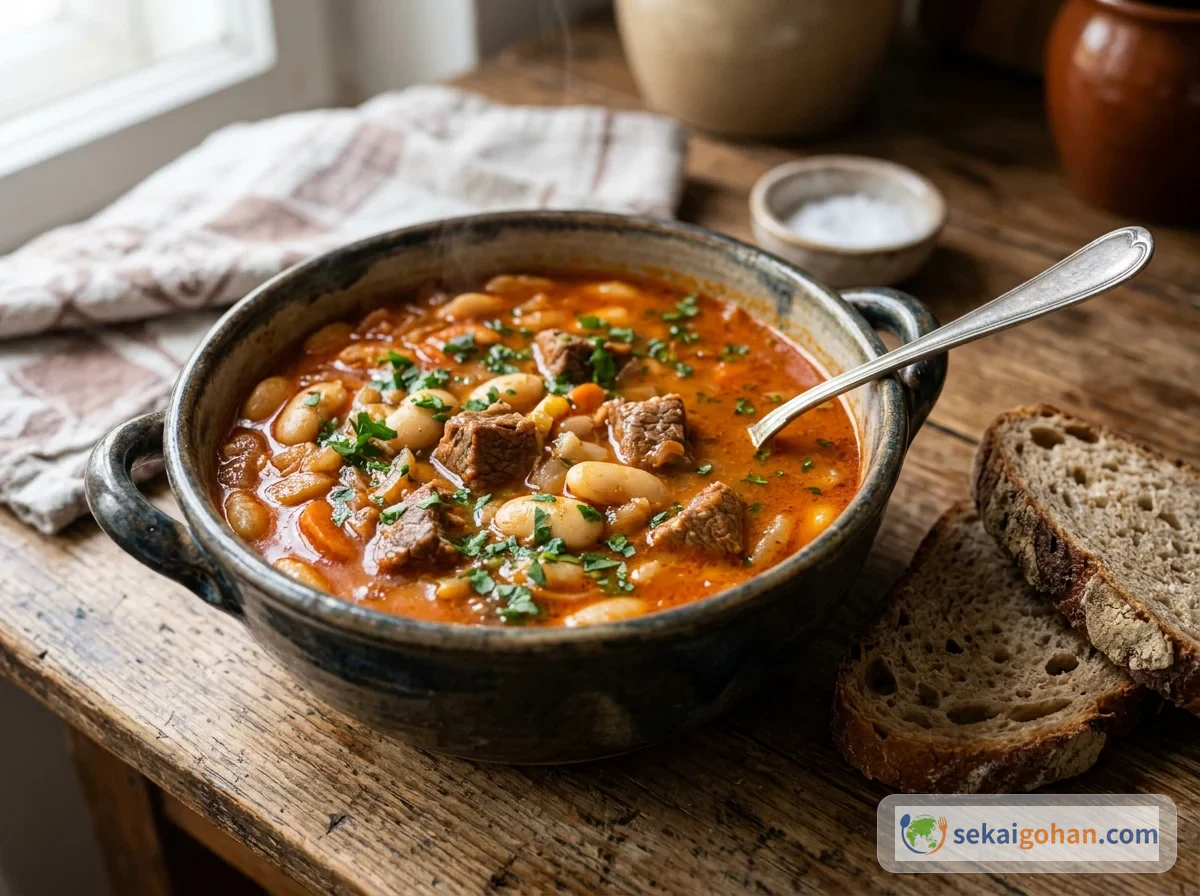
Towns across Serbia and Bosnia are full of grill eateries called ćevabdžinica / rostiljnica. They set a charcoal grill facing the street and let the smoke and aroma draw in passersby, a scene at the very heart of Balkan food culture. Ćevapčići are a much-loved dish of the region, along with Bosnian burek, bean dishes like North Macedonian tavče gravče, pies like Romanian plăcintă and, farther into Eastern Europe, Polish pierogi.
Ingredients (serves 4, about 40 pieces)
The ćevapčići
Beef plus lamb, or beef plus pork, are both common. Any blend turns out delicious, but keep beef at a minimum of half. Where ground lamb is hard to find, ground pork works well.
This dish uses beef and pork (or lamb). Lepinja contains wheat. Kajmak contains milk. If you have a wheat allergy, skip the lepinja and eat the ćevapčići on their own with a salad. If you have a milk allergy, an avocado dip can substitute for the kajmak.
Choosing meat and kajmak for ćevapčići
If you can't get lamb, ground pork is the most common substitute. A beef and pork blend is common to begin with, so this brings you closer to a local style. All ground beef works too, but it can be too lean and turn dry. A better option is 14 oz (400 g) of lean ground beef + 1.75 oz (50 g) of pork fat (back fat), mixed in a food processor.
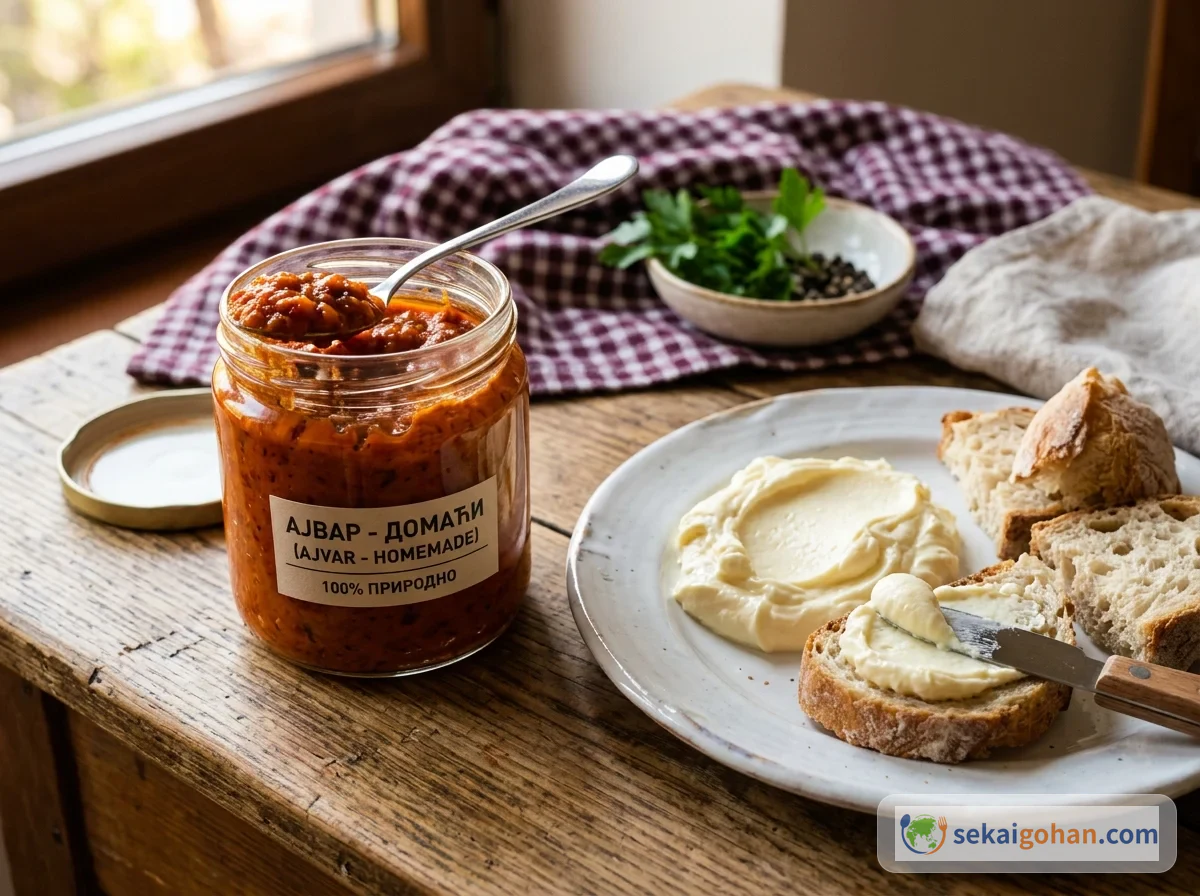
Genuine kajmak is hard to find outside the Balkans. Mix 3.5 oz (100 g) sour cream + 1.75 oz (50 g) cream cheese and leave it at room temperature for 20 minutes, and you get a taste and texture close to the real thing. For a truer match, simmer ¾ cup (200 ml) of heavy cream over low heat for 30 minutes and collect the skin that forms on the surface. It takes time, but nothing comes closer.
In a pinch, store-bought sour cream on its own is fine, and Italian mascarpone has a similar texture. Strained yogurt tastes different but makes a lighter alternative.
Cooking tips and fixes for ćevapčići
Baking soda for fluffiness
Baking soda tips the pH of the meat toward alkaline and loosens the protein bonds, so the ćevapčići cook up fluffy and juicy. Too much makes them bitter, so keep strictly to 1/2 tsp.
Resting overnight
You can cook right after shaping, but resting overnight in the refrigerator makes them far more delicious. The spices have time to penetrate the meat, and the baking soda does its full work. Cooking from cold also means the surface turns crisp before the center can overcook. Resting time makes the same kind of difference in dishes like Georgian khinkali.
High heat, short time
Ćevapčići want high temperature for a short time. Slow cooking over low heat lets the juices run out and leaves them dry. Preheat the grill pan until it smokes and cook 2 to 3 minutes per side over high heat; they are done when the internal temperature reaches 162°F (72°C). It's the same secret behind good Turkish köfte.
When ćevapčići fall apart
There are usually two causes. Either the meat was overmixed (stop as soon as it just holds together lightly), or the pan was not hot enough. Preheat until it smokes and leave them alone for the first 2 minutes, because touching them before the surface sets will break them. A thorough rest in the refrigerator helps them hold together, too.
Ćevapčići variations and nutrition
Chicken ćevapčići
Use 1.25 lb (600 g) of ground chicken in place of the beef and lamb. Chicken is low in fat, so add 2 tbsp of olive oil to the mixture for juiciness. Increase the paprika to 1 tbsp and switch to smoked paprika, and you get a deep flavor that makes up for the mildness of the chicken.
Cheese-stuffed ćevapčići
Shape the mixture around a small piece of feta. On the grill the cheese melts, and it flows out the moment you bite in. It's the same pairing of meat and cheese that makes Georgian khachapuri so good.
Spicy ćevapčići
Increase the cayenne to 1 tsp and mix chopped chile into the meat. Great with a cold beer.
Japanese-style ćevapčići
Use 2 tsp of shichimi togarashi in place of the paprika and finish with yuzu kosho. Sandwich them in naan or sliced white bread instead of lepinja, and swap the raw onion for chopped scallion + grated daikon, and you end up close to Japanese tsukune. Meat dishes from the Middle East to the Balkans, like Azerbaijani piti, tend to pair well with Japanese flavors.
Nutrition
| Nutrient | Amount |
|---|---|
| Calories | 520kcal |
| Protein | 1.25 oz (38g) |
| Fat | 1.25 oz (32g) |
| Carbohydrates | 22g |
| Fiber | 2g |
| Sodium | 720mg |
Frequently asked questions
Q1. Can ćevapčići be frozen?
Yes, freeze them after shaping. Wrap them one by one in plastic wrap, or lay them on parchment on a tray to freeze, then gather them into zip bags. They keep 1 month. Don't thaw them; cook straight from frozen over medium heat for 3 minutes per side.
Q2. What is ajvar, and where can I buy it?
Ajvar is a Balkan all-purpose condiment made by roasting red peppers over charcoal, peeling them and turning them into a paste with garlic and eggplant. Jarred ajvar is sold at import and specialty grocers. To make your own, roast 4 red bell peppers in the oven, peel them, process them in a food processor and season with garlic and salt.
More Balkan and Eastern European dishes
- Burek — Bosnia's spiral pie, a national dish of the Balkans alongside ćevapčići
- Köfte — Turkey's spiced meatballs, the "ancestor" of ćevapčići
- Pierogi — Poland's dumplings, a classic of Eastern Europe's flour-based cooking
- Goulash — Hungary's paprika stew
- An Introduction to Georgian Cuisine — ingredients and aromas from the same region
- How to make fërgesë — ingredients and aromas from the same region
- How to make piti — ingredients and aromas from the same region