In Skopje's old bazaar, a line forms outside a small eatery somewhere along the cobbled lanes. The menu has one dish: white beans in a brown clay pot. At first glance it looks like any bean dish, but this is Tavče Gravče (Тавче Гравче), the national dish of North Macedonia. The beans are simmered with paprika and onion and then baked in the pot until the top just starts to brown. There is no meat, only beans, onion, paprika, oil and salt. Macedonians are proud of how good something that simple can taste.
Tavče gravče in North Macedonia
The name means simply "beans in a pot," and tavče refers to the clay pot (tava) the dish is baked in. North Macedonia is a small country of about 2 million people, bordered by Greece, Bulgaria, Serbia, Albania and Kosovo. Its cooking borrows a great deal from those neighbors, but tavče gravče is considered purely Macedonian.
From Friday beans to national dish
The dish is closely tied to the fasting culture of the Orthodox Church. About 65% of North Macedonians belong to the Macedonian Orthodox Church, which treats Friday as a fasting day without meat or dairy. Tavče gravče makes a satisfying plate from only oil and beans, without meat, so it became the Friday staple. In many households "Friday = tavče gravče day" is still an unspoken rule. Younger people don't always make it every week, but the grandmothers' generation still does.
Beans have a long history in the Balkans, although white beans are a fairly late arrival. Lentils and chickpeas were the main pulses until white beans came to Europe from the New World in the 15th and 16th centuries. They grew well in the mild Balkan climate and were soon planted widely. They are also cheap, nutritious and keep for a long time, which matters in North Macedonia, one of the harder-pressed economies in the Balkans.
Tavče gravče became the "national dish" during the Yugoslav era (1945 to 1991), when each of the six republics in the federation claimed dishes of its own. Serbia had ćevapčići (grilled minced meat), Bosnia had burek, and Croatia had its seafood. Macedonia, then the Socialist Republic of Macedonia, chose this plain bean dish as "our dish." The country became independent in 1991. It then spent years in a dispute with Greece over the right to use the name "Macedonia," and was recognized internationally as the "Republic of North Macedonia" in 2019. Throughout that dispute the dish was a point of pride: "Whatever the quarrel over the name, this dish is unmistakably ours."
A national dish made of beans rather than meat is unusual anywhere, and especially in Europe, where cooking tends to center on meat. With the recent interest in plant-based food, tavče gravče is getting fresh attention abroad.
Clay pots and the Skopje bazaar
Macedonian pottery has a long history, and many households have a tava that was handed down. The pot passes from grandmother to mother to daughter, and the recipe goes with it.

Skopje's old bazaar, the Čaršija, is one of the largest old markets in the Balkans, and its eatery streets are packed with places serving tavče gravče. Each keeps its recipe secret, down to how far the onion is cooked and which brand of paprika goes in. Regulars have strong views about which shop's beans are best. Tourism has grown in recent years, but the places full of local customers are still where to go for the real thing. Every year Skopje also holds a "Tavče Gravče Festival," where restaurants and home cooks compete with their best versions.
Tavče gravče and other Balkan bean dishes
Similar bean dishes are cooked all over the region:
| Dish | Country | Features |
|---|---|---|
| Tavče gravče | North Macedonia | White beans plus paprika. Baked in the oven |
| Prebranac | Bulgaria | White beans plus paprika. Similar but with mint added |
| Pasulj | Serbia | White beans plus sausage. With meat |
| Fasolada | Greece | White beans plus tomato. Soupy |
| Kuru fasulye | Turkey | White beans plus tomato. Stewed in broth |
Prebranac is the closest relative, and the two countries argue over which dish came first. Macedonians point to the quality of the white beans from Tetovo, and Bulgarians point to how long prebranac has been made. It is a very Balkan argument.
Ingredients (serves 4)
Main ingredients
Soaking dried beans takes 8 hours or more. Short on time? Use two 14 oz (400 g) cans of cooked white beans instead. The flavor is less deep than with beans soaked from dried. Canned beans have no cooking liquid, so use vegetable stock instead of water for more richness. Great northern beans can also substitute, but they will not be as large and creamy as white beans from Tetovo.
Finishing (optional)

Tavče gravče contains no dairy, egg or gluten. It is fully vegan. But white beans are legumes, so people with a soy allergy should take care. Check the label on canned beans. If you serve bread alongside, keep wheat allergy in mind.
In North Macedonia, white beans from Tetovo (Tetovsko Gravče) are considered the finest. Tetovo is a town in the northwest of Macedonia. Its white beans have large grains, thin skins and a creamy texture. They are hard to find elsewhere, but great northern or cannellini beans can stand in.
Choosing ingredients for tavče gravče
Everything for tavče gravče can be found at an ordinary supermarket. Ordinary dried white beans work well. If you can find them, beans from Tetovo are the ones Macedonian cooks prize most.
Tetovo is a city in the northwest of North Macedonia. Its white beans are known for their quality: large and creamy, grown in a cool highland climate with clean water. Cooks take pride in using Tetovo beans for tavče gravče.

Choose sweet paprika powder, which is the norm in North Macedonia. Hot paprika throws the flavor off balance, so add heat separately with the chili flakes. Sweet Hungarian paprika is the easiest to find and its quality is consistent.
| Ingredient | Where | Notes |
|---|---|---|
| Dried white beans | Supermarket, online | Ordinary dried white beans are fine |
| Paprika powder (sweet) | Supermarket, spice shop, online | Sweet type |
| Onions | Supermarket | - |
| Sunflower oil | Supermarket, online | - |
| Tomato paste | Supermarket | - |
| Ingredient | Substitute | Difference in the result |
|---|---|---|
| White beans | Great northern beans, cannellini | The grain size differs but the taste is close |
| White beans (dried) | Canned cooked beans | Convenient but less depth of flavor |
| Sunflower oil | Vegetable oil, olive oil | Vegetable oil is fine. Olive changes the flavor |
| Clay tava | Heatproof gratin dish | Different shape but the same function |
Method
Prepare the beans
Bean quality and preparation decide 80% of how good tavče gravče is.
Tips for a good tavče gravče

Most problems come from the beans. Stop boiling them while they are still a little firm, at the point where they only just crush under your finger, because they keep cooking in the oven. Beans boiled until fully soft fall apart in the oven and turn to paste.
Keep the cooking liquid, since it holds both flavor and starch. That starch is what thickens the sauce, much as cassava flour thickens fufu.
In the oven, a hot oven and a short bake work better than a long, slow one, which dries out the beans. High heat colors the top quickly and concentrates the sauce. It's ready when the surface has browned slightly and the sauce is bubbling at the edges.
Let the dish rest before serving. Straight from the oven the sauce is still runny, but after resting it settles and thickens. Koshari is similar: the flavors come together if you wait a little after adding the sauce.
Serving, storing and variations

In North Macedonia, tavče gravče is typically served with shopska salad (a salad of tomato, cucumber, onion and feta) and bread. You tear the bread and dip it into the bean sauce. A chili pickle called turshiya is also an indispensable accompaniment; the acidity of the pickle brings out the sweetness of the beans. As for wine, a North Macedonian red (Vranec variety) pairs well.
The classic dish is meatless, but on ordinary days that aren't fasting days, many people make it with meat. The meat flavors the beans and makes the dish richer.
| Style | Added ingredient | Features |
|---|---|---|
| With smoked pork | Smoked pork belly | The most popular meat version. Simmer it with the beans for smokiness |
| With sausage | Macedonian sausage | A chili-spiked sausage adds heat |
| With bacon | Bacon | Saltiness and fat soak into the beans. Fry until crisp and use as a topping |
Many Macedonians still insist that proper tavče gravče has no meat. In some regions the meat version gets a different name, "gravče na tavče" (beans baked in a pot).
FAQ
Q1. Is tavče gravče vegetarian?
Yes, and vegan too. It contains no meat, dairy or egg, because it is made to suit the Orthodox fast. The white beans supply plenty of protein.
Q2. What does it taste like?
It's mild, with the sweetness of paprika and the savory depth of cooked onion, and it is neither hot nor sour. If you like sweet baked or simmered beans, you will probably like this. Many people who make it say it reminds them of home-style beans. Serve it with white rice or with bread for dipping.
Q3. Can I make it ahead?
It is better the next day. It keeps 4 to 5 days in the refrigerator and can be frozen for 1 month. Reheat it in the oven to crisp the top again. A microwave works, but the texture suffers.
Q4. Can children eat it?
It isn't spicy, so most children can eat it as is. For an even milder version, leave out the chili flakes and use less paprika. The beans are also a good source of protein for children.
Q5. What else is there in North Macedonian cooking?
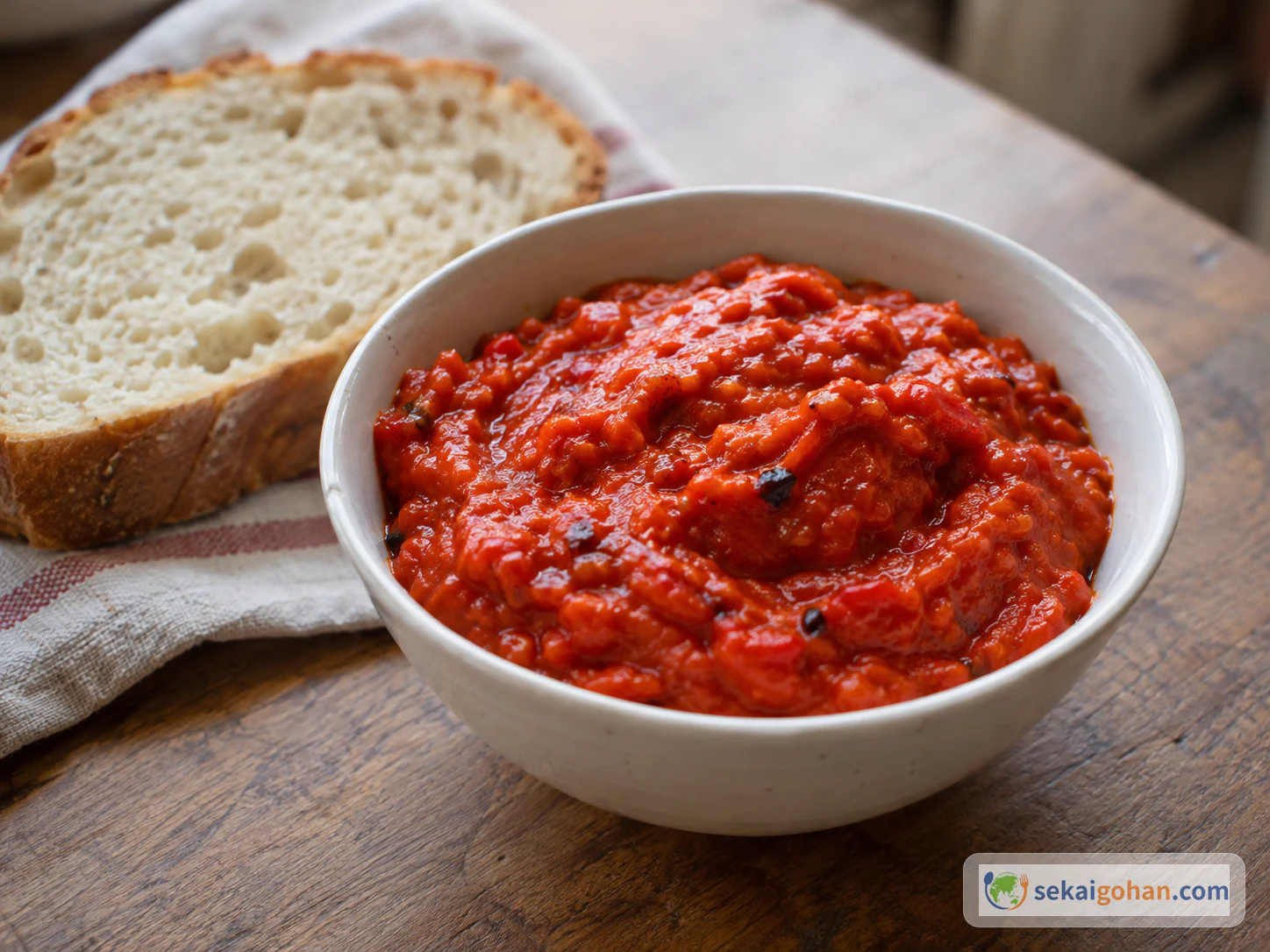
Ajvar, a paste of roasted peppers, is a sign of autumn, and families make it in large batches. Shopska salad (tomato, cucumber, white cheese) is loved across the Balkans. Turli tava, a baked dish of meat and vegetables, is a meat version of tavče gravče. Balkan cooking has a lot in common with dishes such as burek from Bosnia and goulash from Hungary.
Sources
The following English-language sources were mainly consulted.
- Tavče Gravče - Wikipedia (English) - A comprehensive explanation of the history and cultural significance of tavče gravče
- North Macedonia's National Dish - Taste Atlas - Evaluation and explanation from a database of the world's food cultures
- The Humble Bean Dish That Defines a Nation - BBC Travel - A BBC report on North Macedonian food culture and tavče gravče
Related articles: the Balkan table
Dishes of the Balkans: Burek is Bosnia's spiral meat pie. Plăcintă is Romania's cheese pie. Dolma is a dish of wrapped grape leaves eaten across the Balkans. Kofte are meatballs originating in Turkey and popular in the Balkans too.
Bean dishes of the world: Feijoada is Brazil's black bean stew, the Latin American version of beans plus meat. Koshari is Egypt's mix of lentils, rice and pasta. Mujaddara is Lebanon's lentil rice.
Eastern European vegetarian dishes: Pierogi (the potato and cheese filling version) are Poland's vegetarian dumplings. Borscht also has a meatless version, which functions as a fasting dish in Ukraine.
Summary: the perfection within the "plain"
Tavče gravče is a dish made with only white beans, paprika, onion and oil. It uses neither steak nor foie gras. Even so, the 2 million people of North Macedonia call this dish their "national pride." The reason is simple: it is very well made.
The creaminess of the beans, the sweetness of the paprika, the savor of the onion, the toastiness of baking. These four elements produce the greatest satisfaction from the fewest ingredients. There is no need to add anything extra. It is a cooking of subtraction.
When you make it at home, you will be surprised at how good this plain bean dish is. Soak the white beans in plenty of water and simmer them slowly in the sweet scent of paprika. In the tava taken from the oven, the beans shine golden, wrapped in the sauce. In that moment, a little of the air of a small eatery in North Macedonia reaches you.
A dish that a small country of 2 million is proud of before the world. It is certainly not a showy dish. But that is exactly why it has been able to remain on people's tables.