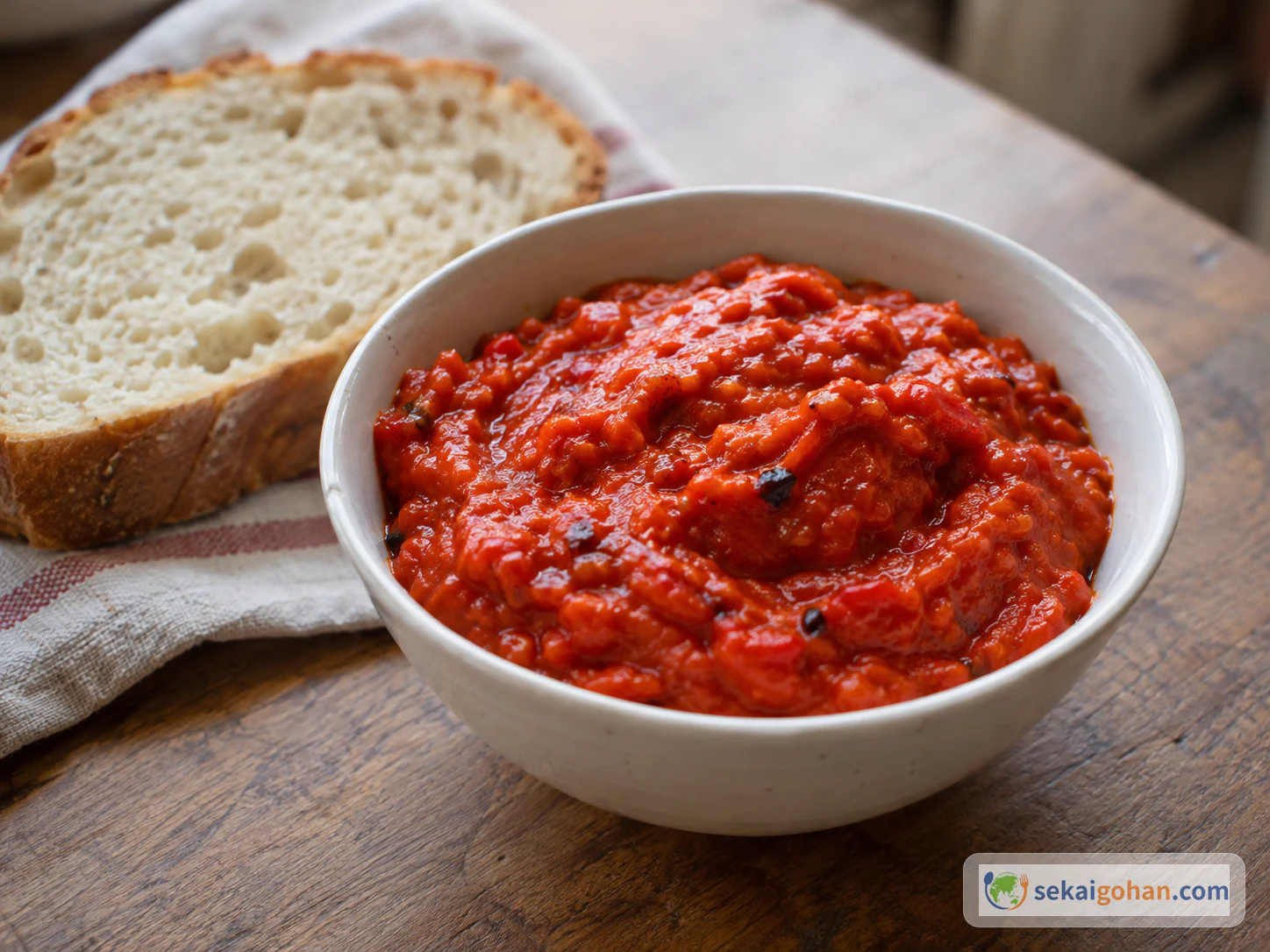
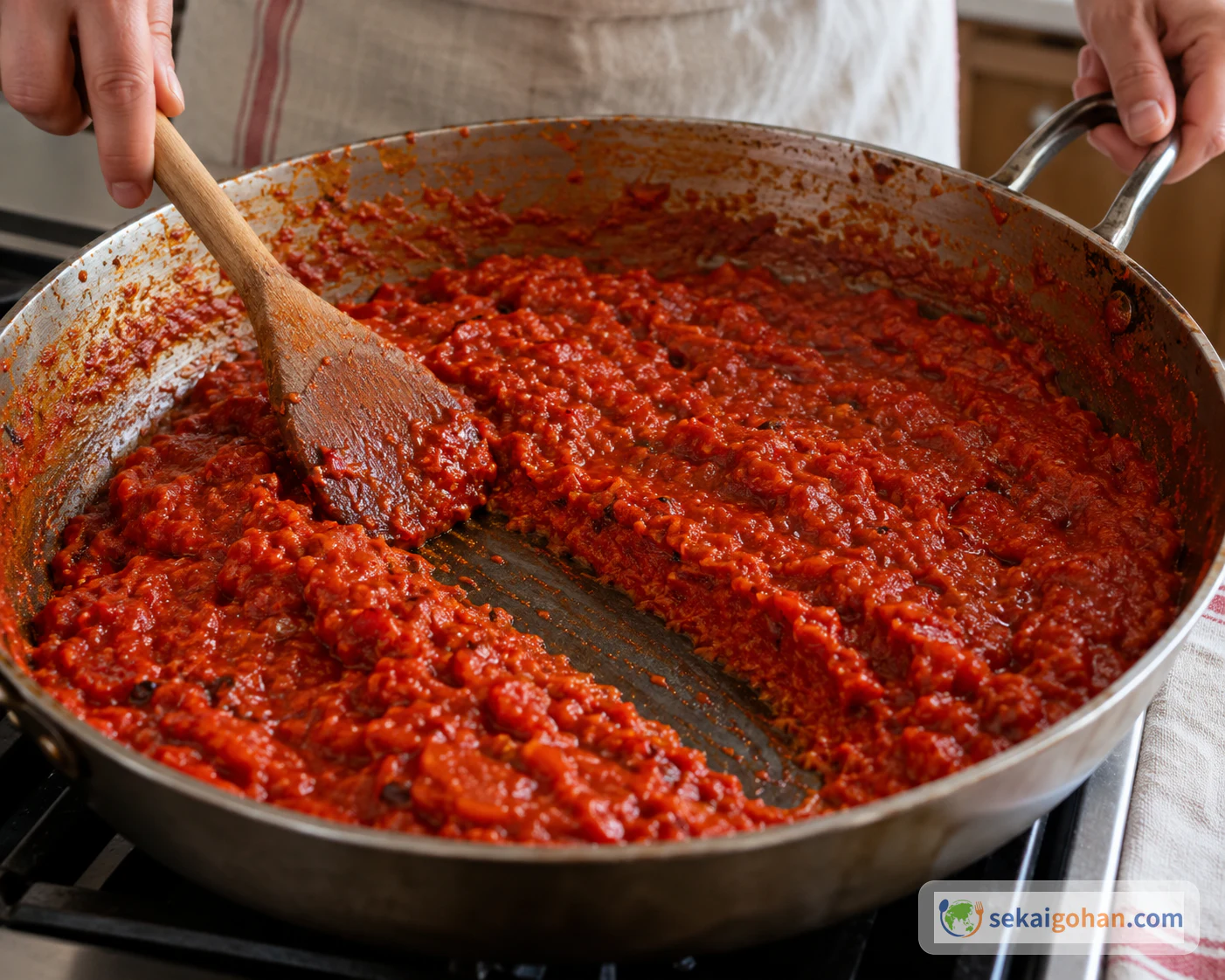
In late summer and early autumn, when sweet red peppers are everywhere, kitchens in North Macedonia fill with the smell of blistering pepper skins. The peppers are roasted until the skins char and lift, then peeled, cut and cooked slowly with salt and a little oil. What comes out is ajvar (ајвар), a deep red pepper spread that carries the autumn harvest into winter meals. Only three things go in: roasted red peppers, oil and salt. The real work is taking water out of the peppers, first by draining and then by slow stirring, until the spread is thick enough that a spoon drawn across the pan leaves a clear path.
Ajvar in North Macedonia
Ajvar belongs to the season when sweet red peppers are most abundant. Once it's made, it goes onto winter menus, and many households set some aside for the cold months.
It's labor-heavy, so the work tends to be shared. In many neighborhoods, families and neighbors split the roasting and peeling between them, which is why ajvar is usually a seasonal, collective job rather than a quick weeknight recipe.
There's no single fixed formula. Some families add roasted eggplant, tomato or carrot, and similar pepper spreads are made elsewhere in the Balkans. The version here is the pepper-only style. For more dishes from the same country, see North Macedonia.
Ingredients: Peppers, Oil and Salt Only
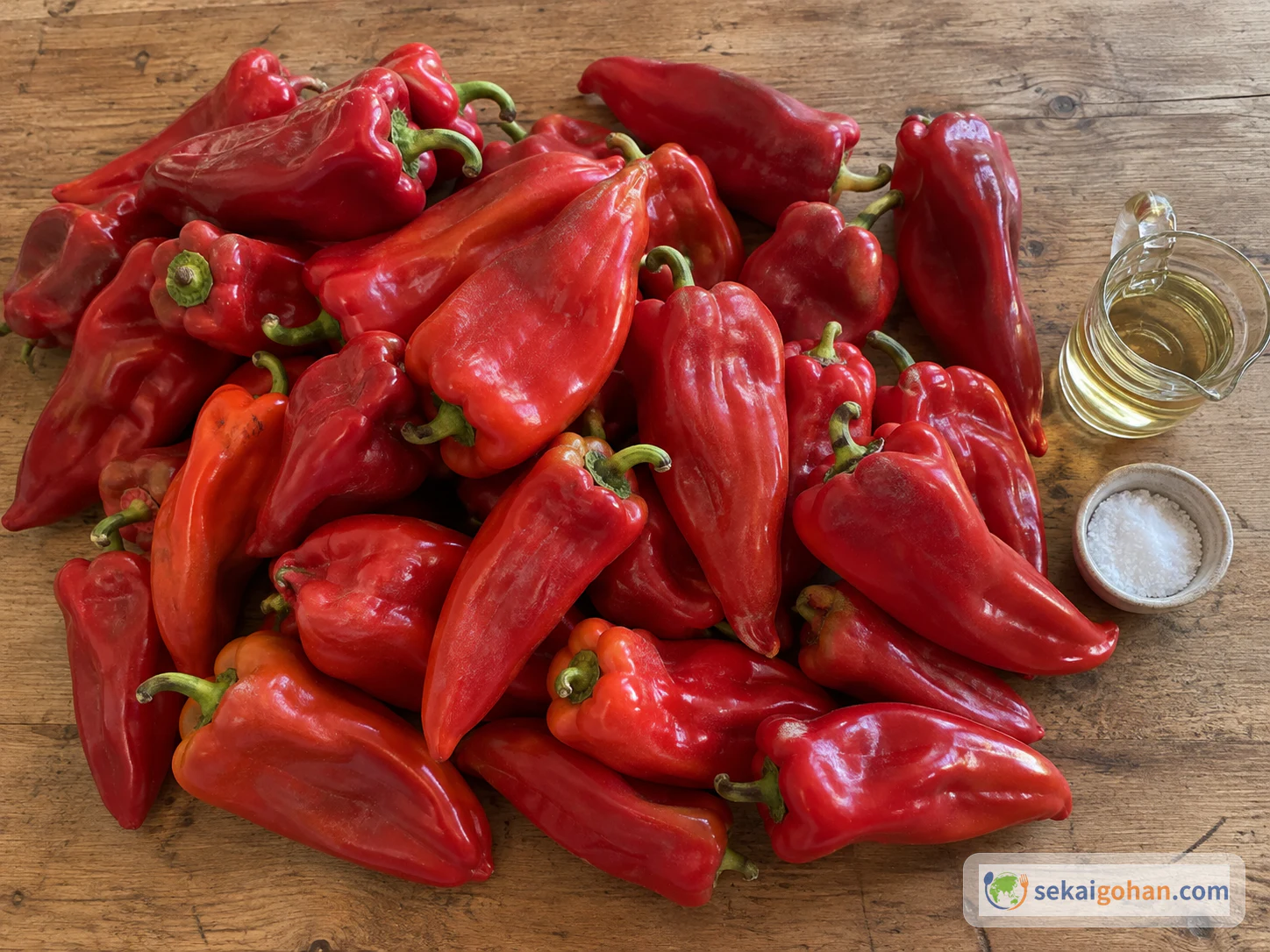
The recipe does not include onion, garlic, vinegar, sugar, tomato or eggplant. Keep those out of this pot; the eggplant style is a different recipe.
Equipment
- A tray, grill or open flame for roasting the peppers
- A heat-safe bowl or container with a lid
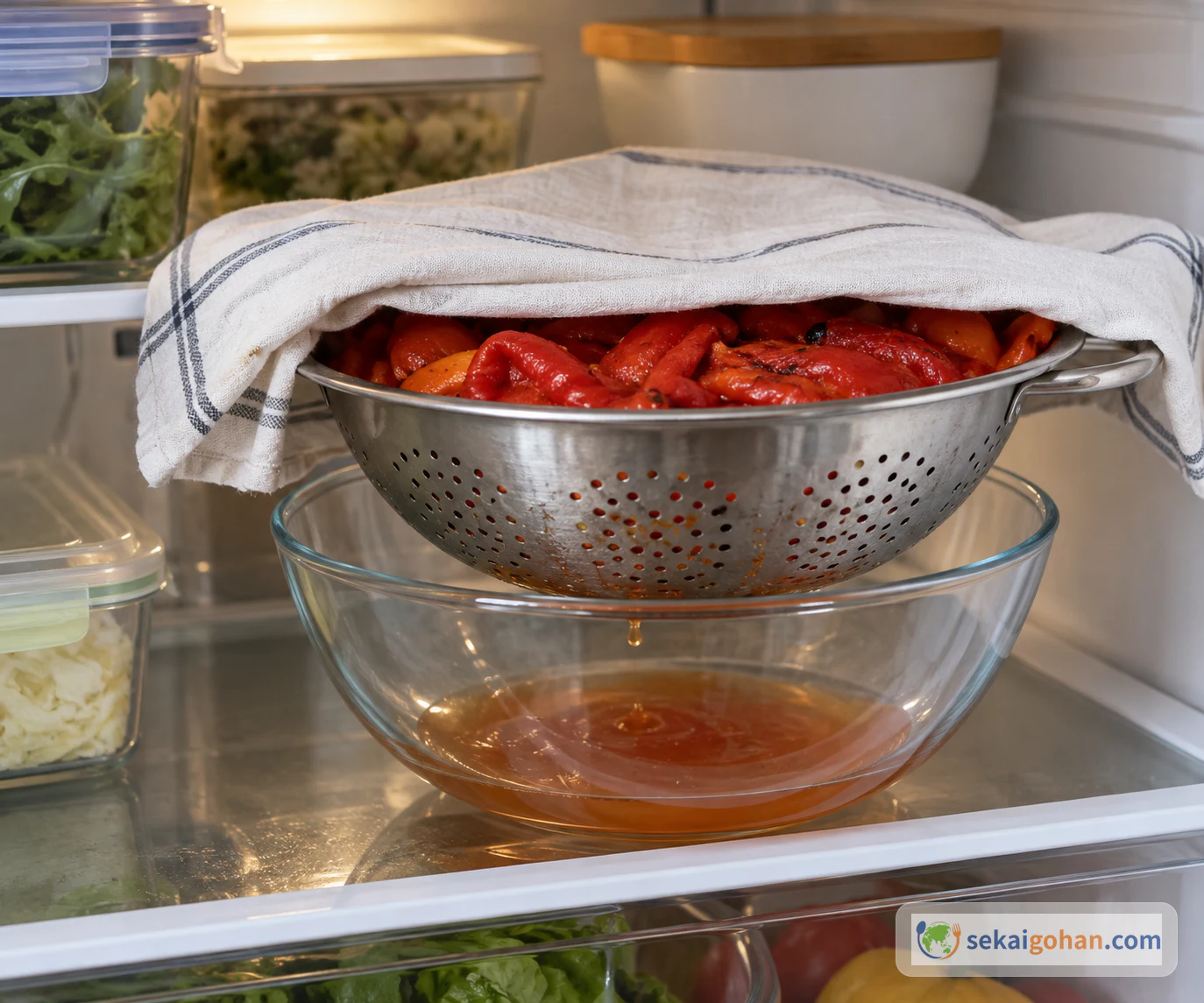
- A clean colander and a deep bowl to catch the liquid underneath
- A lid or clean food cover for the colander
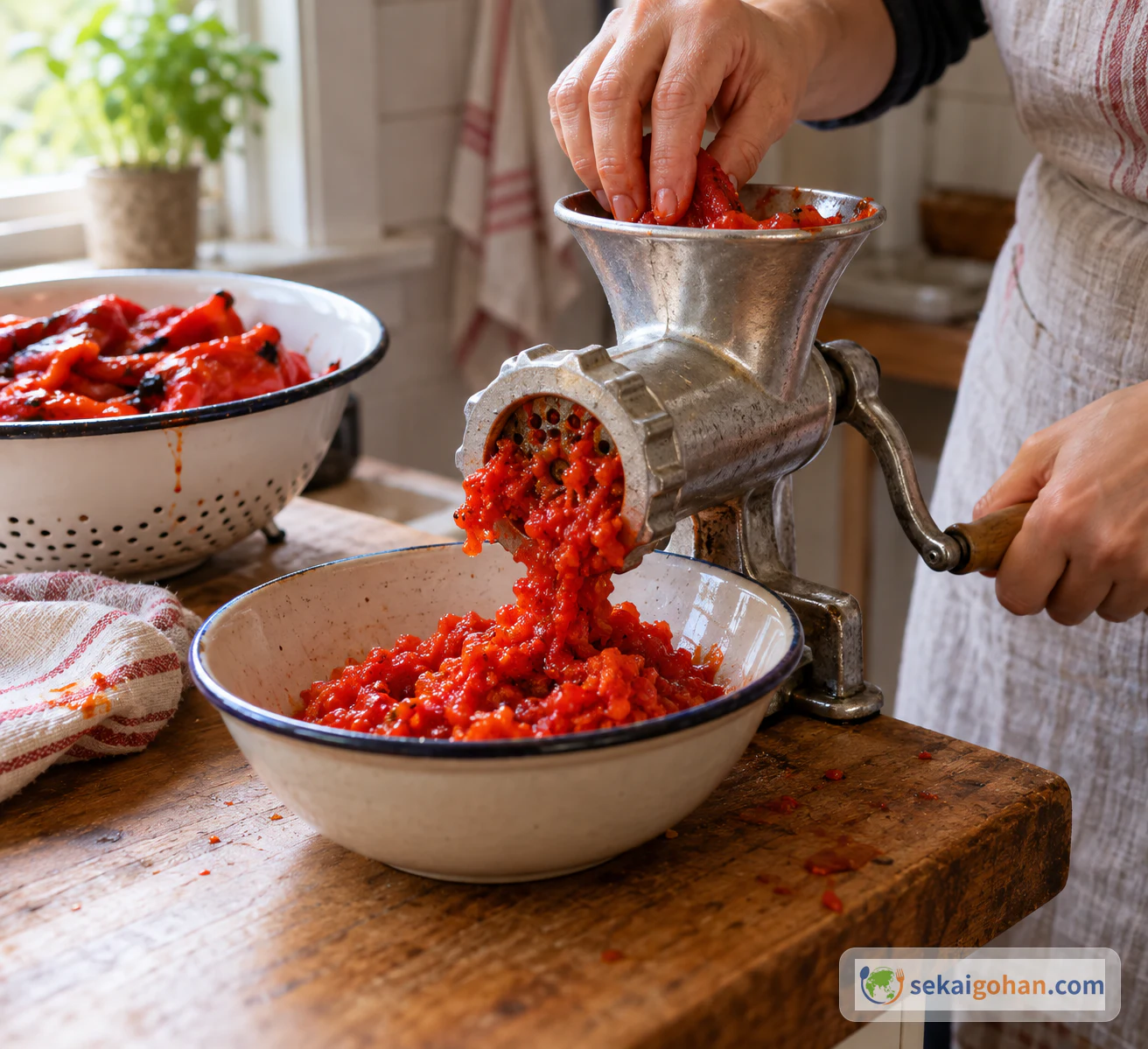
- A hand-cranked meat grinder (mincer); a sharp knife and board if you have no grinder
- A wide, heavy-bottomed pot
- A wooden spoon
- Clean, shallow containers for the finished ajvar
Choosing Peppers, Oil and Salt for Ajvar
Peppers. Look for "peppers for ajvar," the meaty red peppers grown for this purpose. Thick-fleshed, flat peppers roast easily and give plenty of flesh. Red bell peppers are the easiest substitute to find in an ordinary supermarket, but their water content and wall thickness differ, so you'll get a different amount of flesh and draining and cooking down will take longer. Pick the heaviest, thickest-walled ones you can find. The weight in the ingredients list is the raw weight before roasting and trimming, not the weight of the peeled flesh.
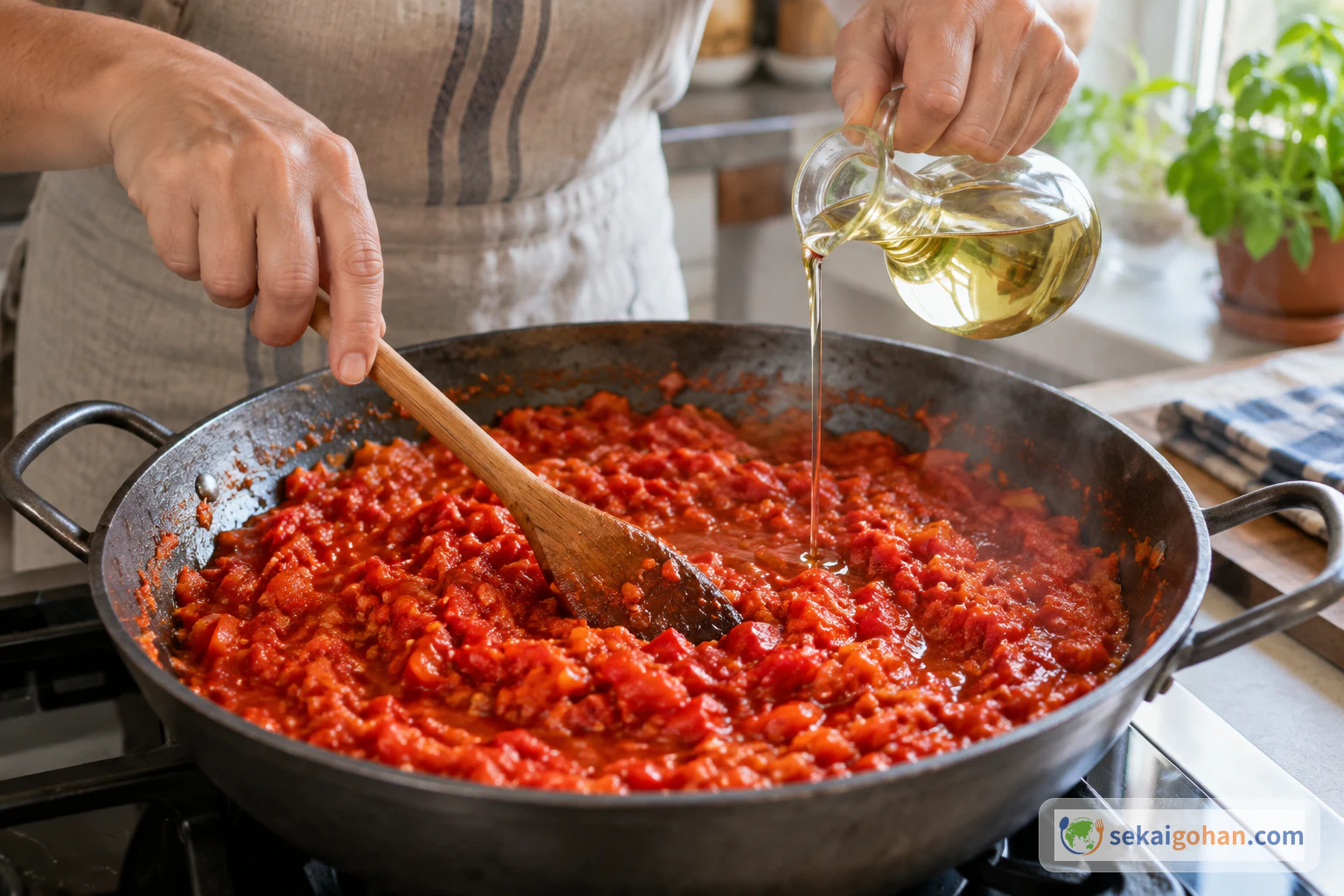
Oil. Use a neutral vegetable oil that lets the peppers lead. Olive oil or other strongly flavored oils will change the taste. How much you need depends on the peppers, so start with the amount listed.
Salt. Add a small amount when cooking begins, then taste and adjust near the end.
None of the three ingredients is a common major allergen in itself, but check the label of your oil for its source and any shared-facility statements. Bread served alongside contains wheat; treat the spread and its accompaniments separately when cooking for someone with allergies.
Method: Roast, Drain Overnight, Then Cook Down
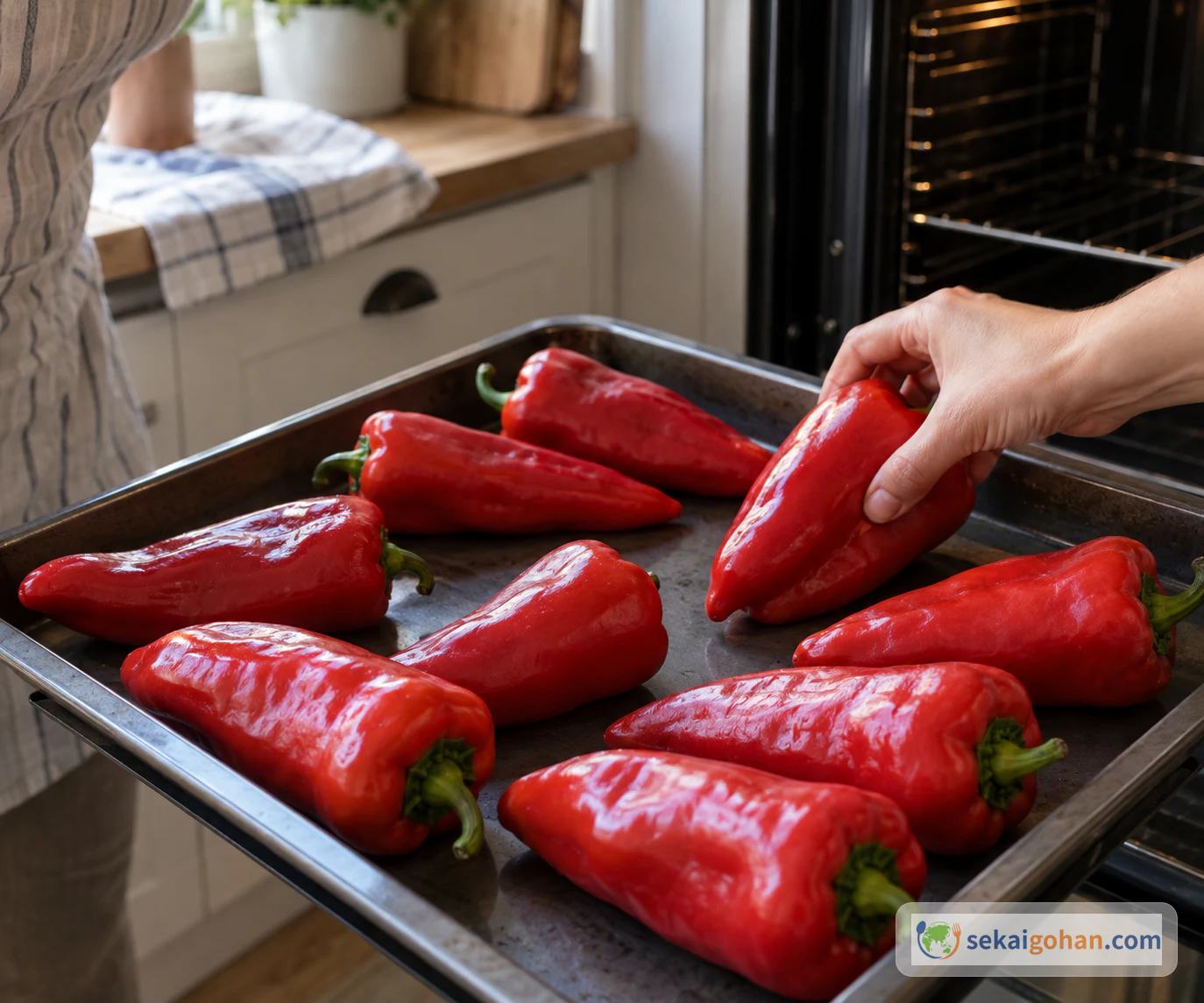
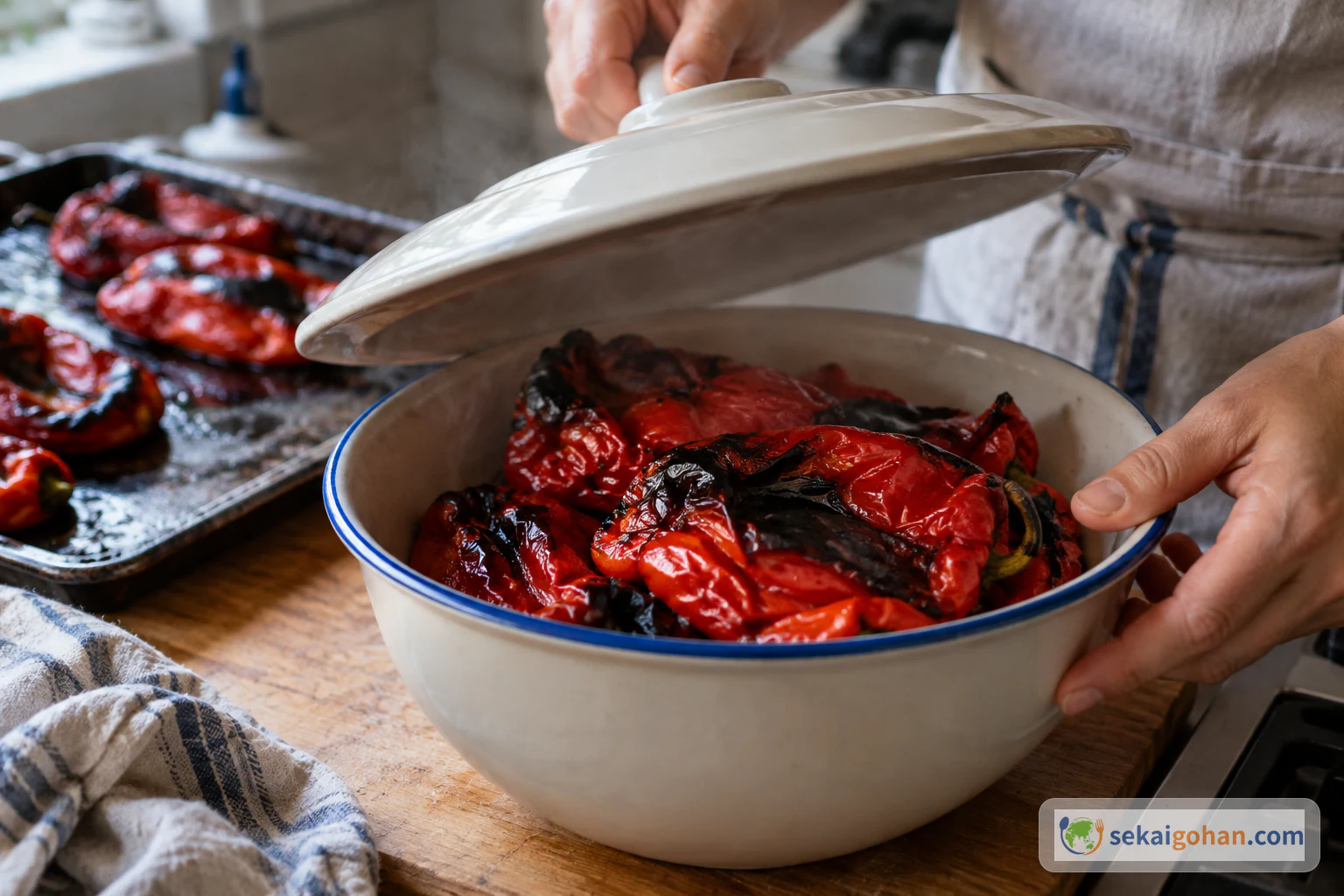
Roasting and peeling happen on day one, the peppers drain overnight, and grinding and cooking happen the next day. The time depends on the water in your peppers, your pot and your heat, so judge by the state of the spread, not by the clock.
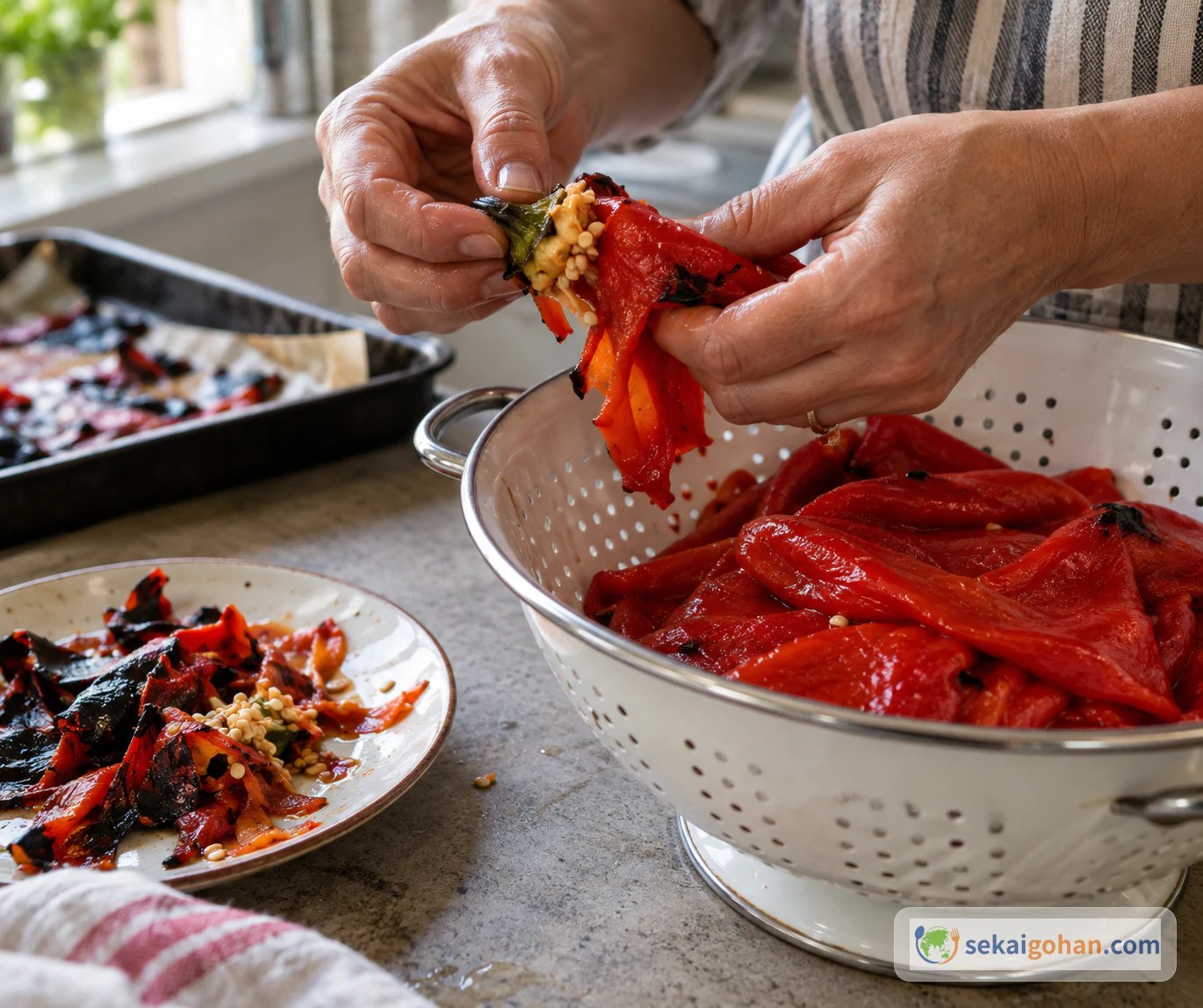
Roast the peppers, let them cool briefly under a cover, peel and seed them, drain the flesh overnight in the refrigerator in a clean colander or small mesh bag, and grind it the next morning.
Fixing Common Ajvar Problems
| Problem | Likely cause | What to do |
|---|---|---|
| Watery | Not drained enough, or not cooked down long enough | Keep cooking and stirring until the spoon trail stays open. Adding more oil won't fix it |
| Scorching on the bottom | Heat too high, or not stirring constantly | Lower the heat and keep scraping the bottom. Don't add water; it undoes the concentration and changes the texture |
| Bits of skin in the spread | Peppers under-roasted, or not steamed long enough | Roast until the skins are fully blistered, and peel carefully. Keep charred skin out of the flesh |
| Oil pooling on top | Oil added all at once | Add it in several portions, stirring each one in before the next |
| Flat flavor | Not enough salt | Add salt in small amounts near the end and taste |
Serving, Storing and Varying Ajvar
Serving
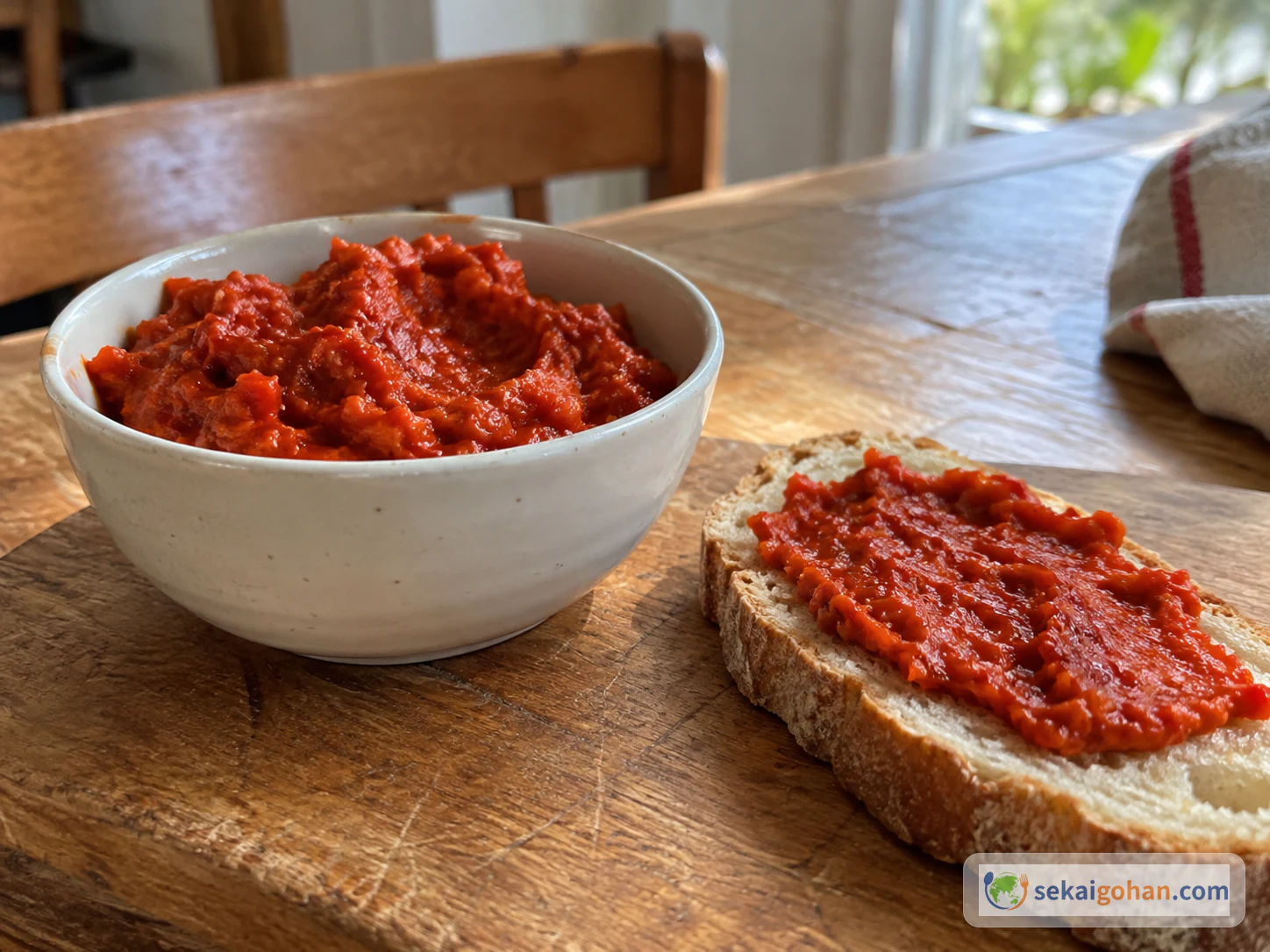
Ajvar is spread on bread or served beside grilled meat or white cheese.
Storing
Some Macedonian households fill hot jars and cover them with cloth to cool. It's a traditional practice, but it doesn't make ajvar safe at room temperature. Plain peppers need a specific pressure-canning process, and that process doesn't apply to an oily pepper spread like this one. Do not store this ajvar in jars at room temperature.
Instead, spoon what you'll eat into clean, shallow containers, cool it quickly and keep it in the refrigerator, then eat it soon. For longer keeping, freeze it in small portions. Always take portions out with a clean spoon.
Variations
Some families add roasted eggplant, tomato or carrot. A version from Veles roasts aubergines along with the peppers and adds a little sugar. Neither style is "the real one"; they're different family traditions. Eggplant changes the flavor, color and body, so treat that version as its own recipe rather than adding eggplant to this pot.
How you roast matters too. An open flame, a grill or the oven each give a different degree of smokiness and make the skins come away differently, and times depend on your equipment. Grinding the flesh gives a smooth spread, while chopping by knife leaves more texture.
Frequently Asked Questions
Do I need eggplant?
No. Families differ, and this version uses none. The eggplant style is a separate recipe with its own amounts and method.
Can I use red bell peppers?
Yes, as a substitute. Because their water content differs from local ajvar peppers, rely on draining and the spoon-trail check rather than a fixed cooking time.
How do I know when it is cooked enough?
Draw a wooden spoon across the bottom of the pot. When the trail stays open and you can see the pan, the spread is ready.
Can I keep it in jars at room temperature?
No. There's no tested canning process for this recipe, and filling hot jars alone doesn't make it shelf-stable. Keep it in the refrigerator and eat it soon, or freeze small portions.