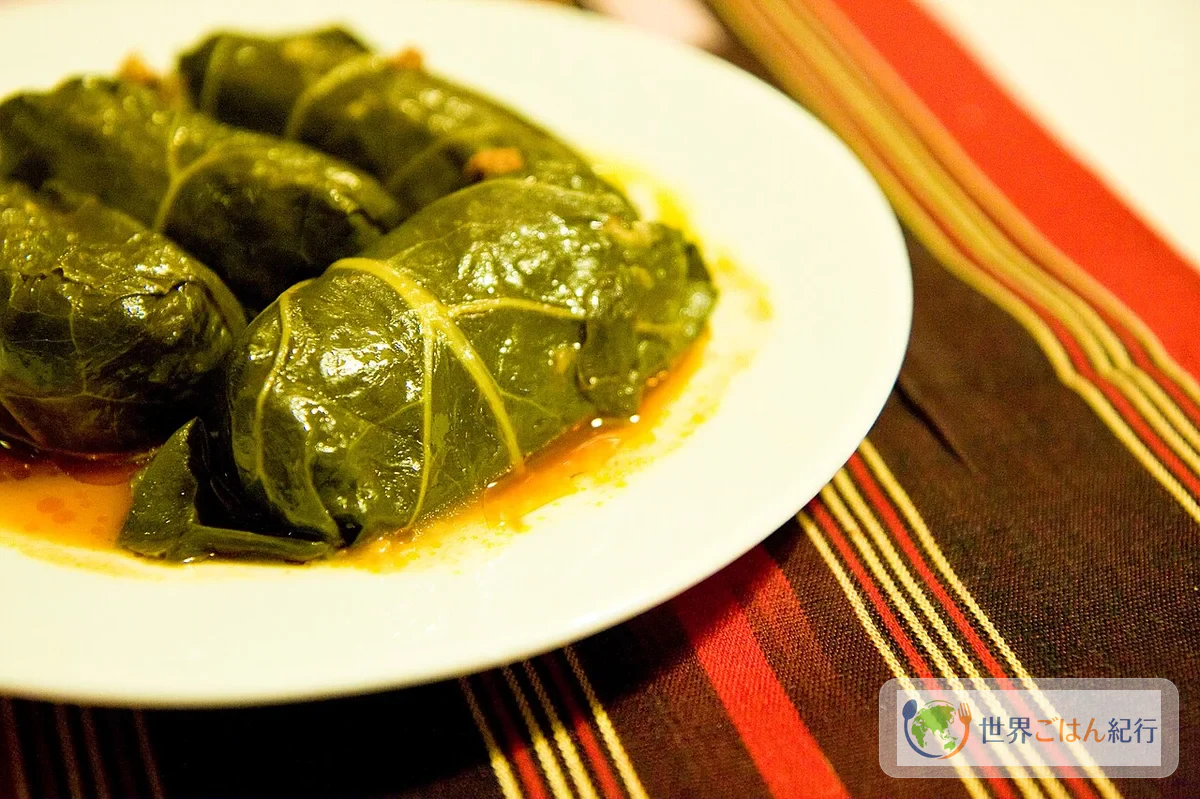
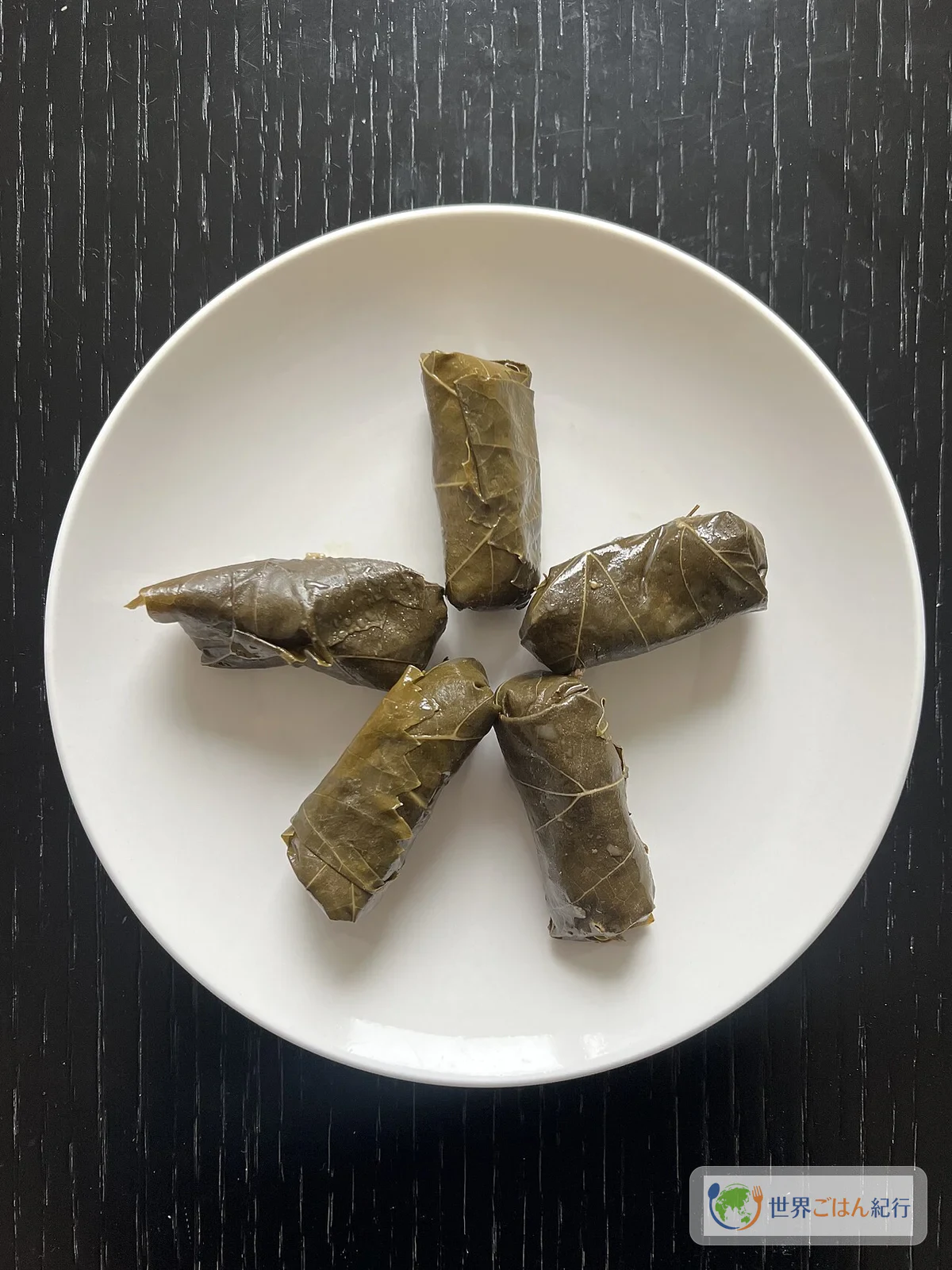
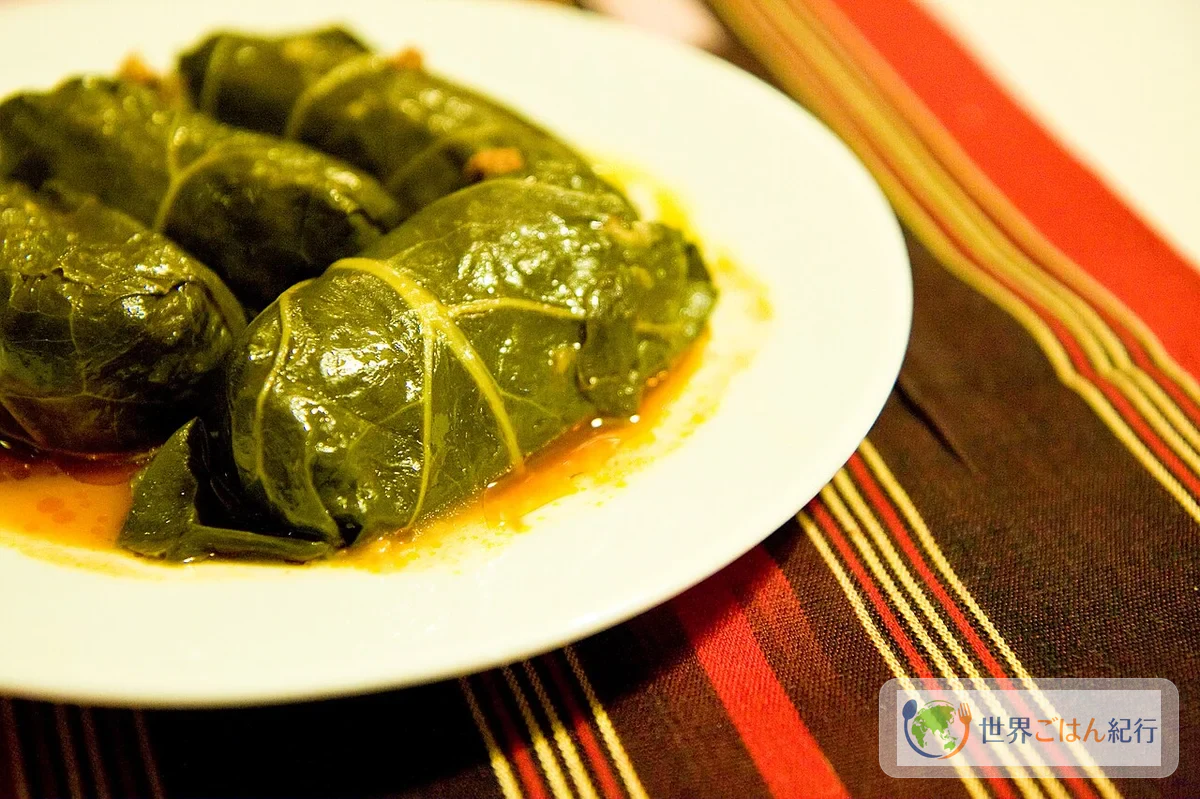
Walk through the Grand Bazaar in Istanbul, down an alley drifting with the scent of spices, and you may find a line in front of a small eatery. Inside the glass case, small cylinders wrapped in green grape leaves sit in neat rows, as beautiful as a jewelry box. This is dolma, and the grape-leaf version, yaprak sarma, is the one Turks love best. Each bite-sized, cigar-shaped roll holds rice sauteed in olive oil and mixed with walnuts, pine nuts, dried currants (tiny dried grapes), mint, and dill. Serve it cold with plenty of lemon juice, the Turkish way.
Dolma: Ottoman Roots and Regional Styles
The name comes from the Turkish "dolmak" (to stuff). Dolma covers a whole family of dishes from the Middle East and the Caucasus in which vegetables such as grape leaves, peppers, zucchini, and eggplant are filled with rice and spices and simmered. The type rolled in grape leaves is called "sarma" (to roll). For the wider picture, see the introduction to Middle Eastern cuisine.
Strictly speaking, "dolma" is vegetables hollowed out and stuffed (peppers, eggplant, and so on), and "sarma" is things rolled in leaves (grape leaves, cabbage). In everyday speech, however, the type rolled in grape leaves is also often called "dolma."
Ottoman court cooking and everyday dolma
Dolma has deep roots in the Ottoman Empire (1299 to 1922). Imperial court cooks perfected the technique of stuffing grape leaves, cabbage, eggplant, peppers, zucchini, quince, and apples. Nothing was left unstuffed.
Ordinary people's dolma was plainer. Made with rice and herbs instead of meat and simmered in olive oil, it was filling and delicious without meat, a smart way to feed a family. Over time this vegetarian olive-oil dolma became a staple of the Turkish "meze" (an assortment of appetizers), and today it appears on the meze plate at any restaurant in Istanbul.
How dolma is eaten in Turkey
In Turkish homes, dolma is above all a summer dish. "Zeytinyagli," simmered in olive oil and eaten cold, is a refreshing appetizer that wakes up the appetite on a hot day. At lokantas (everyday eateries) in the back alleys of Istanbul, dozens of dolma line up in the glass case, and you can order them one piece at a time.
Regional variations
Dolma is eaten across the Middle East, the Caucasus, and the Balkans, including Turkey, Greece, Lebanon, Iran, Armenia, and Georgia. Every country claims its own dolma is the real one, which tells you how loved it is. In 2017, the dolma-making tradition of Azerbaijan was inscribed on UNESCO's Intangible Cultural Heritage list.
Turkey has two lines. The cold vegetarian kind, "zeytinyagli" (olive oil dolma), is an appetizer; the warm "etli dolma" (meat dolma) is a main course served with a yogurt sauce. This recipe is the cold kind.
In Greece it is called "dolmadakia," seasoned heavily with dill and mint and eaten with avgolemono (an egg and lemon sauce). Along with moussaka, it is a representative Greek dish.
Armenian tolma stuffs cabbage leaves and quince as well as grape leaves, and meat versions with beef or lamb are the mainstream, served with a yogurt and garlic sauce. Iranian dolmeh contains saffron and barberries (red berries), which give it a yellowish tint, and versions stuffed into tomatoes and peppers are popular too. Georgian cuisine has its own "tolma," grape leaves wrapped around ground beef and basil, a standard appetizer alongside khinkali.
Nutrition
Vegetarian dolma is one of the healthiest dishes in Middle Eastern cooking. Olive oil, vegetables, and grains together make it a good example of the Mediterranean diet, and with no animal foods at all it suits vegetarians and vegans.
| Nutrient | Amount | Notes |
|---|---|---|
| Energy | 280 kcal | Modest even though it is cooked in olive oil |
| Protein | 6 g | From the pine nuts and nuts |
| Fat | 10 g | Almost entirely from olive oil |
| Carbohydrate | 1.5 oz (42 g) | From the rice |
| Dietary fiber | 4 g | Abundant in grape leaves |
| Vitamin K | 110 µg | Especially high in grape leaves |
Per serving (about 8 pieces). Grape leaves are rich in vitamin K, vitamin A, and iron. Vitamin K in particular stands out; it matters for bone health and blood clotting.
Ingredients (serves 4, about 30 pieces)
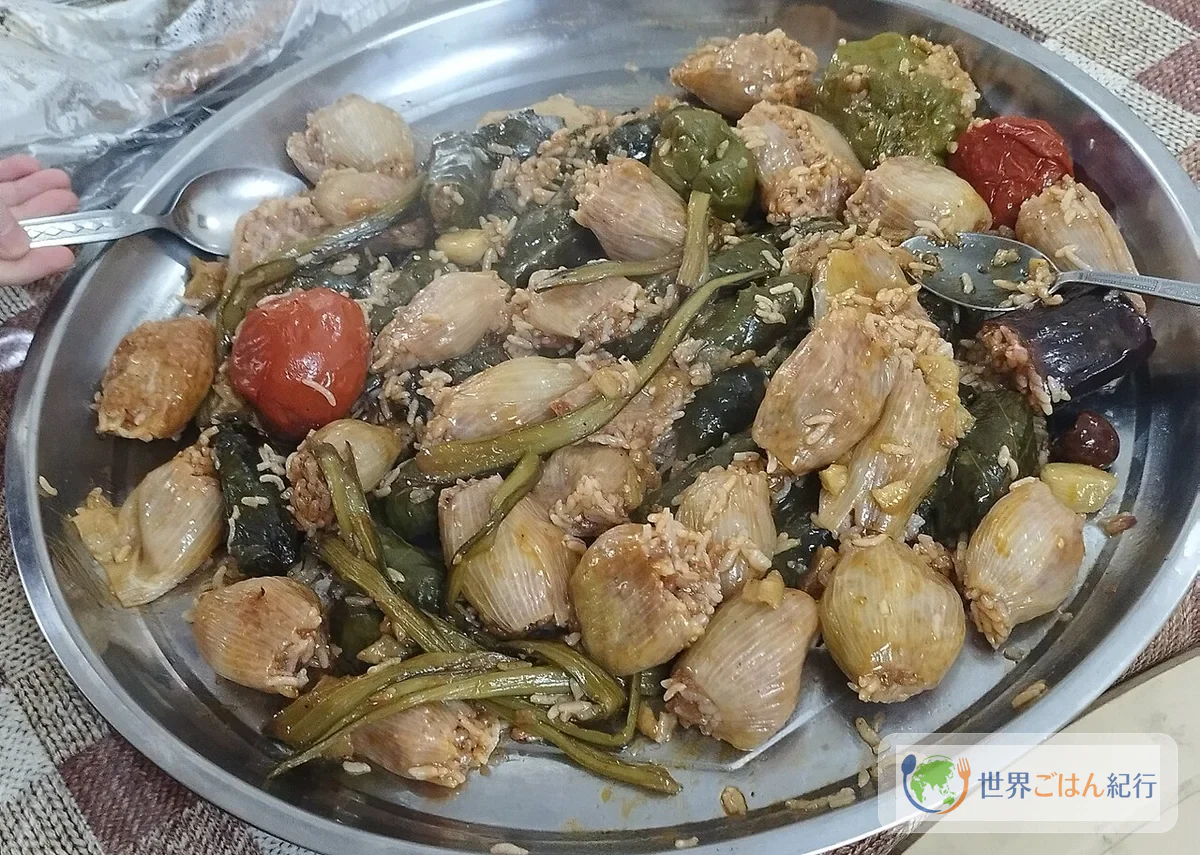
Jarred grape leaves can be found at Middle Eastern, Greek, and halal grocery stores, and online by searching for "grape leaves." Turkish-made brands are usually the easiest to find. If you can get fresh grape leaves, boil them in salted water for 5 minutes before using.
Choosing Ingredients for Dolma
The biggest hurdle is getting grape leaves. Everything else is at an ordinary supermarket.
| Source | Notes |
|---|---|
| Middle Eastern and halal grocery stores | The most reliable |
| Online shops | Search for "grape leaves." Jars of Turkish and Greek brands are common |
| Greek and Mediterranean food shops | Quality is good |
| Some supermarkets with an international aisle | Stock depends on the store |
If you really cannot get them, you can substitute shiso (perilla) leaves. The flavor is quite different, but the rolling and simmering work the same way. Slightly bitter cabbage leaves give a taste closer to Eastern European "sarma."
¼ cup (80 ml) of olive oil looks like a lot, but in Turkish dolma, olive oil is a seasoning, and this amount produces the authentic flavor. You can go down to half if you must, but the richness drops. Good extra virgin olive oil is also a plus for health.
Method (cooking time: about 95 minutes)
STEP 1. Prepare the grape leaves (10 min)
- Take the jarred grape leaves out and rinse them 2 to 3 times in cold water.
- If they are very salty, soak them in water for 10 minutes.
- Spread the leaves out flat one at a time and wipe both sides dry with paper towels.
- If the stem is tough, snip it off with scissors right at the base of the leaf.
- Set aside torn leaves and leaves that are too small to line the bottom of the pot.
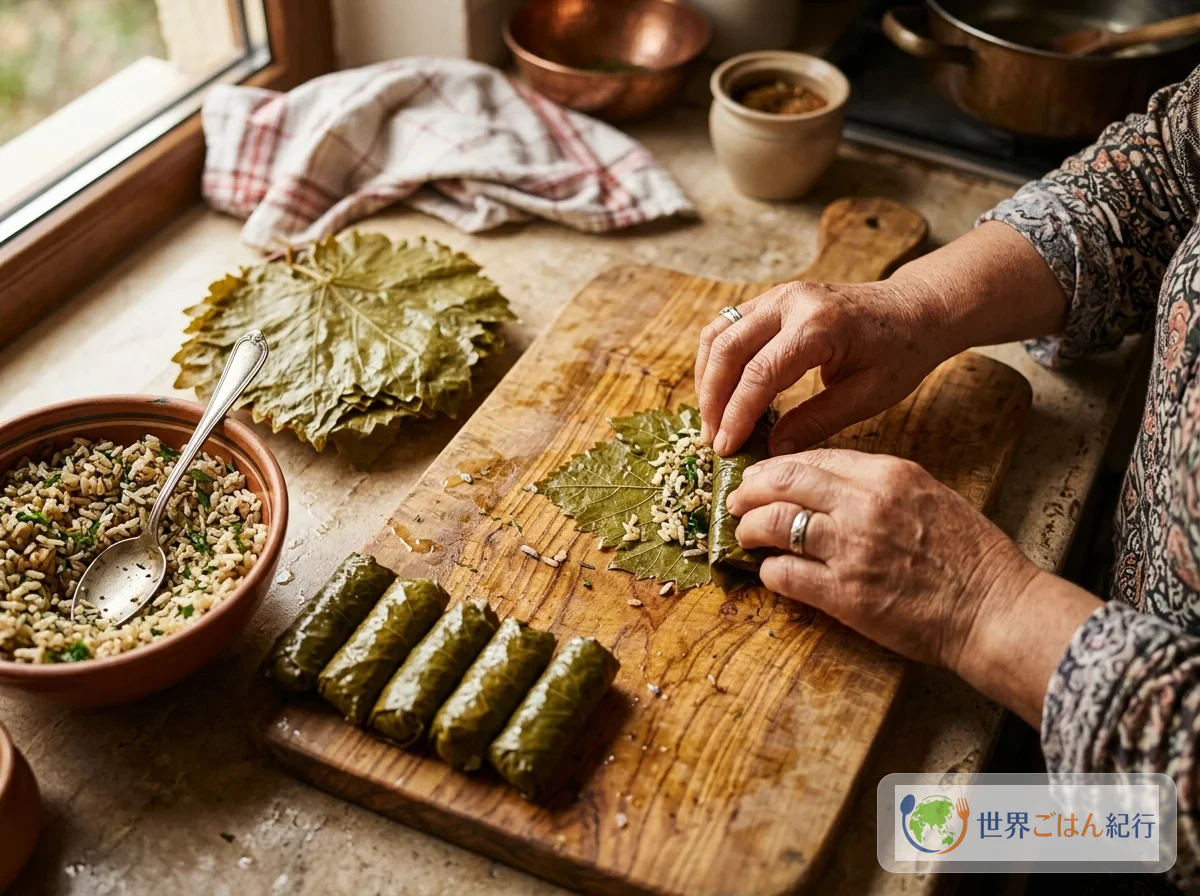
Jarred grape leaves are salt-cured for preservation, so used as is, they turn out salty. Rinse them under running water, then soak them in water for about 10 minutes to draw out the salt. Keep the salt in the filling lower to match.
STEP 2. Make the filling (15 min)
- Put half of the ¼ cup (80 ml) olive oil (2.5 tbsp, 40 ml) in a frying pan and heat over medium heat for about 30 seconds.
- Add the chopped onion and saute for 5 minutes until translucent.
- Add the pine nuts and saute for 2 minutes until lightly golden.
- Add 7 oz (200 g) unwashed raw rice and saute for 2 minutes, until the surface of the grains turns translucent and blends with the oil.
- Add 1 tbsp tomato paste and coat everything.
- Add ½ cup (100 ml) water, 3 tbsp lemon juice, salt, pepper, allspice, cinnamon, and sugar.
- Simmer over low heat for 5 minutes until the liquid has mostly gone. The rice will still be half-cooked, with a white core at the center.
- Turn off the heat, add the dried currants, mint, and dill, and mix until the herbs are evenly distributed.
- Spread it out on a tray and cool for about 10 minutes to room temperature, until it no longer feels hot to the touch, before starting to roll.
If you put hot filling on a grape leaf, the leaf wilts and tears easily. Always cool it to room temperature. If you are in a hurry, spread it on a tray to cool and it is ready in 10 minutes.
STEP 3. Roll the dolma (20 min)
Once you get the knack, rolling dolma is easy. Treat the first 5 as practice.
- Spread a grape leaf with the back side (the side where the veins stand out) facing up.
- Put the part where the stem was toward you.
- Put about 2 tsp of filling at the base of the stem (never overfill).
- Roll once from the near edge.
- Fold the left and right edges of the leaf inward.
- Keep rolling in a cylinder to the tip.
- Roll not too tight, not too loose. The rice swells as it simmers, so leave about 0.5 inches (1 cm), the width of one finger, of room.
If the roll is too tight, the rice swells and the leaf bursts. If too loose, it falls apart while simmering. The best feel is leaving about 0.5 inches (1 cm), one finger's width, of room. It is close to rolling sushi. Do not worry if the first ones look awkward. They taste the same.
STEP 4. Arrange in a pot and simmer (50 min)
- Lay 2 to 3 torn grape leaves on the bottom of a heavy pot (to prevent scorching).
- Arrange the rolled dolma seam side down, packed snugly with no gaps.
- When the first layer is full, stack a second. Up to 3 layers at most.
- Pour in 1¼ cups (300 ml) water, 2 tbsp lemon juice, and 2 tbsp olive oil.
- Turn a heatproof small plate upside down on top of the dolma as a weight.
- Cover and bring to a boil over medium heat, then lower to low heat and simmer for 45 minutes. The guide is leaves that have softened and rice that has plumped and springs back slightly when pressed with a finger.
- Turn off the heat and let cool completely with the lid on (at least 2 hours, ideally overnight).
Turkey's "zeytinyagli sarma" (dolma cooked in olive oil) is a cold appetizer. After simmering, it is cooled completely before eating. If you let it rest overnight in the refrigerator, the flavors settle and it gets even better. Warm dolma is mostly the meat-filled kind (etli dolma).
STEP 5. Plating (5 min)
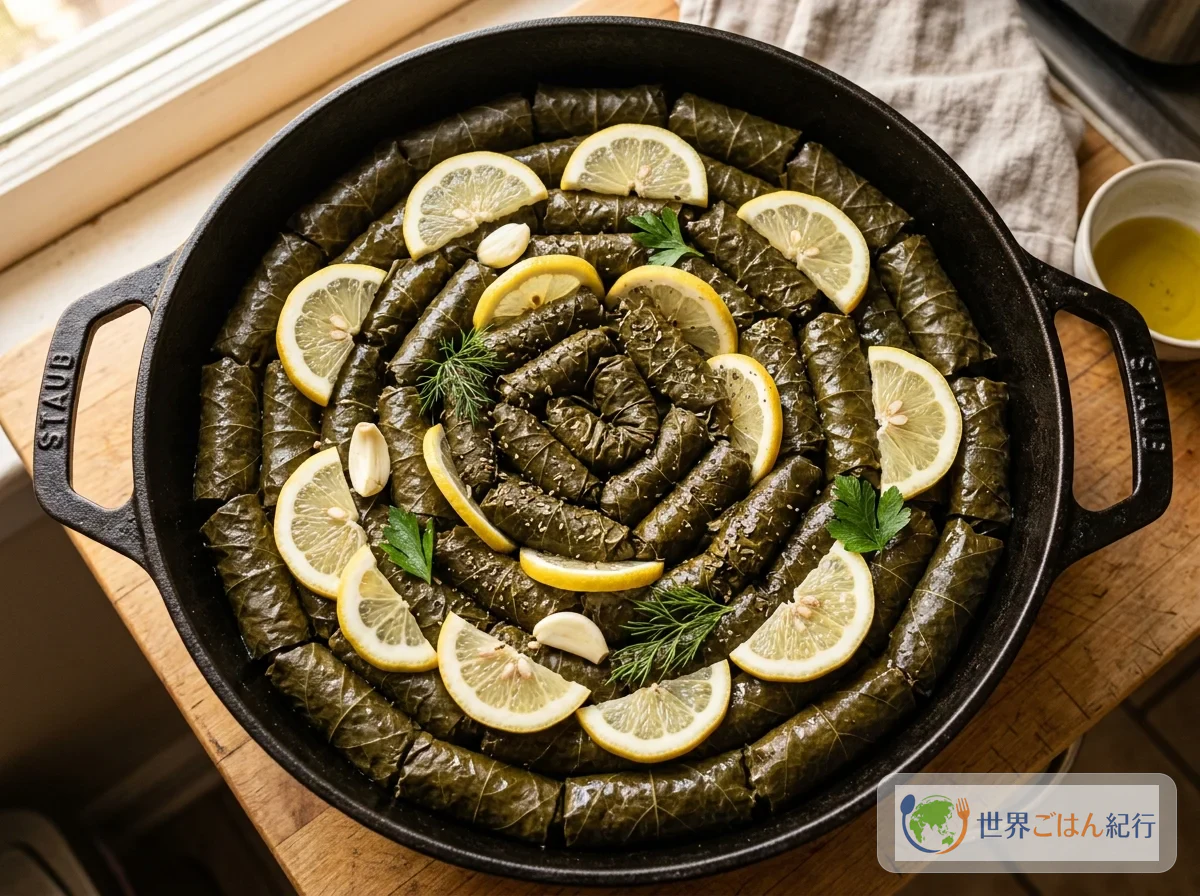
- Arrange the chilled dolma seam side down in concentric circles from the outside of the plate.
- Put lemon wedges at the edge of the plate.
- Drizzle lightly with olive oil, just enough to give the surface a thin sheen.
- If you like, put yogurt in a small bowl and set it alongside.
Rolling Dolma Without Failures
(1) Cool the filling before rolling. (2) Roll not too tight and not too loose. (3) Pack them snugly in the pot and put a weight on top. Keep these three and you will not fail.
Rolling can feel clumsy at first, but after about 5 you will get the knack. Awkward-looking ones taste exactly the same, and a plate of slightly uneven handmade dolma has a warmth that suits home cooking.
Serving, Storing, and Varying Dolma
Pairings and menus
| Side | Description |
|---|---|
| Lemon | Squeeze generously just before eating. Essential |
| Yogurt | Serve plain yogurt alongside. The two kinds of acidity reinforce each other |
| Hummus | A pairing of two meze staples |
| Tabbouleh | A parsley salad whose freshness goes well with dolma |
For a meze party, set out dolma with hummus, falafel, tabbouleh, pita bread, and olives. Turkish raki (anise liquor) or white wine goes superbly with it.
For a Middle Eastern dinner, start with dolma and hummus, follow with kebab or shawarma as the main and tabbouleh on the side, and finish with baklava. If you are making kebab, add kebab sauce to keep cooking the same country's table.
In Turkey, people set out several appetizers called "meze" before a meal and nibble at them while chatting. Dolma is the star of the meze. Add kofte and the Turkish meze table is complete.
Arranged on a large plate, the finished rolls look like jewels; you will want to take a photo.
Storage
Dolma is an ideal make-ahead dish, and it gets even better the next day. Always store it with its cooking liquid, which keeps the rolls from drying out and helps the flavors settle.
In an airtight container, it keeps 5 to 7 days in the refrigerator. Since it is eaten cold, no reheating is needed. In a zip-top bag, it keeps 2 months in the freezer; thaw overnight in the refrigerator and eat it chilled.
Because dolma can be made the day before, it is perfect for guests. On the day, take it out of the refrigerator, arrange it on a plate, and add lemon and herbs. It looks festive and makes you look like a very good cook.
Variations
For meat dolma (etli dolma), add 5.5 oz (150 g) ground beef to the vegetarian filling. With meat, it is eaten warm, classically under plenty of yogurt sauce (7 oz (200 g) yogurt, 1 clove grated garlic, a little salt), and it becomes a hearty main dish.
Pepper dolma is the easy route when grape leaves are hard to find. Cut the tops off peppers or bell peppers, remove the seeds, fill them, and stand them in a pot to simmer; done in tomato sauce, they come out colorful.
For a dolma salad, chop 4 to 5 pieces of cold dolma and mix with tomato, cucumber, and sliced red onion, then dress with olive oil and lemon juice. It works as an appetizer or lunch.
Frequently Asked Questions
Here are the questions we hear most about dolma. See also the articles on mansaf and shakshuka.
Q1. Can I make it with fresh grape leaves?
Yes. Boil fresh grape leaves in salted water for 5 minutes before using. If you have a grapevine in your yard, choose young, tender leaves; old leaves are tough and hard to roll.
Q2. The rolled dolma fall apart. Why?
The roll is too loose, or there is too much filling. Keep the filling to about 2 tsp and fold in the edges of the leaf firmly before rolling. Packed with no gaps in the pot, the rolls support each other and are less likely to come apart.
Q3. What can I use instead of pine nuts?
Walnuts are the closest substitute. Chop them coarsely. Cashews or almonds also work, though the flavor changes, and it is still delicious without nuts.