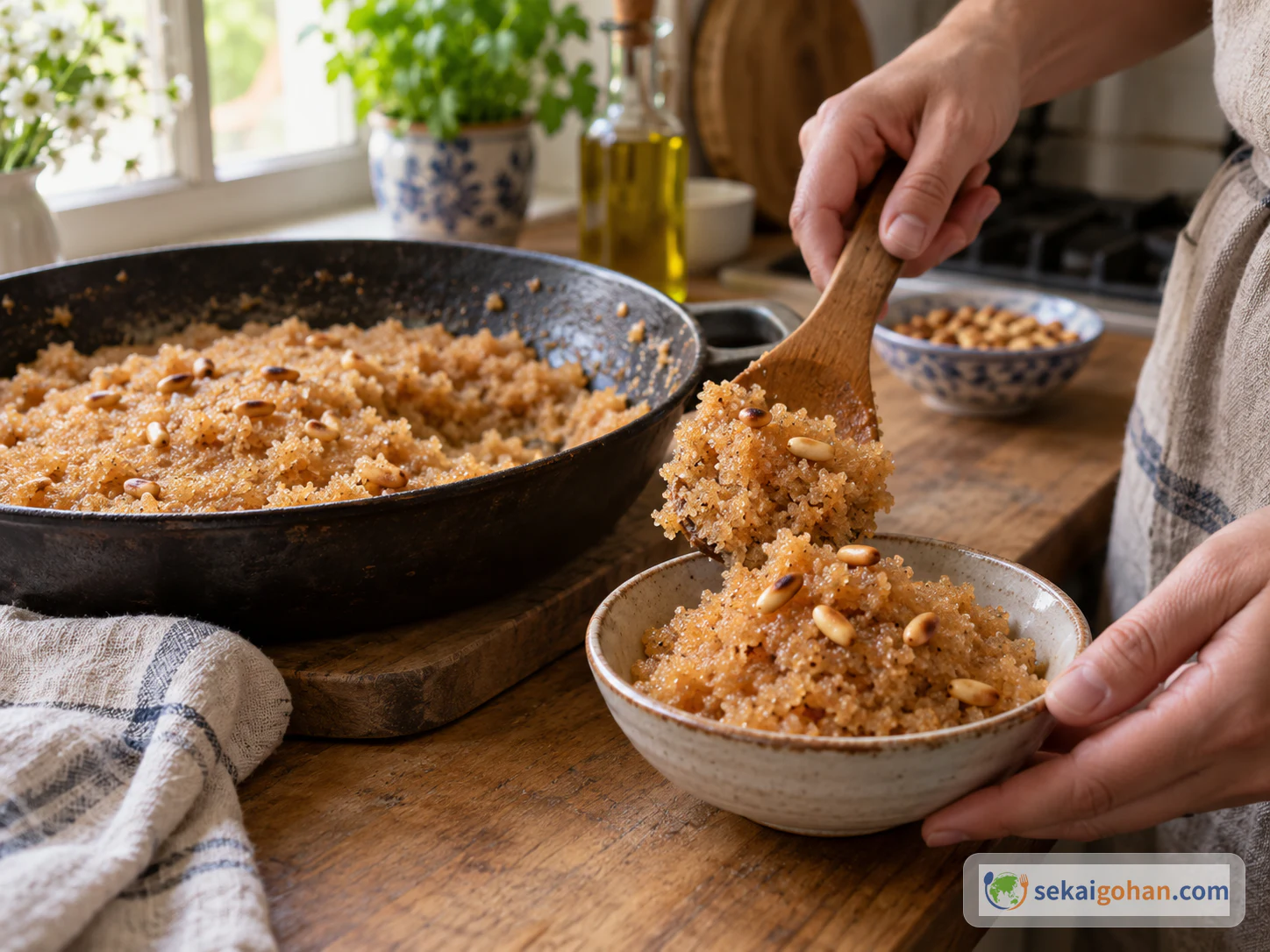
İrmik Helvası: Turkish Semolina Halva

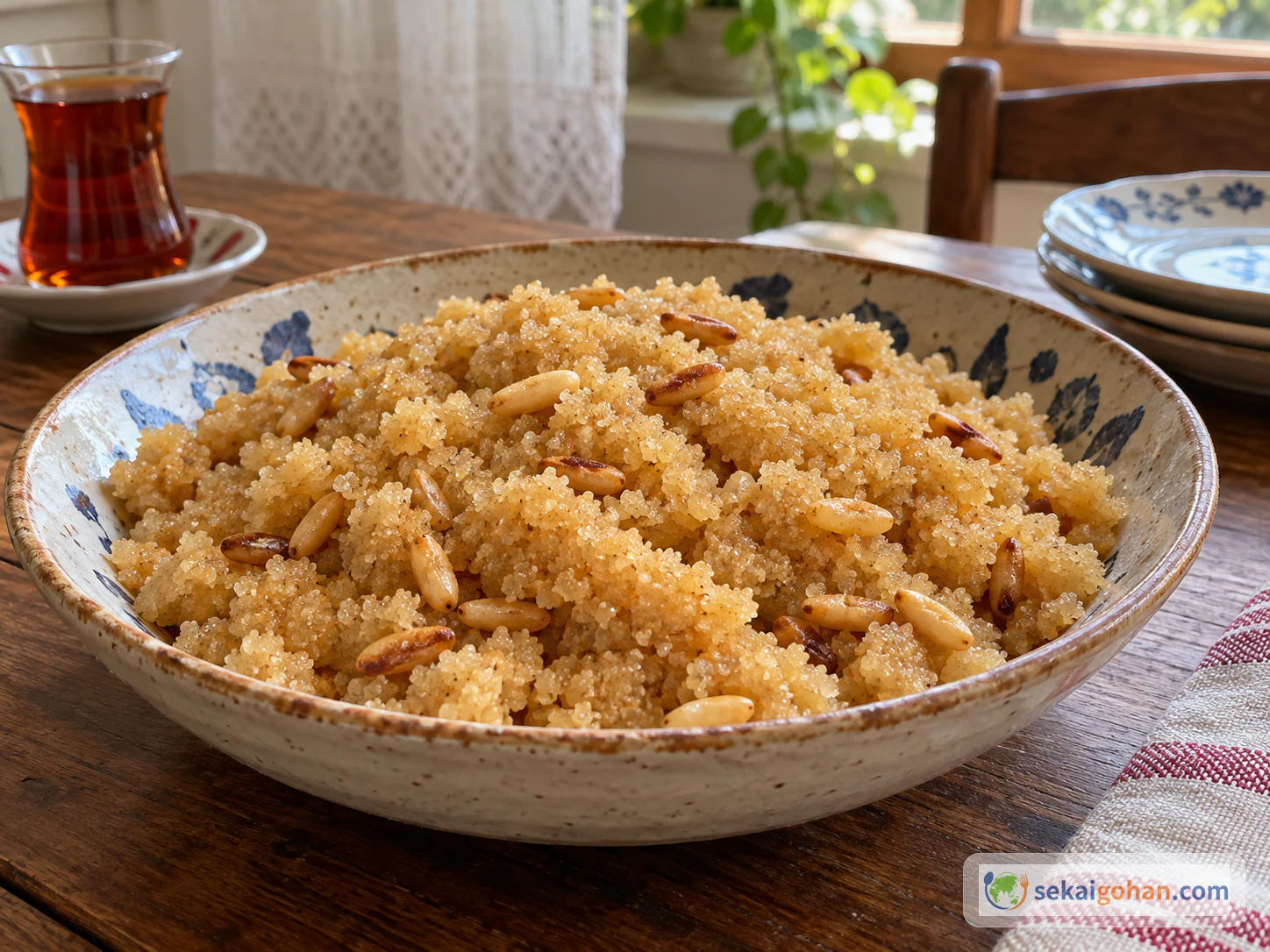
A finished bowl of Turkish irmik helvası scattered with pine nuts
Prep
10 min
Cook
30 min
Total
1 hr
Serves
4 servings
Level
Intermediate
Cuisine
Turkish

İrmik helvası is a Turkish sweet made by roasting semolina in butter with pine nuts and letting it absorb a sweet milk liquid. The custom of sharing it on milestone days, regional differences in water and milk, how to keep it from scorching, choosing ingredients, storage, serving hot halva with cold ice cream, and how to fix mistakes.

Cooking flow

Cooking steps

STEP11 / 5

Warm the sweet liquid first

4 min

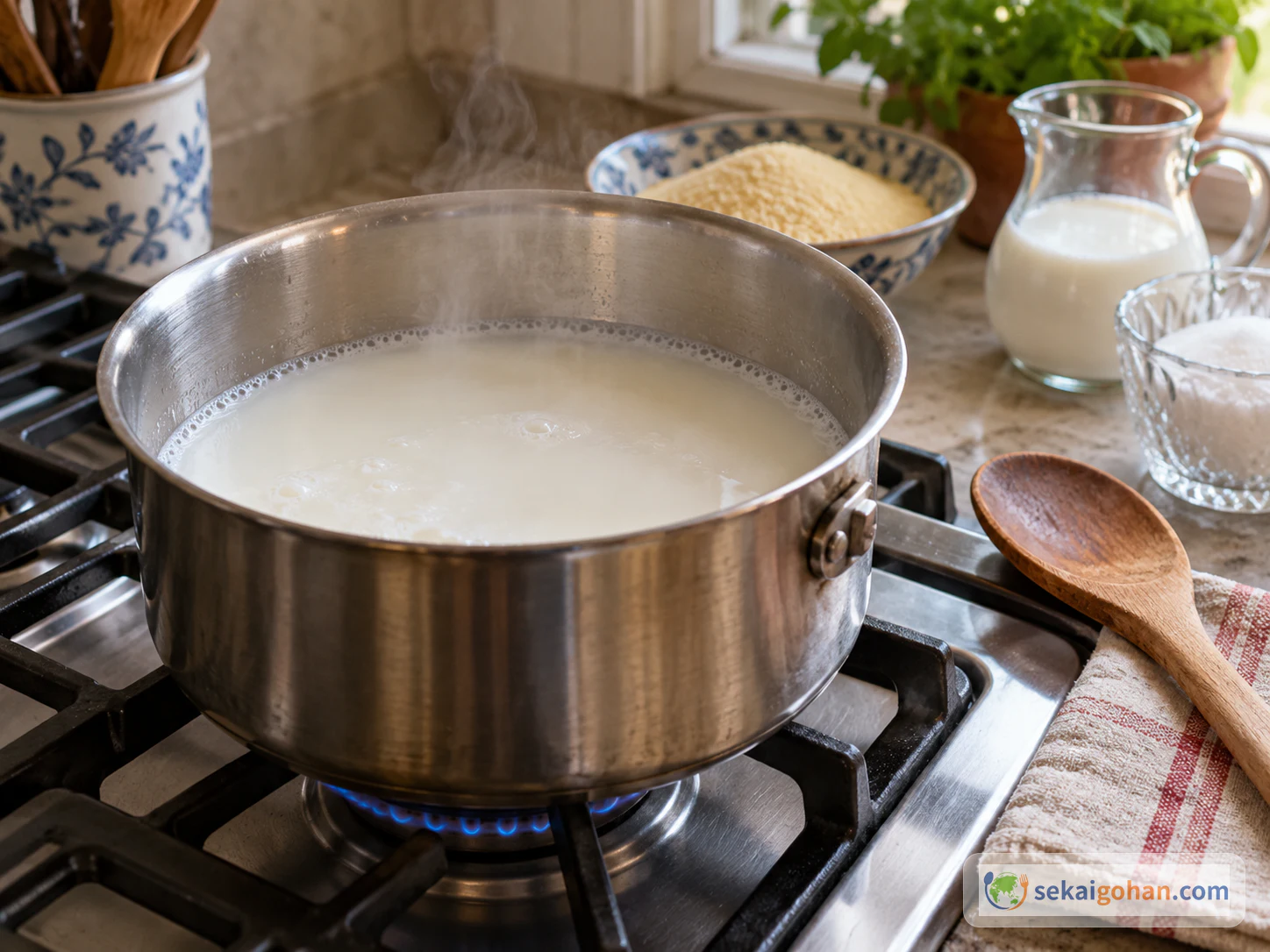
Warming milk, water and sugar in a small pot and dissolving the sugar
The liquid with the sugar dissolved is kept hot without boiling

Put 1 cups (250 ml) milk, ½ cup (150 ml) water and 5.5 oz (150 g) granulated sugar in a small pot and warm over medium-low heat for 3 to 4 minutes. When the sugar grains are no longer visible and steam rises from the edge of the pot, turn off the heat. Do not boil the milk. Boiling hard forms a skin and makes the bottom of the pot scorch easily. This hot liquid should not be allowed to cool too much during the next step. If it cools, keep it warm over very low heat.

STEP22 / 5

Roast the pine nuts and semolina over low heat

17 min

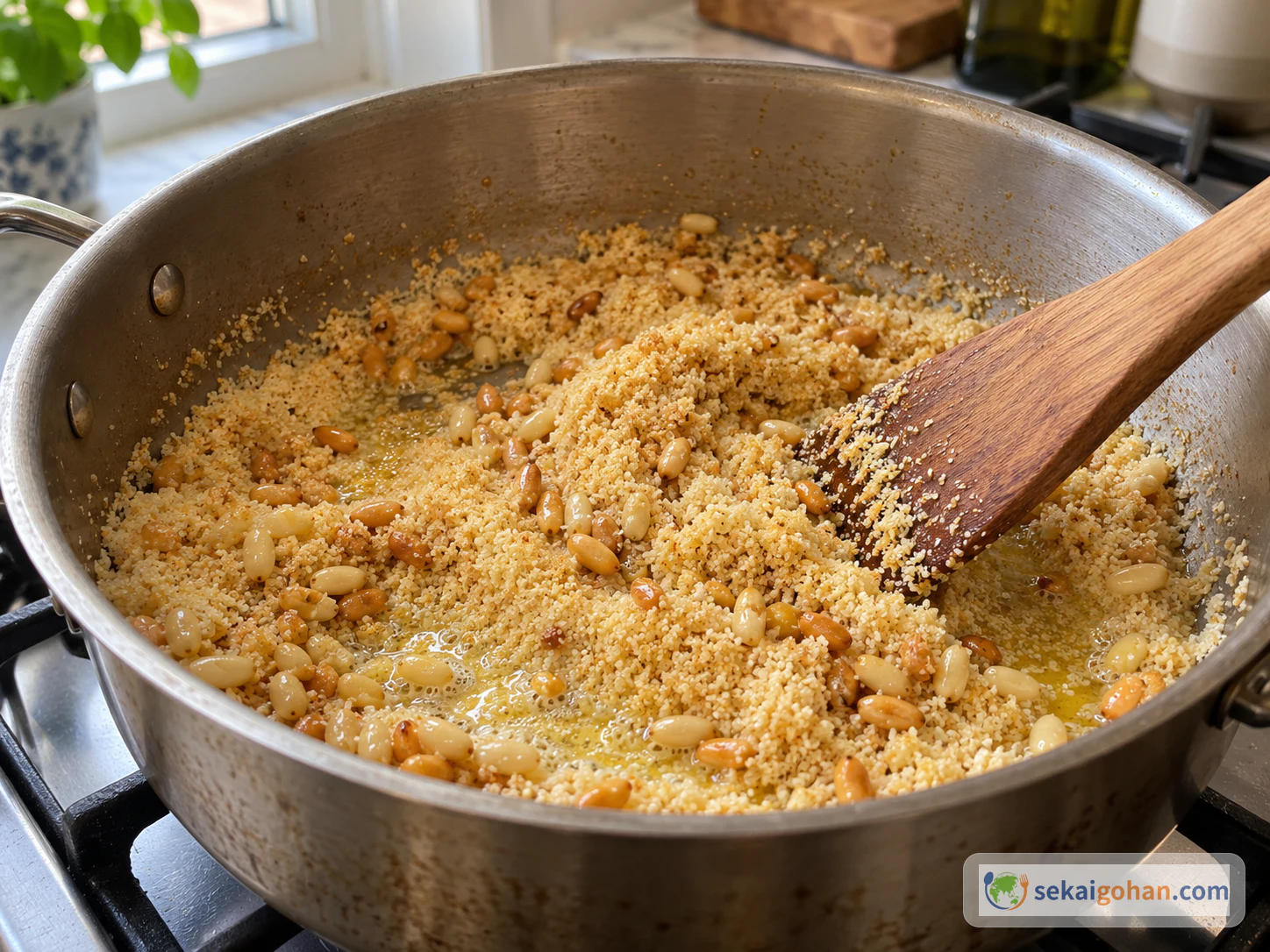
Stirring pine nuts and semolina with a wooden spoon, roasting to a pale beige
Roast the semolina over low heat, watching the pale color change and the aroma

Put 2.5 oz (70 g) unsalted butter and 1 tbsp (15 ml) oil in a heavy pot and melt over low heat. Roast 25 g pine nuts for about 2 minutes until light golden brown, then add 7 oz (200 g) fine semolina. From there, keep stirring the bottom and edges of the pot with a wooden spoon without a break for about 15 minutes over low heat. When the whiteness of the flour has gone, it has turned pale beige and the nutty aroma has risen, move on. The key is to stop just short of a dark brown. Once black specks, smoke or a bitter smell appear it is too late, and the color keeps advancing from residual heat even after it leaves the heat.

Tip

The 15-minute mark depends on your pot and heat, so do not watch the clock alone. Check all of these together: whether the raw flour look is gone, whether the flour is a pale color, whether the pine nuts are light in color, and whether the aroma has risen. The guide is a loose, flowing feel just before it becomes so heavy that the track of the spoon stays for a few seconds. Under-roasting leaves a floury grain smell. A burnt bitterness does not come back even if you add sugar liquid afterward.

STEP33 / 5

Add the hot liquid a little at a time

4 min

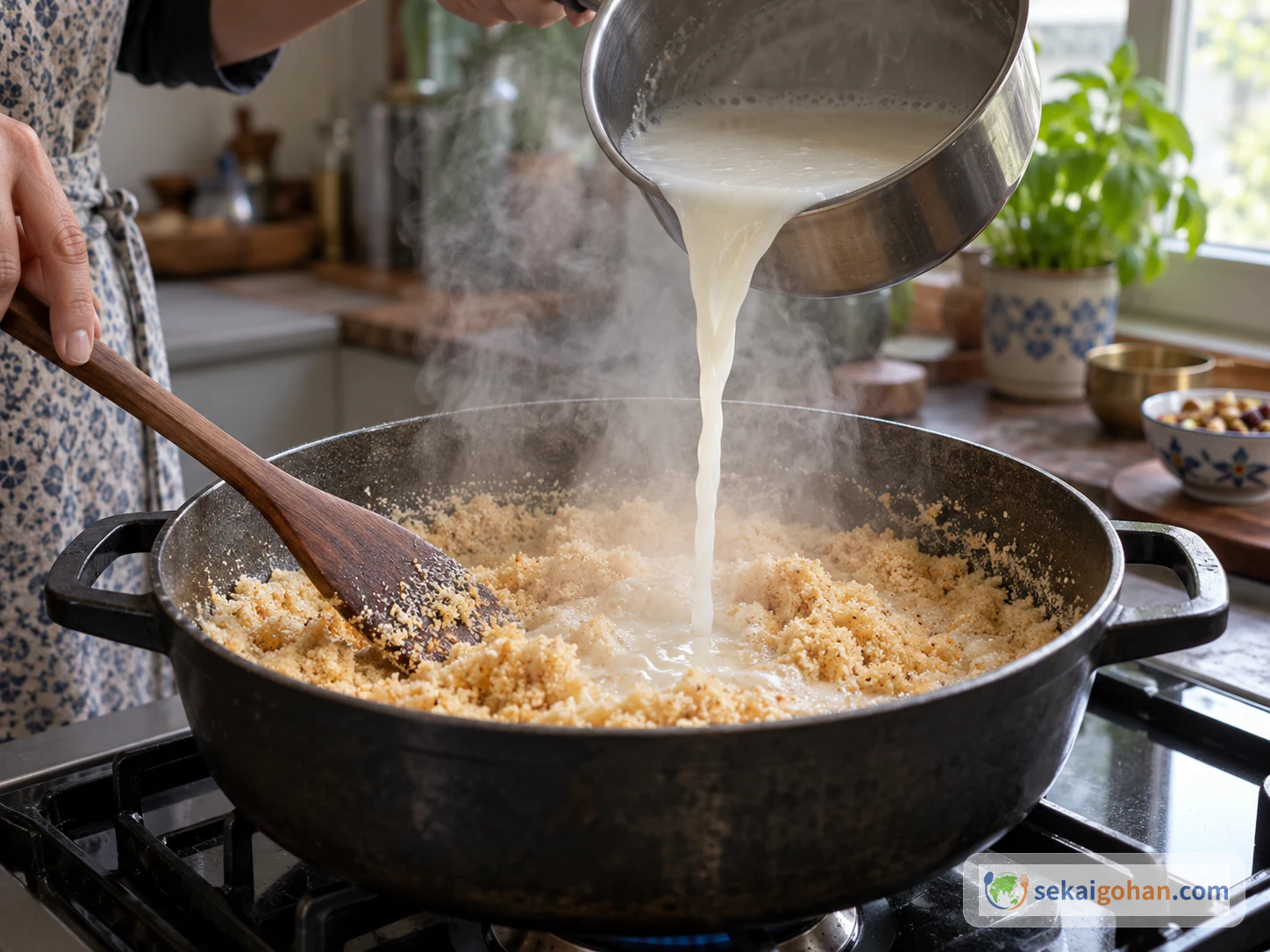
Pouring the hot milk and water liquid a little at a time into the roasted semolina
Add the hot liquid in parts, stirring from the bottom until the steam settles

Take the roasting pot off the heat for now and get a long wooden spoon. Add the hot liquid in 3 parts, stirring broadly from the bottom each time. At first strong steam and foam come up, so do not pour it all at once. The steam rises suddenly and it spatters easily. Stir until the steam settles; over 3 to 4 minutes, when the semolina holds the liquid and starts to come away from the sides of the pot, move on. The guide is that the grains become thick and heavy and start to come together.

Caution

Always add the liquid after taking the roasting pot off the heat, and do not bring your face or hands directly over the pot. Keep children and pets away from the cooking area, and work where your sleeves and the wooden spoon do not touch the edge of the pot. If liquid splashes, treat any burn first, then adjust the taste.

STEP44 / 5

Absorb over low heat, then rest

28 min

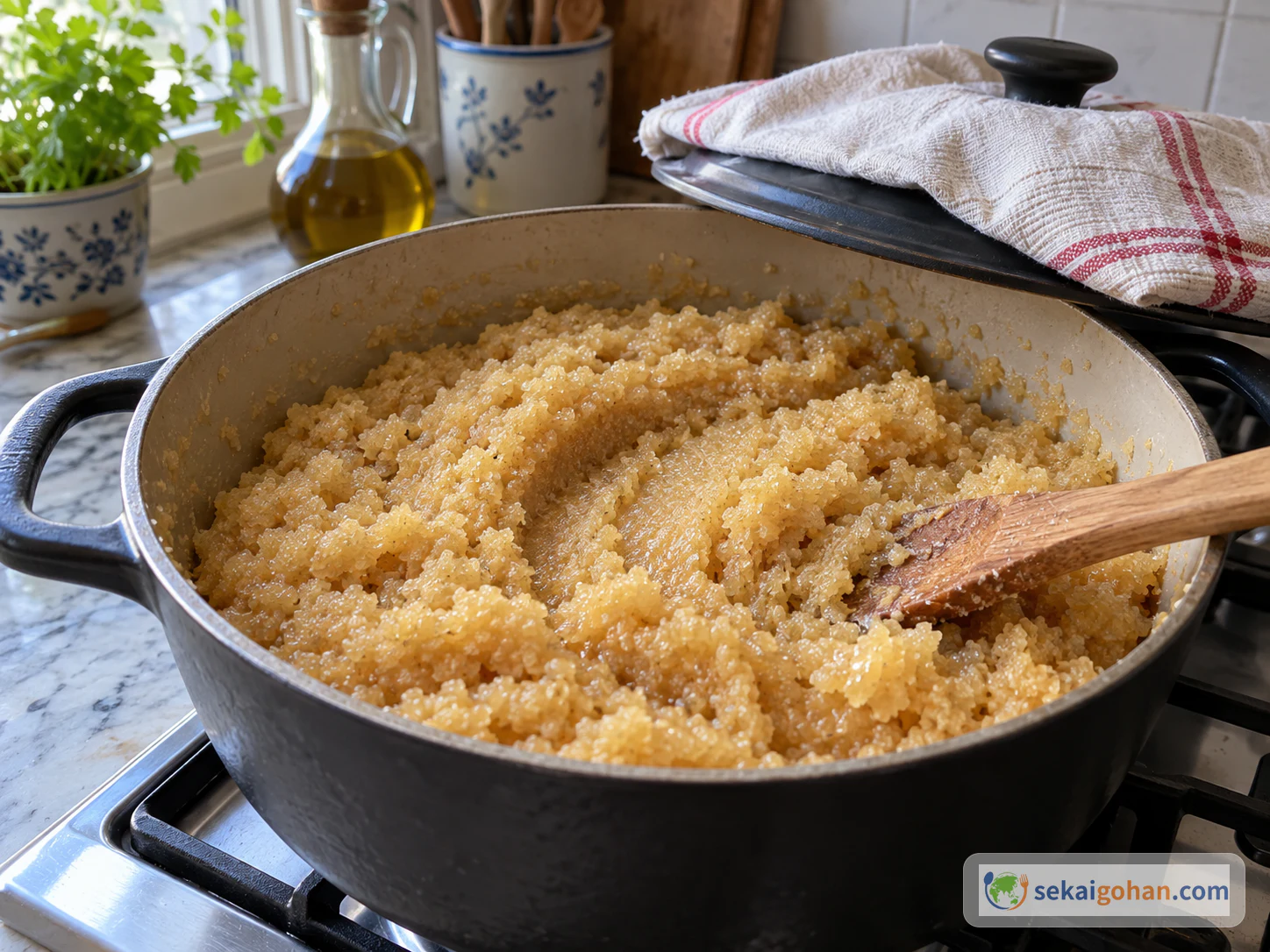
Irmik helvası before the lid goes on to rest, with spoon tracks and the grains absorbing the liquid
The 20 minutes after the liquid is absorbed lets the grains settle just right

When all the liquid is in, return to low heat and stir from the bottom for about 8 to 10 minutes to let it absorb the moisture. When streaks from the spoon on the bottom of the pot remain, no liquid comes back, and the grains hold together moistly, turn off the heat. Cover, put a dry kitchen towel or paper towel under the lid, and begin a 20-minute rest. Turn off the heat before placing the cloth so it does not touch the flame. The grains keep taking in moisture and tighten during the rest. Do not reduce it until it hardens while hot.

Tip

When you lift the lid, the surface should not be completely dry, and the grains should loosen when you turn them from the bottom. If liquid is still visible, heat 2 minutes at a time over low heat. If it is too dry, add hot milk or water 1 tbsp (15 ml) at a time, warm 1 to 2 minutes, and rest another 5 minutes. It firms up as it cools, so do not reduce it more than necessary right after finishing.

STEP55 / 5

Fluff and serve in bowls

5 min

Fluffing the rested irmik helvası with a wooden spoon and serving it in bowls
Move the rested grains to bowls while warm without crushing them

Turn the rested pot from the bottom with a wooden spoon, crushing large lumps as you loosen the grains. Mound into 4 bowls, or press into small bowls and turn out onto plates. Packing it hard makes it tight and heavy, so leave air between the grains. Serve while warm. Hot halva is also eaten with cold ice cream, Maraş ice cream. To make a version elsewhere, add a little unsweetened vanilla ice cream, but it will not match Maraş ice cream in texture or ingredients.

0 / 0
Ingredients

Ingredients

1 / 2

For roasting the semolina

Ingredient Amount Substitutes and notes
Fine semolina 7 oz (200 g) Durum wheat semolina. If the grind is coarse, allow longer for absorption and resting
Pine nuts 25 g Leaving them out reduces the toasty bite. If you substitute another nut, check the label
Unsalted butter 2.5 oz (70 g) Salt-free. To avoid dairy, replace with 3 tbsp (45 ml) oil, but aroma and mouthfeel change
Neutral oil 1 tbsp (15 ml) Rice bran oil or light sesame oil. Burns less easily than butter alone, and the aroma is rounder than oil alone
2 / 2

Sweet liquid

Ingredient Amount Substitutes and notes
Milk 1 cups (250 ml) Some regions use water alone. Milk gives richness but scorches more easily
Water ½ cup (150 ml) Together with the milk, 1¾ cups (400 ml) in total. For water only, use the same 1¾ cups (400 ml) for a lighter result
Granulated sugar 5.5 oz (150 g) Involved not only in sweetness but in how the liquid holds together, so do not cut much the first time
0 / 0

Semolina and pine nuts roast slowly in a big pot until the kitchen smells toasty. Then the grains soak up a sweet, hot milk. After a rest under the lid, you turn the pot from the bottom with a wooden spoon and the grains loosen and fall softly apart. This is İrmik Helvası, Turkish semolina halva, and it is usually served one small bowl at a time. You don't slice it like a firm slab. You scoop up the moist, warm grains with a spoon, and they taste of butter, toasted wheat and milk.

İrmik Helvası in Turkish Homes
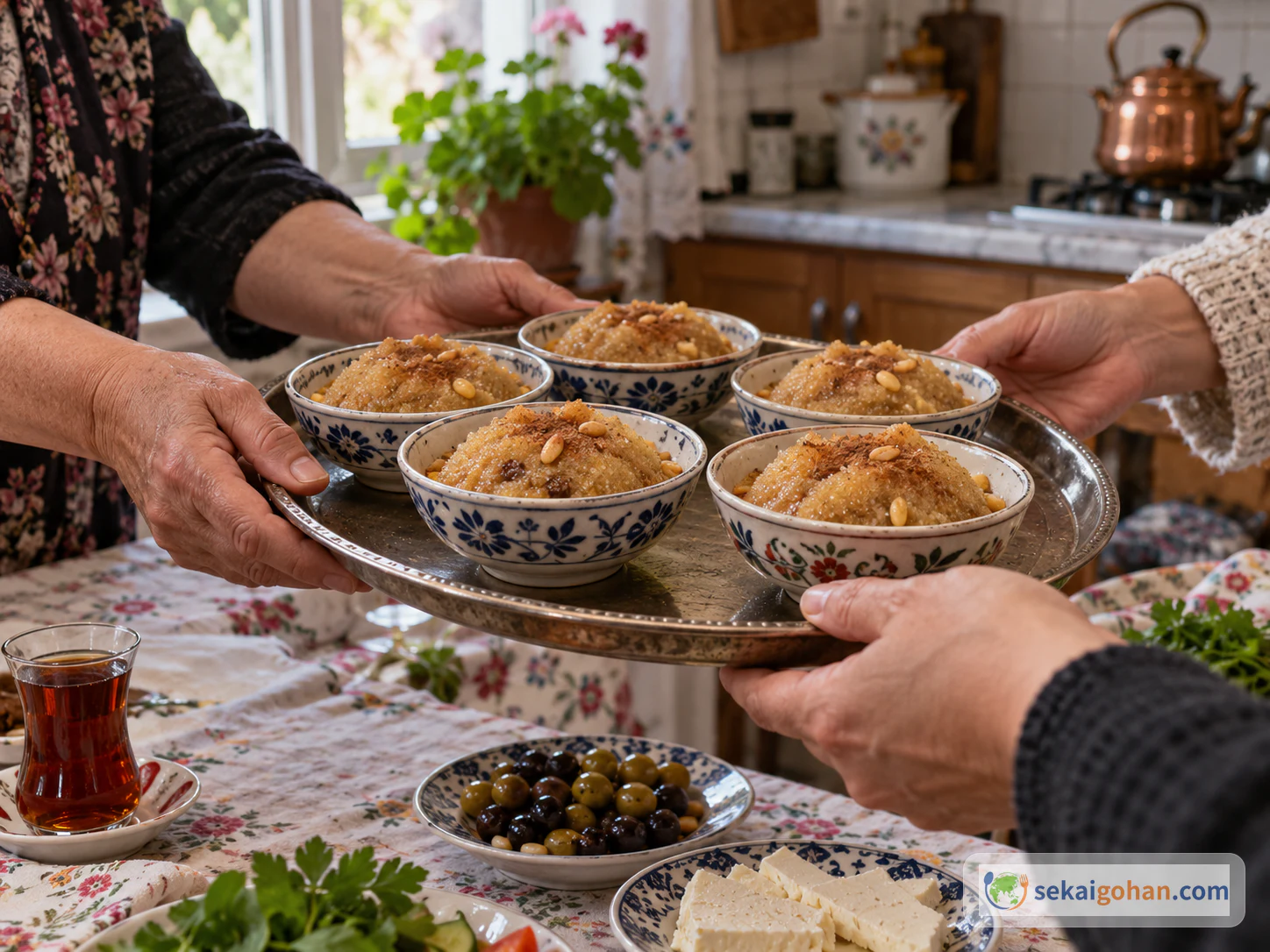
Sharing small bowls of irmik helvası at a Turkish family table
İrmik helvası is also spoken of as a sweet to portion into bowls and hand to others

In Turkish homes and neighborhoods, it is a familiar sight to see halva portioned out of one pot into many small bowls. Halva is made on religious holidays and after funerals, and it is handed out to neighbors and to people who come to pay condolences. It also comes out for happy occasions, so think of it as a sweet for days of celebration and of mourning alike. What matters is less the size of the pot than handing the sweetness you made to the neighbors.

Did you know?

In Ottoman times, the basic ingredients of halva were flour or semolina, fat, sugar, milk and cream. Halva was given out to relatives and neighbors at milestones such as birth, death, military service, return from pilgrimage, starting school and graduation.
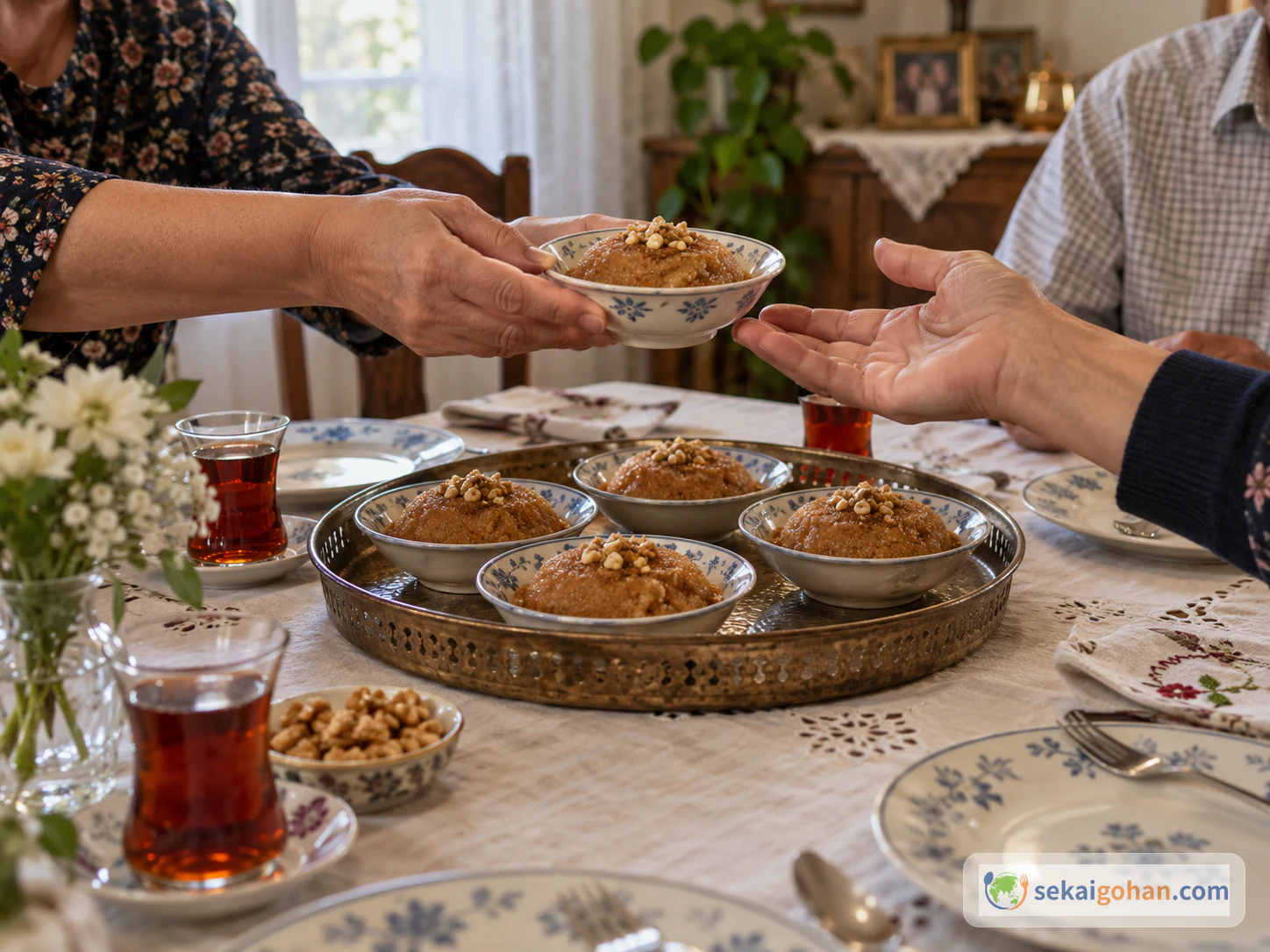
A table with small bowls of irmik helvası lined up on a shared plate in a Turkish home
Dividing one pot into many bowls widens the halva table

İrmik helvası is part of Anatolian food culture, and almost every province makes it a little differently. The base stays the same: semolina and pine nuts, butter, sugar, and milk or water. The semolina, which comes from wheat, is roasted slowly in fat before it absorbs the sweet liquid. Some regions use only water, others milk or a mix of milk and water.

Other Turkish sweets are built quite differently. Aşure (in Japanese) is another sweet for sharing with neighbors on a milestone, cooked from grains, beans and fruit. Baklava (in Japanese) is a festive sweet that layers thin dough, nuts and syrup.


Ingredients (serves 4)
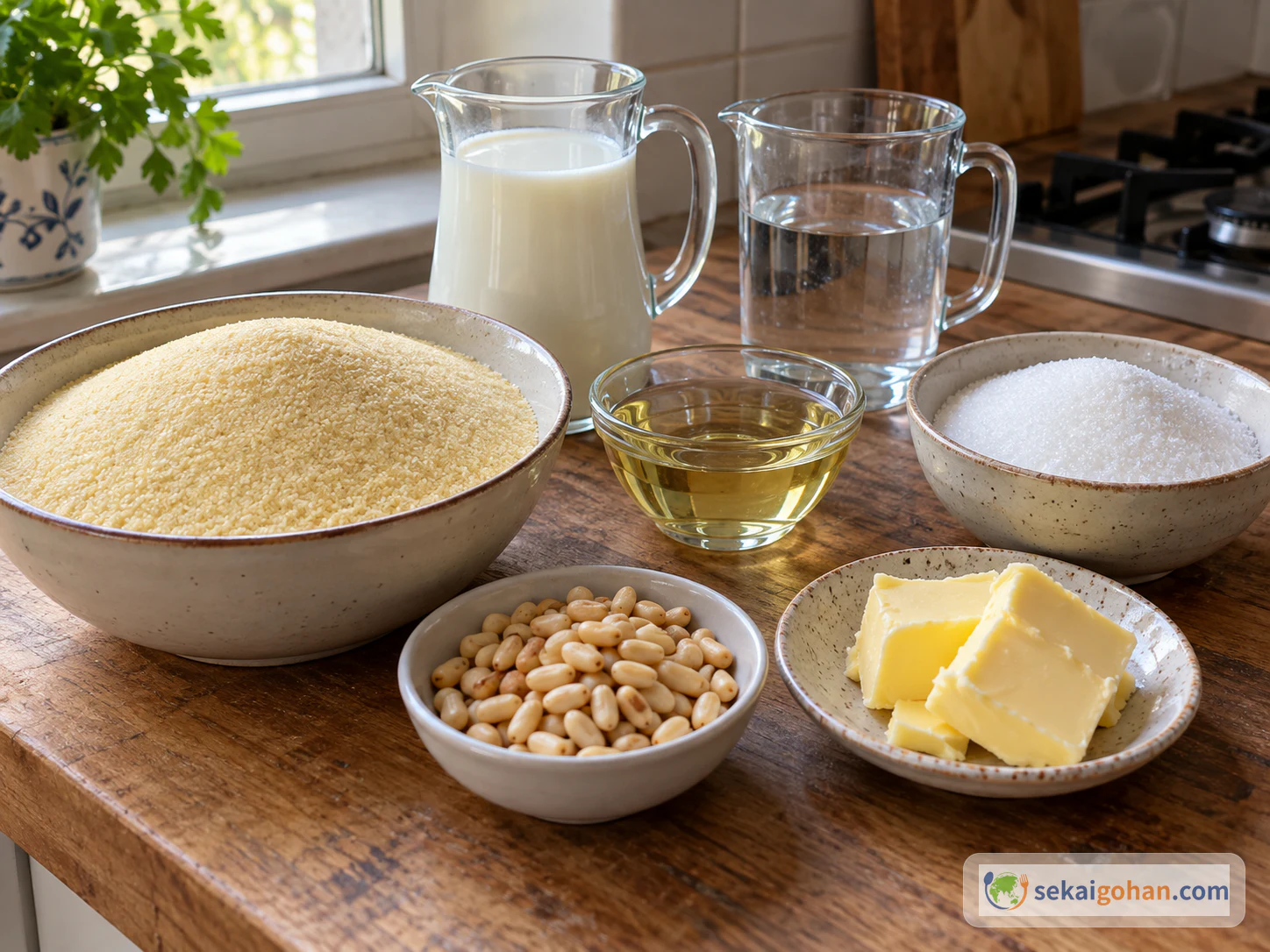
Ingredients for irmik helvası: semolina, pine nuts, butter, milk and sugar
Measure the liquid first and set it beside the pot where the semolina will be roasted
Tip

Coarse semolina absorbs slowly and changes the graininess of the result, so look for fine grind, durum wheat, and the word semolina on the label. If you will also use it for pasta, bread or a fried coating, buy a 2.25 lb (1 kg) size.

If you already have fine semolina, there is no need to buy more. If you are making only a small batch and don't want to be left with 2.25 lb (1 kg), you can skip buying it.

Caution

Semolina comes from wheat, milk and butter are dairy, and pine nuts are tree nuts. People with the relevant allergies should not make this. When choosing substitutes, check the ingredients, allergy labeling and whether it is made in the same facility. Replacing pine nuts with another nut changes not only flavor but the allergen. Do not treat it as the same substitute.

Choosing Ingredients for İrmik Helvası

Fine semolina decides the texture of the grain, and it is the one ingredient you may not find at a nearby supermarket. Look for fine-ground durum semolina at a store that carries Italian or Middle Eastern foods, or online. For equipment, a heavy ordinary pot, a wooden spoon and a lid are enough. You won't need a special pot or a cooking thermometer.
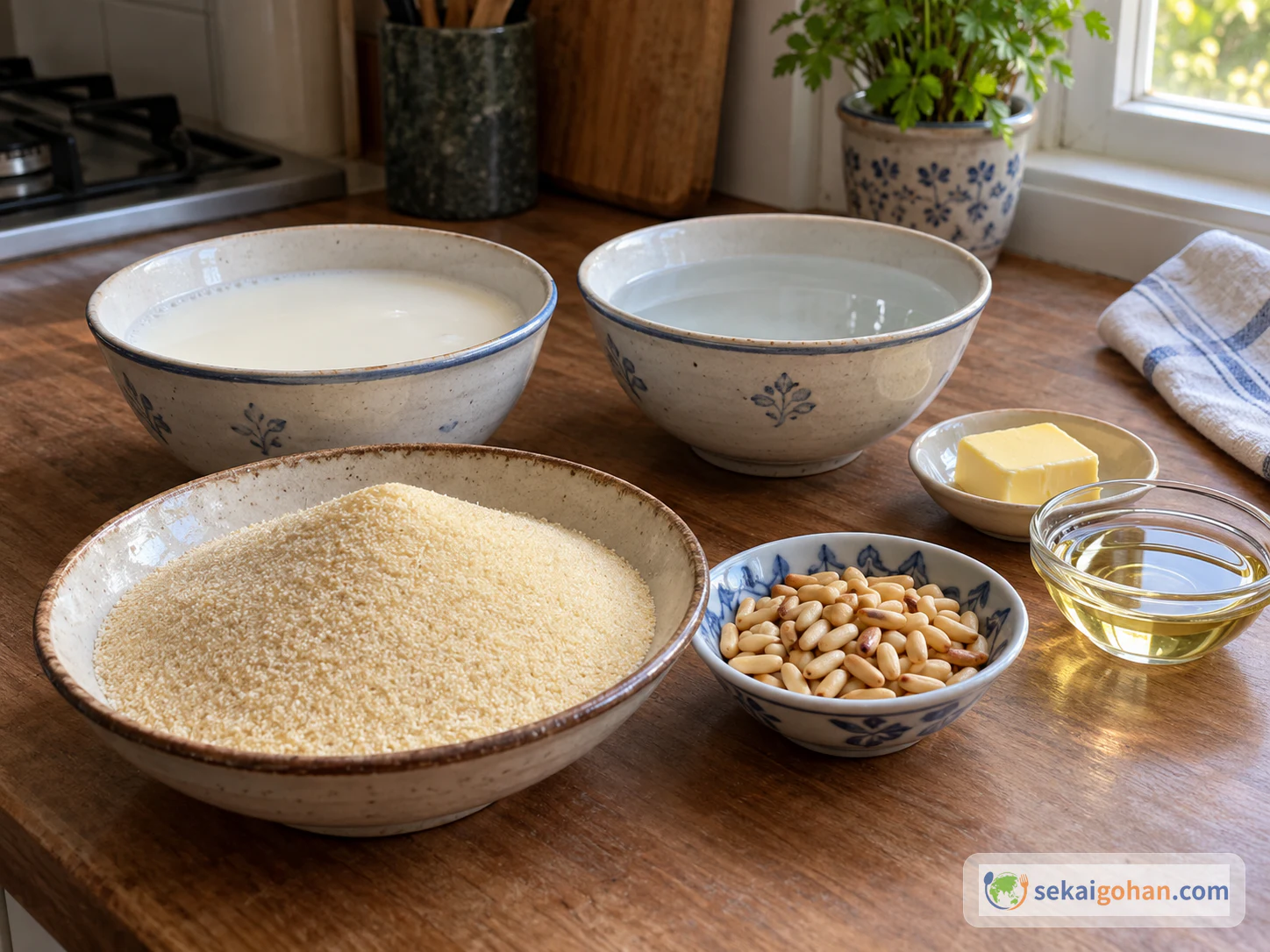
A kitchen comparing the water-based and milk-and-water liquids with butter and oil
The mouthfeel of irmik helvası changes with the combination of liquid and fat

The liquid sets how rich the halva tastes. This recipe uses 1 cups (250 ml) milk + ½ cup (150 ml) water, 1¾ cups (400 ml) in total, which keeps the richness of milk and still lets you spot scorching more easily than milk alone would. With 1¾ cups (400 ml) water the halva is lighter, and the aroma of semolina and butter comes forward. A six-serving water version uses 1 lb (500 g) of water. With 1¾ cups (400 ml) milk alone it is richer. All of these fall within regional variation.

More milk means more care at the stove. Milk solids tend to stick to the bottom, so keep the heat low after the liquid goes in and get the wooden spoon into the corners of the pot to stop sticking and scorching.

The 2.5 oz (70 g) butter and 1 tbsp (15 ml) oil pair the aroma of butter with the easy handling of oil. To avoid dairy, replace the butter with 3 tbsp (45 ml) oil and the 1 cups (250 ml) milk with 1 cups (250 ml) water. The milky richness and the aroma of butter will be missing, so it will not taste the same, and the type of oil you use changes the aroma too. Keep in mind that semolina is wheat and pine nuts are tree nuts, so a dairy-free version is still unsuitable for wheat or nut allergies.

You can leave out the 25 g pine nuts, though you lose their toasty bite and the accent on top of the bowl. If you use another nut in their place, treat it as a change of allergen as well as a change of flavor, and check the product label.

Getting the Heat Right for İrmik Helvası
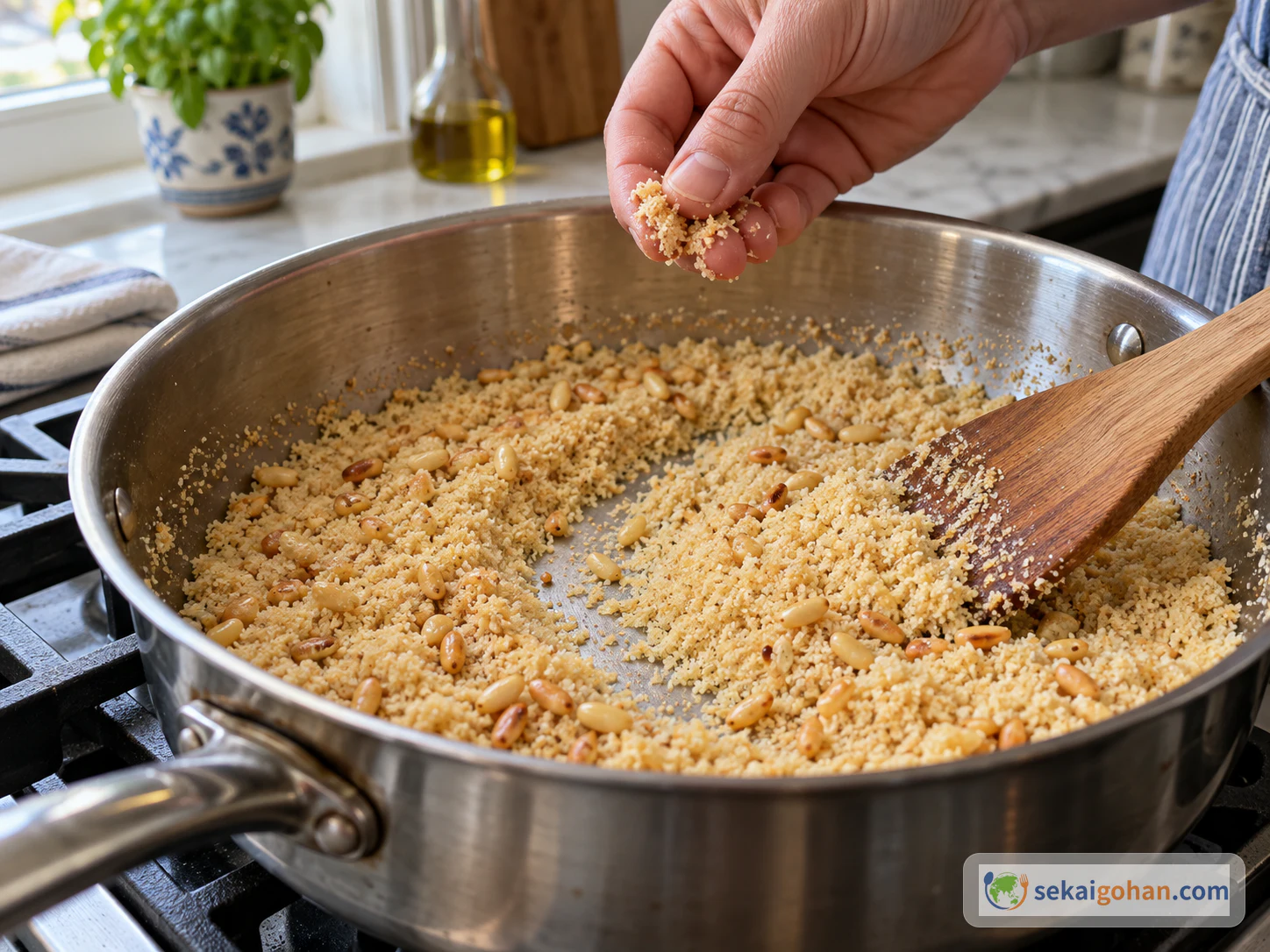
A close look at semolina roasted to a pale beige in a pot not browned too deep
Stop by pale color and the aroma of pine nuts, not a dark scorch

The seasoning here is simple. Success comes down to four things: the grind of fine semolina, the color change over low heat, adding the hot liquid in parts, and a 20-minute rest, which decides the final firmness.

When roasting, watch for four signs. The whiteness of raw flour disappears, the semolina turns pale beige, the aroma of pine nuts rises, and the mixture takes on a loose, flowing weight just before the spoon starts leaving tracks. Plan on about 15 minutes over low heat, and check the color and aroma every 2 minutes. Take the pot off the heat before black specks or smoke appear and before a bitter smell comes out.

If the semolina has gone only a little darker than pale beige, take it off the heat at once and add the liquid in time. If black specks, smoke or a bitter smell have spread through the pot, start again with new ingredients. Sugar syrup or milk won't hide it, and picking out the unburnt part won't save it either. Burnt bitterness does not come back.

You can adjust the texture after the rest. If the halva is too dry, add hot milk or water 1 tbsp (15 ml) at a time, warm it for 1 to 2 minutes over low heat, and rest it again for 5 minutes. If it is still wet, heat it with the lid off over low heat, 2 minutes at a time, and stop once the spoon leaves streaks on the bottom of the pot.

Tip

If the color or aroma falls a little short, you can build it up gradually over low heat. Halva firms up as it cools, so stop while it is still a little soft in the pot.

Serving İrmik Helvası
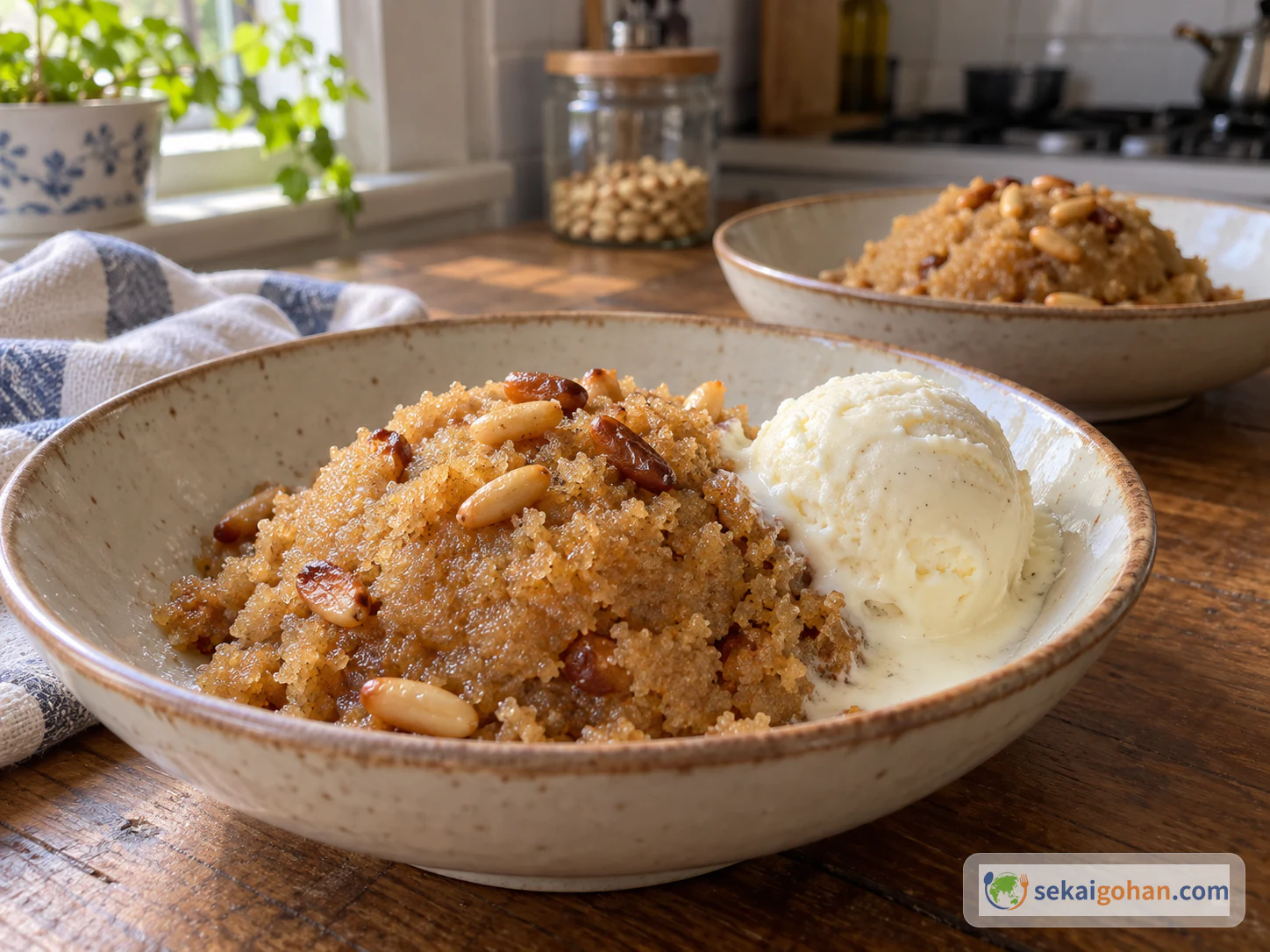
Comparing a variation of milk-based irmik helvası with cold ice cream, and a bowl of the water-based version
Changing the liquid proportion and what is served alongside changes the look of the same sweet

In Turkey the hot grains are often served with cold ice cream, specifically Maraş ice cream. Outside Turkey, a little unsweetened vanilla ice cream added just before eating gives you the same play of hot and cold. It won't have the stretchiness, ingredients or texture of Maraş ice cream, which you can try for yourself with dondurma. Scoop the ice cream with a separate spoon so moisture from the hot halva doesn't get into the container, and eat it right away.

Storage and FAQ
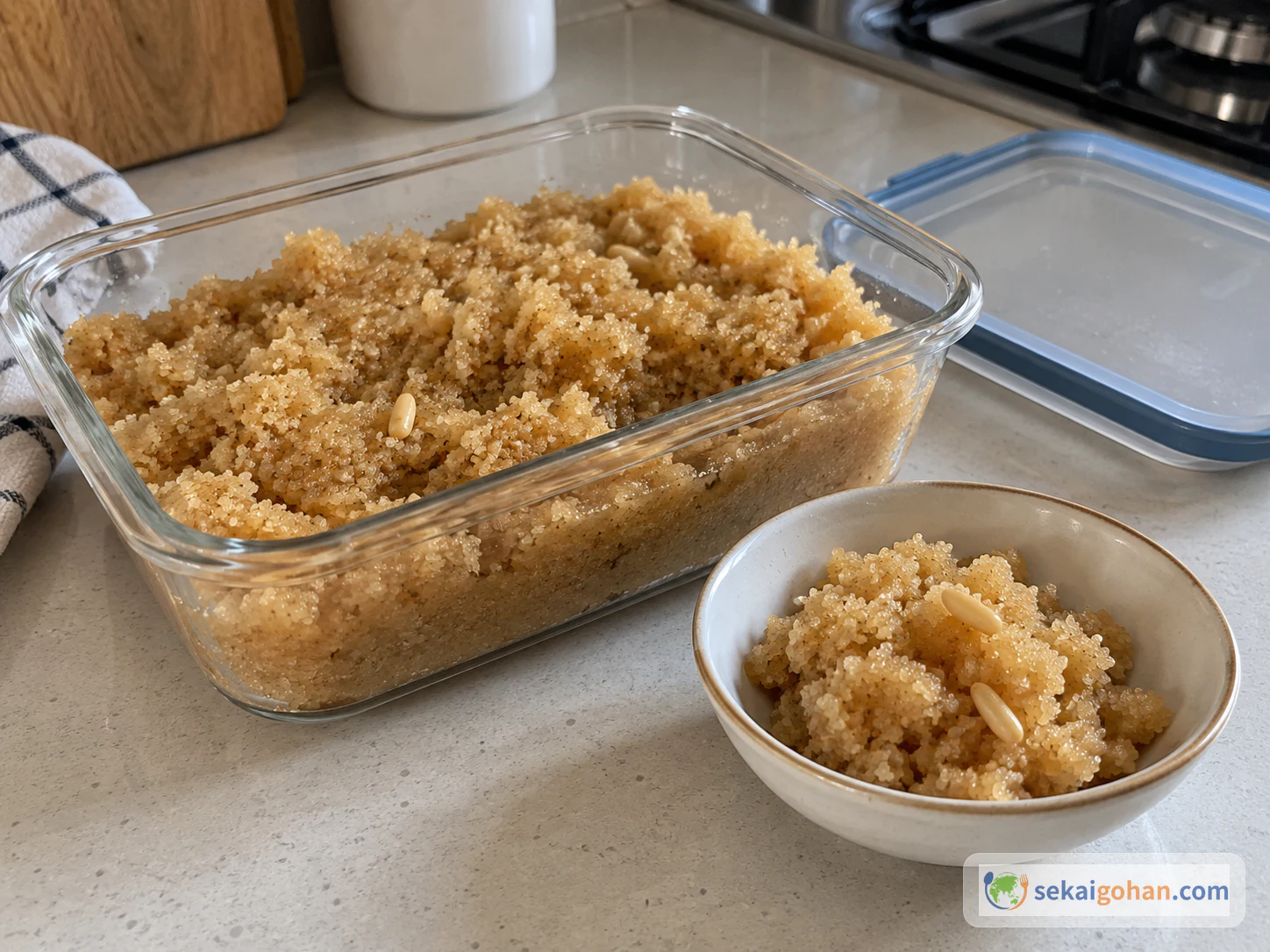
Granular milk-based irmik helvası being moved to a shallow clean storage container to cool
Divide a milk-based sweet into shallow containers, do not leave it long at room temperature, and refrigerate
Caution

Divide what you will not eat into clean shallow containers. Do not leave it long at room temperature after it cools slightly; move it to the refrigerator, which should be 50°F (10°C) or below. Do not leave cooked food long at room temperature. If too much time has passed, or if there is anything unusual about smell or appearance, throw it away without tasting. When reheating, take out only what you will eat and heat all of it thoroughly to 167°F (75°C) or above.

Q1. What if my semolina is coarse?

You can make it with coarse semolina, but it absorbs the liquid more slowly than fine and stays grainier. After adding the hot liquid, extend the absorption time by 2 minutes at a time, and if it is very dry add hot liquid 1 tbsp (15 ml) at a time. For even grains the first time, look for fine-ground durum semolina and check its grind.

Q2. Can I make the milk version ahead?

Yes. Once it has cooled slightly, divide it into clean shallow containers and refrigerate it at 50°F (10°C) or below without leaving it long at room temperature. Take out only what you will eat and reheat it thoroughly. If too much time has passed, or the smell or appearance seems off, throw it away without tasting.

Sources