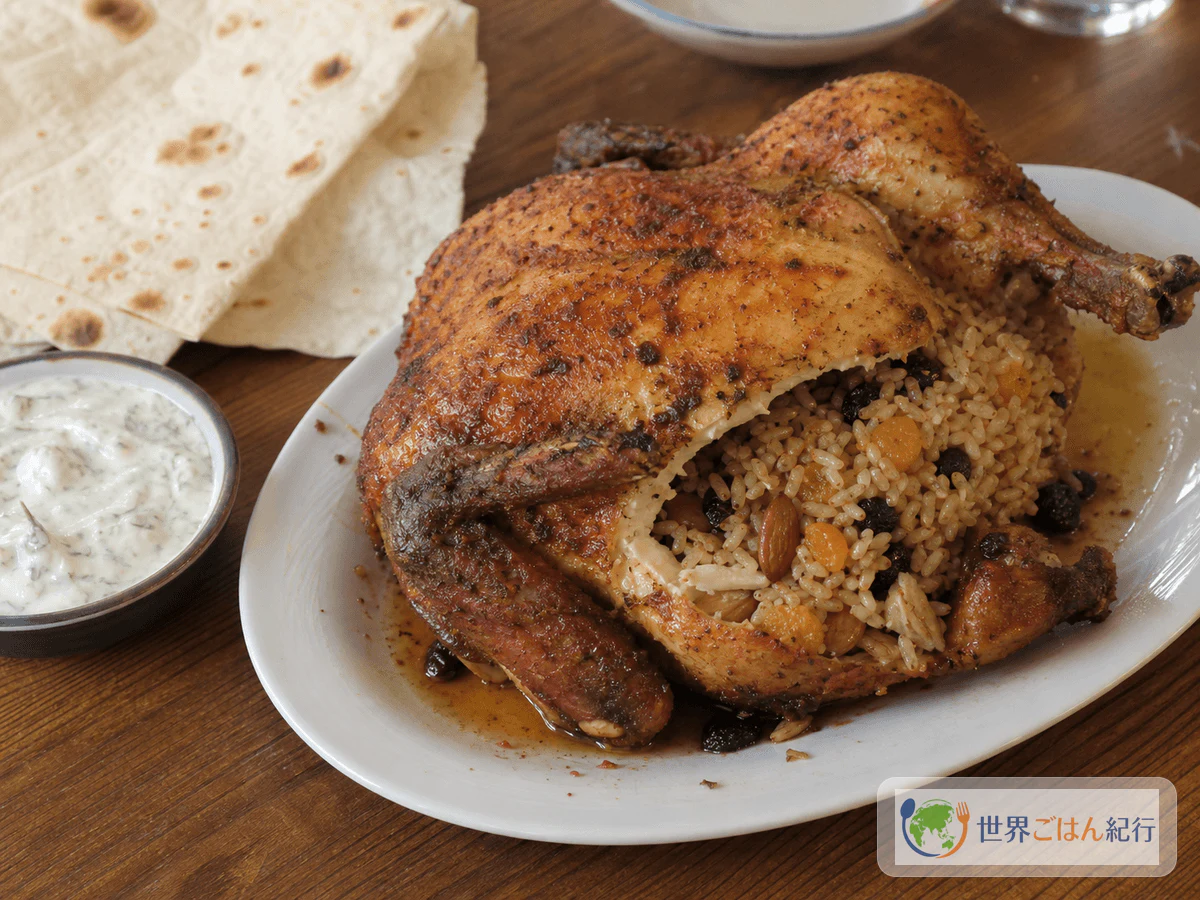
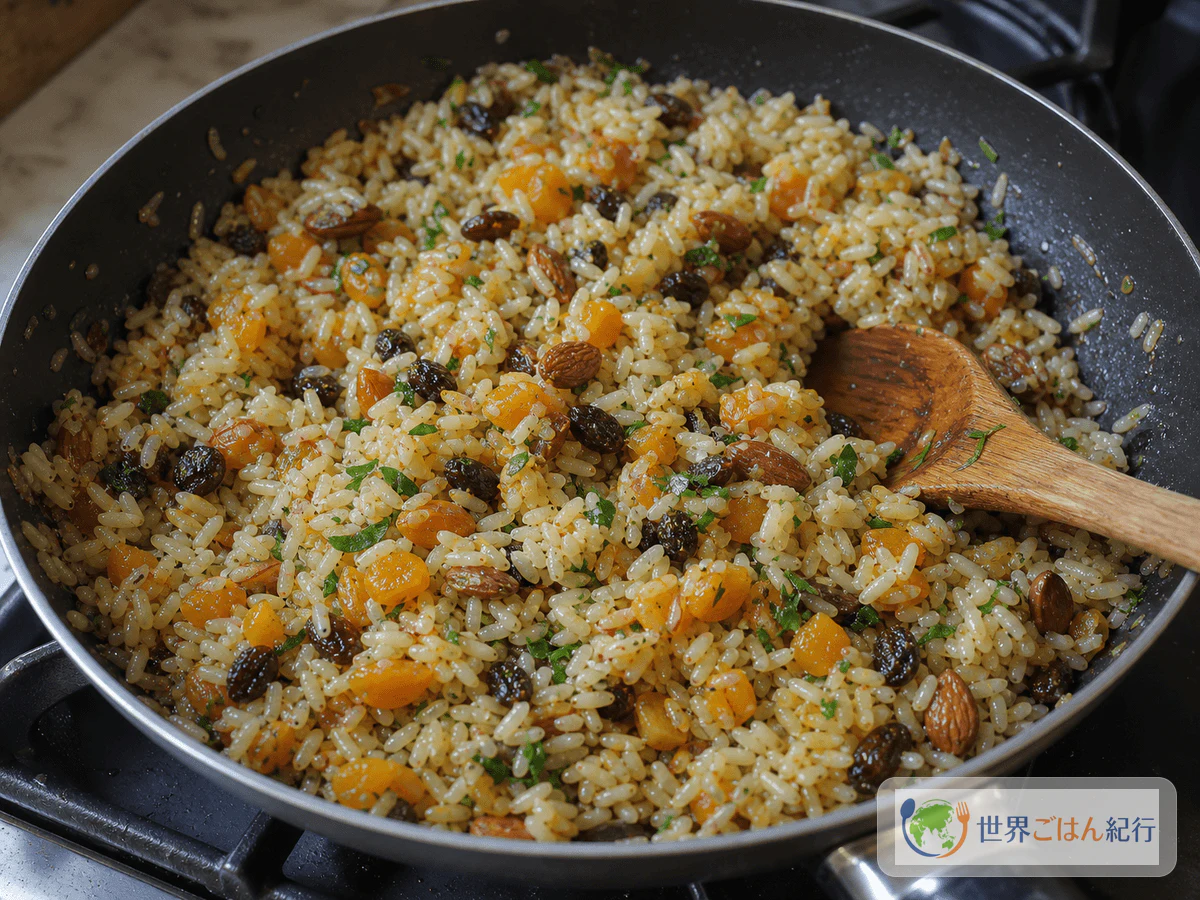
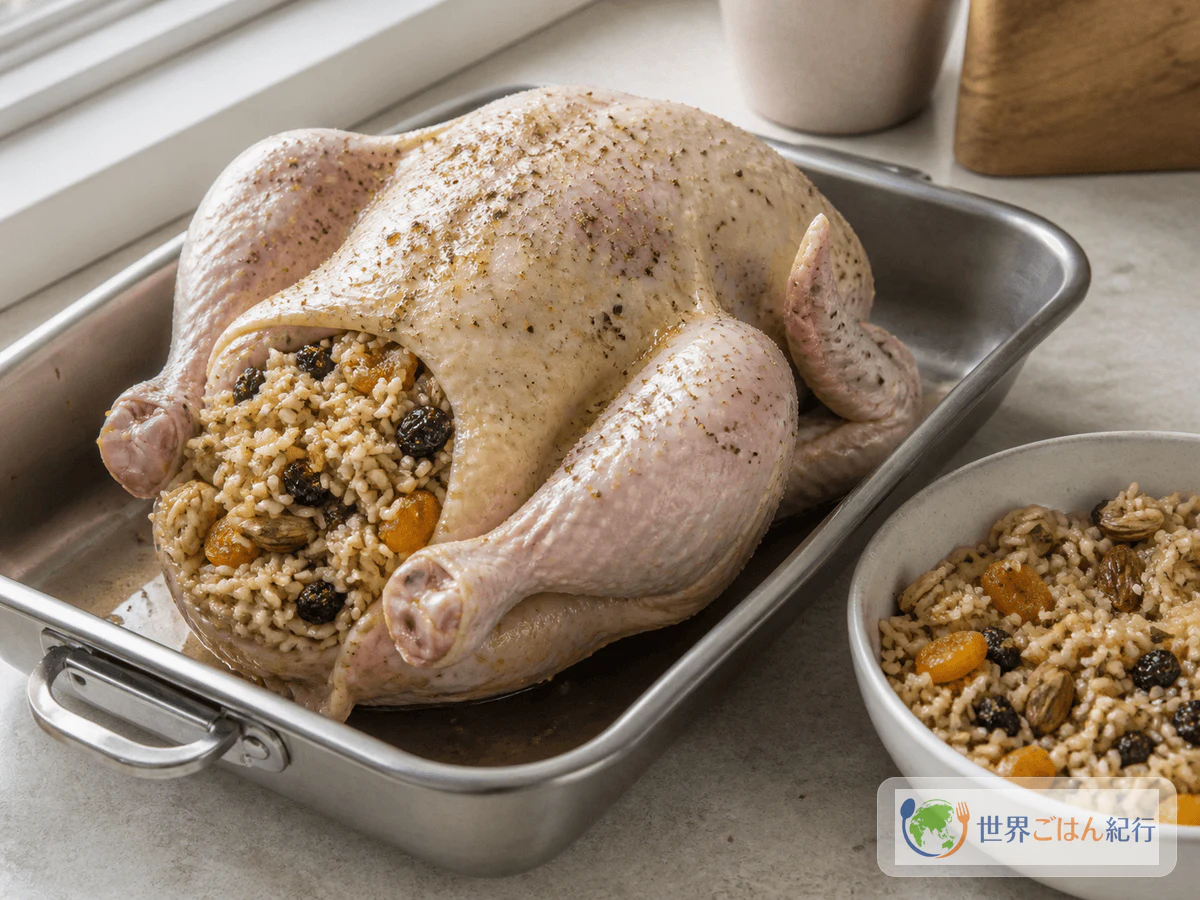
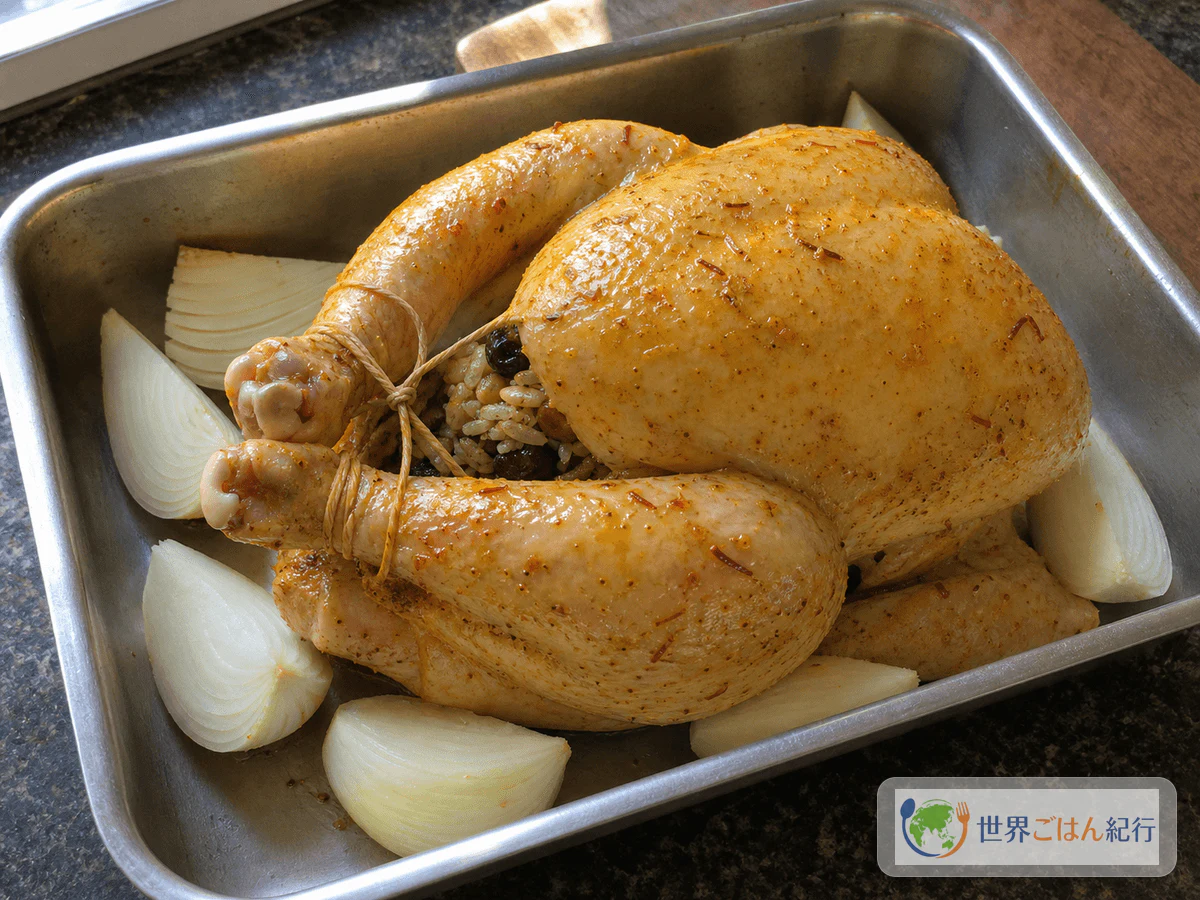
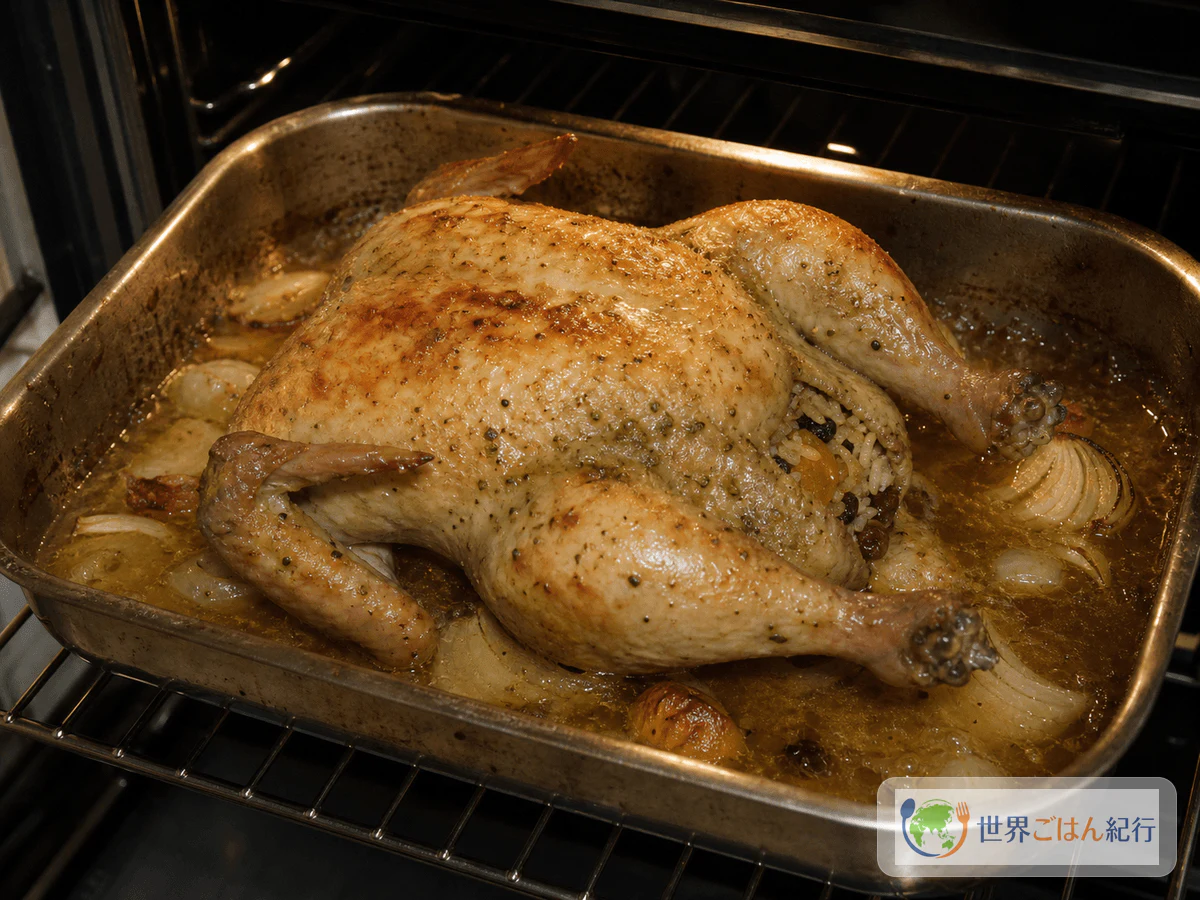
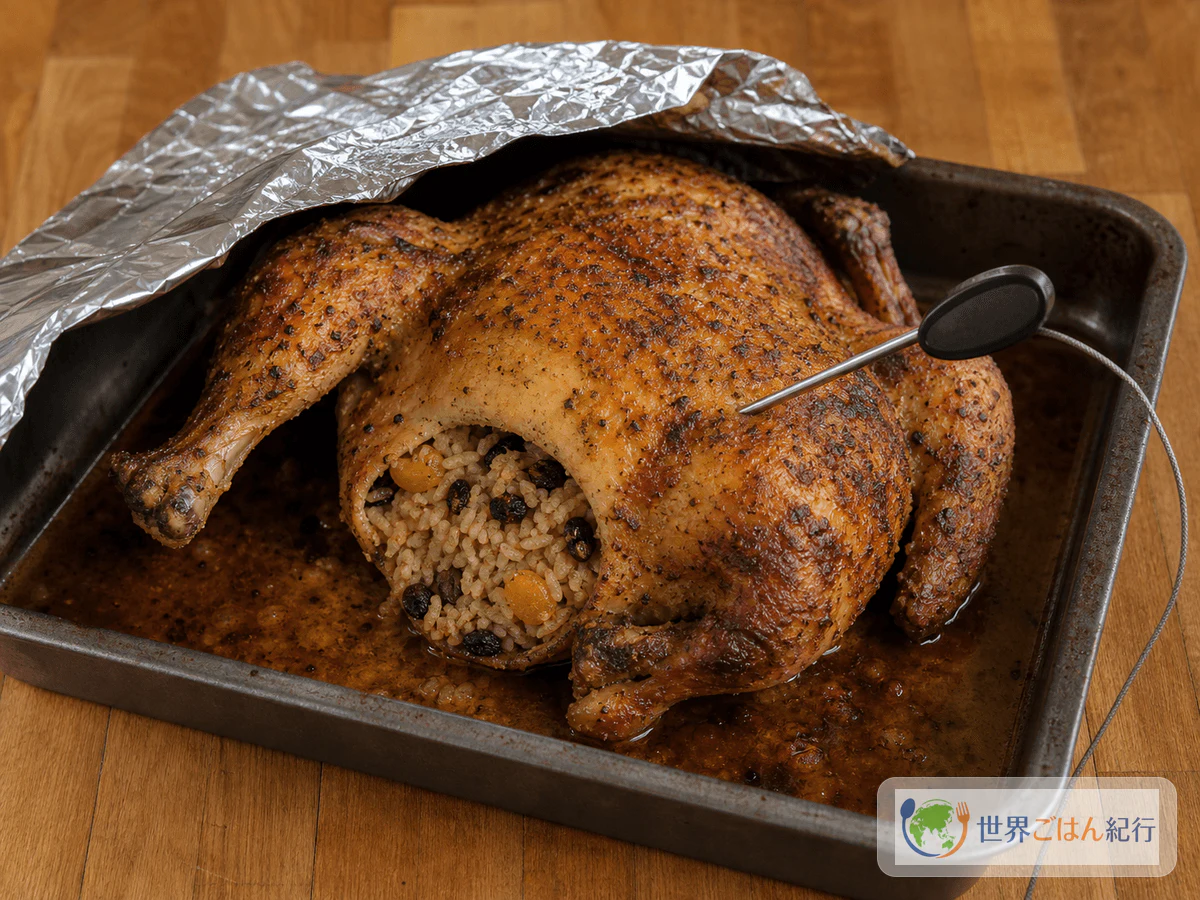
On the day you roast a whole chicken, the kitchen turns a little festive. Butter foams at the bottom of the pan, chicken fat mingles with onion, and partway through, the sweet smell of raisins and apricots joins in. Armenian amich (ամիչ) is the stuffed chicken that comes out of that fragrance: a whole bird filled with rice, dried fruit and nuts, warm with cinnamon and cloves, rich with butter.
Amich in Armenian cooking
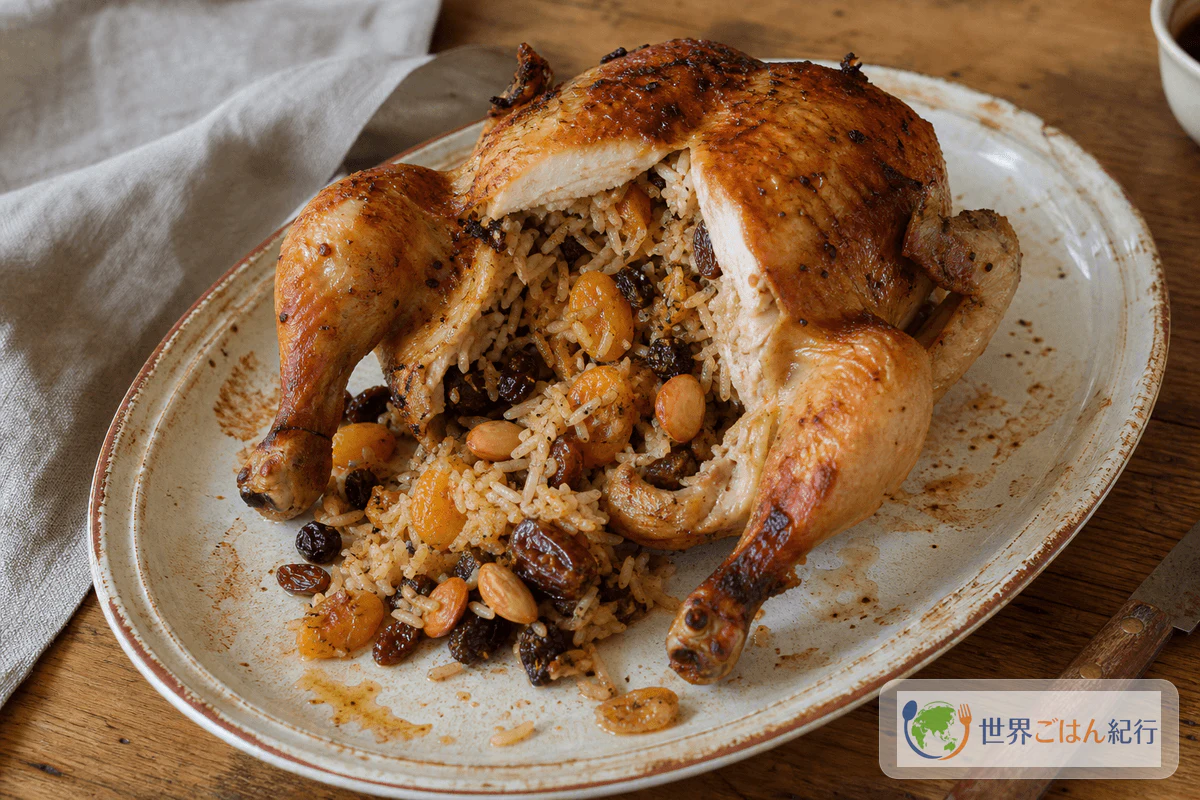
Amich is rice, dried fruit, nuts and spices stuffed into a whole chicken or turkey, or in some regions lamb or wild birds, and cooked in a tonir. In modern home kitchens the usual version is a whole chicken filled with rice, apricots, raisins, dates, almonds, cinnamon and cloves, then roasted with butter.
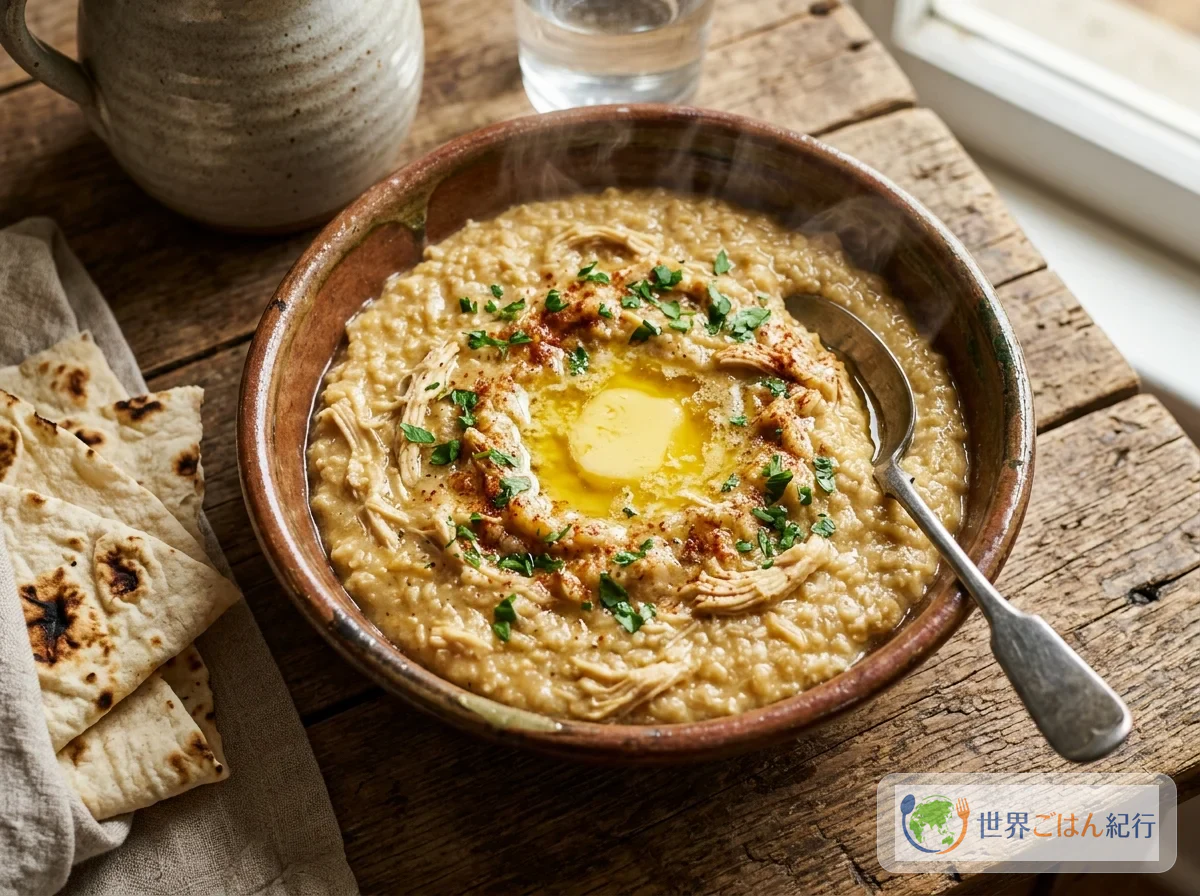
Its relatives show its character. Harissa is plainer, chicken and wheat simply worked together into something quiet and heavy. The festive ghapama uses the same rice and dried fruit filling, but inside a pumpkin instead of meat. Amich is the showy one, all rice and fruit, yet like the others it turns a few ingredients into a full dish, given time.
Cooking amich at home
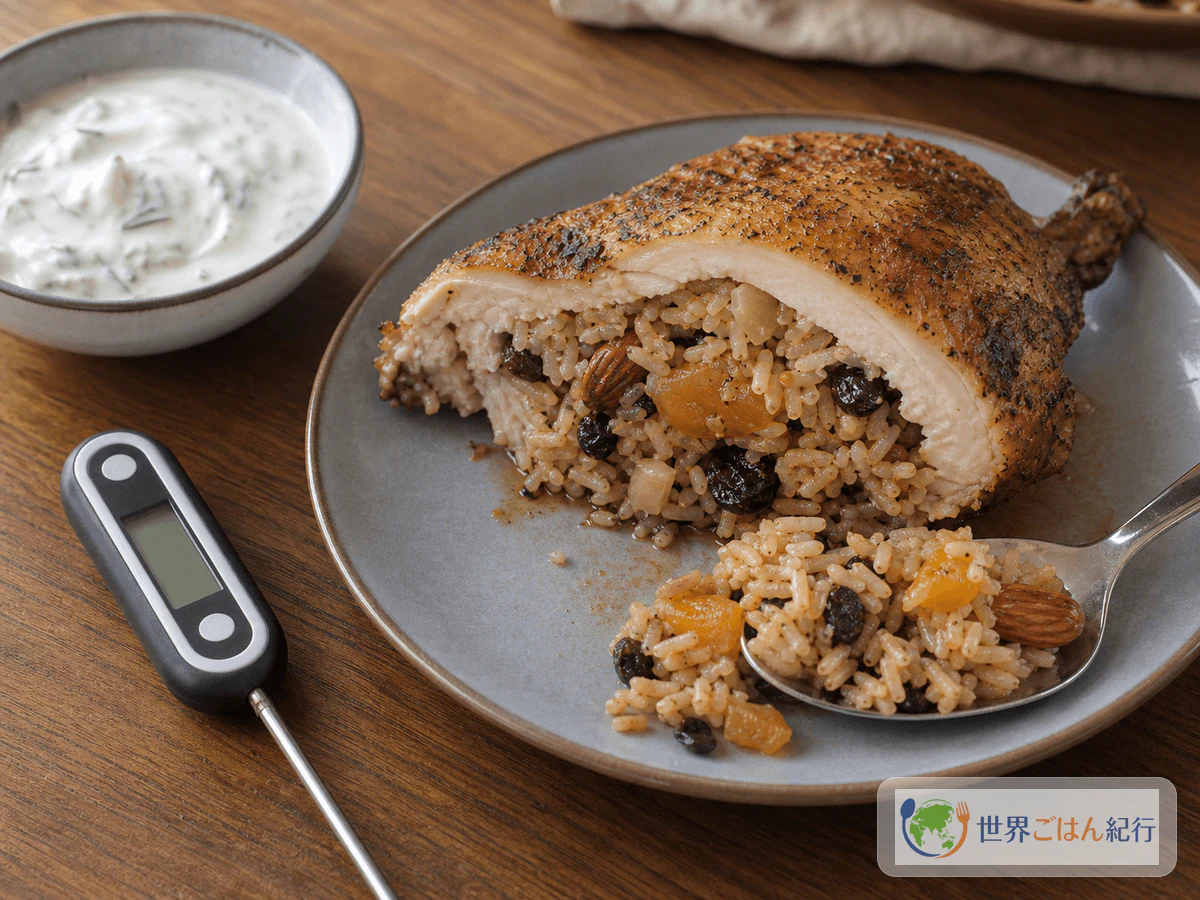
The hard part at home is cooking it through safely, more than the seasoning. A whole stuffed chicken can look beautifully browned while the rice at the center is still lukewarm. Par-boil the rice first, cool the filling, pack it in loosely, and check both the thick parts of the bird and the center of the stuffing with a thermometer. The center of the stuffing must reach 165°F, about 74°C.
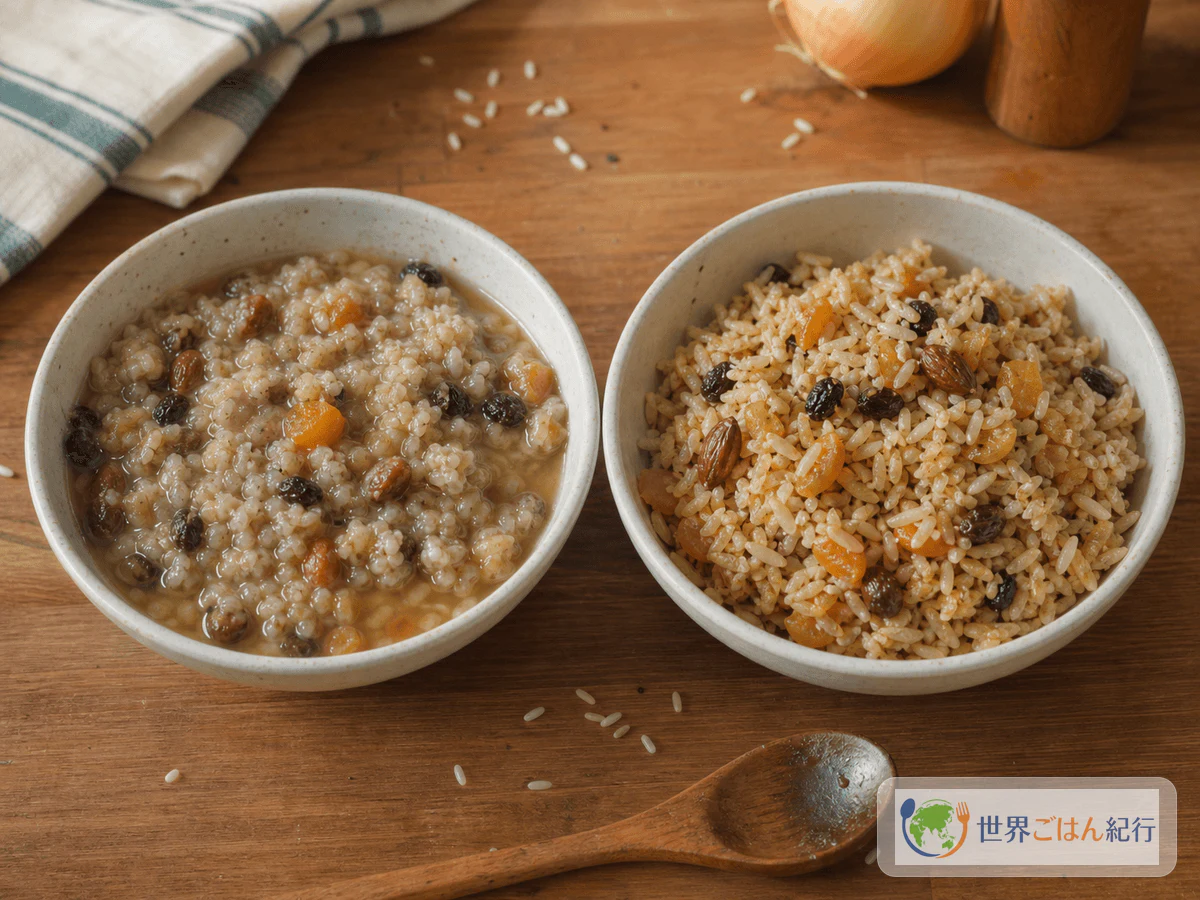
Think of the rice as cooked halfway before it goes in, then finished by the chicken's fat and the steam of butter. Treat amich as roast chicken stuffed with ready-made pilaf and the rice turns watery.
| What to watch | What is described locally | Compromise for a home kitchen |
|---|---|---|
| Meat | Chicken, turkey, lamb, game and so on | A 1.2 to 1.4 kg (about 3 lb) whole chicken is manageable at home |
| Filling | Rice, raisins, apricots, dates, almonds | Parboil long-grain rice; lightly sauté the fruit and nuts |
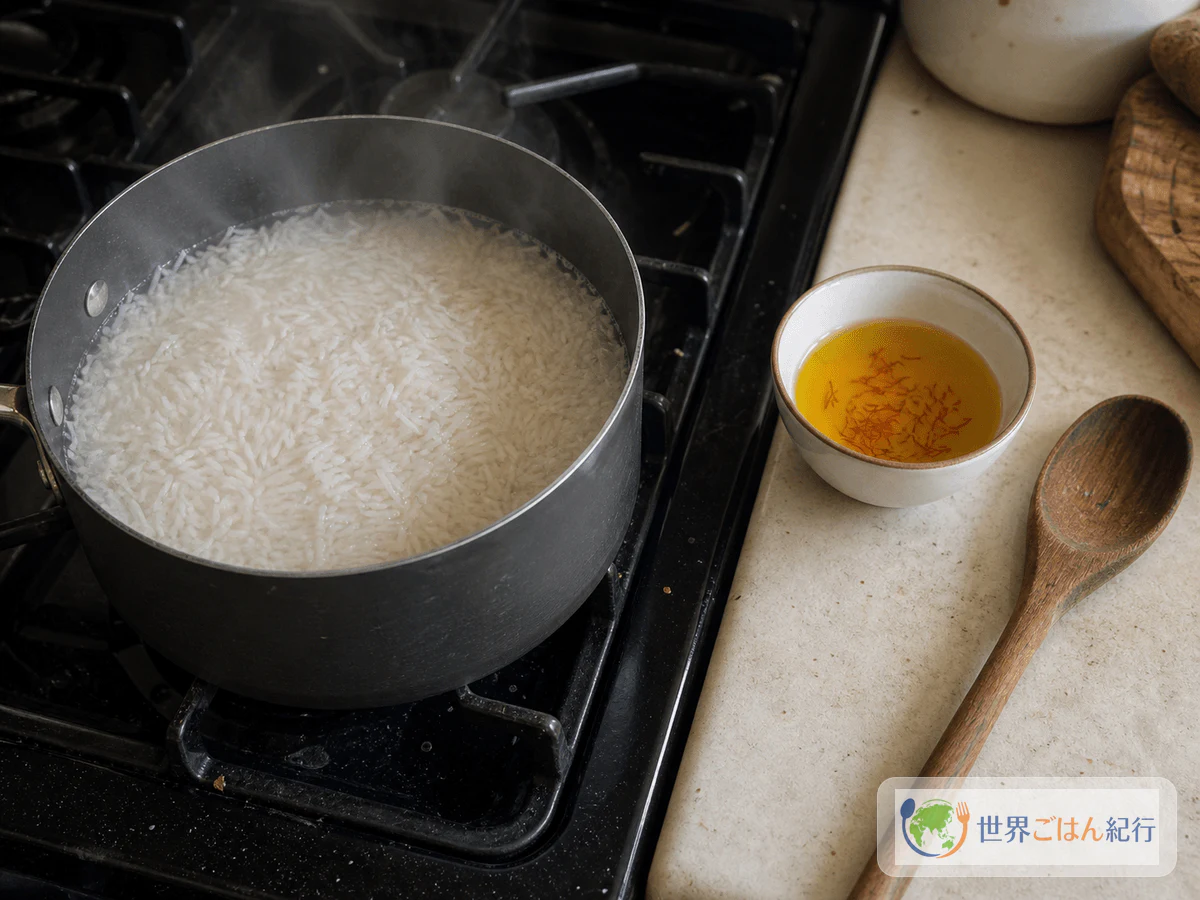
| Aroma | Butter, cinnamon, cloves, herbs | A little saffron brings up the aroma of the rice |
| Cooking | Roasted in a tonir or oven | Start at 375°F (190°C) and finish at 350°F (175°C) until cooked through to the center |
| Safety check | Judged by look and experience | Bring the thick part of the chicken and the center of the stuffing to at least 165°F (74°C) |
Stuff the rice before it is fully cooked, keep the dried fruit from scorching, keep the bite of the nuts, roast with plenty of butter, and check the core temperature of the stuffing. On days when a whole chicken feels daunting, bake the stuffing in a separate dish and serve it beside roast chicken. It gets you quite close in flavor.
Ingredients (serves 4)
One whole chicken serves 4. A bigger bird looks grander, but in a home oven the stuffing at the center is slow to warm. Choose 1.2 to 1.4 kg (about 3 lb), and don't push in all of the filling.
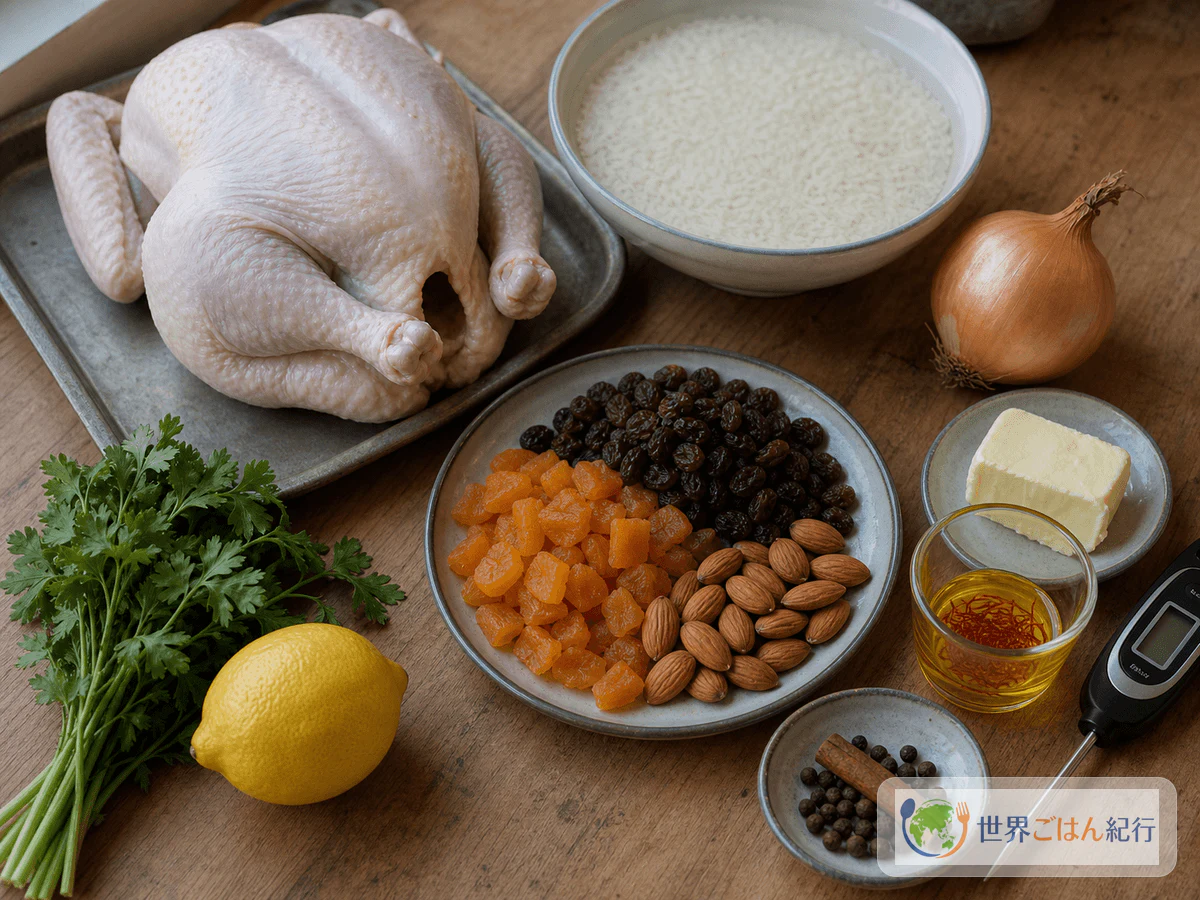
This recipe uses chicken, dairy and tree nuts. If anyone has a nut allergy, it is not enough to leave out the almonds; watch for dried fruit processed in the same facility. Wash hands, cutting boards and knives that touched raw whole chicken before they touch the rice or finishing herbs. Always cool the filling before packing it into the chicken, and confirm that the center of the stuffing is at least 165°F (74°C) when it comes out of the oven.
Choosing ingredients for amich
The whole chicken, onion, butter, lemon and parsley come from any local store. Worth seeking out are saffron for aroma, basmati to keep the grains distinct, and a thermometer for checking the core temperature.
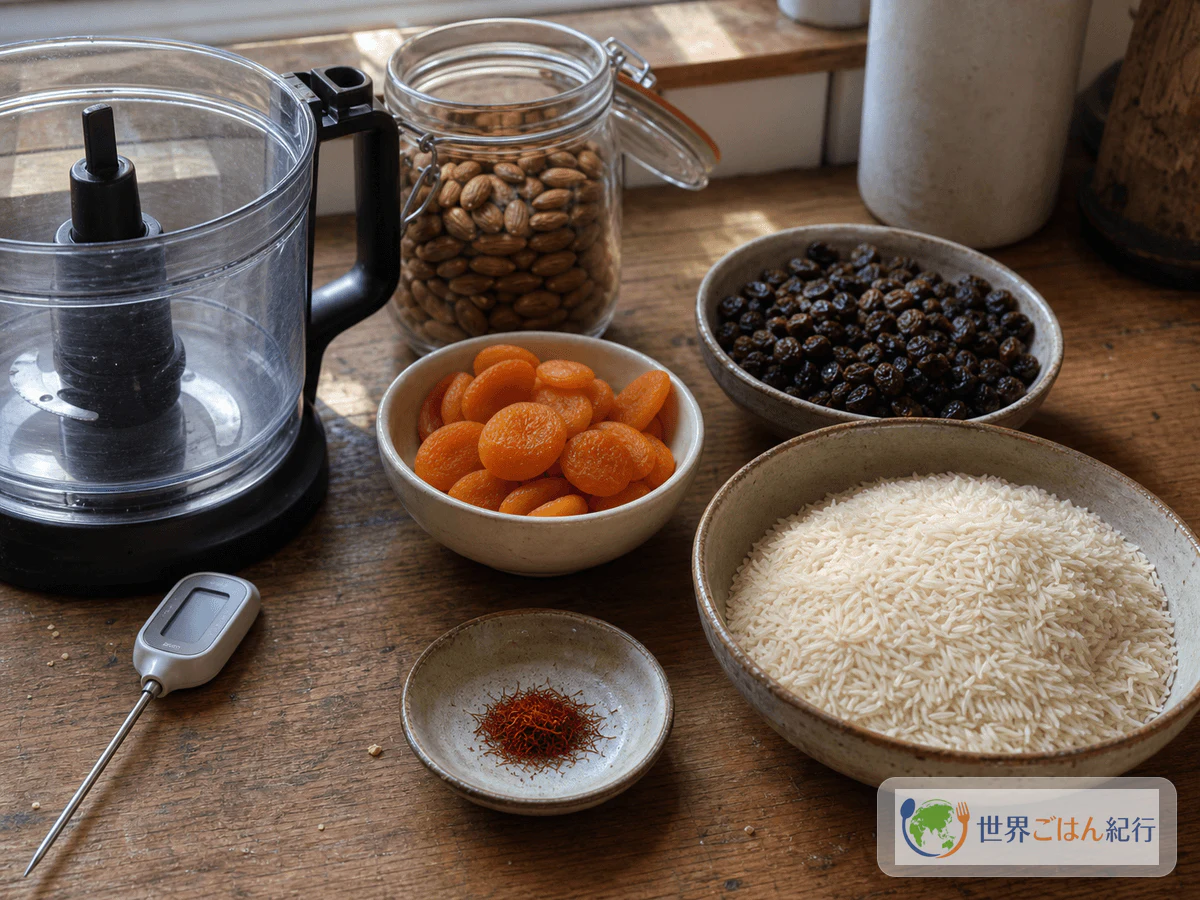
Saffron is optional. Amich holds up with the sweet aroma of cinnamon and cloves alone, but a small amount lifts the rice a notch, and as it steams inside the chicken its yellow fragrance gives the dish a festive feel.
Short-grain rice works too, though it turns sticky easily. Drain it well after parboiling and take care that it doesn't go gluey once you sauté the filling. If you want loose grains, basmati is easier to handle.
Chop the dried fruit and nuts with a knife. A small food processor helps only when the quantity is large; pulse briefly to even out the pieces rather than powder them, and you'll get a clean cross-section when you carve.
A stuffed whole chicken can't be judged by the color of its skin, which is why the thermometer matters. It keeps the breast from drying out and tells you when the center of the stuffing is safe.
Method: don't overstuff, and finish by core temperature
How amich turns out depends on how much you stuff and when you stop roasting. Packed tight, the center is slow to warm, and by the time the skin is done the inside is still lukewarm. Fill the cavity only to 70% and bake the leftover stuffing in a separate small dish. This is the safest way to cook it through.
Common amich problems and fixes
A stuffed chicken looks impressive, but the causes of failure are plain: the rice's moisture, how much you stuff, and the core temperature. Watch those three and you won't go far wrong.
| Problem | Cause | Fix |
|---|---|---|
| Rice is sticky | Cooked too long, or short-grain rice turned gluey | Next time stop the parboil at 8 minutes and drain 3 minutes |
| Rice inside is lukewarm | Overstuffed, or the chicken is too large | Fill to only 70% and check the center at 165°F (74°C) or above |
| Only the skin scorches | Too long at 375°F (190°C), too much heat on the breast | Lower to 350°F (175°C) at 20 minutes and put foil on the breast |
| Dried fruit is bitter | Over-sautéed, or scorched on the pan bottom | Sauté the filling 3 minutes over medium-low heat and keep moisture in the pan |
| Juices run when cut | Not rested enough | Rest 20 minutes after roasting before cutting |
If you're unsure, keep some filling out of the bird and bake it separately in the same oven (see the FAQ below). The flavor is nearly the same.
Serving and storing amich
Serving and pairing
Set the chicken in the center of the plate and spread the stuffing around it, letting a little spill from the cavity rather than packing it all back in. Instead of carving everything at once as at a big local feast, make a show of the first presentation and then serve at the table, which keeps the aroma.
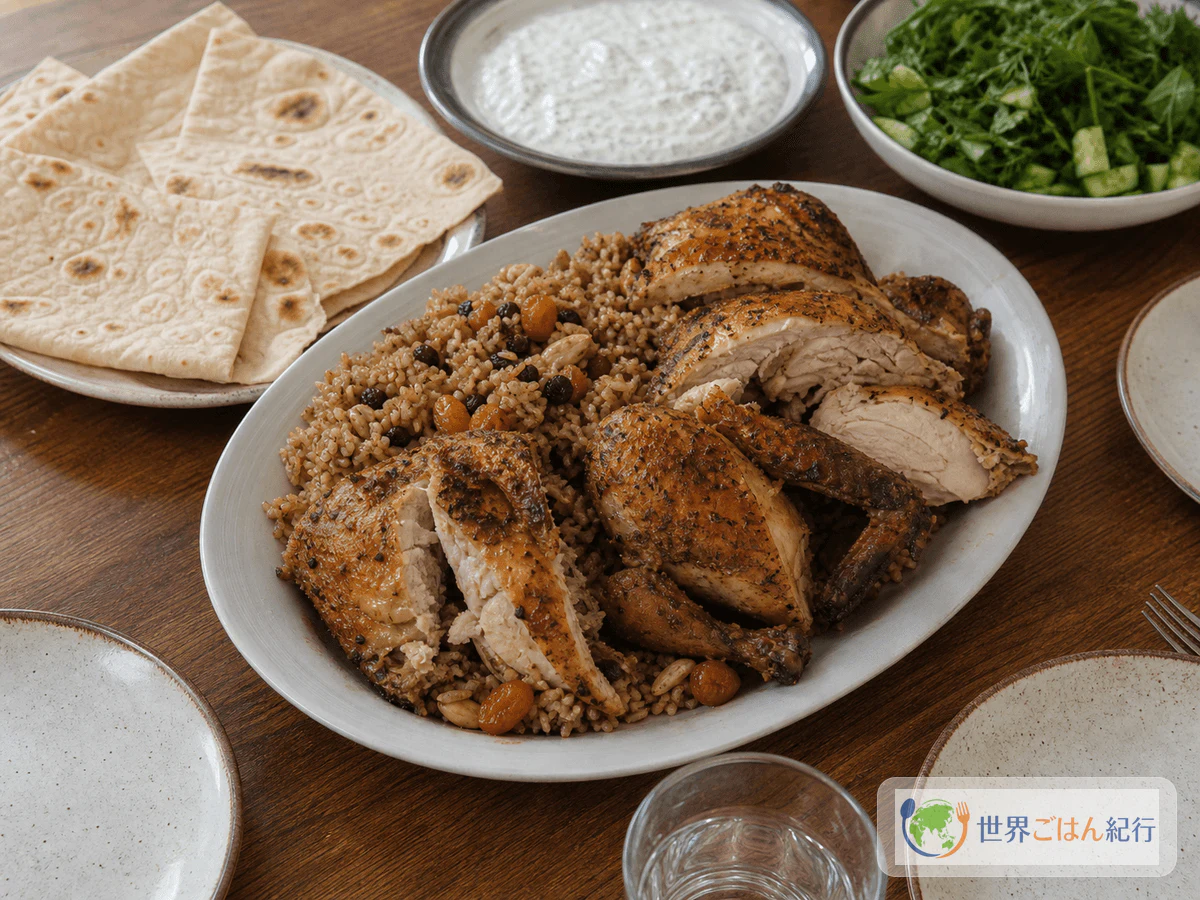
What you want beside it is acidity and moisture. A sauce of strained yogurt mixed with 1 g salt, 2 tsp lemon juice and 5 g chopped parsley keeps the sweetness of butter and fruit from getting heavy. Thin lavash or pita, wrapped around a little rice and juices, goes well too.
For the first serving, put breast, rice, roasted onion and yogurt sauce on the same plate, then let everyone take the parts they like. If it leans too sweet, scatter 2 tsp chopped dill or mint to lighten the dried-fruit aroma.
| Accompaniment | Role | Easy substitutes |
|---|---|---|
| Lavash | Wraps rice and juices | Pita, thin tortilla |
| Yogurt sauce | Cuts the sweetness of butter and fruit | Strained yogurt, lemon, salt |
| Herbs | Lift the aroma | Parsley, dill, mint |
| Pickles | Keep the meal from feeling heavy afterward | Quick-pickled cucumber, pickled red onion |
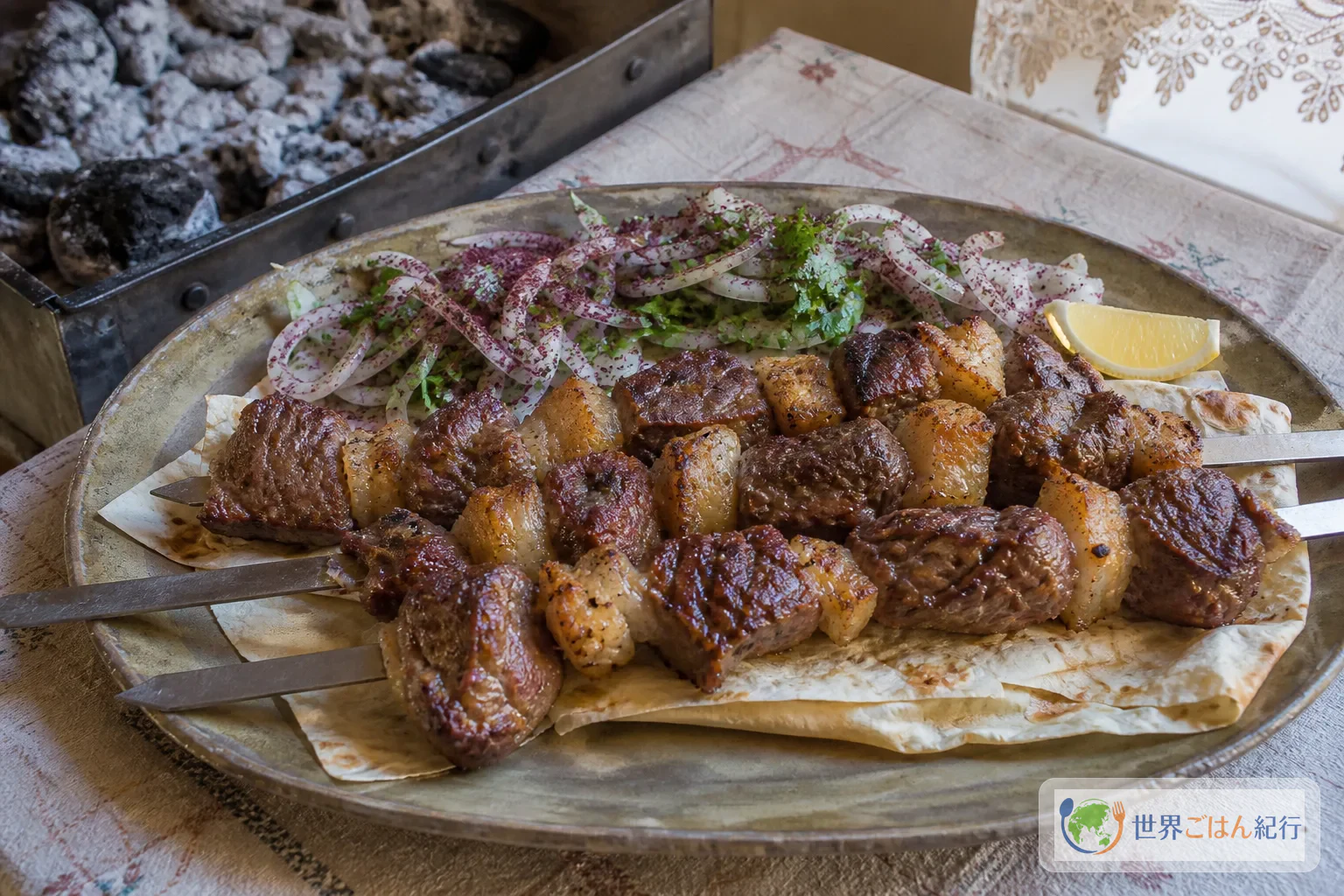
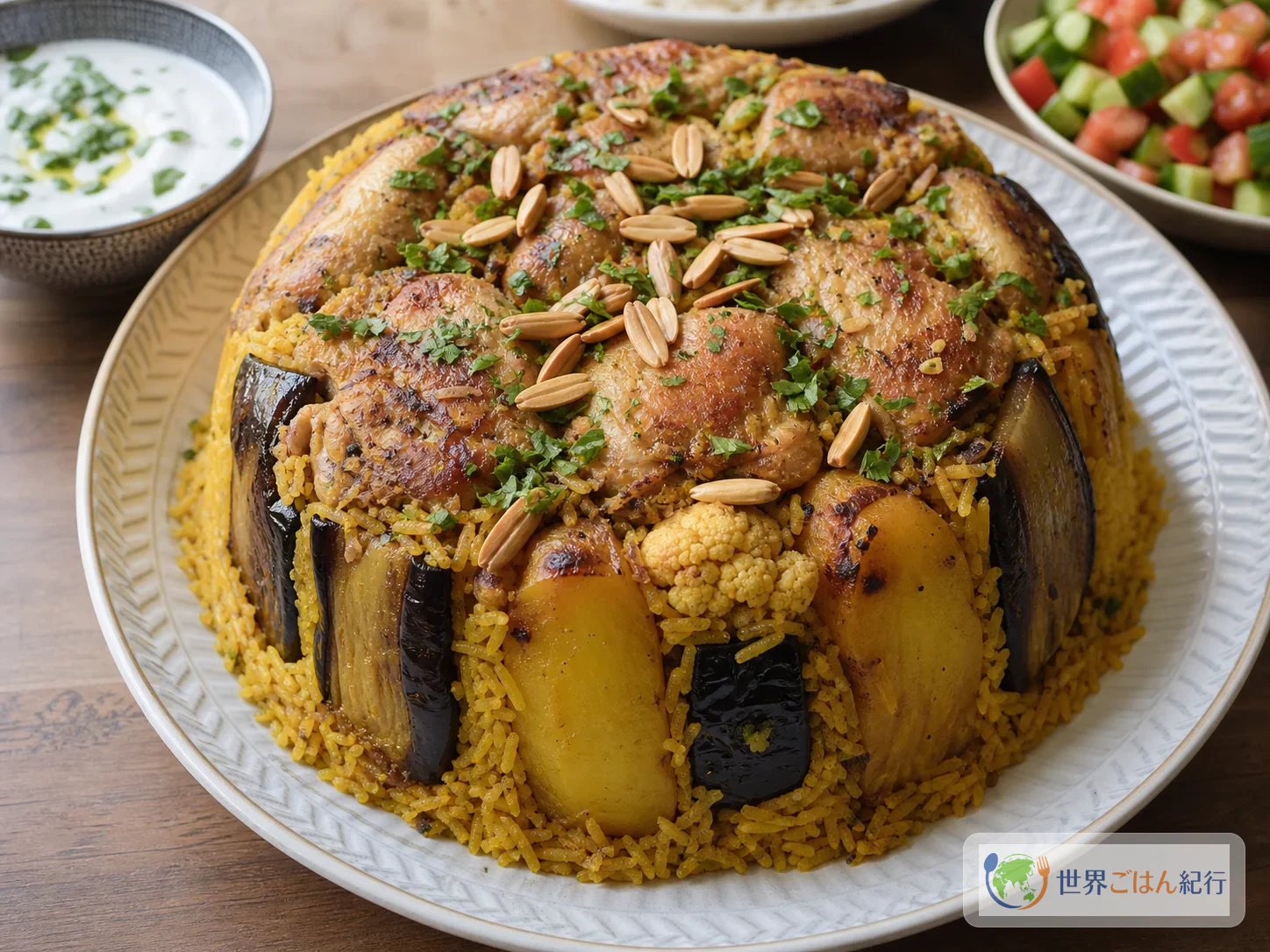
For an Armenian menu, start with grilled eggplant and herbs, follow with a light chicken soup, and bring out amich as the centerpiece. For a plainer dish to compare, try harissa. Georgia's satsivi shows the nuttiness of the Caucasus, and Azerbaijan's shah plov shows the range of sweet rice dishes around the region.
Storage and reheating
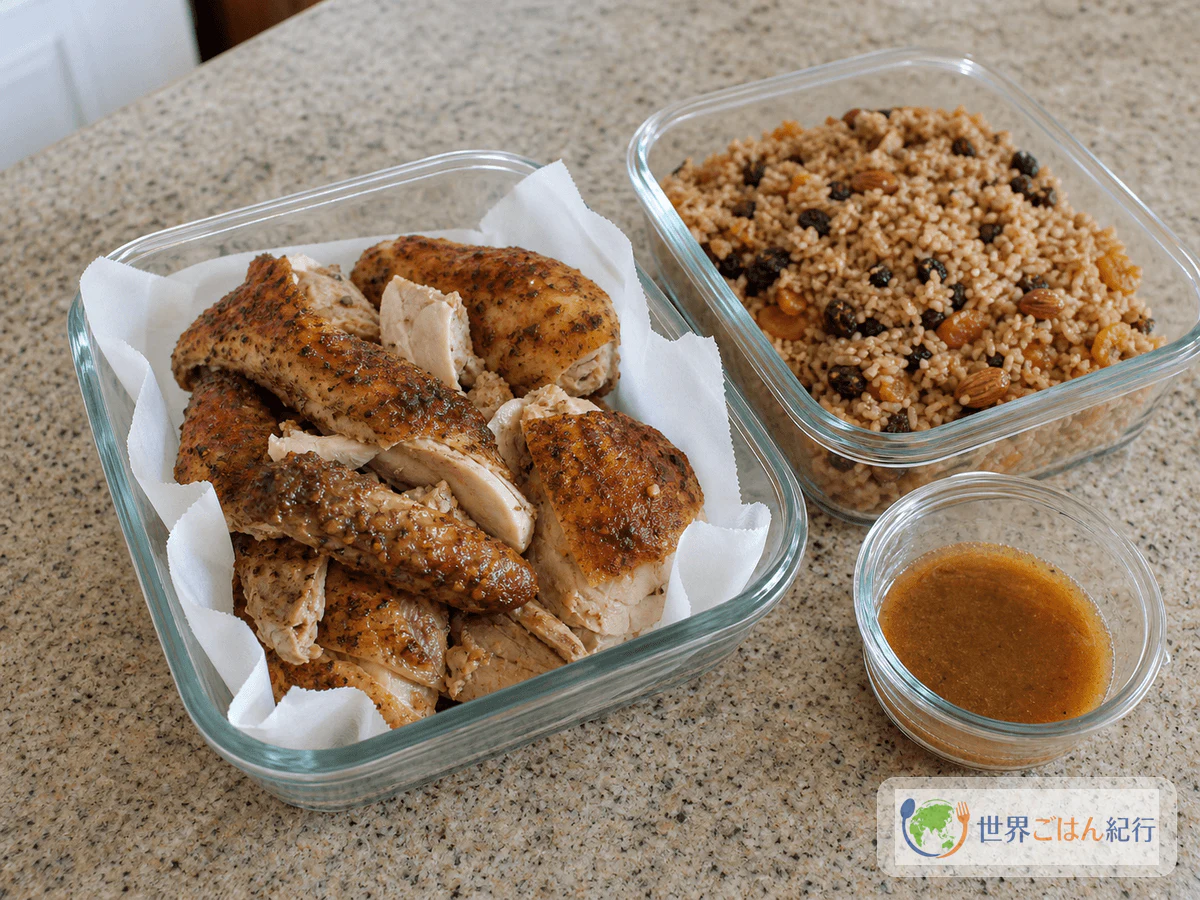
Never refrigerate a stuffed chicken whole. The rice inside takes a long time to cool, which raises the food-safety risk, so once you've finished eating, move the stuffing, the chicken and the pan juices separately into shallow containers.
| Storage | Duration | Reheating |
|---|---|---|
| Refrigerator | 2 days | Store chicken and stuffing separately in shallow containers |
| Freezer | 3 weeks | Debone the chicken and wrap the stuffing flat |
| Reheating | To 165°F (74°C) at the center | 10 to 12 minutes in a 350°F (180°C) oven, or at least 2 minutes at 600 W |
To reheat the stuffing, sprinkle it with 1 tbsp pan juices or water, cover loosely with plastic wrap and microwave. Warm the chicken in a toaster oven or the oven, which brings back a little of the crisp skin. Heat both through to the center, and if any part is lukewarm, add 1 minute at a time.
FAQ
For your first batch, put temperature and how much you stuff ahead of looks.
Can I make it with bone-in thighs instead of a whole chicken?
Yes. Spread the filling in a baking dish, set 4 salted bone-in thighs on top, and bake at 375°F (190°C) for 20 minutes and at 350°F (175°C) for 25 to 30 minutes. Cook until the chicken's center is 165°F (74°C) and the filling is hot through the center as well. It lacks the look of a whole bird, but the flavor is quite close.
Can I make the filling the day before?
Yes, up to the point of parboiling the rice and sautéing it with the fruit; refrigerate it in a shallow container. Stuff the chicken only right before roasting, never ahead of time. If the filling is cold, add 10 to 15 minutes to the roasting time and judge by core temperature.
Can I make it without nuts?
Yes, though the texture is a little weaker. If you omit the 1.5 oz (45 g) almonds, increase the rice to 6.5 oz (180 g) and the dried apricots by 20 g. If anyone has a nut allergy, omit them entirely rather than substituting other nuts, and check the production-line labeling of the dried fruit you use.
Can I make it without saffron?
Yes. Increase the cinnamon to 1.2 g and the allspice to 0.7 g, and mix just 0.5 g grated lemon zest into the filling. Turmeric added only for color makes it look more like curry than amich, so skip the yellow on your first try.
What do I do with leftover filling?
Spread it thinly in a baking dish, sprinkle with 2 tbsp water or chicken stock, cover with foil and bake 25 minutes in the same oven as the chicken. Remove the foil for the last 5 minutes and the rice on top turns a little toasty. It is safer and tastier baked separately than forced into the bird.