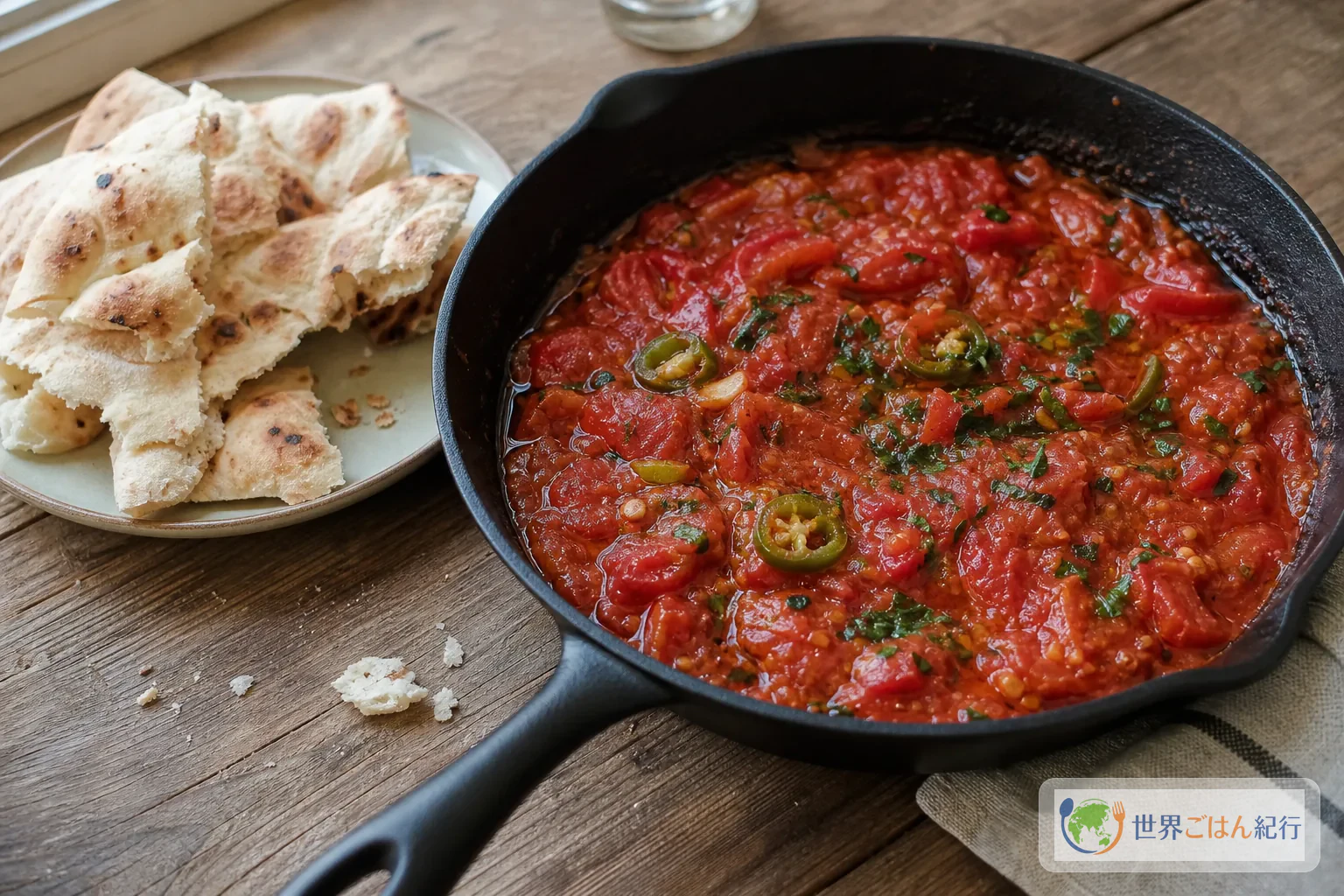
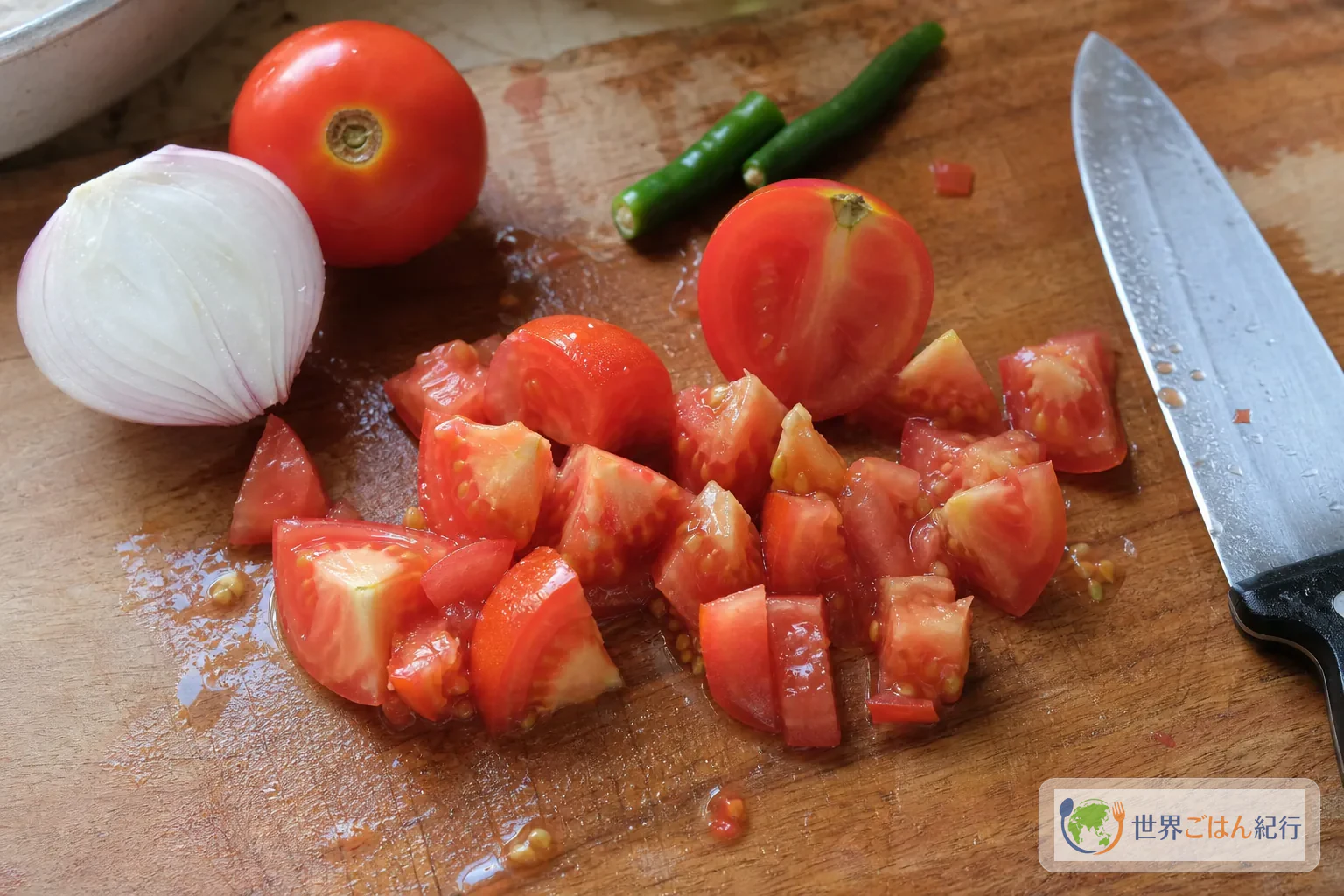
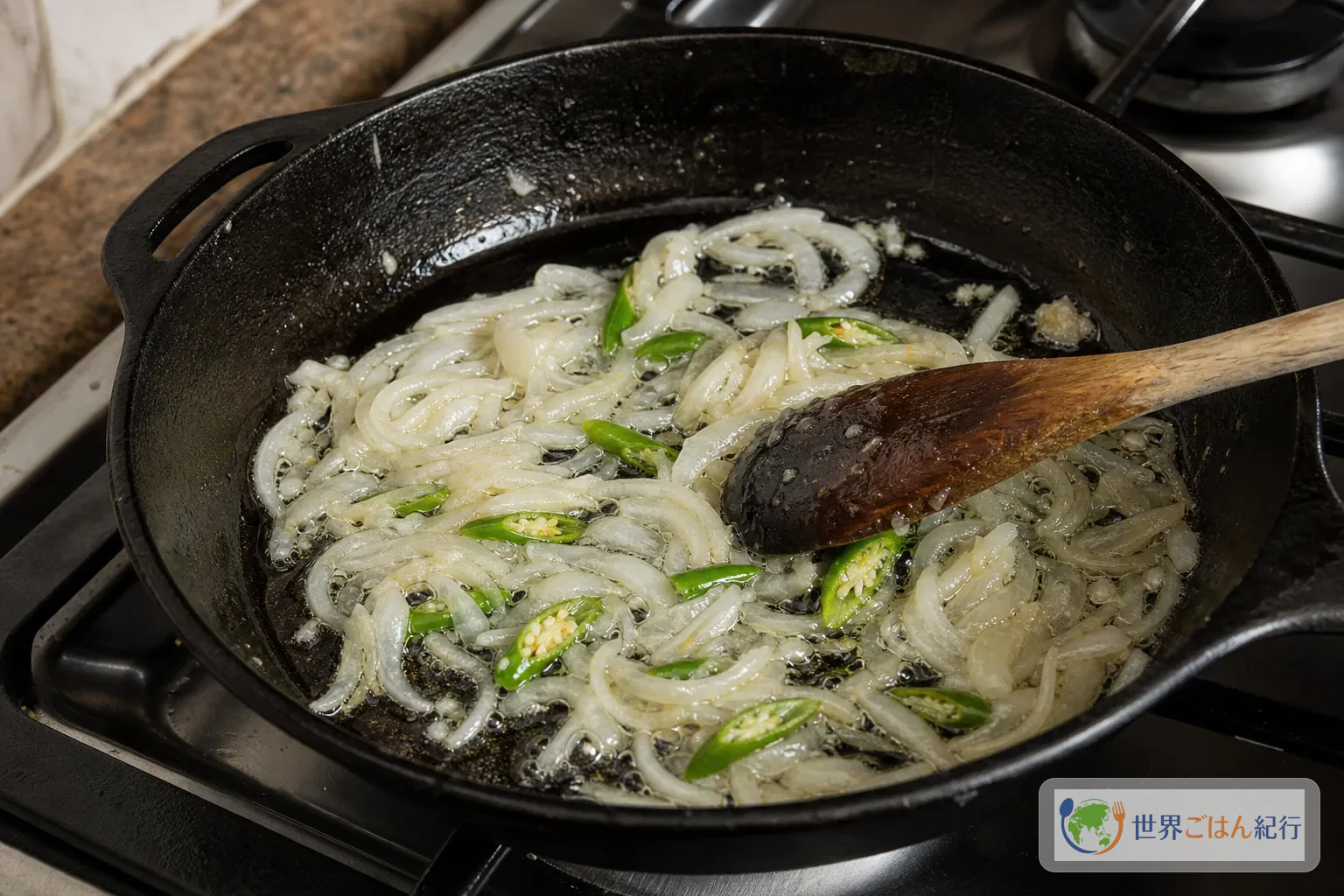
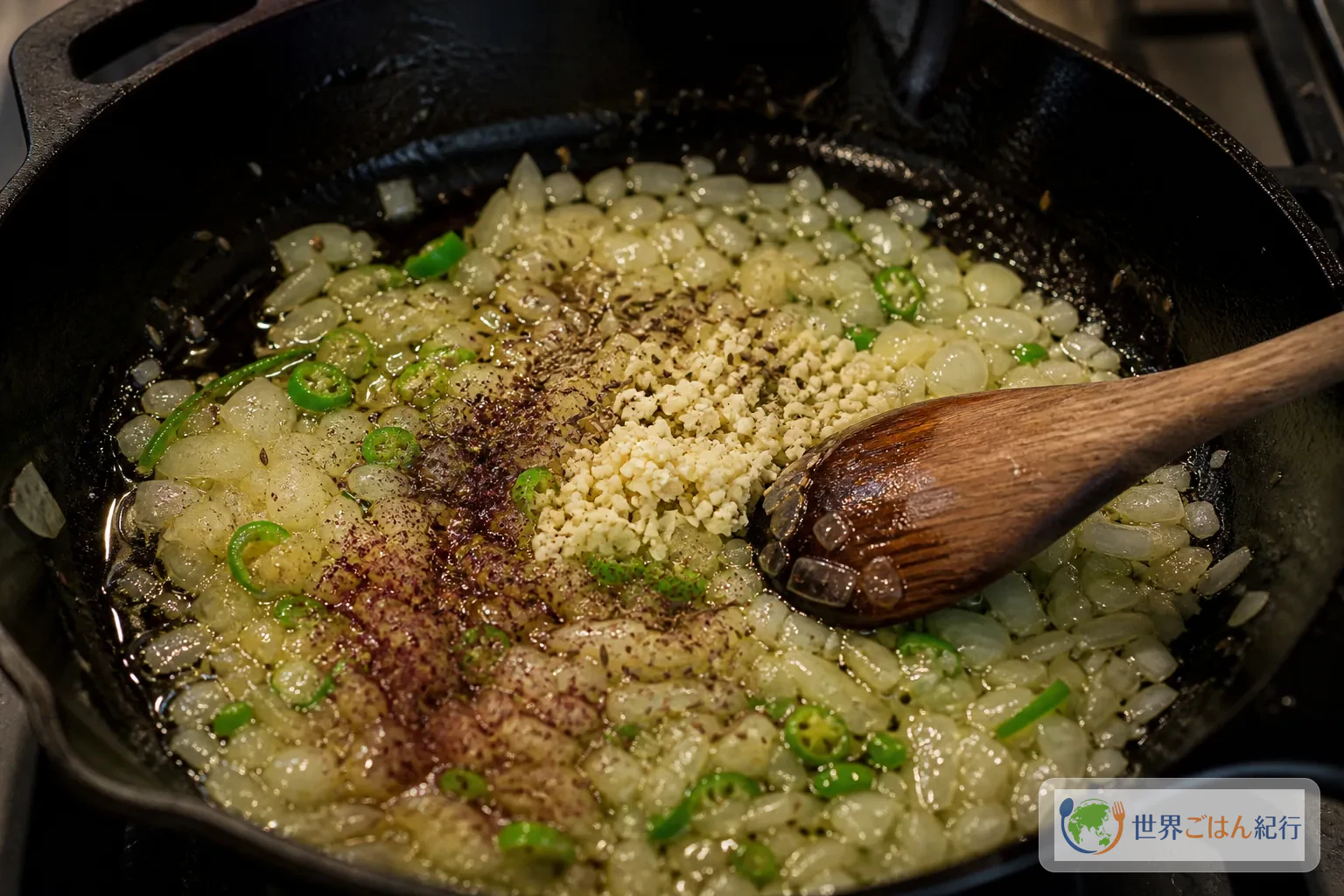
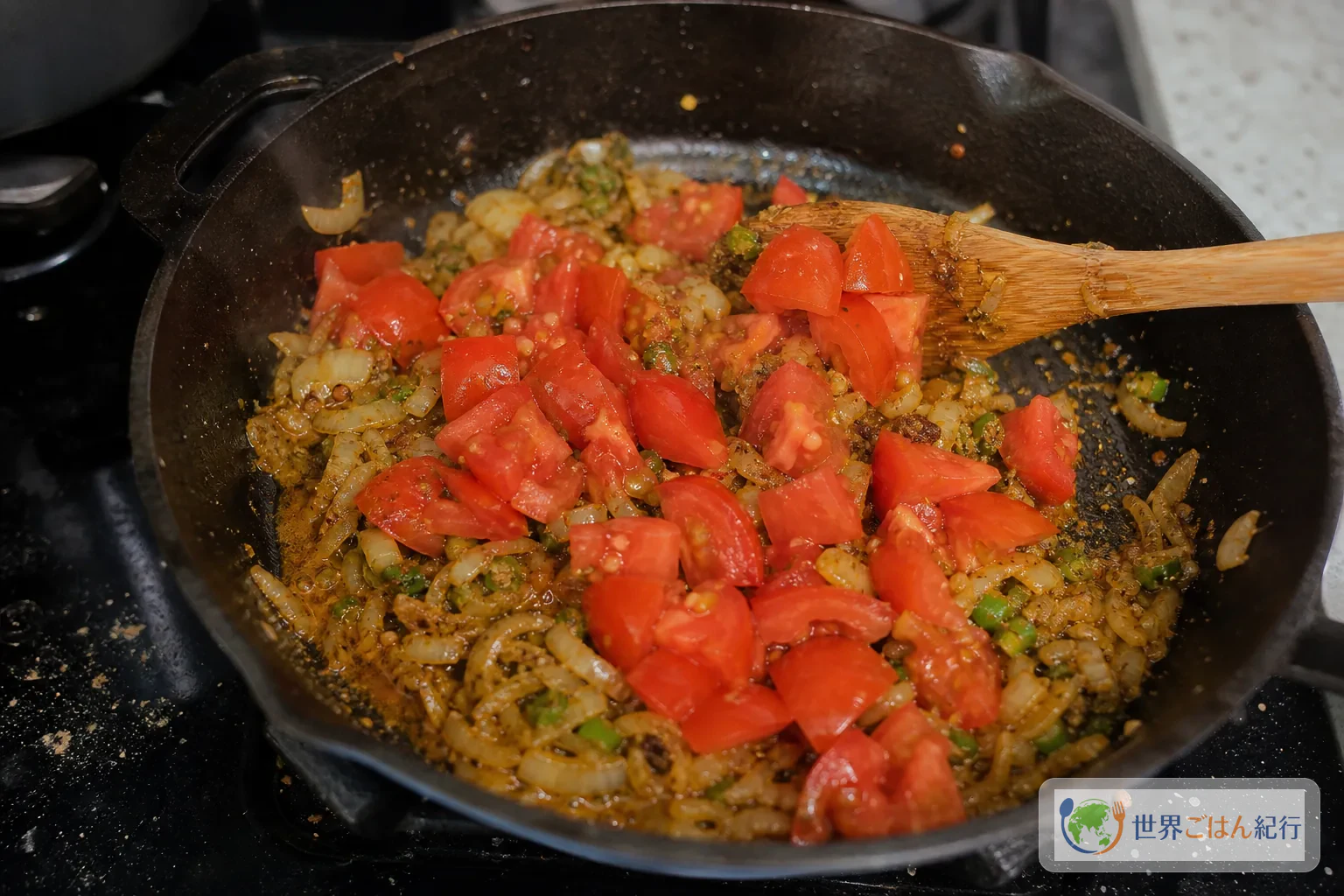
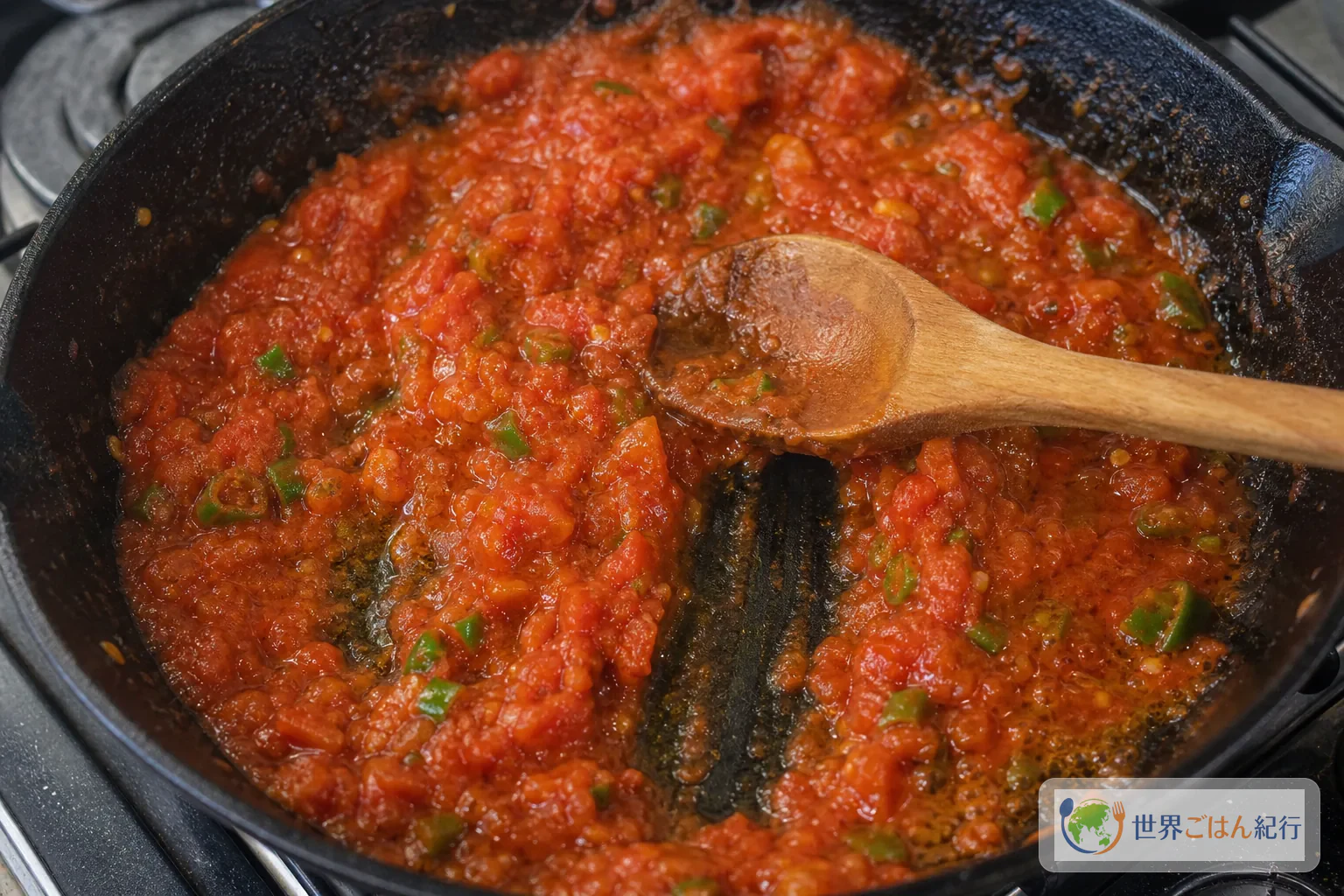
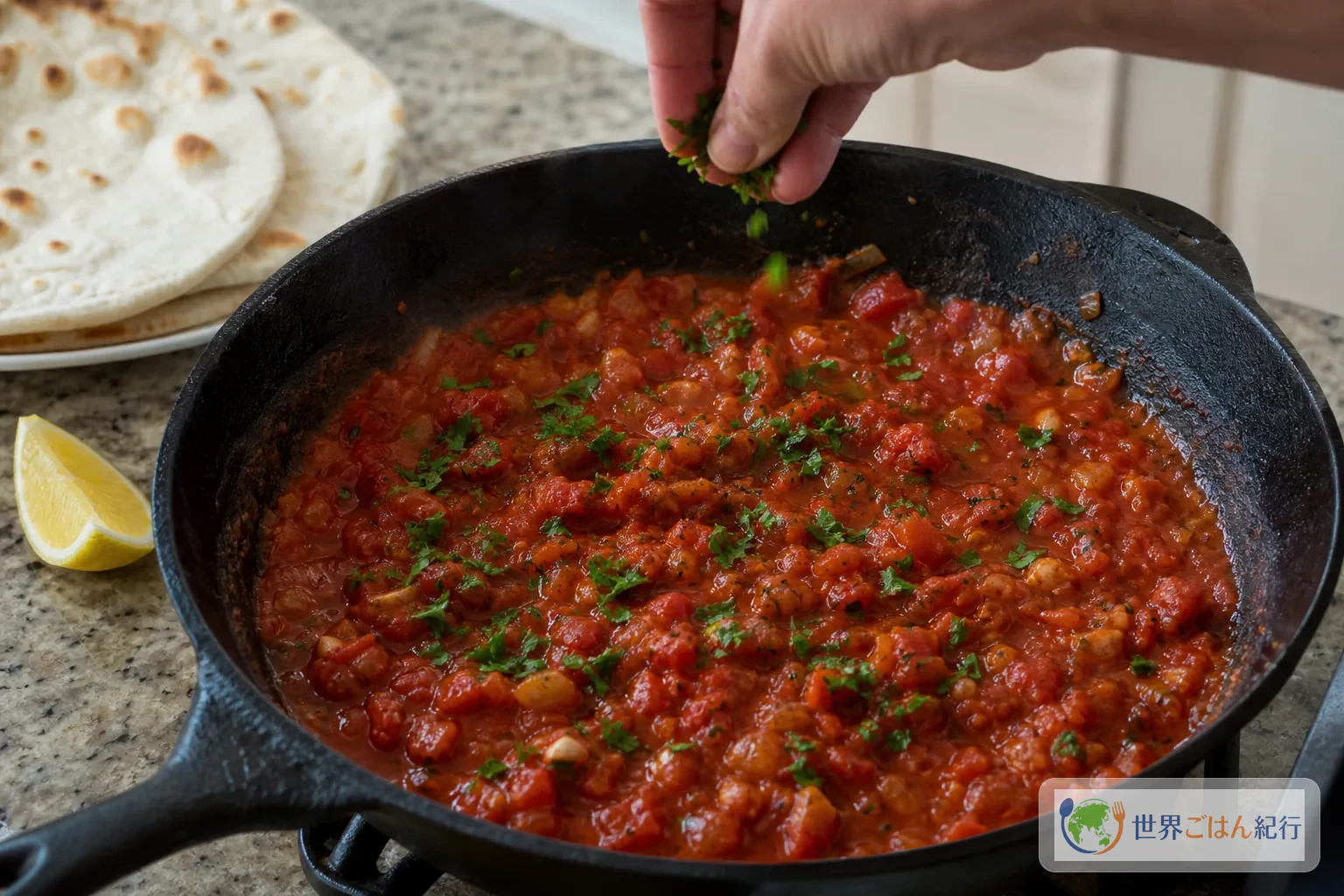
When you press a tomato with a wooden spoon, juice runs out from under the skin and the olive oil at the edge of the pan turns red. While there's still plenty of liquid it runs off any bread you bring near it, but as it reduces, the flesh thickens until the spoon's trail slowly fills back in. Galayet bandora is a dish you cook by watching that change. Ripe tomatoes, onion, garlic, and green chili are cooked down in olive oil, with cumin and sumac adding aroma and a little acidity. The result is a soft, oily, gently sharp tomato dish made for scooping onto bread.
Galayet Bandora in Jordan and the Levant
Where and how it is eaten
In Arabic the dish is written قلاية بندورة, and the English spelling varies: Galayet, Qalayet, or Alayet Bandora. It isn't only Jordanian. Households across the Levant, including Jordan and Palestine, cook tomatoes down with oil and aromatics this way, and across much of Jordan it is eaten at any time of day, especially in tomato season.
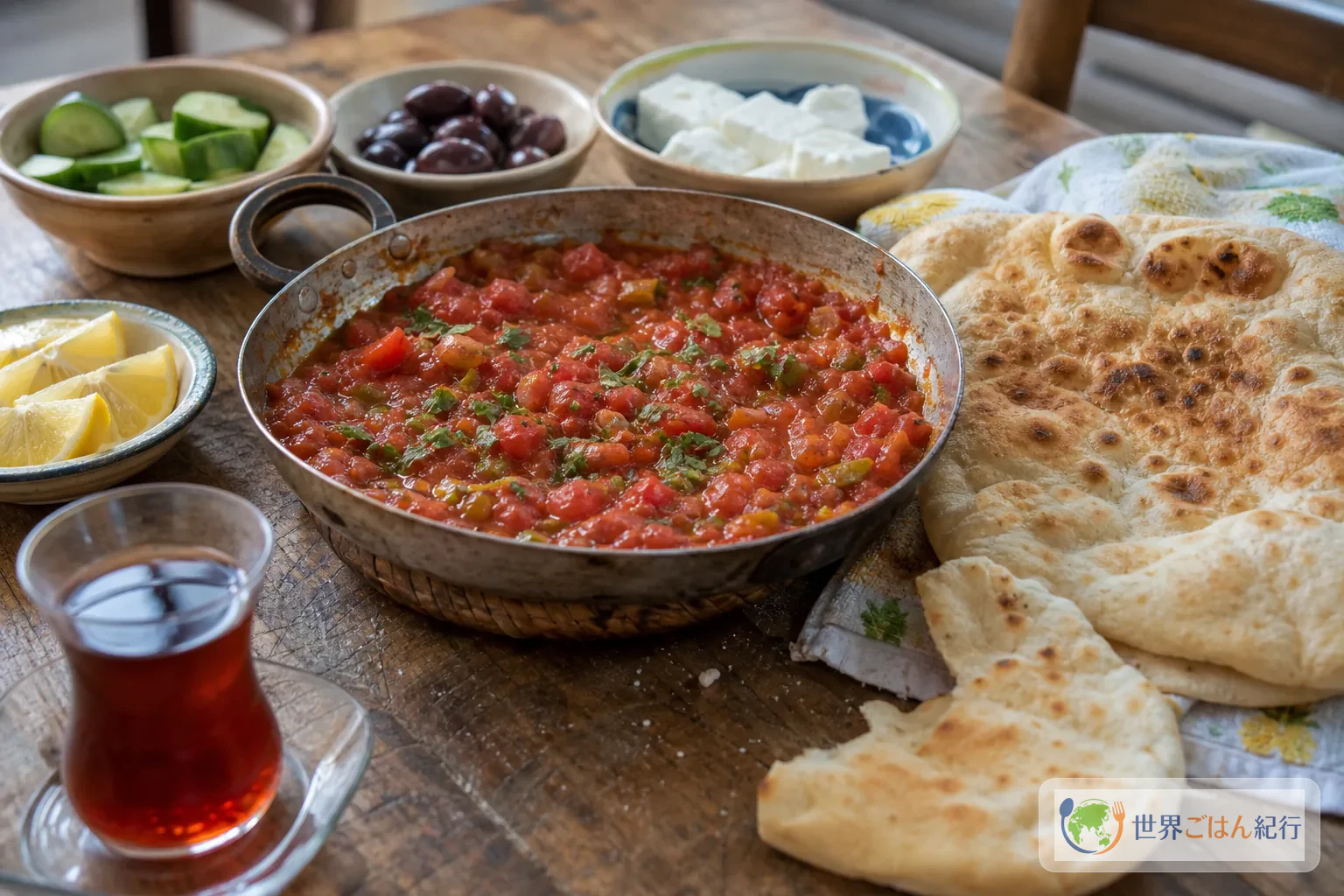
Khobez, the flatbread, comes with many meals and doubles as the utensil. With galayet bandora you scoop the flesh and oil together with the edge of the bread, and the flavor makes far more sense that way than spooning up the sauce like soup. It resembles shakshuka, but no egg is dropped in; the tomatoes themselves are what you eat. Served alongside bean and grain dishes such as balila and mujaddara, it makes an easy meal on days with little meat.
Regional versions
The same name covers more than one pan. In Ajloun and Jerash in northern Jordan, tomatoes were dried at the peak of the season and kept for use out of season, and some versions are baked in a clay oven or clay pot and topped with an egg. The skillet version here, with onion and green chili sautéed in oil, is one of several home forms.
In Palestine the differences between households are clear. Some cooks combine green and ripe red tomatoes, and others add garlic, parsley, pine nuts, and more. Green tomatoes bring acidity and bite, moving the flavor away from the summer pan made only with ripe tomatoes.
| Place and form | Difference in the pan | Judgment for recreating it |
|---|---|---|
| Basic Jordanian form | Sauté tomatoes, onion, green chili, and olive oil | Make ripe tomatoes the star and match how far you reduce them |
| Around Ajloun and Jerash | Dried tomatoes are stored, and it is baked in a clay oven or pot. Sometimes topped with an egg | Use dried tomatoes in small amounts, checking the salt. Serving the egg separately keeps the basic form |
| Palestinian households | Combinations of green and red tomatoes, garlic, herbs, nuts, and more | A few unripe tomatoes add acidity and bite. Add nuts only when you want to move it toward a different dish |
| Home kitchen | Tomato variety and moisture change with the season | Use 850 g–2 lb (900 g) of fresh tomatoes as the baseline, and in winter only, mix in some canned and adjust the reduction time |
Ingredients (serves 4)
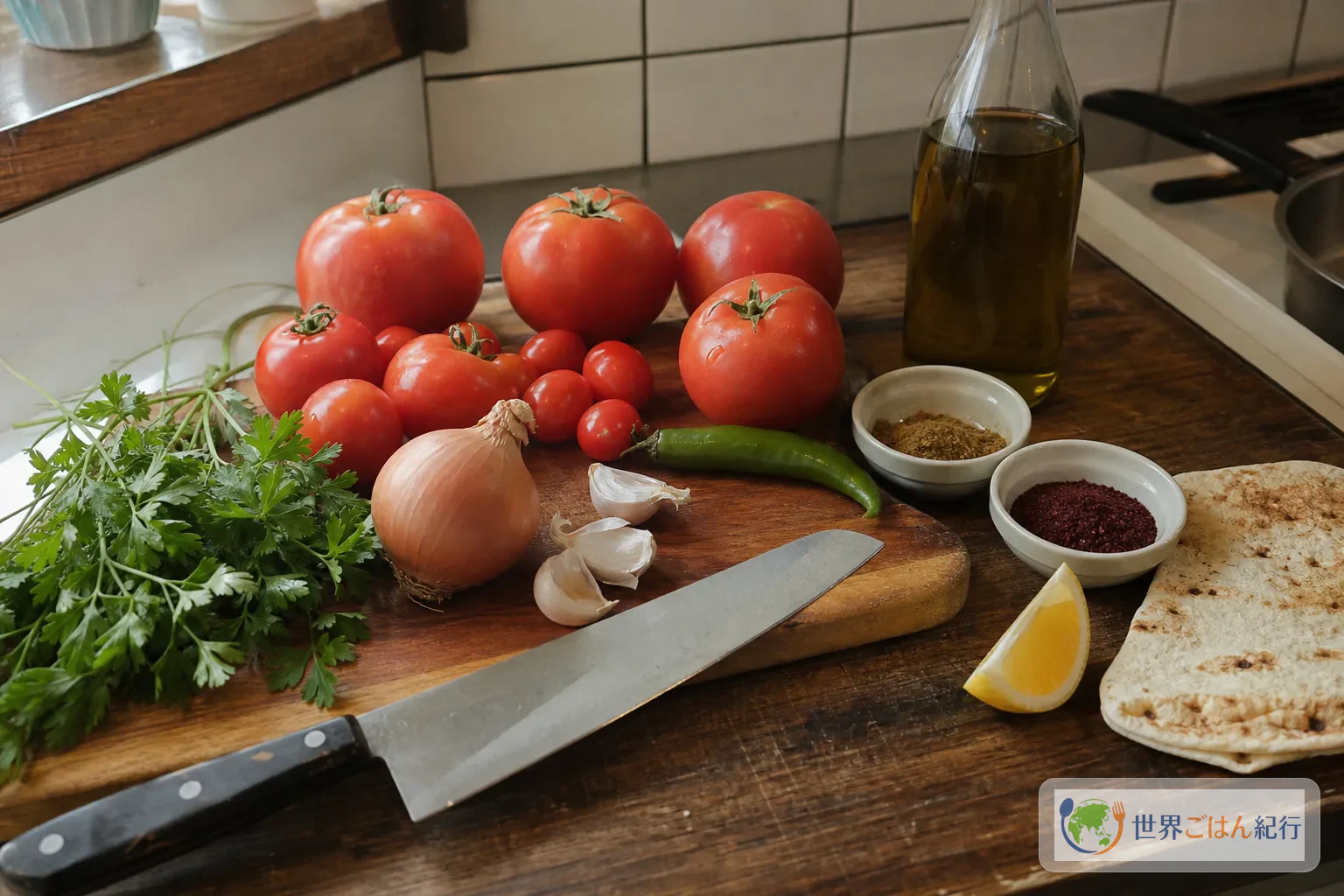
This dish can be made without dairy, eggs, or meat. The bread served with it contains wheat, so if you want to avoid wheat, substitute rice-flour bread or warm vegetables. If heat is not welcome in your household, swap the green chili for shishito peppers and add only acidity with sumac or lemon, which makes it easier to eat. Canned tomatoes, spices, and bread vary by brand, so if you have allergies, check the ingredient label on each package when you buy.
Ingredients worth keeping at home
Keep the amount of tomatoes and the olive oil, and the basic Jordanian form holds. The base is chopped tomatoes, onion, green chili, and olive oil, sautéed together. Whether to add garlic or egg varies from home to home. If you use fewer tomatoes and make up the difference with ketchup, the sugar and vinegar come forward and it becomes a different dish. When winter tomatoes are watery, mix in some canned tomatoes. If you make it with canned tomatoes alone, the acidity is strong, so increase the onion to 5.5 oz (150 g) and cook longer over low heat to bring out the sweetness.
Sumac is optional, but it gives a dry acidity different from lemon. If you have some left after buying it, use it in musakhan, baba ghanoush, grilled chicken, and onion salad. A small amount of cumin is enough. Rather than adding more, keep the garlic from burning so its aroma moves into the oil. That leaves the tomato's sweetness and the aroma of green chili.
When shopping, look for sumac, which can be hard to find on a usual shelf. Cumin is easy to use up in a small amount. Buy the tomatoes and onion locally. Only buy specialty ingredients for the aromas that anchor the dish, so nothing goes to waste. If you use sumac only once, substitute lemon zest and skip buying it. If you plan to cook other Middle Eastern dishes, such as grilled eggplant or chicken, with a dry acidity, buy more. Buy cumin only if you want a warm aroma on top of the tomato's acidity. If the cumin you have still smells fragrant, there is no need to buy more.
Choosing Ingredients and Substitutes for Galayet Bandora
The tomatoes and olive oil carry the dish, so those are the two things not to compromise on. The green chili is the easiest swap.
For the bread, pita is the natural choice. If you have none, naan, thin tortillas, or lightly toasted baguette all work for scooping.
Common Problems With Galayet Bandora
Here's what a finished pan should look like:
| What to look for | Target state |
|---|---|
| Tomatoes | Not a complete purée; some 0.5 inches (1 cm) or so pieces of flesh remain |
| Oil | A thin red film of oil seeps at the edge of the pan. It should not float watery |
| Heat | You can smell the green chili, but it is not so hot that your mouth hurts |
| How to eat | Wipe up even the sauce at the bottom of the pan with flatbread |
The most common mistake is rushing to finish by cooking off the liquid over high heat in one go. Only the oil at the bottom of the pan gets hot, and the garlic and spices burn while the tomato flesh is still watery. Working in two stages, drawing out liquid over medium heat and then reducing over medium-low, rounds out the acidity and keeps the tomatoes from running off the bread.
| Problem | Cause | Fix |
|---|---|---|
| Watery | Tomatoes very wet, or a lid was on | Remove the lid and reduce over medium-low heat 3 minutes at a time |
| Sour | Winter tomatoes, high share of canned | Add a little salt and 1 tsp of olive oil. Sugar is the last resort |
| Bitter | Burned the garlic or cumin | If it was before adding the tomatoes, start over. If after, do not add lemon |
| Too hot | Too many green chili seeds | Add 3.5 oz (100 g) of tomatoes and simmer over low heat for 5 minutes. Go light on the sumac finish |
| Flavor flat | Not enough salt or oil | Add in this order: a pinch of salt, 1 tsp of olive oil, a little sumac |
Serving and Storing Galayet Bandora
What to serve with it
Tomato acidity plays well against salty cheese, toasty bread, and rich meat, so it fits almost anywhere on the table.
| Occasion | Pair with | Reason for the combination |
|---|---|---|
| Breakfast | Flatbread, cucumber, white cheese, tea | Tomato acidity, cheese saltiness, and the toasty bread come together in one bite |
| Light dinner | Balila, grilled eggplant, salad | Beans and vegetables make it more filling than bread alone |
| Beside a meat dish | Grilled chicken, lamb skewers, kebab | The tomato's acidity meets the fat of the meat |
| Make-ahead lunch | Boiled egg, bread, leftover vegetables | Serving the egg on the side keeps the tomato flavor from blurring |
Storage and reheating
Refrigerate it in a clean container for up to about 2 days, and add parsley and lemon just before eating. You can freeze it too, but the tomato liquid separates easily after thawing, so freeze only small portions you'll use within 1 week.
A frying pan reheats it better than a microwave. Add 2 tsp of water, warm it over low heat for 2 minutes, and once it bubbles, cook off liquid for just 1 minute over medium heat. When the oil comes back to the surface, turn off the heat and add a little sumac or lemon. Leave it firmer for bread and a bit looser if it's going beside soup.
Leftovers can look like an all-purpose tomato stew, but ketchup or sugar will erase the Middle Eastern acidity. Lean on the oil and sourness instead, and the dish holds together.
| Reuse | Method | Caution |
|---|---|---|
| Bread lunch | Reheat and put on pita or baguette | Cook off liquid to a firmness that does not fall off |
| Beside grilled fish | Put it cold in a small dish | Do not add too much lemon. The fish has salt, so hold off on adding more |
| Sauce for bean dishes | Serve beside hummus or balila | Cold tomatoes on warm beans are easy to eat for the temperature contrast |
| Pasta style | Toss with 2.75 oz (80 g) of cooked short pasta | To avoid drifting too Italian, add a little sumac rather than cheese |
FAQ
Can I make it with canned tomatoes only?
You can, though canned tomatoes alone make it more acidic and the texture more uniform. With one 14 oz (400 g) can, increase the onion to 5.5 oz (150 g) and make the first sauté 8 minutes. Whole tomatoes crushed roughly by hand leave more texture in the pan than diced ones.
Is it still galayet bandora without sumac?
It is. Sumac adds finishing acidity and aroma, but the foundation is tomatoes, onion, garlic, green chili, and olive oil. If you have none, grate in just a little lemon zest, and add the juice a few drops at a time at the end once you've tasted for acidity.
How do I adjust it when eating with children?
Leave out the green chili and replace it with 1 shishito pepper or 20 g of bell pepper, and halve the black pepper. Add sumac, chili flakes, and lemon only to the adults' plates, and everyone can eat from the same pan.
Can I add meat or egg?
It's home cooking, so that's up to you. Ground meat moves it toward a tomato meat sauce, and dropping in an egg brings it close to shakshuka; a northern Jordanian form is topped with egg, but it shifts the focus away from the tomatoes. Try it plain first to judge the acidity and reduction, and on days you want more substance, serve grilled chicken or a boiled egg on the side.
What kind of pan suits it?
A heavy frying pan or skillet of 9.5 inches (24 cm) to 10 inches (26 cm) in diameter. A thin aluminum pan tends to scorch in one spot before the liquid cooks off, and it makes it hard to see how far the tomatoes have reduced. A skillet holds a lot of residual heat, so turn off the heat for the last minute and keep watching.