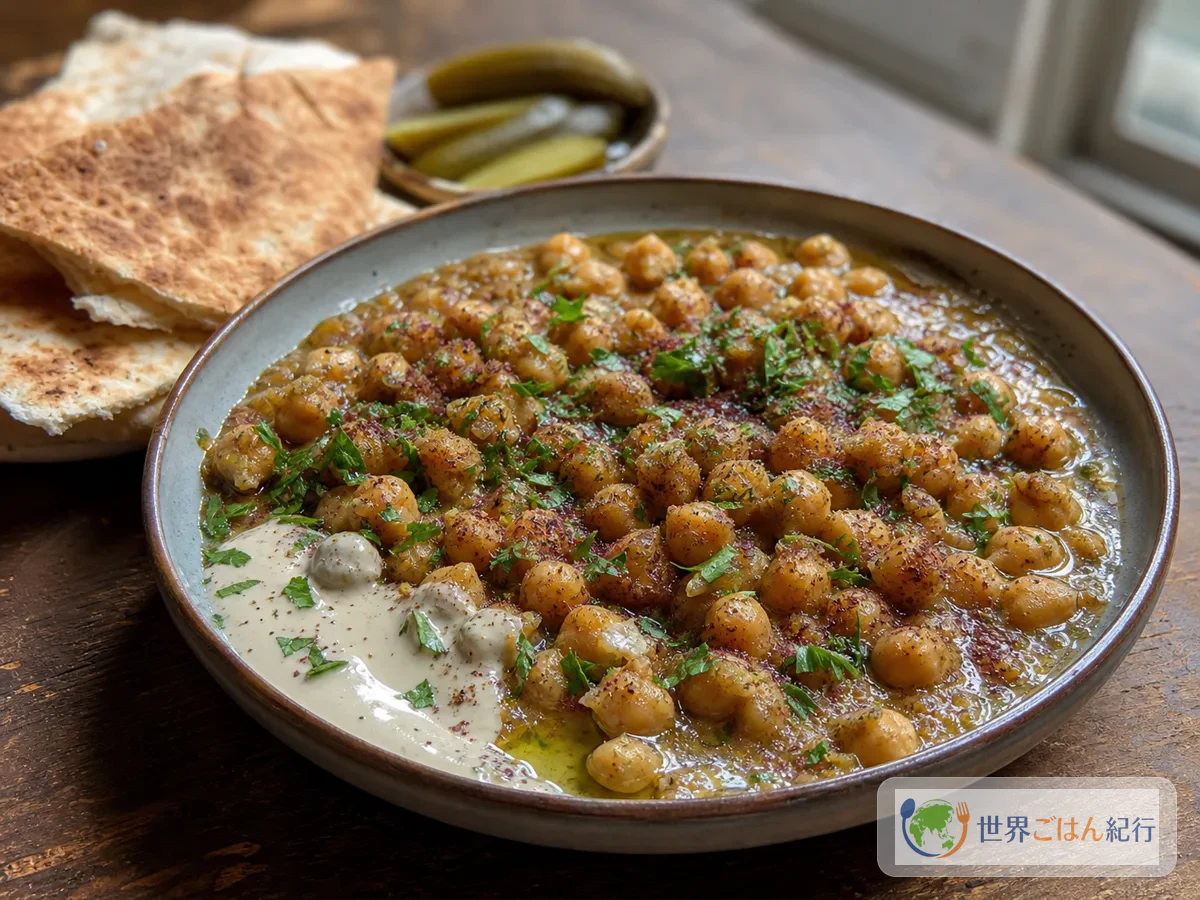
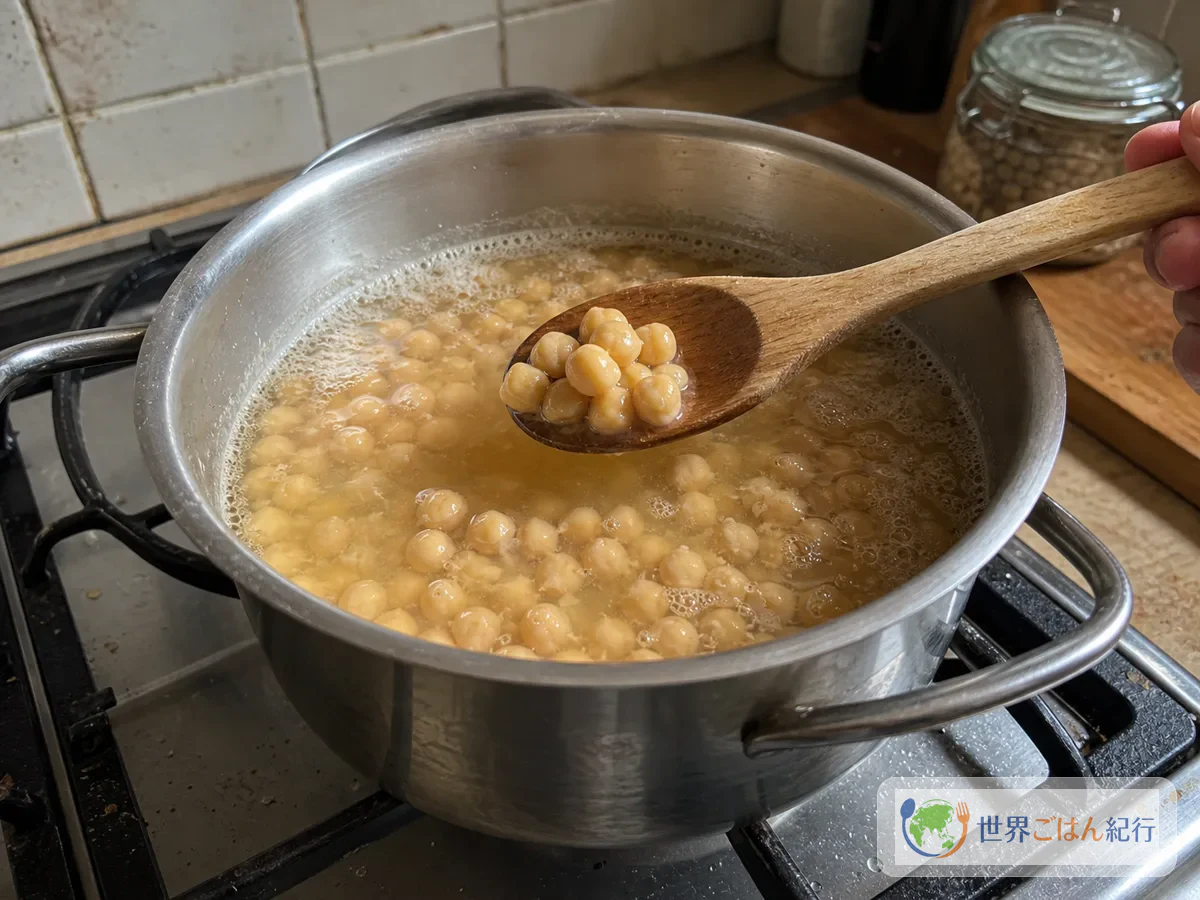
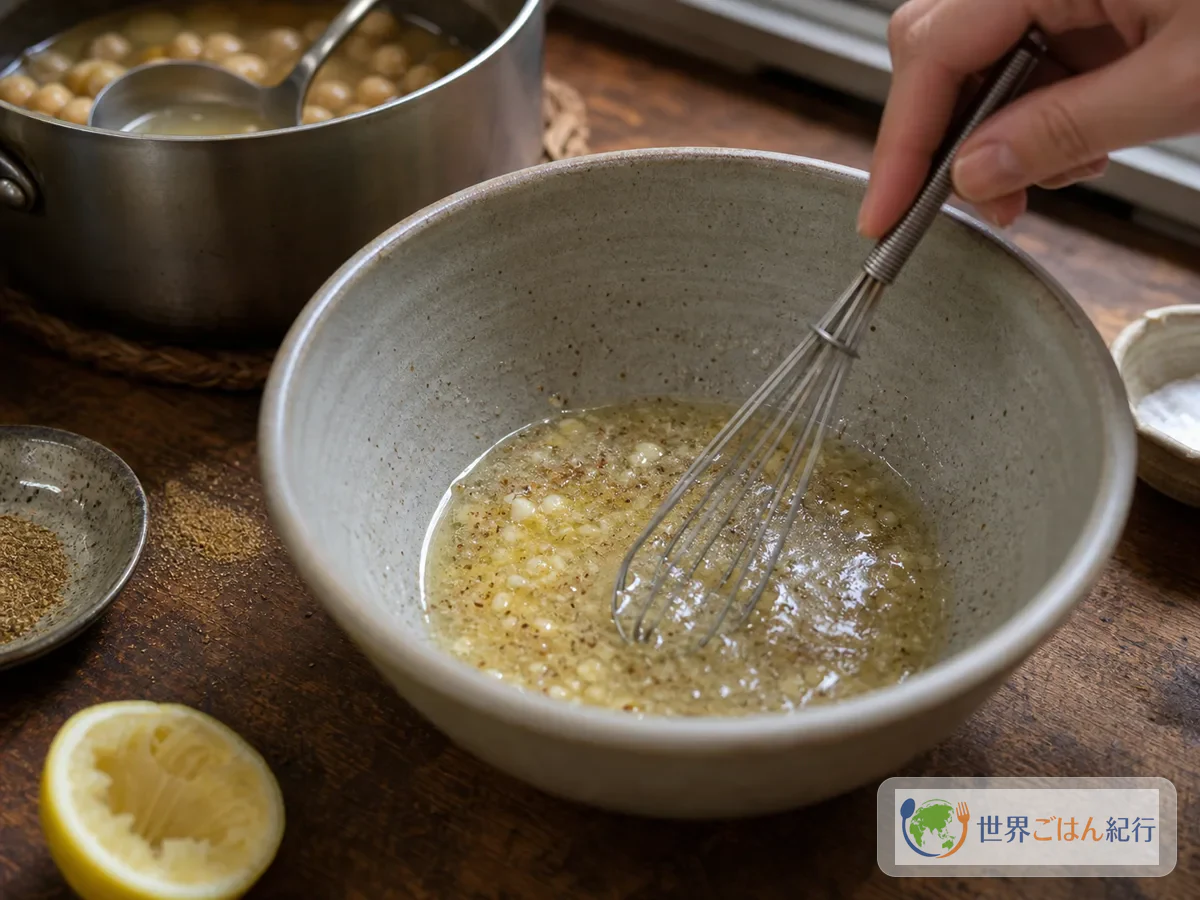
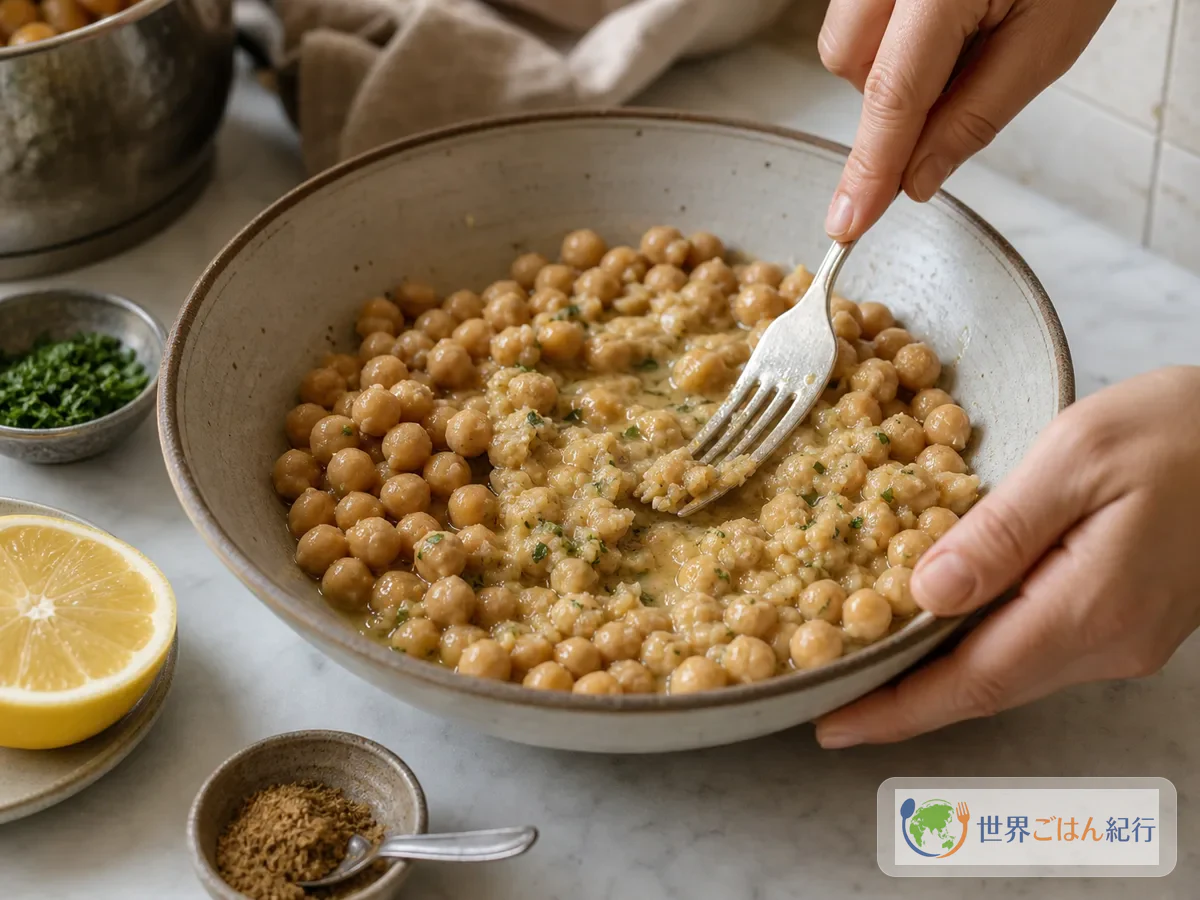
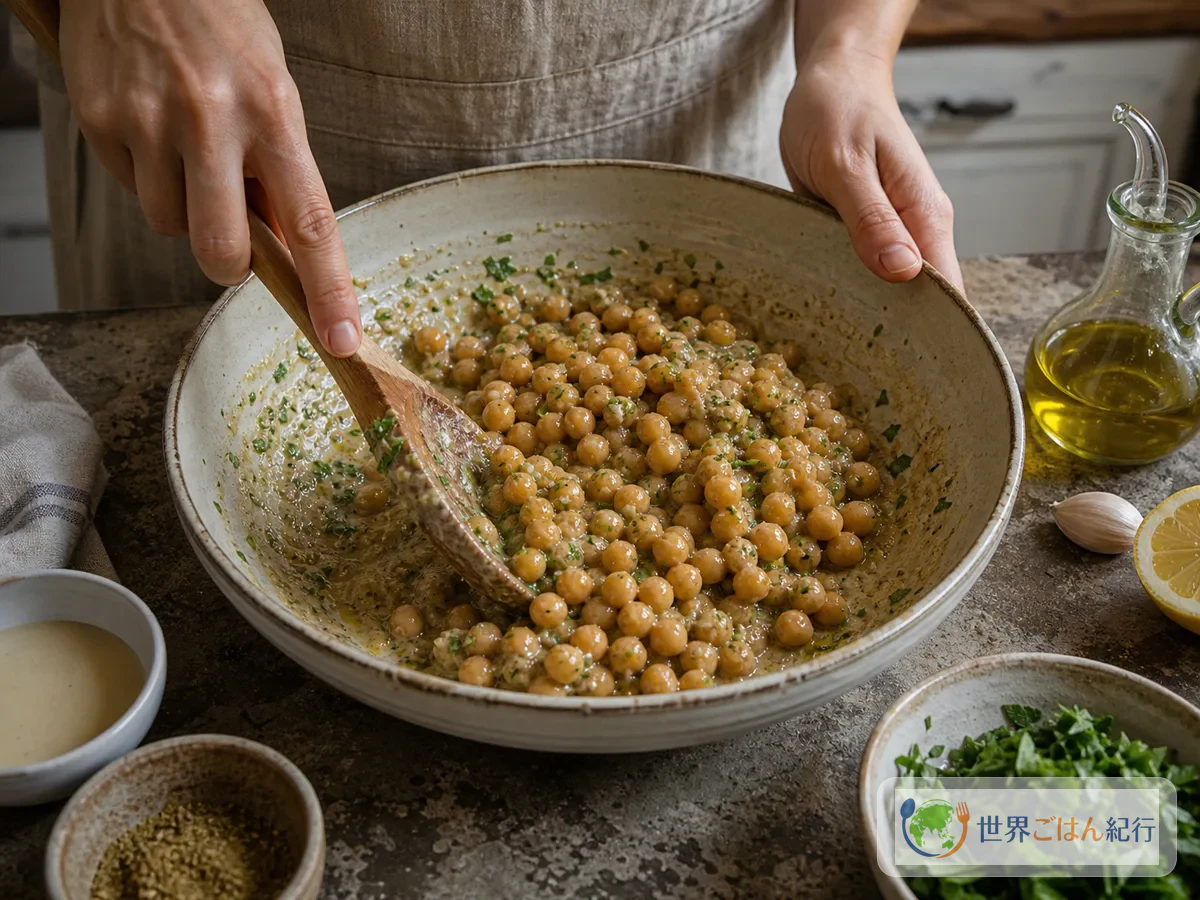
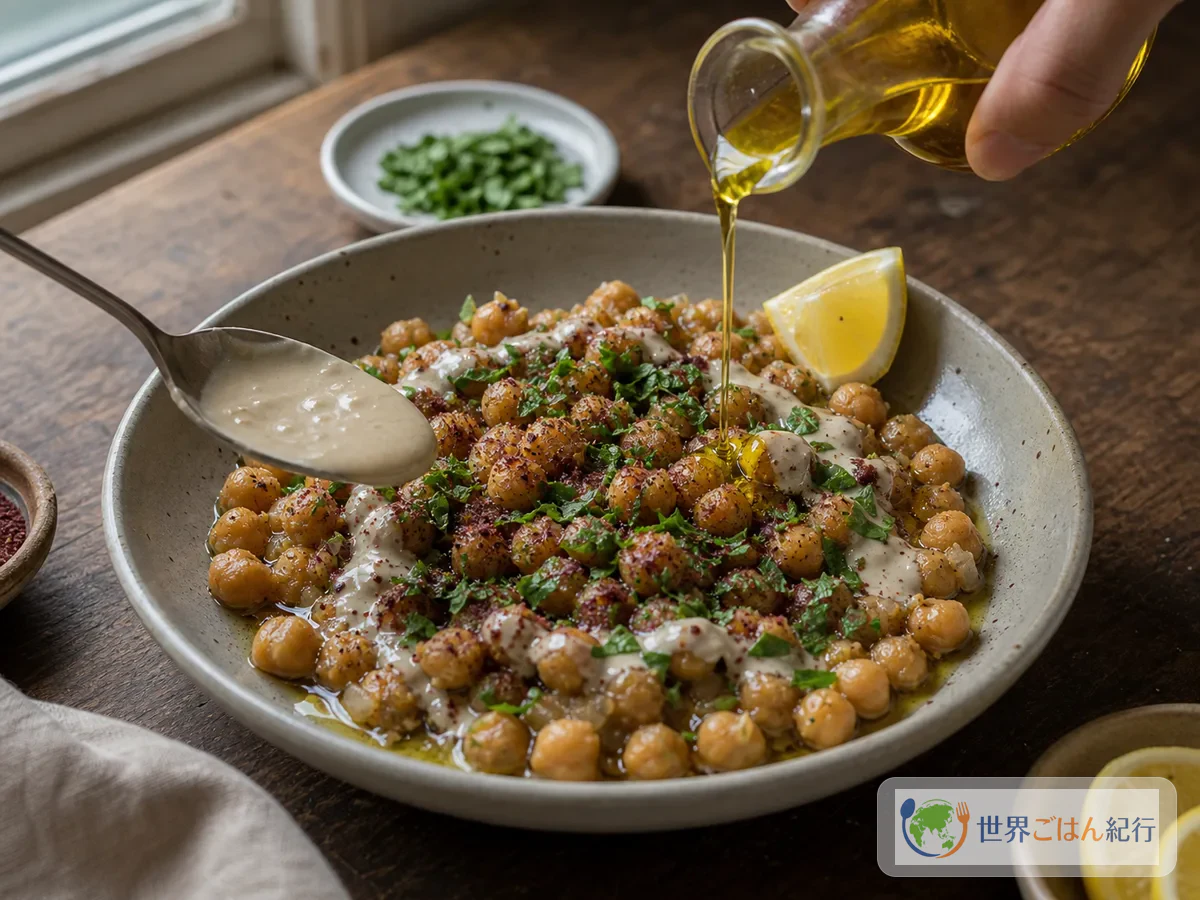
The chickpeas knock hard against the pot at first, then settle into a small tremble under the lid. Turn off the heat, add lemon and garlic, and the earthiness of cumin settles over the sweet smell of the beans. The plate feels light enough for morning. Lebanese cooks call this warm dish Hummus Balila (بليلة, balila). Here hummus simply means "chickpeas" in Arabic, not the paste. The tender beans are dressed with garlic, lemon, cumin, and olive oil, left coarse enough to scoop with bread, and served warm at breakfast or as meze. Full recipe
Balila in Lebanon, Hejaz, and Egypt
Balila is classed as Levantine cuisine, but it originates in Hejaz, and it is a hot meze. In Egypt the same name belongs to a different dish: uncracked wheat combined with milk, nuts, and raisins. Same name, two separate dishes. The Wikipedia entry sets out the distinction.
Lebanese Hummus Balila
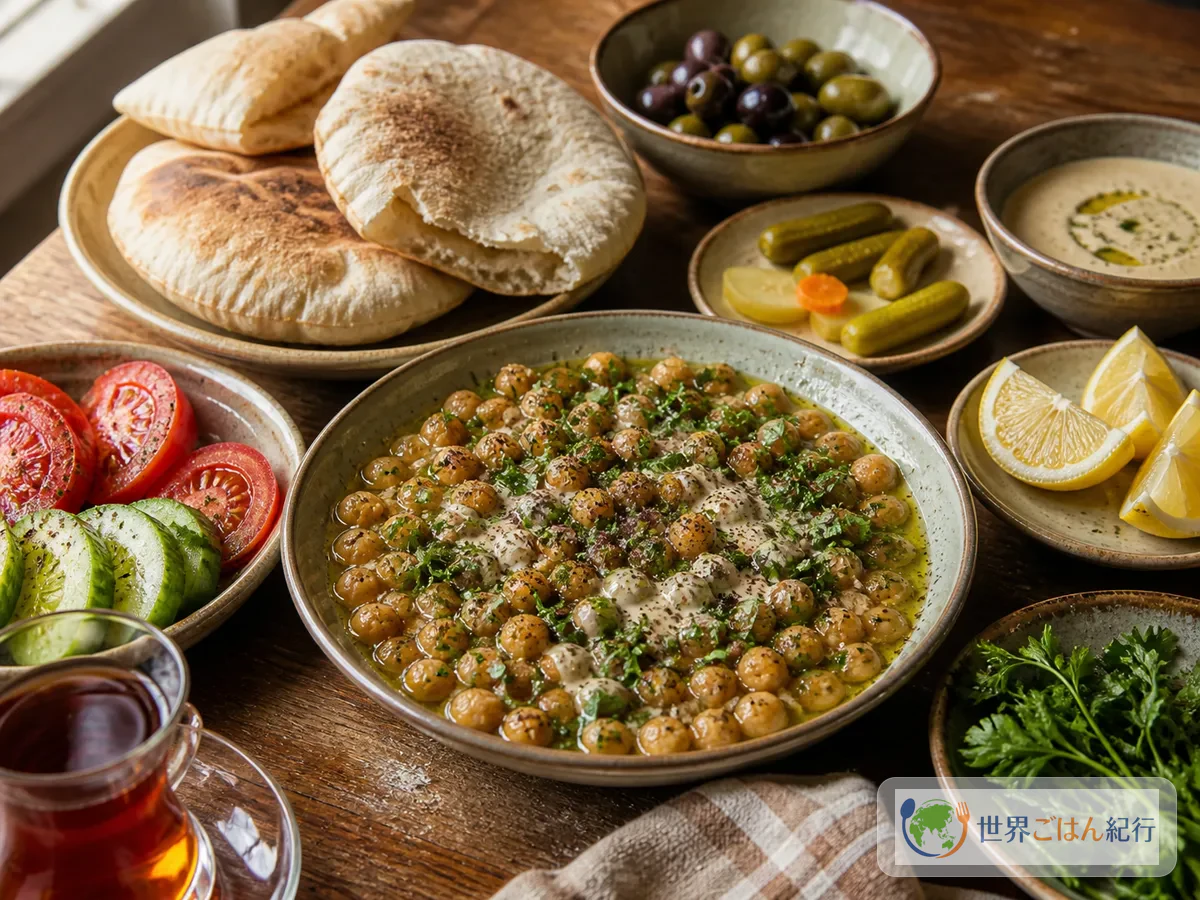
The Lebanese version is dried chickpeas cooked tender and seasoned with garlic, lemon, salt, cumin, and olive oil. It is eaten for breakfast with Arabic bread, the beans lightly crushed to a coarse texture rather than a paste. Breakfast version Tahini or ghee can be added, but the dish is really about the beans and their aromatic dressing.
This dish does not get better the smoother you make the beans. The beans should crush when pressed with a spoon, yet round grains still remain on the plate. That point is what sets balila apart from Lebanese hummus on one side and a bean salad on the other.
Hejazi balila
Hejazi balila has a different rhythm. It is a beloved street dish served in a bowl. In the Al-Balad district of Jeddah, it combines boiled chickpeas with cucumber, onion, and various sauces and spices. On Ramadan nights, people gather at stalls on Qabel Street, where beans passed down in families are carried to the shops. It is eaten with bread and pickles and handed over at street stalls as often as it comes from the pot at home.
| Name and region | Axis of flavor and texture | At the table |
|---|---|---|
| Lebanese Hummus Balila | Garlic, lemon, cumin, olive oil. Beans coarsely crushed | Breakfast, light lunch, meze. Served with pita and raw vegetables |
| Hejazi Balila | Boiled beans layered with cucumber, onion, sauces, and spices | Jeddah street stalls, Ramadan nights, takeaway |
| Egyptian Balila | A sweet dish with wheat, milk, nuts, and raisins | A different dish from chickpea balila |
Ingredients (serves 4)
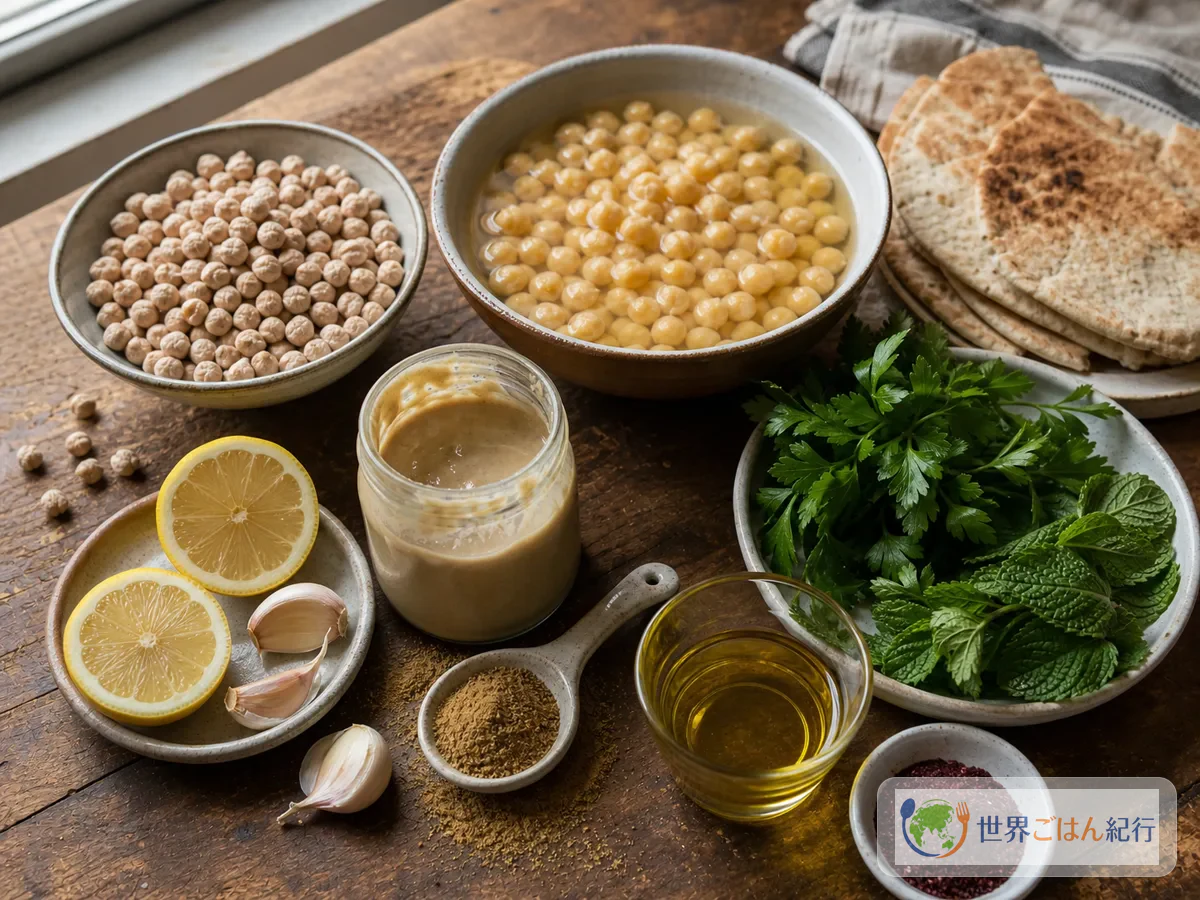
This serves 4, soaking the beans the day before and finishing a warm plate the next day. Served in small portions as a side dish, it comes to about 6 servings.
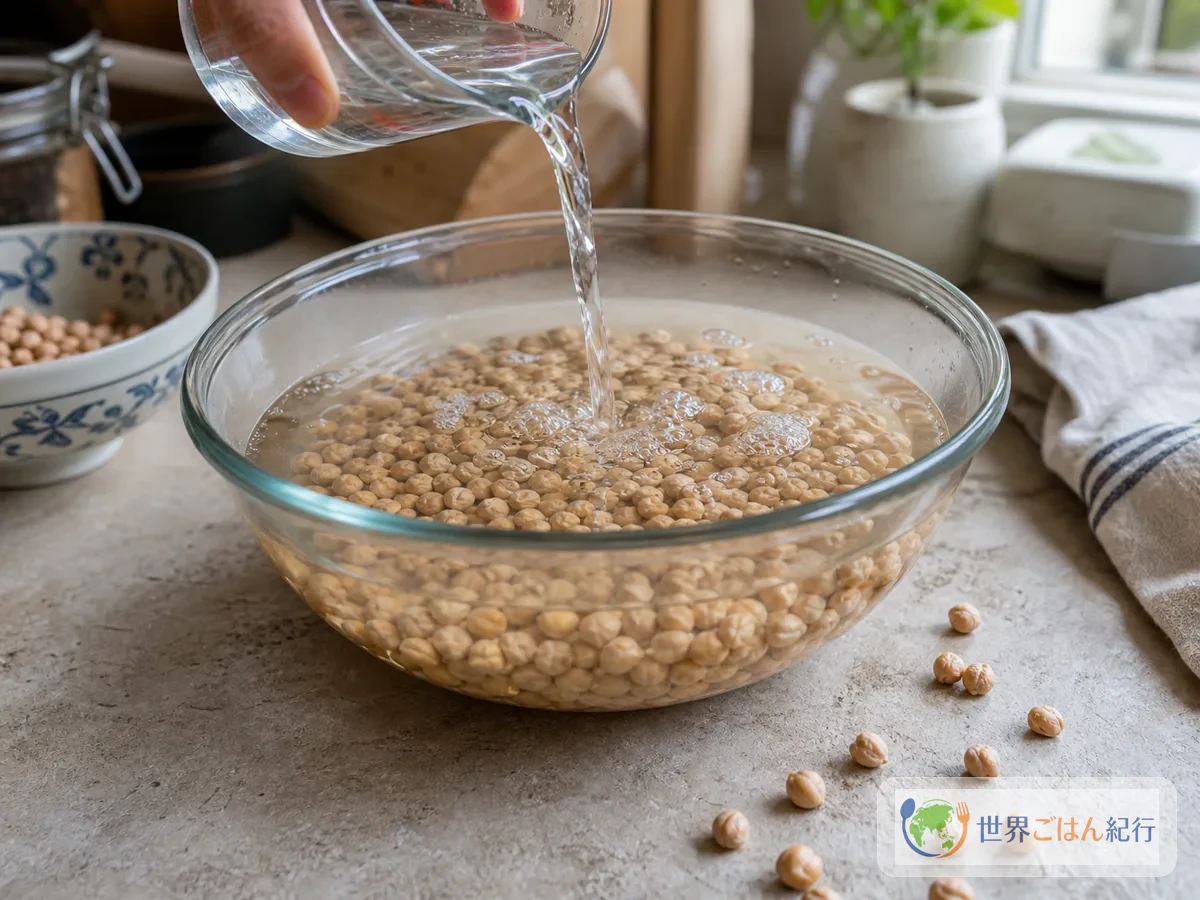
What makes the biggest difference in flavor is the softness of the beans and the order in which acid is added. Canned beans save time but do not give the sweetness of the cooking liquid that dried beans do. On days you use dried beans, set aside just ¼ cup (60 ml) of the cooking liquid without discarding it.
This uses tahini, which contains sesame, and pita, which contains wheat. If you substitute a product containing soy or nuts, check the label. Chickpeas are legumes, so serve small portions to anyone not used to eating them, and stop eating if you feel unwell.
Sumac adds a dry, fruity sourness that is different from lemon. Balila works without it. If you also use it in roasted vegetables, hummus, or salads, it is worth buying.
If your sumac contains salt, do not put all 4 g of salt in the recipe in from the start; decide on the seasoning after combining the beans and the dressing. Check the net contents and ingredients on the label before choosing.
Choosing chickpeas, tahini, and cumin for balila
Dried beans cooked soft to the center taste sweeter, and their cooking liquid thickens slightly, which you can put to use. Choose dried if you care about texture. Canned beans are fine on busy days or for a single plate.
With canned beans, discard the canning liquid first, since it makes the salt and moisture hard to judge. Put 1 lb (480 g) beans and ½ cup (150 ml) water in a small pot and warm for 10 minutes over low heat. When a pressed bean is warm in the center and the surface isn't dry, pick up at step 4 of the dried-bean method, adding only as much water as needed.
Tahini is optional. If you use it, thin it with water and drizzle it thinly. This recipe uses only 2 oz (60 g), so a large jar for one plate of chickpeas is a burden. If you make hummus, falafel, or tahini sauce for roasted vegetables several times a month, work out what a 2 lb (900 g) jar covers and how many you'll need. For a single batch of balila, use a little white sesame paste or skip the tahini.
The cumin already in your cupboard is enough for balila. If you also cook other Middle Eastern dishes, a 2.25 oz (65 g) jar is easy to keep and helps keep the aroma consistent.
Method: cook the beans soft to the center
Don't go by the timer alone. The age of the beans and the thickness of the pot change the result. Press a bean between your fingers each time and check that it crushes to the center.
Fixing balila beans that are hard or too wet
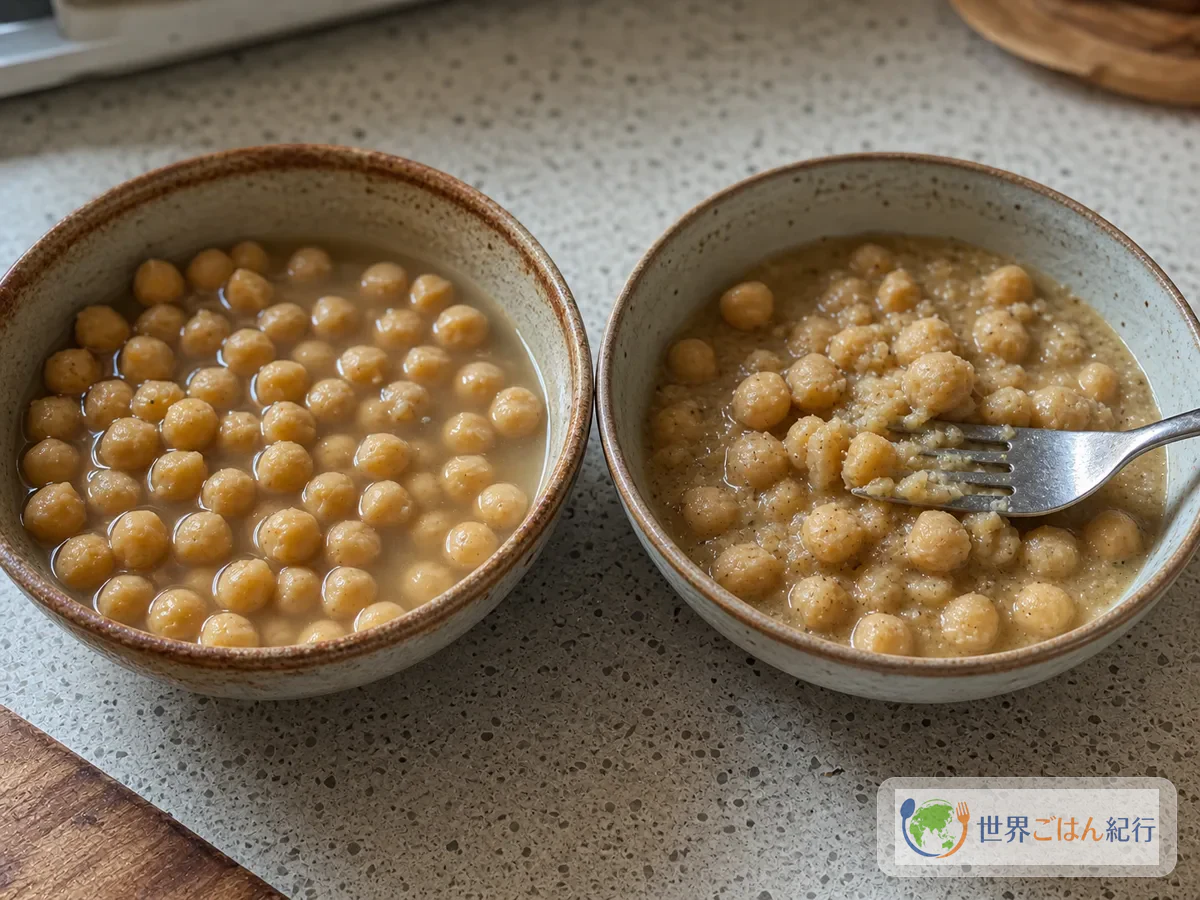
Fix the beans before reaching for more seasoning. Lemon added to beans with hard centers just sits on the surface. Cooking liquid poured over beans that have fallen apart makes the dish too runny to scoop with bread.
| Symptom | Cause | How to fix |
|---|---|---|
| Center is hard | Not soaked enough, old beans, heat too low | Add ½ cup (150 ml) water and cook another 15 minutes at a time over low heat |
| Skins stay in the mouth | Boiled too hard, old beans | Lower to low heat, skim the floating skins, and add 10 minutes |
| Too liquid | Too much cooking liquid, too little crushed | Crush 4 tbsp more beans and drive off moisture for 2 minutes over low heat |
| Sourness is sharp | Too much lemon, too little salt | Add 2 tsp tahini and 1 tbsp cooking liquid, and adjust the salt slightly |
| Cumin is weak | The aroma has faded, the beans have cooled | Add 0.5 g cumin and warm just 1 minute over low heat |
Judge the cumin by its aroma. Adding a lot at once brings out bitterness, so go 0.5 g at a time.
Serving balila
Lebanese balila is best with bread and vegetables on the table, scooped up a little at a time. Serve it with Lebanese bread, cucumber, radish, mint, parsley, onion, and tomato. Read the recipe It is a fixture of the breakfast table. Read more
Set warm balila beside cold hummus and baba ghanoush, and the same beans and vegetables come in contrasting textures. It also goes well with sour tabbouleh. Next to grilled chicken or fish, soup, and flatbread, the lemon and cumin come into their own.
For a Hejazi touch at home, put pickles, thinly sliced onion, and a little chili sauce on a separate plate. That way everyone can adjust the sourness and heat to taste.
| When you eat it | What to serve with it | Preparation |
|---|---|---|
| Breakfast | Pita, tomato, cucumber, olives, mint | Cook the beans the day before and warm them with the dressing in the morning |
| Meze | Hummus, baba ghanoush, tabbouleh, pickles | Set the warm beans beside the cold dishes |
| Light dinner | Grilled chicken, grilled fish, soup | Serve a small amount as a sour side dish |
| Hejazi mood | Pickles, thinly sliced onion, hot sauce | Serve the sauce on the side and let each person adjust |
Storage and frequently asked questions
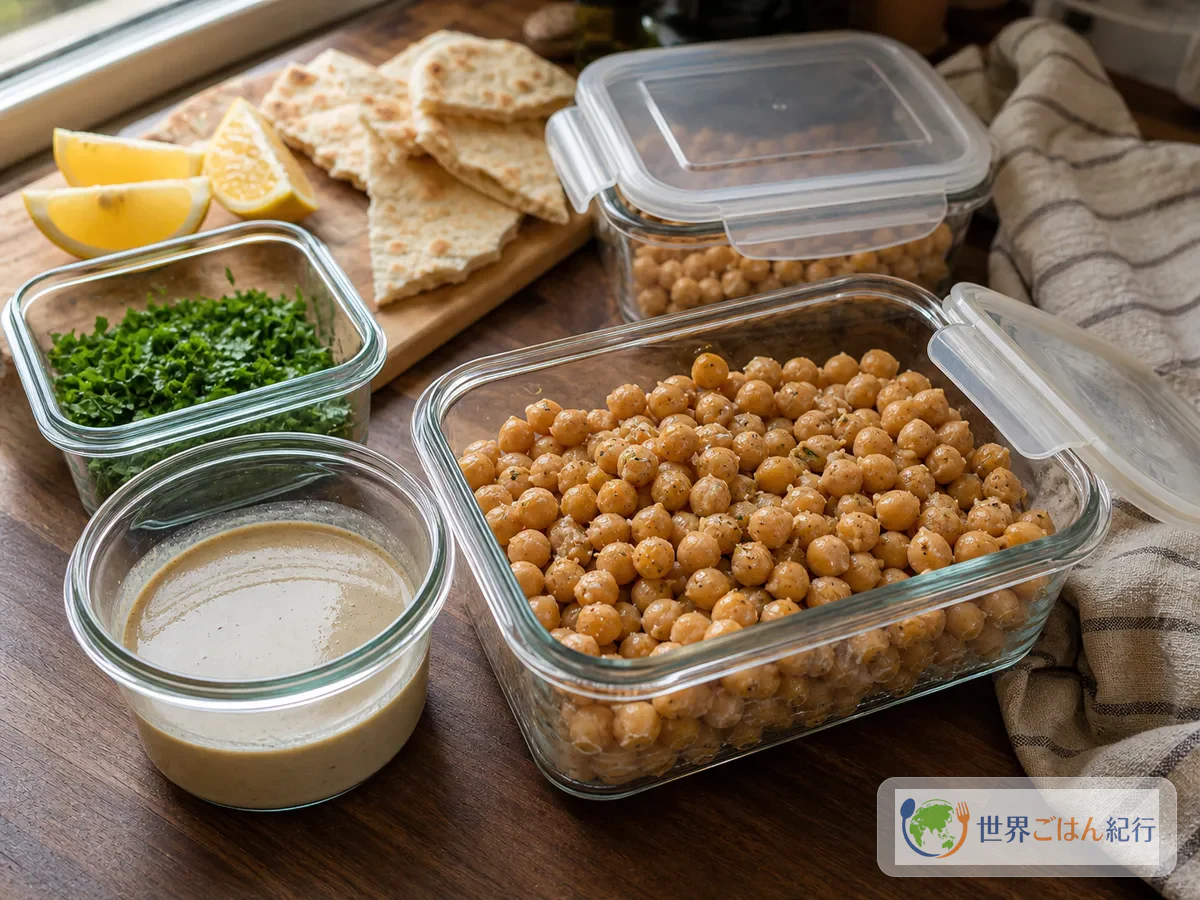
Balila is at its best right after making, while the steam and cumin are at their peak. To store it, cool the beans and dressing slightly, put them in a clean airtight container, and refrigerate for up to 3 days. Reheat only what you'll eat, in a pot or the microwave, until hot in the center. If it has dried out, add cooking liquid or water 1 tbsp at a time. If it smells off, the container bulges, or the sourness has changed, throw it out.
Should I add tahini?
It's up to you. Without tahini, increase the finishing olive oil by 1 tbsp (15 ml) and reduce the cooking liquid by 1 tbsp. The plate is lighter, and the beans and lemon come forward. With tahini, it spreads more easily on pita and holds together better even as it cools.
What should I change when eating with children?
Reduce the garlic to 5 g and keep the sumac and chili sauce for the adults' plates. Start the lemon juice at 1.5 tbsp (20 ml) and add more after tasting. Crushing the beans to about half rather than a third also makes them easier to put on bread.