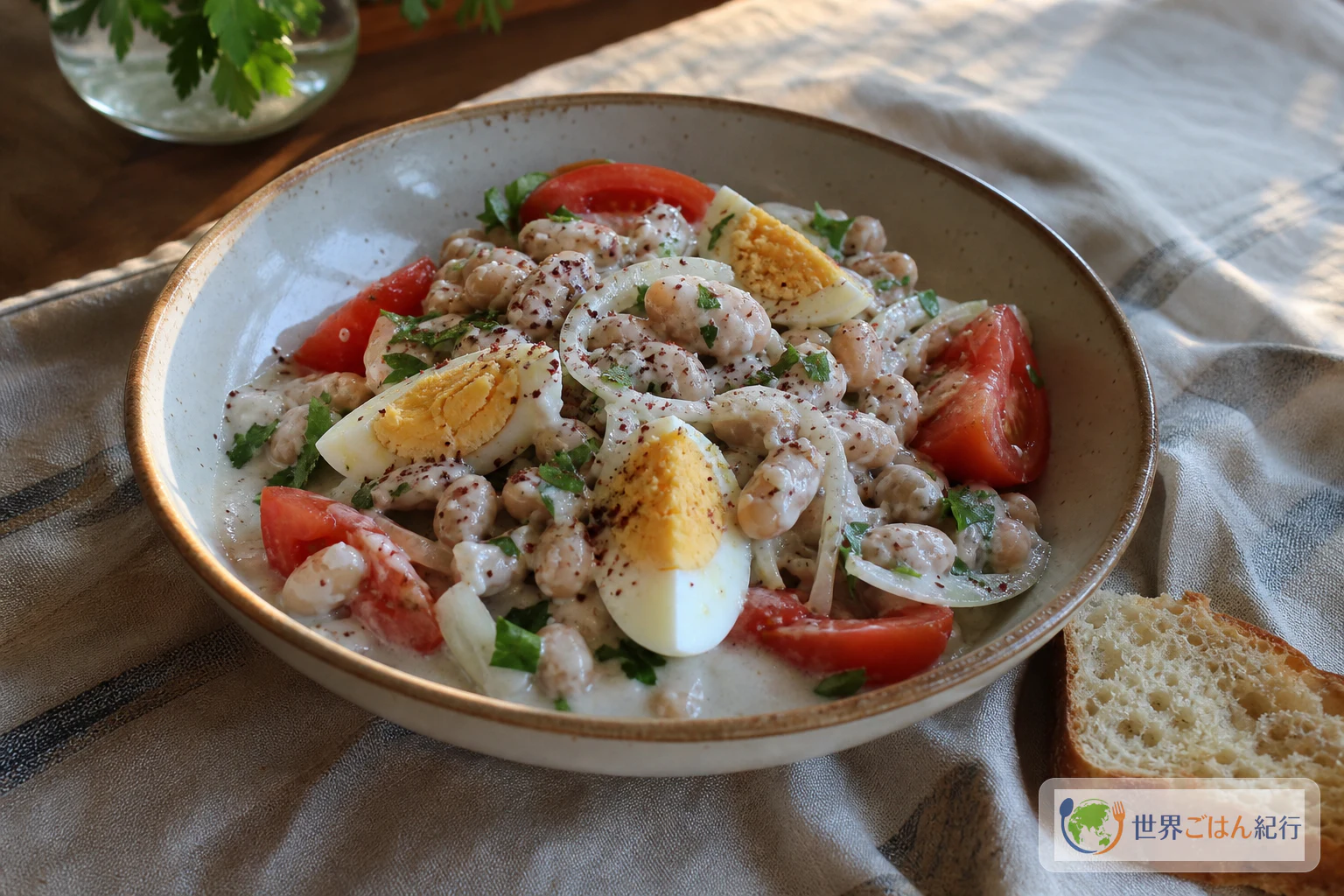
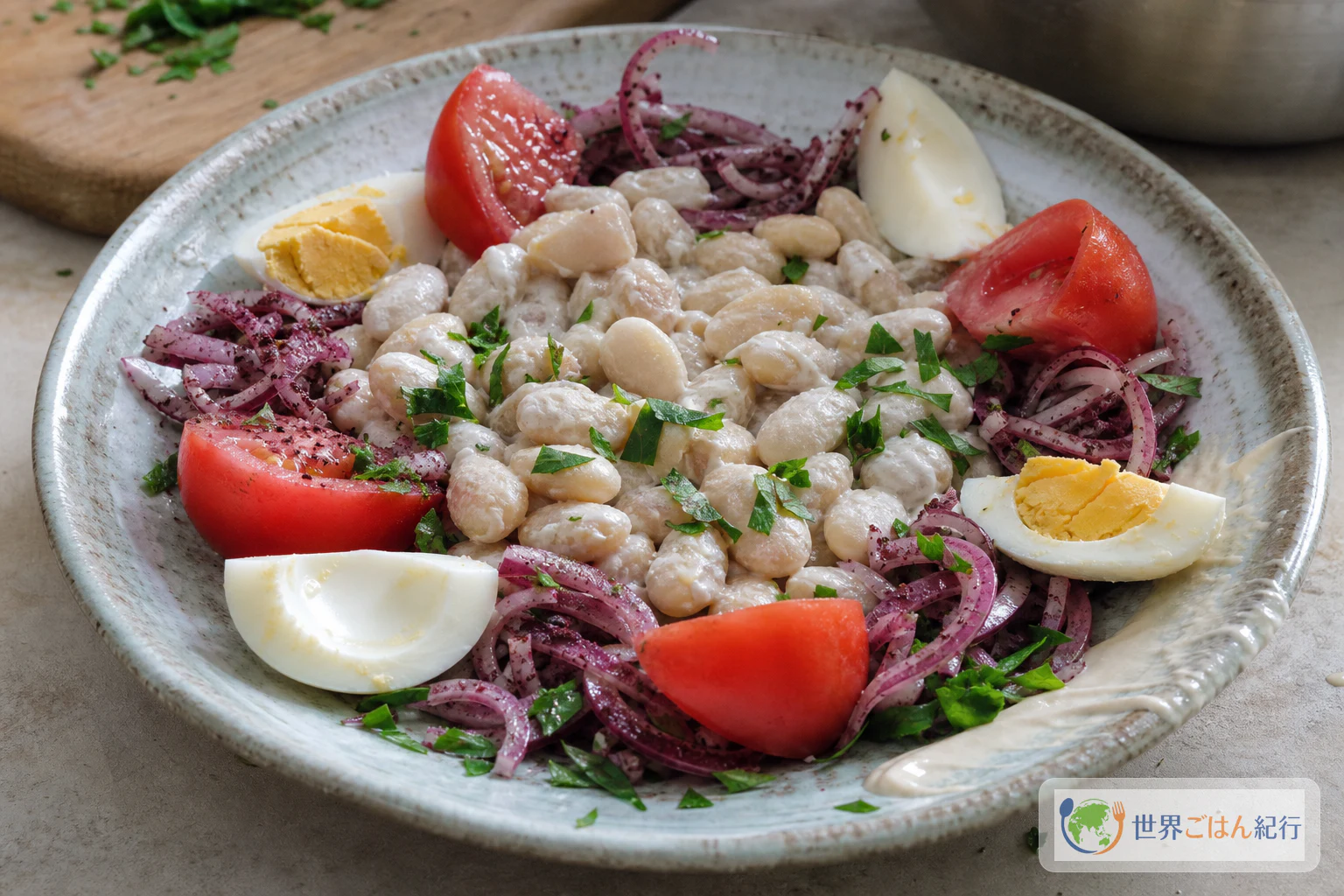
Split a white bean with a fork and it falls softly apart inside its skin. Let it soak up a white sauce of tahini, lemon, vinegar and garlic, then pile on onion tossed with sumac, tomato and a rather firm egg. The sour sauce draws out the sweetness of the beans, and whatever is left on the bottom of the plate you scoop up with bread.
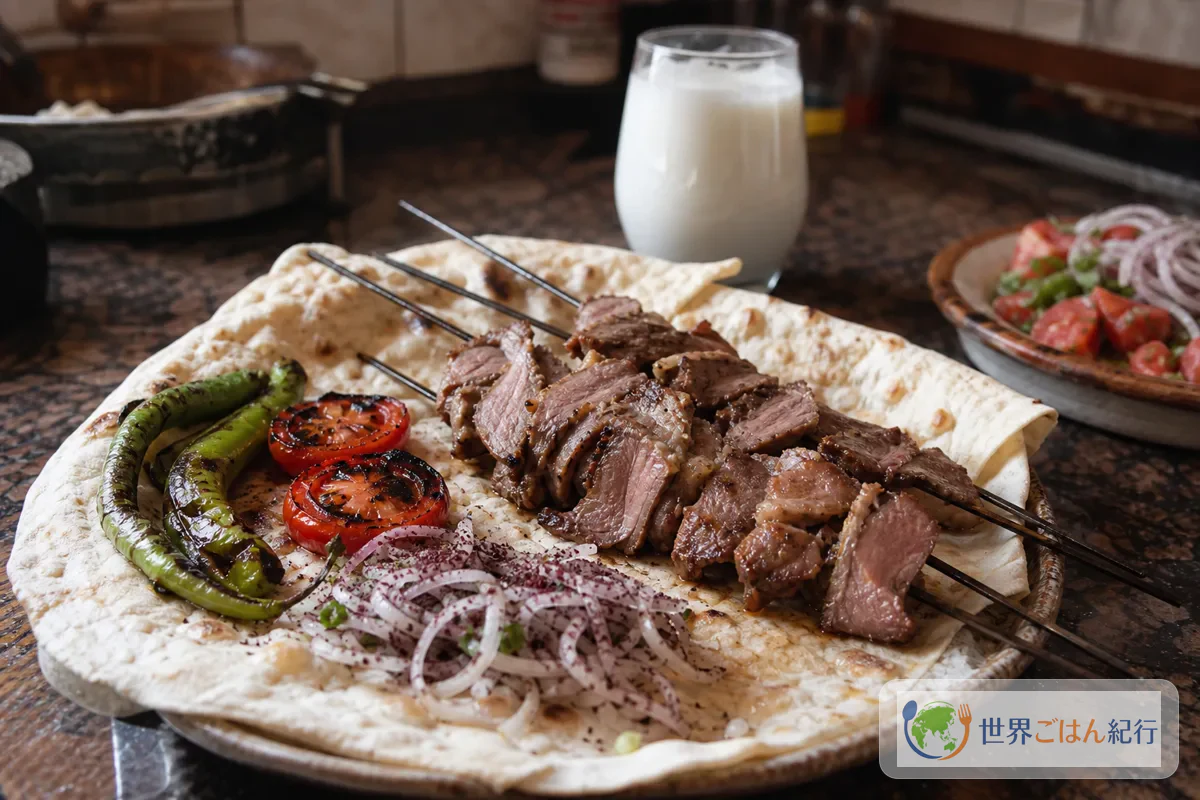
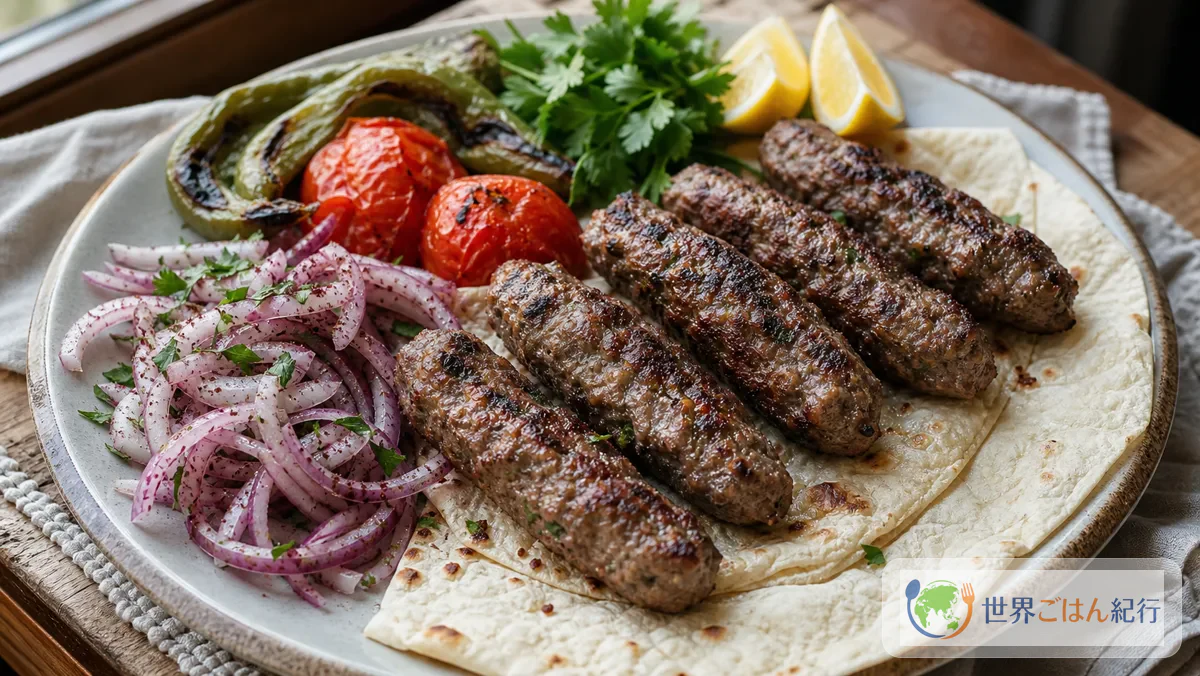
Turkish piyaz is a white bean and onion salad. In Antalya, on the Mediterranean coast, it comes thick with tahini tarator sauce and shares the plate with grilled meats such as köfte. The key to the Antalya style is to treat the beans as the main player that receives the sauce. Canned beans make it a weekday dinner, and dried beans reward a slow simmer on the weekend. Either way, wash and drain the beans well and adjust the thickness of the sauce at the end, and the flavor holds together.
Antalya Piyaz, a Salad Eaten as a Main Dish
"Piyaz" is a dish name used across Turkey, but the plate looks different from region to region. Antalya Piyazı is registered as a "Mahreç İşareti" (an indication of origin) with Antalya as its source, with a registration date of 29 December 2017. The registration defines it as beans combined with tarator, down to the beans used and the presentation.
The dish has about 100 years of history in Antalya. Elsewhere some regions eat piyaz as a side dish or salad, but in Antalya it is established as a dish served next to köfte, and at restaurants toward Korkuteli and Aksu the two are ordered together. Because the beans come with tahini sauce, it is more filling than a leafy salad, and with bread it makes a lunch. The richness of the tahini meets the savoriness of the meat, while sumac and vinegar clean up the aftertaste.
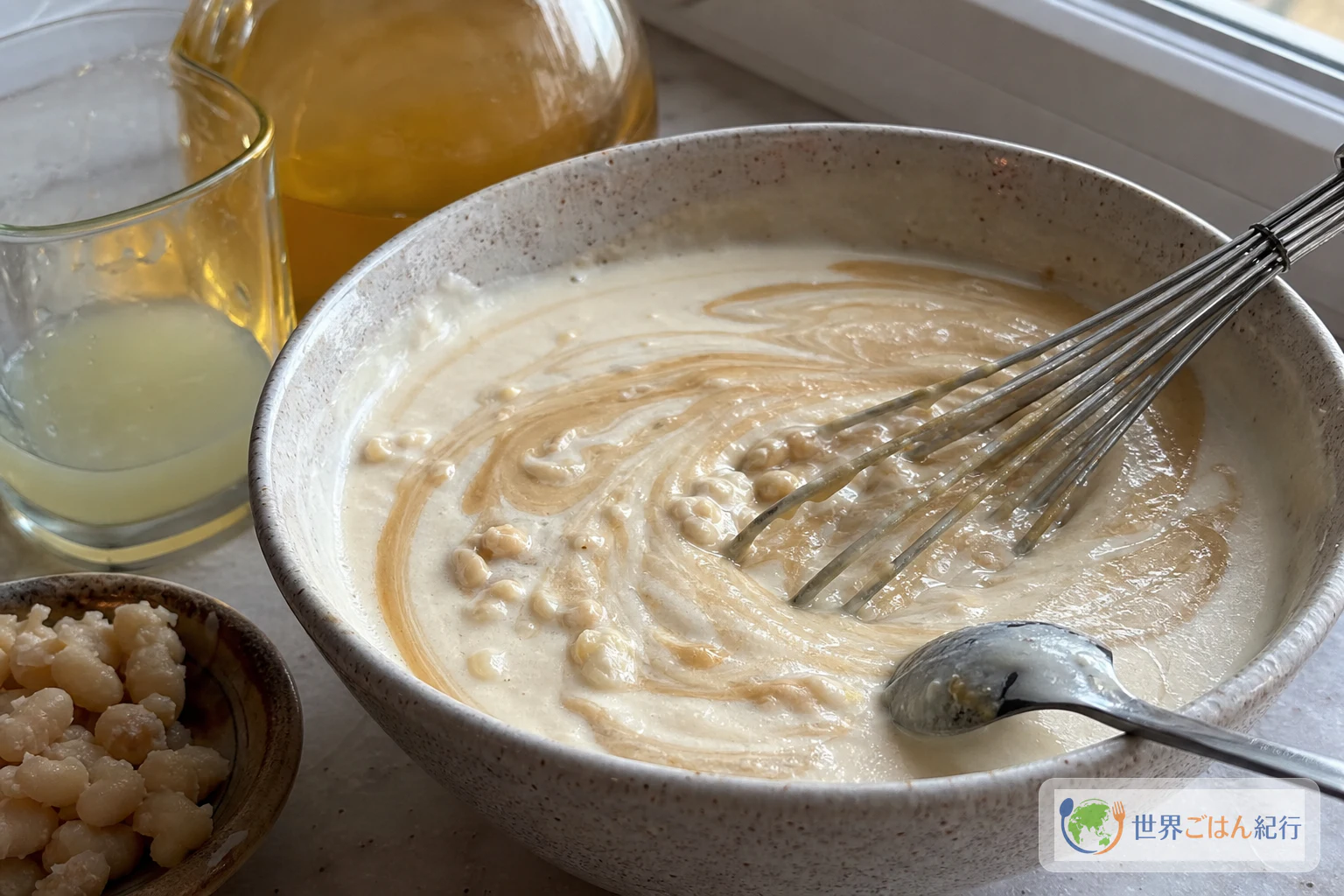
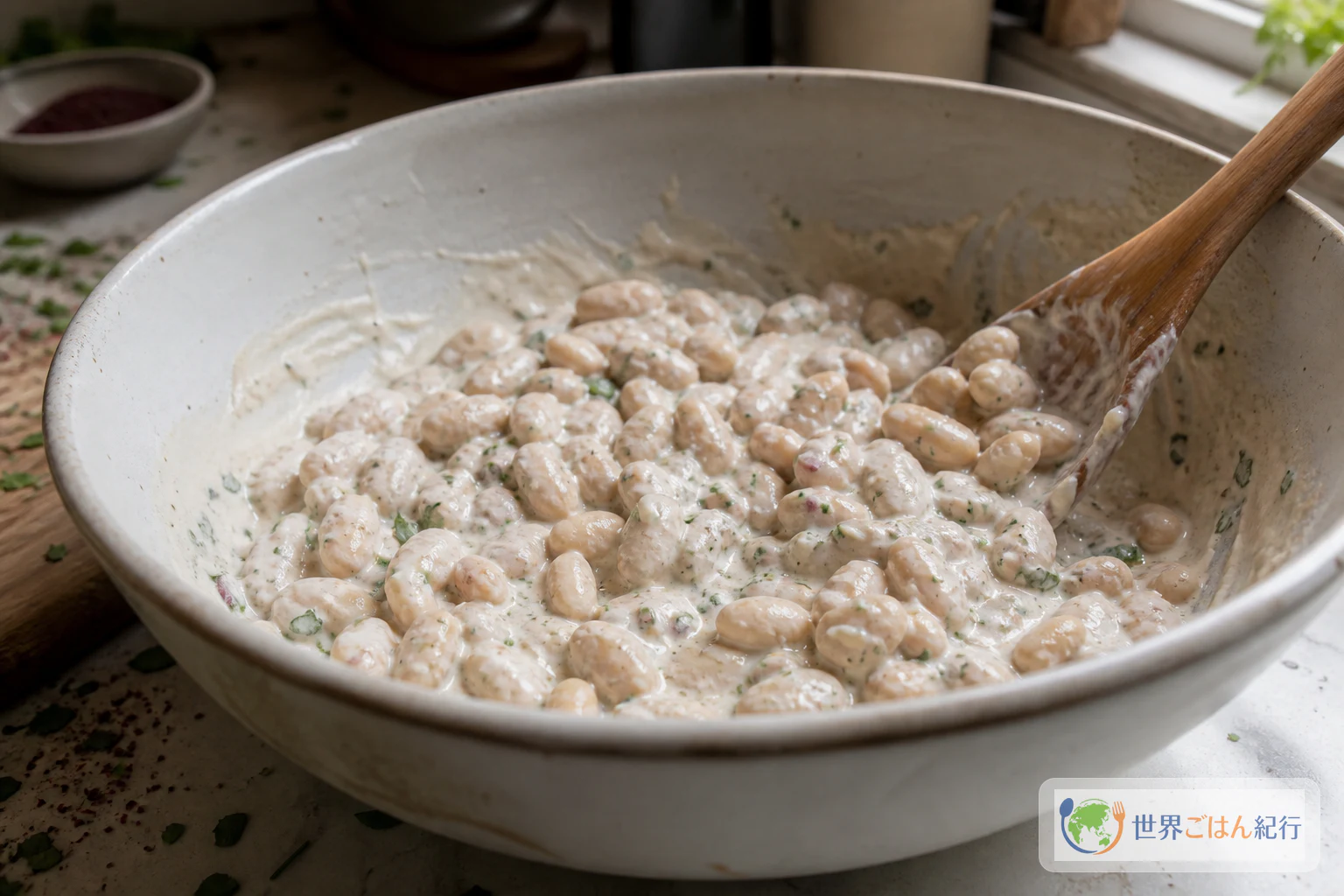
The ordinary piyaz of the Marmara region is a lighter dish, dressed mainly with vinegar, lemon, olive oil and onion, and tahini is optional. The tahini-free type and the thick-sauced Antalya style are really separate dishes, so if you leave out the tahini, think of it as moving toward another region's piyaz rather than as a failure. Home versions also differ in whether the beans are served warm, whether onion goes in, and whether some beans are mashed to give the sauce body. In this recipe, 1 oz (30 g) of beans are mashed so the sauce clings to the beans without adding more tahini.
Ingredients (serves 4)
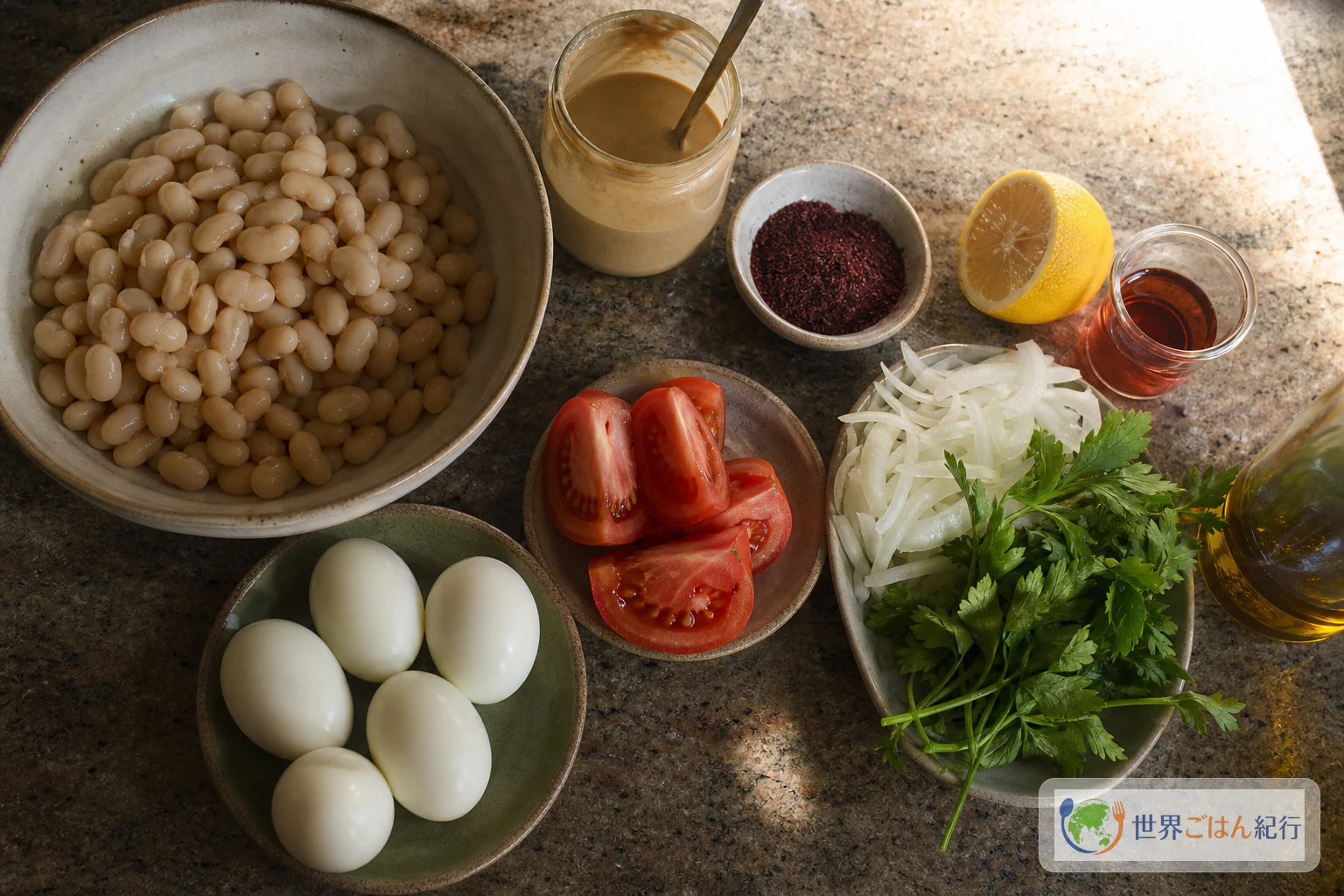
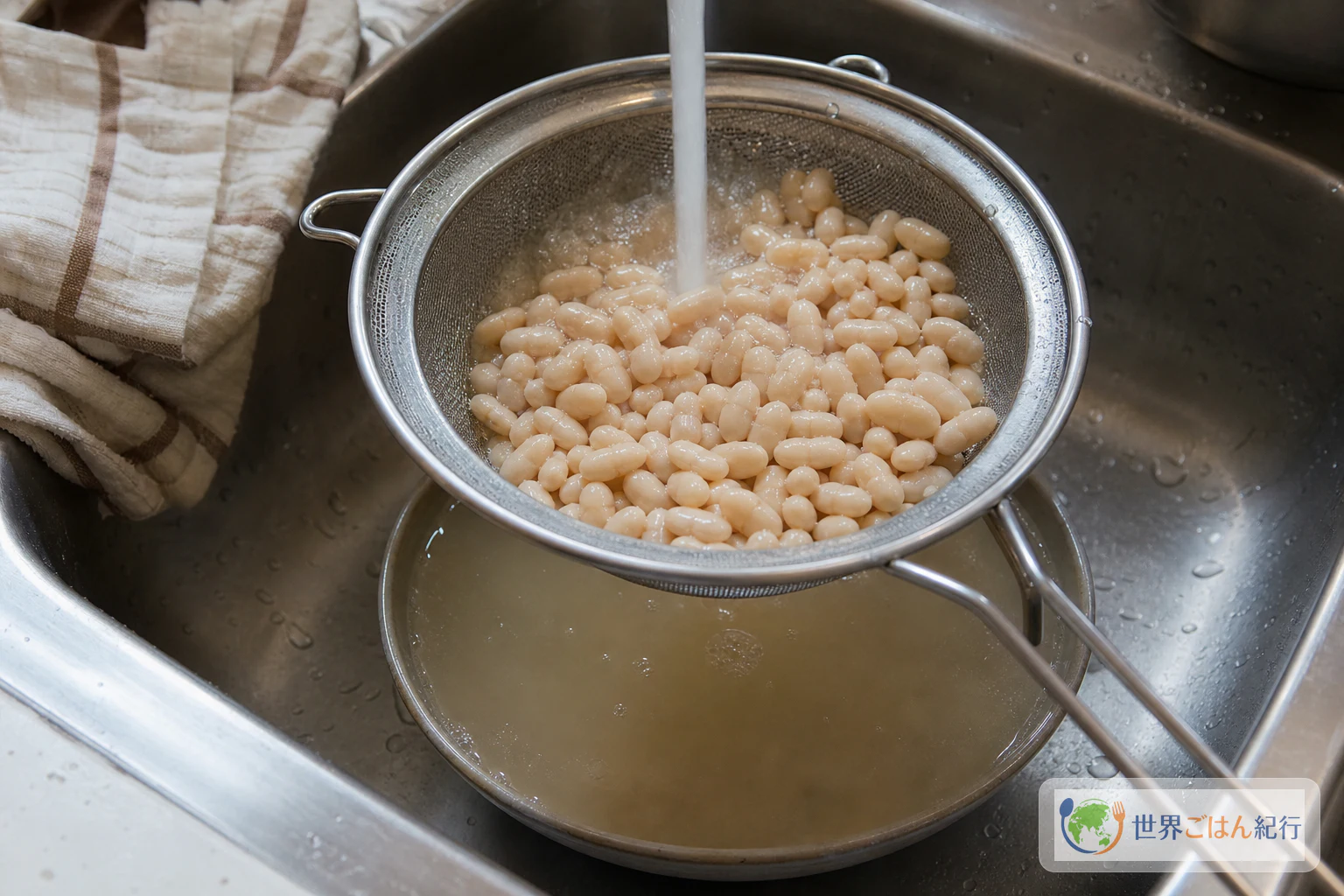
This dish uses tahini, which contains sesame. If you serve it with bread, watch for wheat as well. Canned beans work, but mixing them right after opening makes it watery. Always wash and drain them, and first set aside 1 oz (30 g) for the tarator before using the rest as the main ingredient.
Choosing Beans, Tahini and Sumac for Piyaz
Around Antalya the small Çandır bean is the known choice, along with similar small, thin-skinned beans. Since those are hard to find everywhere, look for small white beans such as dried navy beans or cannellini, or canned white beans whose grains have not broken down. Large white runner beans are sweet, but their skins split easily and, tossed with sauce, they make the whole plate feel heavy. Here, the size of the grain and how it cooks matter more than convenience.
For tahini, plain sesame paste works as a substitute, but avoid sweetened sesame pastes. When you make the sauce, the tahini's oil and the lemon and vinegar first separate and then come together, and an unsweetened, unsalted type makes the flavor easier to judge. A large jar makes sense if you also make hummus or other sauces. To try it just once, buy a small jar of unsweetened, unsalted white sesame paste and check that the label lists only sesame (and salt).
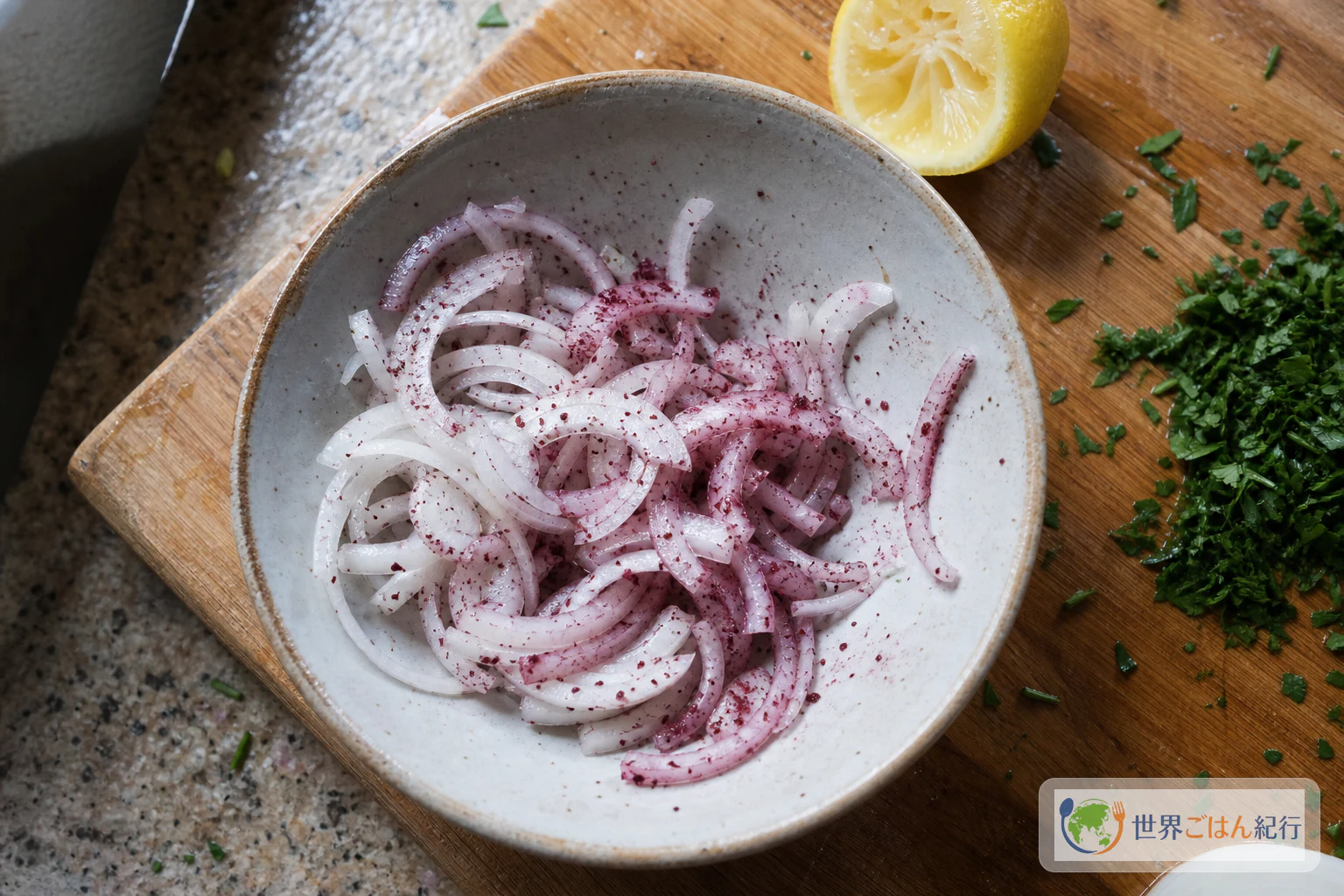
Sumac is optional, but it adds a dry red acidity and aroma that lemon alone can't give. Work 1 g into the onion and sprinkle 1 g over the finished plate so the aroma is spread out. Some sumac contains salt, so hold back on the 5 g of salt at the start: season the onion and sauce with a little first, then taste, or use an unsalted sumac. Leftover sumac goes into dishes like balila (in Japanese) and musakhan (in Japanese).
Fixing Common Piyaz Problems
Piyaz involves very little heat, so the moisture and acidity of the ingredients show directly in the result. With canned beans, wait after washing until no more drops fall from the sieve. Often, just draining better before the tahini goes in restores the body of the sauce and the sweetness of the beans.
| What to look for | The state to aim for in Antalya style |
|---|---|
| Beans | Skins mostly intact, tender to the center when bitten |
| Tarator | Falls slowly from a spoon and leaves a thin coat on the beans |
| Onion | Sharpness softened, carrying the aroma of sumac |
| Table | Supplies acidity and bean sweetness beside meat, fish or bread |
| State | Main cause | Adjustment to make first |
|---|---|---|
| Sauce is watery | Beans not drained enough, liquid added all at once | Wait 5 minutes, then mix in 10 g tahini and 0.3 g salt. If still loose, add tahini 5 g at a time |
| Sauce is stiff and grainy | Acid added to tahini all at once | Add water 1 tsp (5 ml) at a time, mixing 30 seconds each time. Stop when it turns white and smooth again |
| Bitterness remains | Strong garlic, stale tahini | Add 1 tsp (5 ml) lemon juice, 2 tsp (10 ml) water and 1 tsp (5 ml) olive oil. Discard tahini that smells of old oil |
| Onion is sharp | Sliced thick, rested too briefly | Add 0.5 g salt and 1 tsp (5 ml) vinegar, leave 5 minutes, squeeze lightly before eating |
| Beans are chalky | Dried beans not cooked through to the center | Before combining with the sauce, heat 10 minutes at a time over low heat until they mash easily between your fingers |
With dried beans, cooking time depends on bean size and how long since harvest, so go by the beans rather than the clock: they are ready when they mash without resistance to the center. Salt the onion and the tarator, not the bean cooking water.
Serving, Storing and Varying Piyaz
What to Serve with Piyaz
On a kebab or köfte day, grill the meat while the onion is resting, and let the piyaz sit 10 to 20 minutes before plating. On a fish day, set it beside salted mackerel or salmon: the beans and tahini make it as satisfying as a starch, and the lemon and onion cut the fat of the fish. Thin flatbread, baguette or toasted sandwich bread mops up the sauce on the plate better than white rice, so don't leave too much liquid.
| Occasion | Pair with | How to build it in your kitchen |
|---|---|---|
| Turkish-style dinner | Köfte, bread, grilled peppers | Let the beans and sauce meld while the meat grills |
| Light lunch | Boiled eggs, bread, vegetable soup | Increase to 3 eggs and make the beans the main |
| Fish day | Grilled fish, lemon, warm vegetables | Match the vinegar and sumac to the fat of the fish |
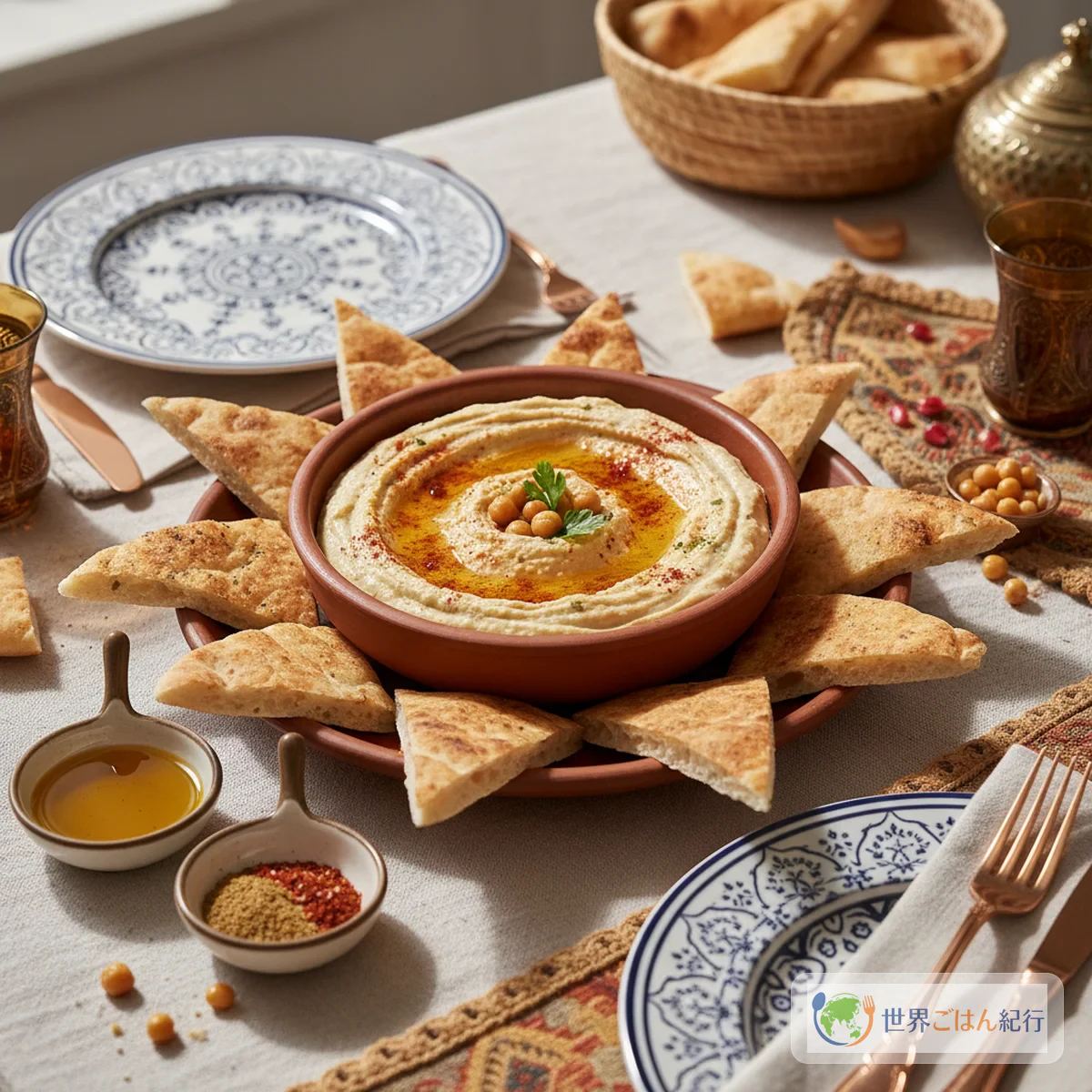
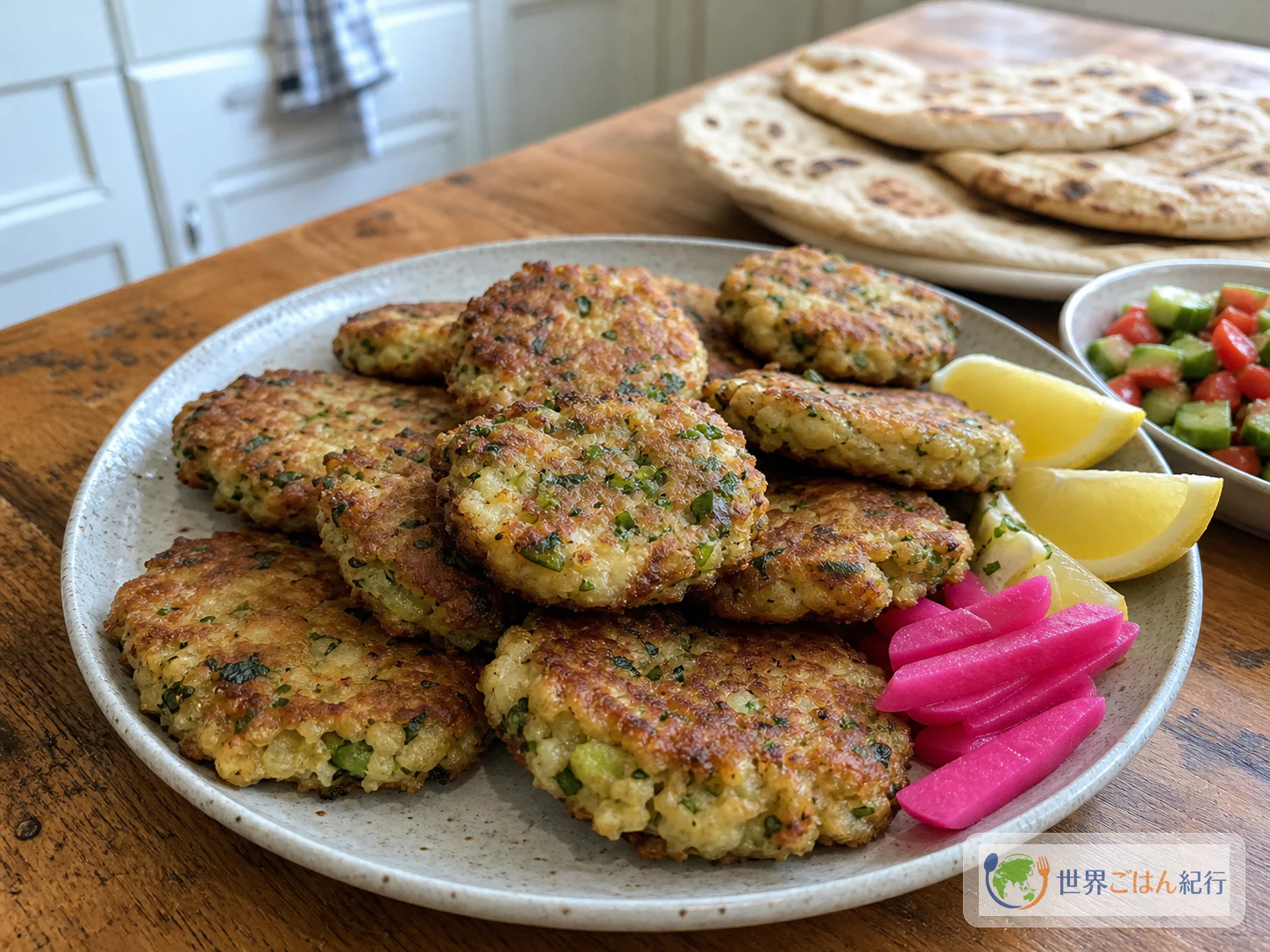
| Meze table | Hummus, tabbouleh, balila | Bean dishes overlap, so serve the piyaz in small dishes |
Among other bean dishes, warm chickpea balila (in Japanese) suits breakfast or meze, and Greece's fasolada is a soup eaten on its own. Piyaz, served cold or at room temperature, is the dish that links a grilled main and bread.
Variations
- Weekday canned version: Use two 14 oz (400 g) cans, wash, and weigh out 1 lb (480 g). Three minutes of draining gives you the right tarator thickness without soaking dried beans.
- Weekend small-bean version: Soak 7 oz (200 g) dried beans the day before and weigh 1 lb (480 g) of the tender-cooked beans. Small beans keep the outline of each grain even when coated with sauce.
- Plant-based plate without eggs: Leave out the 2 eggs and add 4 oz (120 g) grilled peppers. Check that the bread contains no dairy or egg.
- Acid-forward version for fish: Keep the tahini and beans as they are and add 1 tsp (5 ml) more lemon juice when plating. Poured on just before eating, it cuts the fat of the fish while keeping the sweetness of the beans.
Storing Piyaz
Piyaz tastes better after 10 to 20 minutes than right after mixing. Left too long with tomato and egg mixed in, though, the moisture thins the sauce and the tomato's acidity takes over. If making ahead, store the beans and sauce, onion, tomato and egg separately, and assemble on the plate just before serving.
| State | Storage | Guide in this recipe | Point |
|---|---|---|---|
| Beans mixed with sauce | Airtight, refrigerated | Within 2 days | Take out just before eating; if stiff, loosen with water 1 tsp (5 ml) at a time |
| Onion with sumac | Airtight, refrigerated | Until the next day | If liquid comes out, squeeze lightly before using |
| Peeled boiled eggs | Airtight, refrigerated | Until the next day | Prevents drying and picking up other odors |
| Finished plate with tomato | Refrigerated | Same day | Eat soon after plating; do not keep until the next day |
Straight from the refrigerator, the tahini firms up and the aroma fades. Let it stand about 15 minutes before eating, and serve it without warming, since the microwave changes the texture of the onion and tomato. The dish contains sesame and eggs, so check ingredient labels when serving others and avoid leaving it at room temperature for long.
Frequently Asked Questions
Can I use chickpeas instead of white beans?
You can, though it moves away from the Antalya style toward a different bean salad. Chickpeas have a nutty aroma that goes well with tahini, but they lack the smooth texture of white beans carrying tarator. With 1 lb (480 g) chickpeas, add 1 tsp (5 ml) more lemon juice and 1 g cumin to pull the aroma together.
Can I make it without tahini?
Yes. Around Turkey there are piyaz finished lightly with vinegar, olive oil, onion and parsley and no tahini. Leave out the 2.5 oz (70 g) tahini and ¼ cup (60 ml) water, and increase the olive oil to 3 tbsp (45 ml) and vinegar to 1.5 tbsp (25 ml). The result is a lighter side dish that goes easily with grilled fish and fried foods.
What if I don't have sumac?
Grate in 0.5 g lemon zest and add 0.5 g more black pepper. Nothing fully replaces sumac's red color and dry acidity, but lemon zest comes closest in aroma. Pickled plum or yukari (red shiso seasoning) take the flavor somewhere else, so skip them if you want it to taste like piyaz.
Is the boiled egg required?
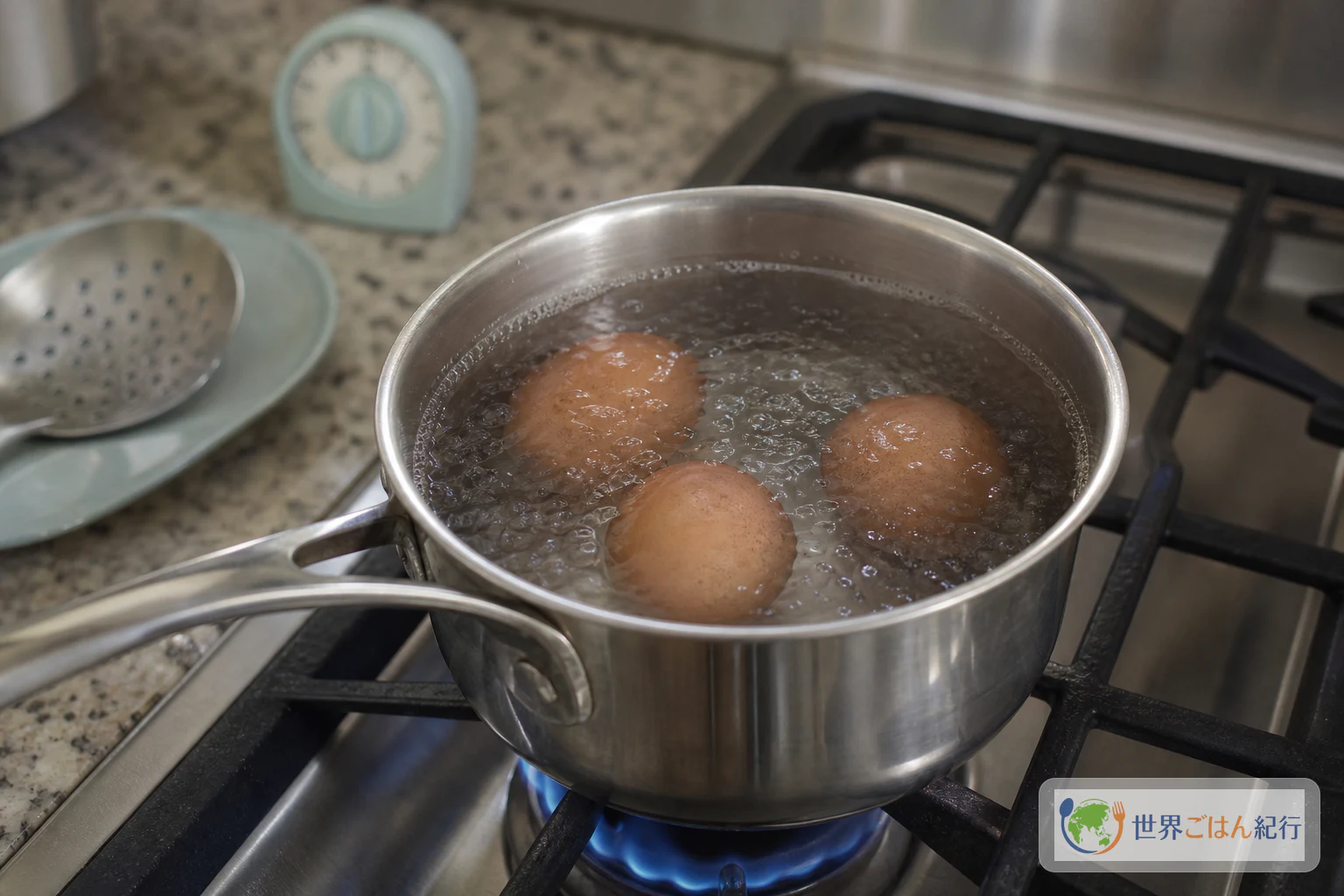
No. Antalya-style plating serves an egg alongside, but next to a meat dish the beans and tarator stand on their own. For a one-plate lunch, keep the egg, and cook it firm: a soft yolk melts into the sauce and blurs the taste of the beans.
Can I make it the day before and pack it for a lunchbox?
The beans, sauce and onion can be kept separately in the refrigerator overnight. Add the tomato and egg on the day, keeping the tomato in a separate container in the lunchbox. Because it contains sesame and egg, pack it with an ice pack and don't leave it at room temperature for long. Discard anything past the storage guide or with an off smell or sliminess.