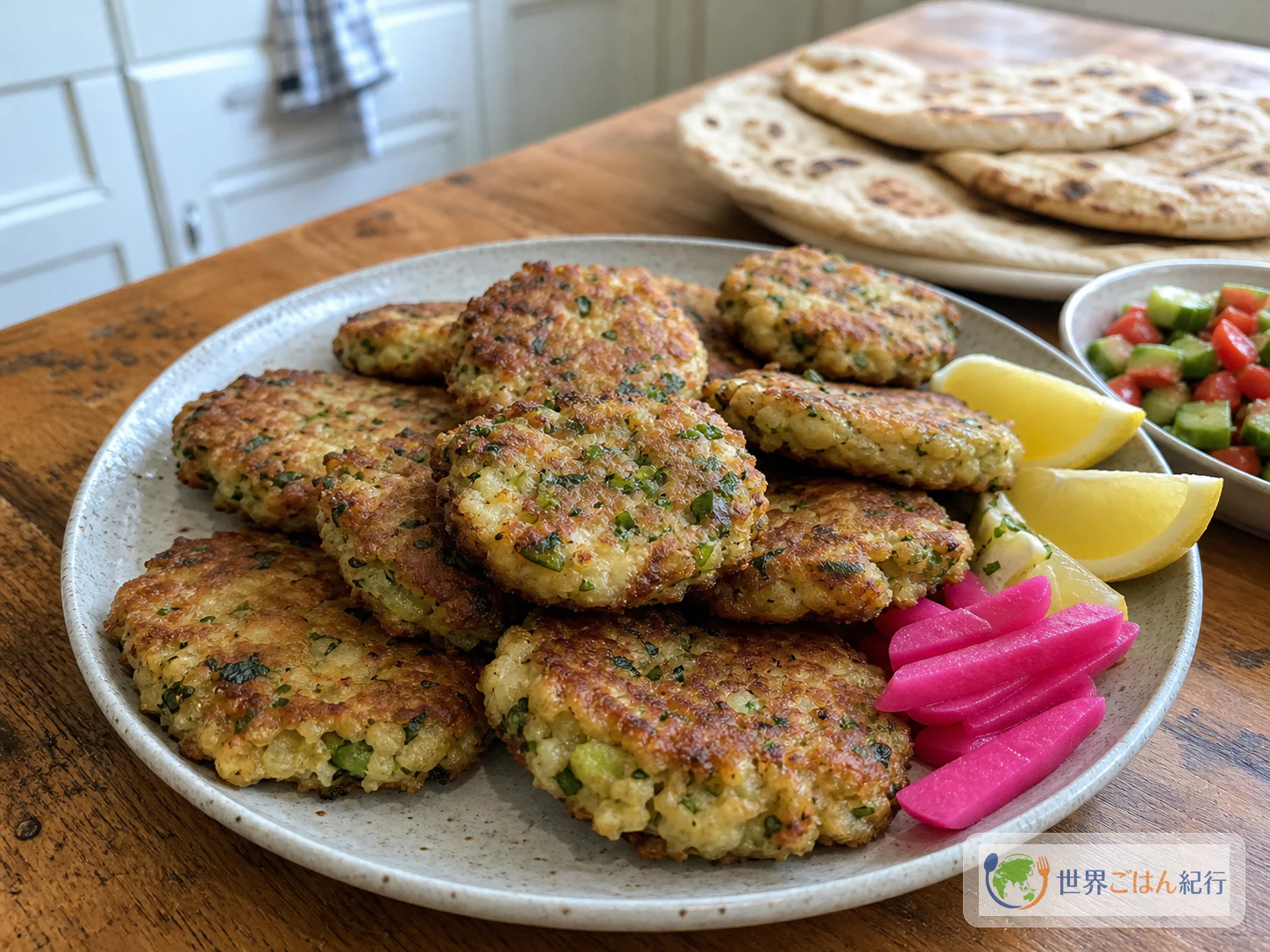
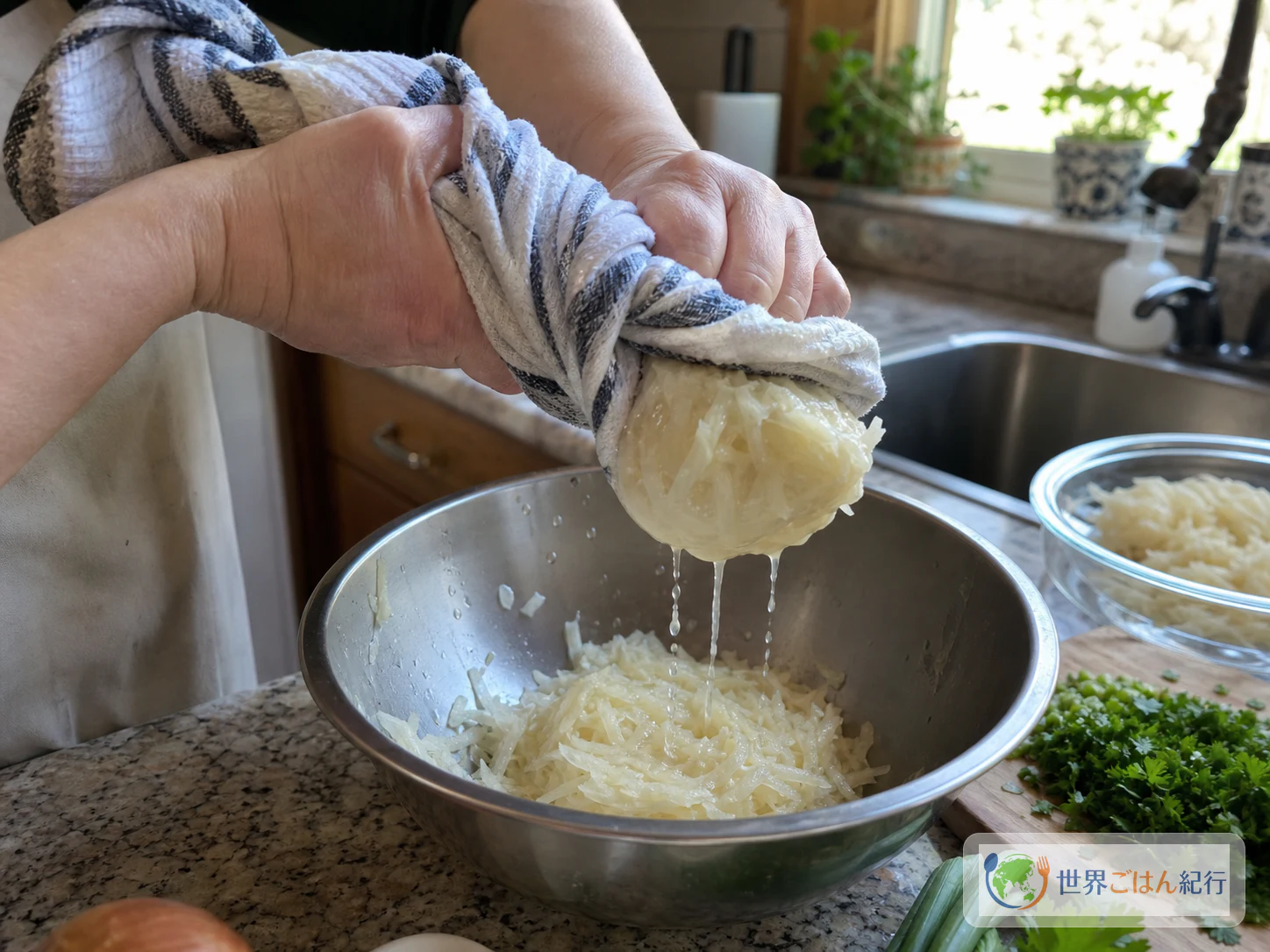
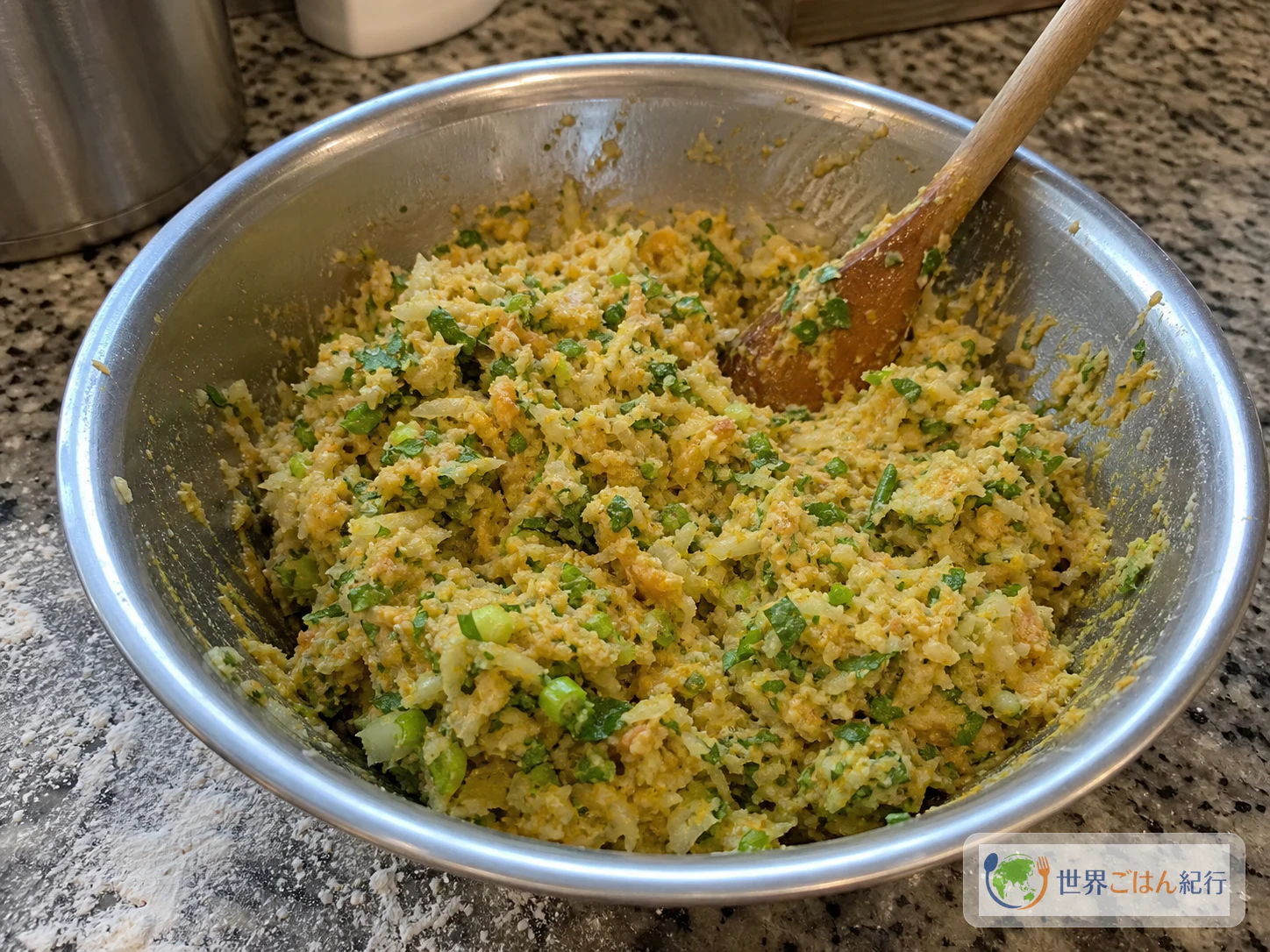
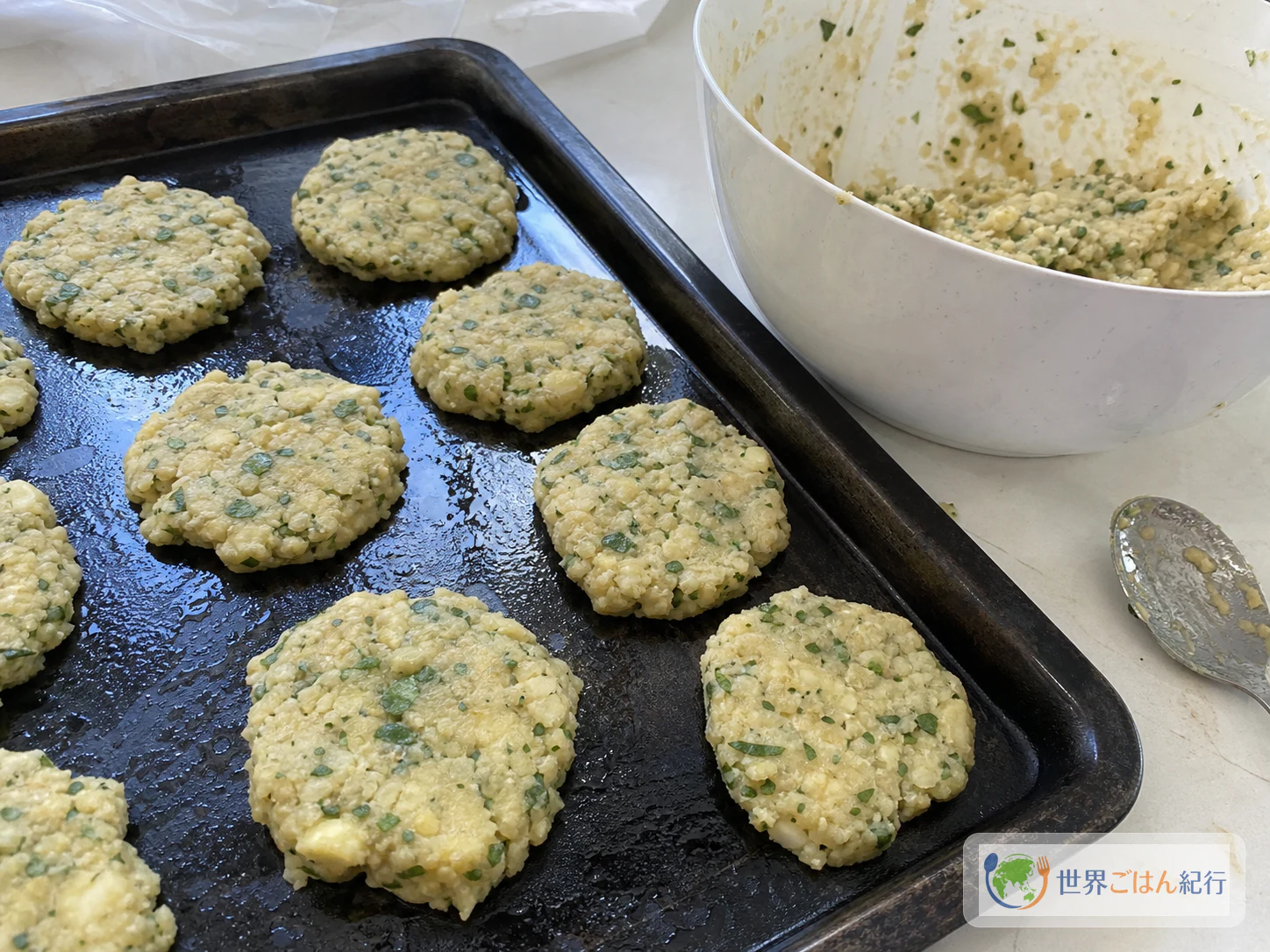
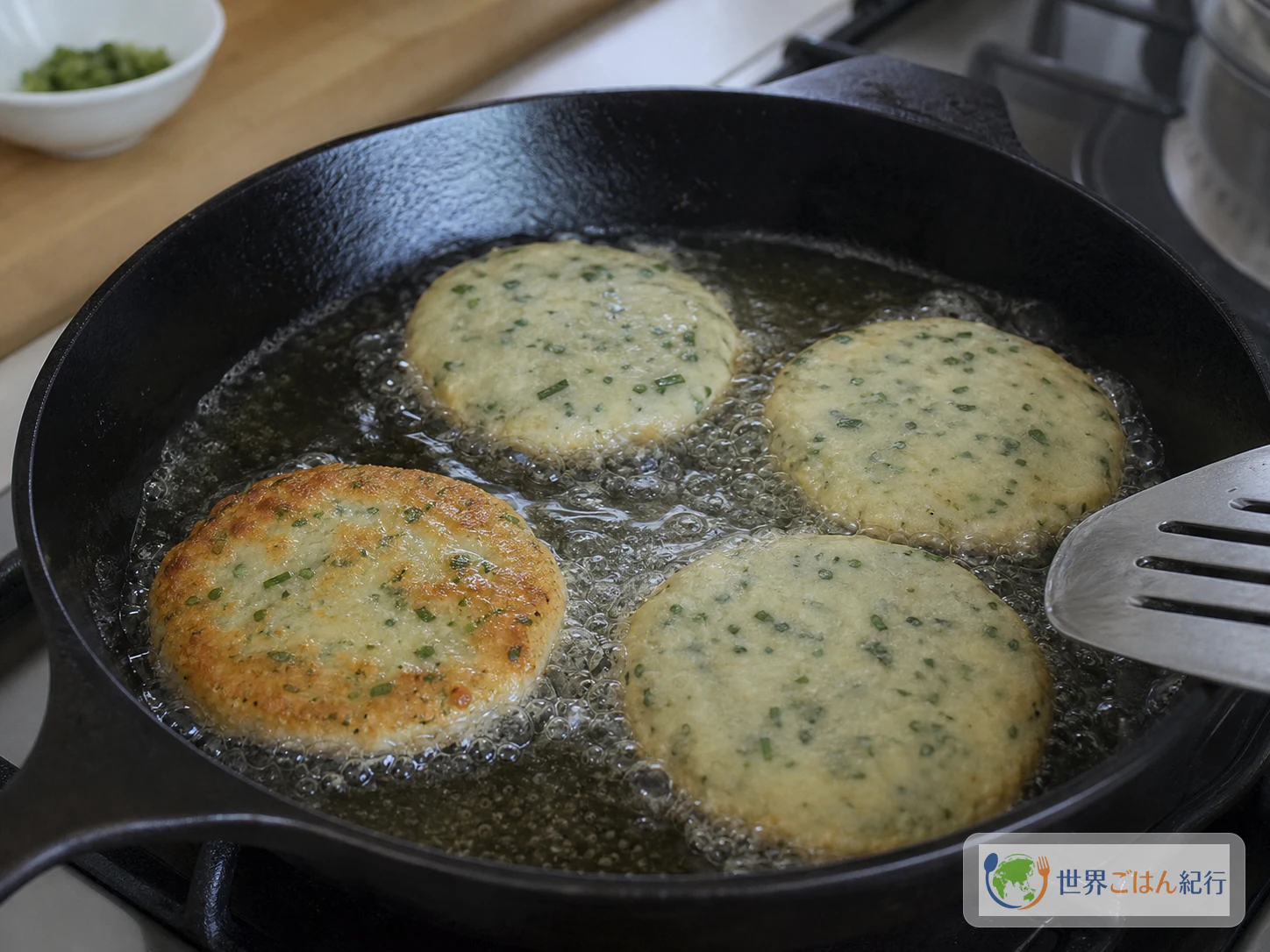
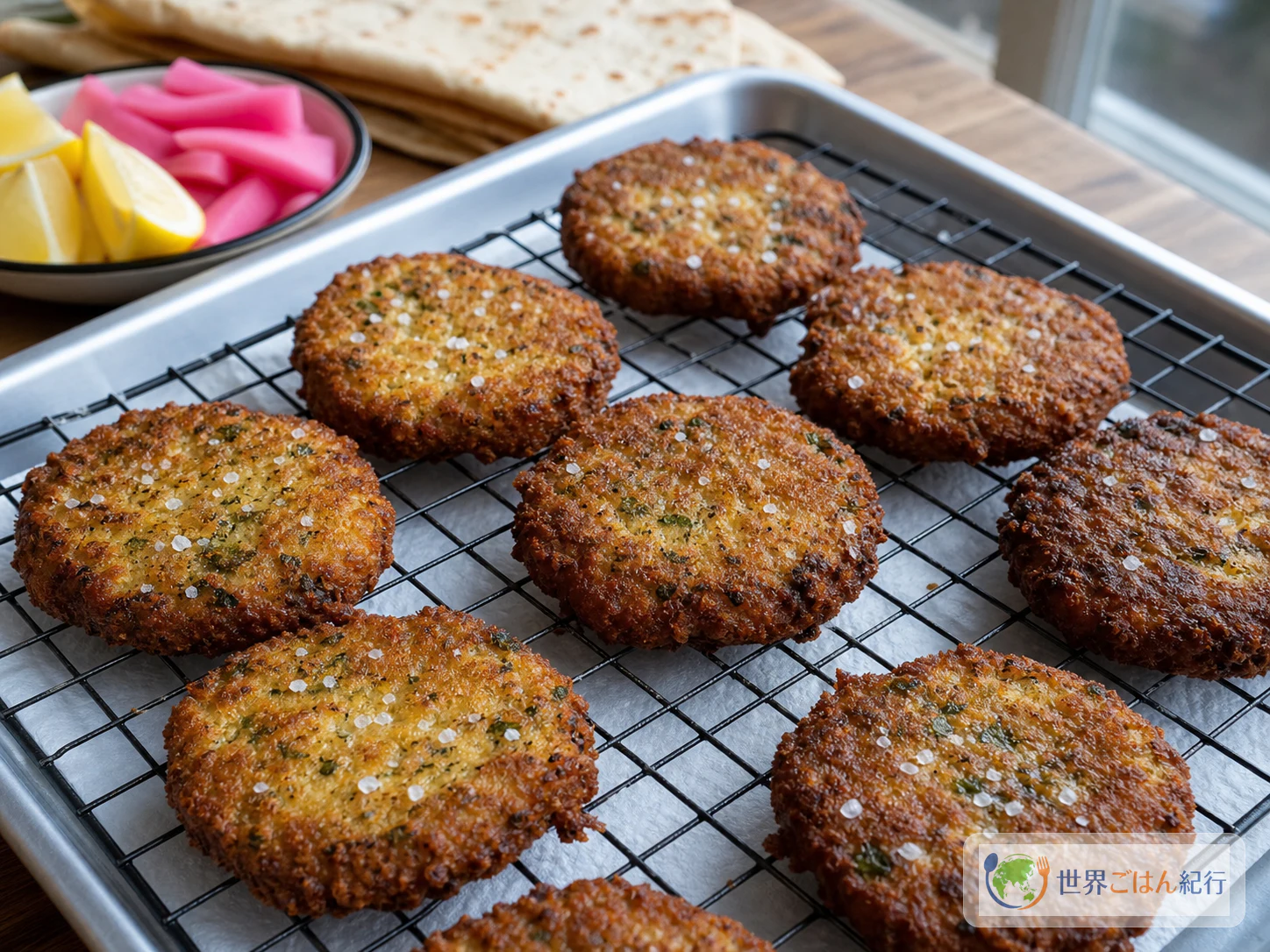
Grated potato and onion leave a pool of whitish liquid in the bowl, and it's hard not to worry that the whole thing will fall apart in the pan. Squeeze it out hard in a cloth, stir in chopped herbs, egg, turmeric, and cumin, and the air in the kitchen changes at once: first the green scent of scallions and parsley and the earthy yellow of turmeric, then the sweetness of potato browning in oil. That's arook (عروق in Arabic), the potato and herb patty of Iraqi home kitchens. Shaped into ovals and pan-fried, it comes out crisp outside and soft inside, with some of the grated potato's texture still there. Tuck it into flatbread with pickles, lemon, and salad, and it works as dinner or a light lunch.
About arook
In English you'll see the name written Arook, Aruk, or Aroog. It's an Iraqi fritter of potato, onion, herbs, egg, and flour, and many homes use it to bind leftover vegetables or meat with herbs. Some versions are vegetables only, while others add chicken or ground meat. Some cooks boil and mash the potato; others grate it and squeeze out the moisture.
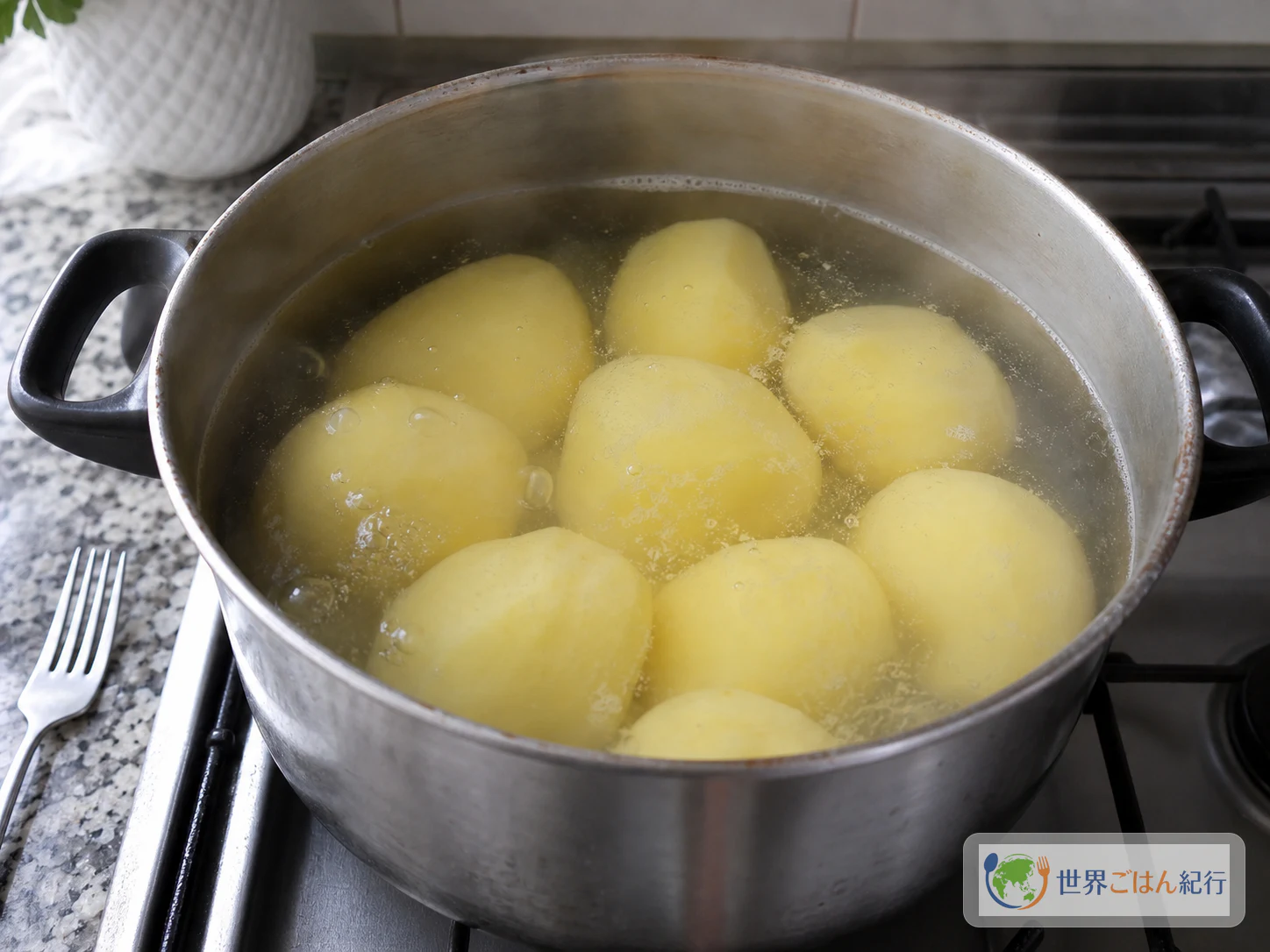
This recipe takes a middle path. The potato is par-boiled and grated coarsely, and the onion is squeezed before the patties are shaped. That makes the batter easier to handle than raw potato alone, and it keeps more texture than mashed potato.
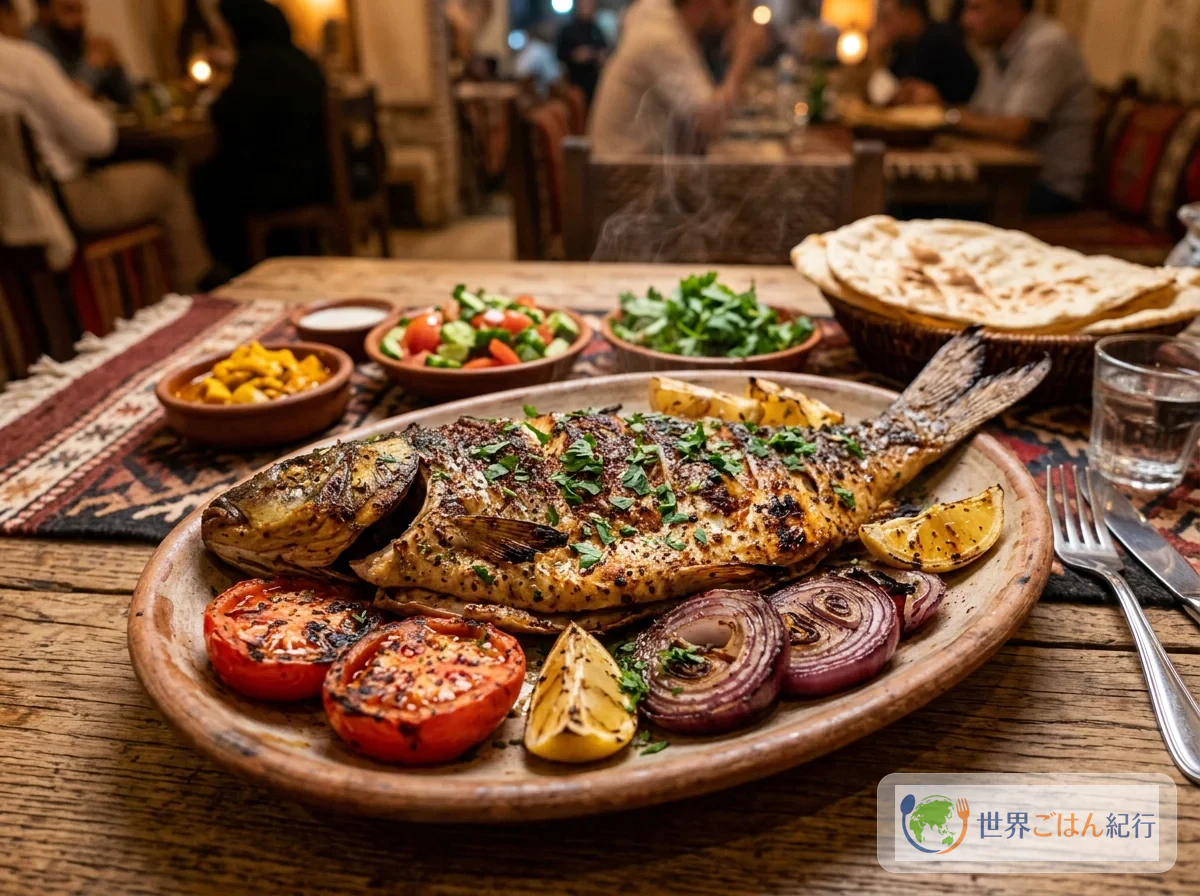
If Iraq's masgouf is a big dish of river fish over charcoal, arook is the small dish that comes together in a home frying pan. And where chickpeas take the lead in falafel, arook's home flavor comes from the way potato, egg, and herbs bind into one soft whole.
Iraqi cooking uses a lot of herbs, and in arook parsley and cilantro are a backbone of flavor on a par with the potato. Think of them as a main ingredient. These are the points that bring the taste closest at home:
| Element | Local way | What to keep at home |
|---|---|---|
| Potato | Raw or partly cooked, grated, keeping some grain | Squeeze out the moisture and keep some texture |
| Herbs | Plenty of parsley, cilantro, and scallions | Use them generously, about 2.5 oz (70 g) in total |
| Spices | Turmeric, cumin, and black pepper build aroma and color | Use turmeric for yellow and cumin for earthy aroma, rather than curry powder alone |
| Oil | Many homes cook it in shallow oil on both sides | Hold around 350°F (170°C) and set the surface first |
| How to eat | With bread, pickles, salad, and lemon | Add acidity to cut the weight of the oil |
Ingredients and substitutions (serves 4)
This amount makes 10 to 12 arook about 3 inches (7 cm) across. As a main dish it serves 4; as an appetizer or a sandwich filling it can be shared by 5 or 6. It uses egg and wheat, so if you have allergies, be sure to read the substitution notes.
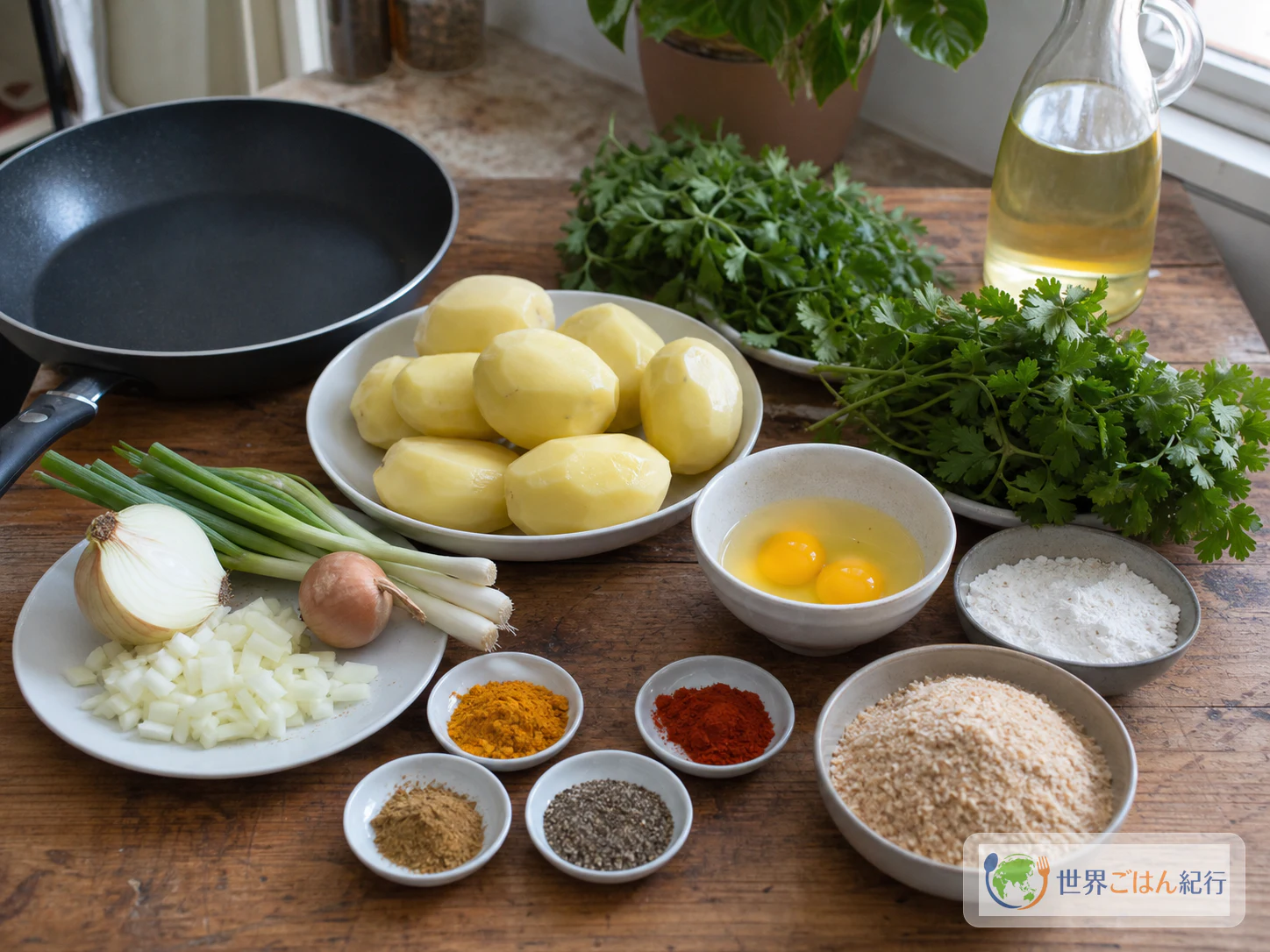
Don't mix raw ground meat into the batter and pan-fry it. The surface colors first while the inside often isn't cooked through. Cook the meat first, then mix it in; that is the safer way at home. The steps below are for the vegetable version.
This recipe contains egg, wheat, and milk. For wheat, you can replace the 1.5 oz (45 g) all-purpose flour with 1.5 oz (45 g) rice flour and the 1.25 oz (35 g) breadcrumbs with 1.25 oz (35 g) rice-flour breadcrumbs. For milk, replace the yogurt sauce with 2.75 oz (80 g) tahini + 2.5 tbsp (40 ml) water + 2 tsp lemon juice. If you leave out the egg, mix 2 tbsp potato starch with 3 tbsp water and add it, but it breaks more easily, so make the patties 2.5 inches (6 cm) across.
Choosing ingredients for arook
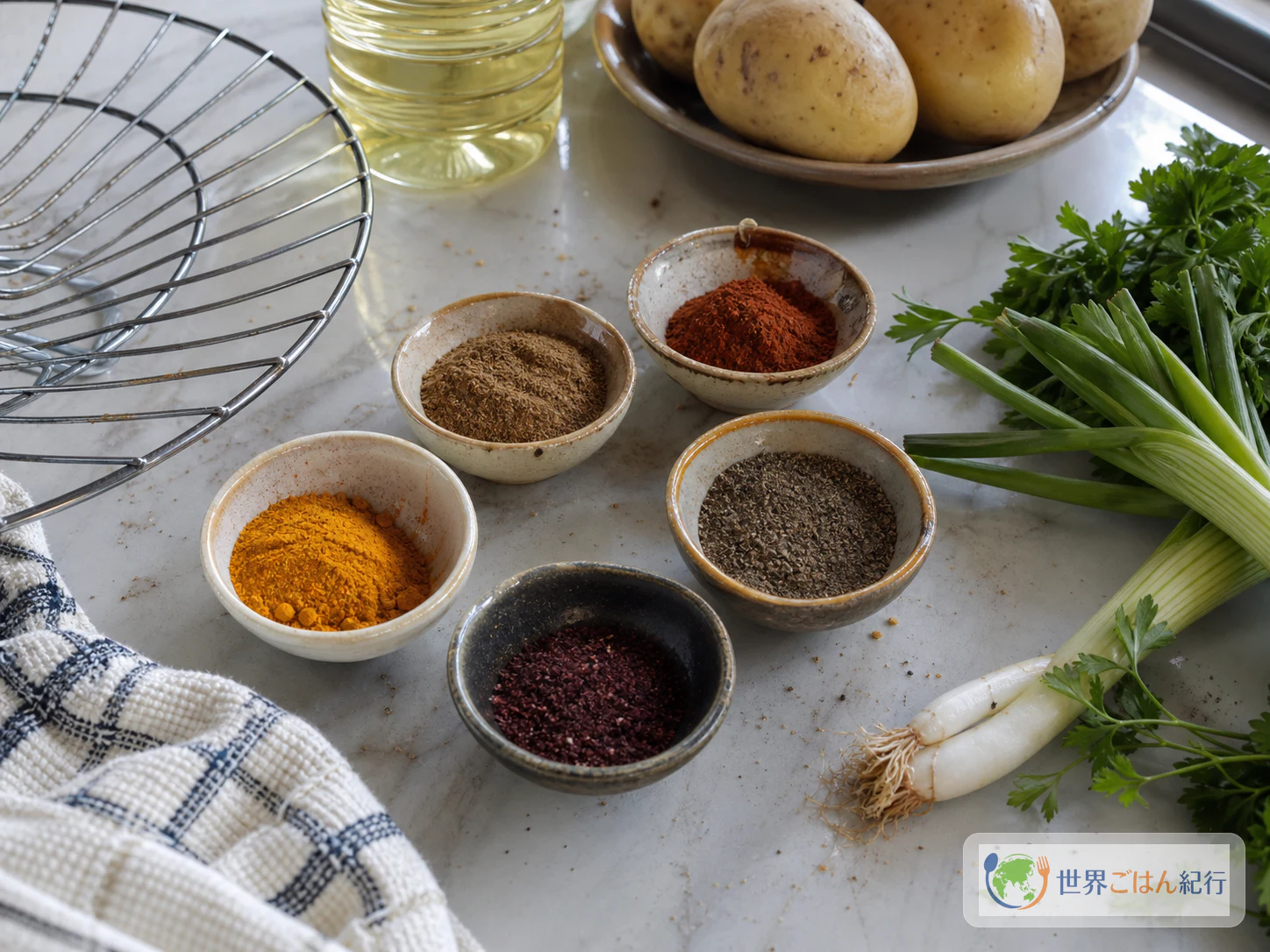
The potatoes, onion, eggs, and herbs can all be found at a supermarket. The spices that shape the flavor are the part worth seeking out online or at a specialty shop. Cumin and turmeric are easy to keep on hand, and they'll go into Turkish köfte and much of the basics of Middle Eastern cooking. Sumac is optional, but its red tartness is different from lemon and links fried food and pickles well.
If you dislike cilantro, make arook with 1.5 oz (45 g) parsley and 1 oz (30 g) scallions. The aroma is a little milder, but the dish still heads in the same direction.
How to make it: moisture control that keeps them from falling apart, and pan-frying
The most important thing in arook is not to bind the potato with flour but to reduce the moisture and then set the surface in oil. If the batter goes into the oil still watery, the oil temperature drops and the edges come loose before the surface sets. Treat squeezing hard in step 2 and resting in step 4 as one job.
Arook problems and fixes
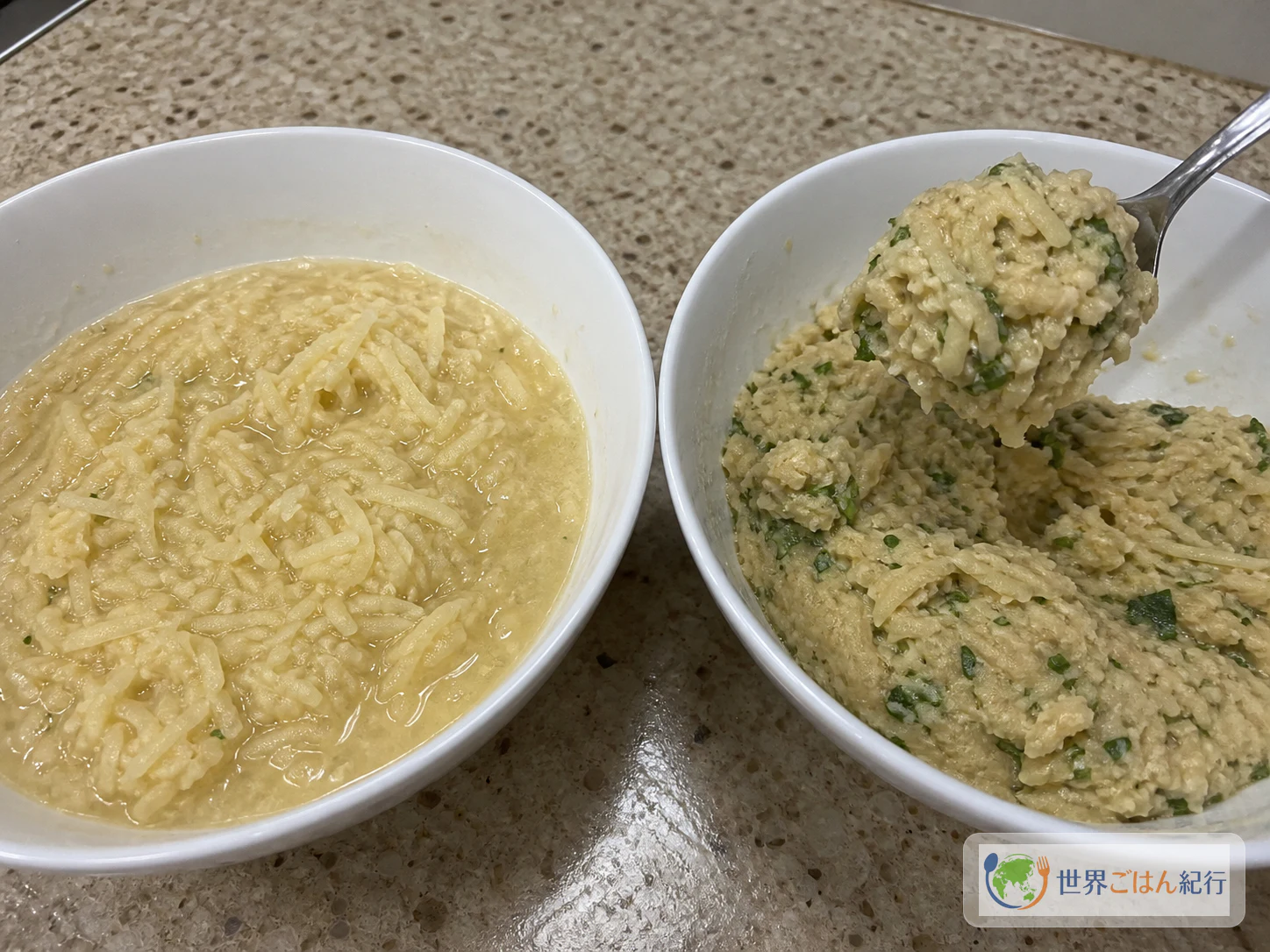
Arook's failures usually come down to moisture and oil temperature, well before seasoning. Salt is tempting with potato because it strengthens the flavor right away, but a watery batter covered with salt tastes heavy once it cools. When a patty breaks, check how well you squeezed and how hot the oil is before reaching for more flour.
| Problem | Cause | Fix |
|---|---|---|
| Edges come loose in the oil | Too much moisture from the onion, or the batter wasn't rested | Squeeze again in a cloth, add 10 g breadcrumbs, and chill 10 minutes |
| Only the surface burns | Oil is above 350°F (180°C) | Lower the heat and wait 30 seconds until the bubbles at the surface turn fine |
| Greasy | Oil is below 325°F (160°C), or too many at once | Fry 4 at a time; if the bubbles weaken, return to medium heat |
| Powdery inside | Too much flour, or the potato too firm | Next time boil the potato 2 minutes longer and cut the flour by 10 g |
| Weak aroma | Too few herbs, or less cumin | Add 10 g parsley and 10 g scallions, and sprinkle sumac to finish |
| Shapes crack | Too thick, or rough edges | Make them 0.5 inches (1.2 cm) thick and press the edges round by hand |
Serving and storing arook
Serving arook
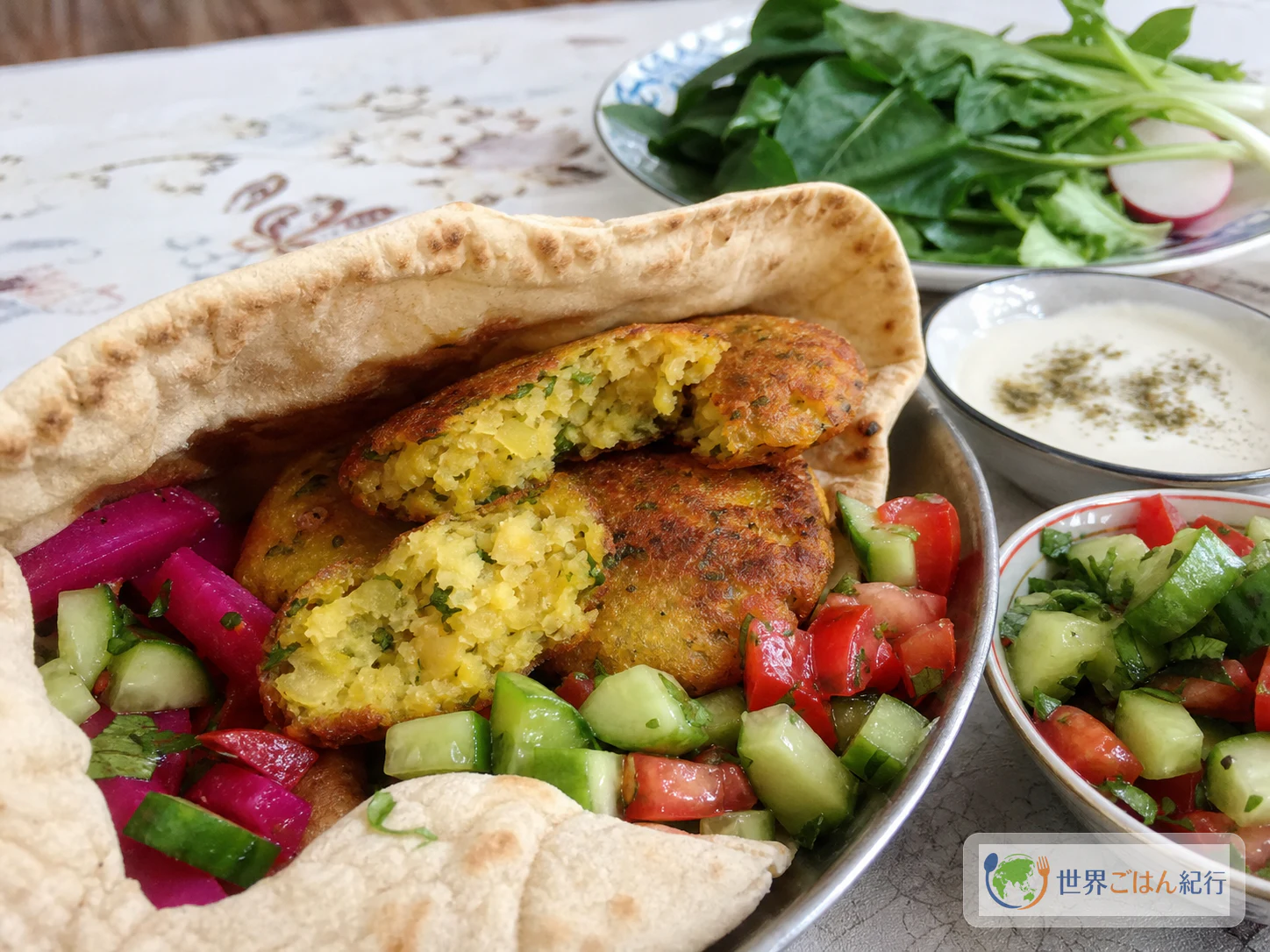
Arook comes into its own beside bread and something tart, rather than alone on a plate. Wrap it in flatbread and bite into pickles, tomato, cucumber, and yogurt sauce all at once, and oil, potato, herbs, and acidity move through a single mouthful.
| Accompaniment | Guide amount | Role |
|---|---|---|
| Flatbread | 4 pieces | Holds the arook and takes up the oil |
| Pickles | 4 oz (120 g) | Lightens fried food with acidity |
| Tomato and cucumber | 12.5 oz (350 g) in total | Adds freshness |
| Yogurt sauce | about 5.5 oz (150 g) | Pulls it together with garlic and acidity |
| Sumac | 1/2 tsp | Red tartness and a Middle Eastern aroma |
When you fill the bread, save the sauce for last. Fold the flatbread in half and build it in the order below. Spread the sauce first and the bread gets damp and the arook's surface goes soft quickly.
| Order of filling | What goes in | Why |
|---|---|---|
| 1 | 1 arook | The bread takes the heat and oil |
| 2 | 2 tbsp each tomato and cucumber | Moisture goes on top, so the bread doesn't get too damp |
| 3 | 20 g pickles | Spreads acidity through each bite |
| 4 | 2 tsp yogurt sauce | Added last to keep its aroma |
| 5 | A pinch of sumac | Brings up the red tartness at the end |
The same idea works on a plate: set the sauce beside the arook and dip each bite, and the crisp surface lasts longer. Sweet-and-sour pickled radish does a similar job to the pickles, though if it's too sweet, add 1 tsp lemon juice to bring the acidity forward.
For a wider Middle Eastern spread, Lebanese hummus with its toasty bean flavor or köfte for meat make good companions. To stay within Iraqi cooking, make the arook small and serve it as a side to masgouf, the charcoal-grilled fish dish.
Storing and reheating arook
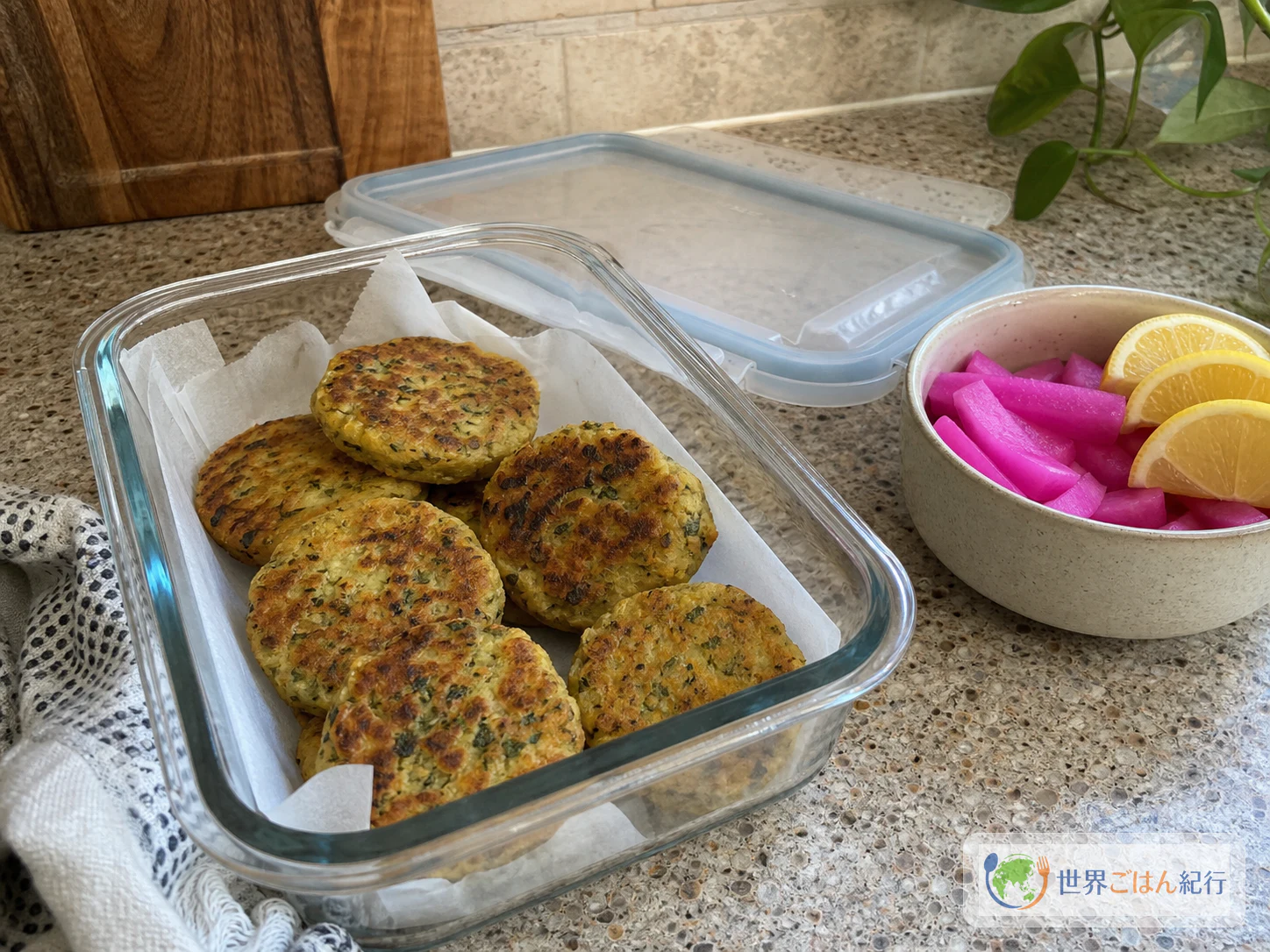
Arook keeps 2 days in the refrigerator or 2 weeks in the freezer, so it's easy to make ahead. Cool the fried patties on a rack, then lay them without overlapping in a container lined with paper towels. Wait until they're cool to seal the container; steam trapped inside softens the surface.
To reheat, give them 6 minutes at 400°F (200°C) in a toaster oven, or 3 minutes per side in a dry frying pan over medium-low heat. The microwave alone softens the outside, so warm them for 40 seconds at 600 W and then crisp them for 3 minutes in the toaster oven. Thaw frozen arook in the refrigerator for half a day, then warm for 8 minutes in a 400°F (200°C) toaster oven.
Shaped, uncooked patties can wait on a tray, with plastic wrap pressed against them, in the refrigerator for up to half a day. Left until the next day, the onion releases moisture, so check the surface before frying; if liquid is seeping out, dust with 10 g breadcrumbs to tidy it.
Frequently asked questions
Q1. Can I make it with raw potato, without boiling?
Yes. Grating raw potato and squeezing out the moisture gives a lighter, crisper result. Moisture control is harder, though, and the surface tends to burn before the center cooks. For a first try, par-cooked potato breaks less easily and makes each step easier to judge.
Q2. Can I make it in the oven or an air fryer?
You can, though the surface won't be as firm as when pan-fried. In the oven, spread 2 tbsp oil on a baking sheet and bake at 425°F (220°C) for 12 minutes, flip, and bake 8 minutes more. In an air fryer, cook 12 minutes at 400°F (200°C), flip, and cook 6 minutes more. Either way, brushing about 2 tsp oil on the surface keeps the patties from drying out.
Q3. What do I put in for a meat version?
The easiest is 4 oz (120 g) poached chicken, shredded to about 0.25 inch (5 mm) wide and mixed in; finer shreds make the batter dry. For ground meat, cook 5.5 oz (150 g) ground beef or ground chicken in a frying pan over medium heat for 5 minutes until the juices run clear, then add it to the batter. Always cook the meat first: the frying time is the same as for the vegetable version, and raw meat in the batter often stays undercooked in the center.
Q4. Can I put it in a lunch box?
Yes. In the morning, rewarm arook fried the day before in a toaster oven at 400°F (200°C) for 5 minutes, then cool it completely before packing. Pack the yogurt sauce in a separate container, and keep the pickles and tomato apart so their moisture doesn't touch the arook and soften its surface.