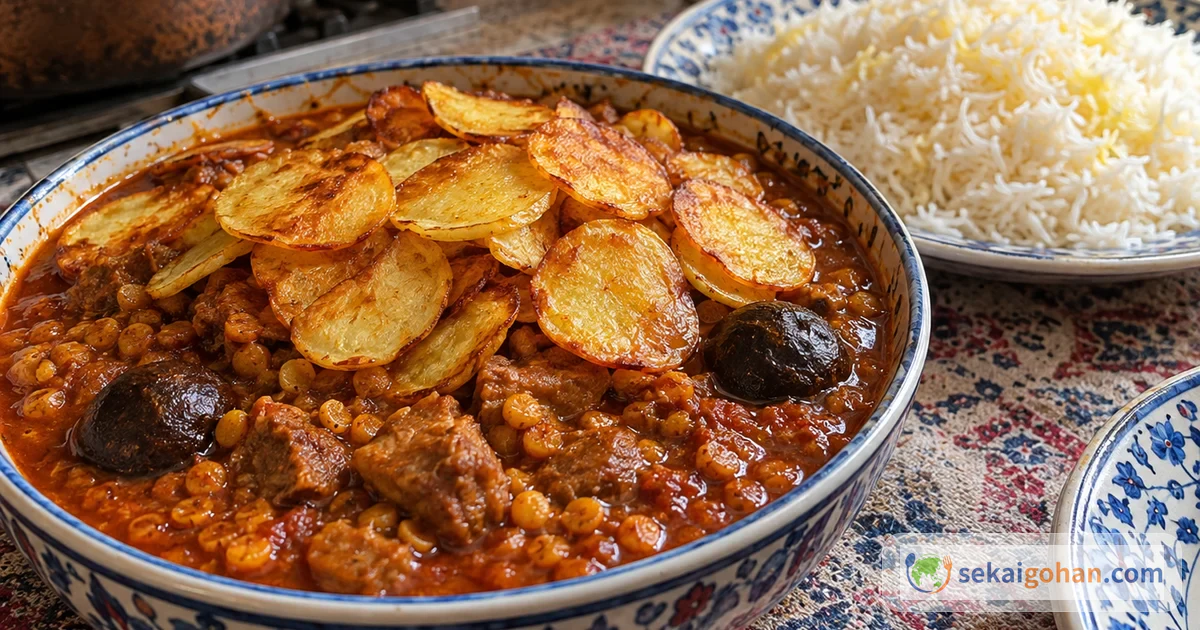
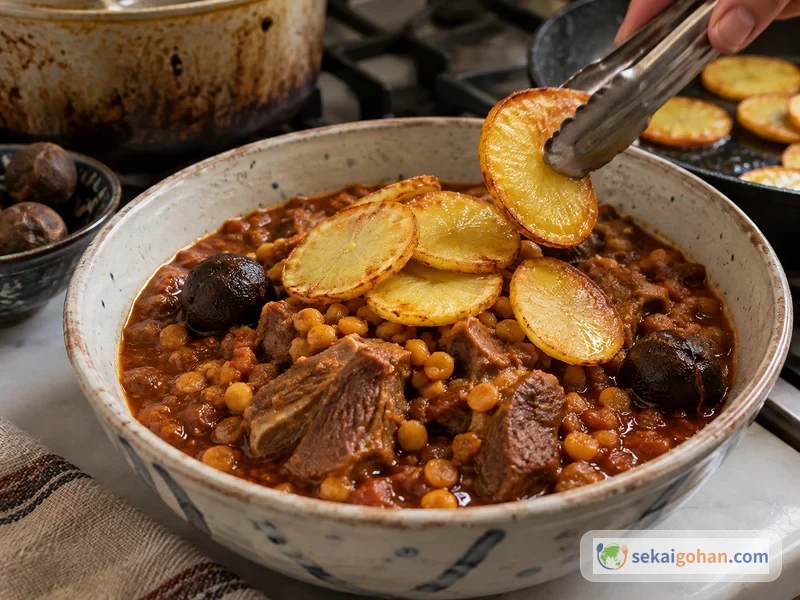
A generous serving of reddish-brown stew sits beside fluffy white rice, the thick sauce full of tender lamb and small yellow peas, with a heap of crisp fried potatoes on top. Dip a spoon in and the sweet, sour, slightly bitter fragrance of dried lime rises up to meet you. Khoresh gheymeh is a stew of meat and split peas that Iranian households have loved for a long time. Tomato brings sweetness, lamb brings richness, and dried lime cuts through both.
Khoresh gheymeh and Muharram
Khoresh is the Persian word for stew, and Iran has countless versions eaten over rice. Gheymeh is among the most familiar: it is one of the five favorite khoresh, and making it feels like coming home, no matter how many years you have been away from Iran.
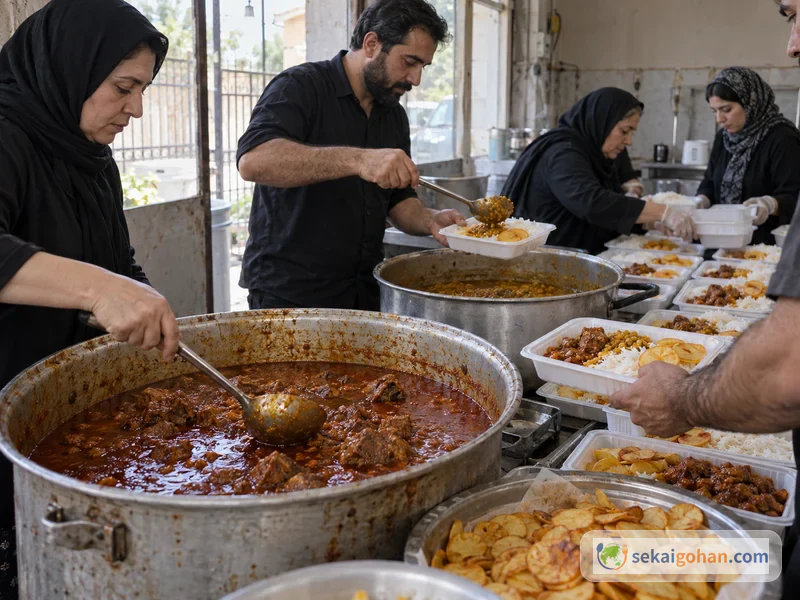
The dish is also tied to religious observance. During Muharram, the Islamic month of mourning for Imam Hussein, stalls appear on the streets and hand out sweet drinks, tea and food for free. This custom of sharing food is called nazri, and its signature dish is gheymeh, a stew of lamb and split peas served with rice.
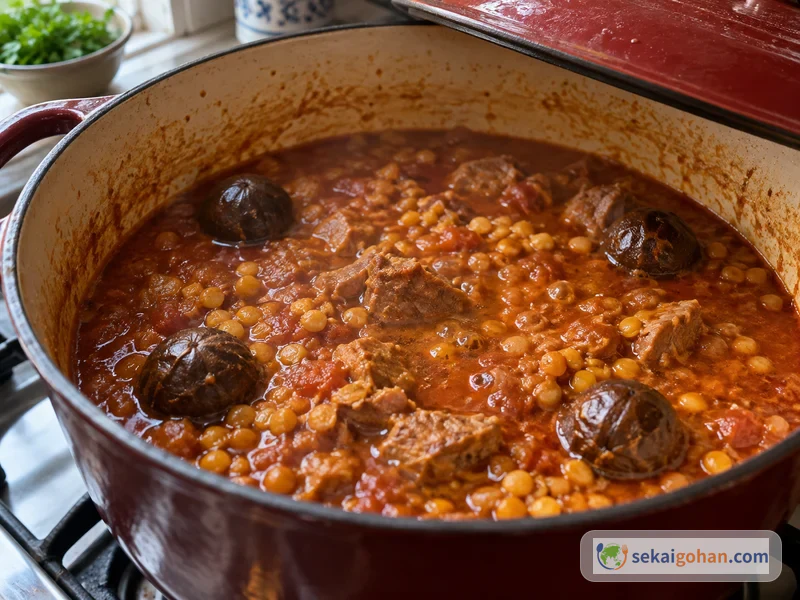
What gives gheymeh its flavor is dried lime, a whole lime dried until hard, also called limoo amani in Persian. As it simmers, it releases sourness and a distinctive bitterness that sharpen the sweetness of the tomato and the fat of the lamb.
Ingredients (serves 4)
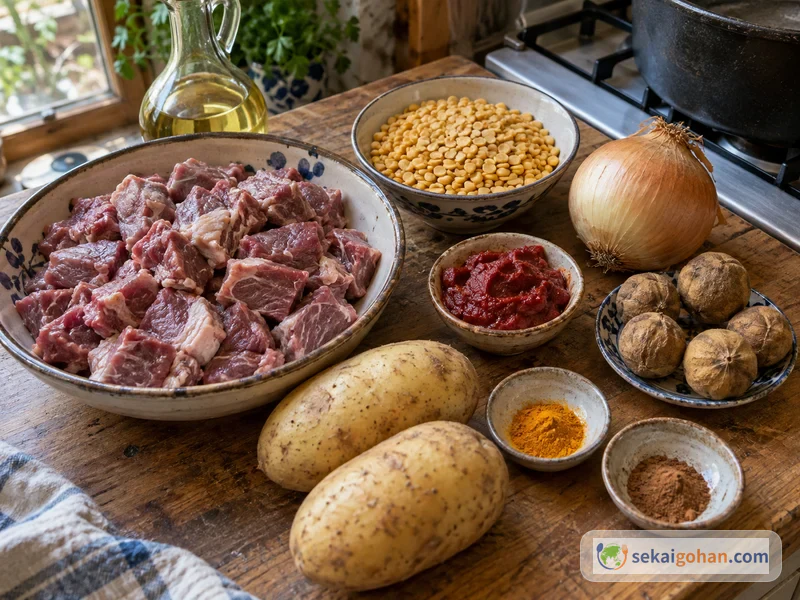
Serves 4 to 6. Pounds and cups have been converted to grams and ml.
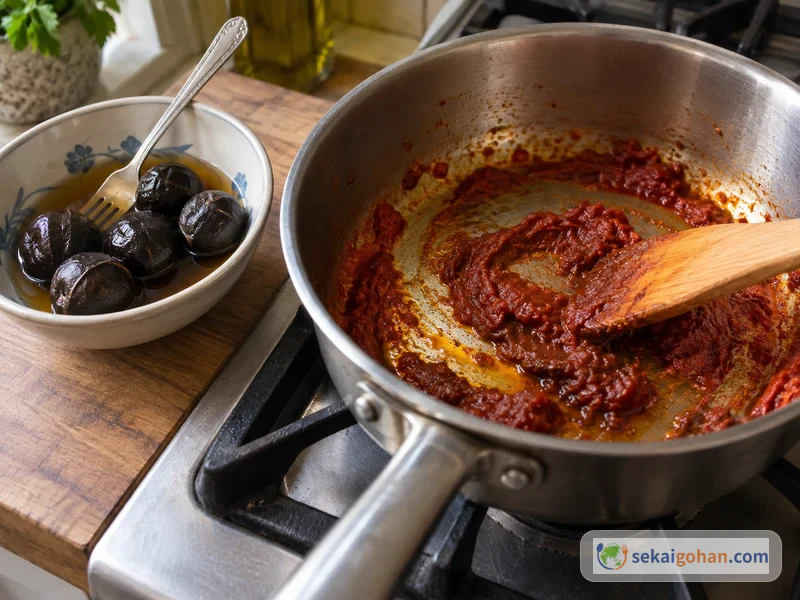
Yellow split peas are dried peas that have been hulled and split in half, and are available at import food stores and online. Dried limes are sold at Middle Eastern food shops. Pierce the dried limes before simmering, and the cooking liquid gets all the way in, making the sourness come out more easily.
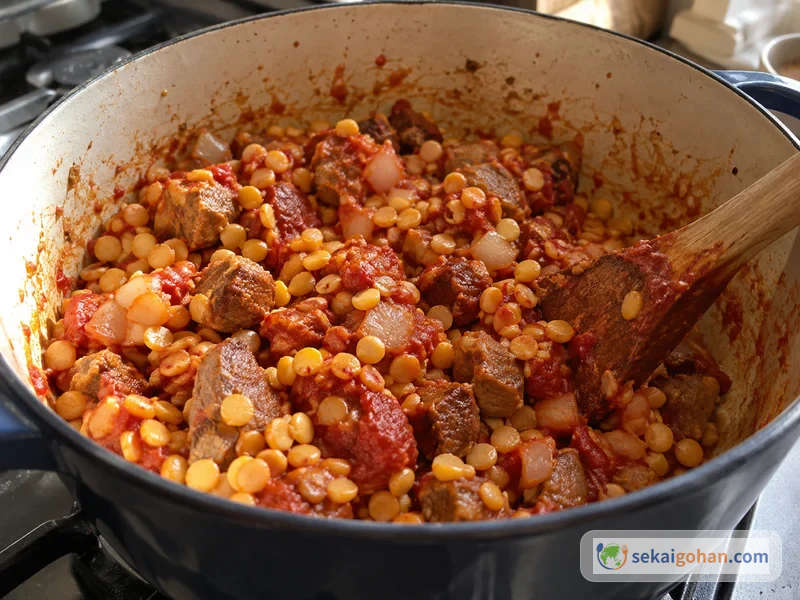
The peas should turn tender while keeping their shape. If you are worried about them breaking down, parboil the peas in a separate pot and add them in the last 30 to 40 minutes of the simmer.
How to make khoresh gheymeh
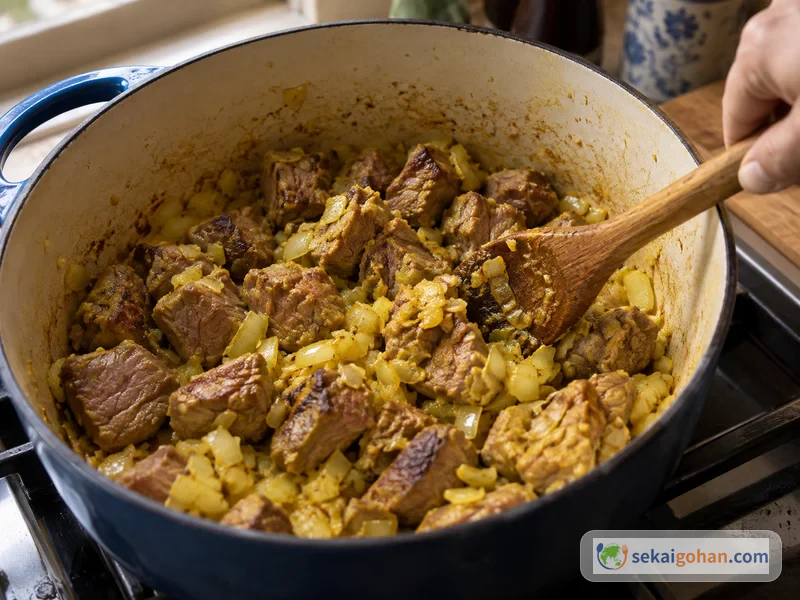
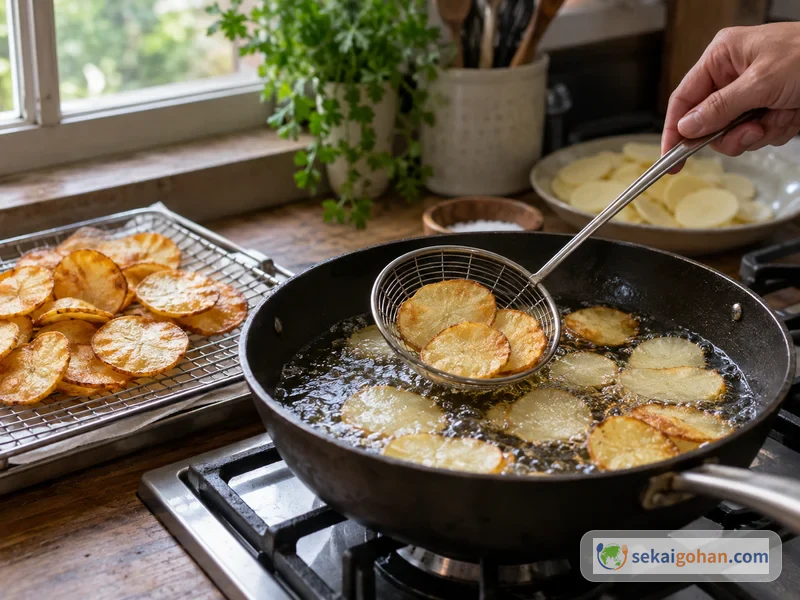
Prep takes about 20 minutes, and the simmer takes 1 1/2 to 2 hours. The potatoes are fried while the stew simmers.
When frying the potatoes, dry them well before they go into the oil. Any moisture left makes the oil spatter. Do not take your eyes off the frying oil, and dispose of used oil only after it has cooled.
Frying the tomato paste first in a separate pot takes out the raw sourness and gives the stew more color and depth. Stop before it scorches, when the color has deepened just a little.
Serving khoresh gheymeh
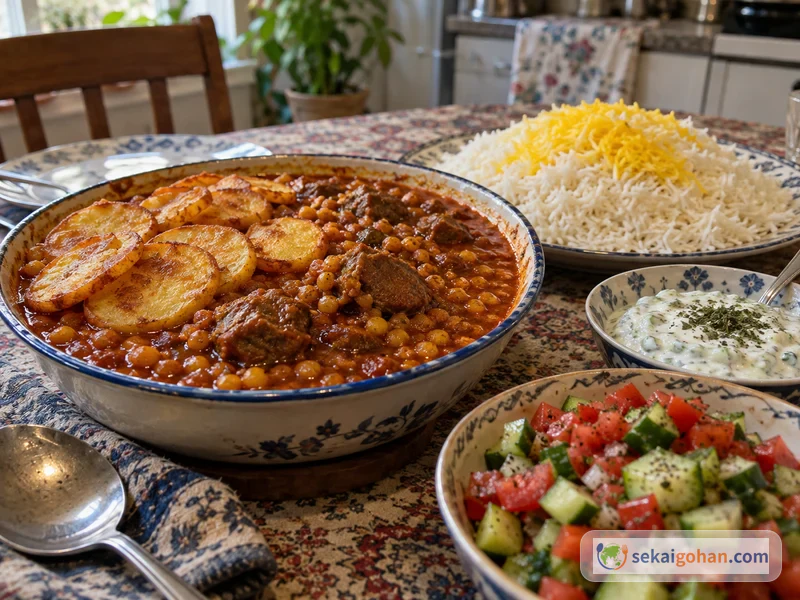
Gheymeh goes in a large bowl, topped with fried potatoes, and comes to the table with white basmati rice. Spread the rice on your plate, spoon the stew over, and break up the potatoes as you eat. Every bite mixes the sweetness of peas that have soaked up the lamb, the sourness of the dried lime, and the salty crunch of the potatoes.
Around it, you'll usually find yogurt with cucumber (mast-o-khiar), a tomato and cucumber salad (salad shirazi) and pickles (torshi). The yogurt and salad make a refreshing palate cleanser.
If you want to explore more Iranian stews, try the green ghormeh sabzi, cooked down with plenty of fried herbs, or the sweet-sour fesenjan of pomegranate and walnut. Add tahdig, the crisp layer from the bottom of the rice pot, and you have an Iranian family table.
Frequently asked questions
Can I make it with beef?
Yes. Lamb and beef both work, and the simmering time until tender is the same.
The split peas fall apart.
Peas cook at different rates. If you're worried about them breaking down, parboil them in a separate pot until they just hold their shape, then add them for the last 30 to 40 minutes of the simmer.
Can the dried lime be eaten?
It's there to pass its sourness and aroma into the sauce. Lift it out after simmering rather than eating it.
What should I do with leftovers?
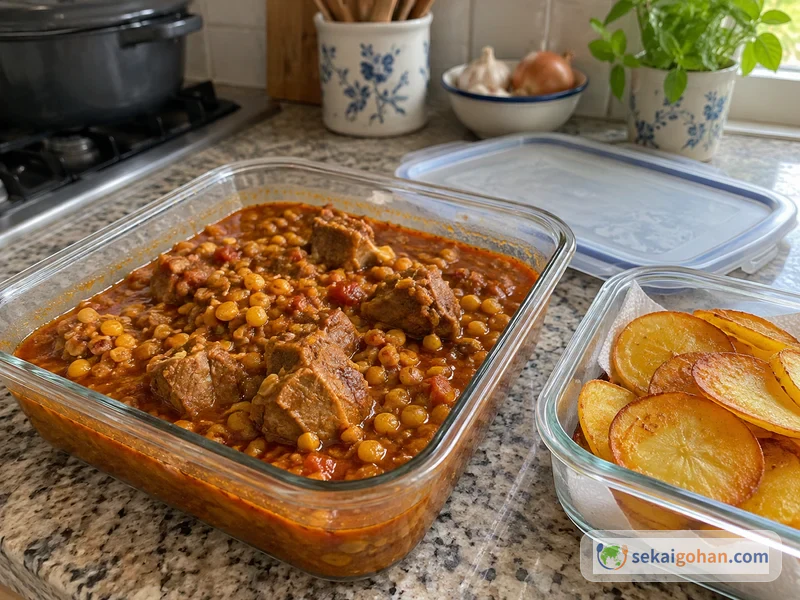
Cool the stew, refrigerate it, and eat it soon. Reheat it thoroughly in a pot until it bubbles. Store the fried potatoes separately and add them on top when you eat, so they stay crisp.