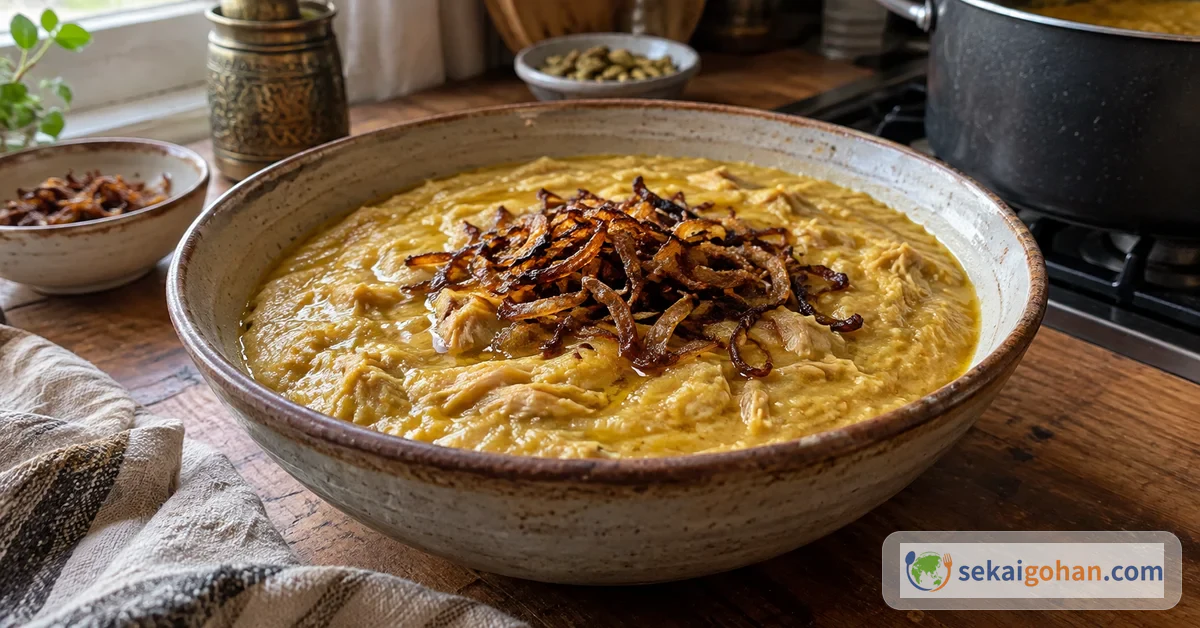
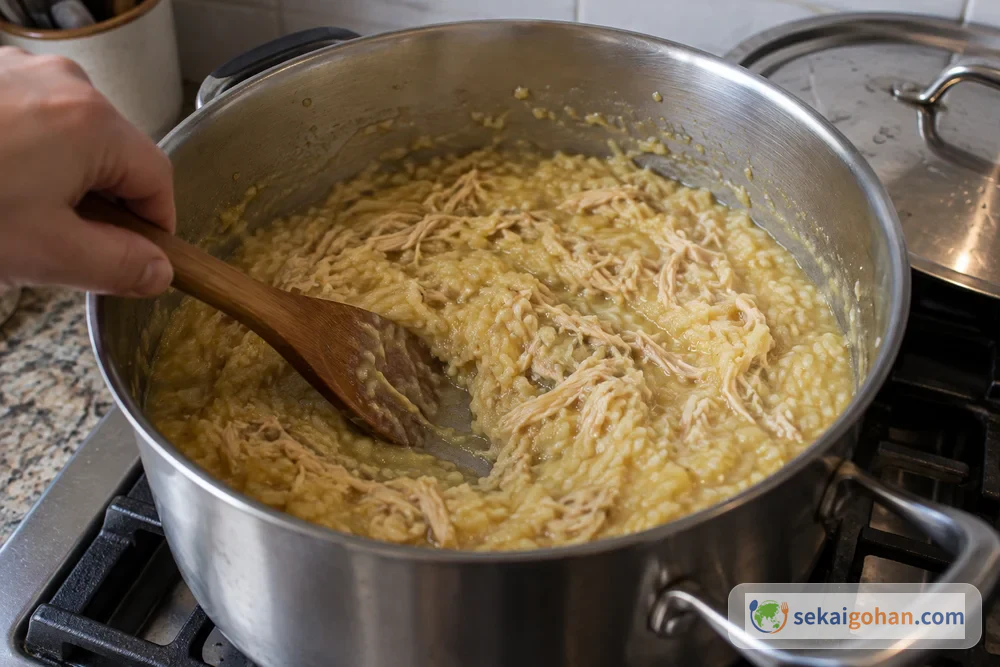
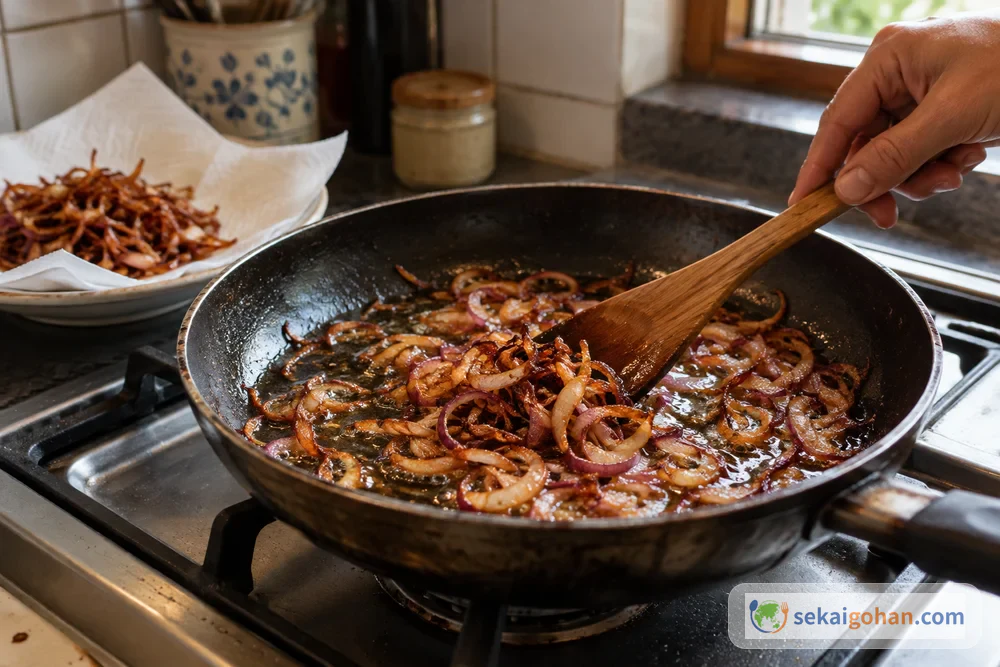
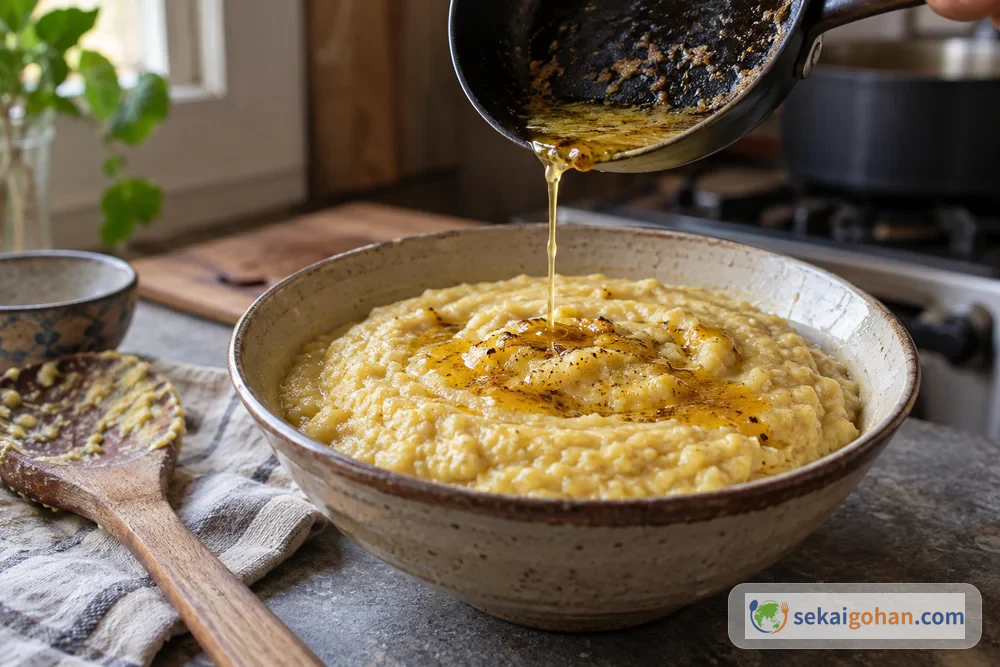
In the pot, the grains of rice slowly lose their shape, and the bubbling yellow porridge fills the kitchen with the sweet smell of cardamom and rice starch. Once it's cooked, you mash it with all your strength using a wooden spoon, then pour melted ghee over the top in a thin stream. Madrouba comes from Oman: chicken and rice stewed with spices until meltingly soft, with the gentle, bitter sourness of dried lime running through every spoonful.
What madrouba is
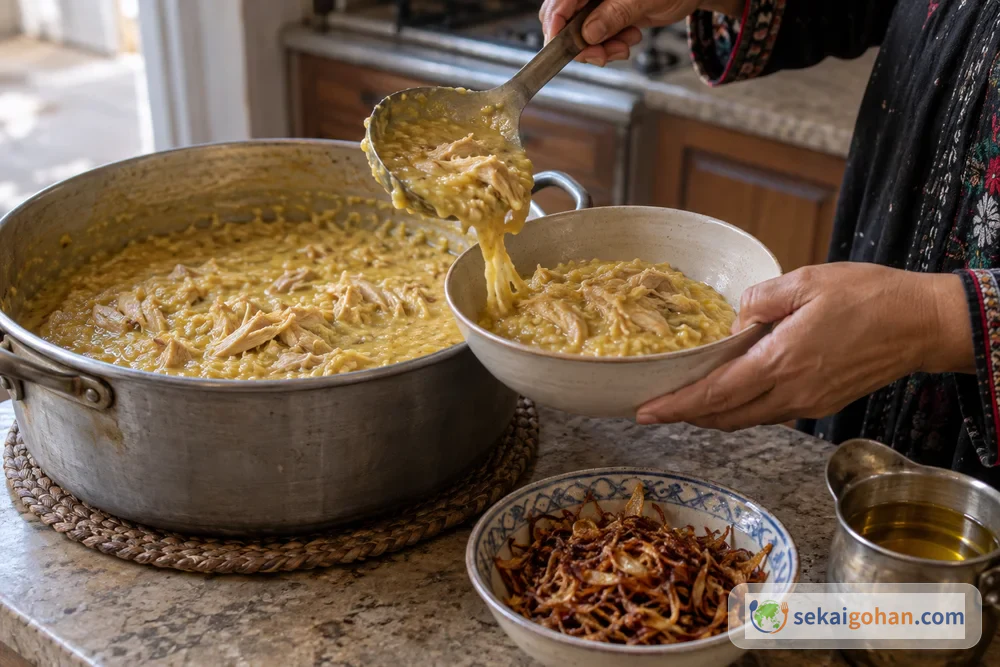
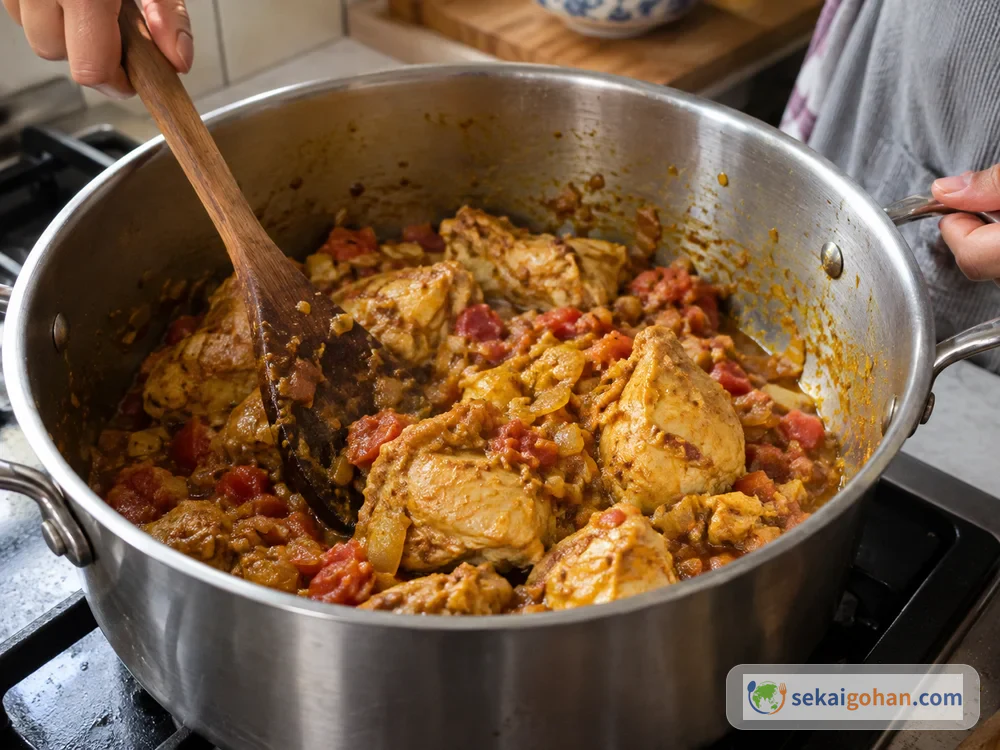
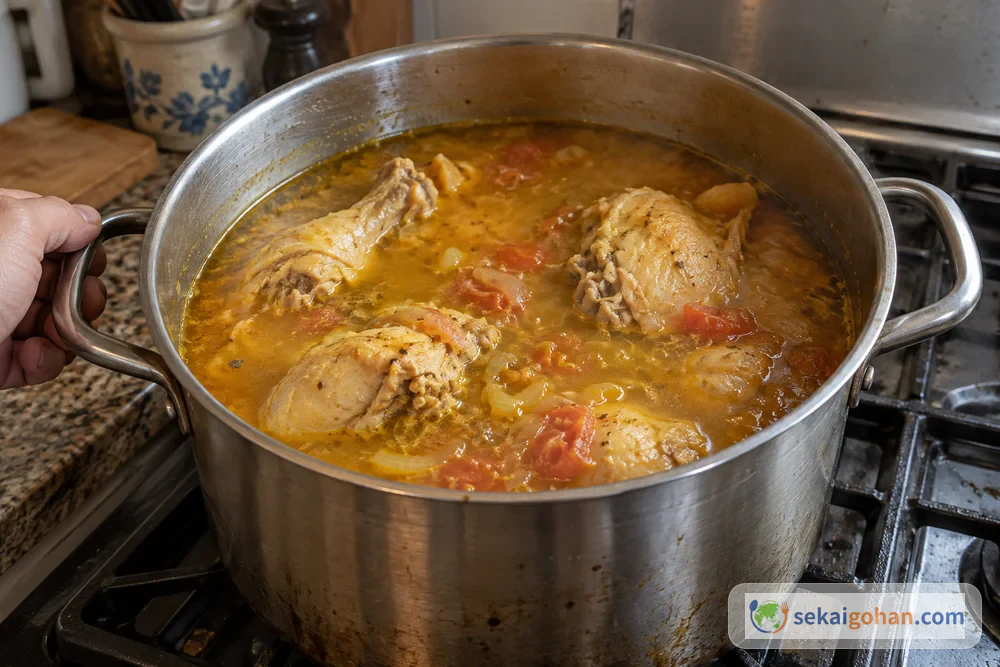
The name means "beaten rice," and it describes the final step exactly. Madrouba is a savory porridge made by "beating" rice. The rice and chicken cook for a long time, until the rice collapses and the chicken shreds, and then everything gets beaten vigorously with a wooden spoon.
In Oman, rice is indispensable at the midday meal, and madrouba is that rice cooked down until the grains disappear. The long simmer is part of the pleasure. While it bubbles away, the whole house is filled with the scent of cardamom and rice.
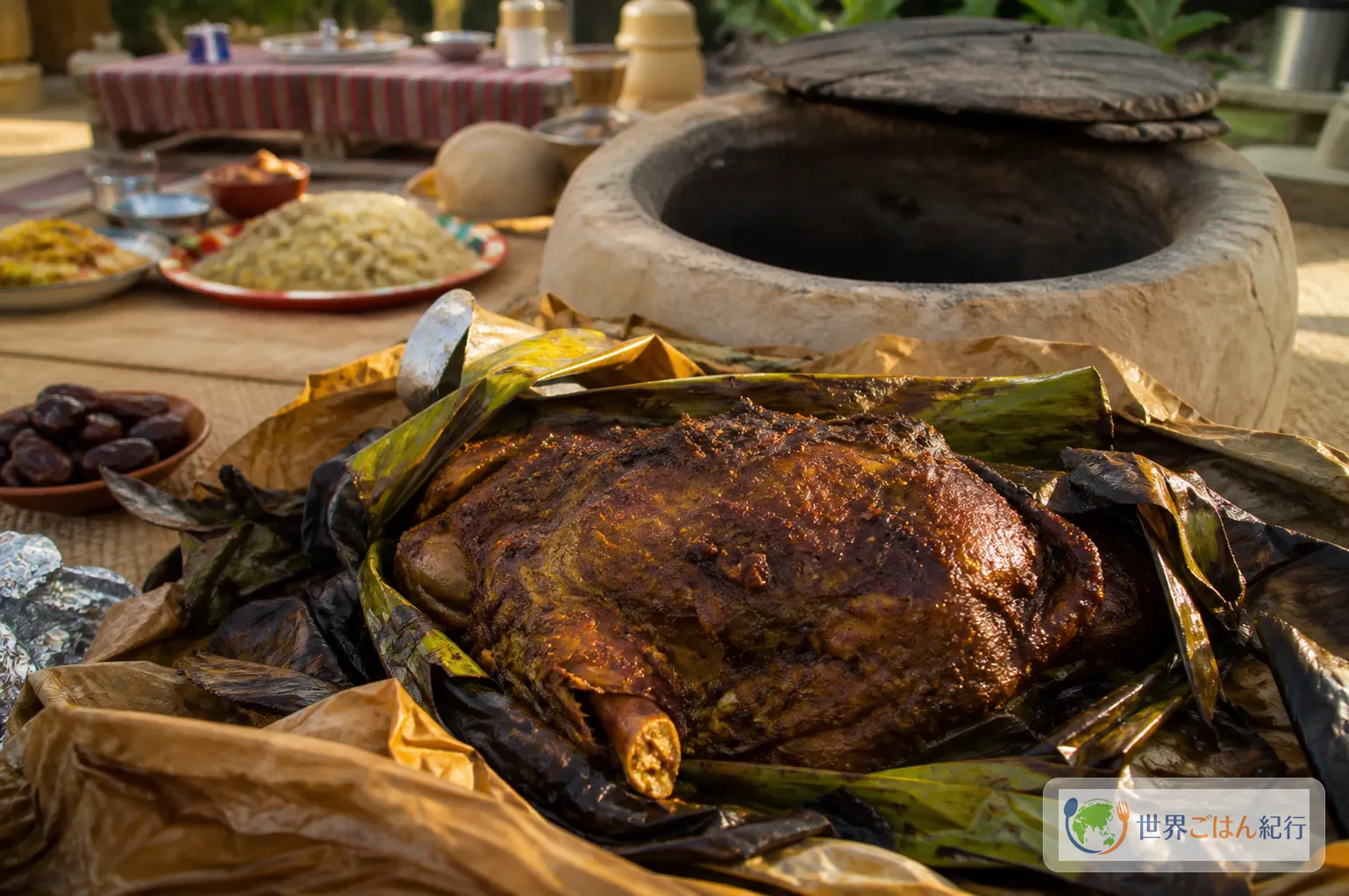
Dried lime also turns up elsewhere in Omani cooking, including the festive shuwa, lamb wrapped in spices and slowly roasted. If you eat madrouba side by side with Saudi jareesh, which cooks cracked wheat down, you see clearly how the Gulf's porridges differ from one another.
Ingredients (serves 4)
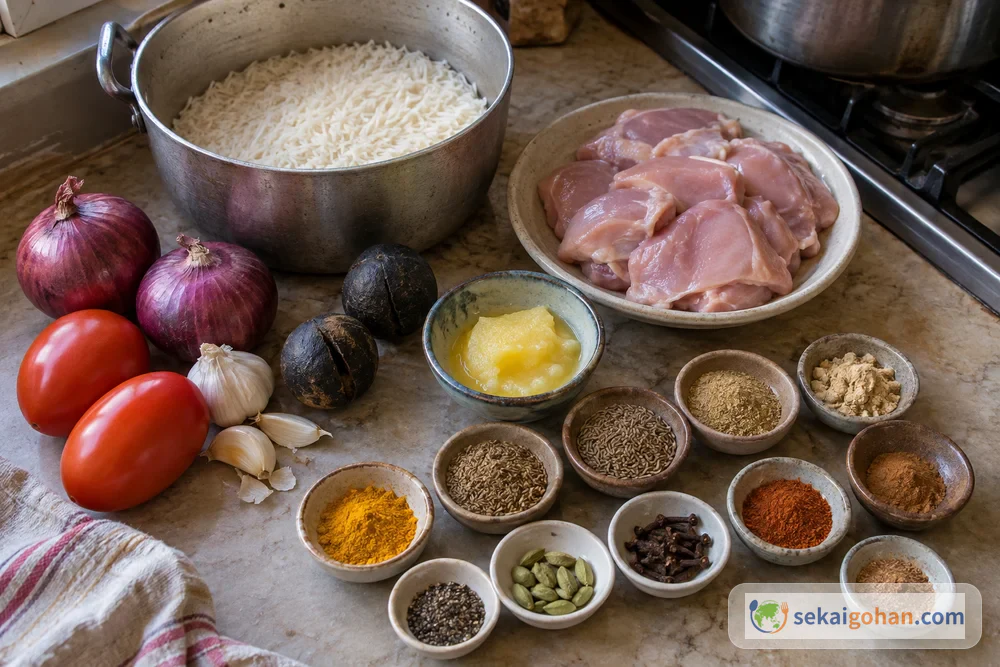
These amounts serve 3–4 (half of a 6–8 serving batch). A cup is 240 ml. Salt amounts are for ordinary table salt.
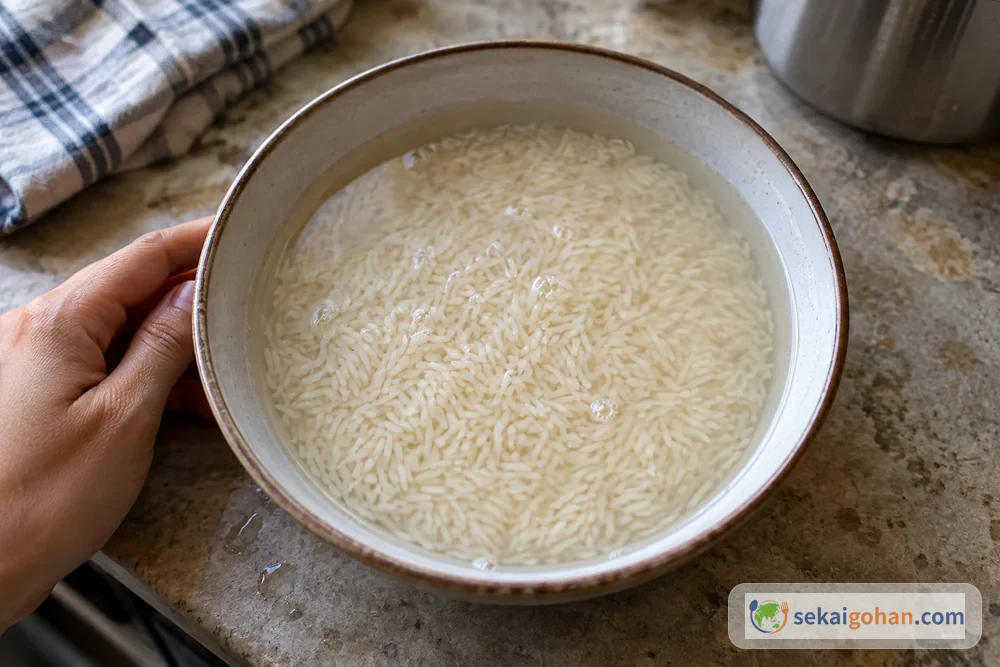
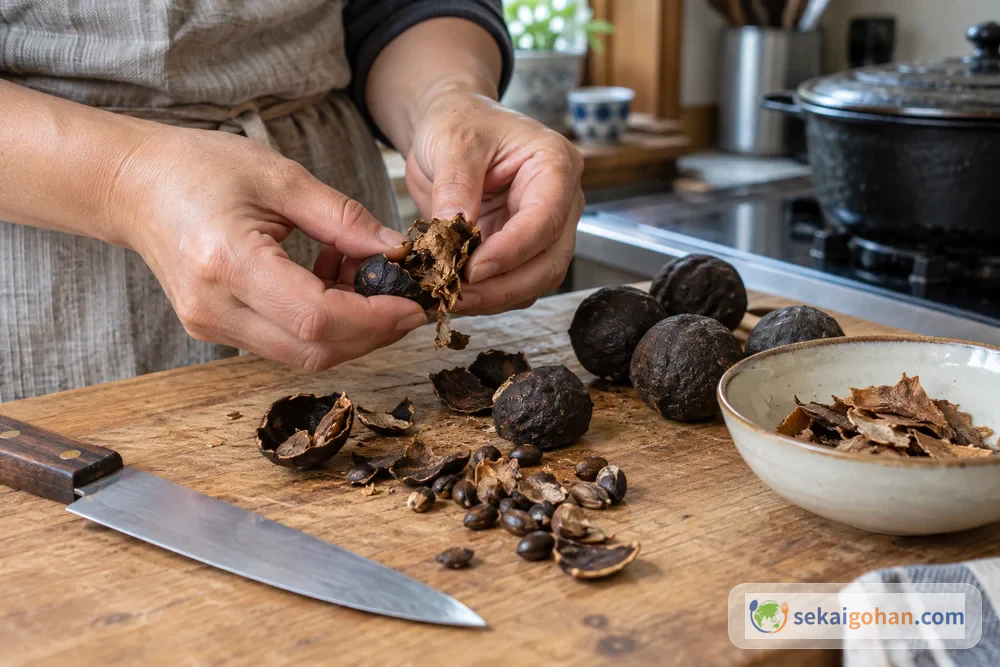
Use long-grain rice, which is less sticky than short-grain. Basmati or Thai rice both work, so use whichever long-grain you can get. Dried lime can be found at Middle Eastern grocers and online import shops. If you crack one open and the inside is dry and hollow or moldy, don't use that one and crack another.
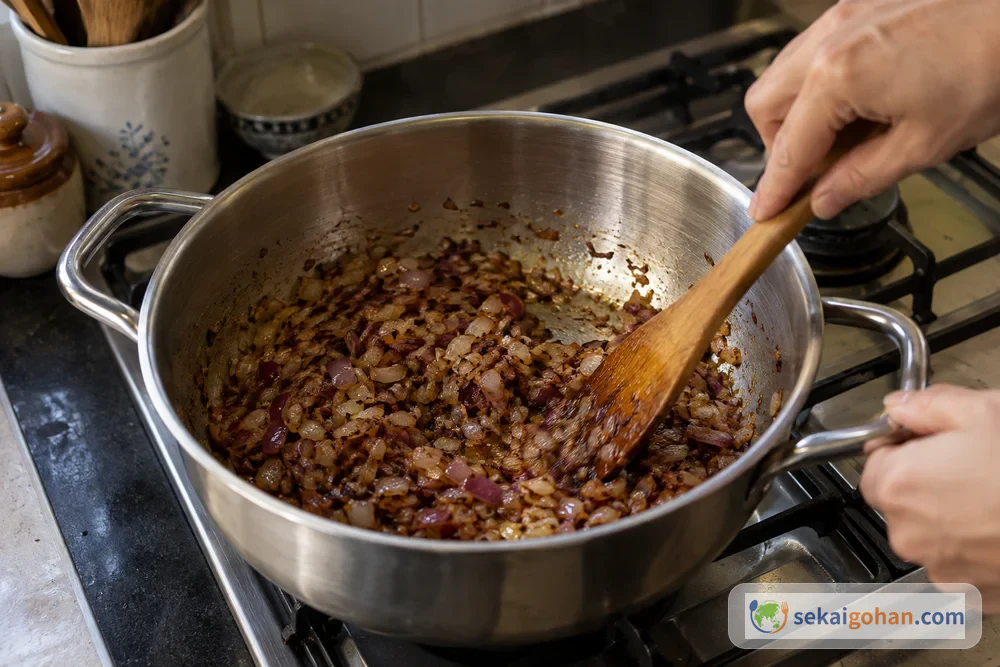
The spices are in tiny amounts, so for ones hard to measure with a measuring spoon, "a scant pinch" is enough. Combining them all in a small dish before they go into the pot keeps you from scrambling after sautéing the onion.
Choosing dried lime and spices for madrouba
The core of the flavor is dried lime, made by drying whole limes. It brings a gentle bitterness and a dry sourness. Crack the limes open, take out only the pulp inside, and add it to the pot with the spices.
The spice list looks long: turmeric, cumin, coriander, ginger, cinnamon, black pepper, cardamom, clove, cayenne, and nutmeg. Each goes in only in a tiny amount, though, so no single one stands out. Instead, the sourness and aroma melt softly into the whole porridge.
How to make madrouba
Prep, including soaking, takes about 45 minutes, and the cooking, including stewing, runs about two and a half to three hours.
When thick porridge comes to a boil, bubbles may burst at the surface and spatter hot porridge. When stirring, lower the heat and use a long-handled wooden spoon. The oil for the fried onions gets very hot even in a small amount, so keep wet hands and tools away from it, and deal with used oil only after it has cooled.
Scorching on the bottom ruins the color and aroma of the porridge. The best defense is to use a heavy pot, keep the heat low, and stir from the bottom often. Don't leave it covered and unattended for a long time.
The mashing step comes together quickly if the rice has collapsed enough. If grains remain and it won't become porridge however you stir, add a little boiling water and simmer over low heat about 15 more minutes before mashing.
Serving madrouba with cardamom ghee and fried onions
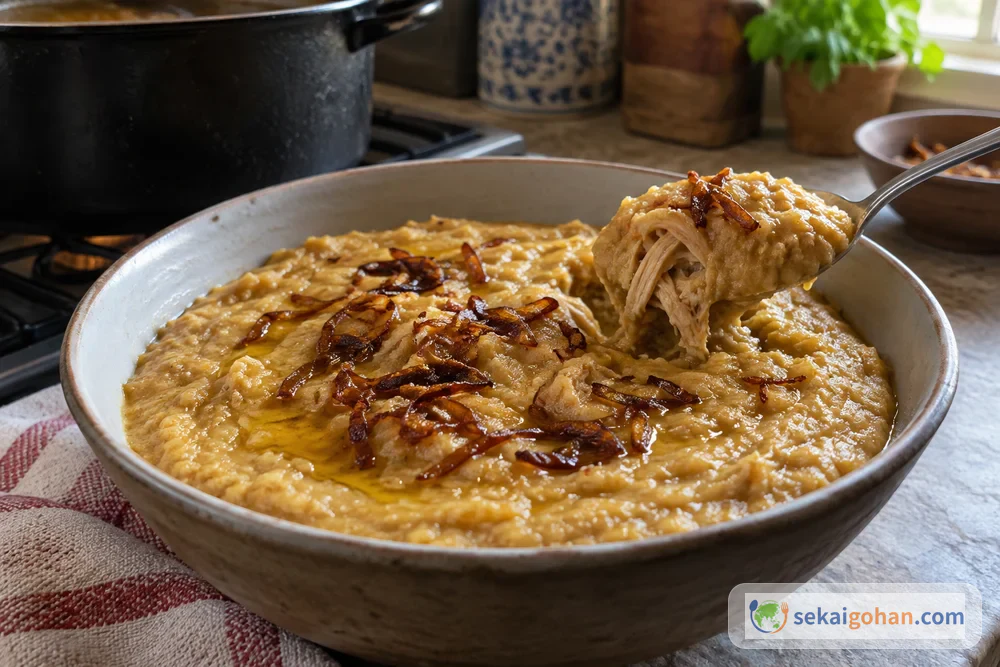
Serve madrouba hot, in a deep bowl. Golden streaks of ghee and dark brown fried onions lie across the yellow porridge. As you spoon it up, the gentle bitter sourness of dried lime comes first, followed by the sweet aroma of cardamom, and the crunch of the fried onions is a welcome accent against all that smoothness.
The cardamom ghee poured over at the end is essential. The porridge itself is firmly seasoned with salt and spices, and the strongly scented ghee, together with sweet, savory fried onions, pulls the flavor of the plate together.
Frequently asked questions
What if I can't get dried lime?
There is no substitute for dried lime. You can make the porridge without it, but you'll lose the dry sourness and bitterness characteristic of the Gulf, so it's worth tracking some down.
Can I make it with short-grain rice?
You can, but short-grain rice is very sticky, and mashing it gives a heavy, gluey mouthfeel. Less sticky long-grain rice makes a smoother, lighter porridge.
Is bone-in chicken okay?
This recipe uses boneless chicken, which is mashed in the pot and becomes one with the porridge. Bone-in meat means removing the bones before mashing, and small ones might stay behind, so boneless is the safe choice.
How do I reheat leftover madrouba?
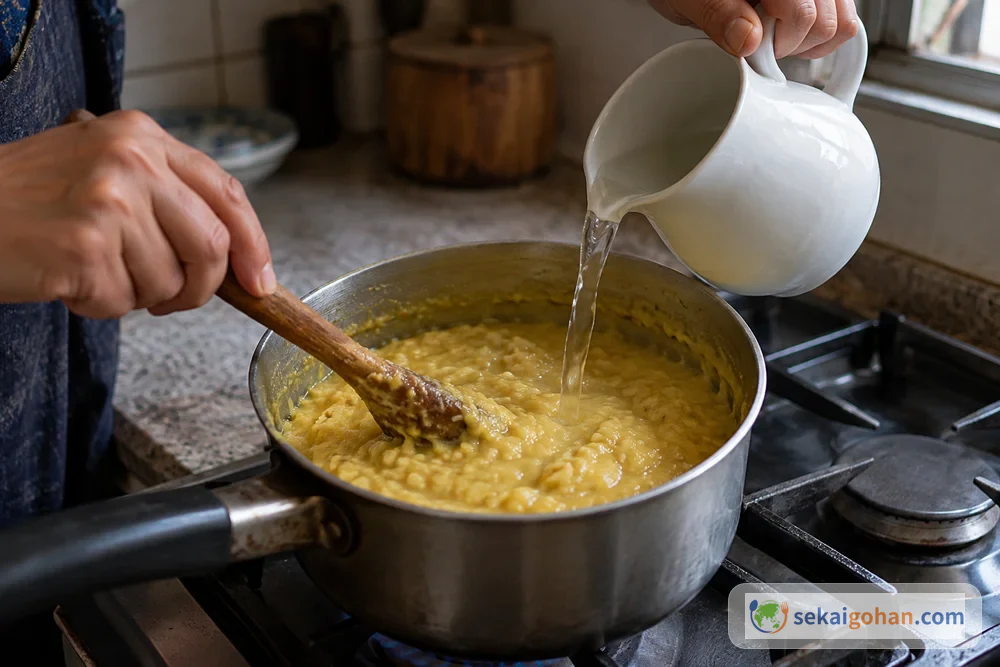
It stiffens as it cools, so move it to a small pot, add boiling water a little at a time, and warm it over low heat. The porridge sticks easily to the bottom, so stir often. Let leftovers cool slightly, then refrigerate them and finish them soon.