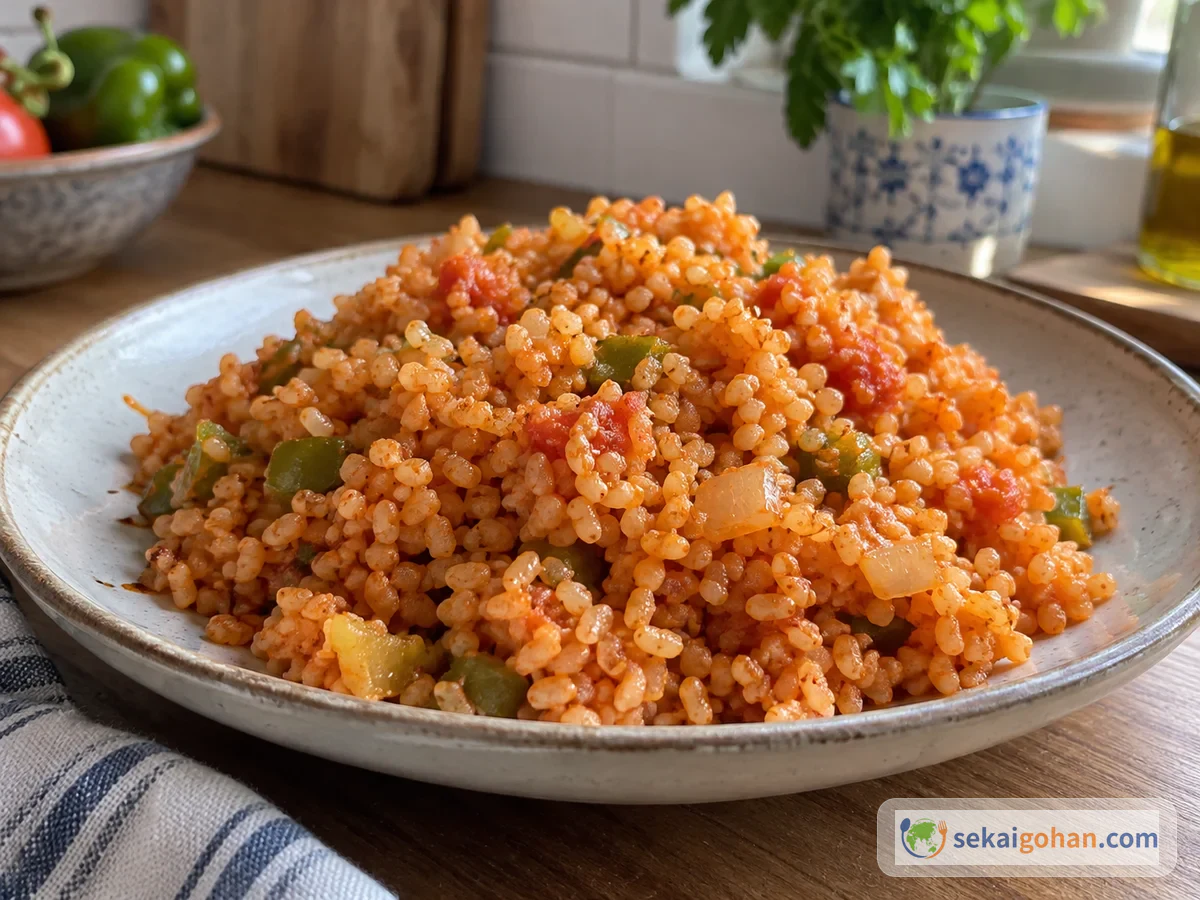
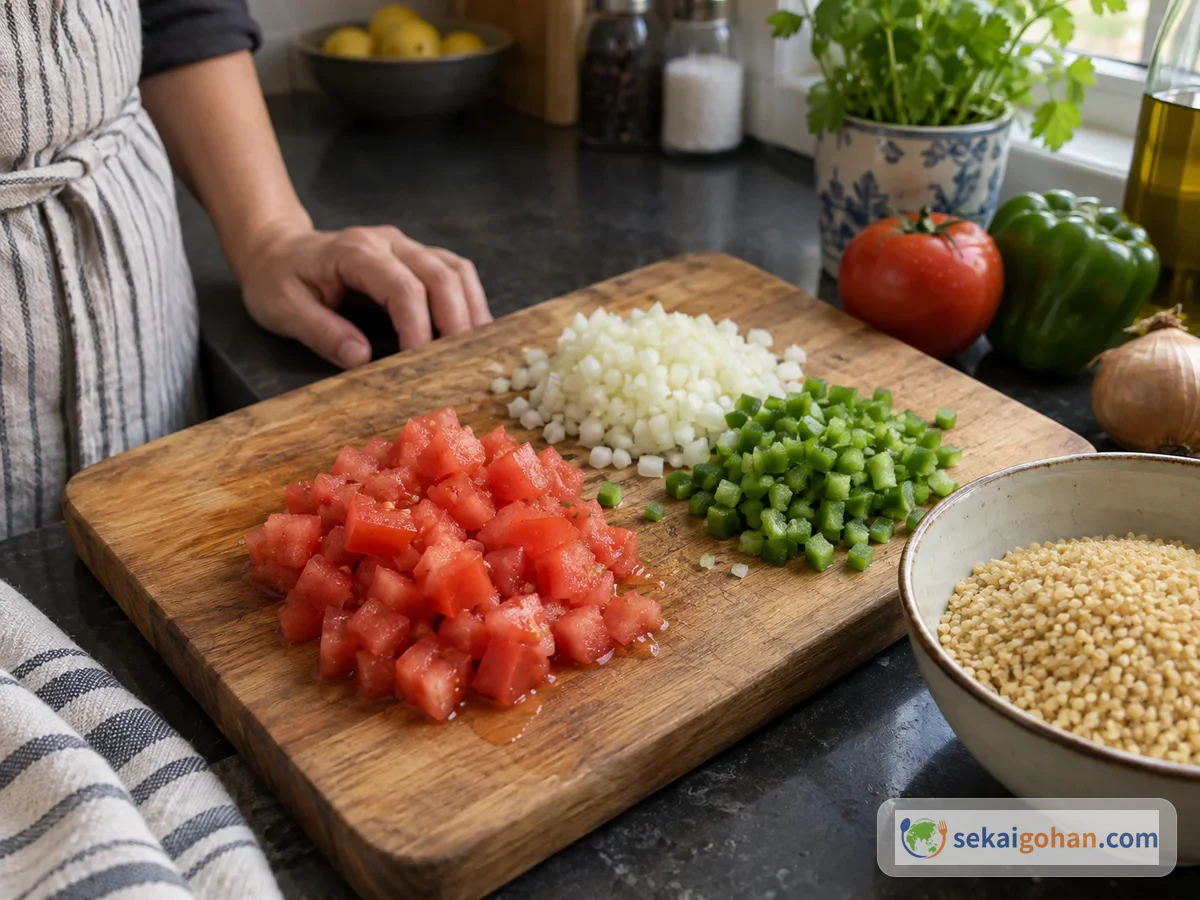
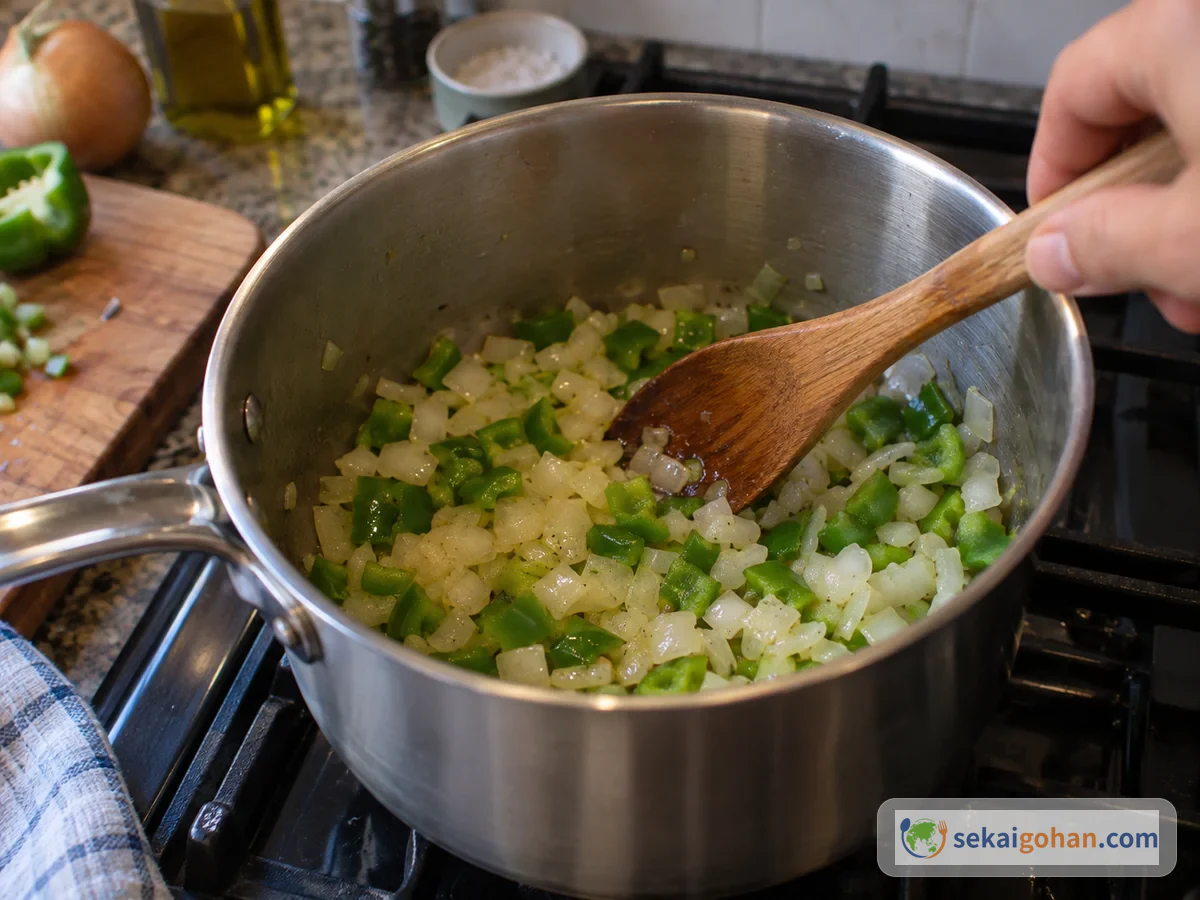
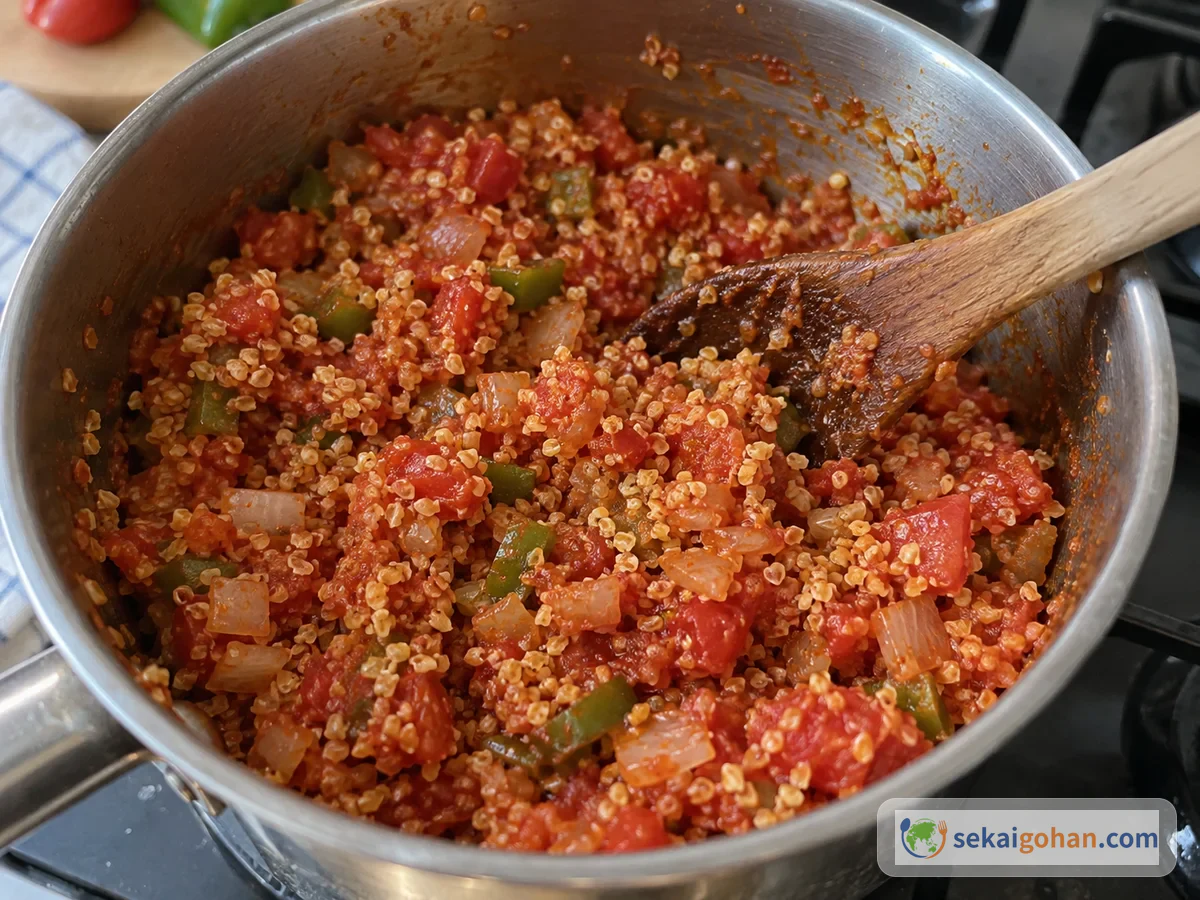
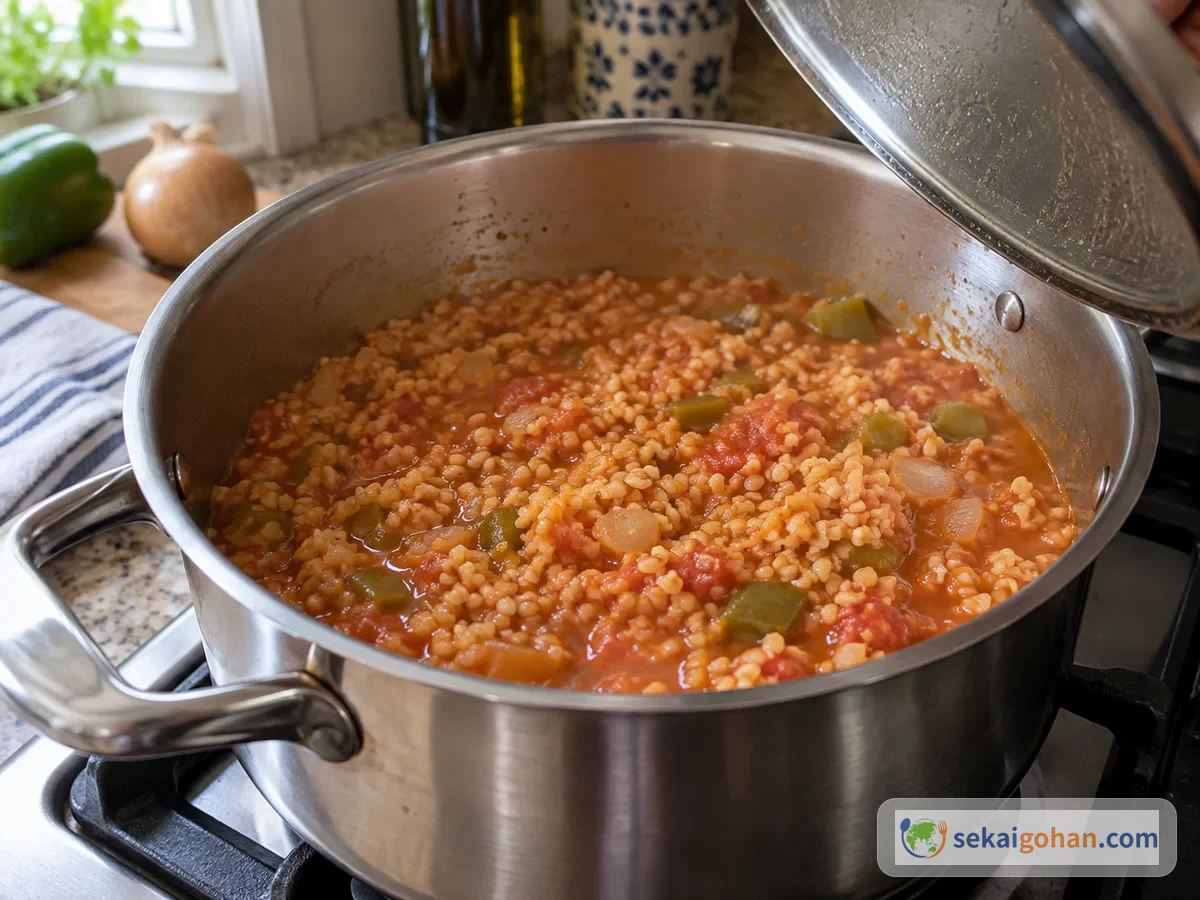
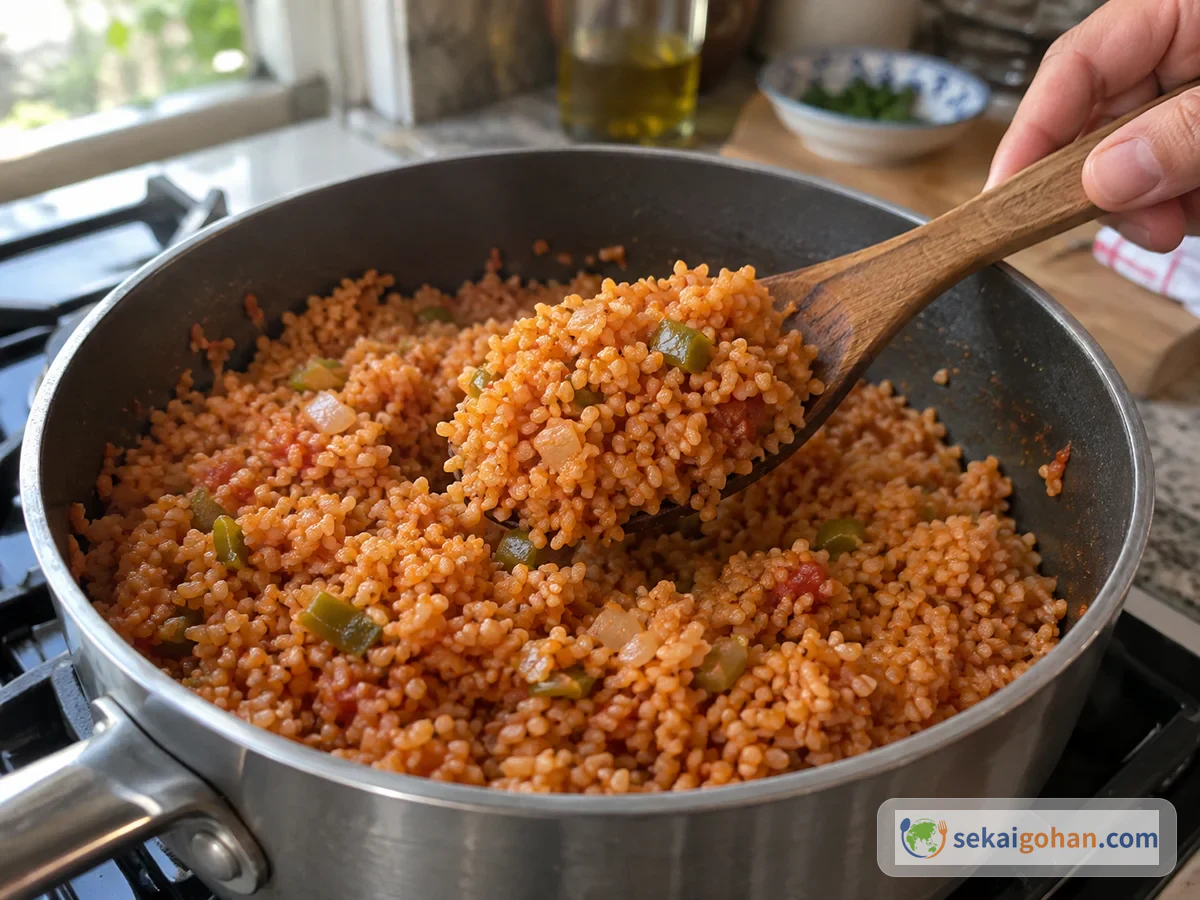
When kebabs come off the charcoal grill at an ocakbaşı, the meat arrives with thin lavaş, a salad and a heap of bulgur pilaf, the grain lightly stained red from the tomato: tomato-colored wheat. Take a forkful between bites of meat and the chewy grains soak up the fat, and you realize this side dish is what makes the plate work. Bulgur pilavı is Turkey's pilaf made with bulgur instead of rice, and domatesli bulgur pilavı is the version with tomato. Coarse bulgur is sautéed with onion, green pepper and tomato, left to absorb water, then rested with the lid on, giving you sweet vegetables and a satisfying chew in every bite.
Bulgur pilavı on the Turkish table
In Fethiye, bulgur is sold loose by weight from sacks and big bins, and local supermarkets shelve it alongside rice and dried beans. Wheat sits naturally on the everyday pantry shelf. Bulgur is wheat that has been parboiled, dried and cracked, which makes it quite different from couscous, which is made from flour. Think of it as a grain of wheat, not rice: because it's precooked, the coarse grains go straight into the pot and absorb their water there, with no soaking beforehand.
Pilafs change from region to region. In Gaziantep you'll find firik pilavı, which combines bulgur with another grain, firik, along with lamb, chickpeas, and tomato and red pepper pastes. It's a richer, different dish from this simple pot of tomato and bulgur, and a good reminder of how the grains and add-ins change from region to region, even under the same pilaf name.
Ingredients (serves 4)
200 g of dry bulgur makes a side dish for 4. If you want it as a hearty main, scale up or add beans or another dish. Use a lidded pot about 18–20 cm (7–8 in) across; any ordinary pot will do. A very wide pot loses water too quickly. Start with 350 ml of boiling water. Adjust the extra water and the time to your grain size, the package directions and how tightly your lid fits.
When buying coarse bulgur, check the grain size in the product description or on the bag. Products with the same general name sometimes contain fine bulgur, so don’t choose from a photo alone. Tomato paste is a concentrated tomato seasoning; don’t replace it 1:1 with tomato purée of a different thickness or with ketchup. Coarse bulgur is the only specialty item here; onion, green pepper, tomatoes and yogurt are in any grocery store.
If you use canned tomatoes, weigh out 7 oz (200 g) of tomatoes and juice combined. Their moisture differs from 10.5 oz (300 g) of fresh tomatoes, so don't judge doneness by time alone. Cook off the moisture well while sautéing, and if liquid is left once the grain has cooked, take off the lid and keep heating on low 1–2 minutes at a time. Only add extra water after you've checked how firm the grains are.
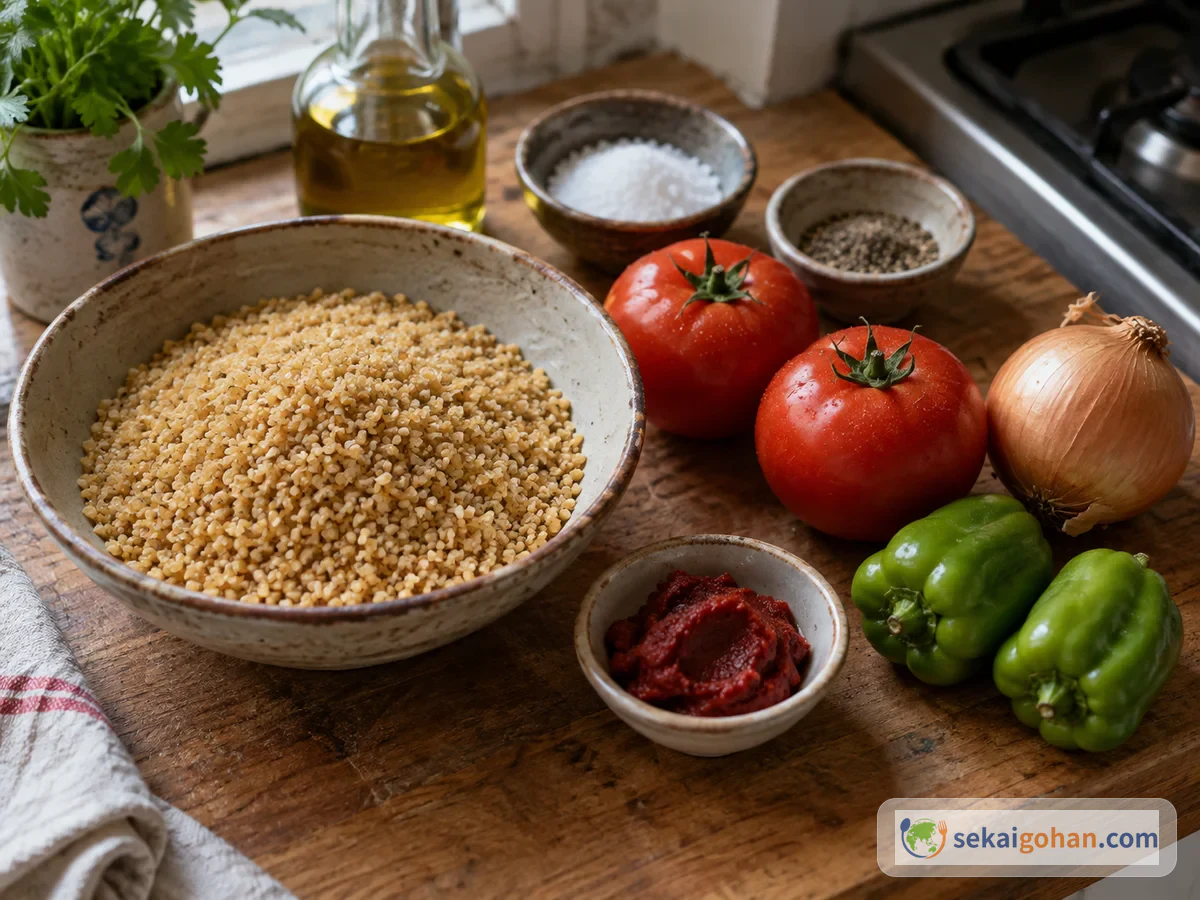
Choosing bulgur and tomato paste
The one ingredient worth hunting for is coarse bulgur; onion, green pepper and tomato are everyday shopping. Turkish cooks choose bulgur by grain size. Pilavlık bulgur, the kind for pilaf, is coarse, while köftelik bulgur is fine and goes into dishes like kısır and lentil köfte. Finer grains absorb water differently and change the texture, so fine bulgur won't work with the amounts and cooking times here. When you shop, look for "coarse" or "pilavlık" on the package.
Tomato paste is called domates salçası, and red pepper paste is biber salçası. Some pilafs use the pepper paste, and some Turkish recipes use tomato paste in its place, as this one does. You'll miss that particular pepper flavor, but the pilaf is still good without it. Skip strong spice blends, too; the point is the sweetness of the sautéed vegetables and the chew of the grain.
Instructions
There are two phases in the pot: first sautéing the vegetables while their moisture cooks off, then the wheat absorbing water. Sauté the vegetables, stir in the tomato and bulgur, simmer in boiling water, then turn off the heat and let it rest. Stir while sautéing and keep an eye on the bottom of the pot, but once absorption starts, don't keep stirring. Turn the heat to low once it boils. Simmer, then rest: that order is what makes the grains plump.
If the grains are hard but there is still liquid in the bottom of the pot, what they need is more time, not more water. Add boiling water 1 tbsp at a time only when there's no liquid and the grains are hard. The times given here are guidelines only; with a different pot width, lid or bulgur grain size, the same timing won't necessarily give the same result.
If you smell scorching, turn off the heat right away. Without scraping the bottom, move only the good grains on top to another pot. If they are hard, add boiling water 1 tbsp at a time and warm on low for 2 minutes at a time. Bitter, burnt bits won't recover, so don't mix them into the rest.
Fixing hard grains or a watery pot
You're aiming for plump grains with no hard core and almost no liquid in the bottom of the pot. The water disappearing doesn't by itself mean it's done. Hard grains and overly soft grains call for opposite fixes, and grains that have gone soft won't regain their chew with more cooking. Judge firmness and liquid separately; that's the quickest way to rescue the pot.
| Problem | Likely cause | Fix |
|---|---|---|
| No liquid, grains hard | Too much evaporation, or not enough time for coarse grains | Add boiling water 1 tbsp at a time and cook covered on low 2 minutes at a time |
| Liquid left, grains hard | Not cooked long enough | Keep absorbing over low heat without adding water |
| Grains soft, liquid left | Moisture from the tomatoes, a different lid, finer grains | Uncover and cook on low 1–2 minutes at a time, without stirring and mashing the grains |
| Too salty | Salt in stock or paste | Serve with another lightly seasoned grain dish or vegetables and take smaller bites. Sugar won't reduce saltiness |
| Tomatoes too tart | Tomato ripeness or product differences | Serve plain yogurt on the side rather than sweetening the whole pilaf |
A single fixed water ratio won't get you there, so keep notes: the grain size on the bag, the tomatoes you used, how much boiling water you added and how the grains looked after absorbing. Next time, use the same pot and the same grain and tweak the water just slightly. Change only a little at once, and keep the add-ins the same while you adjust the liquid, and you'll know what made the difference.
Serving and variations
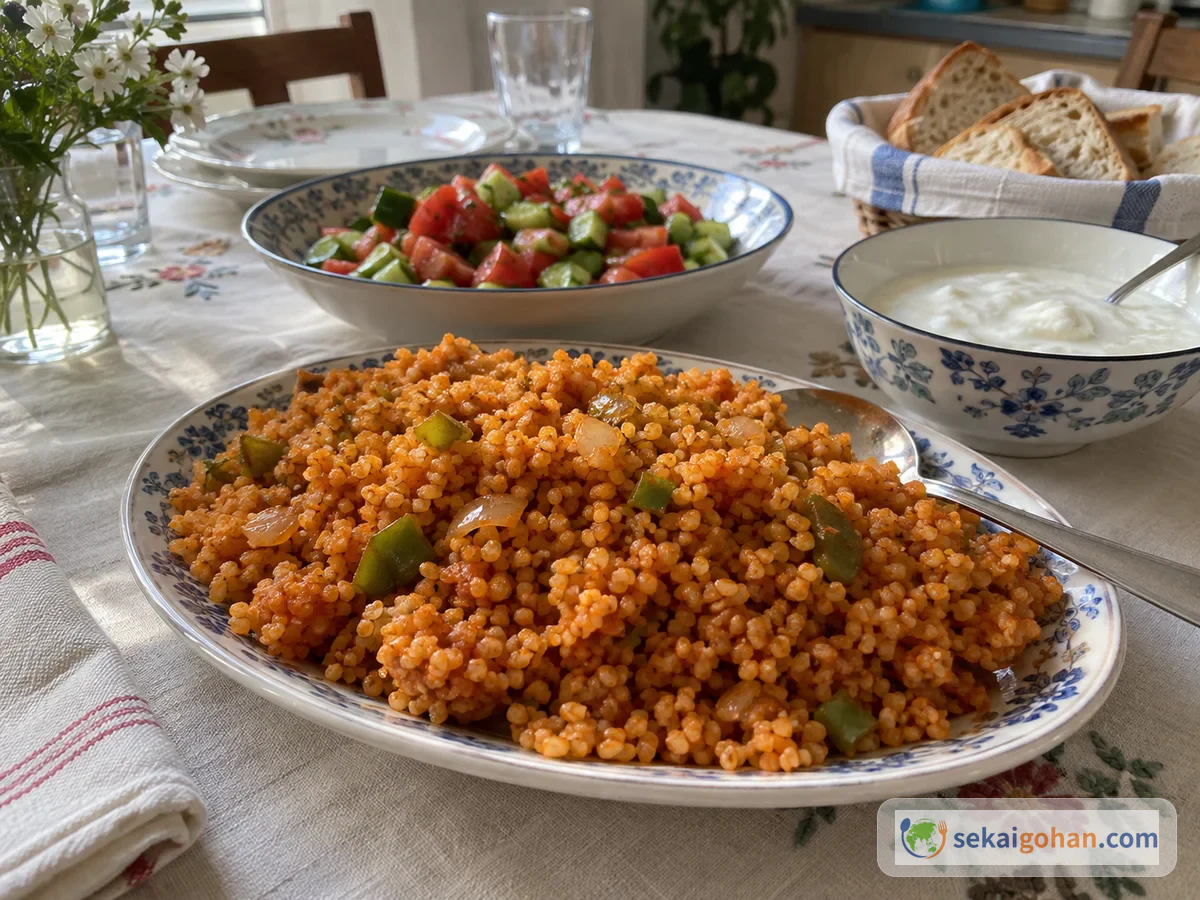
Tomato bulgur pilaf is a side for grilled meat and kebabs, and in Turkey it's also eaten with plain yogurt on a separate plate. Picture hot wheat, cold yogurt, and a cucumber and tomato salad on one table. Keep the yogurt on its own plate rather than cooking it in, so the texture of the grains and the cool accompaniments each stand out. For a meat dish to round out the menu, try Adana kebab, ground lamb grilled on flat skewers.
Add more ingredients and the side-dish pot gradually becomes a meal on its own. The key is to use cooked beans, drained, because raw dried beans won't cook in the short bulgur absorption time. Pick one or two of the variations below rather than adding everything at once.
| Variation | Amount and timing for 4 servings | Result and cautions |
|---|---|---|
| Add chickpeas | Drain 3.5 oz (100 g) cooked chickpeas and add them with the boiling water | More filling than wheat alone. Use cooked, not dried, chickpeas |
| Add mushrooms | Slice 3.5 oz (100 g) button mushrooms 0.25 inch (5 mm) thick and sauté with the vegetables until their moisture cooks off | Adds mushroom flavor. Cook off their moisture before the wheat goes in |
| Use sweet bell pepper | Replace the 2 oz (60 g) green pepper with 2 oz (60 g) red bell pepper | Less grassy aroma, more sweetness |
| Finish with butter | Cut the olive oil to 1 tbsp (15 ml) and stir in 10 g butter after resting | Adds a dairy flavor. Skip it if you have a milk allergy |
| Serve with lemon | At the table, divide 2 tsp lemon juice among 4 servings | Lets each person adjust the tartness. Add it just before eating, not to the cooking water |
Leftover coarse pilaf can't simply be turned into kısır, the bulgur salad, which uses fine bulgur and a different soaking method. If you'd like to make it too, see Kısır, a salad made with fine bulgur.
FAQ and storage
Bulgur is made from wheat and contains gluten. It is not suitable for anyone who must avoid wheat or gluten, such as people with a wheat allergy or celiac disease. Cooking does not remove allergens. Check the ingredient labels of any stock or paste, and watch out for cross-contact from cooking equipment. Yogurt contains milk, so leave it out if you avoid dairy. A vegetable-only recipe is not automatically allergy-friendly.
Can I make this with fine bulgur or couscous?
Fine bulgur absorbs water quickly and tends to turn too soft with this method, so use it in a recipe suited to it, such as kısır. Couscous is a different food from bulgur, and rice also absorbs water and cooks differently. Don't swap them in with the same amount of water or the same cooking time.
Is it spicy?
No. It uses tomato paste and a little black pepper, with no chili, and you can leave the black pepper out too. Versions made with biber salçası vary in heat by product, so check whether the jar says hot (acı) or sweet (tatlı).
Can I use stock instead of water?
Yes, replace the water with 1½ cups (350 ml) of hot vegetable or chicken stock. If the stock is salted, taste it and start with 1 g of the salt. With chicken stock, the dish is no longer plant-based, and it's worth checking allergen labels on store-bought stock.
Can I make it ahead or freeze it?
Divide leftovers into small portions, cool them quickly rather than letting a full pot cool slowly, and refrigerate within 1–2 hours of cooking. Keep the refrigerator at 0–5°C (32–41°F) and eat refrigerated pilaf within 48 hours; freeze anything you won't finish early on. Store yogurt and raw accompaniments separately. Freeze in sealed single portions labeled with the cooking date, thaw in the refrigerator and use within 24 hours once fully thawed.
When reheating, heat it until it is steaming hot all the way through, with no cold spots, and reheat only once. In a microwave, stir partway through and check there's no cold clump in the center. A splash of water helps if it seems dry, but that's for texture only and no substitute for thorough heating. Reheating won't make food that sat out at room temperature for a long time safe. If you don't know when something was cooked and refrigerated, don't eat it.
What about nutrition?
Per serving, the pilaf alone comes to about 260 kcal, 7 g protein, 8 g fat and 1.5 oz (45 g) carbohydrate, with the 2 tbsp of olive oil divided among 4 servings. Yogurt, meat, and the beans and butter from the variations aren't included, and actual numbers will vary with the products and the amount of vegetables.