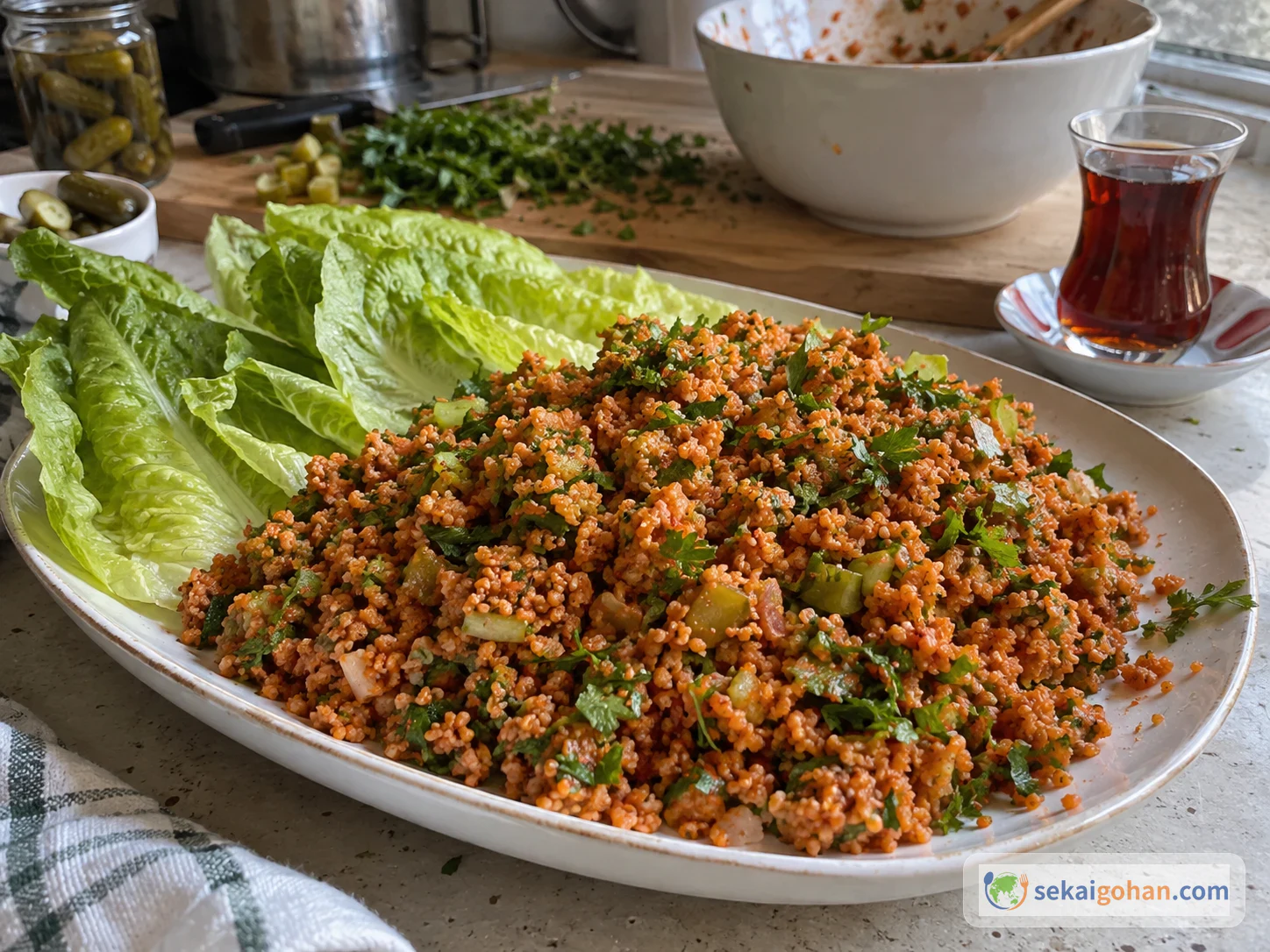
At a Turkish tea gathering, a heap of red grains sits in the middle of the table. Someone takes a lettuce leaf, spoons kısır onto it, wraps it up with their fingers and eats it straight away. Made from fine bulgur with tomato or red pepper paste, a generous handful of herbs and a bright hit of acidity, it is loved as a red salad wrapped in lettuce. The grains stay springy, the seasoning is tangy and a little salty, and the herbs keep everything fresh.
Kısır on the Turkish Tea Table
Kısır belongs to afternoon tea with family or friends and to family gatherings, where it is set out next to the sweets along with börek, dolma and baklava. Between bites of sweet baklava, a mouthful of kısır brings acidity and salt. That pairing is why it is the dish of tea time.
If kısır makes you think of tabbouleh, the balance is actually reversed. Tabbouleh is a salad where parsley dominates, while in kısır the star is bulgur colored red with tomato and red pepper paste. You eat the fine grains, enjoying their springy texture and the red seasoning. When you want the leaves to lead, try Lebanese tabbouleh.
Where Kısır Comes From
Kısır is a dish of the Mediterranean region, and it is now widely known across the country. Its city of origin, inventor, date and etymology are unknown, and there is no established history of the same formula going back to antiquity.
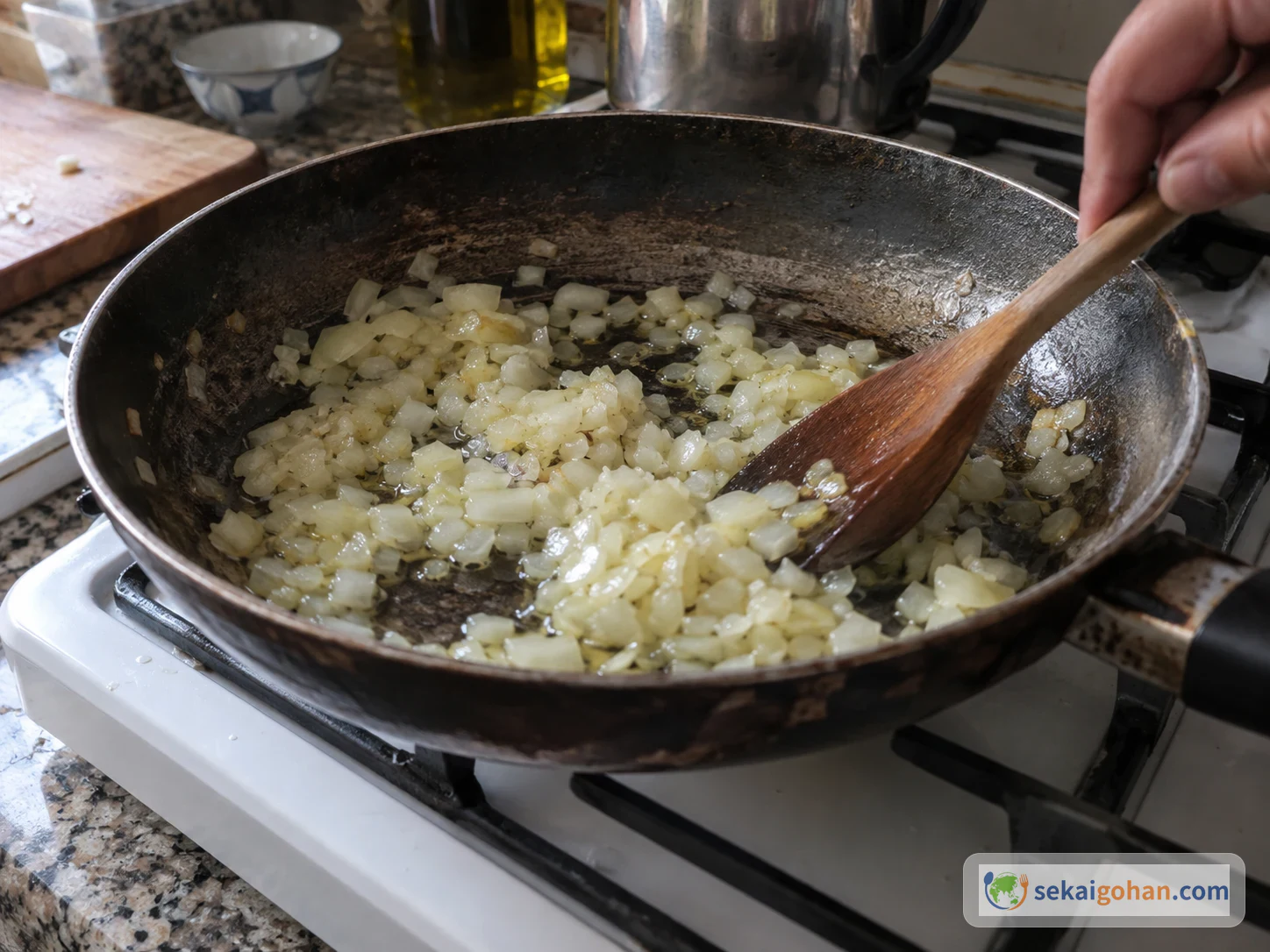
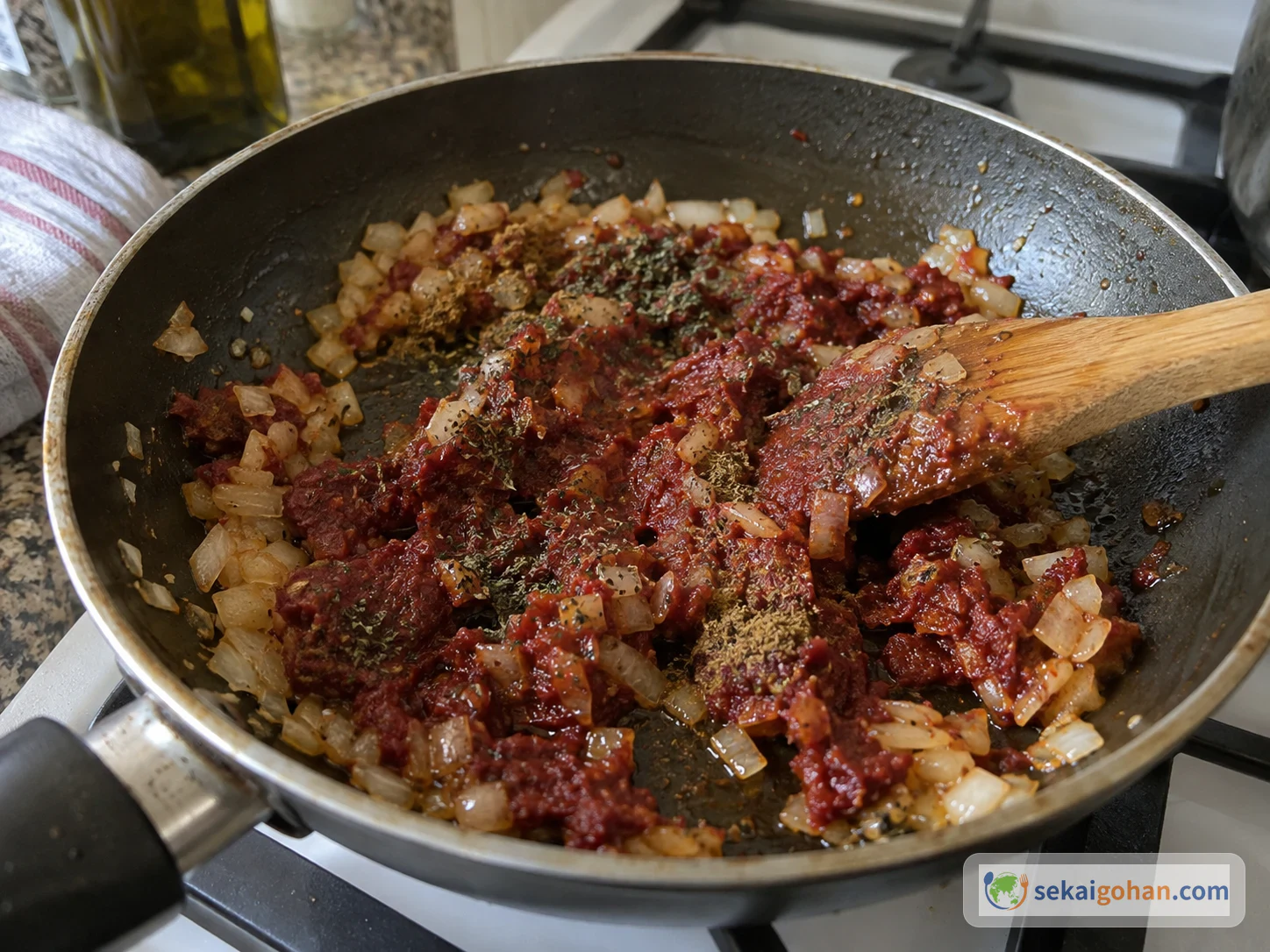
The wrapping leaves and the cooking change from region to region. The İç type has no vegetables in the kısır, is colored with tomato paste and is wrapped in blanched grape leaves. Kilis is a district of Gaziantep. Adana's Çiğ Kısır İçi is eaten with romaine or boiled cabbage, and Pişmiş Kısır is cooked like a bulgur pilaf. Even the paste is handled differently: some versions sauté it first, others mix it in as is. This recipe sautés it with the onion.
Ingredients (serves 4)
When shopping, check the size of the bulgur grain first. Choose fine bulgur, and look for labels such as köftelik bulgur or fine bulgur. Coarse or pilaf-grade bulgur needs different handling than this short rehydration. Other grains and granular pasta are not bulgur either. If the bag has rehydration instructions, follow the product's instructions first.
Shopping and preparation
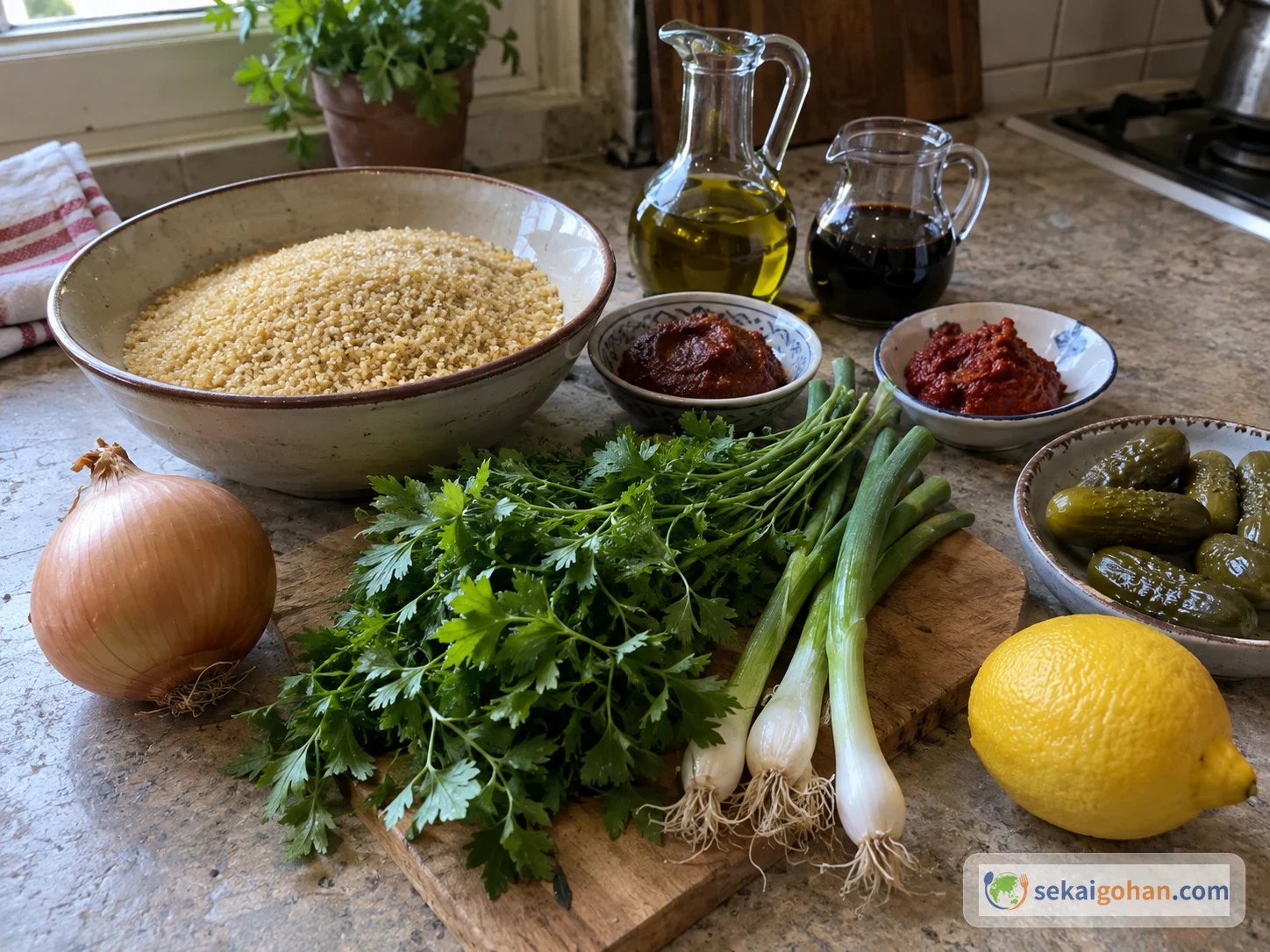
Fine bulgur is essential. Search online shops and stores that carry Middle Eastern or Turkish foods by the general name and the grain label. Pomegranate syrup is a tart concentrated seasoning that adds acidity and a deep fruit flavor. Do not swap in a sweet drink syrup at the same amount. Replacing the red pepper paste with extra tomato paste weakens the chile flavor. The amount of paprika stays the same.
Bulgur comes from wheat and contains gluten. Do not use it for people with wheat allergy. Check the ingredient labels of the pastes, pickles and seasonings too, and if avoiding wheat, confirm that substitute ingredients contain no wheat or contamination. Wash your hands with soap and running water for at least 20 seconds before cooking. Wash leaves and vegetables eaten raw under running water and dry with a clean cloth or paper. Do not wash vegetables with detergent.
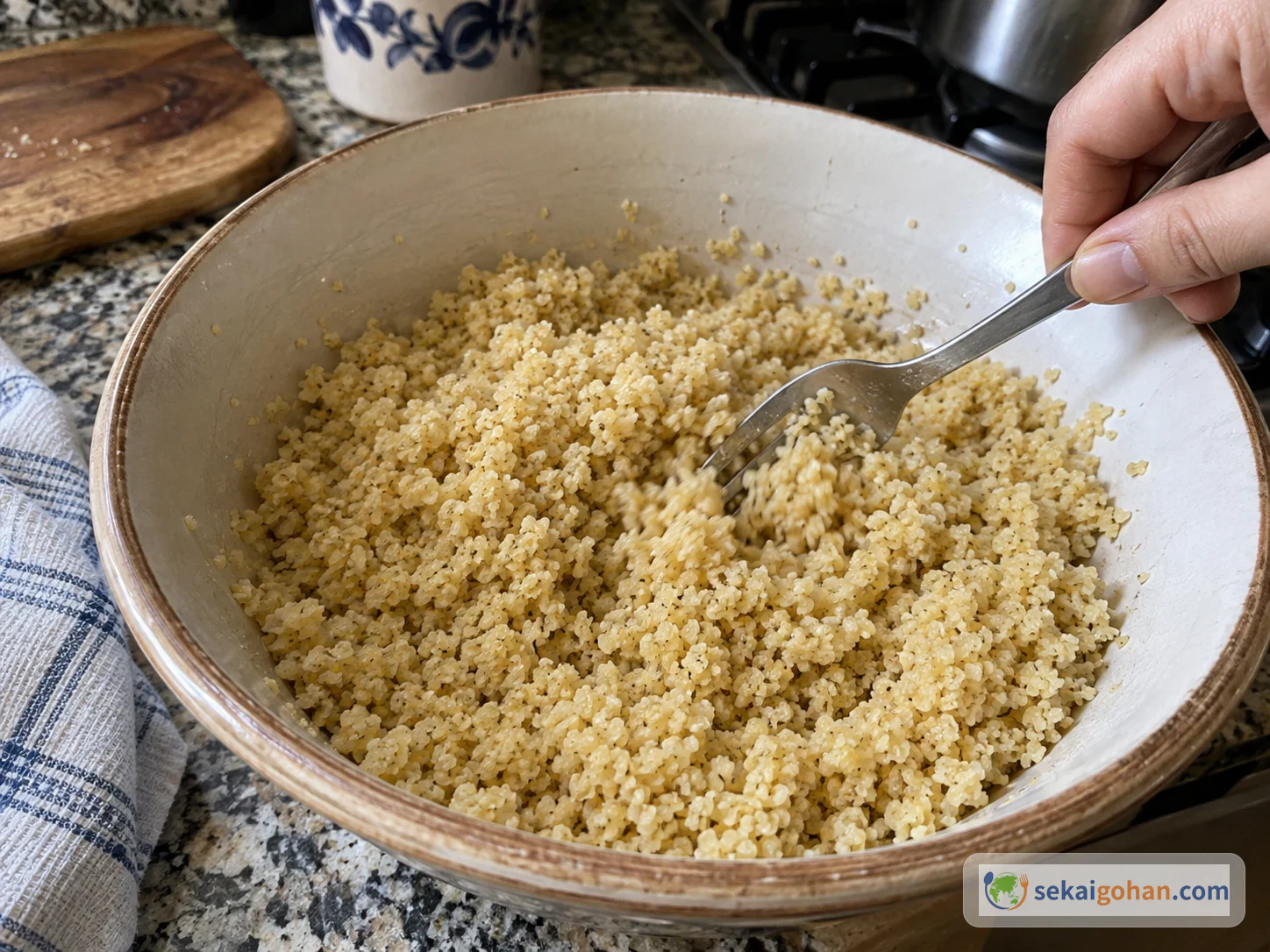
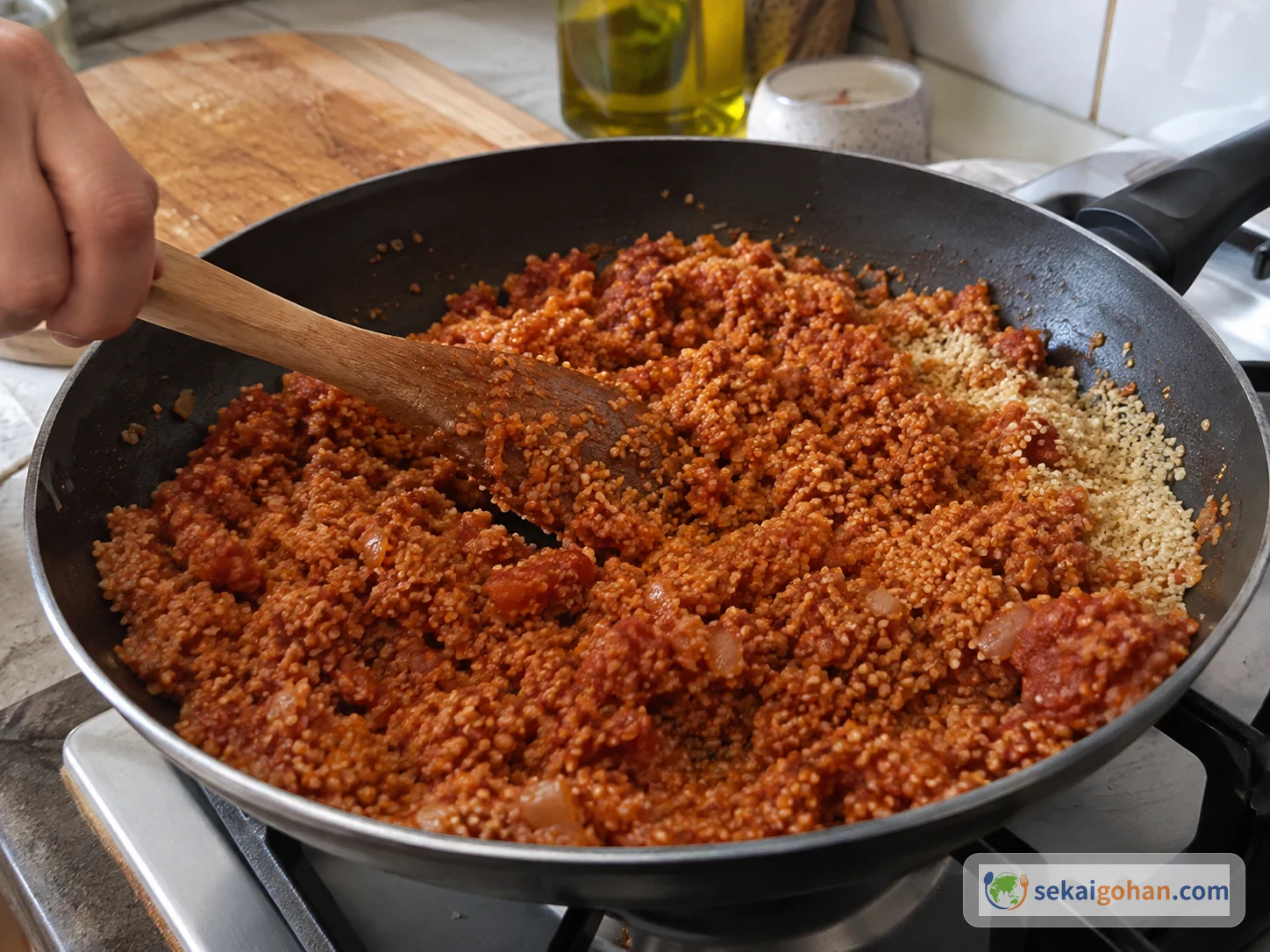
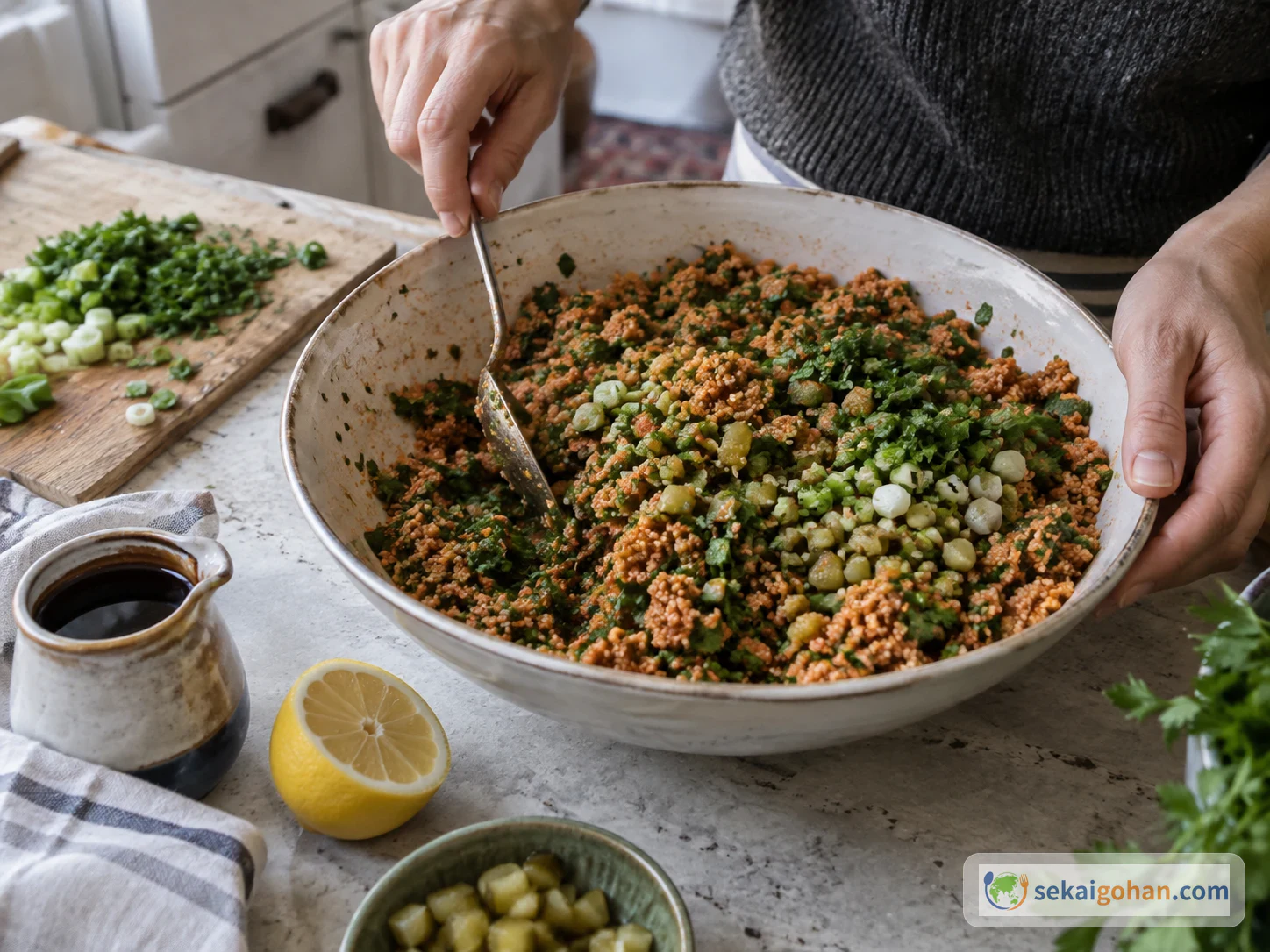
The flow in the pan is: rehydrate, sauté, cool, mix. Because you rehydrate the grains and then coat them with flavor, aim for bulgur whose grains come apart with no water left at the bottom. To preserve the aroma of the herbs, mix the leaves in after cooling.
Choosing Bulgur, Acidity and Substitutes for Kısır
Use fine bulgur and follow the product's instructions for the amount of water. Products differ in grain and heat treatment, so the label is your best guide.
For acidity, some versions use only lemon and others add the tang of pomegranate. Without pomegranate syrup, it is still kısır. Start from 2 tbsp (30 ml) of lemon juice, taste, and add more 1 tsp (5 ml) at a time if it needs it. A sweet drink syrup and a tart concentrated seasoning are different things, and fresh pomegranate juice cannot be swapped in at the same amount either. Sweetness and acidity vary from product to product, so taste before you commit.
Besides lemon, some versions use the sour juice of unripe grapes, plums or pomegranate, which shows how widely fruit acidity is used. Sweet grape juice is not a substitute.
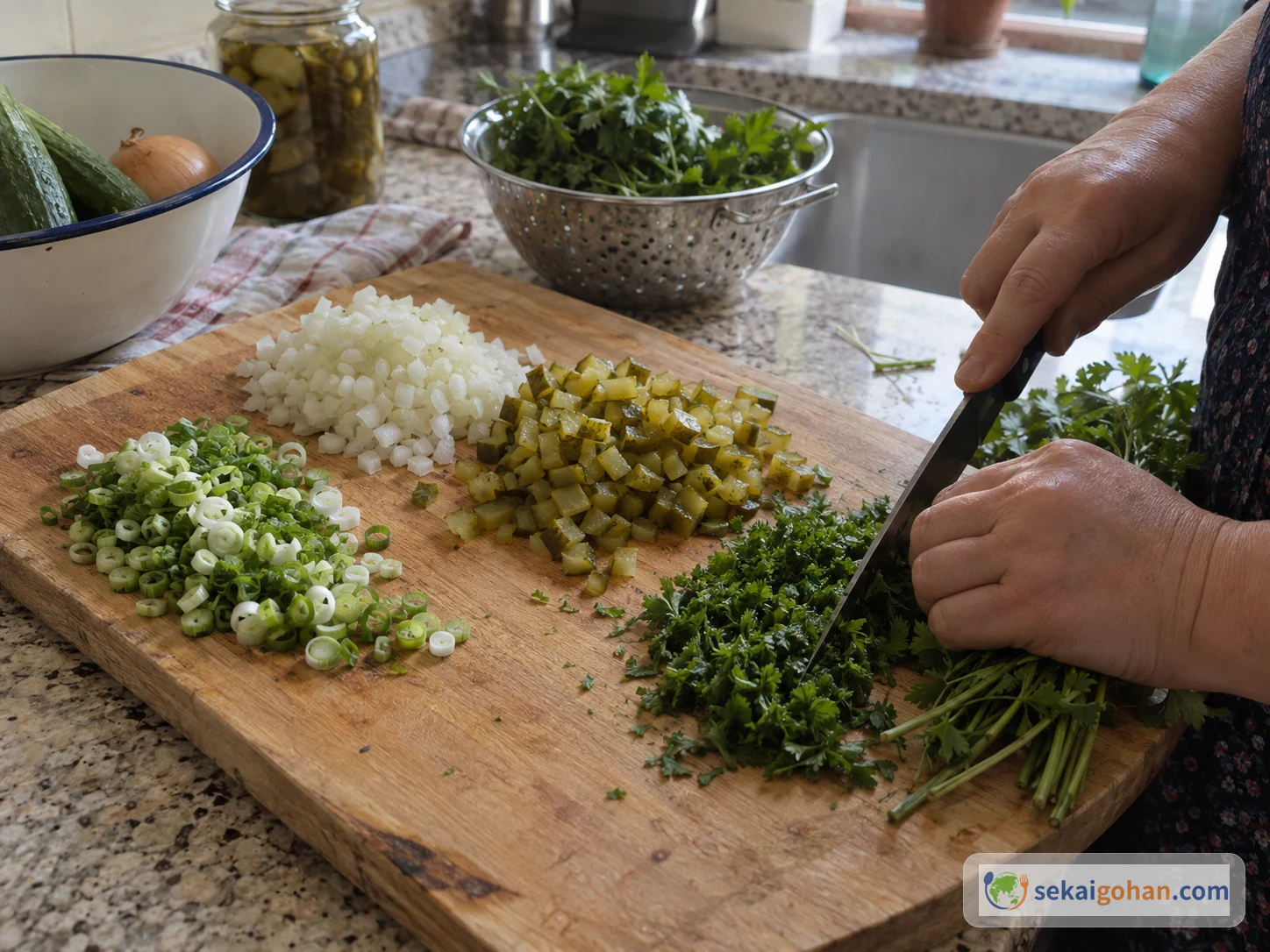
Some versions add raw vegetables such as tomato, green pepper and fresh mint, while others add pickles. The tang of the pickles is also part of the seasoning. If you use 2 oz (60 g) fresh cucumber in their place, cut it in 0.25 inch (5 mm) dice and wipe off the moisture, then check the taste at the end, since the pickles' acidity and salt will be missing. For a gentle heat, choose mild red pepper paste and non-hot paprika; a hot product used in the same amount will not be mild.
To avoid wheat, leave out the bulgur and combine separately cooked and cooled rice or a similar grain with the red seasoning and herbs. It is a home variation and won't reproduce the grain texture of real kısır. The bulgur's water amount and 10-minute rehydration don't apply to other grains.
Fixing Hard Grains, Sticky Kısır and Wilted Herbs
If the core is still hard after 10 minutes, add 1 tbsp (15 ml) of the adjusting boiling water, mix, cover and leave 5 minutes. If it is still hard, add the remaining 1 tbsp (15 ml) the same way, adding it in stages rather than all at once. This adjustment cannot replace cooking coarse bulgur properly. Check the grains, not just the clock.
Hard grains and water at the bottom are separate problems. If water is left over, drain the excess in a clean sieve and fluff the grains. Do not leave a pool of water at the bottom. Grains that have softened completely and fallen apart won't recover their texture, and mixing in dry, unrehydrated grains won't fix them.
Keep the chopped leaves out of the pan. Cool the red grains in a shallow bowl and mix in the herbs after the steam is gone, so they keep their color and aroma. Wash and dry the leaves before chopping, so extra water from the herbs doesn't add to the moisture of the grains.
Start with 2 g salt. With the salty pastes and pickles already in, taste for salt and acidity a bite at a time. Add the 1 g of adjusting salt only while tasting, and add lemon juice 1 tsp (5 ml) at a time. If it gets too sour, don't try to balance it with pomegranate syrup. If the paste burned and turned bitter, make it again before adding the grains.
Serving and Storing Kısır
To add a hot dish to a meal with kısır, try Turkish red lentil soup, mercimek çorbası. For picnics, keep it chilled and take out only the amount you need.
Store leftovers in a clean shallow container in the refrigerator at 39°F (4°C) or below and eat them by the next day at the latest. Refrigerate within 2 hours after cooking, and within 1 hour in an environment over 90°F (32°C); if it has sat at room temperature for a long time, the number of days alone doesn't make it safe. By the next day the leaves wilt and the grains absorb the acidity, so taste a little and adjust with lemon. Freezing lowers the texture of the leaves, so kısır is not suited to freezing.
Frequently Asked Questions
Don't I need to boil the bulgur?
This recipe rehydrates fine bulgur in boiling water. If the product label says to boil it, follow that. Coarse bulgur will not reach the same texture in the same 10 minutes, so check the grain label first.
Can someone with a wheat allergy eat it?
Bulgur comes from wheat, so do not serve it to people with a wheat allergy. It is not gluten-free either. If you use an alternative grain, check the seasonings for wheat and cross-contamination. Wheat allergy and gluten avoidance are different.
What about special equipment and nutrition?
A heatproof bowl, a lid or plate, a frying pan, a knife and a wooden spoon are all you need. The nutrition estimate counts the basic ingredients in full: about 1360 kcal, 1 oz (29 g) protein, 1.75 oz (49 g) fat and 7.5 oz (210 g) carbohydrate. For four servings, that is about 340 kcal each. The figures change if you use adjusting ingredients or substitutes.
Adding lemon or pomegranate does not make room-temperature storage safe. Returning something left a long time at room temperature to the refrigerator does not make it safe, and a normal smell does not either.