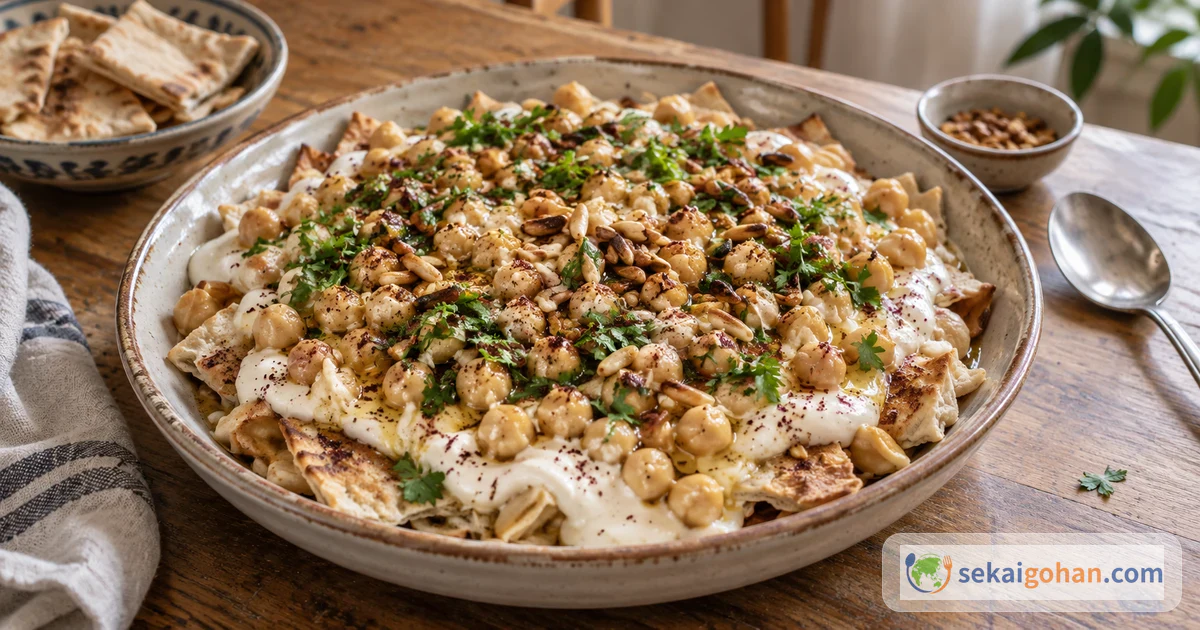
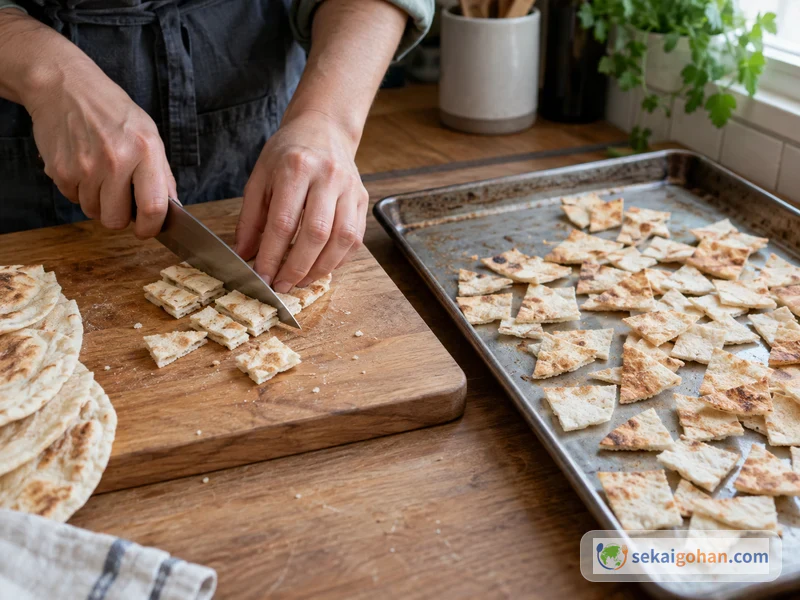
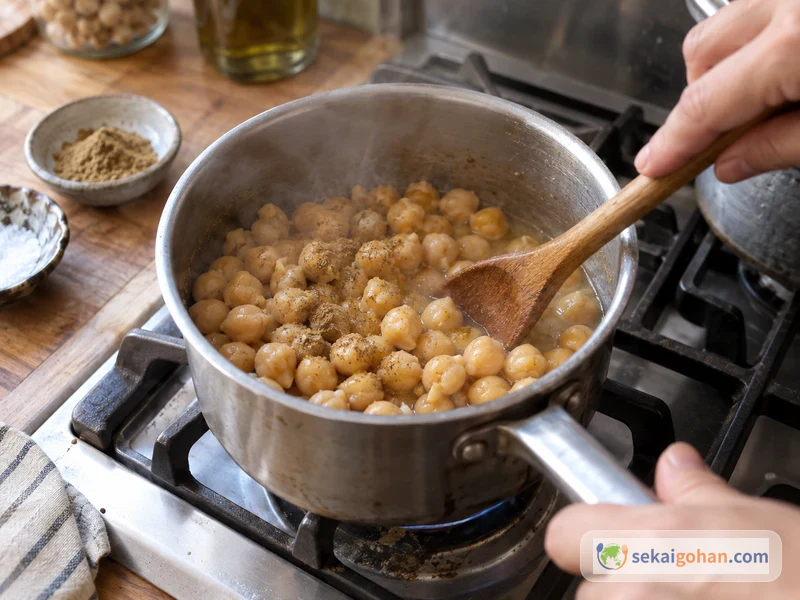
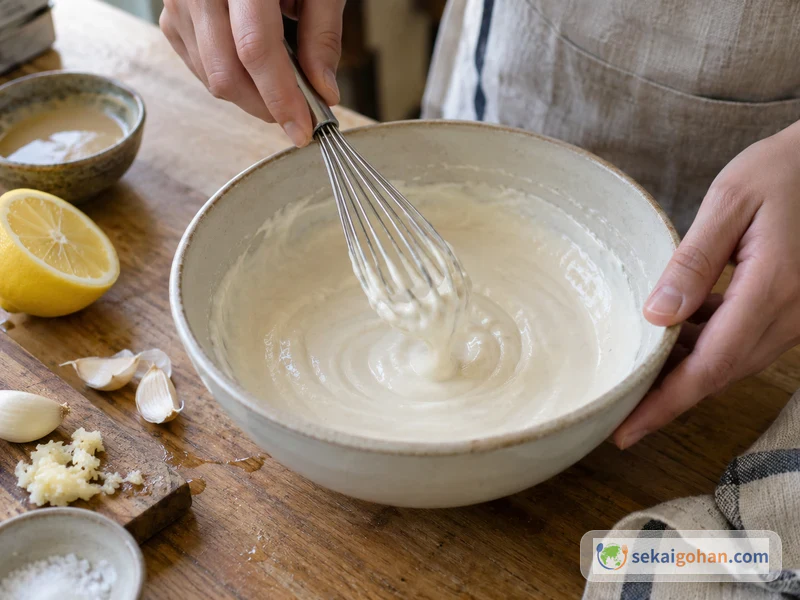
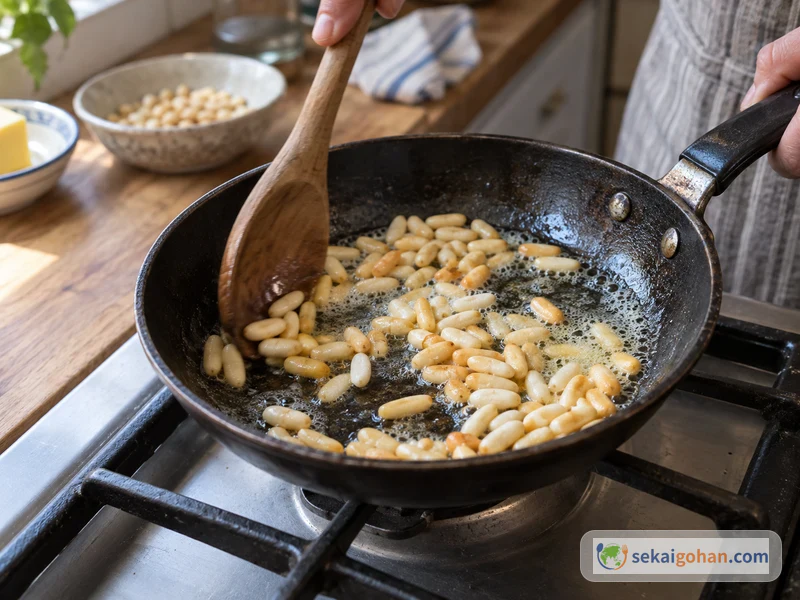
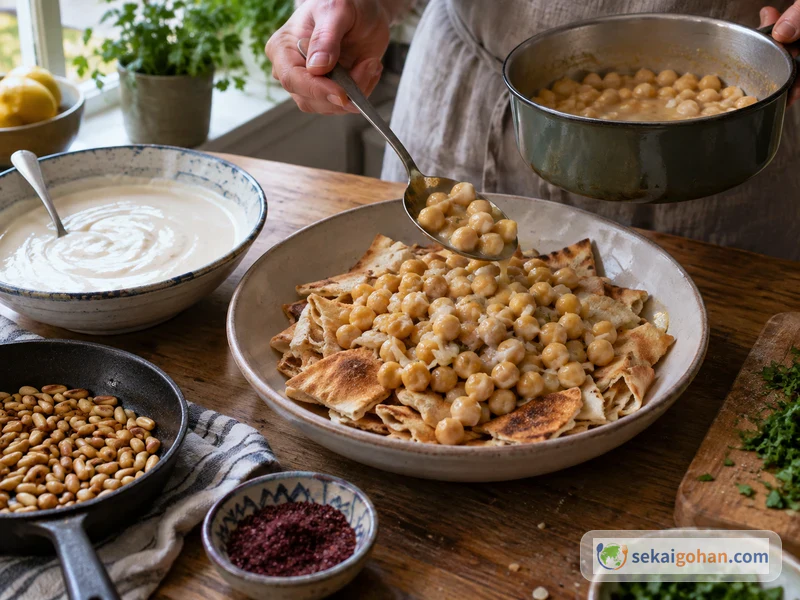
At the old hummus and foul shops of Damascus, fatteh is served from early morning until around noon, and you will rarely find it on an evening menu because the pot is empty before midday. Making it starts with crumbling bread by hand and laying it across the bottom of the plate. Warm whole chickpeas go on top, then yogurt beaten with garlic and tahini, then hot fat and pine nuts. You get toasted bread crunching at the bottom, soft beans in the middle and smooth, tangy yogurt on top, and layering three textures on one plate is what this dish is about.
Chickpea fatteh across the Levant
Chickpea fatteh (فتّة) is Levantine food, eaten across Syria, Lebanon, Palestine and Jordan. In Jordan, falafel and hummus are on the breakfast menu, including on Fridays, and falafel shops sell fatteh hummus too. The name stays the same from place to place, but the habits change. It might come from a breakfast shop's pot or be served on a family's large platter.
Fatte and fatta come from a word for breaking bread, that is, for crumbs. The homestyle way is to bake or fry old pita or bread that has sat for a few days.
Damascus tables offer a much wider range of toppings. Alongside the chickpea version there's an eggplant fatteh (fattet makdous), meat versions, and a heavy Damascus version with lamb's feet, plus chicken, shrimp and vegetarian eggplant versions. The layering order stays the same in every one: bread at the bottom, then the topping, then yogurt, and finally hot fat and nuts.
| Region or name | Form of the dish | Place at the table | What to keep at home |
|---|---|---|---|
| Lebanon's chickpea fatte | Fried or toasted pita, warm chickpeas, yogurt, tahini, nuts | Breakfast. Also easy to assemble for iftar and suhoor during Ramadan | The crisp bread layer, garlic yogurt, nuts at the end |
| Jordan's fattet hummus | Layers of pita, tahini, yogurt and pine nuts or almonds | Eaten at breakfast shops and falafel shops | Keep the chickpeas warm and layer the ingredients on the plate |
| Damascus fatteh | Besides the chickpea version, versions with eggplant, meat and lamb's feet | Served from morning to before noon at old hummus and foul shops | Even if you change the topping, put bread at the bottom, yogurt on top and hot fat last |
| Home chickpea version | Toast dry or leftover bread and combine with beans and yogurt | Breakfast for a few people, late breakfast, a light meal | Assemble right before eating and do not leave the bread under liquid for long |
The chickpeas in fatteh stay whole and warm. That sets it apart from Lebanese hummus, where the beans become a smooth paste, and from balila, where warm whole beans are eaten with seasonings but without the bread and yogurt. All three start with the same bean and end up as very different plates.
Ingredients (serves 4)
This table makes 4 servings, based on 11.5 oz (330 g) of drained cooked chickpeas. If using dried beans, soak them the day before, cook until soft and keep a little of the cooking liquid. For canned, check the drained amount on the label and, if short, adjust to the same drained weight. Use bread with no moisture left after toasting, and plain, unsweetened yogurt. Match the beans by drained weight and the bread by how dry it is, and you will get closer to the same plate each time. Cumin, tahini and sumac are listed under their common names.
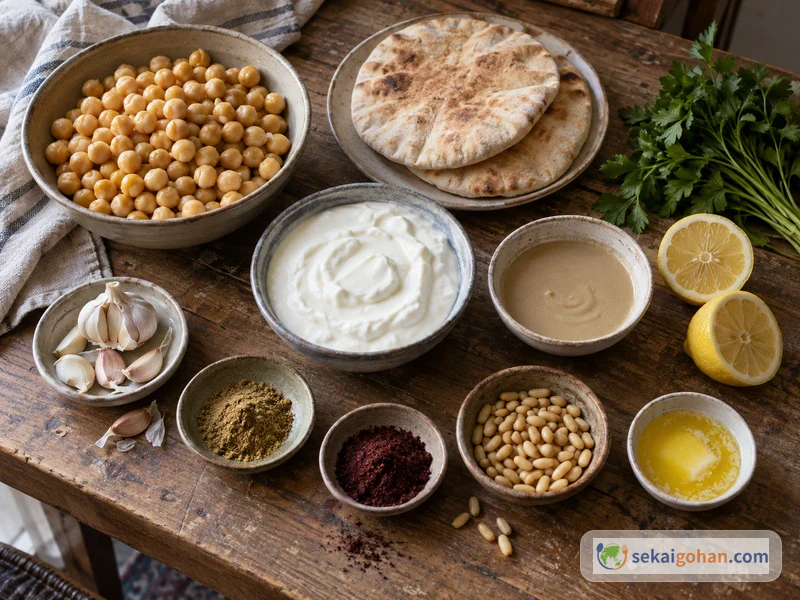
The easiest to gather at a nearby store are yogurt, chickpeas, lemon, garlic, butter and bread. What is most worth seeking at an import grocer or online is tahini, sumac, cumin and pine nuts, and tahini in particular gives the sauce its viscosity and sesame aroma at once. If you are going to buy something, start with tahini.
The basic form contains wheat (pita), dairy (yogurt, butter or ghee), sesame (tahini) and tree nuts (pine nuts). Store-bought bread, tahini, ghee and nuts can contain other ingredients such as soy, so check each product's label. If you are allergic to dairy, sesame, wheat or tree nuts, do not treat a substitution as the same dish. Skip it if you cannot eat the ingredients.
Choosing ingredients for chickpea fatteh
The base of the dish is bread, chickpeas, yogurt, garlic, tahini, and the fat and nuts that go on last. If Arabic bread is hard to find, toast a thin flatbread instead. Thick bread, or bread that's only lightly toasted, soaks up the yogurt quickly and makes the plate heavier than the Levantine original. You can use dried chickpeas you cook yourself or canned ones. Either way, aim for 11.5 oz (330 g) drained cooked weight the first time.
Some fatteh recipes leave out tahini. Without it the sauce is lighter and you lose the lingering sesame note. White sesame paste can stand in, but it changes the aroma, viscosity and bitterness, and brands differ in salt, sugar and oil, so adjust the salt last. Sumac isn't essential, but a small amount adds a dry, fruity acidity, while lemon on its own gives a sourness that's flatter and more direct.
For the finish, sliced almonds can replace pine nuts, swapping their oily fragrance for a brighter crunch. Unsalted butter or olive oil can replace ghee. Olive oil is lighter, and butter or ghee carries the nutty aroma better. The last few minutes of layering matter most, because the time you spend layering at the end decides texture before flavor. Have everything ready so you can move through them without stopping.
Method
With cooked or canned chickpeas, plan on about 25 minutes. Soaking and cooking dried beans takes separate time. The bread and pine nuts can be made ahead, but assemble the plate right before serving. Until you layer, protect the four components separately. Prepare the bread, beans, sauce and nuts each on their own, and layer them together at the end.
Finish the bread, beans, yogurt sauce and nuts separately first. If someone is carrying the plate to the table, keep the bread and beans apart until just before plating, and hand over the yogurt and nuts last. Do not take photos or start cleaning up after the sauce goes on; eat right after plating. Fatteh is not a make-ahead dish; it is completed on the final plate.
Common chickpea fatteh problems and fixes
When a plate goes wrong, the cause is almost always one of five things: how long the bread was toasted, how much cooking liquid went with the beans, the temperature of the yogurt, the heat under the pine nuts, or how long the plate sat between assembling and eating. You can usually spot it by looking at dryness, thickness, color and steam. Fix the state of the layers, not the seasoning. Piling on more lemon or salt won't solve any of these.
| Symptom | Why it happened | How to restore |
|---|---|---|
| The bread went soft quickly | Underbaked, too much liquid, or time passed after assembling | Toast fresh 1 inch (2 cm) squares and add a small amount on top right before eating. Next time reduce the liquid to 1 tbsp at a time and layer at the very end |
| The chickpeas are dry and powdery | No cooking liquid used when warming | Return to the small pot, add 1–2 tbsp cooking liquid or hot water and warm over low heat 2–3 minutes. Bring back to where they crush under a spoon |
| The yogurt sauce is grainy | Mixed cold, or heated strongly | Remove from heat and return to room temperature; add plain yogurt 1 tbsp at a time and mix. If it separated from boiling, make a new sauce |
| Garlic too strong | The sharpness of crushed garlic rose over time | Dilute with 2 tbsp yogurt and adjust salt and lemon last |
| Pine nuts are bitter | Heat too high, not moved, or toasted to a dark color | Do not use the scorched ones; toast new pine nuts over low heat. Take the pan off the heat at pale golden |
Soggy bread is the most common complaint, and the best fix is to assemble at the last moment. Narrow the fix to one place, so next time you'll know what made the difference.
Serving, storing and varying chickpea fatteh
Serving
Fatteh is at its best when the beans are warm, the yogurt has lost its chill, and the bread still crackles. Serve it as soon as it's assembled, with any extra sauce on the side so everyone can add more. At breakfast it shares the table with falafel and hummus. Get it from the stove to the table quickly so the first spoonful still crunches.
Storage
Once assembled, fatteh doesn't keep, because the bread drinks up the liquid. Store the parts separately instead. Keep the chickpeas and the yogurt sauce in their own containers in the refrigerator, and the toasted bread in a dry container. If you want to freeze anything, freeze only the chickpeas, never the yogurt sauce or the toasted bread. Treat the times in the table as a guide, check them against your refrigerator's temperature and the product labels, and don't leave anything at room temperature for long.
| What to store | How to store | How to use the next day |
|---|---|---|
| Cooked chickpeas | Airtight in the refrigerator with a little cooking liquid. Keep for 2 days | Warm in a small pot over low heat, adding a little liquid if dry |
| Yogurt sauce | Airtight in the refrigerator. Keep for 2 days | Leave at room temperature about 15 minutes, then check the smoothness |
| Toasted pita | Keep in a dry container away from moisture | Check that the crisp part remains; re-toast if damp |
| Pine nuts and butter or ghee | Use the toasted nuts the same day | If the flavor has dropped or they scorched, make new |
| Assembled fatteh | Not for storage | The bread texture does not come back, so assemble only what you will eat, on the spot |
Take out only the amount of yogurt sauce you will eat, and do not leave it for long after assembling. Follow the product's storage label, your refrigerator's temperature and your home's hygiene practices. Do not carry a leftover assembled plate over to the next day, for texture or for hygiene.
Variations
The variations keep the bread, the yogurt and the hot fat, and swap only the middle layer. For dinner, an eggplant, meat or chicken version makes the plate more filling.
| Variation | What goes in the middle | Result and handling |
|---|---|---|
| Eggplant fatteh | Roasted or fried eggplant | More moisture and toastiness than chickpeas. If you make fattet makdous, keep the same order of bread and yogurt |
| With meat | Beef or lamb mince cooked with cumin | Heartier, suited to lunch or dinner more than breakfast. Cook the mince through, and do not drain the fat so thoroughly that it chills the yogurt |
| With chicken | Boiled, shredded chicken | Keeping some chickpeas or leaving them out changes the weight |
| With shrimp | Shrimp cooked with garlic and oil | Do not pour the seafood's moisture directly on the bread; keep the topping warm |
| Changing the nuts | From pine nuts to sliced almonds | Almonds have a lighter aroma and a stronger crunch |
| Dairy-free home version | Plant-based yogurt and olive oil | A different dish from the traditional form. Check labels for dairy, sesame, wheat and nuts |
Frequently asked questions
Are dried or canned chickpeas better?
Canned chickpeas are quick: rinse them and warm them with a little hot water or cooking liquid. Dried beans need soaking and cooking the day before, but their cooking liquid makes it easier to keep the bean layer soft. Start with canned to get a feel for the layers, then try dried to see what the liquid adds.
Can I warm the yogurt sauce?
Use it close to room temperature, about 15 minutes out of the refrigerator. If you do warm it, stir constantly over very low heat, stop at lukewarm, and never let it boil. If it splits into grains, a fresh batch of sauce will give you a better texture than heating it longer.
Can I replace pine nuts with something other than almonds?
Other tree nuts such as walnuts change both the aroma and the allergens, so the dish won't taste the same. If you'd rather skip nuts, pour on just the hot butter or ghee and let the crisp bread carry the finish.
How is it different from hummus?
Lebanese hummus is chickpeas crushed into a smooth paste. Fatteh layers whole beans with bread and yogurt, so it feels completely different in the mouth even with the same chickpeas and tahini. Balila is another breakfast dish, warm whole beans with seasonings and no bread or yogurt layers.