Chop the red chili fine, work the salted lamb in a cold bowl, and press it onto a flat metal skewer before the fat softens at the warmth of your palm. Set it on the grill pan and the fat hisses the moment it lands. Catching that fat in lavash and wrapping it up with sumac-dusted onions is the whole pleasure of Adana kebab (Adana kebabı), a minced-lamb kebab from the area around Adana in southern Turkey. Hand-chopped lamb and fat are pressed onto a flat skewer and grilled hard. The result is spicy with red chili and full of lamb aroma, and unlike street-corner döner, the meat never turns on a spit. This home version swaps lamb tail fat for beef fat, and the charcoal fire for a cast-iron grill pan or an oven broiler.

Adana Kebab in Adana and at Home
The city and its kebab
Adana sits on the Çukurova plain in southern Turkey, a little inland from the Mediterranean. It's a hot region that grew up with cotton and farm trade, and its meat dishes are talked about together with open fire and the bustle of the market. Locally, the kebab is known as lamb, tail fat, red chili and salt, pressed onto a wide iron skewer and cooked over charcoal.
The dish carries the city's name, and people take that seriously. In the 2000s a protected designation of origin came up in discussion, and when a restaurant calls itself "real Adana," the meat, the skewer, the cooking and even the way it is served are all scrutinized.
In Turkish it is written Adana kebabı. In English you will also see "Adana kebap" or "Adana kebab".
Adana kebab, Urfa kebab and other Turkish kebabs
Urfa kebab is often mentioned in the same breath. The easy rule is "Adana is spicy, Urfa is not," but minced-meat skewers around Adana vary in small ways, so chili alone doesn't settle it. A better way to define Adana is by lamb fat, a flat skewer, strong browning, red chili and sumac onions. Lowering the heat moves it toward Urfa, but how you chill the mixture, the width of the skewer and the bread that catches the meat shape the flavor just as much.
Other Turkish meat dishes work differently. Kofte is a home-style meatball or oval patty, lahmacun spreads meat on thin dough, and çağ kebab is lamb cooked horizontally and sliced off in thin pieces. Çağ kebab is also eaten with sumac onions, but because Adana kebab is kneaded, its fat is more cohesive. It is pressed thin onto a flat skewer so the meat and fat sit close to the cooking surface. Shape the same mixture on a round skewer or as a patty and the taste is close, but the way you eat it changes.
How Adana kebab is eaten
The way it is eaten is part of the dish. Lay the meat alone on a plate and it is just a fatty minced-meat skewer. Spread out lavash instead, crush a roasted tomato onto it, add sumac onions and wrap the meat while it's hot, with cold ayran or sparkling water on the side. Fat, acidity and the green smell of roasted chilies take turns in your mouth, and the bread and vegetables do as much work as the meat.

Restaurant ordering is a good guide for plating at home. A porsiyon (plate) of skewer, lavash and roasted vegetables is easy to share at a family table. A dürüm, wrapped in thin bread, keeps the juices in and can be eaten the moment it comes off the grill. Either way the skewer is the star, but your hands keep going to the juice-soaked bread, the sharp onions and the soft cooked tomatoes.
| How it is served | Good for | What to keep at home |
|---|---|---|
| On a plate | Family dinner, shared | Lay lavash down to catch the juices |
| Dürüm style | Lunch eaten right off the grill | Wrap the meat long, without breaking it up |
| Large platter | When serving ezme and piyaz too | Put the acidic side dishes next to the meat |
What to keep in a home version
Lamb tail fat is hard to buy in many places, and an oak charcoal fire is hard to reproduce on a household stove. Lean lamb alone makes a dry, crumbly kebab, so add a little beef fat to ground lamb, chill the mixture and press it tight onto a flat skewer. The type of fat and the heat source can change. What should stay is the lamb aroma, the red chili heat, the flat skewer, and the lavash and sumac onions on the plate.
Beef and pork alone make a spicy grilled mince that's easier to eat, but it's no longer Adana's meat dish. For a first try, use half lamb and half beef, and raise the share of lamb as you get used to it.
| Element | The form described locally | Judgment for a home version |
|---|---|---|
| Meat | Lamb and tail fat chopped by hand | Ground lamb plus a little beef fat. Do not use only beef and pork |
| Skewer | Pressed thin on a wide iron skewer | Use a flat skewer. If you have none, lay two metal skewers side by side |
| Heat | Strong charcoal heat | Preheat a cast-iron grill pan or oven broiler well |
| Spice | Red chili and chili aroma | Do not rely on chili flakes alone; use coarse chili for aroma |
| How it is eaten | Lavash, roasted vegetables, sumac onions | Put bread and acidity on the same plate as the meat |
Ingredients: beef fat for tail fat, chili chosen for aroma

In the traditional method, lamb and tail fat are chopped with a large half-moon blade called a zırh. At home, coarsely ground lamb is fine. Mince that is too fine packs like sausage; too coarse and it falls off the skewer. If a butcher will grind it for you, ask for coarse; from a supermarket pack, choose one where a little fat is visible.
Beef fat is not a "local ingredient," but at home it plays the role of tail fat, preventing the meat from drying out. Finely chopping small packs of beef suet keeps the lamb aroma from being overpowered and gives the mixture stickiness. If you add too much it flares up and turns greasy when cooked, so stop at just under 10% of the meat.
If you are unsure how to buy lamb, first look at whether you can get it ground or have a piece you can chop. Asking a butcher or halal grocer for coarsely ground lamb is easiest. If the supermarket has only thin-sliced lamb, chop it finely with a knife or pulse it briefly in a food processor. Do not turn it into a complete paste, though; that packs like sausage and loses the grainy texture of Adana kebab. If you use the blade, pulse a second at a time, a few times, and stop when the meat is somewhere between rice grains and small beans.
Avoid using lean-only ground lamb as it is. It loses moisture during grilling, and even if it stays on the skewer, the bite is hard. If the lamb is lean, add beef fat; if the mince looks fatty, reduce the beef fat to 1 oz (30 g). Mixed beef and pork mince is easy to find, but its sweet fat aroma comes forward and moves it away from the lamb skewers of southern Turkey. If you must use it, keep at least half lamb and treat the beef and pork as a helper that softens the aroma.
Ingredients (serves 4)
This dish uses lamb. Lavash and tortillas contain wheat. Keep the bowls, cutting boards, skewers and tongs that touched raw meat separate from those used for the cooked kebab. Ground meat is mixed all the way through, so cook it to an internal temperature of 158°F (70°C). Do not judge by color alone.
Choosing Ingredients and Tools for Adana Kebab

Flat skewers
The hardest thing to find for Adana kebab is the skewer, not the meat. On round bamboo skewers or thin metal ones, the meat spins and you can't aim it at the cooking surface. Wide metal skewers give the meat a broader surface to cling to and keep it from breaking when you turn it. Bamboo is also thin and conducts heat poorly, so it can't hold this heavy mixture.
Width changes the texture more than you'd expect. Gather the meat thickly on a thin round skewer and only the outside browns hard while the inside stays dense. Pressed thin onto a flat skewer, the meat and fat sit close to the heat, so you get a browned surface and a juicy inside in one bite. Without a dedicated flat skewer, two metal skewers side by side give you the same thinness; rolling small balls like yakitori is easier, but it drifts away from Adana kebab. Once you own flat skewers, you'll reuse them for chelow kabab or shashlik.
Lamb and fat
Buy the meat on the day you cook. If you use frozen lamb, move it to the refrigerator the night before and chop it half-thawed, just before it fully softens.
| How you buy the meat | Ease of use | Judgment |
|---|---|---|
| Buy coarse-ground lamb | High | Use as is. Add beef fat if it is lean |
| Chop thin-sliced lamb | Medium | Half-freeze and chop with a knife. Do not chop too fine |
| Chop a block of lamb shoulder | Medium | Remove the sinew and chop. Reduce the beef fat if the cut is fatty |
| Mix in beef-and-pork mince | Low | You can make the shape, but it moves toward another dish. Keep at least half lamb |
| Replace with chicken | Low | Moves away from Adana kebab, so avoid it for this dish |
Sumac, bread and a thermometer
Sumac is sprinkled onto onions as an acid to cut lamb fat, not mixed into the meat in quantity. Lemon alone can stand in, but the dry red tartness of sumac sharpens the flavor when you wrap everything in lavash. If you can't find lavash, thin tortillas make a fine home version; they're easier to handle than thick naan, whose sweetness and thickness turn heavy once it soaks up the juices.
An instant-read thermometer earns its place in a home kitchen. A charcoal restaurant cook judges by the firmness and color of the meat, but a home grill pan doesn't heat evenly, and an outside that looks done can hide an underdone center. Measure the thickest part, and the kebab is safe to serve to children and older people too.
| What to buy | Priority | Why | Substitute |
|---|---|---|---|
| Flat metal skewers | High | Keeps the meat from spinning and fixes the cooking surface | Two thick metal skewers side by side |
| Sumac | High | Adds a dry acidity to the onion and cuts the fat | Lemon juice with a little yukari |
| Instant-read thermometer | Medium | So you do not judge ground meat by color alone | Cut into the thickest part and check that the juices run clear |
Heat and shopping
Charcoal aroma is appealing, but rather than forcing smoke out of a household stove, preheat the grill pan thoroughly and leave the meat untouched for the first 2 minutes. That gets you most of the way there.
Buy the meat, onions and tomatoes nearby, and save online ordering for what's hard to find: flat skewers, sumac and a thermometer. In person, try a butcher or halal grocer for the meat, a Middle Eastern grocery or import store for the spices, and a Turkish or Middle Eastern bakery for the bread. Get the skewers, sumac and thermometer first. Buy the lamb first and you may end up with meat you can't cook.
Method: chill, knead, then press onto the skewer
The reason the mixture falls off the skewer is one of three things: the temperature of the meat, its moisture, or the shape of the skewer. When the meat warms, the fat seeps out, and if the water of the red pepper and onion remains, the stickiness weakens. Keep the bowl cold while you work, lightly wet your hands with water, and press the meat thinly onto the flat skewers so it clings.
Adana Kebab Failures and Fixes

The most common failure is the mixture dropping off the skewer at the start of grilling. Before you touch the seasoning, look at temperature and moisture. If the mixture sticks to your hands and sags as you stretch it onto the skewer, the meat has warmed; put the whole bowl back in the refrigerator for 10 minutes.
Wet vegetables cause the same problem. The red pepper and onion are there for aroma, not water, and chopped red pepper mixed in as is turns to steam on the grill and opens a gap between meat and skewer. Press it with paper towels until the mixture is moist but leaves no water at the bottom of the bowl.
Kneading matters too. Instead of softening the meat with onion or breadcrumbs as you would a hamburger, salt brings out its stickiness, the fat is dispersed finely, and the mixture is chilled before it goes on the skewer. Do that and the meat stays put and browns well even on a home grill pan. Fillers release water during cooking and weaken the fat aroma the lavash is meant to catch.
You can't taste a raw mixture, so read its appearance and feel instead. A warm, shiny surface that weeps fat when pressed means it wasn't chilled enough. Deep cracks and crumbling at the ends mean it was under-kneaded, and red liquid pooling at the bottom means the vegetables were too wet.
| State before grilling | Likely failure | Fix on the spot |
|---|---|---|
| Surface is warm and shiny | Shifts off the skewer when turned | Chill the whole bowl for 10 minutes and shape with hands cooled in cold water |
| Ends crack and crumble | Breaks and falls at the start of grilling | Add 1 tsp cold water and knead 1 minute to restore stickiness |
| Red liquid at the bottom | No browning, steamed meat | Discard the liquid, press the vegetables with paper towels and knead again |
| Middle sags when you hold the skewer | Center is thick and slow to cook | Spread the meat thinner, close the ends and bring the thickness back to about 1 inch (2 cm) |
Leave the meat alone for the first 2 minutes. You'll want to turn it right away, but moving it before the surface sets makes a neatly pressed kebab break under its own weight.
Spiciness can go wrong as well. Too much chili erases the sweetness of the lamb fat, so on the first try use 1 1/2 tsp coarse chili flakes and offer hot chilies or chili paste at the table. When you want more heat, reach for an aromatic coarse chili rather than more fine chili powder.
Serving and Storing Adana Kebab
Serving Adana kebab

Lamb fat feels heavy as it cools, so move the finished kebab straight onto warmed lavash instead of letting it wait on a plate. For a restaurant-style plate, lay the lavash down first and the meat on top of it. Crush the roasted tomatoes and spread them on the bread so they mix with the juices. Put a little sumac onion on the meat and heap the rest at the side; the bite of red onion, the sumac and a squeeze of lemon cut through the fat, and everyone can add as much as they need.
For the green chilies, use shishito if you don't like heat. If some of you do, serve the hot chilies separately from the roasted shishito so the family table is easy to adjust.
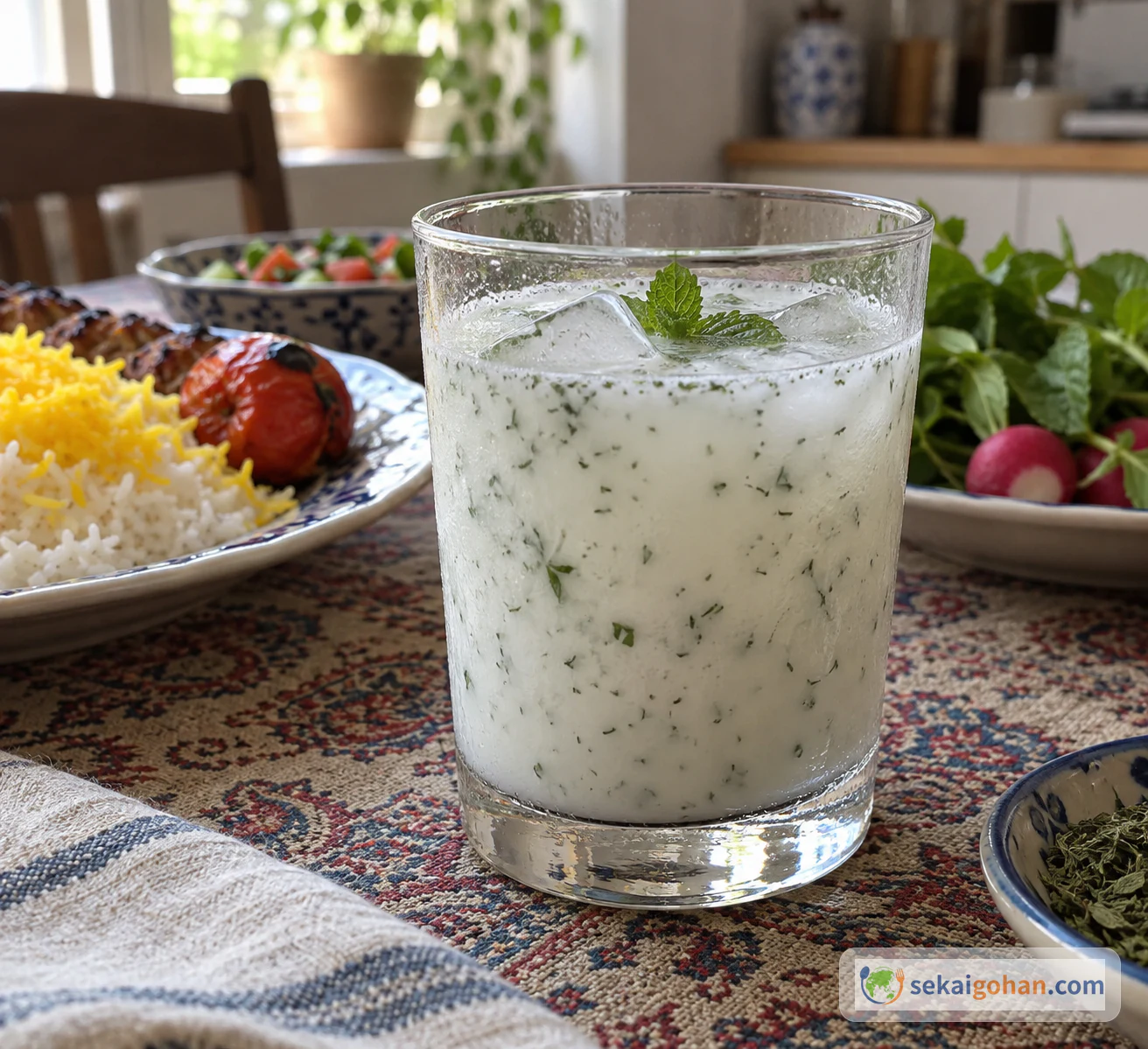
Ayran is the classic drink: mix 3.5 oz (100 g) plain yogurt, ½ cup (120 ml) water and a pinch of salt well, and it washes the fat from your mouth. With alcohol, keep the heat moderate and lean on more lemon and onion.
For a dinner menu, decide on three things before you grill: acidity, liquid and bread. Acidity is sumac onions or ezme, the sharply sour chopped-vegetable salad; liquid is ayran or red lentil mercimek çorbası; bread is lavash or thin tortillas. White-bean piyaz belongs here too. Get the cold and sour things ready first and the freshly grilled meat stays the highlight to the end.
| Purpose of the meal | What to serve with it | Why |
|---|---|---|
| Freshly grilled meat as the star | Sumac onions, roasted tomatoes, lavash | Bread catches the juices and onion acidity cuts the fat |
| A weekend platter | Piyaz, tabbouleh, lemon | Beans and herbs make it easy to keep eating and it does not look like a plate of meat only |
| Sharing with children | Mild meat mixture, shishito peppers, yogurt sauce | Heat can be added at the table, so the same skewer is easy to divide |
| Leftovers for lunch the next day | Kebab sauce, warmed bread, leafy greens | Sauce and vegetables make up for the dryness of reheated meat |
Thin bread and sour side dishes are closer to the local table than rice. On days when you do want rice, long-grain rice with butter, as in Iran's chelow kabab, is the more natural pairing.
Storing Adana kebab

The mixture keeps in the refrigerator until the next day before it goes on skewers. It gets stickier as the salt works, but the red bell pepper also weeps water, so knead it lightly again and discard any liquid at the bottom before shaping. Shape right before grilling; left on the skewer for long, the underside loosens under the weight of the meat.
Store leftover grilled meat, lavash and sumac onions separately. Cool the meat on a rack for about 10 minutes, put it in a container and eat it within about 2 days in the refrigerator. Reheat in a frying pan on medium-low for 1 minute per side, or in a toaster oven at 350°F (180°C) for 4 to 5 minutes. A microwave alone tends to draw out the juices, so if you use one, crisp the surface in a frying pan afterward.
To freeze, freeze only the grilled meat. Wrap each skewer's worth in plastic wrap, put it in a freezer bag and use within about 2 weeks. Thaw in the refrigerator for half a day and reheat on medium-low until the fat sizzles. Sumac onions don't freeze well; keep only what you'll eat the next day and make the rest fresh.
Reheated meat has a tighter surface and doesn't release its fat like freshly grilled meat, so give it a new shape rather than recreating the first day's plate. Break it into long strips, put it on warmed bread and add a little kebab sauce such as garlic yogurt or tomato chili. If there's no time for sumac onions, 2.75 oz (80 g) thinly sliced onion with 2 tsp lemon juice, a pinch of salt and 5 g parsley still lightens the meat nicely.
For a lunchbox, take the meat off the skewer, cool it completely and cut it into 1 inch (2 cm) slices. The fat tends to set on rice, so wrap the meat in lavash or a tortilla and pack lemon and onion in a separate container. For a lunch you can't reheat, a milder mixture with extra acidic onions and leafy greens is easier to eat.
Frequently asked questions
Can I cook it under an oven broiler?
Yes. Put water in the drip tray, preheat the rack well, and cook over medium heat for 5 to 6 minutes per side. If the dripping fat makes the flames flare, turn off the heat briefly and let it settle. If the broiler is too low, lay the skewers so the handles stick out. Finally, check that the center has reached 158°F (70°C).
Do I have to use red bell pepper?
You can make it without, but the red aroma and moisture typical of Adana kebab will be weaker. A little well-drained red bell pepper adds a sweet aroma that chili alone can't give. For more heat, keep the red bell pepper and add coarse chili flakes at the table instead.
What if I have no sumac?
Use 1 tbsp lemon juice and 1/2 tsp yukari (red shiso seasoning). Yukari is salty, so reduce the salt for the onion to a pinch. The aroma won't be exactly the same, but it still gives you an acid that cuts the fat.
What can I use in place of lavash?
Thin tortillas are the easiest. Thick naan or sandwich bread overpower the meat with sweetness and bulk. Warm a tortilla in a frying pan on low heat for 20 seconds per side, brush it lightly with the juice of the roasted tomatoes, and put the meat on it, and it will catch the fat much like lavash.
Is it too spicy to serve children?
Reduce the coarse chili flakes in the mixture to 1/2 tsp and replace the green chili with shishito. Adults can add chili or sumac at the table, so the whole family shares the same mixture. Always check that the center reaches 158°F (70°C).