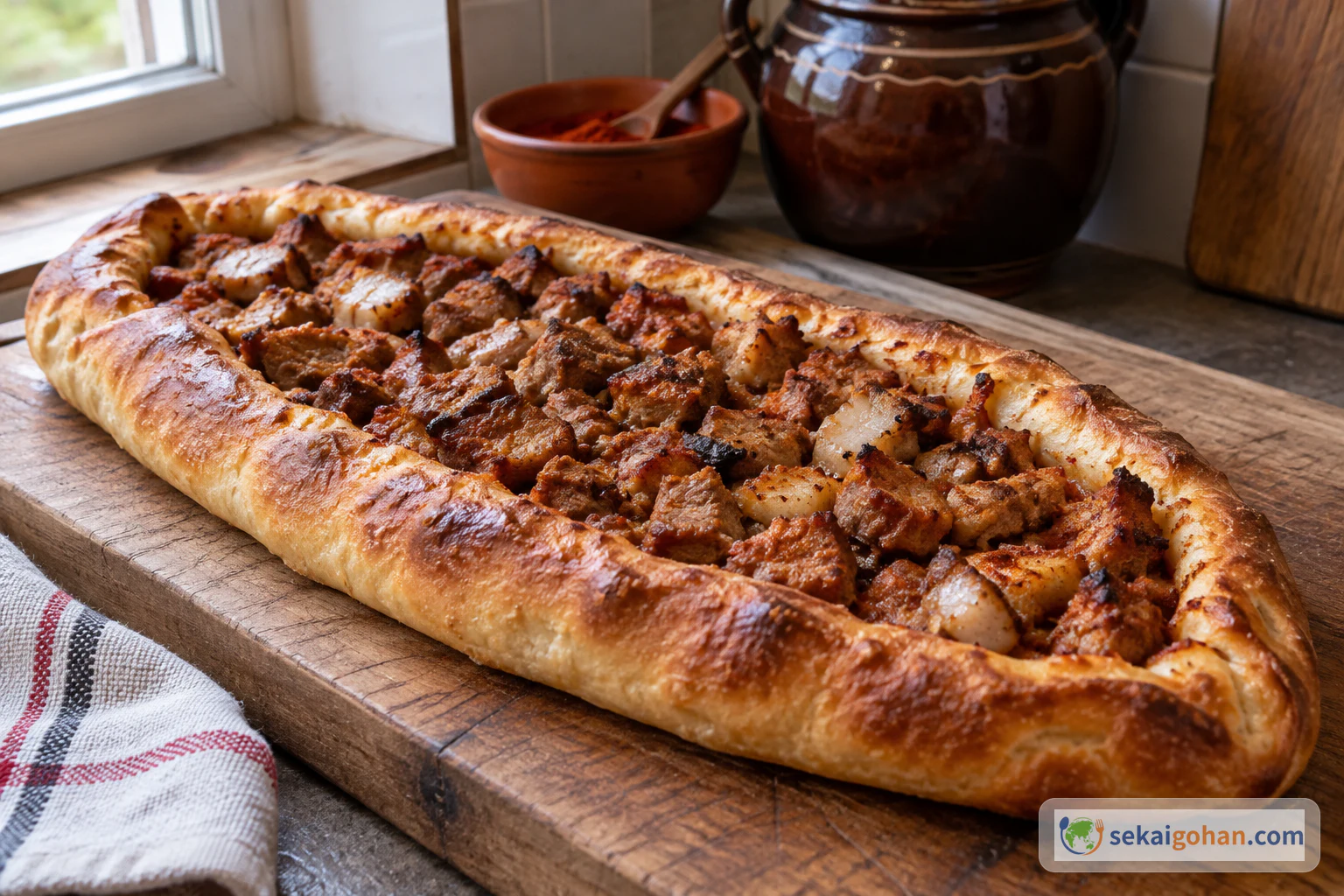
On a weekend morning you cut pork shoulder into big chunks and grate a few onions. The charcoal isn't lit yet, but in the bowl the meat and onion are already starting to mingle. This is shashlik (шашлык), the skewered grilled meat eaten across the Caucasus, Eastern Europe, Central Asia and the former Soviet Union. In the Georgian style, called mtsvadi (მწვადი), there's no sweet soy glaze and no garlic-heavy barbecue sauce: just salt, onion, black pepper and a little acidity. That alone turns plain meat into something that belongs on a skewer, and that's the fun of it.
Shashlik and Georgian mtsvadi
Shashlik is the broad name used across the former Soviet Union. Mtsvadi is the Georgian name, and we use it when we mean the Georgian style specifically. It can be made with pork, veal, lamb or chicken, but pork is especially common in Georgia. This version is built around mtsvadi and works best on a safe outdoor grill (not on a balcony), with workable versions for the broiler, the oven and a skillet too.
Mtsvadi in Kakheti and on the Georgian table
In Kakheti, a wine region, mtsvadi is grilled over the embers of grapevine prunings (tsalami) or mountain shrubs and finished with Kakhetian qvevri wine or pomegranate juice. The cuttings from pruning go into the fire, and wine, bread, meat and herbs all end up on the same table, with the skewers at the center of the feast.
The cooking itself says a lot about how Georgian food thinks. Rather than piling on spices, it lets fire, fat and acidity bring the meat's own flavor forward, and it favors salt over complicated marinades or rubs. If you grew up on sauce-heavy barbecue, you'll want to reach for garlic, soy sauce or sugar. Think in this order instead: cut the meat large, keep the fat, let the coals settle from flames into glowing embers, and catch the cooked meat with bread and onion.
Other Georgian dishes, like satsivi, which wraps chicken in a cold walnut sauce, or lobio, which brings beans together with herbs and walnuts, build their layers of flavor in the pot or the mortar. Mtsvadi divides the roles on the plate instead. The meat is about salt and fire, the onion brings acidity, the bread catches the juices and the herbs lighten each bite, so each person assembles it bite by bite. At home, setting thin bread, tangy onions, tomatoes, cucumbers and herbs alongside the meat gives you the shape of the dish far better than a plate of meat alone.
If you've read about the meat dishes of the supra in our introduction to Georgian cuisine (in Japanese), these skewers make a very good next step after khachapuri or khinkali.
Georgian style vs. Russian-speaking style
Look through shashlik recipes from the former Soviet Union and you'll find families who add vinegar, families who add wine, and others who marinate in kefir, mineral water or pomegranate juice. There's no single right answer, as long as it doesn't become a catch-all barbecue sauce. Let the enzymes and moisture in the onion tenderize the meat, let the salt season it and keep the acid modest; hold that line and even supermarket pork shoulder will taste like Caucasian skewers.
| What to look at | Closer to Georgian mtsvadi | Closer to Russian-speaking shashlik | Home-kitchen compromise |
|---|---|---|---|
| Meat | Pork shoulder, veal, lamb; fat left on | Pork, lamb, chicken | Pork shoulder as the star, chicken thighs as a stand-in |
| Marinade | Onion, salt, black pepper, pomegranate | Vinegar, wine, kefir, mineral water, etc. | Onion + salt + a little pomegranate juice |
| Fire | Charcoal, grapevine cuttings, embers | Charcoal in a mangal | Charcoal grill, broiler, oven |
| Sides | Pomegranate onions, tkemali, herbs, bread | Raw onion, vegetables, lavash | Red onion, pomegranate juice, parsley, shiso |
| How it's eaten | Straight off the fire, on bread | On the skewer, or with bread and vegetables | Eat it hot; don't let it rest long on the plate |
Ingredients (serves 4) — built around fatty pork shoulder and onion
If you cut the meat too small, shashlik dries out like a thin kebab. Keep the pieces about 1.5–2 inches (4–5 cm) and use pork shoulder (Boston butt) with a little fat on it. Pork belly alone is too fatty and loin alone dries out easily, so shoulder is the easiest to work with.
This dish uses pork. If you serve bread, it contains wheat. Check the label on the plum sauce used in place of tkemali for soy and wheat. Don't reuse marinade that has held raw meat, and keep separate cutting boards and tongs for raw and cooked meat.
Tools and pantry notes for this dish
With shashlik, the tools change the result more than the seasonings do. You can use bamboo skewers, but because the pieces are large, flat metal skewers keep the meat from spinning and make grilling easier.
If you can cook over charcoal, a chimney starter cuts down on failures. If you put the meat on before the fire has settled, it chars and tastes sooty.
For pomegranate juice, choose something close to 100% juice rather than a sweetened pomegranate-flavored drink. If you can't find it, don't go hunting; use red wine and water instead and add lemon at the table.
To avoid guessing at doneness, an instant-read thermometer is handy. With skewers, the outside can be charred while the center is still lukewarm, so check the thickest piece.
When you can't get tkemali, a small amount of pomegranate molasses gives a fruity tang that umeboshi alone can't. Rather than pouring it straight on the meat, stir it into the onions or the sauce 1 tsp at a time; that's easier to control.
Start with just pork shoulder, onions, salt, black pepper, pomegranate juice, tomatoes, cucumbers and bread. Tkemali, pomegranate seeds and metal skewers can wait until the second time you make it.
Choosing ingredients for shashlik
At the store, the things people hesitate over are the meat, the acid, the bread and the sauce. Rather than chasing every authentic ingredient, separate what you should keep from what you can swap.
| Ingredient in question | Fine to substitute | Don't substitute too far | Why |
|---|---|---|---|
| Pork shoulder | Chicken thighs, lamb shoulder, beef chuck | Lean pork tenderloin, chicken breast | Grilling over high heat needs fat and thickness |
| Pomegranate | Red wine, a little grape juice, lemon | Lots of vinegar | Too much acid tightens the meat |
| Lavash | Pita, tortillas, thin naan | Sweet sandwich bread | It's there to catch the juices and onions |
| Tkemali | Umeboshi paste + honey + water, a little yukari (red shiso salt) | Sweet barbecue sauce | You want acidity that cuts the fat |
| Herbs | Parsley, cilantro, shiso, scallions | Dried herbs alone | Fresh herbs cool the heat of the grilled meat |
If you have a batch of Svan salt on hand, a tiny sprinkle on the finished meat is lovely. Put a lot into the marinade, though, and its aromatics burn easily, so season the meat with salt and onion and keep Svan salt for finishing.
Method — don't over-marinate, and grill hot and fast over embers
The most common mistake is leaving the meat in an acidic marinade overnight or longer until it turns dry and crumbly. With onion and salt alone, a longer marinade is fine, but once vinegar or pomegranate goes in, 4–6 hours is plenty. Marinating in the morning and grilling in the evening is the easiest rhythm at home.
Cook whole cuts of pork, beef, lamb and veal to an internal temperature of at least 63°C (145°F), then rest them for 3 minutes. Cook poultry to at least 74°C (165°F). Don't judge by color alone; insert a thermometer into the thickest piece to check.
Grilling shashlik: other heat sources, doneness and fixes
Cooking without charcoal
The smoky aroma of charcoal is part of shashlik's appeal, but not every household can fire up a grill every time. Indoors, the broiler (or a fish grill) comes closest, then the oven, then a skillet. The goal is to dry the surface quickly and build a toasty crust; cook slowly over low heat and the onion moisture comes out first, leaving the meat stewed. Preheat well, use strong heat from above and set the meat on a rack so excess moisture drips away.
With a two-sided fish grill (the kind built into many Japanese ranges), preheat for 3 minutes, then cook on high for 6–8 minutes on one side, turn and cook 5–7 minutes more. If the skewers don't fit, thread the meat onto short bamboo skewers or skip the skewers and lay the meat on the rack. Fat will drip, so if your model has a drip tray meant to hold water, follow the manufacturer's instructions.
In the oven, preheat to 230°C (450°F), arrange the meat on a rack set over a sheet pan and roast for 18–22 minutes. Finish under the top element or broiler for 2–3 minutes to add color. The oven gives you no charcoal aroma, so a pinch of smoked paprika at the end brings the feel closer.
For a skillet, heat a heavy cast-iron pan thoroughly over medium-high heat, add a thin film of oil and lay in the meat off the skewers, since skewers cut down contact with the pan. Sear all sides for a total of 12–15 minutes without moving the meat around too much, cover and let it sit for 2 minutes, then check the internal temperature.
| Method | Best for | Result | Watch out for |
|---|---|---|---|
| Charcoal grill | Cooks who prize aroma | Closest to the real thing | Grill over embers, not flames |
| Broiler / fish grill | Getting a crust at home | Toasty surface | Skewer length and dripping fat |
| Oven | Cooking a lot at once | Even and forgiving | Add color at the end |
| Skillet | Weeknight dinners | Keeps juices in | Less of a skewer-grilled feel |
Too much liquid smoke or smoked salt makes it taste more like American barbecue than Georgian mtsvadi. If you add anything, make it the smallest pinch of smoked paprika. The stars are still onion, salt and the aroma of grilled meat.
Reading doneness
Charcoal, a broiler, an oven and a skillet all smell different, but you judge doneness the same way. The surface should have a deep golden-brown side glistening with fat, not just a thin scorch. Pressed, the meat should have some spring in the center, and on the plate a little clear juice should run out. Under a broiler, pull the meat away from the heat if the surface browns too fast; in the oven, add color with top heat at the end.
| Sign | Good result | How to correct |
|---|---|---|
| Browning | Deep golden brown at the edges, fat lightly bubbling | If it's just black, move it away from the heat. If it's pale, it wasn't preheated enough |
| Firmness | Springs back when pressed; center not too soft | If flabby, cook longer. If tough, cut the meat larger next time |
| Juices | A little clear juice runs out | If the juice is red, check the internal temperature. If no juice comes out, it's overcooked |
Common mistakes
Shashlik has few ingredients, so the causes of failure are easy to pin down. A charred outside usually means you're grilling over flames, dry meat means it was cut too small, and a sour, tight texture means too much acid. Sort out which one it is and you can fix it on the very next skewer.
| Problem | Cause | Fix |
|---|---|---|
| Only the outside is black | Flames are up; fat is dripping onto the fire | Move the skewers aside and return them once the coals settle |
| Meat is dry | Cut too small, fat trimmed off, overcooked | 1.5–2 inches (4–5 cm) cubes, shoulder cut, check internal temperature |
| Too sour | Too much vinegar, marinated too long | About 2 tsp vinegar. For long marinades, add the acid later |
| Bland | Too little salt, too much onion wiped off | Use salt at about 1–1.2% of the meat's weight |
| Worried it's undercooked | Judging only by the color outside | Check the center with a thermometer and take done skewers off first |
Never use charcoal or a tabletop charcoal grill indoors, in poorly ventilated spaces or anywhere your building's balcony rules prohibit it. There's a risk of carbon monoxide poisoning and fire. Even outdoors, keep water for extinguishing, heat-resistant gloves and a metal ash container on hand, and make sure the fire is completely out before you clean up.
Serving, storage and leftovers
Shashlik is at its best the moment it comes off the fire; it doesn't improve overnight like a stew. Plan the menu around cold dishes you can set out while the meat grills. The simplest is a big platter of tomatoes, cucumbers, onions and herbs, much like the fresh vegetables, bread and tangy sauce that sit beside the meat on a Georgian table. A walnut-sauce dish like satsivi makes the meal heavy, so on shashlik day keep to cold starters and bread.
For lamb at your next cookout, try Armenian karsi khorovats, made by cutting lamb 1.5 inches (4 cm) thick and threading it alternately with fat. It uses fat quite differently from pork-shoulder mtsvadi, and it's a good way to compare how to choose the meat and handle the heat.
Let the cooked meat cool slightly and refrigerate it within 2 hours. Ideally eat it by the next day, and at most within 3 days. Reheat it in a skillet with a splash of water and a lid, which keeps it moister than the microwave. To freeze, put only the cooked meat in a freezer bag and use it within 2–3 weeks. Don't make the pomegranate onions ahead; they turn watery.
Leftovers are good sliced thin and tucked into pita, with lemon, yogurt and cucumber in place of the pomegranate onions for a Caucasus-leaning sandwich. Over rice, skip a pilaf like plov and go with plain white rice, herbs and lemon to keep it light.
Frequently asked questions
Q1. Can I make it with lamb instead of pork?
Yes. Cut lamb shoulder or leg into 4 cm cubes and marinate in the same mixture for about 4 hours. Lamb has a strong aroma, so the tang of pomegranate onions and tkemali-style sauce suits it well. It toughens if overcooked, so check that the center reaches at least 63°C (145°F), rest it briefly and eat.
Q2. Won't the meat stay tough without vinegar?
Vinegar isn't essential. The moisture in the onion and the salt are enough to condition the surface of the meat. A lot of vinegar or lemon can tighten the surface before the meat softens, leaving it a bit crumbly, so it's safer to add acidity at the table with pomegranate onions or tkemali.
Q3. Is it okay to marinate from the day before?
If you leave out the acid and use only onion, salt, black pepper and oil, overnight is fine. With pomegranate juice or vinegar, aim for 4–6 hours. An easy rhythm is to prep the day before, add the acid in the morning and grill in the evening.
Q4. What should I change for kids?
Halve the black pepper and serve the tkemali or plum sauce on the side. If the bite of the pomegranate onions is a concern, use onions that have been soaked in water. Check the internal temperature even more carefully than for adults, and if you use chicken, always cook it to at least 74°C (165°F) in the center.
Q5. My skewers burn in the broiler.
Bamboo skewers burn easily, so soak them in water for at least 30 minutes before using. If they still burn, skip the skewers and lay just the meat on the rack. It loses a little of the shashlik feel, but as long as you keep the crust and the onion marinade, the dish still works.