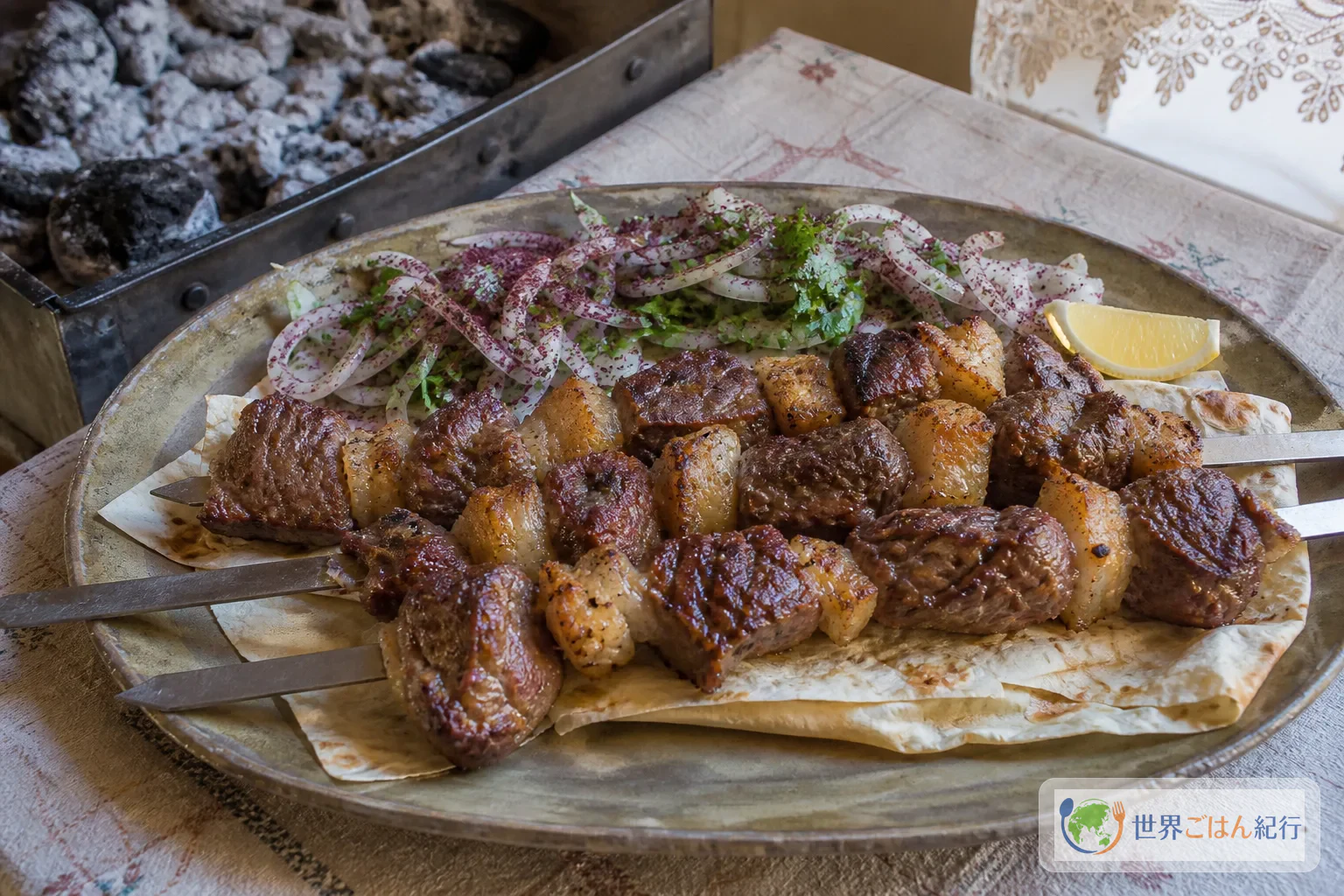
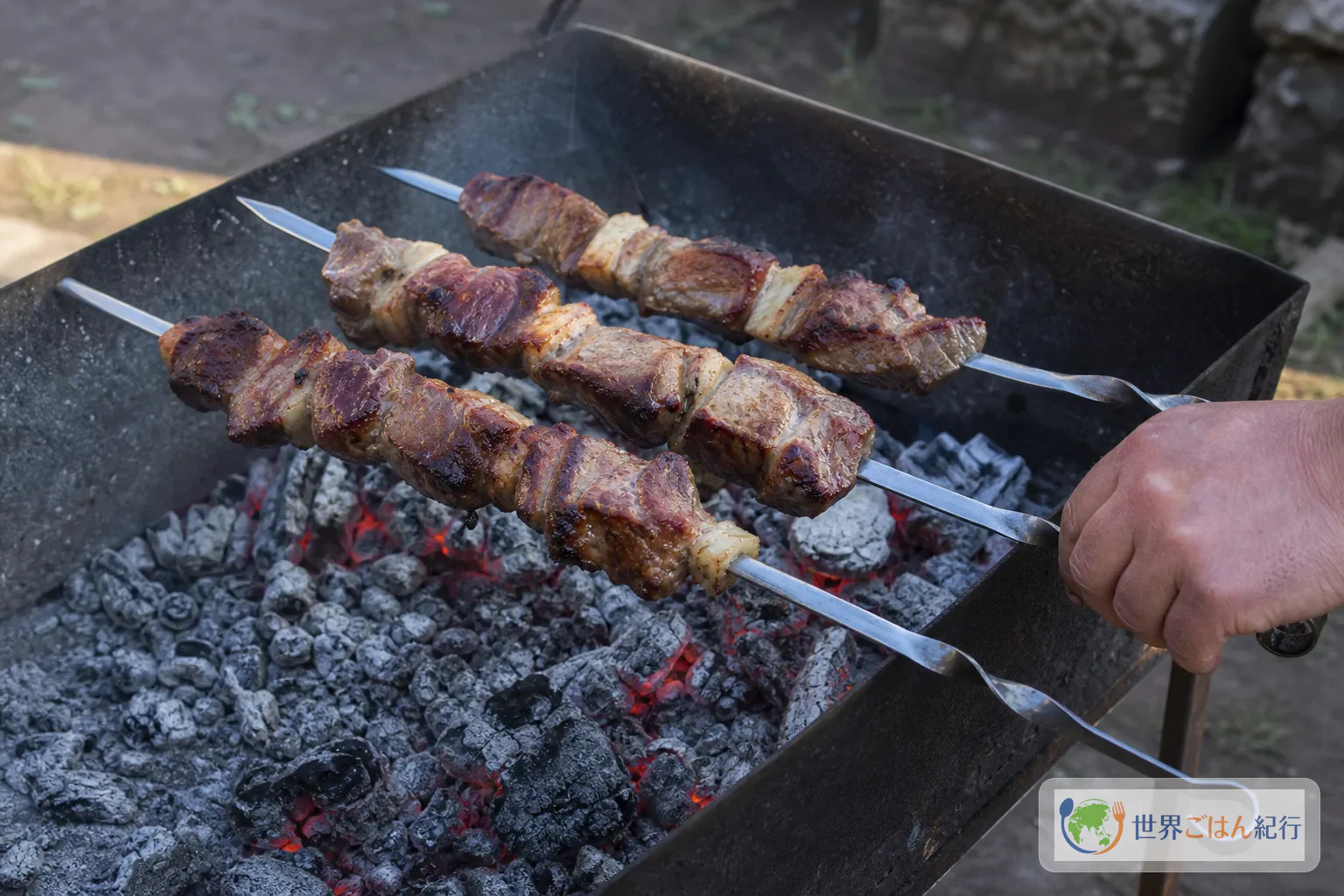
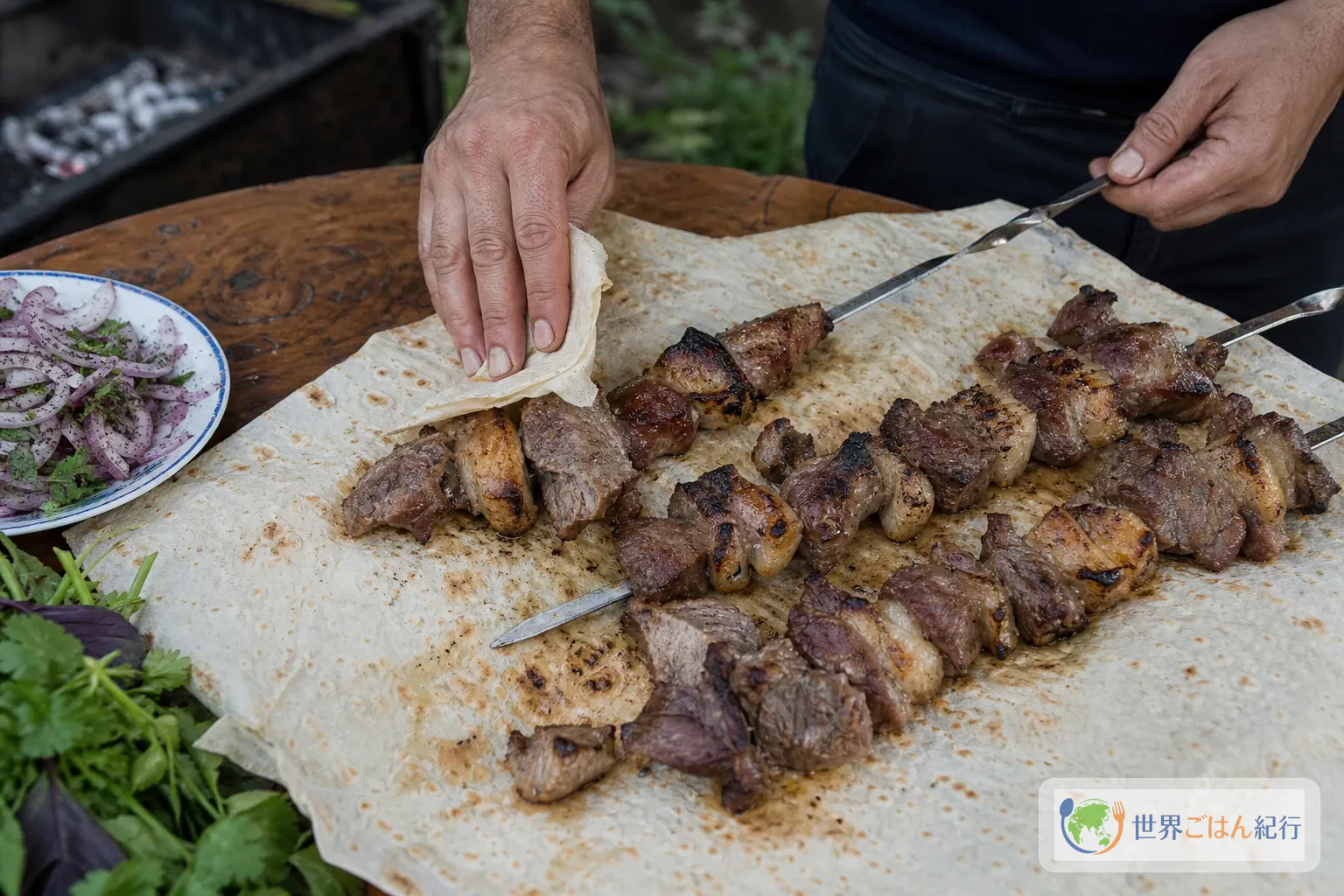
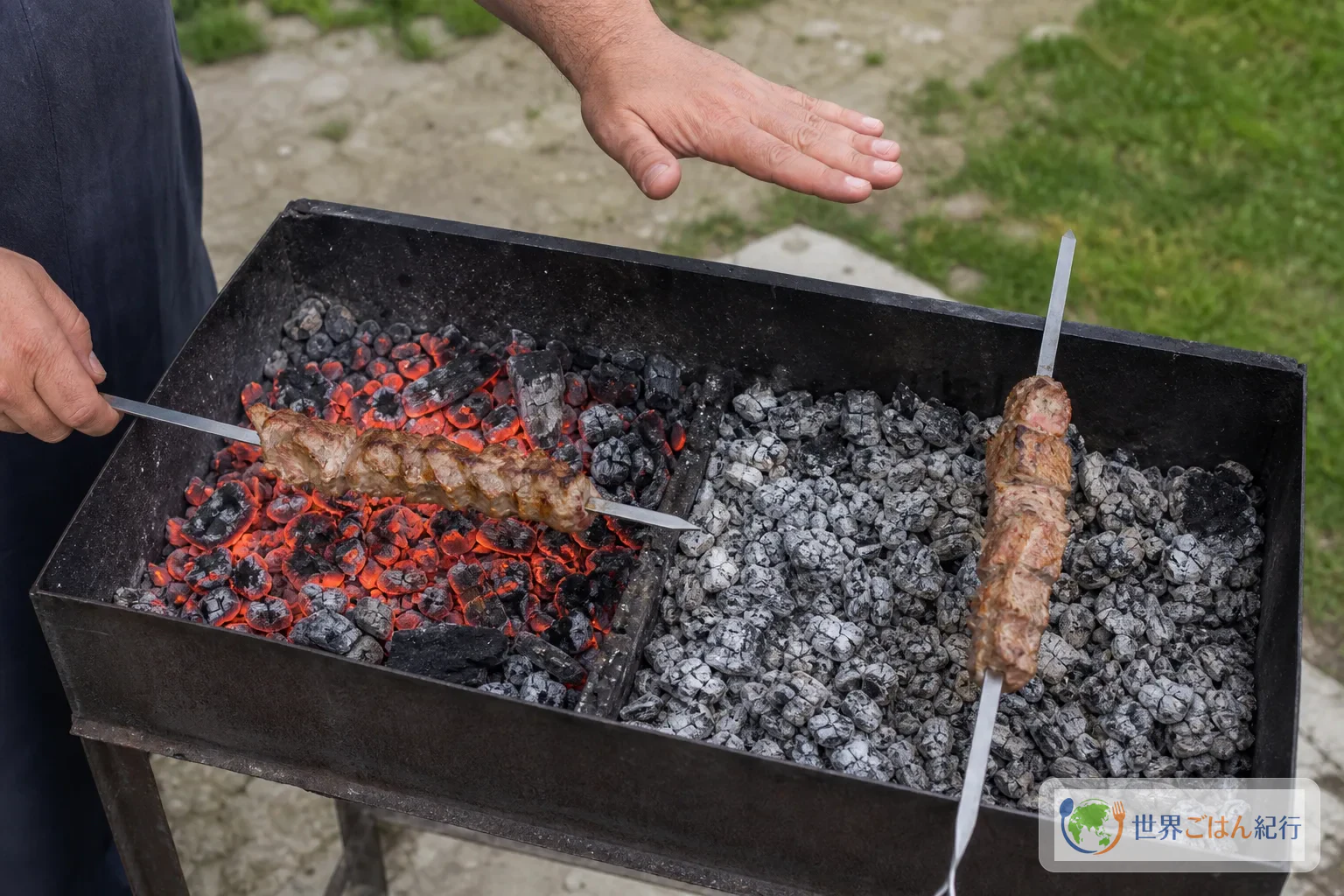
The smoke from that drop of fat is what gives karsi khorovats its flavor. Lay a flat skewer over charcoal under a coat of white ash, and the lamb fat starts to bubble until a single drop falls onto the embers. A short wisp of smoke rises, not enough to make a flame, and traces the edges of the meat until it overtakes the smell of onion and dried herbs. Karsi khorovats, "Kars-style grilled meat," is Armenia's way with thick lamb and lamb fat threaded alternately on skewers and grilled over a charcoal grill called a mangal. It tastes of smoke, rendered fat, and herbs, cut by the sourness of sumac onions.
Karsi khorovats in Armenia
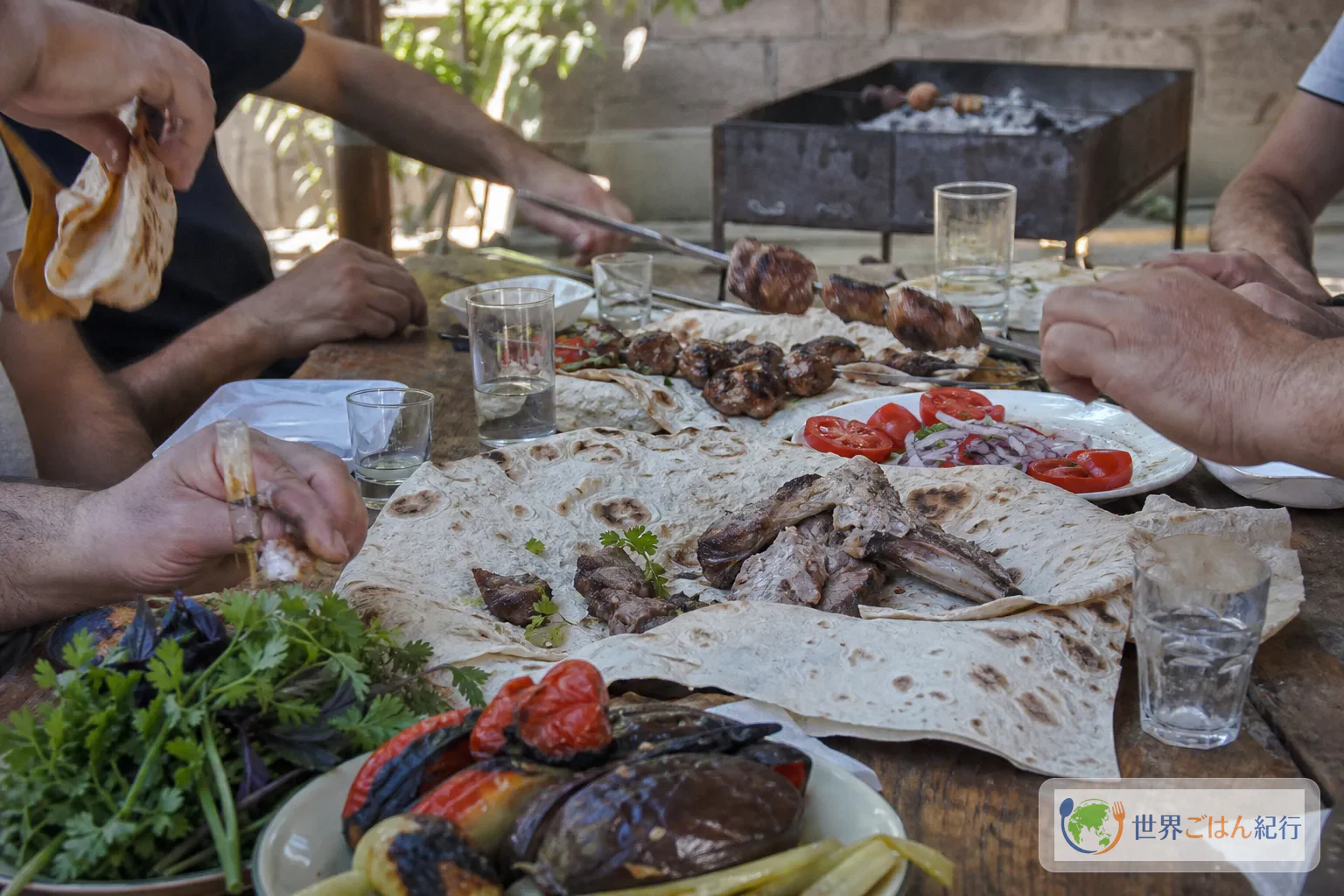
Khorovats on the Armenian table
In Armenia, khorovats appears on days when guests are invited, and preparing enough meat for everyone signals a celebration. At the Lori table, no grill grate goes on the mangal; long skewers are laid directly across the coals. The grilled meat is moved onto lavash and shared from a big platter with onions, roasted vegetables, cheese, and compote. On days of political celebration, mangals have been carried out into the street. At the khorovats festival held in Aghtala, pork, beef, and lamb were lined up over the same embers, along with fish and vegetables.
Karsi style and its lamb
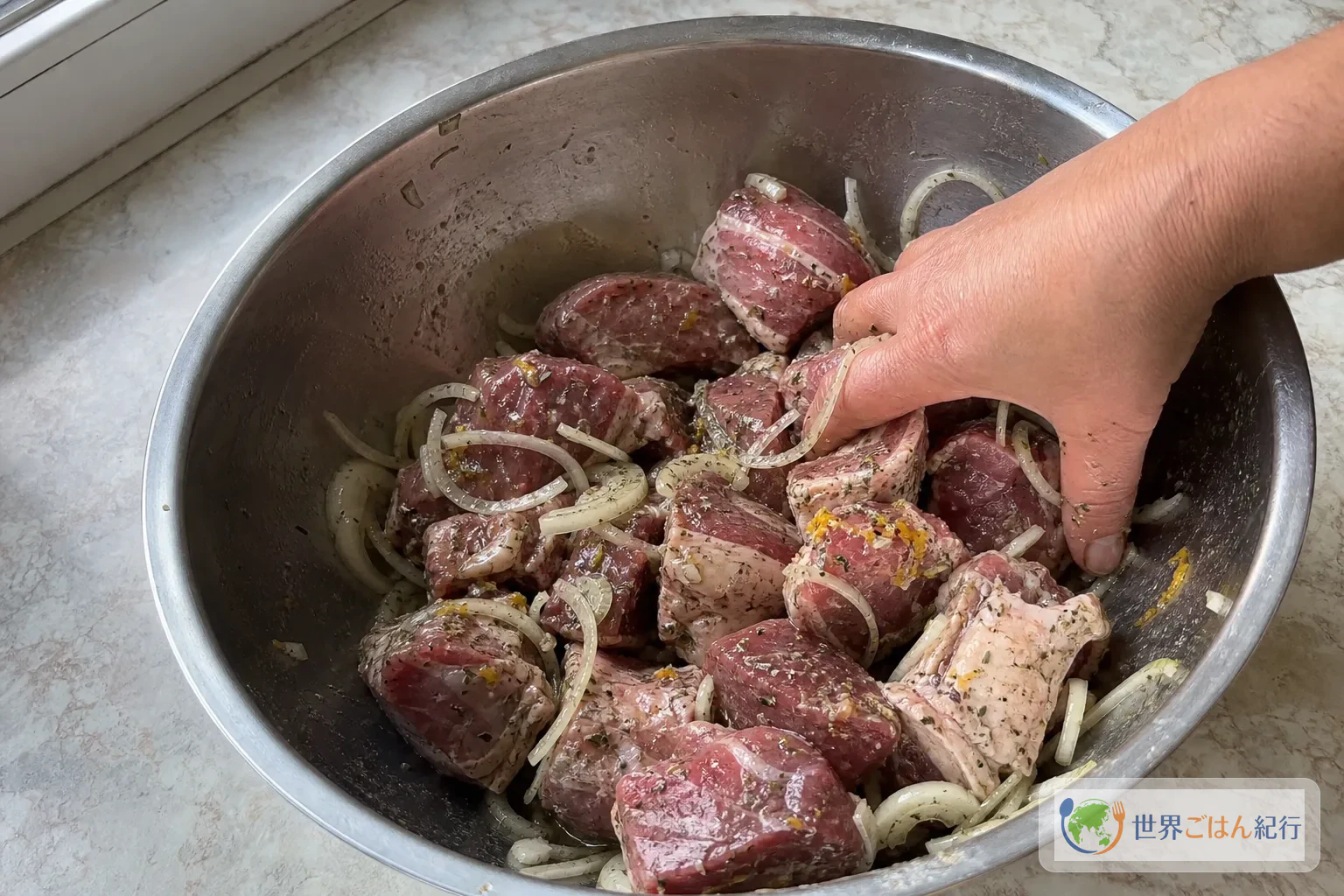
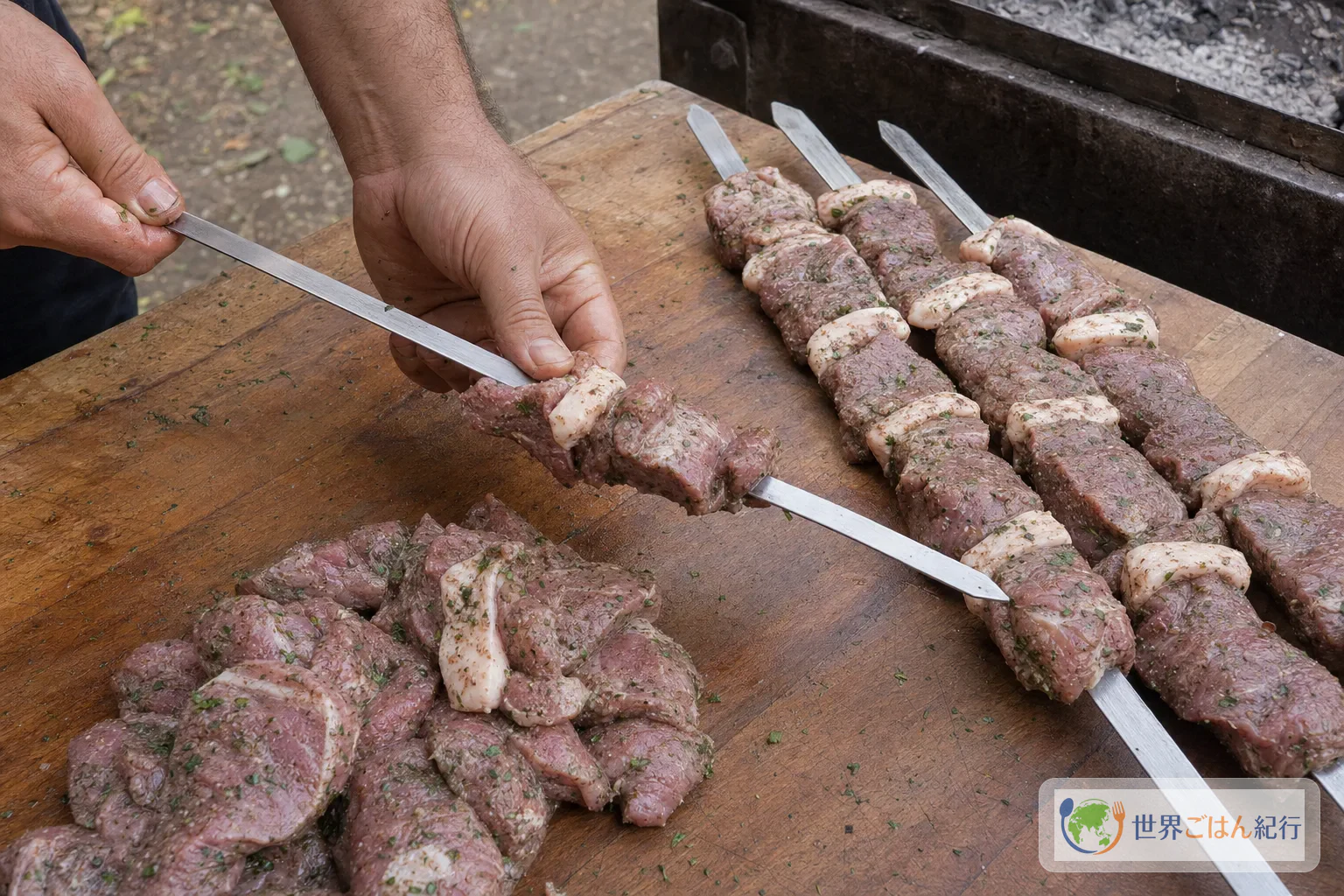
Among the many kinds of khorovats, karsi is named for its way of cutting and grilling. In the old version, fatty lamb is cut larger and rounder than for ordinary khorovats, about 1.5 inches (4 cm) thick. It rests in the refrigerator for 6–7 hours with onion, cognac or vodka, a little acid, and dried dill, mint, and coriander. The meat is then threaded alternately with sheep's tail fat and turned over the heat of the mangal. The herbs are kept to a thin layer, so they sit between the fat and the smoke.
Across present-day Armenia, khorovats is often made with pork. Pork is common for everyday khorovats, while lamb is chosen for competitions, grilled with salt, paprika, black pepper, thyme, and a little lamb fat.
The street-corner version in Yerevan
In present-day Yerevan, Ղարս ("Gars") also refers to a street-corner snack of meat cooked on a rotating spit and wrapped in small bread or lavash. In 2003, small karsi khorovats shops lined Tigran Mets Avenue, grilling fatty pork on rotating spits and wrapping it for commuters and market customers to eat in a few bites. The old lamb skewer and the street wrap share a name but look a little different.
Karsi khorovats and other skewers
Karsi khorovats works differently from other skewered meats of the Caucasus and beyond. Turkish cağ kebabı is thin meat shaved off as it turns, and Georgian shashlik is grilled in cubes. Karsi grills pieces about 1.5 inches (4 cm) thick whole, and the lavash catches even the juices from the meat as you pull it off the skewer.
In Armenian it is written Ղարսի խորոված. Ղարսի means "of Kars" and խորոված corresponds to "grilled, roasted over fire." Transliterations vary, such as Gharsi, Gharsi xorovac, and Karsi khorovats.
Ingredients: four large lamb skewers
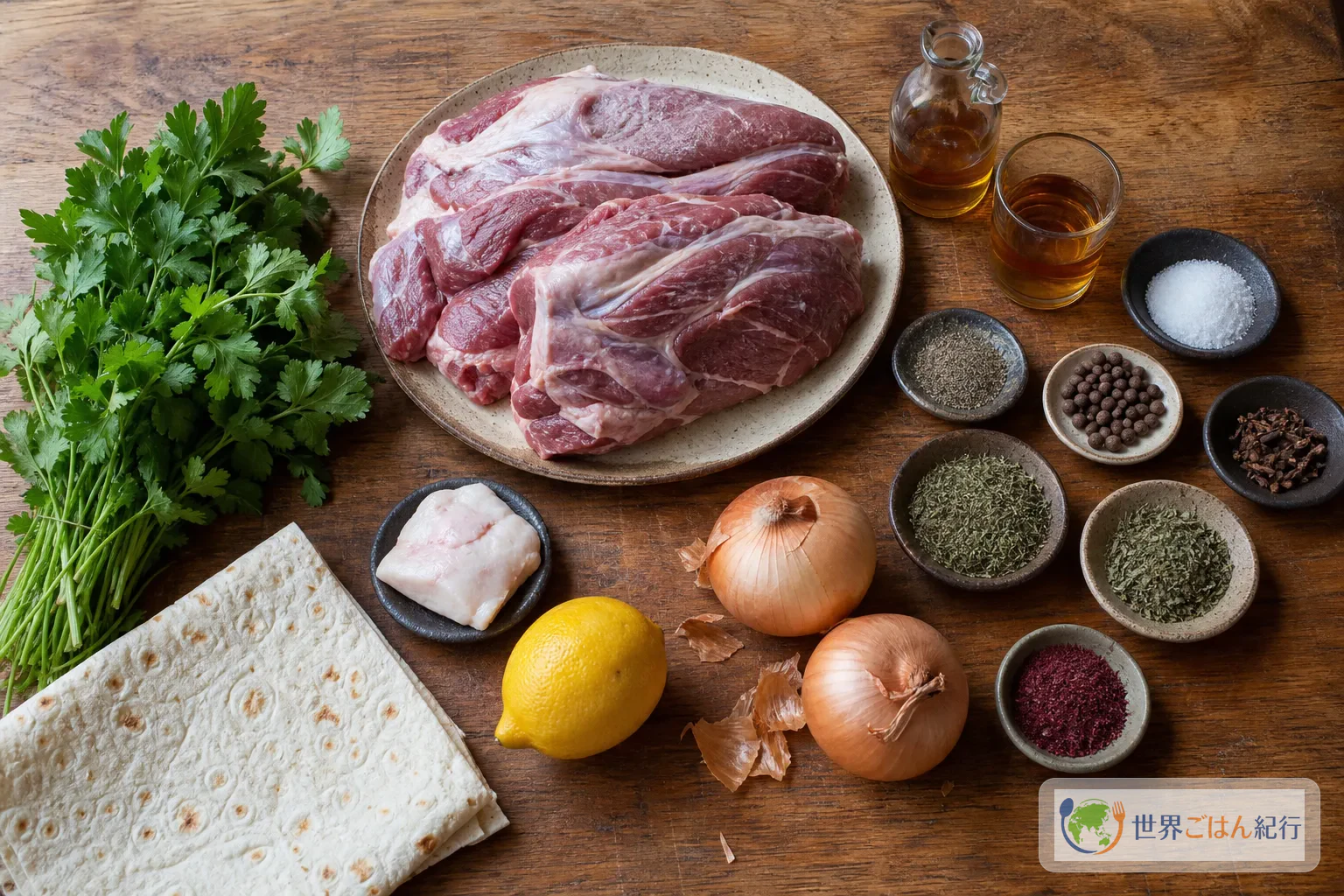
Lavash contains wheat. Cognac and vodka are used in the marinade, and little remains in the meat, but some alcohol can remain. When serving children, pregnant people, or those who avoid alcohol, use the alcohol-free substitute in the table. Some store-bought beef fat is made on equipment that also handles dairy or soy, so check the label.
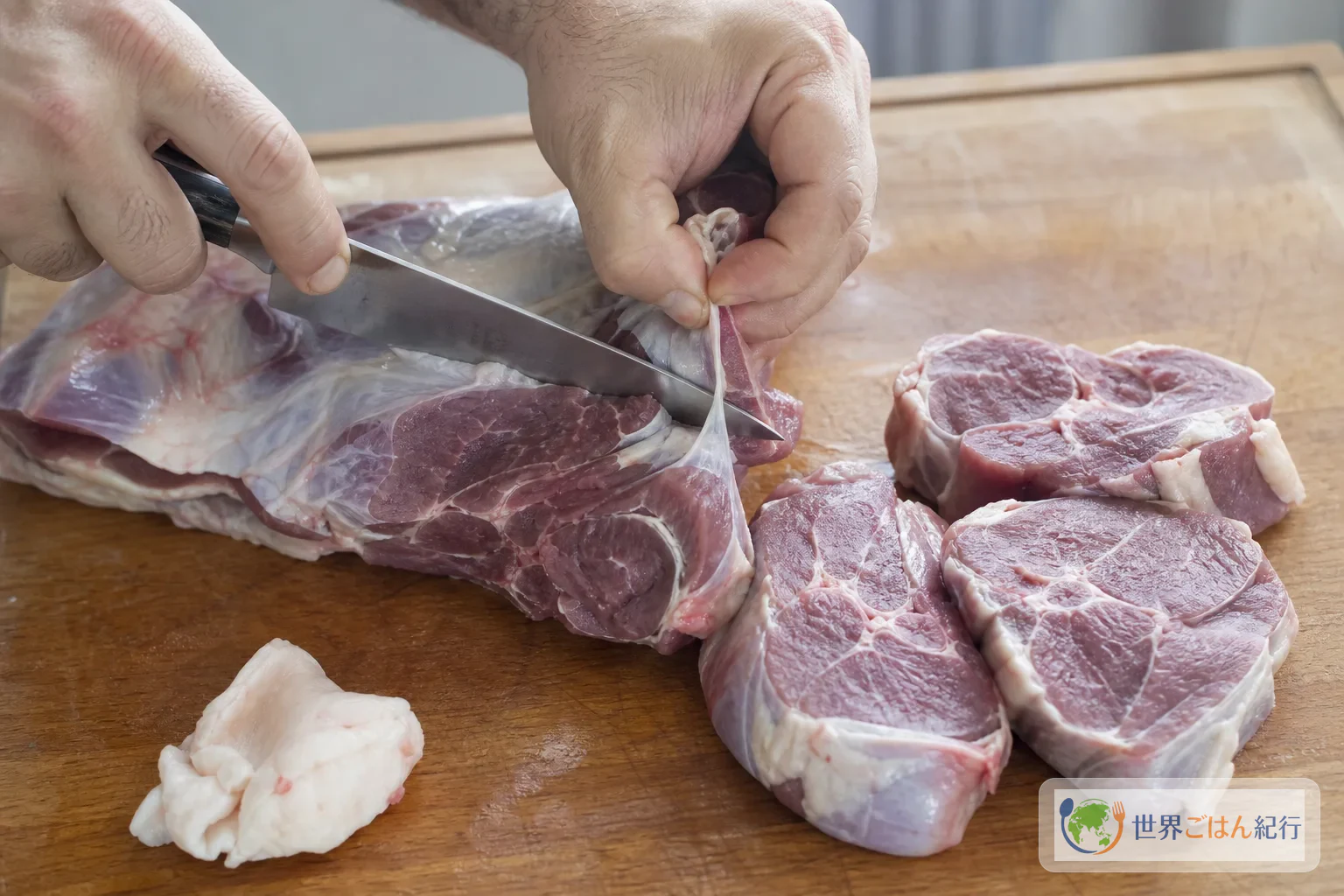
At the butcher's counter, ask for "a block of lamb shoulder loin, around 1.75 lb (800 g)." Thin slices sold for Mongolian-style grilling do not work for this dish. Stacked in layers, onion gets between them and the layers shift while grilling. If there is no block, choose lamb steaks at least 1 inches (3 cm) thick. If they are bone-in, ask the butcher to remove the bone. Tell them before they trim the fat that you want to keep a little of the white fat.
Choosing ingredients and tools for karsi khorovats
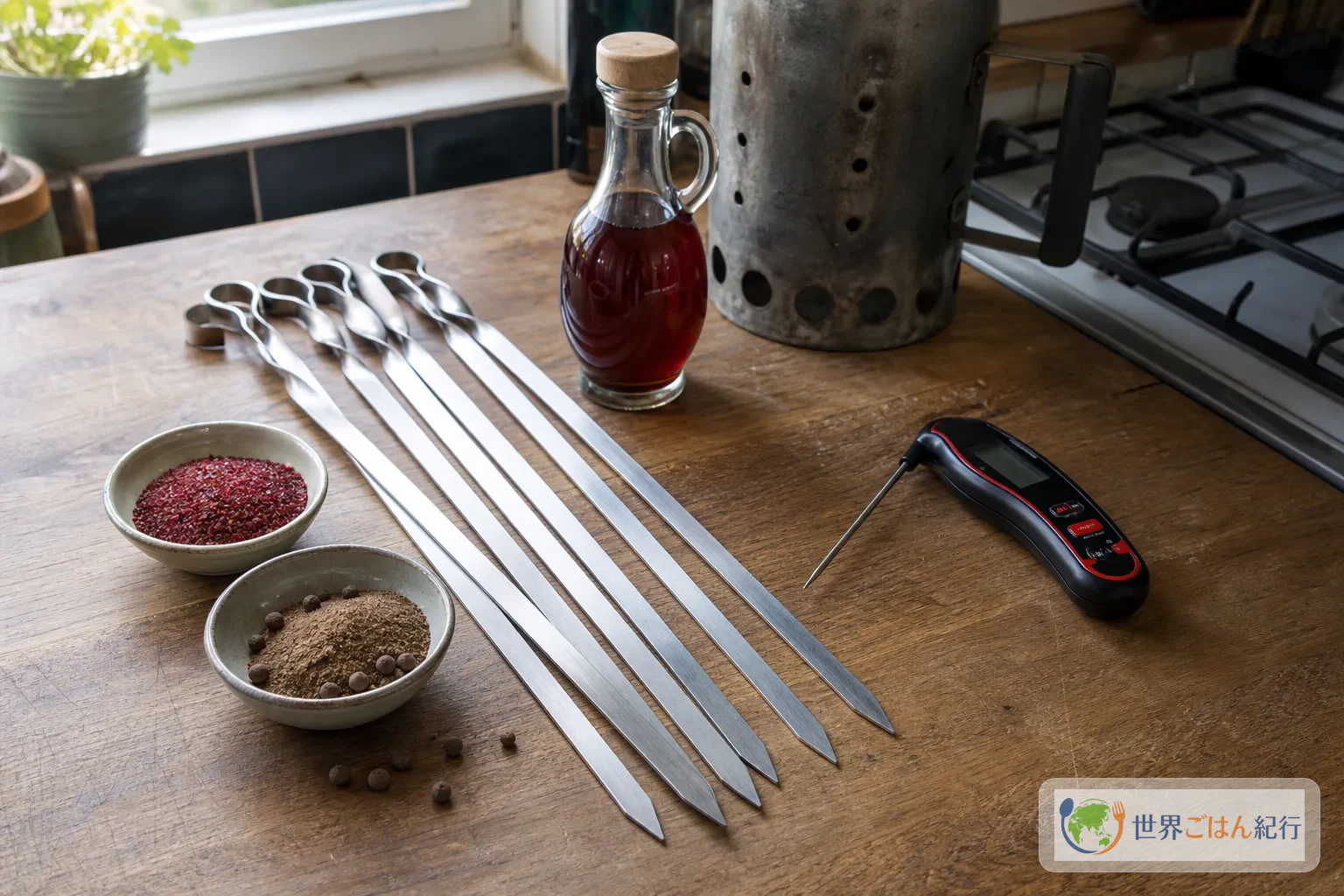
Lamb, onion, and lemon come from any neighborhood grocery or butcher. The things worth seeking out at specialty shops or online are allspice, sumac, and a thermometer. Spend there, not on the meat. Flat metal skewers keep large pieces from spinning, which makes it easier to decide which face to grill. If you have none, thread two thick metal skewers in parallel.
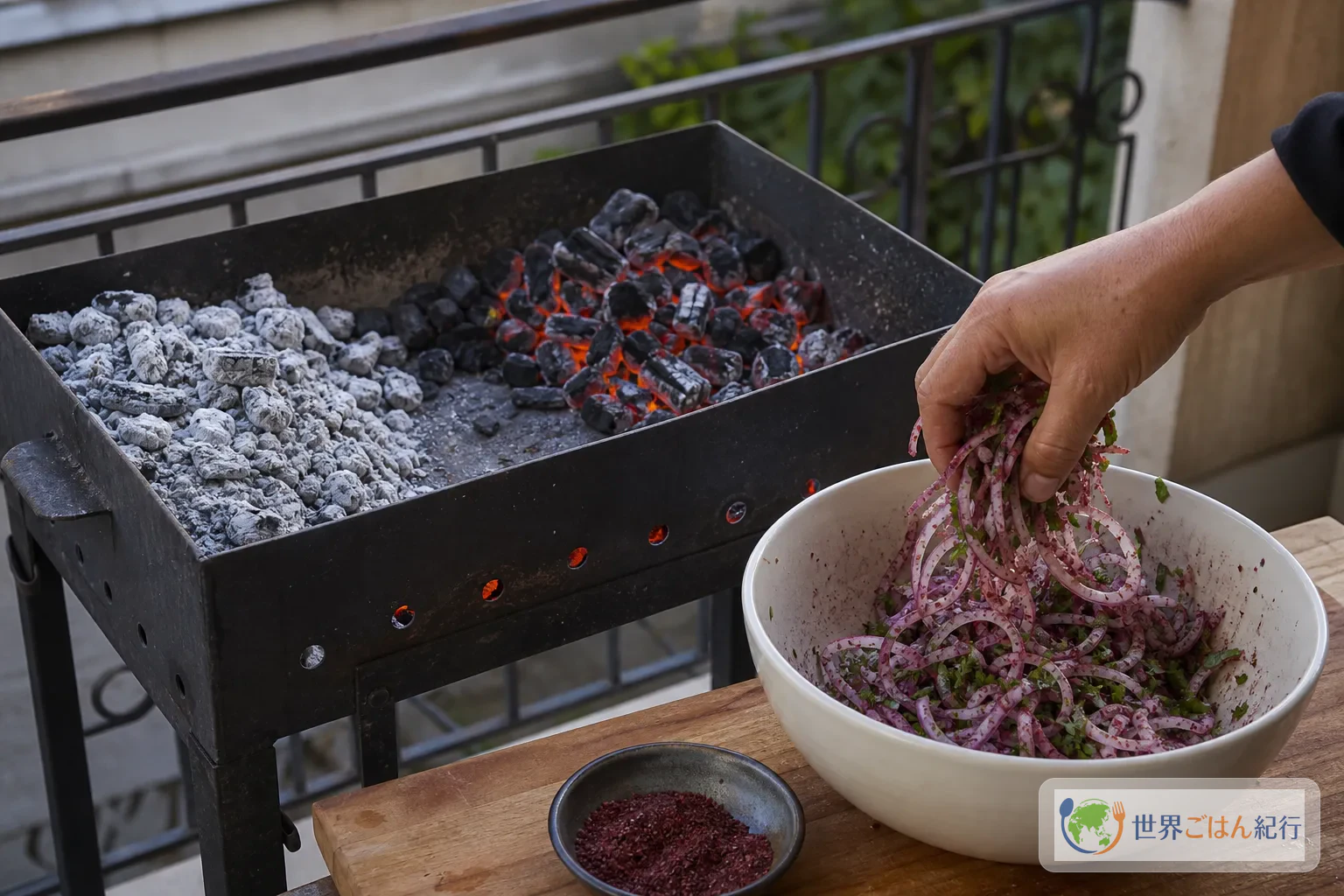
Allspice gives the marinade its outline. It is ground from the berries of a single plant, and a little goes into the meat; more does not make it more authentic. Sumac goes on the sliced onion rather than in the marinade. It adds less color than a dry sourness, different from lemon, that lightens the aftertaste when you wrap fatty lamb in lavash.
At 1.5 inches (4 cm) thick, the meat can't be judged by its browning. Insert the thermometer from the side into the thickest piece in the middle of the skewer.
| What to buy | Priority | Role | Substitute |
|---|---|---|---|
| Flat metal skewers | High | Large meat doesn't spin on the skewer | Two thick metal skewers in parallel |
| Allspice | High | Adds a little sweet, dry aroma to the marinade | 1 g black pepper and 0.1 g clove |
| Sumac | Medium | Adds dry sourness to the onion | 2 tsp (10 ml) lemon juice and 1 g dried red shiso |
| Instant-read thermometer | High | Confirms doneness of thick lamb by number | Cut the thickest piece, but juices run out easily |
The hardest ingredient to find is the tail fat of fat-tailed sheep. Rather than search for it and miss dinner, choose fatty lamb shoulder and add a little beef fat. Beef fat alone makes the beef smell too strong.
If you cannot find sheep tail fat, 2.5 oz (70 g) of beef fat is enough as long as the meat itself has streaks of fat. Tuck in 3.5 oz (100 g) or more of beef fat and the smoke and aftertaste are won by beef. Choosing fatty lamb shoulder comes first; treat beef fat as a supplement to fill the shortfall.
Method: grill the 1.5 inches (4 cm) meat without hurrying
Karsi khorovats is not a skewer where small cubes are scorched over high heat. You cut the meat large, tuck in fat, and grill it turning faces over the heat of the embers rather than flames. Charcoal is for outdoors only. Do not use charcoal indoors or on an enclosed balcony; choose a broiler or grill pan from the table below.
Charcoal fire produces carbon monoxide. Do not use it under a range hood, indoors, in a garage, or in a room with only the windows open. On an apartment balcony, check the building rules and the fire-use rules, and if it is not permitted, switch to a broiler or the oven.
Grilling karsi khorovats at home and fixing failures
Charcoal, broiler, or grill pan
Charcoal adds smoke, but most of what makes karsi khorovats works indoors too. The meat stays thick, the fat is tucked in, strong heat dries the surface, and the internal temperature is watched. Before choosing equipment, make sure you can handle the meat at its full 1.5 inches (4 cm). Without a mangal, a broiler and an oven together do the job.
| Method | Preheat and heat | Cooking guide | Suited to |
|---|---|---|---|
| Outdoor mangal, charcoal grill | 70% of coals covered in white ash, 8–10 cm to the meat | 3 minutes per face on four faces, add 2 minutes on the weak side if needed | Where you can use fire safely outdoors |
| Two-sided broiler | Preheat 5 minutes on high | 4 minutes per side on high, then move to a 400°F (200°C) oven for 6–8 minutes | A kitchen that can vent smoke easily |
| Cast-iron grill pan | Preheat 4 minutes over medium-high | 2 minutes per face on four faces, then low heat and covered for 5–8 minutes | A home without an oven |
| Oven only | Preheat to 450°F (230°C) | 12 minutes on a baking sheet fitted with a rack, then turn for 6–10 minutes | A home with nowhere to put a skewer |
Times in every method depend on how cold and how thick the meat is, so go by the number: 145°F (63°C) at the thickest piece, then a 3-minute rest. If a long skewer won't fit in the broiler, keep the pieces whole. Slide them in a single row onto the rack of a metal tray, keeping the order of meat and fat, and grill with the fat facing up.
Heating with the skewer handle sticking out of the door, or letting a metal skewer touch the burner, is dangerous. If the broiler's manual doesn't say whether metal skewers are allowed, use the rack from the start. Fat drips into the drip pan, so add water as the manual directs to prevent flare-ups.
Managing the heat
Grill too long over low heat and the onion on the surface releases water, so the meat smells steamed rather than grilled. Grill directly in flames and the herbs and fat blacken while the center stays cold. Split the embers into two strengths so the meat always has a cooler spot to move to. With charcoal, that spot is more useful than any extra heat.
| Condition | Cause | How to fix this time | Prevention next time |
|---|---|---|---|
| Black outside, cold center | Too close to flames, meat too large | Add 5 minutes at a time in a 350°F (180°C) oven and measure 145°F (63°C) | Wait for the embers to whiten and even the pieces to 1.5 inches (4 cm) |
| Meat is tough | Used only lean meat, soaked overnight in acid | Slice 0.125 inch (2 mm) thin and wrap in lavash | Choose shoulder and stop the marinade at 6 hours |
| Fat is white and unmelted | Fat is thick, grilled only over low heat | Press the fat side onto strong embers 1 minute at a time | Fat 0.375 inch (8 mm), tucked in thinly between pieces of meat |
| Meat spins when the skewer is turned | A single round skewer, uneven weight | Add another metal skewer in parallel | Use flat skewers and even out the height of the meat |
| Aroma is medicinal | Too much allspice or clove | Increase the sumac onions and lemon | 1 g allspice and 0.2 g clove for 1.75 lb (800 g) of meat |
Serving karsi khorovats
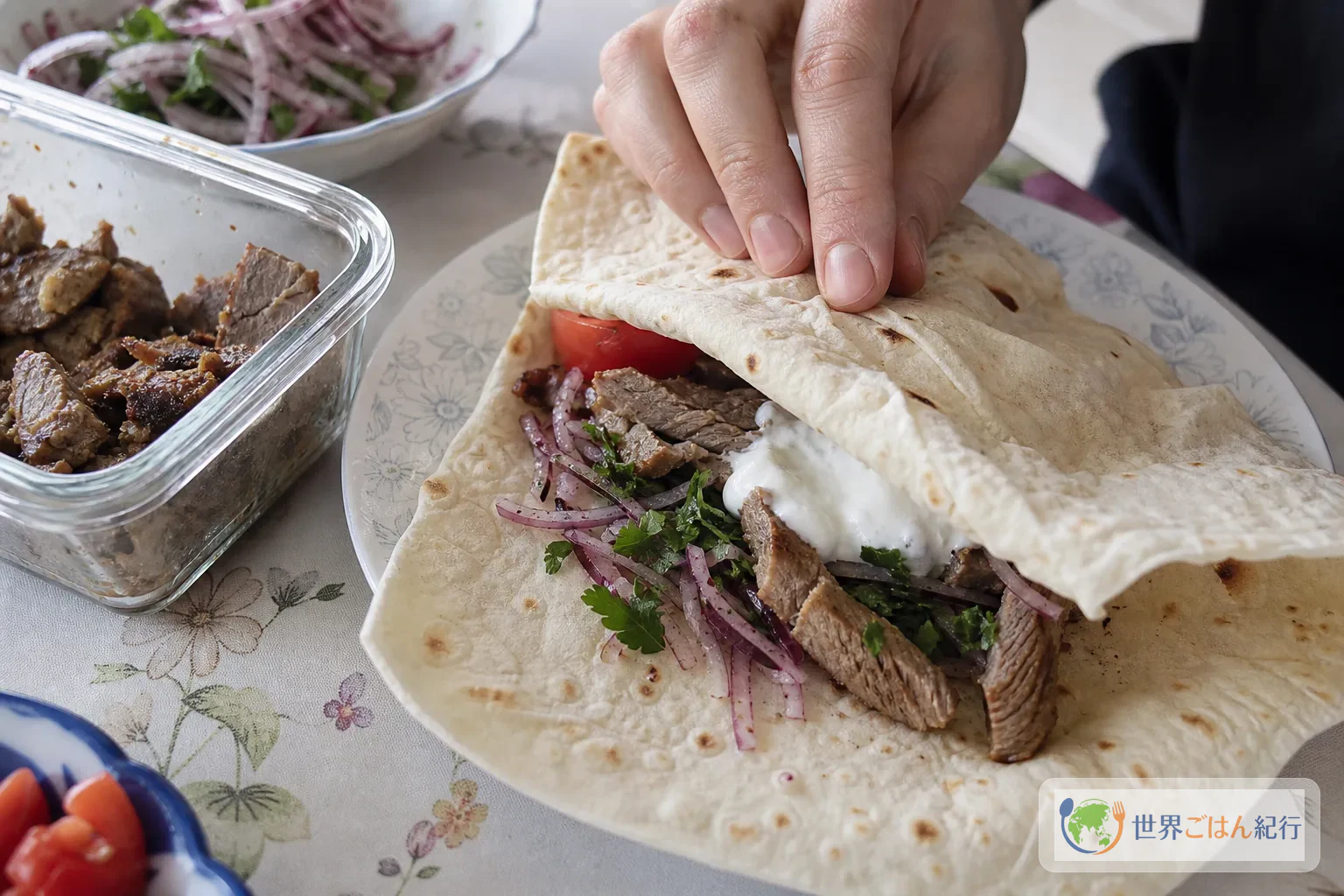
Lavash does more work here than a knife and fork. Press it over the meat on the skewer and pull the pieces off, let it soak up the juices, and wrap it all with sumac onions and herbs. On the side, set out grilled eggplant, grilled tomato, cucumber, and white cheese. There's no sweet sauce; the sourness of the onion cuts the fat.
To continue with Armenian festive dishes, amich, chicken stuffed with rice and dried fruit, and ghapama, stuffed into pumpkin, offer a contrast. For a plainer pot, try harissa, in which chicken and wheat are beaten continuously.
Frequently asked questions
I'm worried about the gamy smell of lamb
Submerging the meat in vinegar or alcohol to remove the smell turns the surface mealy. If an oxidized smell in the white fat bothers you, cut away only the old lumps of fat and rest the meat 6 hours with onion, lemon zest, and dried dill. Thread it while still cold and grill without leaving it long at room temperature, which also keeps the smell of the fat from spreading.
Can I make it without cognac?
Yes. Switch to 2 tbsp (30 ml) vodka, or for no alcohol, combine 1.5 tbsp (25 ml) cold water and 1 tsp (5 ml) grape vinegar. Because this goes in on top of the original 1 tbsp (15 ml) of grape vinegar, the non-alcoholic version has 1.5 tbsp (20 ml) of vinegar in total. Any more and the surface of the lamb tends to tighten.
Can I marinate the day before and grill the next evening?
The marinade contains vinegar and lemon, so 24 hours is too long. The day before, just cut the meat and fat and weigh out the dried herbs and spices. Combine the onion, acid, and cognac 6 hours before grilling. Don't freeze the marinated meat partway to stop the clock, either.
How do I store leftovers?
Move grilled meat into a shallow container within 2 hours. Cooked lamb keeps 3–4 days in the refrigerator, but leftovers have been handled with knives and set on the table, so finish them within 3 days. To reheat, slice the meat 0.125 inch (3 mm) thick and cook 2 minutes over medium heat in a skillet with 2 tsp water. When it's hot throughout, wrap it with lavash, sumac onions, and tomato. To freeze, wrap flat by portion and use within 1 month.