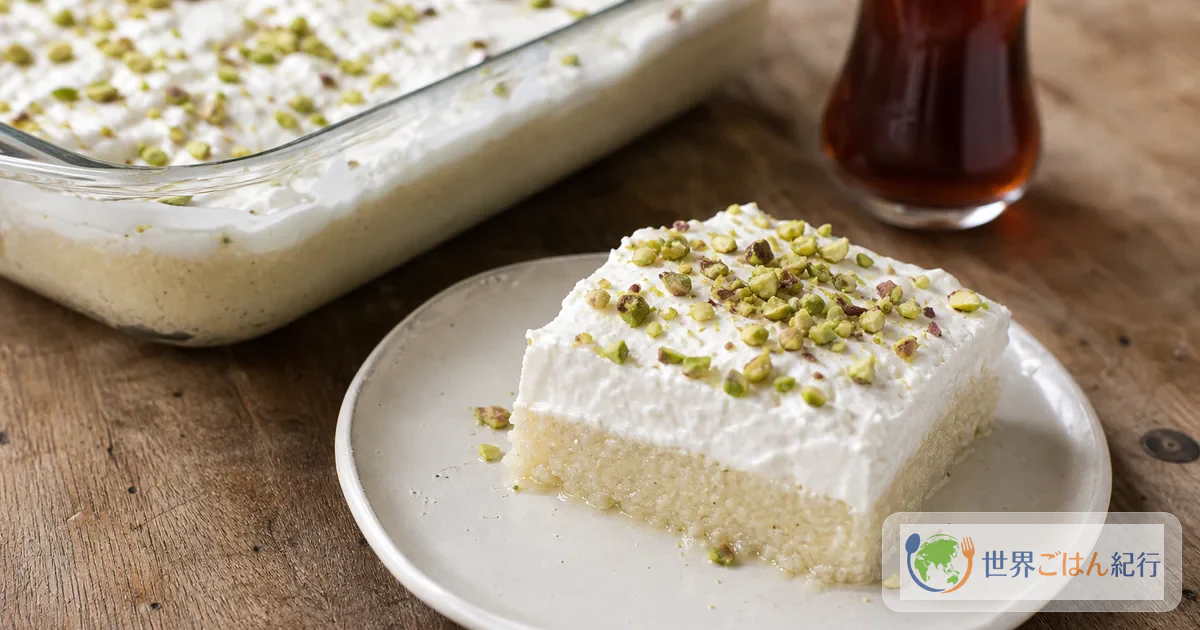
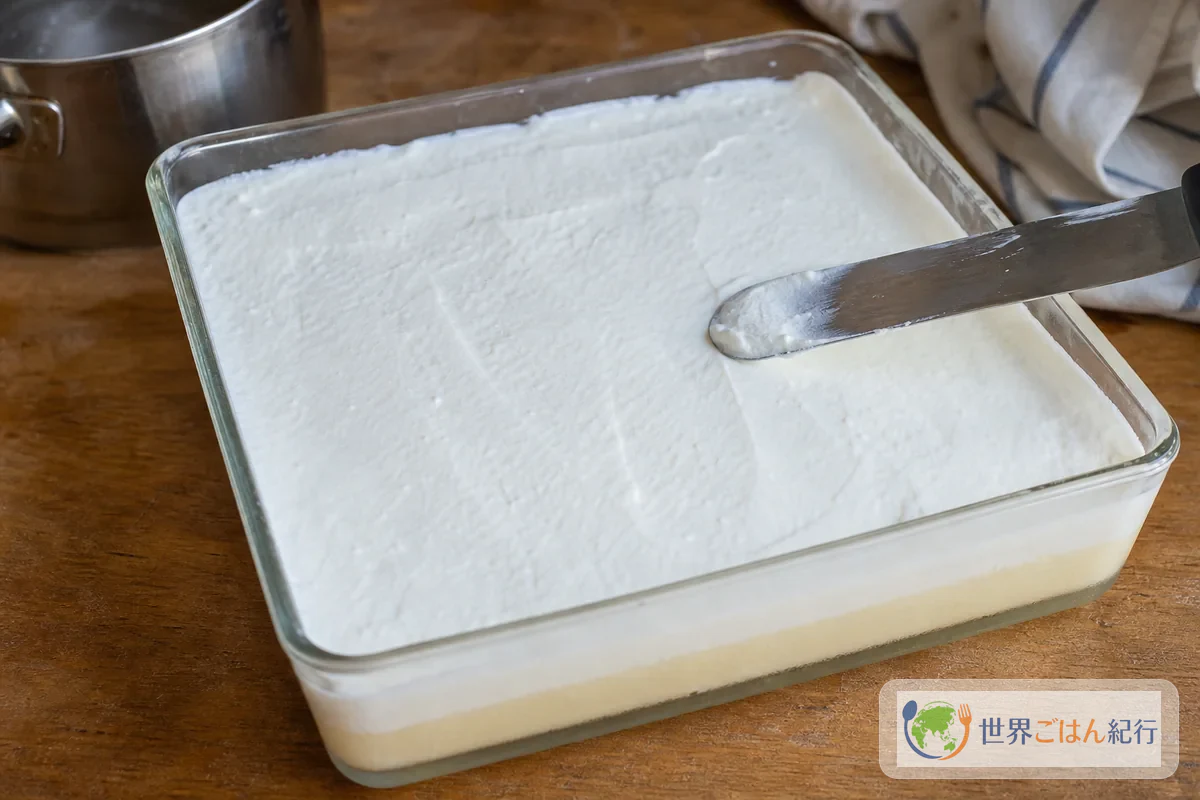
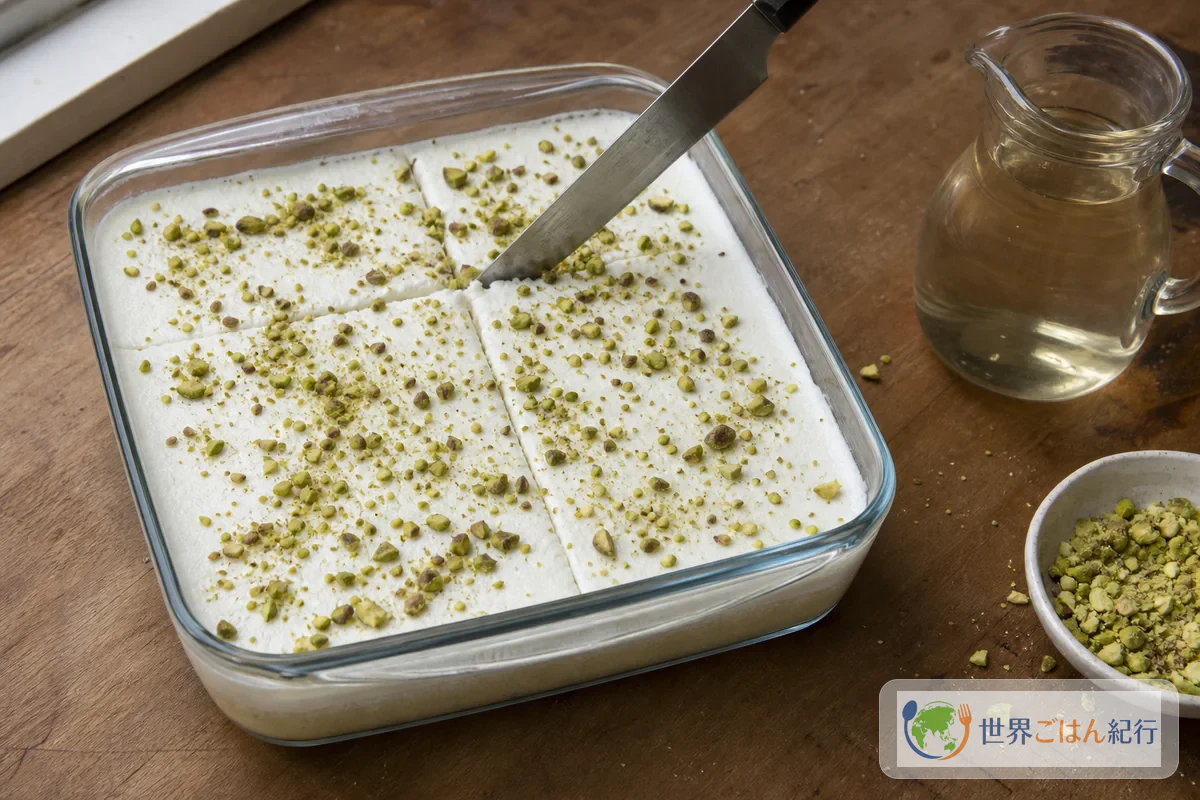
A square glass dish comes out of the refrigerator, two layers of pale cream and white. The knife sinks softly through the ashta on top, and the semolina underneath holds its shape, leaving a trace of grain. Then a thin thread of cold syrup brings up the scent of orange blossom water, followed by the green aroma of pistachio. This is layali Lubnan (ليالي لبنان), literally "Lebanese nights." The first bite is flowers, then pistachio, and the taste that lingers is milk, so even after a big meal, one piece won't feel heavy.
Layali Lubnan at the Lebanese table
In Lebanon, layali Lubnan is a chilled home dessert: a base of milk and semolina, topped with a dairy cream called ashta, a floral fragrance, and nuts. It is eaten all year and is especially loved during Ramadan. Families chill it in a large dish and cut it to match the number of guests, which is handy when you don't know until the last minute how many people are coming.
In English it is written Layali Lubnan, Layali Libnan, Lebanese Nights, and other ways. Other names include Qashtalia, Ashtalieh, and Beirut Nights. Here, the dish is layali Lubnan, and the dairy top layer is ashta.
If knafeh, the emblem of Lebanese pastry shops, wins you over with hot cheese, fine dough strands, and a punch of syrup, this one is quiet. There's no oven involved. You chill the two white layers in turn so they don't mix, and while the pot is in use for only about 25 minutes, you eat the dessert hours later. Make it before you start dinner, and it will cut into clean squares by dessert. Some cooks pour the syrup over the whole dish just before serving; others plate each piece first and add the syrup there.
Home versions vary a lot. The top layer can be whipped cream, milk cooked with starch, or store-bought cream folded in, and the base can use fine or coarse semolina. The fragrance might be orange blossom water, rose water, or a little of each. Some cooks add thin banana slices or dried rose petals, though a finish of just pistachios and syrup is common too.
What matters more than the garnish is the texture. The bottom layer should be spoonable yet hold its shape when cut, the top should not turn rubbery in the refrigerator, and the flower scent should come through as each bite reaches your mouth. Get those three right and it's layali Lubnan, even with nothing but pistachio on top.
Ingredients to hold to, and ingredients you may swap
The first thing you stop at in the shop is the semolina. It is made from grains of durum wheat, known as the raw material for pasta, and a fine grind keeps a faint graininess even after soaking up milk. If you can only find coarse, pulse it in a dry food processor for 30 seconds, twice, to get a little coarser than caster sugar. Replacing it with only cake flour or cornstarch gives a smoother mouthfeel, but the dish drifts toward a milk pudding.
| Traditional anchor | Choice in this recipe | How far you can substitute |
|---|---|---|
| Fine semolina | 5 oz (140 g) for the base | Briefly grind coarse semolina. Do not replace all of it with cake flour |
| Ashta | Cooked from milk, cream, and cornstarch | Whipped-cream versions exist, but the cooked one is steadier to cut |
| Flower water | Orange blossom water in the base and syrup | With rose water, start from half the amount. Vanilla gives a different aroma |
| Pistachios | Unsalted, chopped 0.125 inch to 0.125 inch (2 mm to 4 mm) | Unsalted almonds work, but aroma and color change |
| Syrup | Cool and serve on the side | Do not pour it all on first. The base turns watery |
Ashta is not the same as ordinary heavy cream. In Middle Eastern sweets, it is a thick milk cream used for layers and fillings. Here, milk and cream are cooked with cornstarch until they are firm enough that a faint spatula trail stays once chilled. The milk flavor comes through more than with whipping cream alone, and the top layer is less likely to slide sideways when cut.
Flower water tastes stronger after chilling than when you add it. Adding a lot to a warm pot leaves a perfume smell that reaches the table before the milk does. Turn off the heat, let it cool a little, and add it by the teaspoon. If it seems faint over the pot, the aroma comes back by the time it comes out of the refrigerator.
Ingredients (8 inches (20 cm) square pan, serves 6)
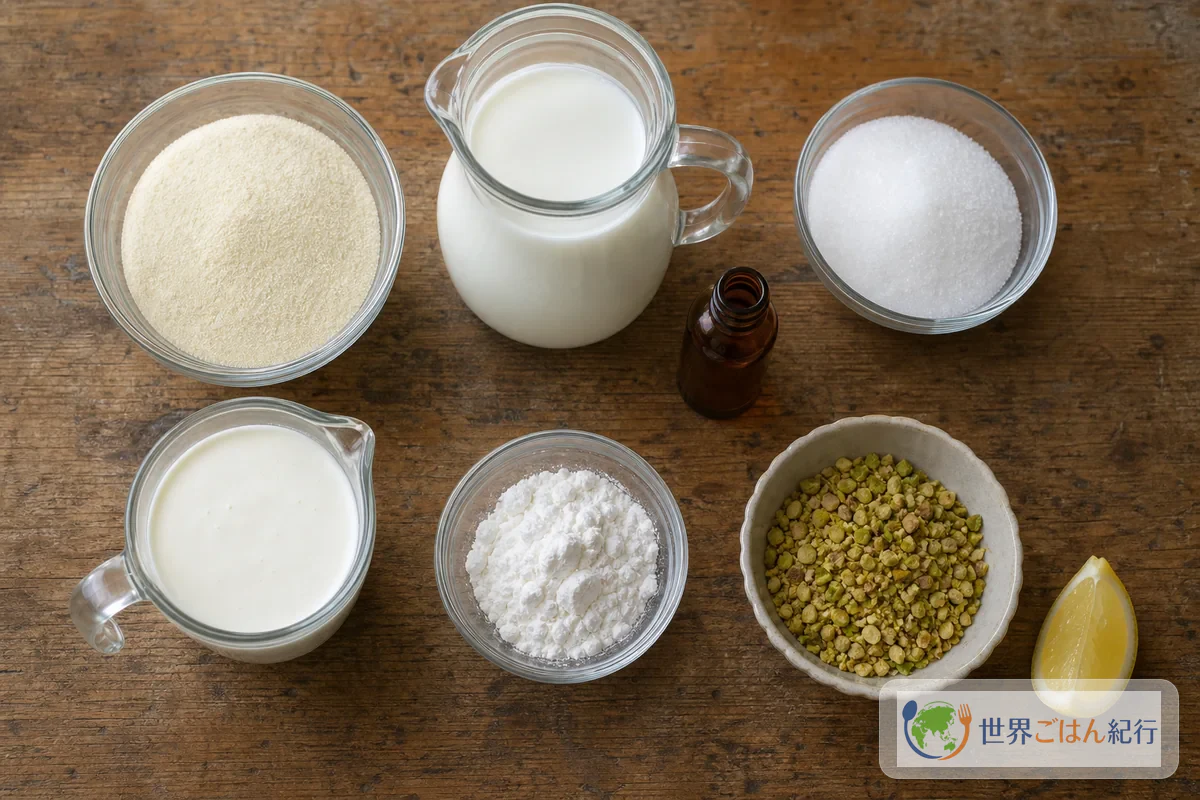
This recipe uses wheat, dairy, and nuts. Semolina comes from wheat. Leaving out only the pistachios still leaves dairy and wheat, so if you have any of these allergies, choose a different dessert. Always check that the flower water is labeled as edible.
Ingredients and equipment worth thinking about before you shop
Regular supermarket milk, cream, and sugar are all you need. At a Middle Eastern grocery or online, look for food-grade flower water and the tools that help you judge when to take the pot off the heat and how finely to chop. You don't need special dairy.
You use only a few teaspoons of orange blossom water at a time, but the rest can go to basbousa or halawet el jibn. Choose one sold as a food, not a cosmetic.
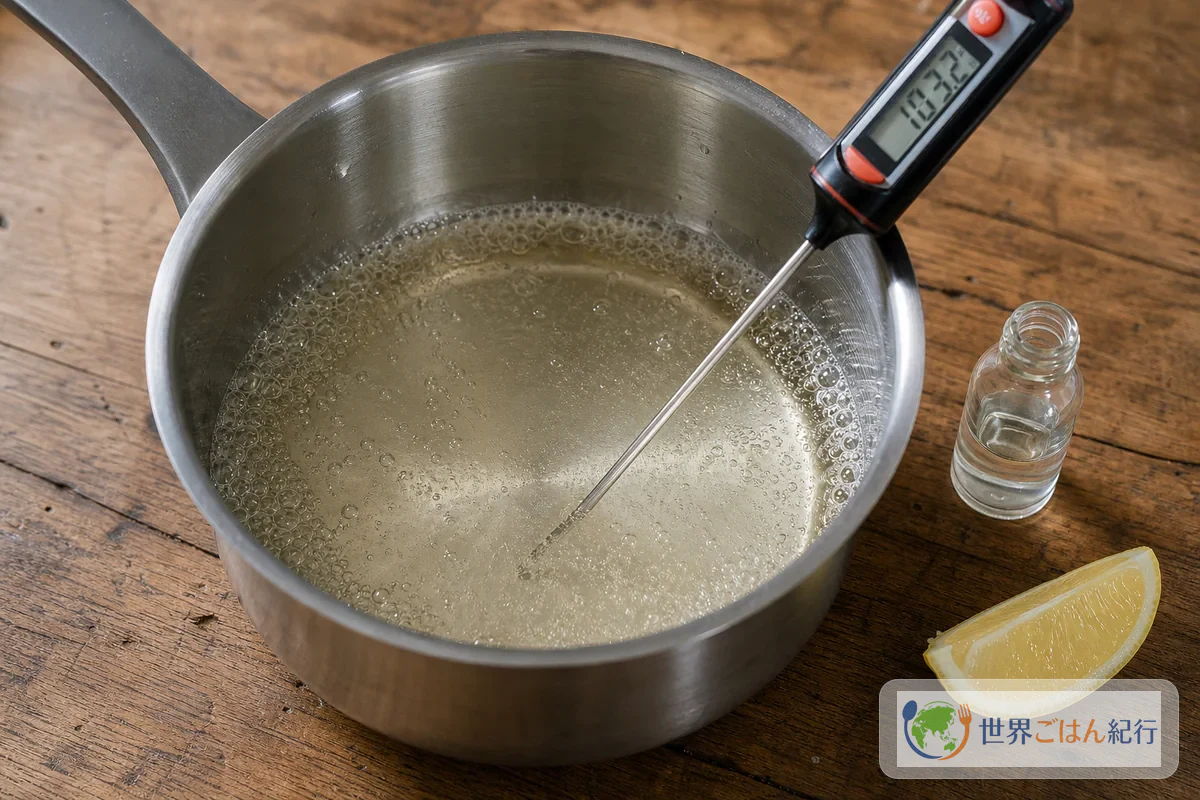
A thermometer helps you avoid boiling the syrup down too far. Stop at 103 to 105 degrees. Once cool, it is neither as thin as water nor set like candy. It also helps you track the sudden thickening of the milk pot once it reaches the 80s.
Chop pistachios with a knife. A small food processor is handy if you make Middle Eastern sweets often, or if you want to grind coarse semolina a little finer. Keep it running and the nuts release their oil, so pulse it in 1-second bursts.
Choosing semolina, ashta, and flower water for layali Lubnan
Most cooks get stuck on three things: how fine the semolina should be, how to make the ashta, and how much flower water to use. If you can't find fine semolina, run coarse semolina through a food processor for 30 seconds, twice, until it's a little coarser than caster sugar. Cake flour alone gives you a flour custard rather than a base you can cut, and cornstarch alone makes a different chilled dessert, closer to muhallabia, so stick with semolina here.
The ashta-style cream in this recipe is cooked from milk and heavy cream, and it gives the cleanest, steadiest cuts. Whipped cream works as a shortcut: add 20 g powdered sugar to 1¼ cups (300 ml) heavy cream, whip to soft peaks, and spread it over the chilled base. It's lighter, but it loosens quickly at room temperature, so cut it just before serving.
Keep the orange blossom water light. Without it, the aroma changes but the dessert still works; skip the vanilla essence and let milk and pistachio carry the flavor. If you have food-grade rose water instead, use no more than 1 teaspoon in the base and 1/2 teaspoon in the syrup, since swapping in the same amount as orange blossom water can taste strong.
How to make it: let the two white layers cool before stacking
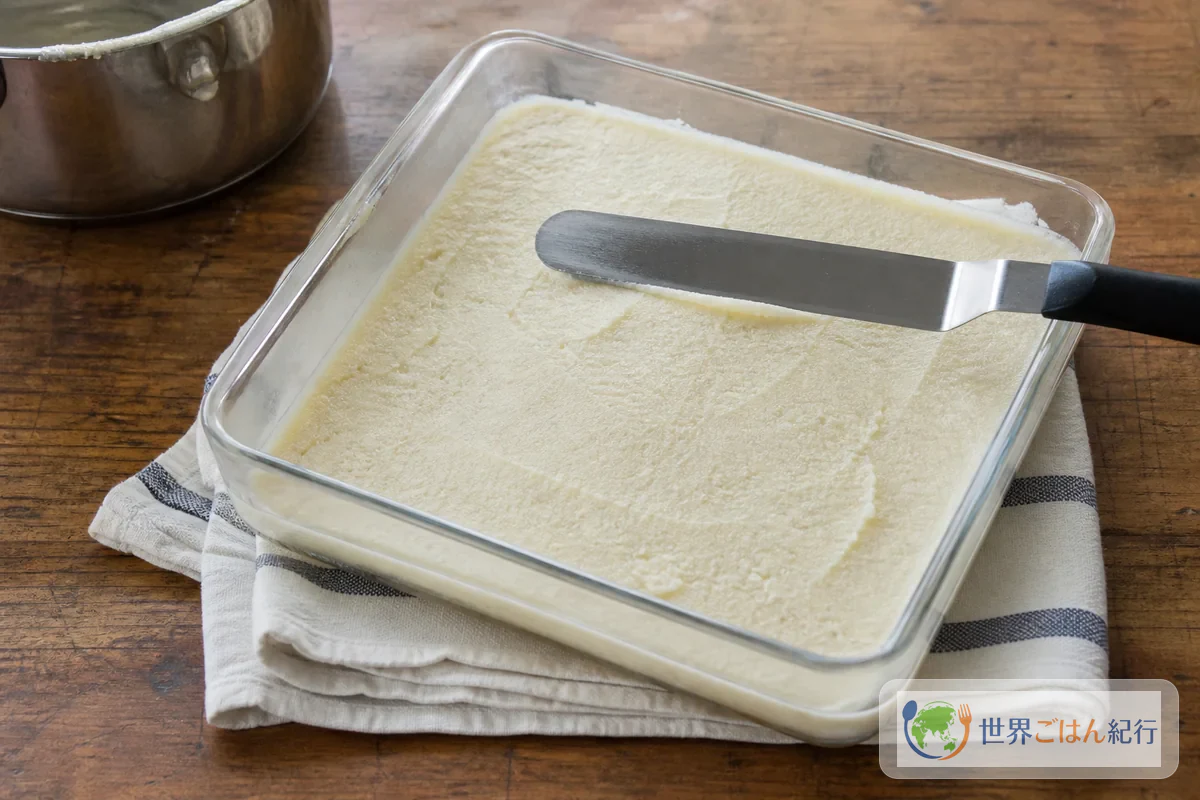
If the base is still warm when you add the ashta, the line between white and pale yellow blurs, and when cut, the dessert looks like a single layer. Make it in this order: syrup, base, ashta, letting each cool before the next. Most of the time goes to chilling, not hands-on work, so clear a shelf in the refrigerator before you begin and you won't be scrambling partway through.
Make the syrup a day ahead. Stack the base and ashta the night before and cut the next day. Don't stretch the room-temperature cooling to save fridge time. This is a dairy-heavy sweet, so move it to the refrigerator as soon as the initial heat is off.
Fixing layali Lubnan when the layers fail
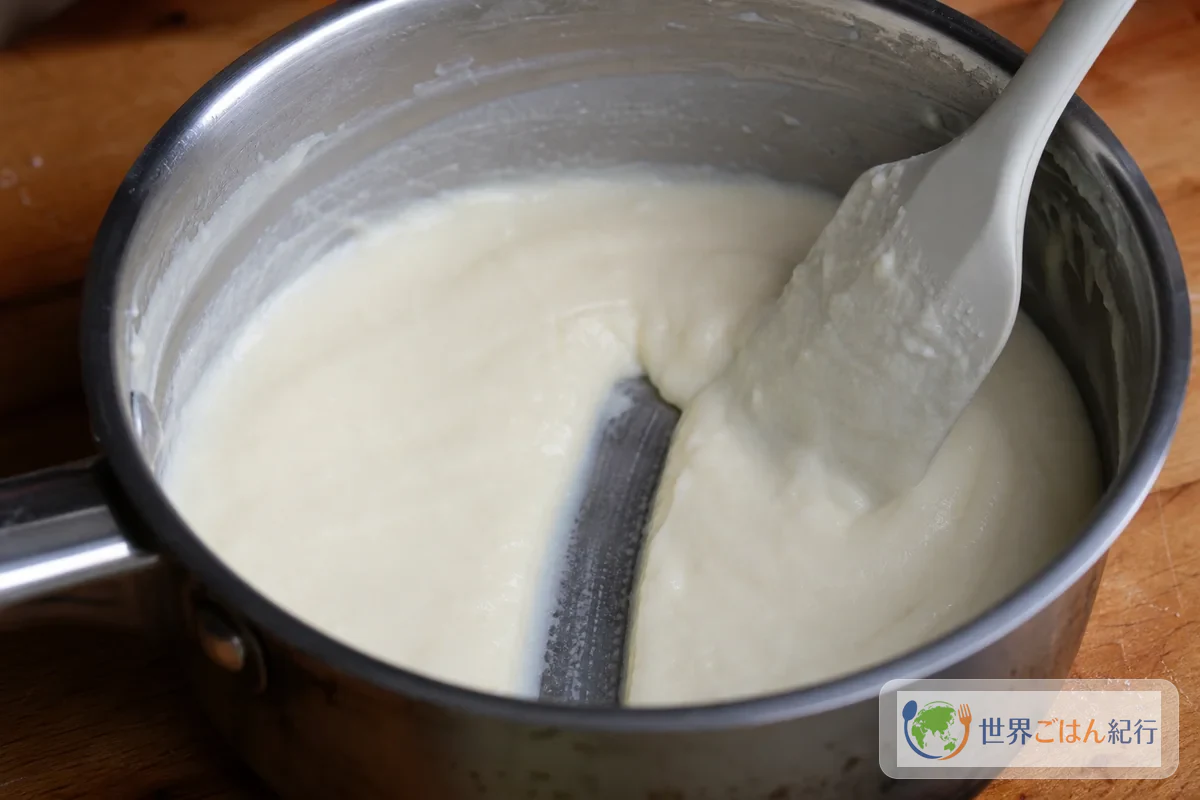
Most problems come down to temperature, either in the pot or in the refrigerator. In the refrigerator, the semolina absorbs the remaining milk and the cornstarch ashta firms up enough to cut with a knife. If only the surface is cold and the center is still warm, the layers shift the moment the blade goes in.
If the lower layer spreads across the plate after another hour of chilling, don't force it into squares. Spoon it into glasses and scatter pistachios on top; the texture holds up fine that way. Once the ashta is on, putting it back in the pot won't restore two layers.
| Problem | Cause | Fix this time | Prevention next time |
|---|---|---|---|
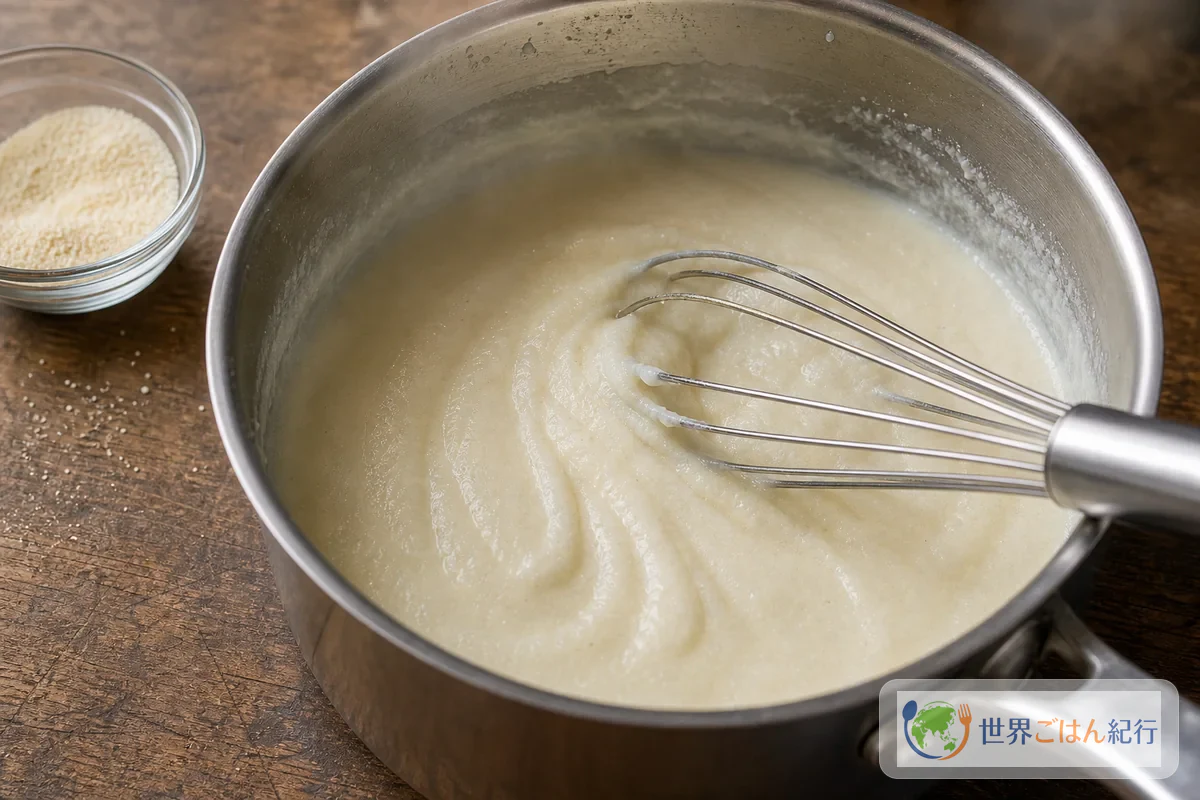
| Lower layer flows | Semolina undercooked or not chilled enough | Chill another hour and switch to serving in glasses | Cook to around 85 degrees, until the whisk's trail remains for 2 seconds |
| Top layer slides sideways | Ashta undercooked, or layered while warm | Give another hour in the refrigerator | Stack once the spatula's line remains for 2 seconds and it is 30 degrees or below |
| Water collects on the surface | Wrapped while hot | Blot drops with the corner of a paper towel | Wrap when the center is 40 degrees or below |
| Syrup turns candy-like | Boiled down to 107 degrees or more | Add 1 tablespoon water and redissolve over low heat | Stop at 103 to 105 degrees |
| Flower scent too strong | Too much added to a hot pot, or two kinds layered too heavily | Serve with a little unsweetened ashta or milk | Add by the teaspoon after turning off the heat and cooling |
| Cut face looks messy | Cold knife, or blade not wiped | Warm and wipe the blade from the next cut | Return the blade to lukewarm water after every piece |
Serving and storing layali Lubnan
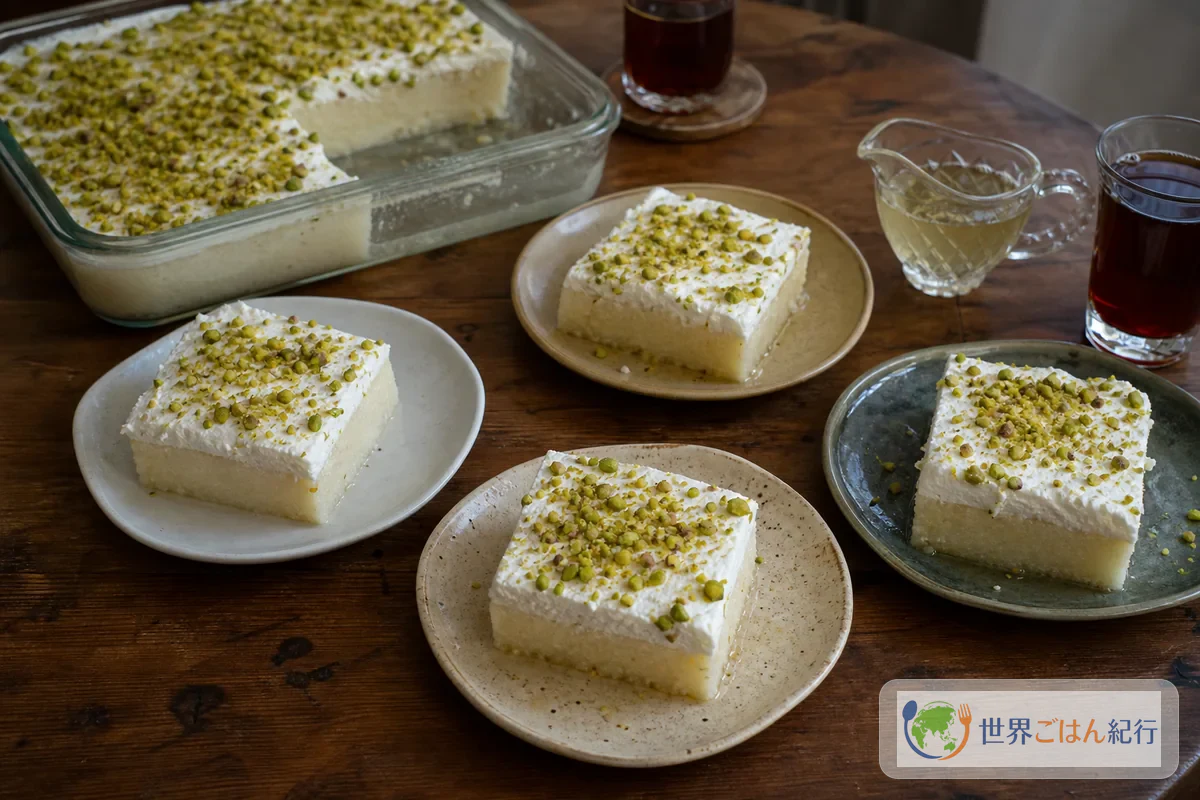
Serving and variations
Layali Lubnan is eaten cold, starting with a small piece. Rather than letting the syrup soak through the whole dish, move a piece to a plate and drizzle it thinly, so each person sets their own sweetness. Serve warm unsweetened tea or sugar-free Arabic coffee alongside; the warm drink cuts the lingering milk and brings the scent of the flowers back to the nose.
For the banana version, place 3 slices, 0.125 inch (3 mm) thick, on each piece just before eating. Added the day before, they discolor and release water. For a rose version, start by replacing the 1 teaspoon of orange blossom water in the syrup with 1/2 teaspoon of rose water. Letting one flower lead gives a clearer aroma than equal amounts of both.
Storage
Because it contains dairy, don't leave it out at room temperature for more than 2 hours. Refrigerated leftovers keep 3 to 4 days, but the cut faces dry out, so at home it's best eaten within 3 days.
| State | Storage | When eating |
|---|---|---|
| Same day to 3 days | Cover the pan, or press plastic wrap against the cut faces, and refrigerate at 4 degrees or below | Cut just before eating and add syrup |
| While on the table | Cut only what goes on plates; return the rest to the refrigerator | Keep total time at room temperature within 2 hours |
| Freezing | Not recommended | On thawing, water comes out of the ashta and the layers separate easily |
| Made a day ahead | Refrigerate up to before scattering the pistachios | Garnish just before eating and cut with a warmed, wiped knife |
Pairings and other sweets
It's a good end to a menu of dishes with acidity and herbs, such as hummus, tabbouleh, and falafel. For a lighter sweet after the meal, try Indonesia's small skillet-cooked serabi; the flour and milk are similar, but the texture is clearly different.
For a hot sweet at the same Lebanese table, there's knafeh, with its stretching cheese. Syria's halawet el jibn is rolled cold and made with the same semolina, but its elasticity is the highlight. On days you want to use the oven, try barazek, with its toasty baked sesame.
Leftover fine semolina and flower water are a good excuse to make Egypt's basbousa, which is baked and soaked with syrup. Layali Lubnan keeps moist grains, while basbousa gets the toasty edge of the oven. Opened pistachios lose their aroma easily, so store them airtight in the refrigerator and use them within about 2 weeks.
Frequently asked questions
I worry that it will be too sweet.
The sugar in the base and ashta is kept to just enough to support the flavor of the layers. To cut sweetness, reduce the syrup first: pour 2 teaspoons per person on the plate instead of 1 tbsp (15 ml), and serve the rest on the side. To reduce the sugar in the base, go from 2.25 oz (65 g) down to 1.75 oz (50 g); this keeps the milk flavor from blurring.
Can I make it a day ahead?
Yes, and it actually cuts better that way. Stack the two layers, cover, and refrigerate at 4 degrees or below. Pistachios absorb moisture, so chop and scatter them just before eating, and keep the syrup refrigerated in a separate container. If the dessert has stiffened, leave it 10 minutes at room temperature before serving.
Is there a trick for getting the first piece out cleanly?
For the first piece only, cut along all four sides, then slide in a thin spatula. Warm the knife in lukewarm water of about 40 degrees and wipe off the moisture. From the second piece on, slip the spatula into the empty space to keep the shape. A glass dish, where you can see the layers and the cut face from the side, is more useful than a metal one.