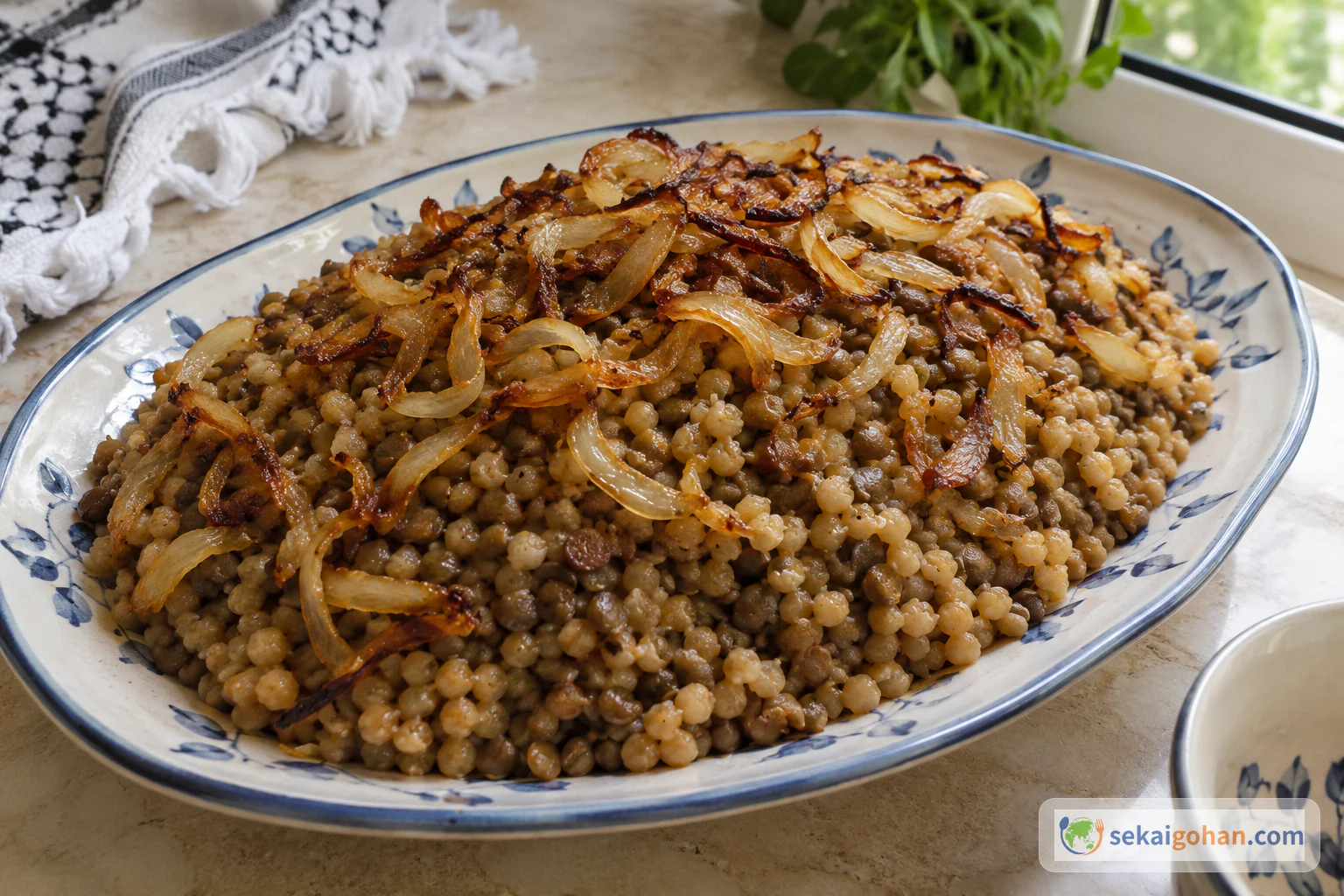
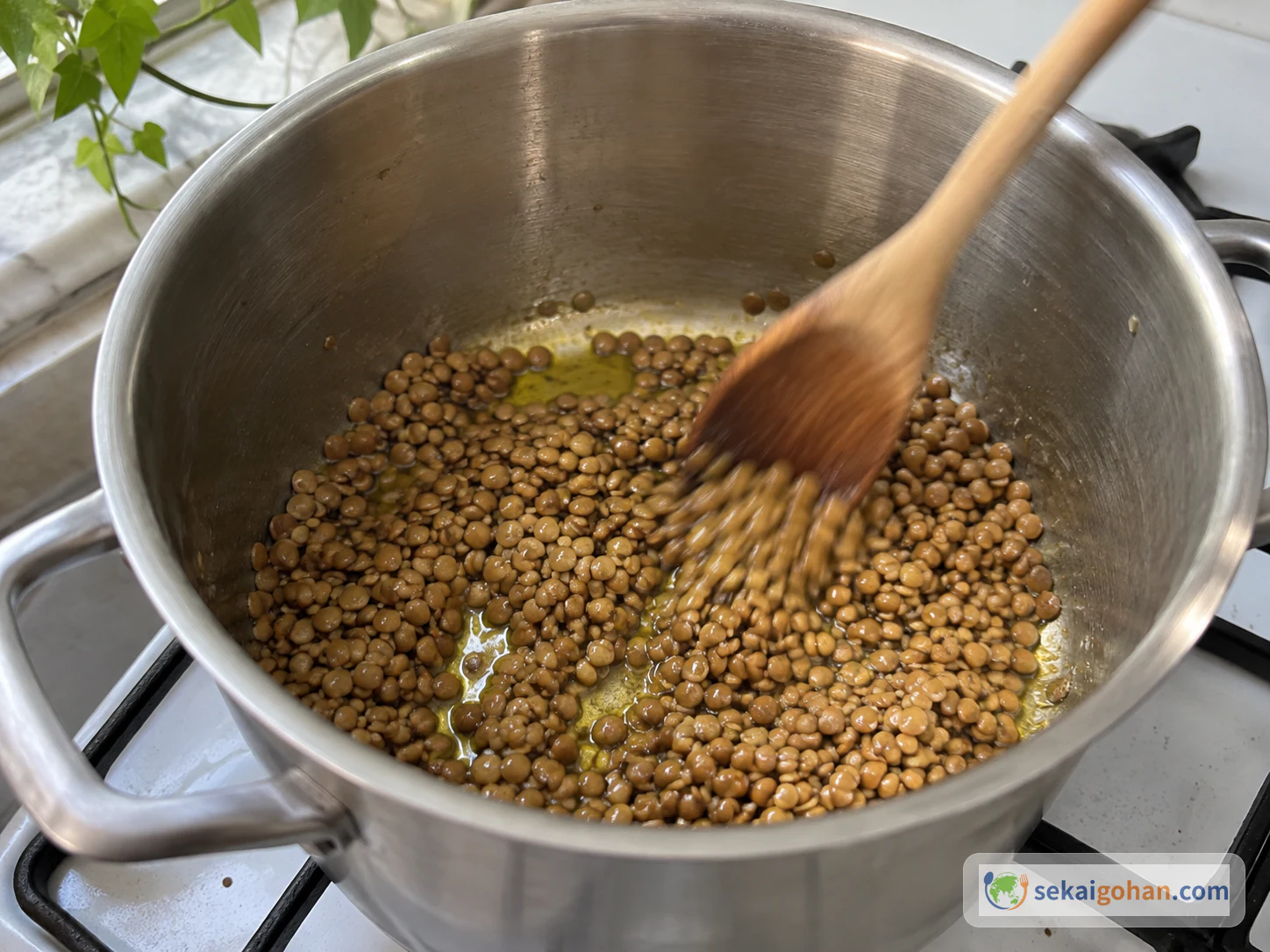
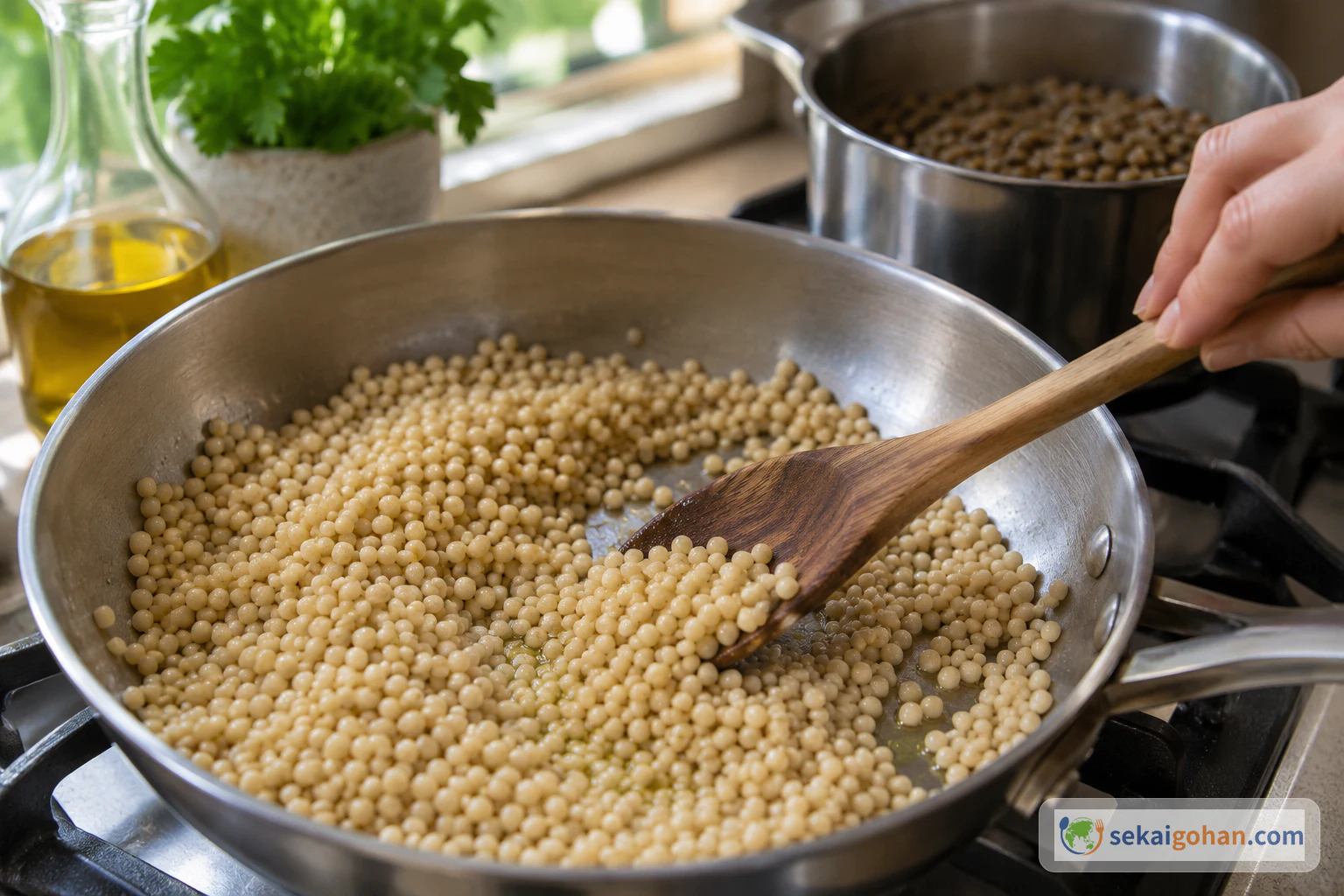
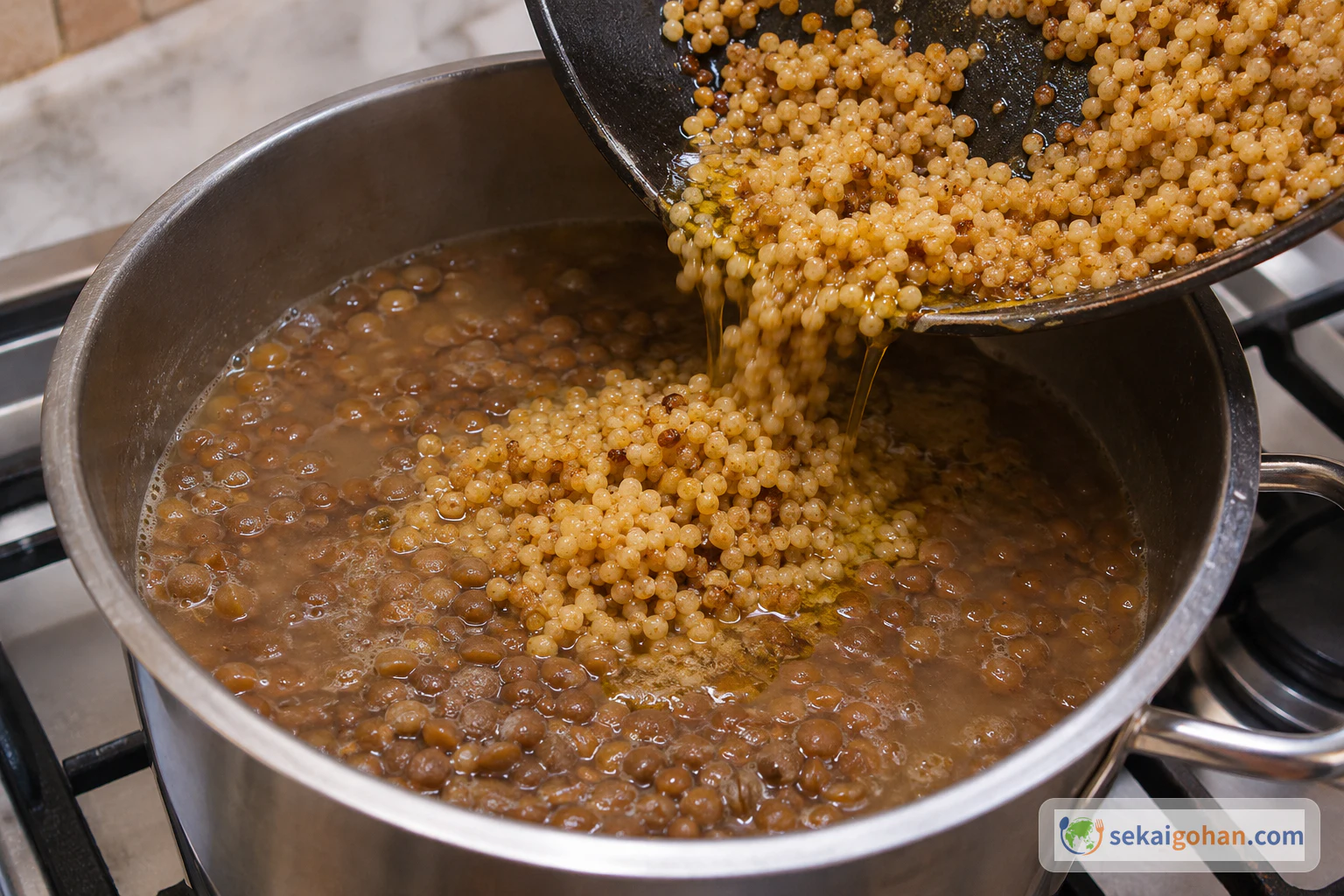
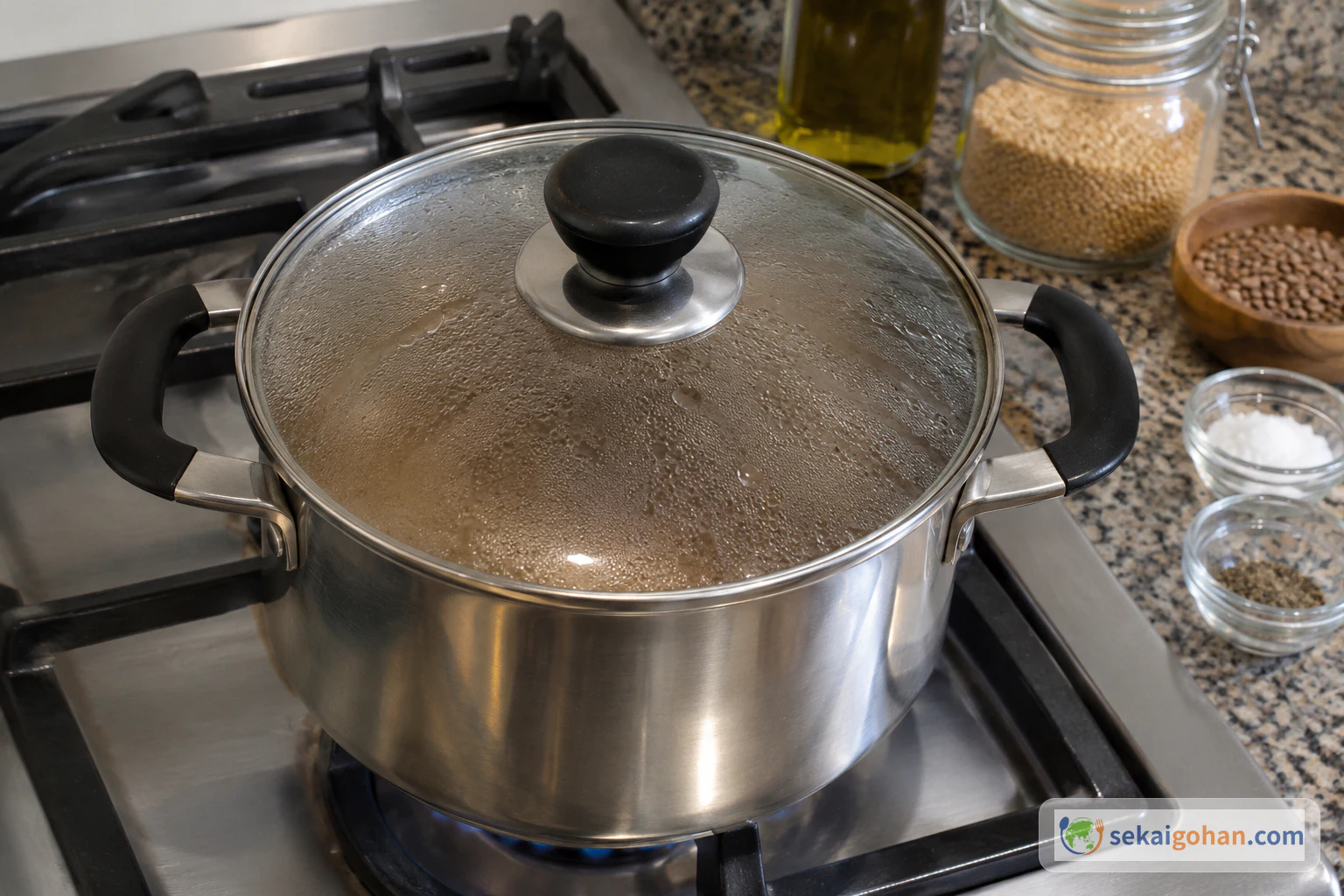
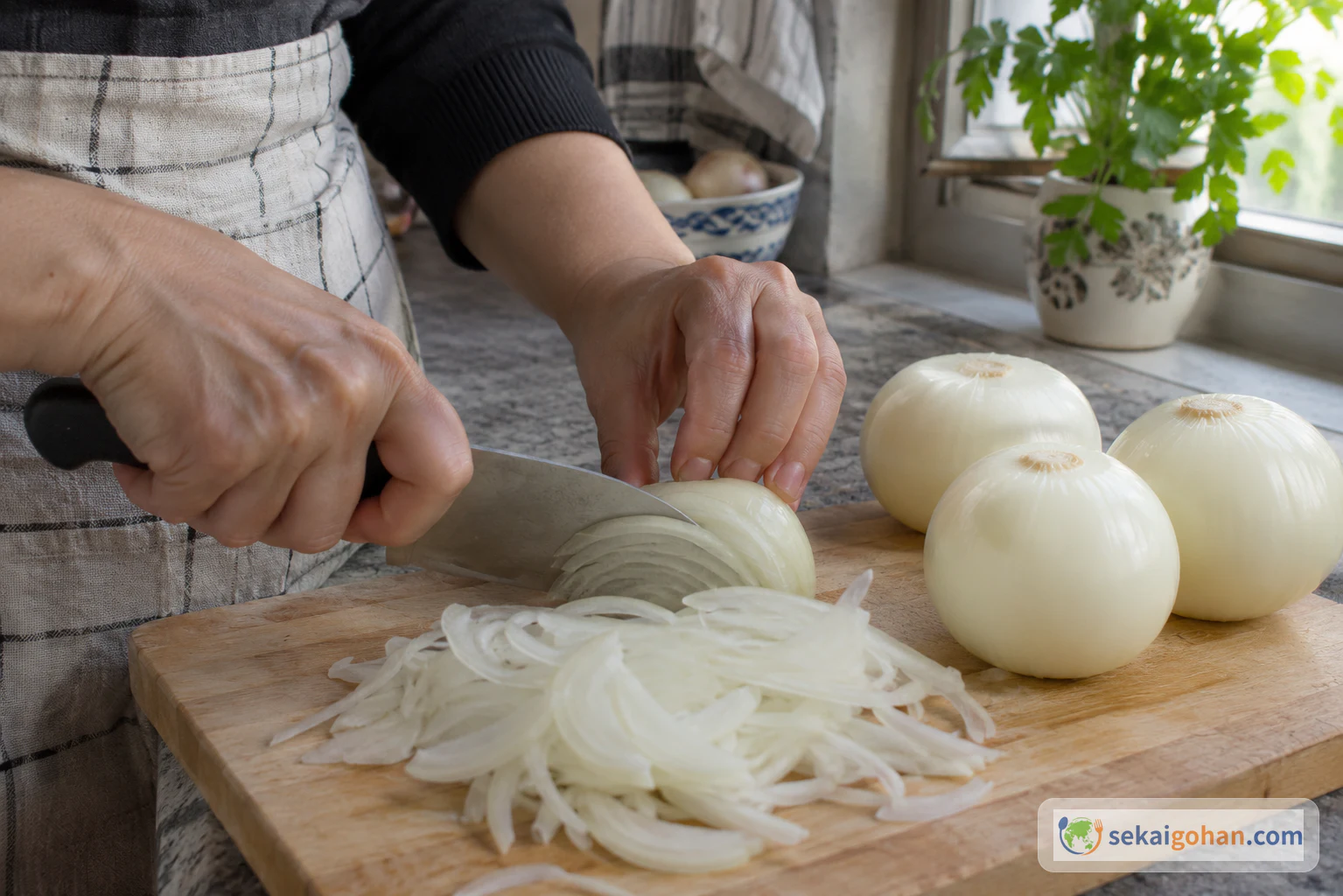
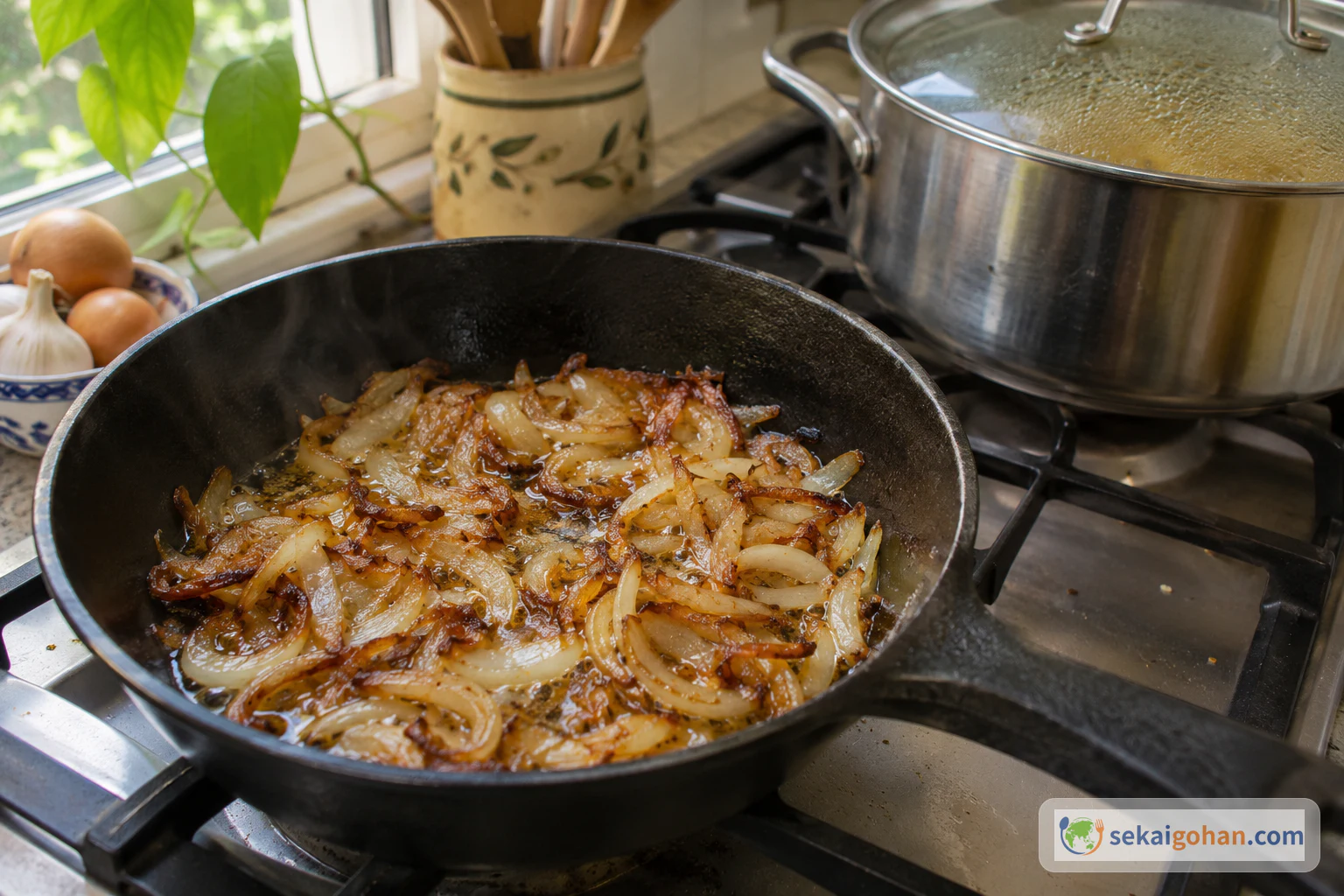
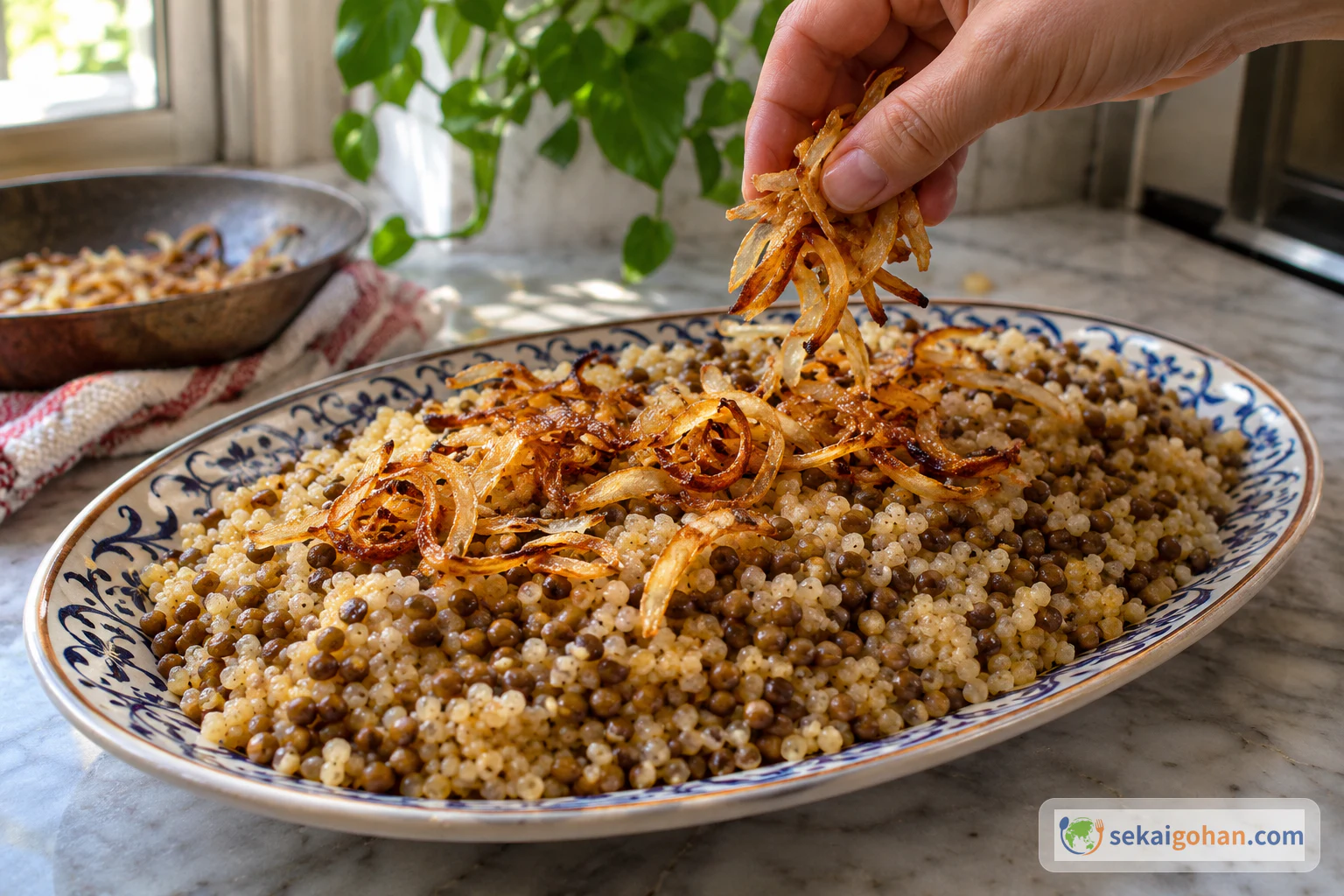
A platter of maftoul mujaddara comes to the table with its grains fluffed loose and a heap of golden, caramelized onions piled on top. Getting there takes three pans. Dry brown lentils hit hot olive oil and are stirred over high heat before any water goes in, the maftoul gets the same treatment in a second pan, and a third takes the onions slowly to deep gold. This version of the Palestinian lentil-and-grain dish comes from Deir Ballout and serves 4–6.
About Maftoul Mujaddara
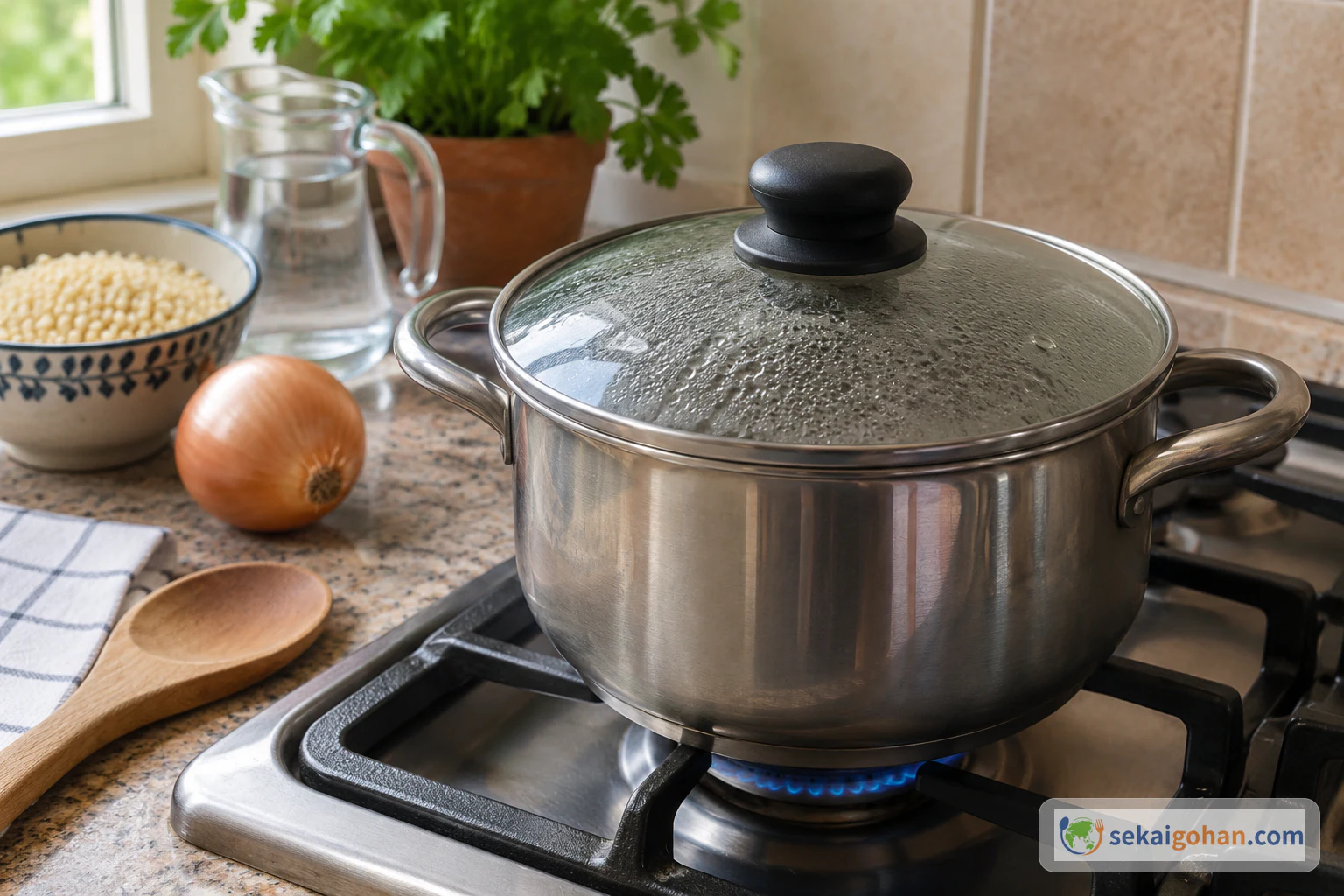
Maftoul is one of the traditional staples of Palestinian cooking, and here it shares a pot with brown lentils. The grains and their oil are tipped into the lentil pot to finish together under a lid. The fried onions stay in their own pan and go on top only at the very end. You can find more Palestinian dishes here.
Maftoul turns up in other forms on the Palestinian table. It is often steamed over chicken broth and served with chicken, chickpeas and spiced onions, or eaten with tomato sauce, onions and spiced chicken. Mujaddara made with rice instead of maftoul is a separate dish of its own. This one keeps to lentils, maftoul, olive oil and onions, with no chicken, chickpeas, tomato or cumin in the pot.
Ingredients: Serves 4–6
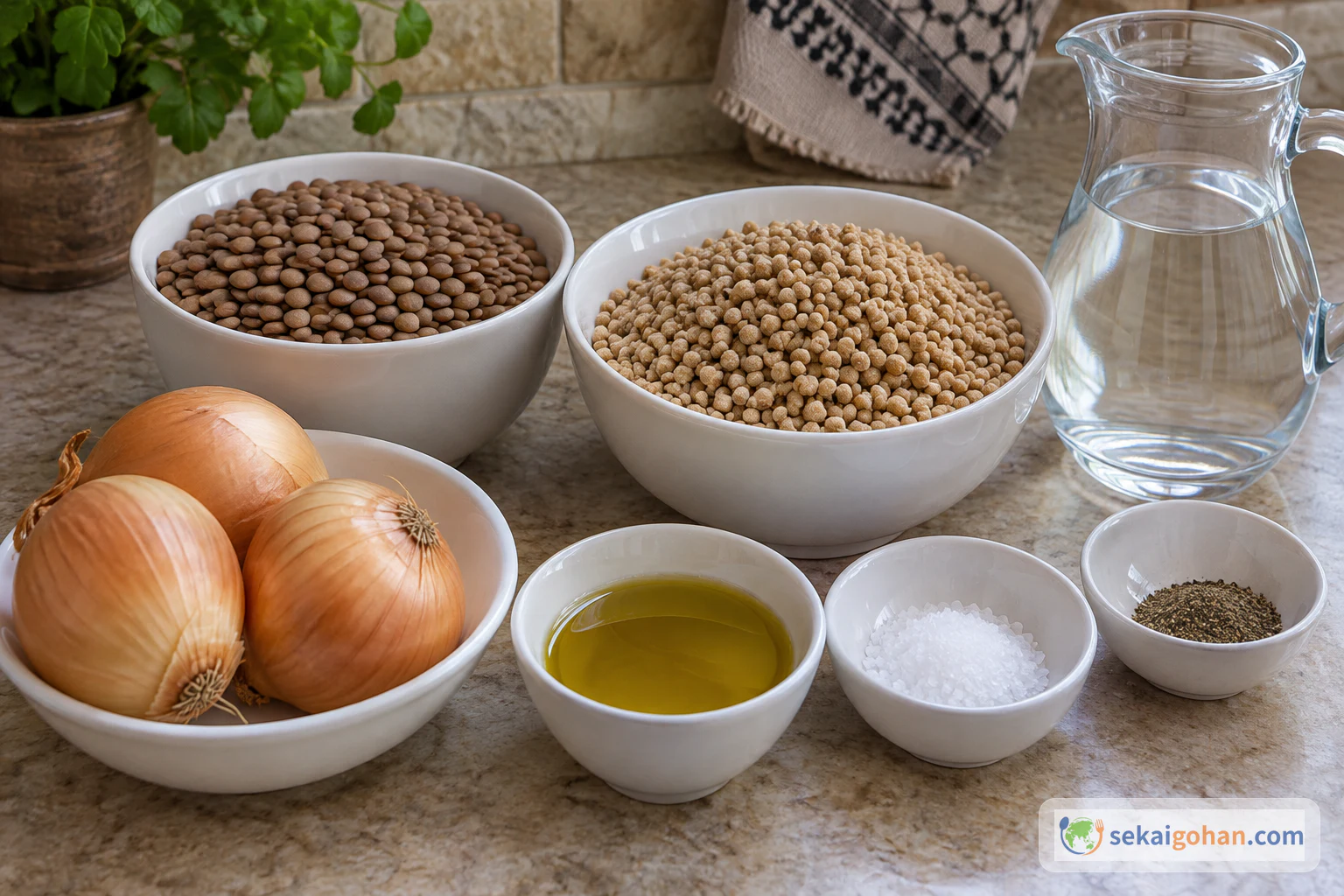
Equipment
- Large pot with a lid, big enough to hold the lentils, water and maftoul
- Second pan for the maftoul
- Separate skillet for the onions
- Cutting board and knife
- Spoon for stirring
- Fork for fluffing
- Serving platter
- Small bowl for the yogurt, if serving
- Scale and measures for the ingredients
Choosing Lentils, Maftoul and Yogurt
Lentils: use dried brown lentils. Red lentils won't give you the same dish, so leave them for another recipe.
Maftoul: buy it dried rather than rolling and sun-drying your own, and use maftoul rather than fine semolina couscous. Store-bought maftoul varies. One brand produced in Beit Fourik and packed in Ramallah lists bulgur, salt, wheat flour, water and cumin, so read the label: some packs are seasoned with cumin, and that's no reason to add cumin to this pot. Check for wheat and any other allergens while you're at it.
Yogurt: it's optional and contains milk. If you serve it, choose plain natural yogurt, store-bought and made from pasteurized milk. A side salad works in its place if you need to avoid dairy.
Method
You will use three pans: one for the lentils, one for the maftoul and one for the onions. Only the first two come together.
Common Problems With Maftoul Mujaddara
Most of the timing here is fixed, but a few moments call for judgment. Once the lentils have had their time, turn off the burner and leave the lid on the pot while the onions fry.
| What you notice | What to do |
|---|---|
| The pot seems short of liquid during the second stage | Add a little water, then replace the lid |
| You are unsure about the heat for the final 20 minutes | Stay on the low heat you already set |
| The onions are not golden yet | Keep frying. The color and caramelized look tell you when they are ready |
| You are tempted to stir the onions into the pot | Keep them in their own skillet until the grains are on the platter, then spread them on top |
| The grains look packed together in the pot | Fluff them with a fork before moving them to the platter |
Frequently Asked Questions
Why does the recipe say about ¼ cup (65 ml) oil for the onions?
The ingredient list gives 1 cup (250 ml) olive oil in total. The lentils take ½ cup (125 ml) and the maftoul ¼ cup (60 ml), which leaves about ¼ cup (65 ml) for frying the onions.
Do I need to soak the lentils?
No. The dry lentils go straight into the hot oil.
How much extra water should I add?
Only add a little, and only if the pot looks short of liquid. There's no set amount.